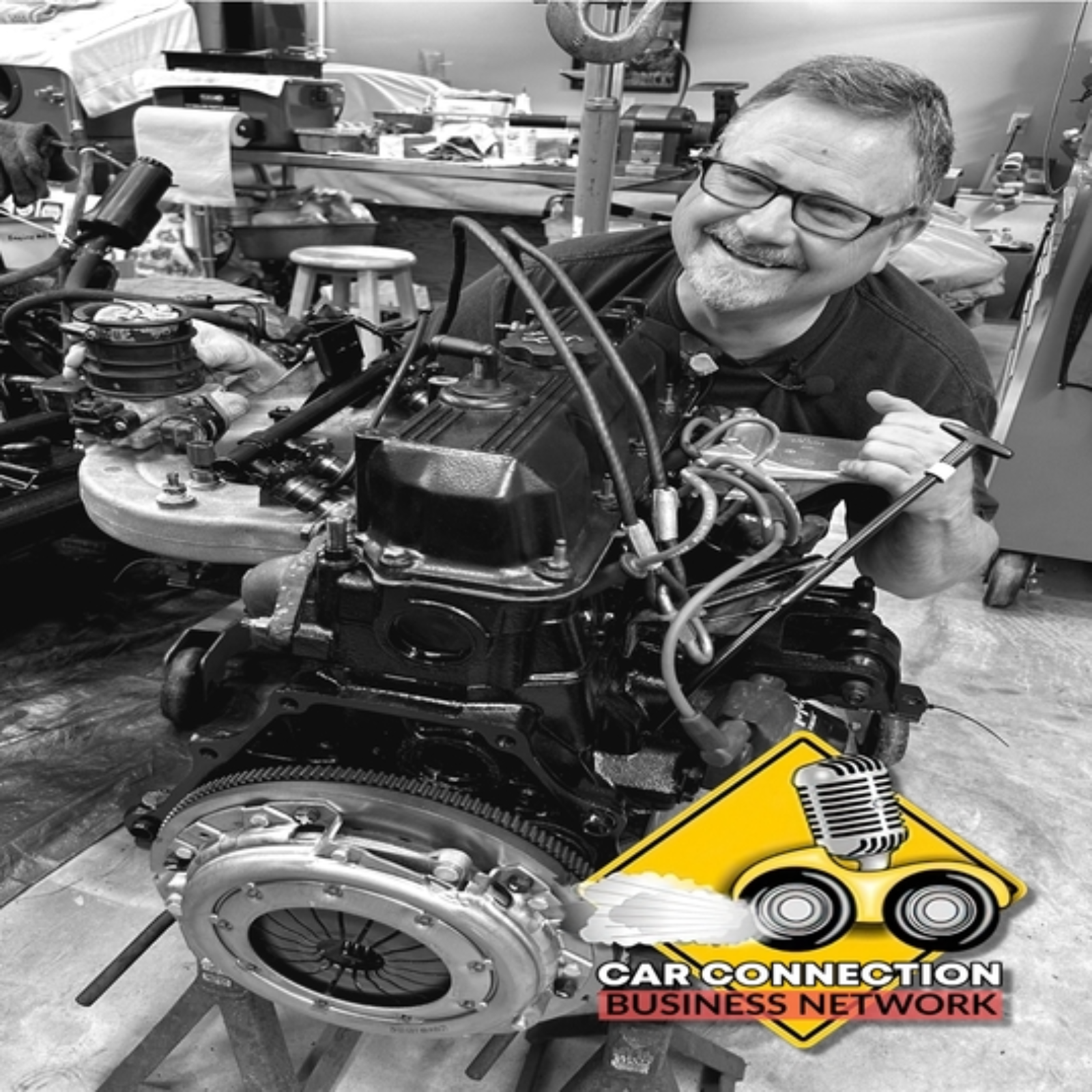
“Belts” is introduced as an acronym for a quick set of vehicle checks designed to keep you rolling and avoid expensive breakdowns. The hosts spell it out (B-E-L-T as in Tom, S as in Sam) and walk through the checklist: brakes, exhaust system, lights, tires, and steering. Along the way they stress proactive maintenance over waiting for symptoms, explain why exhaust connections matter for fault codes, and share a real-world story about being pulled over for a license plate issue.
This morning on Motormouth's Morning Drive, we're talking about one of the simplest vehicle maintenance reminders I've ever come across - BELTS.
A special thank you goes out to Eddie, a driving instructor who shared this acronym with with me over 35 years ago. It's a simple system he has used to teach new drivers the fundamentals of vehicle ownership and preventative maintenance.
BELTS stands for:
✅ Brakes
✅ Exhaust
✅ Lights
✅ Tires
✅ Steering
These five checks help drivers spot problems early, avoid expensive repairs, improve safety, and save themselves a few bloody knuckles along the way.
Sometimes the best maintenance advice isn't complicated - it's the simple habits that keep vehicles running reliably year after year.
Donations Welcomed❤️ Skippy, visit our official donation page: ☕️🍩 buymeacoffee.com/motormouthnile Thank You So Very Much Friends, any amount given is fully appreciated. Motormouth👍🚗
Yes we have Merch: visit our online store at (ccbusnet.com) all proceeds go to Total Freedom Addiction Campuses Canada & USA where lives are changed one at a time❤️ Join our crew in helping to get them there🚗❤️ Together we can make a difference in someones life,👌💕 Skippy & Motormouth.
Got your Car Connection Fleet Maintenance System Yet? Visit the profile page at (ccbusnet.com) to see all of the details and to place your order✅ Get yours while quantities last 👍 Shipped directly from our studio to your door! Remember Mileage does NOT Matter Maintenance Does⚠️ Subscribed to our YouTube Channel? Special discount if you are🙌🚗
HELP us reach our first 1000 Subscribers to our YouTube Channel by simply : Like, Share, Subscribe, Follow, Comment, and ring the Bell so you don't miss the next rescue project, maintenance tips, and real - world Car ownership advice. Thank You Friends❤️ Skippy & Motormouth.
More Episodes and ...project Details & Links are available at Car Connection Business Network .com (ccbusnet.com) you'll find everything on our home page if you'd like to follow the build & Repair work we do & connect with our program partners, click their logo to meet them! Thank You for giving them your business, we need them and YOU👍✅ Nile Motormouth Jenkins.
"But you can also fool the oxygen sensors that are sniffing the exhaust and letting the
[1614.4s] computer know what the air fuel mixture is so that we don't continue to blow holes in the
[1619.2s] atmosphere or something like that."
Oxygen sensors are little sensors in the exhaust that check how much oxygen is coming out. The car’s computer uses that info to adjust how much fuel it injects so the engine runs cleanly.
Oxygen sensors (often called O2 sensors) measure how much oxygen is in the exhaust. The engine computer uses that data to adjust the air-fuel mixture so the car burns fuel efficiently and keeps emissions under control.
"But you can also fool the oxygen sensors that are sniffing the exhaust and letting the
[1614.4s] computer know what the air fuel mixture is so that we don't continue to blow holes in the
[1619.2s] atmosphere or something like that."
The air-fuel mixture is how much fuel the engine is mixing with air before it burns. The car tries to keep that ratio in the right range so it runs properly and doesn’t pollute as much.
The air-fuel mixture is the ratio of air to gasoline (or other fuel) that the engine burns. Getting it right is crucial because too rich or too lean can hurt fuel economy, drivability, and emissions—and it’s what oxygen sensors help the computer fine-tune.
"So the exhaust system needs to be tight and right.
[1669.2s] We want to make sure that we don't have something that's about ready to break off.
[1673.0s] We don't have a flange."
A flange is the metal “joining lip” where exhaust parts bolt together. If it’s loose or worn out, exhaust can leak and the problem can get worse over time.
A flange is a bolted connection surface used to join sections of an exhaust system. If an exhaust flange isn’t tight or is failing, it can leak exhaust gases and cause the system to degrade faster.
"We don't want any rotted flange arotties that the bolts and the hardware that hold the pipes together are about ready to break."
The exhaust pipes are held together with parts like bolts and clamps. If those fasteners are rusted and failing, the joints can come apart and the exhaust can drop.
Exhaust pipes are joined using hardware like bolts, clamps, and gaskets to keep the joints sealed and secure. When that hardware is rotted or failing, the connection can loosen, leading to exhaust leaks or the exhaust dropping.
"I've seen it happen many times and had to pull seats out and carpets out to bang the floor back down because a muffler broke and the pipe fell forward, not backwards so that it's dragging."
The muffler is the part that makes the exhaust quieter. If it breaks loose, the exhaust pipe can fall and damage the floor of the car.
A muffler is the exhaust component designed to reduce noise by using internal chambers and baffles. If the muffler breaks or its connections fail, the pipe can drop and strike the floor, potentially causing major underbody damage.
"So we want to make sure the exhaust system is tight and right. Any areas of weakness, it's best to take care of them before that kind of thing happens."
Your exhaust system is the parts under the car that route the engine’s fumes to the back. If something comes loose, it can rattle, leak, or even fall and cause damage.
The exhaust system is the set of pipes, joints, and muffler(s) that carries engine exhaust gases from the engine to the tailpipe. If parts loosen or connections fail, exhaust can leak or even drop, creating damage and safety issues.
"Number three, lights. How many of you do a little circle check on your vehicle periodically?"
Here, “lights” means your car’s exterior lights, like headlights and other lamps. Checking them regularly helps you spot problems early, like a bulb that’s gone out.
In this context, “lights” refers to the vehicle’s lighting system (like headlights and other exterior lamps) that you should visually check for proper operation. A quick periodic check helps catch burned-out bulbs or wiring issues before they become a safety problem.
"just walk around the vehicle with the lights on and put the four ways on because that'll tell you that the brake lights work.
Did you know that?
If you put on the four ways, in most cases, it will definitely show you that the filaments in the bulbs will work, the brake lights will work."
“Four ways” means your hazard lights—both left and right turn-signal lights blinking together. It’s a quick way to check that the exterior light bulbs are working before you drive.
“Four ways” is the common name for a car’s hazard warning lights (all turn signals flashing at once). Turning them on makes it easy to confirm multiple exterior bulbs are working, including brake/taillight-related circuits depending on the vehicle.
"If you put on the four ways, in most cases, it will definitely show you that the filaments in the
bulbs will work, the brake lights will work.
So it'll confirm that."
A filament is the part inside some light bulbs that heats up and makes the light turn on. If the filament breaks, that light won’t work.
Filaments are the thin heating elements inside many older-style incandescent bulbs that glow when electricity flows. If a filament is broken, that bulb won’t illuminate, which is why checking lights can reveal failed bulbs quickly.
"No, use the high beams.
Yeah, back to car in.
Use the high beams and give them an x-ray or burn their corneas."
High beams are the bright headlights meant for seeing farther down the road. You use them only when it’s safe and not blinding other drivers.
High beams are the brighter, long-range headlights used when there’s no traffic or street lighting ahead. They’re useful for a quick visual check of headlight operation, but you should switch back to low beams when other drivers are nearby.
"That way, you don't need to have an officer in your busy day pull you over to tell you
you have a tail light out."
“Tail light out” means one of your rear lights has stopped working. It’s a safety issue and can get you pulled over.
A “tail light out” means one of the rear running/brake lights isn’t working, which can reduce visibility to drivers behind you. Many jurisdictions treat non-working lights as a fix-it ticket or a reason to stop the vehicle.
"Oh, you got a license plate light out.
And in my head, I'm going, yeah, right, buddy."
This means the light that shines on your license plate isn’t working. Some places require it to be working, so you can get cited or pulled over.
A “license plate light out” means the small bulb(s) that illuminate your rear license plate aren’t working. Even though it’s not a brake or turn signal, it can still be a legal/inspection issue and lead to a traffic stop.
Place
Dunville
"So that happened in Dunville."
Dunville is the place where the story took place. It’s just location context for the anecdote.
Dunville is referenced as the location where the speaker’s traffic-stop story happened. It’s not an automotive term, but it anchors the anecdote geographically.
Term
due date
"So we want to make sure that your tires aren't way beyond the due date. And yes, they have due dates on the surface area of the tire."
Tires wear out with age, not just miles. The “due date” idea means you should check the tire’s manufacturing date and replace it when it’s getting too old.
Tires don’t have a “due date” like a calendar appointment, but they do have a manufacturing date and an expected service life. The point here is to avoid running tires well past their recommended age, since rubber compounds harden and grip can drop.
"I think I did a video twice on how to read the sidewall of your tire and where the serial number is and how to decipher that, the year date of manufacturing."
That “serial number” is the code molded into the tire that includes when it was made. Checking it helps you figure out the tire’s age.
On tires, the “serial number” they’re referring to is the molded identifier that includes the tire’s manufacturing date information. Decoding it helps you determine how old the tire is, which matters for safety and wear.
"I think I did a video twice on how to read the sidewall of your tire and where the serial number is and how to decipher that, the year date of manufacturing."
The sidewall is the part of the tire on the outside edge. It has printed codes that tell you things like the tire size and other important info.
The tire sidewall is the outer “wall” of the tire between the tread and the bead. It’s where key markings live—like the tire’s size code and other identifiers—so you can decode what tire you actually have.
"I think I did a video twice on how to read the sidewall of your tire and where the serial number is and how to decipher that, the year date of manufacturing."
Tires have a code that tells you when they were made. Knowing that date helps you judge whether the tire is getting too old, even if it still looks decent.
The year date of manufacturing is the tire’s production date code molded into the sidewall. It lets you verify whether the tire is older than you think, which is important because tires degrade over time even if tread looks okay.
"We just shot a bunch of videos on the 07 FJ Cruiser Tyron ends.
[2173.7s] Everybody has them."
The Toyota FJ Cruiser is a rugged-looking SUV that many people like for off-road use. Here, the host mentions a 2007 FJ Cruiser as the example vehicle for explaining steering wear. It’s basically a real-world car to learn what to check.
The Toyota FJ Cruiser is a boxy, off-road–styled SUV known for its rugged design and popularity among enthusiasts. In this segment, the host references shooting videos for the 2007 FJ Cruiser, tying it to a specific steering/maintenance topic. That makes it a useful example chassis for learning what worn steering parts look like.
"And that would be because you don't have any tie rod ends.
[2189.6s] Tie rod ends, when you turn the wheel, the tie rod ends turn the wheel."
Tie rod ends are small parts that connect your steering to the front wheels. They help turn the wheels when you turn the steering wheel. If they wear out, the car can feel loose or pull, and tires can wear unevenly.
Tie rod ends are steering linkage joints that connect the steering system to the front wheels. When you turn the steering wheel, they help transmit that motion to the wheels so the car can actually steer. Worn tie rod ends can cause looseness, wandering, or uneven tire wear.
See something that's not quite right? Our annotations are AI-generated and can sometimes miss the mark.
Click the flag icon on any annotation to suggest a correction.