Beyond the Wheel – Tom’s Triumphant Journey through Classic Cars and Life’s Crossroads
To All The Cars I've Loved Before: Classic Car Restoration, JDM, and Automotive History
Beyond the Wheel – Tom’s Triumphant Journey through Classic Cars and Life’s CrossroadsTo All The Cars I've Loved Before: Classic Car Restoration, JDM, and Automotive History · Oct 1, 2024
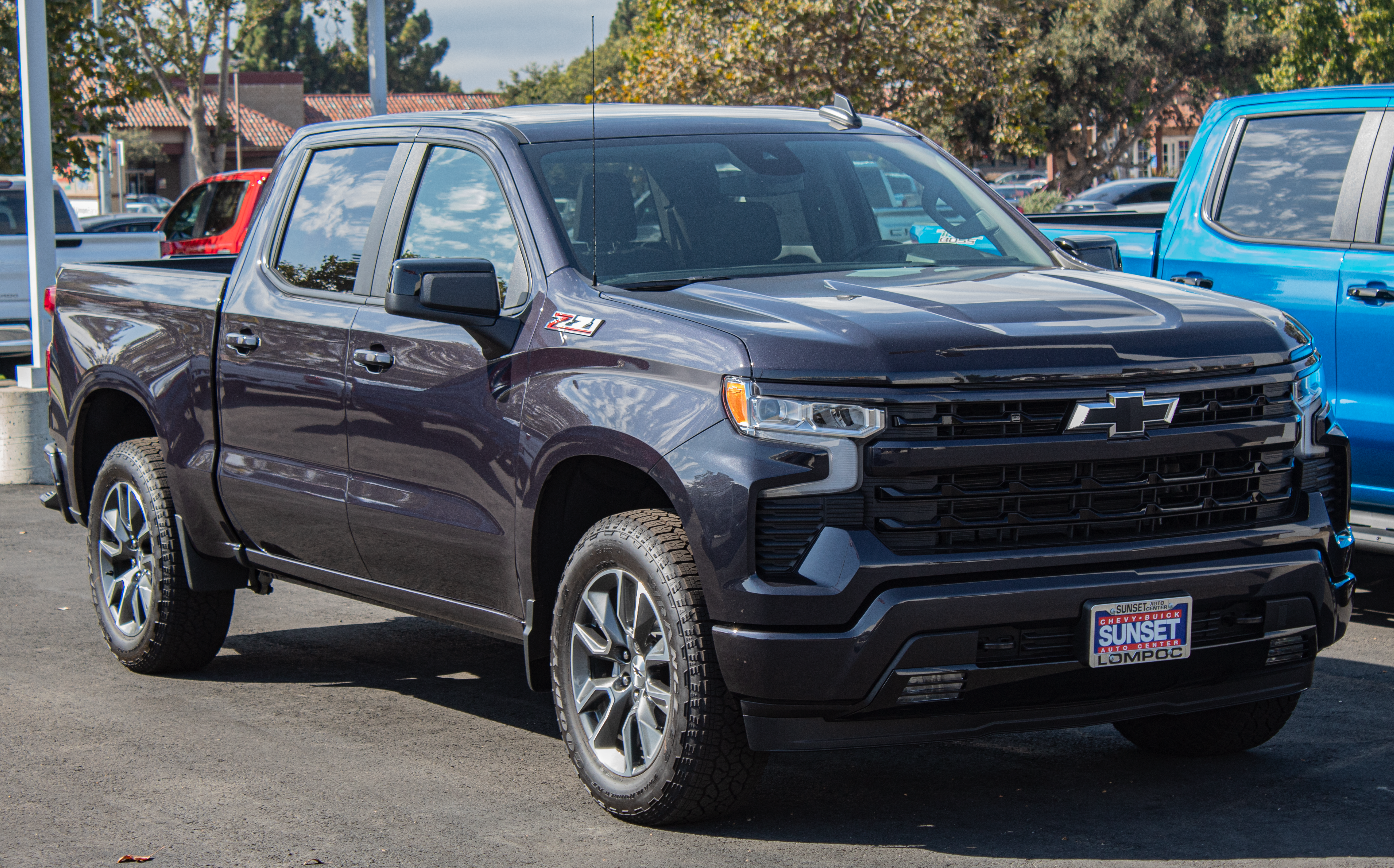
The 2015 Chevrolet Silverado is a big truck that can carry heavy loads and is often used for work. It's known for being reliable and comfortable to drive.
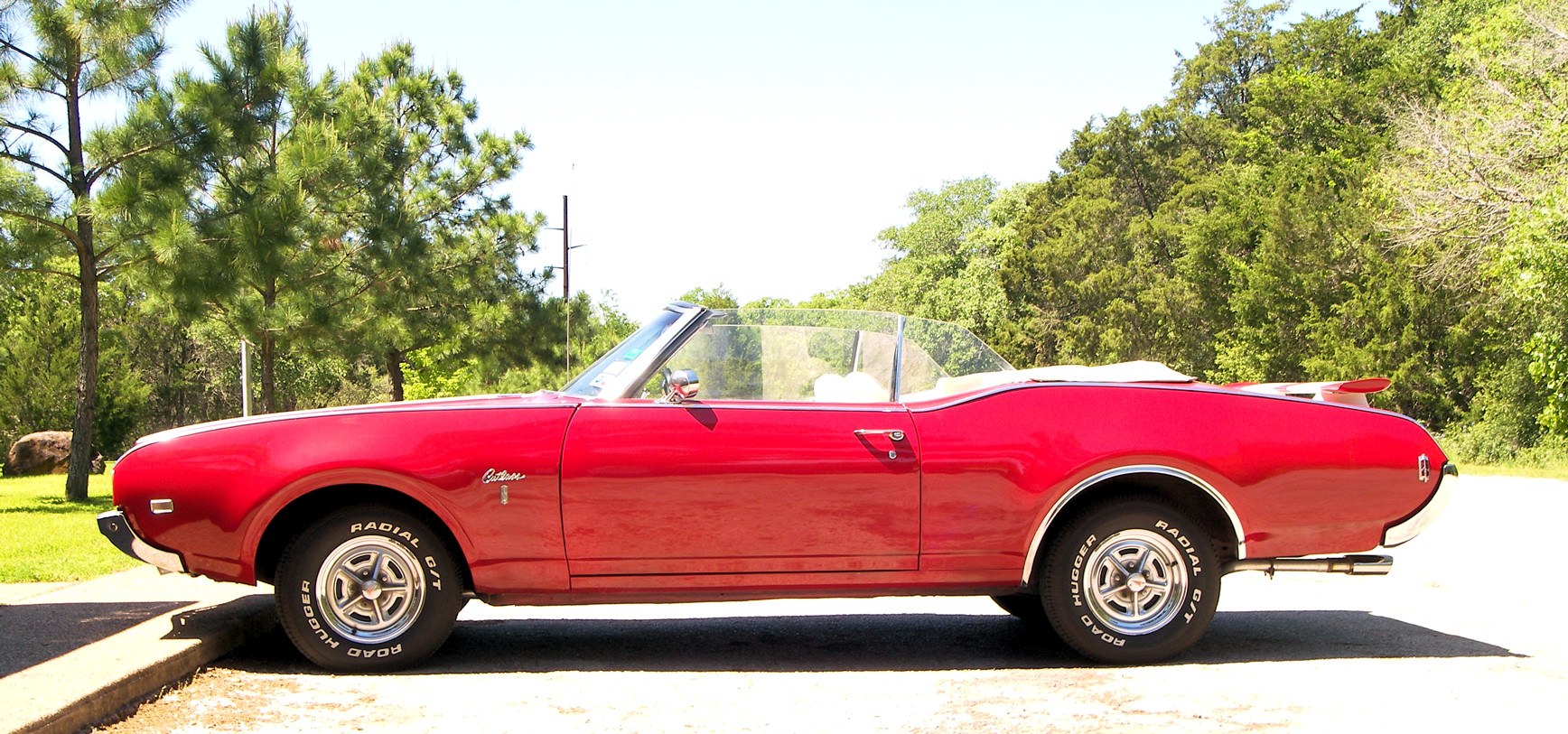
The Oldsmobile Cutlass is a car that was made by the Oldsmobile brand. The 1972 version is considered a classic car, meaning it's older and often appreciated by collectors.
A moonroof is a glass panel in the roof of a car that can open to let in light and air. It’s different from a regular sunroof because you can see through it even when it’s closed.
Crank windows are windows in a car that you have to turn a handle to open or close. They are not automatic like power windows, which you can control with a button.
You have to not only have to come up with the color,
you need to then get the color to stick to a paint or something
and then stick to the car and then reflect light
in the same way that it did when it was on the paint.
Good point.
But when it would react with the metal,
the color shifts and so they learned all that over time.
But that's why there was like five colors of a car.
Like Henry Ford said, you can have it any color you want
as long as it's black.
So good. So good.
He was poor at thinking.
And he was he was a smart man.
You know, he had to sell cars, make it so.
So what happened to that?
What happened to that first car?
Uh.
Somebody went away to college
and my dad worked in the garage
and then my house I grew up in burned down
and burned down around the car
and the car burned up in the house.
Oh, wow.
And it was not like one of the one of the movies
I saw recently, Christine, where the car actually
kind of came back to life after Bernie.
Right, right, right.
It did not resurrect itself.
There was no resurrection from that.
The whole nothing was left of the house.
The house burned literally into the ground.
No, and not even not to make light of that, right?
That's a that's a devastating, tough, just devastating.
Tough thing. Forget the car, the house.
Right, right, right.
I mean, I was 18.
I was at college.
My parents were out and it happened while they were away.
And so, you know, fortunately, no one was lost.
But I have one frame.
My brother has one album.
And that's all we have of family.
She's lost.
That's so tough.
So, like, so I mean, that sort of shaped who I am today.
It's like I am not attached to anything like there is a great, great point, great point.
It's sort of it's it made me realize that home wasn't the building
because for me, when I was growing up and, you know, your your home,
my parents built that house on our, you know,
my family settled the area that I grew up in in New York.
So 1600s came over on the boats
while settled or stole from the Native Americans, you know,
however you want to put it.
But they put down roots there.
Right, right.
And so the when I was 12 or 13, my parents,
I grew up in the house my grandfather built.
And then my mom and dad built this house up on the hill on the property.
We had like 60 acres.
And so that was their dream house.
And so it was really nice and it was wonderful.
And we always had parties.
We always had friends over.
And then when I came back from college after it had burned,
I had a cake party at the property because we were in the middle of the woods.
And everyone was just like, who throws a party at a burnt house?
It's a story. Hey, you got it.
Yeah, you got to create new memories.
You got to create new memories.
And that actually you're you're walking through that part of your past.
Kind of made me think
made me realize or think to myself, you are one of the most present people I've ever met.
It's always you're you're you're just always ever there
when we're out having a beer, eating pizza with our pals, double dating, having fun.
You are just 100 percent present and ready to rock and have a good time.
So that's that's interesting that you said that.
Well, I appreciate that. I appreciate that.
I mean, it's that.
So I mean, we can get to the Cavalier where I was not present.
We can. So so let's what other cars
kind of led you through to the Navy, because you you you mentioned
something interesting that you served and you didn't have a car for years
for a period of time.
And that that's one thing that I that I kind of found six years, I think.
Yeah, yeah, you didn't have anything sort of sitting in,
you know, sort of sitting and waiting for it.
I thought that was interesting. Go ahead, you were going to say something.
No, no, no, no, no.
So I would say fall of 97 is when the house burned.
I was in college.
I didn't have another car until the I bought a 2005 Chevy Cavalier.
So until 2005, I didn't have a car.
The time in the Navy, I didn't need a car.
It was out to sea all the time.
So right. I mean, a lot of guys bought cars,
but they just sat in the parking lot, you know, he traded in his car
for an aircraft carrier, a high mileage one.
Yeah. Yeah, we get that.
So yeah, the Cavalier, what led you to that?
Was it just kind of did you get off the boat and it was for sale by the base?
No, no, no, I got out in 2002.
And I moved to Lake Tahoe, partied it up in Lake Tahoe for a couple of years,
just wanted to hide away in a hole and then moved home in 2004.
And then 2005.
So at that time in my life, I was I had a real problem with alcohol and drugs.
And I'd already drinking myself homeless once in Tahoe.
And my parents sent me some money
and I got a plane ticket and flew home, you know.
It was another big event in 2005, though later in 2005.
Yeah, well, I was waiting tables or whatever and drinking and partying
and woke up one day and I had a car.
So some three day bender.
I somehow had convinced my dad to cosign and bought a car in the process.
I don't remember any of it.
Well, you would need another you would need another car
because something significant happened in Louisiana.
They called you there in August of 2005, right?
Right. So that hurt.
Yeah, I got sober in June of 2005.
So the car was one of the triggers.
And then absolutely the other one they disowned me was the final straw.
And so I finally got sober in 2005.
I've been living a good life ever since.
So haven't had a problem with alcohol and drugs
since thanks to alcoholics, non-medicine, you know, getting help, right?
So that's an important work on myself to fix my problems.
But anyway, so got sober in June 2005, met a girl.
She was going to law school in New Orleans.
She came up during Katrina to get away.
And then when she left, I knew I wanted to be with her.
I didn't have anything going on in New York.
So I mean, that's the beauty of a car, right?
Like, I can go somewhere.
I can get absolutely I can I have some autonomy, right?
So I just packed up the car.
I had like six hundred seven hundred dollars and drove to New Orleans.
And on the way, I stopped and saw my best friend
from childhood in North and Greenville, South Carolina
and decided to buy a wedding ring and then drove to my ex-wife now.
But my my soon to be wife.
I drove and proposed to her, surprised her,
just drove right to where she was.
And she thought I was going straight to New Orleans.
And so then I went to New Orleans, post Katrina
and just helped rebuild.
I mean, it was I can't imagine.
It was the greatest greatest choice and decision I ever made.
I mean, my brother once again was like, it is so you
that everyone's running away and you're running in.
I can see like anyone else telling me that they have an idea
that they're going to go to where there's complete devastation
and everyone else is leaving.
I tell them they're crazy.
He's like, but for you, it makes sense.
So what sort of stuff did you would you do?
What did you see?
What did you experience?
It was like so I was there.
So Rita hit New Orleans two weeks after that's right.
After Katrina. That's right.
I got there a week after Rita.
And so it only been about four or five weeks
since Katrina hit when I flew into Pensacola.
No, no, no, no, not flu.
I drove, got to Pensacola from Mobile.
And it's a three hour drive from Pensacola to New Orleans.
It's two hours from Mobile to New Orleans.
Mobile was the last building I saw on the highway
until I got to West New Orleans leveled.
Everything gone.
Nothing but concrete slabs where there were gas stations
for hundreds of miles.
It was unbelievable.
And then driving in through East New Orleans,
everything was still under water.
And you're just driving by these
in an entire neighborhood, apartment complexes,
with six feet of water lined across the bottom
as you're driving along on the highway.
And then, so then I just started,
like it was like a mining town.
There was nothing but National Guard
and men and doolies like construction workers, right?
And so I learned where you would stand
and get picked up for work.
So I followed the Mexican guys
and we would stand on the corner.
We'd stand outside of Home Depot.
And I learned real quick, you follow the older,
more senior guy because he waits.
And so construction guys would just drive by
and be like $25 an hour, $50 for the day,
$100 for the day.
And as the day went on, they got more and more desperate
and so their price would go up.
So the young guys all jumped on the first truck that came
and I noticed this guy sitting over here waiting
and I'm like, why is he waiting?
And so I waited with him.
And I was like the only English speaking guy around,
right?
Some guy would pull up and be like $200 a day
and we'd hop in the back of the truck
and he'd drive to a neighborhood
and we'd go in the house and gut the house.
I gutted Navy complex buildings,
got a contract with some big company
and we literally went cubicle by cubicle
and unpacked the whole building,
packed it up, shipped it off
and tearing out sheet rock,
tearing out mud and all sorts of it.
It was just day work.
I did a lot of video editing and film for NPR.
That was your background.
NPR directly, but NPR was buying what's called B-roll
and so I was a photographer in the Navy,
a photographer, videographer
and so I started shooting video around town
and editing it and working with other people
that were shooting videos.
So we were on Craigslist like posting like,
hey, I need an editor for this stuff.
And we would go interview people
and just grab B-roll footage of people dealing
with the aftermath of the storm
and NPR and a lot of documentaries started buying it up
but I was just getting paid like, you know,
30 bucks an hour or something just edit video
which was good money, you know.
And I mean, the only Katrina story,
this is a Katrina story, everyone is here.
This guy, he told me and he goes,
the third day I walked by the old woman's body
in the street, I decided to cover it up
and mark it with an orange cone
hoping that it would get picked up by the authorities.
He's like seven days later,
I couldn't walk down the street anymore.
So I walked the other way
and I was checking on my neighbors and talking to people
and I hadn't seen anybody.
He hadn't seen a police officer,
he hadn't seen a fire truck,
he hadn't seen a National Guard person.
This is 13 days after the storm.
And he's in the city, he's in the city.
A major city.
And he's like, it's hopeless, it's hopeless.
I have no future.
And my dog's a barking, sorry.
It's fine, keep going.
Okay, so he's like, it's hopeless, I have no future.
He goes inside and he lays down
and he's laying on his bed
and his ceiling fan just starts slowly moving.
And then electricity came back.
And he's like, so I decided not to die that day.
And I got up and I started helping other people out.
And I finally saw a National Guard 21 days after the storm.
Wow.
You know, like, what?
It was just so mind blowing to hear these stories, you know?
And to people in New Orleans,
Katrina's not the hurricane, it's a flood.
That's the hurricane did not cause the damage.
The flooding and the poor management of the water
caused the damage.
So anyway, enough about Katrina.
So I had the Cavalier the whole time
and it's just a two door low rider, right?
And Katrina's, the roads are all messed up and muddy
and I'm like driving around.
Google Maps is sending me directions
and the roads just don't exist.
The road just ends and I got to turn around
and I got stuck a couple of times.
I got that Cavalier zoom in.
I was like, whee.
Cavalier has some stories, well.
And reliable too.
Right, right, right, right.
Never had a problem with it.
Well, fantastic, fantastic.
So I shortly got married after that
and we loaded up in 2007.
We had a kid, our first kid
and we decided to move to Pensacola,
loaded up the car, the Cavalier
and a moving truck or whatever.
But we were driving to Pensacola
and I had to change the diaper
and the Cavaliers got no room.
So we had to pull over and pop the trunk
and change the diaper in the trunk, you know?
Yeah, I think you got the,
there are Cavaliers that the option package comes
with a diaper changing table in the trunk.
And I'm sure you availed them.
Yeah, I think it comes with a, with a moonroof.
I have crank windows.
I had an ashtray, like it was old.
That was like the last of the old models.
I didn't think they were so cranky.
Ashtray, cigarette lighter, like a real one.
Does your son or daughter like that story
about the diaper changing
in the back of the old Cavalier?
No, I don't think I've told them about it.
Well, they're gonna win now.
Yeah, this is so great that you're able to,
you know, reminiscing about these stories
and kind of get it down on celluloid
for the next generation.
Yeah. Right, so with the kid,
we had to trade in the Cavalier
and I was upside down anyway.
No surprise that my blackout
did not improve my negotiation skills
at the dealership.
Yeah, well, we've all been there.
We've all been there.
Well, I traded it in for a van,
a 2006 Kia Sedona,
and we still own that Sedona now,
the Kia, and my oldest now drives it.
Oh, nice.
Oh, that's, I understand that.
That's what John's driving now.
Yeah, yeah, yeah, yeah.
Fantastic, fantastic.
What color is the Sedona?
Silver.
And what color was the Cavalier?
Silver.
His current truck is also silver.
Yeah, my current truck is silver.
I didn't realize that
till I was getting ready for the podcast
that I liked silver cars, I guess, I don't know.
Yeah, I'm a big fan of silver cars
and Ashley, maybe you bought the car
without realizing your current car
because it's a Silverado.
Yeah, right.
It's in the name.
It's in the name.
What are the colors they come in?
It's in his subconscious.
Which brings us, yeah,
which brings us kind of full circle
to why he's here in tailgating,
sitting on his tailgate, out of tailgate,
playing the bongo and bruising his thumb.
Well, yeah, this has been wonderful, Tom.
Thank you for being on the show.
Is this what you thought it would be?
Yeah, it's great.
I really enjoyed going through these memories
and processing because I think,
I think as we get older, our timeline shifts, right?
Absolutely.
Now that was 20 some years ago,
it's like, wow, how did that happen?
And then so it really helped to piece together
some of the story and recognize when things happened
and just remember where we came from, right?
That's all.
That's so well put.
I'm no longer an alcoholic or drug addict.
I'm a self-sufficient contributing member to society, right?
And success with that as a possible person.
To think back then is like,
that's so far from who I am today.
Like it's like...
You're correct.
Well, you've lived a few lives.
One of the most interesting people out there.
At least three that I think I am.
Yeah.
Yeah.
And as you can imagine,
and Tom is sort of the cornerstone
of our group of poker guys that meets down here.
And no shortage of fun.
And Tom is obviously, as you can tell, successful guy,
great guy, great friend, talented, skilled.
And I was just pleased to have you on the show partner.
Thank you for being here.
Yeah, thank you very much.
Thank you, Tom.
Great meeting you.
Yeah, it was nice meeting you.
I recommend this to anybody.
This was a lot of fun.
Thank you.
We might have to tease out that sound bite
into a commercial.
There you go.
Make a little commercial clip.
I can't say it any better than my guess.
So that was to all the cars I've loved.
Before that is this episode as we hurdle
toward the end of season two.
I'm Christian at carslove.com.
Doug is Doug at carslove.com.
Reach out, make sure it's plural, carslove.com.
And check us out online, carslove.com.
And on your platform, podcast platform,
streaming platform of choice.
So thanks again, Tom.
Have a great day.
Take care, pal.
Thank you, Tom.
Thank you.
And we will see you guys next week,
next episode, carslove.com.
About this episode
Tom shares his journey through classic cars and personal challenges, starting with his first car, a 1972 Oldsmobile Cutlass, and the life lessons learned along the way. He recounts how a devastating house fire shaped his perspective on material possessions and led him to embrace life more fully. Tom's candid reflections on sobriety, his experiences during Hurricane Katrina, and the significance of cars in his life provide a heartfelt narrative that intertwines automotive passion with personal growth. The episode highlights the bond between friends and the stories that cars can tell.
Tom’s story is an odyssey of resilience, with cars as the constant companions through his life’s ups and downs. He begins with fond tales of his first car, a 1972 Oldsmobile Cutlass, and his long-held preference for silver paint jobs – little did he know how significant “silver” would become in his journey. Tom then shares an almost unbelievable chapter: trading his wheels for a U.S. Navy aircraft carrier at least in responsibility! During military service, he experienced life without a personal car, piloting massive ships instead of cruising in a Chevy Silverado. When Hurricane Katrina struck, Tom embarked on an epic road trip in his truck to help rebuild New Orleans, illustrating how deeply automotive culture and duty to others intertwined for him.
The episode doesn’t shy away from hardships – Tom opens up about losing his childhood home (and beloved first car) to a fire, battling addiction, and overcoming homelessness. Through each challenge, the theme emerges that cars and the car community were therapeutic and grounding forces in his life. By the end, Tom has listeners cheering as he finds stability and joy again, eventually behind the wheel of a 2015 Silverado that symbolizes how far he’s come.
This powerful, emotionally charged episode transcends typical car talk; it’s about the human spirit, the drive to survive, and how the love of cars can steer us through even the darkest roads
*** Your Favorite Automotive Podcast - Now Arriving Weekly!!! ***
Listen on your favorite platform and visit https://carsloved.com for full episodes, our automotive blog, Guest Road Trip Playlist and our new CAR-ousel of Memories photo archive.
Don't Forget to Rate & Review to keep the engines of automotive storytelling—and personal restoration—running strong.