The Lincoln Navigator is a big, fancy SUV that has a lot of room and nice features. It's popular with people who want a luxurious vehicle for their family.
The Jeep Grand Cherokee is a popular SUV that can handle rough terrain and is also comfortable for everyday driving. It has been around since the early '90s and offers a mix of style and performance.
The Turbulent Jet Injection Engine is a new engine design that helps the vehicle use fuel more efficiently, which can lead to better performance and fewer emissions. It makes the engine run smoother and cleaner.
The Maserati MC20 is a new sports car from Maserati that is designed for speed and performance. It has a powerful engine and a sleek design, making it a standout in the sports car market.
Netuno is the name of a special engine made by Maserati. It's designed to be powerful and efficient, using some advanced technology to help it run better.
A precombustion chamber is a small space in an engine where fuel is mixed with air before it burns. This helps the engine run cleaner and more efficiently.
Direct injection is a way of delivering fuel straight into the engine's combustion chamber. It helps the engine use fuel more efficiently and can make it more powerful.
Port injection is when fuel is sprayed into the engine's intake system before it goes into the combustion chamber. It helps the engine run better and cleaner, especially when used with other methods.
A pre-chamber is a small part of an engine that helps burn fuel more efficiently. It makes sure the fuel mixes well with air, which helps the engine run better and produce less pollution.
A turbo is a part that helps an engine get more power by pushing in extra air, which lets it burn more fuel. This makes the car go faster without needing a bigger engine.
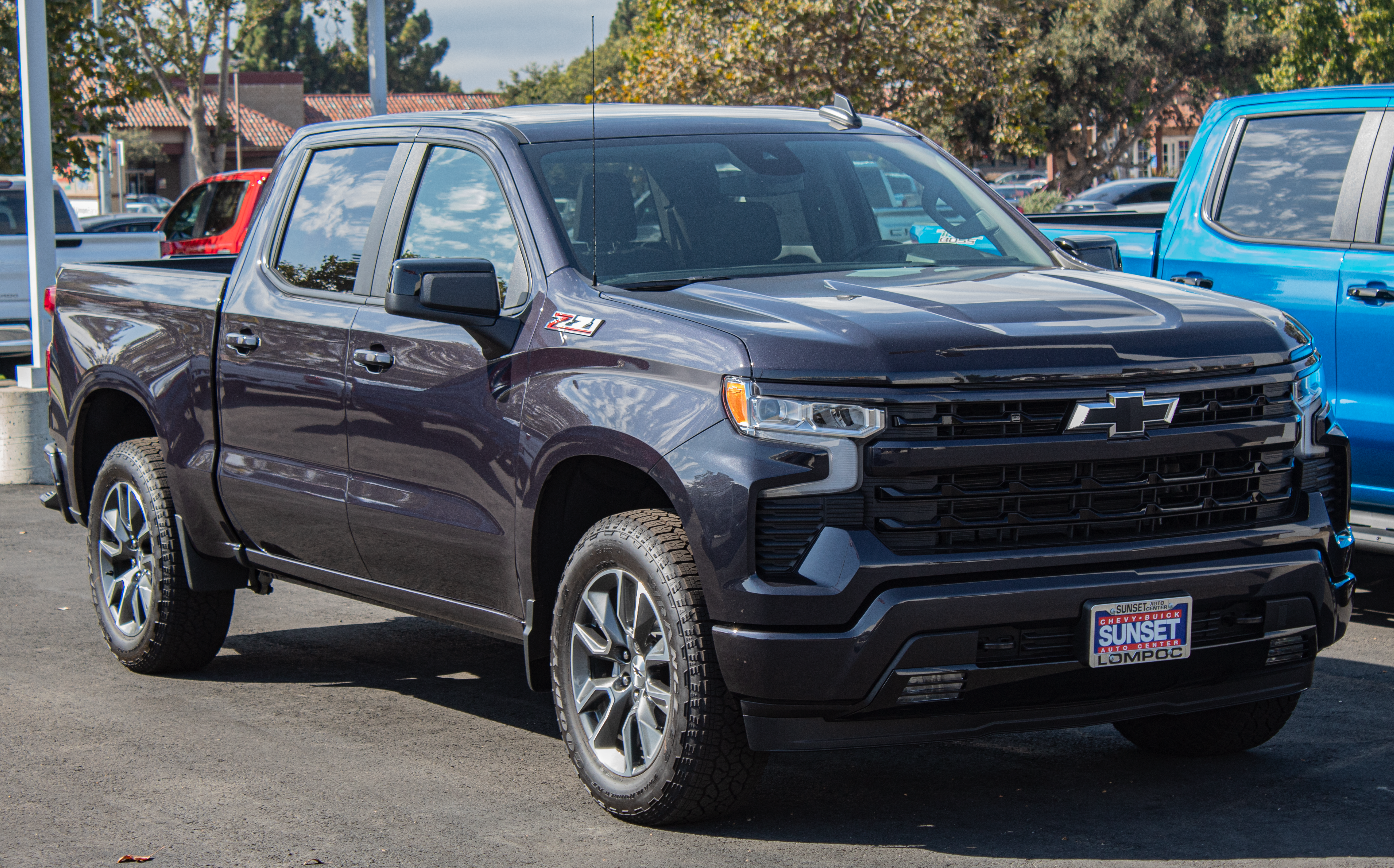
The Chevrolet Silverado is a big truck that people use for work and everyday driving. It's popular because it can carry heavy loads and has different engine choices to save on gas or go faster.
The BMW X3 is a type of SUV that is smaller than some larger SUVs but still offers a lot of space for passengers and cargo. It's known for being fun to drive and having a powerful engine.
Suspension is what helps keep the car stable and comfortable while driving. A stiff suspension means the car is better at handling turns but might feel bumpier on rough roads.
Apple CarPlay lets you use your iPhone in your car. You can see maps, listen to music, and send messages on the car's screen, making it easier and safer to use your phone while driving.
The Genesis GV80 is a fancy medium-sized SUV that has a lot of nice features and looks stylish. It's becoming popular because it offers luxury and comfort.
The BMW 7 Series is a very fancy car that's known for being comfortable and having the latest technology. It's a top choice for people who want a luxury vehicle.
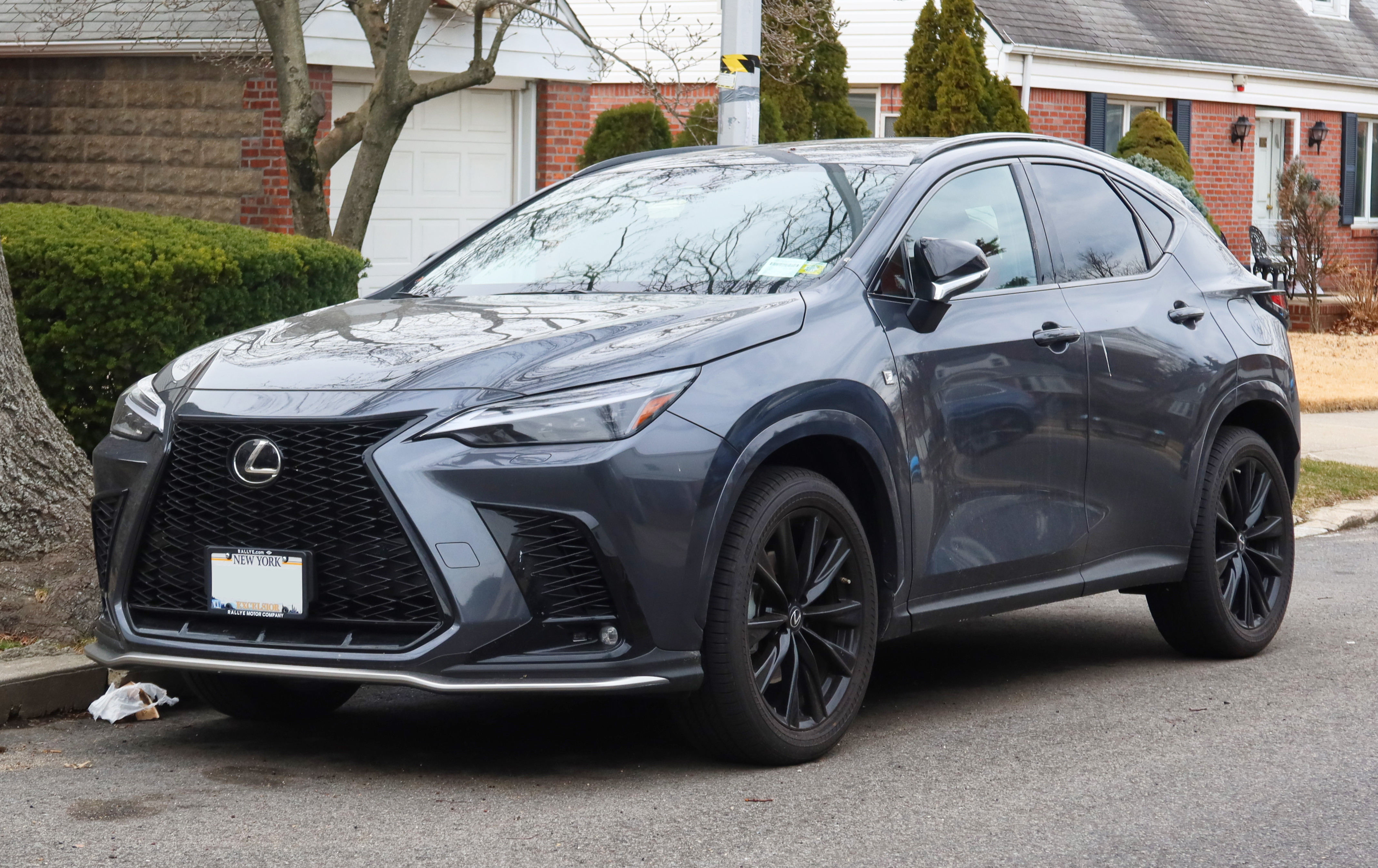
The Lexus NX 350 is a small luxury SUV that looks great and has a lot of nice features. It's a good choice for people who want something fancy but not too big.
The Honda Accord is a popular car that many people like because it's roomy and dependable. It also comes with smart safety features that help keep drivers safe on the road.
The Lucid Gravity is a new electric SUV that's meant to be fancy and fast. It's part of a new wave of electric cars that are trying to be both eco-friendly and luxurious.
The Lucid Air is a high-end electric car that can go really far on a single charge. It's getting a lot of attention for being both luxurious and eco-friendly.
The Mercedes-Benz S-Class is a very fancy car that offers a lot of comfort and high-tech features. It's often seen as one of the best luxury cars out there, which is why people talk about it a lot.
The Subaru Outback is a car that looks like a mix between a wagon and an SUV. It's great for driving in tough weather and is popular with people who love outdoor activities.
The Rolls-Royce Phantom is one of the most luxurious cars you can buy, known for its beautiful design and high-quality materials. It's often seen as a status symbol for the very wealthy.
The Jaguar I-PACE is a fancy electric SUV that looks really nice and drives well. It's one of Jaguar's first electric cars, showing that they're moving towards greener options.
The Hyundai Ionic 5 is a new electric car that looks very modern and has a lot of space inside. It's popular because it can drive far without needing to be charged often.
The Chevrolet Bolt EUV is a new electric car that has a lot of space inside and can drive far without needing to be charged often. It's a good option for people wanting to switch to electric vehicles.
The Buick Skyhawk is a small car that was popular a long time ago for its sporty look and usefulness. It's remembered by car fans as part of Buick's history.
The Toyota Highlander is a medium-sized SUV that can carry a lot of people and their things. It's popular with families because it's safe and comfortable.
The Lexus RX 300 is a medium-sized luxury SUV that offers a comfortable ride and nice features. It's popular for being reliable and spacious, making it great for families.
The GMC Sierra 2500HD is a big truck that's made for heavy work and can pull a lot of weight. It's popular with people who need a strong vehicle for tough jobs.
The Ford Taurus is a big car that used to be very popular because it was comfortable and had a lot of space. It's remembered as an important car in Ford's history.
The Honda Prelude is a sporty car that used to be popular for its cool looks and fun driving. It's remembered fondly by car fans because it combined being stylish with being practical.
The Nissan Sentra is a small car that's easy on the wallet and good on gas. It's a popular choice for people who need a reliable car for daily driving.
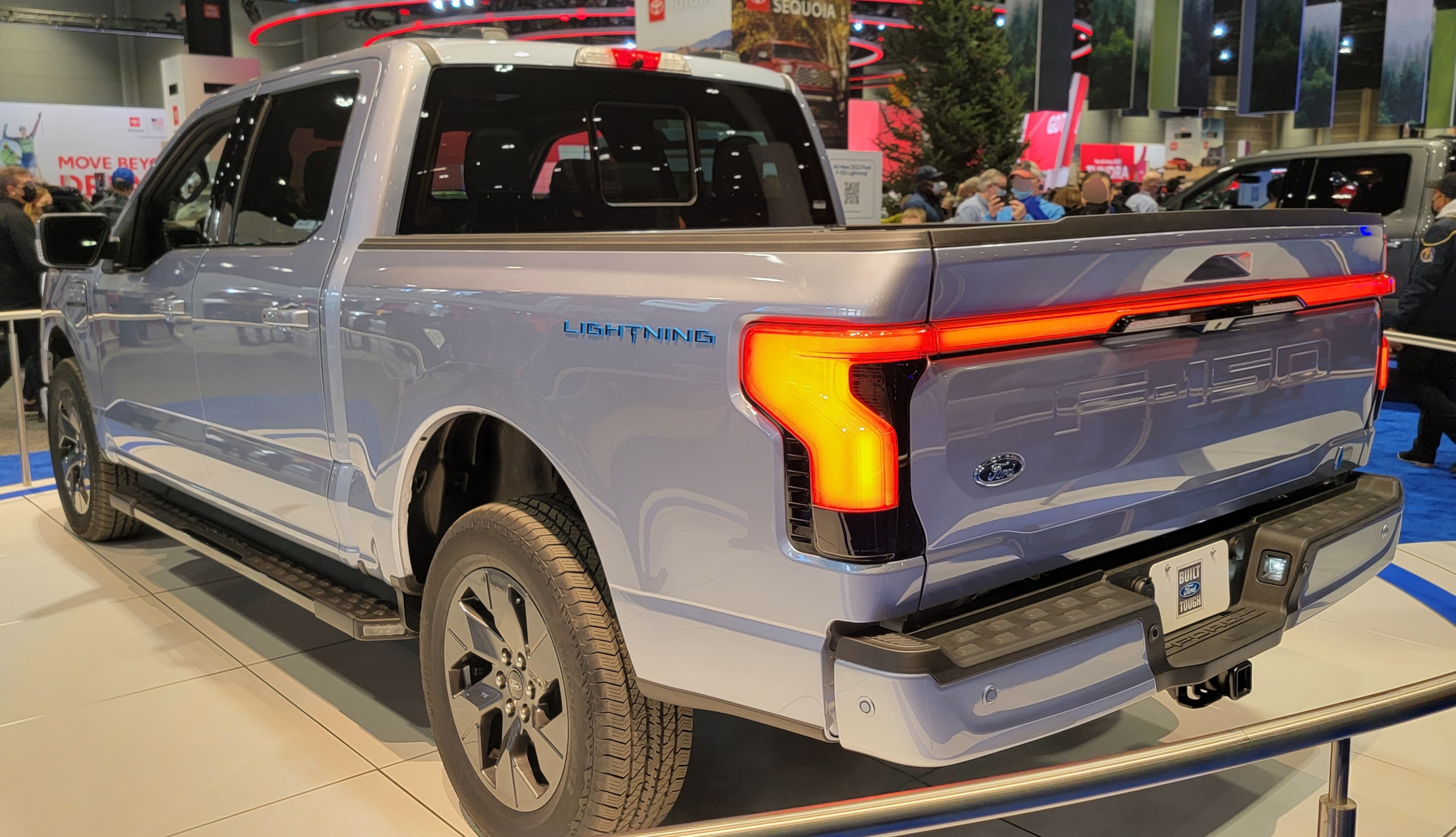
The Ford Lobo is a truck that's very similar to the Ford F-150, but it's called Lobo in Mexico. It's known for being strong and useful for both work and everyday driving.
The Hyundai Palisade is a big SUV that can fit a lot of people and their stuff. It's known for being comfortable and safe, which makes it a great choice for families.
The Nissan Leaf is an electric car that doesn't use gas, which makes it good for the environment. It's popular because it's affordable and great for everyday driving.
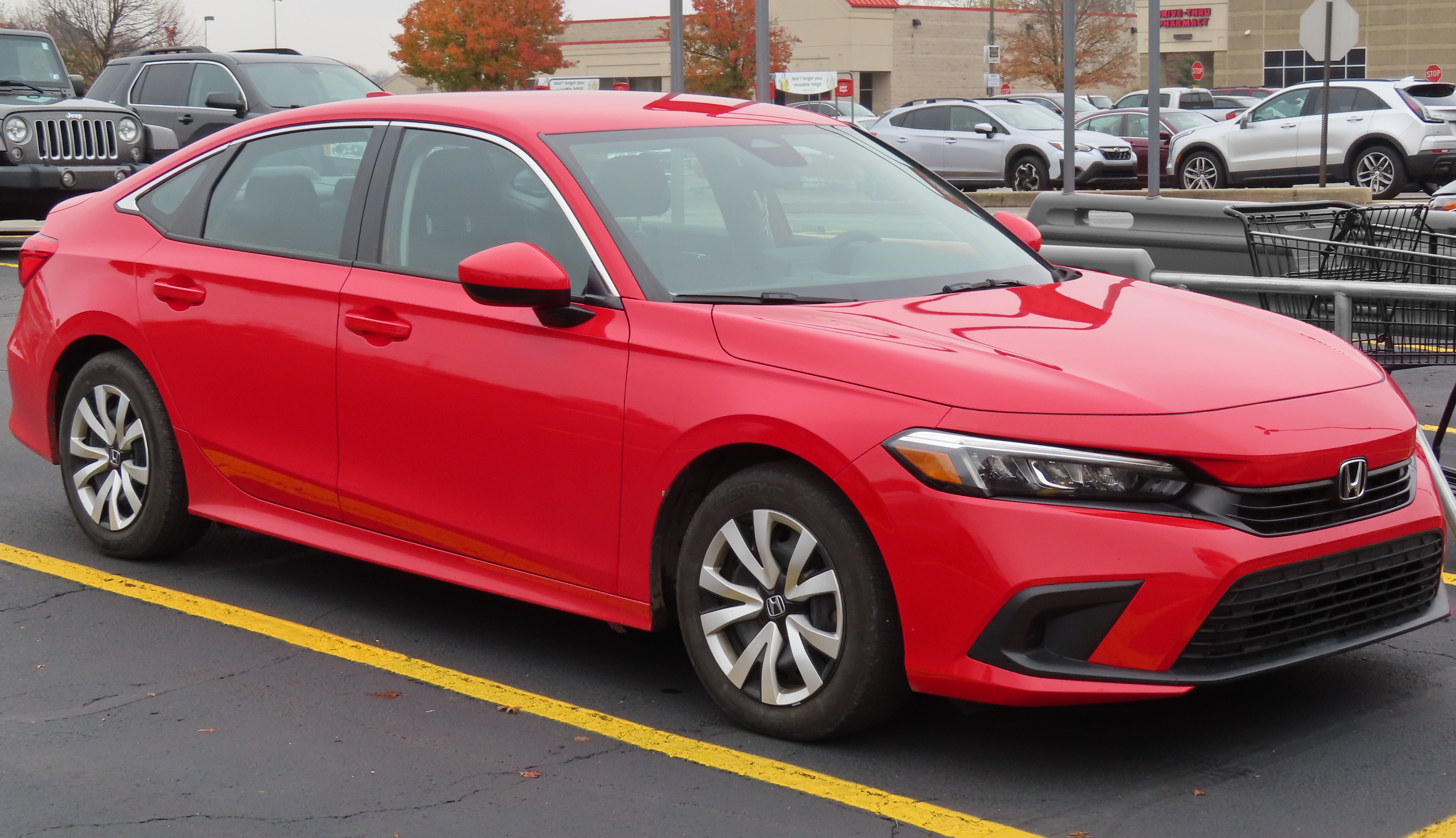
The Honda Civic is a small car that many people trust because it's reliable and saves gas. It's popular for its good looks and different styles, making it a favorite choice.
The Toyota Corolla is a small car that a lot of people buy because it's dependable and doesn't use much gas. It's known for being a good value and is very popular.
The Rivian R1T is a new electric truck that runs on batteries instead of gas. It's getting a lot of buzz because it can go off-road and has some cool features.
LIVE
Whether you drive a car, need a car, or just occasionally bummer ride with friends, you've
come to the right place.
Join Jill and Tom as they break down everything that's going on in the auto world.
New car reviews, shopping tips, driving green, electric cars, classic cars, and plenty of
great guests.
This is the Consumer Guide Car Stuff podcast.
All right, this is the Consumer Guide Car Stuff podcast.
I'm Tom Appel.
Thank you for joining us today.
When you have a moment, do me a favor, check us out at ConsumerGuide.com.
That's ConsumerGuide.com.
All sorts of good reviews, fun classic car stuff, and our best buy picks, new ones
of which are going up soon.
In studio with me again.
Again.
Again.
Jill Simonillo, contributing editor here at ConsumerGuide.com, North American Car
of the Year juror, and freelance person.
Freelance person.
Your freelance stuff you've done recently you want to point to?
I don't know that any of it is actually live yet.
Oh, okay.
So I just wrote a review of the Lincoln Aviator and the Infinity QX60 for US News, but those
are not live yet.
All right.
Pillboy.
Are you familiar with the name Pillboy?
No.
He's a podcast listener and follower on X.
Oh, hi.
For prolific, funny guy.
Yes.
Snarky.
He rips on us.
It's good.
He's really disappointed in our donut choices as of late.
Uh-oh.
So this is why the box is still closed.
You can open the box.
So we are doing like, and I feel like I need video or something.
We're doing an unboxing.
We'll get a picture and then, yeah.
Oh, okay.
Okay.
Gingerbread.
Oh.
Vanilla iced.
Mm-hmm.
Lemon drop.
I'm totally taking the gingerbread.
All right.
I hate gingerbread so good.
It was risky of me to put that.
You know what?
I love gingerbread.
Not as much as I love cinnamon, but you know, they probably put a little nutmeg in there
and that's a close substitute.
I don't know.
I don't know.
My daughter and I have been watching Tasting History, a fantastic series that runs on YouTube.
Mm-hmm.
It's where a guy digs up recipes from olden days.
Oh, yeah, yeah, yeah.
I follow this guy.
Max Schmidt.
Yeah.
Yeah, he's great.
He's great.
He keeps doing stuff from medieval times.
Okay.
And every freaking thing is nutmeg in it.
Nutmeg is amazing.
I don't really like nutmeg.
And then mace, which is weird.
Yeah.
That is...
It's made from the shell around the nutmeg.
Mm-hmm.
It's harder to get, more expensive.
Okay.
And it tastes like nutmeg.
All right, enough of that.
Okay.
Well, and so I should also say, there was a listener who was a little bit distressed last
week about the fact that I said that I was eating chili and then having a donut.
Yeah, I saw that.
And I'm just going to let him know I'm doing it again.
It was not bad.
It was not bad.
I just let that pass.
It's not bad.
I learned about conditions in the studio.
It hasn't been an issue yet.
No, it has not.
All right.
Interesting news.
I have said several times now, never brand something that sucks.
Okay.
Right?
And we were talking specifically about Volkswagen's software group that's been failing.
Great.
As a software group.
Anyway, Stellantis has branded something that's really interesting.
I don't know if you caught this story yet.
Okay.
But it is the new available engine in the Grand Cherokee.
And it's called the Turbulent Jet Injection Engine.
That's actually the technology.
Okay.
They're actually calling it Hurricane.
But it's a four-cylinder engine.
Oh.
Yeah.
Oh.
So a different hurricane than the six-cylinder.
It's also more different than you think.
Okay.
I mean, it can be in the Hurricane family, but it has entirely different cylinders.
So Hurricane One and Hurricane Two.
I guess so.
I feel like they need to name it.
Is it Hurricane Tom?
I don't know.
Hurricane Jill.
It just can't be Hurricane.
Do you remember when it was sexist to just call hurricanes by women's names?
So now they're our men's names.
As there should be.
All right.
Sure.
Sure.
Hurricane Tom.
That would be nice.
Hurricane Tom, Hurricane Jill.
There you go.
We are giving some feedback to our friends at Stellantis, who I'm sure are listening
right now.
Well, there's a lot of branding going on here.
First of all, we have to leap ahead or actually leap back to Maserati.
The MC-20 sports car.
You remember when that thing came out with a fire-breathing three-liter engine.
That was special, not because it was turbocharged, but because it had something they called, well,
they called the engine Netuno, an E-T-T-U-N-O, Netuno.
They branded the engine.
But it used a precombustion chamber that was located up in the cylinder head.
And I don't know how similar that is to this, but this is a descendant of that
technology where there is direct injection into the pre-chamber.
Plus, there's port injection that comes in by, you know, the fuel comes in by
way of the valve.
They go between the two.
But the crazy thing is that the pre-chamber, basically, super high-pressure fuel is shot
into a little pre-chamber filled with holes like a sieve.
It's ignited in the pre-chamber and then flame shoots out everywhere.
It's crazy.
There's good video of it.
That seems like a recipe for problems.
No, it's actually worked really well.
It's a great way to get the flame wall built faster.
But it's got a cost more to do this thing.
But that is now the available engine in the Grand Cherokee.
Now, that replaces the V8.
So that's crazy.
I've got the horsepower here and I forgot it.
I also can't read my handwriting.
324 horsepower from a 2-liter turbo.
Okay.
So, and just for comparison, that is 162 horsepower per liter.
And that compares to 200 horsepower per liter for the 2-liter turbo
that's in the compass.
Okay.
So, interesting technology.
We're going to see that soon V8 being replaced fuel economy should be much better.
Okay.
Are you the only one who finds it interesting that they brought back the Hemi
and now they're replacing the V8?
In the Grand Cherokee.
But still.
The V8's going in other stuff.
I think Grand Cherokee buyer is not so interested in that snarky noise.
Okay.
You can tune it without the snarky noise.
I think it has its role marketing-wise in the RAM,
though it depresses me that it's there.
Yeah.
But then the question is, will this four-cylinder engine eventually show up in a RAM?
Because we forget that Silverado and Sierra come with a four-cylinder turbo.
They do.
But anyway.
All right.
That's that story.
Audi, you've heard of them?
No, never heard of them.
Audi wants a G-Wagon style vehicle.
Okay.
So if you've seen the Mercedes G-Wagon, the Glendavagon, the big boxy thing.
Yep.
And you see them in cities where they're completely unnecessary.
Yes.
Also, they're stupid expensive.
I feel like the base price is like $150,000 or something like that.
It's a lot of money to pay for Mercedes.
It doesn't really supply you the Mercedes experience.
Right.
Like the ride quality, the quietness.
It's very rough.
They're handling.
Yeah.
None of that's there.
But they want a wagon and they possibly are going to have it built by Scout.
Because the only place that would really sell would be in the U.S.
So you really want to build it here.
That's the new rule.
Right, right.
So kind of like a Lexus GX Alex kind of thing, but maybe a little bit more rugged.
You know, they don't have anything like that.
They don't have anything body on frame.
So that's where they're going.
Well, I wonder if Scout is building it, if that means it would be electric with a range
extender.
That is exactly what they're saying.
Yeah.
That is exactly what they're saying.
Okay.
GM and Tesla have reached out to their suppliers.
Did you see this story?
They want them to stop getting parts from China.
Well.
Both of them by 2027.
Okay.
So just throwing that out there.
I don't know how much we're going to talk about that.
Unless maybe it comes up while we're chatting with Sam.
And then finally, you've got a lot of noise news.
Noise.
Noise.
I mean, I'm trying not to be noisy over here.
China, Chinese car makers rushed into Russia when everyone pulled out at the beginning
of the Ukraine war.
Okay.
And for a little while they were filling that gap and people in Russia were buying
Chinese cars.
However, that hasn't worked very well for anybody.
The Russian economy is in turmoil.
People can't afford cars.
And the interest rate now on a new car loan in Russia, do you want to guess?
50%.
It's 30.
Okay.
It's 30, which is prohibited.
I knew it had to be very high.
Yeah.
It's silly high.
So, all right.
That's all the news I've got.
You got any news you want to share?
I do not.
All right.
You've got Naktoy finalists to talk about.
Yes.
Why don't we hold off on those and see how we do time wise?
Okay.
And let's talk about your review.
You recently drove the BMW X3.
Yeah.
So I just turned that in today and I really like the X3 to me.
It's kind of a right sized SUV.
It's not too big.
It's not too small.
It has plenty of cargo space and it's, I mean, by virtue of the fact
that it is a BMW, it's well powered and it is very nimble.
I am sort of surprised that it is not BMW's best selling vehicle.
Yeah.
It is its second best selling vehicle.
The X5, the mid-sized crossover.
Right.
65,000 units last year, the X3, 58,000.
And you drop all the way to 45,000 for the three series.
They're still selling a lot of cars.
Right.
After that, the I4, that's impressive.
That's the electric small sedan.
And then finally the X7, which I don't like that much.
That's the big, big crossover.
And I don't think I've ever driven the BMW X7.
My takeaway from that is it has heated third row seats.
Yeah.
It's a fine vehicle.
I just think when you get to that much size, you lose some of the BMW.
Nis?
Nis.
Yeah.
I was going to say ishness.
But yeah.
Ishness.
Yeah, you do.
So you drove the X50i.
Yes.
So that gets you the six cylinder engine.
Yes.
Do tell.
You know, I just thought this was really well powered.
This is the kind of vehicle that I really wanted to take a road trip in.
And unfortunately I did not go to Indianapolis last weekend.
But driving on the highway acceleration was very like fast.
And it kind of makes your stomach do a little flip flop because you get that punch of acceleration
that just I call it gleeful.
It is very, it is very gleeful.
And it's nimble.
The suspension is stiff.
But what I found really interesting about it is it handled city streets relatively
well.
You know, the street I live on now has a lot of speed bumps.
And trying to navigate through my neighborhood, it's like ka thunk, ka thunk, ka thunk.
And I didn't, I didn't like, yes, you felt the speed bump, but I didn't feel the ka
thunk.
And I consider that a win.
Like I just, I feel like.
I'd write that down for further, but I don't really know where to go with that.
Okay.
Okay.
That's fine.
But no, I just, I thought it drove really well.
I really did a tech review of this vehicle that will appear on my channel next week.
And I thought most of the technology on the vehicle worked really well as well.
So it's got, and I should say this has been redesigned for the 2025 model year.
It's fourth generation vehicle.
And so you have like the mono screen.
Only the fourth.
Yeah.
Interesting.
You have the mono screen that is popular these days that goes from the gauge cluster
to the infotainment.
And even BMW was in on this.
Everybody's in on it.
I just finished my review of the 2026 Genesis GV 70.
Same deal.
Yeah.
Yeah.
And so you have like a smaller, it's probably like a 12.3 inch infotain, or a gauge cluster
behind the steering wheel that is slightly configurable.
And then you have a bigger, I mean, I would say it's probably like 14, 15 inches infotainment
screen.
And you have wireless Apple CarPlay.
And you know, it fills out the screen really well.
I found, you know, that my phone paired really well.
So I just updated my phone to the new like 26.1 operating system.
And I had a couple of problems with the infinity when I did that because initially it was fine
and then I upgraded and then it was not fine.
But I didn't have a problem with the BMW.
It seemed to accept my new operating system just fine.
And I like the backup cameras.
I spent a lot of time looking at the backup cameras like because I park in a garage that's
really dark and you know, it's an apartment garage.
And so I back into my space and it went from light to dark really well, which I think is
great when you have that in a backup camera.
It has the dynamic guidelines.
So when you turn your wheel, you can see where you're going to end up handy.
And so I liked that.
I think they call it Travel Assist Plus, which is their version of hands-free driving.
It operated really well, but it only goes up to about 40 miles per hour.
So it's meant for traffic.
It's kind of like the Lexus and Toyota Traffic Jam Assist.
It's meant to be driven more in stop-and-go traffic hands-free rather than on the highway.
And Nissan's system in most applications, what is that called?
Propilot Assist.
Propilot Assist is really a traffic jam assist system as well.
Yeah.
I mean, you can do Propilot Assist up to, I think, up to 80, maybe more than that.
But it's like the Propilot Assist 2.1 or something like that is their most advanced system.
Most of the Propilot Assist is hands-on, but they do have a hands-free option.
But no, so I thought the Travel Assist Plus worked really well in the X3.
It kept you between the lane lines.
It wasn't herky-jerky.
I feel like a lot of these systems, you know, a vehicle will get in front of you
and then it slams on the brakes and you're like, ah, what just happened here?
Did I hit something?
No, you didn't hit something.
The car was just being a little bit crazy.
This is an important question.
Does it still smell like a BMW?
Of course it does.
That's a weird smell.
Yeah.
It's a good smell.
There's nothing wrong with it.
I don't know if it's the leather or what it is that it is.
BMWs and Mercedes-Benz.
Yeah.
They have very distinct smells.
Very distinct smells.
Yeah.
Yeah.
General Motors used to have that smell with leather, although it wasn't really good.
Yeah.
But yeah, so I also, this morning, was playing around with the Parallel Park Assist.
And I know a lot of people don't use it, but I swear up and down this is a feature
my sister needs in her car.
And so I play around with them in all of them so I can recommend for her next car.
And I really, really liked the system.
Like, I played around with systems like this all the time.
Cadillac has a system and it was just like a turtle trying to parallel park.
And people are waiting for you and honking.
But the BMW, it actually was like bam, bam, bam in the spot.
And I was like, what just happened here?
Like, before he even like blinked the car was in the spot.
It paralleled parks like I would parallel park.
Except it did get away.
But without the accident.
But without the accident.
But no, it did get on the curb.
So again, technology is-
Wait, wait, wait.
Did it hit the curb?
It didn't hit the curb.
It went onto the curb.
Okay.
It parked on the curb.
Because this is a thing in 2025, 2026.
You can't really touch the curb anymore because you're probably going to scrape your wheel.
Yeah, you don't want to.
And it didn't like go sideways on it.
It literally backed up onto the curb and like parked on the grass.
In the 70s, when I learned to drive, I learned to drive in the 80s.
But we drove 70s cars.
All the wheels were 70 series rubber.
Yeah.
You could just hit the curb.
Yeah.
Because all you got was rubber.
It didn't matter.
It didn't matter.
And then you had a wheel cover that you could replace.
No, these are really pricey wheel covers.
You don't want to replace those.
There were really only two things that I thought that annoyed me.
And one of them was materials.
The as-tested price of the vehicle that I was in was like $76,000.
And-
Which seems like a lot.
But-
Top tier.
The Genesis I just drove was $76,000.
Yeah.
So Genesis has reached price parity.
Yep.
With BMW.
The value argument, little harder to make though.
Yeah, it is.
Because that Genesis GV70 is fantastic.
With this new generation of like GV80, GV70, the, you know, the cost.
Yeah.
They're playing with the big boys.
Yeah.
They are.
But for a $76,000 vehicle, there was plastic on the door panel where your door handle
is that just seemed odd.
And the door handle itself was like plastic.
And it felt cheap.
And that's something you're going to touch every time you get into the vehicle or get
out of the vehicle.
And it was, it was an odd choice for me, you know, from BMW.
The Genesis has no hard plastic.
No, no.
And then the other weird thing that I just didn't love on this is, you know how I
feel about Auto Stop Start, kind of hate it.
This vehicle has it.
So first off, that was annoying to me.
It had M, you know, series BMW and it has Auto Stop Start on it.
And then to turn it off, there is no physical button.
You have to go tap, tap into the screen to turn it off.
And do you have to do that every time?
Every time.
Yeah.
They want it on.
Yeah, they do.
They want it on.
The thing is that you're driving an inline six cylinder engine, which should be
the smoothest of the Stop Start engine.
It wasn't awful.
It was not awful.
I will be honest with you.
I still don't want it on a performance oriented vehicle.
And I definitely don't want to tap, tap to have to turn it off.
I want to talk real quick about the drivetrains because the base car is the M.
What is it now?
I haven't written down here someplace.
I forgot the M. Is it the M30?
I X.
I don't think there's an M in front of it.
Oh, I'm sorry.
There isn't.
You're right.
Yeah.
It's just the X530.
Like 30i.
30i, yeah.
But that's got a two liter turbocharged engine.
The version with a three liter turbocharged V6.
Both of those now are mild hybrid.
What did I say?
V6.
Yeah, inline six.
Both of those are now mild hybrids.
Yes.
And that's the only way you can go with that.
Yep.
And that's the kind of thing.
A mild hybrid system, and a lot of these did this.
That's the Auto Stop Start part.
Well, it's not just that.
It's also the additional torque on launch.
But a lot of the systems were really crude for it first.
And do you notice that the systems are there at all or?
Yeah.
So I'm perpetually cold.
So I had jacked up my heat to like 85 or whatever.
And when the...
Dear God.
I know.
I know.
Drives my husband crazy.
But I, and I had like the heated seats and the heated steering wheel on too.
So, but I was, I was warm and the, when the engine shuts off, that stuff
goes and kind of shuts off as well.
So did not make me happy that the blast of heat I craved like shut off as soon as the engine
did.
So I would end up lifting my foot off of the brake pedal just so that I could get the
heat to turn back on.
Yeah.
Mild hybrids systems are interesting.
They're not considered hybrid by the EPA.
If you go look at the EPA, just to check fuel economy of different models in a lineup,
you'll see that they don't call them hybrid.
No, no.
They don't address the system.
Well, it has like a, like what a 48 volt mild hybrid system.
And it's not actually a hybrid.
Because I feel like the vehicles that they classify as a hybrid are vehicles that can
operate an electric only load.
Yeah.
And this is not that.
Yeah.
I think that is the line in the sand.
Yeah.
But mild hybrids do deliver some torque or considerable torque.
Like on the, the ram, the hammy came back.
That's just mild hybrid now.
That's the E-torque system.
Yeah.
They call that.
Anyway, this vehicle is just refreshing for 2025 or six.
What was it?
2025.
2025.
Okay.
Yeah.
So that's been updated.
The prices are high, but not that much higher than Genesis now.
Clearly not.
Suspect Mercedes.
I haven't priced a C class in a long time.
I'm sorry.
Is it GLC?
GLC.
Yeah.
In a long time.
But I think those actually come in a little bit higher.
So also in this class, the Lexus NX, Lexus kind of the value play now.
Yeah.
It's not.
Yes.
All right.
Cool.
So overall, what are your thoughts on this vehicle?
I like it.
If you are a BMW driver and you were in a sedan and you're looking for an SUV, I think this
is a great option.
Forgot to ask about rear seat space.
Okay.
So I'm not always the best person to ask that question of because I'm the size of an
average 10 year old.
I thought it was fine.
Okay.
Yeah.
And the seats were actually pretty comfortable.
So, but yeah.
So I think if you're upgrading to an SUV and you want to have a BMW, I think this is a
really good option.
All right.
Cool.
Yep.
BMW X3 on sale now.
You drove the six, which it gets a little expensive, but that suggests that the
four cylinders are a little cheaper.
Oh, I was like, I drove the six.
Where'd you go with that?
The eight, nine, six, got it.
Brain, train of thought, got that.
I'm there.
All right.
We were talking a little bit about eight ass systems, advanced driver assistance
systems.
We're going to be talking to Sam of Beals of Ed.
All right.
Of telemetry.
Yes.
They've done some research.
They're going to tell us about the future of these systems and public
adoption.
Awesome.
All right.
Let's take a break and we'll be right back.
Questions or comments?
Drop us a line at carstuffatconsumerguide.com.
That's carstuffatconsumerguide.com.
We're back to the carstuffpodcast.
And we're back.
This is the consumer guide carstuffpodcast.
I'm Tom.
She's Jill.
And we're going to be talking a little bit about eight ass.
Yes.
Advanced driver assistance systems here in a moment.
Do you remember five, six, seven years ago?
No.
The last time the Honda Accord was redesigned, it came out with Honda
Sensing.
Yes, that I do remember.
And Honda Sensing was kind of a big deal because it brought a suite of these things
together and made them standard.
Yes.
And of course they were available sort of as package trim level things like you
got an LX or an LX with Honda Sensing and then they were just standard.
And all of a sudden a lot of stuff that people were watching kind of
loosey-goosey was finally brought together.
Yep.
And that's good.
But now these systems are getting more advanced and there's some
question about how much is too much, where we're going with this stuff,
what's coming and are consumers ready to pay for that?
All good.
All good questions.
Yeah, all big questions.
Thanks for the phone with us.
There's someone who knows the answer to a lot of these questions.
He is Sam Abuelsamed.
He is the vice president of Market Research at Telemetry.
Sam, how are you today?
I'm doing great.
How about you guys?
I'm doing good.
I used an ADAS system in the Lucid Gravity on the way over here.
So, yeah.
There you go.
I was just, I just had the Lucid Gravity taken away this morning.
I just had it for the last week and was playing around with their
ADAS system as well.
Yep.
I had no impression.
I knew what a gravity looked like until Jill pulled into the parking lot
in one and I'm like, I've never seen that before.
Yeah.
You were like, isn't that a two row?
How many people have?
And I'm like, no, it's three rows.
So, yeah.
It's a little longer than I thought.
Maybe a little bit more fast-backy.
It's also good-looking.
It's got the Lucid Light-Up brand on the hood.
I just got out of the air, which I enjoyed very much.
So, Sam, tell us a little bit about Telemetry and what
you guys do there.
Yeah.
So, Telemetry is the company I work for.
There's a couple of different parts of the company.
One side is content production.
They've got a pool of writers that produce content for a
variety of outlets.
Then there's some strategic communications.
And I lead our market research efforts.
So, I do work with a variety of companies and publish a
variety of forecast reports, the most recent of which we
just published is our Global Light-Duty Vehicle ADAS and
Automated Driving Systems report.
It's taken a look at the next 10 years out.
And what are the volumes that we expect for various types of
driver assistance systems over the next 10 years globally,
from basic no ADAS all the way up to full Level 4
Automated Driving Systems?
And Sam, is that particular survey, I'm sorry,
that particular research that you conducted?
Is that something you guys do annually or plan to do
annually?
Plan to do it annually.
Our market research efforts just launched this year when I
joined Telemetry in January.
So, it's a new practice for Telemetry.
Okay.
I spent the last decade with a company called Guidehouse
before that when it was known as Navigate Research.
And it was something that we did annually there.
And I'm planning to continue doing it annually here at
Telemetry.
This is exciting stuff.
Tell us who you spoke to in doing this research.
So, I spoke to a variety of people from different
companies, both automakers as well as suppliers that
produce this stuff and companies that are developing
automated driving systems, so companies like Waymo
and Motional and Zooks and various others.
And then also doing, you know, pulling up data
from a variety of sources on total vehicle sales,
building on our overall light duty vehicle forecast
that we published earlier in the year.
And then, you know, looking at, you know, what's the
volume of these different systems in the market today
and where do I expect it to go over the next 10 years?
So, what is right now the cutting edge technology
that manufacturers are considering adding to
their vehicles, but maybe holding off on because
of cost?
So, I think the big thing that, the next big thing
that we're going to see on consumer vehicles is
what is commonly referred to as Level 3.
So, you know, the Society of Automotive Engineers has
a standard for different levels of assisted
and automated driving systems from Level 0,
which is nothing, up to Level 5, which is a vehicle
that is capable of driving itself without any human
supervision or intervention under all conditions.
Most people in the industry believe that we will
probably, if we ever get to Level 5, it's going to be
a long time before we get there.
It's not probably not going to happen in the next
decade, it might not ever happen.
But Level 4 is kind of the top of what we have today
and that's, you know, when you see a Waymo or
a Zooks driving around with nobody behind the
steering wheel, that's a Level 4 vehicle.
Because Level 4 means it can drive without human
intervention within some limited scope,
usually a geographic area, sometimes by weather
conditions or time of day.
And then Level 3 is the next big thing that we're
going to start seeing coming to consumer vehicles.
There's a couple of vehicles that have it now.
The Mercedes-Benz S-Class offers it in Germany,
as well as in the U.S.
But you can only use it in California or Nevada.
And BMW has it on the 7 Series in Germany only.
And that's a system where you can take your hands
off the wheel and you don't have to watch the road.
But you can't crawl in the back seat and take a nap.
You can read or text or watch a video.
But once the vehicle approaches the limits
of what they call their operational design domain.
So that's where it's allowed to operate.
Or where it can safely operate.
Then it'll alert the driver.
And then you have to be ready to take control back.
So most of these systems operate only on the highway.
And so as you're approaching your highway exit,
it'll give you a warning.
It'll let you get your situational awareness back.
And then you take over control as you're exiting the highway.
That's the next thing.
The top of what we have for consumers today
is what's commonly referred to as L2+.
So that's systems like GM Super Cruise, Ford's Blue Cruise.
These are the hands off eyes on systems
where you don't have to hold the steering wheel.
So it'll drive you down the lane.
Even do automatic lane changes for you.
Maintain your speed.
Maintain a gap to the vehicle ahead of you.
But you do have to watch the road
and be ready to take control at any moment.
And so of the systems that are currently available today.
I mean, I have an opinion on this.
I'm assuming you have an opinion on this as well.
And we even just saw like Subaru just launched a new version
on the Outback.
Do you have a favorite system so far
that you have tested or seen in vehicles?
Yeah, like of the hands on, of the hands off eyes on systems.
I would say that Super Cruise is the best
in that it's the most consistent and reliable
within the design scope of what it's meant to do.
So, you know, it works on highways,
it works on many to rural two lane roads, you know, rural highways.
So right now it's up to almost 700,000 miles of roads
across North America where you can use it.
Oh, wow. That's way.
And, you know, GM launched the system back in 2017
and it has consistently improved
and added more capability and expanded the roads
where you can use it.
And, you know, it's not like,
like Tesla's full self-driving, you know,
which is actually not self fully self-driving,
but it's not like that in that, you know,
it does limit where you can use it.
You know, Tesla doesn't put any limits
on where you can engage FSD,
but FSD is also a lot less consistent in its behavior
and it will randomly do the wrong thing at the wrong time.
So you really have to pay attention
and be ready to take over control.
I have never had experiences like that with Supercruise
where it will randomly do something terrible
or even, you know, do phantom braking
where it'll just slam on the brakes for no reason.
Tesla's regularly do that.
So, you know, I would say for me,
Supercruise is the best, most consistent system on the market.
Yeah, I've liked it a lot too.
I have two questions for you, Sam.
I got to step back for one of them.
You had mentioned Waymo and then Zooks.
I don't know if most people,
most people might be aware of what Waymo is,
but I think Zooks might take some people by surprise
because they kind of came out of nowhere.
Can you talk a little bit about those ride-hailing services
and where people can actually see them?
Yeah, so, you know, right now,
Waymo and Zooks are both companies
that have developed automated driving systems
for robotaxies.
They're focused right now on the robotaxi market.
So, this is robotaxies basically like
using an app to hail an Uber or a Lyft
or somewhat, you know, or using curb to get a taxi
except that when the car arrives,
there's nobody in the driver's seat.
And so, you just climb into the car,
you use the app to tell it,
just as you would with an Uber or Lyft app,
to tell it where you want to go.
It gets your destination, your location from your phone,
and then it sends a vehicle to where you are.
You climb in, go for a ride,
and when you get to your destination, you climb out,
and that's it.
You never see anybody else in the car.
And so, Waymo is the biggest, you know,
they're owned by Alphabet,
which is the parent company of Google.
Waymo started off in 2009
as the Google self-driving car project.
It was rebranded as Waymo in 2016.
And they are currently operating
robotaxi services in San Francisco.
Actually, in the entire Bay Area now,
they just expanded all the way from San Francisco down to San Jose
in much of Los Angeles, in Phoenix,
the greater Phoenix area, Austin, Texas, and Atlanta.
And they've just started testing in Detroit.
They're testing in Miami.
They're planning, by the end of 2026,
they'll probably be in about 12 to 15 cities across the U.S.
Zooks, similar kind of thing.
They've actually been around since about 2014.
I think they were found 2014 or 2013.
They're owned by Amazon,
and they have a purpose-built robotaxi.
The Waymo vehicles right now are modified versions
of existing vehicles like the Jaguar I-Pace.
They're soon getting some Hyundai Ionic 5s,
also a Zeker vehicle from China.
The Zooks is using a purpose-built robotaxi vehicle.
They're operating those in Las Vegas right now.
And then they just started doing
an early rider program in San Francisco,
and they're also testing in several other cities.
Tesla has what they call a robotaxi service in Austin.
It's very limited.
There's only somewhere between 10 and 20 vehicles in service,
and they still have a safety monitor in the front passenger seat.
There's nobody in the driver's seat,
but there's a monitor in the front passenger seat
who's ready to hit the stop button
if the vehicle does anything bad,
although there's been numerous occasions already
where they haven't been fast enough,
and so there's been multiple crashes
with those vehicles in Austin.
And then Motional is also planning
to launch their service in Las Vegas in 2026.
Interesting.
Now, if people, the Zooks purpose-built vehicle,
if people see one, they'll know it.
Yeah, because it's like this little...
Yeah.
It's a four-seater pod,
and it has...
The wheels are right on the corners.
It has, like, bicycle fenders on the wheels.
It's very unique-looking.
It's totally symmetrical,
so there's no front or back to it.
It can go in either direction.
It's got four-wheel steering, four-wheel drive,
and the doors slide open on the side.
Yeah.
And it's a four-seater.
It's got carriage seating,
so everybody's facing the center of the vehicle,
so two people facing one direction,
two people facing the other direction.
And it's a very interesting vehicle.
I've ridden in it.
Oh, cool.
And it's...
I think that ultimately, long-term,
that is kind of the direction
that these companies are going to go
is purpose-built vehicles rather than modified
existing vehicles.
I'm going to ask you a question
I've asked other people,
and I don't know if you have a handle on the answer,
but you've been talking to industry folks,
so maybe you do.
Tesla has stubbornly avoided using LiDAR,
saying that it's not necessary
and that it's expensive,
but I'm wondering if that is actually
possibly at the center of why
the Tesla system is so dicey.
I think it is a big part of the reason
why it's so unreliable.
They use cameras only.
They used to have a radar,
one radar sensor on there.
The thing with cameras,
cameras are very good for doing
object detection and classification,
to use machine vision software
with the cameras to figure out,
okay, what is in this scene in front of me
around the vehicle?
It's good for classifying stuff,
but the problem is cameras don't work great
in low light conditions.
They don't work great
if the sun is shining directly into the camera,
so if you're driving into the sunset or sunrise,
it doesn't work very well there.
It doesn't work great in the rain or snow or fog,
and so they have limitations
and all the different sensor types
have limitations,
but cameras are cheap,
which is why Tesla uses them.
Then radar is also very useful.
Radar is an active sensor.
The other thing with cameras
is they don't really know
how far away an object is,
unless you use stereo cameras
and have multiple cameras facing
in the exact same direction.
Then you can use some geometry
to figure out how far away something is,
otherwise you're just estimating
how far away it is.
Radar actually uses an active sensor
that sends out its own radio signal
that bounces back,
and it can accurately measure the distance
and speed of an object,
so radars are lower resolution than cameras,
but they can see through rain
and fog and snow,
which is great.
Then LiDAR combines some of the best
of both of those.
It uses infrared light,
and it's much higher resolution than radar,
not as high resolution as a camera,
but it can detect
precise distance
and speed of objects.
Using all three of those,
it actually gives you
a robust view
of where everything is
in the environment around the car.
Even if one
is not working great under certain conditions,
the other two can help.
Using three different types of sensors,
which is why almost everybody
is taking that approach
of using three types of sensors.
The other thing is when Tesla started off
doing their autopilot stuff
back in 2014, 2015,
LiDAR was very expensive.
The cheapest LiDARs were
about $60,000 to $80,000 a piece.
Much more expensive
than the car.
Now you can get LiDAR sensors
that are $500.
You can put three or four LiDAR sensors
on a car to do automated driving
pretty easily.
In fact, LiDAR
is becoming extremely common
on many cars,
even very affordable cars in China,
because they have LiDAR sensors there
that are as cheap as $200 to $250.
But even
the higher quality LiDAR sensors
are still between
$500 and $1,000.
That's what companies like Waymo
and Emotional and everybody else is using.
Interesting.
You talked about some of the cities
that we've seen some of the testing
and they are all,
mostly are fair weather cities
where the weather is
temperate and you don't get a lot of snow,
you don't get a lot of
inclement weather.
I noticed you did say that they're just starting
to do some testing in Detroit.
So I guess
I keep changing the question
in my head, but I guess the gist
of what I'm trying to get at is
how are they going to be able to do that?
How are they going to be able to
test in snow?
Because Detroit gets more snow than Chicago
and we get snow here.
I want to add to that question
that you're talking about the
San Francisco issue.
How are they overcoming these things
and how much should we trust these things
in the inclement weather?
That's why they're using
multiple types of sensors
to be able to
see the environment around the vehicle
in different conditions.
That's why you don't want to rely
just on cameras because
cameras have limitations.
Each of these sensors has its limitations
but together you get
enough overlap that
you can get a much better view
of the world around the car.
And so
Waymo and others,
Mobileye is another one.
They have been doing testing in
Detroit on and off
for many years.
I've seen Waymo vehicles
driving around the Ann Arbor area
and around Detroit
periodically for a number of years.
This is the most,
the biggest testing program
that Waymo's done yet here
in Southeast Michigan.
That's part of
what they're doing is
they want to make sure that their system
can work in different weather
conditions.
They're also
getting ready to test in New York
as well. It's another venue
with different kinds of conditions.
As you mentioned, everybody started
in those fair weather locations
to try to minimize the variables
that they had to deal with.
Now that they can get those systems
working reasonably reliably
in those nice weather locations,
now they want to expand to other
areas.
Sam, we're out of time but I have one more question for you.
Got to get this one out.
You talked to manufacturers,
you talked to a lot of other people.
ADAS systems and specifically
driver assistance systems like BlueCruise
are these being accepted by the public?
Does the public want them?
Or are they kind of limited to people of wealth
and early adopters?
That was certainly the case.
They were certainly in higher
end vehicles primarily to begin with
but they have been gradually
filtering down into more affordable
vehicles. When GM
launched the Bolt EUV
back in 2021,
I think it was.
That was the lowest cost vehicle that they offered
to get Supercruise in
and you can now get Supercruise
in the Chevy Equinox EV
so they're putting it into more affordable vehicles
now.
Customers seem to like it.
Earlier this year
GM for the first time revealed
how many
what percentage of customers were
actually continuing to pay for subscription
for Supercruise after the initial
three-year period
up until they've always had
a three-year trial period
for Supercruise.
When you buy a car with Supercruise on it,
you get to use it for three years
and then after that you have to pay
for an on-star subscription
in order to keep getting the map updates
and software updates for it.
As of January of this year
about 20%
of customers were opting
into continue paying for Supercruise
on a monthly basis
and that number has continued to increase.
We haven't released additional data yet
but that number is climbing
as more and more people get exposed to it
they like it and are continuing to use it.
Interesting, that's good to know.
Sam, it was great talking to you today.
We have run out of time. Tell us a little bit more
about how people can find out about telemetry.
Yeah, you can find
all the stuff that we do at telemetryagency.com
there's a tab at the top there
for the market research
and you can also see the other work that we do at telemetry.
Awesome. Sam, thank you so much for joining us today.
My pleasure. Have a great day.
You too. Thank you.
Sam Abuelsamed of Telemetry.
We're going to take a break and when we come back...
Quiz time.
Quiz time.
Questions or comments?
Drop us a line at carstuffatconsumerguide.com
That's carstuffatconsumerguide.com
Welcome back to the Car Stuff Podcast.
And we're back.
This is the Consumer Guide
for you.
We've got one thing you'd like to see in the close of the video.
Welcome back to Car Stuff Podcast.
Welcome back to the carstuff podcast.
Welcome back to the carstuff podcast.
Welcome back to the carstuff podcast.
And we're back.
This is the Consumer Guide for you.
Welcome.
Please stay tuned for the next episode.
We're making some great videos today.
And we're back. This is the Consumer Guide, Karstoff Podcast, Episode 302. I'm Tom. She is Jill,
and Jill's going to talk a little bit about social media while I doze off. Go ahead, Jill.
I'm on it. Yeah, so YouTube, Instagram, TikTok, Facebook, LinkedIn, threads,
Blue Sky, all the things you can find me at Jill's Siminello, and I use the hashtag
I have been trying to post pretty much daily on both YouTube and TikTok, your daily dose of drive.
I may be wrong, but it seems like you've added about 500 TikTok posts in the last six hours.
No, no, no. Only one. And the last one was a blooper of me, like when I was filming my video of
the X3 yesterday, and a car like drove between me and the camera.
We need a blooper reel of me getting in and out of a Miata MX-5.
That would be entertaining. It would. Yeah, it would be humiliating for me, but yeah.
Did you finish that? I did. All right, it's quiz time.
I did, I'm done. All right, Consumer Guide, Karstoff Podcast,
Power Quiz, number 302, although we haven't done 302 quizzes.
No. But Episode 302's quiz. All right, are you ready for today's topic?
Am I ever? No. Yeah, no. All right, today's topic is Dateline 1990.
I'm going to give you a model name, and you have to tell me if that model name was first
used before or after. This is before I could drive, by the way. 1990.
So I'm going to have, I'm going to have fun with this. It's not my fault you waited too
long to get your license. Yeah, before I was eligible to begin driving.
Uh-huh. All right. Oh, I wrote down the wrong thing here.
Okay. But that's okay. I get an automatic point.
No, you wouldn't. You can't see this. You wouldn't know.
All right, I'm going to give you a name. Oh no, I did it right.
You just have to tell me if it was offered before, for the first time before or after 1990.
Okay. Super easy. Yeah, super.
Chevrolet Cavalier.
Oh, you know what? We got to rush a little because we have to get to the...
Oh, yeah. Yeah, yeah. Okay. So I'll stop stalling. I am eating my gingerbread doughnut though,
so that's my last stall, and I have to say it is quite lovely. Is it?
It is. I like it. I fully approve of your non-stem and selection.
All right. Oh, we have, oh, you, we'll get a picture of you eating it.
See, here's the problem. I already, I took a picture. I already posted it.
Of the doughnuts? Yeah. With my chili.
Okay, I need that picture. I need that picture.
Yeah, I already posted it to Stories. Okay.
Okay, read it one more time. I think I've got my answer.
Chevrolet Cavalier.
Before or after 1990?
What if it's in 1990?
I wouldn't do that.
Okay, I'll say after.
Before. Way before. The Cavalier was part of the J-Car Quintet of Vehicles launched in 82.
Unbelievably, every General Motors division got one.
Okay.
The Cavalier at Chevy, the Pontiac J2000, the Olds Wheel Starfighter of the Buick Skyhawk,
and the lovely Cadillac Simiron.
Okay.
Yeah, launched in 1982.
Also really weird was the J2000, for 83 became the 2000, for 84 became the 2000 Sunbird,
and for 85 became the Sunbird.
Whoops. Marketing, whoops.
All right, you have no points.
All right. Your favorite phrase.
Toyota Highlander, before or after 1990.
And I'll say this again, one of the most important vehicle launches.
I'm going to say before.
After.
Yeah, 2001.
So right after the RX 300, and those vehicles, those were very closely related,
announced in 2000 at the New York International Auto Show arriving in 2000 in Japan and
2001 in North America.
All right, you're in trouble.
I told you I was going to be in trouble.
Dodge Dakota.
So this is a mid-sized pickup truck?
Yeah, I'm trying to remember if we considered it mid-sized when it launched, but yeah.
The smaller than the 1500 pickup truck.
It was Dodge's small pickup because there were no other.
Oh, there was.
Dodge used to sell a Mitsubishi that was very small, the D50.
Right. Well, I know they stopped selling the Dakota in 2011.
That was the last year for it.
That's correct.
What was the first year?
I'm going to say before.
Yes, 1987.
By the way, it was my knowledge of the 87 that got me my gig working at Chrysler and
the New Product Information Center in Woodfield, Bomb.
Deformation.
Deformation.
Information.
Information, I was going to say.
I've never heard of that before.
The Chrysler Plymouth New Product Information Center, the guy that was
sent to interview me, I met him at Harper College,
was impressed that I knew all about the Dakota before it came out.
Okay.
Because I was a geek and I read on a lot of news in high school and in college.
All right. You have one point.
Okay.
GMC Sierra.
Full-size truck.
Yeah. General Motors' full-size truck naming is an interesting story.
I'm going to say after.
Before.
1988.
Before that, it was just the CK.
It would have been the GMC CK 1500.
Yeah, because I know a lot of the full-size pickup trucks, it wasn't
like 1500, it was like 100 or something.
They didn't have a name.
They didn't have a name.
And Silverado and Cheyenne were trim levels on the Chevy versions of that truck.
Before they started calling this Silverado in 1999.
Wait, did you get that one or not?
No, I didn't.
All right. So you need to get the next question and the bonus question.
Oh, okay.
All right. The Ford Taurus.
The legendary Ford Taurus.
I'm going to say before.
Yes.
Okay.
1986. That was available from 1986 through 2019.
Originally powered by the Vulcan V6.
The stable around parallel years, 1986 and 2005.
I don't know if people remember this anymore, but the Taurus was just so breathtaking when it came
out. It was so weird. So you've got two.
All right.
And you need the bonus question and you're going to get this one.
I'm not going to get it, but that's okay.
Jill, according to AI overview, so you know this is wrong,
which of the following is the most popular Thanksgiving day pie?
Okay.
We pass a converted Baker square on the way in here.
Yep.
That is now called the village in and they're desperately trying to convince people they're
open and I've never seen a car in the parking lot.
No, never.
I think the manager walks to work.
Yeah.
Anyway, I've got a list here for you.
Okay.
Pumpkin, pecan, apple or key lime.
Oh, top three are what I would say are the,
I'm like any one of those could be the option.
Definitely not key lime.
Pumpkin, pecan or apple.
If I was going to eat one, my vote is pecan.
My vote is apple.
For most popular?
No, for what I would eat.
Oh, okay.
I'm going to say pumpkin.
It is.
All right.
You did it.
Skin of my teeth.
All right.
North American car of the year.
You guys were busy in LA.
You juror folks.
Juror folks.
Juror types.
You made an announcement?
And these are the finalists.
So we have the finalists now and then the
announcement comes in January.
It does.
Okay.
So talk about the finalists that stage and then tell us
about the cars.
Yeah.
So essentially we start with a pool of all of the vehicles
that are new and significantly refreshed.
We do a vote in October to come up with this finalist list.
And then as you mentioned, we will do the final voting in
January at the Detroit Auto Show.
We will announce the winners of the car, truck,
and utility of the year.
So without further ado, the finalists this year are in
the car of the year category.
We have the Dodge Charger, the Honda Prelude,
and the Nissan Sentra.
In the truck of the year category, we have the
Ford Maverick Lobo, the Ram 1500 with the Hemi engine,
and the Ram 2500.
And then in the utility vehicle of the year,
and I have to tell you, this had the largest pool
of candidates.
This was super hard for me personally to narrow down.
We had the Hyundai Palisade, the Lucid Gravity,
and the Nissan Leaf.
So I think-
Wow, what a great two electrics.
Yeah, two electrics.
And I mean, I feel like all of these candidates
are really significant for different reasons.
You look at the Dodge Charger, and that launched as electric
and added a six cylinder when previously it was a Hemi.
You have the Honda Prelude, which was a throwback
to a previous model.
You have the Sentra, which is compact entry level,
priced well under $30,000.
And struggling to say relevant in that class.
And I think it's doing it.
I think with this redesign it does.
It's tough because the staying power of the Civic
and the Corolla is so profound that Sentra has a lot of work to do.
But actually your review is going to be published tomorrow
on ConsumerGuide.com.
Yeah, so, but it just, yeah.
So I don't know, three good candidates there.
Now the truck category was a little bit more difficult
because you typically don't have a huge pool of candidates.
I think in addition to the three here,
we had the Rivian R1T and the Ford F-150 Lobo
on the original list.
And so, you know, but I feel like the three that are here
are the most significant changes.
You know, the Maverick Lobo, even though it's ostensibly a trim,
it's actually, I think, really almost a completely new truck
with a lower suspension.
And it's more about, you know, the driving
rather than the I can put plywood back.
Yeah, it's a nice throwback to California style mods
on small trucks.
There's a lot of cool stuff there.
I don't know if it matters very much,
but people are buying those things as personal use vehicles.
Yeah.
My daughter's boyfriend wants one.
So we'll see where that goes.
The Ram 1500 and Ram 2500 are interesting.
Yeah.
Because Ram sales are down.
And there's a lot of reasons for that,
but one of them was the disappearance of the Hemi, right?
Consumers pushed back.
They wanted the Hemi.
The consumers are silly because the Hurricane engine-
The Hurricane was so good.
More power and more, been better fuel economy.
Also, now you're paying extra for the Hemi.
Yeah.
But good on Ram for getting that money.
And we've talked about this before.
They now make the SRT exhaust package standard,
so your Ram is extra loud.
Yeah.
Yeah.
But you know, I mean, the 2500, I think,
actually has some real significance because not only,
I mean, it's a heavy-duty vehicle.
It's meant to do very capable, tough things.
And, you know, I actually called a friend
when I was driving this because I was like,
okay, I live in a city.
I'm having a hard time understanding
what the significance is here.
And the significance is just the overall capability
and the availability of the Cummins engine
and lower trims and the price point.
I thought the other part of about the Ram 2500,
and I wanted to talk about this,
was the availability of new trim packages
on the base tradesmen.
Yes.
So you have the Warlock, and I have the other one here.
And I forgot, oh, the Black Express.
Yes.
So these are both packages.
They're both under $3,000.
And I think that, to a great extent,
if we can determine, or just want to say, perhaps,
Ram may have gotten a little expensive,
even in its class, these value packages are interesting.
Yeah.
Because Warlock is very much the stuff you would get
in the Rebel, but at a better price point
with less of the feature comforts.
Yeah.
But that's a cheap point.
And the Black Express gets you exterior chrome
and cool wheels and stuff like that on the base tradesmen.
Yes.
So I think that's a lot of what's going on here, too.
Ram sales are down, and they're going to be down this year.
So they're trying to really hit customers in the wallet
and see if they can get them back in there.
Yeah.
But interesting stuff.
I'll be interesting to see if you guys pick it.
And I'll be interesting to see what happens to sales.
Yeah, yeah, definitely.
And then going over into the utility vehicle segment,
you have the Hyundai Palisade, which significant,
it's a new generation.
Yeah.
Of a very, very popular vehicle.
A very successful vehicle.
You know, a three-row large SUV has a hybrid powertrain
for the first time, which is really good.
It's a big deal.
It's a big deal that I think my hybrid Palisade review
is currently up on the Consumer Guide website.
And then you have the Lucid Gravity,
which I drove here today.
Significant because it's the second vehicle
and the Lucid lineup.
And they need something.
They do.
They need it in this.
Big sedans don't sell.
Yeah.
So three-row SUV.
I'm actually going to be fitting my parents-in-law
in this vehicle and taking them down
to Indianapolis with me this weekend.
Oh, wow.
Yeah.
So I'm hoping I can conscript the family
into service and make them a part of my video.
Cool.
And then the Nissan Leaf, which also significant
because affordable, yeah, affordable, good technology.
You know, good decent range,
not like 400 miles like the Lucid Gravity has,
but good range for what it is.
That vehicle should win.
The Leaf.
That's my pick.
Okay.
Because they finally taken everything
that was good about the Leaf
and packaged it like a crossover
so consumers will be interested at it.
Yeah.
But the packaging is great.
The interior volume is good.
The range is reasonably good for the price.
There's a lot here to like,
and it no longer looks like a shoe.
No.
And in terms of innovation,
you have the ability to do both
CCS level two charging and Tesla charging.
So like I feel like it is very.
Why did I forget that already?
I don't, I don't know.
Like I want a bet on that and I forgot it.
Yeah.
Yeah.
It's pretty awesome.
It's still like,
there's a lot of innovative stuff going on
with the powertrain as well.
And I don't know.
So I, what I would say is,
find me on social media, you know,
if you're listening, you know,
Twitter, Instagram, Blue Sky, whatever.
And I would like to know
what you think should win.
Leaf.
Well, everyone just tell their Leaf.
We all know what Tom thinks should win,
but what do you, in terms of cars,
trucks and utilities,
what do you think should win?
All right.
Guess what we did?
We had a great episode.
We did.
Thank you.
Thank you to Sam O'Beele's
a matter of telemetry.
Thank you, Jill.
Thank you to producer Randy
and the good folks here at Talk Zone.
And I joined the Patty Vasquez show Wednesday,
6 p.m. in Chicago.
That's Chicago time on WCPT radio.
So check that out.
All right.
All right.
Let's talk more about cars again.
Next week.
Next week.
Remember to check us out at consumerguide.com.
The Car Stuff podcast is produced by J-Turn Media.
To advertise on the show,
please drop us a line at carstuffatconsumerguide.com.
About this episode
Jill and Tom dive into the latest automotive news, featuring a review of the BMW X3, discussions on Jeep's new Turbulent Jet Injection Engine, and insights into the future of hands-free driving technology. They chat with Sam Abuelsamed from Telemetry about advanced driver assistance systems (ADAS) and the public's acceptance of these technologies. The episode also highlights the upcoming North American Car of the Year finalists, showcasing significant vehicles like the Dodge Charger and Hyundai Palisade, while exploring trends in the automotive market.
Jill and Tom open the show accepting the challenge of a listener. Tom was tasked to purchase more exciting donuts than the usual collection of double chocolates and powdered cinnamons. Listen in for this week’s expanded options list.
Tom shares some interesting Jeep news. The updated 2026 Grand Cherokee will be optionally powered by Stellantis’ new Hurricane 4-cylinder engine. Though based on the existing 6-cylinder Hurricane engine, the new powerplant employs a “turbulent-jet injection” system featuring both port and direct fuel injection. Listen in to learn what that means.
Still in the first segment, Tom talks a little about car sale in Russia, and Jill reviews the 2025 BMW X3.
In the second segment, Jill and Tom welcome Telemetry Vice President of Market Research Sam Abuelsamid to the show. Sam shares insights from the company’s newly published Global Assisted and Automated Driving Forecast report. How ready is the industry for hands-free driving? Listen in.
In the last segment, Jill is subjected to Tom’s “Dateline 1990” quiz. Finally, Jill shares the newly-released North American Car of the Year (NACTOY) finalists list. Winners will be selected in January.