The Nissan Juke is a small SUV that stands out because of its unusual shape and design. It's fun to drive and is popular with people who want something different from regular cars.
The Tata Motors Aria is a type of SUV that is meant to be comfortable for families and good for carrying things. It's not very well-known, but it shows how Tata is trying to make cars that can compete worldwide.
Arts Center College of Design is a school in California that teaches students how to design things, including cars. Many famous car designers have studied there.
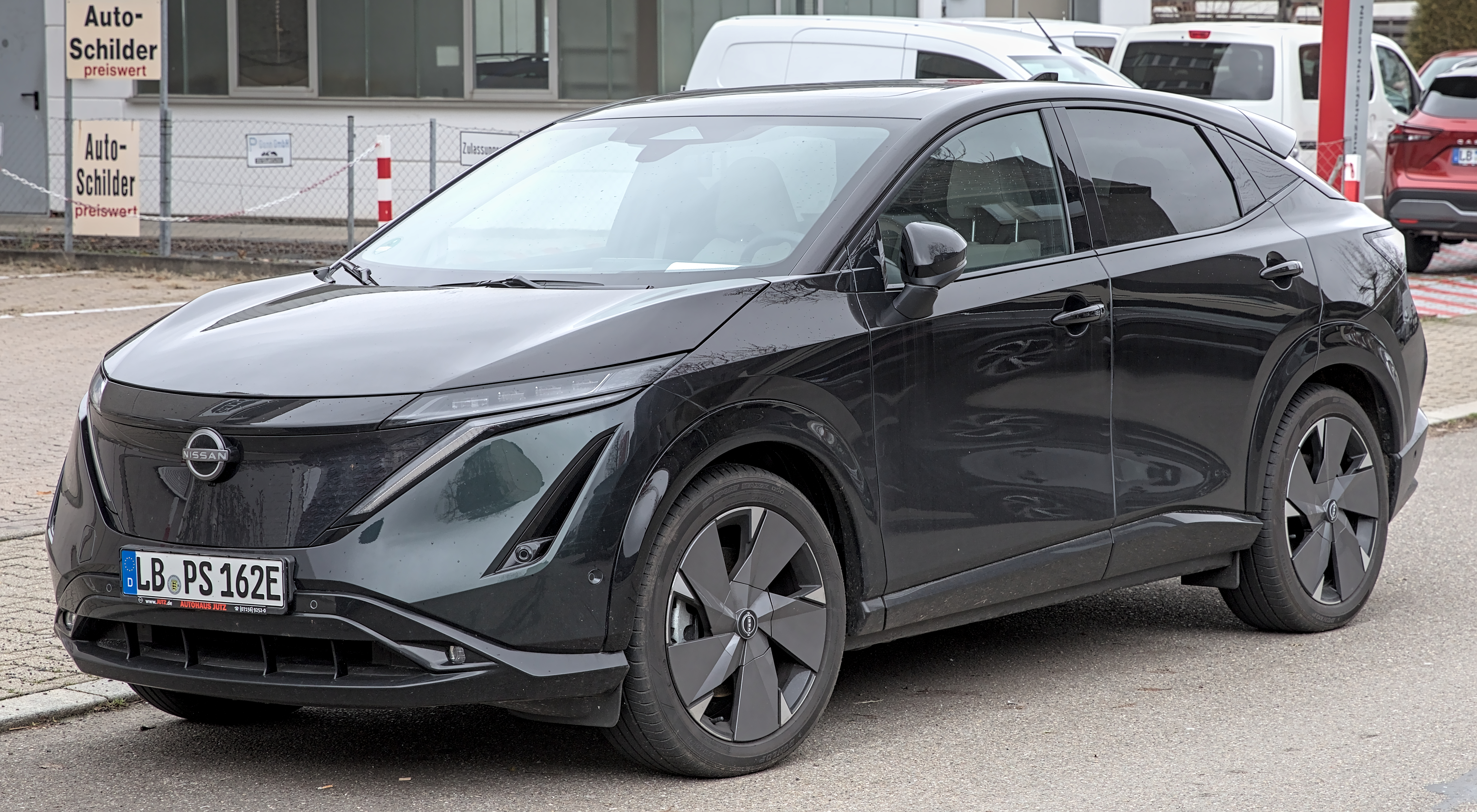
The Nissan Ariya is a new electric SUV from Nissan, designed to be stylish and high-tech. It's part of Nissan's push to create more electric vehicles for the future.
A platform in cars is like the base or foundation that supports everything else. It's what the car is built on, and different cars can use the same base to save time and money in making them.
Retro in cars means taking design ideas from older cars and using them in new models. It makes new cars look like the classic ones people loved in the past.
The Volkswagen Beetle is a famous car that was first made many years ago. It was redesigned in the late 1990s to look modern but still keep some of its classic features.
Car
Mini
The Mini is a small car that was first made a long time ago and was brought back in 2000. The new version kept the fun look of the old one but added modern features.
The Fiat 500 is a tiny car that came back in 2006. It looks a lot like the original version from the 1950s but has new technology and better fuel efficiency.
Design heritage means the style and look of cars that a company has used in the past. It helps to keep a brand's identity and makes their cars recognizable.
Car
K12
The K12 is a model of the Nissan Micra, a small car that is easy to drive and park. It has a unique design that some people find charming.
The Nissan GT-R is a fast sports car that is famous for its performance and technology. It's loved by car fans for how well it drives and its racing history.
The Nissan Frontier is a pickup truck that is strong and good for both work and play. It's popular for its ability to handle tough conditions and carry heavy loads.
The Nissan Leaf is a car that runs entirely on electricity instead of gasoline. It's popular because it's good for the environment and can save you money on fuel.
Aerodynamic design is about how a car's shape helps it cut through the air easily. This is important because it helps the car use less energy, which is especially helpful for electric cars like the LEAF.
Dedicated EV architecture means the car is built specifically for electric power, making it better suited for things like battery placement and interior space compared to cars that were originally made for gas engines.
Front-wheel-drive means that the car's front wheels are the ones that get the power from the engine. This setup can help with control and stability when driving.
The 25-year rule means that cars older than 25 years can often be treated as classic cars, which can make it easier to own and drive them. This rule helps people enjoy older cars without having to meet newer car regulations.
The Nissan Z is a sporty car made by Nissan, famous for being fun to drive and having a cool look. It's part of a long line of similar cars from the brand.
The Nissan Micra is a tiny car that's great for driving around town. It's easy to park and helps save money on gas.
LIVE
If you're a smoker or vapor ready to make a change, you really only need one good reason.
But with Zinn nicotine pouches, you'll discover many good reasons.
Zinn is America's number one nicotine pouch brand, plus Zinn offers a robust rewards program.
There are lots of options when it comes to nicotine satisfaction, but there's only one Zinn.
Check out zinn.com slash find to find Zinn at a store near you.
Warning, this product contains nicotine. Nicotine is an addictive chemical.
ACAST powers the world's best podcasts. Here's a show that we recommend.
Christian Bale was preparing for his role in American Psycho, dressing the part, hitting the gym for the first time in his life, even getting his T3 done.
There was just one problem. He didn't actually have the part. Leonardo DiCaprio did.
Listen to our podcast What Went Wrong Every Week as we unearth the chaos behind Hollywood's biggest movie flops and most shocking successes available wherever you get your podcasts.
Welcome to AutoCar Meets a bonus episode of the AutoCar podcast brought to you by our sponsors Anderson Makes a Premium Home Electric Car Chargers.
Search Anderson or visit Anderson-ev.com for more details.
This week, our Associate Editor James Atwood meets Giovanni Araba, Vice President of Nissan Design Europe.
James, over to you.
Welcome to AutoCar Meets podcast.
Thank you.
Pleasure to be here.
We're in Nissan's design centre in the heart of London. Perhaps we could start and you could just tell us sort of what goes on in here and perhaps about what your new role is.
Yeah, I'm Vice President for Nissan Design Europe and I was actually design director here previously about seven years ago from 2014 to 2018.
And obviously, NDE is our hub in Europe. It is our regional focus as our creative hotbed.
But we also have global influence here. I mean, this studio is fantastic that it has an agility to it.
I mean, that maybe headquarters is bound down and it's the big ship. We are super agile.
So our job is to be on the front line and to create, to disrupt, create new pioneers, new segments.
NDE is a very special place because obviously it's in the centre of London, super vibrant.
And we can do full size clay models here, which is unusual to have something like that in the city centre.
So we can do everything from the very first gut instinct sketch and hand off a class surface data to engineering either in Japan or Cranfield.
So this place was quite special because it was influential in discovering and creating cashkine, first generation cashkine, first generation juke and the ones afterwards as well.
But I think being in central London and in a great location really is conductive for wonderful talent and being very fueling imagination.
As you were saying, just before we started recording, it's not bad for a former bus depot basically.
Yeah, this building used to be actually a former bus depot. It's a listed building now, designed in the late 50s, early 60s.
So from the beginning, this building had dealt with motor vehicles.
But it was very interesting. I think when we found this building in the early 2000s, it was abandoned and there's a lot of graffiti covering the walls.
And actually that graffiti is now listed, so we can't touch it.
So behind all these gleaming plaster white walls, there is quite bold graffiti.
Actually, I would think it would be nice to uncover some of it and bring some of that artwork through.
Because I think actually even some of that graffiti and some of that artwork influence actually the first cashkine, the urban nomad and bringing a little bit of that rebel spirit into a whole new segment really.
And as we do the future, how to keep drawing from that inspiration.
I mean, obviously Nissan has the design centre in Japan, it has the design centre in the US, it has the design centre here.
So what does Nissan and what do other car firms gain from having design in different locations around the world?
Well, I mean obviously Europe is a very distinct region, it's a very important region, and you would want to have design representing with a focus on the region, which is what we do here.
But also what's great is Nissan has multiple design studios around the world is we do have global influence, I think.
There are certain projects, even if they're not global, even if they're regional, we pool together and have design competitions.
And when you have an outside perspective, it really helps enrich the design perspective.
So we have these competitions and you never know, we might actually pan the design for a product in Japan, which is actually what happened actually.
I was here in 2017-18 and we were involved in a competition for the Nissan Note aura in Japan and it got selected here.
And so, you know, some creative idea was able to enrich the Japanese landscape, so even Aria was pinned here, and that's a global product.
So there's a huge benefit to having design studios around the world.
Obviously, you know, our design studio in Shanghai focused on the cars for China, but they also bring an insight that contributes to global Nissan as well.
I mean, you've had a long history at Nissan and you've worked around the world.
So can you just perhaps just outline very briefly how you got here.
How I got here? Okay. Well, how I got here, you know, I was sketching cars on the back of my homework in class.
And then I didn't realize there's such a profession.
But early on in school, I remember we had a career day and all my friends were like raising, I want to be a lawyer, I want to be a doctor, but you may.
So I want to be a car designer. And my teacher said, you know, actually, there's a school up the road, which Arts Center College of Design was 10 minutes away from where I grew up.
And so from very early on, I was like, that's what I want to do. I want to design cars.
When I graduated, Nissan was just opening its doors.
So there's, I mean, reopening the studio doors of the studio we had in San Diego, because we had the Alliance and we had the revival plan.
We had Mr. Gohn, we had Shiro Nakamura, and all of a sudden there was this huge opportunity for design to reshape the brand.
So I started June of 2000 in California, in our studio in San Diego.
I spent maybe two years for an assignment between 2007 and 2008 in Japan.
Back to the US, and then I came to London 2014.
I spent four great years here.
We did cars like the Aria, the Note Aura I just mentioned, the Magnite, the Kashkai, the Juke.
And then I was lucky again to go back to Japan and follow those cars through into production.
And I was in Japan for seven years as a senior design director.
And now I'm back in London as vice president and super excited to shape the future for the region and global.
How different is it working in the kind of different countries for a company like Nissan?
It's a global firm, but as you say, it has a sort of regionalised line up.
So there's kind of differences you draw in just in the culture?
Of course, I mean, we definitely want to tailor the car for the region and for the regional customer.
But we also, we're a Japanese company and we're Nissan.
So especially for me, I do like to draw from that inspiration, especially after my seven years in Japan.
And I do remember my first trip to Japan when I started.
It was just a couple of months into starting at Nissan.
And that's when it was a whole new world for me.
I experienced Japanese culture and the traditional onsen and having a traditional experience at the ryokan and the contrast of the super vibrant city.
And then the Super Zen and the rituals of the more nature in the countryside.
I love that contrast.
So, so yeah, we're a Japanese company, but actually quite international.
As you can see, I'm not Japanese, but super influenced, I think, and inspired by the being a Japanese company and how to bring some of those cool elements into the product.
Because I think to be a car company and to be a Japanese car company, I think now is a great time to celebrate that and bring that into the product.
The Germans have their bow house, the Italians have their romantic, the romance.
But the Japanese bring a certain charm and a certain wittiness and a certain tech and innovation to the product that I think is as a designer is a is a challenged and exciting creative way to bring design to the product.
I know two of the cars you've recently involved with the new leaf and the new micro, perhaps the micro will start with that one because I mean that's interesting because that car has you've revived an old design, but you've also had to kind of work with another car firm in Renault to kind of shape that product.
So how do you approach trying to bring the micro fare to someone giving you effectively a shell and saying this is what you have to work with?
And in reality, sometimes we design a car from the ground up with a brand new platform, let's say like the Aria, brand new platform from the ground up.
But a lot of the times we're, even if it's not let's say a Renault platform, it's a Nissan platform where we have to reshape based on an existing platform.
So no different.
I don't think we, you know, was our priority was to channel the right spirit and personality for the micro first.
And once we identified that, it's just like what we do with any other platform, we tailor it to the architecture.
But I mean, from the beginning, I think the most important part was defining the spirit of the car, what its personality would be.
And of course it's a micro, so there's the previous micro lineage and there's history of micro.
And I think the K12 was one of the big inspirations because that car had such a big personality.
And I think because of that, it was very focused on the European market.
The generation after that became a little bit of a global car.
So it lost some of that really distinctive character because it's trying to fit into multiple different regions.
But with this micro, we knew again that it's going to be solely European focus.
So we can really bring back some of that big impactful character.
And then, you know, in the other room, I was showing you the Pike cars and the BE one.
That was also a big influence defining the core concept of the car because, you know, that car brought back.
It was actually one of the first cars to define what retro was an automotive actually before.
I mean that the concept of the BE one was 1985 and then it came out to the market in 87.
And it was a modern car, but it had some of the charm of city cars and hatchbacks from the 60s, especially European city cars.
So in a sense, it was really a pioneer or a disruptor for that nostalgic,
bringing back some of that nostalgic of the automobile.
Again, before the beetle, beetle came out.
I think the redesign new beetle was 98, 97.
And then the mini was 2000, 500 didn't come out to 2006.
So really that be one was a trailblazer and bring some of that kind of retro charm back to a modern product.
So we saw we saw to that heritage because I think Nissan does have a lot of heritage that we should play on.
And so the BE one was an inspiration and then obviously the K the K 12 with its big googly oval eyes.
And we wanted to bring a bit of charm back to the lineup because we clearly had it in the past.
And perhaps maybe the previous micro was a design that hinted at a similar style that was across a few cars, maybe.
And I think for this car, we, you know, and for Nissan in general, we don't want to do cookie cutter cars, actually.
I think each car has its distinct DNA and personality within the family.
So we wanted to channel that back and bring that charm and a little bit of wit and what we say, maybe Nissan Ness back into the lineup.
I guess that must be quite a challenge with Nissan.
I mean, I was in your in Yokohama and you've designed studio in February and seeing the kind of preview of all the global cars coming.
And it's here's another car, here's another car, here's another car trying to make each individual one with that size of mobile range must be a tremendous challenge.
Yeah, I mean, I mean, it's also a challenge.
It's also something we can be enriched and build off of because actually Nissan has quite a big breath of products.
So as a designer, it's super exciting.
I mean, you've got everything from a GTR to a frontier pickup to patrol.
And then you have a little charming witty micro as well.
So, or in Japan, we have K cars, which is a completely unique segment to Japan, but there's a lot of charm in that segment as well.
So yeah, it's how you we balance and conduct this orchestra of products.
But of course, that's why we have the studio in London, because our focus is obviously European region.
So we're able to focus here on that and make sure we represent what the customers expecting one in Europe.
And then in Japan, I mean, we're seeing it all take place.
The whole, you know, the music is being played like in harmony, hopefully, but keeps us in balance having places like this and our, you know, our key headquarters and R&D in the region to make sure we have regional focus, but also global influence.
I think as you were saying, particularly in Europe, there seems to be a bit of a push lately for small cars and small electric cars like the micro.
I guess there seems to be a bit of a view with them, people are making them a bit more cute or a bit friendlier, which I guess really plays to the heritage of the micro.
Yes.
Yeah, I mean, car doesn't have to be scowling.
It doesn't have to be.
I mean, we wanted the micro to have agility and it's actually quite muscular.
It's not, I wouldn't say cute.
I think it has charm and it has playfulness.
It's lovable.
I mean, I think that was a key word we like to talk about lovable tech as an electric car.
There's a lot of EVs out there, big or small, that, you know, maybe come across as a bit cold or a bit faceless, even, you know, electrification.
You don't have a traditional grill.
So some of them you feel like the face has no mouth.
So, you know, with the micro is how to make it human.
And again, have a bit of lovable association to the technology, which electrification doesn't have to be cold.
It can bring a smile to your face.
I mean, that was one of the fun things about the ride and drive in Rotterdam.
I finally could drive one in public.
I mean, I was driving it on a closed circuit or inside the, you know, the test area, but it's not the same.
It can really, the car lives in public environment on the streets and it comes to life, even from a point of the shape and the color, the reflections of the trees and the city around it.
Really, people bring it to life.
And it was really wonderful to be able to drive it through the streets and see a smile and a double take when they saw it.
Because, you know, these big gestural oval elliptical illuminated eyes and tail lamps.
You could see it, you know, coming down the road from far and it is sitting on the road really.
It's a great little stance.
So it was a pleasure to see it when it comes to life and to see a smile on someone's face.
And just obviously, at LEAF, it's quite a different challenge because that is a global car and EV.
So how did you sort of approach that one when you were driving it?
You know, we also, because we're doing it at a similar time, but there was also a bit of charm.
I think we wanted to bring it to that.
And I think there's a lot of Japanese DNA.
And I think when we talk about Nissan this, I think we developed the 2-3 symbol for that car.
And then where it's being a little echoed throughout the lineup.
But we have a little graphic that represents a 2 and a 3, a little hash, a little, almost a little hieroglyph.
But in Japanese, you know, Nissan represents the number 2-3, actually.
So me is 2 and Nissan is 3. So Nissan is 23.
And that's perhaps why, you know, you see a lot of our race cars and performance car sport, the number 23 on the body side.
But little things like that, you know, like on the LEAF, we wanted to, again, there's a lot of EVs out there that are following similar formulas.
And you see a lot of, you know, connected lighting blades across the back.
And how do we differentiate ourselves and be impactful in the marketplace?
And also, how do we define Nissan this and be proud of building a lifestyle brand with the design?
So, you know, like the tail lamps on the little holographic tail lamps on the back showcase that little 2-3.
And so little things like that and even the front face of that car actually still has a face.
And it actually has quite a smile because, again, we didn't want to have a car that didn't need to scow.
We wanted to bring a bit of joy to the driving experience.
But the LEAF range was super important.
That was super key for that car because we want to hit a big demographic.
I mean, it is the core. It is our EV family car.
You know, for me, I go back to the Goldilocks story.
This, you know, just right. It's the right size.
It's the right range and at the right price.
So that was key for the LEAF.
And I think the range especially is what shaped that car in the wind tunnel.
That's why it's so, you know, has such a slippery silhouette.
But the challenge for us is design is, yes, give it a slippery silhouette, which gives it a very futuristic look.
But at the same time, we couldn't compromise the necessity of a family car, which is the interior space and the luggage room and the headroom, the rear legroom.
So actually, despite its sleekness, it is actually, you know, bigger than the outgoing car.
It has more space in the back.
And all this without having to increase its footprint.
Because we also know size, just right size is important.
You need that agility in the European landscape.
There's tight spaces, those tight roads.
So how do you, you know, that's one nice thing about a dedicated EV architectures.
You can really carve out that space inside.
Because the original LEAF is not a devoted EV platform.
It came from a FF front-wheel-drive Tita, actually, platform.
So you still had the hump in the middle and you still had actually quite a long-front overhang.
Whereas the new LEAF, we're able to shorten the front overhang by 100 millimeters.
So that's actually much more compact and agile, but the interior space is actually carved out bigger.
So, which I think for this region is super important.
In the US, bigger is always better, bigger, bigger, bigger.
But, I mean, here, how do you maximize space without increasing footprint and losing agility and manoeuvrability?
I've read from you in the past about how you've drawn in kind of external influences like music and architecture and film.
So how do you, where do you go looking for inspiration and how do you bring those sort of things into your work?
I mean, to me, sometimes, you know, you log things in subconsciously.
But, I mean, everywhere.
I mean, I like to sometimes take just a long walk or I actually go run and listen to music and just let my mind run.
And then some, you know, I get a lot of influence through architecture, through entertainment, through popular culture, through...
And also, you know, through being able to experience different cultures like Japan and see what's happening in other places.
Like, I worked very closely with the team in China on these cars that have just been released.
And it's really an eye-opener to see how that market is evolving.
And it brings some insight into what we can enrich our products for this region.
So, I find like as a designer, you know, like a shark has to keep moving or else it dies.
I am always moving and I'm always trying to just soak, soak things in and soak things in.
But, I mean, I love cars and I love the history of cars and I love classic cars.
You know, classic cars are always being born, right?
Because there's a 25-year rule now, which is scary because 25 years ago, those cars, those are not...
They don't look old like your definition of an old car, but my gosh, 25 years ago.
That brings me to my final question, which is the one I leave to ask the designers to last because they tend to think about it.
Do you have a favorite car from maybe one from Nissan and one that's not Nissan from history?
Okay. Favorite car from Nissan.
It's always hard to ask the designer that because to be honest, we always, depending on our mood,
we always have... I feel like I always have different favorite cars, but jeez.
That's a tough one to ask.
I have to say, I really love the 300ZX.
That era of Nissan, the 90s, super sleek, super flush.
That car, I do remember when I first saw it.
I was going to high school and I remember my friend's dad just bought one and he got dropped off.
And the communication color, the bright metallic, pearlescent yellow, 300ZX.
And I was like, wow, that thing is so cool. It looks so futuristic at the time.
So that was my first time when I saw Nissan. I was like, whoa, that's cool.
The favorite non-Nissan?
Favorite non-Nissan?
I really love the Stradale, the Alfa Romeo Stradale.
I just find that... I mean, it's a very rare car. They only made a few handful, but I just... I love that thing.
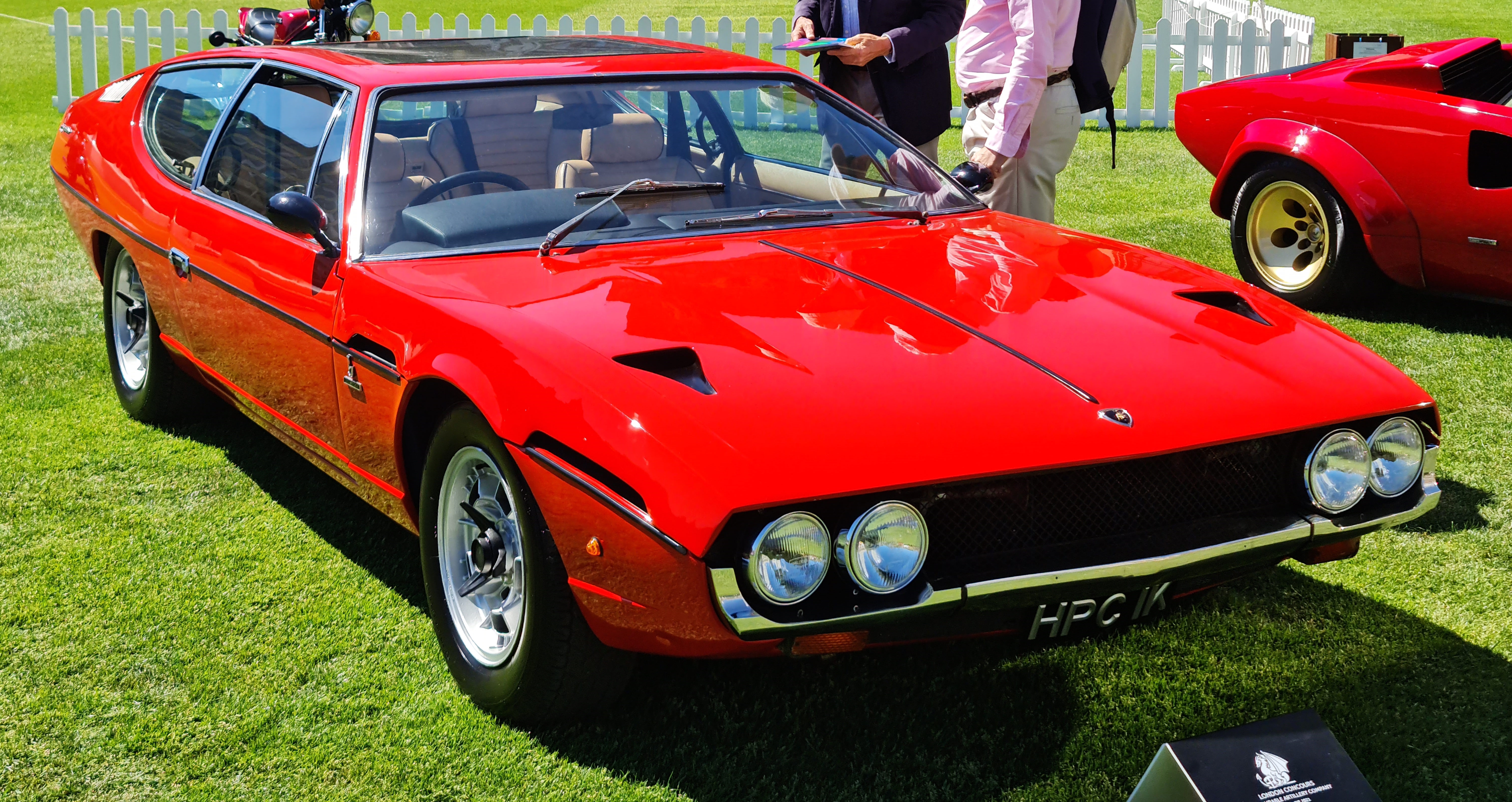
It's actually quite an organic, fluid car, but I also love very edgy cars like a Bertone, Lamborghini Espada, or something wild like that.
So, as a designer, I was very much influenced, I think, by the Caruzza idea in Italian design houses, because they did cars for everybody, actually.
They defined styles globally. I mean, I did an internship at the 90s before graduating and coming to Nissan.
But, you know, it was fantastic that you were working on a Japanese product here, or a Korean product, or an Italian supercar, all in the same room.
And I think that was influential to me, actually, also coming to Nissan, because, similarly, we have a huge global lineup,
and where I have a great opportunity to work on cars like the Z, the GT-R, or a really cute little iconic city car like the Micra.
Perfect. Thank you very much for your time.
Thank you.
Thank you.
Thank you.
Thanks for joining us. We'll be here some weekends with more of these Auto Car Meets bonus episodes, and every Wednesday with the My Week in Cars podcast.
Both are brought to you in association with our sponsor Anderson. Visit Anderson-ev.com for more. See you next time.
Warning, this product contains nicotine. Nicotine is an addictive chemical.
Comfort is often the first thing we're willing to give up, like taking a long flight for a vacation or waking up early for a workout.
But don't let style be the reason you aren't comfy.
Mac Weldon's Ace Collection makes it effortless to look put together while feeling truly comfortable.
Inspired by their best-selling sweatpants, the Ace Collection combines everyday comfort with long-lasting and confident looks.
Upgrade your collection for the new year with new bomber jackets, half-sips, sweats, crew necks, and much more.
Get comfortable anywhere with Mac Weldon's Ace Collection.
Go to macweldon.com and get 20% off your first order of $125 or more with promo code MAC25.
That's M-A-C-K-W-E-L-D-O-N.com. Promo code MAC25.
A-Cast powers the world's best podcast. Here's a show that we recommend.
A-Cast helps creators launch, grow, and monetize their podcasts everywhere.
About this episode
Giovanni Arroba, Vice President of Nissan Design Europe, shares insights on the creative process and regional influences in automotive design. He discusses the unique environment of Nissan's London design studio, its historical significance, and the collaborative approach with global teams. Arroba reflects on his journey from sketching cars in school to leading design projects like the new Micra and Leaf, emphasizing the importance of capturing distinct personalities in each model. The conversation highlights how cultural elements shape design and the balance between heritage and innovation.
Giovanny Arroba was recently named the new head of Nissan Design Europe, which is based in an old bus depot near Paddington Station and has led design of vehicles such as the Qashqai and Juke.
Autocar associate editor James Attwood meets Arroba to discuss his global experience, how he uses music and architecture for inspiration, his plans for future Nissan vehicles – and why he's a big fan of graffiti.