Daimler is a big car company from Germany that makes luxury cars, especially known for the Mercedes-Benz brand. They have been in the car business for a very long time.
Peugeot is a car brand from France that has been around for a long time, making many different types of cars. They are known for their stylish designs.
Heritage in cars means the history and background of a car brand. It includes the old models they made and how they have changed over time, which helps shape how people see the brand today.
Battery electric vehicles are cars that run only on electricity and do not use gasoline or diesel. They are better for the environment because they don't produce exhaust fumes.
Car
Škoda ENYAQ
The Škoda ENYAQ is an electric SUV made by Škoda. It runs on electricity and is designed to be practical and spacious for families.
'Simply clever features' are smart and useful things in Škoda cars that make life easier for drivers, like having an ice scraper or an umbrella built into the car.
User experience is about how easy and pleasant it is to use a car's features, like the controls and screens. A good user experience means that everything feels comfortable and works well when you're driving.
Car
Škoda Kodiaq
The Škoda Kodiaq is a larger SUV that can fit a lot of people and stuff. It's designed for families and is known for being practical and comfortable.
Design language is how a car brand makes its cars look similar. It includes things like shapes, colors, and styles that help people recognize the brand.
Car
Škoda Kailak
The Škoda Kailak is a small car that is very popular in India. It's designed to be affordable and practical for everyday use.
Car
Škoda Virtus
The Škoda Virtus is another small sedan from Škoda that is made for India. It offers a lot of space inside and has modern features that people like.
The Skoda Slavia is a smaller car that is made for people living in India, focusing on being stylish and easy to drive. It has a comfortable inside with enough space for passengers and their things, making it a good choice for city driving. It's part of Skoda's plan to offer cars that fit well with what Indian drivers want.
CKD kits are parts of a car that are shipped to another country to be put together there. This helps car companies save money on taxes and make cars that fit local needs.
Internal combustion engine technology is the kind of engine that runs on gasoline or diesel. It's what most cars use now, but there are plans to shift to electric cars to help the environment.
Volkswagen Group is a big car company that makes many different brands of cars. They are working on making their cars more environmentally friendly.
Car
Skoda LROC
The Skoda LROC is another electric car made by Skoda. It's built to be practical and has modern features, appealing to drivers who want an electric vehicle.
The Skoda Enyaq is a new electric SUV made by Skoda. It's designed to be spacious and has the latest technology, making it a good choice for families looking for an electric vehicle.
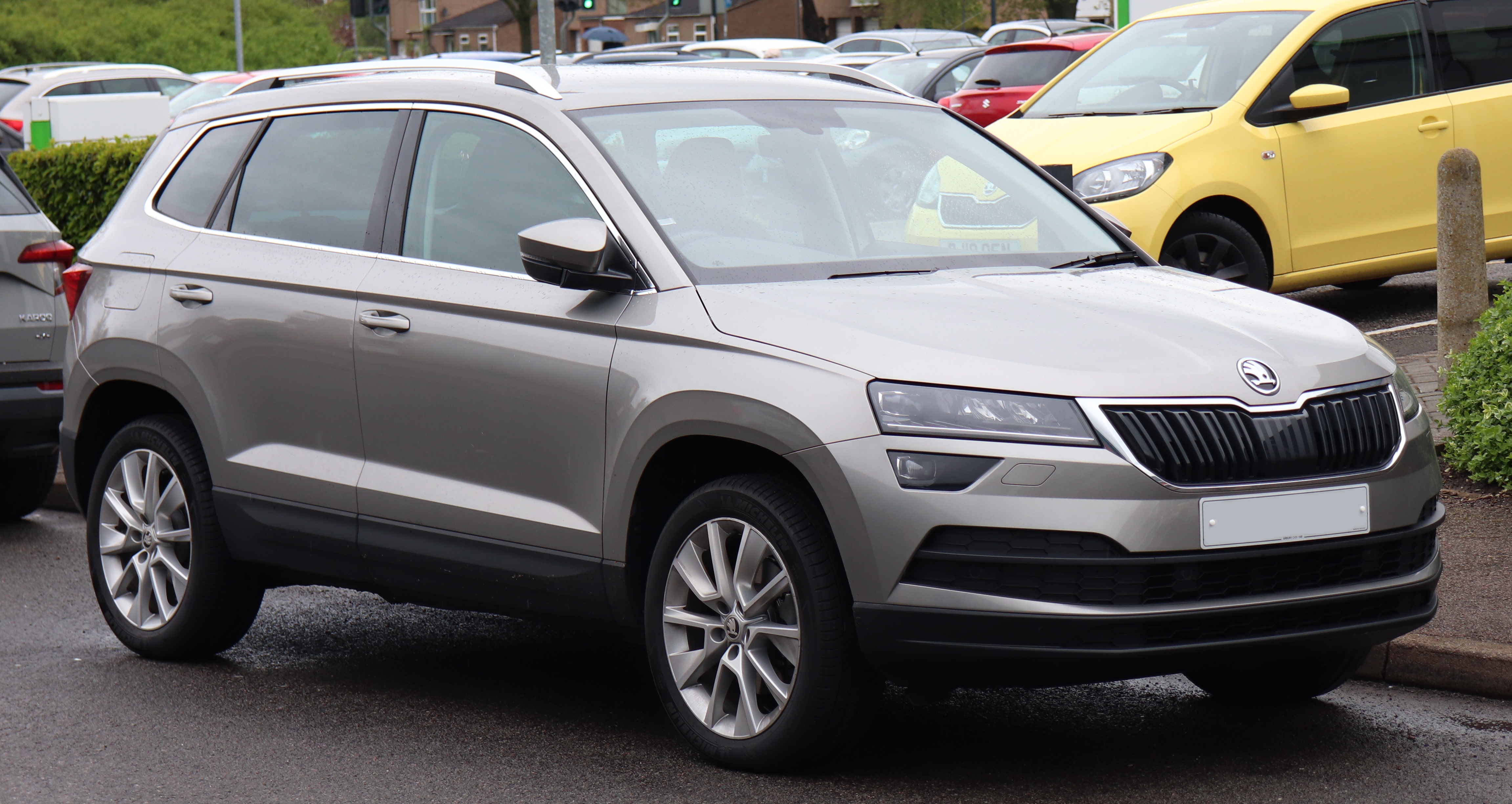
The Skoda Karoq is a compact SUV made by Skoda. It’s designed to be stylish and comfortable, making it a good option for people who need space and modern features in their car.
An SUV is a type of car that is larger and often higher off the ground than regular cars. They usually have more space inside for passengers and cargo.
An estate car is a type of car that has a longer body and more space in the back for carrying things. It's great for families or anyone needing extra room.
Car
Škoda Octavia
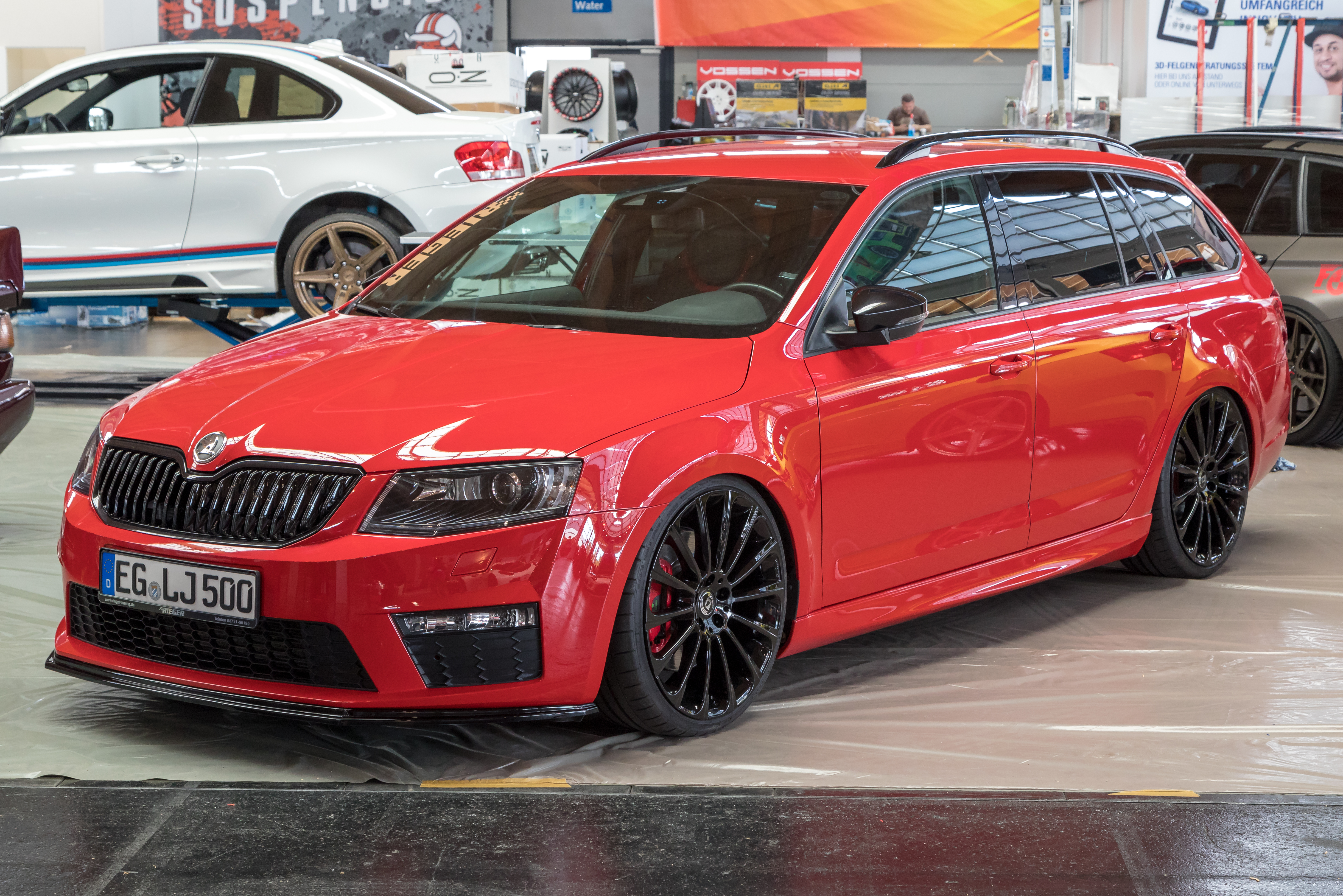
The Škoda Octavia is a popular compact car known for being practical and spacious. It's often chosen by families and those needing a reliable vehicle.
The Skoda Superb Combi is a larger car that looks like a regular sedan but has a lot more space in the back for luggage and passengers. It's a good option for families or anyone who needs extra room without sacrificing comfort. People like it because it feels nice to drive and has many features that make it easy to use.
The MAB platform is a type of structure that car manufacturers use to build electric cars. It helps them create different types of cars using the same basic design, making it easier and cheaper to produce them.
A plug-in hybrid is a car that can run on both electricity and gasoline. You can charge it from a wall outlet, and it can drive a certain distance using just electricity before it needs to use gas.
Battery charging times are how long it takes to recharge an electric car's battery. Some chargers are faster than others, so it can take anywhere from a few hours to just minutes depending on the charger used.
Long range means how far an electric car can go on one charge. It's important because people want to drive long distances without needing to stop and recharge frequently.
LIVE
Welcome to AutoCarMeets, a bonus episode of the AutoCar Podcast. It's brought to you
in association with Anderson EV, British-made EV home chargers that'll give you 5,000 free
charging miles with Octopus Go and I'm delighted to say that they've extended their offer
to listeners of this podcast until the end of November. Simply mention my weekend cars
for £50 off your order. Visit Anderson-EV.com for more. I'm Matt Pryor and this week I
meet Klaus Zellmer, the CEO of Škoda, which, like AutoCar, is currently celebrating its
130th anniversary. Well, I'm delighted to say that I'm joined
by Klaus Zellmer, Škoda CEO. Klaus, welcome to the podcast.
Thank you very much, Matt. Thanks for having me.
Not at all. So, both of our companies are having something at an anniversary this year. Tell
me about Škoda's. 130 years, yes, we have that in common. Well,
130 years puts us in the top three most historic car brands in the world. There are another
two above us, which would be Peugeot and Daimler. Daimler Benz. The legacy is really important.
If you look at our product lineup, whenever I go into the museum or into the vault, we call it,
which is a part where we store cars that are not perfectly restored, that are, you know,
to be restored to then enter the proper museum. There's nothing that Škoda has not done yet,
be it a pickup, be it convertible speed, you know, air-cooled engines, all the motorcycles,
everything. So, there's such a rich heritage that you can then discover wandering around the
museum, wandering around, you know, the back offices or archives, which makes it a truly
fascinating brand. And of course, you know, this is also an obligation for us as the management
to make sure that Škoda has got a future for another 130 years, just like AutoCars, I hope.
And, you know, I also keep on reminding us as much as we like celebrating this anniversary.
It's more about being proud of the past, but letting our evolution
write our legacy. This is really what I keep on reminding everybody. And we're actually doing
rather well with that special obligation in the current environment with the automotive industry
being its biggest transformation that we have seen. There's a lot happening. So,
you know, you need to constantly reinvent yourself.
So, tell me about the current state of Škoda. How is it?
We are actually proud to say that we are number three in terms of new car sales in Europe now,
coming from 2022 being number 10. So, this is a long way. As you know, we had to give up on Russia,
which was a very important market for us at Škoda. So, we needed to compensate for that.
You know that our focus now lies outside Europe on India and the ASEAN region.
And China is actually not on our top list anymore of activities and investment.
So, despite that, being number three in Europe is something we can be proud of. Now,
why is that? Because we always put our customers in the forefront. Our portfolio needs to be
wide for an audience that wants to be responsible for their own decisions.
So, we are not the ones that in an almost ideologic way talk about battery electric vehicles,
which has built really good ones. And if consumers like them, then they buy them with the ENYAC and
the LROC. Actually, in Europe in July this year, they were number one and number two in Europe,
27 countries. So, we're doing well on that side as well. But I think
where we are with number three in Europe is really because of the bandwidth of our portfolio.
Mild hybrids, strong hybrids, plug-in hybrids, diesel cars, and all shapes and forms, SUVs,
combis, our lineup is broad. And at the same time, and this is really then maybe the most important
part in business that you not just sell well, but you also make money in order to then have
the future of your brand in terms of necessary investments in your hands as well. And we closed
the first six months with 8.5% return on sales with a record profit in our anniversary year,
the best profit ever, which makes us proud, but also ready for further steps into this future.
Some manufacturers find it really hard to make money selling good value cars in Europe. You're
returning an 8.5% margin, which is strong by any standards. What is going to do that some other
people are not? I mean, to start with, you know, we're producing most of our cars in the Czech
Republic where factor costs are lower, which is personnel cost, cost of energy. We have less
bureaucracy, which, you know, is something that burdens other parts of Europe massively,
especially Germany, as we all know, with all the problems that occur there in the industrial
sector. So we benefit from that. But that's just one side of that metal. The other side is that
we, of course, also have an efficiency program where we actually lift cost efficiency of 1 billion
Euro every year in a running system. And when I talk to my fellow colleagues, I always talk about
the sports team that has won a title with the 8.5% and successful sports teams,
they want to defend the title. What do they do after the championship? They train harder.
And this is what Škoda has embedded into their culture. And this is why Škoda is where it is,
because there is always something that you can do better. And there's always this drive
for the extra mile, extra profits, extra excellence, extra innovation. And this spirit is from my
point of view, one of the major drivers for 8.5% and for the sales growth that we have seen
in the past four years in Europe, but also outside Europe. In India, we have just doubled our sales
compared to last year. When you go to a different market, my understanding is Škoda sold in
nearly 100 countries. Does the brand stand for the same thing wherever you go?
Yes. On a high level, absolutely. You definitely know a brand claim that has been around for many,
many years, the simply clever features that you have in your car that make your life easier and
surprise you every day, like an ice scraper or the umbrella in the door. We have now changed that
to actually we are the car company for people who want to explore. And we provide the companion
for that. So it takes it a bit further. Also in our visual language videos, brand building,
the corporate identity that we have now completely reinvented or re-engineered,
our new design language, which helps us being the face in the crowd and not another
aerodynamically optimized round object. But coming back to your question, I think the unified
values or attributes for Škoda are certainly good value for money. And we are totally adamant
about keeping that as a main attribute to prefer Škoda over other brands. And then, of course,
functionality, functionality, boot space, interior space, but also user experience when using your
digital ecosystem in the car, be it in the outside ecosystem, the app, but also we love
knobs. We love haptics. We love feedback. And I think there are just certain things you don't
need to change because they were not broken. Sometimes you have the feeling that things are
reinvented to be reinvented, but not to serve customers better, not to prevent distraction
from the road when you want to turn up your volume. You just want to have a little bit of a feedback
turning that knob. So with these Škoda Superb and Škoda Kodiak, we have the smart dials where
we actually combine digital potentials with but the haptical feeling and a feedback of those
buttons. So, yes, I think this is the overall, from my point of view, these are the attributes
that are common functionality, but the most recent one probably are design language with
modern solid. If you look at LRoc, ENYAC, the coming Epic next year, I think this is also something
that people now realize that Škoda is good value for money, but you also get an identity that is
really unique. A brand that is uplifting, a brand that is probably for people who don't want to show
off with a brand. And this is why they choose a smart brand like Škoda because they don't need
to show anything off. They want to show a design icon that we think we have produced with a modern
solid design language and good value for money, good quality, safety standards, efficiency,
sustainability, all of those hygienic factors at the same time.
And is it as an advantage, do you think that because it has strong values that are well known,
there are a lot of new entrants into the market, particularly in Europe, where people do not
know what those cards are yet. You've got 130 years of running behind you, of telling people
what you are. Does that help in your Škoda slightly against some of the newer competitors,
which are very kingly priced? Absolutely. Some of those brands might stay, some might not.
So yes, a brand that has been around for 130 years, of course not in everybody's
shopping lists, but the awareness for Škoda is there, which is a perfect starting point
because it is in the relevant set of many people purchasing a car, be it used or a new car.
New entrants need to make up for that, for not having a legacy, and they have to prove that
they are here to stay, which is something that you also connect with Škoda. We are here to stay,
we are here to serve our customers, we are here to consult our customers to help if something goes
wrong, to help if they have questions. We're talking about the human touch and our dealer
network, which is a very important essential part of the brand Škoda. People that actually help
here. My example very recently was when I missed my connecting flight to Prague and I had to talk
to machines, trying to find out how I'm going to arrive where I need to be. It's wonderful to
have human beings who will then take you seriously and will really put some effort behind helping
you. This is really where we are with Škoda dealer network. These are human beings helping human
beings, which is also an important fact of the brand Škoda. You mentioned a moment ago
that Škoda's investment in China was not what it was a few years ago. Can you tell me a bit more
about that and why? Škoda has been in China for a couple of years. In 2019 Škoda actually
sold 350,000 new cars in China. It was a substantial part in terms of the sales volume.
Of course, China for many car brands was the place to be, but today it is probably the most
intense competitive framework in the car industry. There is at the moment globally.
We are present with the Volkswagen Group. Volkswagen itself as a brand and many other
brands within the Volkswagen Group are actively present. We want to also hedge and spread and
increase our footprint globally. This is why Škoda is now responsible for the Volkswagen Group
to make the right decisions and drive into the right direction with a good momentum in India
and in ASEAN. This is our focus that we pursue in a strong way since two to three years now with a
strong push. How's that going? It's reasonably well. With Škoda we have introduced the Kailak
in India, which is a sub-four meter car, which is actually the most sold car in India. It's that
segment, the sub-four meters, which accounts for more than 50% of the overall new car market.
We have just doubled our sales. We had 109% compared to the previous year.
That is good. We have our factory in Pune and we have another factory in Chatrapati,
formerly known as Orangabad. We have close to 5,000 people in India working for the Volkswagen
Group. We're giving direction to have the right way. The Kailak, the Slavia, the Virtus
is a car that developed for India, built in India, sold in India, but also now exported.
Like the Kuschak and the Slavia, we have just started with a partner in Vietnam
to have those assembled as CKD kits in Vietnam, to then have a foothold also we want to develop in
Vietnam. India is going reasonably well, but again, it's not a secret that that's
a region or a market with a population that is the largest in the world now
with great potential. Everybody is looking at India in order to hop on that train for growth
and business potential. A bit closer to home,
how are you finding acceptance? You said earlier you make all power trains from
pure EV through to pure combustion and all kinds of hybrid in between.
My understanding is you have quite a lot of flexibility in
how the volumes you can produce those in. How are you finding the switch to electrification
in Europe? It is an evolution. At the same time, I'm saying that we respect customers'
preferences and we cater for customers' preferences and not for an ideology. Of course,
we need to stay CO2 compliant and we are. The CO2 compliance is a regulation that we will adhere to
and we are on a good trajectory to meet the CO2 compliance in EU 27.
Now, I think when in 2019, the forecasts were fixed on what that trajectory to a CO2 neutral
automobile industry has to be. I think we were overly ambitious. I hear a lot about the
responsibility being with the car manufacturers. However, actually at the end of the day, consumers
make their choices. If you look at the trajectory that we have achieved so far,
to stay with 2035 as the stop for internal combustion engine technology in new cars,
it's most probably over ambitious. If you see something that you have
gotten wrong in your forecast, then you have to correct it. This is what we ask for as a car
industry and as a Volkswagen Group now, that we need to revisit whether 2035 is an end of
internal combustion engine technology in new cars is still reachable. Because there's just
too much on stake. If you look at the car industry in Europe, it's still one of the strongest pillars
of the economies. We mustn't jeopardize that. If you look at other countries, there is not such
a harsh end to a technology that lies within the acceptance and preference of consumers
that you as a lawmaker put a hard stop to. If I look at our history, or at our more recent
sales volume, we're at 23% battery electric vehicle share, which is excellent with just two
cars, the Enyaq and the LROC. It can be done. There is preference, but it still is 23%. It's
not 80 or 90 or above 90%. Despite the fact that with the LROC, we actually sell or offer the LROC
at the same price level as its sibling in the Skoda brand, the carrock. Equipment adjusted,
you can choose with your budget between a carrock and an LROC. We're still selling more
carrocks, by the way, than LROC. You need to be patient. You need to establish the infrastructure
with electricity prices, charging infrastructure, and customer sentiment, customer preferences.
As I said, if you see that your forecast is under jeopardy, then you need to revisit
that. This is what we're asking for. Is it your impression that those
arguments are being heard by lawmakers? They're being heard by governments,
but I just read an article in the German press about our Minister for Environment who says we
should stick to 2035. I'm sure the engineers can work with that. My reflex, of course, is it's not
the engineers. It's consumers. It's respecting consumers' preferences. This is what they're
there for. They know it from elections. They don't say, I'm going to be ahead of anybody else with
40% share of votes. They know, at the end of the day, it's voters who make their choice.
I think the industry, there's one thing you can probably settle with that. The
investments, the car industry has put into this transformation into battery electric vehicle
technology has been immense. Absolutely immense. It's billions and billions and billions.
But at one point of time, if you see that the acceptance is not at the speed of this
transformation originally forecasted, then you have to revise your plan.
So finally, then let's talk about consumer choice. A lot of companies have moved towards
making SUVs because that's where consumers have gone. You've recently shown the Vision
O concept, which is price being an estate car. How do you view the future of the estate? It's
manufacturers have stopped selling in a d-segment estates. They can't make them work. They don't
want to make them work. But I was speaking to a CEO a couple of years ago and he said,
we are also thinking about a post SUV world because they're taller, they have a larger
frontal area. Efficiency is more important. Where do you see the SUV estate car future going?
This is a situation that is very specific for Škoda, because since 2016, despite the fact that
the typical limousines, estates, sedan-shaped cars are actually on a downward trend,
we are on an upward trend with the sales of Octavia, especially Combi's and the superb Combi.
Actually, since the most recent generation, we have sold over 3 million Octavia Combi's and
600,000 superb Combi's. We actually own that segment. We are the most relevant player in the
segment of Combi's. These cars make up 20% of our overall sales volume. We have a Škoda
interest in keeping that going. We have had many people asking us about the future of the sedan
limousine Combi segment, especially from the UK, by the way. What's the future of that?
And this is what we now introduce with a Vision O, a car that is clearly an evolutionary step
with our modern solid design language. A car that is clearly identifiable with that kind of
segment, the Combi limousine kind of car, a sedan, and the resonance. Of course, you show a concept
car like that on the auto show in Munich in order to get feedback from journalists, but also from
our dealer network and from consumers. Over 99% was positive, so we feel
confirmed or confirming signs we can read that this is the direction we should go for.
Now, we have a challenge there because the typical range of annual mileage of our Combi
drivers that are mostly commercially engaged with those cars is 30,000 to 40,000 kilometers.
So, with that Vision O car, we're going to go on to the next platform after the MAB platform.
And that new platform will then, of course, from our current plans, offer electrified drive trains,
which could be the electrified drive train purely electrified, but it could also be
any other shape or form, be it plug-in hybrid range extender, whatever. So,
this is the project phase we're in at this point of time. We haven't made the final decisions,
but we want to keep that platform open for long-range driving.
Yes, the battery charging times, they will go down, but they will, of course, for the foreseeable
future not be where you are to refill your tank at the petrol station in a matter of minutes,
couple of minutes, two, three, four minutes. So, we need to put emphasis on the fact that
people require a long range with those cars. And that's why we're looking at the 30s,
the beginning of the 30s, for the Vision O to be then on sale in the markets.
Excellent. Well, we look forward to it. Class, thank you very much for your time.
Matt, thank you very much. It was a pleasure.
Thanks for joining me for this podcast, which is brought to you by Anderson EV.
Visit Anderson-EV.com to view their extremely extensive lineup of chargers,
whose range starts at just £1,120 fully installed.
Steve Cropley and I will be back next Wednesday with our regular My Week in Cars podcast.
About this episode
Klaus Zellmer, CEO of Škoda, discusses the brand's impressive 130-year legacy and its current success in the European market, where it ranks third in new car sales. He highlights Škoda's diverse portfolio, including hybrids and EVs, and the importance of customer preferences in shaping their offerings. Zellmer also addresses the challenges of electrification, the brand's strategic shift away from China towards India and ASEAN, and the future of estate cars in a market dominated by SUVs. His insights reflect Škoda's commitment to innovation while maintaining strong values.
This week Matt Prior meets Skoda's CEO Klaus Zellmer, as both Autocar and Skoda celebrate their 130th anniversaries.
But the pair tend to look forwards rather than backwards, as they talk about the third best-selling brand in Europe, its future in estate cars, how EV sales are progressing, how it makes 8.5% profits when some mass market makers make none, and the personal touch that Zellmer thinks will ensure its desirability for years to come.
For more on Skoda, and Autocar, join us at autocar.co.uk.