Gone in 60 Seconds is a movie about cars and car theft. It includes exciting car chases and features a famous car called 'Eleanor', which is a classic Mustang.
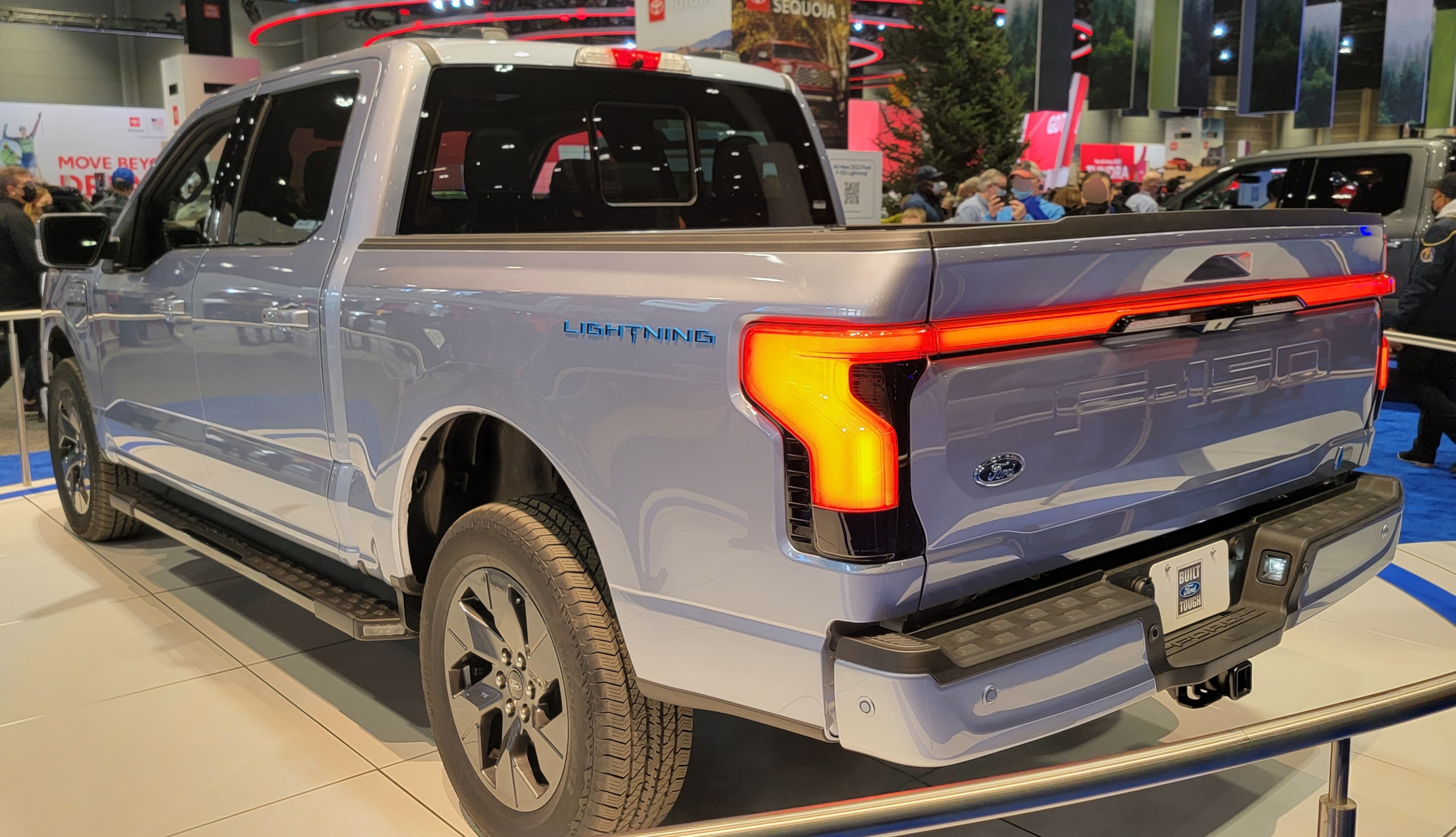
The Ford F-150 is a big truck that people use for work and everyday driving. It's popular because it's tough and can carry a lot of stuff, but parking it in busy places can be tricky because of its size.
A pickup truck is a type of vehicle that has a cab for passengers and an open area in the back for carrying things. They're great for transporting items and are often used for work or outdoor activities.
Gas efficient means that a vehicle uses less fuel to go a certain distance. This is important for saving money on gas and being better for the environment.
LIVE
So, how do you define leadership professionally on and off the ice?
If I was to put one word, it would just be example.
I was never the type of guy to get up and give like a hurrah speech, you know?
It's just not my personality to do that.
But I always felt like one thing that I could do was speak with my actions.
I'm Jim Farley and this is Drive.
A brand new season is just around the corner.
But today, we have a very special early episode for all of you.
I sit down with Cary Price, the Canadian hockey star and one of the most respected goaltenders of his generation.
Fifteen seasons with the Montreal Canadiens, legendary composure, unshakable under pressure.
We get into all of it, starting with a few rapid-fire questions.
What's your favorite bus movie or what's your least favorite bus movie?
If you know one that would take up a lot of time on the bus, you watch the Lord of the Rings extended edition.
You could probably drive from Tri-Cities to Brandon and back by the time you were done all three of them.
Was that least or best? I can't tell from your comment.
I always lie. I love Lord of the Rings. I read all the books when I was in high school.
I watched The Hobbit when I was laying in bed sick the other day, actually.
Go-to road trip song.
It's kind of funny because usually I have my playlist on Shuffle.
I remember one more than one occasion that I'd be busting to the airport and on the road again by Willie Nelson and come on and just put you in a good mood.
Favorite car movie?
Yeah, well, I'm a parent, so obviously cars.
We went to Disneyland this year and my son, Lincoln, he just loved the cars ride.
I think we rode that thing about 14 times, but I think for myself, probably gone in 60 seconds.
I always loved that car.
Good one.
Do you like the original one or the one with Nicholas Cage, the new one?
Both of them.
Yeah.
I think my generation probably grew up with the Nicholas Cage one.
Yeah.
I was right about that time, so probably the one I'm more familiar with.
What one item is always in your car?
Well, I have several things that I keep in my truck that are always there.
I have a toolbox that I keep in the box of my truck, kind of for helping people get out of the ditch.
Yeah.
And then up front, one thing that I always keep in my console is a pair of binoculars.
Really?
Yeah.
For what?
They just live there.
I don't know.
You never know when you're going to need to spy on somebody or glass up, hopefully a nice big buck on the other side of a drainage or something.
I always carry a set of binoculars in my truck too.
Okay.
Do you have a driving superpower?
I think, well, one probably.
I'm pretty good at parking.
One in Montreal, I was driving an F-150 in downtown Montreal, but parallel parking downtown with a half ton.
Yeah.
You got to know what you're doing.
Yeah, for sure.
One thing I've watched a lot of your interviews is your commitment to First Nation people in Canada.
Well, my mom, obviously, and my grandmother.
I grew up in a remote area in BC, primarily First Nations.
Some First Nations myself, obviously, but I grew up with a lot of pride in who I am and where I came from.
And that's continued with me my whole life.
I was curious.
I know your mom's chief of First Nation community.
What have you learned from your mom?
Yeah, I don't think there's anybody that has cared for a community more than my mom has during her tenure as a chief.
She definitely has a lot of dedication to deal with everything.
It's just like anybody in a leadership role has to kind of try and please everyone, even though that's usually impossible.
So I always compare being a chief or a leader of any sort to be in a referee.
No matter what call you make, somebody's going to be mad at you, right?
But her work ethic, obviously, is something that if I can match that, I'm doing pretty good in life because she's definitely a dedicated human being.
And your dad was a goalie and a coach.
Yeah, dad taught me the basics.
He's right over here with me.
Good.
We spent a lot of time on the rink in the backyard and he taught me the fundamentals.
And then, you know, as I got older, he handed the reins off.
But, you know, definitely appreciate all the lessons that he taught me when I was young lad on the creek in the backyard.
Well, so speaking of that preparation, my dad was in banking and I worked in a bank for a summer and I came back home.
I said, dad, I don't know how you do that.
And I don't want to do that.
How did you become a goalie?
Or is that just something, something you and your dad talked about and just kind of moved into it?
Well, if my dad was a goalie, I'm sure that he had a little bit of an influence on me when I was a kid.
He never made me be a goalie.
I'll just clarify.
No?
There was no pressure at all?
No, I got a, I remember I got a set of road warrior hockey pads and I was what?
That would probably only about four or five years old, I think at the time.
But, you know, aside from that, I think that I played, I did play defense when I was young too.
So I had the opportunity to learn how to skate, learned a different position.
And then I think we had a goalie that got sick or didn't show up to a, to a tournament.
And I wound up going in there and I think did have decent.
And then I just kind of say, oh, that's, it was kind of fun.
I'm going to think I'm going to try that again.
And then next thing you know, I'm full-time goalie.
Interesting.
When, when I moved from Argentina to, to Montreal and we were playing soccer down there.
And when I first got to school, everyone would start skating at recess and I didn't have a skate or nothing.
So I got after a year or two of skating at recess, I got to be pretty good at hockey.
And, and after two or three years played, you know, et cetera, et cetera in Montreal.
And then we moved to Connecticut and everyone immediately called me.
I was probably 14 or 15 when I moved to the States and I got on this team.
Everyone could see obviously I had played a lot more just scrappy stuff.
And they called me a dirty player immediately.
And I'm like, what are you talking about?
You lift a puck, your elbow and people in the face.
I'm like, well, that's hockey.
That's what you do at hockey.
They're like, well, that's a dirty player.
You know, growing up playing hockey in Canada is like a whole different thing I learned.
Yeah, it is.
Especially probably more so, you know, and especially like in the 90s, you watch NHL hockey in the 90s.
I think some of the guys who survived, you know, I just can't believe that some of the things that the guys got away with,
but that's just the way of the road is prison rules out there.
I think, you know, but like, especially now, I think the NHL kind of,
I think had a vision for where they wanted the game to go and that was to be fast skilled.
So they took a lot of the hooking, slashing, elbowing out of it to provide more offense
and maybe add some entertainment value to the game.
But I kind of like old school hockey.
I always enjoyed watching it.
Just knowing what Montreal is all about.
What was it like being such a star player there?
I mean, the pressure is unbelievable.
I don't think there's a bigger pressure spot in the NHL than being a goalie for that team.
Yeah, I think it all kind of depends on your outlook of the situation, right?
I think as an athlete, you kind of look forward to playing some meaningful hockey, right?
And I don't think there's a place on planet Earth that hockey is more meaningful than Montreal.
So I've always kind of viewed it as an opportunity when you're playing in front of a fan base
that knows what's going on every detail of the game.
It keeps you engaged and keeps you honest.
So we always knew that we had the support and backing from the fans.
So it was just, I was blessed to be able to do something that I love doing for a job,
for the better part of my adult life.
So I'm just thankful for that opportunity.
I was talking to Mickey Redmond here in Detroit.
He told me his first breakaway he got in the NHL against Ken Dryden.
He went down and he said the first thing his father taught him is if you want to get the goalie
and not spread his legs or save a lot of shots, a low end, you got to hit him in the face of the neck.
So he used it straight away.
And he said I shot a really nice shot, but because he was so tall, I hit him in the neck instead of the face.
But he said the good thing is he was so scared every time I shot that he said I scored three times in the remainder of the game.
So I thought that was kind of an interesting story that the way goalies look at the game
and the way offensive players look at the game is kind of fundamentally different.
Do you see that?
Do you feel like the way the game looks to you as a professional goalie when you are playing is kind of different?
Yeah, 100%.
I think that goaltenders, we only play defense, right?
We don't play offense.
Very rarely do we get the opportunity to chip in offensively.
So I think you kind of learn to read threats from the other team as opposed to trying to figure out how to create opportunities at the other end.
My first instinct or want is to have my teammates playing really good on the defensive side of the puck.
And of course, a forward's probably thinking, man, I really got a score.
I haven't scored in 10 games.
I really need to get a goal here.
So I think a little bit, if you have like the right group, which we had when we went to the Stanley Cup finals that knew that offensive opportunities came from playing really good defense,
if you can find guys that are willing to make that sacrifice, those are the types of guys that you win with.
I think you may be the only one who's ever won MVP of the league, but also top goalie is, what was that like to have both honors?
That year, I remember kind of going through the year, one of those times where it just kind of felt like everything was going right.
We had a coach that coached defensive hockey and we had a team that understood that that was our biggest asset, right?
And we won hockey games because of that.
We just knew if we could score three goals, we're going to win tonight.
So I think we had a team that year that just kind of bought into the system that we were playing and the mindset that we had.
And yeah, I played good, but I reaped a lot of the benefits from it.
I see.
I guess the obvious question would be just your self-belief.
Where did that come from?
I mean, you were at the top of the game for so long and you're considered, you know, one of the greatest ever.
Where did that belief come from before others saw it?
I guess when I was a kid, I always kind of, well, I love playing hockey for one.
I knew that's what I enjoyed doing.
And I always felt like I was good at it.
I think that hockey provided me a level of confidence.
I always felt like whenever I stepped on the ice, I was being, you know, one of the best versions of myself.
And I think that kind of continued throughout my whole life.
And I think whenever I stepped on the ice, just having that self-awareness and that confidence in myself and my teammates around me, it just, I think that kind of, it just stuck with me my whole life.
And I always felt like I just enjoyed being on the ice.
And you never, even in Montreal, you never really stopped being from BC.
Well, hockey's kind of taken me all over the place.
It started when I was 16, I left home to go play in Washington State.
I played my junior hockey down there with the Tri-City Americans.
And then from there, I went to Hamilton and then to Montreal.
So I guess home is where your family is, right?
Yep.
So I always kind of figured I'd wind up back in the West Coast.
I love going to Montreal. I love going there to visit.
It's an amazing city to go visit.
But, you know, my family's here.
My wife, who is, I met down in Tri-Cities is from Washington State.
So, you know, me growing up from North Central BC and her being from Washington State, we live here in Cologne now, which is kind of neutral territory.
So, yeah, we started coming here, summering here for, I guess, about 13 years now or so.
I had a couple of teammates at the time that lived here in Cologne.
Other locals grew up here, played hockey here.
So I stayed with my teammate, Josh Georges, at the time, and kind of shopped around to see if this was a place that I wanted to summer.
And it turned out that it was the perfect place because, you know, we had about 30 or so NHL, like high caliber NHL guys here in Tech.
So then when August rolled around and we're getting prepared for a hockey season, we could run basically an NHL training camp for the duration of August.
You know, so then when we got to our actual training camp, we were all ready to go.
And we had like Stanley Cup winners, like high level players that were very highly motivated.
And we pushed each other.
I think that was a big part of my success as a professional, choosing to move here and having that type of group of guys around me.
And you've always been a pickup truck driver. Why is that?
Primarily, like when I was a junior hockey player, I drove a car because it was gas efficient at the time.
You know, you're a young adult trying to just get to and from the rink on a tight penny.
But when I turned pro in Montreal, I've been driving a pickup truck since I was, I guess, 20 years old.
So I always kind of felt like, well, for one, in my lifestyle, especially here in BC, that a truck was the right tool for the job for me and fit my lifestyle.
So in Montreal, I actually used to go outside of Montreal quite a bit.
I lived on the south shore.
So whenever I had a great opportunity, I'd actually try and go ice fishing.
Great. I had a nice place to go about 30 minutes or so from my house.
So I throw the slide in the tent and everything and trying on.
Usually we had one day off a week.
So on my one day off, I just try and go and disappear from the world in my little hut somewhere and go catch some perch.
Yeah. So are you superstitious?
I'm more of a creature of routine than I am superstition.
I see.
You know, like I never felt like I had to scratch my armpit twice and flick my ear to have a good game.
I did have things that I liked doing and I think helped me get in the right mind frame to prepare for the game.
But I never felt like, oh, if I didn't tape my stick 34 wraps, I was going to let in nine goals that night.
You know, I was just never like that.
But I did have things that I enjoyed doing as a routine because hockey players are creatures of routine.
What were some of the routines that you'd regular?
I guess like I would primarily show up, you know, somewhat close to the same time.
I would show up like about two and a half hours or so before the game just because I felt like that gave me enough time to get all my stuff done to prepare to get ready for the game.
Once you get to the rink, you kind of have all the same stuff that you got to do.
You got to prepare your equipment, prepare your body, prepare your mind.
You know, there's a lot of things that you got to do to get ready for a game.
You just don't show up 15 minutes before the game like you do in beer league now, you know.
So how do you define leadership professionally on and off the ice?
An example, I think, is probably if I was to put one word, it would just be example.
I was never the type of guy to get up and give like a hurrah speech, you know.
It's just not my personality to do that.
But I always felt like one thing that I could do was speak with my actions.
For me, like I was always one of the first guys to show up at the rink in the morning, whether we won the night before or I sucked, you know, it didn't matter.
I was just there. I was there to get my work in for the day, try and do it as well as I could and then let the cards fall where they may.
So I think as far as leadership goes, if you got a guy in there that leads by example,
and I had a lot of those guys that I played with when I was a young player and, you know, really showed me the ropes and how to be a professional.
So I got to thank them for some of the success that I had throughout my career.
Just listening to you carefully, you're one of the most grounded, straightforward people that I've had the chance to meet as the CEO of Ford.
What keeps you that way?
I think just my parents, you know, I think they're just kind of where I came from and the example of their leadership.
They're just a great example for an adult.
You know, I always had such a massive respect for my parents that I'm just grateful for the opportunities that they provided for me in my life.
And I'm sure if they asked them, they would have said that they would have had just as much fun doing it.
I think a lot of it comes down to that.
And I think in my life, I feel like I've done a really good job of surrounding myself with quality people,
whether it's, you know, financial people or friends or just support groups, like just my overall support.
I just feel like I've done a really good job of finding good people and inviting them into my life.
And I think that's probably a big reason for that.
Have your friends changed over your course of your life as you found success?
I don't know. In my case, I remember the people in college, they think I'm just, I love cars and they think I still are kind of playing around with cars,
even though I don't really work on cars anymore as a CEO.
But I just find my friends, some friends have never changed, but a lot of friends did.
How about you? What do you find?
I would say a lot of my close friends that I had when I was young, I'm still friends with them, you know?
I see.
I kind of lived like a weird life. It's kind of like nomadic life for a long time.
I'm living there and here. I got circles of friends.
I did different activities like I rodeoed. I played hockey.
You did rodeo?
Yeah, I rodeoed for a time. I'll cover that in a minute.
I just had so many different circles of friends in my life that, yeah, they changed, but I'm still friends with everyone.
It always seems like those real close friends that you have, if they are truly your friend and you meet them and you haven't seen them for four years,
it's like you haven't missed a beat. That's when you know you have a true friend.
Did you rodeo during your NHL career? I got to explore that one a little bit more.
Yeah, in the early part of my career, I was only what, probably 21, 22, I think, when those two things overlap with each other.
But I grew up in Williams Lake, which has a really big stampede. It's professional rodeo, Canadian professional rodeo.
I think it must have been about 16 or 17, I think, at the time, maybe 17.
I went out with a hockey player friend of mine.
We grew up, played hockey together pretty much our whole lives, and he was going up to a friend's house to go team rope, right?
So I said, yeah, I'll go with you. Sure. Why not? Go check it out. I kind of know what it's about a little bit.
I said, oh, that was pretty fun. Next thing you know, I got a couple of horses, trailer.
I was off and running. I don't know.
Gave me something to do in the summertime.
And the people that I was hanging out with, it's just kind of a lifestyle choice, I suppose.
I met some really nice people. Got to go to some really beautiful country when I was done playing hockey.
And in the spring, we'd go up to Northern BC and spend a week up there in Kisby Hawks.
And there's a rodeo up there, and we'd whitewater raft down the Skeena River and spend a whole week up there.
And I knew the stock contractors, the calls that are from Williams Lake, and I'd help out whenever we could
and seeing the rodeo community come together to help run an event.
It was fun to go help out, compete, and hang out all in the same area every weekend.
We didn't have to travel too far. It's all within BC, so it wasn't too taxing as far as travel,
but it was just an enjoyable part of my life.
And I wish I could go back to that, but my kids are my lifestyle now.
And I was always just hoping, boy, I hope I don't get barrel racers because that's going to be real.
The other question I ask all my guests are, do you have any advice for the CEO Ford, for me?
It is on the spot question.
Yeah.
I just keep asking that same question to as many people as you can, and I'm sure you'll get an answer that's worth repeating.
How's that for me?
I got it. Another question. I like that.
I had one other question that I didn't ask, but I feel like I should, which is,
for a lot of people, whether it's someone in our factory setting up a die to make an F-150,
or all of us, sometime in our life, we had a high-pressure job where you had to deliver,
and it does come down to you, like it's just you.
And of course, it's always a team, but just there are moments when life comes down to us,
could be as a dad, or it doesn't really matter.
What advice should you give all of us who have those moments where we have to pull through?
Yeah, I always kind of felt like when I was going through high-stress situations,
and I kind of felt like it was nuts and overwhelming, but it was getting close to,
I always felt like I relied on my preparedness.
If I was prepared for this situation, I knew that I was going to be able to perform,
and I just think whatever it is you're doing, it comes down to taking care of yourself,
taking care of your mental, taking care of your body.
To be able to perform, you need to be able to think clearly,
and I think a big part of that is your physicals and your mental.
So I think just taking care of your body and taking care of your routine,
and making sure that you're eating as well as you can,
and getting the right amount of sleep and hydrating.
It just makes the world feel better when you feel good.
So I would say if I was to give advice to anybody, just take care of your health.
Makes sense.
Did you ever have any funny moments in your professional career?
Yeah, well, when you're with a group of guys in and out every day basis,
there's bound to be some funny business going on.
I think whenever you hear of guys retiring or finishing playing professional sports,
they kind of miss that camaraderie.
I think just the everyday pranks and most of the arguments that are usually about nothing,
all those moments combined, I miss quite a bit.
But whether you're nailing guys' dress shoes to the floor or freezing their street clothes,
so when they get out done from practice, they got a nice frozen pile of clothes.
The shenanigans never ends.
All those memories, it made that time well spent.
Well, thank you so much for your time.
It's such a treat to get to know you,
and I just have to say for all of us in the business community,
it's just great to meet someone who's so grounded, so focused, so prepared.
You're really an outstanding example of leadership in all parts of your life.
So it was a real treat to talk to you today, and I appreciate learning more about you.
I had a great time talking with you as well.
I appreciate you having me on here.
Thank you.
Thank you very much. Appreciate it.
You
About this episode
Carey Price, the legendary goaltender, shares insights on leadership both on and off the ice, emphasizing the importance of leading by example rather than through speeches. He discusses his journey in hockey, the pressures of playing for the Montreal Canadiens, and his commitment to First Nations communities. Price reflects on his upbringing, the influence of his parents, and the camaraderie of professional sports. The conversation also touches on his personal interests, including his love for pickup trucks and rodeo, making for an engaging and relatable dialogue.
The next season of DRIVE is coming soon! Until then, enjoy this bonus episode where Jim Farley sits down with legendary Canadian hockey goalie Carey Price. Carey shares insights on leadership, the importance of setting a good example, his offseasons doing rodeo, and life after hockey. The episode also delves into personal stories, including Carey's favorite road trip songs, movies, and his unique experience with rodeo. Join us for an inspiring discussion about balancing professional sportsmanship, personal life, and giving back to the community.
00:00 Introduction and Defining Leadership
01:00 Rapid Fire Questions with Carey Price
03:21 Commitment to First Nations and Family Influence
05:19 Journey to Becoming a Goalie
08:12 Experiences in Montreal and NHL Insights
14:49 Life Beyond Hockey: Rodeo and Personal Life
23:25 Advice and Reflections on Leadership
26:43 Conclusion and Final Thoughts
DRIVE with Jim Farley is produced by Jesse Baker and Eric Nuzum of Magnificent Noise. Our production staff includes Sabrina Farhi and Kristen Mueller with help from Lori Arpin, Angela Brewer, Max Owen-Dunow, Anne Roberts, Samantha Singhal, Darnell Macon, Brandon Kennedy, and Mark Truby.
Follow Jim:
YouTube: https://www.youtube.com/@Jim.Farley
Instagram: https://www.instagram.com/jimfarley98/
Threads: https://www.threads.net/@jimfarley98
LinkedIn: https://www.linkedin.com/in/jim-farley/
Bluesky: https://bsky.app/profile/jimfarley.bsky.social
Twitter/X: https://twitter.com/jimfarley98
Learn more about your ad choices. Visit podcastchoices.com/adchoices