
BONUS: How China Engineered A Bloodbath Of Deliberate Overcapacity
EV News Daily - Technology and Business of EVs
BONUS: How China Engineered A Bloodbath Of Deliberate Overcapacity
EV News Daily - Technology and Business of EVs · Sep 25, 2025
Annotations will appear as you listen
0:00
42:18




LIVE
The holidays are expensive. You're paying for gifts, travel, decorations, food, and before you know it, you've blown way past what you were planning to spend.
Don't start the new year off with bad money vibes. Download rocket money to stay on top of your finances.
The app pulls your income, expenses, and upcoming charges into one place, so you can get the clearest picture of your money.
It shows how much to set aside for bills and how much is safe to spend for the month, so you can spend with confidence.
No guesswork needed. Get alerts before bills hit, track budgets, and see every subscription you're paying for.
Rocket Money also finds extra ways to save you money by cancelling subscriptions you're not using and negotiating lower bills for you.
On average, Rocket Money users can save up to $740 a year when using all the app's premium features.
Start the year off right by taking control of your finances.
Go to rocketmoney.com slash cancel to get started. That's rocketmoney.com slash cancel.
Rocketmoney.com slash cancel.
Did you know you can opt out of winter? With Verbo, save up to $1,500 for booking a month-long stay.
With thousands of sunny homes, why subject yourself to the cold?
Disfilter your search by monthly stays and save up to $1,500. Book now at Verbo.com.
Welcome back to the show. Welcome back to our bonus series and welcome back to China's EV Price Wars,
the perfect storm of deliberate overcapacity.
China's electric vehicle Price Wars represents what is a calculated culmination of a decade-long state's industrial policy
that has now reached its inevitable and maybe intended climax.
Since 2009, in fact earlier, we'll get onto that, Beijing has channeled over $230 billion into EV incentives,
subsidies and industrial support, creating what appears to be a massive overcapacity problem,
but was actually a deliberate strategy to forge global champions through domestic hand-to-hand combat.
The result is a market that at one point hosted over 130 EV brands competing in what Volkswagen's China chief exec
described as a sector that has lost all reason.
Today, we'll discuss the chronic overcapacity, an unsustainable competition in China,
deep financial stress across the industry and global repercussions and political backlash.
Hey, a reminder, our bonus shows are exclusively for our Patreon supporters for the first seven days
and Patreon insiders get early access and also, exec producers and above get your name on the list of legends.
You get to shape future shows as well.
And if that all sounds like something you'd like to do, have a look at the Patreon page.
If not, don't worry because these shows always go into the free feed after seven days of exclusivity for our patrons.
So today on our bonus show, I want to talk about a massive issue in China that I've been following for a long time.
You know that we do a spin-off series called EV News China.
I've been charting it on that as well before and after the summer.
It's something that has been covered, you know, a lot and I think a lot of people think isn't quite as bad as it really is.
So from my perspective as a Westerner trying to decode what's happening in the East for listeners to a global EV podcast, let's get into it.
How China bet the farm on electric cars.
Our story starts back in the mid-2000s when Beijing made their gamble.
They looked at the global car industry dominated by the likes of your Mercedes, your BMWs, Toyotas and Fords
who'd had a century head start on petrol engines and realized they'd never catch up on traditional cars.
But what about electric vehicles? That was a clean slate.
So China went absolutely massive between 2009 and 2023.
They poured $230.9 billion into subsidies and support into building an EV industry from scratch.
To put that into perspective, that's more than the entire GDP of most countries.
Central government subsidies alone hits 152.1 billion yuan, about 21 billion US dollars equivalent between 2010 and 2022.
But it gets even more interesting than that.
It wasn't just Beijing throwing the money around.
Local governments went completely mad trying to become China's next Detroit.
The way that the EV industry in China is set up is that provincial and municipal authorities were competing with each other,
offering free land, cheap loans, tax breaks, you name it.
The famous Tesla Shanghai deal of 2018, that was where they waived the usual foreign joint venture requirements.
One example of feeding this complete frenzy of building EVs.
The Made in China 2025 strategy designated new energy vehicles as a new national priority.
It came from the top and everyone got in line behind them.
It wasn't just industrial policy. It was a declaration of war on the order of the world of the automobile.
And the result? Well, by 2024, China had built a monster.
169 EV companies at its peak trying to make it in a market that could realistically support,
I don't know, I see different analysts giving different numbers.
I think normally they say about a dozen.
China is probably going to settle on about a dozen big EV makers.
Chinese auto plants can now produce twice the number of cars that consumers actually want to buy.
That's not a miscalculation.
That didn't happen by accident.
That is industrial madness on an unprecedented scale and it's all on purpose and it never gets talked about.
By 2023, all the chickens came home to roost though.
China's post-pandemic consumer spending was sluggish.
Income growth was slowing and all the capacity had nowhere to go.
The phase out of direct subsidies started in 2022, replaced by less generous tax incentives,
pulled the rug out from under the market just as new factories were ramping up.
Tesla lit the fuse though in early 2023.
They started slashing prices on key models like the Model Y,
thinking that they could use their profit margins, which were very generous at the time,
maybe 10 or $15,000 a car compared to BYD's $6,000 a car.
Tesla thought they would undercut everybody else and grab market share.
It kind of worked.
It also triggered what can only be described as industrial warfare.
The numbers are absolutely staggering, really.
In just two years, the average price of a new car in China dropped 19% to 165,000 yuan as of the end of last year.
That's about £18,000 a UK, maybe a little more in US dollars.
Compare that to the US, where car prices actually went up over the same period.
The average new car price in the United States is $48,699.
For hybrids, Chinese prices fell 27%, US prices, well, they rose.
So what about though, when this whole industry that they've created to have overcapacity turns in on itself?
It's called involution.
This is where we need to understand a kind of uniquely Chinese concept, nizuan, otherwise known as involution.
It's a term that originally described the soul-crushing hyper-competition among Chinese youth for jobs and social status.
Now it's being used by President Xi Jinping himself to describe what's happening in the EV industry.
Involution effectively means destructive competition where everyone gets worse off.
Companies slash prices below cost just to survive. Margins have collapsed in China.
R&D budgets are slashed and the whole industry starts eating itself.
It's the exact opposite of healthy competition, which is why China has stepped in.
The scale of the madness is hard to comprehend.
China now has over 130 brands fighting for the market.
Most mature car markets have maybe a dozen, like I say, big players.
China has more than ten times that.
We're talking about companies selling cars at losses just so that the factories can run
and that workers can turn up and do the jobs.
And a lot of it is supported by local regions and municipalities that have backed a horse.
And then the way that it's done in China is everything around that car factory,
the supply chain is geared towards getting behind your name, your car maker in your local region.
And everybody you know works, if not for the car company in the factory, making bits for it.
The Chinese press started calling it disorderly competition
and the government's official newspaper warned it would cause systemic damage
because of the entire ecosystem.
So who's making what and who is losing the most?
Let me hit you with some numbers that show just how brutal this has become.
China's NEV market hit a massive milestone in the first half of this year.
Electric and plug-in hybrids, NEVs.
It also includes hydrogen, but it's none of those.
Grabbed 50.1% of all new car passenger sales.
That's interesting when you think that Europe is about 25%,
give or take, the US is struggling to hit 10%,
and obviously the tax credit removal is going to cause some short-term damage there.
But here's the kicker, even the winners are bleeding money.
BYD is the undisputed king with 31.4% market share.
They saw their profits fall 30% in the second quarter of this year,
even though they sold 16% more cars.
Think about that, they're selling more cars than ever and making less money.
That is the very definition of a race to the bottom.
BYD's working capital deficit is essentially how much money they owe suppliers.
That ballooned to 122.7 billion yuan in Q2 2025.
That's a 958% increase from the quarter before.
Their debt-to-asset ratio was 71%, which is getting into dangerous territory.
Even CATL, they're the world's biggest EV maker, they're doing fine.
They got 37% global share.
Even their feeling the squeeze, their power battery gross margin,
dropped to 22.4% in the first half of the year
when even their battery supplies are getting hammered.
You know, the ecosystem has got to be under stress.
What about the human cost of this?
Not just about the companies.
The whole supply chain is getting destroyed.
Companies are taking an average of 108 days to get paid.
Companies in Europe, maybe 40 to 50 days.
There are some European countries that culturally take longer to pay,
but otherwise it's not that long.
108 days, hey, that's on average in China.
That's basically forcing suppliers to become lenders to the automakers.
Unwillingly, smaller suppliers are in real trouble in China.
They're being forced to accept lower prices and waiting longer for payment.
Some are having to accept contracts at or below their cost of production
to keep the lights on.
It's creating what economists are calling quasi-debt financing,
where the suppliers of car companies are financing the price war,
but not getting paid for it.
The employment impact is staggering.
The auto sector accounts for 10% of China's GDP
and 10 million direct and indirect jobs.
As margins collapse and companies fall, layoffs are becoming routine.
Even successful companies like BYD are cutting production.
They reduced output for the first time in 17 months in July this year.
And who's doing well and who's not so good?
Well, BYD is in this space doing the best.
BYD dethroned Volkswagen,
which had been China's best-selling brand for 15 years.
Their secret weapon, vertical integration.
They make 75% of components in-house, including their own batteries,
the famous blade battery, and even semiconductors.
This gives them a massive cost control.
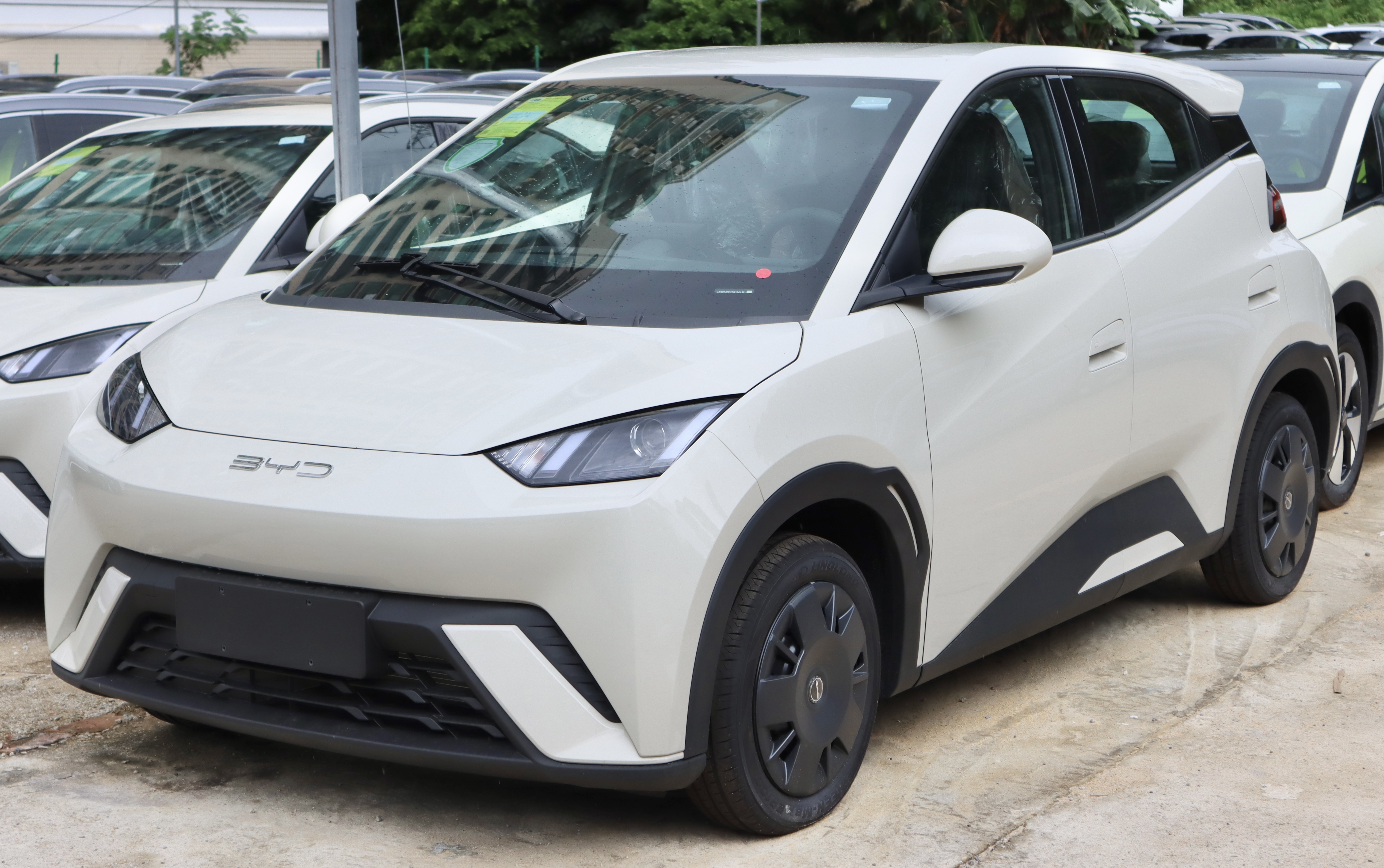
BYD can offer their seagull model for as little as 55,800 yuan.
They have done at times.
That's about 6,000 pounds.
It's not the world's greatest EV, but it's decent.
And that would cost 25 grand in Europe.
It's not sustainable.
And they're not invincible.
They had their first monthly sales decline of 2025 in July
and had to cut their annual sales target by a million units.
Tesla thought they were clever by starting the price war,
but it has backfired spectacularly.
Their market share has been declining pretty steadily and consistently.
They fell from third to eighth place now in the most recent data,
showing an 11.5% year-over-year decline in China-made vehicles.
All they can do is focus on export markets for Tesla.
NIO is burning cash like there's no tomorrow.
They lost $3 billion in 2023,
and they're betting big on premium features like battery swapping.
NIO's got over 2,000 battery swap stations in China,
where you get a full battery replacement in a couple of minutes, a bit over that.
They're targeting corporate break-even this quarter.
No, it's next quarter, isn't it? Q4.
But look, it's a high-wire act.
NIO have some incredible vehicles.
They're some of the best.
They've got other brands, Firefly and Envo, the budget and family brands.
Battery swapping is massively capital-intensive.
You've got to put everything in the ground for very little payback immediately.
And if NIO are burning money, what's it like for everybody else?
X-Pung or Xiaopeng seems to be cracking the code.
Their gross margin was 17% in Q2, up from 6% a year earlier.
They focus on advanced driver systems.
They try and make it all work profitably.
Their vehicle margin was 14%, showing that by having some different technology
can work in a brutal market.
The Walking Dead, though, well, they're just about everywhere.
Netta Auto's parent company entered bankruptcy proceedings in June.
Luxury EVMaker Hi-Fi, they were making some incredible vehicles, by the way,
like gull-wing doors or like the Falcon-wing doors of Teslas.
They declared bankruptcy as well last August.
The number of active EV manufacturers declined and it's falling fast.
Let's take a break.
Lots to talk about on the podcast today.
We've got what the government are telling them to do
and we've got what's actually happening in the industry.
I'll even take a little punt at what might happen in the future.
Look, I'm not a Chinese market expert.
I'm trying to decode it for my audiences in the West.
Lots of my ideas.
We'll have a little chit-chat about that in a moment.
Take a slurp of coffee and back in a moment.
I didn't even realize I was wasting $415 a month
until I downloaded Rocket Money.
I thought I had my finances under control
until the app laid out all my spending and categorized it for me.
Takeout, shopping, and unused subscriptions
were quietly draining my account
and as a result, my savings took a backseat.
But Rocket Money doesn't just tell you what you're wasting money on.
It takes action to save you money.
First, the app looks at your income and monthly expenses
and calculates how much you can safely spend each day to stay on your budget.
Rocket Money also finds and cancels unwanted subscriptions for you
and even negotiates better rates on your bills
so you have more money in your pocket.
On average, Rocket Money members can save up to $740 a year
when using all the app's premium features.
Users love the app with over 186,000 five-star ratings.
It's time to simplify your finances
and take control of your money.
Get Rocket Money.com slash Cancel to get started.
That's Rocket Money.com slash Cancel.
Rocket Money.com slash Cancel.
Verbo last-minute deals make chasing fresh mountain powder incredibly easy.
With thousands of homes close to the slopes,
you can easily get epic pow, freshies, first tracks, and more.
No need for months of planning.
In fact, you can't even plan pow.
Pow is on its own schedule.
Thankfully, somewhere in the world it's always snowing.
All you have to do is use the last-minute filter on the app
to book a last-minute deal on a slopeside private rental home.
Book now at verbo.com.
On top of that, it also sends you alerts
when subscription prices go up,
so you always know the price you're paying.
If you decide you no longer want a subscription,
you can cancel it right from the app.
No customer service needed.
And the best part is, Rocket Money even reaches out
and tries to get you refunded for some of the money you lost.
On average, people that cancel their subscriptions with Rocket Money
save $378 a year.
And overall, Rocket Money has saved its members $880 million
in canceled subscriptions.
Stop wasting money on things you don't use.
Go to rocketmoney.com slash cancel to get started.
That's rocketmoney.com slash cancel.
Rocketmoney.com slash cancel.
With savings over $390 this shopping season,
Verbo helps you swap gift wrap time
for quality time with those you love most.
From snow on the roof to sand between your toes,
we have all the vacation rental options covered.
Go to Verbo now and book a last-minute week-long stay.
Save over $390 this holiday season
and book your next vacation rental home on Verbo.
Average savings $396, select homes only.
All right, welcome back to the show.
Now, we're talking about the problems in China's EV market
and how it's possibly being underreported or played down
or not understood by Western media.
Beijing hasn't been blind to what's happening.
They could see this was turning into an economic disaster
that would spread beyond cars.
So the government launched what they call
the anti-involution campaign.
Remember that, that involution phrase
of basically trying to stop companies from eating each other
or the industry eating itself.
President Xi Jinping himself has been speaking out against
the phrase was blind over investment
in sectors like NEVs.
A pivotal Politburo meeting on July 30th this year
established a mandate to govern disorderly competition
through laws and regulations.
Has it been working?
All right, let's have a look at that.
The government started calling an executive from BYD,
Geely Greatwall, all the big names,
for stern talks about responsible pricing.
They're proposing new laws that would make it illegal
to sell cars below cost.
The fact that they have to create a law tells you
how much it's been happening.
They force companies to pay suppliers within 60 days
rather than some of the suppliers waiting half a year.
That's been mildly successful.
This isn't like dealing with the Chinese companies
that have had issues in the past.
So the best examples I can think of were the solar
oversupply issue of some years ago
and the steel industry in China.
Now they're state-owned steel companies.
Most of these EV firms are private companies
and they're backed by local governments
who don't want to see their pet projects fail.
Unlike the 2015 to 2017 supply side reforms
that reigned in state-owned enterprises,
this campaign targeting privately owned firms
is harder to control.
It's working, but it's working slower,
I think, than perhaps central government would like.
Early indicators suggest modest success.
Average EV discounts were 8%,
and then after the directive,
they're down to 6.7% from 8% direct discounts.
The China Association of Automobile Manufacturers
even stopped publishing monthly sales charts
because they want to de-emphasize the race for volume.
Here's the weird thing.
All the brutal competition has kind of worked,
not if you're a supplier,
not if you've bought a car from a company
that went bust and you're stuck with it.
Here's the weird thing.
This innovation that's happening in China
is only happening because
they purposefully created this situation.
It's like Darwin's theory of evolution
for the EV industry,
and it's kind of genius
if you're not affected by it personally.
Chinese companies are now 30% faster
at launching new EV models than their Western rivals.
They're developing new battery technology,
autonomy, and in-car AI at breakneck speed.
The technology arms race is most intense
in batteries and autonomy.
BYD's Blade II battery has been offering
regularly ultra-fast charging,
1,000 kilometers of range in EVs,
CATL's free-voy battery system
can add hundreds of kilometers in minutes,
Neo boasts the world's longest range EV battery,
they say, and of course all the battery swapping as well.
In autonomy, which isn't really my wheelhouse,
but it kind of gets connected to EVs,
the China Society of Automotive Engineers
protects that by 2030, 70% of new cars sold in China
will have advanced ADAS.
20% fully driverless.
That's light years ahead of Western markets.
And again, most of the EVs are coming now
with a really decent level of autonomy.
Included, bundled, in the price.
It's like Tesla giving away FSD for free, effectively.
Chinese EVs are also distinguished
by what the industry calls digital bling.
I love that phrase.
I hadn't heard of it till I started researching this podcast
a few days ago to get all the notes together for you.
Digital bling is something that was first told to me,
not in those words, by an executive from a car company
interviewed for the podcast and he worked at WM Motors.
Now they've sadly not made it.
They still exist as an entity
and I think the new owners are looking to bring them back.
He told me in 2019 about this trend
with younger Chinese buyers wanting EVs
and digital bling.
And he went, the Western car makers don't get it yet.
They're still talking about how we're making cars
with great German engineering.
And six years ago, this is all pre-pandemic,
already he was working.
He was one of the C-suite at WM
and he was talking about how younger Chinese buyers
want digital bling, infotainment systems
that sophisticated advanced voice control,
deep integration with the apps and devices
that you use in your day to day life,
deep integration with AI, treating a car
like a computer on wheels and it resonates
with tech savvy consumers, particularly the younger buyers
who then looked at the premium German brands
as, well, they're the cars your parents buy.
The average EV price in China has fallen
but they're not stripped down basic cars.
They're coming with features that would cost
extra on premium European brands.
The variety is crazy.
There's 785 electric car models available in 2024,
up 15% from the previous year.
So what can they do with all of this innovation over capacity
and some of these factories running, you know,
effectively zombie factories just keeping the lights on?
Well, the answer could well be China's pain
becoming our gain.
China's solution to having too many cars
on their shores, go overseas.
Export like the world has never seen before
and it's only just beginning.
We're talking a lot about BYD being so vertically integrated.
BYD even build their own car carriers.
They've got so many plans to export them
over the coming decades.
You don't build, I think they're on number 7 now.
You know, car companies don't traditionally
build their own roll-on roll-off ferries
unless they know that their roadmap
and BYD's certain plan is
the exports that you're seeing today.
They only just scratched the surface.
Any of the expert exports hit 1.056 million units
in the first half of the year,
up 74% from the previous year.
That's nothing.
BYD exported 630,000 vehicles
in the first eight months of this year,
doubling their overseas sales.
They're now projecting 940,000 for the year.
Look, we'll call it a clean million,
should we? We're all friends here.
Between 2018 and 2023,
the quantity of Chinese exports increased
a staggering amount.
It was up 1,000%, which is just like,
you just don't even understand it,
but this next one will blow your mind.
The value of, so as in the monetary value,
of the EVs exported leaving Chinese shores
and going overseas over the last six years
is up by 12,500%.
That's not bad growth.
Here's the clever bit.
They're not just dumping cheap cars
on the rest of the world.
The average unit value of an exported EV from China
rose.
It was $2,000,
averagely, in 2018.
They were selling some old,
you know, I'll try to be nice,
some less interesting cars back in the day.
And now the average export price
of an EV, 23,000 US dollars.
The share going to high income countries
leaping from 5% to 60%,
showing that the quality vehicles can compete
in the world's most demanding markets.
They're also using dual pricing strategies,
sell them cheap at home,
sell them expensive abroad,
a 10 grand BYD dolphin at home
is $38,000 equivalent, you know, in euros,
in the Netherlands.
This allows them to subsidize domestic price wars
with big overseas profits.
The export tsunami has triggered retaliation.
The US slapped 100% tariffs on Chinese EVs,
blocking them entirely.
The EU went for variable tariffs
from 17.4% for BYD
to 38.1% for the state-owned SAIC.
On top of the already 10% import duty.
But that hasn't stopped them.
Chinese EV exports to the EU continued.
They just make less money.
But they're still making money,
even with massive tariffs.
But Chinese companies are adapting
and they're adapting really fast.
BYD is building a factory in Hungary.
Others are setting up in Indonesia,
Brazil and Southeast Asia
to get around the tariffs,
like the old Japanese
and Korean playbooks
from the 80s and 90s.
Build local factories
and get around trade barriers.
The geographic impact is absolutely staggering.
Southeast Asia saw a 50% growth
in EV sales last year from Chinese brands.
Brazil's EV sales more than double
to 125,000 units.
Even Africa, alright?
Small for now.
EV penetration is small.
But the Chinese are spending money
in places like Morocco in North Africa.
It's so, so close to Europe.
And you can export to North America
very easily from places like Morocco.
China has retaliated with their own measures.
84% tariffs on US cars
and anti-dumping probes
on things like EU pork,
EU brandy and dairy
and Canadian canola.
This is turning into a trade war.
But it's the future of mobility
and electric vehicles
are at the absolute heart of it.
What about supply chains?
Well, this is gnarly
if you work in the industry.
The pressure's hitting car companies
and it's ripping through the supply chain
like a financial tsunami.
CATL is the world's biggest EV battery maker.
It saw its power battery business margins
compressed like never before
as the car makers they sell to
demand lower prices.
But they've got the scale to fight back
as the largest buyer of battery materials globally.
They can then pass that up chain
and secure procurement prices
for materials like lithium-ion,
phosphate batteries,
they're 10% lower than the industry average.
Smaller suppliers are getting destroyed though.
Stuck between automakers
that want lower prices,
raw material costs they can't control
and payment terms that are
in months, not weeks.
Many are forced to slash R&D to survive
and that would threaten long-term innovation.
The most concerning thing is vertical integration.
BYD's playbook has worked amazingly well.
Many automakers are moving upstream
designing and making their own components
and this turns former customers
into competitors for traditional suppliers
destabilizing the entire ecosystem.
Is it a house of cards?
Well that's the danger, isn't it?
The financial model of underlying
the Chinese EV sector
is financial engineering
that borders on the absurd.
Companies use delayed supplier payments
especially to run your company
as working capital.
Making suppliers their lenders.
BYD's working capital deficit
we've talked about before
but industry-wide companies
are taking so long to pay the bills
that it's creating this whole hidden structure.
According to GMT research
BYD's real net debt
okay I'm getting a little into economics here
I'm an idiot, podcaster, not an economist
but according to them
including supply chain focusing and IOU obligations
could be actually ten times
what is officially reported.
Even successful companies are financing
growth through precarious means
NEO just did at one point
one six billion dollar
stock raise
and the price is bounced back of that stock
and that money is going into working capital
R&D, they need that money desperately.
The situation is so bad
23% of Chinese industrial companies
operate at a loss.
Again, I'm no economist
that doesn't sound good to me
what do I know, I sit here with a microphone
and a cup of coffee
that's the highest situation
that has how bad it's got since 20
I don't know, 2001
local governments don't want to let
zombie companies fail
and fuel production
over production
but what about the macro
economic time bomb
what about the EV industry
causing a huge crisis
well China's producer price
index PPI has now been negative
for 33 consecutive months
as of now
with over capacity driven price competition
spreading in multiple sectors
falling prices are a major drag
on the consumer price index
when prices go down every month
and vast inventories are floating around
Chinese consumers are holding off purchases
waiting for better deals
it's a self reinforcing cycle of delayed consumption
and that's exactly what happened in Japan
in their so called lost decades
quite a vocal amount of
neo owners
at the moment
so neo are bringing vehicles to market
so quickly
enormously quickly
so that means that if you release a vehicle
and you persuade a bunch of people to buy them
this is a fantastic
brilliant vehicle and you should go get it
people do and they love their
their EVs
then six months later
they refresh them
of course your buyers are going to be really upset
that happened recently with the
neo ES8
now the neo ES8
if you're not paying attention to China
is what I can best describe as
a Range Rover for 50 grand
it's incredible
three row
lidar
huge luxury
just like lay flat seats
massive front
huge range
they have massage seats
this is the real deal and it's just over
50k
they just updated that a few weeks ago
to
be cheaper than what they were selling it at
and the new neo ES8 is considerably
better than the one that they had on sale
and that refresh process is happening so quickly
and all
the head of neo william lee could say
is I'm sorry
but if we don't do this you won't even have
a neo left so what would you prefer
the fact that you bought a car and then
we've just made a better one
within six months
I'd be annoyed depreciation is the biggest thing
so the car that you thought was worth something
is now worth a lot less because there's a new shiny thing
but what would be even worse
well that would be neo not being around
in a highly connected car era
would you prefer we survived
or do you want another car company to go bust
and then like
well visca owners are finding in the west
it gets really difficult really quickly
when car companies go bust
and you got connected cars so
like it
is hands are tied right
employment
multiplier effects are massive as well the auto sector
accounts for 10% of china's GDP and 10 million jobs
as I say
but as margins collapse and companies fail
that pain point goes all the way
through the industry
however
there are some really creative things happening in china
because I can best describe it
as innovate or die
chinese automakers have compressed vehicle development time
to 18 months for a whole new vehicle
that's three to five years of legacy brands
some a lot more than that as well
and if you work
an established car company
and you look at china and you scratch your head
18 months well what are they not doing
are they not doing hot weather testing or cold weather testing
how much are they not validating
how much are they rushing to the market
cynical questions maybe
but genuine questions to ask
when you've spent two years
just tuning a vehicle and validating it
the focus has shifted
to what the industry calls
software defined vehicles
chinese EVs now come standard with features
that cost thousands of extra on western cars
and they're designed in a way that can be updated
over the air as well
battery technology
is advancing at breakneck speed
chinese companies have done more than anybody else
in lithium ion phosphate technology
all of five minutes ago
this was
remember what diesel used to be to petrol
it was just like dirty and smoky
and it was the poor cousin
it probably still is
but LFP was that in the battery world
but LFP packs are not new
they've been used in buses and trucks and stuff in china
and then as car companies
Tesla started to use them
they were cheaper
they offered many benefits
particularly if you're selling cheaper cars
then that technology is not only improved
but in some cases you want the LFP pack
over everything else
that's how quickly it's moved on in five years
LFP packs are 81% of the chinese EV market
in the first half of 2025
big cost advantages there
as well
so one of the biggest obstacles
to stopping the price war
is china's own structure
local governments across china have invested
and as part of their
economic development strategies
they don't want to back away from it
local officials face a nightmare scenario
central government says
consolidation
but that means giving up
on their own pet projects
and dealing with a lot of mass unemployment
so they would say
the provincial governments that invested heavily
in EV companies
well our ones as it were
shouldn't be the ones that absorbed into
bigger companies
coordination problem is how economists put it
individual
rational behavior and it is
so if you're working in a region
local jobs, local investment
all collectively rational behavior
but you add
together as an industry to national overcapacity
and financial instability
and then it becomes a coordination
problem the whole industry could
fail
industry experts are unanimous
in agreeing that consolidation is coming
to the chinese EV industry
McKinsey projects that fewer than 50 chinese
brands will survive by 2030
a consolidation rate exceeding
75% Alex partners on their part
predicts 10 to 20
brand surviving and that's on the higher end
you know could it be 6
to 8 to 10 big chinese
names are the only ones that survive
down from hundreds
it's really possible and recent
moves say that's already started
Geely consolidated Zika
government pushes for Dongfeng
Changgang mergers underscore the new
era of enforced sale and operational
discipline the government is
encouraging murder mergers and acquisitions
making it easier for weak companies
to exit the market
but still survive as it were
they will be vertically integrated
companies they'll be strong R&D
and they will be consumer focused
with you know strong backing
big companies
but what that does
is create a new
set of global
EV companies that are big
and strong and powerful
and so through all of this drama
and crisis and gnashing
of teeth if you work in the industry
if you step back at
a thousand feet view and have a look
at what they've done could this be
a stroke of genius
I'm getting horse we'll take a quick break
I'll take a slurp of this coffee which is
decidedly tepid by now and I'll be back to finish
off and let you know about where this could all go
in the future stick around back in a moment
let's do the 60 second savings
challenge step one
download rocket money step two
link your accounts and see every
subscription you're paying for
tap one you don't use and cancel it
that's money back every month
step three create a financial goal
$50 every paycheck
or let the app automatically move
small amounts of cash when you can afford it
in a week you'll forget you set it up
in a month you'll see real dollars piling up
in a year you'll be shocked
at how much money you've saved bonus
challenge upload an internet or phone
bill and let rocket money try to lower
it you only pay if they find
you savings on average
rocket money members can save up to $740
a year when using all the apps
premium features users love the
app with over 186,000
five-star ratings make saving
money the resolution you actually
keep start the 60 second savings
challenge at rocket money dot com slash cancel
that's rocket money dot com
slash cancel
rocket money dot com slash cancel
get a jump on next summer
with verbose early booking deals
don't wait to claim your dream summer spot
whether that includes a good
port swing or a poolside lounger
when you book early you get the best
places at the best prices
but back to the poolside loungers
with verbose you don't have to
reserve any loungers
they're all yours in fact
the whole private home is yours
with early booking deals and you can lounge
around all summer long however
you please at verbose dot com
the holidays are expensive
you're paying for gifts, travel
decorations, food
and before you know it you've blown way
past what you were planning to spend
don't start the new year off with bad money
vibes download rocket money
to stay on top of your finances
the app pulls your income, expenses
and upcoming charges into one place
so you can get the clearest picture of your money
it shows how much to set aside
for bills and how much is safe to spend
for the month so you can spend with confidence
no guesswork needed
get alerts before bills hit
track budgets and see every subscription
you're paying for
rocket money also finds extra ways to save you money
by canceling subscriptions you're not using
and negotiating lower bills for you
on average rocket money users can
save up to $740 a year
when using all of the app's premium
features start the year off right
by taking control of your finances
go to rocket money dot com slash cancel
to get started that's rocket money dot
com slash cancel
rocket money dot com slash cancel
here that
that's me in tokyo learning to make sushi
from a master how did i get here
i invested wisely now the only thing
i worry about is using too much wasabi
get where you're going with spy
the world's most traded etf
getting there starts here with state
street investment management before
investing consider the funds investment objectives risks charges
and expenses visit state street dot com slash
i am for prospectus containing this another information
really carefully spy subject to risk similar to those
of stocks all the ts or subject to risk including possible
loss of principal alps distributors ink distributor
welcome
back for our final segment so where does
this all go next then well it's
fascinating to watch and to commentate
on hopefully we're decoding the
Chinese market for our listeners around the
world so possibly three scenarios
i see number one the most likely
which is managed consolidation
Beijing's anti-involution
campaign succeeds now
you wouldn't bet against central government what you
in China let's face it it succeeds
in moderating the worst
of the price competition
25% of businesses that were selling
vehicles at below cost just to get
scale and volume and keep the lights on
this focus shifts from cost
to technology and software
and brand equity consolidation
consolidation proceeds
orderly is one option
guided by market forces
and some states prodding where
necessary China maintains EV export
dominance through higher value products
rather than pure cost competition
they work out all of the various trade barriers
with the United States and the
EU and we all
gradually work our way
out of this situation
no companies need to disappear
and go bust but there's M&As and there's
mergers and acquisitions and if you bought an EV
then you're not left high and dry
but you'll get absorbed into one of the
few six eight ten
global companies that have been created
through this 20 year experiment
by Chinese central government
scenario number two
is possible
and that is total collapse the government
campaign fails to control
hyper competition local government
resistance happens private company
independence prevents intervention
at the speed they want unlike
you know state owned steel
many banks have got some bad
loans out there they're keeping
EV companies afloat in the hope that they
will survive there's chaotic
bankruptcy supply chain disruption
social instability
there's like 15% youth unemployment
in China and that causes social
instability with mass job losses
long-term damage to innovation
industry reputation and the great
Chinese EV experiment is chalked
off as a failure
possible and scenario number
three global fragmentation
well that might already be happening
regardless of domestic outcomes the global
market permanently fractures into
blocks and that's what I've been
talking about in 2025
with you on the podcast
the United States
at least in this political
cycle is very
likely to maintain high
tariff walls
putting moats around the country
don't come in
you're not welcome that's fine
the US has an auto industry
they don't want Chinese technology
and despite people trying
to you know use maybe Mexico
production and coming in through a so-called
back door it doesn't work out
the European Union using
targeted duties
to manage Chinese
in sports and what's more
likely is to encourage
Chinese companies to sell
their cars in the European Union
but with EU labour
with EU energy prices
all costing a lot more money of course
in EU factories
but with full ownership
by Chinese companies on EU soil
that's already happening
whereas China
dominates a price-sensitive
emerging market possibly using
car exports to prop up
their domestic market
leading to
economists term bifurcated
supply chains competing technologies
and a new map of automotive
influence
the thing that's clear
is there's no going back
can China stop its EV price war
or the honest answer
is that yes they can moderate it
for now and it's beginning to have
some green shoots of success
can central governments
stop this price war madness
of selling stuff at a loss
not paying your suppliers and being
propped up by local government money
maybe
the fundamental problem
which is a massive over capacity
and it's all been by design
as we established at the beginning
is not going to go away quickly
the anti-involution campaign
really is managing the symptoms
not curing the disease
what we're witnessing is the most brutal
industrial consolidation in
history at least playing out
in real time in front of your
eyes and mine with global consequences
I kind of suspect that
although I've read some stuff recently
New York Times had some stuff on the Chinese
market really not being
discussed what's happening in China today
is going to shape the cars that you and I
can go shopping for in years
and decades to come
I'm kind of happy that you and I
fell into this little conversation we're having
at this point in 2025
I think we're going to be finding ourselves
well ahead of the curve
by the time everybody else starts talking about it
this in China
is determining not just who makes
the world's cars
but how much we pay for them
what features they have, what level of technology
and what countries get access
to that it is entering
a crazy era
where BYD is about to roll out
megawatt charging in Europe
not with the two cables the dual gun
approach but with a single
cable so far BYD
make the hand L and tang L
they use the dual gun approach in China to get megawatt
charging over here they're going to launch it out next year
with a single cable using the CCS2 connector
so Europe is going to have access
to megawatt charging on passenger cars
well the US
won't and so we end up
in this really weird situation
where the United States a global
tech leader with silicon valley
at the heart of its tech industry
the US
with all of its might and fame
for innovation in the world of EVs
becomes a laggard
playing catch up
that seems crazy to me
but it's already happening and for consumers
it's
mostly good news
certainly in the UK because we left
the European Union with Brexit
we now get better cheaper electric cars
there's a lot of discussion over
how those cars were made
the labour that made those cars and the conditions
and I'm open to all those conversations
but for everyone else in the automotive industry
this is an existential threat
the survivors of China's EV price war
are definitely going to dominate
their home market
hundreds down to a handful
is my prediction I know some of the economists saying
20 or 30 big car makers will remain
in terms of big
car makers I honestly see it as being
is it 6 or 8
or is it 10 and the names you talk about today
are probably the ones that are going to be
the best chance to get there
the Nios, the
X-Pungs, the Xiaomi's
already doing amazing things
the B-Wadis and in China
Tesla of course as well
the EV price war
in China is coming
for everyone else's market
armed with technology
forged in the world's most competitive crucible
under the white
hot pressure of what's happening
in China right now
with cost structures that nobody else can match
but real life
innovation that's here
and now and it's here because
of the way the industry is
set up hey here's a thought
will other countries
regions, economic
blocks look at what China did over this
20 year period of intentionally
creating a massive oversupply
problem and the
Darwin theory right so
we'll step in
we'll see them rise to the top
there's going to be some failures
we're China so we'll ride out the pain
will anybody else think that's a good way
of doing industrial strategy
crazy electric vehicles
those things that you and I love talking about
is actually at the heart of the future of the world's economy
the price war has created
a new competitive
era where rapid innovation
software sophistication and mass market pricing
aren't optional extras
that's the baseline expectation
Western automakers who thought they could maintain
premium pricing for incremental
improvements every few years
have found out the hard way
the new rules of the new
game in China
oh that was a long podcast
like an I only apologize if you made it
to the end but I really enjoy talking to you
about that one it's been a long time writing it as well
it's a few late nights Mrs. Lee's been saying
where have you been
I've been writing the China show
I've been really proud of it
that's a really good look hopefully
and where we are maybe we'll do the same again in a year's time
I wonder what will change and what will be the same
if you enjoy these bonus shows
I really appreciate hearing from you
my email address is hello at evnewsdaily.com
thank you for your support on Patreon
this is how I earn a living now
and I'm like family
how I feed my family and so
couldn't do this without the amazing gang on Patreon
and the incredible people that do listen to free feed as well
and tune into the ads
for a living and do this for you
thank you so much for listening
I'll catch you on the next one
it shows how much to set aside for bills
and how much is safe to spend for the month
so you can spend with confidence
no guesswork needed
get alerts before bills hit
track budgets and see every subscription you're paying for
Rocket Money also finds
extra ways to save you money
by canceling subscriptions you're not using
and negotiating lower bills for you
on average Rocket Money users can save
up to $740 a year
when using all the app's premium features
start the year off right
and get a full control of your finances
go to RocketMoney.com
slash cancel to get started
that's RocketMoney.com
slash cancel
RocketMoney.com
slash cancel
hear that
that's me in Tokyo learning to make sushi from a master
how did I get here? I invested wisely
now the only thing I worry about is using too much wasabi
get where you're going with SPY
the world's most traded ETF
getting there starts here
before investing consider the fund's investment objectives
risks charges and expenses visit
statestreet.com slash IM for prospectus containing this
and other information read it carefully
spy a subject of risk similar to those of stocks
all ETFs are subject to risk including possible loss of principle
Alps distributors ink distributor
hear that? that's me with a lemonade
in a rocker on my front porch
how did I get here? I invested
to make my dream home
get where you're going with MDY
the original mid cap ETF
from State Street Investment Management
getting there starts here
before investing consider the fund's investment objectives
risks charges and expenses visit
statestreet.com slash IM for prospectus containing this
and other information read it carefully
MDY is subject to risk similar to those of stocks
all ETFs are subject to risk including possible loss of principle Alps distributors ink distributor
say what you want about AI
but it's here
and it's helping businesses get more done in a day
Wix's website builder
is infused with AI so you can stay ahead
create a beautiful functional website
just by describing your idea
track how your site appears in AI search results
create custom images
on demand
or launch an entire campaign in a matter of minutes
Wix gives you AI
wherever you need it
try it now for free at Wix.com
when you think about businesses that are selling through the roof
all birds or skims
sure you think about a great product
a cool brand and brilliant marketing
but an often overlooked secret
is actually the businesses behind the business
making selling and for the shoppers buying
simple
for millions of businesses
that business is Shopify
nobody does selling better than Shopify
home of the number one checkout
on the planet
and the not so secret secret
with shop pay that boosts conversions
up to 50%
meaning way less carts going abandoned
and way more sales going
so if you're into growing your business
your commerce platform better be ready
to sell wherever your customers are scrolling
or strolling on the web
in your store, in their feed and everywhere
in between
businesses that sell more sell on Shopify
upgrade your business and get the same
checkout skims uses
sign up for your $1 per month trial
period at shopify.com
slash audio boom
all lower case
go to shopify.com
slash audio boom to upgrade your selling today
shopify.com
slash audio boom
About this episode
China's electric vehicle (EV) market is in turmoil due to deliberate overcapacity and aggressive price wars, fueled by over $230 billion in government subsidies since 2009. The episode explores the consequences of this strategy, including financial stress on manufacturers, a chaotic competitive landscape with over 130 brands, and the potential for significant industry consolidation. It highlights the impact on global markets, the rise of companies like BYD, and the challenges faced by others like Tesla and NIO. The discussion also touches on the government's attempts to stabilize the situation and the future of EV exports amid rising tariffs.
Original notes
China's electric vehicle price war represents the calculated culmination of a decade-long state industrial policy that has now reached its inevitable—and perhaps intended—climax. Since 2009, Beijing has channeled over $230 billion into EV incentives, subsidies, and industrial support, creating what appears to be overcapacity but was actually a deliberate strategy to forge global champions through domestic combat.
The result is a market hosting over 130 brands competing in what Volkswagen's China chief describes as a sector that has "lost all reason".
Today we’ll discuss:
A reminder our bonus shows are exclusively for our Patreon supporters. For the first 7 days, only Patreon insiders get early access, their name on the list of legends for Executive Producers and above, and the power to shape future shows. If being in the know and recognised as a supporter sounds like you, join us now at patreon.com/evnewsdaily and become part of something special.
The result is a market hosting over 130 brands competing in what Volkswagen's China chief describes as a sector that has "lost all reason".
Today we’ll discuss:
- Chronic Overcapacity and Unsustainable Competition
- Deep Financial Stress Across the Industry
- Global Repercussions and Political Backlash
A reminder our bonus shows are exclusively for our Patreon supporters. For the first 7 days, only Patreon insiders get early access, their name on the list of legends for Executive Producers and above, and the power to shape future shows. If being in the know and recognised as a supporter sounds like you, join us now at patreon.com/evnewsdaily and become part of something special.
0:00
42:18