Ford Motor Company is a well-known car manufacturer in the United States. They make many popular vehicles, including the Ford F-150 truck and the Ford Mustang sports car.
Tailpipe emissions policy is about rules that control how much pollution cars can release into the air. These rules help keep the environment cleaner and healthier.
Term
$7,500 US consumer incentive
The $7,500 US consumer incentive was a tax break that helped people afford electric cars. When this incentive ends, electric cars can become more expensive, which might make fewer people want to buy them.
General Motors, or GM, is a big car company that makes many different types of vehicles. They are now working more on electric cars as part of their future plans.
The Chevrolet Equinox is a mid-size SUV that offers a lot of space and good gas mileage, making it a great choice for families or anyone needing extra room.
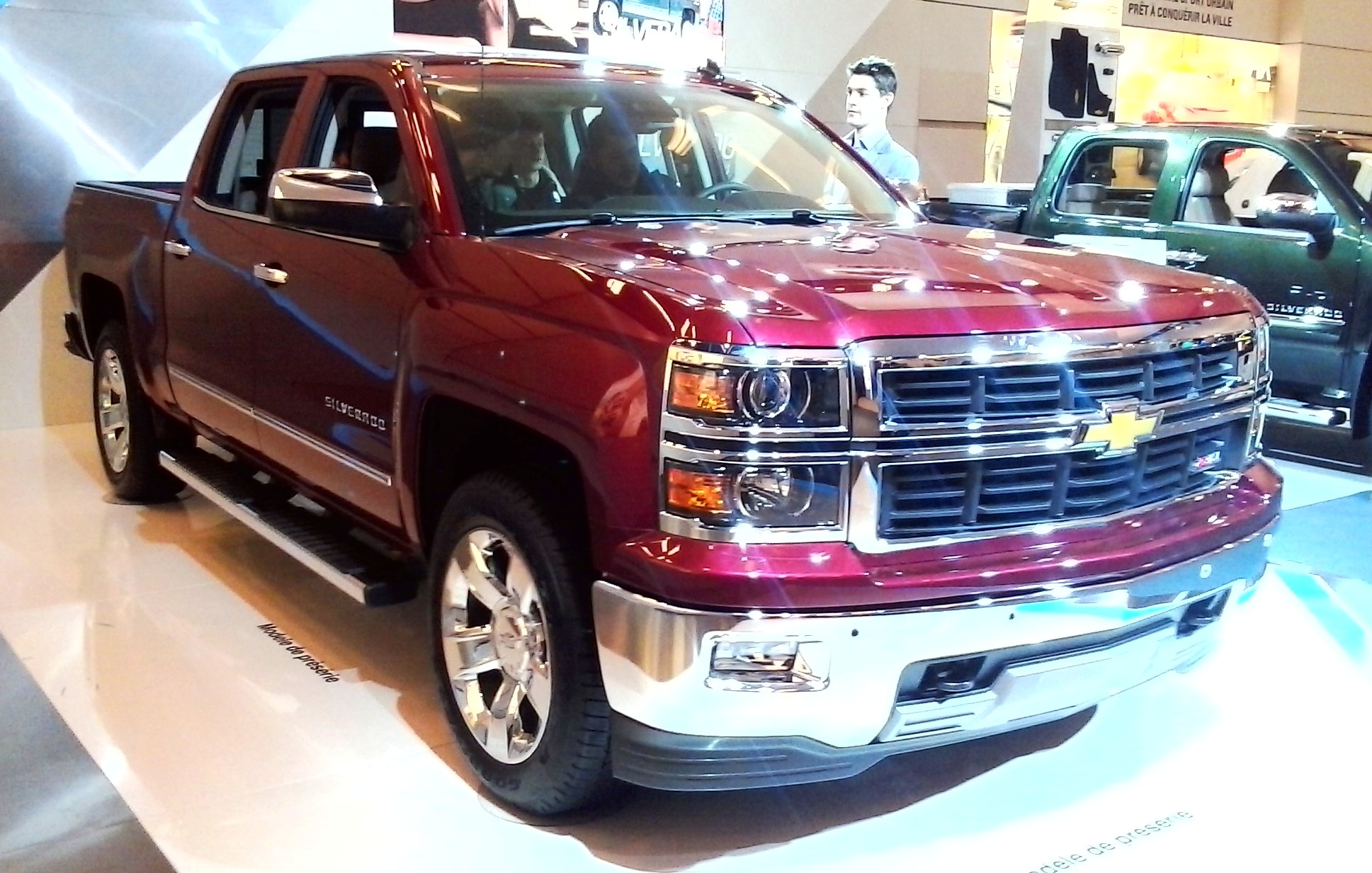
The Chevrolet Silverado is a big truck that's great for hauling things and is very tough, making it a favorite for people who need a reliable vehicle for work or play.
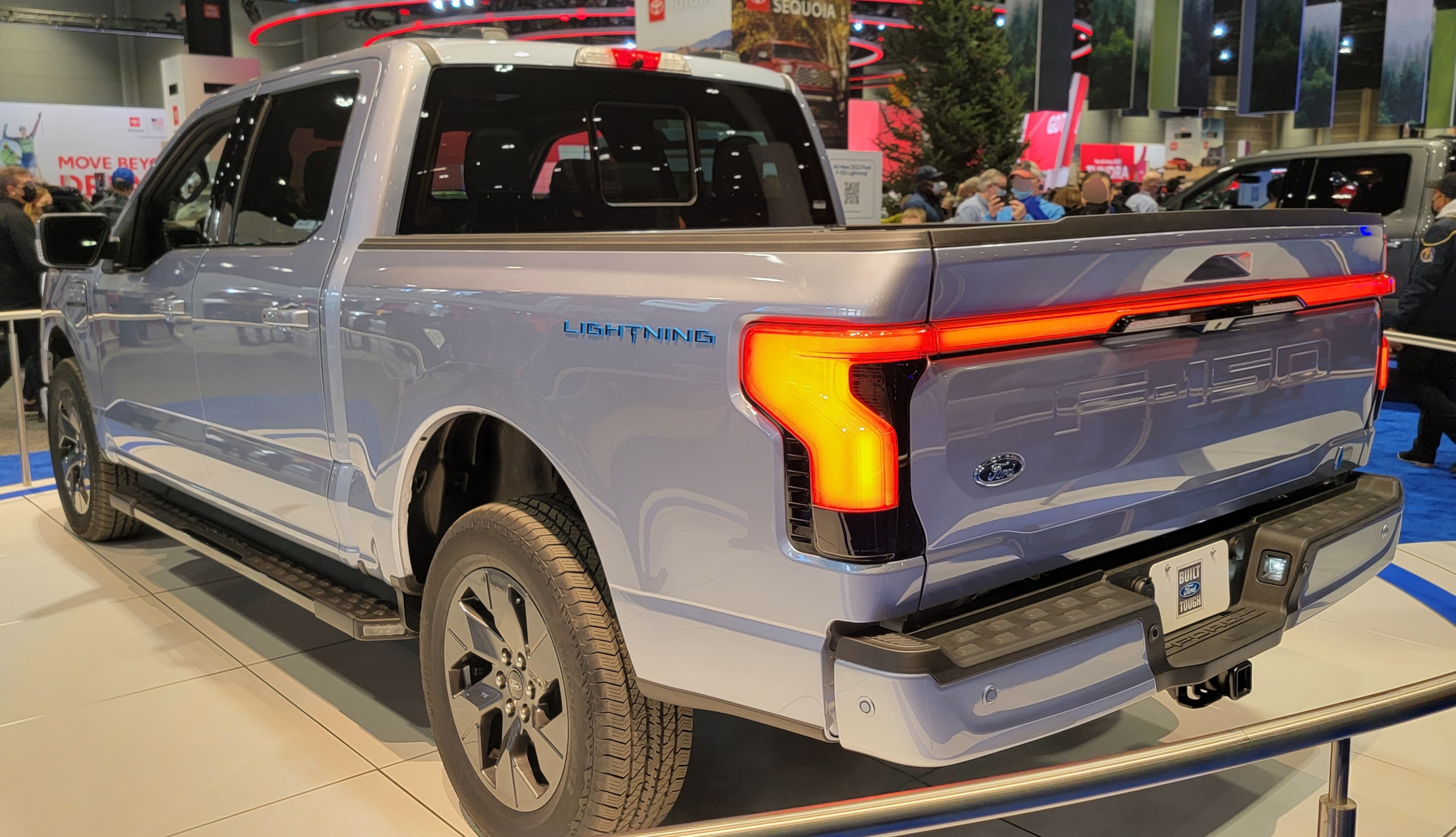
The Ford F-150 Lightning is a fully electric truck that looks like the regular F-150 but runs on electricity instead of gas. This means it's better for the environment and can save you money on fuel, which is why it's getting a lot of attention.
The Chevrolet Blazer is a stylish SUV that offers a good mix of space and performance. It's a popular choice for those who want a vehicle that looks good and can handle different driving needs.
The Jeep Wagoneer is a big, fancy SUV that can go off-road and still feel comfortable inside. It’s great for families or anyone who needs a lot of space and wants to explore different terrains.
The BMW i4 is a new electric car from BMW that looks sporty and is fun to drive. It's designed to be good for the environment while still being a luxury vehicle.
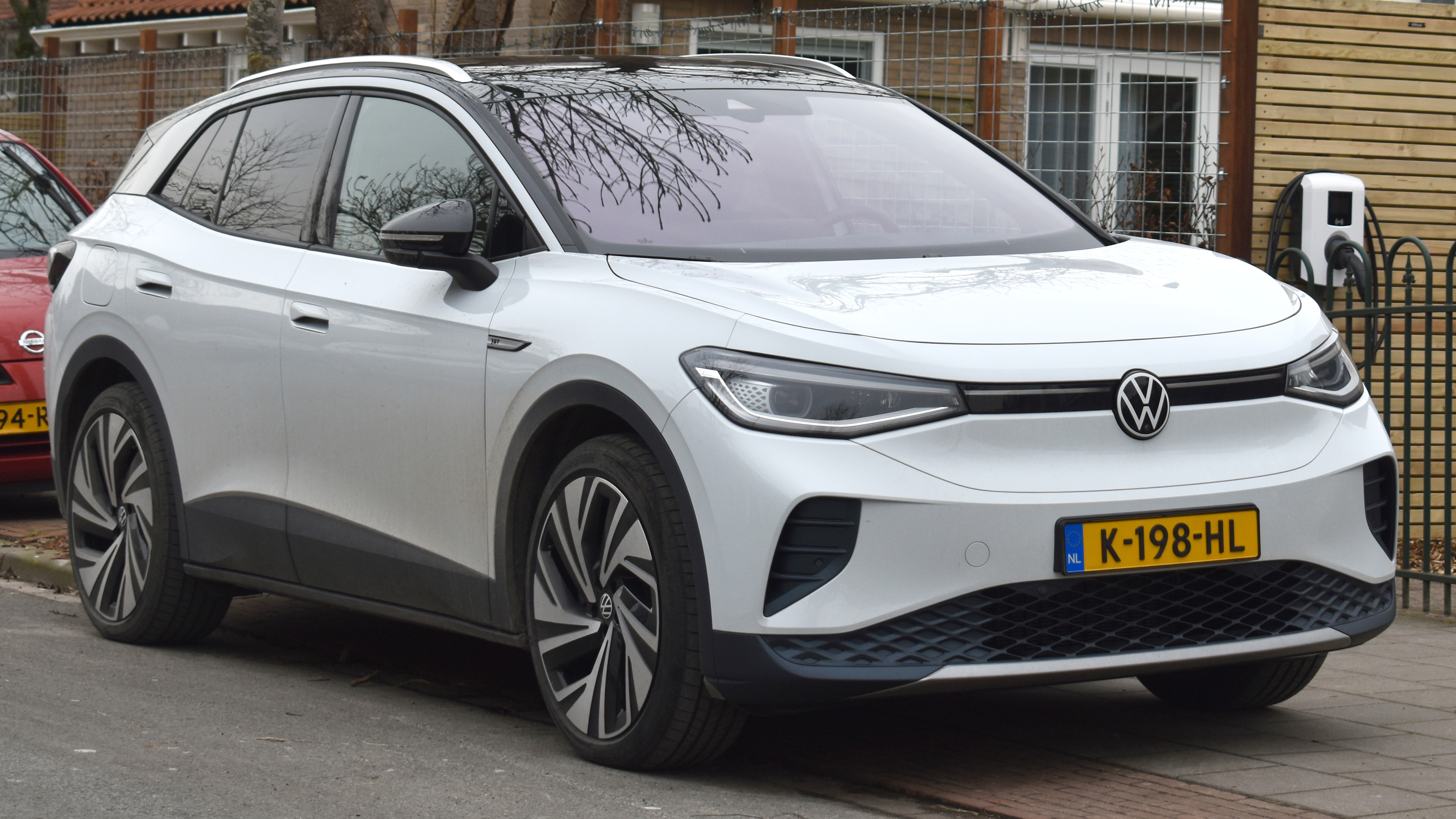
The Volkswagen ID.4 is a compact electric SUV that is easy to drive and has a good range on a single charge. It's a practical choice for those looking to go electric.
The Tesla Model Y is an electric SUV that can carry more people and cargo than a regular car. It's popular because it has a long battery life and lots of cool tech features, making it a great choice for families who want to go green.
The Tesla Model 3 is a smaller electric car that is designed to be more affordable than other Teslas. It’s known for being fun to drive and having a long battery life, making it a great option for people looking to switch to electric.
The Tesla Cybertruck is an electric truck with a very unusual design that looks like something out of a sci-fi movie. It's built to be tough and is meant for people who need a truck for work or play.
The Lucid Air is a fancy electric car that is known for being very fast and having a lot of space inside. It's aimed at people who want a high-end electric vehicle.
EVs stand for electric vehicles, which are cars that run on electricity instead of gasoline. They are better for the environment because they produce no exhaust emissions.
EU emissions regulations are rules in Europe that limit how much pollution cars can create. They help make cars cleaner and better for the environment.
EV incentives are money or discounts offered by the government to help people buy electric cars. This makes it cheaper for buyers and encourages more people to choose electric vehicles.
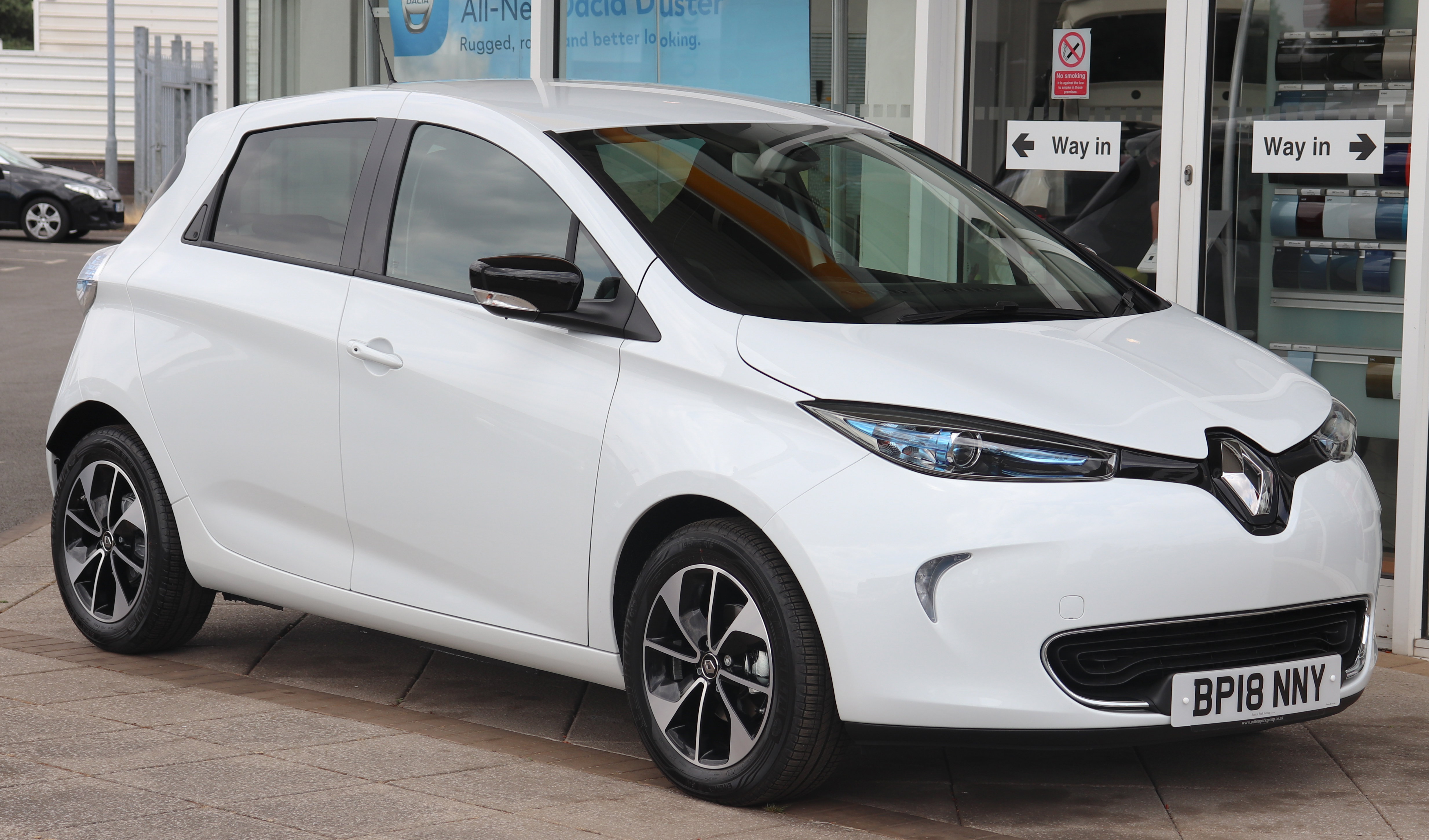
The Renault Zoe is a small electric car that is easy to drive and park. It's a good option for people who want to save money on fuel and are looking for an affordable electric vehicle.
New car registrations are the number of new cars that people buy and officially register with the government. It shows how many people are buying new cars.
LIVE
Since 2011, American Giant has been making everyday clothing with extraordinary effort.
Not in far off factories, but right here in the USA.
We obsess over fabrics, fit and details, because if you're going to wear it every day, it
should feel great and last for years.
From the cut of a hoodie to the finishing of a seam, nothing is overlooked.
Our supply chain is tight-knit and local, which means less criss-crossing the country
and more care in every step.
The result is durable clothing, t-shirts, hoodies, sweatpants and denim that become
part of your life season after season.
This isn't fast fashion, it's clothing made with purpose by people who care as much about
how it's made as how it fits.
Get 20% off your first order with code STAPLE20 at american-giant.com.
That's 20% off your first order at american-giant.com with code STAPLE20.
That's 20% off your first order at american-giant.com with code STAPLE20.
Well, you know I'm just an idiot podcaster without the infinite access to world-class
market analysis that no doubt CEOs have on tap, but it's now been a month and the predicted
apocalypse hasn't materialized.
In fact, what we're seeing is a masterclass in how markets adapt, how manufacturers respond
and how resilient consumer demand for EVs is actually.
Today's episode is going to challenge the doom and gloom, the dominated headlines over
the last few months.
We're going to look at the actual data from the month of October.
Not all the sales data that's in that won't come out for a little while yet, but examine
the creative ways that car makers are keeping EVs affordable without the federal help and
draw lessons from other major markets like Germany and here in the UK that went through
similar transitions and came out the other side stronger.
Before we dive in, let me be clear, I'm not saying the loss of $7,500 for new cars and
$4,000 for used cars is meaningless.
It's a significant change.
What I am saying is that the predictions of total market collapse have been overblown
or at least premature.
We don't know yet, do we?
Let's just wait and see.
The evidence is mounting that the American EV market is actually more mature and resilient
than all these naysayers believed.
Just a reminder, our bonus shows are exclusively for Patreon supporters for the first seven
days only.
Patreon insiders get early access, and then it goes into the free feed seven days later.
Patreon supporters get their name on the list of legends in the show notes of every show.
You get to take part in the paid members chat called Killer What Confidential, which is
where I hang out these days, not on social media anymore for, you know, just reasons
it became a depressing place to be, and you can shape future shows as well.
You can be in the know, you can take part in the conversations we have to pick future
questions of the week, and you can join us now at patreon.com slash ebnewsdaily and be
part of something special.
So let's get into it.
The predictions that were made.
Let's recap how negative some of the forecasts were to varying degrees.
Jim Farley, the CEO of Ford Motor Company, delivered the most memorable warning speaking
at the Ford Pro Accelerate Conference in Detroit on September 29th, literally the day before
the credit expired, when the general media were desperate for any quote or story on this
major topic, and Farley delivered what they needed, a negative headline.
He said, and I quote, I wouldn't be surprised if EV sales in the US go down to 5% about
industry from probably this month, 10 or 12%.
And quote, that's a market crash of 50% of the US EV market gone overnight.
Really?
Did he believe that?
Why was he saying that?
Well, CEOs of big organizations rarely miss speak.
They always say something for a reason, whether it's in front of politicians because they're
arguing a case, whether it's in front of the media to get their message out.
But why did he predict a halving of the EV market in the US?
It was one of the worst predictions and boy, did the media lap it up.
He went further saying, I quote, I think it's going to be a vibrant industry, but it's
going to be smaller, way smaller than we thought.
Customers are not interested in a $75,000 electric vehicle.
And he also warned that the market would be, and I quote, considerably smaller than we
anticipated, particularly with the recent changes in tailpipe emissions policy and the
discontinuation of the $7,500 US consumer incentive, end quote.
Well over at General Motors, the message was equally pessimistic.
Duncan Aldred, GM's senior VP and president of North America, wrote on the company blog,
there's no doubt we'll see lower EV sales next quarter after tax credits end, September 30,
and it may take several months for the market to normalize.
We will almost certainly see a smaller EV market for a while.
We won't overproduce.
Paul Jacobson, who is GM's CFO, told investors,
we're going to witness some fluctuations in October and November and I anticipate EV
demand is going to decline sharply.
Even Nissan joined the chorus of doom and gloom.
The chairman of Nissan Americas, Jeremy Papin, warned the electric vehicle sector is poised
for a downturn.
This competition is going to be extremely intense as there is an abundance of inventory.
Well, the analysts weren't any more optimistic.
Stephanie Valdez-Streety, director of industry insights, a cox, the parent company of Kelly
Bluebook said, and a quote, the federal tax credit was a key catalyst for EV adoption
and its expiration marks a pivotal moment.
This shift will test whether the electric vehicle market is mature enough to thrive on
its own fundamentals or needs further support.
JD Powers Brent Gruber, executive director of EV practice,
warned that the elimination of EV tax incentives and public charging funding
has the potential to affect two critical barriers, charging and vehicle prices.
Ernst & Young's mobility lens forecaster said that EV adoption in the US would slow
to under 2% annually through 2030, with EVs accounting for 11%, which is where they are
about now, by 2029, which four years time.
Well, that's their prediction.
Told you, it's really bad.
And these aren't fringe voices, by the way.
These are CEOs and executives and respected industry analysts all singing from the same
hymn sheet.
Without the federal tax credit, the EV market is doomed.
Not just short term.
So what's the reality that I see?
And bearing in mind I'm thousands of miles away, I just don't get it.
And if I'm missing something, please correct me, but I'll present my argument in the most
honest way that I can and respectfully if you disagree, correct me.
So what's actually happened in the month of October?
Not too much.
We do know that the third quarter of 2025 did indeed see record EV sales.
No one's disputing that.
But that was expected as buyers rushed to meet the September 30th deadline because everyone
was saying, well, from October 1st, they're going to be the prices through the roof.
The real test was always going to be what happened this month.
And that's where it gets interesting.
Data from Cox Automotive, US EV sales in the third quarter, 438,500 or so,
up 40% from the previous quarter and up 30% from the previous year.
EVs were 10.5% of total sales and all time high.
So we're coming off of that.
We are, as of recording, because this goes out to Patreons first and then on the free feed
seven days later, which will be in about November, but we're almost at the end of October.
And while complete sales data is not available,
what we are seeing is a market anything but in freefall.
We're witnessing an orderly transition.
The manufacturers have stepped in with their own incentives to fill the gap
that was left by the federal money.
The record Q3 sales helped to put inventory into the market.
And dealers are motivated to move that inventory.
More importantly, automakers who built their EV strategies around a decade of
projected tax credits and don't get me started on politicians changing what the previous politician
did. I don't care which side of the aisle you sit.
Promises were made, maybe not by you, but by the previous guy.
But still, it's as good as a handshake and you look somebody in the eye and go,
well, we promised these credits for decades or at least 10 years.
You built factories based on that.
I might not agree with it, but the right thing to do is to stick with the promise that was made.
And by weaseling out of it, I think it's a pretty crappy thing to do.
But either way, it's not a political thing.
It's all politicians, by the way.
I think you stick to the promises that the previous girl or guy made,
even if you don't agree, because companies need to set their sales accordingly.
Anyway, let's move on.
They've all made these massive investments.
And so they all now have to compete on the fundamentals of price, feature set, and value.
Ford, despite the CEO's very pessimistic prediction,
and I love the Ford products, by the way,
announced that it would, on October 1st,
preserve the competitive lease rates that we currently offer in the market.
GM made a similar commitment.
Both companies initially tried to claim the tax credit through a creative interpretation
of IRS rules, doing it with the IRS, by the way, nothing underhand.
Buying inventory from dealers, well, the finance arms of those companies,
buying inventory back from dealers, claiming the credit themselves,
and then leasing the cars that the dealers could advertise those lease prices
with the tax credit included.
Ultimately, those plans had to be abandoned after political pressure,
really from just a couple of Republicans, but instead,
they didn't fancy the fight and they knocked that idea on the head.
The reality is that manufacturers have already built substantial EV production capacity.
They have factories running, supply contracts in place,
and billions of dollars in sunk costs.
And whilst you can get out of contracts and play penalties,
and you can change what's in a factory, simply put,
turning off all EV production is not an option.
They've got to keep vehicles moving,
which means keeping them attractive to buyers.
Analysis from ING Bank on October 7th concluded that the US EV market transition
has been delayed but not derailed, noting that EV sales may decline this month,
although thanks to the front loading we anticipate the full-year EV share
is going to be over 10%.
The key insight here is that while October sales will almost certainly be down
from the last day of September, I'm not denying that.
It was not artificially inflated number in Q3,
and the question is now whether those numbers settle at a very sustainably healthy level
or their crater, which was all the predictions.
And early indications, to me at least, suggest
we're going to have a softer landing than they thought.
So what's been the manufacturer response?
What other countries done?
And what do we learn here in the UK and Germany?
And why the market is more resilient than many people think?
I'll tell you after we take a quick break, a lot more to discuss.
Stick around, I'll be back in a moment.
All right, welcome back to the podcast.
So on this bonus episode, we're talking about the response to the tax credit
going new and used cars.
How have the manufacturers responded?
Well, the real story in October isn't about the lack of government incentives,
it's about how the private industry stepped in.
And what we're seeing is remarkable, starting with the domestic manufacturers.
Chevrolet is offering 0% APR for five years
on Equinox, Blazer and Silverado, 0% financing on a 60-month loan is huge value.
On a $50,000 vehicle, that's $6,500 in interest compared to 6% loan.
That's the equivalent of the old tax credit delivered through finance savings.
Ford is running 0% for 72 months on the Mustang Mach-E and Ford F-150 Lightning.
Ford credit is offering attractive lease deals with the Mach-E available for $336 over three years.
The company said it would preserve the competitive lease rates we currently
offer in the market even after abandoning the plan to claim tax credits on dealer
inventory that I just mentioned.
GM is offering $6,000 in net incentives on EV agreements through October.
The Chevrolet Blazer can be leased for $299 a month for two years with $1,500 down.
GMC offering the Hummer with 0% over three years.
On to the international brands.
Hyundai, on October the 1st, emerged with an aggressive offer.
$7,500 off the vehicle on the Arnick 5, exactly the old tax credit.
Also offering 0% financing for 72 months on the Arnick 5 and Hyundai announcing
massive price cuts on the 2026 Arnick 5 range with reductions up to $9,800 depending on trim.
The Hyundai Arnick 5 SE with rear wheel drive starts at $35,000 down from $42,500
for the old model year.
That Arnick 5 can be leased from $189 a month.
Kia, Hyundai's sister brand is matching the aggression.
EV6 and EV9 come with $9,000 in bonus cash, it's what they call it,
and 0% APR for five years, six years, sorry, and a $2,000 bonus cash on the EV6.
The Nero EV starts at $169 a month on 0% APR for 72 months and $2,000 back.
As of today, Honda is offering the prologue with 0% APR for 60 months and leased deals at $289 a
month.
Stellantis brands are very creative, the company is mirroring the federal tax credit
for its plug-in hybrid and BEVs and adding cash bonuses on dealership inventory.
The Jeep Wagoneer S comes with $15,000 in bonus cash and 0% for 72 months.
The Dodge Charger, 0% for 72 months.
Chrysler Pacifica plug-in hybrid, the same.
Luxury brands are competing to BMW offering the i4 with lease deals at $399 and a $7,500
purchase credit or $299 APR for 60 months.
The iX comes with $7.5 grand off the purchase price as well.
Volkswagen doing 0% on the iD4 and Volvo offering very cheap interest and discounts on their EV range.
Nissan offering 0%.
What about the market leader, Tesla, the bellwether of the EV industry?
That has moved decisively to maintain its competitive edge in the post-credit era.
They've cut their lease payments by 15% for the Y and 23% for the 3 to offset the loss of the federal
subsidy.
The Model Y now leases from $4.49 a month down from $5.29.
Model 3 dropped to $3.29 a month and both benefiting from the Tesla-designed lease credit
that is about $6,500.
Even the Cybertruck, which nobody wants, according to the sales figures at least,
saw a reduction in its lease.
These discounts run through the end of October at least and could be extended
and are bridging this demand until their standard trims arrive before the end of the year.
Lucid is offering the air sedan with 0% APR for 72 months and $7.5 grand off.
Let me be clear about what all this means.
I know I've rattled through that at breakneck speed.
If you walk into a dealership now, at least before November, and I think they'll be extended
personally, even the ones that were on dealer inventory, I think they'll magically offer it
on the next model year.
If you walk into a dealership today, looking for an EV, you will find deals that are as good
or even better than what was available on the last day of the federal tax credit.
The value has simply shifted from government money being handed out to dealer incentives
and manufacturer incentives and finance incentives.
If you believe what you were told, that we were on a downward spiral since September 30th,
that there's a chance that actually by waiting until October 1st, you got a better deal.
The bit that nobody ever says out loud is that MSRP and that money off a big total price
is entirely the wrong metric to focus on because nobody buys a car like that.
When was the last time you walked into a dealer with $50,000 in your pocket and went,
I'll have the red one, right?
There's an argument that buying your car should never have been tied to your personal
tax liabilities and getting some sort of credit, whether it was applied when you filed next year
or on the hood.
Instead, the EV market this month responded with discounted monthly deals exactly the way the
automotive industry has always worked.
They might be EVs, but they're still cars, and I know one thing about dealers and car makers,
they know how to sell cars as Ivan Jury from Edmunds noted, dollar for dollar,
you won't discover a more advantageous deal on a comparable internal combustion engine vehicle,
right now on EVs.
So what can we learn then?
The skeptics might say, sure, manufacturers incentives can last for a while,
but they can't sustain it.
That's a fair point, right?
So let's look at what happened in the markets.
Germany is an interesting case study.
In December 2023, the German government abruptly ended the I think it's called
Umwelth bonus program, which had provided grants up to 6,000 euros,
so a similar amount than the US, for new bear purchases.
And the result was, frankly, dramatic in the immediate aftermath of the sudden removal.
Very unexpected.
EV sales dropped by not 50%, as was Ford's prediction, but 28% in the year without subsidies.
And by July of the following year, they were down 37%.
That's not 50.
Just as we've seen in the USA, though, industry observers in Germany immediately
predicted a prolonged downturn.
But here's what actually happened.
Germany v. Sales have now recovered by January of this year.
Bev registrations have been surging 53.5% compared to January of 2024.
The market found its equilibrium.
Manufacturers adjusted pricing and incentive structures.
and strict EU emissions regulations all compensated for the loss of government handout money.
And now, recognizing that the domestic car industry kind of needs a bit of support,
because the Chinese are coming and what the heck have we been doing for the last 10 years?
Germany is now bringing back incentives, but with a different structure.
Starting next January in 2026, they'll offer 4,000 euros and EVs under 45 grand
for low and middle income buyers.
The United Kingdom, where I am, tells an even more optimistic story.
After discontinuing various EV incentives over the previous years,
I got a couple back in the mid-teens or 2015, 2016, and then a few years later.
I bought a couple of Renault Zoe's and got money off them.
I didn't need it, but the UK government money is always there.
You're going to take it, right?
And so that's kind of the story of a lot of government handouts.
I probably would have bought the vehicles even without them.
But hey, I took the money.
Now they've bought back the electric car grant, offering 3,750 pounds,
it's about maybe $5,000, for vehicles under 37K.
The response has been remarkable.
Last month in September, UK new car registrations were up 13.7 percent,
the strongest September since the pandemic in 2020.
Battery electric vehicles drove that growth.
They were up 30 percent year on year.
To a record, 72,779 units, the highest monthly volume ever.
We're coming off the back of literally the best month that EVs have ever had in my country.
And I still see negative headlines.
For the first time, electrified vehicles, according to the data,
which I hate because it includes shabby hybrids, is more than 50 percent.
UK market is a demonstration that with the right policy support,
even modest support and strong manufacturer commitment,
EV adoption can survive the highs and lows of government handouts.
Norway provides the ultimate example of markets.
Norway is now phasing out its main EV subsidies after achieving,
last month 98.3 percent pure Bev, not plugins,
because plug-in hybrids are the other, the remaining percent.
There's no petrol and diesel left.
98.3 percent in last month, pure B EV.
As Andrew Lee, he wrote in Forbes on October 15th,
Norway is phasing out EV subsidies after reaching 95 percent adoption,
proving that smart, gradual rollbacks work.
Yeah, Norway have signposted this, by the way, a long way out.
They've told buyers, here's what's happening.
Here's the roadmap.
Here is a gradual step down of the incentives.
A 2022 academic study in the journal Energy Economics,
analyzed where the Norway's EV market was now self-sustaining.
The reef search has found that in 2019, or by 2019,
all Norwegian municipalities had overcome critical mass constraints.
An approximately 60 percent of the population
lived in areas with a high enough adoption, even without subsidies.
The study concluded the objective of advancing markets
beyond critical mass constraints
does not validate the current level of subsidies.
Six years ago, they could have gone, according to this study,
and it wouldn't have affected the market.
Norway's experience proves that EV markets can be self-sustaining
that requires consistent policy support.
The lesson from these international examples is clear to me, at least.
Yeah, like removing subsidies creates short-term disruption,
but markets adapt.
And I'm not here arguing for free markets in all circumstances.
I'm not that person.
I'm no economics expert.
But manufacturers have a lot of power in terms of pricing.
They can improve their products, shock horror,
and they can find new ways to compete.
Consumers who want the superior driving experience of an EV,
lower operating costs, environmental benefits of EVs,
will always buy them.
And the market finds a new equilibrium.
It might just take a while to get there.
And as I always say, I'm no expert in finance,
but I did read something when researching today's podcast
that really struck home.
And this article said that subsidies and incentives
are introduced to support often emerging markets and new technologies.
But important innovation, but that at the time of their introduction,
they were always introduced, subsidies and incentives,
whether it's any sector, with the intention to one day be removed,
they're not meant to be forever.
By their very nature, they serve a purpose at a point in time.
So whether you agree with the timing of the federal tax credit ending in the US,
it was always going to go.
And why is the market more resilient than many people think?
Why do I think the dire predictions were overdone?
Right, several factors, and then I'll wrap this thing up
because I've been talking for a long time.
So number one, product quality has improved dramatically.
The EVs available now are not the EVs from 10 years ago,
but the expensive toys of early adopters were buying.
You can now buy a Hyundai Arnick 5 with 303 miles of range at $35,000.
That's cheaper than many midsize gas SUVs.
The Equinox EV is less than $35,000 with 319 miles of range.
Practical, affordable, great vehicles, the new bolt and new leaf
are going to smash below $30,000 before monthly offers.
Secondly, charging infrastructure has expanded significantly.
Range anxiety, whilst a concern for some people,
and I hate that phrase because, you know,
why don't you get petrol anxiety
if you're driving through somewhere with no petrol stations, but either way.
Range anxiety is not an issue anymore, even compared to five years ago.
Tesla's supercharger network is growing faster than any other charging network,
and they're opening up to new brands rather.
Numerous other charging networks are expanding,
and we still need more charges in rural areas,
and DC fast charging in the right place,
and access to off-peak home charging,
or at least where your car is parked,
whether you park your car at work all day,
or on street or wherever, we need to find those solutions.
Thirdly, total cost of ownership is always going to favor EVs.
Even without the tax credit, EVs are way cheaper to run.
At the current electricity prices and gas prices,
typically the owners save up to $1,500 a year alone.
Maintenance costs are significantly lower, no oil changes,
no transmission fluid, no brake pad replacements as often because of regen braking.
Over seven years, these savings really add up.
Fourth, many states offer their own incentives,
California, Colorado, New York, New Jersey, and more,
all providing their own rebates and tax credits.
They haven't gone away.
And fifth, perhaps most importantly,
there's genuine consumer demand.
People who drive EVs overwhelmingly love them,
the instant talk, the smooth acceleration, the quiet operation,
the convenience of home charging, or make devoted customers.
You haven't got to be some sort of evangelist,
just to go, yeah, I prefer it, the next one I buy will be an EV.
Once someone drives an EV for a week, it's hard to go back to combustion.
That genuine enthusiasm creates organic demand that doesn't need incentives,
as regular listeners always hear me say all of the time,
you can't put the genie back in the bottle.
Once you buy an EV, all the data over the years says,
nearly everybody, their next car they buy is another EV.
And that's a flywheel, which continues to accelerate.
All right, let me finish off conclusion then.
I'm not here to tell you that losing the federal tax credit doesn't matter.
It absolutely does.
It will slow the adoption curve in one way or another.
It makes the math harder if you're really budget conscious,
or if you're absolutely relying on that to make your purchase.
And it removes one of the tools that was speeding up EV adoption in the United States.
Why I'm telling you though, is that all these predictions of market collapse
have been wildly overblown.
The American EV market in October 2025 is not imploding.
It hasn't and it won't.
Manufacturers are responding with aggressive incentives that maintain affordability.
Consumers continue to buy electric vehicles because they're better.
The fundamentals of the market, improving tech,
more infrastructure, lower operating costs,
strong consumer satisfaction once you buy one, they haven't changed.
Jim Farley predicted the market would drop by half from 10 to 5% of new vehicles.
Analysts warned of a devastating crash.
The reality is a lot more modest.
It's probably going to be a temporary pullback and a return to steady growth.
The EV revolution is moving from early adopter to early mainstream,
entering a new phase where products need to succeed on their own merits.
The CEO of Rivian, RJ Scarridge, has been very vocal on this recently.
The best like cream will rise to the top.
And obviously he thinks his Rivian vehicles are the best.
When you don't rely on artificial financial support,
people seek out the best value.
And from everything we've seen in the first month following,
the tax credit exploration,
I think we're up to the challenge.
The American EV market isn't collapsing.
It's just maturing.
And that's exactly what we need for long-term, stable success.
Thanks for listening to EV News Daily.
I'll see you on the next one.
About this episode
The episode delves into the current state of the U.S. electric vehicle (EV) market following the expiration of federal tax credits. Contrary to dire predictions of a market collapse, data from October shows resilience and adaptability among manufacturers and consumers. The discussion highlights how automakers are introducing their own incentives to maintain affordability, while also drawing parallels with international markets like Germany and the UK, which have successfully navigated similar transitions. The episode emphasizes that the American EV market is maturing rather than collapsing, with strong consumer demand and improved vehicle offerings.
It’s one of the most fascinating questions developing in the American EV market right now. For months, we've been bombarded with dire predictions about what would happen when the federal EV tax credit for new and used EVs expired on September 30th, 2025.
Industry titans lined up to tell us the sky was falling. The CEO of Ford predicted the market would collapse from 10% to just 5%. General Motors executives warned of a "sharp decline." Analysts at major firms forecast a devastating crash that would set electric vehicle adoption back years.
Well, I may be an idiot podcaster without the infinite access to world-class market analysis that CEO’s have, but it's now a month on and the predicted apocalypse hasn't materialized.
In fact, what we're seeing is a masterclass in how markets adapt, how manufacturers respond, and how resilient consumer demand for electric vehicles has actually become.
Today's episode is going to challenge the doom-and-gloom narrative that's dominated headlines for the past few months
We're going to look at the actual data from the first three weeks of October, examine the creative ways automakers are keeping EVs affordable without federal help, and draw lessons from other major markets like Germany and the UK that went through similar transitions and came out stronger on the other side.
Before we dive in, let me be clear: I'm not saying the loss of the $7,500 tax credit is meaningless. It's a significant change. But what I am saying is that the predictions of total market collapse were overblown, or at the least premature. The evidence is mounting that the American EV market is far more mature and resilient than the naysayers believed.
Just a reminder our bonus shows are exclusively for our Patreon supporters. For the first 7 days, only Patreon insiders get early access, their name on the list of legends for Executive Producers and above, and the power to shape future shows. If being in the know and recognised as a supporter sounds like you, join us now at patreon.com/evnewsdaily and become part of something special.