General Motors, often called GM, is a large car company in the United States. They are working on new technology that will allow cars to drive themselves without needing someone to control them.
NVIDIA is a tech company that makes powerful computer chips. They help cars drive themselves by providing the technology needed for the cars to understand their surroundings.
Level 4 autonomy means that a car can drive itself without needing a person to help it in certain places, like city streets, but it might still need a person in other situations.
Volkswagen is a big car company from Germany that makes many different types of cars. They are planning to launch a self-driving taxi service using their new electric vehicle.
RoboTaxis are self-driving cars that can take you places without needing a human driver. They're becoming more common in cities as technology improves.
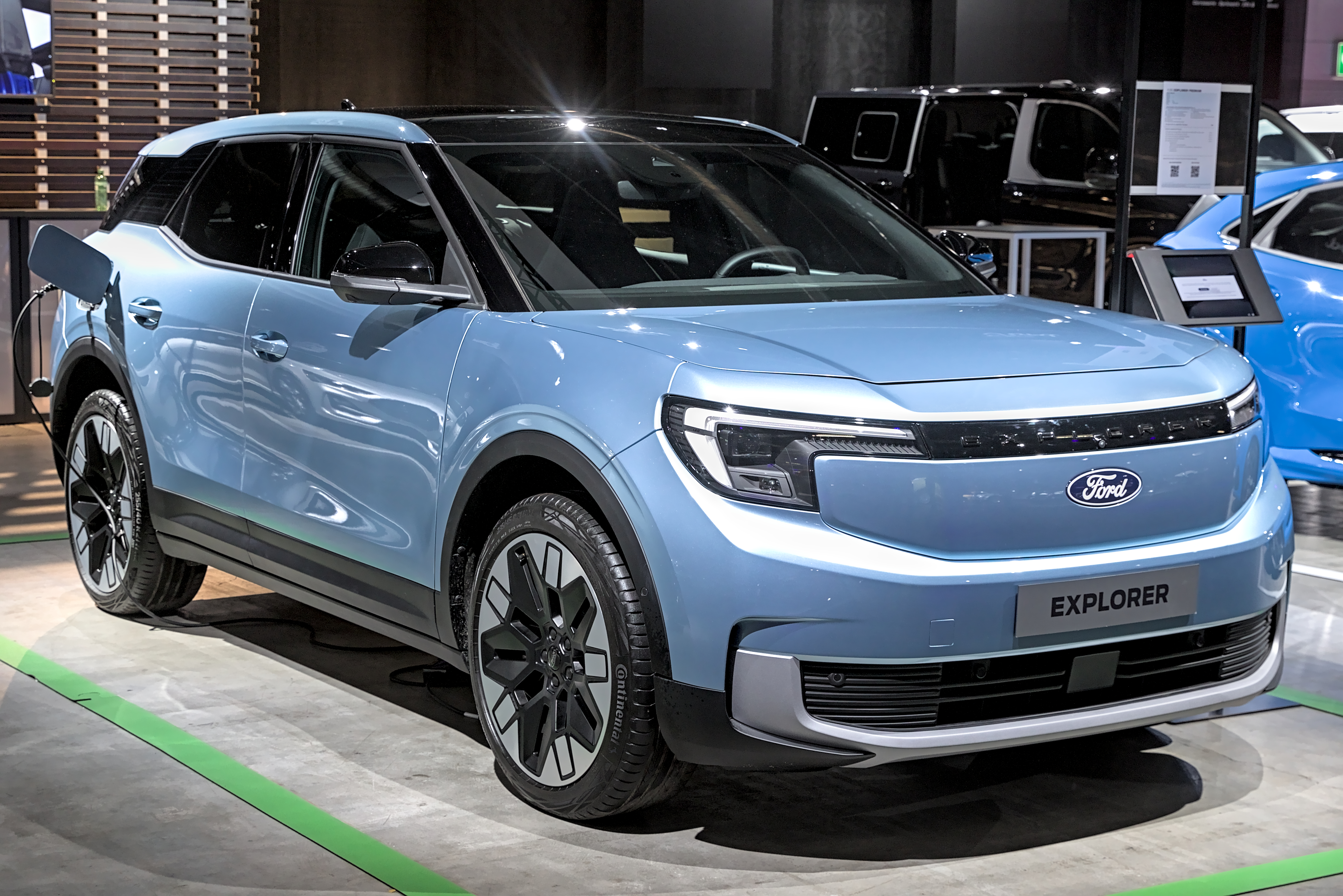
The Ford Explorer is a type of car called an SUV, which is bigger than a regular car and great for families because it has a lot of space inside. It's been around for a long time and is popular for its comfort and ability to handle different types of roads. Sometimes, there are safety issues that can affect many of these cars, which is why people talk about them.
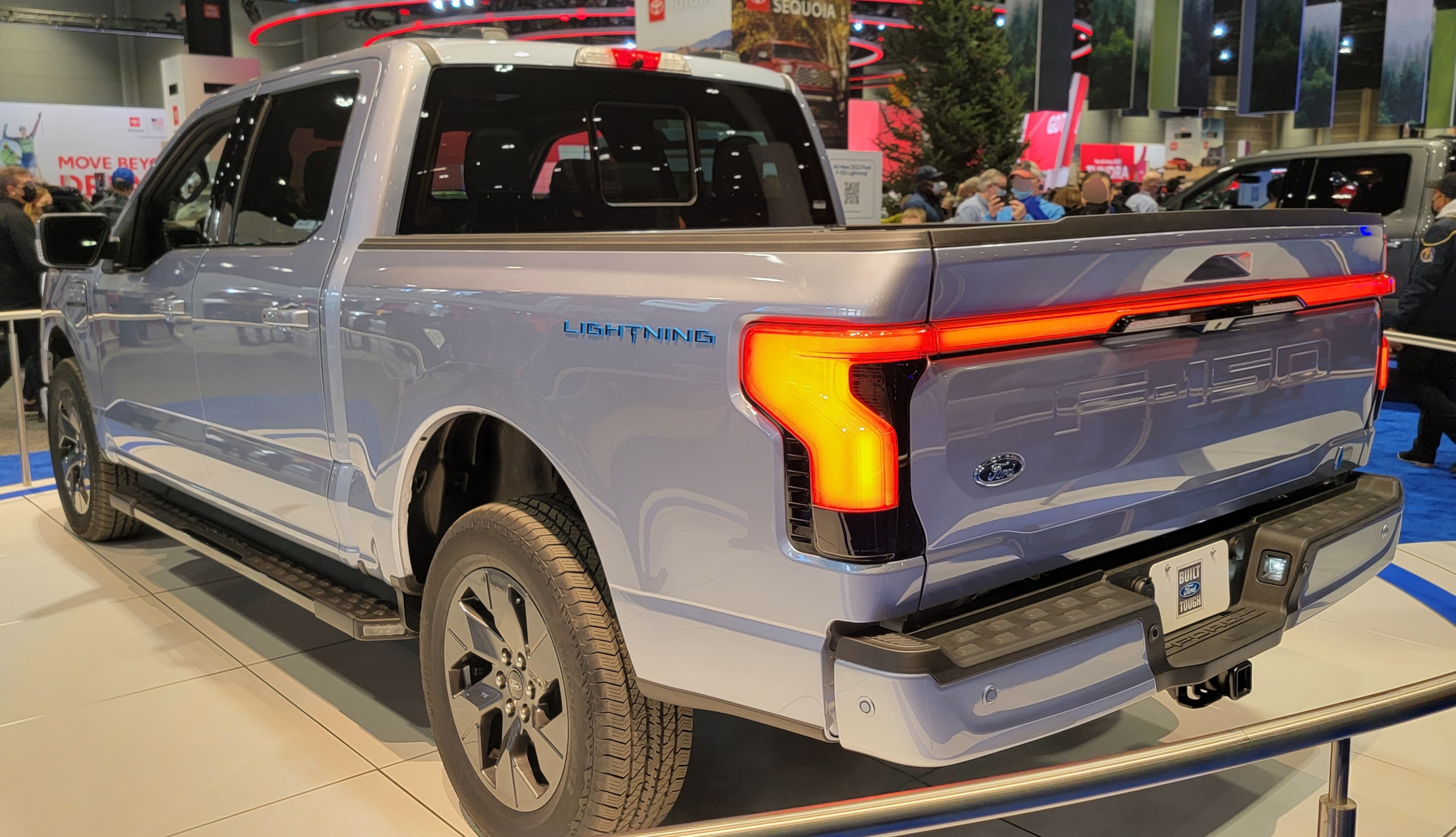
Ford Motor Company is a big car company in the United States that makes vehicles like trucks and cars. They are famous for making the Model T and have been around for over a century.
Ferrari is a famous Italian car company that makes very fast and expensive sports cars. They are well-known for their racing history and iconic designs.
Carter Myers Automotive is a group of car dealerships in Virginia that sells different car brands. They have been around for a long time and started as a Ford dealership.
The Chrysler Sebring Convertible is a small car that can have its roof folded down, so you can drive with the wind in your hair. It was made for many years and is remembered fondly by people who liked driving it in nice weather. It's a fun car that brings back memories for some people.
LIVE
Hey everybody, welcome to another episode of The Daily Dealer Live.
I'm your host Sam Dark and welcome to this living room, I guess, of Automotive
where we get the opportunity to talk, to learn, to grow, to challenge each other.
You've made an intentional decision to be here on this November 3rd, the first Monday in the month.
Let's jump into our news today. First up, the United States and China are reportedly inching
toward an agreement that could restart some chip exports and ease the strain on automakers bracing
for another shortage. After last week's meeting between President Trump and China's
President Xi, trade officials on both sides began talks to defuse the standoff over next
period. The Dutch based Chinese owned chip maker caught in the middle of it all. According to NBC,
the White House may soon announce that limited shipments could resume while China's commerce
ministry says it's considering exemptions for some exports to stabilize supply chains.
But so far, nothing's finalized and everyone's choosing their words very carefully. Automakers
are watching closely. Honda has already sold production in its Mexico and the U.S. while
Nissan and Mercedes warn they're running short on chips. Bottom line, if the talks hold this could
keep the current disruption from spiraling into a full blown crisis. But for now, it's still a
fragile situation and further proof how challenging our single source global economy is depending on
just one or two sources for those tech chips. Next up today, according to TransUnion,
auto loan originations grew just over 5.2% year over year in the third quarter. That's
a healthy rebound powered by lower interest rates and steadier inventory levels. A big
driver was EV leasing. Nearly 60% of new EV loans last quarter releases as buyers rushed to take
advantage of the federal tax credit before it expired. But even as volume grows, affordability
is still under strain. Average new car payments are up 20 bucks from last year to $7.69 a month
and used car payments are rising too showing just how sticky vehicle prices have been.
The real story here is a divided market. Prime and Super Prime buyers are holding the line.
While subprime borrowers are stretched thin, delinquencies aren't spiking, but they're still
sitting well above pre-pandemic norms and that's keeping lenders very cautious.
Zooming out, the financing landscape looks stable, not soft. Interest rates are holding steady.
Credit unions are back in the game and demand isn't falling off, but the smartest dealers
are using this window to tighten processes deep in lender relationships and help buyers
stay in the game as costs keep creeping up. We here at the Zagrado Group ourselves have dug
into the lender relationships, choosing less and deciding to go deeper rather than broad
and narrow. But that's just my take. Next up today, the race toward autonomy is shifting into high
gear as more legacy automakers move to lock down their place in the self-driving future.
General Motor says it'll launch an eyes-off hands-free system by 2028.
Stellanus is teaming up with Uber and NVIDIA to expand its autonomous mobility program.
Mercedes-Benz is working with NVIDIA 2, aiming for level 4 ready vehicles
and Volkswagen plans to roll out its ID. BuzzRoboTaxi's on Uber's platform
is in Los Angeles next year, but Goldman Sachs says the question isn't if the technology works
anymore. It's how fast it can scale. Ride-hailing margins are thin. Scaling RoboTaxi's is expensive.
Automakers are still burning cash on EVs. Essentially, the EV market is loaded with
opportunity, but it's not guaranteed gold. Success will come down to capital discipline,
smart partnerships and sustainable growth models. And I mentioned after having attended F1 in Austin,
I was astonished to see the number of RoboTaxi's and autonomous vehicles
flooding their streets. Between the RoboTaxi and even Tesla with a huge tower on top,
it is clear that their future is coming fast. Ford, next up and finally up today,
Ford's recall troubles just keep stacking up. The automaker issued five new campaigns last week,
covering everything from Broncos and F-150s to Explorers and Lincoln's. The recalls touch
almost 475,000 of vehicles for issues ranging from seatbelts and moonroof clips to windshield
defects and light bar repairs. None are catastrophic, depending on how you define catastrophic,
but the sheer volume underscores how widespread Ford's quality headaches have become,
especially as warranty costs keep rising. For dealers though, this also means a surge of
factory paid work heading into the winter months. And many of these fixes are simple,
the kind of jobs mobile service fans can handle in a driveway or at a workplace,
that frees up bays for higher margin customer pay work. And that is a wrap on today's industry news.
Yuli, welcome back. It's Monday. I love a Monday. It is Monday. And for all of our audience joining
us via the live stream, we are live as always across all CDG social media platforms. Push
your comments into the field. We'd love to bring them into today's show. It enriches everything
we do. And Yuli, can I share a little something personal that's cool? I mentioned the Auto Group,
Ziggler Auto Group, or I'm COO here. Tomorrow, you may remember, this is our 50th anniversary
year, which is astonishing, 50 years selling cars in Western Michigan, the Chicagoland,
and elsewhere throughout the Midwest. And tomorrow, Ford Motor Company is meeting at
location 01, Lowell, Michigan. Do you know where Lowell, Michigan is, Yuli? Have you
ever seen Lowell, Michigan? They're meeting at Lowell, Michigan to celebrate the 50 years ago,
the Harold Ziggler, as then the youngest Ford dealer in the entire country at 20-some odd years old.
He decided to go into business as a Ford dealer, which today seemed like the smartest bet anybody
could have ever made. But I would imagine as a 20-something year old, it must have been terrifying
to bet the farm, bet the family, bet your house, whatever small assets you had at that point
on a future in automotive. And it's paid off having gone from one location now to 41 location.
Get this, watch this. Having gone from Ford to Ferrari, did you get that? Yeah. Ford to Ferrari
and having it pay off with the latest action of a Ferrari store in the Chicagoland. So,
props to Harold Ziggler, to Aaron Ziggler, to the entire Ziggler Auto Group. And it'll be fun to
celebrate with Ford. And guess what? I'm going to ask him. I'm going to say, what's up with the
recall stuff? Because I'm tired of reading the news about recalls. I want it done, Yuli. So,
maybe you can give me another good question for him. All right, let's dive into today's show,
because we have got an amazing show coming up today. First up today, President and CEO
of Virginia based Carter Myers Automotive, Liza Borges. Liza, welcome to the show.
Hello, Sam. So, I was listening to your story and, you know, we started as a Ford dealership.
My great father, when he was 24 years old, started as a Ford dealer in Petersburg,
Virginia, 100, and almost one years ago. That is amazing. Well, you know what? So,
they must have known each other. There must have been some overlap there. But Liza, what is,
what are the odds of lasting 100 years in today's business world? That's astonishing.
You know, when we were celebrating our 100th anniversary last year, my COO went and did some
research. And I think there were, it was only like a thousand companies in the United States that
were 100 years old. So, you think that the number of companies out there, and certainly the ones
that have come and gone during that time, the percentage has got to be pretty small. They say
only about 3% of companies make it to the fourth generation. And it takes about that long to be
100 years old on average. So, maybe that's the number. So, Liza, I have a question. And so,
we're going to ask you the question we ask everybody, which is, how's this, but before we
get into that, what is the weight of that being, what are you now, fourth generation? What does
the weight feel like to you to continue the legacy that he started all those years ago?
Sam, I'm hopeful that the audio on your end sounds good because it's a little tough on my side. You
were breaking up. Oh, no. Okay. I'm just not sure which side it's on. But as far as that, much better
now, the weight of being the fourth generation, there are some days where that is huge. But most
of the time, it is just a feeling of being blessed. I tell many people, I feel that I am one of the
luckiest people to wake up every single morning, that I was given this opportunity to be a fourth
generation. So, yes, while I feel a lot of pressure to make sure that the 1,300 families in our
organization who count on us to make good decisions are going to have a bright future ahead, I more
often just feel extremely fortunate to have this opportunity. Yeah. Yeah. Talk to us a little bit
about your organization is different because today in 2025, not only was the organization begun all
those generations ago, but it's employee-owned. What does that mean to be employee-owned? And
why did you do that many years ago? So, actually, it was really before my time. I was only about
four years old when we became employee-owned back in 1979. But my grandfather actually started with
the concept in the late 40s when it was truly unheard of to have a profit sharing plan in a
car dealership. It evolved over the years. It turned into a technically an ESOP where we were
sharing ownership in 1979. But even from 1979 until I would say in the early 2000s or even 2010,
it was more of a retirement plan for our associates than it was a true mentality within our company
of everybody being an owner. And I had been back with the company about five years at that time
and my dad and I were starting to talk about what does the future look like? Are we going to grow?
Or are we just going to be a three-dealership group here in Virginia? And it really hit me one day
when I was talking to a potential dealer who was looking to maybe sell a store about what it meant
to have employee ownership. And so, since 2010, we have really shifted into that is the foundation
of our culture. That every single person here, you know, you always ask, why does the customer
come in and want to talk to the owner? Yeah. There's a reason. Because they're the decision maker,
right? They know that they can make a decision. Yeah, I only want to talk to decision makers.
Yeah. And you think they're going to take an extra level of care, right? That they're going to want
to make sure you do business with them and that you are fully bought in. Yeah, fully bought in.
That was our shift was we didn't want it to just be a retirement plan. It was about building a
community of people who everybody is an owner thinks like an owner treats every customer like
an owner and really has that extra dot dot dot on their job description because owners don't leave
at five o'clock and clock out, right? Yeah. And in this next generation, Liza, have you seen a shift
to sort of embracing that mentality a little bit more? You know, I think this younger generation
wants to be part of something. They want to make a difference. They want to have an impact. They
want to give back in meaningful ways. And I would think having ownership and being able to make
decisions that move towards being a force for good in communities, that probably means a lot to
younger workforce as well as the older. Yeah, it's interesting you put it that way.
There has definitely been a rise in entrepreneur spirit. I think in this next generation,
they don't want to just come somewhere and clock in and clock out. They do want to be inspired and
they want to feel like they have ownership. And so one of the things that we talk about in our new
hire orientation with everybody is that they are getting the benefit of being an owner, but they're
sharing that ownership. So they're not the only one leaving at night, turning off that light and
going home with 100% of the responsibility on their shoulders. You go start your own business.
That's what you feel like every single day. And we kind of share with them from day one.
You get to share in the ownership and you share in the responsibility. We all have some of that
responsibility on our shoulders every night. We're going to share in the responsibility.
We're going to share in the success. We're going to share in the profits. And so they get to have
that feeling of purpose and ownership without having the sole responsibility beyond them.
Yeah. Well, that's what a great strategy to go to business. What a great way to create a community
that's fully bought off in your company's vision. So I was going to ask, how's biz? But maybe as
part of that, tell us a little bit about your recent acquisition. So how's automotive and then
tell us about the acquisition? Well, first, just a quick look about kind of where business is.
I will admit that October was a tougher month for us for sure. Now, being in Virginia and now in
Maryland and on the edge of West Virginia, we surround Washington DC in many ways and
the government shut down. I don't like to ever say it's an excuse. We don't say that,
but I do think that it impacted us a little bit short term. We will bounce back from that,
but there has been a feeling we've heard it in our showrooms in a way that we really haven't
heard something significant such as this in the last, you know, several years. So that's one
little piece. We had a somewhat tough October, but we will bounce back. In the midst of that
October, we did welcome two new dealerships to Carter Myers Automotive. We just bought a Toyota
store and a Hyundai store in Lexington Park, Maryland. It's our first time in Maryland.
Great. And we're building a Honda store and open point just up the street from those two
stores. So we will have those three, I think, strong anchor brands in the market. And it was
our first time in the state of Maryland. So adding a new state brought new complexities
to closing an acquisition. But the dealer and his partner who chose to sell to us
were extremely wonderful to work with. They were at the end of their career. They wanted to find a
group that they felt would continue their legacy. They felt strongly about making sure their team
was taken care of and that their reputation in the market would be not only maintained,
but maybe even grown further for the future. So yeah, it's been a pretty crazy last month.
So what went into the, what was the calculus of making the decision to acquire those two
points in particular? Was it a desire to grow into a specific geography? Was it just a match in
terms of the organization? What, as you considered that, what made you say, hey, we will buy and
acquire these stores? It's a good question because I think there's a lot of opportunity out there,
has been a lot of opportunity the last couple years for every dealer group to expand and grow.
I would say we've said no way more often than we've said yes. For us, we liked, there's a certain
type of market that we look for. We are not the type of group that's going to look by a major
metro store in Washington DC. There are plenty of others that are excited to buy those. That
doesn't fit our culture. We like to be in smaller to medium-sized communities. We think that our
culture thrives there. And so Lexington Park, how that came to be was Honda gave us an open point
there a couple years ago. It's taken us a little while to get the building up and built longer
than we would ever like. We should be open by now. And we very intentionally look to have three to
five dealerships per market. We believe that that gives our team career growth opportunities where
they don't have to relocate. It also gives us scale around used cars, around marketing, around
accounting, reconditioning. Lots of efficiencies come when you've got multiple stores in a market.
So once we got the Honda open point, we immediately went into the mode, okay,
what is the next couple of stores that we can buy in that market so that we can round out a campus
and community for CMA in Lexington Park, Maryland. And of course, Toyota and Hyundai are two
brands that we were top of our list. So Liza, I'm super curious. Honda granted an open point.
For our audience that's asking the question, how on earth do you get a Honda open point?
How does that work? What goes into that? Well, it was an over-two-year process. And Honda,
most of the manufacturers don't want to have many open points. They look at throughput,
they make sure that they're not adding so many points that their dealers can't have a good return
on their investment, right? So they're very thoughtful. They're disciplined. Very disciplined.
And if you look at Southern Maryland where this point was, there are two Toyota stores.
All the domestics are there. Nissan is there. Of course, Hyundai was there. And Honda did not have
a presence. And so we applied. Honda had actually four open points on the East Coast. And they
had brought them to us and asked if we'd be interested in applying for all of them. We said,
no, we were interested in Lexington Park and one other one. So we ended up after two years of a
process. Now, COVID was in the middle of that process. We actually went and presented to Honda
on March 5, 2020. Oh my goodness, just as everything was shutting down. That was our final
presentation. We thought we would have an answer in like a month or two, right? Yeah. COVID hits.
Honda closes the Mid-Atlantic region. It consolidates into New Jersey. A year and a half later,
we have, or a year later, we have to start the whole process over again. So we went through that
process with the New Jersey office. And ultimately, we're given the opportunity to represent Honda in
the Lexington Park, Maryland market. And for those of you who haven't gone through that process,
it's always funny to see which other dealers who were going for it bought up all the property in
the market, bought the addresses. And now you're trying to, after the fact, go, well, we need to
buy that website from you. And we know you've got an LOI on that piece of property. What will you
take for it? So you're always putting the puzzle pieces back together. Oh, that's a fun exercise,
actually. So were there any, you know, are you comfortable sharing? Were there any disputes
where maybe a dealer who didn't get it felt a little jaded and wouldn't, wouldn't, you know,
give up the property or the licensed assets or anything else? Or is it fairly friendly?
Well, in this particular one, it was very friendly. And good. But there was a,
there was another point that we had gone after somebody else got that I did here. There were
some disputes. People were not giving up the land and trying to shut them out. So always interesting
to watch from the sidelines. Not as much fun when you're in the middle of it. Well, we appreciate
you giving us a little bit of a view behind those scenes, because I know it is a fascinating
process and it can go well, or it can become very contentious and it can turn litigious too,
in some cases, depending on how people feel on the other side of it. So congratulations to you
and all your associates on that acquisition. I am curious, you mentioned the government shutdown
back a little bit ago. It's on many people's minds. If you've traveled recently, gone through TSA,
if you've had any involvement or engagement, you're impacted, you're more so because of the
footprint of the auto group. And you mentioned having been impacted in sales a little bit,
the little rebound. What message did you give to the government about getting reopened and the
necessity of it? Or, you know, hey, do you just see this as a long-term play and it'll just play
out eventually? If government would listen to me, I would be happy to craft a message.
They're listening right now. Trump watches our show. So he'll make whatever advice you have.
Well, the scary thing to me, and I was doing a lot of reading this weekend, is I did not see a
clear path that anybody has laid out for how the government is going to end the shutdown.
And, you know, we have a couple of dealerships that are in strong military communities. We have
another one that has a really strong defense contractor community business here just north
of Charlottesville. And then we are far enough out from Washington, D.C., that you wouldn't think
impacts us, but we do have a lot of people that commute even from the Winchester,
Martinsburg area into D.C. And so I, you know, while I understand that the government,
each side has certain specific issues that they are trying to hold strong on,
and putting us in the shutdown, I would love for them to take an opportunity to talk to
individuals about how this is impacting their lives and that no one issue is more important than
the families that live here in America that need to be able to put food on the table,
that need to be able to plan accordingly. We have got the holidays coming up,
and to have families not even knowing whether they are going to be able to
really celebrate and participate this holiday season, whether they are going to be getting
a paycheck, it is just not the way our country was set up, and it is not the way that I think
our government themselves would want to live if they weren't getting a paycheck.
They got to take a page out of automotive. Think about this, if that happened in a
dealership, people wouldn't go home until everything was resolved. We wouldn't shut
the doors, it is unheard of what is happening. We talk about when we are looking for future
leaders in automotive and probably in every other industry, one of the key things that we
always look for is we look for people who have the confidence to know that anything that is
thrown at them, that they can find a solution. We want solution seekers, we don't want people
bringing their problems to us, we want them bringing solutions. I am just not seeing that
the government leaders are bringing solutions to the table. We also look for people with courage.
You have got to make quick decisions with the information that you are given
and the impact of them. We are not seeing that right now with our government leaders either.
Yeah, so a call for courage, a call for decisiveness and a call for action,
a quick to execution. There is so much more we still want to talk to you about,
but I want to go back to today's news on one other item. You have a Honda store.
There is this big dispute going on right now between Nexperia and the Dutch-based supplier
in China. It seems like Trump might have gone over and made inroads to solving that.
How does something like that impact and affect you and your business? Honda has already talked
about their idling production on one of their plants in Mexico due to the chip shortage.
What is your take on that as far as fixing that in the world, Liza?
I am going to be a little bit careful. I am on the dealer advisory board for Honda,
and so I want to make sure I am not speaking out of turn or sharing anything that was in confidence.
It has been a concern for our industry now for a while. I think you have mentioned it in the
industry or for any particular component that is that key to our product. If I was smart enough
to have a solution, I probably would not be sitting here, but what I will say is I have watched some
of the decisions that I am watching the leaders at Honda make, understanding the impact on both
the consumer and the dealer body if production is too far impacted from this and where they are
making shifts and how they are trying to be as flexible as possible as they are getting new
information every single day. When we talk about leadership, I am seeing that at Honda right now.
They are also being very thoughtful to understand how this is impacting their competitors,
and I think more so than others. Honda is being very transparent and communicative with dealers
so that we can plan accordingly. I am not sure where everybody else is if they are just holding
their cards really close to the vest, but it is great to have a dealer partner who is making
sure that we can all prepare together and offer something together, and I applaud for that.
And you know what is interesting, I think some manufacturers during COVID learned this lesson
a little bit. Some went ahead and produced anyway and put chips in later, which probably led to
higher recall frequency, and others expressed discipline, and Honda I think did that discipline,
but I think Toyota, Subaru and some other OEMs were very disciplined in how they executed on it,
so I agree 100% with you. Alright, I want to go into CDG circles. You and I are part of the same
circle. I want to talk a little bit about what that is meant to you having kind of a thought
group to be able to go to and get ideas from. But before I go to that, I just want, you are over
so many rooftops. You are in geographically a very important area in the United States for
sales, for automotive and everything else, and what is a signal or what is an indicator in the
marketplace that you see that maybe not all dealers are looking for or watching or paying
attention to, that you are acting on today, that others in November of 2025 might learn from, Liza.
You know, I am not sure exactly what other dealers have started to look at.
When I think about, so we do a Tuesday call with all of our leaders, and it is really just a
quick hit, what is happening in the marketplace, what are those things that you are looking at now
that you might not have looked at two weeks ago that you can share with our other general managers,
etc. And some of the things that I am hearing from our team, I mean we have always looked at
the same metrics, right? We are looking at website traffic, we are looking at internet leads, and
we are looking at conversions, and certainly in our service department, we are looking at
is number of ROs growing, dollars per repair order, those sorts of things.
There is two areas that we focused on a little bit more lately. One, I think we have gotten so
focused on internet leads and conversions that at times we were taking our eye off of making
sure we understood our phone traffic and our walk-in traffic. And so while we still want to
look at internet, we are now focusing more on total opportunities than just what is coming in
online. I think we have gotten a little bit sidetracked there. And then the other thing that
we talk a lot about conversions, but we did not use to analyze as much the customers who come in,
who we get all the way to the finish line, but we cannot actually get the deal put together,
whether the negative equity prohibits us from getting it together, whether we do not have the
right car for them, whether they do not have enough of a down payment, etc. And so we are
starting to look now at actually the customers that we are not selling more than we have been
previously. What is prohibiting us from getting that deal done? Do we have the right lenders?
You mentioned getting fewer and deeper with your lender relations.
We believe in that.
That was a focus for us too, but then every once in a while we are like, okay,
is there a lender that has something unique that we do not have in our current lender group
that could help us get those extra couple dozen deals done that we are right now
seeing put on hold. So I think that is one thing that we are looking at now that we have
not as much before analyzing what is the reason that a certain deal is not getting done and are
there any trends there that we can learn from. So going back to the walk-in and the phone traffic,
is there any technology that you are utilizing to better track that? Is there a process that
you have implemented that helps you follow that thread? One of the things that we are doing for
phone traffic is we were a beta dealer for prompt path. And I am not one for saying a tool fixes
things. I do not think it fixes things, but we were looking at it more as a training partner.
But it is interesting what it has done in using AI to connect on every single incoming phone call.
We realized we were getting about 40 percent more incoming phone leads than what we were
putting into our CRM. The way people were marking them and this tool has allowed us to see there
was more opportunity there than what we actually knew. So I would say that is one,
prompt path has been a great partner for us to really understand that I think we have been missing
the boat not paying attention enough to the seriousness and the number of phone leads that
we are actually getting. And then having them as a training partner, we train a lot on how to respond
with both quality and timeliness on our internet leads and we train a lot in person role playing
and phone leads. In fact, talking about the circles that we are in, Sam, there was a conversation
about where we need training. Phone training has always been top of our list and something that
I do not think we have ever tackled it in a sustainable way. We do it, we train everybody
up and then we find out six months later that we are still on the phones.
So Liza, that is an interesting conversation that you and I followed in the circles and it is like,
hey, who is training? What? Who are they using to train? And phone training, to your point,
an older generation such as ourselves, we were used to that thing wired to the wall. We knew
how to talk to people on the phone. You probably even stayed up late talking to somebody on the
phone. Now there is not that and so it logically makes sense that training on the phone is super
important, but it also makes sense that, you know, where do you go to get that? So maybe transition
into that Liza, this 20 group conversation that we are in, tell everybody what it is, what is the
benefit of it? How do you see that working in the world today? The CDG circles? Yeah, the CDG
circles. First, I was very intrigued when I first heard about it and got the invite and very honored
to be. I think that the group that we are in is, I mean, word honored again, some incredible thought
leaders in that group. You know, many of us participate in person in 20 groups. We are in
all kinds of different industry conferences. What I really like about the CDG circle is that
if you have an immediate question that you want to pop in there and get some feedback on or if
you're looking at a certain, you know, that particular question was about training. We've
had questions about everything from reinsurance to what's happening on the Stellantis dealer
council and everything between. It's very quick feedback. My only challenge has been, Sam, is
there's so much conversation in it that if you have meetings or somewhere, I look back and there's
120 messages I need to catch up on. Well, so you know, Liza, what Yossi's doing is he's creating
an AI generated recap. And I think on a regular basis, he's going to pop that back out so that,
because I'm with you, like I don't have enough time to go through it all. What I'll do is I'll
see the conversation happen. And when I see something that really applies to something I'm
working on right now, I'll jump in and engage. But a lot of it kind of unfolds. And then it's
interesting to go back after the fact, get the key takeaways. And then to your point,
it's interesting. We used to go to meetings once a year, and then it's once a quarter. And then we
like to listen to programs daily or once a week. In our industry, Liza, it's all about speed to
execution and taking information. And that's the differentiator, Liza, right? Absolutely. And I think
in those conversations too, sometimes I will scroll back up. And it might have been three hours
ago, but I'm like, Oh, I actually have something I would love to share or ask at this point,
but people have moved on. Yeah, yeah, yeah. So I've had some really good one off conversations
with people in that group, where you can see that somebody has some good information or is
passionate about a certain topic might be four days ago. And then we'll set up a separate little
text chain and go deeper on it. And I think that's extremely valuable in the relationships that
you'll see has helped us create within that group. Yeah, so not not as an ad piece, but just to let
everybody out there know, I think the current CDG circles groups are open, the applications are
for the next 30 days, it'll close. And then it will be closed off for Q one 2026. Are we going
into 2626? 24 days or something like that. Oh, that's insane. It'll be closed off for Q one 2026.
Everybody will have the interactions they have and then it will reshuffle and rebegin Q two. So
if you want to get involved, engage now's a good time to do that as well. But thank you for sharing
your perspectives lies on the things that you're looking at. I think it is so interesting in our
industry how so much of what we do takes us back to the basics, you know, the blocking and tackling
the X's and O's and just training on those good old basic things right now from close rate to
phone traffic to walk in traffic to the different ways you're thinking about things.
Sam, I think there's this fine line that we have as leaders to figure out how do we be innovative
and progressive and bringing new ideas, but also not getting so caught up in that that we forget
that it's the basics that are that we cannot ever let fail. They've got to be disciplined,
sustainable, consistent, and then we can layer some innovation on top of that. But we can't
always be looking for that next new thing and all of us in this industry have that challenge or
even really just that opportunity every day. Yeah. Yeah. Well, again, thank you so much for
being with us today. Liza Borsche's, by the way, am I saying that right Liza? I apologize. Borsche's.
I had no idea how difficult that last name would be. All right, Borsche's. What is it? Where is it?
Well, I think it was German and they used to say Borsche's and then it like evolved over the years
and I don't even, it kind of rhymes with Borsche's. So like Borsche's, Borsche's.
I love it. I mentioned you in the very beginning in the green room before we came in here. I got to
actually be a part of your group for a week or two. I worked for a Swiss based insurance company.
We came in and kicked off the relationship with them across your group. And I'll tell you what,
when you talk about employee led and employee owned, it's fun to see how when employees take
ownership of something, the culture that ends up resulting and the culture in your organization is
elite. It was awesome to be a part of it. It was great to meet you all those years back then.
I mean, almost a decade now or maybe even a little more. And we just appreciate you being on the
show. President, CEO, Carter Myers Automotive, Liza Borsche's. Thank you for being on the show.
Thank you. Thanks. It was actually a heck of a lot of fun. They're super close to University of
Virginia, I want to say. So we got to go through and see the campus. We got to check out a little
bit of football and the tenure in that automotive group is cool, too. That was really struck me
a lot of employees that have been around for a long time. And, you know, they love what they do.
All right, you let's talk. Let's talk CR stream. Hey, dealers, put the power of multiple auctions
in your hand. Use CR stream to sell vehicles on multiple online auctions fast. You only pay $150
flat selfie to the auction. That's it. Register at CR stream.com today, or you can click the QR
code to my side there. Also, if you're listening on the podcast, you can go into the podcast notes
and pick it up there. Props to CR stream for sponsoring today's content and that incredible
conversation with Liza, hearing about their growth, hearing about the things that they're
working on and her take on all things automotive and auto industry. So CR stream, thank you for
sponsoring today's show. And also for anybody wanting to get involved in the circles, CDG
circles, you can go into the show notes today, click the link there as well and sign up. As I
mentioned, I think it's about 30 days left to get in on the Q1 2026 group. And then that will be
closed. And you know what? Let's remind everybody too, Julie, our second annual NADA party for
Cardiola Ship Guys coming up. It's happening in Las Vegas this year on Thursday, February 5th.
It is the hottest ticket at NADA 2026 with special guests and top automotive personalities.
To be considered for a formal invite, just hit the link in the show notes request to join
and fill out a questionnaire. Spots are limited and unfortunately, because of the location,
the venue, we can't invite everyone. So RSVB today and we hope to see you in Vegas.
You know what's cool about the tradition we all have created here and we're a part of this.
Everybody watching today is a part of this. We've created a tradition of having conversations that
are meaningful, that are impactful, that change the way we think about automotive. And by the way,
we ask some of the toughest questions in all of automotive on this show and our ability to ask
those tough questions, that is going to determine the future of automotive. And so I'm excited to be
in that room because I think there's going to be a lot of great people having great conversations
at NADA, both there, both CDG circles. And then we're going to continue our stick and our spiel
here on the show, Julie. And it's awesome to have you here. So go ahead. I love being here and I
love the year here as well. You remember what they said at NADA? It was always the power,
it was the power of the room, you know, with that networking like Liza is talking about.
So CDG circles gives you that at your fingertips. Now we have this platform as well to kind of
continue to connect and we'll be doing that in person at NADA. Did you catch that I just
kicked my mic and I caught it. That was very, very, very impressive. All right, let's turn now to
Digital Operations Manager at Giautomotive Companies. Jake Hales. Jake, welcome to the show.
Good afternoon. What's up, Jake? You're welcome. Good to see you guys. So Jake, before we get into
what we have our signature question, which is, you know, how's biz? Why don't you give us a little
overview, some background, who you are, what you do. And I think, I mean, my show notes here say
you've got a pretty, pretty large group. So give us some context there.
Yeah. So, well, I've been in the business for 25 years and I can't believe I'm saying that
because that means I'm old. 25 years. Yeah, I sold my first car in 99.
Nice. What brand was it? But you got to tell us that. Oh, my gosh, it was a Chrysler's Sebring.
I remember it was convertible. So it was a fun car to sell, but I'm really glad I knew nothing
about the business at that time because that was a tough brand to sell at the time.
But anyway, I stayed in retail for roughly five years or so and then spent 11 years with
Tox Automotive on the auto trader, Kelly Blue Bookside. And then I did some time with Shift
Digital and then came back to the retail space joining the GE Automotive Companies about five
years ago. And the GE Automotive, how many stores do you guys have? We're up to 40.
Wow. Yeah, so strong group. So you oversee digital strategy and software integration across
all 40 rooftops. What does that look like? You had mentioned before the show started that you've
been involved in the implementation of all of the software across everything. So I would imagine
your head is spinning multiple times a year. Walk us through the day to day. What are people missing
in 2025, November of 2025 now? I can't believe it's November already. What are people missing
when they're shopping for new solutions out there? I don't know how much the dealerships are missing.
I think to some degree, dealerships are doing a pretty good job of researching the vendors
these days. I talk in many of these forums and there's good conversations. I actually think
the vendors are missing a lot and have a lot of opportunity to actually find us solutions we
need as opposed to just going into the whiteboard room and saying, hey, we're going to make something
up. Do you want to buy it? Right. So when you talk about products people need,
go there with me. Lead volumes are up in many markets and we've been told close rates are down.
What's happening? Where are dealers failing in November of 2025 when it comes to the handoff?
What's up with that trend? Well, it's like what Liza was talking about. We forget about
going back to the basics and understanding our customers getting connected on the phone,
our salespeople able to speak fluently on the phone and do the requests for the invite.
So some of that basic blocking and tackling, which I remember being part of my day,
first joining the dealership. We did an hour role playing phone training before we got on the phone
for the rest of the day calling customers. One of the impacts of the COVID supply chain issues,
and I hope we don't see those kind of supply chain issues again, but yeah, it's building.
Yeah, it is. It's building. It's coming. It could potentially come back again,
but it really generated poor habits. And now we've spent the better part of last two and a half
years trying to get back to a professional sales style that kind of went away. And so
that's where we have to focus our energies. And as far as you add this AI layer on top of it,
you have to wonder if that's helping or hurting our bad habits.
And that's something that I really am trying to get a grip on in our organization.
Well, you mentioned kind of blocking and tackling. So that's evolved over the years,
but that bottom piece of the funnel, if you want to visualize it with me, is still going to be either
an in-person customer or that phone call. So we used to mail pieces to customers and then
it turned to email pieces. Now it's text message, but the goal of all of these touch points end up
being either get in front of me in person or let's get on the phone so we can hash it out.
So I think what you're saying and what Liza said before is so true, we've lost sight of this last
piece, which is that ultimate conversion into get in front of me so I can sell you a car.
That being said, you've been heavily involved in cultivating a video driven culture. So if
there's a big digital component, what does that look like for you guys?
Yeah, and it took me a while to figure out how to deliver that at scale and this many dealerships.
But ultimately it comes down to what are the best ways to communicate with customers when
so much of the traffic is going to spam, whether it be text messaging, 10 DLC regulation
governed really by the carriers. Outbound phone calls are a challenge and even text messaging
is a challenge to get into people's inboxes. And then email has been a joke for 15 years.
So how do you get the customer's attention in this space that's dominated by AI and spam?
Well, that's to do a personalized video and invite the customer to the store.
And once you get the salespeople and the sales managers to understand that customers
want to know that you're real with a real car, they start to understand, oh,
this is in fact the best way to communicate with a customer today. And then they start doing it.
For sure. Now, do you have a before and after? Did you start measuring the results as you
implemented these processes and walk us through what has worked and what hasn't worked for our
listeners that are looking to do the same? Yeah, so there is a measurable difference.
Generally speaking, I measure this each quarter and I've measured this
for each quarter for about four years now. And it's roughly a 30% increase in close rate
when you apply video. And then there is usually a gross increase too. More often on the back end
these days than the front end. So when I first started measuring it, you could see a thousand
dollar gross increase on the front end. Now usually that thousand dollar gross increase is
actually on the back end. Interest generated in the crust, right? Yeah, for sure. So yeah,
there's quarterly opportunity there at a group our size for like three million dollars of revenue
growth per quarter when you start scaling that out. Is there a particular technology or tool
you're using to deliver that consistently, the video, not only the tech to produce the video,
but also the training that backs it up to get that lift? Yeah, training we have to do internally
with our great corporate training team. I do a lot of it one-on-one and classroom training in
the store. So there's a lot of training to do with that. And then of course our sales managers
and general managers have to do that on the day to day, right? So it's a lot of training to get
it done. It takes a lot of management because otherwise you're going to get talking heads
at desk, which customers are interested in. So does the video integrate with your CRM?
And who do you use on the CRM side? We use DriveCentric across the board.
And does DriveCentric generate the video and send it out? Or is there a Bolton tool that
does the video? It's not Bolton. It's part of their construction of their CRM was that they
were inclusive of text message and video in their application and built the CRM on that.
So it's very easy to use. And one of the reasons we went with them was for that ease of use.
So then I would assume that there's not a silo in this instance that you need to
break into, right? I mean, it seems like a pretty cohesive solution.
Yeah, it's a very cohesive solution. It simplifies the process. The salespeople aren't leaving the
app to go to another app. And the history of video and card dealerships, that was the case for
most of the last, you know, 15, 20 years. So Jake, you're getting a ton of props online.
Sean Hopper popped into the comments as Jake knows what he's talking about,
representing the PNW Pacific Northwest. Mike Sacks says, be responsive, be transparent,
be authentic, listen to needs, pivot to communicating honestly with the customer in the channel.
They choose that they choose being in full caps to want to negotiate and to do business.
Are there ways to Mike's point that you're pivoting to the channel that the customer
chooses as part of your process? Yeah, I think we have to. And that's oftentimes
what I tell my salespeople is like, look, we're doing video because it works.
And the day it stops working, guess what? We'll stop doing video.
Or you'll pivot to the next thing or you'll innovate to the next thing.
Yeah, that's exactly it. We don't know exactly what that is yet.
So Jake, are your salespeople creating the video or are they canned videos or salespeople?
My experience, and we studied it, canned video does not work.
You're doing personalized video each time.
You have to because customers aren't interested in more ads. They're interested in a human
that's showing in the car. Are you doing anything with like Sora or any of these AI video generating
tools? Or are you just point and click with the iPhone or your personal cell phone?
You know, I think there's some ways to do some enhancement of your video using using the AI,
but you know, I'm using a lot of AI right now. I'm really studying it hard. I'm trying to figure
out how to integrate it into our stores. And what I'm learning is that it's pretty canned to use
that same word unless you go in and customize it to a large degree and make it unique to yourself
as a content producer and to your customer who's your target. You have to build around that. So
I think there's ways to use AI to enhance that and simplify things. On the website,
there's nothing better than a car guy with a smile, a good sense of humor and a lot of
transparency. And actually to Mike's coming back in the comments again, he says, unbelievable
how so many let technology compensate for the human touch. Auto retail is and always has been
about relationships. Trust, sure, use tech to enable but hire and then it cuts off into nothing.
He probably was lost in his thoughts and it went into the second but it's a fair point, right? You
can't allow tech to overcompensate. And I actually have a next interesting question again going back
to kind of how leads right now it seems are converting less in many groups. If you walked
into a store tomorrow and you wanted to improve digital sales performance fast in that store,
aside from video, you've given us that. What's one metric or one area that you're going to focus
on in that store to get better digital lead production out of that store? Given your background,
you got a ton of background. You've worked for Cox. You work in this enormous group with all
these OEMs. What would you do, Jake? It's going to be the phones. I mean, Liza brought it up too
and she's not wrong. The phones tend to be a whiff and really you brought up a great point
that I completely love, which is the texting conversation is not there to close as a texting
conversation. It's there to lead you to a phone conversation because we know the best way to
garner appointment is via a phone conversation. Yeah, you need that emotion. You need that back
and forth. Absolutely. So, Julie and Jake, walk me through. We have that web experience.
Let's say the web experience transitions into a texting experience or a chat online,
and then that online transitions into an in dealership test drive or brick and more experience,
or maybe they make a purchase commitment and then it transitions. In your experience, Jake,
where's it broken the most? What's broken? What's the most disjointed step in that process? We talk
about converting from initial web experience into I'm driving a car and buying it today.
Yeah, it's been broken for a long time and I think there's a lot of even OEMs have tried to step
into this space and fix the break. The break is that we try to treat every customer the same way
when they walk into the door. Instead of understanding that the customer might have
already constructed their own deal before they ever came in. Yeah, we asked them to
redo stuff, right? You can't do that in today's day. And the customer is just blindsided by that.
They feel like, wow, these guys must be stupid because we just spent two hours talking online.
Yeah. What's the fix, Jake? In my opinion, the deal has to be desked in the CRM
before the customer arrives. So that's the break. And so there's a lot of tools out there in the
digital retailing space. The question is, did that information get to a place where the sales
manager doesn't have to log out of their desking software to look at the deal that the customer
built? And then if the sales manager is aware that we got a deal coming, we're going to do a
test drive on it. They did all this work online and then we can communicate that with the sales
person. Then we can create a seamless experience. But we're not there yet. I think we'll be there
very soon. And that's where AI comes in. Because AI isn't going to be there to talk with the
customers. We've been doing that a long time. We don't only care about it. What we care about
is those complicated integrations that are really hard to fix. And using AI to streamline that,
that's what's going to get us to the vision of a seamless experience.
So you've studied a lot of these different tools. You've looked at how they apply. In a lot of cases,
you've said yourself, hey, we're focusing on training and executing rather than implementing a
lot of these yet. If you look a year or two down the road, where do you think AI and technology
will most disrupt this space in the next couple of years? It's going to seem like maybe a weird,
weird way to answer this, but in code. AI is fantastic at coding and helping you find ideas
how to code. And quick fixes for manipulating the user experience. And so what I think is going
to happen where we've had a kind of a light competitive space in the DMS and the CRM space,
I think players are going to come along and they're going to design this thing from AI at scratch
and come on and just blow out everybody. Because maybe they started their products way too early
and haven't kept up or, but I think if you start building using AI from the ground up,
these softwares that are designed for great user experiences and customer experiences,
you could really compete in this space. Okay, so I want to come back to a comment from Mike,
but before we do that, I just want to ask you a question. A lot of groups don't have the position
that you have right now, which is digital operations manager. It's a newer role within
auto groups. What is the future of your position? And what would you say to a dealer group that's
weighing, Hey, do I really need this? Is it a valuable position in today's world? November 2025,
how do I think about digital operations manager, Jake? You need to have somebody that can
bridge the silos. Yeah, bring it all together. That's right. Because I, one of the reasons I got
to where I am is I learned how to speak IT. Okay, and your average sales manager, service manager,
general manager is desking deals. No, they're desking deals. They're not speaking IT, which is a
different language. You actually have to learn a different language. So a lot of what I do having
been on both sides is I can communicate effectively with engineers, vendors, IT people
and start to bridge those gaps. And so overcoming those silos that occur in our business
is one of the main reasons to have a role like mine in your auto group.
All right. So it's interesting. Mike Saxett says online, there are guys online who are flooding
Instagram and Facebook with snapshots of talking to customers, encouraging them to
avoid the dealerships and work with them to avoid the pain of an in dealership experience,
I would suppose. Are you seeing that? Do you have a take on that trend? Is it a trend?
Yeah, yeah, I think it's a trend. I think we see, we can watch customer experiences,
customers that are viewing that information and they're taking that information to heart,
and they're asking for a large completion of the deal to occur outside of the dealership.
And one of the counter arguments that really isn't out there yet is some of the fraud that
we deal with. So your average customer might not understand that they're behaving in a way
that fraud behaves. And so we have to be careful of not transacting on deals that's going to be
a security risk for us or fraud risk for us. And some of the behaviors that these influencers
are suggesting really match the fraudulent behavior. So it actually makes it a lot more
challenging on the dealership. Now, we want to translate, transact the way the customer wants
to transact, but we also have compliance to follow. The OEMs, we have government regulation,
we have to follow. So just saying, hey, you can do this without a dealership
is a little bit of an oversimplification on the part of it.
All right, Jake, I've got a lightning round question for you. The producers are going to
kill me because anytime I ask a deep question before we're done, this will be our last one.
Lauren Klein asks a great question. I don't know if you saw our pricing strategy
session we did as a round table, whether conventional or one price. Lauren Klein says,
do you think implementing a one price sales model would support or limit a dealer's digital
retail strategy? Are you one price and are you pro or anti it on executing on your digital
strategy in 15 seconds or less? How about that? Holy cow, that ain't going to happen. What I will
say is that I like it, but it is deeply process driven. So if you don't have the staff, the
strategy, the up, the support from the stop on down to get this thing done,
it's really hard to do. But I have consulted with dealers that do it and have done a great
job with it. And I think overall it can support the mission. Well, Jake Hales,
Digital Operations Manager at Key Automotives Group, the digital mastermind of the Pacific
Northwest. Thanks for joining the show today, sharing your perspectives. And we appreciate
you sharing your ideas. Thanks. Thanks, Jake. Fascinating that we keep coming back to video,
Yuli. We keep coming back to video. It's like, let's create a video. Let's share with the customer
and learn to communicate. Well, he's done it. It's increasing his conversion rate and his sales
rate. And it's one of those simple ideas that isn't impossible to do. It just requires some
training and some execution. And obviously you've got to have tools behind you in your CRM or DMS
to be able to execute on that. But it's out there. It's everywhere. So what are you saying
away from today? Yeah, I've been saying it to sales teams for decades. We all sell the same
cars. How can you personalize the experience? And in 2025, video is just another way you can stand
out from the crowd. So simple difference. It's the difference maker. And mustaches. Yeah, well,
I'm not convinced yet. We'll see. We'll see about that. But they will see you with a mustache.
Well, May, we'll see. It might be a tape on or something like that. But thanks to Liza for
joining us. Thanks to Jake for joining us. And to you, our loyal Daily Deal live audience. Thanks
for joining the Daily Dealer Live. We break down the biggest moves in the car business
as they happen. Don't forget we're live here every Monday, Wednesday, Friday, next up this
Wednesday. So if this is your world, hit like, subscribe and turn on those notifications so
you never ever miss a beat. And we'll see you next episode, everybody. Thanks for being here.
Thanks, guys.
About this episode
A deep dive into the current automotive landscape featuring insights from Liza Borges, CEO of Carter Myers Automotive, and Jake Hales, Digital Operations Manager at GE Automotive. The episode discusses the impact of chip shortages on production, the rise of electric vehicle leasing, and the importance of digital retailing in today's market. Borges shares her experience with employee ownership and recent acquisitions, while Hales emphasizes the significance of personalized video communication in boosting sales. The conversation also touches on the challenges of government shutdowns and the evolving role of technology in dealerships.
Today's show features:
Liza Borches, President & CEO of Carter Myers Automotive
Jake Hales, Digital Operations Manager at Gee Automotive Companies
This episode is brought to you by:
CR Stream – Put the power of multiple auctions in your hand! CR Stream multi-lists your inventory to OVE, SmartAuction, and Copart simultaneously. Capture vehicle photos, damage, details and pricing start to finish in under 10 minutes with the CR Stream iPhone and Android mobile apps. Pay only $150 sell fee when you vehicles sells at auction! visit https://crstream.com/ to learn more.
CDG Circles – A modern peer group for auto dealers. Private dealer chats. Real insights — confidential, compliant, no travel required. Visit https://cdgcircles.com/ to learn more.
Car Dealership Guy is back with our second annual NADA Party—happening in Las Vegas on Thursday, February 5th. It’s the hottest ticket at NADA 2026. Spots are limited and unfortunately we can't invite everyone —so RSVP today at https://carguymedia.com/cdglive and we hope to see you in Vegas!
—
Check out Car Dealership Guy’s stuff:
CDG News ➤ https://news.dealershipguy.com/
CDG Jobs ➤ https://jobs.dealershipguy.com/
CDG Recruiting ➤ https://www.cdgrecruiting.com/
My Socials:
X ➤ https://www.twitter.com/GuyDealership
Instagram ➤ https://www.instagram.com/cardealershipguy/
TikTok ➤ https://www.tiktok.com/@guydealership
LinkedIn ➤ https://www.linkedin.com/company/cardealershipguy/
Threads ➤ https://www.threads.net/@cardealershipguy
Facebook ➤ https://www.facebook.com/profile.php?id=100077402857683
Everything else ➤ dealershipguy.com