
Mercedes-Benz C-Class
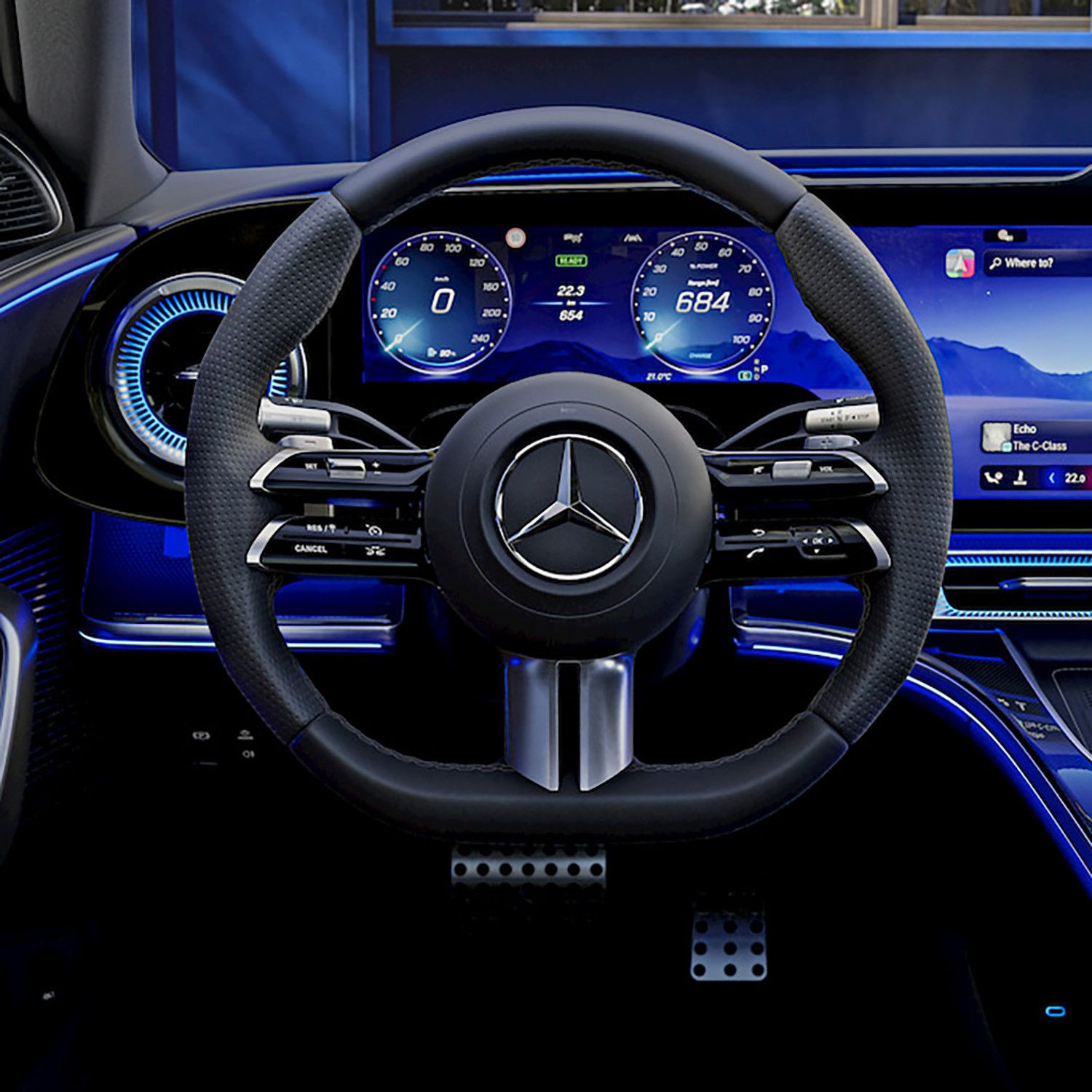
Mercedes-Benz is showing off the inside of its next electric C-Class. The main focus is the dashboard screen setup and how it makes the cabin feel more high-tech.
Hyperscreen
Hyperscreen is Mercedes-Benz’s big dashboard display. Instead of lots of separate screens, it’s one wide screen that stretches across the dash.
heat pump
A heat pump is how the car warms the cabin more efficiently. In cold weather it can use less battery power than traditional heating.
Burmeister
Burmeister is a premium car audio brand. If you choose the optional Burmeister system, you’re paying for better speakers and sound quality.
4d sound system
A “4D” sound system is meant to make music feel more physical, not just something you hear. Here, the seats vibrate along with the audio to add an extra layer of immersion.
US registrations
US registrations are basically the number of cars that get officially registered to be driven. Analysts use it as a sales proxy, and the episode suggests the numbers look better because certain companies bought trucks.

6e
The Mazda 6e is a Mazda electric model being talked about for UK pricing. They mention the starting price and then a more expensive trim level.
Takumi trim
“Takumi trim” is the name of a particular version of the car with a certain set of features. Higher trims usually cost more because they include extra equipment.
LFP pack
LFP is a type of battery used in some EVs. It’s generally designed to last a long time and handle heat well. “78 kilowatt hour” is how much energy the battery can store.
WLTP range
WLTP range is an official test estimate of how far an EV can go on a full charge. Real-world range can be lower depending on weather, speed, and driving style.
10 to 80
This is a charging-time comparison from a low battery level (10%) to a fairly full one (80%). It’s useful because charging tends to slow down as the battery gets fuller.
195 kilowatt charger
This is about the power of a fast charger. Higher kilowatts generally mean faster charging—up to the limits of the car and the station.
peak charge rate
Peak charge rate is the fastest charging power the car can take. Even if a charger is powerful, the car can only charge as fast as it’s designed to.
350 kilowatt DC fast charger
This is a very fast charging station. The idea is that to get the quickest charging results, you may need a charger that can deliver around 350 kW.
rebadged version of the Chinese car
A “rebadged” car is basically the same vehicle sold under a different brand name. The host is saying this Mazda isn’t just that kind of simple re-labeling.
right-hand drive
Right-hand drive means the steering wheel is on the right side of the car. That’s important for countries like the UK, where most cars are built this way.
plug-and-charge service
Plug-and-charge lets you plug in and start charging with less hassle. Instead of tapping apps or choosing a payment option, the car handles the login automatically.
BYD
BYD is a big EV company that also makes batteries. In this segment, they’re talking about expanding their electric ute lineup in Australia.

Byd Shark 6
BYD’s Shark 6 is an electric pickup-style vehicle (“ute”). The podcast says BYD is offering more versions in Australia, including a configuration that looks more like a traditional ute.
Ute
A ute is like a pickup truck. It has a front cab for passengers and an open cargo area in the back for hauling.
plug-in hybrid off-road system
This is a system meant to help a hybrid vehicle handle dirt or rough terrain better. It combines off-road driving features with the ability to run on electric power from charging.
towing up to three and a half thousand kilograms
Towing capacity is how much weight the vehicle is rated to pull behind it. “Three and a half thousand kilograms” means it can tow quite heavy loads.
Lego
The host mentions a company launching “smart charging,” but the name sounds like it could be mis-transcribed. The important part is that a charging service is being introduced to encourage better charging times.
smart charging overnight
Smart charging means the car charges at a planned time instead of immediately. Overnight and off-peak charging can be cheaper and helps the power grid run more smoothly.
off-peak
Off-peak refers to electricity pricing periods when demand is lower, which often makes charging cheaper. The segment connects smart charging with encouraging drivers to charge during these lower-cost hours.
Rivian Adventure Network (RIN)
RIN is Rivian’s charging network for its vehicles. The segment says Rivian is changing the California charging sites, likely affecting how people use them.
K car
A “K car” is a small car category from Japan. Because it’s small and meets certain rules, it usually costs less to own there than bigger cars.