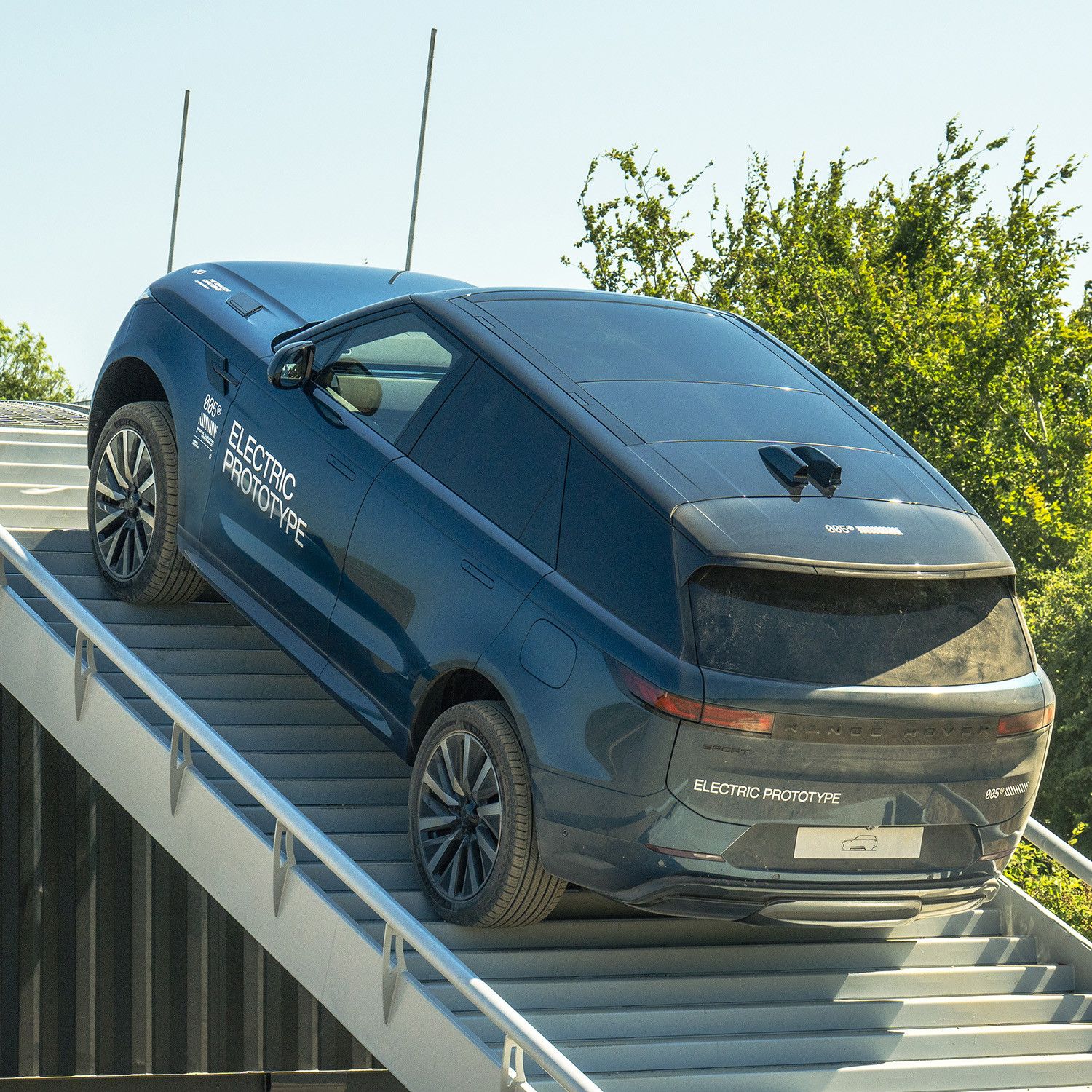

Range Rover Sport Electric
This is Land Rover’s upcoming fully electric Range Rover Sport. The big idea is it’s built around an electric motor setup, and they’re also changing the car’s suspension/chassis so it drives well with EV power.

Land Rover Range Rover
The Range Rover is a large, luxury SUV made by Land Rover. It’s designed to be comfortable for everyday driving while still being capable on rough roads. The podcast brings it up because Land Rover is planning more electric versions of this kind of vehicle.
electric powertrain
An electric powertrain is the EV’s main system for moving the car using electricity. It includes the battery and electric motor(s), and it’s what determines how much power and torque the car can deliver.
year-over-year drop
Year-over-year drop just means “compared to the same time last year.” It helps you see if things are getting better or worse, instead of looking at one month by itself.
Tesla Supercharger
Tesla Supercharger is Tesla’s fast-charging network for EVs. It’s the kind of charger you use when you need to add a lot of range quickly.
NACS North American Charging Standard
NACS is the plug/connector type EVs use to charge at compatible stations. The host is saying this Ford pickup should be able to charge using Tesla-style plugs, including at some non-Tesla chargers too.

Honda Prologue
The Honda Prologue is Honda’s main electric SUV. The host says Honda is stopping it after the 2026 model year, and that buyers are being steered more toward Honda’s hybrid models instead.

Volvo EX60
Volvo is talking about the EX60 as part of a new EV platform plan. The big technical point mentioned is the 800-volt setup, which is often used to support faster charging.
800 volt EREV platform
This is Volvo’s EV “electrical system design” built around 800 volts. Higher voltage can help the car charge faster when you use the right fast chargers.

Chevrolet Volt
The Chevrolet Volt is a car that can run on electricity, but it also has a gasoline engine. When the battery runs low, the gas engine helps keep the car moving. It’s mentioned because it’s part of the story of how Chevrolet has been moving toward more electric driving.
Ghent plant
Ghent is a city in Belgium, and the Ghent plant is where cars are built. The episode says governments are investing there to support vehicle production.
J3400
J3400 is the official engineering standard name for the same kind of charging connector people often call NACS. It helps clarify that the plug is standardized for broader use.
DC fast charging
DC fast charging is the quickest way to charge most EVs using high-power chargers. It’s what you use for shorter stops, and the episode quotes how fast you can go from low to higher battery levels.
10 to 80
“10 to 80” means charging from a low battery level (around 10%) to a higher one (around 80%). EVs usually charge fastest in the middle of the battery range, so this test window is a standard way to compare charging speed.
Foxconn
Foxconn is a major electronics manufacturing company that has been developing EV-related products. In this segment, it’s mentioned because Foxconn postponed a planned U.S. launch of its Model C EV, citing tariff uncertainty.
General Motors
General Motors is a large car company. In this segment, they’re mentioned because GM is reportedly shifting some focus toward energy storage when EV sales aren’t growing as fast as expected.
Altium cells
Altium cells refers to battery cells used in EVs and possibly other energy products. The episode says the company is shifting toward energy storage so battery production stays busy.
Silvio Napoli
Silvio Napoli is the executive leading Lucid in this segment. The episode says he’s responding to rumors and insisting the company has enough cash to keep operating.
bankruptcy protection
Bankruptcy protection is a legal process a company might use if it can’t pay its debts. The episode says Lucid denied rumors that it was heading that way.
take private deal
A take private deal means a company that trades publicly gets bought and stops being publicly traded. The episode says Lucid denied rumors about this happening.
Spain
Spain is the country mentioned here. The episode says Spain is trying to attract Chinese automakers to invest and build EVs locally.