A half‑ton pickup is a small truck that can haul about 2,000 pounds. It’s common for people who need a vehicle to move stuff but don’t want a big truck.
A connected car ecosystem is the web of devices and services that let a car talk to other cars, roads, and the internet for things like GPS or software updates.
Digital touchpoints are places where a car connects to the internet or other devices, like the screen inside the car or the system that sends data to a server.
Cyber security scaffolding is a set of rules and protections that keep car software safe from hackers. It’s like building a strong fence around the system.
Aftermarket parts are accessories or repairs made by companies other than the car maker. Now, these part sellers are working closely with dealerships to offer more services in one place.
Collision departments fix dents, scratches, or other damage to a car’s body after an accident, usually using parts that match the original maker.
LIVE
We're doing better as a result of social media presence.
It doesn't do those three things, then it's on the chopping block.
It's in return on investment discussion.
Oh my goodness, it's Black Friday, everybody.
What's up?
Welcome back to another episode of The Daily Deal Alive, I'm your host, Sam Dark.
And today, today is the day, today we train for the day, we caffeinate for it is Black Friday
today.
The Super Bowl of retail in America, and that includes automotive, November 28th, only two
selling days left for many of us in the month of November, three if you're open Sunday.
And you choose, thanks for choosing to spend part of it here with us at The Daily Deal
Alive.
That's commitment, that's community, and that's why our industry wins.
Now, let's make this show interactive today.
What is your Black Friday look like?
What's your store doing right now?
What's your best deal?
Your craziest deal?
Your biggest win so far on this Friday.
Drop it in the comments.
We're posting the hottest one straight into the show.
But first, let's drive into today's auto industry headlines.
All right, here's a big one in the M&A world.
Penske Automotive Group is officially sold Hyundai of Noble'sville, Indiana, to the Gurley
Leap Automotive family, deal close November 24th, per the Percidio Group.
Now, what's interesting here is the timing.
The Penske is stepping out just three and a half years after acquiring the store from
Terry Lee back in May of 22.
That's quick for a group like Penske on the flip side, Gurley Leap is playing a very intentional
game.
Seems they've already got deep operations in Indiana, and Mike Leap Jr says this moves
all about tightening the footprint, building density where they already have strength, smart
play.
Come out, and this is exactly the kind of deal fueling the White Hot M&A cycle.
Right now, George Carolis from the Percidio Group says both buyers and sellers are swarming
the market, and that churn is creating a steady flow of opportunities for regional operators
who can move fast and absorb stores inside their core territories.
And hey, if you want to track deals like this all year long, you know where to go, cdgvicell.com.
And our jingle, of course, makes us happy.
All right, next up, let's talk trucks.
A new S&P Global Mobility Report breaks down just how critical this segment is to US
auto retail.
Half-tun pickups alone account for 8.2% of all new vehicle sales through August, and that's
only part of the story.
Those same architectures also power three quarter-ton and one-ton heavy-duty trucks.
That's another 3.4% and full-size SUVs, 3.6%, you added all up, and this ecosystem represents
around 15% of the entire US market.
Not only volume, but margin.
Half-tun profits start around 10,000 and heavy-duty trucks, or full-size utilities can hit $30,000
per unit.
What's the bottom line here, this limited cluster of trucks, and utilities basically funds
the modern dealership, and loyalty is consolidating around just a handful of name plates.
Competition is tightening, stakes are rising, and whoever controls the truck buyer controls
the profitability of the entire store.
Next up today, here's a wake-up call coming out of the Auto SISAC annual cyber security
conference.
The modern connected car ecosystem now produces hundreds of digital touchpoints, building
a virtual perimeter that's massive, it's hard to map, and growing faster than most organizations
realize.
And here's the part that should catch every dealer's attention.
Most of the software and API connections inside a dealership don't come from the OEM.
They come from third-party vendors.
That means limited visibility, more unknown vulnerabilities, and a rapid expanding attack
surface.
Security experts warn that bad actors are already using AI to find weak spots, while many
automotive companies are also rushing AI tools into their operations, without putting
the proper governance, validation, or cyber security scaffolding underneath.
What's the guidance for dealers heading into 2025?
Well, narrow the scope, validate every AI tool before deployment, and don't assume any
vendors handling security for you unless you've confirmed it.
This is becoming a board-level topic, and auto-retail is right in the blast radius.
Next up, big drama brewing in Washington.
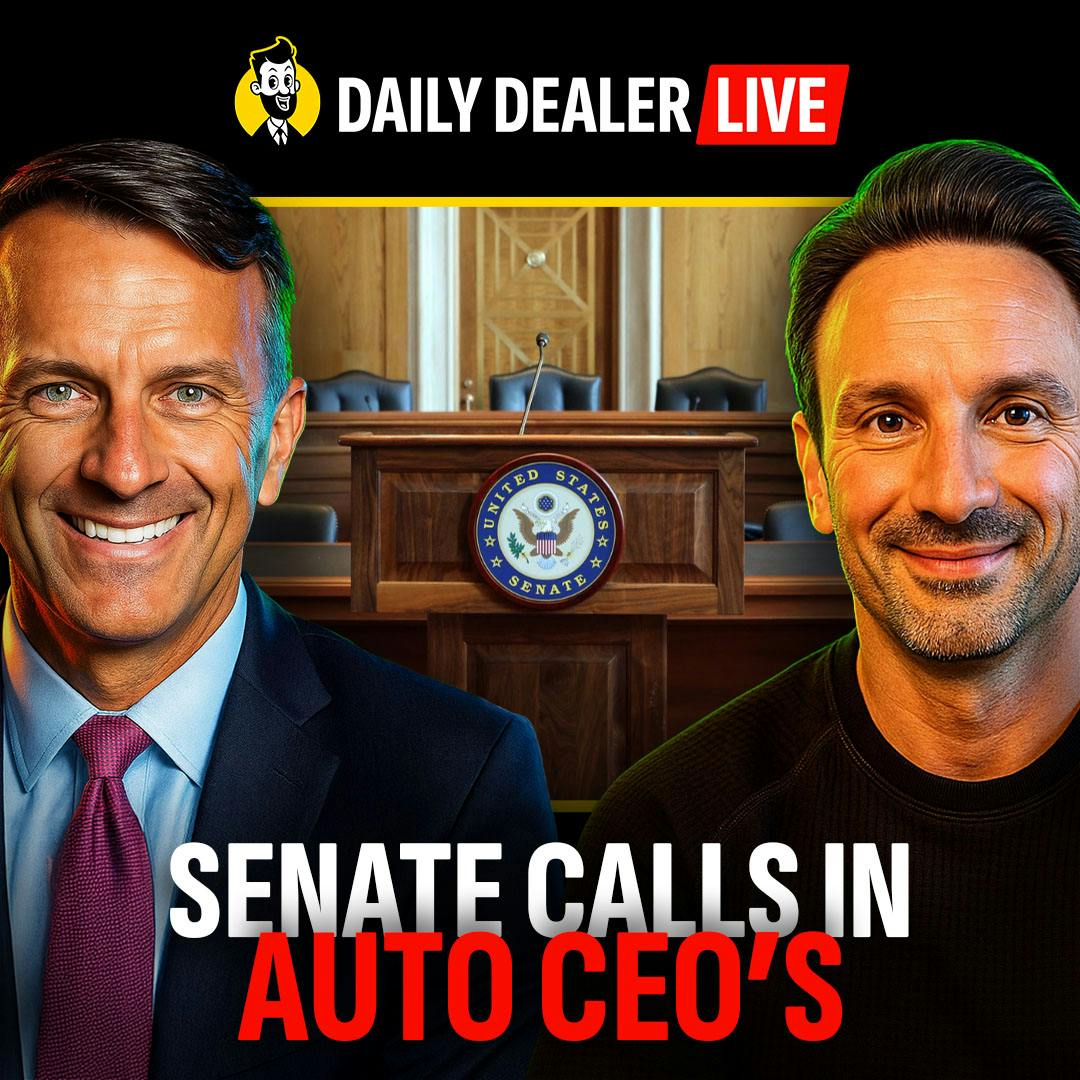
Senate Republicans want the CEOs of GM, Ford, Stellantis, and Tesla in front of a committee
in January, to justify whether federally mandated safety features are actually making
cars safer, or simply making them more expensive.
We're talking about automatic emergency breaking, rear seat reminders, and the stack of
features regulators want baked into every new car.
What's the context?
Well, the average new vehicle price today is sitting at about $50,000.
That's up from 38 grand during the COVID era.
Some lawmakers point to federal mandates as part of that inflation.
Next say, this hearing could dial back support for safety tech that automakers and regulators
have treated as, quote, standard equipment for years.
And the real takeaway for dealers?
This is the opening shot in what's becoming a bigger battle over what safety features should
be mandatory, how much technology customers must pay for, and how these decisions impact
pricing, supply chain, and compliance going on into 2026.
Keep an eye on this one, because where Washington lands certainly will ripple through product
planning, inventory mix, and retail pricing for years.
And that is a wrap on today's industry news.
You'll be, what's up?
Happy Black Friday.
Happy Black Friday, big day today.
You know, it is a big day, and we are getting right to it, only two days left in the month
of November, and so many in American retail make their day, make their year between November
and Christmas.
Automotive, we do typically very well, though weather certainly impacts things depending
on where you live and where you sell.
But today is a big day in automotive retail, regardless, and that will extend into the weekend.
And then of course, traditionally a heavy selling time is that time between Christmas and
New Year's as well.
You know, a couple comments from the, you know, thank you, yoga cars and others for saying
no audio.
I had just a Black Friday moment there at the very beginning.
So thanks to everybody's patients through that.
And you'll be, today's the last day of no shave November.
I caught the last day of it.
That's all I did.
So I thought I'd please you.
I'll get the audience.
Looks great.
Looks great.
And it's the last day for CDG Circle Signups.
And it is.
That's absolutely true.
Where do you go?
Sign up for CDG Circles, you'll be.
We got CDGCircles.com.
Yeah, that's right.
Yeah.
And they start up next week.
So if you want to take advantage of that, we'd love to have you in there.
They go live next Thursday.
So signups officially close today as extended 48 hours.
The circles will go live next Thursday.
So if you're not involved in that, go to CDGCircles.com to learn more and become part of that.
And just as a reminder, we're streaming today on this Black Friday across all of the CDG
social media platforms.
We'd love to have you comment in the social media.
Let us know where you're watching from.
Let us know what you're doing on this Black Friday.
And hopefully we've got some cool success stories of Black Friday conquests.
But as we're getting to that, let's go straight to our first guest today, Nolan Brink,
multi-store general manager at Jim Shorkey Auto Group, Nolan.
Welcome to the show.
Yeah.
Thank you so much for having me.
Really appreciate it.
We're pumped to have you and thanks for joining us this busy Friday, this Black Friday,
between, you know, as we get ready, yes, you know, it's interesting.
On Wednesday, we had our special Thanksgiving day episode and everybody talked about what
they're grateful for.
And then I think the great irony of American Thanksgiving is the very next day we go out
and just bye, bye, bye, bye, bye, right?
Thank goodness we do because in automotive, we need that.
So tell us if you would, Nolan, house biz and tell us a little bit about yourself as part
of that.
Yeah.
Sure.
So I'll start with a little bit about myself.
So I've been in the industry since, call it 2010, came up on the variable side, started
selling cars, worked into sales manager, finance manager, general sales manager, overseeing
multiple stores for the Cochran Auto Group and then I ended up moving down to Florida and
worked for the Morgan Auto Group as a corporate use car director and general manager in Sarasota.
And then, you know, due to family reasons, moved back to Pittsburgh, I worked for the
Jim Shorty Auto Group.
I oversee the Kia store in Wexford, which past three years, it's been the top volume
store in the state.
And this year, we have two locations in Youngstown, a Chrysler and a Mitsubishi store that
really, they're an overhaul project that I'm working on right now.
I would say business overall is decent, you know, we all got spoiled during COVID with
just some amazing business times and, you know, right now, we have to put forth a little
bit more grit.
But yeah, I'm grateful to be here on Black Friday.
It's one of the most sought after days of the year, you know, short of that last week
of December, like you talked about or a Saturday in the middle of July, it's really
hard to beat Black Friday and, you know, typically the fall, you see that, that seasonality
that, that, at least on the sales side, that, that comes about, so it's, it's good for
the team.
It's great and morale booster.
It gives you something to talk about all month long, really to help the customers
up, bring them in and then, you know, we're heading into, you know, we're heading into
the, you know, the time of year where there's always a, a peel back in sales for the most
part.
Don't say that.
Don't tell anybody that it's not supposed to be out there, Nolan, we're not talking
about that.
But, but it gives us, it gives us a time to really dive deep, um, figure things out.
Exactly.
So, let's, let's, so let me ask you this before we go into some of the seasonality, right?
So your highest volume in your area, Kia dealer.
And then I think it's interesting.
Then you mentioned, hey, I'm working on these two projects, Stellanis and Mitsubishi.
So you've got like the tail of two OEMs right now, right?
So what's one lesson you learned in bringing Mitsubishi to be the number one in your area
that you're implementing at Stellanis and Mitsu?
Yeah.
So Mitsubishi isn't number one key.
Oh, Kia, Kia.
Yeah, yeah.
What one lesson from Kia that you're bringing to Mitsu and Stellanis?
You know, the biggest lesson that I've taken away is, you know, it's, it's something that
I've known, but it's all about leadership.
And I'm very fortunate and blessed, I, you know, we just had Thanksgiving, but I'm just
so grateful for the team that I have at my Kia store.
And, you know, we've taken some time to really build it, to build it and find the right people
and coach and train and develop, um, I mean, we have countless hours in, in training at
that store.
And whether I'm at the store or not, I know that the leaders are going to operate the
same way.
There's a training schedule that's happening and day in and day out, it's happening.
Yeah.
When I came to Youngstown, it was, um, you know, in, in some cases, what I don't want to
do is I don't want to, like, say that they weren't doing things because they were.
It's just, you know, you can do things two different ways and get two different results.
So you're really focusing on building up the, building up the leadership team and then creating
that culture where, you know, we're focusing on building the leadership and the leadership's
focusing on building up the next level and just having that, having that growth mindset
and every position in the dealership.
And, you know, if you walk into my store in, in Wexford at the Kia location, no matter
what position you talk to, someone's training on getting better.
And we're, we're working on, you know, building that out here in, in the Youngstown area
as well.
All right.
So when you say training to get better at a Kia store and then you're going to take
that to Stellanis and Mitsu, is there a particular process?
Is there a program?
Is there a methodology that you're using at Kia that you're going to say, Hey, I'm going
to implement this in Stellanis and I'm going to get a similar result there.
Absolutely.
So, so I start with, start with the leadership team and, you know, it, it takes time to
observe and watch and really get feedback.
I think feedback loops are very important, um, and, and sitting down with the team members
and assessing, what are you good at in terms of your leadership skills, your communication
skills, your, your problem-solving capabilities, your strategic thinking, um, marketing seems
to be, you know, a heavy touch point where, you know, if you can coach and train on how
to, you know, how to manage your inventory and tie it into marketing, you can get a pretty
decent lift fairly quickly.
Um, that was one thing that I did take, I, you know, work with my, with my general sales
manager here, right whenever we got here on inventory management and marketing and how
they tied together and how you can dig for the data and use data analysis for what is
the, what is the correct types of units to stock based on what people purchase in your
PMA?
Maybe you haven't sold it, but if others have, there's a stocking issue and then based
on what people are buying and what packages they're buying locally in your area, how
do you, you know, how do you build out your, your incentives that you're going to give
to the consumers?
And then also really understanding your demographic, you know, pulling, pulling market data, you
know, if you're in a credit-challenged area, does it make sense to put out a ton of lease
offers maybe in terms of showing a payment, but if you know that you're going to be doing
heavy retail, then you go to your specials page, is it all lease?
That's, you know, that, that's typically a challenge.
So Nolan, a question from our audience.
So Peter Cruzo says, I hope to hear about metrics used in training and coaching.
So when you talk about creating that culture through training and accountability, is there
certain, is there a certain amount of time spent training?
How do you measure as a leader that you're getting that result and that the training is
consistently happening?
What metrics are you turning to?
So in terms of like the accountability for training, we, we set up, there's a
training schedule every single week.
So like I'll give you an example.
So every day, whenever, you know, the day starts at nine o'clock, we have everyone go
out and start handling the leads immediately at 9.30, we'll pull the sales team together
for a sales meeting and we'll have a quick touch point on training.
Then every, every Friday, we know that we have a full entire staff.
So we have a midday, right around lunch, training session.
And at the beginning of every month, what we'll do is we'll list out, you know, the first,
the first week, the second week, the third week, the fourth week, which managers going
to be doing training, what they are going to be doing, training on.
And the managers, the managers need to actually put together what their plan is for the training
and have it approved.
And that, that's for the sales team, for example.
And every month, it's going to be different.
It's going to, you're going to look at the beginning of the month and say, okay, well, these
are our areas of opportunity.
These are our gaps versus what we're benchmarking.
This is what we need to focus on.
So we have to be-
All right.
So in this month, tell us November 2025, Black Friday, if I was at your Stellantis store,
what are you training on?
What's the gap?
What are you filling this month?
So this month, this month, our phone and our internet are slightly lower than usual.
You know, we've typically led the company.
We have 20 stores in our company.
And we've religiously led in closing for both internet and phone.
And we've seen a slight decline in both.
So, you know, through, if you look at the training plan, it's a mixture of, you know,
one, how are we handling our phone calls?
And then two, we do a lot of manager interaction.
So once a salesperson doesn't set an appointment, we have to lie, turn it to a manager.
So training on that transition.
And then in terms of the internet, it is, you know, what is the quantity and what is the
quality?
Are we following the process in terms of quantity and then what we are sending out?
Are we, you know, are we engaging in the customer the way that they want to be engaged?
Okay.
So I want to move in just a moment to a change you recently made.
You got rid of and eradicated the BDC.
So I want to challenge that.
Talk a little bit about that.
But before we do that, you talk about managers.
Working with salespeople as an example, how do you as a leader know that the manager knows
what the heck they're talking about when they're training salespeople?
Because you can train and learn on something, but if it's the wrong thing, you're not going
to get the result, right?
So how do you test for that with your leadership team?
Yeah.
So if I don't know, I don't let them run it.
That's the very first thing.
I'm not going to just shoot blind.
And just let you know, so as a company, the company, as our company, I didn't personally
get rid of the BDC.
Our company did.
It was something we did a few years ago.
And I've worked, you know, when I worked at Cochrane, we had a BDC.
We broke it down.
It went into the store.
When I worked at Morgan, we didn't have centralized BDCs, but some of the stores that
I had had an internal BDC, some of the stores that I had did not and then, you know, we
do not have a BDC currently and it's working quite well.
But back to your question about, you know, how do I know if a manager is going to be able
to give them the training that they need?
So when I look at Key of Wexford, when I first got there, for instance, I ran all the
sales meetings until I really understood what the strengths and weaknesses were of my
small managers.
Yeah.
And it takes time.
You have to observe.
You have to listen.
You have to be able to pull the results.
You have to know, okay, if I have a group of managers, what are the closing percentages
based off of the managers?
What is the gross on the front end per manager?
What is the back end per manager?
Are we measuring it?
And do I know what managers should be touching the most deals and which one shouldn't?
And the one that shouldn't, what do I need to do with that person in order to help build
them up to get them to where they need to be?
And usually it's, you know, setting the expectation, making sure that they have an outline, clearly
to find process, making sure that you go through it with them, help them side by side.
Get them to the point where they can coach and develop.
And then whenever you do.
So when you talk about that, though, you're running two very different OEMs.
Kia, Stalannis, Mitsubishi 3.
So let's say I've got a manager, Kia, Success, Stalannis Challenge, Mitsubishi maybe
challenge.
How do you as a leader know the difference between, hey, they know what they're doing and
they can train or they know what they're doing and they're executing well?
And hey, boss, you know, it's just a bad month because of snow, interest rates, politics,
OEM, whatever.
How do you, how do you glean the difference between things you can control and things you
can't control?
Yeah, I mean, the numbers, the numbers typically don't lie.
You pull up the data, I mean, I lean heavily into data.
And you can say, yes, it's been a, it's been a bad month, but in, in my role, it's my
job to make sure that I'm setting the team up with inventory leads and if we're not,
if we have inventory and we don't have leads, we have a merchandising issue, you can
usually look, you can usually do, you go through the five wise until you get to the root cause,
the data will point you in the right direction.
And then in terms of, you know, if we're not getting the results and we have the leads,
are we distributing our leads properly or are we feeding the hot hand or are we using
the money ball approach and then, you know, the people that aren't the hot hand, what
are we doing to train them or do we have available resources and one benefit that I do have
with having multiple stores, for example, you know, I have, I have the availability, it's
only an hour and 15 minute drive between the two stores, but if someone's really struggling
with an area and I know, and I know that I have someone who's excellent at it at a, at
a separate location, I can send them on a field trip for a couple days.
I might not have time to do the training, but if I, if I have an expert, I mean, my goal
is to surround myself with people, yeah, help, help the expert train the, the guy who's
struggling, bring them up, right, take away this uncontrollable, excuse, all right, so
go back to the BDC, because I'm fascinated by that.
And then we'll go to some comments online, because you're getting a lot of comments and feedback
online.
So would you defend getting rid of the BDC?
Was that the right play?
I know I'm putting it odds with your auto group, but or, or, you know, or, or do you
think the BDC is helpful in today's markup place?
What advice would you give to dealers maybe considering eradicating BDC?
Yeah, so I've seen both options work well, the option that we have currently, it works
well for us, and it doesn't mean that it's going to work well for everyone.
One of the, why does it work well for you?
Works well for me, because we have very high levels of manager involvement, and when, whenever
I'm, whenever I'm hiring a manager, one of the main things that I look at is, would
I hire them as a BDC manager, and would I hire them as a sales manager?
And if they check both boxes, then, then I would hire them.
And, and if they don't, but they have potential, you know, maybe they're really good in one
area, but they have potential in another, okay, you just have a project on your hands.
That's all.
I'm curious because those are two interesting qualifiers.
What makes a great BDC manager, and what makes a great sales manager?
What are the differences between those two?
There's not, there's not a ton of difference, you know, a BDC manager is going to focus
really heavily on accountability, and being able to execute tasks.
And your sales manager, they're going to typically be extroverted, they're going to have
good leadership skills, good communication skills, they're going to have a results driven
mindset, and more often than not, if you, you know, you, if you're hiring from the outside
and someone hasn't had big BDC experience, then they don't like leaning into, hey, I want
to, I want to be super involved in every lead, like a BDC, you know, typically would.
But if I have someone who has the sales manager qualities, but also has the grit and desire
to execute tasks, you can, you can hit a home run.
So what we do, we, we do not have a BDC, but managers touch every lead at some point in
time.
If someone calls in and the salesperson doesn't set a set of phone appointment, they're
doing a live, you know, a live TO with that customer.
If we have a lead that we have not contacted within a certain timeframe, it is the manager's
duty to reach out to that customer, or if we've engaged with a customer, and we haven't
set an appointment, the manager needs that follow up.
So what I do is I break it down into buckets, you know, the CRM that I have at Youngstown
for instance, they make it really simple.
You have your own stuff.
What CRM is that?
Drive centric.
Okay.
Yeah.
So their buckets, they have uncontacted leads, they have engaged leads, and then from
engaged you have your showroom visits, and then you have your proposals, and then ultimately
it ends up as sole.
So when you look at it, I have multiple buckets, I have multiple managers every day.
I have a checklist with, you know, with a box for sign off.
Every manager come, all the managers come in, they have the huddle in the morning.
They select, okay, I'm going to handle the uncontacted leads from yesterday.
The next, you know, the next person might handle, handle, these are the customers that
we've engaged with, but we have not set an appointment for, and the next person might
be in touch with all the people that we did proposals for yesterday.
Yeah.
And we haven't closed up a deal, so we need to rework that deal.
Yeah.
I have a question here.
How are you, I guess if you could give us a top to bottom on how you're handling lead
flow, because I guess the question I'm having with how you have a structure, and obviously
it's working for you is, who's responsible for that lead until it gets turned over, right?
So if you have a manager handling all of the unanswered or fresh leads as they come in,
at what point do you hand it to the sales department if you could just give us that overview?
So it's actually reversed.
It goes to the salesperson first.
Okay.
Salesperson is supposed to take a shot, take an attempt.
And if they do not succeed, then it goes to a manager.
So let's say, for example, if I have a total of 500 customers in a month at a store,
I would expect a minimum of 500 follow-up attempts amongst the managers.
However, for a salesperson, I have a follow-up process for if we haven't engaged with
the customer.
It's a new lead that came across, but we haven't made contact.
So there's a process we follow for that.
Once we have made engagement with the customer, now it moves into a different workflow.
And then once we've set an appointment with the customer, a manager is going to confirm
the appointment the day of if the salesperson can.
But then after we have an appointment, the customer comes in, let's say they don't purchase
a vehicle, then there's a process for that as well.
So there is a lot that the salespeople are doing.
It's just the managers are constantly having accountability in trying to help assist with
taking a swing.
So last question up today, and I do think that the, it's interesting, it's a manual process,
what you're describing.
There's a lot of hands on it.
If you've got really great people at works, is there a role for AI and some of the automation
that you're seeing in that process?
So what's that role, what's the product you're using, and how does that fit into your process?
So I currently do have AI with DriveCentric, I believe it's chat GPT that they're using
as they're back end tool, and it works well in many scenarios.
So when it works well is, let's say we're closed, it's after 8 o'clock at night, someone
puts in a lead, they're hot, there's AI automatically, trying to set an appointment
for that customer, or let's say someone's off for the day, everyone deserves a good work
like balance, if they're off and a customer isn't getting follow up, they're going to at
that point in time receive follow up from AI.
And it's helpful, it has been beneficial, but one thing I've noticed with AI, it's
not perfect, and neither are you going to watch it, you got to watch it, it'll go off
the rails.
Right?
But that's all the more reason why I like to have so much manager and manager involvement
in assessing what we're doing in the CRM, because I can't tell you how many times we've
actually caught a customer trying to set an appointment on a vehicle, that vehicle sold,
and AI's response was what, it was less than desirable, you know.
So you got to watch it, you got to watch it, you know, we talk a lot on this show, Nolan
how with AI and technology, as a GM, you actually have to manage that AI tech, almost like
you do an employee, because it grows and it develops over time, and you've got to make
sure that it's consistent with that culture you're creating within your group, and the
voice matches, and the approach matches, and that it's accurate data.
Hey, interesting comment, Paul Solzman online says, Nolan is proof of how important it
is to have the data and know how to interpret the data.
And we just appreciate you, Nolan, being on the show today on this Black Friday, to celebrate
Black Friday with us.
How are your stores doing today?
It's about 130 Eastern time right now, do you know how the days go on sales wise?
Yeah, so a Kia, we're set up for a pretty big day today.
We actually, we're doing a staffed event, which we don't do very often, I've had minimal
success with some companies, but the one company that we used last year, we felt that the
customer experience was good.
Who is that?
Who's the company?
You know, it was a recommendation from my Kia Rep.
I would have to pull up the company name.
It's okay.
Yeah, it's okay.
Anyway, they did a really good job of customer experience.
And in the past, I've seen many times where the experience in CSI has just dropped.
Yeah.
Well, we wanted to give them another shot this year.
And we have a ton of appointments, they were rolling as of noon.
Here in Youngstown, we had a good day set up for appointments, showroom full of people.
And I know we wrapped up a few deals here this morning, and we're working a few right now.
So it should prove to be a good day.
That's awesome.
Well, no one break.
Happy Black Friday.
Thanks for joining the Daily Deal Live Show today, and sharing your perspectives on all
things leadership.
Good luck continuing the success at the Kia store.
And then as you seek to grow, Stalannis and Mitsubishi as well, we wish you the best
of luck.
We're excited to hear about it again in the future.
Thanks for being on the show.
Yeah.
Thank you so much.
Thank you.
Data is so important, you and he showed it to us today.
Data is important, especially when you're trying to build success.
And I'm always fascinated, you know, great leaders will own everything, and we talk about
that a lot on the show.
Subpar leaders will say, hey, you know what, the uncontrollables, hey, it's the OEM,
it's the weather, it's, you know, it's the lead, it's the traffic, it's whatever.
And truly, he is really honed in on those things you can control, which is the data in his
world and then grow from there.
And it's fascinating.
They're doing a staff sale on Black Friday.
I always think that's interesting, what triggers, you know, bringing people in from the outside
in our world.
It's a singular, we don't do that, but that doesn't mean it's necessarily not right.
I think those things are fascinating.
So Yuley, let's talk Matador AI.
Taze Black Friday episode is brought to you by Matador AI, Matador handles calls, texts,
and faults.
So your team never falls behind more appointments, less chaos, see the difference for yourself
with a free demo in Matador.ai and props to Matador for sponsoring the show today and supporting
the content that Nolan Brinkbot brought to us in that great conversation, tale of 3 OEMs
that's wins at Kia and then how he's working hard with his leadership to turn the fortunes
at Stellantis and their Mitsubishi store.
So Matador AI, thanks for supporting the show and you can scan the QR code, you can go
to the link in the show notes, learn more about that.
And Yuley, we always talk, you know, there's not a lot of times left to talk about it, but
if you haven't submitted your request to join us at NADA at the party there in Las Vegas,
make sure you do that.
So even though there's limited spots, you've got a good shot at joining us there in Las
Vegas.
It's going to be exciting.
Let's dive straight into our final guest today on this Black Friday with a final reminder,
pop in the notes where you are, where you're watching, what's going on.
We'd love to know unit counts on the day and what your traffic looks like compared to
a normal Friday.
It's Black Friday, everybody.
So joining the show, Matt Bennett, Vice President, Enrollment, and Strategic Alliances,
Northwood University, Michigan-based, very close to home here, Matt Bennett, welcome
to the show.
It's privilege to be here.
Thank you.
Happy Black Friday, or we kind of caught blue Friday here.
Northwood Blue is a sale organization as well, right?
We've been America's Automotive University for nearly six decades.
We understand and it's in our DNA.
So right there with your first guest Nolan in terms of being tenacious and providing an
optimized customer experience.
So thank you for having us.
Yeah, thank you.
Welcome.
I was going to ask you a little bit about how busy is in your world, but you give us
a little bit.
You can expand on it.
When we were talking before the show started, you said you have some pretty interesting
initiatives coming out.
Won't you peel back the curtain a little bit for our viewers?
Yeah, really, really excited.
For those that don't know, I mean, Northwood was founded entrepreneurially as a school of
business back in 1959.
And shortly after that, the founders, Arthur Turner and our Gary Stauffa realized there
was a disconnect in trying to develop leadership for automotive retailers.
And so in the early 1960s, a school of automotive retail and programming began here at Northwood
so we have been in it since before it was cool to quote it gently.
But from that standpoint, we've been working with as basically the source of automotive
retailers across the country and around the world.
And the initiatives we've put forth is one of the only automotive retail undergraduate
programs of study for dealership programs at a bachelor's level degree, as well as one
of the only bachelor of business administration programs for automotive aftermarket leaders.
So with that, we've continued to build on those foundation and building blocks over
the last 60 years.
And we're excited for a relaunch for an innovative new MBA program, a master's program in business
administration for automotive and mobility leaders across the country and around the world.
So really excited about that.
We've got some key alumni that have helped build that and really excited to take to the
next level here in January.
You know, we've got to ask, you have to divulge some of the alumni with us.
But before you do, paint a picture for us, you know, what does a Northwood grad bring
into a store day one that a typical new hire just doesn't?
You know, I get this question you leave all the time and I'm a former baseball player
believe it or not.
I've donated too many body parts to my alma mater being a catcher for many, many years.
The analogy I provide folks is and you can ask the employers, we just had a hundred of
them here about a few weeks ago, looking to attract and retain Northwood students.
Day one, newly, they can play, come to sit on your proverbial bench, their condition,
they get an opportunity of practice, they get an opportunity to sell their hungry.
It's in their DNA to be entrepreneurial, right at Northwood University, which of our
founding fathers is America's free enterprise university as well.
So from all of those things, they might not even be automotive inclined, but they might
be a marketing student, a cyber security student, a finance student.
These automotive companies that come on our campus come to pick those proverbial fruits
and want them all because they can play day one and they can put them somewhere in their
organization to be successful.
So that's the secret sauce here in Midland, Michigan, that people are more and more learning
that is not so secret.
I love it.
And you've got to tell us some of the alums.
Yeah, I just actually was on a call the other day.
I wish it a happy Thanksgiving, one of the founding members of this inaugural group that when
we launched this program in 2008, I was a young scrappy director of graduate enrollment
and I had no business being a part of this program.
But we launched what was the world's first executive dealership MBA program.
And one of my first recruits was, as many you may know, is our chair of our automotive
program here, LG Bright, who was with the Williams, with General Motors.
He was my first recruit and then helped with the rest of them.
But Mike Kavanaugh, as a dear friend and alum, Mike is a vice president at Lithuania
and driveway.
We've got Ben Pyle and Toyota North America down in Texas, you know, just that the numbers
continue to build out David Robertson, the Godfather of AFIP, from many know, from a finance
and insurance professional standpoint.
He was in that class.
We've got Rick Levitton from Nissan, I mean, it literally, Gil Rubenstein, with retail
resilient.
I mean, you literally have a proverbial Mount Rushmore of aspiring leaders and they're
really excited.
They've been very helpful in helping relaunch this in January of 2026, as I've reached
out to them over the last month or so.
But we're standing on the shoulders of giants, right, and it's our opportunity to continue
to raise that proverbial bar.
You know, it's interesting.
What would you say in automotive, automotive as a whole, it seems as an industry where people
can get into it without a lot of education and they can have a lot of success and props
to everybody who does that, right?
But what would you say to the individual that says, you know what, I don't need to go
to school to learn this business.
I can learn it live and in place.
What would you say to that person and if I'm a GM and I want to go through and get this
additional education?
Is that a path?
If I'm already, you know, 30s, 40s, whatever, 50s and I want to pursue an MBA through you
as there a path.
I guess two questions there.
Yeah, I mean, we're all in the business of sales.
I'd be lying to you if I didn't say that, you know, folks can have a tremendous career
in the automotive industry without a formal education.
But the trends and the tides are a changing because they also want the credentials based
on the client and based on the validity, right?
And the ability where as we're firm believers of iron sharpening iron, the ability to engage
and build new skills and tactics and engagement and more over building that network, right?
I always tell folks, I mean, this industry is tighter than the six degrees of separation
of Kevin Bacon, right?
It's about 1.5 degrees of separation.
So it's about building that professional network.
It's about developing and expanding skills.
It's also about connecting the dots between sales, service, right?
The fixed and variable ops bridge, building new initiatives with strategy and learning from
your peers.
I mean, 20 groups are popular, not just because they get and hang out and have coffee.
They build strategy, they share best practices.
That's literally what we do in these types of programs.
These are 20 groups, whether you're an NCM or NADA affiliate.
These are 20 groups on steroids where you're building validity, you're really digging deeper
to get problem solving skillsets that are practical.
And I think the unique thing is what we've done as America's automotive university is we're
using real world statements, we're using real world financials, we're using real dealership
initiatives that you can fine tune and apply and take back with you.
This is about theory, this is about interacting and engaging each other to make your store
more profitable, build better margins and your fixed ops departments, expanding your sales
initiatives and learning from your peers that, as I mentioned to you, those alumni from
15 years ago, they're just as popular now as they were 15 years ago.
But they're fine tuning their skills and building them accordingly.
Yeah, let's be real.
I mean, every education comes at a price, right?
So whether it's formal or informal, you know, an informal education automotive might
cost you a lot of mistakes, right?
And a formal education and automotive might allow you to avoid those mistakes.
I'm curious, what's the student body look like now or what do you think it'll look like?
Because I would imagine there's a lot of very successful operators in automotive that
see the value of furthering their education, but are you seeing more people come in from
outside of automotive that want to use this as the springboard?
That's a great question.
I think it's a little bit of both.
You've got an age of retailers, whether they're fixed, variable service that have been
really, really successful, but now they're at a point where how do I continue to build
on my skill sets?
And let's be honest, some of it might be ego-driven or personal achievement-driven where
I was able to accomplish this in my retail automotive career, but personally, I never went
back to school.
We're seeing a lot of that where folks are in really successful roles across the country,
and they want to complete that for themselves.
Maybe it's deserve as a role model for their son, their daughter.
Maybe it's to pass the proverbial torch to who's going to run the dealership next.
I mean, what we find as really, as you all know, we've been branded as automotive university
for years, where dealers, sons, and daughters come to Northwood, we're seeing even gaps
where sons and daughters don't want to continue on and take on the family torch.
And so what we're finding is building that example, building that sense of being a role model,
even for the son or daughter of the service manager, or the parts technician who just bleed
automotive, or if I cut them open, motor oil will pour out.
It's building that ecosystem by which education is okay, but when you take the right kind
of practical education with the experiential learning of working in a retail automotive
dealership or in the industry at an OEM level, you're unmatched.
You write your own ticket with that formal and practical experience that we fully endorse
and build on.
But to your point, Uly, it's bringing in other people from non-automotive sectors too, because
I was just with, I won't say who, but one of the largest automotive dealer groups in
the world, and they're looking to do the same thing.
How do we bring in really talented managers that are non-automotive, and bringing them
into our organization and leveraging their talents, which just knew how to ask, right?
We can teach them to retail business, but that point that Nolan mentioned earlier about
leadership development, accountability, it's got to be transferable because most notably
it's got to be scalable, that's the dirty word right now.
That's the secret sauce is, how do we scale with impactful people?
Yeah.
So a couple of comments from online are CDG's only Colin Kubick said online as a MU student
I was sent to an ADA two years in a row through the school before graduation.
I can't tell you how valuable that was for a young lad, good use of the word, lab there
I suppose.
I do think like having that connection with other industry experts, I met Mike Kavanaugh
in a former role, and he and I have had a relationship ever since where I'm able to
text him, I can call him, we bounce ideas off of each other, that also is the power of
an organization and education like Northwood, like an ADA, like CDG circles, where you've
got people to reach out to collaborate with, to ideate with, on ways to accomplish what
you're trying to do, you're not alone in your own store trying to figure out survival on
your own, and that's a huge strength in our industry, yeah?
Well, I think so, and the power of this industry and having been fortunate enough to be working
with automotive retailers and aftermarket executives for nearly 30 years, I mean, I feel blessed
to be in this side of the house because it's almost as if we're Switzerland, because
as you all know, the power of this industry is relationships, ability to connect those
dots, and I mean, it's a great question by Colin, but knowing Colin, well, Colin, hello,
if you're listening, still, that really ties back you lead to what we mentioned, you'd
ask the question about what separates a Northwood student, it's their ability to play.
We put those students in realistic, professional experiences as a student, it's a laboratory
where they'll work with companies like Reynolds and Reynolds and work their booth, I heard
you mention it, NADA, we'll have 20 to 30 students from Northwood University as part
of their experiential learning, we'll fly to NADA at Las Vegas and be a part of the
show, right, working with NADA, Reynolds and Reynolds, CDK Global, the retailers, all
the above, just to get that experience, and that's where that network continues to build
and grow, right?
The Brett Sutherlands of the world, the Dick Garbers of the world, the Jay Feldman's of
the world, that's our unmatched automotive retail network, and as I piggy it back to this
education side, this automotive MBA that we've talked about, we're building the bridge, as
you all know, and how that aftermarket industry is converging with retail, with the number
of these dealership locations, having parts and service departments and collision departments
and all the above, that's the real secret sauce with success, being able to share best practices
or even horror stories about what they can avoid because of the scar tissue that a lot
of these leaders have developed, and that's good or bad, right, everything's not sunshine
and rainbows out like Friday, right, some of us have taken it here a few times, but those
are things where the power of network and being together can grow.
So Matt Bennett, last question on this black Friday, is there anything, you know, you've
got exposure to all these dealers, students that are going into the business, is there
one trend or is there a trend that you see emerging and automotive that dealers might
want to think about and consider as they think about 2026 and preparing for this next
year?
Oh man, that's a great question and I can tell you honestly we had 100 companies on campus
just a few weeks ago for our career fair, and I can tell you nearly 40 to 50% of those
organizations on this campus were automotive related, and I can tell you the trend is a student
or an individual's ability to interact with others is by far an unmatched skill set.
And the ability to look at people in the eye, the ability to shake a hand, and believe
it or not, that skill set of personal responsibility, that nobody likes to talk about anymore, but
it's one of our mantras here at Northwood, right, where we believe in free enterprise,
personal responsibility, capitalism is still not a dirty word on our campus.
It's actually embraced, our kids want to work, our adults want to work, but that's where
training and education, you even heard Nolan earlier, is also that second element that
we see in her hearing more of, how do we continue to sharpen the saw, and being Barton
Rent Northwood with us gives you an unmatched competitive advantage because we build programming
to meet your needs, and then we have our own that we can apply based on our years of experience
and engaging with the world's best.
Well, that's an interesting trend to watch for and I think I see that in my role here
with the Ziggler Auto Group, seeing that, you know, those in automotive who win, understand
how to relate to others, understand how to hold people accountable, understand how to
to your point, look people in the eye, have a phone conversation, and we would assume
those are all givens, but it's not like there is an advantage, actually so as of one quick
fall along that line, what advice would you give to kids wanting to get into automotive?
And maybe they can't go to Northwood, they're just looking to get in, how could I educate
myself on some of those things you identified today if I want to get into automotive today
or in the coming year and win and succeed?
Yeah, I know it's a great question and I am a little biased, right?
I bleed blue, and then I would say if you cut me up in this world there, but I would
tell any young person or parent out there, if your son or daughter or a friend or relative
is, has been bitten by that automotive bug, regardless of what you think financial
car, I would give Northwood a look, you know, visit us at northwood.nu.
If to your point, it just doesn't work and believe me, we will find ways, just like we
find a lease payment for you in auto life, you might find someone for you that meets your
financial situation, we make it work, if not, get involved, get involved.
As just mentioned, Mike Kavanaugh, he's got folks who come in and they wash cars, or
they just come in and learn the business.
I have a young man who is in Huntington Beach, California, who raised the question and
said, Dr. Bennett, I live right next to a Brett Sutherland dealership.
Could I learn more about it?
Of course, you try to connect these people with people who are in the industry so they
can see what life might be like.
Getting them an opportunity to shadow or mentor is tremendous because then you get to see
what it's really like and what a little bit of grind and hustle can lead to.
This ecosystem is unmatched, as you know, this industry, and being a part of it from an
academic standpoint, just being able to be that proverbial Switzerland is awesome, and
we get to really connect a lot of dots.
Well, Matt Bennett, Vice President and Rollman and Strategic Alliance is Northwood University.
Thank you for joining us on this Black Friday, pivoting between gratitude for education
and go out and buy it of Black Friday.
Appreciate you being on the show.
Thank you for having me.
Happy holidays, everybody.
Happy holidays.
All right, Julie, we're back Monday, you'll have no beard then.
You'll have no beard then.
I will be clean shade.
Yeah, what was your favorite food?
Do you eat anything yesterday?
Thanksgiving?
You know, I had a lot of great food yesterday.
I would say my favorite Thanksgiving food would probably be a toss up between a really
nice mashed potato or a sweet potato pie.
What about you?
Okay.
Very good.
An Italian place and did still a turkey gravy, a little pasta dish, a little, forget what
the other.
There was like a third thing.
But you know, the good old, I love just the good old, homegrown turkey mashed potatoes
gravy.
It's always better than yesterday.
Once a year.
Once a year, right?
What I did not have yesterday was pie, and I usually love pie, though.
I think I may be able to find a pie, so but yeah, anyway, happy.
Black Friday, everybody, crush it today.
I hope everybody just wins, wins, wins across our Ziggler Auto Group, all 41 stores.
Our teams are working hard to put together an incredible close to the month.
So best of luck and success to each of them.
And to our loyal listening audience, thanks for watching Daily Deal Live where we break
down the biggest moves in the car business as they happen.
Don't forget, we're live every Monday, Wednesday, Friday, which means we're back this
Monday, one PM Eastern.
So if this is your world, automotive, hit like, subscribe, turn on those notifications
so you never ever miss a beat, and we'll see you next episode, everybody.
Thanks guys.
About this episode
Black Friday in the automotive world is a significant event, and this episode dives into the latest industry news and insights. Host Sam Dark discusses the impact of social media on dealership performance, the importance of half-ton pickups in sales, and the ongoing M&A activity with a focus on Penske Automotive's recent sale. Guests Nolan Brink and Matt Bennett share their experiences in dealership management and leadership development, emphasizing the need for effective training and accountability. The episode highlights the evolving landscape of automotive retail and the critical role of data in decision-making.
Today's show features:
Nolan Brink, Multi-Store General Manager at Jim Shorkey Auto Group
Matt Bennett, VP of Graduate and Professional Studies at Northwood University
This episode is brought to you by:
Matador AI – Discover why the biggest dealership groups in America are using Matador AI to enhance their Sales and BDC teams to sell and service more cars than ever before. Right now, podcast listeners get the first 30 days risk-free with an included white-glove onboarding, so you can experience the difference in your store. This offer is only available until the end of the month, so don’t wait! Head to https://matador.ai/ and book your demo today.
Dealer Cards – the direct-mail platform built specifically for dealerships. With Dealer Cards, you can send personalized thank-you notes, birthday cards, and service reminders — even include brownies — all hands-free and branded for your store. Right now, CDG listeners can get a free sample box with cards and brownies at https://dealercards.com/cdg
CDG Circles – A modern peer group for auto dealers. Private dealer chats. Real insights — confidential, compliant, no travel required. Visit https://cdgcircles.com/ to learn more.
Car Dealership Guy is back with our second annual NADA Party—happening in Las Vegas on Thursday, February 5th. It’s the hottest ticket at NADA 2026. Spots are limited and unfortunately we can't invite everyone —so RSVP today at https://carguymedia.com/cdglive and we hope to see you in Vegas!
—
Check out Car Dealership Guy’s stuff:
CDG News ➤ https://news.dealershipguy.com/
CDG Jobs ➤ https://jobs.dealershipguy.com/
CDG Recruiting ➤ https://www.cdgrecruiting.com/
My Socials:
X ➤ https://www.twitter.com/GuyDealership
Instagram ➤ https://www.instagram.com/cardealershipguy/
TikTok ➤ https://www.tiktok.com/@guydealership
LinkedIn ➤ https://www.linkedin.com/company/cardealershipguy/
Threads ➤ https://www.threads.net/@cardealershipguy
Facebook ➤ https://www.facebook.com/profile.php?id=100077402857683
Everything else ➤ dealershipguy.com