The Aston Martin DBX is a big, fancy car that can go off-road and carry more people or stuff, but still drives like a sports car. It’s special because it’s the first SUV made by Aston Martin.
A car design studio is a place where people work together to come up with how a car will look and feel. They use computers and models to help design the car.
Land Rover makes big, fancy cars that can drive off-road and in tough conditions. They are from Britain and are popular for their strong and comfortable vehicles.
The Ford Cosworth is a special kind of Ford car that has a very powerful engine made by a company called Cosworth. These cars are faster and sportier than regular ones.
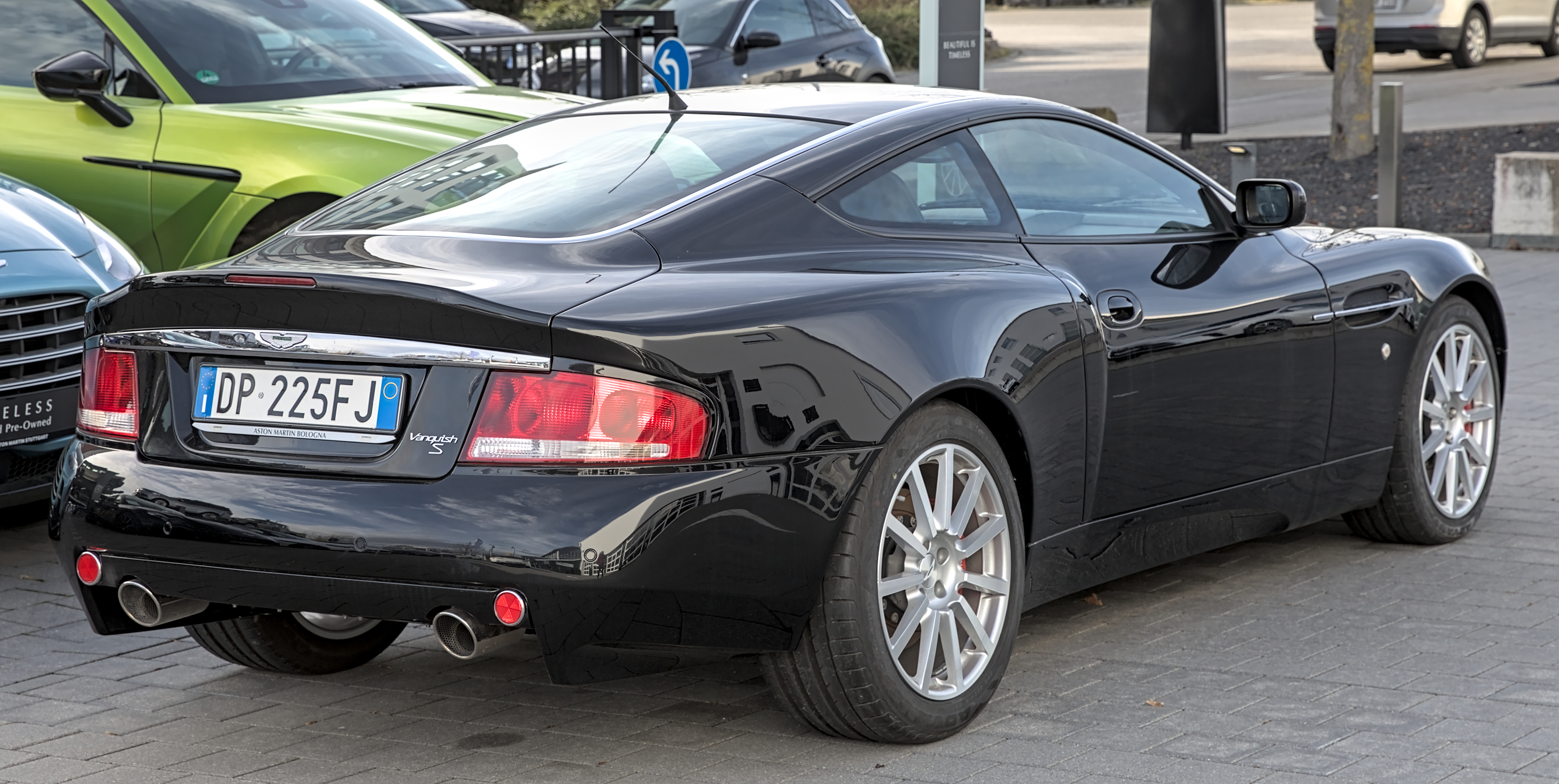
The Aston Martin Vanquish is a beautiful and powerful car that’s made for people who want to drive fast but in style. It’s like a fancy sports car that also feels special inside.
The Aston Martin DBS is a fancy and fast car that looks very stylish and was even in James Bond movies. It’s made to be both comfortable and exciting to drive.
The Jaguar E-type is a very famous and pretty sports car made a long time ago. Lots of people think it's one of the coolest cars ever made because of how it looks and drives.
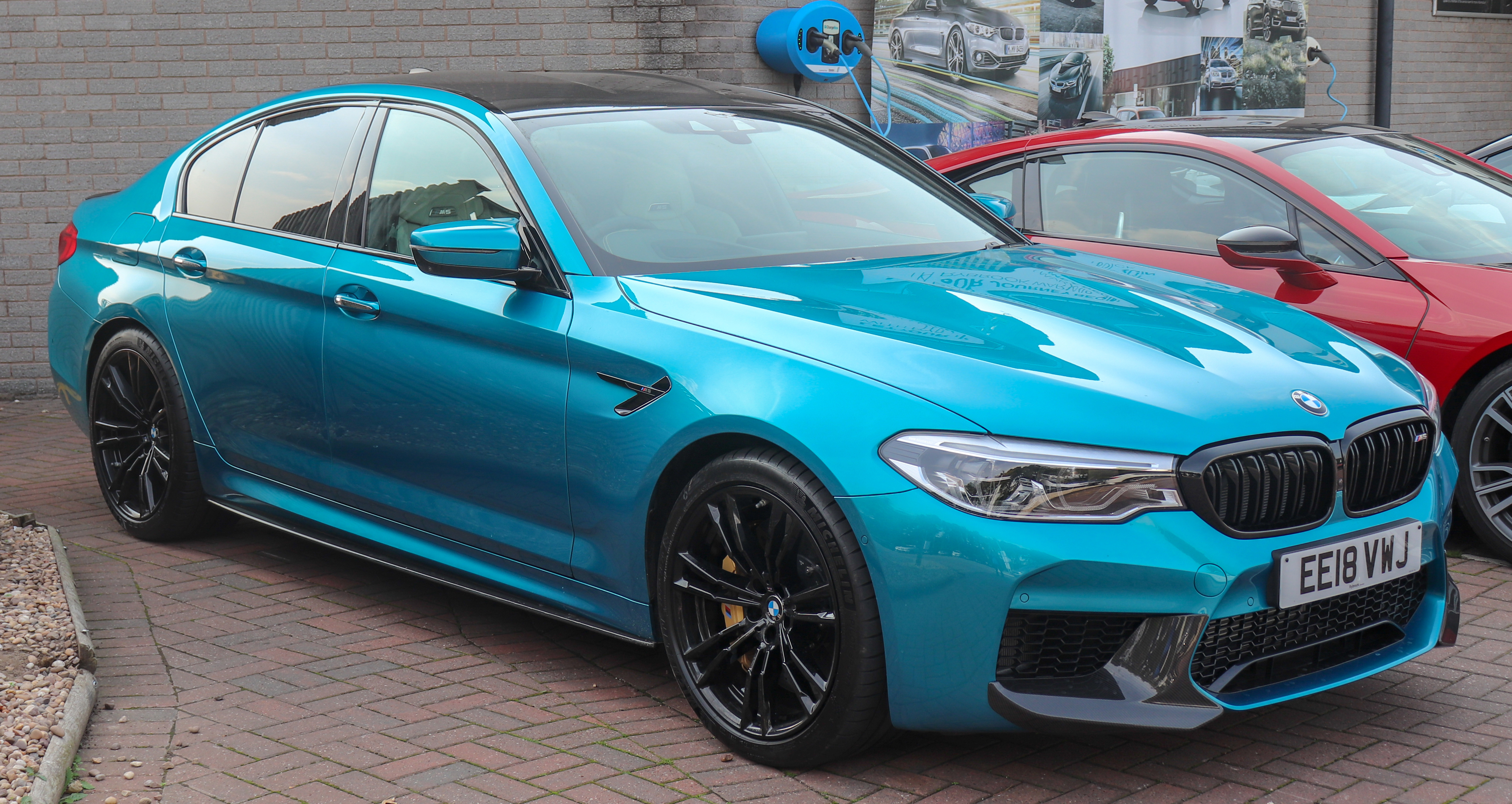
The BMW M5 is a fast and fancy car that looks like a regular family car but can go really quickly. People like it because it’s comfortable to drive every day but also very powerful when you want to have fun.
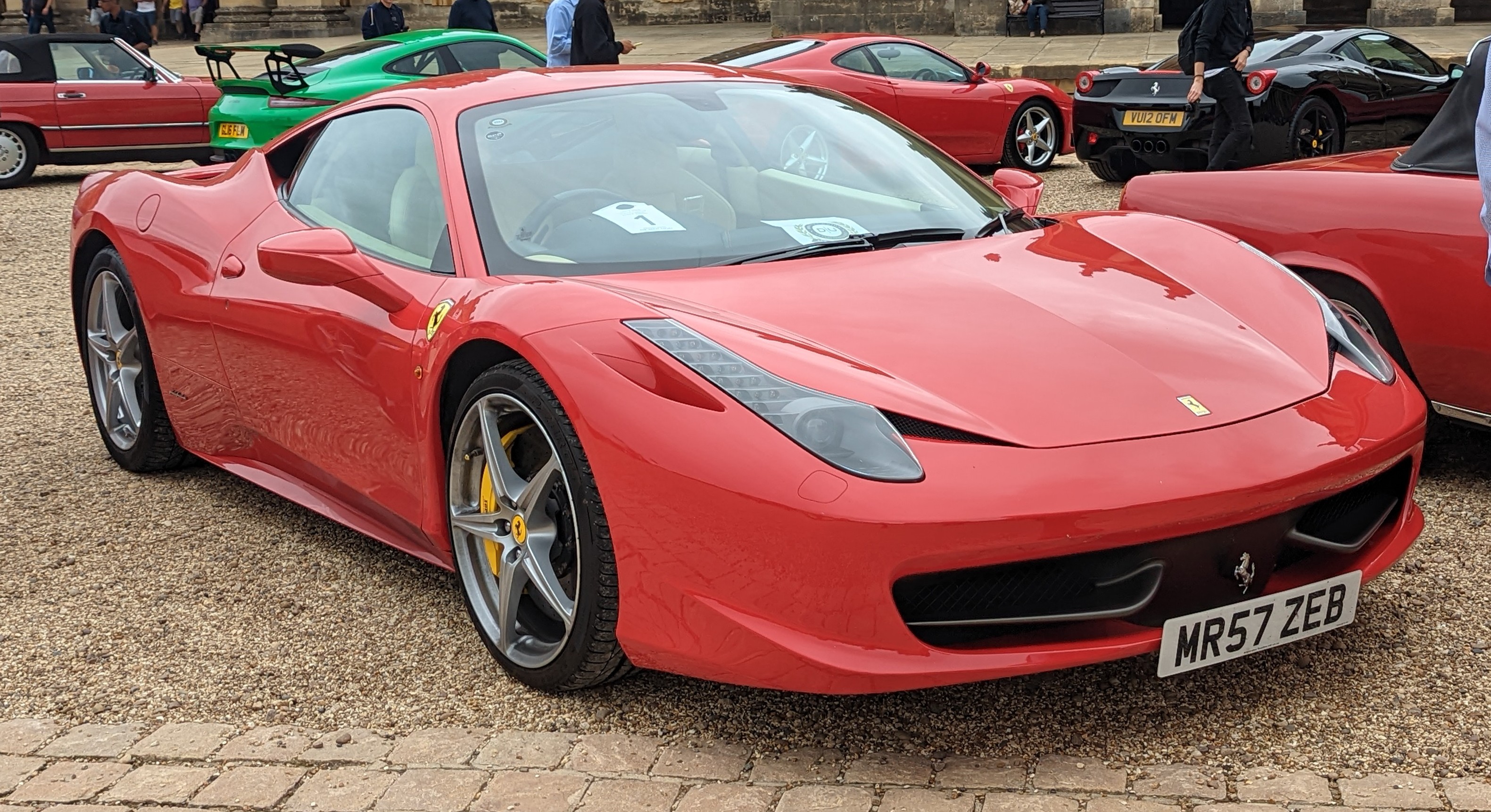
The Ferrari 458 is a fast and stylish sports car made by Ferrari. It has a powerful engine placed in the middle of the car and was designed by the famous Italian design company Pininfarina.
The Lamborghini Aventador SV is a very fast and sporty car with a loud design and a big engine. It's made to be very exciting to drive and look flashy.
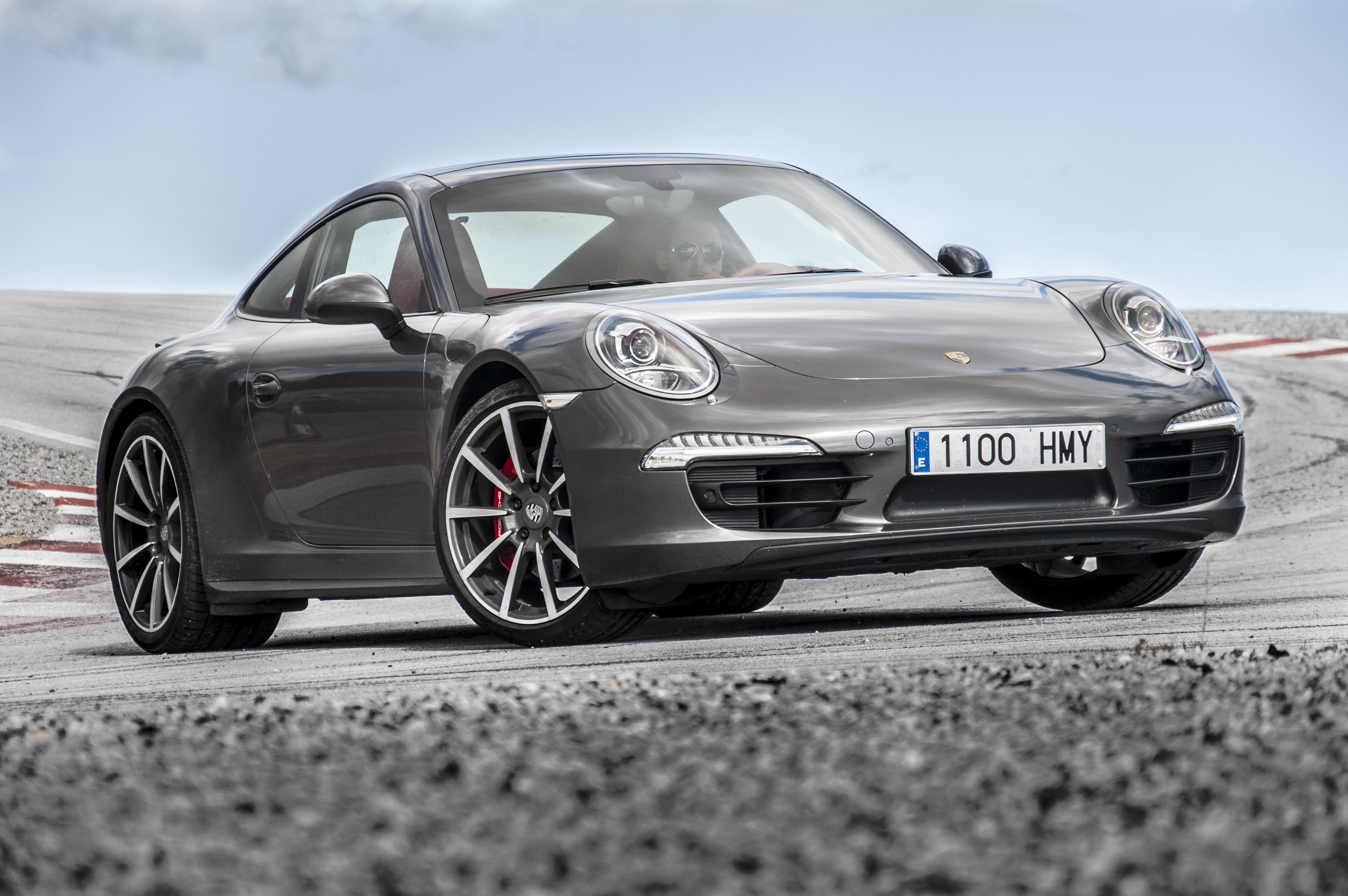
The Porsche 911 is a famous sports car that looks unique and drives really well. The newer versions are loved because they mix old-style looks with new technology to make driving fun and easy.
A body kit is extra parts put on the outside of a car to make it look different or cooler.
LIVE
Spring is here, and there's a whole new way to chai at Starbucks that's made perfect for you.
Choose your sweetness, dial it up, or keep things light.
Add a touch of pistachio, a hint of strawberry or vanilla, or make it a spring classic with lavender.
Because this season, there's endless ways to chai at Starbucks.
This episode is brought to you by Athletic Brewing Company.
No matter how you do game day, on the couch, in the crowd, or manning the snack table, Athletic Brewing fits right in.
With a full lineup of non-alcoholic beer styles, you can enjoy bold flavors all game long.
No hangovers, no buzz, no subbing out for water in the second half.
Stock the fridge for tip-off with a variety of non-alcoholic craft styles available at your local grocery store or online at athleticbrewing.com.
Near beer, fit for all times.
Jaguar then. Summarize how you feel about the new Jaguar, and is it possible to save the brand?
Ian, you're responsible for some of the most iconic car designs in history.
Because car design is not just about drawing pretty pictures, it's about turning that into reality.
I was very fortunate to be allowed to design Aston Martin, DB7.
But people don't talk about the I-Pace.
I-Paces are all used as way modes.
The I-Pace is a radical car.
Did I get the sense you're kind of a little bit more sour towards Aston Martin than sweet towards Jaguar?
On the whole, the finished articles for me are just not good enough.
Can you tell me about your first experience designing a Bond car?
A Bond car? That's a good question.
Ian, you're responsible for some of the most iconic car designs in history.
I mean, to be able to stand at a bar and say, yeah, I designed that Bond car is pretty impressive.
But if someone asked you at that bar, in your own words, who are you and what do you do?
How would you answer them?
Well, first of all, I would say I'm a designer.
And, you know, that's obviously my main objective.
It always has been, I want to design and create stuff.
And as long as I can get a chance to actually invent or do something that's not been done before,
that just gives me the buzz that I need.
And that started since I was about three or four years old.
What makeup was there in your parents' DNA that led to you being a designer?
There's got to be something there.
None whatsoever.
My father was a solicitor.
My mother was a librarian.
Neither had any aspirations of creativity at all.
The other generation, my mother's aunt was an art teacher.
My cousin was quite a good artist.
So there is something there in the family.
But, no, I don't know.
I don't know why it happened.
When did you realise that you were good at it?
When I started primary school and I took a drawing to my teacher.
This is absolutely true.
I said, please miss, you know, first day there.
I said, I just want you to know that I'm going to be a car designer.
And I took her a drawing.
She had a look at it.
I said, well, thank you, Ian.
Right, just eat.
That was it.
And nobody really took me seriously except my father did, fortunately.
The school days were just, you know, yeah, whatever.
Yeah, whatever.
And if you would tell that teacher what manufacturer you would have wanted to have designed it for at that age,
who would you have said?
It would have been Jaguar.
Yeah, absolutely.
It was the brand that other markets we used to call it these days.
It's a more correct way of describing it.
You know, I live in a small provincial town in Scotland.
There weren't many exotic cars.
You didn't see Ferraris everywhere for a start.
If I went to Edinburgh, you'd see a few.
But the one car I did see a few of was a Jaguar.
You know, it was exotic but attainable.
And I love that balance is something that, you know, you can aspire to just off the horizon.
And one guy did have an EB-5.
I remember that.
But he was a farmer.
There must have been farmers were rich.
But yeah, there was Jags were the ones that I aspired to.
And I wanted a Jag when I grew up.
Which is not what many kids think now or young people know.
I don't know if I know a world has changed on that spectrum.
I grew up with Aston being that cool, calm, creative car lover of Ferrari.
A lot of many things.
But for you, it was Jaguar.
When was it that you actually made that dream a reality of doing your first design at Jaguar?
Do you remember that pinch me moment?
Well, it's very odd.
It's very slow.
The whole process is very slow.
I arrived there in 1999.
Yeah, I was born.
There you go.
And just before we partied, of course, you know, that big party of 1999.
Anyway, the Jaguars that were about to be coming out about to be announced.
We're already done the X type and the UXJ.
They're kind of sitting in the wings waiting for somebody to announce something.
You know, and I kind of looked at them.
I was part of the launch of those cars.
I had to stand up and launch the cars with the rest of the company.
But they weren't my favorites really.
They were too retro for my liking.
And so it took about six or seven years before I got a chance to design a Jaguar.
But in the meantime, I was still designing Aston Martins, which kept me happy.
Because, you know, I'd been designing Aston Martins at TWR before then.
And when I joined Jaguar, I said to the design team, J.Maze in particular,
who's the head of Ford Design, I went to continue designing Aston's.
And he said, yeah, of course.
Because as it happened, Ford, Aston and Jaguar.
So the DB9, for instance, were designed in the back studios of the Jaguar.
You know, the Jaguar parking lot, so to speak.
Can we unpack the we designed?
Because what I'd like to do is obviously to you, as you're saying that,
you're visualizing where you were, what those studios look like,
the team of people that you did it with, the amount of time it took to do it.
But all the listener hears is we designed.
I went to Korea a few weeks ago and I saw Renault's design center over there.
Absolutely huge, enormous.
I couldn't get my head around how all those people must come together
with an opinion of every single person to get to a design.
What did it look like in like peak car design in days for you?
Well, that didn't really happen to Jaguar too much later.
When I arrived there, it was 100 people.
Okay.
You know, and that included the clean modeling team,
it included the surfacing team, the digital team.
And so there probably was only about 20 designers.
So it was a small, manageable team.
I'd come from TWR where I had one designer and clean modeling team of four or five.
So that was even much simpler.
But yeah, and it grew and by the time I left Jaguar,
between Jaguar and Land Rover, we had 800 people working in our department.
So at any one time, I could be looking after 4 to 500 people.
And today I want to unpack as we get later into the episode,
what you think those eight or 900 people think currently at present at the minute.
That's where the world is.
We're not there, but that's another story.
How does somebody else know that you're the man for the job at Jaguar at that point?
What's the things that really proved to those businesses?
How do you get in the door?
It's a good story actually.
I went to be a car designer and going right back, I started at Ford.
And I was very fortunate to get a job at Ford.
I worked in Essex and I worked around the world.
And they gave me a good grounding on car design because car design is not just about drawing pretty pictures.
That's a nice part.
It's about turning that into reality and understanding what it takes to get there.
And I learned my trade fairly thoroughly and I'm a pragmatist.
I like to make sure that what you're creating is something that actually works.
No point in creating something which you know is never going to see the light of day.
And so anyway, move on a bit, TWR.
The TWR, I was very fortunate to have been allowed to design Aston Martin DB7,
which did actually start off ironically as a Jaguar.
And TWR in association with Jaguar, they said we could do a new sports car for you based on the XGS platform.
It'd be much cheaper than what you're trying to do yourselves.
And Ford had just bought the company and they were looking for ways of doing things more efficiently.
And Tom Wilkinshire thought he was an opportunity.
So we started designing a Jag.
I mean, I say design.
When you design a car, you first of all set up the package of the car.
And with the XGS platform, everything's in the wrong place.
The windscreen was the wrong place.
The overhangs were too long at the back and all that stuff.
So the first part is to go and repackage everything within a shape that would be of the car you want to do.
The next generation.
And the XGS, we had a long bonnet upright screen.
In fact, not a dissimilar to probably the latest Jag in many ways.
But this was something we had to change in this car because that to me was the old car.
We moved the car forward and did all sorts of stuff.
And that was in preparation, doing a new sports car.
And halfway through that process, Jaguar decided they didn't really want to do this because they didn't think the XGS platform was good enough.
They wanted to redesign and re-engineer their own platform.
And there was a touch of not inventing here going on.
And I don't blame them.
The outsider comes and knocks on the door and says, I'm designing a Jag for you.
He had to be too happy about it, really.
So Tom went off and I'll find himself another customer.
He did, he found Aston Martin, which incidentally also belonged to Ford.
Sounds like the Bond story.
The discussion was quite straightforward.
We're not going to do a Jaguar.
We'll do an Aston.
We didn't tell anybody though.
We were doing an Aston.
We just carried on.
And that's how I got into the whole world of my sports car.
That was the first one and that led me into, after that, a lifetime of sports cars.
I always look for little traits in people that is like, that's what's made them responsible for X.
That's what's made them responsible for Y, how they've done something.
And I heard this little story on a podcast you did with Johnny Smith about how the Ford that you were given as a company car back at Ford that you'd drive from Essex to Oxford in,
was only supposed to have 10,000 miles on the clock when you gave it back.
Oh yeah.
And how many miles did it have?
Yeah, that was my Cosworth.
It was before I went to TWR.
I had 35,000 miles on it.
And the reason I bring that up is because that immediately showed me by hearing that,
that that's someone that doesn't necessarily conform to rules and always would do a little bit more than they were maybe allowed to do.
Yeah, I pushed the boundaries.
Is that fair to say?
Absolutely, I've done it all my life.
And is that the same when anyone in one of those companies, because so many people are, you know, they walk into a room and they walk into a business or a job or whatever it is,
and they're given constraints a lot of the time, walls that are built up around them.
Does your mind always go, yeah, sure.
We're going to go a little further.
I don't want to sound so cynical and say, yeah, whatever, or sarcastic rather, but yeah, I do, you know, you give me the rules.
If we design a car, you get inputs all the time.
You get technical inputs.
You get, you know, objectives of size and weight and cost, cost and effective.
You know, I would say it's about dimensions and cost and cost and cost.
So all these inputs are coming in.
And there's also very subjective inputs about what the car should look like, which you notice nicely and carry on doing what you need to be doing.
And then there's a package constraints.
And I, and the package constraints in the car company are always determined through the marketing department or more often than not, rather, measuring everybody else's car.
So when we were doing the new Fiesta, I remember working at B13, the new Fiesta, they'd be measuring the Peugeot and the Polo and all the other cars in this class to say, right, we've got the same headroom,
we must be more and we've got the same, the same as that, because that was a default was to go and measure everything else.
And I knew this.
And so when I got those set of numbers, when I got the set of numbers at Jaguar, I knew where they came from, BMW, Audi, Mercedes, and yeah, all right, whatever.
And then we challenged them.
We're seeing that we're not going to have that much headroom because it compromises the style.
So we will have to, we can sell cars if you don't have more headroom.
And then I'll tell the story about Jeremy Clarkson standing on the bridge counting how many cars went underneath with two or three passengers in the back.
It was about one or two percent.
You know, so nobody sits in the back of these cars, you know, if they are the kids or the granny.
So you're not going to get a car with four.
It's very unusual.
You'll get a saloon car with four grown men and five.
So I used to I used to argue the point this Jaguar is about style.
So priority is to get it to look right.
And if it means compromise the package a little bit, then that's what we should do.
That was an eternal debate on the topic of debate.
So the answer is yes.
I would question everything.
Bring us into a room for one of those debates.
Bring us into a debate that may be that without that moment without that debate, one of those iconic cars I mentioned at the start.
Would have been a completely different form.
Oh, my goodness.
Well, the sports cars were less of a challenge because people understood that had to look right.
I remember when we were doing the XK and the bonnet line had to be as low as possible.
And I knew why because the way you sit in the car is determined by the bonnet line.
This is all about legislation.
The bonnet is too high.
You have to sit higher.
If you sit higher, the head gets higher.
So the car just grows up and up and up.
So fundamentally, you start with the tipping point, which is going to be the bonnet line.
And because of pedestrian impact, it's going to have to come up an inch or so.
And I said, no, it can't.
Engine's too big to fit inside it.
No, it can't.
So we have a, I said, why is the engine too big?
Well, because the throttle body is this and the lesson will change it.
You know, and you get a few looks and you don't know about that.
So well, I do know about that actually because what I find the strength I had was I do understand cars.
I know how they're built.
I know how engines are made.
So I would challenge everybody.
And the next thing politically is I get the boss on my side, which always helped.
I say, you know, do we want to do a beautiful style or do we want to do something that's just easier to me?
Many of you might not know this, but away from the recordings that I do in my van studios,
I've actually got a digital marketing agency.
Now we specialize in a lot of automotive clients, but we cover everything really.
Our team is made up of PPC specialists, SEO specialists, and the most talented designers I've ever seen,
which have done work like the Starnagloss website, the TWR website, and many more.
We've actually just built icon box for the auto Alex crew as well,
meaning that people that watch their channel can buy their favorite merch seamlessly and in style.
So if you're interested in starting a project and you'd love to speak to us,
just tap the link below and let's hop on a call.
Did you know that you always wanted to be the boss?
Of design? No, I didn't.
Because today and we'll get to this later in the episode today.
No, I never even occurred to me.
The van is parked inside your building, Callum Automotive and Design.
And for me, listening to your journey, you use this brilliant phrase,
oh yeah, I retired so that I could start my own business.
And it's like...
Oh no, that was mad.
And we'll unpack that and get into it.
But obviously from hearing about the things that made you up in your younger years when you were getting going,
where did that entrepreneurial trait and fuzz come from?
Was that from spending time with the bosses at Aston Martin and Jaguar?
Well, no, actually, I learned most of this trait that I'm involved with now at TWR
because I ran what they call a profit centre, not a cost centre.
It didn't cost the business money, it had to make profit.
And so I had weekly debates or discussions with my accountant within the business.
It was a big business where they turned over a two or three million a year.
But you have to realise it costs a lot of money to design and build a car and materials and everything else.
But it was a business and I had to run it as such.
And occasionally you have to go out, I didn't like this bit, I still don't like this bit,
but we had to go out and look for work in order to justify the business.
I'd rather just say, of course, when I went to corporate life, I didn't have to worry about that anymore.
But that side of it is something you learn.
But the actual mechanics of the business, I learned a lot at TWR.
The P&Ls, I mean, they're straightforward, it's just numbers.
But you have to be aware of them.
You have to wear the cost of people and the cost of materials and the cost of doing things
and the cost of running a business.
And I learned that at TWR.
What I'm hearing there is constraints, constraints, constraints, constraints.
So when you start designing a car, that's when you'd have to be creative.
One of the most constrained things in the world potentially to design.
Where was it that you had the most freedom on a project?
Because you've designed one-off cars for bonds.
The CX-75 Jaguar, I think, is one of my favourite cars ever.
The orange one that you see at Business Scramble.
Unbelievable.
There's so many that I could list off.
Where's the most freedom, the most fun that you've had?
Well, probably at TWR.
Because Tom Walkinshaw was my boss and he understood the power of design.
He really did.
You know, and he would sort of protect me within the business.
And we'd have little discussions.
And I remember one instance in DB7.
And he was told to put the six cylinder engine in.
And we had a V12 under there.
That's how it started off.
And the six cylinder was taller.
So he said, well, redesign the bonnet.
Show me what it looks like with the six cylinder in it.
So I did that.
He said, do you like it?
I said, not really, no.
He said, all right, what do you have to do?
I said, you have to drop the engine, 25 millimetres.
So he asked me over to the engineering department.
He got the head of engineering there.
He said, he wants to drop the engine.
No, Tom wanted to drop the engine because he wanted to do what I thought was right.
And he also put me these little moments of, yeah, he wants to do this.
Of course, you can see people kind of staring daggers at you, you know,
because you've just involved the engineering department in dropping the engine 25 millimetres
because it's going to look better.
That's a big job.
Let's read the engineering this up frame.
But Tom wanted it because I wanted it.
And I wanted it because I knew it was the right aesthetic answer.
And so I got into that debate with a lot of things like the bonnet on the F type, the XK.
You know, you get into that debate and you have to fight your corner.
And you play a bit of, you know, you play like any games.
You can lose a few battles to win the war, so to speak.
And, you know, you'd quite often pick on something that was not that important.
And you let the other sides, the other forces win it.
So when something really important came along, you could use that as a bit of bartering power.
You talked really fondly about Jaguar and TWR.
We almost have to mention Aston Martin.
We have to and you're still doing things for Aston Martin now.
But I think the wider audience that knows you, the first thing that they think of is DB7.
DB7, yeah, I know.
It's like this vanquish.
Wait around my shoulders.
The first number one, it isn't it.
What would you love to be known for more than those?
I don't mind. It doesn't matter.
You know, what matters is how I feel about it.
And of course I still get a bit of a kick when somebody says they got a DB7 and they got an XK.
I love it, you know, and I'm going to keep it as my favourite thing.
It's like being a songwriter, you know.
Somebody plays a song at a wedding and it must make them feel good, you know, as a songwriter.
And for me, it just, I'm glad it's given some people pleasure regardless.
I'm not worried about, I don't really get hung up about legacy or anything.
Not hung up, but to the point, let's bring it to the mundane life.
In a pub, someone recognises your last pint before you're heading up to your room somewhere you're done.
And they say, oh, what have you designed?
How would you, if you don't have long, you're about to leave and go to the room.
What are you telling them?
I think the thing that I would like to be recognised for is the change that I made to Jagger.
And the fact that DB7, it's not the designs itself, it's what it did for the companies.
DB7 saved Aston Martin.
In fact, a lot of people nowadays tend to ignore that, but it's true.
If it wasn't for DB7, Aston Martin would have survived.
And it made money, by the way.
And then when I went into Jagger, I wanted to change it because I had understood Jagger from the 60s.
I know that seems a long way away, but I do remember it.
I remember it was quite a rebellious car company.
The XJ was, wow, you know, that was something special.
Like something that nobody else had ever done.
And I loved that as a teenager, I loved that sense of doing something different.
And then after that, and a lot of people forget about this,
it just kept reiterating the same design until it became the old man's car company
because it was still the same design as it was in the 60s, the XJ in particular.
There was nothing wrong with them.
They were beautiful cars, and technically they became very good.
But they weren't moving the brand on, certainly at the age they weren't.
And so I set about to take Jagger back to where it was when I remember as a teenager,
and how special that was.
You know, I'm when you're a 15-year-old, somebody passes you on any type of Jag as a new car.
You're like, wow, that is cool.
You know, even the Mark II or an XJ in particular, they were cool cars driven by cool people.
I used to use that face as a Jag.
Jagger's a cool car, it's driven by cool people.
And I wanted to get back to that notion that they were very modern cars.
Now, some people argue otherwise with me and people have even said recently that Jagger need to be reinvented,
but it didn't, we had reinvented it.
The problem with Jagger was it took on the Germans.
It took on BMW and Audi and Mercedes, head-on.
And it shouldn't have done that.
I don't think it should have lifted itself slightly above that.
So that we could afford to do something more special.
Was F-Type the last Pete Jaguar?
I think that, yeah, the F-Type will go down in history as a true Jaguar sports car.
People call it a GT, but it's quite a sporty car.
I've had enough to know that.
Yeah, I think the F-Type's up there.
But people don't talk about the I-Pace.
No, it's so weirdly radical.
I was going to mention that because I spend a lot of time in another van of mine in Los Angeles,
where I-Paces are all used as way modes.
Yes, I know.
With big cables at the top.
And they're instantly recognizable as a way man.
I love traveling in way modes as well.
I totally get it.
I'm totally on board and I actually really like it because I think it's a little bit different.
And I was going to say, I actually quite like the I-Pace.
Yeah, the I-Pace, if you look at the I-Pace profile, it's an electric car.
It's designed as an electric car.
We were given the opportunity to design it.
I said, right, we're not going to have any long bonnet on it because there's no engine in the front.
Don't be silly, pick a long bonnet in electric cars.
It just doesn't make sense.
You crash structure, of course.
And so we created a profile which was very different,
but it's still got all the curvaceousness of a Jaguar.
It still moves and flows.
And it's got a very square back for aero.
That's all it's about.
It's a very tall square back, but we did it in a way that is still elegant
and still has a sportiness about it.
And the I-Pace was a radical car.
And remember, it was the first car of its type to come out in Europe.
Away out of any of the Mercedes or BMWs.
Nobody, people forget that because it wasn't loved by the business.
It really wasn't loved by the business.
And so it wasn't given this iterative lease of life every three or four months.
It was kind of just left.
And people would argue it was left because it costs too much money to build
and various reasons.
Well, the other reason a bit more about carrots is than that.
I think people who became in charge of engineering didn't really want to move it on that much
because they wanted to get on with the next thing.
Can you tell me about your first experience designing a Bond car?
A Bond car?
Yes, another thing.
I suppose it was vanquish.
It was the first Bond car.
Ironically, as it happened, we were designing the Jaguar as well.
By which time did they decide to put the vanquish into the Bond movie?
We didn't know it was going to be in the Bond movie, but it was the next accident to come along.
And that was Pierce Brosnan, wasn't it?
The invisible car that disappeared.
And while they decided to put the acid in there, the body had to drive a Jag.
So, Eon came in and said, we need the body's Jaguar.
So, we picked the XK, the older one, and turned it into this monster car with a machine gun at the back.
And if you remember, it was green, but we did all the design work for that in the Jaguar studio
because we saw what they wanted to do and we didn't like it.
You don't think that to our car.
So, Julian Thompson and I worked on that car to create something for the Bond movie specifically, for the body.
The body drives a Jag.
And he's always drove Jags.
That's how edgy they are.
But Jag, I remember from Bond movies, my time, because it just made me tell my head, was that CX-74?
Yeah, I forgot about that.
That was a hell of a thing. It was DB-10 versus CX-75.
Tell us about that.
Yeah, well, CX-75 came about in 2010, believe it or not, 16 years ago, that car.
And Julian Thompson and I wanted to create something to celebrate 75 years of Jaguar.
We were looking for an excuse to do a show car.
There was nothing up and coming.
The F-Type was just a little bit too far away to kind of launch it as a concept.
And so we came up with this idea that we should celebrate 75 and do just a special sports car.
It was very indulgent.
It was purely about design.
There was no...
And wasn't just a concept?
It was begin with, yes.
Because the reason I'm butting there, and I apologize to everyone, is because I heard you talk about earlier that you actually like practicality of cars that make the road.
And sometimes we see these wild concepts that look like they're AI-generated and there's maybe not too much use for them.
Yeah, well, when we designed it, see, Julian and I reckoned that if it was good enough, somebody might take notice and think, well, we should build this.
And I felt it was time for Jaguar to do another supercar because that really does lift the brand.
The previous one was 220.
Sadly, it had a bit of a sad demise as it went through a difficult period of sales.
But we thought at times right to do another Jaguar supercar.
And so we designed it sort of in the back of our minds that we could build it.
Because, you know, we knew cars inside out.
We had enough room for an engine.
The interior is big enough to take, you know, two 95 percentiles and the visibility lines were real.
And probably out of the fact, we were just so indoctrinated with so many of these facts we had to live with, we created something that we knew.
We could have had to put it in production without shouting it too loud.
And so we created it with that in the back of our mind that if it was to be put into production, we wouldn't have to change it.
But there was no notion of that happening when we did it.
How many of those did they make?
Well, did any customers ever end up with them?
Yeah, well, yeah, it's a long story, but we built four or five prototypes.
We still belong to Jaguar. They were never sold.
There's still some were scattered in various museums and things.
And then Ian came along and said, we would like to use those cars for the Bond movie for the baddies car.
And so we said, yeah, but you can't.
Well, the border types of them, we can use one of them as what we call the beauty car is the one that you can see him getting in and out of and driving carefully.
But for all the driving scenes, no, you can't use them.
They're too precious to us.
Jaguar said the CX-75s were too precious to smash up one of them in a Bond movie.
Yeah, absolutely.
For the sake of being in the latest Bond film.
Yeah, because, you know, to us, people in the car business is just another film.
Because I think that people hear the story of how and I think people's concept is that Aston pipped Jaguar to be able to be in Bond from the beginning.
And that's how we ended up with DBS in Casino Royale and all these cars being the car that Bond drove.
You say that Jaguar is the rebellious brand that's driven by the baddie.
But I'd almost think that Jaguar were relish marketing like that.
Well, well, we did.
We'd made it happen.
But, you know, these cars were worth about two or three million pounds each.
If we're going to be trashed around the streets of Rome, it wasn't going to be for us.
And for the sake of movie cars, we had them built.
So we built five or six of them.
In fact, Williams Technology built them for us with Jaguar's help.
And we built these basically stunt cars to run.
And that's what happened.
You know, later on we acquired two of these, as you know, and we developed into proper road cars.
So we did build the cars for the movie because it was too much of a good thing to let go.
And so they were built especially for the movie.
Do you ever want to try and get one and whip into the garage behind my house?
I'm sure a few people thought of that.
In fact, maybe some of these has.
Do you think there has been a few?
I know where they all are.
The private collections.
No, I think, well, four of them were sold off to private collectors in the end.
Four or five, four, I think.
So we know where they are.
We know exactly where they are.
And two of them, of course, we've had in the studio here.
And we've brought them back to life.
I think it's always...
We didn't design that car to be a Bond car, a movie car.
We just designed...
To be a celebration of Jaguar.
A beautiful car, a celebration of Jaguar.
And it always amuses me when people make...
I need to stop asking Martin.
I mean, it's lived on the Bond thing for years, hasn't it?
And it amuses me that so many people's minds that the Bond relationship aspect is so important.
But when you design a car, it's the furthest thing from your mind.
Just a movie.
I know I'm going to get really cool for the thing that, but it's a very special movie.
And I was very privileged.
I went to the opening of the Pierce Brosnan one.
I'll challenge you on that, though.
Yeah, go on.
Because you mentioned those memories when you were younger of an E-type going past,
they would make your head instantly, no matter what.
Swivel and look at it.
And all those years later, you kind of get the sense you're kind of a little bit more sour
towards Aston Martin than sweet towards Jaguar even today.
Not at all.
No, I love...
Not at all.
No, I love Aston Martin's.
I haven't worked on them for 20 years.
Does that bother you?
Is that what it is?
I...
Does that bother me?
That's a good question.
It doesn't bother me because you've got a very competent team designing them,
but yeah, I would love designing them.
Of course I would.
So it's a lust to still be involved in those things?
And that's why we took the vanquish that I did and we remodeled it to another level.
Which also is a reflection on the fact that a car that you designed at Aston Martin
then all these years later, you've got hold of again and gone,
do you know what?
Let's do it better.
Let's do it better with less constraints with...
Yeah, and more money.
You know, not cheap, but you know, I remember when we're doing the original one,
there are the financial constraints.
We can't do this with interior because we can't afford that.
We can't afford this.
And even a car at that level, that factor, it always comes into it.
Everybody's looking at the cost all the time.
Whereas what we're doing now is we're rebuilding them and customising them to a level that
they never were before.
Because we can, because I can do a better job.
We can put more craftsmanship into it, more personal craftsmanship into it,
and build a better car.
And we picked that car because at the end of the day,
it was still one of my favourites, the vanquish.
It's still...
I still see one and think, yeah, that wasn't a bad design really.
Have you ever had the chance to...
I'm sure you two would have met many times.
I don't know if you've collaborated, excuse my lack of knowledge.
Have you ever had the chance to sit down in the pub or at Goodwood with Gordon Murray?
It's tax season.
And at LifeLock, we know you're tired of numbers.
But here's a big one you need to hear.
Billions.
That's the amount of money in refunds the IRS has flagged for possible identity fraud.
Now here's another big number, 100 million.
That's how many data points LifeLock monitors every second.
If your identity is stolen, we'll fix it guaranteed.
One last big number, save up to 40% your first year.
Visit lifelock.com slash podcast for the threats you can't control.
Terms apply.
And now, that came in as out tearing up the track.
From Toyota to Ashton Marins, eBay has thousands of cars
and the largest online selection of vehicle parts and accessories.
eBay.
Things.
People.
Love.
Yeah, we now spoke to God many times.
We're good friends.
We have discussed a car we might have done together or...
But it's never happened.
It's very unlikely that it happened.
But you have to say, we've talked about it, but not in any great detail or strength.
People say that starting a car company is one of the hardest things in the world.
It's pure madness.
And as a young person, I love following Matte Rimac on what he's doing.
Oh, I know.
It's amazing.
He's like another Elong, but from Europe.
Yeah.
And that's the only person I can kind of compare him to.
But I've also followed Christian Von Cohnen's egg since the start
and Horatio Pagani and all these people that have made the one-off cars.
The work you're doing to redesign the cars that you're already involved with right back
and re-body them and remodel them and perfect them.
Does that fully fulfill you?
Or have you ever felt the need to make the...
Yes, of course it does.
You know, we're here at Calum.
Calum Designs.
And we've already designed two or three supercars, which have not got any further yet than the
digital stage.
We may have wanted to glance at them, but of course it does.
We're doing the Calum Sky, which is the off-road buggy.
Now, we started off with the van...
There's some sense in this.
We started off the vanquish because we're taking an old car and modifying it, turning
it into a new car.
So there's a level of learning there, this process that people involved.
And then after that, we designed our own car, which is the Calum Sky.
And we intend to put that into low-volume production.
So that will have Calum name on it.
And, you know, hopefully it'll see the light of day.
These things are always going to take longer, a lot more difficult than you always think.
But that's the intention.
And after that, we want to do a sports car.
Absolutely.
But I stop.
You know?
Because I need to know that.
I need another 40 years.
That's the problem, you know?
So I've got a little tendency of panic setting.
Do you ever worry about that?
Or are you just blindsided to that?
No.
We just keep plowing forwards.
No.
I mean, I do keep plowing forwards, but I do worry about it.
Because, you know, I'm in my team here in the early 40s.
They can see 20 years, 30 years ahead.
I can't allow myself that privilege, I'm afraid.
You never know.
People talk about, though, legacy, being able to hand things over.
And people, especially people that have it in them to start their own businesses,
offer suffer from delegation.
That's the biggest thing to get over is giving things away.
Yes, it is.
Yeah.
How have you found, you know, you built your own team here and you designed these,
your own vehicles and you, it's like a whole new story as part of everything that you've
done in the past that you're known for.
But it's this whole new story creating.
But you must be aware how much you have to give over here now to make sure that that
story is always right.
Is that tough for you?
Well, when I was at Jaguar, it was tough because I came out of TWR where everything was on
my table and I was doing it all with my design partner, Neil Simpson.
But, you know, I was very much in control of what I wanted to do, what was going to happen.
When I got to Jaguar, I had to start to delegate and give work at the designer.
So I tried to work out how to do that.
And how I do it is I hold onto a vision of what I want to see.
And I try to manage that vision into other people's thoughts.
It's a very difficult thing to do.
But, you know, you have to, and then also you have to listen to people.
Because I don't have this sort of manic notion any longer of, you know, this vision for the
future is about now.
And so you have to try and manage your own energy with other people.
It's very difficult.
But I do it now.
And I'm not bothered by it.
It works.
But would I like to sit down and draw and build my own car from scratch on the dining table and turn it into reality?
Of course I would.
Is that what you do in your like brain-relaxing time still?
How often do you sketch?
Quite a lot.
Yeah, I still sketch.
And what do you sketch on?
Because I think if people think about someone sketching, they would have all seen Adrian
knew him with his big board, his office.
I think that's what people vision when it comes to drawing.
What does that look like?
Yeah, I think he sketches.
He uses straight edges and things.
Sketching to me is usually an A3 pad or an iPad, you know, and I'll just use a pencil
and sketch on it.
The nice thing about using an iPad is you can take the drawing you've done, you can send
it off down the line too.
Your team know by email or whatever.
But I quite often just sketch on paper.
Still, and most designers do, eventually.
So if you're enjoying this conversation, please subscribe to Road to Success.
I'm sure you'll enjoy it.
You mentioned, and I think this is going to really hit with the Scotsman in you as well,
because Scotsman are known to say an anything to anybody.
And as entrepreneurs, you have to get comfortable with asking people the uncomfortable.
Have you ever had a conversation with just to name, Gordon Murray or whoever, just any
other designer, any other designer that's built something and gone, I really like you.
But what the hell were you doing?
Like, because you're very polite, respect your God.
But like, do you ever feel the need to say, what the hell were you doing?
No, I've never done it.
I've never done it.
Is there any brand specifically that you think what the hell are you doing and you'd like
to ask them the most?
Is it Jaguar?
Oh, Jaguar.
That's an interesting one.
We'll talk about it in a minute.
No, I think I'm not going to talk about any specific brand.
So I'm going to be slightly political about that, but I look a lot of the stuff at the
moment is going on, especially in the German brands, which are predominantly everywhere.
And I really worry a bit with the fact there's a lack of elegance in these cars.
And that may be an old fashioned word, but I just look at all these cars and if you ask
me, what's your favorite car in the road?
I find it difficult.
There's nothing out there.
I think, wow, that's what I want.
That's why I drive a Volkswagen van.
Perfect proportions, big wheels.
It suits me because it's a kind of a statement of that said.
Whereas I look at cars, there's nothing out there that I'm the kind of thing I really
want that.
Probably why I've got a lot of old cars for that reason.
No, really, honestly.
And to me, the style and the shape of the car matters a lot.
So if I'm going to look at an RSR here, an M5 or something, I'm looking at things like
that, not doing it for me.
And the problem I've got now is my references are so strong.
You know, I don't want to flatter myself by saying I liken it to an artist, but when
an artist starts to move on and move on and move on, you start to see things at another
level and then you want to create these things at another level.
And you learn about what's going on.
You learn about what these young guys are doing.
And you think, well, there's something in that I can learn from that.
There's no doubt about that whatsoever.
On the whole, the finished articles for me are just not good enough.
And it's frustrating because I look at these cars and think, I could do a better job than
that.
Take me into them because this is something everybody will be able to relate to, whether
it's this me or another me.
I'm inside your head walking around a vista scramble where you get to see everything.
You know, I know you're going down there.
I know you're seeing the Orange C75 parked out and they pull it out for the events.
You're walking around.
I had a better one since the green one is actually a much nicer car.
I call it an illness, this, because it is, because I spent so many years growing up in
paving slabs.
But whenever I'm anywhere and I just glance at the floor for a second, I go 250 by 250
concrete or Truder antique or whatever it is.
I just glanced at it.
I get it.
But is that your head walking around one of those like bonnets too short?
Does your head end?
What were they thinking in the wheelchair?
Is that constantly inside your brain?
Constantly.
Do you ever just think, bloody hell, I wish I could enjoy it.
Yeah, I just, you know, I wish I could take all the references away and just enjoy them.
There are a few cars out there that I can't think of.
Yeah, super.
Not many.
And they tend to be older ones because I can see the form and the beauty in them that
was created of an era.
I mean, you know, you got to understand things that are of an era.
But within the context of that era, it has a standing which is very, very strong.
I just think the car world at the moment has just gone a bit doolally.
You know, and I know what it is.
Everybody's fighting for attention.
You know, it's like this sort of blood bath going on.
And there's a few scars here and there.
And I think if somebody would just settle down and do something beautiful, it would be a
nice thing to do.
I want to show you some because every also we are, although I've got absolutely no signal
on the back of that.
So I'm going to have Rila on the fact you may have seen these images.
Ferrari released some interior shots yesterday of their first ever electric vehicle that
Johnny did.
Johnny I've designed them.
And I saw them.
The comments were just pure like Warren Helen.
Everybody really.
I didn't see that.
The comments were, I may have left one that said looks a bit like a Thrustmaster steering
wheel.
But there was an all kinds of different thing.
What do you think of something like that?
Because Ferrari forced, I thought you might.
I quite like them because they're very pure.
No, they're very Johnny Ive.
I mean, you know, he designed iPhones and he does very purest shapes and things.
And the thing about industrial designer like himself doing these things, he sees them as static
entities and elements, which are, which are right.
They are static within the volume of the car.
The car designers see things moving all the time.
So you get into this notion of things that lines have to move and flow, at least I do.
And you know, and Johnny's gone in there and does what he does best.
Does that the problem?
It's not Ferrari.
It's Johnny.
Could be.
If that's the problem people have got.
But then what the Ferrari expect if they're going to ask Johnny to do it.
Were they mad to move away from Pina Farina?
Because I think the 458, which I was lucky enough to own.
I love that car was maybe the last Pina Farina designer.
We just felt they sound a bit higher on the wheels.
Yeah.
Well, yeah.
Pina Farina cars always have a very natural elegance to them.
A bit like what I was talking about before, you know, this sense of design, Italian designs,
all about elegance.
You go back through history.
It's always there.
It's about restraint, not constraint, but restraint, you know, don't overdo it.
They've moved another element of being quite fanciful and loud and shouty.
And they've got their own designer now doing that.
And it has a place.
Do I like all of it?
No, I think it's a little too shouty for me, but it's actually, if you look at the business,
it suits the buyers.
You know, the buyers are usually shouty and they want to drive something that expresses,
you know, something quite...
Do you like Lamborghini design?
Not really, though.
Some of it.
You don't like the statement design of an Aventador SV?
Not really, no.
Why?
Why?
Because it's...
There's so many people.
There's so many people.
Because it's dramatic.
It's dramatic.
Look at it again.
That's sick.
Yeah.
Does that not inflict something?
Yeah.
It's a dramatic profile.
There's no doubt about it.
You know, and I would look at it and think, I could take four lines off that.
It would look better.
Really?
Yeah.
Absolutely.
Because what's happening is all these lines you're seeing, they're all fighting each other.
To Cophony, you know?
And what you want to do, and if you listen to good music, you've got layers of music in it,
where you've got a principal set of notes and the other ones are secondary.
When you put everything on top of each other, it becomes...
Clicophony of sound, it becomes a mess.
Your brain can't, you know, kind of digest it.
And it's the same with carnet design.
If you just throw all these lines in at once, it's, whoa.
I may have looked at it for a few hours.
It might actually start to make some sense.
But I look at everything and think that needs editing.
It needs editing.
And when I look at it from the beginning, what you're seeing, what you think is dramatic
is lots of jagged lines, but you're also seeing a very dramatic profile, which I love.
But the surf singers are like, oh, please, you know, have a rest.
Have you ever looked at a car and not thought that you can improve it?
Yeah, of course, you know.
And thought, wow.
I mean, I love what Michael Maura did with the 911, the latest 991 and 992.
Do you love singer and rest-o-mods and things like that?
Because we are in the age of the rest-o-mod.
And I was always amazed that TWR didn't call back on you to do their latest car.
No, if I know about that car after it was kind of completed.
So that was a little disappointed.
It didn't ask us, but that's fine.
They've done it now.
Talk about...
It's a bit extreme.
Asking us.
So you've obviously started your own business.
May I ask what age you were when you started your own business and retired from working?
Well, I left Jaguar at 65.
I left on the Friday and started here on the Monday.
So my retirement lasted two days, so weekend.
Did anyone try and stop you?
No, no, no.
Is that because you've got people around you that understand you?
I kind of looked at me and thought, are you mad?
And then she realised, yes.
We often have conversations like this.
You need to be doing this because if you're not doing it, you're kind of shrivel up.
It's what's going to keep you going.
Clearly she wants me to keep going as long as possible in this world.
So it's important to me that I'm active.
I'm not as active as I used to be.
I struggle with the amount of energy that I've got and the sense of determination.
You know what I do quite often is I listen to my old music.
I used to listen to when I was in my teens and when I was a bit older,
that I would fire up when I was wanting to get motivated.
And what that does, it takes me back to that feeling of hunger.
Once you get older, you lose the hunger and it's important to get the hunger back again.
I quite like a clear jet, but that's the long way off.
So that hunger is important.
My hunger was driven by the pure notion of wanting to create something better than somebody else.
How do you even go about pricing?
You start your own business designing a car for a brand.
You know, Jaguar comes and says, help please save us.
Unfortunately they haven't done that.
You just know how long it's going to take.
You know you can do it more efficiently than the teams within the business.
So you can do it a lot quicker.
You don't have to go through all the corporate levels of approval.
You may do, but normally you can duck and dive some of that.
And you just work out a number of hours, you're going to work to do various stages.
And you know, when you design a car, we know how to design a car.
We know how to get it through the stages in the process.
We understand that.
So you just break it down into the process, work out the hours involved and you charge accordingly.
You know, put your 10% margin on top of it and hopefully it all goes right.
You might make some money out of it.
Jaguar then, summarise how you feel about the new Jaguar and is it possible to save the brand?
It's always possible to save the brand, but you know, sometimes it takes somebody from outside to take a long, hard look at it.
And you know, first of all, Julian Thompson and I created quite a lot of new Jaguars before I left.
And certainly while he was still there and they were all taken away.
They were all stopped.
And even the current cars were stopped.
So the replacement of those cars like the XF and the F type and the F pace, they were all in the car.
So we're all being done.
The XJ was nearly finished.
So that was all stopped.
Just like that.
Start again.
And I know why it happened.
I'm going to get into the reasons of that.
But I don't think that was there.
There's no founded real excuse for doing that.
So Brave New World going to create something called the double zero type double zero.
This is a really a statement.
There's no doubt about it.
It's not a conventional three box car like XC or XF was because they were designed to compete with BMWs nowadays.
That's why they end up like that.
You know, you got set dimensions, etc.
This is going to break all the rules, which is fine.
I get that.
And I certainly never had the privilege except for X for the CX-75.
We were able to do that.
We did one called RD6, which I think was quite revolutionary.
Didn't see the light of day.
And so they've come up with this revolutionary idea of something like Jaguar.
And it's ironically, it's proportionally based on the old XJS.
And, you know, and it's a handsome car.
It's bold.
It's brave.
And it's got a lot of good design attributes about it.
But it's not beautiful.
And Jaguars need to be beautiful.
Yes, it's very strong.
There's a lot of personality that's not beautiful.
And for me, it's just too retro.
So that's why I think about it.
Do you think we're almost going down the retro hole too much a little bit with the Resto mod years?
Well, Resto mods.
Yeah, in some ways, I think perhaps we do.
And we all love to go back and retrace what we've done and redevelop it.
Do you ever think leave it alone?
That one's fine.
Like, don't you know?
Yeah, I do.
You know, and we've done a kind of Resto mod in the vanquish because we need to start off somewhere.
Something I felt comfortable with.
But if somebody says, let's do, you know, a Resto mod in the F type.
I think, well, why bother?
It's fine.
Leave it.
Yeah, by all means, better than 100 horsepower and maybe bigger wheels, whatever.
But, you know, it doesn't really need it.
Whereas I think the vanquish needed improving.
So, you know, and I don't want to get into the business of reiterating Resto mods.
I think I want to put that behind me.
Can I, I want to tell you about that.
Except Minis, of course.
Yeah.
Which we've done.
There's some just that.
There are, yeah.
We're now creating Minis, which has been a lot of fun.
Big surprise to all of us.
That's successful.
That's been always longevity in the original Mini design.
Oh, to go on and on and on.
Yeah, timeless.
It's perfect design.
Does it make you upset to see the Minis of late?
Yes.
Are they just too big?
It's just too big.
I think big snouts on them, haven't they?
You know, a Mini should be a wheelie-ish corner and minimal.
And I know for crash reasons that's difficult these days.
But it doesn't alter the fact I look at one and think, yeah, I don't like it.
What do you think about, because some of my favourite cars are the ultimate expression of that car to me.
I love lightweight hardcore.
Because I think lightweight hardcore brings raw metals and welds and like all these things that I really like and appreciate about cars.
And for me, we'll use 458 Italia versus 458 Speciale as like a base there.
Do you...
I always love those special edition lightweight cars, but do you sometimes think it looks like the parts bin has been thrown at them a little bit too much?
They're a bit less OEM.
Yeah, I think in many cases they are.
I mean, it depends.
Each one's different, you know, and some have better attributes than the others.
But I don't think you can... I don't like when things get overcooked.
So what do you think about things like... I'd love to ask this question.
There's some companies out there that do really crazy things.
They're going to name a few. Mansory.
You know, Mansory get up to Liberty Walk.
You know, they've fiddled with their 40s and put kits.
Oh yes, yeah.
What do you think of that world?
You know, and it's kind of a bit rest and mod stuff again.
I don't mind it as long as it's done properly.
My problem again is a lot of it's not done very well.
The thing is, I don't have done a lot of body kits in my time.
I've done a lot of facelifts in my time.
And I think the thing you do, especially if you're going to put body kits into a car, you're going to add stuff to it.
Respect the car.
I mean, we've done this to our latest Mini, the Wyn Big and Mini.
You know, we've put a body kit around it, but it respects the car.
It doesn't sort of overpower it.
And I think if you overdo it, you negate the car and the body kit becomes the most important thing on the car or the appendages do.
And I really don't like that.
You have to respect the car and that's what editing again is about.
It's about getting to the right level that is good for the car.
And everyone's different, but in most cases, I think they could be better.
But I'm going to say that after, you know.
What do you think your toughest challenge has been since starting your business?
Has it been harder than even you want to spend it being?
Yeah. I mean, running a business is difficult.
You know, and, you know, we were up at 40 people at one point and that becomes quite demanding.
You know, you've got to get the work done to do it.
And we decided to make a conscious decision just to reduce our business slightly in size and focus more on the products that we want to design.
And that's what we're doing there.
Because was the Eveluto, the Ferrari, the Eveluto, one of the first things that you did when you started this?
Well, we did it a while ago now, but it wouldn't be one of the first things.
I think the vanquish was the first thing.
I designed some, I designed a chair.
Every designer has designed a chair.
So we designed a chair and we're building that ourselves.
It's a kind of comfortable reading chair.
It's inspired by an Eames chair.
We do a lot of projects, quite label projects we call them, where we're working for companies outside.
We don't talk about it.
I've done a lot of work for Singer, which I won't say too much on because that's one of these companies that we don't talk about.
But we've done some work for them.
I keep forgetting what we've done, actually, but we've done quite a lot of things.
But yeah, the mini came about because we were approached by a company at Wooden Pick and said,
let's do a new mini.
And I thought, yeah, I love minis.
I've always had minis in my life.
I've still got too many.
And I could see what we need to do to it.
And so we've done the mini.
And to our surprise, we've sold a lot.
You know, it didn't just take me too long.
I thought, well, make four or five and that'll be it.
But the books are full.
What's your favorite thing to talk about to get your brain in your happiest place when talking about car design?
Pub with the pint scenario, sat on a bar stall.
What do you want to get talking about to be at peace?
Well, I love old cars and love talking about the design and the quality of them.
That's probably an age thing.
I mean, we talked about Johnny Smith earlier.
He and I have great conversations about how we love some of these old kind of cars that people have forgotten about.
I love American Hot Rods.
My brother and I have a competition because he was a chief designer at Ford.
He's got the best car.
He won because he lives in Detroit.
He's got 34 Ford's, 32 Ford's and all that great stuff.
So I've only got one or two Hot Rods.
But you know, I just sent anything to do with cars really.
Terrible. It's a terrible disease.
It certainly is.
But it's one that without you probably wouldn't be at pace.
No, it's a great drug.
Well, it's been amazing to hear and get inside the mind a little bit of you
because every time now one of the listeners and viewers sees a DB9 go by or a vanquish,
they'll think about little bits from this conversation.
So I want to thank you for spending an hour with me in the back of my van studio,
parked inside with some amazing cars in the background that we can't open the doors today
because everyone's busy working away.
But thank you so much for your time.
I appreciate you coming on Road to Success.
You're welcome. It's been fun.
About this episode
Ian Callum shares his journey from a childhood dream to becoming one of Britain's most influential car designers, responsible for iconic models like the Aston Martin DB7 and Jaguar I-Pace. He discusses the challenges of automotive design, balancing creativity with practicality, and the evolution of design teams from small groups to hundreds of specialists. Ian reflects on his experiences designing Bond cars, his pragmatic approach to design constraints, and the unique culture within Jaguar and Aston Martin under Ford's ownership. The conversation also touches on his rebellious streak and passion for pushing boundaries in design.
Check out Tweak: https://www.tweakuk.com/From designing some of the most iconic cars in automotive history to helping save Aston Martin, legendary car designer Ian Callum shares the untold stories behind the machines that shaped the industry.In this conversation, Ian reveals how a childhood dream of designing cars turned into a career that produced masterpieces like the Aston Martin DB7, Vanquish, Jaguar F-Type and more. He explains the reality behind designing cars inside massive global companies, the intense battles between design, engineering and cost, and why pushing boundaries is the only way truly great cars get made.Ian also opens up about the moment he left Jaguar after decades, why his “retirement” lasted only a weekend, and the mission behind starting CALLUM, his own design and engineering business.From James Bond cars to the future of electric vehicles, this is a fascinating look inside the mind of the man responsible for some of the most beautiful performance cars ever created.Don’t forget to subscribe to our channel for more exciting content about your favourite shows and celebrities. Hit the bell icon to stay updated on all our latest episodes👍 Like, Comment, and Share this episode. Join our discussion in the comments sectionCheck out Tweak: https://www.tweakuk.com/🔗 Follow Us:Instagram: @Roadtosuccessofficialpodcast@benedictfowler Contact: [email protected]