00:48
What drives business and revenue growth
00:52
in the collision business is speed.
00:53
So if I'm an insurance company, I'm dispensing
00:56
and I've got an option of shop A or shop B.
00:59
Shop B is backed up, they're slow.
01:01
I'm gonna have a rental car for four weeks
01:03
or I've got this shop over here
01:05
and they're just in time.
01:06
I'm gonna have it in and out in a week.
01:08
That drives where that vehicle goes.
01:10
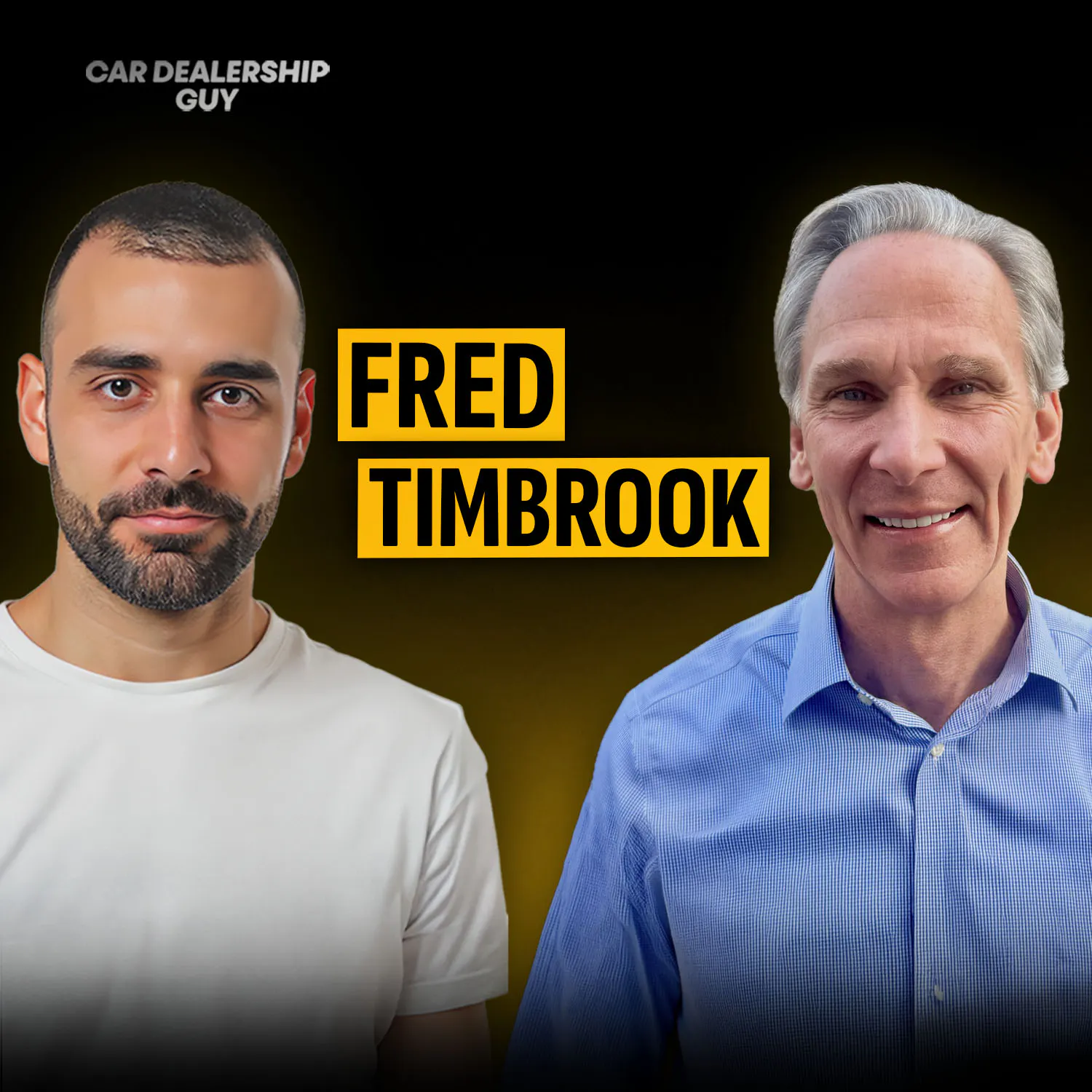
Today I'm joined by Fred Timbrook, CEO at Timbrook Automotive.
01:15
While Metro dealers face mounting margin compression
01:18
and high volatility, Fred is bucking the trend
01:21
by expanding deep into rural markets
01:23
and high margin ancillary businesses
01:25
like power sports and collision.
01:27
He breaks down the operational discipline
01:29
needed to manage a geographically spread out group
01:31
and explains why he's doubling down
01:33
on a path to 50 rooftops.
01:35
A big thank you to our sponsors
01:37
for making this episode possible.
01:38
Experian, lot links and Nomad Content Studio.
01:43
And now let's get into the show.
01:49
Fred Timbrook is on the CDG Podcast, Fred, welcome.
01:53
Thank you, yes, he's so good to be here.
01:54
I'm a new listener.
01:56
I'm a new listener, new part of this, excited to be here.
02:01
Thank you so much for the invitation.
02:03
I'm looking forward to our conversation today.
02:06
It's gonna be great.
02:07
20 rooftops later, over two decades in the industry,
02:10
closer to three, I wanna say, but you'll correct me there.
02:14
in business for going on 36 years.
02:18
But my, as far as my time at the lead of the company
02:22
has been the last 25.
02:23
So just this summer will be 25 years.
02:26
Incredible, how was March?
02:31
We closed out Q1 up, believe it or not,
02:35
we're bucking the trend a little bit.
02:37
With our existing brands up 1.3%
02:40
over the same quarter last year,
02:43
including our stores we added,
02:46
we're up about a little over 10% year-to-year,
02:48
but obviously can't really count that.
02:50
But yeah, we're up in a down market, so I'm happy.
02:56
We set a new company record in March, so...
02:58
How do you reconcile that?
03:00
I mean, last year in March had the tariff pull forward,
03:03
which impacted many people's forecasts.
03:07
You have 20 rooftops, mostly rural stores.
03:11
I like the quote you said before we started recording,
03:14
you were telling me, I got 20 rooftops,
03:16
but they're rural rooftops.
03:17
These are like two to three metro rooftops.
03:20
Yeah, 20, probably four metro.
03:23
So yeah, so we're very geographically spread out.
03:27
I grew up in a rural setting, I'm like a mountain guy.
03:33
Although, someday I'm gonna live in Miami,
03:35
I just haven't made it there yet,
03:37
but I'm gonna get there.
03:39
And if it's the last day.
03:41
Why Miami, why Miami?
03:43
Well, I really like South Beach, believe it or not.
03:47
I know a lot of people don't.
03:48
And I travel a lot internationally,
03:50
so from an international airport perspective,
03:53
it just kind of meets both of my criteria for that.
03:57
So easy on and off, great weather.
04:02
I just can't afford it yet.
04:05
Well, I have to ask you,
04:06
why do you travel a lot internationally?
04:08
Oh, so not so much for pleasure.
04:11
My wife and I do a lot of international work,
04:15
So in the last, shoot, since 2025,
04:19
it was in India, Pakistan, Africa,
04:23
several Central American countries.
04:26
So we do a good bit of international work
04:30
and have some pretty interesting stories that go with that.
04:35
I'm guessing faith-driven work.
04:37
Yes, yeah, very much so.
04:39
Faith-driven, it could be anything from,
04:43
we feed a lot of people.
04:45
And so I don't, it's just like the give.
04:48
I mean, anybody can give,
04:49
and I encourage people to give.
04:52
So we need people to support things,
04:54
but I think there's another value that when you go
04:58
and you actually hand things out yourself
05:00
and you love people and people that have no chance whatsoever.
05:06
We feed people, we share,
05:09
well, I don't know what faith you are,
05:11
but I'm a Christian, we share the gospel with people.
05:15
We feed people, we clothe them,
05:18
house them, we do orphanages.
05:21
So it's a myriad of things.
05:24
And I think every trip's just a little bit different.
05:28
So I'm Jewish, it's actually Passover right now.
05:31
And I thought a lot about this conversation.
05:33
I actually reached out to someone on our team
05:36
who is extremely close to Christian faith
05:39
because I said Fred is a first of his kind
05:43
on the CDG podcast who is a minister,
05:46
but also a dealer principal.
05:48
I haven't had that conversation yet.
05:51
So car dealers and attorneys here,
05:54
pastors, priests here,
05:57
like how do you reconcile that?
06:00
You asked earlier, how do I reconcile
06:03
being up in a down market?
06:05
Like how do you reconcile being a pastor, car dealer?
06:07
Well, tell me about it, like what, how did this happen?
06:11
Right, where did this, give us,
06:13
I wanna understand what went through your mind
06:15
over these past couple of decades as you're,
06:18
you know, you rose through the dealership world,
06:21
built a spectacular group here, 20 plus rooftops,
06:25
and as you mentioned, you're bucking the trend right now.
06:27
But you also have this another,
06:28
this massive part of your life
06:31
where you're leading a community in,
06:34
I wanna say Maryland, that's where your church is.
06:37
Tell us about that story.
06:39
Yeah, so the, you know, I kinda,
06:43
you know, some people will talk about that,
06:45
you know, they had this epiphany moment and God,
06:49
you know, they had, they saw a light from heaven
06:51
and God called them into, to ministry.
06:53
Mine was not like that.
06:55
I ended up, you know, I've done a lot of teaching
06:58
in different churches over the years
07:00
and my wife and I helped launch a church 11 years ago.
07:05
The church I'm now the senior pastor of,
07:06
which I wasn't at the time,
07:08
it was just part of the launch team.
07:10
But that church was based on,
07:13
and actually before it became a church,
07:14
we operated two recovery homes for addicts.
07:17
So even though my wife and I,
07:20
neither of us are former addicts,
07:21
we ran recovery homes for addicts,
07:24
men's home and a women's home, residential.
07:27
And wow, you talk about getting a baptism in fire
07:32
when you begin to help people come out of a life of addiction,
07:36
not just to break addiction,
07:38
but to holistically see healing in every area of their life,
07:43
even to the point where we hire and employ a lot of those
07:48
that came through that.
07:48
So I kind of fell into it.
07:51
We launched that church.
07:54
The gentleman that was the pastor at the time
07:56
had a bit of a moral failure, had to step down
07:58
and I guess you might say the rest is history.
08:01
And I kind of found, although I love the car business,
08:06
I actually love this a little bit more,
08:08
but it takes money to do a lot of the things we like to do.
08:14
So, you know, a lot of people say,
08:16
well, I have a few habits.
08:17
Well, this is one of my habits
08:18
and I have to work to support my habits.
08:20
So, you know, I work, we sell cars
08:24
and we use so much of what God's given us
08:27
to then be able to do a lot of things,
08:30
not just locally, not just nationally,
08:33
but literally globally around the world.
08:36
And it's just been a tremendous ride
08:38
and not one that I ever imagined.
08:41
I mean, I was gonna be a stockbroker.
08:43
So, this was not my, not the path I thought I'd take.
08:48
I'm guessing you did not grow up like this.
08:50
Well, I grew up, I actually started working
08:54
in a car dealership when I was 14 years old.
08:57
My dad was a general manager of a Pontiac Cadillac store.
09:02
I had no desire whatsoever to be in the car business,
09:08
but I spent a lot of time there as a kid.
09:11
I would even go to work with him in the evenings
09:13
and sit there and watch the TV,
09:15
have a little crank knob on it.
09:18
But it just wasn't something I ever wanted to do,
09:21
but when I was in college, the dealer passed away.
09:23
My dad ended up buying that store in 1990,
09:27
Pontiac Cadillac store.
09:29
And so, by the time I graduated,
09:31
my degree was in finance.
09:32
I really was gonna go really a different route.
09:35
I thought, well, we're off to a good start here.
09:38
Started in the car business at 14,
09:40
the same degree in finance, the same.
09:43
I went in full-time.
09:45
I started then when I was 22 full-time writing estimates
09:48
in the body shop and spent the next
09:51
probably nine years in fixed operations.
09:54
So my start, unlike most dealers today,
09:57
I started on the back end of the business,
09:59
not the front, so a little different perspective
10:02
coming into the role that I now am in.
10:06
Now, in terms of your philanthropic contributions
10:09
and involvement, would you say you put more weight
10:12
on your time or your money?
10:14
I know it's kind of arbitrary to what I'm asking this,
10:18
but I'm trying to understand,
10:19
you travel a lot, you minister in your church, right?
10:23
So it seems like you are, compared to the average,
10:27
and again, I'm using my own personal assumptions here.
10:32
It seems like you spend a lot of time
10:34
with just philanthropic involvement.
10:37
Am I correct with that assumption?
10:38
Yeah, unfortunately, I can't claim time
10:41
on my tax return, but definitely if I could,
10:46
the time is the most valuable.
10:49
I mean, they make more money every day somewhere.
10:51
I mean, you can always generate additional income.
10:54
You cannot, time's gone, it's gone.
10:58
So if I'm traveling and I've got 32 hours
11:02
or 34 hours to get to an event,
11:06
I hit the ground running, I don't stay long,
11:09
I don't stay extra.
11:10
I mean, we get in, we get out, and I come home.
11:13
So time is really valuable, but I think it's both.
11:19
I applaud people that serve.
11:21
I want our employees to serve the community.
11:24
I want them to serve in athletics and faith-based things
11:28
and whatever, but I want people to give too.
11:33
I don't think it's one or the other.
11:34
I think there's a combination of both
11:36
to where it's not just giving what we've been entrusted,
11:40
but also giving of yourself.
11:42
This episode is brought to you by Experian Automotive.
11:45
If you're an automotive marketing,
11:46
you know how fast things change.
11:48
Buyers move, vehicles turn over,
11:50
and yesterday's data doesn't cut it.
11:52
That's where Experian Automotive Marketing solutions come in.
11:56
They help you find in-market buyers
11:57
before your competitors build stronger relationships
12:00
with your customers and drive more traffic
12:02
back to your service lane.
12:04
With powerful insights across vehicle,
12:06
consumer, and credit data,
12:07
you can reach the right people at the right time
12:09
and turn every interaction into an opportunity for growth.
12:12
From first purchase to lifelong loyalty,
12:15
Experian helps you make every marketing move count.
12:18
Learn more by clicking the link in the show notes below.
12:20
Tell me more about operationally.
12:22
You have this huge part of your life,
12:24
as you mentioned, involved with your faith,
12:27
and how does that impact your operating style?
12:31
Do you hire based on looking for certain values?
12:38
I'm sure you do, but what are they?
12:39
Tell me a little bit about how it's shaped your role
12:42
as a dealer principal.
12:46
So I'm not the same guy I was 25 years ago.
12:50
God's completely changed my life,
12:52
but I was a very abrasive.
12:55
I'm still driven, but just driven,
12:58
I'll probably have a better character now.
13:01
I don't necessarily go after a certain characteristic
13:05
I mean, I look for obviously attitude and work ethic
13:09
and all those things that everybody else does,
13:11
but I have a few people, very few that work for me
13:16
that also attend the church I pastor
13:19
because a couple reasons.
13:21
One, I found out that people think there's a golden handcuff
13:25
that doesn't exist.
13:27
They think, oh, we believe the same,
13:29
therefore I don't have to work as hard.
13:31
And I think differently.
13:32
I think if we believe the same,
13:34
you should actually work harder, not less.
13:37
And so most people don't want to be held
13:40
to the higher standard.
13:43
So for that reason, then also it's pretty tough
13:46
when you have to fire somebody that goes to your church.
13:50
That's never a pleasant thing.
13:52
That hey, goodbye, we're parting ways,
13:55
we're going a different direction.
13:57
I love you, see you Sunday.
13:58
You definitely have to create some insulation, right?
14:01
At least I think that's what comes to mind.
14:03
Like there's, you know, it's just like hiring family, right?
14:06
Like you report to someone else in a company,
14:08
they're your direct manager,
14:09
like and ultimately they're accountable.
14:12
I'm not involved, obviously I'm involved,
14:14
but there's a layer that keeps it objective.
14:18
And I think it's a really good practice
14:20
because then it's, you take some motions out of the picture.
14:22
And I've worked with lots of family and friends
14:26
And I can tell you that some of it
14:27
has been extremely successful and others have not,
14:30
but it really depends on the way it's structured.
14:33
I was so fortunate to have, my dad was my best friend.
14:36
He's still alive, we just don't work together anymore,
14:38
but we had such a dynamic relationship
14:42
that most father and sons I think don't get to experience.
14:45
Even for the last, I don't know, seven years
14:48
that he worked for me, we shared an office,
14:50
the same room, desk to desk, and shared the same space.
14:56
And we just had a great relationship, little different.
15:00
You know, I've worked with my dad,
15:01
I work with my daughters now, but you know,
15:05
what was kind of odd was my dad was 54
15:07
when he sold me the business.
15:10
I was 31, he was 54.
15:12
And he said, I think you'll be a better leader
15:14
for the company than I am.
15:16
You're more of a risk taker, you're more financially astute.
15:20
I'm willing to sell you the company, I'll work for you,
15:22
but you're gonna pay full sticker.
15:25
So he said, I want you to feel the weight responsibility
15:30
of debt, I want you to feel the weight responsibility
15:32
of what it means to have to buy something, pay for it.
15:37
The futures of everyone that works on you,
15:40
rises and falls on your success.
15:42
And so at 31, he sold me the company
15:45
and then we switched hats,
15:47
which you wonder how that would be,
15:49
but he became a great number two.
15:53
In my mind, he was still number one.
15:55
And I honored him to the day that he left and quit working,
16:00
but on paper, he was number two,
16:03
but always number one in my book.
16:05
And how many rooftops at the time you sold a business to you?
16:09
Just one, we had that was the Pontiac Cadillac business.
16:14
He moved to Florida and I think maybe it was 0405,
16:19
but he bought at the top of the market,
16:20
he ended up selling an 08 at the bottom and moved back.
16:23
But he moved to Florida,
16:25
we acquired about three more stores in 2007.
16:28
So I called him, I said, hey dad,
16:30
you're getting a paycheck every month.
16:33
Would you like to actually come back to work
16:35
and feel good about it?
16:36
And he goes, I would, I really would.
16:38
So he moved back at that point.
16:41
And then he took a few years off
16:43
and then we worked together for the next 10 years again.
16:47
It was very instrumental in helping us grow.
16:51
There's nothing like a good old personal guarantee
16:53
to get you right away, kickstarted and figuring things out.
16:58
And you got to solve that next problem
17:00
because there's no one bailing you out.
17:02
It's the end of the line, it's do or die.
17:04
I actually wanted to ask you about
17:06
private equity backed dealer groups.
17:08
I assume that you're working all with your own capital.
17:11
Am I correct to that?
17:13
Fortunately, unfortunately, yes.
17:15
There's definitely pluses and minuses to both,
17:18
but I've just kind of done that very much similar
17:22
to a real estate model, build equity,
17:24
pull the equity user for the next down stroke,
17:26
build equity, and we've been able to grow that way.
17:29
It becomes, it's difficult to buy a big deal
17:34
and would be literally impossible to buy
17:37
a bigger deal that way to this point.
17:40
Other than buying from the bank and borrowing
17:43
from the bank along with personal capital,
17:45
we've taken no private equity up to this point,
17:47
but I'm not saying we wouldn't, but we haven't.
17:51
But is that a reason you've gravitated
17:53
towards these smaller stores,
17:54
or has it been regional proximity,
17:56
which has been the driver of that?
17:59
So, I think, I want to say it's my specialty
18:04
because I'm not opposed to going to bigger markets,
18:07
but I like rural markets.
18:09
I like the quality of life that you can have
18:14
We're geographically spread out somewhat,
18:16
so maybe 250 miles would be my farthest drive,
18:21
but in a rural market, there's time.
18:26
We talked about, you asked me earlier,
18:29
what's more valuable, the money or the time?
18:31
Well, time hands down 100% of the time
18:34
is always more valuable.
18:35
So, if I have less of a commute,
18:38
if I have spent less time in traffic,
18:40
if it doesn't mean that I work less,
18:43
it means I work harder, and the harder I work,
18:46
I can support a better life.
18:47
What good is it if I spend 16 hours a day at work
18:53
and then commute back and forth and get up
18:54
and do it the next day, and I have no life?
18:57
So, for me, the quality of life, for me,
19:00
my family, our employees, their families,
19:04
like it's of utmost importance.
19:07
Tell me also about this march over performance, right?
19:13
How are you achieving this growth
19:14
at a time when many are declining,
19:16
especially with so many brands in your brand mix?
19:21
How are you doing this?
19:22
Like, where are you bucking the trend?
19:23
Is it lower cost structures in the rural markets?
19:26
Is it, you know, ability to pull customers
19:30
Like, what's the secret sauce for you?
19:32
Here's another advantage of a rural market.
19:36
So, highs typically aren't as high,
19:39
lows typically aren't as low.
19:40
So, a lot of the, sometimes what we'll see,
19:43
and I tell you we're up in the Q1,
19:46
but sometimes we're on a tail behind
19:50
what's happening nationally.
19:52
So, I believe we're gonna continue to grow this year,
19:56
but we're seeing great growth this year
19:59
in our two Honda stores up significantly.
20:03
We're this, so Q1 for us, driven by Honda cars,
20:09
and even Honda PowerSport.
20:11
So, motorcycle division is up 22% first quarter.
20:16
So, Honda this year for us is driving the most,
20:22
has the biggest impact on our increase this year
20:24
from a company standpoint.
20:27
How is the, how are the economics of PowerSports?
20:30
Like, why even do PowerSports?
20:32
Why invest your time in that arena?
20:34
So, return on investment is better
20:36
than a car business.
20:40
It has a very low cost of entry.
20:43
So, for instance, working cap for,
20:47
we're what's called a level five powerhouse,
20:49
which is the biggest powerhouse
20:52
that you could build for Honda.
20:54
They have five levels.
20:55
We have two of those, one in Virginia, one in Maryland.
20:59
But, it's a lower cost entry.
21:01
The PowerSports industry as a whole
21:04
has always been about 25 years behind the car business.
21:07
So, for us to move into the PowerSports business,
21:10
we initially had a leg up.
21:12
I think you'll see over the last 10 years
21:14
has been a lot of car dealers
21:16
adding that piece to their portfolio,
21:19
probably more Harley stores than Honda.
21:23
But, for us, we're in the mountains.
21:25
So, I need side-by-sides, I need four-wheelers.
21:28
We need street bikes and adventure bikes
21:31
and all those things.
21:32
But, here's what never fails to amaze me.
21:36
Buying a PowerSport, it's a pleasure purchase.
21:39
Like, you want to buy a four-wheeler.
21:43
You have to buy a car.
21:44
That's a good and bad thing.
21:46
That's a good and bad thing.
21:47
Right, so, I have seen this so many times.
21:50
We're trying to close a deal.
21:51
The customer says, I can't pay $400 a month, you know?
21:55
And, for whatever reason, we don't do a good job.
21:58
We don't close the deal
21:59
because they can't afford $400 a month.
22:01
But, then they go a quarter mile up the street
22:03
and spend $500 a month on a side-by-side.
22:06
So, because it's exciting, it's a fun buy, you know?
22:13
So, it's been a great addition.
22:16
You know, we did 189 PowerSports last month
22:20
between two stores.
22:22
And, so, it's a, you know, it's not a big revenue
22:26
because obviously, some of those could be $2,000 a unit,
22:30
some could be $35, but revenue-wise,
22:33
it's not a lot of revenue, but it's a fun business.
22:37
It's a nice little piece.
22:38
It's very profitable.
22:40
I'm looking at another PowerSport store right now.
22:43
Oh, you're looking to grow it.
22:46
That's where, you know, I could hire anybody to sell cars,
22:49
but you have to have a bike person to sell bikes.
22:52
So, it's a little bit more of a niche.
22:55
I call it here at CDG.
22:57
I call it vitamins versus painkillers.
23:00
What's a painkiller?
23:01
A vitamin, you might need it.
23:02
You might not, a painkiller, you have to have it,
23:05
but you're actually bucking that statement
23:09
because what you're saying is that
23:11
they'll give you a hard time on that $400 payment,
23:14
but then when they really want something, you know,
23:16
that something pleasurable, like this four-wheeler
23:20
or whatever it is, they'll just pay all the money for it
23:22
because they want it.
23:23
Yeah, it kind of bucks the theory of any elastic demand.
23:28
Like people have to have a car, right?
23:30
Like this goes against basic economics,
23:34
but I'll run it while it works.
23:37
This episode is brought to you by Lotlinks.
23:39
What if you had a strategist that could actually look
23:41
at your inventory, your pricing, your market,
23:44
and real shopper behavior?
23:46
And then tell you exactly what to do next.
23:50
It's the industry's first AI-powered inventory strategist
23:53
built specifically for car dealers.
23:55
It analyzes your Vin-level data and surfaces
23:57
which vehicles are at risk,
23:59
where the opportunity is in your market
24:00
and what actions you should take.
24:02
Vin by Vin, no digging through reports, no guesswork.
24:05
And the best part, it's free for dealers.
24:07
Just head to lotlinks.com slash LotGPT and request access
24:11
or click the link in the show notes below.
24:13
I think this entire topic of this dealer diversification
24:18
has fascinated me because we are at a time
24:21
of just historic disruption in this industry
24:24
or at least attempted disruption.
24:26
As I've mentioned, right?
24:27
Electric vehicles, shifting powertrains,
24:30
direct to consumer, right?
24:32
Scout and Sonia feel on all these kind of challenger brands.
24:36
And just in general,
24:37
all these alternative forms of mobility, right?
24:39
You have ride sharing,
24:40
now you have autonomous ride sharing.
24:42
Tesla, full self-driving.
24:44
It's just this astronomical,
24:48
astronomical of all these forces
24:50
that are tackling mobility
24:52
because it's such a big space, everyone needs to move.
24:56
And so this topic of diversification has fascinated me.
24:59
One thing I wanted to ask you about,
25:00
given I think I've seen you lean into this is collision.
25:04
I know you have a pretty meaningful collision business.
25:07
Tell me about that.
25:08
When did you start that business?
25:10
What's that like for you?
25:11
We do, we have one standalone collision center
25:15
that was birthed out of what's now our GMC store.
25:18
It was part of that initial original store
25:20
I bought from my dad.
25:21
We have three of our dealerships
25:23
that have body shops, collision centers inside of the store.
25:27
But we have one standalone.
25:29
Literally started out, that was my first job.
25:32
So it kind of was always my baby.
25:35
You know, I learned how to write estimates.
25:37
It was part of the Pontiac store at the time.
25:39
And I'm talking back in the day
25:41
when you had like triplicate, right?
25:43
You'd write the estimate by hand,
25:45
you had a book, you looked up the parts,
25:47
you looked up the labor, one copy goes to the customer,
25:50
one goes on the shelf and one goes with the R.O.
25:54
So, but I found, but I'd come to work
25:57
and I just got out of school and at 2.30 every day,
26:01
the guys would take duct tape and make a ball out of duct tape
26:05
and pull a 55 gallon drum in the middle of the shop
26:08
and play basketball.
26:11
Yeah, very productive.
26:13
If you like to play bad,
26:14
and none of them were going to the NBA.
26:16
Like they didn't have a shot.
26:18
So I thought we'd definitely have to have
26:20
a better use of time.
26:21
So I began to become a student
26:22
of the collision business at the time.
26:25
And we grew that shop about three times
26:29
where we kept adding onto the building
26:31
to eventually one day.
26:33
We moved into, bought a building
26:35
that was 42,000 square feet,
26:38
was a former department store, sits on six acres.
26:41
And we launched, we launched,
26:43
moved it as an independent collision center there.
26:46
We currently do about 3,500, 3,300 hours a month
26:52
out of that business.
26:55
Now it currently doesn't,
26:56
it's not all exclusive to collision center.
26:59
Our power sports store sits in half of that
27:01
and collision center sits in half of that.
27:04
So we kind of tightened things up
27:05
once we added the power sports in 2013.
27:08
And how does, and how are you optimizing that?
27:11
Or I should ask, how different is it
27:13
from traditional service department, right?
27:15
Are you, when it comes to optimizing it
27:17
to its full potential.
27:19
A harder business today than it was when I did it.
27:22
You know, when you're at a,
27:23
I wouldn't say at a fixed hourly rate,
27:27
definitely at a fixed margin on parts
27:28
because unlike on the car side under warranty
27:31
where you can get over retail,
27:33
not so on the collision side.
27:35
So just like everything today,
27:39
you know, speed is everything in the car business.
27:42
Speed has always been everything in the body business.
27:45
So the quicker I can do something,
27:47
you know, I might be fixed on what I can average per hour,
27:50
how much I can make on the parts,
27:51
but the more throughput I can get in and out
27:53
in a given day with the fewest amount of people,
27:56
the more money we're gonna make at the end of the day.
27:58
And it's been a very profitable business
27:59
for the last 30 years.
28:01
One of the questions I picked up from circles
28:04
are private dealer chat groups
28:06
that we operate here at Car Dealship Guy,
28:08
which you should join by the way,
28:10
is what are your levers for growing this collision business?
28:15
I think many dealers have collision businesses
28:17
and are interested in scaling them,
28:19
but what levers are you pulling?
28:21
Again, I go back to speed.
28:23
What drives business and revenue growth
28:27
in the collision business is speed.
28:29
So if I'm an insurance company, I'm dispensing,
28:32
and I've got an option of shop A or shop B.
28:35
Shop B is backed up, they're slow.
28:38
I'm gonna have a rental car for four weeks,
28:40
or I've got shop, the shop over here,
28:43
and they're just in time,
28:46
I'm gonna have it in and out in a week.
28:48
That drives where that vehicle goes.
28:51
So you optimize, you reduce your turn time,
28:56
and it ranks you higher with the insurance company,
28:58
and in turn, you're gonna get more assignments,
29:01
and at the end of the day, do more repairs.
29:03
So again, everything efficiency drives that business.
29:07
If you're slow, you're gonna starve.
29:09
When you think about the future of the business,
29:12
where are you, what do you think is gonna,
29:14
has the most growth potential for being a dealer?
29:18
What part of the business are you most bullish on?
29:21
And ask more specifically,
29:22
are you more bullish on the ancillary services,
29:24
such as collision businesses,
29:26
parts businesses, et cetera,
29:29
or sticking to core use cars, service.
29:33
Again, it's a pretty broad question,
29:35
but where is the pot going in your mind?
29:37
I always think there's more opportunity
29:39
in the finance department.
29:40
We can continue to grow that business,
29:44
but that service and parts business is consistent.
29:50
It's growth, but I wanna say it's slow growth.
29:53
It's just slower growth.
29:55
I'm more bullish on the new car business,
29:58
but with the caveat that I couldn't be that bullish
30:03
unless I had a solid fixed ops,
30:06
and wouldn't be that bullish.
30:08
Yeah, so moving units to support
30:10
other parts of your business.
30:11
Yeah, selling cars, it starts the wheel turning.
30:17
Nothing happens to we sell a car.
30:19
Nothing happens to we sell a car, absolutely.
30:21
It's what gets the wheel going,
30:23
but other things sustain that wheel.
30:25
But until we sell a car, we've gotta sell cars.
30:28
When we sell cars, all those other pieces
30:30
start to play into it.
30:32
I heard you have a story about Fred Beans.
30:37
Did you know Fred did 100 push-ups
30:39
on his 80th birthday?
30:40
I did, someone told me that on a previous podcast.
30:43
So here's a funny story.
30:45
We're flying to Bermuda,
30:48
and my wife and I are sitting next to each other,
30:51
and Fred and his wife, Gisela, are a few seats back.
30:54
He walks up, my wife's named Kristen, he says,
30:56
hey, Kristen, go back and sit.
30:58
He goes, hey, Kristen, go back and sit, Gisela.
31:01
And so she does, you know, who tells Fred no?
31:03
And he plops down next to me.
31:06
So we're going to Bermuda.
31:07
I'm wearing shorts and flip-flops,
31:10
like anybody normally would going to Bermuda.
31:12
Fred's wearing his traditional gray slacks,
31:15
white shirt, blue sport coat, and he sits down to me.
31:18
He's got his black steel-toed shoes on.
31:21
And he looks at me, he kind of like looks me up and down.
31:25
And he says, Freddie, what are you doing?
31:27
I said, Fred, what do you mean?
31:29
I'm sitting here on the plane next to you,
31:31
you just displaced my wife.
31:34
And he goes, no, I mean,
31:35
what are you doing wearing those flip-flops?
31:37
I was like, well, we're going to Bermuda.
31:40
I don't know, what do you mean?
31:42
What should I wear?
31:42
You know, if the plane goes down,
31:44
you shouldn't be wearing flip-flops,
31:46
you need steel-toed shoes.
31:48
And I'm like, well, Fred, if the plane goes down,
31:51
I don't think I'll be worried about wearing flip-flops.
31:53
I got bigger issues in my mind than that.
31:55
So he, like, you know, of all things, you know,
31:59
he was worried about the flip-flops and the plane going down.
32:03
Look at that attention to detail.
32:05
That adds up from the stories I hear of, you know,
32:08
like stopping at the dealership to pick up one piece of trash.
32:11
I love that, you know.
32:12
Yeah, he's a great guy.
32:14
Focusing on the details.
32:15
To an obsessive level.
32:18
I always pick his brain every chance I've had.
32:21
I want to understand, like, the scale of your stores.
32:24
Like, how big or small are these stores?
32:27
Tell me about that.
32:30
picking out the PowerSport store,
32:31
we have 18 car rooftops.
32:34
We sold just over 1,000 units last month.
32:37
So you can do the math,
32:39
we're doing a little over 50 units per store.
32:42
So now I've got some stores that sell 30 cars a month,
32:45
some that might sell 100.
32:47
And so when I say small, you know, they're small.
32:52
Some might have 14 or 15 employees,
32:54
and the largest would have 45 to 50.
32:58
So definitely not large by any stretch.
33:03
But, you know, somebody told me once one time,
33:06
Mike said that he said it takes as much work
33:09
to run a small store as it does a large store.
33:11
And I didn't quite understand at the time,
33:14
but, you know, I think it does.
33:17
I mean, there's just things that need done.
33:20
And it doesn't matter, you know,
33:22
a lot of times you need one person
33:25
to cover multiple jobs, it's the same.
33:28
There's a fixed cost isn't the right word,
33:31
but there's a fixed amount of effort, let's call it,
33:34
that has to be done no matter what size the store is.
33:38
And so that does lend its challenges
33:40
to running smaller stores.
33:41
This episode is brought to you by Nomad Content Studio.
33:45
Many dealerships are still getting social media
33:48
They either ignore it, post inventory photos,
33:51
or hand it off to someone on staff with no strategy.
33:54
Meanwhile, the dealership down the street
33:55
is racking up millions of views
33:57
and turning those views into real car sales.
34:00
That's where Nomad Content Studio comes in.
34:02
They're the team behind the dealers you actually see online.
34:05
Their system trains a videographer,
34:06
tells you exactly what, who, and how to film,
34:09
then storyboards, clips, they're all footage,
34:12
and post a content daily across all your social platforms.
34:15
They literally do it all for you.
34:17
They're the same team behind some of the top dealerships
34:19
and biggest automotive influencers today.
34:22
I believe in them so much that I even personally
34:25
If you want your dealership to be next,
34:27
head to TryNomad.co, that's TryNomad.co to book a call,
34:32
or click the link in the show notes below.
34:33
Are there any specific things you do to, you know,
34:37
just improve that operating leverage, right?
34:39
Whether, you know, strong incentives across stores,
34:42
sales across stores, or vehicle swaps.
34:45
Definitely swap vehicles, we definitely cross sell.
34:48
Depending on the proximity, you know,
34:50
some of our stores are close.
34:52
Some are geographically spread out really in the middle,
34:56
literally in the middle of nowhere.
34:57
So sometimes we have opportunity to allow one person
35:02
to manage, you know, multiple, you know,
35:04
multiple rooftops, or, you know,
35:07
we have the ability to pull people
35:08
from one store to another, so that's a benefit.
35:12
The, I think the toughest challenge,
35:16
you know, we have some advantages,
35:18
we have, you know, our rent's obviously lower,
35:20
the cost of living's lower, the cost of real estate's less,
35:23
but where, I think the biggest challenge for a rural store
35:27
is when you're buying products,
35:29
whether it be from a manufacturer or from a vendor,
35:31
that the cost per rooftop charge.
35:35
And so a lot of times, it would be nice
35:39
if those costs per rooftop were scaled
35:42
based on the size of the store, which most are not.
35:45
So if I'm gonna pay four grand a month for,
35:48
let's just say, V-Auto, you know,
35:50
it's easier to swallow that on a store
35:52
that's done 100 use cards a month
35:54
versus one that might do 15.
35:56
And so that per rooftop charge probably becomes
36:01
the biggest challenge in being able to operate
36:06
a small store and do it officially.
36:08
Yeah, and not picking on V-Auto,
36:10
but I think in general, dynamic vendor pricing
36:13
just makes a lot more sense to your point,
36:15
because, you know, having a fixed fee per store,
36:19
that doesn't, that's not, you know,
36:21
emblematic of your usage of this tool.
36:24
That doesn't, you know, it doesn't make sense in many cases,
36:27
like in your case, it's, you're simply paying a lot more
36:31
for less depending on what tool you're using
36:34
because it's per rooftop.
36:36
I think the per rooftop model is not great.
36:38
I'm curious to know what others are doing out there
36:41
to fix that, but it's, you know, a dynamic.
36:44
If you look at all these LLMs, right,
36:45
like all the AI tools, you know, Claw, ChatchiBT,
36:48
they charge you by tokens, right, it's by usage.
36:51
So it's, there's really great alignment.
36:54
The more you use, the more you pay.
36:56
And I'd be willing to pay more as I used it more
36:59
or pay less as I used it less,
37:00
that if we could get that model in vendor pricing
37:05
in the car business, it would be great.
37:07
And I, but of course, a larger deal.
37:09
The problem is many businesses don't like it.
37:11
Many businesses don't like it.
37:13
Yeah, well, it appeals to a smaller, smaller store,
37:15
not definitely not large.
37:16
Because, well, no, even on the vendor side, right,
37:19
the ones who are making the prices,
37:20
because for them or any company out there,
37:23
you're now adding a level of unpredictability
37:28
And SaaS businesses are valued at their values
37:31
so highly because they're more predictable.
37:34
So, but look, models have been tried in every industry.
37:37
I mean, remember, do you remember,
37:38
I don't know if you've heard of Metro Mile,
37:39
they were doing like pay per mile insurance.
37:42
They went out of business.
37:45
Well, I'm renegotiating our CDK contract right now.
37:49
And I'm trying to put together a core product
37:52
that works for every store.
37:54
And it's tough to do.
37:56
You know, if something, let's just say it's $1,500 a month,
37:59
it may be great, but it may not fit in a very small store.
38:05
We just can't swallow it.
38:06
And so their answer was this, well, what we could do
38:08
is up the price to your larger stores and redo it.
38:10
I was like, well, that's not fair.
38:12
That's not fair to the general manager
38:14
or partner at the larger store to do that.
38:16
So there's gotta be a better solution.
38:19
We'll figure it out.
38:19
But in the meantime, we're still selling cars
38:26
What do people not know about you, Fred?
38:29
What should we know about you?
38:30
Other than the fact that you went with Fred Beans to Bermuda
38:33
and you do lots of, you do lots of, you know,
38:35
global philanthropic work.
38:39
There has to be one other part of Fred Timbrooke
38:41
that we don't know.
38:42
Something people don't know about me.
38:49
You're not talking about weighing cars
38:52
No, no, I step on the scale every day.
38:55
Is it just like a health thing or what is it?
38:57
Yeah, well, the old thing you can't manage
39:00
what you don't measure.
39:01
So, you know, a lot of people are like,
39:02
why don't I get on the scale when I go to the doctor?
39:04
I'm like, well, what about between now and a year from now?
39:06
So, you know, when we talk about, you know,
39:10
that building employees, building employees
39:12
is more than just training.
39:14
I mean, I want to take a holistic view.
39:17
What good is it to be the most skilled guy in the room
39:19
if you're depressed, broke,
39:21
and you have a heart attack next year?
39:24
So, like, health is a big deal to me.
39:27
In 19, let's see, 2005, 21 years ago,
39:34
I've kept it off for 21 years.
39:37
And I'm within two pounds of that weight 21 years later.
39:42
And I believe that, you know,
39:44
if we're going to run long and run hard
39:48
and be effective, you've got to be healthy.
39:52
And so that's staying healthy is a big part of my life.
39:55
I couldn't agree more.
39:57
It's very important to me too.
39:58
When we chat in 12 months, 18 months,
40:01
and we'll chat before that too,
40:03
but when we do an official podcast then,
40:05
will you have more stores, fewer stores, same amount?
40:09
We're going to have more stores.
40:10
We're going to grow to 50 stores by the time I turn 72.
40:13
So our growth goals were, I'll be 56 this year,
40:18
our growth goals were to be at 25 stores
40:19
by the time I turn 62, which will be there
40:22
well in advance of that.
40:24
And then to be at 50 stores by the time I turn 72.
40:27
And then I think it's going to be time for me
40:29
to take a backseat.
40:30
But I want to make it to 72.
40:32
I want to work at 50 straight years.
40:34
I started full time at 22.
40:36
I'm going to run hard at 72.
40:40
And yeah, so 50 years, 50 stores,
40:43
we're going to do it.
40:45
So yes, we'll have more.
40:46
We're, we look at stores every month.
40:50
And obviously some, you know,
40:52
some we move forward with, some we don't.
40:55
I've been row-ferred, I've been turned down,
40:58
I've been accepted, so been through all of it.
41:02
Amazing story, Fred.
41:04
And thank you for coming on the podcast.
41:05
This has been super fun conversation.
41:07
So Fred, Timbrook, Timbrook Automotive.
41:10
Fred, thank you so much for coming on.
41:11
Yeah, it's good to have.
41:13
Thank you for having me today.
41:14
I appreciate you taking the time to talk to me.
41:21
Hope you enjoyed that episode.
41:22
Please give the podcast a rating.
41:24
Consider subscribing to the show
41:25
and check the show notes for links to what we talked about.
41:28
Thanks for tuning in.
41:29
I'll see you guys next time.