
Building A 20 Million Auto Repair Brand!
About this episode
Hosts welcome listeners and then dig into how Jesse Jackson built a standout auto repair brand—starting from paintless dent work and expanding into brick-and-mortar shops. The conversation covers dealership training, acquiring shops, and scaling to “zero to twenty million” in about four years. Along the way they discuss execution over analysis, hiring the right people, customer experience, and even EV diagnostics. They also touch on technician shortages, plus a “pink wall effect” branding refresh and a quick motorsport/pace-car detour.
You can feel it when a business is built on momentum instead of luck and Jesse Jackson brings that energy in a big way. We talk with the founder of Mango Automotive about how she jumps from software and automotive industry data into the brick-and-mortar world, buying her first auto repair shop while still learning what it truly takes to run a service bay, lead a team, and win customer trust. The result is a fast growth story that’s equal parts mindset, operations, and gritty daily execution.
We dig into what actually moves the needle in an automotive repair business: elevating the customer experience, marketing with intention, and building systems that don’t fall apart as you scale. Jesse breaks down why the team that helps you reach one revenue milestone may not be the team that gets you to the next, and how hiring a strong operating partner and then hiring people “better than us” becomes a strategy, not a slogan. We also get into branding that people remember, including the clean modern feel of Mango shops and the famous “pink wall” that customers definitely notice.
If you’re curious about EV service and hybrid repair, Jesse shares a grounded take: training great technicians matters more than chasing shiny equipment. We also talk recruiting in a technician shortage and why culture, pay, weekends off, and basic respect can turn a hiring problem into a reputation advantage. Subscribe, share this with someone building a car repair business, and leave us a review with your biggest takeaway.
Be sure to subscribe for more In Wheel Time Car Talk!
The Lupe' Tortilla RestaurantsLupe Tortilla in Katy, Texas
Gulf Coast Auto Shield
Paint protection, tint, and more!
Disclaimer: This post contains affiliate links. If you make a purchase, I may receive a commission at no extra cost to you.
---- -----
Want more In Wheel Time car talk any time?
In Wheel Time is now available on Audacy!
Just go to Audacy.com/InWheelTime where ever you are.
----- -----
Be sure to subscribe on your favorite podcast provider for the next episode of In Wheel Time Podcast and check out our live multiplatform broadcast every Saturday, 10a - 12nCT simulcasting on Audacy, YouTube, Facebook, Twitter, Twitch and InWheelTime.com.
In Wheel Time Podcast can be heard on you mobile device from providers such as:
Apple Podcasts, Amazon Music Podcast, Spotify, SiriusXM Podcast, iHeartRadio podcast, TuneIn + Alexa, Podcast Addict, Castro, Castbox, YouTube Podcast and more on your mobile device.
Follow InWheelTime.com for the latest updates!
Twitter: https://twitter.com/InWheelTime
Instagram: https://www.instagram.com/inwheeltime/
https://www.youtube.com/inwheeltime
https://www.Facebook.com/InWheelTime
For more information about In Wheel Time Podcast, email us at
[email protected]
pink walleffect
"We call that the uh pink walleffect, and my businesspartner and I haverevampedeveryoneofthem withourowntwohands. Idon'tknowwhywedoit,butevenoureighthshopwejustacquired."
It’s basically a “make the shop look different on purpose” strategy. By changing something visible—like a painted wall—customers notice that the place has been updated and feels more organized.
The “pink wall effect” is a branding/operations idea: making a shop’s interior look intentionally distinctive so customers immediately recognize the business and its standards. In this episode, it’s tied to repainting/refreshing multiple auto repair shops after acquisitions to create a consistent, noticeable identity.

Chrysler Newport Phaeton
"Now,in1941,theChryslerNewportPhaetonwasthe29thIndianapolis500uhpacecar. Itwasadualcalengine. Itwasactuallyconsideredthefinalgreatpre-warAmericanluxuryautomobile."
This is a Chrysler luxury car from the pre-war era. Here it’s mentioned because a Chrysler Newport Phaeton served as the Indianapolis 500 pace car in 1941.
The Chrysler Newport Phaeton is a pre-war American luxury car from Chrysler. In this episode it’s discussed as the 1941 Indianapolis 500 pace car, and the host calls it a dual-camshaft V8 with a reputation as a “final great pre-war American luxury automobile.”
dual cal engine
"Now,in1941,theChryslerNewportPhaetonwasthe29thIndianapolis500uhpacecar. Itwasadualcalengine. Itwasactuallyconsideredthefinalgreatpre-warAmericanluxuryautomobile."
The host is describing the engine design as having two camshafts. Camshafts control when the engine’s valves open and close, and having two can help the engine run better at higher speeds.
“Dual cal engine” appears to be a transcription error for a dual-camshaft (dual overhead cam) engine description. In engine terms, “dual cam” means there are two camshafts controlling the intake and exhaust valves, which can improve breathing at higher RPM.

Ford Mustang
"So1964,theuh48thIndianapolis500,theFordMustang. Now,thiswe'vetalkedaboutthisbefore,butthiswaspartofthatrolloutpackagefortheFordMustangwheretheyhaduhtheWorld'sFairwasinvolved,theyhadallthedealershipsacrossthenation."
The Ford Mustang is one of the most famous American cars ever made. In this segment, it’s mentioned as the Indianapolis 500 pace car in 1964 and as part of a big nationwide marketing push.
The Ford Mustang is a landmark American pony car, and the episode ties it to the 1964 Indianapolis 500 as the pace car. The host also links Mustang’s early popularity to a coordinated rollout involving dealerships nationwide and the World’s Fair.
ponycar world
"Everybodydideverythingatonetime,andthat'sreallypartofwhatkickedofftheponycarworldandreallymadetheMustangsopopular. Thenuhthe49thIndianapolis500in1965,aPlymouthSportFury."
“Pony car world” is the scene around a type of American car that became popular in the 1960s. The host is saying the Mustang helped spark that whole trend.
“Pony car world” refers to the era and culture around the pony car segment—small, stylish, performance-focused cars that became hugely popular in the mid-1960s. In the episode, the host credits the Mustang’s rollout and visibility (including the Indianapolis 500 pace car role) with kicking off that popularity.

Plymouth Sport Fury
"Thenuhthe49thIndianapolis500in1965,aPlymouthSportFury. Now,thiswasa426-inchengineunderthiscar,andtheydidn'tmakeverymanyofthem,andthere'snotverymanyleft."
The Plymouth Sport Fury is a 1960s American car. Here it’s mentioned as the Indianapolis 500 pace car in 1965, and the host says it had a big 426 engine and that there aren’t many left.
The Plymouth Sport Fury is a mid-1960s American performance-oriented model, and the episode places it as the 1965 Indianapolis 500 pace car. The host highlights its 426-inch engine and notes that few were made and fewer remain today.
426-inch engine
"Now,thiswasa426-inchengineunderthiscar,andtheydidn'tmakeverymanyofthem,andthere'snotverymanyleft. Theymadeafewreplicastoputoutthedealerships,"
“426-inch” is a way of saying how big the engine is, measured by displacement. Bigger displacement usually means the engine can make more power, especially in older muscle-car style V8s.
A “426-inch engine” refers to the engine’s displacement—426 cubic inches of swept volume. In classic American V8 terms, larger displacement generally means the engine can move more air/fuel per cycle, which often translates to strong low- to mid-range power potential.
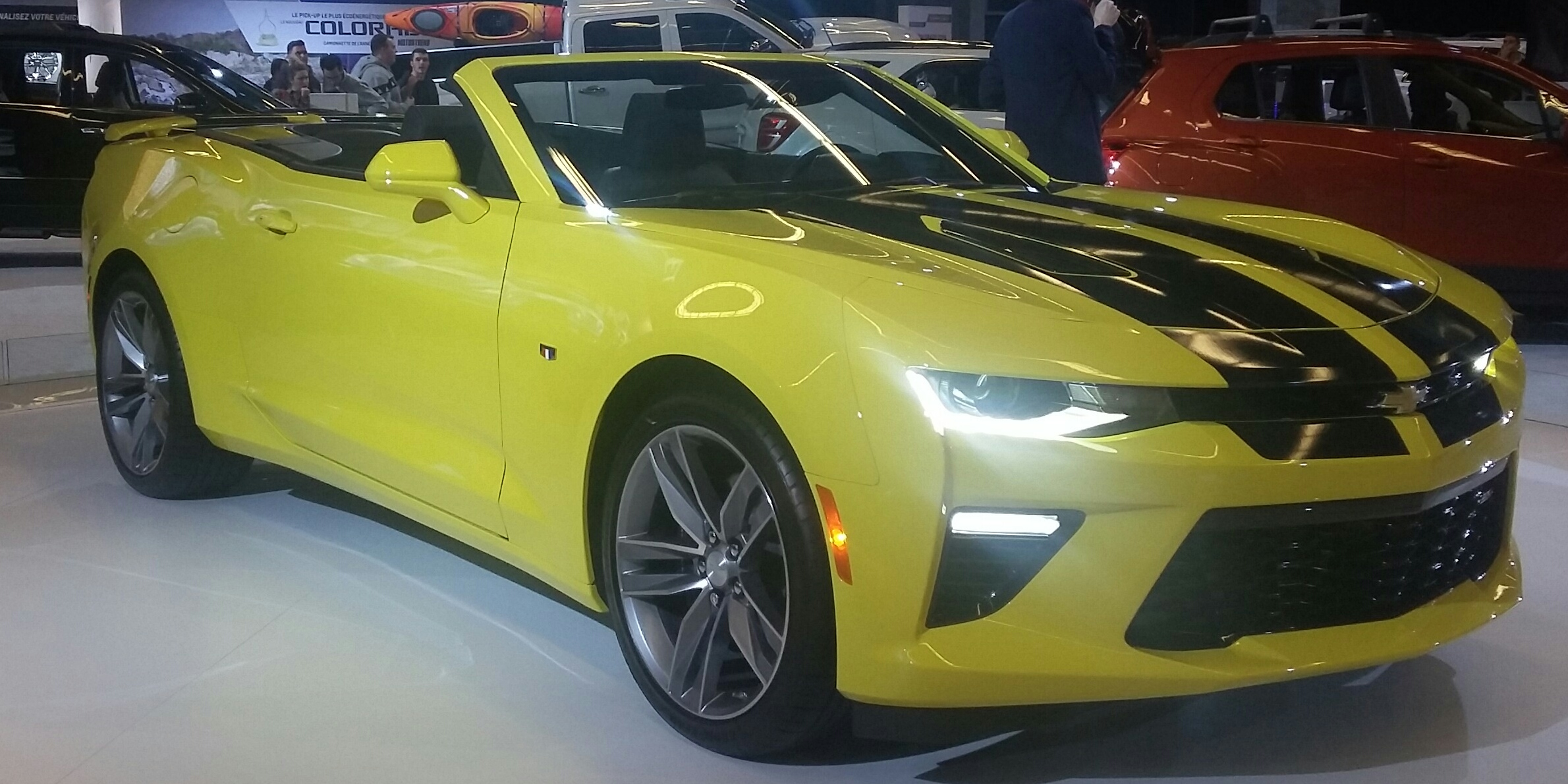
Chevrolet Camaro SS
"So1967,ChevroletCamaroSS. Now,thisisthe51stIndianapolis500. AndthisiskindofwhereuhCamarokindofagaintheyusedthistodebutthecar"
The Chevrolet Camaro SS is a sporty, performance version of the Camaro. In this segment, it’s mentioned as the Indianapolis 500 pace car in 1967 and as part of the Camaro’s rivalry with the Mustang.
The Chevrolet Camaro SS is a performance-focused trim of the first-generation Camaro, and the episode ties it to the 1967 Indianapolis 500 pace car. The host frames it as part of the Camaro’s push to compete directly with the Ford Mustang.
396 V8
"AndthisiskindofwhereuhCamarokindofagaintheyusedthistodebutthecarandbringitoutagainstthecompetitororagainsttheMustang,anditwaspoweredbya396V8,anditcreatestheCamaroasaserioussportscar,"
A “396 V8” is a large V8 engine size from the 1960s. The host is saying that this big engine is part of why the Camaro was taken seriously as a performance car.
A “396 V8” is a V8 engine with 396 cubic inches of displacement, a classic big-block configuration used in many 1960s American performance cars. The host connects it to why the Camaro is treated as a serious sports car in the context of the race pace-car debut.
Chevrolet Camaro Z11
"Sorollingonto1969,andyou'regonnaseeapatternherewithalotofChevrolets,butaChevroletCamaroZ11. Now,thisisthe5030Indianapolis500,andit'sreallyconsideredthemostfamouspacecarreplicabecausetheorangeandwhitestriping,"
The Chevrolet Camaro Z11 is a special performance Camaro. Here it’s described as the 1969 Indianapolis 500 pace car, and the host says it’s especially collectible because of its unique look and many replicas made.
The Chevrolet Camaro Z11 is a special, high-performance Camaro variant that the episode links to the 1969 Indianapolis 500 pace car. The host emphasizes the Z11’s collectibility, including the distinctive orange-and-white striping and the fact that Chevrolet built many replicas.
pace car replica
"Now,thisisthe5030Indianapolis500,andit'sreallyconsideredthemostfamouspacecarreplicabecausetheorangeandwhitestriping,theconvertible,everybodywantsthembecauseChevroletbuiltthousandsofreplicasofthiscarthatreallysoldreallywell."
A “pace car replica” is a regular car that’s made to look like the official pace car used at a big race. The host says these replicas can become collectible, especially when they have a unique design.
A “pace car replica” is a production car built to match the look and identity of the official pace car used at an event. In this episode, the host argues that the Camaro Z11 pace-car replica is famous and collectible because of its distinctive livery and the volume of replicas Chevrolet produced.

Dodge Challenger convertible
"1971,theDodgeChallengerconvertible,the55thIndianapolis500. Again,averyspecialcar. Itwasbuilt,theybuiltalotofreplicasforit."
This is a 1971 Dodge Challenger in convertible form. In the episode it’s mentioned as the Indianapolis 500 pace car, and the host says replica versions became collectible as the muscle-car era was changing.
The Dodge Challenger convertible is a 1971-era Challenger variant, and the episode places it as the 55th Indianapolis 500 pace car. The host emphasizes that many replicas were built and that it became a collectible favorite as muscle cars started fading around that time.

Dodge Viper RT-10
"Andthenin1991,theyslippedaDodgeViperRT-10inforthe75thIndianapolis500. [1645.8s] Now,uhitwasoriginallyselecteduhtheuhJapanese-builtstealthwassupposedtobethere,buttheUAWandeverybodyelsegotallweirdedoutoverhavingaJapanese-builtcarinhere,andsotheyreplaceditwiththeDodgeViper."
The Dodge Viper RT-10 is a high-performance Dodge with a V10 engine. Here, it’s being used as the pace car at the Indianapolis 500 in 1991.
The Dodge Viper RT-10 is a Viper generation known for its big V10 engine and track-focused reputation. In this segment, it’s mentioned as the car that replaced a planned Japanese-built pace car for the 75th Indianapolis 500 in 1991.
V10-powered
"AnduhitwasdrivenbyCarolShelby,itwasaV10-poweredroaster. [1665.7s] Andthenin2020,theChevroletCorvetteSteamRacebackforthe104thIndianapolis500."
“V10-powered” means the car has an engine with 10 cylinders arranged in a V shape. It’s a common way to describe a car that’s built for strong performance.
“V10-powered” means the car uses a V10 engine, where ten cylinders are arranged in a V shape. The V10 layout is often associated with high-revving performance and distinctive engine sound/character.

Chevrolet Corvette
"Andthenin2020,theChevroletCorvetteSteamRacebackforthe104thIndianapolis500. [1672.2s] Now,thisisveryspecialbecausethisisthefirstrearengine,hadtheenginewasbehindthethedrivertoreallymaketheCorvettechange,makethatchangeintobeinganexoticstylesupercar. [1683.8s] Andbutit'sstillaCorvette,andthatwasthefirstyearthatthatwastobethepacecar."
The Chevrolet Corvette is a famous American sports car. In this discussion, they’re arguing about where the engine sits—whether it’s truly a rear-engine setup or more of a mid-engine layout.
The Chevrolet Corvette is a long-running American sports car line, and this segment focuses on how its engine placement affects how people describe it. They discuss a “rear engine” vs “mid-engine” layout for a Corvette pace car, emphasizing that the engine is actually located in front of the rear wheels.
rear engine
"Now,thisisveryspecialbecausethisisthefirstrearengine,hadtheenginewasbehindthethedrivertoreallymaketheCorvettechange,makethatchangeintobeinganexoticstylesupercar. [1683.8s] Andbut it'sstillaCorvette,andthatwasthefirstyearthatthatwastobethepacecar. [1688.8s] Sothat'sjustafewofthehistoricalpacecarsfor theIndianapolis500that'sgoingon,andwe'llseewho'souttheretoday."
“Rear engine” means the engine is located toward the back of the car. The hosts are debating whether this Corvette is truly set up that way or not.
A “rear engine” layout places the engine behind the driver and typically behind the rear axle. The segment uses this term while debating whether the Corvette pace car is truly rear-engine or actually a mid-engine setup.
mid-engine
"It'dbeamid-engine,wouldn'tit? [1697.0s] What'sthat? [1697.4s] TheCorvette,themidengineratherthanrearengine. [1699.8s] Wellisitmid-engine? [1701.4s] Yeah,mid-engine."
“Mid-engine” means the engine sits closer to the middle of the car, not all the way at the back. They’re using this to explain why the Corvette’s engine location doesn’t match a true rear-engine design.
A “mid-engine” layout places the engine near the center of the car, typically just ahead of the rear axle. In this segment, the hosts clarify that the Corvette’s engine is in front of the rear wheels, which is why they argue it’s mid-engine rather than truly rear-engine.

Chevrolet Corvair
"Okay,right,likeaCorvairoraVolkswagenBeetleoldschool. [1727.8s] You'reright."
The Chevrolet Corvair is an older Chevy that had its engine mounted at the back. The hosts mention it as an example of a car where the engine really is behind the rear wheels.
The Chevrolet Corvair is an older Chevrolet model known for its air-cooled, rear-mounted engine layout. It’s used here as an example of a true rear-engine configuration where the engine sits behind the rear wheels.

Volkswagen Beetle
"Okay,right,likeaCorvairoraVolkswagenBeetleoldschool. [1727.8s] You'reright."
The Volkswagen Beetle is a classic car known for having its engine in the back. They bring it up as an example of a true rear-engine setup.
The Volkswagen Beetle (classic “old school” version) is famous for its rear-mounted engine layout. In this segment, it’s referenced as another example of a true rear-engine design where the engine sits behind the rear wheels.
automated car wash scratches
"Yourcarisadirectreflectionofyou,sodon'tbesatisfiedwithcolorfadeoradingydullappearance. Getridofthoseterribleautomatedcarwashscratches."
Some automated car washes use brushes or rough contact that can scuff your paint. Even small scratches can make the paint look less shiny.
Automated car washes can leave fine paint and clear-coat scratches because brushes and other contact surfaces may be contaminated or worn. Those micro-scratches can make the paint look dull or uneven under light.
window tint
"Searchingforrealexpertsinwindowtentorwindshieldprotection,GulfCoastAutoShield. Dashcams,radardetectors,GulfCoastAutoShield."
Window tint is a thin film put on your car’s windows. It helps cut down glare and heat, and it can make the cabin more comfortable.
Window tint is a film applied to glass to reduce visible light and heat entering the cabin. Enthusiasts and installers often discuss it alongside windshield protection because it affects glare, interior temperatures, and visibility.
windshield protection
"Searchingforrealexpertsinwindowtentorwindshieldprotection,GulfCoastAutoShield. Dashcams,radardetectors,GulfCoastAutoShield."
Windshield protection is something you add to your windshield to help it stay clearer. It can make rain water bead up and roll off more easily.
Windshield protection typically refers to coatings or films that help repel water, reduce glare, and make the glass easier to clean. Some products also improve visibility in rain by improving how water sheets off the surface.
dashcams
"Searchingforrealexpertsinwindowtentorwindshieldprotection,GulfCoastAutoShield. Dashcams,radardetectors,GulfCoastAutoShield."
A dashcam is a small camera that records what’s happening while you drive. It can help if there’s an accident and you need proof of what happened.
A dashcam is a camera mounted inside the car that records driving footage. People use them for evidence after incidents and to document what happened during accidents or disputes.
radar detectors
"Dashcams,radardetectors,GulfCoastAutoShield. Gotanewcar?"
Radar detectors are gadgets that warn you when they detect police radar. Rules about whether you can use them depend on where you live.
Radar detectors are devices that alert drivers to radar signals used by speed enforcement. They’re popular with some road-trippers, though legality and allowed use vary by location.
state-of-the-art shop
"He'syourguytohaveyourridelookingitsbestandprotectedtoo. Seethestate-of-the-artshopyourself,freetoursanytime."
They’re saying their shop uses modern equipment and methods. The idea is that the work will be done more carefully and with better results.
A “state-of-the-art” shop implies a facility equipped with modern tools and processes for paint and protection work. In this context, it’s used to sell higher-quality installation of protective products.
Request an Explanation
Heard something you'd like explained? We'll add it to this episode.
Sign in to request explanations for terms you heard.
Want to learn more?
Browse our glossary for plain-English explanations of automotive terms, jargon, and concepts.
Help improve this episode
See something that's not quite right? Our annotations are AI-generated and can sometimes miss the mark. Click the flag icon on any annotation to suggest a correction.