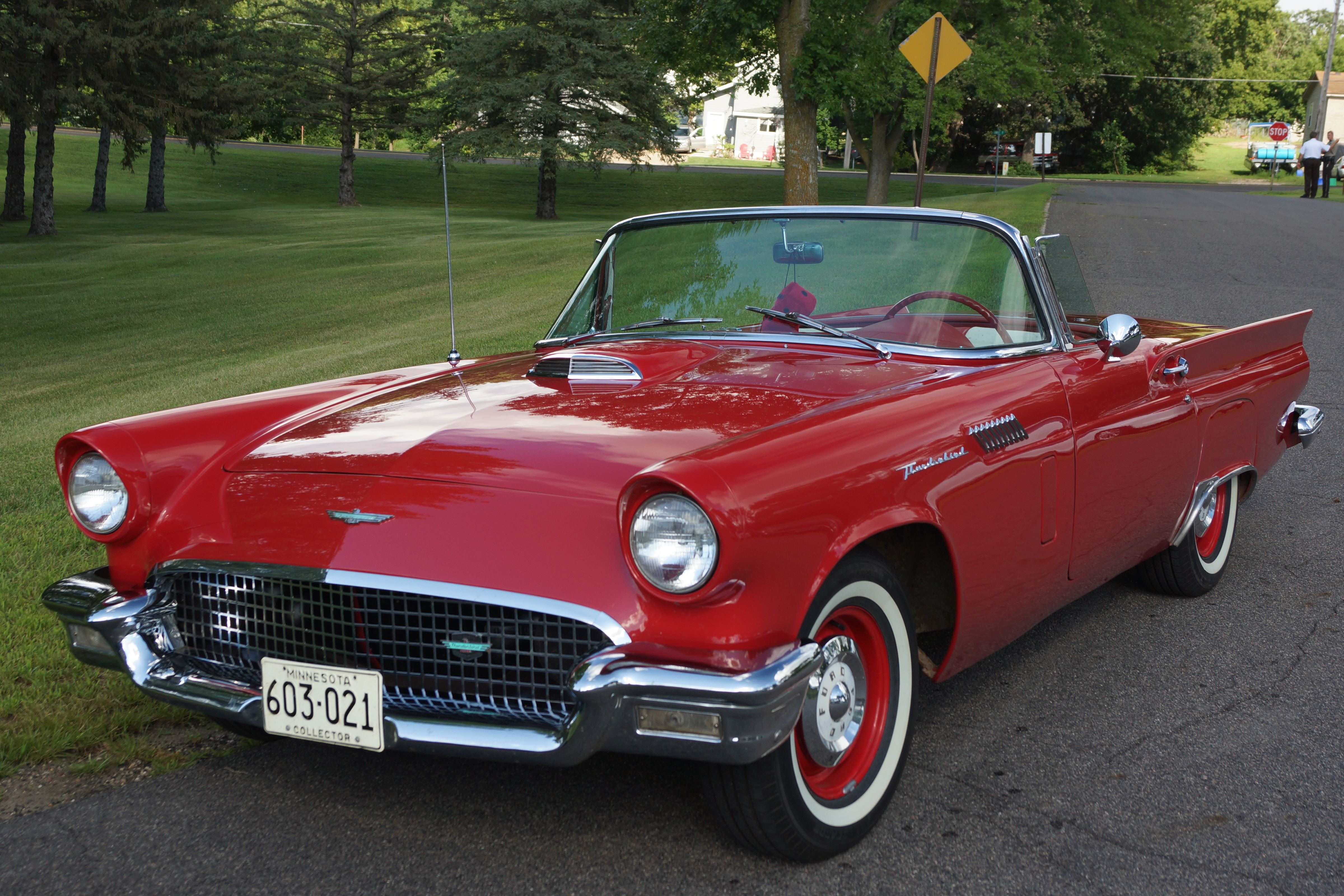
The Ford Thunderbird is a car made by Ford that has been around for many years. The 1987 version is known for being bigger and more comfortable than older models.
Body work is when you fix the outside of a car if it gets damaged, like when there are dents or scratches. It can be tricky and usually needs special tools to do it right.
ADOS is a set of features in cars that help drivers with safety and convenience, like keeping the car in its lane. Calibration means making sure these features work properly, especially after the car has been repaired.
Plymouth was a car brand in the United States that made many popular vehicles. It stopped making cars in 2001, so many younger people might not know about it.
LIVE
I try to teach with kindness and one of my sayings at school is fail.
We learn more from failure than we learn from getting it right the first time.
Today on Beyond the Wrench, we're talking with an educator who's making a real impact on how
the next generation discovers careers in collision repair.
Our guest is Jessica Weaver, an auto body collision technology instructor at Dakota
County Technical College in Minnesota.
We recently shared Jessica's story on Wrenchway, highlighting how she used school assist to
connect with a local high school and bring real-world collision repair into the classroom.
What started as a simple request from another instructor turned into an opportunity to show
students what this career can truly look like through hands-on demonstrations, honest
conversations, and a clear pathway from education to industry.
We're going to talk about that in a bunch of other things.
I think we're going to probably solve all of the world's problems today.
Jessica, welcome to the show.
How are you doing?
I'm good.
Thank you.
Good.
Well, thank you for joining me.
As Jessica and I talked about before we hit record, we're all in a Arctic breeze
right now.
She's in Minnesota, we're in Wisconsin, and I think we compared temps.
We're right around the negative 17 mark, I want to say right now, 16, somewhere in that
red.
At that point, it doesn't matter.
Oh, the windshield gets you.
I think my phone said negative 22 with the windshield right now.
Why did our ancestors come here?
That seems, in the middle of winter, that seems it's aggressively cold.
Yeah, you go outside and you go, why does it hurt?
And you did something interesting with your children today, to kind of explore the cold.
Yeah, the thing where you take the boiling water outside and throw it, and it went over
as good as it should have with the video game that we have nowadays, they walked out
and they were really excited.
I was like, we're going to do this cool thing and I amped them up and they looked
at it and went, wow.
Can we go back in?
Yeah.
Okay.
I thought it was cool, but it doesn't compare to all the flashing lights on your screens.
As a parent of an eight, almost nine year old, I get that feedback disappointment from
my son at times where I think something's really cool and then I'll share that with
him and he'll just kind of, doesn't roll his eyes, but the unintentional sarcasm
in his voice when he says, oh, that is cool and then walks away and never brings it up
again.
You're like, I felt like it was a little cooler than that, but apparently not.
I think I've gotten past that cool stage a long time ago.
Yeah, my kid at my youngest, he's five.
He asked me this morning, what's your favorite movie?
Let's watch your favorite movie.
And the first one that popped in my head was the labyrinth, the one with David
Bowie in there.
He stood at that screen like this, just horror the whole time.
And at the end of it, I was like, did you like it?
And he's like, yeah, yeah, whatever the pause comes into play that you know,
you're like, Hey, I don't know if you did.
Yeah, I don't.
I try.
You tried.
Well, you're doing even doing that experiment this morning.
Pretty cool of you to do.
And I think it's one of those things where maybe your kids will look back
someday and be like, that was actually pretty cool.
I think we've all done that with our parents, too, where they've done
something that at the time probably didn't seem all that that cool or memorable.
But then you look back many years later and say, yeah, that was actually pretty
awesome. Yeah, for sure.
All right.
Well, let's talk about your journey into the industry.
I talked about it in the intro.
I love your background and how you got here and to the point to where we're
talking today, your education style as we talked in the in our pre-meeting was
I just get the sense that you're really easy to relate to with kids and with
young people in general.
I think that goes such a long way in getting their attention long enough to
be able to teach them something.
So that that personality side, I think really stuck out to me early on.
But I do want to talk about the the the the rising of you and really how
you got into this career field.
Did you start off wanting to do collision or when did that really kind
of click with you that this was something that you wanted to pursue?
Yeah, when I was in high school, it was so my dad, God love him, a
little accident prone.
And so when I was growing up, I remember him calling me and being like,
you got to come pick me up or you got to take me to the emergency room or to
the doctor.
And the one that sticks out a lot was the anesthetic.
He tried to chop his finger off.
I say that he'd say different.
Maybe he took a band saw to the finger and it went right across.
So I'm up and I don't know if they allow it anymore, but they
allowed me to stay in there and watch the whole thing.
And so I watched them put the nerve block in and I just thought
it was the coolest thing.
So I wanted to be an anesthesiologist.
I was like, I want to do the nerve blocks.
I want to be that guy.
My dad thought it was great.
My mom thought that was awesome doctor in the family.
And then I crashed my car and my dad and I had an agreement.
He funded my money for the car and he goes, you break it, you fix it.
And so, you know, 16 year old me was going oil changes and tires.
And that's not a big deal.
And then I crashed it into a tree and he went fix it and went, what?
And I had, it was a 1987 Thunderbird that I crashed into a tree.
You know, we're wheel drive.
They're heavy and I put it right in the ditch in the middle of winter.
I had no business driving that thing in the winter, but I did.
And I pulled it into the garage.
I remember doing the most horrible body work you've ever seen with no, no guidance.
And I was like, ooh, this is really fun.
And so I took an Otto's class and my Otto's teacher, I showed up in a skirt and he was
like, you can't wear that.
And I'm like, okay.
And then I started to answering questions.
I remember him saying, what is the opposite of exhaust?
And I went, um, what did I say?
And I can't remember exactly, but it wasn't.
He was nothing but a stupid girl.
And I go, oh, you're going to change that for me, right?
And I, and he had that wow moment for a second.
And, um, I'll never forget the look on his face when I shot back at him.
And from there, I started doing body work and I corrected a little bit of
my really bad body work as I went into college.
And actually the guy that taught me body work in college, uh, he called me up
over the years and his name's Scott Logan, wonderful man.
He's like, Hey, I think there's something to you teaching.
You should teach for me in 10 years when I retire.
And when you're in your mid 20s, 10 years is a long time.
And so I was like, yeah, sure, whatever.
And then, uh, five years later, he's like, Hey, come substitute for me.
So I did a little subbing here and there.
And, um, when he finally retired, finally, after 10 years, it went by quick.
Uh, but I ended up interviewing, getting the job and working with, now I'm
working with the person that taught me my second year of college and he getting
to know him as an instructor.
And then now as my partner is amazing.
And he has been one of the best people I could have ever asked
to train me to do this job.
I want to call something out there that you said that I think says so much
about you as a person, which was when the teacher comes to you and says,
you're nothing but a stupid girl and you say, well, you're going to change
that, right?
And almost like with some, I'm sure with some level of sarcasm or like
just in general, I just love that response.
Because how many people, not only females, like we see this all the time
across our industry, but how many people would have just folded then, right?
And just said, yeah, this isn't for me, but your approach in almost
like laughing it, not laughing it off, but just being like, well,
you're going to change that, right?
Like I, when you said that, I was just like, what a, what a cool
way to approach that, like in very witty on your end.
Oh, I try to be.
I'm not always, but like I had another guy when I was probably
mid twenties ish and I was training in the field.
I worked for a job or company called Blue Rock and I like to say they
helped form me and a lot of my ideals.
My boss had a lot of really great sayings when I worked there that
I stick with me today, but I remember I had a painter and I was
probably 24, 25 and I was supposed to train him on this new product.
And he had had 40 years in the business.
And I was kind of guiding him, not the way he wanted to.
And he goes, I've spilt more paint on my boots than you've ever put on a car.
And I go, oh, let's teach you waste management then.
He didn't like it.
It was, it was really quick.
And he goes, I need to talk to your boss.
And I was like, oh, okay.
And I called him and he goes conveniently I'm in the parking lot
and they talked it out.
It ended up being it was fine.
That guy apologized probably two weeks later and said, actually, I think
I can learn from you and we ended up being really good friends thereafter.
But it was it was one of those moments where I was like, ah, is today
the day I'm getting fired.
But I think it's an important lesson there in that there's a fine line
where I think when you're a young person coming into this
industry, you're you're you're trying to find your way.
And at some level, it can be easy to be pushed over and just constantly
like you have that experience tech that's just going to say, go away.
I don't want to deal with you.
But then at the same time, you have to hold your own.
But then also if you hold your own, then you might be perceived
as they don't listen, they're not listening to what I'm saying.
And so, you know, I think what you were able to do there is walk that
line maybe with some confidence and be able to have kind of a witty
rebuttal where again, I think a lot of young people will take that
and and kind of put their head down and walk out the door, right?
Where you and that's anger.
Yeah.
Yeah, there's a lot of emotions tied to that for a young person
coming into this industry, let alone being a female coming into
the industry, like there there's just that's what when I look at
that, I'm like, you should almost write a playbook of comebacks
because apparently you're filled with all kinds of them that
those, those are the
but but it is important for any young person that's listening
to this to kind of keep that in mind that you have to be
mindful that there is this fine line, but you also don't want
to be a pushover.
You don't want to be perceived as a no at all and and being able
to kind of walk that line.
And if you can do that, you're going to get a lot further, a
lot faster, I feel like maybe I'm maybe I'm overstating that,
but I do feel like there's a there's an interesting dynamic
there.
Yeah, you I learned very early on because I've gotten
yelled at and it's like when I when you get yelled at, it's
it's really disheartening, but you and you walk away with your
head down.
Yeah, but I learned that a good approach to somebody that does
know what they're talking about and you're coming in as a
young person into the field and you I learned you're not
supposed to go, hey, you're doing that wrong.
They don't like that.
It was I learned ways to make my ideas theirs and be like, hey,
so I can you tell me what you're doing?
And they'd walk me through it and be like, have I'm just
coming up with this.
No, it wasn't preplanned.
But have you ever tried doing it this way?
And we'll talk it through and make it more of a
conversation instead of telling somebody you're doing it
wrong.
I've learned that doing it wrong is the way we learn to do it
right in the first place.
And so making things people's ideas, that's a really good
way to help those people that don't like being told what to
do.
And it applies with students sometimes, too, because I do
have some of those students that'll be like, no, no,
that'll never work.
And I'll go, really?
Okay.
But moving them in that direction with kindness, you know,
there's that age old saying you get more bees with honey.
And so I try to teach with kindness.
And I one of my sayings at school is fail.
We learn more from failure than we learn from getting
it right the first time.
My students are probably sick of hearing me say, you
didn't learn to walk the first time you tried, you fell
down, you made that mistake, but then you tried again.
So when they're coming back to me going, I can't do it.
And I go, how many times did you try?
It's one.
Maybe one more.
Well, I think you hear that commonly in shops, too, the
frustration with a young person trying it once it didn't
work. And really, maybe the lack of thinking through what
might fix that is a challenge that shops have.
And I so I applaud you for pushing your students to
kind of think through it a little bit more, because I
do think there are times, too, with a young tech where you
can easily get in the trap of anytime something starts to
go wrong, you're immediately going and asking somebody.
And I think that is when it becomes an annoyance for that
experience tech that's in the shop, if they're, if they're, you
know, oh my gosh, this person, they're not even trying, like
they're, they're, they're making a half hearted attempt at being
able to fix this. And now they're pulling me away from what's
making me a living to be able to help them. I think when
it's good questions that you're going to that
experience tech with or your manager or whoever, then it
doesn't seem like an annoyance. You know, you've
tried maybe several different things and you're trying to
approach them and say, Hey, I've tried this, I've tried this.
And this didn't work. You know, I feel like I'm making
progress. If you can go to that person with good questions
rather than just kind of putting some effort into it and
then saying, ah, I can't do it. And then going off, I
think that's when the others in the shop get frustrated.
Yes, I absolutely agree with that one. So I mentioned
Blue Rock where I used to work before. Well, Bruce had this
saying, I told you, you know, a lot of them and one of my
favorites and I tell my students is we solve problems. So
that's kind of his motto over there. But I took that from
Bruce and he would, it was, I don't want to hear your
problems. I want to hear your solutions. And so when I'm
training my students, I say, don't go to your boss, don't
go to your mentor with problems, come to them with
solutions to your problems. So where you can say, here's
the problem I'm facing. And here's how I tried to fix it.
Here's how I think I'm supposed to, um, and give them some
ideas, give your boss guidance so that you're not
because anybody can present a problem. It takes a really
talented person to present solutions to their problems
and gets them thinking. So I love going to my students
and I ask them their questions back every time. So
they'll be like, what grit am I supposed to use right
now? What are you supposed to use? And they'll answer and
I go, I'll like, guide him maybe, maybe a different higher
grit, lower grit and until they, this happened yesterday
with one student, he's like, what grit do you want me to
use? And I go, what do you think I should, you should
use? And he goes, 80 and I go, I'm maybe higher? 180?
A little too aggressive there. Yeah. A little more and
he'll go like 220 and I go, perfect, I knew you'd get
there. When I guide with humor, I think it sticks a
little bit better. Sure. And when they get to answer their
own questions, and be a part of their own solutions, that
helps a lot.
Well, you're, you're helping kind of build some
confidence and help them when they do get to where
they're working professionally, that they can answer some
of those simple questions themselves, or maybe they can
go find some resource, you know, there's more resources now
available to be able to look up technical data, for
example, than there ever had been when we were growing
up. And so I think there, there are resources out
there. I think the other element to this, in I'm
kind of almost segueing that into shop life is that a
lot of times I feel like a lot of kids will put undue
pressure on themselves to get a job done in a certain
amount of time. I do put some blame on industry a little
bit there. But I remember feeling that as a young
technician where I went from tech school into a shop and
hear a lot about pay plans and how you need to be
turning time and that kind of thing. And then
ultimately, when you get in there, you're probably in
my experience. Anyways, I was almost more focused on
that part than I was the quality of the repair. And
looking back, I'm like, I just wish I would have taken a
little bit more time to do it the right way or understand
it the right way in order to truly understand it
because I do think there's that that flipping of the
switch effect where when you do when it clicks, all
the sudden, the next time you do it, it is going
to be better. And if you're just trying to beat
time as a young tech, I feel like you're doing
yourself a disservice because you're not truly
understanding the fundamentals of doing the job
itself.
Right, I have that's kind of something I'm fighting
right now with a couple of my students. I think it's
great where they have to right now that told me my
failing because I it took me, you know, a week and a
half to fix this nine hour debt that you gave me
and I give them real world dens. I'm not saying like
if this takes an average if I would give this when
I'm estimating in a shop nine hours, that's what
I do in the shop too. So I'm not, I'm not sugar
coating anything, but it will take them a long
time. They have 255 hours through the semester to
do 80 hours between paint and body. So 40 hours of
paint, 40 hours of body work. And when they're
like, Ah, I mean, I've been working on this
for days, do I have enough time and I go,
you have plenty of time and not everybody will get
all of those hours. But we focus on quality over
quantity. And I'll sugar coat some of those hours
if they've really put an effort in and and worked
hard for that quality versus that quantity because
we don't I'm not trying to be known for the
teacher that turns out students that go, good
enough, give me a ball scene. I'm like, go
and when they when they say to me, is it good
enough? I say, well, any time you have to ask me
good enough, we know it's not.
Oh, I love that part too. I think a lot of
managers listening to this could also say the
same thing. Is this good enough to ship? If you
have to ask that question, you probably already
know the answer. You just want to make it
my problem.
Oh, it's not great.
If you're an automotive diesel or collision
instructor, or an educator helping students
explore these careers, this is for you. Building
relationships with local shops takes time. And
knowing who's willing to help isn't always
clear. ASC connects in partnership with
Wrenchway brings schools and industry together
on one easy online platform at no cost for
schools. At the heart of ASC connects is
school assist, the online resource that lets
you post exactly what your program needs from
guest speakers, shop tours, tools, advisory
committee members, career fair participants
and even student job opportunities. Shops
can see your requests and respond directly
to you. You'll also get access to
instructor focused resources, webinars and
templates designed to save time and strengthen
industry partnerships. Even if your school
doesn't have a formal auto or diesel program,
you can still participate to help connect
interested students with real world
opportunities. ASC connects is free for
schools. Get started at wrenchway.com
slash solutions slash schools or use the
link in the show notes.
Talk to me a little bit about the importance
of curriculum. I know as we talked before,
you had gone through and kind of completely
redid your curriculum. And we talked through
the amount of time that takes and how labor
intensive that side is. Walk me through that
piece of like what what drives your
curriculum? What drove maybe you to want
to change your curriculum? I know that's
a broad question, but I do want to walk
through that piece a little bit.
Well, I mean, it took me almost three
years to get my other curriculum down
the way that I wanted it. And I went to
this training that we do in the with
teachers in the summer. It's called MTTIA.
It's a Midwest thing where teachers get
together from all over the place and we
learn. And a man named Justin with iCar
came in and he was like, I got the world
solutions. Well, I struggled with it a
little bit because I had my own
curriculum. And you know when you it's
kind of baby. Yeah. And when somebody
comes in and says I've got your I got
the solution to all your problems,
you're like, mmm. And so I fought it
a little bit. But it this iCar
curriculum did it there is something to
it. There is really good information in
there. And so I ended up not ditching
all of my old but kind of going through
and seeing where I could marry the two
and make them make sense.
So we talk about curriculum and so
much of it, I think is focused on the
actual development of coming up with
the actual content that you're going
to put out to the students. How much
of it is the preparation side of like
understanding the curriculum that you're
about to teach and being able like with
the shift to the iCar curriculum or the
elements of that, like truly understanding
that piece and then really being able
to smoothly articulate that to your
students. So I would say years, years,
I mean, you don't get to just be a
teacher by reading a book, right? I
was in the industry for 18 years
before I took this job and painting
cars and doing body work, estimating
all of this stuff in between. And so
you kind of have to know how to get
there anyways and be able to debut
those skills off to students. But
then doing the curriculum part, it
was years of reading through. I've
got four books that I took from all
these different makers and experts in
the field writing through these
books. And I took that deep dive into
why it happens, how it happens, so that
I can articulate to my students the
house because not everybody learns
the same, right? So I would say
years of reading and actually
applying it before even taking this
job. It's a lot of extra time.
But now that I've kind of got
everything built, even just jumping
into the iCar side of it, I've
already got all the information there.
So realistically, what I do with them
is they have their academy and I put
their slideshows on mute. And I have
all of my students follow along with
me on their own computers so that they
can get the credit for it. We
answer the questions together. And
when it's on mute, they've already
told me, you talk way more than
what the videos do. But I'm taking
that deeper dive and with all the
learning styles that we have in
there, it can't just be that little
bit of information because I'm trying
to articulate to this type of learner
and that one over there and make sure
that everybody understands at the end
of it. And at the end of each slide,
I give them the opportunity to say,
did anything confuse you? How can
I clear this up for you? And if
nobody's, everybody's on the same
page and they can answer those
questions, I'll maybe ask my own
questions to make sure they're not
getting lost or distracted by the
guy sitting next to him. Yeah. So it
does take in videos that might take
them 10, 15 minutes on their own are
taking me an hour to an hour and a
half to get through and just deeper
dive into all of those things. Oh my
goodness. I you talk about meeting a
student where they're at in terms of
their learning style. And I think
I shared with you, I've had that
experience on the student. And when
I was coming up that there were a lot
of teachers that I couldn't relate to
and a lot of teachers were very rigid
in the way they taught and you had
to follow kind of their laws of how
they taught. It wasn't until much
later in life when I was taking, I
was a factory rep for a construction
equipment company. And I, they had
a teacher that was teaching that they
had hired to teach advanced
diagnostics. And I don't know what
it was about this teacher, but his
teaching style just like clicked with
me and some of the stuff that seems
so hard in the past, just like all the
sudden connected. And I was like, I
think I saw the power of communication
and good communication with an
educator through that in my own
experience and the power of being
able to meet a student where they're
at can make all the difference in
their life. I mean, that is so
impactful for you to kind of hunt
that out and look for those
different ways to maybe make
something work with a student.
Yeah, it's, it's important. I
think along like back when I was
learning or whatever it was, you
learn what I teach you. But now
my approach to it is I'm being
paid to teach you. I'm also
being paid to assess you. So if
with all the different learning
styles that I'm attacking over
there, if you're not getting it,
it's on you because I'll come in to
some students and I'll verbalize it
with them and say, All right, we're
going to imagine this together. And
I have those students that are
very imaginative that can like build
that in their head and they're
going to go, Okay, I got it. And
then I if that doesn't work, I'll
go, Okay, we're going to do this
together. We have those monkey see
monkey do I get to be monkey do
when you get to be monkey see
will do that. And then I have the
other ones that need play to
learn. I just did this yesterday
with a student. He's like, I hate
guide code. Hate it won't use it.
And I go, Oh, you have to use
that because he also can't feel
the wobbles in there. And so he's
like, I don't understand how it
works. It makes no sense to me.
So I went out over and grabbed
what I call the sandbox. It's
full of sandblasting media. And I
laid that out flat. And I and I
hold up little mounds on there.
And then I have two different
sandblasting media is one in tan
and one in black. So I sprinkled
the tan stuff over the top of
the black. And we started playing
in that media together. And
leveling off the top and talking
it through and how that guide
code is helping you see those
high and low spots. And I
watched him go, Oh, okay. And
then he ran off to go play
with his, his foot that he was
sanding on. There's you just
kind of have to understand your
student and who you're talking
to. And the same with I had
another student this in the
same day, we're talking about
colors and how they lay out in
the metallics. He's like, Well,
why is this one darker than
this one when the same color?
And so we grabbed out a
handful of quarters and we were
throwing them on the ground and
then throwing some rocks down
and showing how when, when
you lay up those quarters on
different angles, and it's really
fun to see the kids that
actually play to learn to come
back and they light up and they
go, Okay, I got it. No, go away.
So like, I got it now. And
that's how did you get that
ability? I mean, is that
something that comes naturally
for you where you are really
showing those visuals in a
way to make that click?
Because I do think that it
would be so helpful for so
many people even experienced
people in our field to get
visuals of why something works
or maybe just trying to get
something to to make that
connection in a brain that they
wouldn't have gotten otherwise.
Is that something that you
felt come like comes natural to
you? Or was that something you
had to learn?
I think maybe both. I think
there's because there's
moments where I'll be like
trying to explain something.
I'm like, Oh, this isn't
working. They're that in the
same boat, they're going
that you're, it's not working
the way that I'm talking it
through. And then I have to
sit down and like, be like,
Okay, give me a minute to
just figure out how I can
show you with things that we
have around here. And it
may take a little time
sometimes, but I, I think I
learned that from I actually
had a 3m rep who was he made
a play thing at one of my
trainings where he took, he
was talking about adhesives
versus welding and fusion
and metal. He took little
Post-it notes and staples and
he did the adhesive sides of
those Post-it notes together.
And so he we're pulling
those apart. And then when
you do adhesives with
spot welds, and so he put
staples in there and was
just showing the different
strengths and
Oh, that's a great idea.
And oh, it was amazing. And
now I stole it. Just if he
ever sees it, I did it.
I think that's a that's a
form of flattery, right? If
you're taking something from
Yeah.
But it really I found that it
helped me with, I mean, I
understood it before, but it
was one of those moments
where I was like, Okay, this
is a really good way to put
play in the into our learning
styles. And so after that,
that clicking moment for me
is we need to play more. The
students need to touch things
to be able to learn this
sometimes, especially with
those play based learners.
They're I mean, even at 18 and
25, and I have some students
that were in their 60s last
year. And I was going to
say 42 play based learners.
I got, like I said, I got
these little kids run around
downstairs and their play based
learners too. And so I think
maybe that helped the
intuitiveness of let's get you
guys touching and feeling and
maybe comparing something that
isn't what we're doing to
something that is just like the
post it notes or playing in
the sand, we're not sand isn't
metal, but there's kind of
that same movement.
You hit on a point there that
I think a lot of people could
learn from myself included on
the power of just taking a
step back in thinking about
that communication style or
strategy because I think I'm
this way I know a lot of
other people are that when
you communicate something and
they're not understanding it,
you're kind of almost putting
it on their shoulders of like,
why aren't you understanding
this? Why can't you
understand? And for me, I'm
very much a visionary type of
person. So to get what's out
of my head and try to get it
to an understandable level to
the other person can be
challenging at times. And for
me, I think one of my
challenges is that I'm always
rushing. I'm always like running
and running and running and
going to the next thing, going
to the next thing and the
power and just being able to
take a step back. And even
if it's your own problem and
analyze the problem and kind
of try to truly understand
where the problem lies in
something like communication is
really powerful. And so I
love the approach that you have
there of taking that step back
and then trying to really figure
out a different way of going
about it. And rather than pin
the blame on the other person,
you almost kind of take that on
your own shoulders of how can I
communicate this better in a
way that they're going to
understand? I just absolutely
love the way you approach
that. Yep, that's that whole
problem and solution thing. I
can't I can present anybody
with a problem. Let's solve
it because if as soon as you're
saying it's your problem, you're
not understanding me. Nope, I'm
going to come up with that
solution.
This is good stuff. I'm
learning all kinds of stuff
here. That's your one heck of
an educator. Now, it's funny
because I the way that I got
to know you was because we
had done our marketing team
had done a story on you
going and talking to a high
school. And the first time
I read it, I was like, how
cool is it that somebody from
the technical school would want
to get involved with the high
school in a way that's helping
the high school educator? I
think it helps grow that
relationship between the high
school and the tech school.
I'm a huge believer in that
that we need to do more of
that. But when you go and
you're you're talking to
probably younger students, then
you're like it's not much
of a day age difference, but
there is a little bit of an
age difference there. It's
very small. Yeah, very, very
small. Yeah, yeah. Yeah, a
couple of years a year. But
it I think is really impactful
for the tech school because
you get exposure to your
program. It's very impactful
for the high school because
you help get some education
that you might be more
specialized on than they are
or it's just a different voice
coming in the room at times.
I think that's helpful in
general. But what drove you
to want to have that
conversation in the first place
because be honest, there's not
a lot of folks in the tech
ed side or the technical
education tech college side
that are coming into a tech
ed program and doing that.
And I'm like, I think we're
missing a huge opportunity
here by not doing more of
that.
Yeah. So if I'm understanding
you're asking like, why
is a terrible question?
Why did I get it?
So I am a firm
believer in asking for
everything. And I do because
if you don't ask, the answers
already know. So like, I can
be like, hey, Jay, can I have
10 bucks? If I don't ask you,
the answer is already no.
So going into wrench way, I'm
asking for everything. But
here's the thing. If
everybody's only asking,
there's no one to give it
back. So when you like, I'm
going, hey, I'm asking for
all this stuff, I'm going
to have to give back to in
one way. And so when I saw his
post saying, hey, I need a
female in the industry
coming in and talking to some
of my young women, seeing if
we can get some of that
interest going, or even what
was your experience in there?
I was like, well, I fit the
bill. I'm not an industry
partner anymore, but a
teacher, would you like me
to do this? He's like, yes,
absolutely. So being able
to give when I ask for
everything. I asked for so much.
I'll give back to as much as I
can. That that asking part,
though, I think is also very
important. You mentioned
asking for everything.
I think a lot of educators
are afraid to do that, right?
Where they are afraid to lean
on their industry partners,
unless they're in a state of
absolute desperation. And I
think it really hurts a lot of
programs by that instructor
not asking for things, right?
Because if it is,
you know, I go to a lot of
advisory committee meetings
and some of them can have
some fluff, right? Where
they're maybe not talking
about the true
maybe issues of the school
or they're, you know,
just trying to kind of go
through curriculum, show the
stats show, you know, and
then you eat lunch and
you're done. And at times it
kind of feels like you're
almost in like a Groundhog Day
type of scenario where you're
kind of going to the same
meeting over and over and over
again. The most
effective ones. And I was
just that one not too long
ago where it truly was
conversations about what the
school needed. And I think
in a lot of ways, the
instructors need to feel safe
enough to be able to ask
for the things. I don't know
that everybody has that
inherent ability that you do
to just ask for things.
And when they do that, they're
they're really, I think, punishing
the program by not asking for
those things. And really, even
with Wrenchway, that was a big
reason we did the school
assist thing was that a lot of
the teacher feedback we got was
that anytime they needed
anything, they felt like they
were having the cold call
their Excel spreadsheet list
of all of the shops that were
on their advisory committee.
And we're like, it should be
easier than that. There needs
to be a more streamlined
process to this. And so
your approach there of
not being afraid to ask, I
think is really impactful to
your school, to your program
because you are bringing
additional resources to
the program that are going to
help. And in our experience,
there are so many shops that
want to help out, they just
aren't good at being able to
drive that communication.
You've done it as good as
anybody. So I just wanted to
give you a compliment there,
but then also talk a little
bit about the power of
asking, because I think
you're, you're unique in that
regard.
Well, if it's kind of like, if
you don't know, I need that
$10. We'll talk later.
But if you don't know that I
have a need, you're not
going to just offer it,
right? So when we do our
advisory meetings, I find
them very fun. We talk.
It's, it's very
friendly in our advisory
board is just an amazing
group of people. We go in
and we discuss it can't be
just that rose it over where
you're saying how great
everything is. Our advisory
board relies on us to turn
out their future
technicians, right? So they're
coming in and going, what are
the needs here? What are we
seeing? So we ask them, what
are you seeing out of our
students? What do we need to
do better for you? And when
it gets that, that
conversation is going. So
when they say, well, just
this is a hypothetical, it's
not a real world. But if they
were to say, hey, you know,
your students aren't welding
well, they're just not. We can
say, okay, how can, how can
we as a group fix this
problem? And so my advisory
board, I can say, can we
have students come out and
talk to some of your
technicians, can your
technicians come in? Or
kids, we don't have enough
welders or our welders are
breaking down. So we're not
using world real world
situations over here.
One of the things that we've
done recently was we just
got an ADOS calibration
system. Nice. So it's brand
new to us. We don't know how
to use it yet, right? And so
we we're sitting there
talking, we're like, great.
And it was actually donated
to us by some of our
advisory advisory members,
this system. And so now
we're like, okay, now we
we need to be trained, the
students need to be
trained. And we asked them,
okay, great, thank you for
helping us acquire this
piece of equipment. Who can
train us? And they're like,
okay, we they gave us a list
of contacts. And so then when
I do the recap and send out
an email saying this is what
we talked about. By the way,
you did say there was some
contacts that you had, can
anybody send those back over
to us that we can reach out
and do field trips? And so
I think there is an etiquette
in how you ask it's not
just this is what our needs
are. But saying, what do you
need? So then how can we, how
can we work together so that
everybody's needs are
actually met? I can always
tell when somebody's got a
strong advisory committee
versus when they don't. And I
think a lot of it is in
conversation with the shop
that's out there. And, you
know, I had heard a lot over
the course of my career,
well, I won't hire anybody
from that tech school because
they've only turned out bad
students. And I'm like, you're
putting every person that
comes out of that program into
one bucket, like one, you
shouldn't do that. But then
two, that just tells me you
are so disconnected from the
school that you don't know
what their problems are.
You're not willing to help.
You're putting all of the
expectation on the school alone
which in my eyes is
completely unfair. And I
think when you see a strong
advisory committee or just
strong industry partnerships
in general, where you have
people that are willing to come
help out and are willing to
put, you know, time into
going and doing a skills USA
event or doing something
that might be outside of
the typical ask of the
school, I think doing
exactly the same thing you
were talking about is what
these shops need to learn as
well, which is you're going
to ask for a lot as a shop.
I'm going to ask for quality
students coming out of that
program and we do want them
to be as productive as they
can as soon as they can.
But I also am going to offer
a lot of stuff to you and try
to make it and make your life
better. And that's what a good
partnership looks like, right?
If I'm going to make your life
easier and you're going to
make my life easier.
That's when those
conversations do get fun and
they do get a lot more
transparent. But if as
industry, you go into that
meeting and you're just
pointing at the school for
all their shortcomings
and or vice versa, if the
school is looking at industry
and saying, you guys aren't
helping us out at all.
I think there's a lot of value
in looking in the mirror and
saying, OK, what what can we
do different in our approach
here to maybe from the
school's end, get more
support or from industry's
end? How do we give more
support to the school?
Because ultimately that's
going to end up with us
having a better relationship
with the school, which will
then end up with more
students in our in our
shop. So I just from afar,
that's one of the things I'll
get off my soapbox here, but
that's one of those things
that are is really maybe
I'm looking at it to high
level here. But every single
advisory committee meeting
I've been to the great ones
are awesome. The bad ones
are pretty bad. And there's
like trying to get everybody
in a room rowing in the
same direction, having the
same goals in mind and
really wanting to support
each other. It just makes
business more fun. It makes
partnerships more fun when
everybody's kind of trying to
make the situation better.
Yeah, I mean, everybody out
there is not doing this for
their health. They're right.
We're trying to make money.
And so at the at the top side
of it, those those shop
earners, they're going to
make more money if we're
turning out quality students.
They're going to put their
name on all of their repairs.
I have to put my name on all
of my students. So we we want
everything to it. Everything
that comes around goes right
back around. We have alumni
and alumna that come back
into the the school and they
talk because I think we
start to see that full circle
come back around to make
this work. I mean,
everybody in my area is just
so helpful. There's I've
not actually been told no
yet. So I'm very, very
thankful for everybody that I
am working with all of my
industry partners, because I
haven't seen the negative side
of asking yet. Not once.
No, no. And I, I think part
of asking is knowing what
you're asking for, right?
And you kind of mentioned that
part earlier. I know one
thing that we learned as we
were going through and
building school assist was
that a lot of instructors
didn't even know what to ask
for, right? So we kind of had
to train them on, you know,
go through your day to day
life. What are things that
you wish you had? So you
actually know that you, you
know, you have a wish list
and then you have some of
those lists are, you know,
we've got a lot of schools
with especially high schools
budgetary constraints. Teachers
are paying for consumables
like a like break cleaner
or something like that out
of their own pocket. And
you're like, that should
never happen. Like we, we
as an industry should never
allow that to happen. Like
how, how easy is it for an
instructor to put out there
that we need, you know, name
whatever is consumable, like
sandpaper, for example, like
anything that and our
friends at Creft do a
phenomenal job at getting
donations out to a lot of
the collision programs. I
just look at even that part
if you're an instructor
that's out there that's like,
hey, I don't feel comfortable
asking for this stuff. Try to
get comfortable asking
because that is going to be
something that will have a
really big impact on your
program. And I think you'll
be surprised at how open
industry is to helping out.
Right. We get old equipment
that that works wonderfully.
We had an SDRSW donated
just a couple of years ago
from a wonderful industry
partner of ours. We it's not
just always monetary, right?
It's it can be it can be
equipment. We had tools
donated from companies. And
those are so important for
student learning too. So I
mean, and sometimes we don't
even ask, I think it's
they're like offering to
help. And so when I think
you get this good industry
relationship that networking,
you got to go out and talk
to people and if you're doing
for them and they're doing
for you, they come in, I
mean, and just help. So how
how do you see this is kind
of more of a forward looking
question? You mentioned
getting some of the Ados
tooling in there's a pretty
big change and a big shift in
technology in our industry
kind of this evolution
that's happening right now.
How do you keep up with that?
Because you talked about it
like those are complex systems.
There's a lot of technology
and vehicles now. And
even if you were in a shop
five years ago every single
day, things have evolved
so much as a teacher that
are hard to see when
you're not in a shop every
day. How do you understand
that and really kind of keep
up with the changes? I know
iCar does a lot of great
stuff to help schools out
there as well. But just give
me a little bit of your
senses of like it doesn't
get overwhelming at times
with the the kind of upgrades
or is it something that you
really look forward to?
I look forward to it.
One of my one of my
homeworks is actually
having the students research
some topics that I see
changing so that I can
keep myself up. So I'm
I don't want to read a novel.
I want everybody to just
give me like find
this topic and like right
now one of the one of my
assignments for this semester
is plastic repair.
I want you to find out
the future of plastic
repair because there's not
a lot of it out there.
And I think eventually
and it's just a personal
think that eventually
that that is going to
shift back into more
repairs because we're
throwing so much away.
And I think that our
upcoming generations are
caring more about how much
we are throwing away.
And so I want to see where
that is moving.
And so if I have them
research something on
the future of plastics
that they find interesting
site their source I just
want a paragraph or two.
And then I'm getting that
information from them.
They have to go out
and find it.
I can read about it.
If I find something that
I need to dig deeper
and they've cited their
source for me.
We also have MTTA
which I mentioned earlier.
We have to keep our
trainings up to date as
teachers.
So we go to this
retreat every summer.
And I'm actually
the auto body liaison
because I
I don't want to put down
the person that was
doing it before
because he's a great person.
But I was I was finding
myself going I don't want
to learn any of this.
It's not what my needs
are.
So now if there's
if my needs aren't met
at this training it's my own
faults.
So I'm I can go out
and go what do I want to
learn do I want to learn
ADOS let's get
an ADOS training up
at our retreat
so that all of the other
instructors can kind of
pick through and go this
is what I want to learn
because in the past
couple of years there's
only been like a
handful of auto body
stuff.
But this year I plan
to like load us up
where it's not
you have to go to this
one because that's
auto body.
I want people to go
I don't need
paint training but I do
want this ADOS
or I do want to see
what 3M is doing or
all of anything.
I want to I want to get
as many different
kind of vendors in there
as I can possibly
bill allow me.
Yeah.
Well it doesn't hurt to
have 3M in your backyard
either.
That's a great company.
Great company.
All right.
Last question
school related
and then we'll have
some that are quick
hitting questions.
What changes have you seen
in students over the years?
Have you have you seen
any type of changes?
And I know that's a very
all encompassing
type of question
but I am curious.
Have you seen any changes
in behaviors
and learning styles
and anything
over the over your time
at the school?
Oh over my whole 3 years.
Yeah.
Yeah.
It's not been a lot.
I can't say there's
been a lot of change
for me.
But one going from
training in body shops
to training with students.
I the learning styles
I see are the learning styles
of had been of the older
generations.
My generations older
and then training
these newer generations
of people.
It is a lot more
play based than in shops.
It's there's a lot
of emotions right now.
I see a lot of
he hurt my feelings
or she hurt my feelings
where we have to be like
all right.
We have a therapist for that.
I'm not great with feelings
so we'll
like move them into that side
of it.
Or
I would say
I would say the feelings
are a big part
of what we're doing.
So I'm having to
train with
that in mind
that students
are more willing
to talk about
how they feel
in the situations
I'm putting them in
where
they'll say
you're making me uncomfortable
because they have to learn
a new skill.
And I'll be like okay
because they don't feel
like they're doing good
right.
And so we have to go
you're doing great
or you're doing okay.
Let's
let's keep moving forward.
So I'm kind of fighting
with how they
their mental dilemmas
with themselves
and how they feel they're
doing.
That's great feedback
because I do
get that same feedback
from shops as well
that they feel like
they kind of have to dance
around feelings
a lot of times
and
especially with young people.
I think
at times they'll almost
put it in like that
entitled bucket
but it shouldn't be
in the entitled bucket.
Like it's it's more
that's how they were
taught to communicate
that's how they were
were raised.
And it is differently
different than maybe
the way we were raised
but
being able to
have some adaptability
as a leader
I think is really
important
for you shops
that are out there
and maybe
adjusting your style
a little bit
and how you manage
these folks
and you know I
hear it all the time
like
they all want a pat
on the back
they all want a pat
on the back
well
if we're being honest
I'm guessing that
60 year old tech
that's in the shop
might
like an occasional
pat on the back
even though
if they won't tell you
that
so maybe just try to give
some feedback
so they don't have to
assume how they're doing.
Right they
the
feelings thing
I think we all had them
it's just how that
they're communicating
them a little differently
so it's like
I feel I'm not doing good
I feel like I'm failing
and so
that's their
they're actually giving us
more information
that way
where we can say
okay why do you feel
like you're failing
and where are you struggling
where maybe
some of a
like
even my generation
if I was failing
I'd be like
well I'm figuring it out
on my own
I think they're actually
communicating
where they feel
their shortcomings are
and we just
have to listen to that
they're not saying that
they're having these big
feelings
that it's
I'm struggling here
and they were just
taught to communicate
I feel this
instead of saying
I'm not getting it
yeah
the way I was raised
in a shop
was take all those
feelings and
bottle them up
and just shove them
down and
never let them see
you cry
it has changed a lot
but that
I feel
sentence I know
has been taught
to a lot of young people
and you see it
in young professionals
so I
totally get that
I think that's
really good advice
for shops
that are out there
to understand
that there is
there are
generational gaps
there always have been
that will never change
in the history of the world
like there's always
going to be a difference
between
somebody that's been
in the industry
for
40 years
and somebody that's
just coming in
it's just the way
it is
like we've got
to we've got to figure out
ways to adapt
and we can't
always expect
the young person
to adapt
totally to our style
try to meet in the middle
somewhere
oh they won't
they won't adapt
it's
I find myself going
what does that mean
they'll use slang
that I've never heard before
and every single year
there's a new one
and
I'll be like
King
who's in charge of that
like some
just some random person
that comes up with it
and I'm sure TikTok
has something to do with it
TikTok is driving
some of it
yeah
but it's really fun
to throw those slangs
back at them
and I'll be
like I have
one young lady
and she's in our
second year now
and she said
fire a lot
so I'd
we'd
I'd always end it
with fire
and she'd
just shake her head at me
and I've been
well that doesn't sound
right coming from you
and I go
oh I'm gonna
keep doing it though
I love your approach in general
all right
so I've got some
fun questions for us
to end the podcast with
first one is
what was your first car
so a little
Plymouth the claim that was
I don't remember
I think maybe given to me
by my grandparents
all right
most impressive car
I don't even know
hot rod
yeah
I don't even know
if students know
what Plymouth is anymore
they probably wouldn't
have no clue
wouldn't have any clue
I never thought about that
until right now
what time do you get up in the
morning
butt crack
of those kids waking me up
I don't even have an alarm
clock
it can vary from day to day
from I think this morning
was 4 30
nice
on a snow day
or we call snow day
but cold day
and it was
the whisper in my ear
mommy
I didn't even
wet my bed
every parrot that's out there
understands what you're saying
right there
yes yes that is
that
oh that is great
all right
favorite type of food
anything spicy
ooh same
yep it's uh
it turns out
I do like a little pizza
with my sriracha
all right
I
quick story
I had tacos the other night
and my father-in-law had bought me
I bought some hot sauce
and brought it down
and it was one of those where I
tried to put some dots on it
and it just flowed out
like completely like covered the
taco with this
super hot sauce
and so rather than just start
over with another taco
I'm like you know what
I'm going to give it a shot
so I'm eating it
I am sweating
I can't like my nose is
running
all everything's going on
and I know my family is looking
at me like
you're a mess
like what what do you get going
on there
I'm like I'm powering through this
taco and then
I liked it so much
I did another one with the same
thing
it was uh
like why would you put yourself
through that torture
I don't know
it's something amazing
yeah I go to Buffalo Wild Wings
every now and then
and I get the blazing
because you do
yeah I love it
and I'll be sitting there
at the bar
and people will be looking
and my husband and the bar
tender will be like
she's fine
she's fine
because I'll go
I'll be eating and going
oh
and at the end of it
I'll be like
I'm having so much fun
as your your eyes are watering
yeah yeah yeah
I've looked at my husband
and been like
uh what what did you say
I blacked out there for a second
it was really hot
but oh it was fun
well this this conversation
has been fun
you are an absolute blast
to talk to
I know the kids
just have to adore you
and this this is such a
such a cool conversation
the school itself
amazing school
here in the Midwest
and just uh
hope hope we get to do this
again
because I just had
an absolute blast
this last hour
I want to thank you
me too
good good
so you'll come back on
again at some point in the
future
oh only if you invite me
all right well
we're gonna make it happen
we're gonna
we're going to make it happen
I guarantee it
but yeah
thank you so much
for being on the show
absolute pleasure
and uh
and look forward to seeing
everything you're gonna do
at the school
thank you
that wraps up
another episode
of Beyond the Wrench
if you like this episode
please show your support
by rating and
following the podcast
you can also watch
the video interviews
on Wrenchway's
YouTube channel
speaking of Wrenchway
Beyond the Wrench
is managed
and produced by
the Wrenchway team
Wrenchway is dedicated
to promoting
and improving careers
in the automotive
diesel and
collision industries
in partnership with
ASC
we run the
ASC connects community
which empowers
shops and dealerships
with reliable data
school connections
and industry insights
while helping grow
the future
technician workforce
you can learn
more by visiting
wrenchway.com
thank you so much
for listening
we'll see you next week
About this episode
Jessica Weaver, an auto body collision technology instructor at Dakota County Technical College, shares her journey in collision repair education. Emphasizing the importance of kindness and learning from failure, she discusses innovative ways to connect students with real-world experiences in collision repair. Through hands-on demonstrations and engaging conversations, Jessica aims to inspire the next generation of technicians. The episode also highlights her personal experiences overcoming challenges in a male-dominated field and the significance of mentorship in shaping her career.
Jessica Weaver, Auto Body Collision Technology Instructor at Dakota County Technical College, shares how adapting to different learning styles, using visuals, and hands-on play can make a real impact in the collision repair classroom. She explains what it means to truly meet students where they’re at, how she keeps up with rapidly changing vehicle technology as an instructor, and why educators shouldn’t be afraid to ask industry partners for help.