Airflow is just how much air an engine can pull in and push out. If airflow improves, the engine can usually make more power because it can burn more fuel efficiently.
Headers are special exhaust pipes that replace the factory exhaust manifold. They’re meant to help the engine get rid of exhaust gases more efficiently, which can improve power.
Valve overlap is when the engine briefly lets the intake and exhaust valves both be open together. That can help the engine clear out exhaust and bring in fresh air, depending on timing.
Compression is when the engine squeezes the air/fuel mixture tighter as the piston moves up. Squeezing it makes it hotter and more likely to ignite properly.
Ford is the automaker where the speaker says they spent years working on the engine side. That context matters because it frames the expertise behind the engine-myth discussion.
A dyno is a machine that tests an engine on a stand. It lets you measure how strong the engine is and how it responds to changes, without relying on road driving.
Cam timing controls when the engine’s valves open and close. Move it around and the engine may breathe better at certain speeds, but it can also make performance worse elsewhere.
NASCAR is a stock-car racing series where teams heavily rely on engine development and data acquisition. The speaker references it to explain how modern engine monitoring and tuning are used at high RPM.
Brand
Furniture Row Racing
Furniture Row Racing was a NASCAR team known for competing at the front in certain eras. The speaker mentions its engine-building roots to illustrate how teams evolve and adopt proven engine approaches.
Hendrick refers to Hendrick Motorsports, a major NASCAR organization. In the segment, it’s used as context for how teams and engine programs get absorbed or influenced within NASCAR.
Backflow is when air movement inside the engine isn’t smooth and efficient—some of it can flow the wrong way. That can hurt how well the engine fills with fresh air.
The camshaft controls when the engine’s valves open and close. If you change the cam, the engine breathes differently, so the airflow and power can change a lot.
Cam timing is about lining up the camshaft with the crankshaft so the valves open at the right moments. Changing that timing can change how well the engine fills with air.
Term
port last adjusters
Some engine parts sit near the valves to help control valve timing or clearance. If they’re positioned in a way that blocks airflow, the engine can breathe worse.
Computer modeling means using software to predict how engine changes will affect performance. Instead of testing only a few setups on a dyno, you can evaluate many possibilities virtually.
Concept
power bands
A power band is the part of the RPM range where the engine feels strongest. Some engine setups work better at low RPM, others at high RPM.
Concept
engine myths
They’re talking about popular “engine myths”—things people think are true about engines, but that might not actually be correct. The goal is to figure out what really matters and what doesn’t.
The Ford Mustang is a performance car made by Ford, usually with a V8 engine in many versions. In this discussion, they’re talking about a particular Mustang engine that used a “three-valve” design and made around 300 horsepower. That’s why it’s mentioned when they talk about power numbers.
“Aftermarket” means non-factory parts—mods you add after buying the car. The idea is that aftermarket changes can free up power compared to the factory setup.
The Lamborghini 350 GT is an older Lamborghini sports grand tourer, built for fast, comfortable driving. The discussion in the episode is about how power kept improving as the car’s versions and tuning progressed. That’s why it’s mentioned when talking about performance development.
“Boosting it” means adding forced induction (like a turbo) to push extra air into the engine. With the right setup, that extra air lets the engine make more power.
Push rods are a mechanical link inside some engines that helps move the valves. They’re part of how the camshaft “pushes” the valves open, and the discussion here is about why switching away from push rods can help an engine spin faster.
The Shelby GT500 is a very performance-focused version of the Mustang. In the podcast, they talk about engine parts—specifically cylinder heads—being used during development. They’re saying the GT500 heads matched parts from the Cobra R, which helps explain why the GT500 is important in that engineering story.
Overhead cam means the camshaft sits in the top of the engine head. That usually makes it easier to control the valves precisely, especially when the engine is revving high.
Valve float is when the engine revs so high that the valves start losing contact with the cam’s timing. When that happens, the engine can misfire and feel like it’s falling apart.
The torque curve is basically how strong the engine feels at different engine speeds. If the valves start floating or misfiring happens, the torque curve can suddenly change for the worse.
This is a system that can change when the engine’s camshafts open the valves. “Dual equal” means it changes intake and exhaust timing together, which is usually tuned more for efficiency than for peak power.
A camshaft has timing marks measured in degrees. The “centerline” is basically the cam’s timing target for when the exhaust valves should open, and that timing affects engine pull and breathing.
Wide open throttle means the gas pedal is fully down. It lets the engine pull in as much air as possible, which is when timing and airflow matter most.
The “fresh charge” is the new air (and fuel) the engine is trying to get into the cylinders. Better intake timing helps the engine keep more of that mixture where it can make power.
Sometimes exhaust gas gets so pressurized that it hits a limit and can’t rush out any faster through the exhaust valve. When that happens, the engine can empty the cylinder in a very specific way that affects power.
Blowdown is the initial “dumping” of hot, high-pressure gas out of the cylinder as soon as the exhaust valve opens. Doing it quickly helps the engine breathe better.
Pressure ratio just means how much higher the pressure is on one side of the exhaust valve compared to the other side. If that difference is big enough, the exhaust flow can hit a “speed limit” at the valve.
Mach one is when the gas is moving at the speed of sound. At that point, the exhaust flow behavior changes and the valve can’t pass more gas any faster.
Valve area is basically how “open” the valve pathway is for gas to flow. If the effective opening is larger, the engine can move more air and exhaust gas.
Term
four-valve vs two-valve
Some engines use two valves per cylinder (one intake, one exhaust), and some use four (two intake, two exhaust). More valves usually means more total opening for gas to flow, which can help the engine breathe.
The expansion stroke is when the engine turns the energy from burning fuel into movement by pushing the piston down. If the exhaust valve opens too early or too late, you can lose some of that useful push.
Pumping work is the energy the engine uses just to move air and exhaust gases through the system. If it takes extra effort to push gases out, the engine loses some power.
An exhaust valve is the valve that opens to let burned gases leave the cylinder. The discussion here is about exhaust valve timing—opening it early enough to benefit from cylinder pressure, but not so early that you lose the “push down” that helps power production.
In engine context, timing is when events happen relative to the crankshaft position—especially valve opening and closing. Opening too early or too late changes how effectively the cylinder pressure builds and how much exhaust you have to push out, directly affecting power.
Valve phasers help the engine change when the valves open and close. That way, the engine can be more efficient and make better power at different speeds.
Valve train loads are the stresses the engine parts feel while moving the valves. If you try to move the valves too aggressively, it can increase wear and reduce durability.
Back pressure is how hard it is for exhaust gases to get out of the engine. Some people think adding more resistance automatically helps power, but it’s usually not that simple—what matters is how the exhaust system affects the way gases flow.
Exhaust tuning means setting up the exhaust so the engine gets the right help at the right engine speeds. The exhaust isn’t just a pipe to get rid of fumes—its shape and placement can change how the engine makes power. That’s why different exhaust setups can feel stronger at different RPMs.
As the engine pushes exhaust out, it creates pressure “waves” in the exhaust pipe. Those waves travel down the system and bounce back when they hit changes like a muffler or pipe end. Where that bounce comes back to the engine can make the car feel stronger or weaker at certain RPMs.
An exhaust pulse is the “burst” of exhaust that happens each time the exhaust valve opens. That burst moves through the exhaust pipes and then bounces back when it hits the end of the system. When it bounces back at the right time, it can help the engine.
Term
trapping exhaust in the cylinder
This means how much leftover exhaust gas stays in the cylinder after the exhaust event. If the engine doesn’t clear it out well, it can hurt how efficiently the next air/fuel charge burns. Exhaust setup and valve timing both affect that clearing process.
A torque hole is a spot in the RPM range where the engine feels weaker than you’d expect. The podcast says this can happen when exhaust waves bounce back at the wrong time. The result is a noticeable dip in pull around certain RPMs.
An x-pipe is a crossover section in the exhaust where the pipes cross. It changes how the exhaust pulses mix, which can make the car sound and feel different.
An h-pipe is a part in the exhaust that links the left and right sides together. That link changes how the exhaust pulses sound and behave, which can affect drone and “raspy” resonance.
The firing order is the order the cylinders light off. That order affects how the exhaust pulses come out, which is part of why exhaust designs like h-pipes and x-pipes can feel different.
A “bank” is just one side of a V-engine—one row of cylinders. The exhaust from each side can be routed separately until it’s connected by crossover piping.
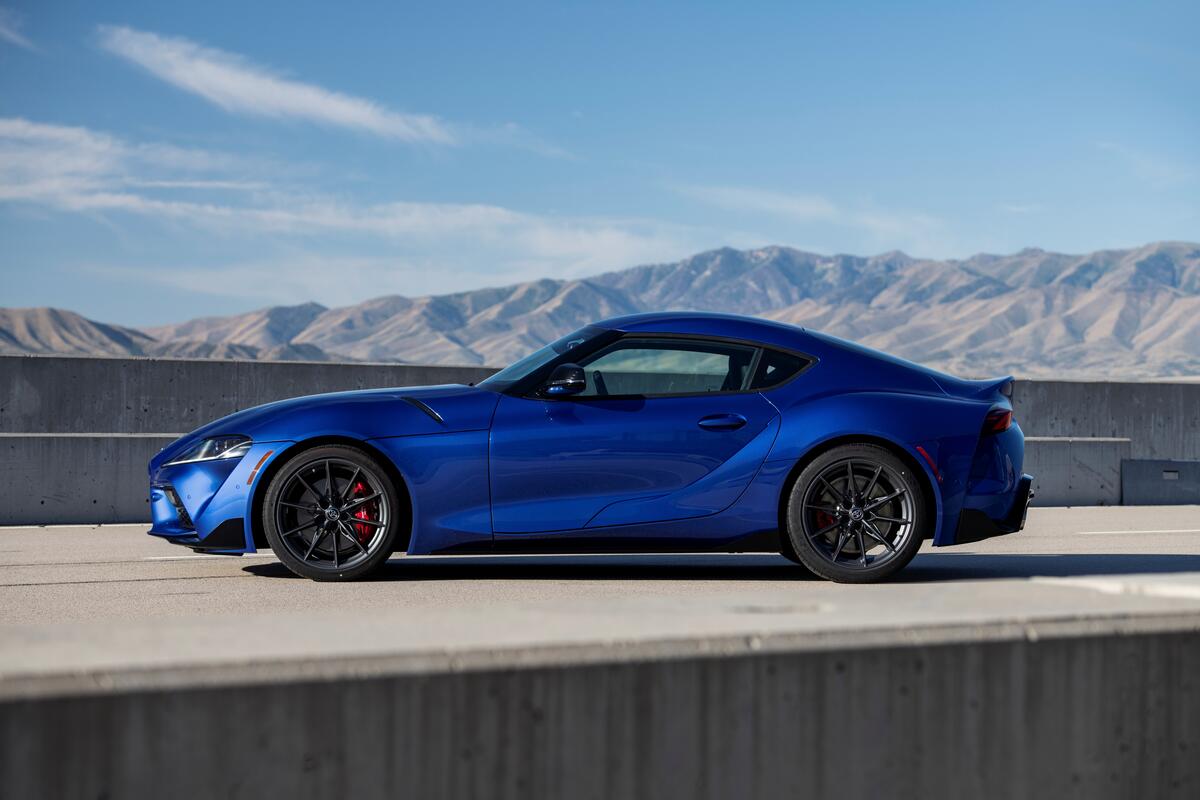
The Toyota Supra is a sports car from Toyota, built for fast driving. The conversation about “pulse” spacing is about how the engine’s cylinders fire in sequence. That timing can change how the engine feels and sounds.
“V8 burble” is the rough, popping/rattling sound people associate with many V8 engines. It happens because the exhaust pulses don’t come out evenly, so the sound has a choppy rhythm.
An exhaust crossover is a pipe connection that lets the left and right exhaust sides interact. That interaction can change the sound and how smoothly exhaust moves through the system.
A “tuning pop” is the little pop/crackle you hear from the exhaust when you lift off the throttle. It depends on engine calibration and exhaust design.
Primaries are the main tubes in a header right after the engine. Their size and shape help control how exhaust pulses move, which can change how the engine feels at different RPMs.
Flow losses are the “wasted effort” the exhaust gas experiences as it travels through the pipe. Bigger pipes can reduce that wasted resistance, which can help flow more freely.
They’re saying where you change the exhaust matters. Parts near the engine affect exhaust pulse timing, while parts farther back mostly affect how easily gases flow and how much restriction you create.
Here “catalyst” means the catalytic converter in the exhaust. It can slow exhaust flow a bit, but how restrictive it is depends a lot on whether it’s hot or cold.
A flow bench is like a test stand that measures how easily air can pass through a car part. It helps you compare different parts by seeing how much resistance they create.
Pressure drop is how much “push” gets lost as exhaust gas goes through a restriction. More pressure drop usually means the exhaust has a harder time moving through that part.
Laminar flow means the fluid moves smoothly instead of swirling around. When the exhaust is hot, the flow through the catalyst can be smoother, so it doesn’t block flow as much as it looks when cold.
Turbulent flow is messy and chaotic, like water swirling in a sink. Cold testing can make the catalyst look more restrictive because the flow is more chaotic than it is when the exhaust is hot.
A flow straightener is something inside a part that helps the fluid move more in a straight, organized way. That can reduce wasted motion and make flow easier.
Reynolds number is a way to estimate how “smooth” or “choppy” a fluid flow is. Higher values usually mean the flow becomes turbulent, and it can change as the engine heats up.
Term
attached vs detached flow
This is about whether air follows the inside wall of a port as it bends, or whether it peels away and separates. It affects how efficiently the air moves through the head.
Term
compressible flow
Compressible flow means the fluid’s behavior changes because the flow is fast enough that pressure changes become important. The host is contrasting this with laminar flow.
People sometimes think removing the catalytic converters will make the car make a lot more power. The host is questioning that claim and setting up why the airflow explanation doesn’t justify it.
Long-tube headers are exhaust parts with longer pipes. That pipe length can help the engine “breathe” better and can boost power depending on how the engine is built.
Even after a cylinder fires, the exhaust gases don’t instantly “settle down.” Their pressure and movement are still changing as they travel through the exhaust. Header design can take advantage of that to help the next exhaust event clear out better.
On an exhaust header, the “primary” pipes are the first tubes right after the engine. Their size and shape affect how fast exhaust gases move and how well the system helps the engine clear out fumes. That’s why people tune them for power.
A U-bend is the curved part of an exhaust pipe that changes direction. Curves can slow or disturb exhaust flow, so exhaust designers account for them. In this case, they’re saying the pipe size is changed again after each bend to keep performance consistent.
In header/exhaust context, “full length” typically refers to full-length headers with longer primary tubes rather than shorter “shorty” designs. Full-length setups generally shift the power band and can increase peak power at higher RPMs due to wave timing.
Runner length is how long the intake tubes are. Changing tube length changes which engine speeds get the best “breathing,” so it affects where the power shows up.
An intake runner is the individual tube in an intake manifold that directs air from the intake plenum to a specific cylinder. Its geometry (length, diameter, taper) is used to tune the engine’s airflow resonance for a target RPM range.
They’re talking about designing the intake so the air has the “right kind of momentum” in the right spot. That momentum can help push more air into the engine when the intake valve is opening and closing.
The intake valve closing is the moment the engine stops letting air in. Tuning tries to make sure the cylinder gets as much air as possible before that moment.
Here, inertia just means the air is moving and it wants to keep moving. The intake shape tries to use that moving air to help the engine draw in more charge.
They’re using a made-up/garbled term, but the point is real: changing the port size near the valve changes how the airflow behaves. That can improve how effectively the engine fills with air.
The Ford GT40 is a famous race car from Ford’s history, known for being built to win endurance races. People still work on it today, including making replacement parts. That’s why it shows up in a conversation about sourcing or producing older GT40 components.
The intake manifold is the part that channels air into the engine’s cylinders. Its design can help the engine breathe better at certain RPMs. In this discussion, the host says it doesn’t have the big, direct relationship with compression ratio that some people believe.
Your engine has valves that open and close to let air in. “Intake closing” is when the intake valve shuts, and changing it changes how much air the engine traps—especially at higher RPM.
LIVE
It is two guys grad podcast. He's gonna burn. I'm really be a man. Appreciate y'all grabbing some time with us today
Dude, we're doing a little myth busters action on one of the things that we love to discuss and that would be engines
Yes, indeed the old power plants and man. There are a lot of old
Old-timey stuff. We probably learn growing up about engines and probably had her, you know, her uncle who'd you know
He'd bang gears all his life in the in the old 55 shimmy
Tell us how it's really done back in the day. And then you have science numbers data
you know
Real is real analysis on you know airflow because what do we oftentimes say right when they break down an engine and
Kevin, you know this more than anybody
You know as as a kid that learned from my dad my dad first said it was just a big air pump son
It's just a big air pump. And you know what he's right
It is it is what what gets wild
and what's so fascinating kind of you know spent a lot of my career an engine is
Just how many
Interactions there are that you can't necessarily see like you put a set of headers on right? You're like, oh, yeah
I got more flow. This is great
But there's a lot of interactions a lot of wave dynamics, right?
That they're happening. Yeah, right. And so in that air pump, right? You got the piston. It's pretty simple, right?
It's syringe is sucking the air in what's not
Perfectly clean. You don't just suck it in close the valves and then close
You know push the piston up same thing with the exhaust like there's a lot of valve overlap
There's a lot of
Remaining they call it residuals a lot of exhaust still in the chamber even though you've opened the exhaust valve
And so that hot gas takes the place of cold fresh gas and it's hot
So it wants to ignite, you know as the piston piston is compressing
So anyway, there's so many interactions in there that it's wild of all the years, you know that I spent
On the engine side at Ford. I was still a learning curve
All you're always figuring out something new you you have a hypothesis
You want to try something out you go on dyno and get some results and until you break it down with all the different sensors
So, you know what flows and temperatures and this and that's are in all these different places
Sometimes the interactions are interesting because maybe you got a net positive
Maybe you got a net negative, but it's because of not just one thing like oh, I changed my cam time
I put a bigger valve in like usually it was like a couple things and they were like pro and con and how did they stack up at the end of
the day
But right it is interesting man. I never forget one time a local guy here from Colorado
They made it fairly big and NASCAR. You remember furniture row racing
Initially the team built engines out of Denver before Hendricks picked them up and made them
You know use all the same the same, you know engines and I never forget after being with Hendricks
They came back in in one of the guys was my buddy
You know a hot rod or street racer guy that I knew for for years
He said you want to see something wild man probably shouldn't show you this
But this is the technology we have with NASCAR today
And he pulled up this computer program that was watching this engine over a period of
You know 7,000 8,000 9,000 rpm and watching
Every way that the engine was breathing every way that the air was working
Efficiently and working non efficiently and how they would keep you know
Trying to move the air through how velocity mattered where air would tumble
Where would get congested where they'd be backflow and all he's saying is going
You know going on in the engine that all these different times and how air flow
So dramatically got affected by all these variances
It was so wild to watch and so interesting to see that that all this like you said is interacting with one another
One cam change would make air do wild things
You know up in the head or if you sped it up too fast
It would tumble off the floor of the head or you know wild things like that
It's weird to watch the interaction of what happens
I was under the assumption like a lot of guys were growing up that bigger is better
You know a bigger cams bigger head more volume more cc's a bigger runners. Yeah, that that is all just you know nonsense
In a day, we're going to break a lot of that down and I'm excited for it
Yeah, so we've got man one of the sharpest sticks
In the cup man. We've got adam christian. We've had him on before
So, you know back in what the early mid 2000s, uh, you know for it had their modular 4 6 it made like
You know
No horsepower whatsoever
It was a great architecture, but it just didn't capitalize on key things like
You know the cam positions were poor it made a kind of a crappy port last adjusters were in the way
They didn't spin the rpm blah blah blah blah blah blah, right?
Uh, so, you know myself in advance when I was there and then a few years later adam and the production side
Really put the computer and the modeling together so you could run not you know
10 combinations on a dyno over several weeks. You're running
Thousands thousands tens of thousands maybe even millions of combinations on a computer
To really suss out right all those different interactions
And then you find these little islands like if you go to plot all these different combinations
You find these islands where
Things like come together right where all these things come together and give you these
Right and so then you're trying to track islands across the power bands, right?
Well enough islands let's take a break so we can get into it with the uh with the man himself
All right more on that immense two guys grads podcast. He's kevin bird. I'm willy b grabbing number two led pencil, man
We're going at it next
It is the two guys grads podcast. He's kevin bird. I'm willy b and a
I I love this man's haircut. Just like me man
Uh, it's loot. He's follically challenged
But when it comes to uh, when it comes to everything else, especially in the car world
He's a man. He's top tier top notch. He's got it covered. Uh, like that head of his
My man adam, what's up, bro? How are you? How's it going? Yes? Good to see you. I'm good, man
How often you get called dave draymond from disturbed?
ah, that's
Uh, not often. I always like to tell joker people. I think I look like bruce willis like every other bald guy, but
Not true
I did go as uh grew from uh
What's that show the minion show for how oh, yeah for halloween when your house a lot closer
Oh, hey, thanks for yeah, thanks for taking the time to jump on the podcast excited to uh to talk to you today, man
Yeah, thanks for inviting me guys. Appreciate it. What's gonna be this gonna be fun because you know, maybe we start out with just kind of those little
I don't know things you learn from right like you said your uncle or
Right the guy that worked at the machine shop or this guy or the magazine, right?
I remember I read every single book and hot rod magazine
I could get my hands on from smoky unit to how to build horsepower to this to that
And right so much of that stuff was spot on
Uh, they didn't always have the science behind it
and so much of it wasn't because
I did a bunch of the stuff out of the magazine followed every step and man, they had it wrong a bunch
I was like y'all got to be leaving out a couple steps
Yeah
Man, and it's tough too, man
Like you know, we said in the intro you you make a change
And it's usually interacting a couple different things
Uh, you know, there's like I said, there's wave dynamics that you can't see
And you can change your timing a little bit and what once
that change might have been
A negative if you change some camp timing and something else together that would be a positive and so
Oh, man, there's not necessarily a hard rule for a lot of things
Uh, I'm sure there are for some
But others are well, it depends, right?
So we've got adam here who's run millions of different simulations on the engines and lived it in the dyno
Where you got and you prove it, right? Like and I think one of his big claim to fame is
Uh, when he really got into diving into the modeling
Was how accurate his predictions were once they got to dyno
And that was a big I think monumental right in those early 2000s 2010
I think coyote came out in 2011 and that thing jumped from what was the original horsepower on four six?
Adam, you know got five liters so a little bit more displacement, but like 30
34 35 maybe maybe 40
As some high octane gas. Yeah, we were coming from
We were coming from the three valve, right? So I think Mustang three valve at the time was 300 horse right 305
Something went lucky. You got a good one. Yeah, and then that jumped up from
First coyote five liter made what like four
30
we uh
I'm talking about we actually underrated it a pinch
um
Did it go out at 411
Or 416 I forget no, I could have been yeah, I mean it went up a hundred horsepower
Like a hundred horsepower at least right
Yeah, give or take. Yeah, you know 10 plus. I just can't remember the exact number now
I think it was 411. Yeah, now this is all production trim catalyst
You know, we can always make horsepower on the aftermarket
You just take off the corks and the emissions into this and the durability
But to go from like equal equal
To just throw a hundred horsepower at it at an oe level
It was pretty monumental and of course that thing is just kept finding power
Right all the way up through gt 350s and whatnot
So hold on man. Just keep it over a big step
You make it as generational leap because that four six was straight trash
Right, that was straight. You just pull it up put a you know dumpster lid on it and haul it away
um
You guys
There's a lot. There's a lot in between that that and that coyote
Because that was a time where horsepower was was in demand, right and you know, there was there was the market that changed
500 was the number everybody was reaching at the time
So you guys had to start and create something and I'll hand it to you
That sucker as small as it is
That thing is a beast that little badass makes all kinds of horsepower, especially when you start boosting it
You made it you made it a notch better than most of the engine doubt at the time because you took away all the damn
About train out of it. So yeah, man, we don't have push rods
You can wind the snot out of it and that's what scared all the chevy and dodge guys was like wait a minute
They don't have push rods
Uh, oh that means that means more rpm. So what made you go that route?
What was the thing that that made you want to build something that far?
Away or that big of a departure from that four six trash that you you guys were working with
Yeah, the the four six and actually our surrogate as we were developing was you know
It had the gt 500 cylinder heads on it, which were the same that came off the cobra r
Back in the day and we're on the four gt too. They're based all the same head the four valve head
But if that valve chain went even though it was overhead cam it went completely unstable around 5700 rpm
That's forward word for the crap blew apart. Well, yes
Yeah, if you were to hang on it, let's go for too long. You're absolutely
Yeah, you guys I mean you guys
You see it on push hard motors all the time right valves just start bouncing and all of a sudden the
Torque curve just goes like that right in certain cylinders that start misfiring things like that
So yeah, the the biggest improvement hands down
You know because I mean most people know now right coyotes shares the same bore centers as the modular
It went down the same machining line. We we couldn't afford to you know buy all new machinery things like that. So
You know it's still a modular at heart, but the the cylinder head really the valve train and the vct
Right the cam phasers that was the big unlock
Yeah, and once you get you can have a phaser on a push rod, but you're only going to get dual equal
So you're phasing in taking exhaust together. So you're kind of constrained now once you can do separate
Wow now think about your valve overlaps
Right and you can advance one and retard the other and vice versa and so
So many new combinations and what it does to move that air to move that air in and out is is
Unbelievable at that point
And most people don't know but that's what we call a dual equal
Uh vct right where both the intake and exhaust move together
That's really only for fuel economy. It's not a performance
Set up the set up the performance setup would be if the intake moved only
right
Having both means you get your cake and you eat it too
You can you can have your fuel economy and your performance by being able to move it both independently
But with them being hooked together and that that actually kind of leads into one of one of the
I don't know if it's a myth, but it's one of those kind of tidbits. I wanted to throw out there for everybody
Your exhaust cam centerline wants to be 108 degrees. Oh, that's a that's a popular cam, right?
Is it 108?
It does not care if it's a two valve or a four valve
It doesn't care if it's supercharged or turbocharged. It doesn't care what rpm you're turning it pretty much wants to be 108 degrees
So if you have a dual equal vct and you start trying to move the whole camshaft
You're pulling the exhaust away from where it wants to be
For for wide open throttle, right? Once you're kind of up on the cam what we call up on the cam, right?
Once you're out of the torque hole and you're up with peak torque and above it wants to be 108, baby
That's one of the downsides of the dual equal setup is
It the intake wants to move a lot as you go through the rpm
But the exhaust does not want to move at all and so the tug of war between those two limits
How much performance you can actually get? Well, that's actually
Let's say a little bit new for me, right understanding intake because you're you're trapping
The fresh charge right think about I don't know waves coming up on the beach
If you wanted to like capture some you got to trap it right when when the wave comes up you got to
Trap it versus what letting it slide back down again, right? So it's timing and with different rpms
Right, it's it's a different dynamic
So you want to be able to move that trapping to catch as much of the air in the cylinders you can but the exhaust side
What what kind of dominates that exhaust valve wanting to just hang out in the same spot? Well, you've got um
The the first steps you go through the blowdown that doesn't cost you anything, right?
So it's actually choked flow
So you got a you got enough pressure ratio that the valve is actually choked
So you're at mach one all around the opening of the valve and that's the exhaust valve open
You're trying to just let everything
Get out of there. You're trying to blow it all out. You don't want to push it out. You want to blow it
right then you want
the valve sufficiently open when you start pumping right and so
What hat and that that point is always in the same place in the crank, you know, it doesn't matter what engine you have
It's always in the same place
So what happens is if you aren't blown down enough by the time that piston really starts moving
The way to make more power is open the valve sooner and so
Um, it's all about valve area
So a four valve has far far far more curtain area around the valve than a than a two valve
So if you look at a two valve
Typically the exhaust camshaft is going to be 30 degrees longer in duration than a four valve
All right, because the four valve can blow down so much faster
So what I can do is I can leave the valve closed longer make more power
In the expansion stroke
But still get it blown out of there before the piston starts moving right really moving
And because when the piston is going through it's the bulk of its stroke
That's where all the pumping work happens and that shows up as basically like friction
Right, it's costing you power to push that air out. Yeah, let me let me jump in there because I don't know a lot of people think of it
Yeah, like when he says blow down
The piston is being driven down, right? So you're building a bunch of hot gases
You open the valve you start to open it takes time everything takes time you open the valve
You want it to just escape out the valve without having to push
With the piston up because that's going to rob horsepower, right?
So these are those things of timing like when can I open that exhaust to let it get out?
But if I open it too early, I'm not getting the push down
I'm not making the power and if I wait too late, then I got to push all that crap out of there
And I'm losing power like so critical on the timing and that's why these phasers can really
Dial in every speed, right? So do you open it multiple times throughout that action or just
Once during a window? No, it's just one opening event, right? It looks just your typical
Um, right, right, right, right. Okay. We sure as heck would like it to be a square wave though if you could do it
You know, that's what I yeah, I'll train guys a hard time
Like if it could just go instantly open and then instantly close that would actually be the best that
That shape, you know that kind of curvy shape
But that's just to keep the valve training under control, right?
But from a dynamics perspective of valve or from a tuning perspective
They would rather it just be a square wave boom boom open close
Yeah, the valve train loads are so high you have to gently
Scoop up a valve essentially right and start pushing that sucker
Right full open and then you have to
Set it back down so it doesn't slam and bang and durability. So anyways, yeah
It doesn't give you just this instant open all at seven thousand rpm. Yeah. Yeah or eight or you know, yeah
Yeah, and cup motors will throw the valve they toss it right because it's called loft
So they'll throw it two millimeters, you know, whatever that is and in human units
But they'll they'll throw it over the nose of the cam
It doesn't even touch and then they just catch it on the other side
But they it's amazing to catch it before it shuts. So I catch it on the cam
And then set it essentially set it back down
Yeah, right because you smack that valve enough times it's gonna come off the stem
You know no adam
So we talked about trying to get how do we get the exhaust out, right? So we don't put any work into it
um
One of the common myths I've heard over over years all over time over time is
Uh engines like a certain amount of back pressure
Is there any validity to that? Yeah, so I forgot I was going to put this disclaimer out
sooner
Not saying that people don't see what they see
That in these mythbusters, it's more of they're just attributing it to the wrong thing
Right
And this this is this is one of the and you you you missed it several times kevin
So like I'm never denying this that we don't see these things on dyno
It's just what actually is causing these things, right?
So that's a really common one drives me crazy, right? The engines like back pressure really typically what's happening is when you add back pressure
What you're doing is you're adding a muffler or you're adding more exhaust pipe, right? Like a lot of times people think like oh, I ran
Uh, just dumps, right? I ran four into one headers with dumps right out at the trans
And then I put some tailpipe on it and it liked it. I like back pressure
No, you're changing the tuning, right? You're changing the exhaust tuning. You're not
You are also increasing the back pressure a little bit. Yes, but that is not what the engine is actually like changing the wave dynamics
You're changing the wave dynamics how the how the air is reflecting in and out and it's very very
High amplitude waves that are bouncing in up and down this exhaust system and where the exhaust system ends
Changes how it tunes and so like even when you stick a muffler
Like say remember old fox buys a muffler is about mid body, right? They're kind of in the middle
That putting that muffler there radically changes the tuning of that whole exhaust system versus putting it at the end
Which is like where modern cars are, right? So doing those kinds of changes
Changes how the thing tunes, you know put an age pipe that we know those kinds of things are tuning changes
But a lot of times what people attribute to back pressure changes are actually tuning changes
Yeah, because you get the valve open you get a pulse of exhaust wave
Goes down the primaries all the way out until it sees
Atmosphere right and then it bounces back. So think about changing the length, right?
Like I said, where you put the muffler or your cutoff now your wave is going to be crashing at a different point
And again, it kind of ties in I assume with maybe some of your valve timing or other things
Yeah, of when you're trapping either exhaust in the cylinder or trapping it out of the cylinder
Right and a lot of times, you know, you'll saw your exhaust off and what you'll do is you'll put that reflection at a bad time
And it'll make a big torque hold
You know and usually you'll see these torque holes at like
2000 3000 rpm, right? You know make the car feel really sour
And then you'll go and put a full exhaust on or do some other kind of change like oh, I really like that back pressure
I really woke up, you know and really what you got rid of that torque
It was tuning that caused by tuning
So where's it better to put them in the in the middle of the middle of the car or at the at the end of the system?
You know, what's what's it really it really depends on which engine right? So if we're talking v8s
What they care about the most hands down is is actually their headers
And in how long they are and all that kind of stuff and then next they care about where
Their h-pipe is and what whether or not they have an h-pipe or an x-pipe
Um, because if you leave them separated that whole tailpipe will violently resonate, right?
And so you can get nasty torque holes, man
Hey, we gotta come back. He's that tells difference between and for some they're they wouldn't know this difference between an x-pipe and an h-pipe
All right, there is a difference. All right another myth buster on the way
It's the two guys garage podcast kemper really be we're back after the break
It is two guys garage podcast, he's kemper bird on willy b and what is better h-pipe or an x-pipe
Just one of the myths. We're about to bust. Let's get into it with our man adam adam. Amen
It's been cool picking your brain so far. You left off kind of well teasing us about an x-pipe and an h-pipe
You want to cue us up as to which one's a little bit better? Yeah, and the location you mentioned, right? So what yeah, true
Yeah, the the answer is it depends
um
so for this
I used to work in I used to work on nascar and
Some tracks they'd run an h-pipe and some they'd run x
What the way to think about it is the the h
You end up with this length that rattles
Back and forth that so that the horizontal part of the h is its own length and its own tuning and its own slug of air
And it can bounce it gets
Basically, you're you're sort of firing bank to bank with a v8, right? It has that weird firing order where it's kind of jumbled
Right, it's not even fire like a v6
But what it'll do is kind of makes the plug bounce back and forth. It's talking about the it was 18436572
Yeah, well god's gift that all of us once you blend it together. Yeah every 90 degrees
um, right, but
When you look at a bank and that's what's tied together into a head is odd
Yeah, you got a 90 a 180 spacing and a 270. That's right. It's that's really weird
You got a couple pulses close together bundled up and then you got a big space and one kind of traveling all on its own
And but when you blend them together, then you get that evenness
Yeah, and that that's what gives you that v8 burble sound, right is the the uneven firing per bank
So you can use that rattling back and forth of the horizontal part of the h-pipe to your advantage
But you'll pay the piper somewhere else, right? It'll work against you somewhere else
Almost all tuning will work for you in one place and against you in another. You got to you know, you always have to pay the price
So you have that and then an x-pipe is
Makes those two banks communicate
Harder, but it'll also make the two downstream pipes your tailpipes will be more even
Like they're it's easier for them to use both banks from a flow perspective, right?
So if I were to summarize the x-pipe would flow potentially better
Right, even the two banks. So maybe a little bit less restriction, but you might get a tuning pop
Benefit from the h right and it it all just kind of
A lot of times we want to mess with that stuff a lot of it's package driven
It's like well, where can I fit the h-pipe or can I fit the x-pipe?
And a lot of times if you're going to do the x it's going to force you a little further downstream
and so
you know really you want to
You want to bring the banks together typically in a typical rear-wheel drive car
You want to bring the banks together as soon as you can, right?
There is such a thing as bringing them together too soon like if you just took the two headers and just
Brought all eight primaries together. You don't really want to do that
But you can't typically in a car, right?
So it's it's more like bringing them together as soon as you can
And a lot of times with an x you're going to bring them together a little later than you could with an h
So a lot of times it's just how you can make it fit
Um, so sorry, that one's kind of a non-answer
But it's I all I can tell you is I've used them all to my advantage one way or the other
It just depends on your on your situation that said my coyote. It's an x-pipe. It gives that nice even sound
I've got try y stepped headers in it that I made myself and
Can you tell us the size the diameter size of 1 7 8th?
Versus two inch and and what that does to flow and how it affects
Effects that moving of the air and in that back pressure
If you will you mean as far as in the primaries we're talking about primaries
Well, both primaries and the exhaust we mentioned x pipe h pipe
Something other people do with exhausts is make it bigger, you know, so we're three inch exhaust
So how does that affect what's going on? Is there any myth busters in in there as well?
Just normally bigger is better, right? Is that always the case and in in general?
Yes, for the most part
bigger is better so
Area goes with diameter squared and flow losses goes with diameter to the fourth
So the flow loss of the pipe goes down really fast with diameter, right?
So even a quarter of an inch in pipe size will get you a big change in
In flow loss, but that needs to be downstream where it's more steady flow, right? So yeah, you've got tuning upstream
You've got flow and back pressure downstream
Right, so certainly after the h pipe go ahead and go as big as you think you can stand
And get your back pressure down as much as you can
But also keep in mind that the pipe typically isn't the biggest
Part of the flow loss, right? It's usually your mufflers your resonators that kind of stuff
Not the pipe itself
So I see that a lot of times, right people go huge on the pipe, but then they'll still have a terrible muffler owner or something
Yeah, yeah, yeah
And here so here's a fun to bit the catalyst
when you if you were to flow a catalyst on
um
On a flow bench like cold
It will look like it is around 70 of the flow loss of your whole exhaust system
So you say like get that thing out of here. It's terrible, right? But when it's hot, it's actually one third of the flow loss
Because it's actually a laminar flow element. So that's a whole big nerd rabbit hole to go down
But what happens is when you flow it cold, it's actually turbulent
And so it will look like it is a bigger pressure drop than it actually is when you're running on the engine when it's hot
When it's actually running laminar
So a lot of times, you know, you'll do flow bench work and you'll blame the the catalyst for too much of the back pressure
essentially
So explain that real quick. So laminers, right if you look at whatever molecules if you could trace little molecules of
Of a fluid
Typically when they're flowing they're bouncing all around and it's kind of chaotic
If you can go through a flow straightener, that's when you get that like perfect
Everything is flowing parallel to each other
Right least amount of losses. So you look at a cat. It's got all those holes in it. So you've got a flow straightener
So that we get but how does it go?
Laminator to non-laminar depending on temperature. What's happening there? It's based on what's called Reynolds number
It's a it's a number. So if your Reynolds number is over 2,300, then you're in the turbulent regime
And that is a function of density velocity
And viscosity
And those things all move around with temperature and the temperature difference is big enough between cold flowing and a running engine
That's enough to push you from being way over 2,300 to being under 2,300
Um
It's the only place in the entire engine anywhere any time that can ever be laminar
So you'll hear people talk on the flow bench about flowing cylinder heads and I'm like, oh, it was laminar
It sounded nice and smooth. No, no, no, no, no, it's always always turbulent
What you're hearing the difference between is
Attached and detached right either the flow is attached to the port and making the turn or just detached
but is always assuredly in the turbulent regime which
Flow only changes shape three times. It all has three different flow shapes
laminar turbulent and compressible compressible is when you're going over mock point three
engines
operate entirely in the
turbulent
to compressible regime
They never operate in the laminar except for those catalysts
And it's it's a function of the
Area of the walls of the catalyst versus the total cross-sectional area when that ratio gets high enough
The flow has no choice but to be laminar
There's just not enough room for it to basically do this. It's kind of a way to think about it
So with that right everybody thinks i'm going to cut my cats off and make huge power
Is that the first thing? I mean emissions aside
Legality aside, is that the first thing you should go do to make power?
Or is it a smaller factor than many other things?
Let's say for a v8 first thing is get some get some headers on it and like say you got a pushrod v8
Hands down most everybody knows this right the first thing to do is get some long tubes on it and put in some overlap
Right get a cam of some overlap
You know you can do that my uncle taught me that when I was 14 right he took his 454
powered big block powered
Pick up truck and he's like hey 100 foot pounds
All I had to do was a camshaft and a set of headers
And that's it's totally true right but the headers are what enable that overlap if you just put that cam in with
No headers it'll sound good, but it won't actually make any more torque right
Um, so that's where you should start start with the tuning essentially
But as far as getting back pressure down
In in the uh exhaust side. Yeah the easiest way is
Unfortunately cut the cats off
But I mean there's still 30% of loss
Yeah, but it's not it sounds like it's a third of the system
Not necessarily three-fourths of the system if you do it on a cold test. That's interesting stuff man
That's some weird. That's that's some wild science in there right
Somehow it behaves differently because it's hot right and all goes back to this nerd number the Reynolds number
Um, we won't dive too far into that one, but yeah cool. All right, so you you mentioned on yours, right?
And will he asked right you got one in seven eight you got two inch you got bigger
Right how big on the primaries of course that I'm sure it scales with engine
But you have stepped headers and you have try wise so maybe explain that a little bit
Yeah, that's another thing I picked up from NASCAR to tell you true. So stepped
It's a it's a small it's a nuanced thing. It's small
But basically what it does is it decreases your flow loss as you go down your primary because the exhaust gases are
still expanding and slowing
And the more orderly you can do that the the effectively lower the back pressure will be there's also some tuning tricks
You get with it. So generally like for coyote, you know, my uh
Primaries come out one of five eights, which is really small, right? Willie's like I'm not even small
We didn't put a coffee through that
But what is that? Yeah, right? So they start one of five eights and they go out to one in seven eights
So it's a three step, you know, five eights three quarter seven eights
You know, so you basically want to kind of start at whatever your
Your cylinder head's coming out at give or take right and then slowly step it out
So essentially what you do is each time you have a bend section, right?
Because you make it out of a U bend cut off your piece, right?
So essentially each piece you just go up a step
Generally just how is it it's done
So on a on a coyote like yours, right said it's small
So you got a, you know, whatever 500 ish
five liter
What do you think that step is worth like three to five horsepower kind of thing or maybe even a little bigger
Yeah, no, it's it's more in the yeah
It's more like a one two percent
So we actually did ran my headers against the best aftermarket ones you can get and I made eight horse more
eight so
Yeah, nice and that's where the try why versus a really good
Unstepped try why constant
Try wise are broader, but they don't tune as hard. So that's why you tend to see
Four into ones like on drag cars because they tend to run a very narrow rpm band
Maybe if you run a wider band a lot of times you'll go to a try why so they
They don't tune as hard. You don't get as much power over that narrow band, but they'll act better over a wider range
so that's
Packaging and you can't get long tubes and there's catalyst light off
What would you consider a coyote header?
kind of a hybrid
Of a metaphor and a and a header or try why or what's in there now? What's in there?
Like from production. Yep
Back in the day back in the very early we called them
Swept but separated. Yeah, so they have a little bit of separation if you look at the headers
And they're worth about six horse over over a log
so
Okay, all right, and then what would you say on a coyote like equal if you did uh full length
Over a coyote header. So you get six over a log
You get if you do full length you get about it's around 15
And then if you put it the matching camshaft you get about another 15
So all right, cool out of that little tiny thing that's doing something. Yeah relative to the base setup. Wow
All right, so that's exhaust right that's exhaust side and and you know, we've talked about wave dynamics. So clearly
You tune things. So where is the wave crashing and when?
Same thing on the intake side, right? You got runner lengths
So you can't just say what's the right runner length because well, what rpm do you want it to hit at?
So you're gonna, you know tune for let's say, uh, whatever 7 000 rpm, but you're gonna fall flat at maybe 2200, right?
But there's a lot of wave dynamics in there. So adam, maybe you can kind of give us a little pointers in there
Um, kind of things that come to mind with me. Obviously, there's runner length, but there's runner diameter
So how does length and diameter kind of work and then for a little while that I remember in the early 2000s
I think the cobra even had more of a trumpet
So it would go from port size and it would grow and diameter as the runner increased
Uh, so where is the sweet spot in there?
Yeah, and just for everybody we're talking intake side, right? Yes. Yes
Um, okay. So there's a couple rule of thumbs one every 10 millimeters of runner length is about 125 rpm
So it's it's not much right if you look at 10 mils. That's you know, it's less than half an inch
so
Uh, that's that's 125 for rpm move in your in your peak power
Um, so, you know, if you if you run something, you don't like where it's at
You can kind of calculate. Well, how much do I have to add or subtract to get it to move?
So as the runner gets shorter your rpm goes up, right? Most people intuitively know that
Uh, as your diameter goes up your rpm goes up
Um, as your displacement goes up your rpm goes down all else being equal
So if you take the same intake from, you know, the 302 and put on 350 or 351
automatically your power rpm is going to drop
Not because of airflow or anything else. It's actually how the tuning works
between the intake runner and the cylinder
um
The taper so the great taper debate has been lots of
Lots of holy wars fought over that. So whether or not you take the intake run
Taper like that or you keep it straight
straight runners tune harder
But they tune over a narrower band. So kind of like the tri-y, you know on the exhaust side when we're talking about that
um
What we tend to do is a straight runner that's straight most of the time until it gets near the port and then it tapers down
To the port. So it's a little secret sauce here. So just speed it up. Is that as it goes into the port?
No, it's you're what you're doing. This is real nerd stuff guys. Uh, it's called what we call it localized high inertents
So you you want what you call my mama?
Oh
So everyone knows, you know intuitively generally you want a smaller port, right? I mean if you can if you can do it
Um, I mean as far as from a tuning perspective, right? Everyone knows like there's there's a thing is going too big
right, but it's because you're you're also moving the tuning as you go, but
essentially like if you if you consider you have like a fixed amount of volume for your whole runner
You want to put most of the volume actually towards the open side towards the plenum side and then you want the
Port to be as small as you can handle and you taper
Over, you know on the order like a four inch section between the two
So as you head towards the port you start getting smaller over about four inches
And what that does is it when when the intake valve is closing
And you're trying to pack that cylinder with air
Using the inertia that's in the port the rest of the runner has actually already turned around and it's already going the other direction
So you kind of get this like stretching effect and by making the port
smaller
You know down there near the valve. It has higher what's called a Nertans
So that's like a inertia if you think about in the fluidic system
Look, I'm gonna take I'm gonna take his a Nertans and add it with some tomato and ketchup grab a quick bite to eat
And we're gonna catch up with you guys on the other side of the break an extra segment if you will grab a snack
We're going long on this one with adam. All right
We'll be back in just a minute on the two guys garage podcast. He has no idea what he's talking about
It is the two guys garage podcast
He's kevin bird on will it be and we have our buddy adam on adam
How do people reach you? We're going extra in this segment
But real fast
How do people follow some of this crazy cool knowledge that you're uh, you're shelling out free of charge I might add
And I I have almost no presence. I think I have a youtube channel
Uh adam see I think I've got I've got a website called llama bite where I make old gt40 parts as a hobby
Um, if you want to check that thing out, but uh, otherwise I try to stay off the socials
Yeah, don't blame you man adam's just so
He's just a walk-in dictionary of yeah engine stuff man, and he didn't you don't need anybody, right?
He was telling us during the break y'all not gonna believe this the compression ratio
Really doesn't have that much play on anything. I almost hit the floor. I'm like what compression ratio is everything
This man might be drinking on the job. I don't know adam. Um, what say you about compression ratio?
Come on man. Give us the scoop
Yeah, it's just one of those pet peeves, right like lately. So I got a son now. He's he's six
So we'll sit back and watch engine masters or whatever, you know
um
you know, I'm trying to get him kind of into the hobby but uh
Some things get you excited because you always hear you always hear explanations like oh, well, you know
That's just not the right camshaft for the compression ratio or oh if we just had more compression ratio
This intake man, you know, it would have liked this intake manifold more or something like that
And I can just tell you guys I have run every combination under the sun and those do not interact
Like at all like, you know, your intake does not interact with what your compression ratio is
Um, your your camshaft hardly does. I mean, it's it's very small. It's all it's all decimal dust
Let me let me throw this at you and then you could dispel whatever's been
Trapped in my head for a long time
I always always under the impression
Because it's it's trapping your your intake closing is trapping. Yeah
um
And compression ratio right it you trap too much
With too low an octane and you're gonna knock right
Right, so if you've got a big cam
You're bleeding off on the low
RPMs correct lower RPMs, right? You're you're hitting hard. You're trapping hard up high
So in my mind, I always think a good combination is a little too much
Compression ratio with a little too much cam. Yeah, you're you're totally right
Because you can bleed off when you're not limited down low, but you still pick the power up from the compression ratio on the cam
you're absolutely
um
Yeah, there's kind of a funny thing
All engines in our in the world that we work in right can never do any better than 80 by magic efficiency
You know 3000 rpm and below so down there
Kind of all engines tend to be the same
Um
The only way you're going to it doesn't really your runners or or anything down there. It's it's all the camshaft okay, and you're right like
Make a like say adding intake duration or something you could make that
Uh trapping even worse and but what that what that'll do for you is it'll
Um make you less knock limited now. You're not going to come out ahead though, right?
You're not going to make more torque. No
You'll you'll you'll ride that line of how much torque you can make but maybe more power at the top end
Yeah, I mean we're very aggressive with compression ratio. I mean you guys have probably seen right we got truck motors running
87 octane with 12 to 1 compression right that's production, but it's what yeah. Yeah, that's that's what f-150 is doing
Wow
But 12 12 12 the one compressor you run at 87 octane
But that's that's hot hot riders are just throwing up right now. If you're yeah, you're also a muscle car guy right now
He's like
But that's being able to really control spark because you can spark retard your way out of yeah, right?
That's what four knock sensors and direct injection which helps quite a bit, right?
And would you say there's some amount of intake?
valve
trapping tuning
I can kind of bleed off a little that is knock or is it just all in spark?
No, it's not it's not something
In we ever we ever consider you always just trap it absolutely as much as you can
And couldn't look to vct. You can do pretty well, right?
Well, Adam deal with the knock, you know
I just want to tell you as two kids that grew up in the late 80s where all these stupid cars had 85 as the top mile per hour
Instead of one compression you would think that the compression would matter it does matter
Kevin and I went through the low compression era. It sucked everything was slow. Oh, yeah compression itself
Yeah
compression matters and it but the only thing it interacts with really is like your octane, you know like
That's all i'm saying is there's no like
Oh, you know this carburetor would work better with this compression ratio or something like that. No, no, no
well on a on a on a two valve cam, so I think we've we've
kind of assessed that your compression ratio can interact
beneficially with
With a cam it'll show up in your knock tolerance as far as like especially, you know with a distributor car with no
no knock sensors like
Right, it's going to knock around three grand, right? And so
Yeah, old school stuff. Yeah, and then compression ratio typically like down the lower six seven eight compression ratio
Are uh to one is what like three four percent per compression ratio
But then it kind of flat lines as you get up to 12 and 13
As far as performance. Yeah
It really really starts to get flat after 10 like dementia returns after 10
um
I did I did voodoo too, right the the 5.2 gt 350 motor and we went to 12 on that one
That was the first one and that was for we went from 11 to 12 and that was for about 10 horse
Yeah, but to go from eight to 10 you're picking up somewhere around six seven maybe eight percent
Right
Yeah, exactly very steep. Yeah, so people. I haven't seen the curve if you look out there you can probably find if
If you look and uh, if you try to look up a copy of haywood's book
He'll have a compression ratio curve in there and you'll see it's basically like a parabola
right and it goes flat as you
As you get up there above 10, but it gets very very steep like the difference so like uh
You know, I have a model a it was four to one compression stock. I took that baby to six and you thought I'd put a v8 in it
like
Yeah, but I think all the other things we talked about like compression ratio with an intake or a header or some other thing
They don't interface. Yeah, it's just octane octane and maybe some trapping on the intake side
So all right, so the last one maybe we dive into is
Right on the cylinder head. That's like what everybody understands is like the the killer for make and power
Right, you you have a good head good valve angle good port blah blah blah
So in there, there's a whole lot to unpack and we can't really get into all of it
but there is this idea of hey man, I want the cylinder head with the best flow
but
We know in some regard that it's about getting the air and the fuel mixing
And right distribution in the cylinder is critical
So there's this real balance between
Good mixing good motion in the cylinder because once you ignite it it has to travel then just
Blow up right wherever the spark plug is at your kernel at your flame
You got to get that flame started and burning
But then it has to travel and burn everything else in a very short amount of time
So there's a sort of mixing in there. So mixing is usually counteractive
to flow so
Where do you stand on that right because you can get a bunch of
You know marketing numbers our cylinder head flows this much
But there's this hidden mixing part. This might be the hottest topic of all. So good thing. You brought it up. I guess or
I'll probably never
Uh, I will tell you that the entire coyote family that includes, you know roadrunner
voodoo predator
For those that speak, you know for code names
There's not one iota of charge motion mixing turbulence built into that whatsoever every port was 100 percent towards
flow
And I actually learned that from working and racing
In the old days when we didn't have cfd when we couldn't simulate this stuff
We would do what's called water analog
So what you do is you set up a whole cylinder and it would be a like a sapphire cylinder that you can see through right
And we run a camera and lasers and you'd put little styrofoam balls in there
In the water and you would you would do an intake stroke
You'd actually breathe in the water instead of air and you could watch those balls move
Right and you could see the turbulence you could see what is doing
The good race motors those balls just go
Just straight line down. They don't they don't move. They don't swirl. They don't do anything no charge motions at all when you're doing
Um a performance particularly naturally aspirated engine
You know, you don't go after any charge motions. It's all about the flow numbers
Hmm. Yeah, so that's an interesting one because that's kind of what we would think is performance guys, but you look at
most production cylinder heads and they've got
Right features in there that create on a four valve typically tumble
Right or two valve naturally has because the valves offset to one side and it comes in the cylinder
It creates a swirl right so that's a mixing
Uh, so what is that primarily for just fuel?
So that's that's all for fuel economy and emissions and it's for part load
operation when you're throttled and it it is important
Um for those attributes at those times absolutely when you go wide open throttle
All engines burn at almost exactly the same rate the amount of time that takes for that
Kernel to get to the wall is almost the same for all engines once you're at high load
Um, so you don't adding mixing doesn't really help you much
Uh in terms of getting the burn rate up. Um
Now what does matter a whole lot is getting that spark plug in the middle and that's what a four valve really does
Himmy has its own crazy problems because it has two plugs. So it has two flame fronts, right?
That's a whole other deal. It burns quick, but yeah, it does has those client
That's so wait two plugs is not as good as one
Two plugs makes it very so you probably have noticed like two plugs makes it very
Twitchy with the knock. That's what you'll see with two spark plugs, but putting it in the center
Because knock happens in the end burn zone
It it it happens at the very end of combustion and it happens
Wherever it hasn't burned yet, right? That's where your air and fuel has been squeezed and heated
And then it lights and bang right goes off
So that's why you tend to see damage down around the rings and around the edge of the piston that kind of stuff
And what you'll notice is you'll see that it's in what we call the end zone. So if your spark plug is off center
You'll see that typically the piston damage will be the opposite side from that spark plug, right?
Well, if you put the plug right in the middle
Then the flame reaches the ends of the cylinder are kind of all at the same time
And so your likelihood of knock is actually lower
Right, you don't have this like offset
Chunk of air that's been squeezed and heated
And that's where you get the weird stuff with the twin plugs, right?
So the reason you put two in is because you you got those big honking hemi valves and you couldn't throw out where to put the plug
There's no good place. So you're like, oh hell that he's put two in there. So the
It's kind of a band-aid it works. No, it's kind of a band-aid because it's got it's got so much
Energy in there to burn in these two plugs. Yeah, it's so much bigger in these two plugs. Yeah
I have experience, you know, I've experienced with that, you know, we did we did our own two plug hemi hemi motor not too long ago
Yeah, some similar experience
Well, awesome, Adam. Man, we we just scratched the surface. I think we hit some of the big ones
We might have to have you come back and maybe dive in a little bit more nerd style into some of the other ones
But um, man, I really appreciate you having us on um, as we kind of mentioned earlier
Adam where he's got a full-on day job. He could care less about
right
Selling us something but he does have right his little side hustle because he loves old gt40s
So if you're into gt40s, check out llama bite his website and he's making legit like original stuff
That's hard to find so, you know for the few collectors out there with big dollars
That's kind of what he's playing around with but one of his passions. So you can check it out if you like to
Yeah, I'm gonna go out of the garage to fire up the old gt40 right now
All right, all right, man. Hey, uh, thanks for spending some time with this man
Definitely check him out and hopefully we'll have him on another podcast soon
Make sure you check out our show every weekend on discovery turbo. It's also available on discovery plus
Thanks our producer scoops senior producer. Justin Carter executive producer bob ecker
He's kevin bernard will he be in this is the extra long two guys garage podcast?
Yeah, don't forget check out our website two guys garage dot com and our social everywhere at two guys garage
The two guys garage podcast it's copyright 2026 print productions incorporated all rights reserved
Man, you know in high school, I sure could have had you as a buddy because I was a high school senior
That had the tunnel ram with two fours and a huge cam on a street car
Yeah, bro, let me tell you that was a rough go that dug out of the whole awesome about the same age, aren't we?
I think I would have been dumb back then. I probably would have been right there with you
We were all done, man. You know, that's the shot went right? It's my daily driver
Yeah, of course that's a ton of room
It's been it's been fun though, man
Because you know you try all these things and some of them work some of them don't you just keep on trying and learning
Next thing, you know, you're you know older and maybe a little bit smarter. I don't know
It's questionable. I couldn't believe how fast how fast it ran
You really like that back pressure
No doubt adam appreciate it again, man
We'll have to get you back and talk some really cool stuff. So we'll see
We'll see what kind of threats you guys get in the comments or whatever
Yeah, guys, I assume because there's a whole lot of people out there that have determined what they think is real
And as Adam mentioned, right? We all mentioned
You might have measured you might have experienced but you just don't maybe understand why and that's the cool part about the engineering
Being able to dive into this stuff at this kind of level
Yeah, you probably saw it. Yep. No doubt. All right guys
We're gonna call it today. We will catch you on the next two guys garage podcast
Take care
Two guys garage podcast is a production of britain productions for more episodes visit i heart radio apple podcast
Spotify or wherever you listen to your favorite shows
About this episode
The hosts and Adam Christian spend the episode dismantling familiar engine myths by focusing on what really changes power: airflow, wave dynamics, cam timing, and careful computer modeling. They compare Ford’s old 4.6-era limits with the Coyote’s big leap, then dig into exhaust tuning, header design, intake runner length, compression ratio, and combustion details. Along the way, they keep circling back to the same theme: many “back pressure” or “mixing” assumptions are really simplified explanations for much more complex engine behavior.
Grab your engineering helmet and slip on your nerd glasses for this deep dive into the modern automotive engine. Think your engine needs back pressure or a specific 'mix' in the ports? Think again. Engineering expert Adam Christian – owner of GT40 specialty parts provider Llama Bite – joins Kevin and Willie to dismantle the biggest engine myths in the shop. From explaining why engines never actually operate in 'laminar flow' to revealing why compression ratio is often just 'decimal dust’, Adam uses his background in NASCAR and Ford OEM development to show you where the real horsepower is hiding.