
BYD
BYD is a car company that makes electric vehicles. Here, they’re saying BYD is selling the most EVs in the UK right now.
VAT Tribunal ruling
This is a tax court decision about the VAT rate. The hosts say it ruled that charging in public should be taxed at 5% instead of 20%.
HMRC
HMRC is the UK tax authority. In this segment, they’re fighting a court decision about the tax rate on public EV charging.
ZEV mandate
A ZEV mandate is a rule that requires carmakers to sell a certain number of zero-emission cars. The episode says the UK hasn’t hit the target yet.
electric car grant
An electric car grant is money the government offers to help lower the cost of buying an EV. They say it can be worth up to £3,750 for cars that meet the rules.

BMW i3
The BMW i3 is BMW’s small electric car. This episode is looking at it as a used-car option—whether it’s a smart way to get into EVs or if there are hidden downsides.
Tesla
Tesla is one of the best-known electric car brands. The episode mentions it because BYD is selling more EVs than Tesla in the UK during the period they’re quoting.
Kia
Kia is an automaker and EV brand mentioned as part of the UK sales ranking. It’s included to show BYD’s position above other mainstream manufacturers.
Volkswagen
Volkswagen is a big car brand. The episode brings it up to show how BYD is outperforming it in EV sales in the UK.
market share
Market share means how big a brand’s slice of sales is compared to everyone else. In this case, it’s BYD’s share of EV sales in the UK.
battery electric vehicles
A battery electric vehicle is a car that runs only on electricity stored in a battery. It doesn’t have a gas engine to drive it.
plug-in hybrid
A plug-in hybrid can run on electricity, but it also has a gas engine. You can charge it like an EV, then it can switch to gas when needed.

Sealion Cline 7
The Sealion 7 is an electric car made by BYD. The podcast mentions it with other BYD models while talking about which EVs qualify for a government grant. That matters because it can affect the total cost of buying the car.

BYD Dolphin
The BYD Dolphin is an electric car from BYD meant to be a practical, affordable option. Here it’s just part of the list of BYD models being talked about for the UK market.

Byd Seal
The BYD Seal is an electric car from BYD, shaped like a sedan. The hosts mention it to highlight BYD’s range of EVs.

BYD Atto 3
The BYD Atto 3 is an electric SUV from BYD. In this part of the show, it’s mentioned as one of the cars BYD sells in the UK.

BYD Atto 2
The BYD Atto 2 is a small electric SUV that’s expected to arrive in the UK. The host’s main point is that it should be eligible for government-style purchase incentives, making it cheaper to buy.
grant territory
“Grant territory” means the car should qualify for incentives that can reduce the purchase cost. The host is saying the Atto 2 may be priced/eligible enough to get those benefits.
vehicle to grid
Vehicle-to-grid (V2G) lets an EV send electricity back to the power grid when it’s connected and conditions allow. In this segment, the host says BYD is bringing vehicle-to-grid capability to the UK, so the car can do more than just charge.
grid support
Grid support is basically helping the electricity system stay stable. In this context, it means the EV can help by sending power back when the grid needs it.
flash charging
Flash charging means charging the EV very quickly. The host is saying the Denzer Z is designed to take a lot of charge power fast.

D9 Denzer
The D9 is a specific car model mentioned in the podcast. It comes up during a discussion about EVs and which cars qualify for incentives. The main point is that it’s one of the models being talked about, not a detailed comparison.
0 to 100 kilometers per hour in under two seconds
This is a speed test: how fast the car goes from 0 to 100 km/h. The host is using it to show how extreme the Denzer Z’s claimed acceleration is.
10% to 70% charge in five minutes
This is a charging test: starting at 10% battery and reaching 70% in five minutes. It’s meant to show how quickly the car can add useful range.
UK electric car sales 2026 picture
Here the hosts talk about how the UK EV market is doing overall. They also mention which EV models are selling the most right now.
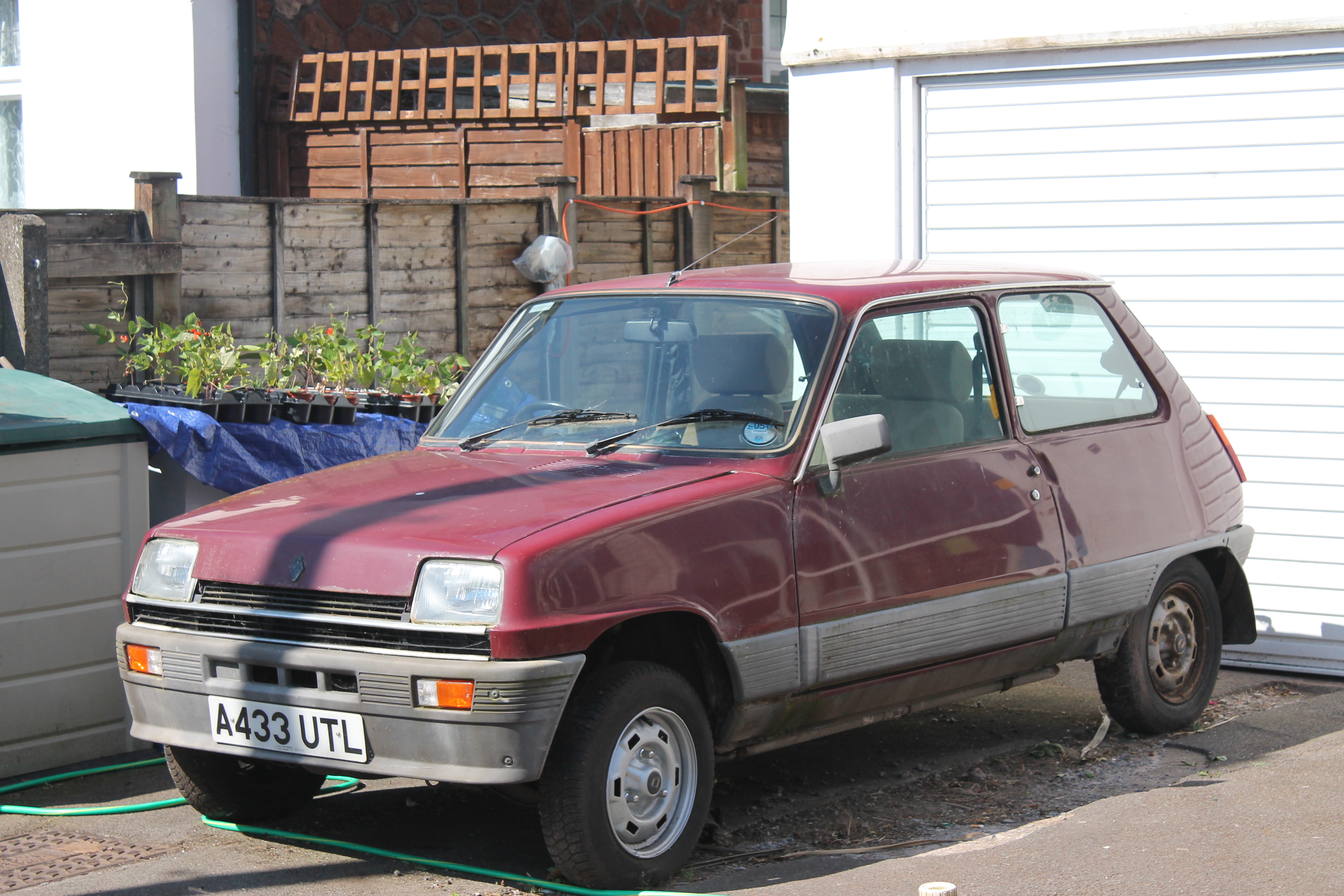
Renault 5
The Renault 5 is an electric car the hosts say is currently the top-selling single model. They bring it up to compare it with BYD’s results.
no off-street parking (no home charging)
If you don’t have a driveway or parking spot at home, you can’t charge your EV easily overnight. So changes to public charging prices matter a lot more to you.
VAT reduced rate for public EV charging
They’re talking about a UK tax decision that could make public charging cheaper by lowering the VAT rate. If you can’t charge at home, that directly affects what you pay each time you top up your EV.
kilowatt hours (kWh)
A kilowatt-hour (kWh) is basically a measure of how much electricity you used. Charging stations often charge you per kWh, so changing the tax rate changes the cost per kWh.
rapid charger
A rapid charger is a fast public charger for EVs. It usually costs more than charging at home, so it matters a lot if you don’t have a driveway.

Dodge Charger
The Dodge Charger is a large car from Dodge that’s built for power and quick acceleration. It’s often mentioned when people talk about what kinds of cars are changing as charging and incentives become more important. The key idea is that it’s a performance-focused sedan, not an electric car.
road tax
Road tax is money the government charges for using or owning a vehicle on public roads. The hosts say another road-charge change is coming in April 2028, which could make EVs cost more overall for some people.
fully electric
Fully electric cars run only on electricity stored in a battery. They don’t have a gas engine, and policy targets often count them separately from plug-in hybrids.
SMMT
SMMT is a UK automotive industry group that represents car makers. When it comments on EV targets, it reflects what the industry thinks will happen with sales and compliance.
credits
Here, “credits” are like proof that a car company sold enough EVs. If another company didn’t sell enough, it can buy those credits instead of paying a penalty.
penalty rates
Penalty rates are the per-vehicle costs imposed when manufacturers miss ZEV sales quotas. Because those costs can be large at high volumes, they can be built into vehicle pricing, partially passed to consumers and partially absorbed by the manufacturer.

Renault 4
The Renault 4 CV is an older, classic Renault model. In this podcast, it’s brought up because the show is talking about which cars qualify for an electric car grant, and the Renault name is part of that list. It’s not the same thing as a modern EV, but it’s used as a reference point in the discussion.

600 Fiat 600E
The “600” here refers to an electric Fiat model (the Fiat 600E). The podcast mentions it because it’s part of the list of EVs that may qualify for a grant. That can lower the purchase price for eligible buyers.

5 Renault 5
The 5 E-Tech Electric is a small electric car made by Renault. The podcast mentions it because it may qualify for a government electric car grant. That can reduce the cost of buying the car.

BMW E63
The BMW 6 Series is a more premium BMW car line. In this podcast, it’s mentioned because the show is talking about which cars qualify for an electric car grant. That affects whether buyers can get financial help when choosing a car.

Nissan Aria
The Nissan Ariya is an electric crossover, meaning it’s an EV with a higher seating position and more room than a small hatchback. The podcast mentions it because Nissan updated it partway through its life and added features like V2L. That can matter if you want to power devices from the car.
V2L
V2L means the car can act like a power source for things outside the car. In this segment, they say the Nissan Aria was updated to add that capability.
mid-life refresh
A mid-life refresh is like a “new version” update the manufacturer does a few years after the car first launches. In this case, the refresh added a new feature (V2L) to the Nissan Aria.

Toyota bZ4X
The Toyota BZ4X is an electric Toyota crossover. In this part of the show, it’s listed as a grant-eligible EV option.
52kWh battery
“52kWh battery” is how much energy the EV can store. Here, they mention it because it helps explain why that Renault 5 can qualify for the grant and land under £20,000.
battery generations
“Battery generations” just means BMW used different battery packs in different years. That matters because a newer battery usually lets the car drive farther on a charge.
60AH 22kWh battery
That “22 kWh” number is basically how much energy the battery can store. A smaller battery usually means you can drive fewer miles before it needs charging.
official range
Official range is the mileage an EV is rated for in lab test conditions. Real driving is different, so you often get less range than the official number—especially on older batteries.
real world
Real-world range is what you actually get when you drive normally. It can be lower than the official test range, and this episode uses an example to show that difference.
state of health
State of health is a way to estimate how worn the battery is compared to brand-new. If it’s around 85%, the battery still has most of its original capacity, even if it’s not as good as new.
94AH, 33kWh
This is the battery size for the 2017–2018 i3s. The higher “33 kWh” means more stored energy, so the car can usually drive farther than the earlier, smaller-battery versions.
motorway car
A “motorway car” means it’s suited to faster, steady highway driving. The host is saying the i3’s range can be tight on motorways, even in the better battery versions.
rear wheel drive
Rear-wheel drive means the power goes to the back wheels. That can change how the car handles compared with front-wheel or all-wheel drive.
carbon fibre passenger cell
The BMW i3 has a passenger “cell” made with carbon fiber. Carbon fiber is a lightweight material, which can help the car feel more efficient and agile.
heated seats as standard
“As standard” means the car includes that feature from the factory. It’s useful when comparing used cars because some options cost extra on other trims.
instant torque
Instant torque means the electric motor can provide strong pulling force right away. That’s why EVs can feel quick off the line.
iDrive infotainment
iDrive is BMW’s in-car screen and controls for things like music, navigation, and settings. It’s a big part of the user experience in BMWs.
battery health
Battery health is basically how “strong” the battery still is compared to new. If battery health is good, the car should still have most of its range; if it’s poor, range will be noticeably worse.
i3 degradation
Battery degradation is how the battery slowly loses its ability to store energy over time. The host is saying that, under good conditions, the i3’s battery can decline at a relatively modest rate.
DC rapid charging
DC rapid charging is the fast-charging method you use at DC fast chargers. Using it a lot can be harder on the battery over time, which can reduce how much range the car has later.
BMW ISTAD diagnostic tool
BMW ISTAD is a special diagnostic tool for BMWs. It helps a shop read the car’s electronic data so they can spot problems or confirm what the car is actually doing.
instrument cluster
The instrument cluster is the screen/gauges you see while driving. Here, it’s where the i3 shows battery health as bars.
charging history
Charging history is basically how the previous owner charged the car. If they used fast charging a lot, it can affect how worn the battery is.
rapid charges
Rapid charging is the fast way to charge an EV. Using it a lot can be harder on the battery than slower charging, so it matters when you’re buying used.
internal systems
“Internal systems” means the car’s own built-in battery readings. The episode suggests those readings might not be as trustworthy as a separate expert check.
range extender
A range extender is a small engine that generates electricity when your battery is running low. It’s mainly there to help you keep going, not to replace the electric drive like a typical hybrid.
kilowatt DC
Kilowatt DC is the power level of a fast charger that uses direct current. More power usually means faster charging, but the car itself can still limit how fast it charges.
public network
A public charging network is where you charge your EV away from home. The cost can vary, so they’re comparing those public charging prices to petrol and diesel.
Charge UK
Charge UK is a UK group that looks at EV charging. In this episode, they’re used as the source for a claim about charging costs versus petrol and diesel.
public rapid
“Rapid” public charging means a faster charger you use outside your home. It’s usually more expensive than charging at home, so it can cost more per mile.
off-peak tariff
An off-peak tariff is cheaper electricity you can buy during specific times, usually at night. If you charge your EV then, it costs less to drive.
ultra rapid
Ultra-rapid charging is the fastest kind of public EV charging. It can get you back on the road quickly, but it often costs more than home charging.
pence per mile
“Pence per mile” is a simple way to estimate what it costs to drive one mile. Here, they calculate it from electricity prices and charging speeds.
ZAP map
ZAP-Map is a service that collects information about public EV charging. The hosts use it to show how much different types of public chargers usually cost.
EV tariff
An EV tariff is an electricity deal meant for EV charging, usually with cheaper overnight electricity. If you charge at night, it can make driving much cheaper.
parts availability
Parts availability means how easy it is to get replacement parts when you need repairs. If parts are hard to find, the car can be stuck in the shop longer and repairs can cost more.
first tier tribunal ruling
A First-tier Tribunal ruling is the first official decision in a tax dispute. Even if it goes against HMRC, the case can still be appealed, so changes to prices wouldn’t be immediate.
upper tribunal
The Upper Tribunal is the higher court stage for appealing a tribunal decision. If HMRC loses again, prices might change, but it won’t happen overnight.
high voltage side
The high-voltage side is the EV’s battery and the main electrical parts that power it. The worry is that, years later, non-BMW repair shops might not be as equipped to work on those systems.
carbon fibre body
A carbon-fiber body uses a lightweight composite material. The hosts are saying that after an accident, repairing it can cost more than repairing a normal steel car body.
shunt
A shunt is a car crash or bump, usually at lower speed. The point here is that even a smaller bump can be expensive to fix on a carbon-fiber body.
pre-purchase inspection
A pre-purchase inspection is a careful inspection of a used car before you hand over your money. It helps you catch problems early so you can estimate repair costs and avoid surprises.

BMW i3s
The BMW i3s is an electric car from BMW. The podcast brings it up because people talk about it online and it may fit into discussions about insurance and ownership costs. It’s an EV, but the “s” version is the more performance-focused trim.
low range
Low range means the car has less battery left than you’d like. In winter, EVs often don’t go as far, so you need to be more careful about how much distance you have left.
VAT ruling
The VAT ruling refers to how value-added tax is applied to EV-related costs, particularly charging. The hosts discuss HMRC fighting the ruling and whether it could be reduced to 5%, emphasizing that a lower VAT rate on public charging would improve affordability and adoption.
public charging
Public charging is charging an EV at stations outside your home, typically in places like retail centers, streets, and highways. The hosts argue that lowering the VAT on public charging would make EV charging more affordable and help remove a major barrier that keeps some people from switching.