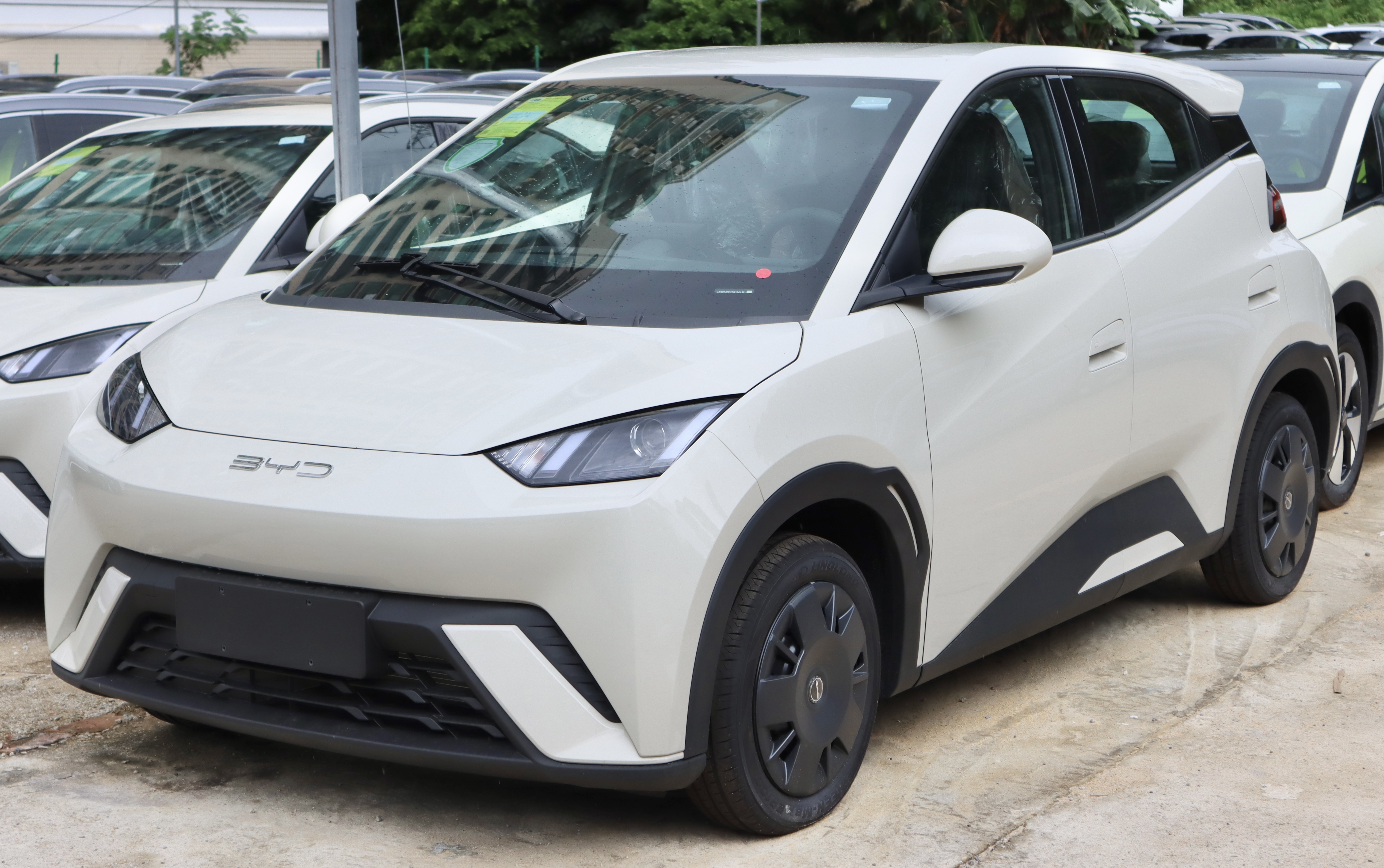
The Toyota Highlander is a family SUV that offers a lot of space and comfort. It's designed for people who need a vehicle that can carry multiple passengers and their belongings.
The Porsche Macan Electric GTS is an electric SUV that combines luxury and performance. It's part of Porsche's move into electric cars, offering a sporty driving experience.
The Subaru Crosstrek is a small SUV that can handle rough roads and bad weather thanks to its special all-wheel drive. It's a good choice for people who like to go on adventures and need a reliable car.
The Toyota Grand Highlander is a bigger SUV made for families, providing extra room and comfort. It also comes in a hybrid version, which is more fuel-efficient.
The Lexus RX is a luxury SUV that many families choose because it's comfortable and has a lot of space. It's known for being reliable and having nice features.
The Toyota Sienna is a minivan that families often buy because it has a lot of room for kids and their stuff. It's practical and safe, which is important for family travel.
The Lexus ES is a luxury car that is very comfortable and has a nice interior. It's popular among older drivers who appreciate its smooth ride and quality.
The Volvo EX30 is a small electric SUV that is good for city driving. It's designed to be eco-friendly and efficient, but it may not have enough range for long trips.
Charging is how you fill up the battery of an electric car. You can do it at home or at special stations, and it can take different amounts of time depending on where you charge it.
The Plymouth Voyager is a type of minivan that was made for families. It was popular in the 1980s and 1990s but didn't have many of the features we expect in cars today, like power doors or comfortable seats.
The Chrysler Grand Voyager is a minivan that's made for families, with lots of room for kids and their stuff. It's often talked about because it's a practical choice for family trips.
The Toyota Prius is a car that uses both gas and electricity to help save fuel and reduce pollution. It's one of the first cars to be a hybrid, which means it can go further on less gas, and many people talk about it when discussing green cars.
The Toyota RAV4 is a popular small SUV that's great for families because it has a lot of space and is dependable. People often talk about it when discussing good cars for everyday use and adventures.
The Toyota Camry is a popular car that many people use for daily driving because it's comfortable and dependable. It's known for being a good choice for families and is often talked about when people discuss reliable cars.
The Toyota C-HR is a small SUV that looks unique and is easy to drive around town. It's a good choice for people who want a compact car with a bit more height and modern features.
The Audi S6 is a fancy car that's designed to be really fast and fun to drive. It's a more powerful version of the regular Audi A6 and is often talked about because it combines luxury with performance.
The Ford Explorer is a big SUV that can carry a lot of people and stuff, making it great for families or trips. It's been around for a long time and is often mentioned when talking about vehicles that are good for adventures.
The development cycle is how long it takes for car companies to create a new car. It usually takes several years to design and test everything before the car is sold.
400-volt architecture means the electrical system in the car runs on 400 volts. This helps the car charge faster and work more efficiently than cars with lower voltage systems.
The Chevrolet Blazer is a stylish SUV that can fit a family and their gear, making it great for trips. It's been updated recently with new features, so people often talk about how it compares to other SUVs.
An extended range EV is a car that usually runs on electricity but also has a gas engine to help it go further when needed. This means you can drive it longer distances without worrying about running out of battery.
EV power trains are the parts of electric cars that help them move. They include the battery and the electric motor, which work together to power the vehicle without using gasoline.
A tax credit is a way the government helps people save money when they buy certain things, like electric cars. It reduces the amount of money you owe in taxes, making the car cheaper.
The Kia Sportage is a small SUV that's comfortable and has a lot of tech features, making it great for families. It's stylish and has been updated recently, so people often talk about how it compares to other SUVs.
The Ford Escape is a small SUV that is known for being practical and easy to drive. The 2017 version has different engine choices and tech features that many people like.
The Volkswagen Tiguan is a small SUV that has a roomy interior and modern technology. The latest version is designed to feel more upscale and perform better.
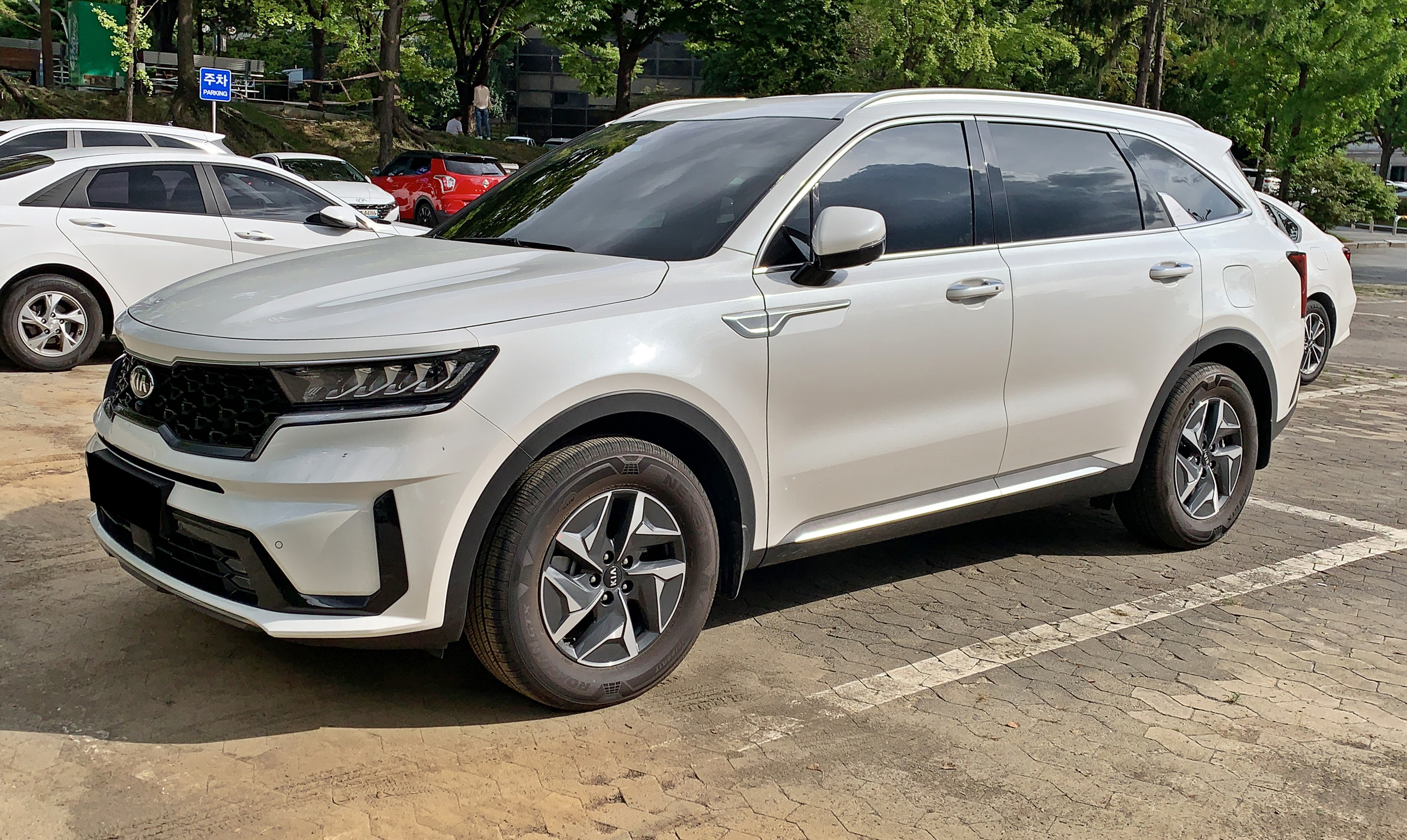
The Kia Sorento is a medium-sized SUV that can carry a lot of people and has options for gas or hybrid engines. It's popular with families because it's roomy and has good safety features.
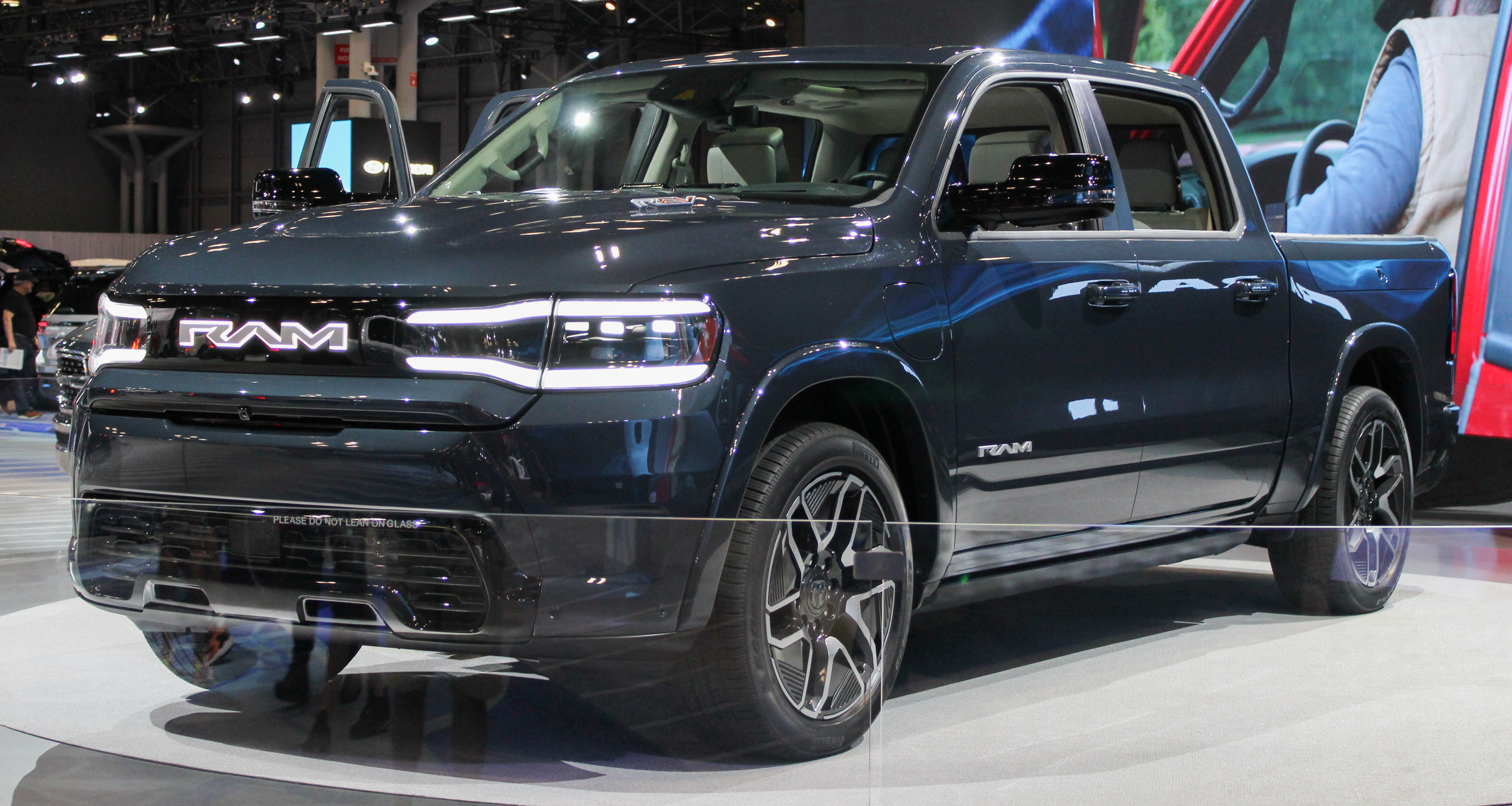
The Ram 1500 is a large truck that can carry heavy things and is often used for work or towing. It's known for being comfortable to drive and has a lot of modern features, making it popular among truck buyers.
The Mercedes-Benz EQB is a fancy electric SUV that has a lot of room inside and modern tech features. It's part of the trend of luxury car makers making electric vehicles.
The Volkswagen ID. Buzz is a new electric version of the old VW bus that many people loved. It's made to be spacious and family-friendly, and it's part of the trend of making classic cars electric.
The Chevrolet Corvette is a fast sports car that looks really cool and is known for being powerful. It's often talked about because it's one of the most famous American cars and is loved by car enthusiasts.
The Subaru Trailseeker is a tough car made for people who like to go off-road and explore nature. It's built to handle rough terrain and is popular among adventure seekers.
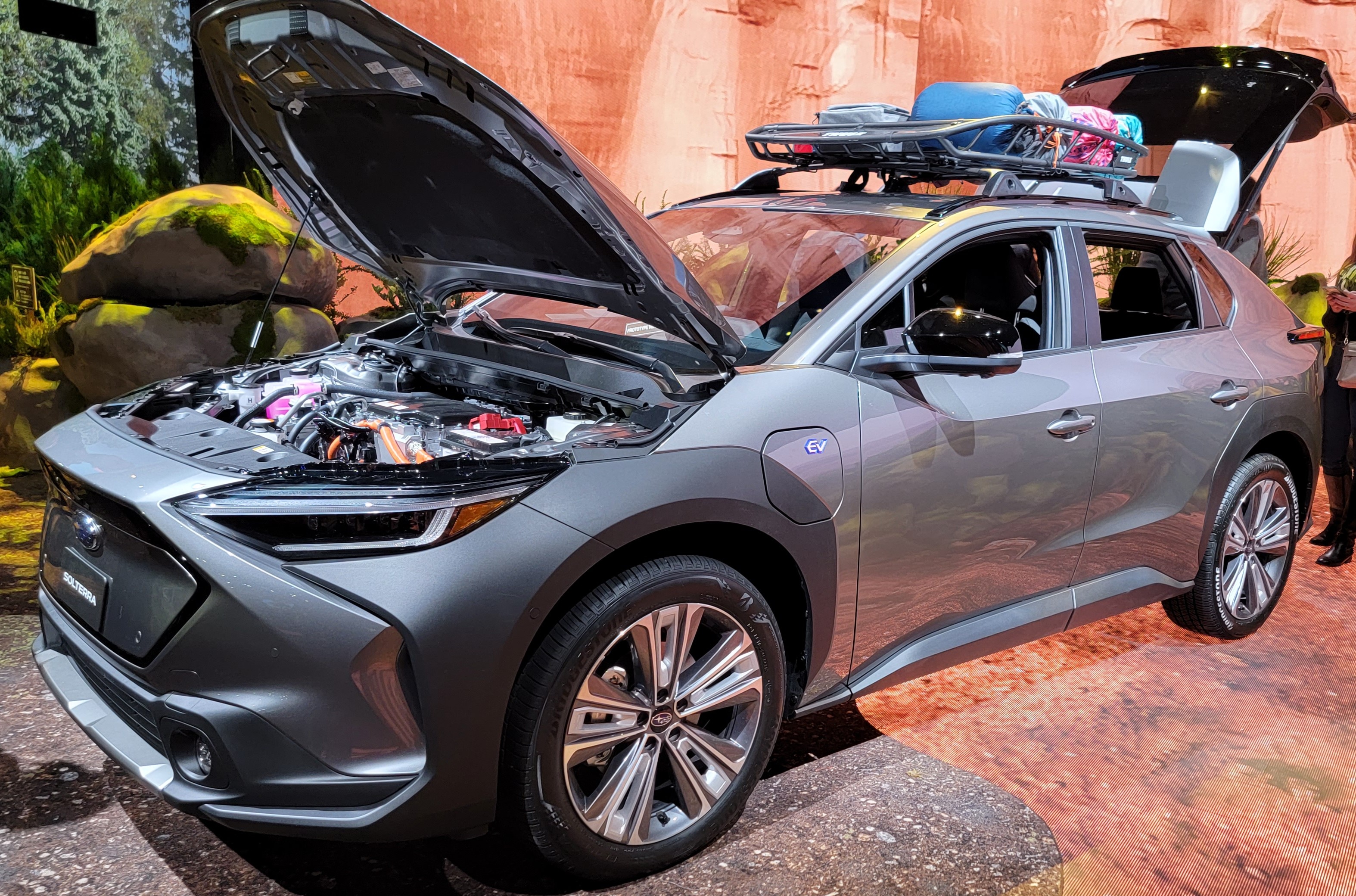
The Subaru Solterra is a new electric SUV from Subaru that uses electricity instead of gas. It has all-wheel drive, which helps it handle different road conditions, making it a good choice for eco-friendly drivers.
The Chevrolet Blazer EV is a new electric SUV that keeps the classic Blazer style but runs on electricity instead of gas. It's part of the trend of making older car designs electric and is gaining attention in the car world.
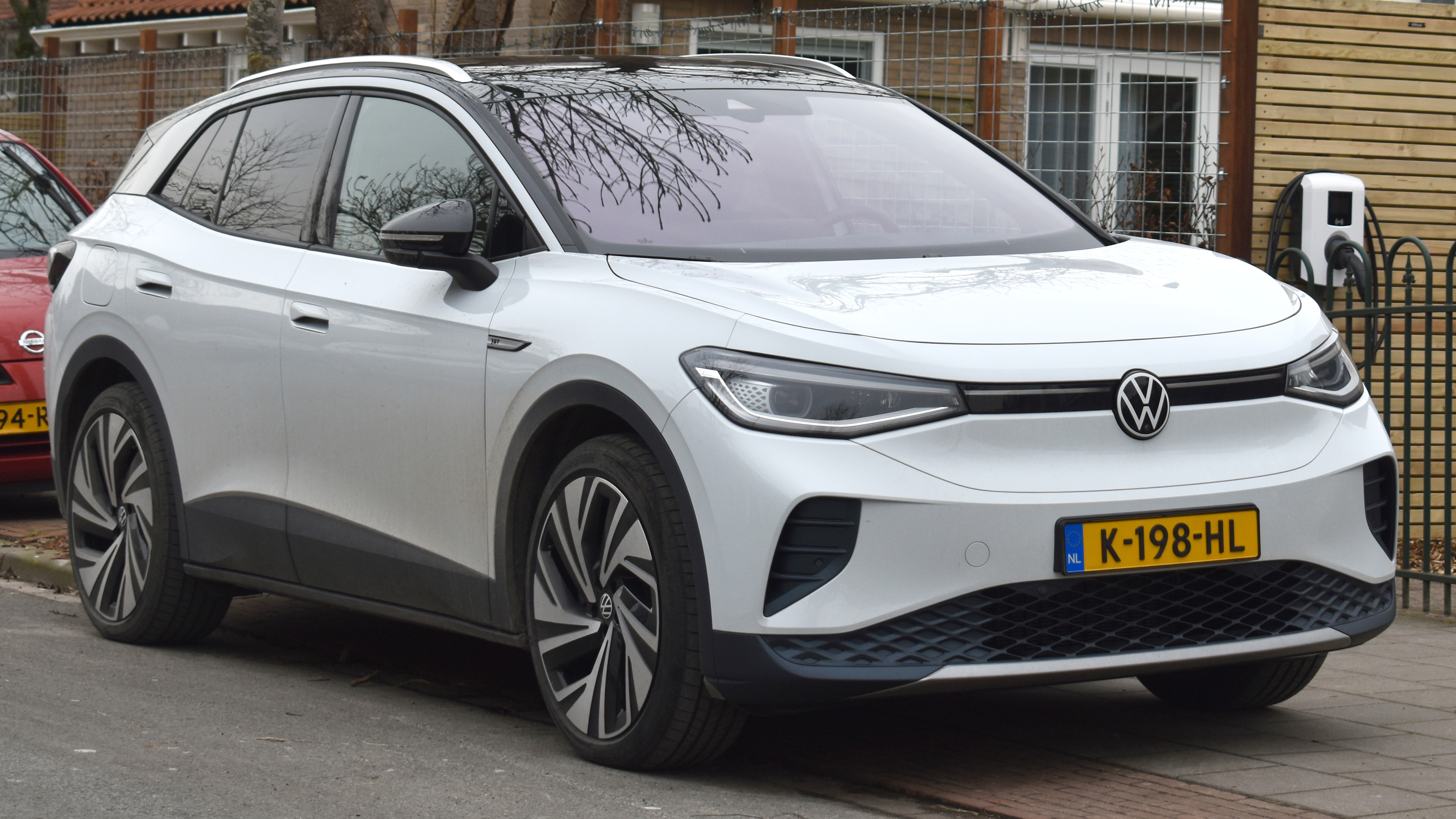
The Volkswagen ID.4 is a new SUV that runs only on electricity, which means it doesn't use gas. It's designed to be roomy and has modern tech, making it a part of the growing trend of electric cars.
The Tesla Model 3 is a car that runs only on electricity, which means it doesn't use gas at all. It's popular because it can go a long way on a single charge and has cool tech features, making it a big deal in the world of electric cars.
The Tesla Model Y is an electric SUV that has a lot of space and cool tech features. It's becoming popular as more people want to drive electric cars instead of gas ones.
LIVE
Welcome to another episode of the auto buyer's guide podcast. We're talking about the seismic shift in Toyota's lineup with an all new Highlander and why it's nothing like what you've ever seen before.
Also, do we have a few too many of what that new Highlander is in America without the tax credit to plug in hybrids makes sense anymore.
Conspiracy theories around Hyundai's Palisade being actually bigger on the inside than the grandest of Highlanders out there.
And a whole manner of other topics, including a fast food diversion later in the episode. Let's roll that intro.
So Travis, I thought we should start out today by talking about affordability or lack thereof.
And I think some of the unintended consequences we see in the auto market of this for those out there that don't know the average new car in America is now solidly over $50,000.
And I don't know if you saw the news because you were traveling a lot, but apparently one of the VPs at Toyota was quoted at saying that instead of two price increases the typical one at the start of a model year and then a one halfway through the year that we should expect three price increases on
Toyota's this year. So repricing every three to four months. And they firmly blamed tariffs and the cost of doing business for that.
Yeah, there have been a couple reports about the impacts of tariffs and what those have been and then of course how it's going to hit the automotive industry has sort of been an unknown just because of the structure almost lack thereof in this system.
All right, what parts how many times crossing borders it was assembled here or, you know, built here those are two different concepts.
Here's where it gets tricky though. Our job is to tell you how much things cost and even three to four months are numbers could be useless. That one is a little bit tough.
I feel like I've seen somebody put a QR code that says these are the current price.
But that's not that's not great for anyone watching and it's not great for consumers who are trying to make some of these decisions.
So when the market is so fluctuating and when the prices of everything are so unstable, essentially, I don't blame them, but man is that bad for the consumer.
Yeah, and it's only going to get more interesting. The twist with this is that I was recently driving the Porsche Macan Electric GTS, which is a whole mouthful.
And it's super affordable. Super affordable. Oh yeah, starting at 105 something.
But what what did really shock me was that Porsche is one of the few car companies out there. Interestingly, Subaru is another one that really will talk about buyer demographics, what their buyer looks like, how much they make and where they live and that kind of thing.
And the shocking part of this is that the Subaru buyer for a new car and the Porsche buyer are on average, not as far off as you might think, given the six figure price tag of this Macan.
For the record, a Macan Electric can have over $70,000 of options on it.
Which is an expensive whole car in and of itself.
Yeah, so you could take your $100,000 Macan up to 170 without too much difficulty.
Right.
And you can have it pretty quickly because they custom build in relatively short order. So shout out to Porsche for that one.
But apparently the average new Macan Electric buyer is in their mid fifties, high household income, suburban living, usually one or two incomes in the household.
It seems like they skew towards the sort of 1.5 incomes in the household talking average is there.
Yeah.
And the Subaru shopper, the only difference I could see is that the average household income for the Subaru Crosstrek shopper, which is the last one they told me about, that average household income was only about $100,000 less than the household income for the Porsche shopper.
But we're talking someone that's already making solid six figures on both sides here.
Yeah.
So we need all the incentive deals that come with financing.
Those are people who don't need, I mean, they really don't need to do any of the financing, but they say, hey, my money invested elsewhere is going to get a 7% return.
So why not take 3% on a 72 month loan if you can find it.
And I think this sort of reinforces something that I'd mentioned in the past where when we're talking about family focused vehicles, because we do occasionally get questions from viewers out there about family focused things since we try to jam car seats and everything we can and see how well kids fit in there, etc.
Yeah.
I mean, the best case scenario, and this is this is like a grand scheme thing, right, is that if the new car buyer doesn't have children, then how do the second or third owners who do have children end up getting the right car?
The answer is grandparents.
Yeah.
And that's what I thought to myself.
This explains some of the weird feature non feature things that we see in quote unquote family focused vehicles because we have the the Palisade hybrid out there and the Grand Highlander hybrid out there at the same time.
Videos coming up on both of those.
And there's a child seat video just in case you're wondering on the channel today by the time you're watching this video.
The Palisade has a ton of room and they obviously spent some time worrying about how do the second row seats move when a child seats there?
How does this move?
How does that move?
But then also they made everything powered because they're trying to chase this this affluent buyer into the Hyundai portfolio.
So then the seats are powered so it takes a small eternity and I don't know who's going to be there with their toddler going, okay, sweetie, let's let's be patient, sweetie.
The seat has to do its thing.
It's going to be whatever I just want to get it done and get the kid in and get out.
Also, cup holders in the rear doors, I think are the single dumbest idea I have heard of in quite some time.
I have to admit that's one that you kind of got me on board with because it's not something I'd ever thought of.
I don't have any children so it's never been a concern.
I go, yeah, it's in the door and then you remember it or you remove it on your way out.
No, no, no, that's not what children do.
I think the answer, though, to your moving seat problem is having a captain's chair set up instead of a bench seat.
That way you can send the kid through the middle while the seats moving.
That's probably the best case scenario.
But for some of these older folks who, you know, my back is already not as good as it was five years ago.
If you're trying to get someone in that third row, you don't necessarily want to carry them if they can move themselves.
But yeah, I don't know.
I don't think I think we're going to see the car specifically built for grandparents.
Well, I'm sure it's out there.
I think it's the Lexus RX.
That makes sense.
Yep, that checks out.
But it doesn't end up being, it's not like nobody is going to buy them who does have families and that manufacturers,
especially something like Toyota, who has an enormous lineup says, hey, you've got the family car for you because
inevitably someone in their 30s or 40s will end up buying a new Sienna or a new Grand Highlander or the new Highlander and say,
this is my family car.
Now, what do you think has a greater share of blue hairs, the Lexus ES or the Lexus RX?
Because I think it's kind of a, it's got to be a close tie for those two being the oldest in the business.
You know the old people with blue hair?
Okay, I'm just making sure we're on the same page.
I know gray hairs, but you're talking about the fun hip ones.
Actually, yes.
Well, just back when there were shampoos that had that slight tint of blue to excite your gray.
I think it ends up in the RX for sure.
Nothing against the ES, but sedans are kind of on the way out.
Is that because it's easier to get in there once you've had a new hip?
That's exactly it.
That's exactly where I'm going.
I think the ES, once you're in it, you go, oh, this is amazing.
But if you're at the dealership and you get in and out twice, you go, oh, do I want to be doing this?
And I think that's when folks will look at the RX.
I would take the ES, but I'm not yet one of those blue hairs.
And hey, we're not elderly bashing here, but it is an interesting point, I think,
because when we look at Palisade, and I really started thinking harder about it,
because I think Palisade is a fantastic family vehicle.
And in this pairing, Grand Highlander versus Palisade, I would take the Palisade
because it is so much roomier, also a shock, I actually have to say.
We'll get on that in a bit.
So much roomier than Grand Highlander for child seats.
I thought this would be the way to go.
But then there are those little twists inside that it's like this is clearly not made for small children,
even though there are these touches that are kind of going in that direction.
This seems like the vehicle designed for families with teenagers or adult children.
Like the second row is really comfy.
There's a lot of attention spent on the power recline and this and that,
and the ventilated seats, the heated seats, and the power sliding and reclining third row, and this and that.
And then you've got the cup holder where orange crush would be all over your lovely white interior.
Also, there's the whole white interior.
Sure.
I'm sticking with my no goldfish at the moment, but I know lots of people that goldfish all over,
that interior would look like Donald Trump's face.
Well, okay, moving on.
No, I'm going to hold you to that goldfish thing.
For all our listeners, for all our watchers, from beginning, he said there would be no goldfish in this vehicle.
No goldfish.
I don't think that's going to hold up.
And goldfish is a category, not a specific, right?
So if it comes in, it was a Cheez-It, and he goes, I said no goldfish.
We're not going to count that as an exclusionary subject.
No Cheez-It, no Cheez-It either.
No, again, it's a category.
It's the French snacks, or snacks in general, we can debate that later.
I can tell you the Plymouth Voyager, Grand Voyager, whatever the minivan I grew up in did not have power anything.
I don't remember what the vent layout was.
Obviously, I didn't care at the time.
It was a manual sliding door.
There was no recline in the seats that I can recall.
And my overall comfort was never consideration for the designers.
That's my take on it.
So it's a different world.
And you and I have talked about it.
Some of our colleagues who have children say, oh, I want heated seats for the kids.
And the kids who are in car seats, who they will be there for a long time based on the current standards, that doesn't do anything for them.
And I know my parents would never pay extra for heated seats for me in the back.
If I'm cold, grab a blanket, put your jacket on.
And also, I know who you're talking about now.
And my comment to them was, and I seriously said this to his face.
I said, if your kid is complaining about the lack of seat ventilation and seat heating in the second row and lack of seat heating in the third row, and you don't live in the Arctic Circle or the center of hell where you'd need the ventilated seat for sure.
Or you could understand it for sure.
And you are giving into this as your car purchased, then you're a bad parent.
Like, I just do not foresee a world where my kid is going to be allowed to come up to be and go, I demand whatever, because that's how it was phrased.
He was like, oh, no, you can't, you have to have that because, you know, they demand that my child demands that.
And I was like, whoa, whoa, whoa, who's the parent?
Who's the child in this situation?
Your child who is still sitting in a rear-facing child seat is demanding seat heating?
It's not just car advice that you will get from Alex.
You will get parenting advice and home improvement advice.
Some of it warranted, some of it unprompted.
But to your point, you're being rational.
Their butt's not on the seat that's heated.
They're like eight layers of plastic and seven inches away.
I would actually not be surprised if they had heated car seats in the not too distant future.
And that one could almost make sense to me.
But still, we're talking extra beyond extra, which is why we're losing affordability in the first place.
That's one of those bad parenting things, I think, because I thought to myself at some point on a cold night a few nights ago,
I thought, you know, it's funny that they don't have heated cribs.
And then it occurred to me, I'm like, that's a really good way to cook your baby, though,
because it's not like the toddler or the infant can go like, you know, let's turn it off myself.
I'm too hot.
We dropped three degrees here.
It's getting a little toasty.
Yeah, no cooked babies.
Let's not do that.
On the on the Palisade front, though, this did shock me.
And this is exactly why we measure leg room the way that we do.
And then we measure leg room in every vehicle that we attest.
And importantly, the seatback to seatback measurement, I think, is really critical in what we're doing now.
The Palisade is shockingly bigger than the Grand Highlander on the inside.
And that really shocked me because on paper, they look like they're fractions of an inch apart in terms of leg room with the Palisade having a little bit of a win over the Grand Highlander.
And then the Palisade hybrid being a little bit tighter.
But the battery positioning under the floor may adjust the leg room number.
And this whole bear with me, everybody out there that's listening, because this is a tricky one.
It affects the SAE calculated leg room number, but it does not move the seats closer together because the height of the floor and the height of the seat bottom cushion off the floor is a factor in the leg room measurement.
So when we're talking about jamming child seats, this child functionality part, you have five inches more room between the driver seat and the second row seats in the Palisade than in the Grand Highlander with the front seat in the Grand Highlander in the same place as the Palisade.
So second row seats slid all the way back, front seat adjusted 41 inches from the accelerator pedal on both of these vehicles, you get five inches more room in the Palisade.
That is that is a huge difference.
Yeah, and the one of the other things that you're getting in some of these vehicles is how well how much movement you can get on the tracks in general.
And then the fact that the second rows can shift and even some of the third rows can shift around.
And that's where that's one of my favorite features is, you know, not every not every family is going to be built the same, you know, everyone's tall, everyone's short, you know, or you're going to get this many in this category, make those seats movable.
And that way, if you have the tall side, you can stagger, you know, tall front, short, middle, tall rear, whatever you need to do to make sure everyone ends up fitting.
And obviously, parents should always be at front, they're the ones doing all the work.
So, yeah, I think just adjustability and variety amongst those seating positions is is a big thing.
And then, you know, I hate to say it, we are losing the bench seat, it feels like it's harder to find a seven or eight passenger vehicle six, no problem, all over the place.
And in that new Highlander, you can get at least at the moment, you can get a bench seat in one configuration, that's the XLE all wheel drive.
So even the most affordable XLE front wheel drive at the moment doesn't seem like there's a bench seat option.
And I go, I understand captain's chairs at the top end, even though you might have a large family and want all the luxury features, you know, again, look at the demographics, I'm sure there's some numbers there.
But why is the most affordable model, not the one that at least starts the bench seat.
And of course, you're talking about the new Highlander, which has gone in an interesting and different direction.
Now that the Grand Highlanders become so popular.
Yeah, so we are now fully battery electric.
And it is, it is kind of telling it's reminiscent of the beginning because the Highlander was one of the first elect or one of the first SUVs to go hybrid.
Obviously, it was in Toyota's lineup, it went Prius, then Highlander.
And now, of course, we have all hybrids in the Prius and the Camry and the RAV4.
But instead of the Highlander going all hybrid because of how that Grand Highlander took off.
And seemingly, I don't know if it's cannibalizing sales, but making less of a distinction between the two models, they said, hey, we're going to go Grand Highlander as the winner here in this internal combustion hybrid category.
So let's take the Highlander a different direction.
And I am curious about the naming convention, keep the Highlander.
That makes sense.
People know it for what it is.
But they're building this BZ family of vehicles.
That's what I'm calling it because there's the BZ, which used to be the BZ4X, then there's a BZ Woodland.
They didn't go with BZ anything for the CHR.
I still think that should have been BZ Sport.
And why not call the new Highlander, the 27 Highlander, battery electric?
Why not call that the BZ family or the BZ hauler?
Or, you know, I admittedly didn't spend that much time on it, but BZ family.
Why not?
I think it's because they're they're really walking away from the BZ name and the BZ Woodland is really just sort of the wagon version of the BZ.
So that kind of makes sense.
It's the same sort of thing.
Oh, BZ cargo.
Yeah.
So it apparently was originally at some point in time supposed to be one of this alphabet soup things.
It was like the BZ7X or something like that was what the the three row was supposed to be.
And the CHR was supposed to be a BZ3 something because we did see an early prototype concept thing of the CHR and some early renders of the BZ whatever the three row BZ was supposed to be.
And it's basically what we got is CHR and Highlander.
But this actually does before we dive into Highlander because we should deep dive into that.
I got this comment or ran across this comment on the channel today complaining about why is this turning into an all EV channel?
Well, their EVs are a huge portion of new car releases these days, even though the shine has sort of worn off the the EV rows, I guess you'd say to mix my metaphors there.
The reality is that it takes a long time to stop a freight train, and that's what auto design is.
So these cars that started their design process, seven to possibly 10 years ago, the trains finally coming into the station, whether the stations ready or not, and whether the station keepers changed their mind or not, we're rolling in.
So there is not going to be, I don't think, a slowdown in EV models coming that soon.
We have seen a few things be canceled or pushed off or hit pause buttons on, but there's still going to be some pretty significant EV rolls into the station here, even though the trajectory seems to be changing legislatively in America, simply because that's what was in the design pipeline.
I mean, to further that question, let me tell you what I have gone and looked at over the last few weeks.
It was the Volvo EX60, obviously fully electric.
It was the Audi A6.
That one's interesting because the six was supposed to be all electric.
They pivoted, but it's just the A6, not the S6, not the RS6, not an all road, and they have one engine option.
So even that, not that we're not covering it, but even that has been slimmed down, and then it was a Honda Prelude, so at least hybrid electric.
Then we have a pilot, which is a decent little refresh, and then an Explorer trimmer.
Okay, that's a pretty good variety.
This week, I drove the CHR, the BZ, the BZ Woodland, and looked at the Highlander EV, and then, so that's four, basically EVs right there.
Then I looked at the CX-5, the new one for 2026, and that has, again, one engine option.
So you look at where the development is, where kind of the more interesting things to talk about, because that engine is a carryover from 25.
So it's just, in a good way, it's a copy-paste.
So it doesn't garner the same amount of coverage, and that's just what we're getting put in front of us.
Let's get back to the Highlander for a second, because the Highlander, there are going to be a lot of Toyota haters that don't understand, again, how development cycles work.
And we have to go back to that and remind everybody, seven to 10 years on a development cycle, even if a modern mainline car company outside of China is rushing.
We're talking four to five years, absolute minimum for design, et cetera.
Chinese car companies will go a lot faster because they skip a lot of other steps, but that's for a different episode.
The reality here is that Toyota cooked up this Highlander thing, whatever the name was at the beginning, they cooked up this Highlander quite some time ago.
Before they saw that other competitors in the mainstream were really chasing high-voltage EV platforms in really fast charging.
Yeah, and that is going to be, I mean, if nothing else where the Highlander I think is going to fall behind is that it seems to have the same 150 kilowatt charging as the rest of the BZ family, which I think already is behind.
And I don't say that 150 kilowatts is unacceptable.
I think it's totally acceptable for most use cases, but if you're looking by the numbers, they are going to fall behind just about everything else that comes on the market immediately.
It's the new 50 kilowatts in terms of the charging standards and the expectations there, especially as batteries get bigger and vehicles get bigger, you don't get the same amount of miles per minute that you're stopped in charging.
So it's a 400-volt architecture where a lot of its immediate competitors, which there aren't a whole lot of, right?
If you look at what is more of a mainstream line three-row SUV, you look at Kia and Hyundai right away, but they're not on the same 400-volt architecture that we're looking at for Toyota on their brand-new model against some that have been out for a couple of years.
Yep, and I'm interested to see how do you think the third row especially compares with the Ioniq 9?
So I was pleasantly surprised by the third row, though I have to tell you, we were told it has a couch-style design to make it more spacious.
I actually found it plenty comfortable, all things considered, third rows are not the most comfortable place to be, and I fit, and I am one who does not fit in many third rows very well.
Second rows I don't really fit in. So actually the space there was pleasantly surprising because it's not enormous.
It is right in the same kind of spacing as you find in the Ioniq 9 and the EV9, but I still think there's more room over in the Ioniq 9.
That's one where it's tough. We take the measurements, but we need a giant spreadsheet where I go, yes, I did fit or no, I didn't.
Those sorts of things to try and remember because there's a lot of cars you look at, but I'd say the space is pretty good.
You'll be able to fit most people back there, but six seats or seven seats, so no three across in the bench in the back and certainly very few three across in the second row.
Yes, the big difference between these two I could see is this whole desire for road tripping, which I generally seem to dismiss.
Viewers know that, but I would say in a three-row vehicle, there's probably more of a desire because if you are somehow this magical family that has young children that has decided to buy a new car,
even though you can't afford it because, you know, all the myriad reasons we've discussed.
You buy your new car because you want to go on a road trip, et cetera, because flying with two little kids is, you know, kind of a pain and it's a challenge, which is why we're road trip to Los Angeles.
Or if you use your three-row and you have three kids or four kids, those are a lot of plane tickets.
Oh, nobody does that anymore. It's not the 1960s.
Then the DC charging times become, I think, a bit more critical because if we're talking 300 miles of range, we're really talking 200 miles before you want to stop and charge because you're starting at 100%.
You're going down to 10 or 20% to find that DC charge station, your battery, driving on the highway, of course, which is going to reduce your range from 300 down to, you know, 260, 250, whatever.
So that you pull into the station, you're going to have to be at that station for at least 30 minutes to recoup 150 to 180 miles of highway range and something like the Highlander.
That is a decent amount longer than Ioniq 9, which is only going to take 20 minutes to recover, actually a little bit more range.
And it's that spot above the curve where on Ioniq 9, it's going to take about 40, 45 minutes to fully charge and recover that full 300 miles of range,
optimistically in the longest range single motor model on the highway, whereas on the Highlander, you're going to be there, you know, a lot longer.
Yeah, so it's really that under 500 mile trip where it's not going to make an enormous difference, but over 500, it is going to start to add up.
Yeah. And I will say the in-laws live 110 miles ish away.
And in, but the over two mountain passes, well, three, I guess, actually technically three mountain passes away from where we are here.
So you really need almost 300 miles of range to do that as a high EPA range to do that journey from home to there and back without charging.
So we cannot do it, for instance, in the Volvo EX30 because the range is just too short.
We can do it in the Chevy Blazer, but it's a squeaker because it's like 288 miles of label range.
If you treat it gently and the tires are fully inflated, you can make it work.
It's not too cold.
Yeah, especially if you're visiting family members that don't have a place for you to plug it in or you're just trying to top off on 110.
110 is not going to do a lot for you in a regular just here's your grandchild.
Let's play for a few hours and got a split go back home kind of thing.
And DC fast charging, it's kind of annoying when you've got children that are screaming or you're worried about starting to scream in the back.
It is one of those things where I think it's easy to dismiss and I was probably more dismissive of it before I had a screaming child of my own.
I was concerned about it, but I think I was, I was, I am more concerned about it now because when the screaming is starting, you're just like, I gotta, we got to get this to a place where we can make the screaming stop.
The screaming.
Yeah.
And I think that is where I, I'm so disappointed this technology is not already out.
And it's going to be a slanted to gets there first.
It's the extended range EV, which is just a plug in hybrid electric, but, but the concept there is your everyday range fully covered and driven by electric.
But then when you hit the road trip, don't worry about charging, just go for a drive and it's not nearly as efficient as it is if it's pure electric or it's a hybrid and you know, on its own.
But that's what I think covers the mass adoption of EV power trains and then eliminates the worries about this extended range driving.
So you don't go, oh my gosh, I can't go to grandma's.
There's not enough time in the day because I have to stop and charge or, or, or I, I'm going to get there, drop the kids off.
I'll run to the nearest charging station, come back.
You know, I think it eliminates a lot of those concerns, but all of that is just my assumption because it's not yet.
Riddle me this Batman though, without, without the tax credits.
Is, is there a world where plug in hybrids and ER EVs, which is just a plug in hybrid everybody out there.
Is there a world where they make sense because I like plug in hybrids and I have plotted for a plug in hybrid to be our next quote unquote family vehicle for a while.
But I don't know if I'm going to do that anymore because there's no benefit without the tax credit.
The tax credit leveled the playing field and made these plug in hybrids about the same price generally speaking as the hybrid equivalent.
So if we look at the Hyundai Kia plug in hybrids, they've got a whole slew of gas hybrid plug in hybrid and in some cases even an EV version.
And when you look across the board, the plug in hybrid, you're like, oh, that makes a lot of sense because like the Nero EV is more expensive than the Nero plug in hybrid.
But with the tax credit, the Nero plug in hybrid was less than the hybrid.
You get similar fuel economy and you get electric range so you can use the electric range most of the time and then, you know, gas when you want to go on that road trip made total sense to me.
But of course, you know, I mean, multiple problems here, which I am torn on the whole tax credit problem because yes, it did spur the adoption of greener vehicles, which I truly believe in.
I believe that most plug in hybrids contrary to the bad press that was seen out there.
I truly believe in the statistics and surveys that we do see where they are being used in the United States, not in Europe, but they are being used in the US.
They probably do have a positive impact on emissions and consumption.
But they are also, as we just talked about demographically, a huge tax break to the wealthy because who's buying new cars and who's doing that section.
It's generally the wealthy.
So that that's that's a trick.
But but back on the actual mechanics of this, like, why would I buy a plug in Sportage over a hybrid Sportage if it's $7500 more instead of just going, you know, it all just buy a full electric Ioniq five and grip the bandit off.
So I think part of the answer to that question is actually another question we got from a viewer we have Alex from Dallas calling. Let's go ahead and listen to what he had to say.
Hi Alex and Travis. This is Alex calling from Dallas.
I'm looking to replace my 2017 Ford Escape with something that feels a little bit more premium without breaking the bank.
I've been really drawn lately to the redesigned Volkswagen Tiguan.
And I'm curious if you might have any crystal ball insight to how the rumored hybrid powertrain would compare to the fl our line turbo in efficiency and performance.
Additionally, with my annual mileage amounting to five to seven thousand miles, would a hybrid powertrain be worth the potential price premium over the our line turbo?
And probably great content. I look forward to catching the next.
So it's a great question and honestly within it a lot that we can dive into.
But for this instance, I want to talk about the is the hybrid worth it over the standard engine option.
And there is always a premium cost, right?
There's more components.
There's more built into this.
And I consider a hybrid at this point a premium engine offering because for the most part, they are more powerful and they're more efficient.
That seems like a premium option.
So you're talking a little bit further.
What about the plug in hybrid?
If it is a performance booster and in a lot of cases it is, you'll get more power.
This is assuming the battery is charged, not fully depleted in most cases, but it is going to be a higher performance option.
That one starts to make more sense.
We're going to go air quotes here, I think.
Sure.
Sure.
Because it's also heavier and there's more to it.
And again, you have to have it plugged in.
Otherwise, it's just this dragging around battery.
But for folks who are looking for their daily commute and they want a little pepier, I think that's an option.
But at $7,500 over the hybrid, not so much.
$7,500 over the standard engine.
That gets a little bit closer because that means it's what?
Maybe five or so thousand over what the hybrid is.
If your electricity is really, really inexpensive, it can start to make sense.
And part of my answer to Alex's question is yes, the hybrid makes sense even though his mileage isn't enormous in a year.
It'll add up in this case over four years instead of the first two, something like that.
But considering he has a 2017 Escape and it's 2026, he keeps his cars that long.
So I'd say yes.
But if you have long drives, really long drives and you run out of EV range quickly, then you didn't save that much.
And if your electricity isn't inexpensive like I have here, it doesn't make as much sense.
And if you don't have consistent charging, if you cannot plug it in at home, it doesn't make any sense for you whatsoever.
Unless you have a dedicated spot at work guaranteed to you every day.
And that's where you plug in.
So a tax credit was a huge boost.
At this point, it's just about the implementation of those plug-in hybrids.
Extended range EVs versus a 20 or 30 mile plug-in.
That makes a better argument to me because you will almost always be full electric.
It covers that baseline, what if, especially for the big concern, trucks and towing.
But you also get all the benefits of EV power where a lot of these, it's just a little bit of an EV boost.
If you drive around in hybrid mode, and that's not an experience that's worth the extra dollar.
So hopefully that comes all of it.
And it sort of depends on the plug-in hybrid in a way because if we're talking about the Hyundai Kia plug-in hybrids,
the hybrid drivetrains and the plug-in hybrid drivetrains and their mainline products,
Sorento, Sportage, Tucson, et cetera, they produce more power,
but there's really not a huge performance difference between them because of the added weight of the battery.
So the bigger motors, they're really just to help compensate for the added weight of the battery.
Obviously, we have something like the GR RAV4, which is significantly more powerful than the regular hybrid model.
So they're all over the map here.
But you know what's even more powerful than say a extended range Ram 1500 Rivian with the big battery pack and a thousand horsepower.
And by the time you've gotten yourself up into that plug-in hybrid Ram,
I mean, oh my God, it's probably going to be about the same price as that longest range Rivian.
So that gets a little tricky.
Back on the Volkswagen question, though, I will say just briefly that we don't have any good idea about what exactly Volkswagen is going to bring us to the US because there's kind of a divergence in rumors.
One rumor mill says it's going to be more like a 48 volt mild hybrid system borrowed from Europe,
which would have a relatively minor impact on fuel economy.
So don't expect RAV4 like fuel economy numbers.
Expect it to be more like, you know, a modest fuel economy bump like we see in the Volvo lineup, for instance.
The other direction was a more full-throated hybrid system,
which is probably going to trade a bit of performance versus the turbo engine that you find standard in the Tiguan.
Probably trade a bit of performance for the fuel efficiency.
Which one we get is just anybody's guess at the moment.
Yeah, we hate the wait-and-see game, but that's what we're going to have to be on this one.
Not that the base Tiguan isn't good in and of itself, you know, where it's at,
but if you're looking for the technological boost, whether that be in efficiency or performance, that one will have to wait on.
Yeah, but this brings us to Dan, who wrote in answering our question that we posed to all of you out there,
which was, why did you not buy a Volkswagen last time one was on your shopping list?
Like what caused you to turn away?
So let's see what Dan has to say here.
So Dan says, last fall, I was looking to get an EV before the tax credit was sunset.
We were looking at the three-row full battery electric vehicles only and only those with a real third-row.
No EQBs is the one he cited as not really qualifying.
Ideally, we would have gotten the Rivian, but it was out of our price range and they don't lease in Wisconsin,
which is kind of interesting.
Our options were the ID Buzz, Ioniq 9 or EV 9.
The ultimate at the EV 9, though we also considered the Ioniq 9, obviously a lot of similarities.
I really love the ID Buzz, but it was just too expensive for short range.
I think if the range was another 100 miles or the price was $20,000 lower or both, it would have worked for us.
Love the space, the interior, the style and so many more things about it.
Just couldn't justify it for the cost, especially compared to the Kia's and Hyundai's.
Thanks for the great show.
I always look forward to it.
Thanks, Dan.
Yeah, thanks for sending us that in, Dan.
So I guess in this instance, it was not exactly what I was maybe expecting.
It was just a product not fitting issue because I know I've heard a lot of complaints about Volkswagen dealers,
although that Hyundai and Kia dealers actually fall into that same sort of complaint bucket where dealers are being blamed for the reason that people don't buy.
And in this case, it's possible Dan didn't quite get far enough down that line.
He looked at just the numbers or went and looked at it in the showroom, but didn't spend a ton of time there.
And yeah, again, it's by the numbers, which we kind of talked about in the Highlander EV.
If someone says charging is super important, especially if they think they're going to do multiple road trips a year,
likely they aren't, but if that's a concern, that's a reason to write something off pretty quick.
And we've talked about the ID Buzz.
You and I both love how much space is inside.
It's enormous.
I don't know if the interior feels as premium as the price tag is, but it's a nice space.
It just it just falls short on a lot of numbers.
And to the point of, yeah, I think I think it is worth writing off if you're worried about range in the slightest.
Yeah, I was torn on the ID Buzz because it was so roomy on the inside.
I was willing to forgive it a lot of range.
And even though it on paper is not the fastest charging EV, it does actually achieve some pretty impressive numbers
because of how long it will stay at pretty solid charge numbers.
It's like 210 kilowatts peak, but for a huge portion of its charge cycle, it was just hovering around 190 kilowatts.
So it sucks down a healthy amount of power.
It's not going to give you that headline 18%, you know, 18 minute number or 15 minute number.
A lot of people seem to want, but you will achieve a decent charge in 20 minutes.
That is totally usable.
So if you're the kind of family that doesn't mind stopping every two hours on your road trip, the ID Buzz, I think would be fine
because you'd be stopping for, you know, maybe 20 to 30 minutes every, every two hours.
It's only going to be over 120 miles, though, mind you.
But that is a workable range in my mind to go from the Bay Area to Los Angeles, for instance.
You'd have to stop at least twice, most likely, in that trip to go to Disneyland.
You know, is that okay? Is that not? That's a tricky one.
It's not just the range, right? You look at the value of the island.
Yes, value.
And those are tough competitors, which is why I'm so curious and not concerned, but really tuned in to where this Highlander is going to come in
because that's exactly where it's landing is against those Kia and Hyundai Nines.
We already know it's going to be down on charging.
It's not bad on range.
320 miles is what the top end is rated for.
And I think that's where most people will probably end up.
But can it undercut those in terms of pricing?
And if it doesn't, what are they offering?
What does Toyota think is making it worth a little bit more than those Kia and Hyundai's?
It's that question. Is anybody interested?
Because for the right price, I would say a lot more people would be interested in it.
And this is one of those areas I've talked about before.
Cars can compete on price. They can compete on value and they can compete on luxury.
Those are my general three buckets there.
And then the luxury bill called luxury slash performance.
If you're the most luxurious or the highest performing, whatever, then you command any price.
And a lot of things can be forgiven because the goal is be the most opulent, be the highest performing.
If we're talking about Corvettes, the fastest versions of the Corvette, you might go,
well, these products are better, quote unquote.
And the answer is always, oh, but this one's faster or a Rolls Royce.
And the answer is, but that's not a Rolls Royce.
If we're talking about like an Nissan Versa, the answer is it's cheap.
So people will say, but the seats are nasty. Yeah, but it's cheap. It's slow.
Yeah, but it's cheap. It doesn't do this. Yeah, but it's cheap.
And the problem I think in the majority of the car market is that most products fit in the tricky world of value,
where it's what do you get for the price?
And that I think is the problem that we're seeing now without the tax credit is that these car companies are trying to figure out
what that price tag needs to be for them to keep building the car that they've already invested billions in.
Or you'll notice every car company out there is just writing off billions of dollars in expenses because they're going like,
what, no longer pencils out.
So I'm going to be intrigued to see where Toyota goes with this, because if Highlander could be priced like a 2026 Highlander,
that would be absolutely fantastic.
If we could get an honest to goodness family vehicle, family EV out there for 40 something thousand dollars, low 40,
that would be under 45. If Highlander could be 300 miles of range, single motor under $45,000.
That would be the earth shattering vehicle that we need now in the electric space because it's absolutely not where anybody else is.
But could they do it?
And I don't think so. It is an interesting trade off.
So I mentioned that couch style rear seat, which is not something that it would normally highlight.
Honestly, weirdly reminiscent of the rear seats in the Honda Prelude, which is, yeah, we got them.
We just have a high focus.
Obviously, it is better in the Highlander, but still the same kind of vibe.
But that feels like a value trade off because that is nowhere near as important or concerning,
especially not in an enormous three row, right?
Where this is a very usable daily third row, but not the one you're getting to absolutely fill all the time.
But up front, everything is a lot nicer to look at, to touch.
It's a different style, different design.
There are accenting pieces that add costs that is not to be found in value car.
So I do think they're balancing that proposition.
Again, just comes down to what does it come out to?
And is it really going to beat something out like an EV9?
Because that starts in the mid fifties and it goes up pretty quickly after that.
So yeah, if you can undercut it, that'd be amazing.
If it comes in, excuse me, if it comes in shot for shot word for word, where's the advantage?
Exactly. If it starts in that mid 50, maybe even $60,000 range where we find the Korean options and the ID buzz as well,
then it's really going to be picked apart.
Oh, the charging slow.
Oh, the third row is tight.
This is whatever.
If it was $10,000 less expensive than an EV9, I'd be like, who cares about that tight third row?
Who cares about the slow charging?
Show me something that does three rows at this price point.
And that is the challenge, I think, with pricing on that.
Also, the increasingly competitive landscape in a world where sales seem to be a little sluggish now,
because we all know there's going to be a Subaru version.
Yes.
And I'm wondering in that larger family, I want to touch on the powertrains for just a second,
but in that larger family, I bet you the Highlander will outsell the whatever strange name,
Subaru assigns to this one, because their EV names have been interesting to say the least.
But I do think the Busy Woodland alternative, the Subaru Trailseeker,
I think that's the one that is most likely to steal the sales numbers head to head,
because that is the electric Subaru outback.
And Toyota said, okay, cool, we'll build one, we'll put our name on it.
But that one feels like it was built for Subaru.
And here's where I'm going with that Busy Woodland slash Subaru Trailseeker.
The same powertrain is found, except for the batteries in the Highlander as it is in the other Busy models.
It's the same 221 horsepower on the front wheel drive model.
So not rear wheel drive, which is what you get over on the Kia Hyundai lineup.
221 horsepower on a three-row SUV is not terribly impressive, but it's going to have good torque.
So it's going to be slower, but I don't think it's going to be, oh my gosh, you can't drive this.
The all-wheel drive, 338 horsepower, the same as you get on the Busy, the same as you get on the CHR,
but it's not the 375 you get in the Busy Woodland.
And I cannot life me understand why you would not put the more powerful powertrain in the biggest EV you have in the lineup,
especially since that Busy Woodland is not listed as a performance vehicle, right?
They're not calling it the Busy Woodland GR, they're not trying to make it sporty, it's just the most powerful.
That one seems a little bit weird. Maybe it's product cycles, maybe it is.
Maybe it is down to the value, and they're trying to keep things as affordable as they can.
I don't know, but it seems like that.
My guess is they're going to have to save something for Lexus,
because the rumor mill points to us not only having a Subaru EV version,
because Subaru's president has also said that they're going to have a three-row EV.
We assume it's this one, but there also have been rumors about a Lexus three-row EV.
So there's probably going to be a Lexus version and a Subaru version, and of this version, just like Solterra, BZ and RZ, right?
So there's probably going to be a Lexus version, and my guess is that they don't want the Toyota version to be as powerful.
So my guess is they're saving the higher output motor as the base motor in the Lexus.
So does the Subaru get access to the 375 motor layout, or is that going to be completely off limits?
Because that would be interesting.
It also did seem strange looking at the spec sheets.
Again, a lot of the same components on the other BZs, but the CHR, the smallest of the bunch,
and the same power output as the other two, or less than the BZ Woodland, gets bigger brakes.
And I thought, why would you not put those same bigger brakes on the Woodland?
Because that one is seemingly the ones going to be driven harder.
These are just questions that I'm left with.
Yes, sometimes it's best not to try and apply logic to these things.
And speaking of not applying logic, we have another write-in from Phil here, who is asking to see more Blazer EV content.
He'd like us to talk about the ground clearance, how it is at off-roading, camping trips, more of a utility vehicle style thing.
He found our ID4 versus Blazer EV comparison helpful, and wants us to compare the Blazer with other EVs.
He'd also, as a number two here, would like us to talk about the underside of the vehicle.
As someone who lives in rural New England, sand and salt can have serious impacts on the longevity of the vehicle.
He wants to know how they're constructed and protected underneath as a measure of durability in a nutshell.
I didn't read the whole thing, but that last one, that's one of those logical problems.
I had really hoped when we leased this office space to get a two or four post lift in the warehouse, that was not in the budget.
Yeah, and I don't happen to have one in my house either.
Could be in the budget, but it would take up a lot of space.
Yeah, I would really love that because that is one thing that we had talked about doing.
More technical explanations, more deep dives in that manner.
But where I am at home installing a two or four post lift on a gravel driveway just seems tricky to say the least.
Yeah, little unstable foundation wise, unless we paved.
And here in the office, it's just a cost related thing.
On the Blazer EV side, I will say I am bad at doing the updates that we ought to be doing on Blazer, etc.
We do need to do more update videos there because the Blazer EV does have a problem.
You can't escape if you're a front passenger yourself because there's something wrong with the door lock mechanism.
And we just haven't been able to get it addressed by the dealer.
It's been in three times so far, but we haven't been on top of it because I just don't have the time to do it, pardon me.
And so someone, I don't know who that someone is, someone needs to just go down to the dealer, actually take the time during the day.
It's probably have to be me and do the whole listen, guys, this thing's broken.
It needs clearly needs a new door lock module.
That's the problem that they haven't done.
They keep taking it apart and trying to do the whole adjust and oil and clean and whatever thing because they don't want to replace the part.
But they just need to, you know, buck up and call GM and get an actual warranty replacement part on that thing.
Yeah, I mean, not to dive too far into it, but if it's three visits for the same issue, isn't that getting close to lemon law concerns?
I would probably, I mean, I would have to look up technically how that goes, but I don't think there's been enough concerted pressure on this.
And since it's mostly the labs vehicle, rather than our vehicle here on the car side of things, even though obviously we do content on it, I have let them deal with this.
So when Ivan was taking it into the dealer, I don't know exactly what he said.
And I'm guessing he wasn't very aggressive about like, no, this is the problem.
Because the first time it went in, they claimed they couldn't repeat the problem, even though it literally happens nine out of 10 times.
Yeah, it's like clearly you haven't spent enough time trying to get in and out of this thing.
And the way that this works is whether the door is locked or unlocked.
It doesn't matter how many times you pull the inside handle, you just cannot get out of the car.
Sometimes locking and unlocking and locking and unlocking repeatedly repeatedly will sometimes help jiggle it loose.
But usually you just have to have, you know, kelp the front passenger out from the outside.
Yeah, which is certainly not ideal.
I mean, that's the what if you're stuck in the car and this is just what if you're stuck in the car period?
Yeah, you got to, you know, lower the window and get out, Duke's the hazard style, I guess.
Not exactly what you'd be hoping for on a brand new vehicle, but at least the outside one does work.
That's some sort of positive.
And the Blazer covers a pretty big range.
So yes, there are a lot of EVs that could be compared against it.
But I will also say, you know, we get a lot of people asking about EV comparisons that you and I would not consider as comparisons.
You know, they're maybe they're the same size, but they're nowhere near the same price.
Or they're somewhere in the same price range, but they're completely different vehicles.
I think I might have seen one.
I saw one comment on the Highlander.
You know, people come in from all different directions on things, but they said, you know, we'll never compete with the Model 3.
And I was like, what, what are we talking about?
This is there's no there's no corollary here at all, except that it runs on battery.
And that that's about it.
That's where things end.
And that is, I mean, that's unavoidable in the world of fans and and Tesla bros.
And I mean, that applies to everything.
There's always going to be a fan out there of whatever vehicle it is.
And if we're talking, you know, recent Facebook post on on Palisade versus Grand Highlander where we're talking simply about interior measurements in the vehicles,
the Facebook posts spawned all kinds of conspiracy theories about us being paid by Hyundai about it being a hit piece on Toyota.
And oh, well, what about the resale value of this and what about this and what about that?
And why are you comparing it to the wrong thing?
And and Palisade should be compared to Sequoia.
And I'm like, in what world?
Like, how does that?
Okay, sorry, you got me on that one.
Yeah, like, first of all, those Hyundai checks are coming in.
I have not seen mine.
So you know, you know, air, but like, yeah, it's like, but also it would even look even better against Sequoia because Sequoia is really tight.
So like, that's not a that's not a comparison Toyota would want.
Trust me.
And there's still lots of reasons to get the Grand Highlander.
You know, it has even even in the the specific subject we were talking about, where you get second row seats that slide further forward to let you get into the third row more easily and a much wider rear door.
But there was this conspiracy theory that we had, we had framed the shots differently and that we had really had the front driver seat adjusted, misadjusted somehow.
And it was so much further back where really the reality is that in the Grand Highlander, the front doors are actually strangely small.
So something that I noticed a while back and this time around when we actually have the Palisade at the same time, it was more obvious getting from one end to the other.
So I actually measured them out.
And the front doors in the Grand Highlander average, depending on where you're measuring on the door frame, the door opening averages about five centimeters smaller than the one in the Palisade spot two and a half inches or so.
So when and the front seat track is also everything is aligned a little bit further rearwards the front doors position on the vehicle itself is a little further forward than in Palisade.
And the result is that my height with the driver seat the exact same position from the accelerator pedal so seat bottom cushion all the way down seat back at a 70 degree angle just like the SAE legroom tests dictate.
And then positioned 41 inches from the accelerator pedal so exact same position in both these vehicles in the Grand Highlander.
My my head is right next to the B pillar and if I turn to the side you can really see a lot of pillar there. It does affect side visibility for especially taller drivers because they're going to be even further back and even more in that pillar.
But there's there's a practical side to this so there's the pros and cons to all these engineering choices that car companies have to have to work through.
And in Grand Highlander it is where did those two and a half inches go. They went to the door in the back the back door in the Grand Highlander is enormous.
So if you need to get big things in and out of the back or you're a person with mobility issues you got an elderly person that you're helping in and out of the car.
You have those bigger car seats which can be a challenge to dock in their docking stations or kids getting in and out of them.
Or you want to slide that second row seat forward without folding it you just slide it forward and you want to get in the third row.
You can do that in the Grand Highlander because the door is so much bigger.
So pretty much every inch of door that was deleted from the front was then glued onto the back door.
And so it's not a conspiracy theory the conspiracy theory in that case is why was it framed so the Palisades rear doors look so small because the Palisades doors are anyway.
We're being paid by Toyota to show that the Palisades has tiny doors.
So you know we do take our measurements and some things it's almost hard to be fully objective on because how does it feel.
Well let me tell you how it feels and then how does it accelerate well this one might actually be faster on paper but this one feels faster.
There's validity to that.
One thing that I've found interesting is the not just the size of the doors but the the angle of degrees in which they open.
And I believe it was and again we drove four cars this week I looked at five the CX five had an enormously wide opening door like it felt 90 degrees open.
My goodness it stands out from something like the CHR I think early in the week where there was not a whole lot of extra room on there and some some of the other BZ doesn't mean you can't get in.
But you look at this one go oh my God but how do you quantify that well you got to measure it to actually get that information.
Those are the best ones for suburban parking lots because they've got a really wide fling and so that we even in those wider parking spots you can just really give someone a good door ding even if the spots are really.
Just get the momentum going and let it ride especially if the door is pointy at the end where it's really going to whack into something.
You know that that's a little bit close to home because I've got a door ding on my on my Tesla here and unfortunately didn't get captured on camera.
I'll tell you what there was a little bit of momentum behind that one.
You know what I have a ding on and I do not understand.
Still no one seems to be able to know how this happened.
I have a dimple on the a pillar of my Durango.
What in the what did you park it now driving range for the golf course.
There's no paint damage which is the weird part even stranger.
Yes.
No paint damage just pretty pretty big dimple there.
And how did this happen.
Did like the world's largest seagull come down on and it's on the side.
So it clearly happened while it was parked.
It's not like you don't not like anything.
It was it wasn't driven.
40 miles an hour from the side while you're on the road.
So I'm suspicious.
I'm like was there a delivery that happened somewhere and they're carrying
something and it got whacked somehow.
That's the only thing I can baseball or a softball.
Yeah.
Parking parks often.
Is that a thing.
I am very sad.
And then I also have a tiny dimple on my Grenadier but that one was my fault entirely.
The one flaw with the swing to the side doors especially a big swing to the side door is
that if you have a trailer connected to your vehicle as I often do sometimes
sometimes the trailer.
There's a crossover point and there's a.
Yeah.
My flatbed the spare tires hit each other.
So that's cool with my fuel trailer.
That is not the case.
That was much leeway.
My model three is coming up on three years.
So I have a three year update and you know what I've got some dings and some
things that happened.
And unfortunately when I filmed the first year review of it I had a scuff on the
wheel that was an unfortunate incident with a Taco Bell drive through that I've never
seen designed as poorly as this is.
It's a weird have to swing out but doesn't look like it.
And boy did I get.
Did I get ridden hard in the comments about bad bad drivers own in Tesla's kind of
the Prius equivalent but yeah.
I don't.
Was it the comment on your on your Taco Bell habits or.
No.
Well I you know this is this is the behind the scenes where I admit that it was a
Taco Bell but I was a it was the drive through and.
This episode is sponsored by Taco Bell's Cantina.
Hey.
You can get Margarita's and dysentery at the same time.
I am available and I'm for sale for the right price to the right brand.
We're not doing automotive but Taco Bell.
I do love me some Taco Bell though.
Mostly mostly the the quesadilla and a burrito supreme but.
You know you know Taco Bell is a for a fast food that is maybe not food.
I know what we're doing.
They are one of the lower calorie options if you're like hey I have to stop
somewhere I need some food because it's not all deep fried.
It can be on the healthier side when you're looking at the calorie numbers.
You know who knows how real any of the other food is and also that is another
fun fact one of the one of the common Alex between Alex and I is that Taco
Bell guilty pleasure.
I kind of want an Indian Taco Bell though.
I think that that we could jam.
Tika Masala and some lamb Korma and Rogan Josh into the same shapes and we
could notify it and we have we could have I don't know what their tagline
would be but but yeah I think I think we need Indian Bell.
Well so when you said I mean so we all know that the tortilla is just a
delivery system and it's my favorite delivery system at the moment whether
it be in chip form or you know regular tortilla form when you said Indian
Taco Bell I thought fry bread Taco Bell and I think that is probably an option
as well but you know that's why you listen to this podcast because everyone
wants to probably get some behind the scenes.
Yes and for those out there that are like that wouldn't be real Indian food
that would be I mean that's not like that's the point but yeah it wouldn't
be and that's Taco Bell I mean.
Taco Bell is not real Mexican food.
No it's not a Taco Bell because it's Mexican food.
Like I'm looking for some good Mexican tonight let's hit the Taco Bell.
No you're going looking for Taco Bell not for Mexican food.
Taco Bell is a food genre in and of itself it's its own groove.
Right two separate constructs here.
It does not show up on your food pyramid.
It is its own entity.
Yeah exactly you know no no no one's going to Long John Silver because
they really want a British pub experience let's put it that way right.
It's not not the fish sticks.
You're looking for it.
Well I think that's about all we have time for today Travis so we will see
everybody and talk to everybody hopefully next week where I think you
and I might be able to record an on location podcast while we're
jeeping or subarooing or doing one of those things.
Yeah that sounds like a good idea.
See you everybody next week.
Adios.
About this episode
The episode dives into the evolving landscape of family vehicles, focusing on Toyota's new Highlander and the implications of tax credits on plug-in hybrids. Discussions highlight the rising prices of new cars, with Toyota anticipating more frequent price increases due to tariffs. The hosts analyze the demographics of Subaru and Porsche buyers, revealing surprising similarities. They also debate the practicality of family cars, particularly the Hyundai Palisade and Grand Highlander, and how features are designed with affluent buyers in mind, sometimes at the expense of usability for families with young children.
Alex and Travis dive into the rapidly shifting automotive landscape, starting with the growing affordability crisis as average new vehicle prices surpass $50,000 and manufacturers like Toyota signal multiple price increases per year. We cover the all-electric 2027 Highlander, and how it stacks up against competitors like the Hyundai Ioniq 9 and Kia EV9. The discussion explores development timelines, EV charging speeds, third-row practicality, and whether Toyota can price the Highlander aggressively enough to disrupt the three-row electric SUV market.
The episode also features an in-depth comparison between the Hyundai Palisade and Toyota Grand Highlander, breaking down real-world interior measurements, child seat usability, and design trade-offs that sparked online controversy. Beyond SUVs, the hosts debate whether plug-in hybrids still make financial sense without federal tax credits, examine EV road-trip practicality for families, respond to listener questions about Volkswagen’s hybrid future, and touch on reliability concerns with the Chevy Blazer EV—along with a humorous fast-food detour to close things out.