The Jeep Gladiator is a truck that looks a bit like a Jeep but has a pickup bed in the back. It's great for people who like to go off-roading or need to carry stuff around. It's special because you can take off the doors and roof, making it feel like you're driving an open-air vehicle.
An electric vehicle runs only on electricity and doesn't use gas. You have to charge it like you would a phone, and it needs special places to charge, which can be a challenge for some people.
Charging infrastructure means the places and equipment where you can charge electric cars. Just like gas stations are important for gas cars, charging stations are needed for electric cars to keep them running.
A hybrid vehicle uses both gas and electricity to run, which helps save fuel and reduce pollution. You don't need to plug them in to charge like electric cars, so they're easier for many people to use.
The Chevy Bolt is a budget-friendly electric car made by Chevrolet. The 2027 version will only be available for a short time, which shows that Chevrolet is changing how it plans to sell electric cars.
Flexible manufacturing means that factories can change what they make based on what people want to buy. This helps companies keep up with changing demands without wasting resources.
Incentives are like discounts or special offers that car companies give to help sell cars. They make it cheaper for people to buy a car, especially when prices are high.
Fast charging capability means that an electric car can recharge its battery much faster than normal. This is important for drivers who want to spend less time waiting for their car to charge.
A charging standard is like a rulebook that tells how electric car chargers should work so that they can charge different types of electric cars. New standards help make charging easier and faster.
A plug-in hybrid is a type of car that can run on both electricity and gasoline. You can charge it by plugging it in, and it usually has a battery that allows it to drive a short distance without using gas.
4xE is a badge used by Jeep to show that a vehicle is electrified, meaning it can use electricity as part of its power. This includes both hybrid cars that use both gas and electric power and fully electric cars.
A bumper-to-bumper warranty is like a promise from the car company that they will fix most problems with the car for a certain amount of time or distance you drive.
A powertrain warranty is a guarantee from the car manufacturer that they will fix problems with the parts that help the car move, like the engine and transmission, for a certain time or distance.
A battery warranty is a guarantee that if the car's battery stops working, the manufacturer will fix or replace it for a certain time or distance you drive.
A hybrid component warranty is a promise from the car company to fix or replace the special parts that help the car use electricity, like the battery, for a certain time or distance.
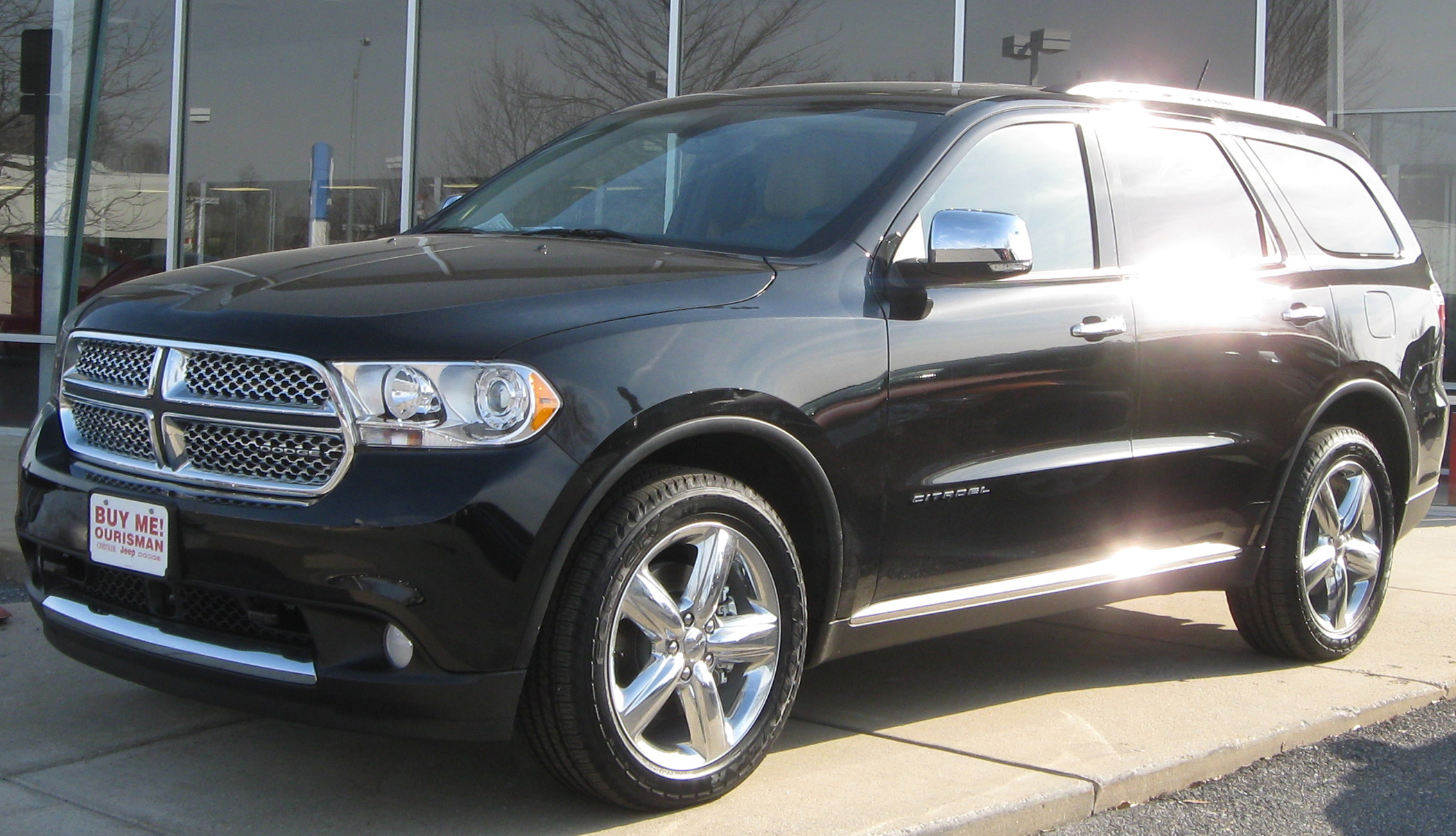
The Dodge Durango is a medium-sized SUV that has a lot of space for passengers and cargo, and it can be quite powerful.
Car
Volvo EX60
The Volvo EX60 is a new electric SUV from Volvo. It's made to be affordable and has features that many people want, like a long driving range and fast charging.
Range is how far an electric car can go before it needs to be charged again. The EX60 can go up to 400 miles on a full charge, which is a good distance for an electric SUV.
A 400 kilowatt fast charger is a type of charging station that can charge electric cars very quickly. It allows the EX60 to get a lot of driving range in just a few minutes.
The Tesla Model S is a fancy electric car that can go really fast and doesn't need gas. It's known for having a lot of cool technology and features that make it different from regular cars. New updates are making it even easier for people to charge their cars.
The NAX charging port is a new type of plug that lets the EX60 charge at Tesla charging stations without needing any extra equipment. This makes it more convenient for drivers.
A software-defined vehicle is a car that uses a lot of computer software to work. This means it can get updates and new features without needing to go to a shop.
The Subaru WRX is a sporty car that can go really fast and handle well on different types of roads. It's designed for people who enjoy driving and want a car that feels exciting. The new version is priced to make it easier for more people to buy.
All-wheel drive means that all four wheels of the car get power from the engine, which helps with grip on the road and makes it safer to drive in bad weather.
The Ford Mustang is a classic American car known for being fast and powerful. It's been around for a long time and is loved by many for its cool design and fun driving experience. The new models have even more power and features that make them exciting to drive.
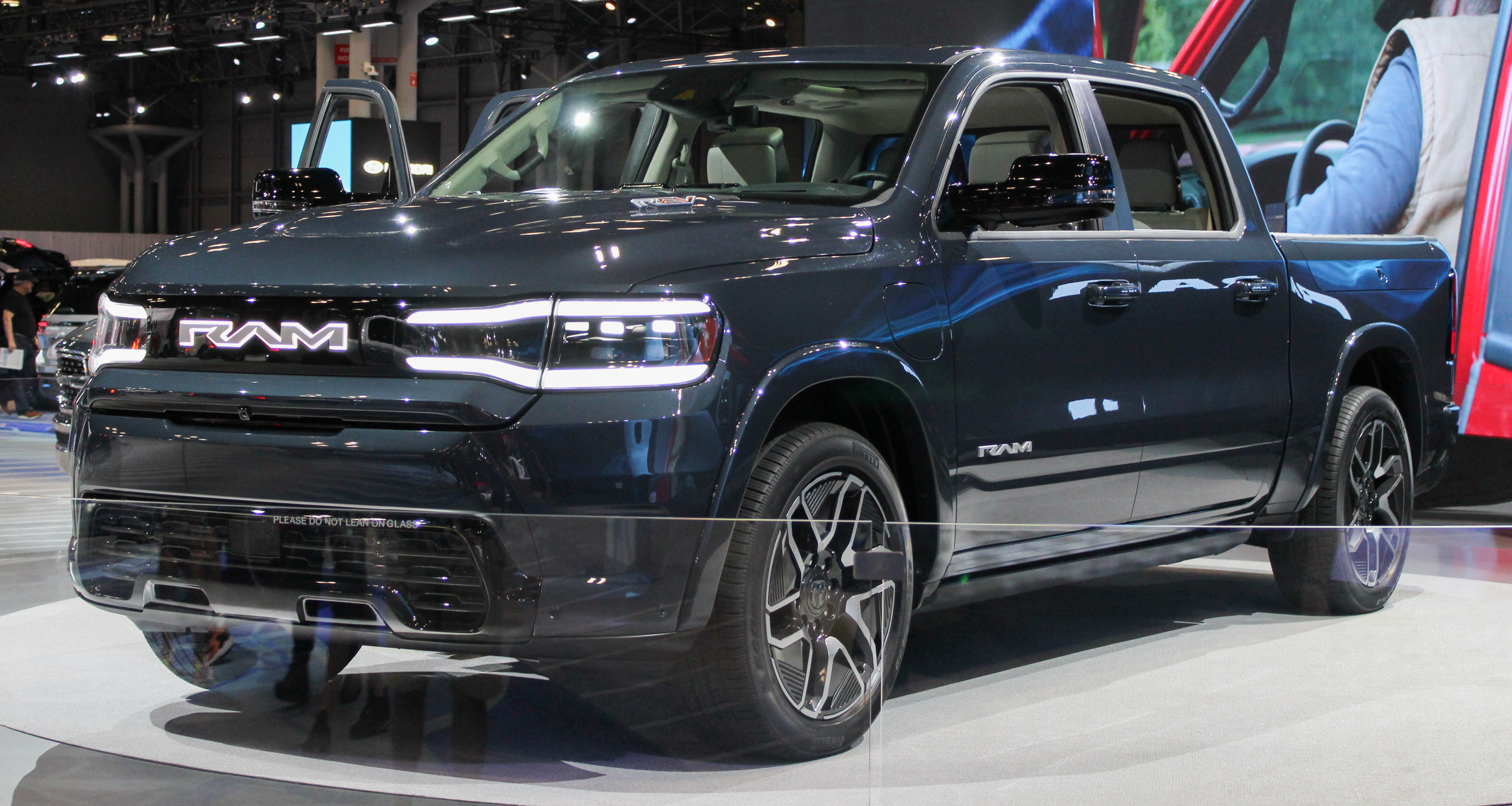
The Ram 1500 is a big truck that can carry heavy loads and is also comfortable to drive. It's great for people who need a vehicle for work or want to haul things around. The new version is coming out soon and will have some updated features.
An 8-speed automatic is a type of car transmission that changes gears automatically. Having more speeds helps the car run more smoothly and can save fuel.
e-torque is a system that helps the engine run better and saves fuel by using a small electric motor. It gives extra power when you need it, like when you accelerate.
A trifold tonneau cover is a cover that goes over the back of a pickup truck. It folds into three parts and helps keep things in the truck bed safe and secure.
A V6 is an engine with six cylinders that provides a good mix of power and better fuel economy compared to larger engines. It's often found in many cars and SUVs.
LIVE
This week, we got a major Canada EV trade story, a revealing strategy shift from General Motors,
and a handful of signals that show where the market is really headed in 2026.
There are two new vehicles from Volvo, the Gladiator high-tide review, and what I'm driving
next.
This is Weekly Wheelhouse, so let's get into it.
Over the last years, automakers haven't been making a big announcement about stepping
back from EVs, but they have quietly been changing the plan.
EV launch timelines are stretching, volume targets are being softened, and at the same time, investment
in hybrids and range-extended vehicles are picking up across the industry.
This isn't an anti-EV move, it's a realism move.
Manufacturers are recognizing that, while interest in EVs remains strong, real-world adoption
in the US is still limited by price, charging access, and buyer confidence.
Hybrids don't face those same barriers.
They sell without incentives, they don't require charging infrastructure, and they don't ask
buyers to change how they live day-to-day.
That's why hybrids continue to move on dealer lots, while many EVs sit longer, even when
incentives are available.
What this reflects is a change in risk tolerance.
Instead of betting everything on a single propulsion technology, automakers are spreading the risk
across hybrids, selective EV programs, and more flexible product plans.
Manufacturers pushed aggressively on EV timelines before the market was fully ready.
As adoption proved slower and more price-sensitive, hybrids emerged as the practical bridge,
meeting emission goals while staying aligned with buyer behavior.
That gives buyers realistic choices without forcing lifestyle changes, and it allows automakers
to protect margins as demand continues to evolve.
The result is a market where hybrids remain the backbone of the mainstream lineups through
the late 2020s, with EV growth continuing but in a more deliberate, targeted, and sustainable
way.
Now this next story matters more than it might sound at first, because what happens in Canada
often shows up in the US a little bit later.
Canada has reached a trade agreement with China that changes how Chinese-built electric
vehicles enter the Canadian market.
Under the deal, Canada will allow up to 49,000 Chinese-made EVs per year to be imported
at a reduced 6.1% tariff instead of the 100% tariff put in place in 2024.
That quota can expand over time, potentially reaching about 70,000 vehicles annually within
five years.
A key detail is pricing.
Many of these EVs are expected to land below roughly 35,000 Canadian dollars, undercutting
much of today's EV market in North America.
In exchange, China agreed to reduce tariffs on Canadian agricultural exports, including
Canola, which has previously been hit with tariffs as high as 84%.
Canada has also left the door open for future Chinese EV investment, including possible
local assembly or partnerships.
What's happening here is a balancing act.
Canada is trying to ease EV affordability pressures while restoring trade stability
for key exports.
But that decision doesn't stay contained within its borders.
Canada buyers benefit first, but US automakers and US pricing strategies feel indirect
pressures almost immediately.
If lower-priced Chinese EVs gain traction just across the border, it becomes harder
for US policymakers and manufacturers to ignore the gap.
Over time, this deal raises border questions about North American EV pricing, sourcing and
how long high-tariff walls can realistically hold.
General Motors is sending a very clear signal on how cautious the EV strategy has become
and its centers on the Chevy Bolt.
GM has confirmed that the upcoming 2027 Chevy Bolt will be produced for a limited
run of roughly 18 months, rather than being treated as a long-cycle high-volume product.
After that window, the factory is expected to pivot to other priorities.
This is a significant departure from how manufacturers traditionally handle mass-market
vehicles, especially EVs, which were once positioned as decade-long cornerstones
of future lineups.
Instead of locking in a factory for years and hoping demand grows into it, GM is treating
the Bolt as a tactical product, one that fills a specific gap right now without committing
long-term capital to uncertain demand.
It also aligns with GM's push toward flexible manufacturing, where plants can shift roles
as market conditions change.
EV demand remains real, but it's uneven and highly price-sensitive.
A short production run allows GM to stay present in an affordable EV space while limiting downside
risk.
For buyers, that still means access to a lower-cost EV option.
For GM, it means adaptability.
Going forward, expect more EVs to follow this pattern, shorter runs, faster pivots,
and factories designed for flexibility rather than maximum scale.
One pattern in the EV market has become impossible to ignore.
Demand rises and falls almost perfectly with incentives.
When rebates are strong, EV sales spike.
When incentives fade or expire, demand cools quickly, sometimes almost overnight.
Leasing continues to dominate EV transactions, which tells you that buyers are still
hesitant to make a long-term commitment as technology and pricing continue to shift.
This doesn't mean EVs lack appeal.
It means that for a large portion of buyers, the value equation still isn't strong enough
on its own.
Up-front costs remain the biggest barrier even for well-qualified shoppers.
Until that changes, incentives continue to do the heavy lifting.
That dynamic creates instability for automakers relying on incentive-driven volume
and reinforces why many manufacturers are hedging with hybrids and flexible product strategies.
Until EV pricing becomes competitive without outside support,
incentives will remain the primary demand lever.
For years, the idea that physical buttons would return to vehicle interiors was treated
like a meme, something drivers complained about while automakers basically ignored it.
That's changing and one of the clearest signals comes from Rivian.
Patent filings highlighted by car and drivers show Rivian exploring interior layouts that bring
back physical buttons, dials, and sliders for key functions like climate control instead of
forcing everything through a touchscreen.
What makes this significant is the source.
Rivian doesn't have legacy interiors to protect.
If a Cleancheat EV brand is reconsidering a touchscreen-only design,
it tells you that the feedback has already reached the tipping point.
Touchscreens, simplified manufacturing, and enabled software updates,
but they also increased cognitive load, menu fatigue, and distraction,
especially for everyday driving tasks.
As buyers push back, automakers are responding with hybrid interior layouts
that prioritize usability and safety over minimalism.
The result is not a rejection of screens, but a recalibration toward controls
that make daily driving easier and less distracting.
Automakers have spent years chasing software subscriptions as the next major revenue stream,
but consumers are drawing clear boundaries.
Buyers are increasingly rejecting monthly fees for features that are already
physically installed on the vehicle.
The reaction is simple.
If the hardware is there, they believe they've already paid for it.
That doesn't mean all subscriptions are dead.
Services like navigation, connected features, or premium infotainment still find acceptance.
The resistance shows up when reoccurring fees feel like double charging rather than adding value.
As ownership costs rise across the board,
tolerance for ongoing fees is shrinking, especially in mainstream segments.
This pushback is forcing manufacturers to rethink which features belong behind paywalls
and which need to remain part of the vehicle's core value.
Reoccurring revenue still has its place, but only when it feels optional, transparent, and fair.
If you talk to dealers right now, you'll hear the same message repeated.
The problem isn't demand, it's alignment.
High-trim EVs, expensive trucks, and fully loaded models are sitting longer
while affordable trims and hybrids move quickly.
Elevated interest rates have made buyers intensely payment focused.
Shoppers are walking in with budgets, not brand loyalty.
When available, inventory pushes payments beyond comfort levels.
Buyers either compromise or walk away.
The imbalance is a result of years spent prioritizing margins over volume flexibility.
Now the market is pushing back.
What dealers are signaling isn't a lack of interest.
It's a mismatch between what's being built and what buyers can realistically afford.
Expect manufacturers to respond by simplifying trims,
expanding value configurations, and rebalancing production toward volume-friendly options.
For years, EV marketing focused almost entirely on range.
Buyers are now realizing that range alone doesn't solve the real problem.
What matters just as much is how easily and reliably a vehicle can be charged.
Automakers are responding to that reality in their messaging and product strategy.
Subaru's evolving EV approach highlights increased emphasis on fast charging capability,
network access, and compatibility with the next charging standard.
That shift reflects how buyers think.
A vehicle with slightly less range, but dependable charging access,
often feels easier to live with than a longer range EV that's harder to charge.
As EVs move beyond early adopters, convenience becomes the deciding factor.
People aren't buying miles, they're buying confidence.
Charging access is now emerging as a headline feature right alongside price, performance, and range.
Across automaker earnings calls, dealer conversations,
and product announcements, one word keeps resurfacing.
Affordability.
Higher interest rates, rising insurance premiums, and payment fatigue have reshaped buyer priorities.
Even well qualified shoppers are hitting psychological limits on monthly cost.
Automakers are adjusting accordingly.
We're seeing simpler trim structures, more value face packages,
and renewed emphasis on efficiency instead of excess.
This isn't about cutting corners.
It's about restoring balance in a market that drifted too far towards high price configurations.
As buyers push back, manufacturers that can deliver
clear value without leaning heavily on incentives gain an advantage.
Affordability is no longer just a pricing conversation.
It's shaping product planning across the board.
When you step back and look at the market as a whole, one conclusion stands out.
US buyers are choosing hybrids consistently across all segments.
Sales data, dealer feedback, and OEM press room numbers all point in the same direction.
Hybrids are no longer a niche solution or a transitional technology.
They're the mainstream answer for many buyers.
Hybrids reduce fuel costs without introducing charging anxiety.
They fit existing ownership habits and carry lower long-term risk.
As affordability pressures persist and EV adoption remains uneven,
hybrids are doing the heavy lifting, especially in family vehicles and mainstream SUVs.
Heading into 2026, hybrids are increasingly the default smart pick,
while EV growth continues in a more measured, targeted way.
Before we move into the press room, go down and hit the subscribe button
if you want to keep up to date on all the automotive news.
Now for the OEM press room round up, and this first story is a major strategy tell.
Solanis says it will phase out the plug-in hybrid programs in North America beginning
with the 2026 model year and shift focus toward more competitive electrified solutions,
specifically hybrids and range-extended electric vehicles where they best fit customer needs.
Read between the lines here.
This is Solanis admitting the PHEV middle ground
hasn't delivered the way it was expected to.
Plug-in hybrids add cost, complexity, and the only way it pays off for the buyer is if the buyer
actually consistently plugs in the vehicle, which most people don't.
So Solanis is choosing a more flexible path, conventional hybrids for broad adoption,
and range-extended solutions so they can deliver EV-like driving without so much of the charging
lifestyle. One important Jeep detail, the 4xE badge will remain because Solanis is treating
4xE as electrified Jeep branding, not strictly plug-in hybrid.
So that badge can live on across future range-extended EVs and full EV products.
Why this matters is simple. It's another big OEM moving toward the idea that electrification
has to match how real customers behave, not how planning slides predicted they would behave.
Next up, Dodge has made a clean decision. Production of the Dodge Hornet has ended.
The official statement is that Hornet production, built in Italy,
ended due to shifts in the policy environment. Dodge also emphasized that current owners will
continue to receive customer support, service, warranty coverage, and part supply. Warranty
details were also reinforced. A three-year 36,000 mile bumper-to-bumper, a five-year 60,000 mile
powertrain, for the Hornet RT plug-in hybrid, eight-year 80,000 mile hybrid component warranty,
and an eight-year 100,000 mile battery warranty. Then, Dodge used the announcement to
re-center the brand. It says it remains focused on its core multi-energy muscle lineup,
including the new charger variants, the Durango, and the charger Daytona performance models.
The bigger takeaway is that Dodge's narrowing focus at a time when production complexity and
regulatory uncertainty are reshaping decisions fast. Ending a model doesn't always mean failure.
Sometimes it means the business case no longer works under the newest rules.
Volvo is swinging at the biggest part of the EV market with the new All Electric EX60,
a five-seat mid-size SUV designed to compete where the volume actually is.
Volvo's messaging is aggressive. It's positioning the EX60 around range, charging speed, and price
competitiveness. The three things mainstream buyers keep saying they need. Volvo says the EX60 can
deliver up to 400 miles of range in all-wheel drive configuration, and it can add up to 173
miles of range in 10 minutes using a 400 kilowatt fast charger. Again, those are Volvo's stated
figures. But for the U.S., here's the headline feature that matters most. The EX60 is expected
to be Volvo's first U.S. model with the native NAX charging port, giving drivers direct access
to this Tesla supercharging network without an adapter. Volvo is also leaning hard into the
software-defined vehicle angle with core computing over-the-air updates and an infotainment system
designed to be more responsive. It also says EX60 will be the first Volvo to launch with Google's
Gemini Assistant integrated into the vehicle experience. If Volvo hits the value target,
this is the kind of EV that can move from early adopter to normal family buyer.
Volvo also teased the EX60 cross-country, which is basically the EX60 for buyers who want a more
rugged outdoor look and a little more capability without leaving the EV world. Volvo says the
cross-country sits 20 millimeters higher or a little over half an inch higher than the standard EX60,
and with air suspension, drivers can add another 20 millimeters when needed. So that's
going to put it up to over an inch higher when you need to, then lower it again for highway efficiency
and stability. It also gets unique design elements, exclusive wheels, skid plate styling,
and an exclusive color called frost green. This matters because it's Volvo acknowledging
something buyers still want, the rugged SUV identity even in an EV, and is doing it in a
way that keeps efficiency in mind, which is the tightrope a lot of EV SUVs struggle to walk.
The base WRX is back, starting at $32,495, and Subaru is clearly leaning into the
affordable, rally-inspired sports sedan message. Subaru also introduced a limited WRX series
based on the TS trim, limited to 350 units, wearing sunrise yellow paint and unique details.
Core performance stays consistent with 271 horsepower from the 2.4-liter turbocharged
boxer engine with Subaru's all-wheel drive system. And Subaru is putting a big emphasis on safety
tech this year. iSight Driver Assist and Driver Focus are now available across the lineup,
including models with manual transmissions. This is Subaru reading the room.
Enthusiasts cars have gotten expensive fast and bringing back a more affordable entry point keeps
WRX positioned as a real-world performance value play. Now we'll talk about a couple recent
videos. The first one is posted on our main channel Off the Shelf Rides, and it is a
review of the 2025 Jeep Gladiator Hi-Tide, and it is a very specific vehicle built for a very
specific buyer. The Hi-Tide package is really about coastal style off-road driving. You're
getting larger all-terrain tires, extra ground clearance, skid plates, and a suspension setup
that's tuned more for sand and loose surfaces than hardcore rock crawling. What stood out to me the most
is this is still a Gladiator that you can live with every day, but it leans more into
lifestyle use than work truck duty. The ride is better than you might expect, visibility is
excellent, and if you actually use the open air design and the truck bed, it all starts
to make a lot of sense. It's not the most efficient mid-sized truck, and it's not trying to be.
But if your weekends involve beaches, trails, or just wanting something different than the sea of
crew cab pickups, the Hi-Tide delivers on that promise. If you want the full breakdown of
pricing, capability, and who this trim is actually for, the review is linked in the description.
Also wanted to mention last week's weekly wheelhouse where we covered some big shifts in the market.
We had Ford and BYD in conversations. We had the Detroit Auto Show where Ford
showed the supercharged dark horse Mustang. It's going to have a huge amount of power,
and we just covered a few other OEM press room releases. So if you missed that, go back,
check that out, get caught up. Now for what I'm driving now and driving next. As far as vehicles go,
I don't have a vehicle in the driveway this week, but I do have one coming that a lot of people
have been asking about. Next week I'll be driving the 2026 Ram 1500 Big Horn Crew Cab 4x4,
and this one is spec'd exactly the way a lot of real buyers order them.
It's powered by the 5.7-liter V8 Hemi with e-torque, paired with an 8-speed automatic,
and it stickers for a total price of $64,975. That's not too shabby, and it's got the Hemi.
This truck also includes several packages that matter for real ownership,
including the Big Horn Level 2 Equipment Group with comfort and tech upgrades like the heated front
seats and a heated steering wheel, which we really need right now because it's about one degree outside.
Plus the off-road group, night edition, so you get everything all blacked out. It's going to
look awesome, and a 33-gallon fuel tank, so you won't have to fill that up very often.
It also is going to come with a trifold tonneau cover already on it.
So next week I'll have a little bit more information on real-world performance,
ride qualities, maybe some fuel economy, and a big question, does the V8 still make sense in 2026?
I think we all are in agreement. You just can't get rid of the V8. Leave the V6
hurricane engine for those who want it, but give a V8 option for those who want that V8 sound and
power. If this helped you stay up to date on the news and information that you wanted to know,
hit the like button and subscribe to Weekly Wheelhouse. You have a blessed day.
About this episode
Canada's new trade agreement with China opens the door for affordable Chinese EVs, potentially reshaping the North American market. Automakers, including GM, are shifting strategies, focusing more on hybrids due to uneven EV demand and high prices. The episode discusses the implications of these changes, including GM's limited production of the Chevy Bolt and the rise of hybrids as mainstream vehicles. Additionally, Rivian's move towards physical controls and the importance of charging access in EV sales are highlighted, alongside new models from Volvo and Subaru that cater to evolving buyer preferences.
This week on Weekly Wheelhouse, Canada makes a move that could reshape the EV market across North America.
Canada has agreed to lower tariffs on Chinese-built electric vehicles — opening the door to lower-priced EVs and putting new pressure on automakers, pricing strategies, and trade policy. We break down what the deal actually includes, why it’s happening now, and why the U.S. can’t ignore it.
We also cover: • Volvo’s all-new EX60 and what it signals for mainstream EV buyers • Why EV plans are getting more short-run and tactical • The return of physical buttons inside modern vehicles • Why charging access is becoming a core purchase decision • How affordability and hybrids are reshaping 2026 product planning
Then we wrap up with a recap of recent reviews and what’s coming next.
This is Weekly Wheelhouse — Auto News. Simplified.
Gladiator High Tide Review - https://youtu.be/Qzp67ZUGhMc?si=lx495ZVhjr7wj73J
Last Week's Episode - https://youtu.be/3HoWyuOzqHw?si=-mlS_kqEnvYqaAko