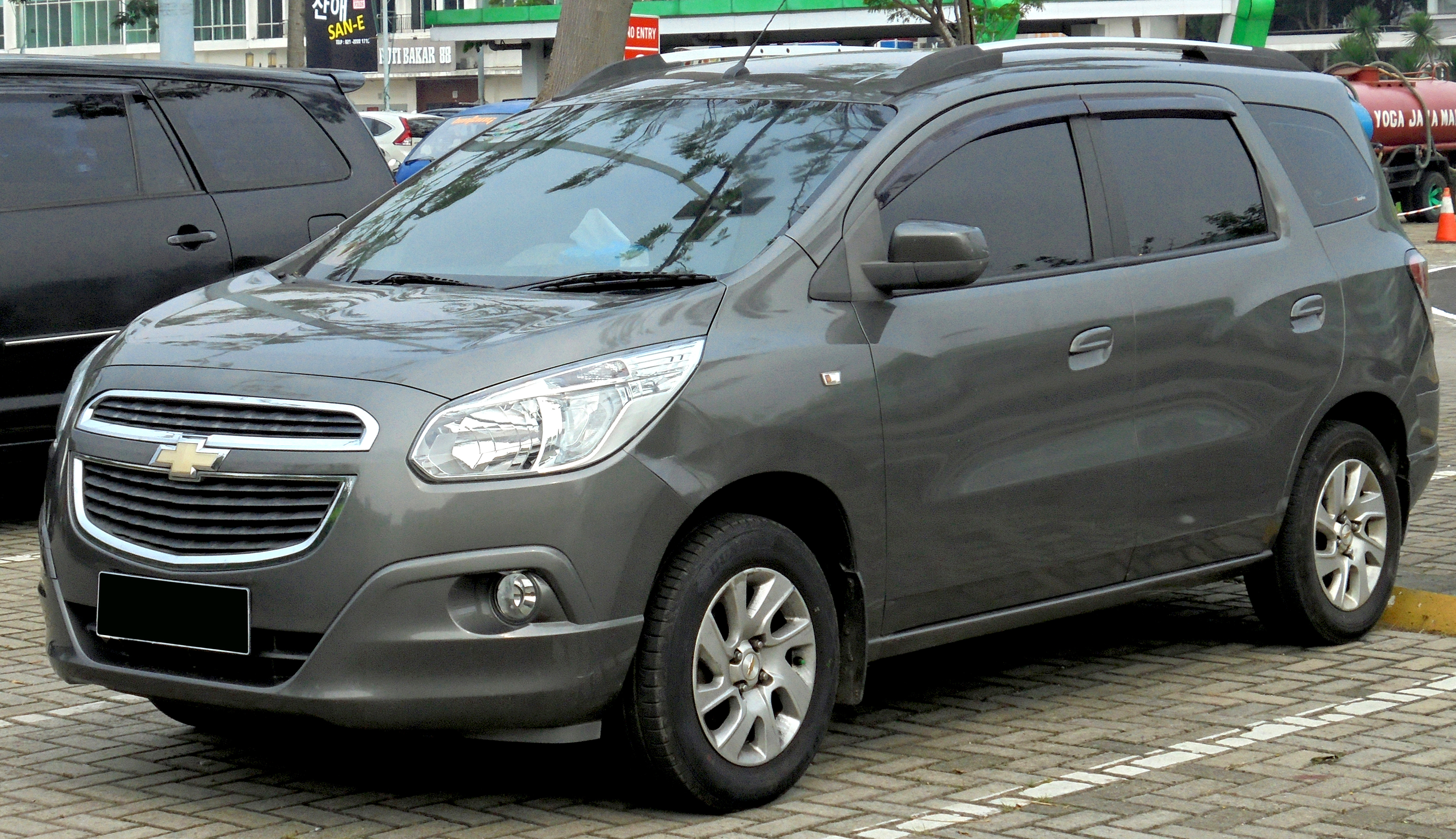
Light trucks and passenger vehicles are the types of cars and smaller trucks that people usually drive for everyday use. They are not designed for heavy-duty work like larger trucks.
Heavy trucks are big trucks that carry heavy loads, like those you see on highways transporting goods. They are built for tough jobs and can handle a lot of weight.
Winter tires are special tires made to help cars drive safely in snowy and icy conditions. They work better than regular tires when it's cold outside, helping you avoid accidents.
The Jeep Wrangler is a tough vehicle that can drive over rough ground and through mud. It's popular with people who like to go on adventures in nature because it can handle difficult roads very well.
Four wheel drive means that all four wheels of the vehicle can get power from the engine at the same time. This helps the vehicle grip the road better, especially in bad weather or off-road.
The Chevrolet Spin is a family-friendly car that has lots of room inside for people and their stuff. It's a good choice for those who need a practical vehicle for everyday use.
Black ice is a type of ice that forms on the road and is hard to see, making it very slippery. It can happen when it's cold outside and can cause cars to slide easily.
All-season tires can be used in different weather conditions, like rain and light snow. They are a good choice if you want a tire that works well all year round.
The rubber compound is what the tire is made of, and it affects how well the tire grips the road and lasts over time. Different types of rubber are used for different driving conditions.
Siping is when small cuts are made in the tire tread to help it grip the road better, especially in slippery conditions like rain or snow. It helps the tire perform better by letting water flow out and giving it more grip.
Summer tires are special tires made for warm weather. They help cars grip the road better when it's hot, but they don't work well in cold or snowy conditions.
Tread design is the pattern you see on the surface of a tire. It helps the tire grip the road, which is important for safety and performance, especially in rain or snow.
Snow tires are special tires made for driving in winter conditions. They help your car grip the road better when it's cold or snowy, making it safer to drive.
Traction control is a system in cars that helps keep the wheels from spinning too much when you accelerate. It helps the car stay stable and not lose grip on slippery roads.
All-wheel drive means that a car can send power to all four wheels whenever it needs to. This helps the car stay stable and grip the road better, especially in bad weather.
The suspension is what keeps the car's wheels in contact with the road and helps absorb bumps. It makes the ride smoother and helps the car handle better when turning or stopping.
LIVE
Well, good morning, Niagara.
You're tuned into car connection, where the coffee's hot, the tools are ready, and the
talk is always tuned up.
I'm your host, Niall MotorMelt Jenkins, coming to you straight from the car connection workshop,
where we mix a little humor, a little know-how, and a whole lot of horsepower.
Here it's not just about fixing cars, it's about keeping you rolling, saving you money,
and giving you the confidence to understand what's under that hood.
From the classics to the commuters, the weird noises to the what the heck moments, we've
got you covered.
So grab your cup of joe, sit back, join the crew, because this is the car connection
workshop.
Your good morning pit stop for stories, smarts, a few good laughs, and I'm Niall
MotorMelt Jenkins, and we're shifting into drive right here in the car connection workshop.
Well, today's topic without any further ado, just let you know, I am a licensed and certified
auto technician.
I hold my license for light truck and passenger vehicles as well as heavy trucks, highway
trucks, and coaches.
So I have what we call a 310T for trucks and coaches and diesels, and a 310S, which is for
light truck and passenger vehicles.
So I have 40 plus years experience, probably beyond 44.
No, I'm not as old as dirt, but maybe as old as a worm, I don't know, I don't
know.
Today we're going to be talking about what I call three season tires, but for the sake
of this conversation with you, I'll call them all season tires.
But I really wish that they would remove that designation, because after my conversation
with you today might just change your mind.
And I hope that it does, because it's all about safety.
It's all about being on the roadways safe, that you are in control of the vehicle, and
the vehicle is not in control of you.
So I hope you got a nice hot cup of Joe, because here's the thing.
All season tires in a Canadian winter, really?
That's like wearing flip flops in a blizzard.
Get proper winter tires, unless you want to star in your own skating routine entitled
sideways through an intersection.
Yeah, not funny.
I too have had my spinouts, and I'll share just one of my spinouts before I realized
and came to that mindset, you know what, winter tires are a thing, and they'll save
your life.
And perhaps the life of someone else, because what you don't want to do is cause an accident
that's affecting somebody else's life as well.
Mind you, if you decide to run all season tires on ice and snow, that is your decision
to make.
But here's another thing to consider.
You're putting others at risk, because you're not in control of your car.
The car is in control of you.
So let's jive right into this.
Well, many years ago, I still have the little pickup truck, a little short box Toyota four
wheel drive named Mo, short for Mojave, he's only one of 500 ever created on the planet
four wheel drive.
I was running Goodyear Wranglers M&S, mud and snow.
That's what the M&S stand for.
And here's what the problem was.
I was working in the West End of Hamilton.
I was living in a little town called Bismarck, and I had a fair drive on 20 highway, and
you can look that up on Google Maps, and that highway is a secondary highway, but
it's wide open to snow blowing and drifting.
So anyways, I head out for work.
I was just outside the outskirts of Hamilton on the Hamilton, I call it the Hamilton Mountain,
and I was heading for West Fifth to take the mountain downtown to get to Fridt Street, because
I worked on Fridt Street, which was where the old spectator building was.
So a little bit of history there for you.
And I'm driving along, I've got it in four wheel drive high, and I, now I'm
telling you the story from the person that I didn't hit with my little pickup truck, and
I didn't hit the telephone pole that I didn't even see.
And so he said, you were doing well, you hit a drift, and your truck came out of the
drift and went totally sideways and began to spin around 360 degrees.
He said, after the second spin, you weren't doing too bad, the truck was starting to slow
down, but with a momentum on the black ice put you into another spin, and I held the
traffic back behind me to give you the room you needed to continue whatever it was that
was going to happen, and lo and behold, your truck came out of the last 360 and slid
off to the side of the road and parked ever so gently beside that great big telephone
pole you saw in your driver's window once your truck stopped.
That was the moment I decided.
These M and S Goodyear Wranglers, I still like them today, but they don't work in
snow and in black ice.
When the roadways are covered in slick, slick repatches, they go as hard as a hockey puck.
They're not designed to be a winter tire, truly.
So let's jump right into it.
I shared that to let you know that you know what?
It's happened to me where I wasn't sure, do I need to dive into expenses of winter
tires or not.
That moment was my decision-making moment that I was never going to drive a vehicle in the
winter without winter tires.
So let's break down, pull over and park, pull the handbrake, and I'm going to break
down for you what makes up an all-season tire.
And I'm only going to say all season just for the sake of beating three-season tires
to death with a frozen hotdog, yeah, or a piece of bacon, because they're not for season.
And I'm going to say this, insurance companies are looking to you to get in touch with
them to let them know that you have all four tires on your vehicle are winter tires to
get a discount.
If you call in and say, I have my all-season tires on, you're not going to get a discount
from your insurance company.
Why is that?
Because those tires are not recognized by the insurance companies of Canada as being
a qualified winter tire, ding, ding, ding.
So let's dig into this.
First and foremost, let's talk about the rubber compound.
The rubber compound of an all-season tire, quote, three-season, spring, summer, fall.
That's what they're good for, wet, wetter, dry, hot, cool.
Not freezing temperatures.
So spring, summer, fall.
That's what they're designed for.
That's what the rubber compound is designed for, is to grip the road over 40 degrees Fahrenheit.
I'm not using the metric system.
I believe it to be a tool of the devil, okay?
So how do we fix that in order for that rubber compound that makes up the all-season
tires to actually morph into a winter tire?
The rubber needs to stay pliable at 40 degrees and below.
So when we hit zero, which is 32 degrees Fahrenheit, we need that rubber compound to stay pliable.
Here's what happens to the all-season tire.
At 40 degrees Fahrenheit, because of the chemical composition that makes up the
rubber compound for an all-season tire, at 40 degrees Fahrenheit, that tire becomes as
hard as a hockey puck.
Now you've lost your gripability on the road surface.
Not good.
Strike one.
That's a huge one.
So just imagine at 40 Fahrenheit, your all-season tire goes hard as a rock.
You've lost a majority of your gripability on the road surface.
Let's take that temperature down to zero, 32 Fahrenheit, freezing temperature.
You have nothing, no grip whatsoever.
So if you hit an icy patch, a lightly icy patch, a frosted over patch, or an overpass,
you're gone right up into the wall.
That's where you're going.
That car's just going to, you're going to get in that corner, and if you watch NASCAR when
a tire cuts down and they're on a turn, where does the car go?
Up into the wall.
That's exactly what happened to my neighbor's car, and I'll tell you about that in just
a few moments.
Well, the other strike against an all-season tire is the tread design.
The tread design on an all-season tire does not have enough siping.
Those are bands cut out on the sidewall, on the edge of the tire, close to the sidewalls,
inboard and outboard, all the way around.
They look like grooves.
Those are called sipes.
And then a much more aggressive tread design designed for the tire to squish what's beneath
the tire as it gets down to the road surface out and clear the tire of any ice or snow or
debris.
That's a winter tire that I just described to you.
You look at a summer tire, an all-season.
You don't have an aggressive tread pattern, although there may be some.
Somebody's going to say, well, you know, my tires look pretty aggressive, but there's
still a summer rubber compound.
Spring, summer, fall, 40 degrees.
They're good to 40 degrees Fahrenheit.
After that they turn into big hockey pucks.
So a winter tire has a very aggressive tread design on the sidewalls, lots of siping, lots
of deep treads with cuts to grip the road surface, whereas you're all seasons, it's
more of a laid back kind of thing.
It's that time of year where we need to change from our summer shoes to our winter boots.
And our tires are no different.
You know, I don't know if you're a dress shoe kind of guy or gal in the summer, but
there's a time that those have to be put away and you got to get out your winter
foot warmies that have grip so you don't land on your backside and hurt something badly.
Yeah.
Had that happen.
Yeah, you got to make sure you got really good winter shoes and boots that work, that
grip the surface.
So how do we turn that tire I just described to you?
And I'm going to share one more aspect of that all-season tire.
When I'm driving in the winter on the highways and byways, car goes past me, we're into
some kind of winter event and an accumulation.
In other words, snows are coming down, the roadways are snow covered, a vehicle goes past
me and what I see is nice powder coated donuts on their car.
Yeah.
The snow is not discharging from the treaded surface of the tire.
So you know what that means to me when I see that?
That fella or fella does not have winter tires on.
I'm backing off on the gas pedal, give them lots of room because they went past me like
I was standing still.
They're going to do a 360, they're going to be in the ditch somewhere.
And I can't tell you how many times I've seen that and pulled off and said, hey,
you all right?
You got somebody coming?
Yeah.
Okay.
Take care.
Yeah.
When I see that, I know they're riding on summer tires because the treads do not squish the material
off the road surface away from the center and the surface of the tire.
It gathers the product and it just mounts up.
It does eventually spit some of it out, but now you've lost all your grip ability.
The tire's too cold, it can't grip the road surface.
The tread design is not clearing itself, so you've got skis on your car instead of tires.
Not good.
If I get behind someone who has a pickup truck or a vehicle with snow tires on, do you know
what I see?
Rooster tails of snow and slush coming off of the back side of the tires spraying my
windshield if I'm too close.
That's what I want to see.
When people get behind my 07 FJ Cruiser with my winter tires on, they're monsters, the tires
that I have on there, 17-inch snow tire monsters.
They spit a really big rooster tail.
Most people, I see them back off because it's just coming off the tire at the back
and it's spraying them, whoever's behind me.
They've got to back off.
That's what you want.
But now let's talk a little more about winter tires.
So the chemical composition that makes up a winter tire is that it stays soft and pliable
and smooshy, yeah, cuddly, maybe not so much.
It stays soft and pliable so that it can get down through the icy slushy snowy road surface
to make contact with the surface of the road below.
And how does it do that?
Number one, it remains pliable at minus temperatures, always.
Number two, it's got the tread design to clear itself.
Whenever it gets in the treaded surface because of the aggressive tread design and the siping
on the outsides of the tires near the sidewall, the tires clean themselves so that they can
get down to the surface of the road and hug it and hang on.
And they're designed to get you over ice, snow, black ice, frost, accumulation, slush.
It's tricky in ice rain, that I will say.
You do have more gripability with the winter tires on an ice-covered roadway, but if it's
ice rain, man, you know what, having winter tires does not make your four-wheel drive,
all-wheel drive, sometimes it drives real-time all-wheel drive traction control.
You are not infallible.
What does that mean?
Just because you're running winter tires doesn't mean all those types of traction control
devices are going to save your bacon if you're driving like an idiot on hazardous
road conditions.
So I'll say this.
Back off, give the road crews the opportunity to do what they do best, clear the roadways
to make them safer for us, but also slow down, change your driving habits to match the vehicle
and its road conditions that it's driving on.
That's it.
Having winter tires doesn't mean you can still do 140, 130, 120 on a hazardous road
condition surface doesn't work.
You might get away with it for a while, but there's going to be on that moment when today's
the day when you're going to learn, just because you have winter tires doesn't mean
and give you a ticket to drive like an idiot.
All right, and I'm saying that in love, don't.
You're putting others at risk, not just yourself.
Don't mind if I have a little swiggy of coffee, do you?
Yeah, a cup of Joe's screaming at me here.
A new one.
I love my coffee.
I don't drink too much, but not too little.
Just the right amount.
Absolutely.
Absolutely.
So where do we go from here?
Well, you need to do your own homework.
There are some really good tire salespeople out there, and if you had an opportunity,
you could ask my neighbor.
One year he decided, I told you, I'd tell you another story, he has a Subaru, and it's
got one of those traction control ditties in it, whatever one of the manufacturers
put in there.
He decided to give away his winter tire set, which were on rims to a neighbor's kid who
also had a Subaru, and they were really good.
That was a great winter tire package.
He listened to a tire salesman and said, oh, we have this new tire out.
It's good for winter and summer.
The tread design and the rubber compound will get you through both seasons.
You don't need to buy a winter set of tires.
So he decided to go for it.
The salesman gave him the big pitch and sold him on it.
So he bought a set for his car and for his wife's Subaru, and down the road they went,
and he put the car right into the guardrail.
It was coming out of Niagara Falls on the 420 heading for Fort Erie.
There's an overpass there, and it's a really tight curve.
He got on there and bam, the car broke free on some black ice.
It hit the front on the passenger's side, then it hit the back, then it hit the
front, then it hit the back.
The car was a wreck, and the suspension and steering was big money.
So I didn't know that's what had happened.
I just knew his car was gone for quite a while, and we were chatting, and he mentioned these
tires back in the fall, and then he was going to put them on, and I said, are you sure you
want to do that?
And he goes, well, you know, the sales guy said blah, blah, blah, blah.
Good sales pitch, managed to sell two sets.
So in the spring, I said, how did those tires do in the winter?
Not good.
I racked up my car, and he told me how it happened.
So he said, not very good, and they were very pricey.
I should have stuck with my winter tire set on rims.
I didn't have any issues with those tires, but these ones, I thought I was good, and
the car just went right up into the wall.
Scraped the whole side of the car, pounded the front, pounded the back.
He said thousands of dollars of damage, and the front end was a mess.
Steering suspension smashed on the front.
It was bad.
He paid for it out of pocket to avoid the insurance premium going through the stinking
roof.
So when you're going out there to winter tire shop, don't listen to anything other than I
want winter tires, fella.
That's what I want.
That they're rated specifically for winter for your automobile, size, structure, everything.
Do not settle for a tire that, oh, it's going to be good for summer and winter.
Not true.
Don't get taken in by that.
Do your homework.
Shop online.
Take a look at what's out there.
Look at the pricing, and be careful.
Buy a quality set of winter tires and steel wheels to put those tires on, and put
your good tires and rims away for the summer.
Because you know what, the winter road salt and salt brine doesn't care what your tires
are on.
They're going to eat the rims away no matter what.
I clean them every year, and I wire brush them and paint them back up.
But I'll tell you, by the time springtime comes, that road brine, that salt, liquid
salt is absolutely wicked on steel rims.
And if they're alloy rims, you don't want to spoil your summer alloys.
Because that liquid salt brine is wickedly corrosive, and it makes a mess, absolute mess
out of aluminum wheels, your alloy rims.
And I'll post a, we've already done a video for that on our YouTube channel.
So just before I wrap up here, if you have any questions and you want to connect
with me, you can email me at through our website, carconnectionbusinessnetwork.com.
For short, it's ccbusnet.com, that's the shortest URL I could gather.
We've been on the air with our radio broadcasts, heading into our 31st year car connection
Saturday mornings at 7am, and then we do a program called Dashboard at 2pm in
the afternoon on the same network.
You can find all those details on our website at carconnectionbusinessnetwork.com.
There's a website form there, you can shoot me an email, and it comes right into my
inbox if you've got questions.
I'd love to hear from you.
You can also go to our YouTube channel, Nile Motormouth Jenkins.
We have well over 112 videos up there where you've learned five things every
single time.
Either you know a little bit about cars, or absolutely nothing, ladies and gentlemen.
You'll learn what the component is, where it is, how it works, how it breaks, and is
there anything you could have learned or known to prevent that damage from happening
and costing you money in parts and labor.
The other four things you will learn is there's four quadrants to a repair order.
The concerns, what's going on, diagnosing and getting to the cause, and then moving
towards the correction, so replacing the failed component.
And lastly, the road test that confirms the repair was a good one.
So you learn all those things through our YouTube videos.
They're learning videos so that you can see exactly what I'm doing, and I explain
it out in layman's terms, and have fun with you as well.
We have some laughs, so like, share, comment your thoughts below on our videos, and subscribe.
And if you don't watch the videos, it doesn't help us reach bigger audiences either.
So for all your online influencers on YouTube that you love, be sure to do that.
Like, share, comment, subscribe, watch the videos, and ring that notification bell so
that you know and get notified when new videos and live streaming goes up.
You can also find us on Facebook, Niall MotorMouth Jenkins, like and follow us there, and that's
where you'll see reels and videos you will not see anywhere else.
And you can also find us locally on what I call a fantastic website for the local
businesses where my pops lives, Stevensvilleontheweb.ca.
Click on the businesses button.
You'll find car connection.
You can also send me an email through that profile page, and there you will see videos
on bloopers and outtakes of shooting our YouTube channel.
You can also get car connection merchandise from our website at carconnectionbusinessnetwork.com.
We have six items there available for you.
Pick your color, pick your size, and order it, drop it in your shopping cart,
pay for it safely online.
It gets mailed directly to your door.
Actually, I believe they're curing things out.
All items we have, including winter hats designed for winter,
I suppose you could wear them in a cooler fall season, too.
You pick your color and order it, and it gets shipped directly to you.
All items are $5 above cost, so that Skippy and I, my videographer,
you can keep us in donuts, coffee, and help support our YouTube channel all at the same time.
So when you get to our homepage at carconnectionbusinessnetwork.com,
top right-hand corner, you'll see the icon for YouTube, Facebook, and our merchandise store.
So thanks for listening.
We'll see you in the next one.
We're going, what are we going to be talking about next?
I don't know, but you're probably going to get something from it, for sure.
And it'll be some kind of winter-related maintenance or service that will help you save time,
money, and a few bloodied knuckles.
So thanks for joining me today, Niall Motormouth Jenkins.
You'll find all the information on everything that we have available to you
in the description box on our YouTube channel for each and every video.
The radio station where we broadcast on Saturdays, tools, equipment, and some links to our website.
Everything is always in the description box for you to connect with us
in the description for every single YouTube video.
So keep it under 100 and put that coffee on because I'm coming to your house.
About this episode
Understanding the importance of winter tires over all-season tires is crucial for safe driving in cold conditions. Niall shares personal anecdotes and technical insights, emphasizing that all-season tires lose grip in freezing temperatures, making them unsuitable for winter driving. He discusses the differences in rubber compounds and tread designs between winter and all-season tires, highlighting the risks of using the latter in snowy or icy conditions. With humor and expertise, he encourages listeners to invest in proper winter tires to ensure safety on the roads.
Ever think your battery's just a box that starts the engine? Think again. In this episode of The Car Connection, Motormouth dives into the secret life of your battery - your vehicle's unsung hero that does way more than crank the starter. From cold - morning fails to modern - day smart charging systems, we'll break down how your battery works, how to keep it healthy, and what happens when it's not pulling its weight. With my usual mix of humour, hands - on experience, and spark of workshop wisdom, we'll explore: The real science behind those volts and amps.
Why "maintenance - free" doesn't mean "ignore it forever"
How to spot a dying battery before it leaves you stranded in the cold!
So grab your coffee, turn the key, and join me for a charged - up ride into the heart of your electrical system. Like, subscribe, comment your thoughts below, and ring the bell to get notified of new videos and live streams. Like & follow us on facebook @ nile motormouth jenkins for reels and videos you won't find anywhere else. Catch us locally on StevensvilleOnTheWeb.ca click on the Businesses tab for exclusive outtakes and bloopers. Don't forget to grab your Car Connection Merch - link https://shop.freedomexpressions.net/carconnection show it off! Visit us on the air: Saturdays 7AM for Car Connection and 2PM for Dashboard on Joyradio AM 1250 we'll catch you in the next one. Tnx for listening, NMJ