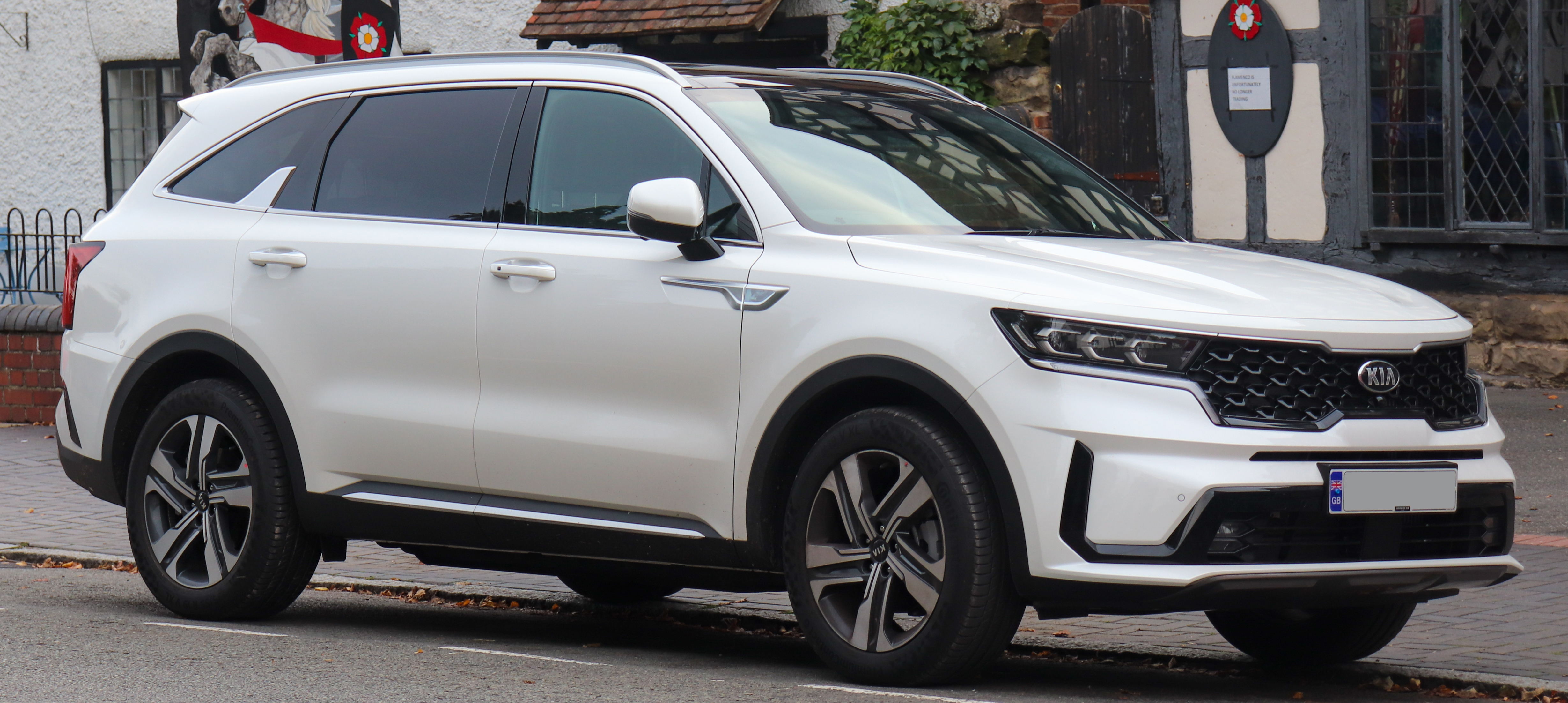
The 2024 Ford Bronco is a type of SUV that is good for driving off-road and has a cool, old-school look. It comes in different versions with different features.
Depreciation means your car loses value as it gets older, so it will be worth less if you sell it later. This is one of the biggest costs when owning a car.
When you buy a new car, the company promises to fix some problems for free for a certain time or distance. This helps you avoid paying for big repairs right away.
Owning a car means paying for things like fixing it, buying gas, and insurance. Older cars usually cost more to keep running because they need more repairs.
Maintenance and repair costs are the money you spend to keep your car working well and fix it when something breaks. Older cars usually need more fixing and care.

The Mazda CX-30 is a small SUV that is easy to drive and comfortable, making it a popular choice for people who want a practical car with some extra space.
Lease negotiation is when you talk with the car dealer to decide how much you'll pay each month to rent a car and for how long. You also agree on rules like how many miles you can drive.
The used EV market is where people buy and sell electric cars that other people have already owned. When there are lots of used EVs, prices usually go down.
Reverse import means bringing cars made in one country back into the country that originally made them, even if they were first sent somewhere else to sell.
The Acura Integra is a small sporty car that people like because it’s fun to drive and also useful for everyday trips. Usually, cars in Japan have the steering wheel on the right side, but this new Integra Type S is coming with the steering wheel on the left side, which is different and special. This makes the car stand out and shows that the company wants to sell it to people who like sporty cars all over the world.
Left-hand drive means the steering wheel is on the left side of the car, which is normal for places where people drive on the right side of the street. Some countries use the opposite setup.
Exchange rates tell us how much money from one country is worth compared to another country's money. This can change how much it costs to buy cars from other countries.
ultimately that's going to get factored into the price
of the ride.
It's not like the ride's five bucks.
Oh, and from that, whatever the cost of insurance,
no, it's all factored in.
But I do, Dad, I do think,
go to San Francisco in the next year
and you're gonna see as many Waymo's
as normal cars on the roads.
It's crazy.
Here in Washington, DC, we have Waymo's on the roads
with human drivers and then still,
but obviously the plan is to not have the human drivers.
EVs, we know have lower cost of ownership
in terms of maintenance and fuel.
And obviously we have a glut of used EVs
that are driving down the cost to purchase a used EV.
So yeah, I think Mark makes a ton of great points here.
The costs of car ownership have skyrocketed significantly,
but it's pretty nuanced when you start to look at
different types of vehicles, different powertrains,
and then also when you project the sound of the future,
there's some reason to be hopeful
that car ownership and car costs in general will go down.
Yeah, you know, I think the future realistically
will be things like Waymo and Robo Taxis and things.
And the reason for it is because people won't be able
to afford to buy.
Though those who are very wealthy will be able
and will continue to buy new cars.
The rest of us will no longer be buying new cars,
and in many cases might not even be buying used cars,
and finding ourselves relying on Robo Taxis
and things of that nature.
Now the only problem with that is those type of transportation
alternatives will only be available
in large metropolitan areas.
If you live in the middle of nowhere, okay,
there's not gonna be a Robo Taxi for you.
There isn't gonna be a Waymo for you.
So there'll be some parts of the country,
rural areas of the country that will still need,
people will still need affordable means of transportation.
But those in large metropolitan areas,
yeah, I can see like, why would people need to buy a car?
Why would people need to own a car
when there's all these Robo Taxis and Waymo mobiles
that can take you wherever it is you need to go,
and the maintenance is on them, the fuel cost is on them,
the insurance costs are on them,
and you know, and then maybe that way
you can still afford your two cups of Starbucks a day,
I don't know.
It certainly seems like there are some big corporations
that are trying to push this.
Now, this is not the first time we've seen, for example,
automakers as well as independent third party companies
trying to push car subscriptions, for example,
and those failed miserably.
Every manufacturer-
I don't know why, you know, honestly, I don't know why.
That to me made so much sense.
And to be clear here, car subscriptions were just like
bundled leases with all your payments factored,
but hey, people like owning vehicles, dad,
that seems to be a theme,
and the point of today's show is to simply document
and memorialize the fact that it costs a little bit more
than you might have thought to own that vehicle.
We've got here from art photographer,
thanks for this, we appreciate it.
Does the research break down the cost
by things like insurance went up this much,
maintenance went up by this much,
the initial cost of the car, et cetera,
areas make a difference, California is more expensive
on gas, for example.
No, this survey, it was pretty broad-based.
They did have a little bit of a breakdown.
So for example, I can pull this up here,
where there's the biggest discrepancy
between what someone thought and what was reality,
so you can see here.
You've got the cost, when examining what factors
are driving these rising costs,
some of the significant expenses were gas and insurance,
which cost drivers, excuse me, on average,
about $2,000 and $1,700 respectively each year.
Other top expenses include maintenance, service and repairs,
tires, auto parts, and accessories.
It gives you some data points here, but nothing too granular.
We know, obviously, Dad, to Art Photographer's point,
different states are gonna have different insurance rates,
different states, fuel costs,
but definitely this is gonna be nuanced.
Oh, absolutely.
I mean, it depends, you know, let's face it,
I mean, some states are less expensive
to live in than others.
And so if you want the absolute least expensive costs
for the state to live in, then they're out there.
You can go find that state and you can go live in it.
You might not like all the educational opportunities
that that state might offer,
or all the childcare opportunities, whatever it may be,
but you know, it's like anything in life,
you get what you pay for, okay?
The least amount that you're paying,
well, you're getting the least for it.
And then so, yeah, it's regionalized, it's...
Yeah, but Dad, I just want to comment really quickly,
because I don't know if I agree with the path
you were going down there.
If you were equating insurance costs
with quality of education and childcare,
that doesn't resonate with me at all.
I just want to be very clear here.
Insurance rates vary based on all sorts of nuance and factors.
It's not like taxes or things like that.
I just want to make sure.
Did you mean what you said?
Yeah, I meant what I said.
I meant what I said because typically,
typically the states that are the most expensive to live in,
okay, have the most goods and services available
for their residents, okay?
And those goods and services
will include childcare and education.
The cost of that insurance costs, Dad.
I'm not talking about like taxes.
It's all related.
That's the point.
All of that is related.
And so, okay, but let's discuss something else
because we're not going to agree on this.
So rather than belabor the point,
take me down a different highway here, buddy.
Now, we're sticking on this highway, folks.
We're going to find the most and least expensive states
to insure a car.
Give you a second here.
All right, we're on the always trusted US News
and World Reports.
Lowest annual insurance rates,
Maine, Vermont, Wyoming, Hawaii, Idaho,
Ohio, New Hampshire, Indiana, Alaska, Wisconsin.
I don't know.
Car insurance rates by state.
Whatever.
There could be a time I'm wrong.
This might be the time, Zach.
I'm just saying it's all interrelated.
Whether you want to accept the fact
that it's interrelated or not is entirely up to you.
That's all.
All right.
All right, we'll switch gears here, Dad.
Why don't we head to a very interesting story
coming by way of Honda.
You ready for this?
Yes, I found this to be extremely interesting.
This is so fascinating.
Honda introducing Acura to Japan
with plan to reverse import US-made integrals and passports.
What does Honda do it, Dad?
Reverse importing to Japan?
Yes, and here's the interesting thing
that most people don't realize.
Acura is only available in North America.
It is not a brand that Honda sells in Europe or elsewhere.
It's just North America.
And so the fact that they're going to import
the new Integra Type S into Japan
with a left-hand drive instead of right-hand drive
is to try and take advantage of some of the trade imbalances.
It shows goodwill and it shows that there's a way
to positively impact some of the tariff and exchange rates
that are going on in the world at the moment.
And so even Toyota and Nissan are starting to look at ways
to produce some of the vehicles here in the United States
and ship them back to the home market in Japan.
And one of the reasons they can do this is Japan has relaxed
some of their standards as to the noise of the vehicle
and the safety constraints that they have.
And obviously, that being left-hand drive
instead of right-hand drive.
And the fact of the matter is that they only anticipate
that this might amount to 5,000 to 6,000 sales annually.
But it's just a way to help cover the costs of what it is
to import and export vehicles today.
Kind of a crazy moment.
I mean, to see a Japanese automaker reverse import vehicles
to their home country is an indictment on how crazy I
think the car market has become, both in the sense
of globally with all that.
But this is just kind of bonkers.
It makes more financial sense for them to reverse import
from the United States, and it does to do things domestically.
Yes.
And it is especially for the Acura brand.
Most people don't realize it, like when Acura came out
and they had the legend.
OK, well, they had the legend in Japan, too.
It was just Honda.
In Japan, it wasn't an Acura.
The only market was North America for Acura.
And so this is a way for, I guess, Acura or Honda
to show some of the more upscale vehicles.
The RL, when Acura still had the RL,
that was actually sold as a Honda legend in Japan.
So it's just, to me, it's an interesting concept
to take a brand that was only available here in North America.
And bring it to their home country.
And my guess is that there's not a whole lot of people
asking for, although, you know, an Integra Type-S,
which is 320 horsepower four cylinder engine, six speed manual.
We got to get you one of those.
We do, we do.
You know, it's a very desirable vehicle in this country.
But I'm sure there are people in Japan that would love to have it.
I have no idea what it was, what it would cost there.
But it'll be interesting to see what happens.
And then what is the passport there off-road vehicle?
It'll be interesting.
Yeah.
Yeah.
When I read that headline, I was like, really?
Like, we're at this phase of globalization,
where it makes more sense for a domestic,
a Japanese domestic automaker to reverse imported vehicles.
And the answer to that question is, yes,
we are at that phase of globalization.
Apparently we are.
We've made it to the phase where it doesn't really make sense as a headline.
But then when you, when you dig in, obviously this got greenlit
because you know what it does for Honda, helps make more money.
Dad.
Yes.
Let's turn our attention to this comment from K. Deuce.
Who's the best Ford dealership in Texas?
All right, y'all, again, this is a brand new, still in beta,
but it's pretty, it's getting pretty tight here.
CarEdge.com slash dealer ratings.
So for those of you that are unfamiliar,
if you go to just CarEdge.com, you can click on research right here,
and then click on dealer ratings.
Ah.
Dealer ratings right there.
Okay.
On this page, you can do a couple of things.
One is under dealers, you can browse by brand.
That would be able to get us to just, what was it, Ford, Dad?
Ford, yes.
Okay, so I'm going to do that, and then I'm going to click on Ford.
Yes.
Now, on the Ford page, this is going to show me all the Ford dealers
and all the land, but I think, did I make it?
Let's see.
No, okay.
So those are all the Ford dealers and all the land,
and you can just come here and you can search for the state initial.
So you can actually see that Stanley Ford of Eastland
is number one in there in Texas.
I think, let me try this, the View Ford Report Card.
Ford dealers list.
There was somewhere, oh, Ford dealers by state, here you go.
Yep, so it's on the brand report card.
You can then find Ford dealers by state, and you've got it here.
My guess is that they have more than 84.
No, of course, of course, yeah.
And so, just to explain this a little bit, these are the 84
that we have received details for price quotes from.
Yes, yes.
So as we receive more price quotes from more dealers,
then the list of dealers will continue to grow.
Exactly, 100%.
And obviously, to be clear here, this is all super data driven.
This is not objective, excuse me, not a subjective.
It's objective, and so you can see here all the data that we're collecting.
But yeah, so anyway, it's under, I guess it's under reports,
brand report cards, and then Ford.
And then you can come down here and you can do Ford dealers by state.
So there you go.
Or you can just Google all that.
I'm sure it'll pop right up.
So anyway, you want to know the best dealer in a certain area.
I'm popping out link in the chat.
So much good information here, so much good information.
So please, I'm glad that someone asked that question.
This is how you can start to access it.
Definitely some work to be done to make this even easier to use,
but encourage everyone to check it out.
And yeah, it is powered by the 51,666 dealer outreach sessions
that we've had since July of last year.
So thank you to everyone who supports CarEdge.
That allows us to capture this data and make it available to you for free.
Help me buy a car.
I like it.
I like it too.
All right, Pops, let's call it a show.
We're back here tomorrow with more CarEdge Live.
If you enjoyed today's show, please follow us.
Give us a what is it, a subscribe here on the YouTube.
Give us a thumbs up, a like, a subscribe, tell a friend,
tell a friend to tell a friend.
Oh, yeah.
Yeah.
And and even tell an enemy.
Tell an enemy.
Tell all the enemies to tune in.
We appreciate it.
We're back here tomorrow.
Folks with more CarEdge Live, 12 p.m.
Eastern, 9 a.m. Pacific Dad.
Enjoy the afternoon.
We'll see you all back here then.
Thanks, everybody.
We'll see you tomorrow.
About this episode
The hosts discuss a recent study revealing that vehicle ownership costs are 167% higher than most people expect, averaging around $15,000 annually. Key drivers include rising fuel and insurance prices, especially as people keep older cars longer, leading to increased maintenance costs. They explore the gap between perceived and actual expenses, emphasizing the financial impact of depreciation, repairs, and global factors affecting fuel prices. The conversation also touches on leasing advice, particularly avoiding large down payments, and compares specific three-row SUVs like the Mazda CX-90 and Hyundai Sorento.
Today on CarEdge Live, Ray and Zach discuss the latest data on car cost of ownership. Tune in to learn more! Hosted by Simplecast, an AdsWizz company. See https://pcm.adswizz.com
for information about our collection and use of personal data for
advertising.