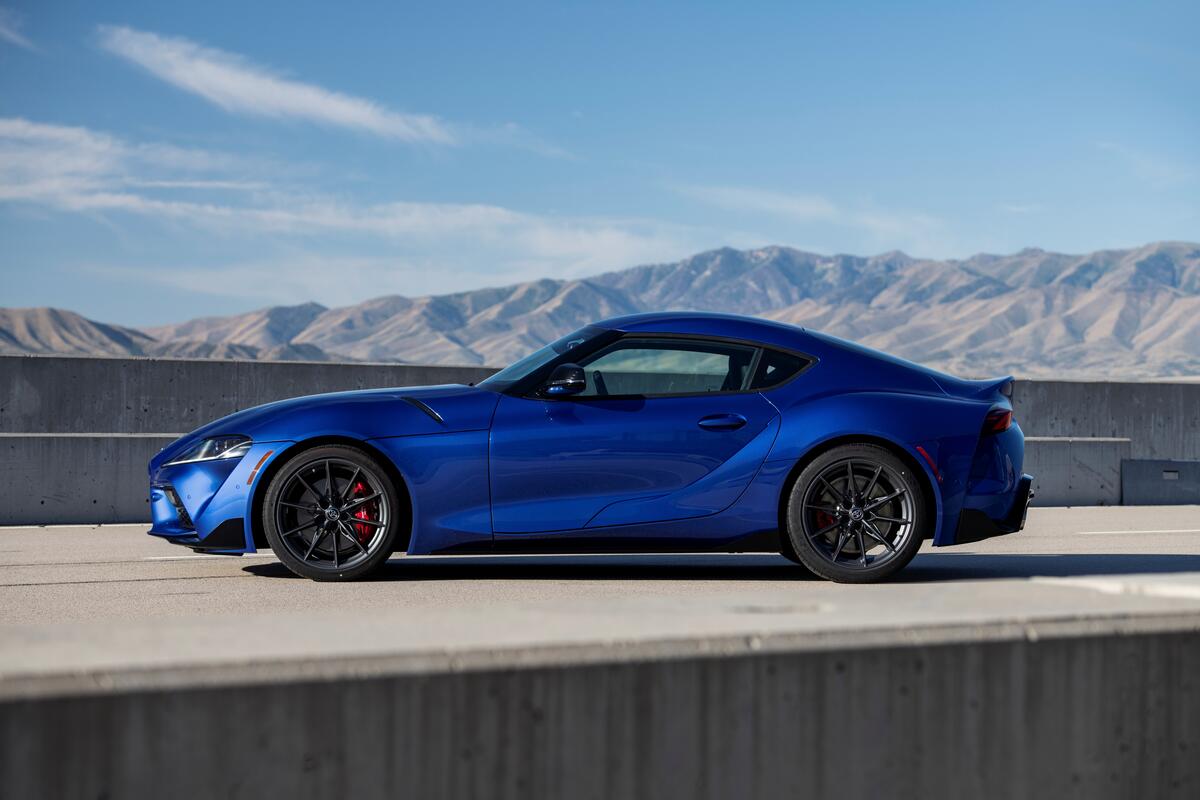
This is a highly famous Japanese sports car that was never originally sold in North America. It is beloved by car enthusiasts and gamers for its incredible speed, high-tech all-wheel-drive system, and starring roles in movies like the Fast & Furious franchise.
JDM is a term used to describe cars that were built to be sold only in Japan. Enthusiasts love these cars because they often have cooler styling, unique features, and higher performance than the versions sold in other countries.
The Nissan Skyline is a line of cars made by the Japanese company Nissan. The special 'GT-R' versions are highly famous, high-performance sports cars known for their advanced technology and speed.
In the United States, you cannot easily import and drive a car that was made for another country unless it is at least 25 years old. Once a car turns 25, it is legally allowed to enter the country without having to meet modern safety and emissions rules.
This is a type of engine where all six cylinders are lined up in a single straight row, and it uses two air-pumping devices called turbochargers to give the engine a massive boost in power.
For about 15 years, Japanese car companies had a secret handshake agreement to never advertise their cars as having more than 276 horsepower to keep the government happy. In reality, cars like the Skyline GT-R and Toyota Supra had way more power than the companies officially claimed.
The Supra is a famous Japanese sports car known for having an incredibly strong engine that can be modified to produce crazy amounts of horsepower, making it a favorite in drag racing and car movies.
The F40 is one of the most famous supercars ever built. It was a raw, lightweight race car for the street with a twin-turbo engine and no driver aids like traction control, making it incredibly exciting and dangerous to drive.
This is an incredibly rare, special edition of the Skyline GT-R built by Nissan's racing division. Only 44 were ever made, and they are so highly sought after by collectors that they sell for nearly a million dollars today.
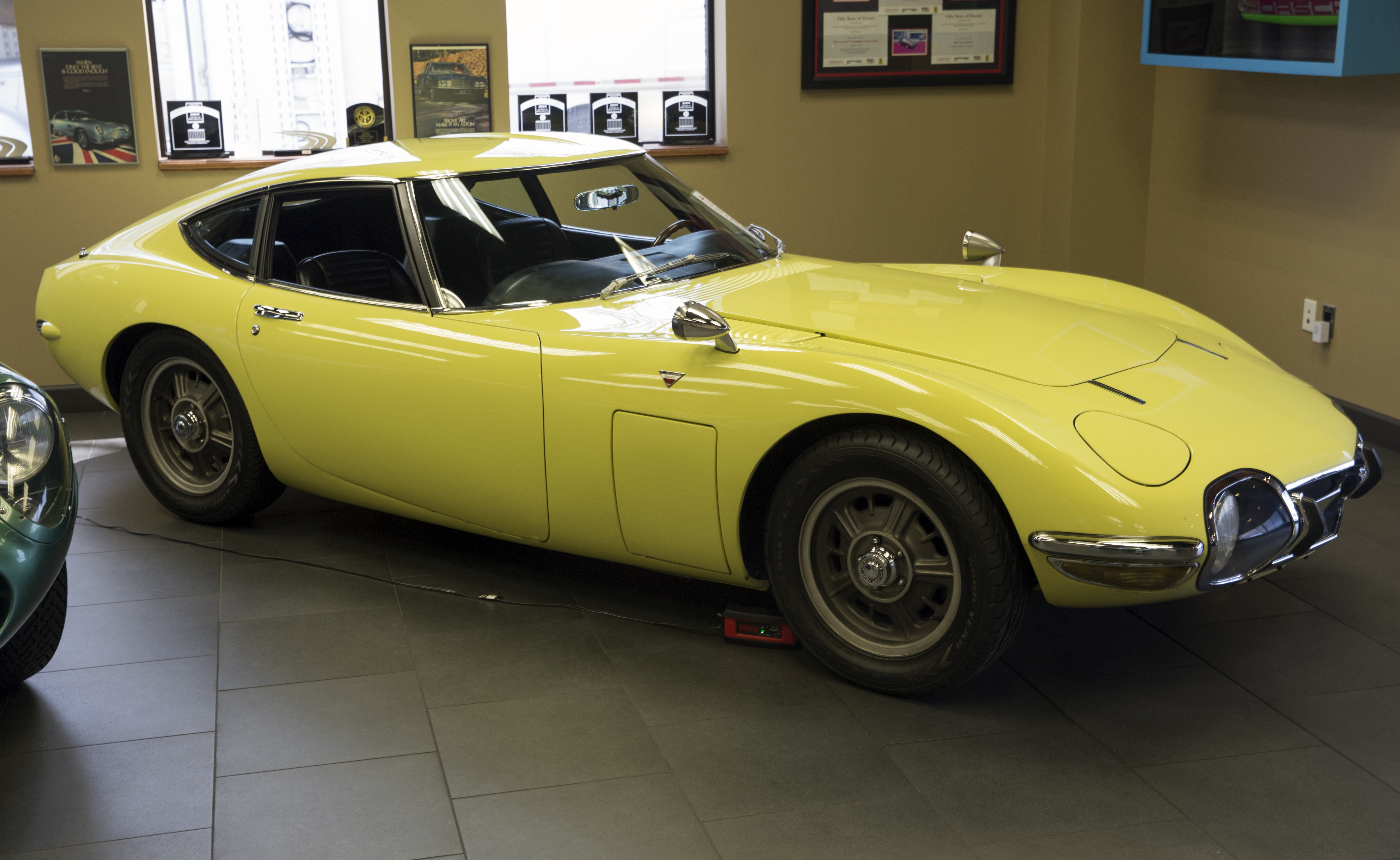
This is a beautiful, rare sports car from the 1960s that proved Japan could build a world-class exotic car. It even starred in a James Bond movie and is now worth well over a million dollars.
Larry Chen is a highly famous car photographer and YouTuber who travels the world taking incredible pictures of unique cars, race tracks, and car culture events.
This is a very fancy, high-end car show where classic cars are judged by experts. The cars are inspected so closely that even a tiny speck of dust or a non-original screw can cause them to lose points.
Gridlife is a big weekend festival that combines car racing, drifting, and music concerts. It is designed to be a fun, welcoming place for younger people to get into racing their own cars.
Radwood is a themed car show dedicated entirely to cars, fashion, and music from the 1980s and 1990s. People dress up in retro clothes to match their vintage cars from that era.
Peter Brock is a legendary car designer and racing team boss. He designed famous race cars for Carroll Shelby and later ran a racing team that proved Japanese Datsun cars could beat famous European sports cars.
This was a famous racing team that used Japanese Datsun cars painted in iconic red, white, and blue stripes to win major American championships in the 1970s.
This was a small, affordable Japanese sedan from the late 60s and early 70s that handled so well on race tracks it became known as a giant killer, beating much more expensive sports cars.
This is a classic, beautiful Japanese sports car from the 1970s. It was fast, reliable, and affordable, which made it a massive sales success and a legend in car history.
John Morton is a famous American race car driver who drove the iconic red, white, and blue Datsun race cars to victory in the 1970s, proving that Japanese cars were incredibly fast.
The Datsun 620 is a small, vintage pickup truck made by the Japanese company Datsun in the 1970s. It was designed to be a simple, reliable, and fuel-efficient vehicle for carrying light cargo.
This is like updating the software on your smartphone, but for your car's engine computer. By changing the computer's code, tuners can make the engine produce more power and run faster.
This is a category of tiny, boxy cars from Japan built to fit in tight city spaces. They have very small engines but are loved by enthusiasts for their quirky designs and fun driving dynamics.
Kevin McCauley is a talented car photographer who is famous for taking highly artistic pictures of cars, focusing on how sunlight and shadows play off their shapes.
Sam Mitani is a well-known car writer who worked for a major car magazine for many years, testing rare Japanese sports cars before writing action-packed spy novels that feature cool cars.
This is the classic, round 'Bug' car. It has its engine in the back and was designed to be cheap and easy to fix, eventually becoming one of the most famous and best-selling cars in history.
This is a specialty car company started by a professional drift racer that designs and builds high-performance, aggressive-looking versions of Ford Mustangs and Broncos.
Vaughn Gittin Jr. is a famous professional race car driver who specializes in drifting (sliding cars sideways around corners). He is known for racing high-powered Ford Mustangs and starting his own custom car company.
This is the top professional racing series for drifting, where drivers slide high-powered cars sideways through corners at high speeds, and are judged on how stylish and precise their slides are.
The Mustang is a famous two-door sports car made by the American company Ford. It is known for its sporty look, loud engine options, and long history of being an affordable performance car.
Carroll Shelby was a highly famous American race car driver and designer who created some of the fastest and most iconic sports cars of all time, including the Shelby Cobra and high-performance Ford Mustangs.
The F-150 Lightning is a full-size pickup truck made by Ford that runs entirely on electricity instead of gasoline. It looks and works like a normal truck but is very quiet, accelerates quickly, and must be plugged in to charge.
This is a classic Ferrari sports car from the late 90s. It has a powerful V12 engine in the front and a manual shifter with a metal gate that makes a satisfying 'clack' sound when you change gears.
Alpina is a specialty company that takes standard BMW cars and completely re-engineers them to be incredibly fast, comfortable, and luxurious, featuring unique wheels and custom interiors.
This is an ultra-exclusive, high-performance version of a BMW luxury coupe, built by the specialty manufacturer Alpina to be incredibly fast and comfortable for long-distance highway driving.
The Viper is a wild American sports car with a massive truck-sized V10 engine. It is famous for being extremely fast, loud, and difficult to drive because early versions didn't have safety features like traction control to help you keep it on the road.
This is a classic Porsche from the 70s, 80s, and 90s that looked very futuristic. Unlike the famous 911, it has its engine in the front and was designed to be a comfortable, fast highway cruiser rather than a tight sports car.
This is a mid-sized luxury station wagon made by the German company Mercedes-Benz. The special 'AMG' and 'E63' versions are modified to be extremely fast, essentially putting a sports car engine into a practical family vehicle.
This is a luxury station wagon that has been modified by Mercedes' racing division to have a massive, high-powered engine. It can accelerate as fast as a Ferrari while still having plenty of room in the back for groceries or camping gear.
The BMW 6 Series is a line of luxury cars made by the German company BMW. They are designed to be comfortable, stylish, and fast, making them ideal for long road trips.
This is Toyota's most famous off-road vehicle. It is legendary for being incredibly tough and reliable, often used in deserts and jungles where breaking down is not an option.
Anne-Charlotte Verney is a famous female race car driver from France who competed in the world's toughest 24-hour race ten times, as well as dangerous off-road races across deserts.
This is a city in France that hosts the most famous 24-hour endurance car race in the world, where teams of drivers race non-stop through the day and night.
This is an incredibly dangerous and long off-road race where drivers race trucks, cars, and motorcycles across deserts and rough terrain for days at a time.
LIVE
This is Horsepower Heritage, I'm Maurice Merrick.
My guest this week is Ryan Zumalan, enjoy.
Ryan what is it about the GTR that's so incredible?
Is it the ultimate JDM machine?
I mean you wrote the book on it right? Cult of GTR.
I think a lot of people would say yes.
Is it the most, I mean Skyline GTR specifically.
Is it the most incredible performance machine ever made?
No, but if you say is it kind of the pinnacle of the JDM movement and what JDM represents?
I think a lot of people would say yes and the reasons for that are certainly mechanical.
There's a lot of really cool engineering and innovation that went into that as a machine.
But more than that, I mean what has really made it representative of a generation is like the people
and the incredible stories surrounding it.
So yeah, in that sense I think it is most intertwined with what most people would associate with JDM sports cars.
Yeah, it's not just a car, it's a cultural touchstone.
Yeah, in a lot of different ways. Everything from Grand Trismo on the original PlayStation
becoming the biggest game of all time and Fast and Furious and its association there becoming
one of the biggest movie franchises of all time and that's independent of all of its motorsports success
and all of the crazy regulations and rules that it ran afoul of for decades.
So there's just so much wrapped up in it that's really unique to it even among other Japanese sports cars of the era.
And of course the other factor is that you could not get them in North America for the longest time.
Until they were 25 years older or more.
Yeah, except for very rare instances. But yeah, for the most part that rule came into effect about nine months before the R32 Skyline GTR debuted.
So it was brand new and fresh. It was almost as if they were predicting it and trying to get ahead of it and prevent it preemptively.
Now that's not what happened. That's not the reason that that rule came into effect.
But that is the impact that it had. Is it effectively made it impossible to get it from the start?
Nissan never intended to sell it in the US at all. It just wasn't part of their strategy.
So it's not like they were, you know, adversely affected by it necessarily.
But it's the people in the US who became aware of this car and wanted to get their hands on it and found it incredibly difficult.
But even then, like a lot of people didn't know it existed for a very, very long time because it wasn't available in the US.
American media wasn't covering it that much. People found out about it through video games, but they were probably young and didn't have the means anyway.
And so for a long time, it was a very, if you know, you know car.
Until it really hit the mainstream and kind of all hell broke loose.
It's easy. And for the price of a latte, you can help me continue to bring you more of the people and stories behind the machines.
You can also leave five stars and a review on Apple podcasts or Spotify because that helps new listeners discover the show.
Thanks for your support. And now back to the show.
And we're talking about three generations, right? The R32, which came out, I think, 1989.
That's right.
Yeah. And then R33 in 1994.
I believe so.
And then the R34 in 1999.
OK. And they look like at first glance, they look very similar.
And there is that evolutionary aspect to them. They didn't make radical change.
The engines stayed the same, right? The inline six turbocharged twin turbo, right?
Twin turbo.
Yeah, yeah. And another thing I think is fascinating is that Nissan always was a little bit cagey about what kind of power they produced.
The numbers they put out were always artificially low.
Yeah. And not just them. Toyota and Honda too had a handshake agreement between the three of them in order to appease the Japanese government that things weren't going to get out of control and they weren't going to unleash Godzilla.
Yeah. And these speed demons on the streets of Tokyo, they ended up doing that anyway.
But that's kind of another story. But yeah, they purposefully downplayed the power under the hood.
And especially the power that you could create if you wanted to upgrade it.
That's what really made it a special car.
And same with the Supra and lots of other Japanese cars is they were overbuilt and underpowered from the factory.
So if you wanted to, you could breathe on it and it would add 20, 30, 40 horsepower.
Yeah, there's like 1700 horsepower GTRs out there.
Oh, there are 2000 horsepower Skylines.
Yeah, wild. And it was only sold, again, going back to sort of scarcity or perceived scarcity, tough to get your hands on because they were only sold in Japan, Indonesia, later Australia.
I think basically some Pacific Rim countries, but it was very limited distribution of the cars.
Yeah, really not even in the UK. For the R33, they opened up a small number of allocations for the UK.
But yeah, prior to that, really just Japan and some areas of Asia.
There's a story in the book about an Australian motorsports team chasing the Australian Nissan representative around a racetrack like demanding that you guys need to bring this here because it was already so successful in motorsports.
And so yeah, apparently Nissan executives were hounded, especially by the policies at that time.
And there are no left hand drive Skyline GTRs.
Correct.
None built, yeah.
I mean, there were some conversions.
Right.
But there's kind of no reason for it.
Right. If you're a JDM guy, the right hand drive is part of the game.
You want that.
You know, I see so many cool JDM cars running around Southern California.
Everything from high ace vans to certain Mitsubishi 4x4s, you still don't see that many GTRs though.
And it's not like the car was a small production.
I mean, I think they made 43,000 odd R32s.
So they're out there, but they're still relatively rare on this side of the Pacific.
Certainly rare, definitely increasing quickly.
I would say every year we probably grow the GTR community exponentially here in the U.S.
Just more awareness, more availability, every year a different year of Skyline GTR becomes available to import.
So you've got a whole brand new batch that's eligible every 12 months.
And so, you know, not to mention all the other ones from outside the U.S. that you could bring in.
And yeah, just the media attention has never been higher.
The demand has never been higher.
And you know, America is the biggest market in the world.
And for it to have not been available to people for so long and then all of a sudden it is, it's just floodgates are open.
And there was a lot of speculation that once the car becomes legal in the U.S.,
prices will come down because that like that forbidden fruit aspect and that pressure valve will be released.
It's been the exact opposite.
I agree. I was looking at auction results before, you know, in preparation for our conversation today.
And there was one that just almost kissed a million dollars at auction this year.
Now, granted, I think it was a special edition and there were, it's very confusing how many special edition GTRs there have been produced.
But you can get one for as low as 40, 45,000 in kind of rough shape.
But again, touch just barely, barely under a million dollars.
We're talking F40 territory easily.
So this car has, like you said earlier, you know, it's the mechanical fascination,
but also that cultural influence for that generation.
It's like the Holy Grail.
And Americans are putting their own spin on it, which is different from a Japanese style.
It's different from an Australian style.
And so once you see a couple of examples of these things coming in here and being done up in a certain way,
it's just increasing the demand for other people to go and do it.
But now there's less availability because everyone's trying to get their hands on one to bring them to the U.S.
And so it doesn't matter that there are more here now because the demand has not gone down.
And as long as that's true, you're going to be competing with people to bring them in.
And that will especially affect the special editions.
Like it was probably a 400R that you're talking about that was close to a million dollars.
Yes, that's exactly what it was.
Eventually, and probably pretty soon, one of them will hit a million dollars.
There's another really clean example coming up during Monterey Car Week here in a couple of months.
And last year at Monterey, a similar one sold for 900 grand.
This one could match that number.
It could exceed it and go to a million.
I think it'll probably by the 900,000 seems to be like what people are comfortable with right now.
I think that million dollar figure, especially at a public auction is a little bit scary for some people.
So it might be a while before we see that.
But regardless, we're talking well over half a million dollars for a 30 year old Japanese sports car.
I know I never thought I would see the day that Toyota 2000 GT kind of broke the seal on that.
I think that was the first Japanese car to sell for over a million.
Again, another iconic model.
The other thing I think recently that has really helped the GTR is Larry Chen.
And we're going to talk about Larry because you have published a fantastic book called Life at Shutter Speed.
It's kind of the definitive book on Larry's photography work.
But been following his journey on YouTube and social media in getting his GTR.
And it's been amazing.
And he ended up having the whole thing fully restored.
And that was like the detail that they went to.
I mean, full disassembly and there's hidden rust pockets and so much detail went into what Larry showed everyone.
And I think that just drove further fascination.
I think Larry is fantastic at showing the detail that goes into things that we probably take for granted a little bit.
Whether it's how a wheel is actually made or what's going on behind the scenes of an engine build or something like that.
But I agree.
I think he's had a huge impact on things and is another example of a guy in the US taking things to his version of the Extreme Perfect Dream JDM car.
His R34 is impeccable.
It's unbelievable.
And he's brought it out to a couple of events when we've had book release parties and things like that.
And it just never fails to immediately attract people.
And there's good reason for that.
The GCR is aligned with so many Japanese masters of technique and of process.
They don't compromise.
They don't speed up their process for anybody really.
And that makes the parts rarer.
It also makes them more desirable.
It also means like they really know what they're doing.
And one of the places that he worked with was Garage Yoshida, which is famous for like complete tear down, rust proof everything, acid wash everything down to every nut and bolt.
And like you hear that and you get a picture of what that might mean.
But for him to document every part of the process and you start to see and understand like why this takes so long.
But also the benefits that you get out of it and how it can take something from special to extraordinary.
Yeah, with his video series and Instagram posts and you can follow along on the whole process.
It's definitely added cache to not just the GTR, but really what goes into these cars that we love.
Yeah, and it's important to highlight like what you just said, the level of painstaking methodical work required to bring an average car up to 100 points in any Conqueror event or any judging format.
It's amazing.
You wrote the book, like I said, Cult of GTR.
Was that an obvious subject to tackle?
For me, yes, I couldn't believe it hadn't been done already.
I've always wanted to write car books that went beyond the machinery.
I think there are a lot of people who do those type of books very, very well.
They like really get into the specs and the provenance and the mechanics of everything.
And that's not my area of interest.
My area of interest is like the cultural impact and all of the other factors that go into like how did this thing come to be exactly?
Why was Nissan, what specifically about Nissan made them the company that was going to do something like this?
And what I found was a much more rich and complicated story than I thought.
It's not just a car company that wanted to do something crazy, so I threw a bunch of money at it.
It is a story of a company that, I mean Nissan, those two words literally mean Japanese industry.
This is a company that from the very beginning, from its founding, around the turn of the century, around 1900,
was intended to show off the capabilities of Japan and what it can build and how it can make a worldwide impact.
And that's, it's no accident that they then decided to benchmark the greatest sports cars in the world but make it affordable.
And add into all that the 25 year rule, this explosion in popularity and the lengths that people will go to to try to get their hands on one.
And it wasn't an obvious story to me.
And I thought that if I could uncover just a little bit of information that hadn't been reported anywhere else and shine some light on what actually happened,
then that would be a success because there's so much myth and rumor about these things.
So I really wanted to try to set the record straight and say, okay, these myths are out there, but here's really what the story was.
There are people out there who will tell you Skyline GTR was illegal because it was too fast or it didn't have the right glass in its windows.
Like I've heard those stories from people who were very genuinely were telling me this is the reason.
And I'm like, it's actually has nothing to do with it.
But I think it just goes to show like when you have something that's been shrouded in mystery for so long,
it breeds this kind of like, you know, you're not sure what's real.
And so I really wanted to try and put a pen on things and say, no, this is this is the real story.
And I felt like I had the training in the background to be able to do that with, you know, I started in news journalism and covering politics and crime and, you know,
stuff where you really had to do your digging and you had to be right.
And you had a short timeline, right?
Yeah, I did it on a short timeline.
But I felt like if I relied on the tools that I had from my training in a career in journalism, we could uncover some stuff.
And yeah, I was willing to ask weird questions.
You know, I've had a chief of police call me and yell at me because of a story that I wrote that he didn't like before in my earlier days and in covering local news.
So yeah, I wasn't I wasn't concerned really about like, yeah, asking asking unpopular questions and really trying to get to the root of things.
And I found that when you peel the you start to peel the layers back just a little bit on this story.
It just opened so many other stories.
Most car stories that I've done in the past like you open a door and there's another door or, you know, there's the information you were looking for.
And with the GCR, you open one door and there's 20 other doors.
And then you can choose how deep you want to go because it really is kind of never ending.
And I found that really fun.
And I think it led to a book that is all encompassing like it's not just about a car, it's about a country and its history and its people.
You were talking about myth that grows up around a car that's an object of fascination like you don't have that about the Chrysler minivan.
I mean, it's just an appliance.
So inevitably when you've got a car that is that just like hits people right in the chest and it's an emotional experience.
There's going to be lore inevitably.
I love that.
How did you go from journalist, you know, reporter to automotive writer?
I always thought I was going to be a sports writer.
And so I took I took a job here in Long Beach covering news and politics and things because they would let me write about sports as well.
And so I did that for a few years and was really trying to build a name and a career as a sports writer.
But I knew a little bit about cars.
I knew a little bit about motorsports.
And so I was able to pick up some jobs doing doing writing on that for a little while.
And there was just more opportunity to keep following that.
I got offered a full time job in 2012 to start covering cars full time.
And I thought, well, you know, that's not so bad.
You know, a lot of my journalism classmates from college were struggling to figure things out at newspapers and magazines.
And, you know, I thought I'd writing about cars.
That'll work.
And so I jumped into that with both feet and 15 years later we're here.
You were at Edmunds.com, right?
Senior reviews editor?
Yeah, that's right.
And then did a bunch of freelance work, Road and Track, automobile magazine, a lot of the big titles.
Yeah.
But now you're publishing, which is yet another leap.
That had to be scary.
Absolutely.
I think what I found with some of those bigger pieces for freelance places, Road and Track,
and another big one that I did was for a website called The Verge, that was really my strength.
It was like finding a story that I could really dive into, sink my teeth, take my time.
And what I found is like, well, I think what comes back from my type of stories is something richer and deeper than you might expect from a car story.
But at the time, the jobs that were available were like writing 10 stories a day, like churning out as many blogs as possible as quickly as possible.
Digital media, right?
It's the curse of digital media.
I just wasn't a fan.
And I felt like we were all missing something deeper by doing that.
And I think ultimately we ended up devaluing our own content by doing that.
And I could kind of see the writing on the wall.
And I think in the last few years, we've lost a lot of automotive media outlets that have just shuttered completely or laid off entire staffs or got cut down to like a skeleton crew.
And I could kind of see that coming because I'd seen it happen at newspapers a decade earlier.
I wanted to keep sinking my teeth into stories and I figured the best way to do that was going to be figure out how to publish things myself.
And so I started with my book Slow Car Fast in 2019.
Tell me about that book.
Slow Car Fast is, plays on the old mantra, it's better to drive a slow car fast than a fast car slow.
Right.
Which I found was becoming a really popular phrase in the 2010s with younger people who were into cars.
Because for the most part, we couldn't really afford more horsepower.
And so you had to get creative.
You had to embrace more affordable, less powerful cars and like figure out ways to have fun with them.
And this is in light of coming off of the 2008 financial crisis and post recession economy, which is not just not great.
And to participate in car culture, you had to get creative.
But car culture was really thriving at that time and not only thriving but like changing in really exciting ways.
Specifically like the rise of grid life as like a motorsports festival that's open to amateurs, like such a cool concept and really novel at the time.
The rise of Radwood at the time, which was celebrating 80s and 90s cars, which was, I mean, people couldn't believe that at the time.
Power because of, you know, the oil crisis from the 70s.
As a kid of the 80s, I had to say Radwood was a surprising development for me.
Nostalgia is a funny thing.
But today it feels completely natural, I think.
It does.
So all these exciting things were happening driven by, you know, millennials.
But at that time, and tell me if you remember this, the narrative out there was millennials hate cars.
Why aren't they buying cars? Why aren't they getting driver's licenses?
Why aren't they buying my old 32 Ford or my old 55 Chevy or whatever?
I conclude therefore that they hate cars.
It couldn't have been further from the truth.
And I was seeing that every weekend I was going out, there was some completely creative, innovative take on a car show or a meet or an event.
And so I just, it seemed so obvious to me that young people were being affected by economic conditions and were adapting and changing.
And bringing their own influences into it because they grew up on video games and they grew up on loving Japanese cars.
Which to a lot of older car guys, like, there's, why would you want to celebrate a Japanese car?
Well, I mean, after all, Japan's ascendance in the US didn't really happen until the post 1973 time period after the gas crisis.
And before that, they had a hard time selling any of them.
Another guy though that really helped put Japanese cars on the map in the States was Peter Brock, Brock Racing Enterprises, the Dotson 510, the Giant Killer, right?
No question.
John Morton driving 510s and 240s and, and yeah, taking down not just American cars, but the best sports cars from Europe too.
I mean, it's so funny now to think, but like people looked at the BRE Dotsons and thought, oh, Japanese cars can actually beat, you know, other BMWs and stuff.
That was a mind blowing thought at the time.
But like you said, it really, it really put things on the map.
But yeah, the ultimately the point of Slow Car Fast was to debunk that idea that millennials don't like cars.
They just are changing what it means to be an enthusiast.
Yeah.
If car culture has always been sort of compartmentalized and splintered, I think the generation we're talking about has even more finely divided car culture.
And one of the other changes that I've seen is when I was growing up, it used to be that people were very brand loyal and tribal about the brand.
And now they all mix it up, which is great.
Yeah, I think the internet changed everything where you don't have to subscribe to just one type of car or one make or model.
It's so easy to find information on anything that's out there.
And it's so easy to see other people enjoying the things that they enjoy too.
And so there's more knowledge broadly, generally.
I think there's less knowledge like specifically.
I think there's fewer like experts on one particular car or engine.
But there's more people who are like true enthusiasts of all types of autos or motorsports.
And that's a really cool change, in my opinion.
Yeah, the knowledge is more like an inch deep and a mile wide rather than like savant level knowledge on a certain car or certain brand.
And there's also so much more.
I mean, usually when we're talking about like these shifts in generational changes, like there's a 30 year difference at least.
And that's 30 years of new cars that have come out and like all this time.
And so there's just way more styles out there.
There's way more cars, there's way more technology and innovation.
And it must have been so much easier back in the day to like know everything there was to know about a car or an automaker.
And now there's like, there's so many different kinds out there.
You throw EVs into the mix and not to say that like everybody loves EVs.
But I'm just saying like so many changes and so much more to learn and appreciate and have fun with and enjoy.
Yeah, and the technology has moved faster and faster up until the late 60s.
Everything was pretty much technologically the same.
I mean, you had certain things like disc brakes and fuel injection that came into, you know, widespread use.
But for the most part, like for the first 50 plus years of the automobile, there wasn't a whole lot of technological leaps.
And now it's like, like I know something I probably will never understand.
And maybe that's just because I'm not motivated to, but like flashing ECUs and all of the computer stuff that goes into a car.
Now, I like I don't I don't get it.
I don't want to get it.
It's not.
And then and I'm not a Luddite, but I don't know.
I there's something about mechanical versus electronic that it doesn't scare me, but it's just not.
It doesn't drive me.
But that's not to say that there aren't a lot of guys who really sink their teeth into that.
Yeah, and that's not your particular thing.
Right.
But imagine for the people who it is their thing, when they go really deep on it, you know, there's there's no limit to the things you can do to cars and and the different things you can learn.
And like, there's plenty of people who are young enthusiasts today who are on both sides, like some really liked the nostalgia and, you know, really care about the 60s aesthetic.
And there are others who are really obsessed with the 90s tuner era.
And there are others who are really into tuning fun EVs.
You can really dive deep into into all those things.
And I think it's just I just think it's cool the amount of variety and diversity that you see when you go to a car show now.
And we're spoiled in Southern California where like you go to a random free meet on the weekend and you could see almost literally one of everything.
And there might be million dollar Ferraris and there might be a $20,000 JDM little K car that gets more attention than those exotics.
Definitely. And you can see stuff that you won't see anywhere else in the country probably, right?
You know, there might be a few exceptions like Seattle area, Portland, maybe Miami, but very few places can have the concentration and the variety that we have.
So we're totally spoiled.
Your book Waiting for the Sun to come down by Kevin McCauley photographer who plays with light and shadow in very dramatic ways how they play off different cars.
Amazing shots.
Yeah, thank you.
And there are so many fantastic automotive photo books out there.
How do we do something that's not just one of those but something different?
How do we do something that's really going to catch attention and show that we're trying to do something different?
And, you know, Kevin brought a very different style to the table.
And, you know, there's all makes of cars in there.
It's Porsche heavy, but there's all different stuff in there.
And, you know, the uniting theme of it all is this really innovative style that puts a twist on the classic car book.
Yeah.
One of your other efforts has been something called Bayside magazine, which is a one issue only magazine.
Bayside is a group of friends who are all really talented photographers and designers here in SoCal.
And they just get together and throw meets and host rallies and host fun events.
And they got on my radar because they were just posting cool stuff on Instagram.
We got to be friends and they had this idea to put a magazine together of their favorite bills, their favorite cars, their favorite road trips.
The photography was incredible.
Their design work was really strong.
And so I said, let's go for it.
And I mean, their thing is kind of mixing nostalgia, JDM style and a beachy coastal lifestyle, which was just a cool convergence, I thought.
And to me, that is something you can sit down with and really spend your time with slow down and just enjoy something that's really visually pleasing.
And I think they did a tremendous job putting it together.
No, it's terrific.
And immediately the art direction and the style of the magazine makes me think of Japanese car magazines.
Exactly.
So you've got also a series of novels.
The author is Sam Mitani.
And these are like sort of automotive influenced.
What's an automotive influenced saga?
Is that a good?
Yeah, we call them automotive spy thrillers.
Okay.
So there's tales of assassins and espionage and worldwide.
The world is at stake type of stuff.
But most of the characters are enthusiasts and so they drive cool stuff and there's an automotive angle to everything.
And there's exciting car chases, of course.
Sam Mitani was an editor at Road and Track for many, many years and was typically the one who would get their Japan assignments.
And so he was really the first person for a major US magazine to drive and review the big Japanese sports cars of the 90s, including the Skyline GTR.
So he's got a very, very rich history in bringing Japanese cars to America and he's transitioned into writing fiction and we had a lot of fun putting that together.
And so, yeah, it's called the prototype trilogy.
Keys to the Empire is the third and final book that came out also in 2024.
It's very noir.
Noir Los Angeles.
I was just going to say that.
So cool.
All of your titles, again, you said you wanted to do something different and it all comes back to people and the cars are a way to get to know the people.
But the books aren't really about cars per se, are they?
Yeah, I agree.
I think cars are like the unifying theme and they're the through line.
But each one is an exploration of people or a culture or art in various ways.
And I think that's very natural to cars to me because I think a lot of times we view cars as if they exist in a vacuum.
But there's nothing more varied and diverse and complicated than cars.
They have to do with travel and transportation.
They have to do with the environment.
They have to do with art and design and engineering.
Certainly, you know, economics and business, the implications of the auto industry are massive and they're extremely political.
And so I think to ignore those things is to not really get the full picture of what it means to care about cars.
Yeah, they're about status, station and life, personal freedom, all of that stuff.
I've said this before on the show, but I'll say it again.
I know you're going to agree with me.
You go to a car event and you end up not really looking at cars.
You're just talking with people.
Yeah.
I think it's amazing that they bring us together and they give us a connection point.
But I agree.
Like at events, it becomes about the people.
It becomes about the community.
I wanted to see books that reflected that.
Yeah.
Because I do see it in other genres.
I do see it in books about food or music or travel.
Cars have the same effect on people, but I didn't see that, you know, on the bookshelf.
Yeah.
And so that's been the mission.
Let's talk about life at shutter speed.
Larry Chen's book.
How did that come together?
First of all, we got to say Larry is probably the preeminent automotive photographer right now.
And Larry's work has a heavy emphasis on Asian car culture.
So although you'll see Larry at Pebble Beach, you'll see him at Monterey Car Week.
He's traveling the world and he's like uncovering these amazing shops and, you know,
restoration businesses and collections all over Japan.
And I think he's been to Malaysia and Vietnam and really fascinating stuff.
But yeah, let's talk about that book.
Just an incredible monument to Larry's 20-year career in car culture.
You know, he really started coming up through the drifting scene when it was in its grassroots stage
and has been there to document its rise into what it is now, which is like a major, massive spectacle.
And so along the way, like he's captured these incredible images
and it really aligned with what we are trying to do, which is like elevate car culture to almost museum level status.
Because I don't think we should wait 40 or 50 years to look back and appreciate this stuff.
I think we should be able to appreciate this stuff now as it's happening.
Larry's, I mean, first of all, he's an incredible photographer.
He just has, I think his greatest talent is he has a knack for knowing the exact right place to be every single time.
If you look at, if you look through this book, which is 400 pages, by the way, over 2,500 photos, every time I look through it,
I'm blown away by like one little image that's tucked away up in the corner somewhere,
because he just absolutely nailed it with the shutter speed and the angle and the composition.
But you add that technical skill and kind of innate ability to the sheer variety that he's able to cover in motorsports and car culture,
sometimes private collections.
And that book is like 10 by 16, it's a big book.
Yeah, it's big, it weighs eight pounds.
And it needs to be.
Yeah.
Yeah, it's massive.
But the goal we really wanted to have was let's document the last 20 years of car culture and really preserve it
so that people can look back on this stuff right now.
And if you go through this book, you can see the progression.
It's in reverse chronological order, so it starts with the newest and ends with the oldest.
As you turn each page, you really see the evolution.
And I think the last 20 years has been the most dramatic shift in car culture,
probably since the automobile was invented.
And you can see that evolution in this book, which is what I'm probably most proud of.
How hard was it to select the images?
Because Larry has to have shot a million, literally a million different images.
Luckily, he did all that.
Yeah, wise.
He had it ready to go.
Every year, he does a best of gallery.
And so that made it pretty easy for him to just hand things over to us.
And then we were able to sit down and say,
okay, which things do we really want to give extra placement, extra prominence to?
And that was a super fun process.
But yes, it was definitely helped that we didn't have to sift through every single image.
They were pretty much pre-curated.
But it was a total blast figuring out, okay, what are the key events from this year?
And how did that lead into the year after it?
And what stories do we want to tell?
Because Larry did quite a bit of writing for this too.
How did you connect with Larry in the first place?
And I mean, developing that trust so that he says, yeah,
Carrara Media is the company I want to publish my book.
We ran into each other at a GTR event when I was researching cult of GTR.
And he was really intrigued with the idea of somebody focused solely on publishing automotive books.
He's a GTR owner, not just with the R34,
but also an R32 that he already had in the States at that time.
So I came over to the house.
He showed me around the car.
I interviewed him for the book.
And so he's featured in cult of GTR as well.
And then we just kept in touch.
He was constantly asking questions about what it takes to get something published.
And he liked the photo books that we had done up to that point.
And so eventually I said, do you want to just have a meeting and start to hash this thing out?
And so yeah, we sat down and a year and a half later this came out.
It's fantastic.
Ryan, I've seen a lot of Volkswagen titles over the years,
but this has to be one of the most unique ever, Voschos Unidos.
Well, that's one of the highest compliments you could give us.
So thank you.
Yeah, again, we wanted to do something completely different.
A mutual friend connected us to Rodrigo Gaya VR,
who is an extremely talented photographer.
And he said, oh, I have an idea for a Volkswagen book.
And I thought, well, there's going to have to be more to it than that.
And he sent over some images and I immediately said, oh, this is completely different.
This is something we're definitely interested in.
He lived in Mexico for six years and essentially every day did nothing but shoot VW Beetles all over the country.
And there's an incredible Volkswagen culture in Mexico.
He was in Mexico City, but he also traveled around to other towns.
And what you get from his photos, I think, is through the beetle or vocho, as they're known down there.
What you get is a real sense of what makes Mexico special, what makes its culture so warm and vibrant,
and what makes its people unique.
You get a sense of the resilience of keeping these old cars on the road.
Some of them are really beat up.
You get a sense of the creativity and joy for life because some of these cars are impeccably maintained or really innovative.
There's one with a completely wood interior, which is really wild.
And there's another with a leather pouch for holding beer bottles on the outside of the car, just behind the door.
So again, we wanted to explore, okay, what can we learn about a country and its people through the way they treat their Volkswagen's?
And I wanted this to feel less like a car book and more like a travel book.
I wanted you to open the pages and hear the music and smell the food and feel like you were immediately immersed in what's going on there.
And thankfully, Rodrigo is unbelievably talented and we just had the task of putting it all together in a cool way.
And I think we did that.
You know what you're doing a little bit?
You're doing the Anthony Bourdain thing.
You're using the cars as an entree to the rest.
Yeah, I think he was definitely an influence.
Some of my favorite shows of all time, some of my favorite hours of television of all time.
We keep that in mind for sure.
Bourdain has definitely come up in conversation before.
But I think more than anything, what we tell every author is we're not going to change your vision.
Whatever vision you're bringing to us, I'm not going to ask you to change it.
But I am going to challenge you to enhance it.
How deep can we go?
What are we really trying to say and what's the most powerful, impactful way to say it?
And maybe that aligns a little bit with what he was trying to do too.
And how about the latest title, Ready to Rock?
Ready to Rock is an unbelievable opportunity that I immediately said yes to.
It's the story of RTR vehicles, which was founded by Vaughn Gittin Jr.,
two-time Formula Drift champion, a real pioneer of building drifting as a legitimate sport in the United States.
Who now runs the RTR Formula Drift team, also runs the RTR Off-Road team,
which competes at King of the Hammers and Baja and all these incredible races.
And at the center of it all is Vaughn, this kid from the East Coast who was doing donuts in old Nissan's,
but just had an incredible drive to succeed and win on a stage that had never been done before by an American driver.
And once he did that, had this incredible drive to take Mustangs to another level,
build a culture around them that didn't exist at the time,
and build a company that was treating Mustangs in ways that hadn't been done before.
And so the book is the story of that, his background and his rise.
And in so doing, he got the attention of Ford Motor Company, which I think is terrific.
Exactly, yeah.
They've had a long-standing relationship.
Ford has supported his drifting program for a long time.
And Vaughn says in the book, he kind of always envisioned them coming together at some point
and being true partners on things.
And that's really come to fruition in the last couple of years.
RTR and Ford have been working very closely.
And this year, in a couple of months here, Ford will release the Mustang RTR,
which is a Mustang built in the Ford factory to RTR's specifications, which is just unbelievable.
And there's going to be an RTR version of the Bronco as well.
I saw that.
And that makes Vaughn a one of two type of person in Ford history.
And the other one is Carroll Shelby.
Exactly. Very cool.
So it's just a truly unique story, especially for it to end here is one thing.
Like to partner with a big name in motorsports and give them the platform to make a special Mustang.
Very cool.
But for it to have started with drifting and all this Japanese influence,
and for that be to what got him there, I think is really incredible and a fantastic story.
And we had him write it alongside Mike Spinelli, who's been an automotive journalist for a very long time.
And the two of them coming together and putting this story into book form, I think was just a killer combination.
And we were able to back it up with amazing photos, many of them from Larry Chen and a killer design,
which I think all of those things put together, it's unlike any other car book out there, which is always the goal.
Let's do a lightning round.
The car you want most in the world, price no object.
I'm a Ferrari 550 Marinello guy.
Why?
I fell in love with it the second I saw it.
It's what made me interested in all of the cars as a 13 year old.
Really, I was a huge basketball guy and Michael Jordan had one.
But also I look at it today or I see one at a show or something and I truly think that's, to me, that's the prettiest car I've ever made.
Most overrated collector, special interest, exotic car.
It's hard to look at what's happened with air cooled Porsches and not say that.
Not to demean them in any way because I think incredible machines and I think the culture that has been built up around them is very, very cool.
But it's hard to argue that we haven't reached an over saturation point.
The car you would pick if you had to drive one car for the rest of your life.
It's a toughy.
One car for the rest of my life.
I am really into older BMW Alpenas.
I think that would be, I think if I was going to drive one thing for the rest of my life, style would be the most important thing.
So like a B12?
Something like a B6 Alpena would just be chef's kiss.
That's a well educated choice.
I was thinking Viper if I really wanted to punish myself, but I would love every second of it.
But yeah, I think I would go for style.
Viper in Long Beach traffic, forget about it.
Automotive journey anywhere in the world that you want to take.
I mean, be creative.
I once interviewed a guy that drove his 928 from Paris throughout Iran and back.
That's incredible.
And by the way, in no way will I hold you to this.
I don't know.
I have a feeling this will stick with me.
No, I'm really drawn to long road trips.
My family did really long road trips on vacation every year when I was a kid.
I would love to go to Australia.
I'd really like to explore the culture and scenery and terrain out there.
I think that'd be killer.
Maybe like E-Class AMG wagon.
E63.
Yeah.
Yeah.
Just something with way too much power that I don't need and that I can just settle into and cruise.
And plenty of room for your gear.
Exactly.
Because if you're going to be in Australia, you're going to be camping out.
Exactly.
You're going to need a lot of first aid kits.
They say that that is the continent that most wants to kill you.
Yeah.
All the different venomous poisonous things there.
Creepy crawlies and whatnot.
Gotta be ready.
I love Australia.
Took a road trip in Australia in 2002.
Flew into Sydney, rented a Mazda panel van.
Five speed.
Obviously right hand drive.
We picked it up in Kings Cross.
Right in the heart of Sydney.
The parking garage that it was in had a corkscrew ramp.
So that was like, okay, now I have to drive a right hand drive manual up this corkscrew
and then immediately out onto the Sydney Harbor Bridge.
Out to the bush.
Across the bridge to North Sydney.
But by the time I got across the bridge, I had it dialed.
It felt so good to be shifting with my left hand being on the right hand side.
It was easy.
It was actually, it felt more natural than being in a left hand drive car.
It's so weird, but.
Interesting.
Yeah.
How many times did you go for the turn signal and hit the windshield wipers though?
You know, I probably did do that a few times, but we were all over Australia in that thing.
I bought a surfboard in Manly.
The exchange rate was really good.
It was like two to one.
So the surfboard was super cheap, but it was like a 96
So, which is why I rented the panel van the first place.
I knew that I was going to be doing that.
But up and down the coast went surfing in all sorts of spots.
It was an amazing trip.
And you know, just a panel van, nothing special, but I now I have a soft spot for that car.
That's incredible.
Yeah.
I mean, it's the experience, right?
And I guess if I was going to say Australia, I guess the correct answer is always Land Cruiser, right?
Yes.
Absolutely.
That's your answer.
So that's probably what it should have been.
Maybe not as comfortable as the AMG, but yeah.
Survival.
Yeah.
And you can go to any, any part store in Australia and get what you need for that.
Yep.
So.
All right.
Next question.
Figure in the automotive world, living or dead that you'd most like to have dinner with, spend an evening with?
There's a woman named Anne-Charlotte Verne, who is French.
And we did correspond for a long time over email because I really wanted to write a story about her,
but it's been a long time now.
I'm not sure it'll happen.
So for anybody who wants to look her up, the story is incredible.
She grew up in the town of Le Mans.
And so, you know, her, I think, believed grandfather was part of the organizing committee for the race.
And she taught herself to drive race cars, race porches at Le Mans for a long time.
I believe still to this day, probably the woman who's driven in the 24 hour race more than anyone else.
But she also drove the Dakar rally for many years.
And you may remember at one point, Margaret Thatcher's son competed in that race.
And went missing.
She was his co-driver.
Okay.
So they were missing in the desert together for days.
Mark Thatcher.
Yeah, that's right.
Yep.
And, you know, the British Royal Guard went searching for them and ultimately, ultimately found him.
And she told me some pretty incredible stories that, yeah, really never found a home for writing.
But, and we never got a chance to meet in person, but I would love to sit down and really dive into what all happened there.
Yeah.
She has to have a ton of amazing stories.
Yeah.
The key is to figure out how to put them all together.
Yeah.
Ryan Zumalin, publisher at Karara Books.
And the website is kararabooks.com.
That's right.
And Order Direct.
Yeah.
That's the best way to do it.
We'll get it out to you fast.
I'll have all the links in the show notes.
Ryan, thanks.
This was really fun.
Thanks for having me in today.
Oh, my pleasure.
Thank you.
Thank you.
Yeah.
Yeah.
About this episode
Author Ryan Zummallen joins the show to discuss the legendary Nissan Skyline GT-R and its rise to JDM royalty. Zummallen, who penned Cult of GTR, explores how video games, movies, and strict import laws transformed the car into a forbidden fruit for American enthusiasts. The conversation covers the evolution of the R32, R33, and R34 generations, skyrocketing auction prices nearing the million-dollar mark, and the painstaking restoration process. Zummallen also shares insights into automotive photographer Larry Chen's immaculate R34 build and the meticulous Japanese craftsmanship behind it.
Ryan Zummallen is the author of "Cult of GTR", "Slow Car Fast" and other books, and is the founder of Carrara Media, an independent book publisher dedicated to car culture.
Ryan's approach to publishing is all about the convergence of machines, art, people and places and his books capture the current automotive scene in unconventional ways.