
Car Keys with Robin Leech and Jay de Marcken – March 23, 2026
About this episode
Fuel prices and geopolitics set the tone, with talk of plunging oil costs not necessarily translating into cheaper gas and especially painful diesel swings. The driving focus turns to a first-hand test drive of the 2026 Jeep Cherokee, now a hybrid-only model with a 1.6L turbo + battery assist, CVT, and a comfortable, quiet ride. Hosts debate the move toward SUV/off-road marketing, gripe about missing heated steering wheels, and question brands chasing “capability” trends—while also calling out bad driver behavior like missed turn signals and headlights.
oil prices plummeting
"Oil prices were plummeting on the world markets. We'll see whether the gas prices, which go up like a rocket and float down like a feather, make a descent today across the board..."
Oil is the main ingredient used to make gasoline and diesel. When oil gets cheaper, fuel prices usually start to come down too, but it can take time and may not drop as much as oil did.
The price of crude oil strongly influences gasoline and diesel prices because refiners and retailers price fuel based on wholesale oil costs. When oil drops quickly, fuel prices often follow, though not always immediately and not always by the same amount.
gas prices go up like a rocket and float down like a feather
"We'll see whether the gas prices, which go up like a rocket and float down like a feather, make a descent today across the board..."
Fuel prices often rise quickly when costs go up, but they don’t fall as quickly when costs drop. That’s why it can feel like gas is “punishing” you more during price spikes.
This phrase describes a common pricing pattern in fuel markets: increases tend to happen faster than decreases. It’s usually driven by how quickly wholesale costs change versus how retail pricing and margins adjust.
car gas
"...lower prices for fuel oil, car gas, and diesel fuel."
“Car gas” just means the gasoline you put in your car. Its price can change quickly depending on oil prices and local supply.
“Car gas” refers to gasoline sold for passenger vehicles. Gasoline pricing is closely tied to crude oil and refining costs, and it can vary widely by region and over short time windows.
diesel fuel
"...car gas, and diesel fuel. Diesel fuel is atrocious, I must say, Jay."
Diesel fuel is used in many trucks, SUVs, and some passenger cars, and it’s priced separately from gasoline even though both are petroleum products. Diesel prices can be especially volatile due to supply/demand and refining constraints.
Gulf of Hormuz
"...apparently this area in the Gulf of Hormuz, or in the Gulf,"
The Gulf of Hormuz is a major chokepoint for global oil shipping, so disruptions or threats there can quickly affect crude oil prices worldwide. That’s why it’s often cited in discussions about gasoline and diesel cost changes.
test drive
"Okay. I have a first-hand edition test drive and comments about the 2026 Jeep Cherokee... And it was pretty well equipped, but I'll go first to the ride. I took a five mile test drive instead of the normal four rights in your back at the dealership"
A test drive is when you actually drive the car to see how it feels. The host is describing how they drove the Cherokee to judge ride and acceleration.
A test drive is the hands-on evaluation where drivers assess ride comfort, steering feel, braking, and power delivery. Here, the host emphasizes they took a short route and then expanded the drive to roads where they could evaluate the available engine’s performance.

Jeep Cherokee
"So let's talk about cars. Okay. I have a first-hand edition test drive and comments about the 2026 Jeep Cherokee, which is hitting the dealers lots as I went to Tarrington to a Jeep dealer and had a very nice test drive"
This is a Jeep SUV called the Cherokee. The speaker is talking about the 2026 model they test drove and what you can expect when it shows up at dealerships.
The Jeep Cherokee is a compact SUV from Jeep (Stellantis). In this segment, the host is discussing a 2026 model that’s arriving at dealerships and focusing on what trims and powertrains are available on early production vehicles.
trim levels
"It's interesting to note that these are early production models, or early production, let's say, offers out there. There are only three models you can choose from. There's a basic one... the Laredo is the middle grade, one, and then there's the limited."
Car makers sell the same model in different “packages.” Each package has different features and a different price, which is what the host is describing with the Cherokee’s three trim options.
Trim levels are different versions of the same model that vary by equipment and price. Here, the host explains there are only three choices on the new Cherokee: a base, a mid-grade, and a top “limited” trim.
base price
"And here is the base price of a Laredo, which is what I test drove, is under $40,000. The price of the vehicle I looked at was before taxes and licensing and all that was $41,300 plus."
Base price is the car’s starting sticker price before you add taxes and fees. The host is comparing that starting number to what the specific car they looked at cost.
Base price is the starting MSRP for a vehicle before taxes, registration, and other fees. The host contrasts the Laredo’s base price “under $40,000” with the specific test vehicle’s higher price before taxes and licensing.
engine lineup simplification
"Some where I could experience the performance of the one engine that's available on the new models. There is no alternative V6 versus turbo four versus non-turbo four..."
The speaker is saying the new Cherokee is being offered with fewer engine choices than before. That matters because the engine is a big part of how the car drives and how it uses fuel.
The host describes how the new Cherokee offers only one engine option, rather than multiple engine choices. This is an important buying consideration because it affects performance feel, fuel economy expectations, and how much flexibility shoppers have when choosing a trim.
CVT, constant variable range transmission
"the transmission is a CVT, constant variable range transmission, like some other cars have or vehicles have. So you don't feel yourself shifting through gear ratios like you do in the older versions."
A CVT (continuously variable transmission) uses a belt or chain and variable pulleys to keep the engine near its most efficient RPM. Instead of fixed gear steps, it smoothly changes the effective gear ratio, which can make the car feel different from a traditional automatic.
ride is very comfortable
"The ride is very comfortable. I was able to test it on some fairly undulating bumpy town roads and it felt more comfortable than the past generation of Cherokees..."
Ride comfort is how smooth the car feels over rough roads. They drove on bumpy streets and felt the newer one was smoother than the older Cherokee.
“Ride comfort” refers to how well the suspension isolates occupants from bumps and road imperfections. The speaker tests on undulating, bumpy town roads and says the newer Cherokee feels more comfortable than the prior generation.
touch screen
"It's got a touch screen for many of the controls along with voice control, override capability. It does have knobs, two knobs for radio."
Instead of lots of buttons, the car uses a screen you tap to control things. This can be convenient, but it may take time to learn.
A touch screen is being used to control many vehicle functions, replacing some traditional physical buttons and knobs. The speaker notes it also includes voice control, which changes how you interact with the cabin.
voice control
"It's got a touch screen for many of the controls along with voice control, override capability. It does have knobs, two knobs for radio."
Voice control means you can talk to the car to do certain tasks. It’s meant to reduce how much you have to tap the screen while driving.
Voice control lets the driver operate certain infotainment and vehicle functions by speaking commands. In this segment, it’s mentioned alongside touch controls and physical knobs, suggesting a mixed control strategy.
knobs
"It does have knobs, two knobs for radio. That is volume on the left knob, which is the way it's always been in the older versions of vehicles."
Knobs are the physical dials you turn. The speaker likes that older cars had bigger knobs that were easier to use, even with gloves.
Physical knobs provide tactile feedback and can be easier to use quickly, especially while driving. The speaker contrasts older Jeep Cherokee designs with larger, glove-friendly knobs versus newer controls that rely more on touch.
miles per gallon
"...it's life-changing in one area, and that is the miles to down it gets. It is very good on the sticker... So boasting about high mileage on a sticker is of little use in terms of real world."
Miles per gallon (MPG) tells you how far a car can go on one gallon of gas. The number on a sticker is based on testing, so your real-world MPG can be different.
“Miles per gallon” (MPG) is a measure of fuel economy—how many miles you can drive per gallon of fuel. In the U.S., MPG figures are typically based on standardized testing, so they may not match what most drivers see in everyday conditions.

Subaru Outback
"...Hampshire this last week and passed a new Subaru Outback. I like it. Well, why don't you go get one? No, ..."
The Subaru Outback is a car that looks like a wagon but works like an SUV. The podcast is saying they saw a new one and liked it. It’s popular because it’s practical and can handle different road conditions.
The Subaru Outback is a practical wagon-style SUV built for everyday driving with added capability for rougher roads. The podcast mentions passing a new Outback and liking it, which points to its appeal as a versatile, family-friendly option. It’s often discussed because it blends comfort, cargo space, and confidence in varied conditions.

Subaru WRX
"...Subaru is dropping some versions of the WRX, which was the sports version of the Impreza, which had a cult following and was active in motorsports and rally racing..."
The Subaru WRX is the sportier, more performance-focused Subaru. The speaker thinks Subaru is moving away from that “sport/rally” identity toward more mainstream vehicles.
The Subaru WRX is Subaru’s performance-oriented model, best known for rally-inspired styling and motorsports heritage. The speaker notes that Subaru appears to be reducing WRX availability, implying a shift away from its performance roots.
Subaru Impreza
"...Subaru is dropping some versions of the WRX, which was the sports version of the Impreza, which had a cult following..."
The Subaru Impreza is a smaller Subaru model. The speaker is saying the WRX’s sporty rally reputation originally came from the Impreza platform.
The Subaru Impreza is Subaru’s compact car platform that historically served as the base for performance variants like the WRX. In this segment, it’s referenced to explain where the WRX’s rally and motorsports reputation came from.

Ford Bronco
"...I believe Ford is heading that way with the Bronco."
The Ford Bronco is Ford’s rugged, off-road SUV. The speaker is saying Ford is leaning into that “go anywhere” image.
The Ford Bronco is Ford’s off-road-focused SUV line, known for trail capability and strong brand identity tied to rugged use. The speaker suggests Ford is pushing this off-road strategy across its lineup.

Audi Q5
"...The Audi Q5 has got off-road capability in the drivetrain options that are a knob in the vehicle"
The Audi Q5 is a luxury SUV. The speaker is saying some versions can be set up to handle less-than-perfect roads better, depending on the drivetrain you choose.
The Audi Q5 is a compact luxury SUV known for offering multiple drivetrain configurations, including options that can improve traction for rougher conditions. The speaker specifically mentions off-road capability being available through drivetrain options.
off-road mode / off-road setting
"or on a push button, including off-road. One, I think it's titled off-road in the Q5 that my wife has."
Some cars have an off-road button or setting. It changes how the car manages traction so it can do better on dirt, snow, or uneven roads.
Many SUVs and crossovers include an “off-road” drive mode that adjusts throttle response, traction control, and sometimes transmission/shift behavior. The speaker contrasts this marketing/labeling with what most owners actually use.
limited edition
"So they've made this off-road rally version of the 911. It's pretty much a limited edition."
A limited edition means only a small number of that version were made. That’s why you don’t see many of them on the road.
A limited edition is a production run with restricted numbers, often created to generate exclusivity and demand. The speaker uses it to explain why the off-road 911 variant is rare and not widely available.
snow tires
"But I think the coolest use of it is as a winter vehicle... put snow tires on that thing and a ski rack, and I think you've got the ultimate off-road vehicle."
Snow tires are made for winter. They grip better on cold roads, snow, and ice than regular tires.
Snow tires are specialized tires with softer rubber compounds and tread patterns designed for cold temperatures and snow/ice. The speaker argues that pairing snow tires with the off-road 911 setup makes it an excellent winter vehicle.
heated steering wheel
"and the all-you-need part was the inclusion without having to order an extra of the heated steering wheel... you cannot even order a heated steering wheel on the new two of the lower versions"
A heated steering wheel is a steering wheel that warms up in winter. The speaker is upset that you can’t get it on some versions, which matters a lot for cold-weather driving.
A heated steering wheel is an option that warms the wheel for comfort in cold weather. The discussion centers on whether it’s included in a cold-weather package or available to order on certain trims.
heated seats
"it can come with heated seats and heated outside mirrors, but you cannot even order a heated steering wheel on the new two of the lower versions"
Heated seats are seats that warm up in winter. In this discussion, they’re mentioned as an option you can get even if the heated steering wheel isn’t offered.
Heated seats warm the driver and passenger cushions for cold-weather comfort. The speaker notes that some Jeep trims can include heated seats even when a heated steering wheel isn’t available.
Ferrari
"Well, I agree, of course. And the fact that Ferrari is doing so. Again, Ferrari is a small brand [1292.6s] and if they want to sell more cars, they have to sell more models."
Ferrari is a famous Italian car brand that usually makes high-performance sports cars. Here they’re talking about Ferrari possibly selling more cars by adding different types of models, like an SUV.
Ferrari is an Italian sports-car brand known for performance-focused models. In this discussion, the hosts talk about Ferrari expanding its lineup with more mainstream body styles (like an SUV) to increase sales.
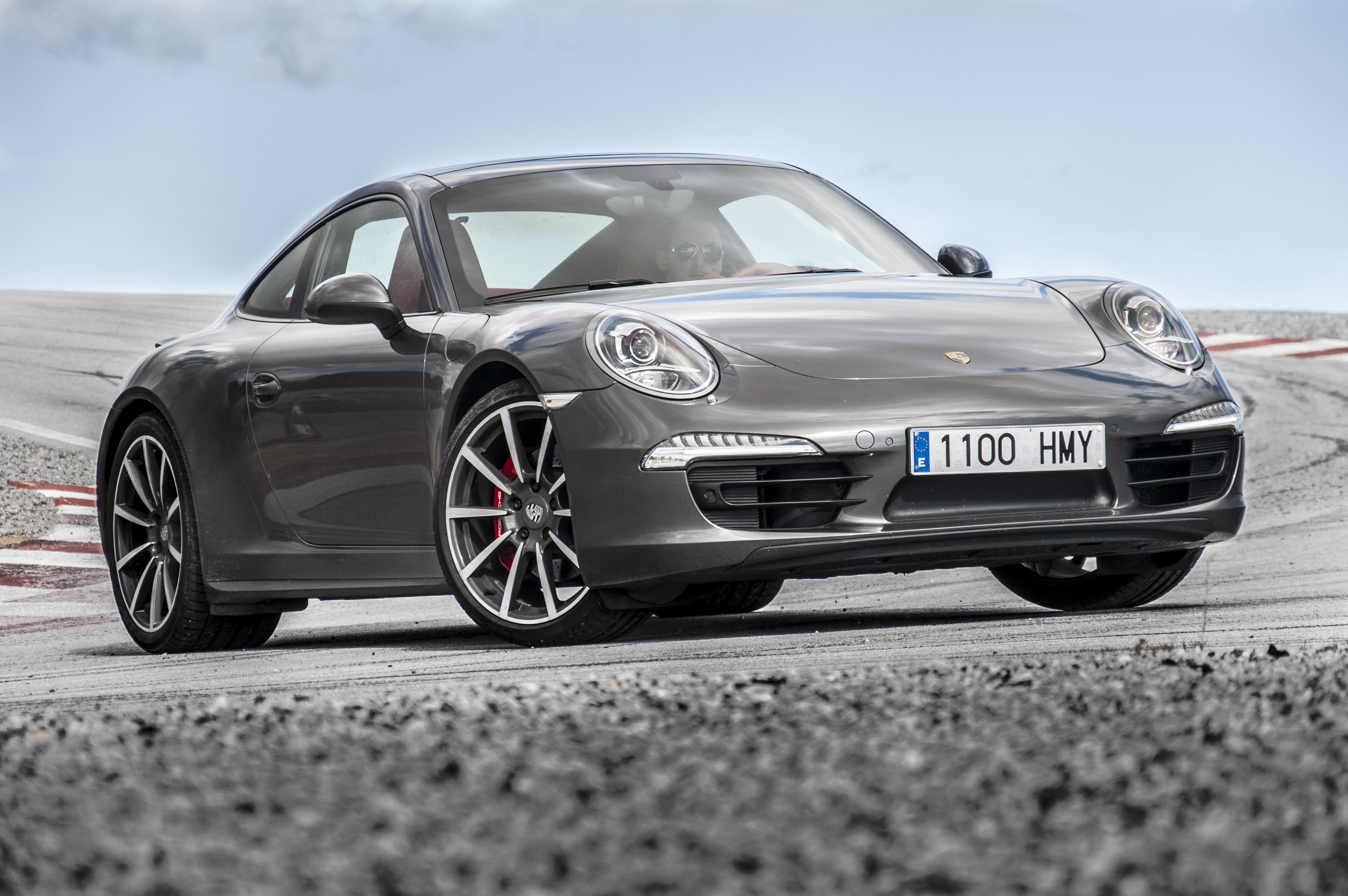
Porsche
"Then again, I've been wrong before that kind of thing and I [1327.0s] Corvette [1327.0s] with that kind of thing and I believe a Porsche in that kind is they're just not made for off. [1333.0s] They're not off road vehicle companies."
Porsche is known for sports cars, not off-road trucks. The point here is that even if Porsche makes an SUV, it’s not what they’re traditionally built for.
Porsche is a German performance brand best known for sports cars rather than true off-road vehicles. The hosts argue that Porsche (and similar brands) aren’t “off-road vehicle companies,” even if they may add one or two SUV-style models.
Jaguar
"The other marketing thing I [1350.2s] wanted to talk about is, you know, Jaguar after completely being wiped out and having zero product [1358.8s] no one electric product is coming out, I guess, with the I type."
Jaguar is a luxury car brand from the UK. They’re talking about Jaguar trying to come back with an electric model and changing how the brand is positioned in the market.
Jaguar is a British luxury automaker. The hosts discuss Jaguar’s product situation and its plan to introduce an electric vehicle under a new “I type” naming approach, aiming to reposition the brand more upscale.
Bentley
"So they're looking at coming out [1367.4s] with I believe an electric vehicle rebranded trying to go more up even more upscale and compete [1374.6s] with the Bentley's and the Rolls Royces of this world."
Bentley makes very expensive, very upscale luxury cars. They’re mentioned as one of the top brands Jaguar wants to compete with.
Bentley is a British luxury automaker known for ultra-premium grand touring cars. The hosts use Bentley as a benchmark for where Jaguar wants to position its new electric model in the market.
Rolls Royces
"So they're looking at coming out [1367.4s] with I believe an electric vehicle rebranded trying to go more up even more upscale and compete [1374.6s] with the Bentley's and the Rolls Royces of this world."
Rolls-Royce is one of the most luxurious car brands in the world. Jaguar is being compared to it to show how high-end they want to go.
Rolls-Royce is a British luxury brand synonymous with the highest tier of comfort and craftsmanship. In the segment, it’s referenced as a target competitor for Jaguar’s planned upscale repositioning.
six speed manual
"How about a great wagon? You know, a great wagon. Well, you know, why can't somebody make a great wagon with a six speed manual? [1765.0s] They're bringing back a wagon."
They’re saying they’d like a wagon that still offers a manual transmission. “Six speed” means you shift through six gears yourself.
A “six speed manual” means the car uses a traditional manual transmission with six forward gears. The speaker is using it as a wish-list feature for a wagon—manuals are increasingly rare in modern wagons/SUVs.
Request an Explanation
Heard something you'd like explained? We'll add it to this episode.
Sign in to request explanations for terms you heard.
Want to learn more?
Browse our glossary for plain-English explanations of automotive terms, jargon, and concepts.
Help improve this episode
See something that's not quite right? Our annotations are AI-generated and can sometimes miss the mark. Click the flag icon on any annotation to suggest a correction.