
Car Keys with Robin Leech and Jay de Marcken – May 18, 2026
About this episode
Range anxiety, charging convenience, and real-world efficiency all get airtime, from a winter EV range drop to a plug-in hybrid strategy that uses gasoline as backup. Rivian’s R2 is broken down by trims, AWD vs rear-wheel drive, and pricing, with features like autonomous driving and a tow package mentioned alongside claimed range. The conversation then widens to electric acceleration for safer merging, “pop and crackle” exhaust noise, and privacy questions around “flock cameras” and teen-driver GPS tracking, ending with a Lime Rock race-weekend schedule.

Rivian SUV
"I encountered a woman who was getting into her Rivian SUV, the big one, and I collared her for a 10-minute talk about how she liked it... she said the range is around 325 miles and it drops to like 265 to 285 in the winter time."
They’re talking about a Rivian electric SUV and how far it can drive on a charge. They mention the range gets worse in winter, which is common for EVs.
The Rivian SUV is discussed as a fully electric vehicle (EV) where the key ownership metric is battery range. The speaker cites real-world range dropping in winter, which highlights how temperature affects EV efficiency.
range
"And it has a range she says... the range is around 325 miles and it drops to like 265 to 285 in the winter time."
Range is how many miles an EV can drive before it needs charging. They say it’s much lower in winter than in warmer weather.
Range is how far an electric vehicle can drive on a full charge. The host notes the Rivian’s range is about 325 miles but drops to roughly 265–285 miles in winter, showing how cold weather reduces efficiency.
plug-in hybrid
"The second car they have in their family is a Polestar slash Volvo vehicle, which is a plug-in hybrid example of the Polestar vehicle."
A plug-in hybrid is part electric and part gas. You can charge it at home, and it can run on electricity for shorter trips before switching to gas.
A plug-in hybrid is a hybrid car with a battery that you can recharge by plugging it in. It can typically drive on electricity for some distance, then uses its gas engine when the battery is depleted or when more power is needed.

Polestar vehicle
"The second car they have in their family is a Polestar slash Volvo vehicle, which is a plug-in hybrid example of the Polestar vehicle."
The Polestar vehicle is described as a plug-in hybrid in the family’s lineup. Plug-in hybrids can run on electricity for short trips, then switch to gasoline for longer driving, which changes how you think about charging and fuel use.

Polestar plug-in hybrid
"interview, is that they keep the Polestar plug-in hybrid, which has a gasoline-motor override for the exact reason that ..."
This is a hybrid car that you can plug in to drive on electricity for a while. When the battery runs low (or for longer trips), the gas engine can step in so you’re not stuck.
A Polestar plug-in hybrid is a hybrid car that can be charged from an external power source, then driven electrically for a limited distance. It also has a gasoline engine that can take over when the battery is depleted or when longer trips make charging inconvenient.
Rivian R1S
"Speaking of Rivian, we know the Rivian the R1S and R1T. So the SUV version and a truck version..."
The Rivian R1S is an electric SUV. The hosts mention it as one of the Rivian vehicles the family owns.
The Rivian R1S is an all-electric SUV from Rivian, built around a large battery and electric drive for long-range daily use. In this segment it’s discussed alongside the R1T as part of a family’s electric-vehicle lineup.

Rivian R1T
"Speaking of Rivian, we know the Rivian the R1S and R1T. So the SUV version and a truck version..."
The Rivian R1T is an electric pickup truck. In the conversation, it’s mentioned as the truck counterpart to the Rivian R1S SUV.
The Rivian R1T is an all-electric pickup truck, using electric motors and a battery pack instead of a traditional engine. The discussion pairs it with the R1S to contrast the SUV and truck versions of Rivian’s early lineup.
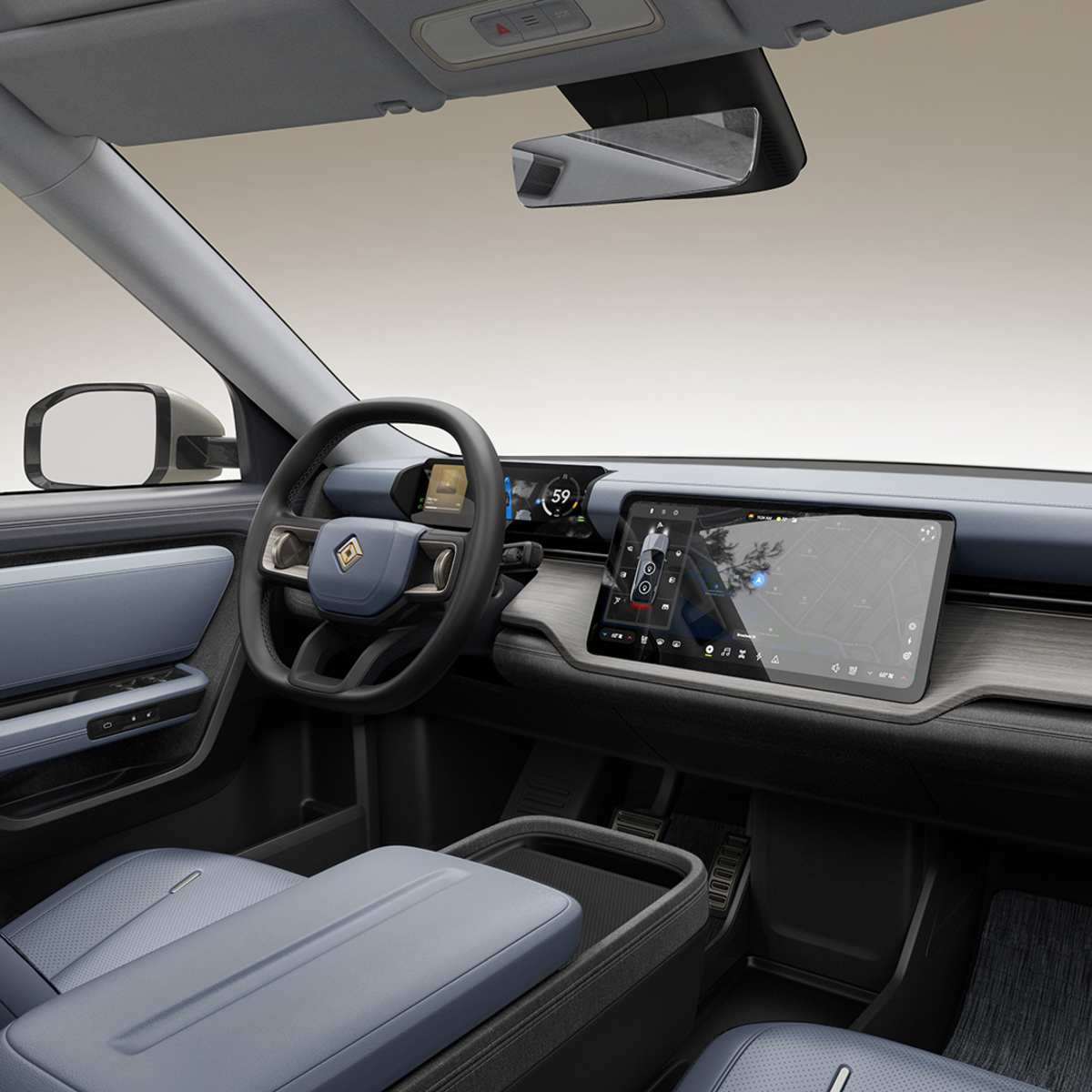
Rivian R2
"And sure enough, Rivian has delivered on their promise and you can now order a R2 online with their configurator. ... This the R2, they have three levels of performance or three trims, if you will."
The Rivian R2 is a new electric vehicle from Rivian. They’re talking about the different versions (trims) and how far it can go on a charge, plus how much it’s expected to cost.
Rivian R2 is an upcoming Rivian electric SUV/pickup-style vehicle positioned as a more affordable entry into the brand’s lineup. In this segment, the hosts discuss ordering it online and break down R2 trims by drivetrain and performance, including all-wheel drive and claimed range.
configurator
"And sure enough, Rivian has delivered on their promise and you can now order a R2 online with their configurator."
A configurator is a website tool where you pick the options you want for a car. It helps you build the exact version you want to order.
A configurator is an online tool that lets you choose a vehicle’s options—like trim level, drivetrain, and sometimes interior/exterior features—before placing an order. It’s essentially how the manufacturer turns your preferences into a specific build.
trims
"This the R2, they have three levels of performance or three trims, if you will. ... There is the performance is that the highest level..."
Trims are different versions of the same model that vary by equipment level and sometimes drivetrain and performance. Here, the Rivian R2 is described as having three trims that differ in power output and whether they’re AWD or single-motor 2WD.
all-wheel drive
"There is the performance is that the highest level, which comes with a is all-wheel drive and comes with around 650 horsepower and a range of 330 miles. ... The premium... is a 450 horsepower, also all-wheel drive and also with a range of 330 miles."
All-wheel drive means the car powers more than just the rear wheels. That usually helps it grip better, especially in rain or snow.
All-wheel drive (AWD) sends power to both the front and rear axles, improving traction and stability—especially on slippery or uneven surfaces. In this segment, AWD is tied to the R2’s higher-output trims and the stated range.
single motor
"And then the, quote unquote, entry-level vehicle is a re-wheel drive single motor only, which has about 300 or exactly 350 horsepower, also has a range of 330 miles, I believe."
A single-motor EV has one electric motor doing the driving work. The segment says the base R2 uses one motor and is rear-wheel drive, instead of using motors for all wheels.
A single-motor EV uses one electric drive unit to propel the vehicle, typically powering only one axle. In the segment, the R2 “entry-level” version is described as a rear-wheel-drive single-motor setup, contrasted with AWD trims.
two-wheel drive
"I think in two-wheel drive version, it may be a little bit more, maybe 345, but all versions do, all-wheel drive versions get 330 mile range."
Two-wheel drive means only one set of wheels gets power. The hosts are comparing it to all-wheel drive and how that affects the vehicle’s range.
Two-wheel drive (2WD) means power is delivered to only one axle (either front or rear), rather than all four wheels. The segment contrasts 2WD with AWD on the Rivian R2, noting differences in claimed range and trim positioning.

Kia EV9
"Well, like I haven't checked the price on the Kia EV9. But anyway, this R2 is very competitive in its pricing."
The Kia EV9 is an electric SUV designed for families. In this segment, it’s brought up as another EV you’d compare when shopping in the same price range.
Kia EV9 is an all-electric, three-row SUV aimed at families who want EV practicality. The host mentions it while comparing pricing and competitiveness against Rivian’s R2.
launch editions
"And the launch editions of these vehicles do include certain features that will certainly be made optional in the future."
Launch editions are early-production or initial sales versions of a model that include a specific set of features. The key idea here is that some features may be included at launch but later become optional (or move to higher trims) as the lineup evolves.
autonomous driving
"So the performance version comes with autonomous driving, which honestly, I don't know what how how sophisticated it is on the Rivian. But it is included."
Autonomous driving means the car can help drive itself—like steering and controlling speed—though it may still expect you to stay alert. The hosts are saying the Rivian R2 performance includes this kind of feature.
Autonomous driving refers to driver-assistance systems that can steer, accelerate, and/or brake with varying levels of automation. In practice, most consumer systems still require the driver to supervise, but they can reduce workload in certain conditions.
tow package
"The tow package is included. Paint colors other than silver are optional."
A tow package is what you get when a car is set up to pull a trailer. It often includes the hitch and the wiring so the trailer lights work.
A tow package is a bundle of hardware and software provisions that make a vehicle capable of towing—typically including a hitch receiver and wiring for trailer lights, and sometimes cooling or control calibration. It’s usually offered as an option because towing capability changes the vehicle’s setup.
350 horsepower
"And you can order a two wheel drive version with 350 horsepower for under $50,000 or or or whereabouts."
Horsepower is a number that describes how strong the car’s power is. Here, they’re using it to compare different Rivian R2 versions by how powerful they are.
Horsepower is a measure of engine (or motor) power—how much work the powertrain can do. In EVs, it’s still used as a common way to compare output between models and trims.
electric cars
"She just loves the accelerator factor of the electric cars in general... And instead of talking about... the way we have said all electric cars do very well..."
Electric cars use electricity to move the wheels. Because they respond instantly when you press the pedal, they can speed up quickly when you need to merge or pass.
Electric cars use electric motors instead of an internal-combustion engine, which typically gives them very fast throttle response. That makes it easier to accelerate quickly for passing or merging, which the speakers connect to safety.
passing ability
"she was using the passing ability, the safeness of the passing ability of the of her Rivian as a big safety feature..."
Passing ability means how easily the car can speed up to get around another vehicle. The host connects that to spending less time in a risky passing situation.
“Passing ability” is the car’s capability to accelerate and complete a pass quickly enough to reduce time spent in the danger zone. Here it’s discussed as a safety feature tied to the Rivian’s quick acceleration.
turn signals
"First of all, do not put their turn signals and then you can you can see them coming on the on ramp..."
Turn signals are the lights you use to tell other drivers you’re changing lanes or merging. The host is saying some drivers don’t use them, which makes the situation less safe.
Turn signals are the driver’s indicators used to communicate lane changes and merging intentions. The segment highlights how failing to use them (especially on ramps) makes it harder for other drivers to anticipate what’s coming.
auto signal
"So in all the auto driving features, I think the auto signal might be a useful one. ... What is the auto signal?"
The “auto signal” idea is that the car would turn on your turn signal automatically when you start merging. The goal is to make it clearer to other drivers what you’re about to do.
“Auto signal” here refers to an automatic turn-signal behavior that activates when you merge or change lanes, even if the driver doesn’t manually signal. The idea is to improve predictability for other road users.
pop and crackle
"some of the stock exhausts on some performance vehicles just pop and crackle and just make a lot of noise."
“Pop and crackle” is the loud popping sound some cars make from the exhaust. It can happen even when you’re not driving super hard, and the host thinks it’s often just extra noise.
“Pop and crackle” refers to audible exhaust backfires/afterfire sounds that some cars produce, often when decelerating or during certain throttle transitions. The host treats it as an attention-grabbing noise that can be unnecessary even without aggressive driving.
aftermarket exhaust
"we've seen the signs around our area... people are asked not to accelerate, make noise. A lot of aftermarket exhausts... just pop and crackle..."
An aftermarket exhaust is a replacement exhaust system you buy and install yourself. People often do it to change the sound, and in this case it can make loud “popping” noises.
An aftermarket exhaust is a non-factory exhaust system installed to change sound and sometimes performance. The segment specifically calls out aftermarket setups that “pop and crackle,” creating extra noise that can attract attention.
live person on the line
"She says it takes no time to get a live person on the line... They are very, very appreciative of anybody talking to them about the Rivian"
They’re talking about customer support—specifically, how quickly you can reach a real person when you call for help. In this story, Rivian’s support is presented as fast and helpful.
This is a customer-service metric: whether a caller can reach a human quickly rather than being stuck in automated menus. The hosts use it as evidence of Rivian’s responsiveness and personalized support.
after sales component
"So Rivian's got a lot of good aspects to not only the vehicle, but apparently the after sales component of their corporation, at least in this woman's eyes."
“After sales” means what the company does after you purchase the car—like help when something’s wrong and how service is handled. Here, they’re praising Rivian’s support and responsiveness.
“After sales” refers to what happens after you buy the vehicle—things like customer support, service scheduling, repairs, and ongoing assistance. In this segment, the hosts use it to describe Rivian’s support experience (including getting a live person and even “house calls”).
commercial vehicles for Amazon
"And I've said this all along for the last five years, you know, their connection with Amazon and the fact that they are geared to produce this 100,000 commercial vehicles for Amazon"
This is about selling EVs for business fleets, like delivery routes, not just to individual drivers. The hosts say Rivian’s relationship with Amazon could help Rivian grow because Amazon needs lots of delivery vehicles.
A commercial-vehicle program means the automaker supplies vehicles for business use rather than only private customers. Here, the hosts connect Rivian’s strategy to Amazon’s delivery needs, framing it as a reason Rivian could have more stable demand and scale.
100,000 commercial vehicles
"their connection with Amazon and the fact that they are geared to produce this 100,000 commercial vehicles for Amazon"
They mention a very large order size—100,000 vehicles—for business use. Big fleet numbers can matter because they affect how much the company can build and sustain its business.
The “100,000 commercial vehicles” figure is a scale claim about production volume for a fleet customer. In an EV context, fleet orders can strongly influence manufacturing capacity, supply chains, and long-term viability.
miles per gallon
"And then when I got on 684, I instead of going 72... I decided to do it at 68. And the miles per gallon for that trip... At those lower speeds went from 38.6 miles per gallon to 40.6."
Miles per gallon (MPG) tells you how far a car can go on one gallon of gas. Higher MPG means you spend less on fuel for the same distance.
Miles per gallon (MPG) is a measure of how efficiently a vehicle uses fuel—how many miles it can travel per one gallon of gasoline (or gasoline-equivalent fuel in hybrids). The hosts compare MPG at different highway speeds to estimate how much range you get per tank.
cruise control
"I decided I was going instead of going 62 on 22 I was going to go between 57 and 58 miles an hour on cruise control down the 22 portion of the trip."
Cruise control is a feature that helps you keep the same speed without constantly pressing the gas pedal. The host uses it to drive at a steady speed to see how it affects gas mileage.
Cruise control is a driver-assistance feature that holds a set speed automatically. In the episode, it’s used to keep steady highway speeds so the host can compare how fuel economy changes at different speeds.
crotch rockets
"What we call crotch rockets."
“Crotch rockets” is slang for fast sport motorcycles. The host is saying there were a lot of those bikes around where the crash happened.
“Crotch rockets” is a slang term for sport motorcycles—typically small, lightweight bikes designed for high acceleration and speed. The host uses it to describe the type of motorcycles they saw around a crash area.
900 horsepower
"These cars are going to hit like 900 horsepower and there's going to be a pretty strong field of them."
Horsepower is how strong the engine is. “900 horsepower” means the car is making a huge amount of power, which is why it can be very fast and loud in racing.
Horsepower is a measure of engine power, and “900 horsepower” means the car’s power output is extremely high. In racing contexts, that level of power typically requires strong cooling, traction, and drivetrain durability to keep the car accelerating consistently.
flock cameras
"What are flock cameras? Well, tracking devices. You've got a list here. Listen, you know what our tracking devices are now. Well, flock cameras are popping up everywhere in the country and basically picking up your license plate..."
“Flock cameras” are cameras that read license plates automatically. They can be connected to databases so that, if someone looks up a plate, they can see a record of where that car was detected.
“Flock cameras” are automated license-plate recognition systems used to capture plate numbers and store them in databases. The segment describes how subscriptions allow organizations to query plates and generate a history of where a car has been.
tracking devices
"Well, tracking devices. You've got a list here. Listen, you know what our tracking devices are now."
Tracking devices are tools that can follow or record where something is. Here, they’re being discussed as a way to track cars using their license plates.
Tracking devices are systems that monitor a vehicle’s location or activity over time. In this segment, they’re described as technology used to identify cars via license plates and build records of where a car has been.
license plate
"Well, flock cameras are popping up everywhere in the country and basically picking up your license plate... it will it can generate the history of where your car has been."
A license plate is the vehicle’s legal identifier, and in automated systems it’s used as the key for matching records. This segment focuses on how plate data can be entered into a database to produce a vehicle’s detection history.
speed cameras
"And we have a big problem in this country about putting speed cameras, but yet we're allowing flock to put cameras everywhere and basically doing the same thing."
Speed cameras are machines that watch traffic. If a car is going too fast, they can take a picture and help generate a ticket.
Speed cameras are automated enforcement systems that photograph or record vehicles to document speeding. They’re typically used to issue tickets based on the vehicle’s speed and location.
GPS trackers
"the whole debate about should you put GPS trackers on your teen driver, children's in your in your kids cars or in your cars and and should you let your kids know that you're tracking them"
GPS trackers are devices that use satellites to figure out where a car is. Parents may use them to keep track of where a teen is driving.
GPS trackers use satellite positioning to monitor a vehicle’s location and sometimes driving behavior. In the context of teen drivers, they’re often used to see where the car goes and whether it’s being driven responsibly.
speed limiting factor
"Well, that goes along with the controls you could put on a car, limiting its top speed to I think in some of these newer cars. So that if you have a driver in your family that you would like to know is driving safely, I believe there is a way to program a speed limiting factor in that car."
A speed limit feature can be programmed into a car so it won’t go above a certain top speed. It’s sometimes used to help protect new drivers.
A speed limiting factor is a programmed restriction that caps a vehicle’s maximum speed. Some newer cars allow parents or owners to set limits to reduce the risk of speeding by a less experienced driver.

Ford Mustang GTD
"Yeah, but by the same token, I know a young lady who as her first car just got a 1998 Mustang GT and that, you know, with obviously parents help and knowledge of this."
The 1998 Ford Mustang GT is a classic American muscle car with a strong, sporty feel. Here it’s mentioned as an example of a teen’s first car that parents were involved with.
The Ford 1998 Mustang GT is a late-90s performance version of the Mustang line, known for its V8 muscle-car character. In this discussion, it’s used as an example of a teen’s first car that parents helped manage.
Request an Explanation
Heard something you'd like explained? We'll add it to this episode.
Sign in to request explanations for terms you heard.
Want to learn more?
Browse our glossary for plain-English explanations of automotive terms, jargon, and concepts.
Help improve this episode
See something that's not quite right? Our annotations are AI-generated and can sometimes miss the mark. Click the flag icon on any annotation to suggest a correction.