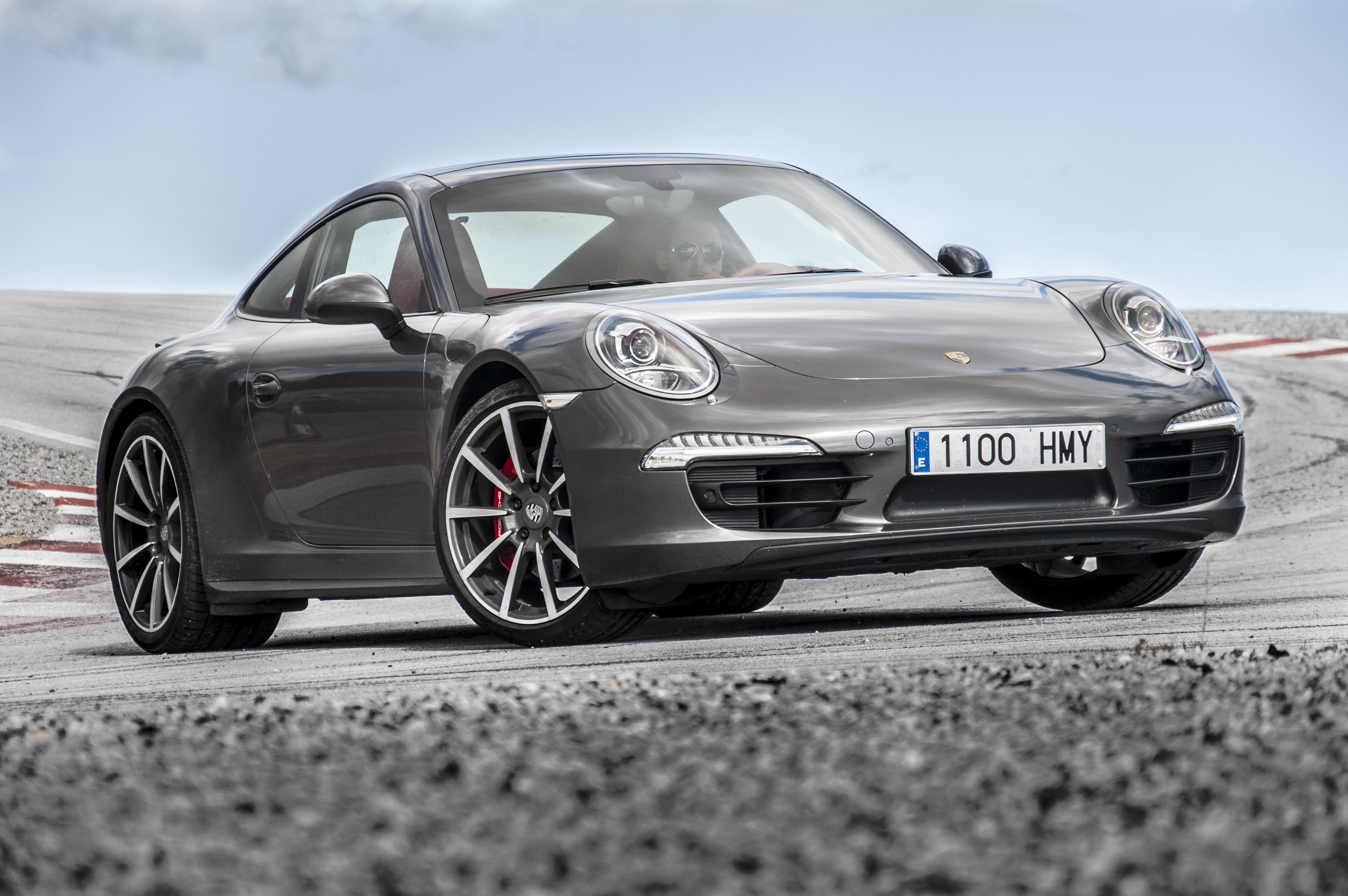
Robin Leach and Jay de Marcken dive into the nuances of tire pressure management and share insights from a recent Porsche-themed car show. They discuss the advantages of independent repair shops over dealerships, especially for older vehicles, and explore the current state of the automotive industry, including sales trends and electric vehicle challenges. The episode also touches on the importance of proper vehicle maintenance and the evolving landscape of car ownership, alongside some lighthearted banter about traffic circles and driving experiences.
"...the tire pressure light comes on it tells you which tire is low right off the bat. So you know which tire to fill as opposed to going around and checking the pressures independently with a tire gauge."
A tire pressure monitoring system is a feature in cars that checks how much air is in the tires. If any tire has low air, it warns you so you can fill it up before it causes problems.
A tire pressure monitoring system (TPMS) is an electronic system that monitors the air pressure inside the tires of a vehicle. It alerts the driver when tire pressure is too low, helping to prevent tire blowouts and improve fuel efficiency.
"...going around and checking the pressures independently with a tire gauge. To that point the problem the nuisance with the Jeep side is for somebody like myself..."
A tire gauge is a small tool that you use to check how much air is in your car's tires. It helps make sure your tires have the right amount of air to drive safely.
A tire gauge is a tool used to measure the air pressure in a tire. It helps ensure that tires are inflated to the correct pressure for optimal performance and safety.
"I just had another great weekend at another Cars and Coffee. Another car show in the southern part of the state of Connecticut."
Cars and Coffee is a fun event where people with cool cars come together to show off their vehicles and talk about them over coffee. It's a great way to meet other car lovers.
Cars and Coffee is a casual car meet-up event where car enthusiasts gather to showcase their vehicles and socialize. These events often take place in the morning at coffee shops or similar venues.
"...for those of you who know Porsches there were actually two Porsche Carrera GTs which is the hypercar that Porsche made in 2004 and 2005, if I am correct."
The Porsche Carrera GT is a super-fast car made by Porsche between 2004 and 2005. It has a powerful engine and is very popular with car enthusiasts because of its performance.
The Porsche Carrera GT is a high-performance sports car produced by Porsche from 2004 to 2005. It features a V10 engine and is known for its exceptional speed and handling, making it a sought-after hypercar among collectors.
"As opposed to maybe a hybrid version. And I'm not sure what model Porsche has in any kind of hybrid version."
A hybrid car uses both a gas engine and an electric motor. This helps save fuel and produce less pollution compared to regular cars.
A hybrid vehicle combines an internal combustion engine with an electric motor to improve fuel efficiency and reduce emissions. They can operate on either power source or both simultaneously.
"2005, 2004 there were no, this is real hypercars with the V10 engine and a manual six-speed transmission. Wow."
A V10 engine has ten cylinders arranged in a V shape. This type of engine is powerful and is often used in very fast cars.
A V10 engine is a ten-cylinder engine arranged in a V configuration. It is known for delivering high power and performance, commonly found in supercars and hypercars.
"...V10 engine and a manual six-speed transmission. Wow."
A manual six-speed transmission is a type of car gearbox that lets you change gears yourself. It has six different gears to choose from, which can make driving more engaging.
A manual six-speed transmission allows the driver to manually change gears using a clutch pedal and gear stick, providing more control over the vehicle's power and speed.
"...ntire, you know, from the 60s up to today, mostly 911s but there were a few SUVs too. And it's just, it'..."
The Porsche 911 is a famous sports car that has been around since the 1960s. It's known for being fast and stylish, and many people admire it for its unique shape and powerful performance. Because it's been made for so long, there are many different versions, which makes it interesting to talk about.
The Porsche 911 is a high-performance sports car that has been in production since the 1960s. Renowned for its distinctive design and rear-engine layout, the 911 has become an icon in the automotive world, representing luxury, speed, and engineering excellence. Its continuous evolution over the decades makes it a popular topic among car enthusiasts and collectors.
"...great show, like I said, great people. And car shows do still attract people."
A car show is a gathering where people show off their cars. It's a fun event for car lovers to meet and see different types of vehicles.
A car show is an event where car enthusiasts gather to display their vehicles, often including classic, vintage, and modified cars. These events provide a platform for networking and sharing automotive culture.
"...a Porsche Club actually had a car show elsewhere in the state."
A Porsche Club is a group of people who love Porsche cars. They organize events and activities where members can meet and enjoy their cars together.
A Porsche Club is an organization for Porsche enthusiasts that often hosts events, car shows, and drives. Members share a passion for Porsche vehicles and participate in various activities related to the brand.
"They are sports cars or were originally sports cars. Now you have mainstream SUVs."
Sports cars are special types of cars made to go fast and handle well. They are often more fun to drive than regular cars because they focus on performance.
Sports cars are designed primarily for performance, handling, and speed. They typically have powerful engines, lightweight structures, and are built for an engaging driving experience.
"...People who actually get away from dealerships and find specialty shops who work on specific brands or models. ..."
Specialty shops are places where mechanics focus on certain car brands or types. They know a lot about those cars and can fix them better than regular repair shops.
Specialty shops are automotive repair facilities that focus on specific brands or types of vehicles, offering expertise and services tailored to those vehicles. They often provide more personalized service and knowledge than general repair shops or dealerships.
Audi is a car brand from Germany that makes luxury cars. They are known for their quality and technology.
Audi is a German automotive manufacturer known for its luxury vehicles and advanced technology. It is part of the Volkswagen Group and is recognized for its performance-oriented models.
"...taking your Jaguar or old Audi or old anything, too."
Jaguar is a car brand from the UK that makes luxury cars. They are known for their elegant designs and fast performance.
Jaguar is a British luxury vehicle manufacturer known for its stylish designs and performance-oriented cars. The brand has a rich history and is often associated with high-end sports cars and sedans.
A VIN number is like a car's fingerprint; it's a special code that helps identify it. Every car has its own unique VIN that tells you important details about it.
VIN stands for Vehicle Identification Number, which is a unique code used to identify individual motor vehicles. It contains information about the car's make, model, year, and place of manufacture.
"Like I plugged in my car plate for my Volkswagen Touareg and it told me that the last information they had on it was what dated back to 2016..."
The Volkswagen Touareg is a luxury SUV that can handle rough terrains while providing a comfortable ride. It's a good option for those who want both style and capability.
The Volkswagen Touareg is a mid-size luxury SUV known for its off-road capability and premium features. It combines performance with comfort, making it a popular choice among SUV enthusiasts.
"...cutting jobs like Rivian just laid off I think 600 people and it's directly related to the fact that sales are down."
Rivian is a company that makes electric trucks and SUVs. They are known for their focus on adventure and eco-friendly vehicles.
Rivian is an American electric vehicle manufacturer known for its all-electric R1T pickup truck and R1S SUV. The company focuses on producing vehicles that are designed for outdoor adventure and sustainability.
"...GM has paused the factory that produces their electric platform, I forget what the name of it is."
GM stands for General Motors, a big car company that makes many different types of vehicles, including electric cars.
General Motors (GM) is one of the largest automobile manufacturers in the world, producing a wide range of vehicles under various brands including Chevrolet, GMC, Cadillac, and Buick. They are also investing heavily in electric vehicle technology.
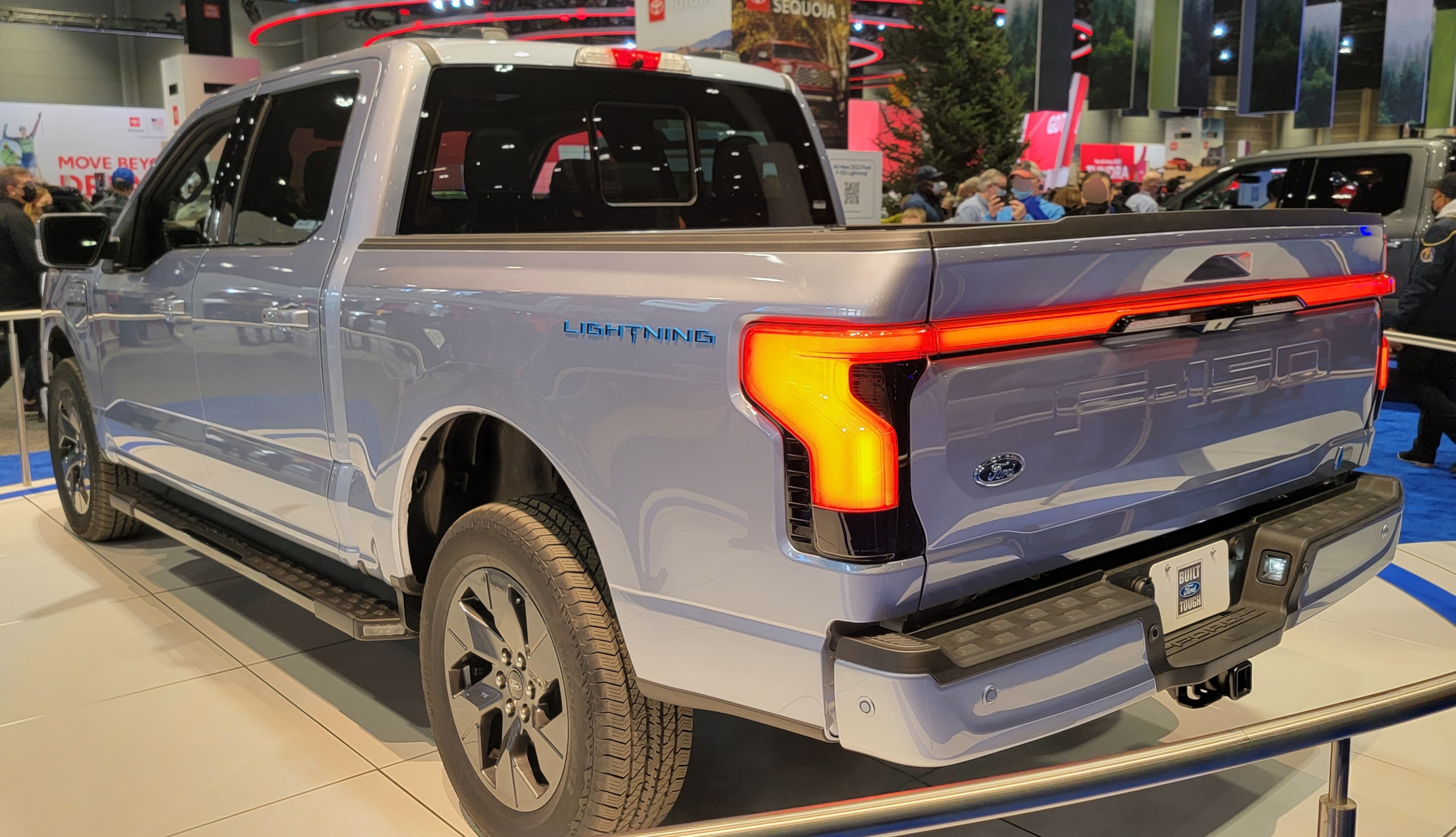
"...the lightning, the F-150, the lightning. Yeah, production is way down."
The Ford F-150 Lightning is an electric truck that is part of the F-150 series, which is known for being a tough and reliable pickup. It runs on electricity instead of gasoline, making it better for the environment.
The Ford F-150 Lightning is an all-electric version of Ford's popular F-150 pickup truck. It combines the utility of a traditional truck with the benefits of electric power, such as lower operating costs and reduced emissions.
"...my first reaction is, electric vehicle sales are way down. And yes they are."
An electric vehicle is a car that runs on electricity instead of gas. They are often better for the environment because they produce less pollution.
An electric vehicle (EV) is a type of automobile that is powered entirely or partially by electricity, rather than traditional gasoline or diesel fuel. EVs are known for being more environmentally friendly due to lower emissions.
"...Have you followed what's, the Tokyo auto show and all the concept coming up? I have not."
The Tokyo Auto Show is a big car event in Japan where car makers show off new and exciting vehicles. It's a chance to see what cars might look like in the future.
The Tokyo Auto Show is a major automotive exhibition held in Tokyo, Japan, showcasing the latest innovations, concept cars, and technologies from various manufacturers. It's an important event for both industry professionals and car enthusiasts to see future trends in automotive design and engineering.
"...ve to close listeners, audience. I have a Hyundai Sonata, and this is gonna interest only those of you who..."
The Hyundai Sonata is a family-friendly car that is comfortable and good on gas. It's a popular choice for people who need a reliable vehicle for everyday use. Many people like it because it has a lot of features for a reasonable price.
The Hyundai Sonata is a midsize sedan that offers a blend of comfort, technology, and value, making it a popular choice for families and commuters. Known for its spacious interior and fuel efficiency, the Sonata has evolved through various generations, incorporating modern safety features and innovative designs. Its affordability and reliability make it a common topic in discussions about practical vehicles.
Select text to request an explanation
He is Robin Leach, he is Jada Markin, this is CarKeys.
Well hello to our listeners for this week's show of CarKeys with Jada Markin and Robin Leach.
We are in the middle of fall, the weather is getting colder.
In a recent show I discussed the situation with car tires or vehicle tires and general
trucks, cars, whatever, anything that's inflated.
It happened to apply to soccer balls too, which I am imminently familiar with because I'm
besides doing this show I'm also a soccer referee, which may or may not interest anybody
listening, but we have to make sure that the balls are inflated properly if we are
going to a game with temperatures that are below 50, even 60 degrees and we don't
know where the balls were inside when they came out to the game and there are specific
balls that are used for soccer games.
So we have to measure the pressure inside and we have little mini pumps to pump them up
to the required pressure for soccer balls.
So to that end that's what the show with all the tire pressures that your discussion
that went on recently was all about.
And I just wanted to continue and say one more thing to that and then I want to go to
something else which we will do.
Regarding tire pressures, as happy as I am with the Jeep system versus the Audi system
which I suggested was the Audi system was very complex to find out what tire might be
low when you started a car and saw their tire light on versus the Jeep which you
can scroll into a menu which shows all four corners of the tires and their irrespective
pressures and therefore it allows you to find the...
And then when the tire pressure light comes on it tells you which tire is low right off
the bat.
So you know which tire to fill as opposed to going around and checking the pressures
independently with a tire gauge.
To that point the problem the nuisance with the Jeep side is for somebody like myself,
your host here, is that if I leave the setting on the menu that shows the tires and pressures
I tend to as I drive along watch the pressures change independently and that may mean you
wonder whether if you see one corner of your four wheels at twenty five and the
others at twenty six and maybe twenty seven after you've supposedly put let's say twenty
six pounds in do you have to stop and get the ones that aren't staying even with the
others inflated.
The answer is no.
Tire pressures will change if you are parked in the sun on one side and shade in the
other the right the sunny side tires may be one or two pounds higher than the ones
in the shade and so on and the same goes when you're driving along roads once you start
your car up in the morning.
So the moral of this particular part of the story on tires is that you can't get too
in saying about trying to keep the pressures at one evenly set level once you put them
all on it.
Don't look at the tire pressures on the gauges.
What?
You're saying to keep your eyes on the road and quit looking at the tires.
That is part of it.
Yes.
And the other is just don't get compulsive about trying to keep the pressures same all
the time because it's not going to happen because of the various parts of components
of driving in the weather factors.
That's that on tires everybody.
I hope I don't have to mention it again for some time.
The other thing I was going to bring up Jay if you have any comment go ahead
while I'm thinking about something else.
I just had another great weekend at another Cars and Coffee.
Another car show in the southern part of the state of Connecticut.
And this one was a Porsche themed car show.
It wasn't really a cars and coffee, it was more like a Porsche than beer because it
took place at a brewery.
And it was a pretty organic organization with this Porsche shop down in Stratford
had organized this and just pretty much just put a posting on Instagram.
And there must have been, I don't know, over a hundred cars there.
And just some very, very cool cars and also some very cool people.
And for those of you who know Porsches there were actually two Porsche Carrera GTs
which is the hypercar that Porsche made in 2004 and 2005, if I am correct.
Fossil fuels, correct?
Yes, total fossil fuels.
There might have been one or two electrics there.
But I meant the two Carreras you're talking about.
As opposed to maybe a hybrid version.
And I'm not sure what model Porsche has in any kind of hybrid version.
2005, 2004 there were no, this is real hypercars with the V10
engine and a manual six-speed transmission.
Wow.
And they were just, they were, I think, I was told there were like 600 of them
totally imported in the country.
I'm not even sure there are that many.
And there happened to be a half a dozen in just the southern part of the state
which is not really surprising.
But there were more, you know, there were more plebeian Porsche 996s
like mine that were 997, 993s.
The whole, the entire, you know, from the 60s up to today,
mostly 911s but there were a few SUVs too.
And it's just, it's just, you know, it was a beautiful day.
Great show, like I said, great people.
And car shows do still attract people.
And we saw this at Lime Rock last weekend.
We see it again in the southern part of the state.
And actually a Porsche Club actually had a car show elsewhere in the state
yesterday as well, I think.
So, you mentioned car, cars and coffee on Sunday mornings
and people will show up, they drive in.
They talk about their cars.
A couple hours, they compare notes, they look at each other's cars
and then everybody goes home.
Is there anything about ownership knowledge that comes out of that
for not only the specific brand of car,
whose coffee clutch you may be attending,
but cars in general, other cars in general
that would be interesting to listers in terms of maintenance
or what to look out for as car wear goes up,
meaning miles go up and all that.
Or do not.
Is it just about how fun they are to drive,
yada, yada, yada without getting into technical stuff?
On this particular, and we know Porsche is a special breed, right?
They are sports cars or were originally sports cars.
Now you have mainstream SUVs.
But there were a couple of, there were two Porsche shops there.
One was specifically, specifically prepares cars for track use
and race cars.
And the other shop is actually more about tuning street cars
and maintaining street cars.
People who actually get away from dealerships
and find specialty shops who work on specific brands or models.
And in the case of Porsche, nothing is really cheap
when it comes to maintenance and repairs.
That's true.
But these shops tend to be more cost effective than others,
than dealerships.
But in our area, you find specialty shops as well.
We both know shops that work on either all brands of vehicles
or specific vehicles and are cost effective
and know the product really well.
Also about, you know, and I'm going on a tangent now
and talking about maintenance and repairs.
I'm always surprised that in this one particular shop I go to
where you would think that because things have become
so sophisticated and full of electronics and cars and all
that, that they can't handle it.
And it turns out that the younger generations
of mechanics are actually pretty well tuned
into all of the electronics side of things.
Right.
And there's plenty of software and website and support
out there for these independent shops
to be able to handle, you know, high-tech cars.
Conversely, may I jump in quickly?
I have discovered to the point of independent car repair
places that they are actually, some of them
are actually better than the new car dealerships
as our cars get older.
And the mechanics there in the dealerships,
the mechanics that you used to know about the older cars
that I'm referring in specifically to a car I own,
which is a Jaguar, which is 2004.
But you go in with my car and if you go to a Jaguar-specific
dealership, I have found, or an Audi dealership for even,
that if the mechanics have not been around long enough
to have that experience for our older cars
that are not as electronically connected, et cetera,
et cetera, they new dealerships, the new mechanics,
really aren't as equipped to handle old, old, you know,
and I'm talking 20 to 30-year-old vehicles,
which I have it on some of, when you take them in.
Either the mechanics aren't equipped,
knowledgeably in their heads to figure things out,
or maybe some of the equipment that the dealerships used
to have, and maybe they're, you know, not a handful of cars
that may still be on the road around for them to service,
that they are not very useful going, taking your Jaguar
or old Audi or old anything, too.
To your point, Jay, the mechanic, the independent mechanics,
in many cases, can be a great advantage
to the dealerships who sold these cars,
not to mention that in many cases,
I find they will be more economically,
more economical to repair in the total cost and run thing,
even though hourly labor rates are now between, you know,
$100 and $200 an hour at many independent shops,
and they are over $200 an hour in one instance.
I know specifically a Jeep dealership in Florida
at $275 an hour.
If they actually book the hourly figure in the time it takes
to repair a vehicle that they may be working on.
So, well-meaning positivity is being addressed by me
and you to independent repair places.
A lot of them whom are, well, some really good ones
that are in our Northwest broadcast area.
Would you agree?
Yes, totally.
Okay.
How's the industry doing?
Oh, by the way, new website I discovered this morning.
Get your pencil out, people.
visor.vin, and I don't know much about it.
What is it called?
visor, v-i-s-o-r dot v-i-n.
Is v-i-n like VIN number?
Yeah.
Okay.
And they, what do they advertise of?
What are they, what are they offering on their website?
Not just pages of listings, see the whole market.
So, you can enter a model, a VIN number,
or even a license plate.
And I did that with my car.
Plugged in one of my license plates
and it will give you, if not a car fax,
it will give you some information about the car itself.
Like I plugged in my car plate for my Volkswagen Tour Rig
and it told me that the last information they had on it
was what dated back to 2016
and that it had been sold by a dealership in Georgia,
which is where I bought the car.
So, I don't know how, like I said,
I just stumbled upon it this morning
and I haven't really looked at it,
but part of it looks pretty interesting.
Part of it looks just pretty scary
because it's just like, you know,
you can pretty much find out a lot about everybody's car.
Well, that is true and to another point,
for listeners, if you buy a used vehicle
that has a trip computer in it or a navigation system in it,
you can also find out a lot of interesting,
at least points of places that your vehicle may have
been to before you ended up in your hands.
For instance, and I have mentioned this
in a show a long time ago,
I wanted to put in my home address just for fun
and I was setting up the Vin, the trip computer or the GPS
and I found out that this vehicle that I bought
had originated in Michigan.
I bought it through Carvana and it was a Jeep
and not only told me that that was a,
and I found that because I found a whole inventory
of addresses that this Jeep had gone to,
including the owner's home address.
That's pretty cool, huh?
Which brings up a couple of suggestions to people
if you're gonna let your cars go,
more sort of like if you're gonna replace your cell phone,
your old cell phone with a new cell phone,
is if you wanna not want this information
to get into somebody else's hands,
whether it be a cell phone that might be sold
or reseller reconditioned phone,
which I bought several of over time,
or a vehicle, you wanna clean out all that information
before you let it go out of your ownership or hands.
So, Robin, have you followed what's happening
in the industry like sales
and how car companies are doing, both American cars?
Yes, yeah, I'll chime in on that
because yes, I read a lot about that
in the weekly automotive news that I get,
and I was looking for the latest one for this show
and I didn't find it,
but the industry is doing remarkably well.
Are you sure you're reading a recent copy
of automotive news because I don't see it
as doing really well?
That's what's coming to a change, I think, Jay,
and I will get to that.
As I say, I think when they first started out
and we were all concerned about tariffs
and Mike jumped in and said,
don't worry about it, it's not gonna be a big deal.
He turned out to be sort of right and in part
at the first six months of the tariff industry.
Are we more than six months into the tariff world?
I'm not sure, but in any event,
I believe then dealerships stock up on a lot of inventory,
every piece of inventory, new cars that they could get
and the importers with the cars
are actually not built in either North America,
which may or may not include Canada and Mexico,
but Europe and Asia.
I felt then that the tariffs were gonna be more,
have more effect on the pricing of the cars
that were built in Europe,
actually built and assembled in Europe or Asia,
than being built and assembled in the United States
of U.S. parts.
I think that's changing
and I think we're starting to see the prices,
the sort of a forecast that prices are going to go up
and we're in 2025 right now, soon to be in 2026.
The dealers have had a lot of time to sell vehicles
and there's been a lot of advertising
about pre-purchase vehicles that were tariff free
by Subaru and lots of the manufacturers.
Those ads are disappearing
in terms of availability of vehicles that were tariff free.
So everybody's been very conscious about the cost
of vehicle ownership as well as financing them
and that is not good for the industry going forward.
I'm afraid to believe.
I have to believe.
You want to add to that?
Yeah, well, I think, I'm just reading about car companies
cutting down either cutting jobs
like Rivian just laid off I think 600 people
and it's directly related to the fact that sales
are down.
Right.
GM has paused the factory that produces their
electric platform, I forget what the name of it is.
But, and Ford has also called it
the lightning, the F-150, the lightning.
Yeah, production is way down.
Yeah, and so it, my first reaction is,
electric vehicle sales are way down.
And yes they are.
And BOID in China had a bad quarter too.
But I think it's more than just the electric industry.
I think it's way beyond just the electric industry situation.
I think it's a car industry in general.
I think it's gonna be across the board
and not lots of other items from vehicles.
But yeah, I think the vehicle industry is in for a possible,
if not dangerous, worrisome, slow down coming forward.
I've noticed that the manufacturers in the US
are now back at the 0% financing interest rate mode
of advertising, which I didn't see for quite a long time.
But they offer, instead of dollar discounts,
they offer you 0% financing cost charges.
And it's very easy.
I forget what the dollars per thousand borrowed is,
but it's a flat, whatever it is,
it's a flat along the way
based on the price of the vehicle.
And there's also cash back that are back in Vogue
for vehicles in lieu of low-priced financing rates.
So all the magic, Jay, that we have seen in the auto industry
for how to sell vehicles is coming back online
as maybe sales are slowing for one reason or another.
Okay, so let's be a little less doom and gloom
and look at the positive things.
Have you followed what's,
the Tokyo auto show and all the concept coming up?
I have not.
I'm just looking very briefly
and there are a few interesting concepts out there.
One of them is like a six-wheel minivan slash SUV
luxury vehicle from Lexus,
which is interesting and, you know-
Posed for production?
Not a word I should say,
but you're right.
No, but what I found interesting is that,
first of all, the minivan slash SUV,
you know, a format size of a vehicle
is still what luxury vehicles are gonna become, I think.
We've seen luxury vans in Japan for a few years now,
where level of finish and luxuries, unbelievable.
On another note, I just read a quickly test review
of the new Rivian, not a Rivian, Lucid.
The Lucid, what's the name of the SUV?
Yeah.
It's a very large car.
It is fast, comfortable, very expensive,
and I'm sure in its class of cars,
it's gonna sell very well,
even though, you know-
Well, it will sell very well
to the wealthy who get afforded.
Yeah.
That may not numerically mean it,
a lot of vehicles will be on the road.
It's not gonna be enough to keep Lucid
going in the long term.
That's for sure.
Back to concept cars.
I'm trying to see what else there was.
Totally lost the page.
Well, while you're thinking about that,
let me go let our audience know something
that we are still in about maybe bringing
onto this show, which will be possibly periodically
user experiences on one of our shows.
We'll invite the users of specific vehicles,
maybe the people we run into
to come on this show,
taped, telling us their experiences
for specific vehicles.
We might like to know how they responded to it
and during, let's say, long distance
cross country cruises, electric vehicles
are a primary interest to me
because I have been ranting about
the time that you have to take to charge vehicles
when you can't drive 700 miles a day
without, with only coffee stops and brief food stops
as opposed to recharging.
Recharging times, which have been,
can be long in some cases
and relatively short in others,
but also limiting you and the freedom to drive
between the charges.
If you wanna take a side trip
and you're on an interstate going from,
let's say, here to Chicago
and you suddenly wanna go,
you see a sign for something that's 75 miles north
of and out of the boondocks of some state you're in
and you look down at your charging level left
and you worry about whether you can get up there
and whether there'll be a charging port there
and all these collector cars come with
indexes of where charging stations are
and they are increasing numerically all the time.
But I don't know whether or not
you can actually plug a destination in
the computer of the car
before you actually head for that destination
and find out that there are no or one
or X number of charging ports up at where you're going
that may be off a main route
where they are fairly reliably
have charging stations available for you
to stop and charge.
The example that I hope is gonna show up in the show
will be a Rivian usage,
a Rivian owner, a family who has recently taken
a so-called a cross country and back trip in their Rivian
and they had a wonderful experience
but they also had the,
and they offered to come on this show
and give our audience a chance to hear about
first-hand experiences, the pros and the cons.
Jay, that might happen to you
when you have one of these fancy cars you drive
that maybe it's worth having that owner report in
on what he likes about that kind of car,
whether it's a Lucid or a Rivian or a Porsche or whatever.
But for our audience, that may happen.
So you can stay tuned and keep listening
if you want to find out what we're gonna pop up
with on a future show here on Carkeys.
So as we near the end of the show,
talking about driving and safety
and just read an article about the new traffic circle
in West Hartford, Connecticut.
Oh, where is it?
I don't know, I know it's in West Hartford
but I saw a video of it and I saw pictures
and it is just ridiculous.
That is a whole new...
What a ridiculous translate to for our listeners,
for our audience.
It was built with hardly any elevation change
in the middle of the circle
and these stupid arrows painted on the ground
that just give the wrong idea of what to do in the circle
and then they were surprised
that people actually drove through the driving circle.
So then they put barrels all around the driving circle
so now it looks like a construction site
and they've restricted the amount of space
for larger trucks to be able to maneuver around the circle.
Anyway, the problem with driving circles
is the design has to be consistent.
The rules of the road have to be consistent.
One of the few really good driving circles around,
I think, is the one we have in Great Barrington
which is really well-designed.
You can see it, you don't drive straight through
the intersection and it's pretty simple.
You go into these, you do not have the right of way
going into the circle and once you're in,
you do have the right of way.
When you enter the traffic circle,
put your signal to the right and exit.
It's not complicated.
Okay, it's not complicated and it was fairly well-designed.
I agree with you for our audience's information
that they did a fairly good job doing it.
The biggest issue was going to be for tractor trailers.
Anything that's long like a tractor trailer
has to have a wider range of turning radius
to be able to effectively do that
without cutting off the center of a traffic circle
with their trailers.
They also have bigger tires
and that's why the Great Barrington circle
works really well because there is curbing,
but then there's a next level up, if you will.
Okay.
Cars are not supposed to put their wheels on,
but trucks can go over that part.
And that's fine.
Right, the trailers can drag over that point.
There's a circle in Goshen,
which has to a certain degree some of the issues
you said about the one you saw in West Hartford.
And what they've solved is during the summertime,
I find that they've got arrows
and protective stands on that
to keep people from crossing that,
but in this winter time, when it's plowed,
they have taken some of those portable stations,
so to speak, control stations down
or they've moved them in so that there was not,
I don't know whether you could actually cross
through the center, but if you had trouble
getting around it because of weather related stuff,
they were trying to limit that problem
by removing things that might get in the way
of plows trying to plow the roads to keep it clear.
So you're right, they need to learn how to design these
traffic circles in a rate.
Are all the traffic circles in Europe wonderful, Jay?
No, they're not all wonderful,
but they over the years, and it took time.
Let's be a bit beyond.
It takes time, of course it does.
It takes time for, first of all, to figure out
what works and what doesn't work,
and it takes time to come up with a design that works
consistently, and it takes time for people to get
used to driving traffic circles.
When I go back to Europe, it takes me a while
to get really proficient, if you will,
to navigate the circles.
That's true.
So I get it, it takes, you know.
Okay, some trivia before Mike chimes in,
says we have to close listeners, audience.
I have a Hyundai Sonata, and this is gonna interest only
those of you who are like me.
It's got a, just shy of 120,000 miles,
and it has one of the things in its main use
is average speed, which I have never reset
since I've owned the car.
The average speed that I have apparently driven
this car over its almost 120,000 miles,
and this includes lots of highway driving at 70 and 80
and sometimes 90, just for short bursts,
36 miles an hour.
That's 120,000 miles at roughly 36 miles per hour
is what I think all my vehicles are doing.
I can reset some of that on some of my vehicles,
so I can't tell you that they're all,
but they're all, so the moral of this
is probably that your average speed
in any car you're driving is probably gonna be
between 30 and 40 miles an hour
over the life of your vehicle.
I think this is true, but I also think we are privileged
to be living where we live because in most parts of the world,
they don't even come close to that
because they crawl for hours in traffic every day.
Like California.
All right, and on that note, you have run out of miles.
So to our audience this week,
stay tuned for maybe some guest discussions
and on vehicles, mostly vehicles, we hope,
and other trivia and other things suitable for Kark.
This is Jay DeMarquin and Robin Leach saying goodbye.
Karkies with Robin Leach and Jay DeMarquin
is produced at the facilities of WHDD91.9 FM,
RobinhoodRadio.com, Sharon, Connecticut.
Request an explanation for:
6 cars
6 cars featured
Request an Explanation
Heard something you'd like explained? We'll add it to this episode.
Sign in to request explanations for terms you heard.
Want to learn more?
Browse our glossary for plain-English explanations of automotive terms, jargon, and concepts.
See something that's not quite right? Our annotations are AI-generated and can sometimes miss the mark.
Click the flag icon on any annotation to suggest a correction.