Market day supply tells us how many days it would take to sell all the cars dealers have if no new cars came in. More days means cars are selling slower.
A subprime borrower is a person who has had some problems with credit in the past, so banks see them as riskier to lend money to. They might have to pay more to borrow money.
Negative equity means you owe more money on your car loan than your car is worth. This can make it hard to sell or trade your car without paying extra money.
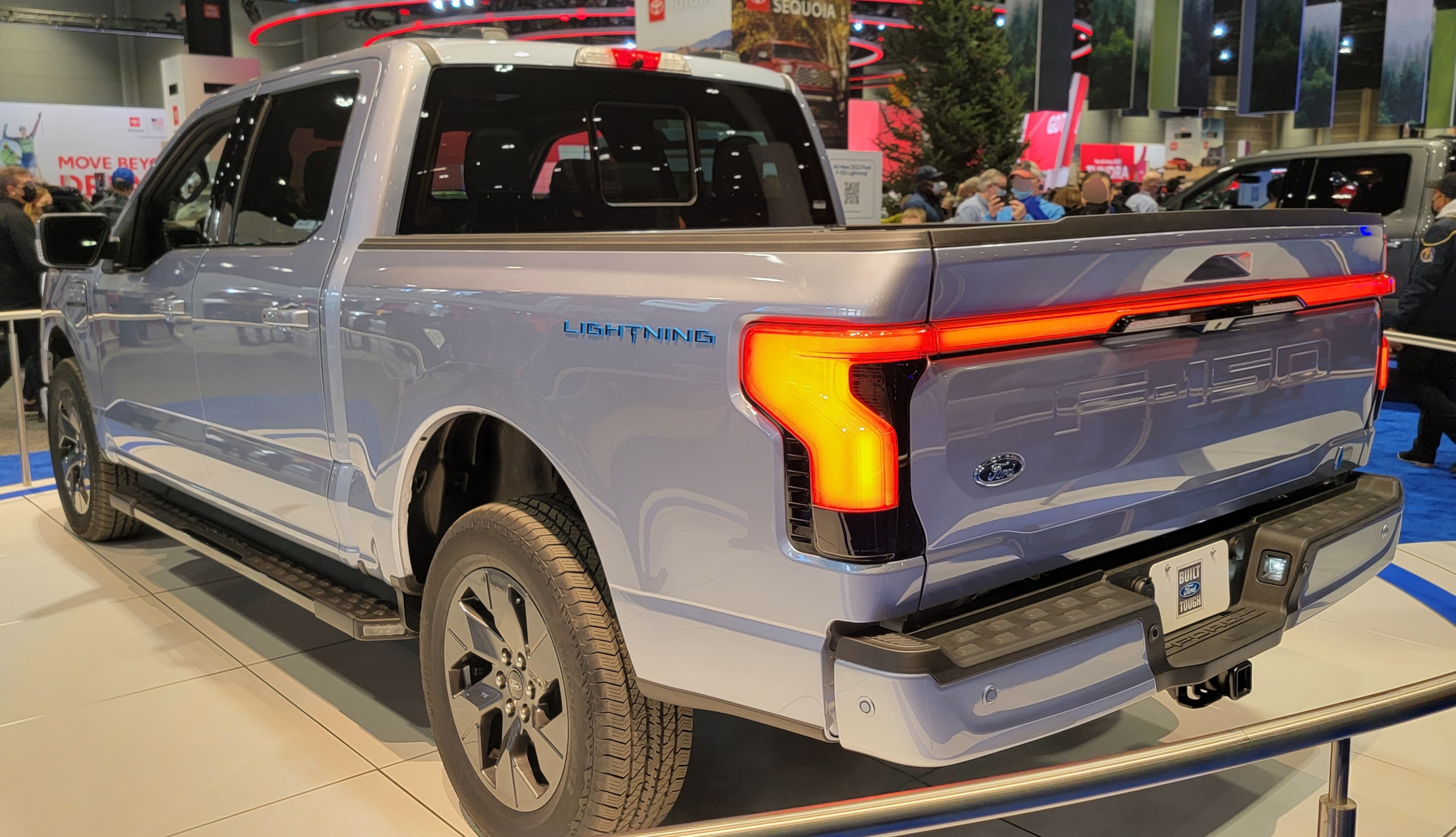
The Ford F-150 is a very popular big truck that many people use for work and daily driving. It's important because lots of people buy it, and it helps Ford make money. Right now, there are many unsold 2025 trucks sitting at dealerships, which is causing some problems for Ford's financing.
0% financing means you borrow money to buy a car but don't have to pay extra fees called interest. Only people with very good credit usually get this deal.
The Subaru Forester is a small SUV that is good for families and can drive on all kinds of roads because it has special wheels that help it grip better.
A credit score is a number that shows how good you are at paying back money you borrow. The higher the number, the easier it is to get loans with good deals.
0% interest means you don't have to pay extra money on top of the car price when you borrow money to buy it. It makes buying a car cheaper because you only pay back what you borrowed.
Sub-vented interest rates are cheaper loan rates that the car company helps pay for, so it's easier for people to buy cars even if their credit isn't perfect.
LIVE
It's noon here in Ventura City, New Jersey and our nation's capital Washington DC.
And this is Car Edge Live for Wednesday, March 11th with your hosts, me, Ray here in Ventura,
still trying my best to grow a beard, and Zach hanging out in his apartment in DC.
And I understand I'm in for quite the ride today since I have no idea what the hell we're talking
Cox Car Market Crash. We're going to review some of the latest data from Cox Automotive before we
do. Yes. And a reminder, today's show is brought to you by caredge.com. Now, for those of you that
are unfamiliar at caredge.com, my dad and I for six years now with our incredible team have been
providing a car buying service that takes care of vehicle research, dealer outreach, and even
negotiation. Think about that for a second, folks. If you want some pros to contact dealers on your
behalf and do the negotiations, we do it for you. We learn what matters to you. Contact dealers
compare real offers and help you get the best deal without the stress. We have an incredible team
back at caredge.com, and I encourage you to learn more. Now, we also have a new product in beta,
caredge.com slash beta. This product is all about a brand new car search and making it easy and
simple to get out the door pricing from car dealers. I'm asking everyone in the Car Edge community,
you can even see here our dealer ratings are integrated into this. I'm asking everyone in
the Car Edge community to go to caredge.com slash beta and share your feedback with us on this new
car search experience and getting out the door pricing as well. Now, dad, you ready for the big
story this morning? What was that? You ready for the big story? Yes, yes, yes, certainly. We have
new data from Cox Automotive across two spectrums that are so, so interesting. And for me, dad,
again, signal an alarm being sounded for the auto industry. First things first, dad,
Kelly Blue Book report, new vehicle price gains accelerate in February as transaction prices
increase 3.4% year over year. Now, at the exact same time, dad, the other data set we're going to
improve hits three year high. Car prices, we've got new data that shows how they are spiking
and increasing at the exact same time. Access to credit has never been simpler or easier than it is
today, and in particular for those with subprime credit. Before I jump into the numbers, dad,
any initial reactions from you about what we're talking about? Let's see. The poor are going to
get screwed. That would be the initial reaction. Those with bad credit, those that have to utilize
subprime credit sources, those folks are going to get royally screwed because the price of vehicles
has gone up and the likelihood of them being able to continually make their payments without a
repossession, well, that likelihood is going up as well. Let's look into the numbers, folks. The
average transaction price for a new car, like I said a moment ago, $49,353. That's up 3.4%
year over year. Now, for the 11th consecutive month, dad, we've had MSRP, the sticker price,
above $50,000. The MSRP on average for new cars sold in the month of February was $51,440. Now,
wait, wait, wait, wait, wait, one second. I can see where all that talk from all the manufacturers
about addressing the affordability issues in the automotive space, how that talk, how all those
words that came out of all those CEOs' mouths was, well, what's the polite way of putting BS,
ladies and gentlemen? It was all BS if the MSRPs can have risen every month for the last 11 months.
It's not that they've risen, dad, it's just that they've been above $50,000.
Well, excuse me, they have remained above $50,000 for the last 11 months, which indicates to me
that the way to address the affordability issue is to well not.
As we discuss on this channel all the time, it does take time for new vehicles to make their way
to market, but yes, the average MSRP is high, has continued to stay high, and for the foreseeable
future will likely stay high. That is up 3.5% year over year. Now, here's the kicker, dad,
incentives. Automakers increased incentives in February. If the sentence ended there,
we would not have the full story because, dad, the average incentive package last month was 6.9%
of the average transaction price. Now, that's up from 6.5% in January. A year ago, the average
incentives were 7%. What this means, folks, incentives are the manufacturer incentives
to sell a vehicle. If you bought a $100,000 vehicle in the month of February, you were
getting $6,900, 6.9% of that $100,000 in incentives from the manufacturer to purchase that vehicle.
Pre-pandemic, before the pandemic, that incentive amount was typically 10, 11, 12%
of what you were paying for the vehicle. So we saw that incentives increased from 6.5% to 6.9%,
but they're still dramatically below where they had been pre-pandemic. That being said,
we do have 49, 0% financing offers right now for the month of March. So I do anticipate
maybe the average amount of incentives increase even more in the month of March,
but, dad, this is like such an alarm bell moment for me. Prices through the roof,
but incentives not necessarily following. We're going to get the latest inventory data soon,
probably this week, and it'll show that the market day supply of inventory has also grown
because fewer people are buying these cars. It's out today. I saw it today.
Up to slightly over 3 million new vehicles, same level that we were at last year at this time.
Day supply has crept up to the average is 75. I believe that article was in Automotive News
this morning, and as someone who likes data points, you should pull that article up because
it will show that vehicles in the $30,000 to $50,000 price range ain't selling all that quickly,
but they are selling a 10-bit quicker than, say, vehicles in the $80,000 price range.
Dad, does this not point the finger at what we just looked at, which is 6.9%
incentives is not enough to sell the vehicles that are being produced, and we know the other
lever that the manufacturer has posed on, okay, we'll produce fewer vehicles, but obviously,
to your point, if I may, dad, just here, new vehicle inventory above 3 million,
day supply rises to 75. That's exactly what you just said. Yeah.
Yeah, and the amount of incentives in February was 6.9% this year. Last year, it was 7%. So,
on that $100,000 car, you would have gotten a $7,000 incentive as opposed to a $6,900
incentive this year. It is everything you look at suggests that everything these manufacturers
said about addressing the affordability issues. It's not so. It's not true. It plays well.
It makes a great headline, but if you never follow through on what you say, it doesn't mean
anything. And so, for the average person, and I'd like to consider myself average,
or maybe slightly below average. For the average person, they don't care about us. They're not
interested in us. They are merely interested in the 12% to 15% of the population that makes a lot
of money and can afford to buy cars. And the rest of us, they have just completely abandoned
and continue to do so. It's staggering in its proportions when you look at it like that.
Now, wish that market reality. The other way that you can get people to purchase these vehicles and
prop the industry up is give them access to more and more credit. And that is exactly what we have
happening. So, first part of the show, prices are going up. Incentives are not following suit.
People are in inventory starting to build up. The other half of today's show,
access to auto credit in February improves, hits three year high. Dad, look at this.
So, there's our access to credit availability index. We are at the highest level we've seen
since the beginning of the pandemic, importantly here, dad. Look at this. So, we do have approval
rates. They filled a 70.9% in February, down 60 basis points from January, and down 40 basis
points here over year. So, that's good. But look at this, the subprime share. The share of loans,
the subprime borrowers, increased by 180 basis points. So, 1.8% month over month from 15.7 to
17.5 and is up 320 basis points year over year. So, we have a little bit of a hardening in terms
of approval rates, but we're getting more and more approvals of those who have suspect credit,
which means, especially when you pair that with a negative equity crisis and things like that,
it means you're setting yourself up for failure down the line here. These people will most likely
not be able to buy another car in three years when they want to buy it. So, we're propping up
car sales right now by saddling subprime borrowers with even more debt.
Yes. And to make it easier for those subprime borrowers to be able to afford those more expensive
cars that, especially as gas prices rise, they won't be able to afford. And it's not as if the
subprime lenders don't know this the moment they approve the loan. They do know it. Their
whole business model is predicated on it. So, we're going to make it a little harder for people with
good credit to qualify for loans like this, but we're going to make it easier for people
who don't know any better to say yes to subprime loans that are going to saddle them with debt
or repossessions for the remainder of their lifetime. It is such a predatory practice that
at this point, if I may be so bold as to say this, the government endorses it. And what do I mean by
that? The government backed down from the consumer fraud protection agency that oversaw things like
this. They have no teeth. They have no say anymore. The Department of Justice decided not to
file an appeal in regards to the CARS Act that the FTC wanted to enforce when the court in Texas
said, well, we shouldn't utilize this. So, it is as if the government has given wholesale approval
to these subprime lenders to just go ahead and do whatever it is that you want to do
and approve whoever it is you want to approve because you've got free reign. We're not going
to look at you. We're not going to rein it in. We're not going to do anything.
I want to keep focused on the data here, Dad. The loan term length information, the share of
loans with terms greater than 72 months increased by 130 basis points from 28% to 29.3%. And look at
this, Dad, is up 480 basis points year over year. So, the number of people getting approved for
subprime loans is increasing, that cohort, and the number of people getting approved for 72
months or longer loans is also increasing significantly. That is, if I can see an argument
for what you're describing, that is where it shows up, meaning that essentially we are taking on
more lending risk for longer loan terms. Should someone, some government entity protect consumers
from that, you and I disagree on that one. I don't think the government needs to step in there
to protect consumers from making unfortunate financial decisions. But this data does, no
matter how you like it, the government should or shouldn't. This data does demonstrate that
more and more people that have bad credit are getting approved for longer loan terms.
We should all be scared of that, because that's not good, especially when we look at the next
data point, which is going to be negative equity on the rise. When we protect them, you and I can
see differently, and everyone in our audience can have a different opinion on that. But are they
getting screwed? Yes. Are they doing it to themselves? Yes. Should they get more help from other people?
Yes. We can disagree about whether or not the government should, I don't know, protect its
citizens. By saying that, I am not absolving the folks that sign on the dotted line and plead
ignorance after the fact. As a consumer today, it is your responsibility to know what it is that
you're doing. And if you don't know or you don't understand, stop the damn process.
So, yes, it's the consumer's responsibility. But in my world, it would be nice if the government
would say, hey, you know what, this is usurus. This is not the way we should operate.
Nobody does selling better than Shopify. Shopify is the home of the number one checkout on the
planet, and the not so secret secret, with shop pay that boosts conversions up to 50%,
meaning way less carts go abandoned and way more sales going through. So if you're into
growing your business, your commerce platform better be ready to sell wherever your customers
are scrolling or strolling on the web, in your store, in their feed, and everywhere in between.
Businesses that sell more sell on Shopify. Upgrade your business and get the same checkout that
Skins uses. Sign up for your $1 per month trial period for three months at Shopify.com
slash Westwood One, all lowercase. Go to Shopify.com slash Westwood One to upgrade your
selling today. Shopify.com slash Westwood One. Let's keep it focused, that on how this actually
indicates that the car market is in a really perilous position. Regardless, you and I can set it
aside for the remainder of the show. Regardless of your take on who should be doing what to
protect people, let's focus just on even more of the data, which is look at this negative equity
share, dad. The proportion of borrowers with negative equity increased by 170 basis points
month over month from 56.3 to 58%, and is up 540 basis points year over year. Okay, so let's just
recalibrate for a second here. Let's recalibrate for a moment because we said car market crash
cocks out about it sounds the alarm. Let's recalibrate. New car prices, they increase to their
highest level that we've seen in a long time. For the 11th month in a row, MSRPs have stayed above
$50,000 and are well above $51,000. Incentives have not increased from manufacturers and new car
inventory is starting to build. That's one side of the equation. The other side of the equation, dad,
getting access to credit as a subprime borrower is easier today than ever before. Getting approved
for a long loan term, meaning 72 months or more, is easier than ever before. Bringing your negative
equity to the table for that loan is happening with higher frequency and velocity than ever before.
That is an alarm bell, folks. That is an alarm bell. I'm pretty sure that that's not a recipe for
long-term success. The industry understands that it's saddling its borrowers for a longer time
free. You're effectively taking the people that you're putting into 72, 75, 86,
84 months, 96-month loans. You're effectively taking them out of the market to where they're not
coming back in three, three and a half, four years. They can't. They are saddled with so much debt
that there's no way for them to come back into the market and trade out of their car.
You're focusing on short-term profits today and just losing your long-term gains here.
If I may, dad, there's another data point that validates what you just said even more.
When we look at which channel or which type of lender, here's proof their availability
for credit month over month and year over year. Look at this, dad.
Captives led the improvement again with credit availability rising 3.9% reflecting a strong
appetite for growth and a greater willingness to extend credit. Captives, folks. My dad will explain
this in detail in a second. Captives are the finance companies that are owned by the automakers.
Banks and finance companies also showed loosening up 0.8% and 1.4% respectively while credit unions
were actually down. It became more difficult to get approved for an auto loan from a credit union
last month. They were down 0.3%. Overall, lenders are showing more willingness to extend credit
with captives driving the month over month improvement. Does that not just invalidate
what you just said? Please explain what captives are. Please explain how they are trying to drive
growth here. That is an insane data point. The captive lenders, BMW financial services,
many financial services, Nissan Motor Acceptance Corporation, Toyota financial services,
Ford's credit arm. They are owned by the manufacturers. They are subsidiary of the
manufacturer. Their whole job in life, the reason they were created, was to be able to provide
the credit that the customers would need in order to be able to buy those particular
brands of cars. The dealers are saying to their captive lenders, we need you to approve these
loans if you'd like us to sell these cars. The manufacturer is looking to their captive lender
going, we need you to approve these loans so that the dealer can sell the damn cars and we can ship
more cars to them. Yes, of course, the growth is going to be through captives. What's interesting
is that credit unions who have to answer to their members are more cautious because they have to
answer to their members than these captive and other banks are. This is a
recipe for long-term disaster. We come on every day and I feel as if we're trying to prevent
the world from stirring that pot so that the meal doesn't get completed. Everybody else
in the industry is out there trying to stir the pot and it's going to create a major issue moving
forward. If I may, dad, I just want to really hammer home, I'm going to say the gamesmanship
of what's currently happening. Again, I'm going to reframe it and I apologize if you all find this
to be pedantic at this point, but it's important. Yes, I just used pedantic in a sentence. MSRPs
and average transaction prices for new cars sky high, incentives not increasing, access to credit
improving for those who have poor credit histories, and length of term and ability to bring negative
equity to the table. Okay, we're approving more and more of that. Who's doing more approvals?
Captive finance companies. Those are the captive finance companies that we have this back on
caredge.com, the 10 best new car incentives for the month of March. What are they doing, dad?
Offering 0% financing for 60 months plus $1,000 in truck month cash plus no payments for 90 days.
Why is Ford captive finance doing that? Because Ford has 28,000 overpriced
leftover 2025 model year F-150s on their lots. Now, think about that for a moment.
We've done stories in the past where we've heard rumors and rumblings of Ford extending
these 0% financing offers to those that have worse credit. We are watching this play out in
real time. Ford oversat... I'm just picking on Ford for a moment here. This whole list could be used.
These manufacturers have oversaturated the market with leftover expensive vehicles that are not
selling. Now, what they're doing is they're approving more people for these aggressive finance
terms taking on more risk there to try and get the metal to move. It is clear as day what is
happening. It's like the left hand's not talking to the right hand or maybe they are talking to
each other but a little bit too much. Hey, we can just keep raising MSRP's so long as we
approve more and more people for 0% financing. That's crazy, man. Well, the whole concept is
crazy. People are doing 0% financing for the 2026 Forester for 75 months. What do we know about
Subaru, dad? They're trying to move volume this year and we know they've increased the prices of
Forester. I guess, yes. Exactly what they're doing. There's only so many levers, not to get back to
tugging on levers again, but there's only so many levers that manufacturers have. One of the levers
could be lowering MSRP's. Very rarely see that happen. Because they're not going to give up the
pricing power. They gained all this pricing power. The floor and the ceiling are higher than ever
before. We can't give that back, dad. But that's one of the levers and that's a lever they're not
going to use. Another lever is to incentivize the sale of the vehicles through the use of
customer cash rebates, dealer incentives to move units so that the dealer can afford to
sell it at a lower price, specialized financing rates. These are the type of levers that you're
seeing the manufacturers use in lieu of actually lowering the price of the vehicles that they're
producing. Their thought is that we will continue to raise the prices. We will continue to keep the
prices high and we will incentivize through the use of specialized financing rates or
dealer or customer incentives to try and get the people to be able to buy these. The only
issue with this is the vast majority of people. When I say the vast majority, if I'm not mistaken,
statistically speaking, it's about 4% of the population actually qualifies for these 0% interest
loans because typically you need a credit score of 720 or 740 or higher to qualify for it. It
looks good in an ad. The sad reality is that 96% of the people who read that ad won't qualify for it.
But dad, you and I want to be very clear to our community here. You and I both know that they
are loosening the acceptance rates, accepting more and more people, and there are tiers.
So not only is there 0%, but then there's typically 0.9% or 1.9%. No matter what,
it's a bought-down interest rate and it's a way to try and get people to purchase these vehicles.
I'm not disputing that. What I'm saying is that because 96% of the population will never qualify
for the 0% interest. They might qualify for the 1.9 or the 2.9 or whatever it is as it goes up in
tiers. It's not costing the manufacturer as much to cover that incentive because the vast majority
of people don't qualify for the best portion of that incentive. But these are just the levers
that they have. But they're forgetting that in the long term, these people aren't going to be
able to come back and buy another car anytime soon. And certainly the people that are subprime
borrowers, they may never come back because I used to work with a salesperson way back
when. And he used to say to customers, he said, you're allowed up to three repossessions.
How many have you had? And when the customer would go, great, I've only had one, Frank would say,
hey, thanks for stopping by. Because we weren't going to get you done with one back in 1977.
The point is there's only so many repossessions as subprime borrowers work in here before there
isn't a subprime lender out there that's going to lend you any more money. At a certain point,
you make it more and more difficult for more and more people to continue
financing cars in the future. Let's come here to the chatpops. We've had some really thoughtful
contributions that we're going to turn to in just a second. But first, from space,
the very poorest sales were up almost 25% month to date, the only bright spot on all of its lineup.
And again, that's what happens when you offer 75 months of 0% financing. And again, I know my dad,
I don't want to be contradictory to everyone here. Very few people actually get approved for the 0%
financing offers. What we are, the phenomena we are seeing is more people are getting approved for
those. And that is an intentional decision from the cap to finance companies to make it more
accessible for these sub-vented is what they're called interest rates. So I don't want to be
contradictory, but it's clear the data demonstrates and we've seen rumors in the past that the
manufacturers would do this. More people with lower credit scores can get approved for these
special interest rates. And I believe at Subaru, what you would find is more people, a greater
percentage of Subaru buyers will qualify for the 0% interest than say at Ford. Because it just
attracts a different buyer with a different credit history. Let's keep going here, dad. Thanks for
these kind contributions. I promise, squeegee kid, we're going to turn to you in just a moment.
From Daniel though, first, as a free marketer, I agree the government should not get involved in
buyer-beware decisions. But when companies make high-risk decisions, then we must let them fail.
No bailouts like GM years ago. I couldn't agree more with this, dad. Because what we are watching
right now are riskier lending decisions from cap to finance companies. If they fail, they fail.
Yeah. Listen, I always thought the whole concept of capitalism was if you succeed,
you succeed. And if you fail, you fail. And it shouldn't suddenly become, well, you're too big
to fail. No, if you bet wrong and you did all the wrong things and it caused you to fail, then
damn it, you should fail. I don't think the government should step in either. But I just,
I guess there's a conundrum for me when it comes to educating buyers so that they understand what
it is that they're signing for. And yes, I get that we're over-regulated in this country already.
So whatever, I'll stop there. I do want to remind everyone or let everyone know we're going to be
filming a new version of deal school soon. So that'll also be a resource that anyone will be able to
use to make an informed car buying decision from Rich. Appreciate the kind contribution, Rich.
Pops will never run out of rant subjects. Awesome. Correct.
I could make anything a rant subject. And we have here from Squeegee Kids. Thanks
earlier in the show. We really appreciate my semi-annual request for Gotcha Motors license
plate frames, hoodies and hats. We will also take a Ray cartoon head with really, you've got to be
kidding me, merch too. Salute to Pops and Zach. Thank you, Squeegee Kids. I've been incredible
for years. We've been hanging out with you here. It means the world to us that you keep
spending time with us. From Matthew, thank you for this, Matthew. Pops, I have a Porsche photo
journal links. Must be in my email inbox that, so I'll take a peek at that after the show.
You can share with you some of Matthew's incredible Porsche photos. Matthew, congrats again
on your Porsche. For those of you that are unfamiliar again, and we appreciate everyone
tuning in today, my dad and I started caredge.com six years ago. We have an incredible team behind
the scenes. And for those of you that are unaware, excuse me, we provide a car buying service that
takes care of the research, dealer outreach, and even negotiation. We learn what matters to you,
contact dealers, and compare real offers to help you get the best deal without the stress. That's
back at caredge.com. We have a new beta in market right now, caredge.com slash beta. We're looking
for feedback here. This includes a new car search and a new car shopping experience over there.
Again, in beta, so it's new. And we also haven't mentioned it today, dealer ratings and reviews.
This is also in beta. So you can Google search caredge dealer ratings or reviews,
and that experience is there as well. All of your feedback goes such a long way to helping us
make all these tools and resources and services and products even better for you.
Let's call it a show, dad. We're back here tomorrow with more Car Edge Live. We appreciate
everyone that tunes in, subscribes, and joins us Monday through Friday at 9 a.m. Eastern,
9 a.m. Pacific, excuse me, 12 p.m. Eastern. Exactly. And thank you everybody for being here
today and thank you, handsome, for trying your best to keep me on the rails.
Everyone's in a while, baby. See you guys tomorrow.
About this episode
The discussion centers on alarming trends in the car market, highlighting rising new vehicle prices with average MSRPs above $50,000 for 11 months straight and only modest increases in manufacturer incentives. Despite high prices, access to auto credit has improved, especially for subprime borrowers, with loan approvals and longer loan terms increasing. This raises concerns about financial strain and potential repossessions for lower-credit buyers. The hosts critique automakers' claims about addressing affordability and warn about the risks of predatory lending practices, emphasizing the growing inventory and market challenges ahead.
Today on CarEdge Live, Ray and Zach discuss the latest data from Cox Automotive. Tune in to learn more! Hosted by Simplecast, an AdsWizz company. See https://pcm.adswizz.com
for information about our collection and use of personal data for
advertising.