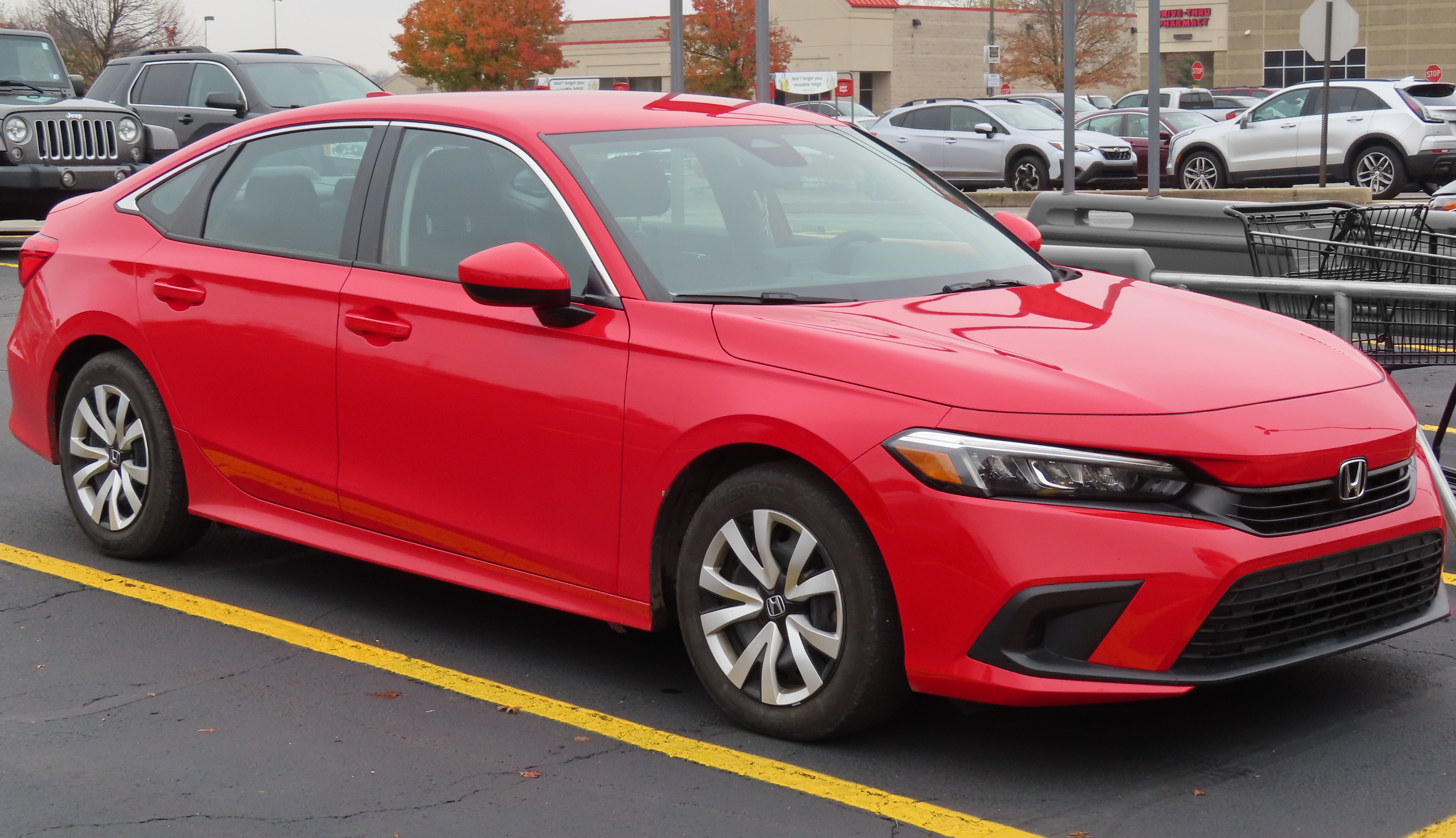
The Honda Civic Hybrid is a small car that uses both gas and electricity to save fuel and help the environment. It's a good choice if you want a car that's easy to drive and doesn't use a lot of gas.
The Hyundai Palisade is a big SUV that can fit a lot of people and stuff inside. It's comfortable and has nice features, making it great for families or anyone who needs more space.
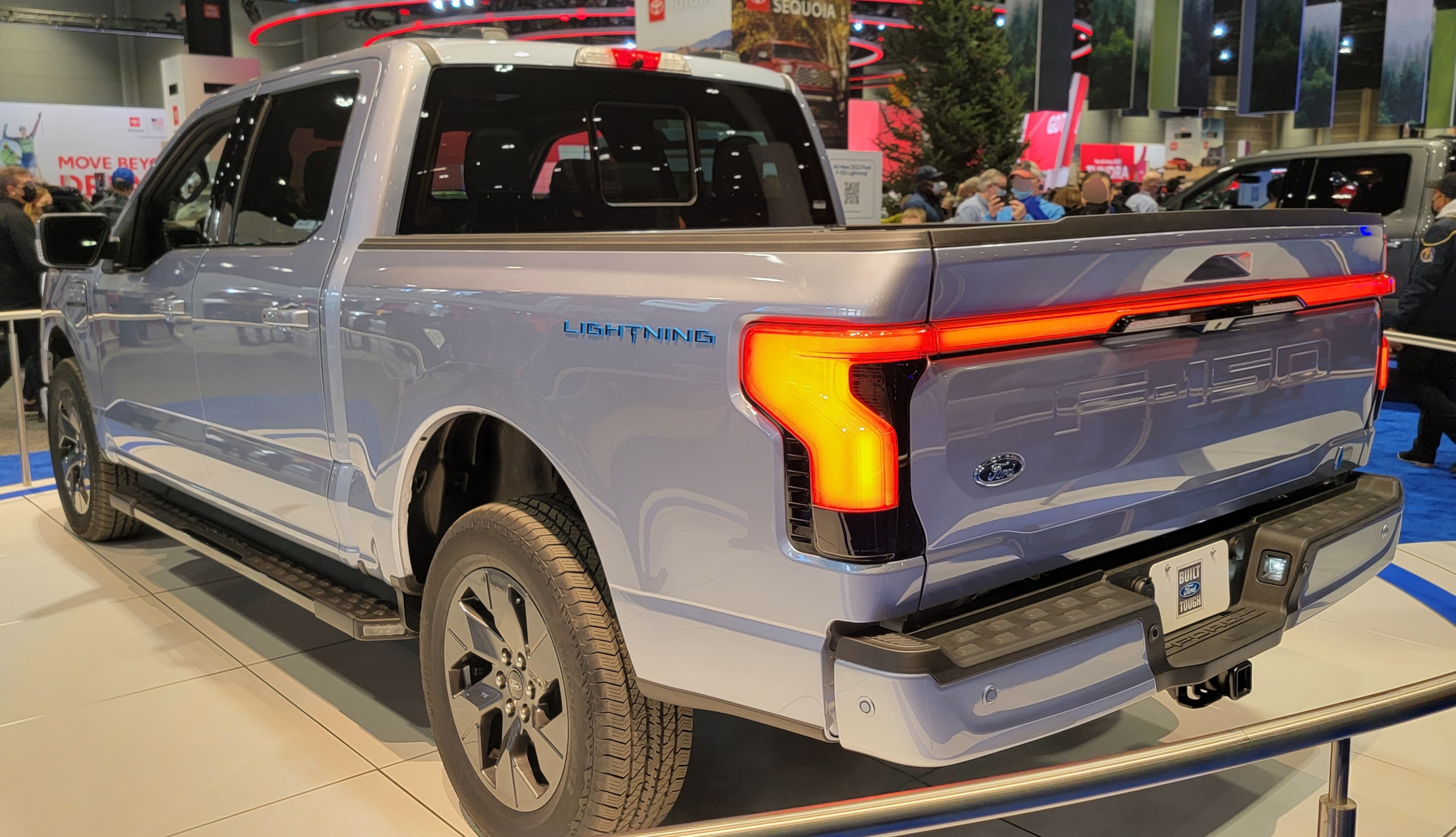
The Ford F-150 is a big truck that many people use every day. It's strong and can carry heavy things, making it useful for work or just driving around town.
The Range Rover is a fancy SUV that is very comfortable and good for driving both on and off roads. People like it because it has nice materials and lots of features.
The Genesis GV80 coupe is a fancy SUV made by Hyundai’s luxury brand. It’s comfortable and has lots of high-tech features, perfect if you want a nicer car with space.
The Genesis GV60 is a small electric SUV made by Genesis, which is Hyundai's fancy car brand. It uses the same basic design as the Hyundai Ioniq 5 and Kia EV6, so they are kind of like siblings.
The Cadillac Escalade is a big, fancy SUV that can fit many people and has lots of nice features. It’s often seen as a luxury car that makes a strong impression.
The BMW X6 is a type of car that looks like a mix between a tall SUV and a sporty car with a slanted roof. It started a trend where SUVs look sportier and less boxy.
The Mercedes-Benz CLA is a smaller fancy car that looks sporty but has four doors like a regular car. It was called a 'four-door coupe' but now is just called a sedan.
The BMW M Coupe (E36) is a small, sporty car from the 1990s that’s fun to drive and looks different from regular cars. People who like cars often think it’s special.
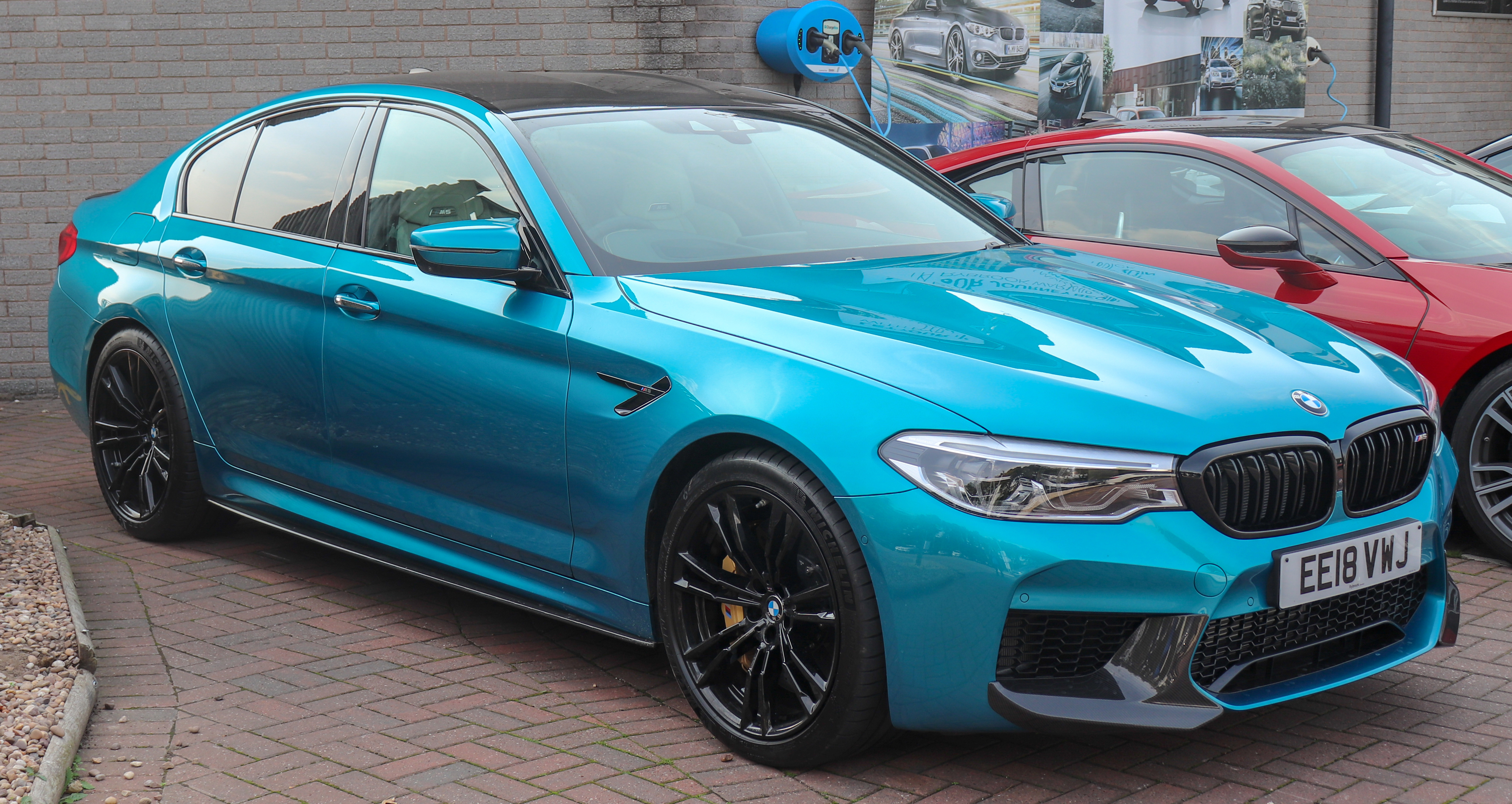
The BMW M5 is a fast and fancy car with four doors, so it’s good for families but also fun to drive really fast. It’s like a sports car that you can use every day.
The Porsche Taycan is a fast car that runs only on electricity, so it doesn’t use gas. It’s made by Porsche, a company known for sporty cars, but this one is better for the environment.
The Audi RS5 is a fast and fancy car that can drive well in all kinds of weather because it has special all-wheel drive. It’s good if you want a car that’s both quick and comfortable.
The Ford Mustang is a classic fast car that lots of people know and love. It looks cool and is fun to drive, making it one of the most famous cars in America.
The Chevrolet Camaro is a cool, fast car that looks sporty and has been popular for many years. People like it because it’s fun to drive and has a strong engine.
Wheel horsepower is how much power actually gets to the car's wheels to make it move. It's less than the engine's power because some power is lost along the way.
The BMW M4 is a small, sporty car that’s fun to drive fast and handle corners well. It’s good if you want a car that’s exciting but also works for daily driving.
The catalytic converter is a part in the car's exhaust that cleans the bad gases before they leave the car. If too much fuel gets inside, it can get damaged or melt.
Sensors are little devices in a car that check how the engine and other parts are working and tell the car's computer to keep everything running smoothly.
The crankshaft is a part that helps turn the engine's up-and-down movements into spinning that moves the car. If it's damaged, the car won't run right.
Ford is a big car company that makes many kinds of cars and trucks. Some of their cars, like the Shelby GT500, are very fast and popular with people who like powerful cars.
The Shelby GT500 is a very fast version of the Ford Mustang with a powerful engine that makes it go really quickly. It’s made for people who want a super sporty car.
The Rivian R2 is a new electric truck that will be smaller and easier to afford than some other electric trucks. It’s designed to be good for both city driving and outdoor adventures.
LIVE
Quick, choose a meal deal with McValue, the $5 McChicken Meal Deal, the $5 McDevil Meal
Deal, or the new $6 Daily Double Meal Deal, each with its own small fries, drink, and
four-piece McNuggets.
There's actually no rush.
I'm just excited for McDonald's.
For a limited time only, prices and participation may vary not matter for McDelivery.
Hello, welcome to the Edmunds' CarCast Podcast, I'm Matt the Motorator, DeAndrea.
CarCast brought to you by FanDuel.
Get ready for a week of wild betting with FanDuel Sportsbook.
Whether you're chasing moneyline thrillers, point spreads, or huge parlays, FanDuel has
you covered.
This week, starting Monday, you can lock in lines on NBA matchups like the Spurs vs.
the Pistons, Grizzlies vs. Dazz, and Rockets tipping off late-night action.
Plus, Baseball Spring training kicks off with the Dodgers facing the Mariners on the 23rd,
perfect for early season futures or player prop action.
Download the FanDuel app and get in on the game.
Must be 21 and over and present in select states.
Gambling problem, call 1-800-GAMBLER.
Alistair is out today, but we have our friend Steve Ewing from Edmunds to join us back on
the show.
How are you doing?
I'm doing well, Matt.
Good to be back again.
Thanks for joining us.
Alistair was on, he jumped in midweek on our normal Wednesday show that I do with Goldberg
for the big Edmunds announcement, the top rated.
I know you guys have been putting so much work into this thing, months and months of
stuff, and we went through the lineup, but I just want to remind everybody, the Edmunds
top rated awards are out there.
Definitely check it out.
There's six categories of car, truck, and SUV, and then EV versions of those three categories.
Some of the ones that I was kind of expecting, definitely Honda Civic Hybrid.
I think that car is just the most bang for the buck right now, and I did a road trip
with it over the Christmas break to like Arizona and back, and they're just being perfect
for that.
And by the way, that drive to Arizona is like, there are some some pretty steep grades going
over the coming back down.
And in a car that you think maybe would lack that power, you know, two people, a trunk
full of gear, two dogs, and it was great.
And even at going highway speeds, and when you cross to Arizona, it gets pretty quick
out there.
Legally, it gets pretty quick.
And we were still turning good miles per gallon, like I think it was 36 or 38, like I know
around town you could probably do better than that, but that was the right car for that
kind of trip.
I love that car.
I really do love that car.
We actually have a hybrid hatchback in our one year road test fleet, and I've been driving
it for the past probably about a week and a half now.
And even just around town in LA, not changing my driving style at all, I'm still getting
45 miles per gallon in a car that has plenty of power, plenty of space.
It's comfortable, looks good, like it really is just the complete package.
And, you know, the Civic Hybrid won our top rated car last year, and we named it our best
of the best last year.
And so when it came time to doing the awards again this year, you know, we take into consideration
everything that's on sale, not just what's new for that year.
It was kind of a no brainer just to pick the Civic again.
I mean, there's really nothing that beats it.
Yeah, I agree.
And one of the things that I brought up to Alistair, maybe it was a few weeks ago when
we were going through the finalists, was when you look at certain car companies and they're
trying to save some money to get you into an affordable car, somewhere in that $30,000
range like the Honda Civic, you often find that they're cutting things that don't necessarily
make sense to me.
Like they're cutting like plastic steering wheels, like I know, but you're touching it
all the time.
It's such a high touch thing.
And you know, like window switches are cheap or AC vents are too light and kind of floppy
and you hit a bump on the road and they and all your air vents are facing the ground, which
by the way, I actually experienced that in an Aston Martin as well, you know, and what
I found about the Honda Civic was on a car that I was expecting to have like, you know,
like a crappy field steering wheel and too much road noise because of lack of sound deadening.
And the car was comfortable.
The interior, all the touch points seem to be on point, like they are doing a good job
with it.
And then you can see like, okay, you know, these days, almost all cars come with like
tinted windows in the back.
So if you want to tint the windows, you can save a few bucks and just do the driver and
passenger or the Honda doesn't have any tinted windows anywhere.
I'm like, that's fair for me.
That's a fair trade off because I can go out and tint the windows.
What I'm not going to do is like replace the steering wheel or get it covered in some sort
of nicer leather.
Like that's a big pain pain in the butt.
So I like the way Honda address the cost saving issues and still gave us a comfortable interior.
It doesn't have to be completely slathered and leather and everything like there's going
to be some amount of plastic or soft touch points, but I think they did a good job with
that.
Right.
I agree.
And it's, you know, when you add it all up and you get a fully loaded civic hybrid and
it's 35 grand, you know, the it starts at 30 grand and it's still got everything that
you would need.
Like it's just so refreshing to be able to tell everyone the best car on sale right now
is a $30,000, you know, hybrid hatchback, but you're right.
The Honda has always done really well with the things that you interact with the most
often are the things that they do really well.
You know, like you said, steering wheel, even like the shifter, the little like the metal
knurling on the on the different knobs for the climate control.
Those little things just make a huge difference and make a car feel premium, even if it's
not a, you know, quote unquote premium car.
And all of that just makes the Honda so much nicer to live with every day, so much easier
to use.
And, you know, it's a car that the one that I'm driving right now, we've had it for,
I would say about 10 months in our fleet.
And every time I get into it, it doesn't, it doesn't feel old or it doesn't feel like,
you know, we've got probably 10,000 miles on it at this point and it doesn't feel tired.
Like a lot of cars can feel after just a few thousand miles.
It's still great at everything that it does and it's hold it.
It's holding up really well and it just, it makes me really happy that we recommended
it again.
I, I know sort of an internal benchmark for you guys when you have the fleet of cars
that you purchase, it's who tries to sign out cars the most, you know, like which cars
are the most requested if somebody has a trip or wants to drive it for the week and you
look at the, you know, the inventory of cars that you have in the garage over there and
go, well, which ones are the most, you know, the hardest to book because they're always
booked and that kind of means a lot too.
And I'm sure there's a few that are high up on that list.
I would imagine this is one of them.
It is.
I mean, you know, it's funny.
I haven't driven our Civic in probably six months because it's just been busy.
People are constantly in it.
It's a car that it doesn't sit around, but it's great because, you know, if you do need
to take a road trip with it, it's comfortable, it's efficient, it's quiet.
But for me, you know, for the past week and a half, I'm like, I just see the car to get
around the city and run errands with, it's perfect for that too.
It's just so nice and easy to use and easy to drive and easy to park and everything that
just you want in a good daily driver and, you know, you said it exactly, it's the car
does not sit around because everyone on staff sees that and everyone on staff is like, just
give me the Civic.
It's great.
Yeah.
And I know we're going to, because we covered this last week, we're going to get into some
other things.
But the other vehicle on the top rated list that I really liked and I'm glad it took
the overall award was the Hyundai Palisade.
I got one the end of last year as you guys were already compiling all this information.
And now they gave me the higher end model, the Palisade, fully loaded calligraphy.
It was gorgeous.
White leather interior.
It looks great in photos, not sure my dogs approve or when I return the car and I'm
trying to scrub the paw prints off.
But I was super impressed with that.
And I had to take that, not on a road trip, but I had to like go out to Irmondale and
I had to load up the back with 600 pounds of gear and bring it back.
And it was fantastic, you know, just a great all around.
It's a three row, but with the captain's chairs and this one has sort of the, you know,
I don't even know if there's, there's maybe there's a, there is an option for like the
bench.
On a lower spectrum, you can get a bench.
So these, this one had sort of the captain chairs in the middle row.
So they didn't fold flat, but moving them forward and folding down the third row gave
me more than enough room and it was quiet and comfortable and got me great gas mileage
in a three row SUV and surprisingly didn't feel as large as I thought it was going to.
Now I drive an F 150 daily, so everything kind of feels smaller than me, but even people
I were with were going, is this a three row?
And I'm like, yeah, they're like, this is a good size.
I'm not how they're just, you know, I don't know it's physically smaller, but they're
just giving the impression that like the exterior just kind of felt like it was more maneuverable
and smaller.
It does.
It does do a good job at that.
And that's one of the things I noticed in our testing and in driving it to the other
thing that really just blew me away about the Palisade was, you know, I had a friend
of mine get in it and, you know, a lot of people do this, but they're like, what kind
of car is this?
And I'm like, oh, it's a Hyundai.
They're like, this is like a Range Rover in here.
And it's, I mean, it is just, it is so nice.
Every little detail is so well executed.
And I just, everything about that car is, I mean, when we went down the list of, you
know, okay, here are the winners for each category, it was unanimous about which one
would be our best of the best winner.
And it was the Palisade because it just, it absolutely blew everybody away.
And now, I mean, it doesn't just set the benchmark for, you know, three row midsize
SUVs, but for all SUVs.
And, you know, you get in a luxury SUV now and then you compare it to the Palisade and
you're like, I'd rather have the Hyundai, honestly, you know.
Yeah.
So that's a good point.
First of all, we're talking about a three row SUV that starts at about 45,000.
Now, the one that I drove that was fully loaded was about 61,000.
But, you know, in a time where everything is pretty expensive, that's not even, that's
not bad, even for the fully loaded version.
No, you're right.
I mean, the average price of a new car these days is hovering around 50, you know, $50,000.
So 60 is still a lot of money.
But for what you're getting, I mean, you know, you could pay $100,000 to get
into a Cadillac or, you know, a Lincoln or even a lot of the German competitors.
And the Hyundai is still nicer.
You know, which is interesting because I'm driving right now.
I've got a press car and I've got a Genesis GV 80 coupe.
Right.
And it's gorgeous.
I like it.
It's a great looking.
Those are great.
Looking profile, great interior.
This one's like black with like red stitching, diamond stitch, red seatbelts,
black interior.
It's really, really nice.
But, you know, it has kind of this on the center console, kind of on the dash.
It's kind of like, I guess it's like a textured kind of wood in lay.
And I'm looking at it and like, and I really like the Genesis, but I'm like,
it looks like it was giving a given a clear coat.
But then the clear coat wasn't like sanded and buffed.
It looks like from angles in the light, like it's got orange peel and waviness to it.
And it just looks a little weird.
I'm like, this could have just been smooth.
I'm not really like a piano black kind of guy because it's just fingerprints.
And yeah, exactly.
Like, but I think we could have done something like a different texture or something there.
That would have been a little bit better.
That was the one thing I was like, you know what?
The Hyundai was like a little bit nicer in that regard.
Yeah, Hyundai just has that really nice kind of open, poor, natural wood.
And, you know, whereas a lot of cars kind of go over the top with weird stitching
or textures for the sake of stitching and textures.
Hyundai is just a lot of really clean, elegant surfaces.
And I think, you know, that's what kind of impressed me the more than anything
is just that it's not trying too hard.
It's just it's very straightforward, but still very luxurious, very nice.
And just, I mean, it's the kind of SUV that like I would totally drive
that every day forever and be completely happy.
You know, the Genesis, I love.
I love the look of it.
I love I love that coupe design for that for an SUV.
The interior is gorgeous, but making the drop the jump from a $60,000 high end
Hyundai Palisade to what is it?
Maybe 90 on the GV80 coupe is is a pretty pretty big jump.
And you go, ah, you know, now is it worth it?
And then what else is out there?
Once you start getting that $90,000 range, you get some pretty stiff competition.
And and Genesis is one of my favorite vehicles.
Well, I just am so impressed by that brand, all of them, the key of Hyundai and Genesis.
But Genesis, how they went from, you know, launching a luxury brand
to just kind of taking it to the next level.
And now them being so aggressive and getting into motor sports
and maybe a supercar at some point, what they're doing with that brand is impressive.
Now, the current lineup of Genesis cars, I think, are having been updated in a while,
which is probably why they're sort of kind of dropping out of the conversation.
But and I think the next one to come out is probably a large EV, a GV90.
Yep, the GV90, which will be larger than the GV80.
But yeah, it's going to be a big three row electric.
I'm guessing based on like an Ioniq nine.
Exactly. Right.
Yeah, Ioniq nine, Kia EV nine, but it'll be in that same kind of,
you know, three row large electric.
But I'm excited to see, you know, you talk about something like the Ioniq nine,
which that was actually one of our highly recommended runners up
for the electric SUV top rated award.
Yeah. And, you know, that's one too, where I'm like
thinking about the Genesis version and I'm like,
how are they going to make it nicer than this?
You know, the last Ioniq nine I drove was it was again,
it was one of those fully loaded calligraphy models.
And like, where do you go from there?
It's just everything is so beautifully executed in that car.
So because this will be the first new Genesis product in a while,
I'm really interested to see what lessons, you know,
as Hyundai has kind of evolved its own luxury game,
what of those lessons will now be, you know, amped up for Genesis.
So I'm really hoping that they stay away from going, you know,
gaudy and blingy.
I don't think they will just because Genesis has not really done that before.
So I'm hopeful that it's going to be something really impressive.
Well, when you when you get into something like EV,
it's it's not that complicated to make an EV go fast,
but it's getting more complicated to make an EV go fast and have good range.
And if if if the upcoming GV 90 EV is just a nicer version
of of their other car, then I don't think it's enough.
I think it needs to listen, it can be significantly quicker,
but probably not what the audience wants.
I think there needs to be a jump if if the Hyundai is, I don't know, like
or the Kia, they're 300, 310 miles range.
I think the Genesis kind of needs to jump to that 360, 380 mile range.
If it got somewhere in there, maybe a little bit larger
battery to make that happen and you're paying a little extra for it
because of the Genesis model, then I think that's what separates it
from from the Hyundai and the sort of the Kia versions of it.
I don't know if it's going to happen, but right.
We haven't seen that with the Genesis GV 60, which is the smaller EV,
which is shared with the Hyundai Ioniq 5 and the EV6.
You know, that was kind of the first, you know,
trio of vehicles on the same platform to do that.
And so I'm hopeful that the Genesis will like, oh, we'll give it a bigger
battery, we'll give it some more range.
Because you're right, it doesn't need more power, right?
You know, all even the slowest EVs still feel quick.
And I don't think I think you're right.
That buyer is not really looking for, you know, a high horsepower performance
EV, but yeah, if it could hit, you know, the 350, maybe even pushing 400
miles of range, I think that'd really be something.
I think that would be that would be, I don't want to say game changer.
That's a silly term.
But I think that would start to push us into a little bit different territory,
especially when we look at the competition, when you're cross shopping
that with other, you know, luxury SUVs, maybe Rivians, SUV, Mercedes, you know,
some of the things like that, without getting big into, you know, Escalade.
Right, I think that would make the difference for sure.
Anyway, so if you guys haven't yet gone to the Edmund site to check out
top rated, if you haven't seen it yet, I'm not sure where you've been,
because we've been talking about it, it's been all over social media.
It's Edmunds.com slash top rated, you can check all of those out.
And I'll post some pictures of the GB80 that I'm driving right now
because it's cool looking.
You know, I'm not sure who started the SUV coupe thing.
Was that BMW?
No, it was a BMW X6.
Yeah, X6 was the first one.
Mercedes started the kind of crossover coupe with CLS, the coupe sedan thing.
Yeah, the BMW dude first.
I guess CLS, right?
CLS was the was the first one.
What's really interesting, though, is because, you know, up until now,
like CLS and then CLA were always considered four door coupes.
It's funny if you go to the Mercedes website now, the CLA is listed as being a sedan,
which I think is really funny, which is weird.
I always hated the four door coupe because to me, coupe was always sort of
two door and no, no, no, no, it's it's lower seat profile and flatter floors.
I'm like, that's not what we ever that's not what anybody thought of when you said
coupe, right? I remember years and years ago, BMW didn't really get mad,
but like, you know, had kind of a tiff with me because I wrote a story
and I called it the best selling BMW four series coupe as a sedan
because the four door was out selling the two door and they're like,
but it is a coupe. I'm like, it's not a coupe. It's not. It's not a coupe.
Yeah. Yeah.
I mean, if they would have said something, a category, created a category
like, you know, sports sedan or something like that, then then it would have made
more sense. But but I don't know, Mercedes started it, others got on that
bandwagon and now we've got these sort of SUV versions of it.
We've got a four door hatchback SUV that's called a coupe.
Yeah. I don't really get one of my contributors calls them
Coupeovers, which I like to cross over the Coupeovers.
I do like that. That's better.
Actually, if they would have went with that term, I would have been on on board
with that. OK, so the other thing that kind of popped up
that was interesting to me is there's a new Audi.
We have an RS five.
I don't know if we're even getting it here in this country, but in the world
of super wagons, you know, BMW M five wagon, Mercedes has their AMG
wagon, their E class AMG wagon and the Audi RS six and has just been
just great looks, you know, haunches in the back, aggressive, great performance.
And I think that one more than any of them, just embrace the enthusiast community
like it's becoming the new cool thing to get.
Right. You walk around the SEMA show floor
and you see you go to the wheels and tires, Paul, and how many of those things
you see just sort of slammed at a big tooly container on the top,
which that I don't really love.
But that's kind of the look on the wagon.
That's for sure.
And it's funny because you see some driving around
and she's like a big empty container on the roof.
I'm like, that's not for me.
Totally. Just killing the fuel economy.
Yeah. And but there, because they're outfitting cars at the SEMA show
with all this stuff.
So I like it, but and we'll probably get a six at some point, a new one.
But the Audi RS five.
Yes. Cool. Right. Super cool.
I mean, there's a wagon and then, which I don't think we're going to get,
but we will get what, you know, Audi calls the sport back, which is the kind of,
you know, again, these like coupe sedan things.
It's the four door with the sloping roof line and the hatchback design,
which is actually very functional, but that one will come to the U.S.
The front, I mean, we're looking at this photo from Audi, right?
And it's up on the Admin site and it's got the big, you know, European license plate on it.
Obviously, you take that off and then you're left with, I don't know,
some kind of big, aggressive grille, tiny logo, tiny rings in the front.
Just seems like maybe that could have been a little bit bigger.
And in the world where we've gotten so big with logos like,
I don't know how many giant where it says giant Ram or F one 50 or something.
All over, but I don't know, just like proportionally, I'm fine with it,
but it could have been a little bit better in the front.
Yeah, it's a little it's a little mouth breather for my personal taste.
You know, I think we've reached peak grill with this one.
But thankfully, it does look a lot better from the back, especially,
you know, the wagon looks good.
But then, you know, this version that we're looking at right now, the sport back.
I mean, that just looks so good from behind.
I don't love the little tiny spoiler.
And I actually like my only other nitpick is that the I think the exhaust tips
are too close together.
But otherwise, I mean, the things got a really incredible stance.
Yeah, I can see they're trying to decide between like,
do we do the wide exhaust tips like normal or do we do some sort of center exhaust?
And they they're like, you know what?
Not a lot of people are kind of doing it in the middle, right?
So, yeah, I see what you're saying.
You're right. And then the rear spoiler.
I think it'd be a little cleaner with.
I don't like that it's kind of lifted in this picture.
It's kind of lifted off the trunk.
Yeah, a little bit of a duck tail spoiler.
Might have been interesting or just none at all.
I would just get a great.
Yeah, I agree.
Yeah, I think it's it's because it's got the little, you know, air flow pass
throughs in it that gives it this raised look.
I think it's just a little too like, I don't know, little auto zone personally.
But it's a sharp looking car.
Yeah, and it's a hybrid now, which I know.
Now, this is the part this is the part that I don't like.
I agree. I I wish it was just a hybrid or or not.
The plug in hybrid just for me, it doesn't work for me.
First of all, if you're living in some sort of apartment complex
or a condo complex or whatever, you're using shared chargers
and it's not dedicated or you're paying for it or you have to like move
your car off the charger or you get charged like an idling fee, you know,
like it the idea of just plug in hybrid just doesn't work.
And then for 40 miles of range.
So then what? Then you you buy the car and you very rarely charge it.
And then now you just have a really cool
aggressive turbo six, I guess, and you're hauling around the extra weight
of batteries and stuff like I.
So and what do we get?
40 or 50 miles of range, 50 miles of claimed range, which, you know,
I guess we'll see. But like, yeah, I'm with you.
I mean, a car like this, you know, you buy it partially for the engine.
And so, you know, I feel this way about the BMW M5 touring as well,
where it's just like you've got this big, heavy car because of this,
you know, added complexity of this plug in hybrid system.
And I mean, I don't want one of these because it's a hybrid.
I want it because it's quick. I want it because it's loud.
I want it because it's cool.
You know, I'm not trying to maximize my electric range
in my high performance wagon or lift back or something.
So I mean, I think this is the kind of car
that the majority of people will take delivery of it with a full charge
and then just never plug it in.
Yeah, I think so, too.
And I haven't seen all the specs,
but I think it's heavier than the current RS six.
Yeah, it's it's pretty heavy.
I know it's significantly heavier than the old RS five.
And I believe it's heavier than the RS six, which.
So now you're hauling around all of that weight,
whether you charge the battery or not.
Yeah, I mean, batteries are heavy and it's it's just in there.
Like you've always got this ballast that you'll be, you know,
either having to deal with because, you know, charged or depleted.
It weighs the same.
So, you know, if you're running on electric power,
you're not getting the most range you could be getting because the car is so heavy.
And then when you're not using it, it's like, well, why is it there?
So I just plug in hybrids.
I don't think our bad ideas as a whole,
but I think for a performance car like this, I would just I'd sooner have it without it.
Yeah, right.
Just give me the hybrid version or or or not, you know, I don't need the plug in hybrid.
By the way, and the narrative on batteries coming from the manufacturers
is is a little confusing because you buy EVs like my lightning Porsche Taycan,
anything that's out there and they go, listen, for the best longevity
and battery health, charge it to 80 percent.
If you need to charge it to 100 percent, no problem.
Maybe you do it occasionally as well.
And it kind of fills the cells.
Everyone has a theory on that.
But when we talk about plug in hybrid, they never say, oh, you should charge it
to 80 percent, right?
Because your 50 miles of range is basically nothing at that point, right?
So exactly. So the narrative isn't the same.
Are they going to different battery technology?
Are they going? Are they like it's not.
They're just saying there's no range at 80 percent.
Like, yeah, I think it's because it is a smaller battery, so it works out.
But then the I mean, the one thing that I've heard for a long time
with plug in hybrids, which in theory, this makes sense to me, which is, you know,
let's say you're driving your Audi RS5 and you're driving from LA to San Francisco.
You you use your battery while you're in the city, you know,
when an EV makes the most sense.
And then when you get on the freeway and you're doing, you know, 75 miles
an hour up the five, your engines on, but then it's using supplemental energy
to recharge the battery.
And so then when you get to San Francisco, you've got additional electric range again.
I get that, but that's also such a specific use case and a narrow use case
for a lot of people.
I mean, if you're doing a lot of really long distance driving
and that's kind of what you want to get out of a plug in hybrid,
it's always going to be more efficient to just have a standard hybrid.
And it's probably going to be more efficient to just have a gas engine.
I mean, really, like, you know, because you're saving weight,
Again, plug in hybrids are one of those things that in theory and on paper,
it's like, oh, that does make a lot of sense.
But then when you're using it day to day and in a very practical standpoint,
you're like, why would we do this?
Right. All right.
So Audi RS5, if we're lucky enough to get it here in the US
and you have the ability to plug it in every night, then have at it.
If not, get an RS6, get an RS6, get an RS6 while you still can.
Though, I mean, there will be another one, but yeah, get an RS6.
But who knows if that's going to be plug in hybrid or what?
So, yes, while you still can get it, if you can't go to the dealer lot,
then just start looking for the used one because that's the one to get.
All right. So I have a few more things I want to get to,
but let's just take a quick break and then we'll be right back.
Basketball season is heating up and every game matters right now,
whether you're backing your favorite NBA team, riding a college hoops upset
or building a quick same game parlay.
Fandall makes it easy to get in on the action.
Download the Fandall app and place your first bet today.
OK, so I wanted to talk about the must thing that you guys have,
but a little bit in the aftermarket news for those of you guys
that are enthusiasts like I am.
There's a great suspension company called
BMR, BMR makes suspension components.
They've been doing it for a long time, a lot of eighties,
nineties stuff, Camaros, you know, mustangs.
And for a long time, there's been heights suspension.
They do full on both on kits and they've been getting more and more into
the rest of mod stuff.
I'm so two great companies and I'm I'm I just heard today,
literally just minutes ago, they have merged BMR bought heights suspension.
So for those of you guys that are in the know and are familiar with those companies,
that might be exciting news, but, you know, I'll leave it up to you guys.
But I think it's interesting because I know people from both companies
and I like to see these two companies kind of get together.
So that's kind of interesting.
But all right, so you guys had we we've gone through this story
for quite some time with Alistair following the you drags.
You guys bought a Mustang Dark Horse.
We did automatic transmission so everybody can drive it, have some fun
and not sit in LA traffic and took it out to the you drags, did some events with it,
came back and did the four performance supercharger kit,
which is a great Whipple supercharger.
And when installed and purchased through the four dealer,
it comes with a warranty, which I think is is great.
And it's supposed to bring the power up to about eight hundred and ten horsepower
is the advertised crank horsepower.
I actually don't really know if they made ninety one octane or ninety three octane.
I think they meant conservatively ninety one octane is eight hundred and ten horsepower,
which should probably get you, I don't know, about six seventy at the tires.
Yeah, it's about six.
I think we calculated it to be about six sixty six seventy at the tires.
And and I don't remember if we spoke to if Alistair, I had Brian Wong on at the time as well,
because I know he was kind of involved with getting the supercharger installed,
took it to the dyno and it just seemed a little bit underpowered.
It did nothing really wrong with it.
Don't know what the issue was at the time.
Try a little octane booster just to be safe.
But you guys were getting around six thirty at the tires, right?
Correct, correct.
So I don't know, down about forty or fifty horsepower, summer around there.
But recently, you guys had a little bit of an issue with the car.
Why don't you tell us a little bit about how walk us through this?
How this happened?
Yeah, so, you know, after we supercharged it, we started running it in more
you drags races and it was it was fine.
It was actually, you know, it was beating a lot of cars.
It was beating the BMW M4 competition.
It beat the nine eleven Carrera S, like, you know, cars that you wouldn't expect
a Mustang to be, but, you know, maybe you would expect a supercharged Mustang to be.
So we've, you know, we've raced it, we've tested it, we've done everything with it.
So I gave one of our vehicle testers decided to go to a weekend track day
in the dark course, because that's what that car is made to do.
Yeah.
And after only about 30 minutes of driving, and I wouldn't even say hard driving
because he had to, you know, do a bunch of cool down laps and come into the pit
a couple of times, the car started acting really weird.
It was overheating a lot.
The transmission wasn't shifting correctly and it all kind of culminated
with a huge plume of white smoke that came out the back of the car during one of his laps.
So, you know, he came into the pit and just said it's time to retire this.
All the fluids looked good.
There were no warning lights on in the gauge cluster, no check engine light, no nothing.
But, you know, we decided, OK, let's let's see what's wrong.
Let's let's take this car to the dealer.
So, took it to the dealer and as it turns out, when the supercharger was installed,
when you install this supercharger on a five liter V8, you have to re-gap the spark plugs
in order for all of it to work correctly.
And we learned that when it was installed, the spark plugs were not correctly re-gapped.
And basically what was happening was, you know, it's funny, we say this in the title
of the story that you're looking at right now, but we say the car had a meltdown.
It did.
The basically, there was like hot fuel getting into the cat and melting it from the inside
and that's what caused all these problems to happen.
What it came down to, though, was, you know, the car was under warranty and the supercharger
was under warranty.
So it became this literally months long process of back and forth between the dealer, between
Ford Performance, between Ford itself, you know, we talked to the different communications
teams to try to get them involved, to see what was going on.
And eventually everything was covered under the warranty.
But it would have ended up being about $5,000 to $6,000 out of pocket and there was the
risk of, you know, more components being, you know, being messed up in the process.
I think we ended up having to get our, we had to get a new catalytic converter.
We had to get a spark plug, sensors, sensors.
Yeah, it fried the two sensors.
So the fact that there was no damage to the engine or transmission itself was was pretty
impressive because at one point, you know, as the technicians were going through and
looking at it, they're like, you guys might need a whole new engine.
Yeah.
So what happened was, is you're supposed to gap the spark plugs.
And if the gap is too wide, then under boost, it's blowing out the spark.
So it's not burning the fuel.
So now it's it's not making as much power because there's not as much
detonation going on.
There's not, there's no explosions in the engine, the good explosions.
And it's blowing raw fuel into the catalytic converters.
It's hitting that substrate that's in there.
And it's heating that.
And that's basically getting melted, you know, a catalytic converter, super hot.
You throw fuel on it.
It's going to create a fire, you know, in a sense, a fire.
It's a meltdown, but without a lot of oxygen, there's not much fire.
It's just super, super heated.
So it's melting the catalytic converters.
And that's what caused this the smoke issue.
It's starting to run poorly.
I would imagine after the track day, as it cooled down,
it probably settled a little bit.
Yep, it did.
I mean, Gabe ran the car out at Button Willow Raceway, which is about 130
miles north of our office.
And I mean, he drove it back and it was totally fine.
The car, no check engine light, no nothing.
It totally ran normally.
So the Coyote engine is pretty beefy.
So I'm glad nothing, no damage was done to the engine, although I'm not super surprised
because, you know, again, it's it's running rich.
It's not running lean.
It's not really a lot of detonation going on.
It's just unburnt fuel, which is terrible.
And it smells bad and creates all of these issues.
But I'm curious on the spark plug gap was.
Was it just an accident and overlooked by the installer?
Or was the was.
Were the instructions that came with it incorrect?
Like was it in the wrong gap?
I believe it was just an issue with the installer.
You know, this the dealer that we took it to said that they had installed
plenty of these before.
And so I don't think it was an issue with, you know, the instructions or any other stuff.
I mean, this is a Ford performance part.
So it's made and designed to work specifically with this engine by Ford itself.
So, you know, the dealer that installed it was really the one at fault here.
And which is why, you know, we ended up getting everything
covered for free under the warranty.
So that's really all it was.
It was just the installer didn't do it correctly the first time.
But what's interesting about this is, you know, this kind of explains
a lot of the issues we were having with the car.
And, you know, to go back to when you mentioned the the dyno test, you know,
this could explain why it wasn't making as much power as it should have been
or why it was always just kind of running a little funky.
So our plan now is to we're going to take it back to the dyno.
We're going to put a fresh set of tires on it and retest it at our track.
And then we're going to rerun it in a bunch of you drags races.
Because, I mean, you know, the kind of interesting thing about this story is
this car was still beating a lot of really fast cars.
Yeah. Without making its intended, you know, supercharged, you know, horsepower.
So the fact that it was still doing this is really impressive.
And the fact that it ran as many races and did as many
instrumented testing days with us as it did before failing was pretty impressive, too.
So we're really excited to get back out in it and see what this thing can really do.
Well, I mean, I'm I'm I'm a little bit glad, in a sense,
that Edmunds was the one to go through this because there's plenty of customers
that have done the supercharger package and probably haven't
ran the car as hard as you guys have been doing with the you drag videos and stuff.
But that's kind of the point here, right, is all of the testing and stuff that Edmunds does.
And for you guys to venture a little bit into the aftermarket world,
get a factory supercharger under warranty, put it up against the other cars
in the drag racing space.
I think that's a real world scenario.
And and look, at the end of the day, if you said,
you know, listen, we ended up changing spark plugs, catalytic converters, O2 sensors.
That's not a worst case scenario.
That's a best case scenario of this.
Like you said, you know, we were melting pistons and the supercharger was screwed up.
And, you know, like, you know, rods are bent, cranks, bearings like now.
Oh, this could have been so, so, so much worse.
And I mean, we're all very thankful that it wasn't.
But, you know, there was a point where, you know, we were all kind of talking
about it in the office one day and we're like, we might have to buy a new engine for this thing.
You know, and it's it's it's I think it's a path that a lot of people could realistically take.
I mean, we got the Ford performance supercharger.
We had it installed at a Ford dealer.
You know, it's not like we did some kind of thing in our garage and made it ourselves.
And, you know, we installed it incorrectly.
Like we went the way that, you know, I think a lot of people in this case probably would go.
And so, you know, it just it shows that this can really happen to anybody.
It's not a specific case of, you know, our car or our dealer or something.
And so you're right, I'm glad it happened to us instead of a consumer
who might not have been able to take care of it as quickly as we did or anything.
But, you know, it also shows how just robust those internals are that it was running this way.
I mean, we supercharged it back in.
I want to say June or July of last year.
And I mean, we just got the car back probably a month ago.
So I mean, we spent a good six months of driving it with it effectively broken.
And so the fact that it, you know, took this long to really screw up
is kind of a testament to like just how great these things are built.
Yeah. So I'm curious if the kit.
If the kit comes with this is where I think it was overlooked is I think you're right.
The kit doesn't probably come with new spark plugs or or like one or two
step colder spark plugs.
It probably just comes with an instruction sheet that says
take out the stock plugs, re gap them, make them tighter and put them back in.
Yeah, the kit in my mind just to avoid this issue should have come with new plugs.
Then in your mind, you're going, don't forget to do the plugs.
Right. You won't forget it if it came with new plugs.
And even if the plugs have the plugs can usually come pre-gapped.
But it could tell you these are pre-gap.
You should definitely check them, not checking them at a dealer, you know,
installer should would probably cause an issue.
So I think that's probably one of the things that should be addressed.
Now, I haven't dug into the Coyote engine aftermarket stuff too much,
but there may be ignition upgrades that you can do as well to
make sure you get a good hot spark.
And in the case of the gap being a little too wide,
maybe a better ignition, a hotter ignition would have caused the spark
to at least jump that bigger gap, just as an added level of safety.
But I'm surprised it is that sensitive to gap or maybe the specs on the gap
are way more than I thought.
I mean, if you're I mean, they could be.
But yeah, I mean, sixty four and you need to get down to a point thirty.
Then I think that would be enough.
But right, it's like between like a point thirty and a point forty.
I was like, that's that's a fine line.
Yeah, you know, OK.
Well, lesson learned.
Thanks for lesson learned.
Thanks for pulling on that one.
It's been a process.
I'm very happy that we have the car back in our fleet.
We just need to put some fresh tires on it and then start running it again.
So I'm looking forward to driving it to see if it feels.
Everyone that's driven it so far says it does feel noticeably faster,
like, you know, because that was one of the big complaints I had
when I drove it the first time was I'm like, this thing doesn't.
It doesn't feel like it has eight hundred horsepower.
I mean, we used to own a Shelby GT 500 in our long term fleet.
And that thing felt fast all of the time, all of the time.
The dark horse with the supercharger was like, OK, I guess it's there.
But like, I don't know.
Yeah. And we talked about it.
We're like, I don't know, is this the automatic transmission?
You know, it doesn't have a DCT.
It's not the manual.
So like, where where is the flaw?
But it's actually kind of interesting that this could have been the flaw.
Like you were down on power.
Like I, you know, I went through this as well.
I took a Mach 1 and I put twin turbos on it.
And when I first did it on a very conservative tune, low boost,
I was like, great, it doesn't feel fast, right?
You know, but it wasn't until later when we did the proper tune
and got it dialed in and up the boost.
And by the way, it's not like we went real high.
We went from like five or six pounds to boost to like eight or nine pounds of boost.
And then it started to feel fast.
So, yeah, I would I would imagine that Jonathan on your team, the test driver,
he's probably like, well, I should have to just rerun every single you drag.
I mean, it's going to happen.
We're just going to start rerunning everything again.
Like it's it's my job to be out there.
How can I say no to rerunning the dark horse again and again?
Yeah. Yeah.
Well, what we're really excited to do now, too, is obviously before it
is announced, the Dark Horse SC, which is yeah, its own supercharged
dark horse, but it's basically the GT 500 successor because it's got
the 5.2 liter engine.
It's got the seven speed DCT back in it.
Right. So we're really interested to run our car against that.
Just to see, you know, how the two kind of line up.
Yeah. Well, Ford, if you're listening, before you release that dark horse
SC, make sure you check the plugs before you start selling that thing
on the dealer lot.
Definitely, definitely check the plugs.
Make sure you got that dialed in just, you know, just, you know,
as a favor, we're giving you guys a little bit of tip, a little tip there.
OK, listen, I think we're going to wrap things up.
Stephen, thanks so much for joining us.
What else is on the docker?
Do you guys what's coming up next before we before we've got another round
of you drags that we'll be filming in the coming months?
So stay tuned for another season of, you know, really big, cool races.
We've got a couple new interesting purchases lined up for our long term
test fleet. I don't really want to give too much away, but I did say
Dark Horse SC for a reason.
And, you know, now that we've launched our top rated awards, we're all just
kind of, you know, taking a breather for the moment.
But now there's a lot of good stuff coming up.
We've got the New York Auto Show.
So there'll be a lot of news coming around late March about that.
There's a couple of, you know, big reveals that are happening in the coming
weeks. Look for the Rivian R2.
That'll be a big one, for example.
Yeah. But yeah, we're just kind of we're happy top rated.
It's out there. We're happy that it's getting the the publicity it deserves.
We're, you know, we're excited to see automakers and executives
sharing all of our awards and sharing their thoughts.
So it's it's nice to kind of bask in the glow of it for a moment before we,
you know, start testing and preparing for next year.
That's right. Do it all over again.
All right, guys, thanks so much for listening.
And of course, you can check out itemins.com.
You can check out the CarCast YouTube channel.
We're putting all these podcasts up there as well.
So jump in, check them out, give us some comments.
And until next time, keep the air and the spare in the bag and the wheel.
If you like the show, please take a moment to rate, review and subscribe.
It really does help the show to grow.
Thank you for listening.
About this episode
The discussion highlights the Edmunds Top Rated awards, focusing on standout vehicles like the Honda Civic Hybrid and Hyundai Palisade. The Civic Hybrid impresses with its fuel efficiency, comfort, and well-thought-out interior design, making it a favorite for daily driving and road trips. The Hyundai Palisade is praised for its luxury-like interior, spaciousness, and excellent value in the three-row SUV segment, even rivaling more expensive luxury brands. The hosts emphasize practical features, comfort, and overall driving experience as key factors in their recommendations.