The Ford Mustang is a famous sports car that has been around for many years. It's known for being fast and stylish, making it a favorite among car enthusiasts.
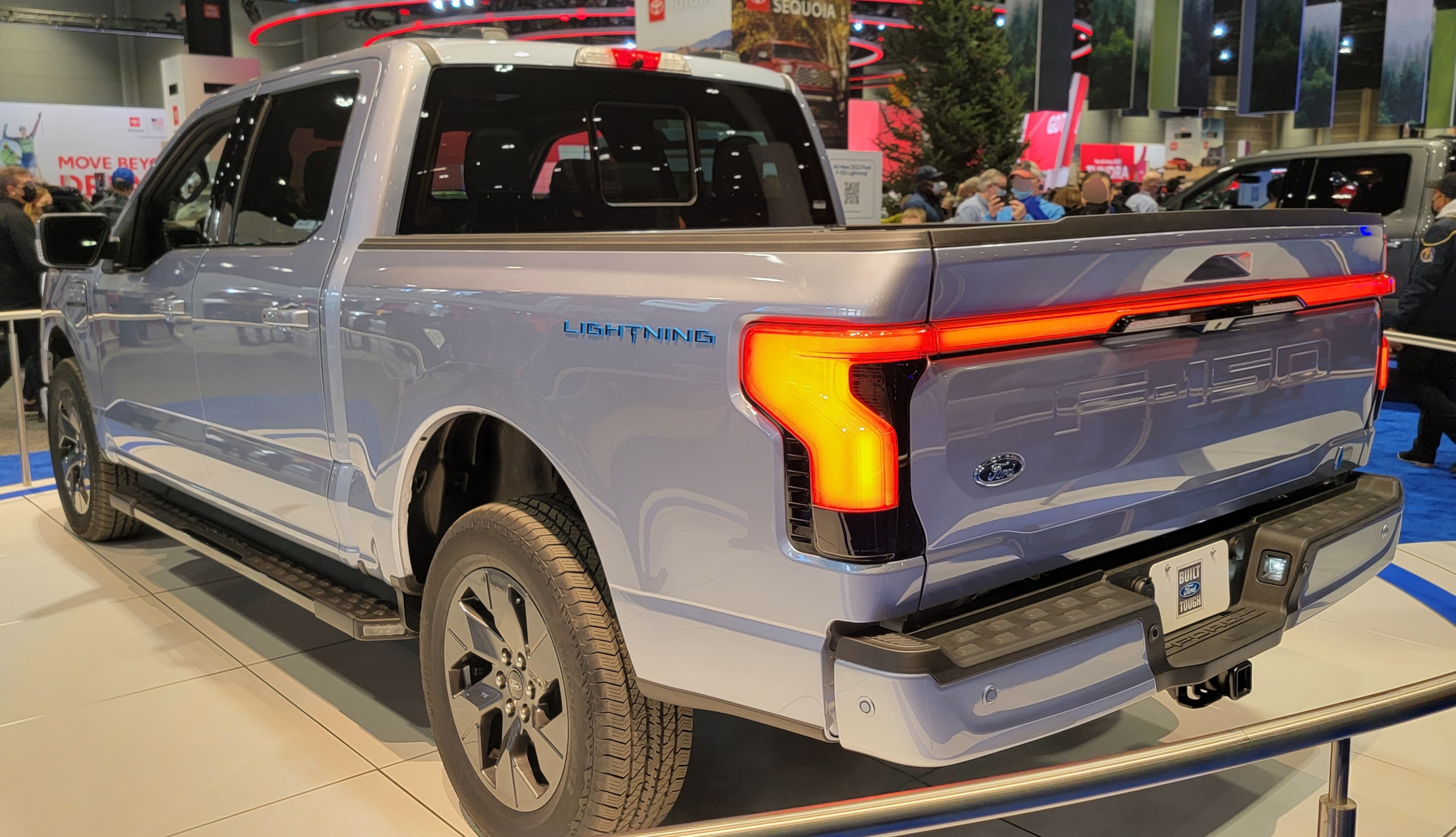
The F-150 Lightning is an electric truck made by Ford. It's a version of their popular F-150 truck but runs on electricity instead of gasoline, making it more environmentally friendly.
Electric vehicles are cars that run on electricity instead of gasoline. They are becoming more popular because they can be better for the environment and save money on fuel.
An electric pickup truck is a truck that uses electricity to run instead of gas. They are becoming more popular as people want to be more environmentally friendly.
General Motors, or GM, is a big car company that makes several popular brands like Chevrolet and Cadillac. They have been going through some financial difficulties recently, especially with electric cars.
The electric version of a car runs on electricity instead of gasoline. It doesn't produce emissions, which is better for the environment and can save money on fuel.
The Ford Lightning is an electric version of Ford's popular F-150 truck. It's designed to work like a regular truck but runs on electricity instead of gasoline.
The Tesla Cybertruck is a new type of electric truck that looks very different from regular trucks because of its sharp, boxy shape. It's designed to be powerful and eco-friendly, which is why people are excited about it. Many discussions around it focus on how it compares to other trucks on the market.
The Chevrolet Silverado EV is an electric truck that you can charge instead of filling up with gas. It's made to be strong and useful like regular trucks but is better for the environment. People talk about it to see how it stacks up against other electric trucks.
New car inventory is the number of new cars that are available for sale at dealerships. If there are a lot of new cars, it might mean that people are not buying them as quickly.
Dynamic pricing means that the price of a car can change based on how many people want it or how many are available. It’s like how airline tickets can cost more when more people are trying to buy them.
CarMax is a company that sells used cars and makes it easy to buy them without having to negotiate prices. They change their prices based on how many people want a car.
Carvana is a company where you can buy used cars online, and they even have a cool way to pick them up from a big vending machine. They might change their prices based on how many people want the cars.
Gross profit is the money a dealership makes from selling cars after paying for the cars themselves. It doesn't include other costs like rent or salaries.
The dealer invoice price is what car dealerships pay to get cars from the manufacturer. It's usually less than what you see as the selling price at the dealership.
An unsold new car is a brand new vehicle that hasn't been sold yet. Sometimes dealerships might decide not to lower the price too much and instead recycle the car if it doesn't sell.
The Nissan Leaf is an electric car that you can charge at home instead of using gas. It's popular because it's usually cheaper than other electric cars and is good for the environment. People often talk about it when discussing affordable options for electric vehicles.
The Mazda CX-5 is a small SUV that is known for being fun to drive and looking nice inside and out. It's a good choice for families or anyone needing extra space without going for a larger vehicle. People often mention it because it combines style with everyday usefulness.
The Toyota Camry is a popular car that many people trust because it lasts a long time and is easy to drive. It's a good choice if you want a reliable car that doesn't cost too much to keep running. People often talk about it because it's a safe and smart option for everyday driving.
LIVE
This isn't just a game, it's a once-in-a-generation event.
The Harlem Globetrotters 100-Year Tour.
Celebrate 100 years of high-flying dunks,
100 years of showstopping moves,
and 100 years of changing the game.
Bring the whole family and be part of the legacy.
This game is once in a century.
Be there at American Airlines Center on February 15th.
Go to HarlemGlobetrotters.com for your tickets to the 100-Year Tour.
Okay, November 7th with your hosts, me, Hooray,
and well, that good-looking son of mine, Zach.
And you can't tell in the background,
because, well, we're blocking the whole damn thing.
But we could be.
No, I'd like to be in the Maldives maybe someday.
All right, folks, happy Friday.
Grateful to be with you here.
Thanks for tuning in to another episode of Car Edge Live.
Today's show is brought to you by none other than...
Yes, us, damn it.
Car Edge Live.
I mean, caredge.com, excuse me.
If you haven't checked out the website, you absolutely should.
Car sites show you big prices we work to get you the real one.
That being said, we have a promotion running right now.
So you take advantage of this.
$150 off our car buying services,
and 15% off Car Edge Pro,
which are the tools that we use to get you the best deal.
And I want to take a second, Dad.
We had a new review come in just this morning.
Yes.
From our concierge service, from DN,
valuable service, flawless execution, expert in my pocket.
Well, that's where you always want to keep your experts in your pocket.
I worked with Jerry to obtain a Ford Mustang lease in Florida.
He successfully found and negotiated a spectacular lease deal,
saving me time, money, and most of all, the hassle of securing a new car.
Because the lease was for my daughter, there's a little more complexity,
which Jerry navigated expertly.
When I came to working and interacting with Jerry,
it was excellent.
His decades of industry experience combined with his professionalism
were the right combination for me.
His communication cadence was appropriate and as expected.
He was available at all times and quick to respond.
It goes on and on and on.
So thank you for that.
And right below is from Carl yesterday, Dad.
I chose to use Car Edge Pro as I searched for a good use car.
Phil from Car Edge contacted me immediately
and explained how the process worked.
I'd been very impressed with how quickly he responds to any questions
that I have and how well the AI agent gets information from dealers.
So folks, please, if you haven't checked out what we've built,
caredge.com.
Add out of the way.
Now, the big stories this morning, Dad, we're going to start with Ford
and then we'll turn our attention to CarMax.
Ford is pulling the plug potentially on the F-150 Lightning.
This is a big freaking deal.
Ford had 100,000 reservations.
I think it was 150,000.
150 million.
A bajillion.
Ford had a bajillion.
All these legacy automakers had all these promises for what electric vehicles
were going to be and obviously full-size pickup trucks for EVs
was supposed to be the next greatest thing.
Ram had already pulled back.
Ram never released their electric pickup truck.
They pulled back production for a year.
Ford has pulled back production recently
and now they're COO coming out and saying,
hey, we may actually be killing off this nameplate altogether.
What is your reaction to this?
Well, it's shocking.
It is shocking.
Once that damn battery runs out,
there will be no shocks anymore, ladies and gentlemen.
Listen, all the legacy manufacturers
bought into the concept of EVs or the wave of the future.
It's where we're headed.
It's the alternative fuel source that the world needs.
That might be true, but it appears as if,
at least in the United States of America,
that those who wanted EVs have chosen those EVs
and the rest of us have said maybe not.
The dollar and cents argument here is pretty clear.
Ford dealers make no money when they sell an F-150 Lightning.
There's no profit from the dealer invoice price
to the price that they sell them at.
That's the reality.
That was the whole initiative when Ford came up with Ford Blues.
There's just a price and it is what it is.
The manufacturer, Ford, does not make money
producing the F-150 Lightning.
They lose money.
There's a dollars and cents argument here
for why they would just stop production altogether
and remove the nameplate, like get rid of it.
I think it could be the beginning of a handful of nameplates
that go by the wayside.
Honda Dad recently came out with their earnings
and they had a huge hit from all of the electric vehicle
investments they've made that are not panning out.
General Motors took a multi-billion dollar hit.
A Polestar took almost a billion dollar hit.
It is shocking, but in the same breath,
it's also not too unexpected
because we've been seeing the writing on the wall
for a little bit here.
It appears as if.
I think everybody, at least in the United States,
I can't speak about China,
but in the United States,
it just appears as if the public has spoken
and the expected demand,
it wasn't quite as large as what everybody
had thought it was going to be.
The manufacturer that played it best,
in my opinion, is Toyota.
Are they electrifying what they are doing?
Yeah, nobody has done more with hybrids.
Will they be bringing out more P-HEVs in the future?
Will there be more battery electric vehicles
in the future for them?
They still think the future could be hydrogen,
so you look at what everybody thought
was going to happen.
Much like our crystal ball,
their crystal ball that they bought at the dollar store
just like us is cloudy as well.
Let's take a moment to acknowledge this.
It's not like it's cheap for Ford to walk back
and take the F-150 Lightning out of market.
It's not cheap. There's going to be a huge expense
associated with that.
There was a tremendous expense to do the research
and development to build a dog on the thing,
to market it, to distribute it, to service it.
There's dollar signs everywhere.
The idea of even pulling it out essentially says
that we don't think we can make money on this thing long-term
because it's going to cost us a boatload more money today
to take it out of the market.
It's really damning, Dad.
Then you do look at the Toyotas of the world
who have been much more pragmatic on their EV strategies.
They're sitting pretty right.
They're sitting really pretty.
I think this is huge news.
If Ford does go through with this
and they pull back on the F-150 Lightning,
that's huge news.
Even if they don't kill the vehicle altogether,
they were producing about 950 lightings a week.
They have indicated to their suppliers
that if they continue to build them,
that number will drop to like 225 a week.
Even if they don't kill it,
they're getting rid of the inventory.
Well, they're not replacing inventory.
I mean, you're reducing your production by almost 70%.
If you don't mind, Dad, humor me for a second here.
You know I love to do this.
Let's go to the Car Edge Machine.
What I want to look at, I just clicked on Shop New.
I want to look at Ford.
We don't need to be doing nationwide.
Let's go within 100 miles of Decatur, Georgia.
I want to look now at, let's find it, F-150 Lightning.
I'm just curious what these MSRP's are, what these prices are.
Are you ready?
Yes.
Okay, 73,415, 74,940, 75,765, 66, 67, 68, 80,
a row of 81s, a row of 80s, 280.
So these are quite expensive.
Quite expensive.
The cheapest ones we saw were just under $67,000.
67,000, yeah, yeah, 66,940 bucks.
Yeah.
Now, let me just jump over to F-150s.
Okay, maybe my attempt here to illustrate that the electric ones are more expensive
may fail, $86,000, 301 days on the market.
I wonder why.
I wonder why.
Me too.
$85,000, $79,000, holy cannoli, $85,000, $78,000.
Okay, the point I was going to try and make is that Ford's electric vehicles are more expensive.
They're too expensive, but...
Well, the other point we just made is Ford's vehicles are just too expensive.
At least Ford makes money when they sell internal combustion engine versions of the F-150.
Yes.
And that was a nutslide experiment.
That was crazy.
Well, what it shows is that Ford believes when it comes to pickup trucks that there's
no ceiling for what you can price them at.
I would venture, I guess, that they could be wrong.
Yeah.
They might be wrong, but yet it is still the number one selling pickup truck in America.
So, they figured something out with that.
Now, apparently, even though the lightnings are less expensive than the gas versions that
we see here, there doesn't seem to be the same level of consumption for the electric
version of the F-150 as there is for an internal combustion engine F-150.
Well, let's look at a little bit of the market conditions, and then we'll turn over to the
interesting CarMax news that we have and more analysis there.
I clicked on one of these, Dad.
We've got the 2025 F-150 King Ranch.
Yes.
This is an internal combustion engine, normal F-150, $79,840.
I actually, it pains me to say normal F-150 and $79,840 in the same breath, but whatever.
The invoice price that the dealer paid to acquire this vehicle, $74,650.
So, they've got $5,000 worth of margin to play with.
And I'm scrolling down to the market conditions, and here they are right here.
This particular vehicle has only been on the market for 61 days, but there have been four
similar F-150 King Ranches that have sold in the last 45 days within 100 miles of this
one, yet there are 29 actively for sale.
This number is way too high.
Yes.
So, it's out of whack for Ford there.
Now, let's go back.
And if the dealer does the same thing that you just did, the dealer is going to look at
that and go, 61 days, we might not sell it for another 250 days.
So, maybe they would be compelled, maybe they would feel compelled or motivated in order
to make it go away sooner because they know typically these things sit in this market.
Yeah.
I think you could be onto something.
Yeah.
Now, let's come over here, Dad.
We've got a 2025 F-150 Lightning.
Yes.
$68,570.
We do have a little bit of a delta between the invoice price and the MSRP, so curious
to see if that's something that Ford dealers now are making a little bit of money there.
But I'm scrolling down here, 10 have sold in the last 45 days, which we're out, this
is after, 45 days, this is after the federal tax credits have gone away.
No, it's not.
Oh, it's not?
It's during.
Oh, yeah.
I bet you eight of the 10 of them sold in the latter part of September.
On the 44th, yeah.
You're right.
You're right.
So we've got a 54-day supply.
Yeah.
So anyway, interesting to see here, no matter how you slice it, if Ford goes through with
this rumor right now to get rid of the F-150 Lightning, I think it could be the first domino
of many to fall in the auto industry here in the United States where automakers decide
to get rid of electric vehicles.
Everybody said that the Lightning's major competition was going to be the Tesla Cybertruck.
Nothing against Tesla, but the Cybertruck has been as big a disappointment as Tesla has
ever had from the 150 million reservations they had.
Everyone's got reservations at Wazoo.
Yeah.
You go to resi.com and then you cancel.
Because we know that when there was a recall recently of all of them, it was like 86,000
trucks.
Cybertruck hasn't sold.
F-150 Lightning hasn't sold.
The Silverado EVs sold okay, but not great.
None of them have been strong.
Rivians struggling.
So maybe there's just not a market for EV pickup trucks.
In the same exact breadth, we know that new car inventory in general is growing because
prices have gotten so high.
So maybe the other case of this puzzle is it's just expensive vehicles.
It could be the powertrain agnostic.
It's just people don't want these expensive vehicles.
They want lower price points.
Do EVs drive up price or lower price?
They drive up price.
It costs the manufacturer more.
So it's an interesting dynamic.
Let's switch gears.
Let's talk a little bit about CarMax.
We spoke about it yesterday, the news broke right before we went live.
The CEO of CarMax has been asked to step down.
Yeah, fire.
Now.
That's a nice way to put it.
You got asked?
Let's step it out.
Yeah.
Now, used car prices over the past few years have gone up more than 55% during that exact
same time.
CarMax's stock, which this is not financial advice here on this channel, but CarMax's
stock has fallen 80% from their all-time highs.
When you start to look at the CarMax story, it shows pretty clearly that they are struggling
to sell cars.
They're struggling to make as much money per vehicle.
There was an interesting comment in this Wolf Street article.
So much of this, their theory is, tied to dynamic pricing.
Which was really interesting.
I'm going to scroll down here to this, give me a second folks, give me a second.
The dynamic pricing is CarMax's way of screwing you for showing interest.
Let me read this from Wolf Street.
Insidiously, CarMax switched to dynamic pricing on its website some years ago, and during
its earnings calls has taken great pride in it, though it's a no-haggle dealer at all
of its stores.
If a vehicle in its inventory gets increased interest on its website, its price goes up.
So if you look at a specific vehicle several times over a period of a few days while you're
shopping around and other people are interested in it too, you might notice that by the time
you decide to buy it, its price has increased by $1,000.
Dynamic pricing is now everywhere, haggling over a price on the lot is a classic game
and rather benign compared to the insidious strategy of dynamic pricing.
But hopefully consumers punish these dealers by buying somewhere else, thereby forcing
these dealers to issue revenue and earnings warnings that annihilate their stock.
So again, this is Wolf Street's comments, not our comments, but I'm going to obviously
get my dad to take care.
A really interesting dynamic, which is, use car prices up 55%, CarMax brings to market
dynamic pricing based on the amount of interest in a vehicle we're going to raise or lower
the price.
And now there's stock down 80% of their CEO ousted.
Yeesh.
This isn't just a game, it's a once in a generation event.
The Harlem Globetrotters 100 year tour.
Celebrate 100 years of high flying dunks, 100 years of showstopping moves, and 100 years
of changing the game.
Bring the whole family and be part of the legacy.
This game is once in a century.
Be there at American Airlines Center on February 15th.
Go to HarlemGlobetrotters.com for your tickets to the 100 year tour.
Where do you think they learned it from?
Dynamic pricing?
Yeah.
Look at it.
I'll tell you where I think they learned it.
I think I believe they learned it from Uber, the airline industry.
If you start shopping for airfares, and you find a good airfare, and you don't buy it
that day, and you keep checking that airfare, the thing you'll start to notice is that suddenly
that airfare gets more expensive instead of getting less expensive.
So airlines have been doing dynamic pricing for years.
And that's why you could be on a flight where you paid $150 for a seat and you're sitting
next to somebody that paid $450.
You would think that the price is the price, but it ain't.
And so CarMax is doing the same exact thing.
Now is that good or bad?
It appears as if it's bad.
Yeah, it appears for their businesses and that.
And yet the reason people shop at CarMax is because they don't want to have to go through
the haggling and the hassle of haggling to negotiate a lower price.
The whole concept is the price is the price.
You're going to pay it.
We don't have to talk about it.
It's really simple.
But the unfortunate reality is the price that you first saw compared to the price that
you eventually made by it for could significantly increase because you and some other folks
showed some interest.
Now, that's not to say if I were, I don't know, curious about how corporations operate,
that they might not employ people just to go on their website and look at specific cars.
Make sure you say that the thing you said.
In my opinion, so that they dynamically increase the price of it when they see that somebody's
looking at a vehicle three or four times.
Regardless of you buying my dad's conspiracy theory about employing staff to look at your
own cars for sale, I do think the dynamic of dynamic pricing paired with a 55% increase
in used car prices over two years, that's a slippery slope.
And they're now realizing the implications of that, which are fewer people buying their
vehicles and making less money per vehicle sold, which we're seeing the same thing on
the new car side, which we'll talk about in a moment as well.
But it's a bad moment at CarMax.
Well, and I believe I said it yesterday, I think one of the outcomes from this is typically
they are willing to offer more for cars that people are trading in.
Yeah, I should say, we have a commercial partnership with CarMax.
You can sell your car to CarMax through CarEdge, so we are partners with that in that capacity.
And I believe what we're going to see happen moving forward is that the amounts that they're
willing to pay are going to go down to some degree to be more realistic as to what the
market conditions are.
They have, much like Carvana, been able to artificially afford to pay more for the same
type of vehicle because of their pricing strategy, which is you don't get to negotiate
the price, you're buying from us for the convenience.
And well, if the stock is not performing well, sales are not performing well, profit level
per vehicle sold is not performing well, what are the things that you have to address to
improve that?
And one of the things would be you have to lower the cost of acquiring your inventory
and how much you're willing to pay for that inventory.
We've been talking about this for a while now.
If you're in the market to buy a car and you have a car to sell, it might make sense to
actually do that deal today because trade-in values are already going down and then to
your point, there's now the acute interest on CarMax, they're probably going to be lowering
offers is at least our estimation and something that we can track too through the data that
we have.
It'll be super interesting.
You know, I got a notice from Carvana the other day about my buddy Lee's Subaru that
he has and the value of it had dropped like $900 in 10 days.
It's a big drop.
A significant drop, yes.
So, my suspicion is that all of these mass used car dealers, CarMax and Carvana, are
in the process of reevaluating what it is that they're willing to pay for the inventory
that they need.
Being more conservative.
Well, yes.
Yeah, definitely.
You know, it is interesting because again, we see that there are used car prices at the
wholesale auctions falling precipitously over a percent in one week is what we talked
about.
I think it was yesterday, which is a plummet.
That does not happen.
So, that's going to influence their strategies, but yeah, the CarMax experiment is definitely
running into some trouble right now.
I will also say, Dad, we provide price history charts back on CarEdge.com and I bet you a
lot of normal car dealerships also employ dynamic pricing or evolved pricing.
Pricing that changes very often and so sometimes we see price history charts that look crazy.
Yes.
But I think it's important to like drum up interest, to get the price drop alert, things
like that.
So, it is something to keep your eyes on if you're out there shopping.
Know that CarMax does this.
I wouldn't be surprised if Carvana does it too.
And then obviously some local dealers might be playing these sexy games as well.
Yeah.
No, dynamic pricing is a blessing and a curse all at the same time.
Okay.
Now, another story I want to touch on very briefly, then we're going to get Q&A.
It's Friday.
So, we do Q&A.
All six public dealership groups could see repeat of Q3, new vehicle gross profit decline
in Q4, some stats from this dead across the board, whether it's AutoNation or Group One,
etc.
We're seeing like 10% declines in profits for these car dealership groups.
So, this story continues to be more of a buyer's market, less of a seller's market.
They're making less per vehicle sold.
They're still making plenty of money, but they're making less, which means more leverage
for smart customers.
And, you know, when we say it's a buyer's market, we say that the gross profits are
going down and they are.
That doesn't necessarily equate to us saying, oh, and by the way, this represents a good
value because in many cases, it doesn't.
I mean, these things were so overpriced to begin with.
You know, and that started in 2020 and ran through 2022 where it was just so many people
out there suffering from the fear of missing out that they overpaid for everything, whether
it be a new vehicle or a used vehicle, and, you know, we've seen some return to normalcy.
But, even with the size of discounts going up and things of that nature, the pricing
is still staggeringly higher than it probably should and could be.
Now, the one place where the pricing is not staggeringly higher than it should be.
Would that be here at CarEdge?
CarEdge.com.
Again, folks, we've got a promotion running right now.
$150 off the buying sale is 15% off CarEdge.
For one thing I want to call out here, two things actually.
If you go to the Car Buying Service page, you can book a free consultation call.
So please have a free conversation with us to see if this is a good fit.
And then the second thing, Dad, you can meet the concierge team and you can click into
anyone's profile and learn a little bit more about them, how long they've been in the industry,
how much they've helped our customers save in total, the deals that they've closed.
You can see the specifics here as well.
So please, folks, take some time, head back to CarEdge.com, meet our team, book that consultation
call and take advantage of our promotion.
And at some point, we're going to have a running ticker with the savings as it continues to
grow, the amount of money we have saved people.
And we'll just see that number ticking up on a daily, maybe minute-by-minute basis.
Now, it's Friday, so that means from over on the CarEdge community forum.
CarEdge.com slash community, we've got some questions we need to answer.
Thank you, Space.
Every Friday, we address the questions that he opens up on this thread right here.
So, Dad, let's go ahead and do it.
Let's start here from Ryan.
How do you see the new tax-deductible interest laws on new cars affecting the market?
Will this have an impact on the new and used car market?
Do you think manufacturers and dealers will start advertising some kind of tax-adjusted
APR?
This is such an interesting one because it doesn't really have much of an impact.
It does not.
And the reason it doesn't, and this is on domestic vehicles only if you finance them.
And I believe it's a maximum of $10,000.
And so, in order to have $10,000 worth of interest on a car loan, you could be financing
a small amount at a very high interest rate or a gigantic amount at a reasonable interest
rate.
But in order to be able to maximize that benefit, it's just going to require either an unreasonable
interest rate or an unreasonable loan amount.
Will it help?
Can it help?
Will it make new vehicles more affordable again because of that tax deduction?
I think perhaps, I think on paper, it sounds better than it really is.
Yeah, the magnitude of the skill, because also think about the interest is accrued over
the lifetime of a loan.
So, it's like to get $10,000 of annual interest deduction, tax deduction, $10,000 over the
lifetime of a loan, not that crazy.
That's over seven years in many cases.
So, anyway, I think it's a nice headline, but in practice, it is much like corporate
speak.
And what I mean by that is, well, the devil is in the details, and typically we leave
the details out just so the headline looks better.
All right, let's come here from Fletch.
Is there any information anywhere where we can find out how much it costs the manufacturer
to build their vehicle?
I know there are a ton of parameters here that can affect the cost, but pick any vehicle
in general.
What does it cost to put it together as it rolls down the assembly line?
I guess what I'm trying to say is how much is the manufacturer making on cars to roll
off their assembly lines?
To be clear, you get dealer invoice price as part of Car Edge Pro, but that's different.
That's what the dealership pays.
The question here from Fletch is, what does the manufacturer pay to produce it?
I don't know.
Is there a way to figure it out based on, you know, manufacturers annually will list
how many vehicles they've sold?
What do I mean by that?
When I say sold, it's like, how many vehicles have they wholesaleed to their dealer body?
Then you could look at their profits and you could divide the profits by the number of
vehicles, but we don't know that that's the number of vehicles that they've produced.
I would say the short answer here is, no, there isn't a place that you can do it.
You've got some space, he's saying it's 50% of the manufacturing, and maybe, Mario,
you know more than I do on that.
I would say the short answer to this is, no, that's the secret sauce.
That's their business.
Unfortunately, we don't have a great answer.
From Kareen.
Yes.
What's your take on CarMax?
Is it a good idea to just pay that price plus $7.99?
Thanks, guys.
Are you two are great.
I think based on the conversation we had prior to this, probably not.
Yeah.
I do use our account seer service.
That's what I would do.
Yeah.
From Joshua.
How much under MSRP did Zac pay for his most recent vehicle?
Did he get any dealer installed options?
Most recent car I've purchased.
This has been a long time ago.
This is what?
Seven years ago now?
Six years ago?
Seven?
Eight?
Might be eight.
I haven't bought a car in eight years.
Yeah.
And it was a used car I bought.
And you haven't owned a car in four years?
We haven't owned a car in four years.
Yeah.
But no, my dad came with me.
That was part of the inspiration to start CarMax.
It was the realization that it was really easy because my dad was there.
How do we make that more accessible to everyone?
Josh didn't buy any dealer installed options.
It was a used vehicle from Paul.
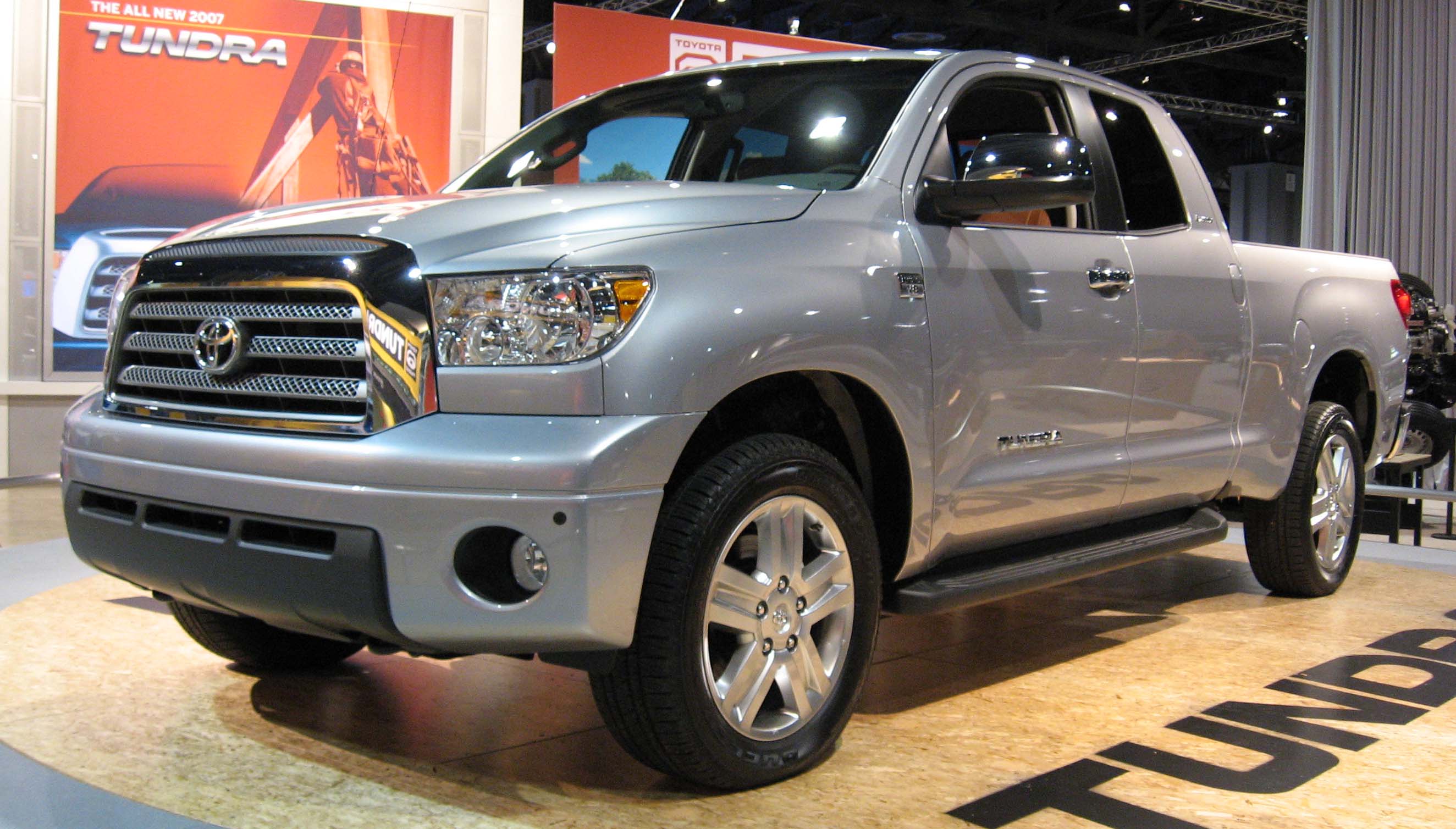
Is it better to lease a 26 Tundra and buy it at the end of the lease if there are no
engine issues or buy it out right now?
This is a great question.
The idea of lease versus buy or lease to buy, how do you think about that, dad?
Typically, if your plan is to lease a vehicle first and then buy it out at the end of the
lease, typically it will eventually and ultimately cost you more to have done it that way.
Why do I say that?
Well, you'll certainly have your lease payment and then you have the residual amount that
you can buy it for at the end.
And most people aren't going to have the cash, so they are then going to finance that as
a used vehicle at slightly higher interest rates.
So that once you have factored in the total cost, including interest and everything else,
from first leasing it and then buying it, ultimately you end up paying more than if
you had just purchased it and financed it for six years or seven years.
Yep, so there you go.
Lease to buy is not a better financial decision.
In this case, with a Tundra, but the engine issues, I don't know.
And sometimes it's going to be under warranty either way.
Yeah, but sometimes it can if the residual is significantly less than what the market
conditions are at the time the lease ends.
We limped through that period of time three years ago, two, three years ago.
That was an anomaly and something that we rarely see.
Now, two questions here, Dan from Rick.
What happens to vehicles that are not sold?
Is it true that they will recycle the vehicles instead of giving them a heavy discount?
One of the first viral videos we ever had the pleasure of producing on YouTube talks about
this. There's such thing as an unsold new car.
Once a vehicle is shipped to a dealership and the dealership has paid for it through their floor
plan, the line of credit, it is the dealership's responsibility to figure out how to get rid of
it. And they can either get rid of it selling it to a retail customer.
And if that doesn't work out, I have seen new cars being sold as used cars at the auctions
where a dealer will buy a new car for less than what the invoice amount was,
and then it'll get retailed as a used car with no miles.
But any time a vehicle gets wholesaled to a dealer, it's the dealer's responsibility to move it,
that vehicle somehow, somewhere, some way will get sold.
They might not be the dealer that sells it to the eventual retail customer, but it will get sold.
And then a final question here. Do you think car prices and pickup truck prices
will be discounted? There appears to be an incredible overstocking that is apparent.
We continue to think that the fourth quarter here between November and December,
we see new car inventory levels going up. We see customer demand going down.
That leads to one thing and one thing only. It's supply and demand. The price has to go lower.
So yes, we anticipate seeing discounted. Yeah, we would think that between the
dealers recognizing the cost of carrying that inventory, that they'll understand that they'll
have to do more in discounting in order to encourage a customer, and the manufacturers
will realize that they have to do more in the form of incentives to encourage the customer.
And again, we are public with the deals that our team is able to secure for customers.
Here's Nick recently, for example, Nissan Leaf Dad. We're talking $5,000 off of MSRP here.
We've got a used Toyota Tacoma, $1,750 bucks. A new Kia Telluride, $1,500 bucks. A used Mazda CX-5,
$2,100. A Camry, $2,500 bucks off a Camry. So that was in 2026.
Yeah, it was. Yeah.
On California. So we are seeing discounting. We are seeing deals. And again, you can get a
sense and a temperature check for what those are back on the caredge.com website. All right,
folks, we're back on... Actually, I got a double check. I got a double check. No, we're back on
Monday. Yeah, we're back on Monday. Yeah, we're back on Monday. Tuesday, I don't think I'm going
to be able to do live with you. But we're back Monday. Good. We'll see you back here on Monday,
folks. If we can help out with anything caredge.com, please continue to spread the word. It's a lot
of people going shopping right now, and we would love to be able to help them. And, Dad,
thanks for coming to DC. You're just fantastic. Absolutely. My pleasure. And hey, everybody,
have a great weekend out there. And I hope your favorite football team wins.
This isn't just a game. It's a once in a generation event. The Harlem Blobetrotters 100 year tour.
Celebrate 100 years of high flying dunks, 100 years of showstopping moves, and 100 years of
change in the game. Bring the whole family and be part of the legacy. This game is once in a century.
Be there at American Airlines Center on February 15th.
Go to HarlemGlobetrotters.com for your tickets to the 100 year tour.
Looking for the ultimate car talk? Buckle up for CarCast, the podcast that blends horsepower,
insider knowledge, and big personalities. Join me,
moderator Matt DeAndrea, along with Edmunds.com, editor-in-chief Alistair Weaver, and WWE
Hall of Famer Bill Goldberg. As we dive into the latest rides, car culture, and behind-the-scenes
stories, you won't hear anywhere else. From track-tested reviews to legendary car collections,
this is where passion meets performance. Subscribe to CarCast Now on Apple Podcasts,
Spotify, or wherever you get your podcasts.
About this episode
Ford's potential decision to discontinue the F-150 Lightning has sent shockwaves through the automotive industry, highlighting the challenges legacy automakers face in the EV market. With production cuts and disappointing sales, the discussion emphasizes the financial implications for Ford and the broader market dynamics. Meanwhile, CarMax is grappling with a significant decline in stock and the ousting of its CEO amid struggles with dynamic pricing strategies and decreased vehicle sales. The episode dives deep into these critical developments, offering insights into the shifting landscape of both new and used car markets.
Today on CarEdge Live, Ray and Zach discuss the latest news from Ford and CarMax. Tune in to learn more! Hosted by Simplecast, an AdsWizz company. See https://pcm.adswizz.com
for information about our collection and use of personal data for
advertising.