

D9 Denzer
The D9 is an electric vehicle that’s being prepared for increased production. The podcast is talking about it in the context of ramping up manufacturing and brand activity, which affects when and how many cars can be sold. It’s mentioned as part of a bigger EV rollout plan.
1.5 megawatt fast charging capability
Charging power is measured in watts. This episode is saying the system can take in power at a level that’s much higher than normal fast chargers—so the battery can fill up very quickly if the car supports it.
second-gen blade battery
BYD’s “blade battery” is a battery design that’s meant to be safer and handle heat better. This episode says the newer version helps the car charge much faster than older battery setups.
flash charging
“Flash charging” means charging that’s designed to be dramatically faster than normal fast charging. It usually requires both the charger and the car’s battery to be built to handle very high power.
Denza B5 flash charge
The Denza B5 is an EV that’s being launched with support for very fast charging. The episode connects it to BYD’s newer battery tech that enables those faster charge times.
Denza B8 flash charge
The Denza B8 is another EV in this episode that’s designed for very fast charging. It’s part of the broader push to bring BYD’s fast-charging battery tech to more cars.
BYD Ato3
The BYD Ato3 is a new EV that’s positioned as bigger than the BYD Yuan Plus. The episode’s main takeaway is that it’s launching with support for flash charging.
10 to 70 in five minutes
This means the battery can go from about 10% full to about 70% full in roughly five minutes. Whether it’s achievable in practice depends on the charger and the car’s battery design.

Song Ultra EV
The BYD Song Ultra EV is an electric SUV. The point of the trip they describe is to prove it can go long distances and still charge quickly using BYD’s charging network.

BMW G30
The BMW 5 Series is a luxury car that’s designed for everyday driving, not just short trips. The podcast mentions a specific route and travel plan, which suggests it’s being used for longer-distance testing or demonstration. The point is to show how it handles real travel conditions.
intelligent damping body control system
An intelligent damping body control system uses sensors and control logic to adjust how the car’s suspension damps movement. The goal is to reduce body motion over bumps and improve ride stability, especially during charging/long-distance use or dynamic driving.
intelligent anti-motion sickness
This feature is meant to help passengers feel less nauseous. It works by reducing the car’s uncomfortable motions during driving.
external power supply capability
This means the car can power things outside the vehicle, like appliances or camping equipment. Think of it as using the EV’s battery like a portable power source.
CLTC range
CLTC range is a standardized way China measures how far an EV can go on a full charge. Different countries use different test methods, so the number may not match other range ratings.
Envo L80
The Envo L80 is an electric SUV. In this segment, they’re saying Envo is offering a big five-seat version that’s related to the larger three-row L90.
85 kilowatt hour battery pack
A kilowatt-hour (kWh) is how much energy is stored in the battery. A bigger number like 85 kWh usually means the car can go farther before needing a recharge.
battery subscription model
This is a way to pay for the battery over time instead of buying it all at once. It can make the car cheaper upfront, but you keep paying monthly for the battery.
900 volt architecture
“900 volt” describes the EV’s electrical system voltage. Higher voltage can help the car charge faster, because it can deliver more power efficiently.

Chevrolet Volt
The Chevrolet Volt is a car you can plug in to charge, and it can also use gasoline when the battery runs low. It’s designed to give you electric driving for daily trips while still having backup power. The podcast is bringing it up because it’s a well-known example of a plug-in hybrid.
plug-in hybrid
A plug-in hybrid is part electric and part gas. You can charge it from a plug, and it can drive on electricity for a while, but it also has a gas engine for longer trips.
crab walk
Crab walk is when the car can move sideways, like a crab, by steering the wheels in a coordinated way. It helps when you’re parking or maneuvering in tight spaces.
compass turns
Compass turns is a maneuvering feature that helps the car turn in a very tight area. It’s designed to make low-speed turning easier without needing a lot of room.
Le Auto L9
The Le Auto L9 is a big, premium electric SUV. The hosts highlight its luxury features inside and its EV tech for charging and control, including a high-voltage system and advanced electronics for driving and braking.
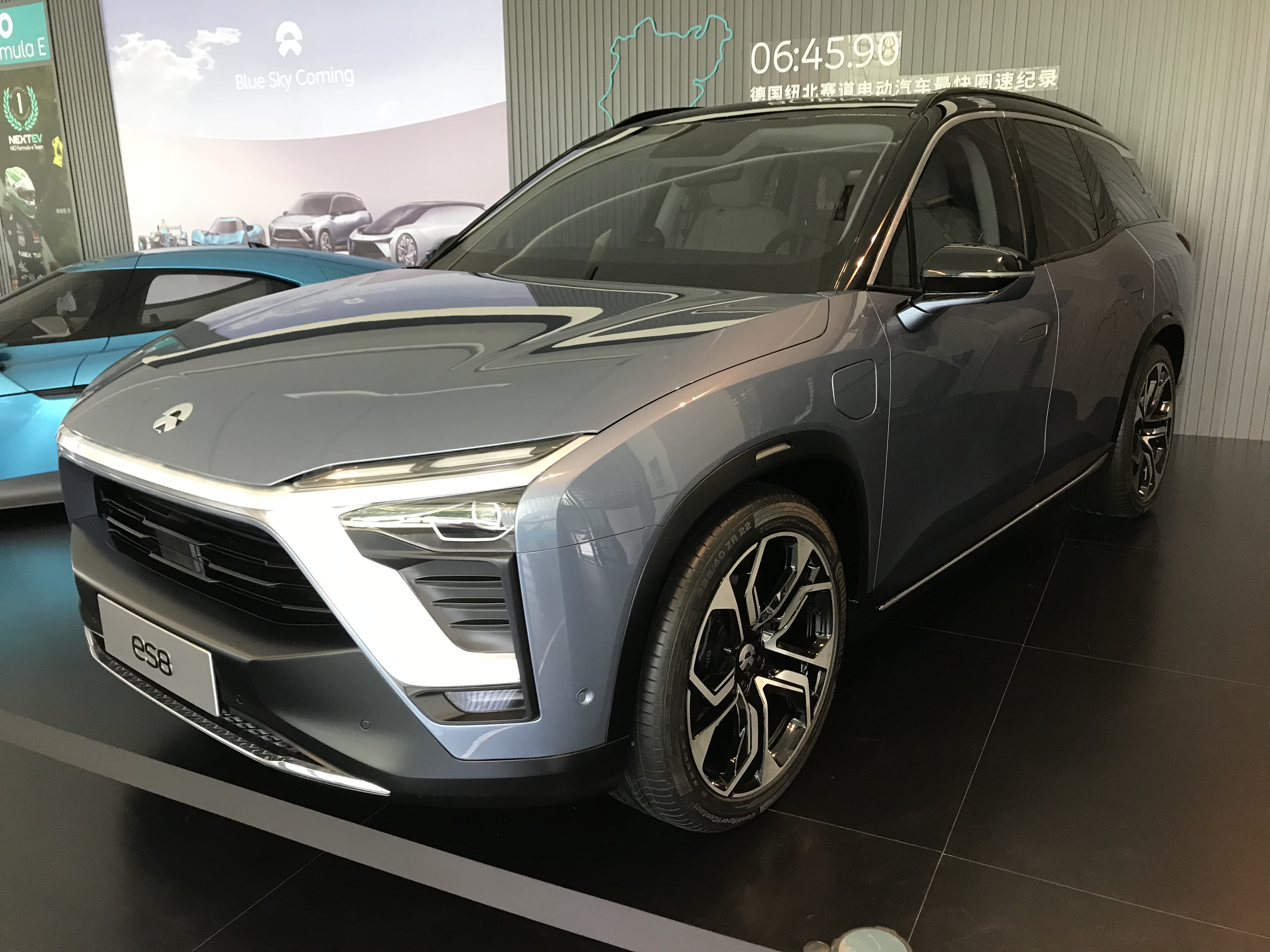
Nio ES8
The Nio ES8 is a large electric SUV made by Nio. It’s meant for people who want a premium EV with lots of space. The podcast mentions it because it’s been performing strongly compared with other big electric SUVs.

M9 Ito M9
The M9 is a large, premium electric SUV. The podcast brings it up because it’s being compared with other big electric SUVs that offer similar space and features. It’s part of a group of models competing for the same kind of buyer.
NEO ES8
NEO ES8 is a large premium electric SUV that the hosts mention as a strong seller in its class. They use it as a benchmark for how Le Auto L9 will compete in the same “full-sized premium SUV” space.
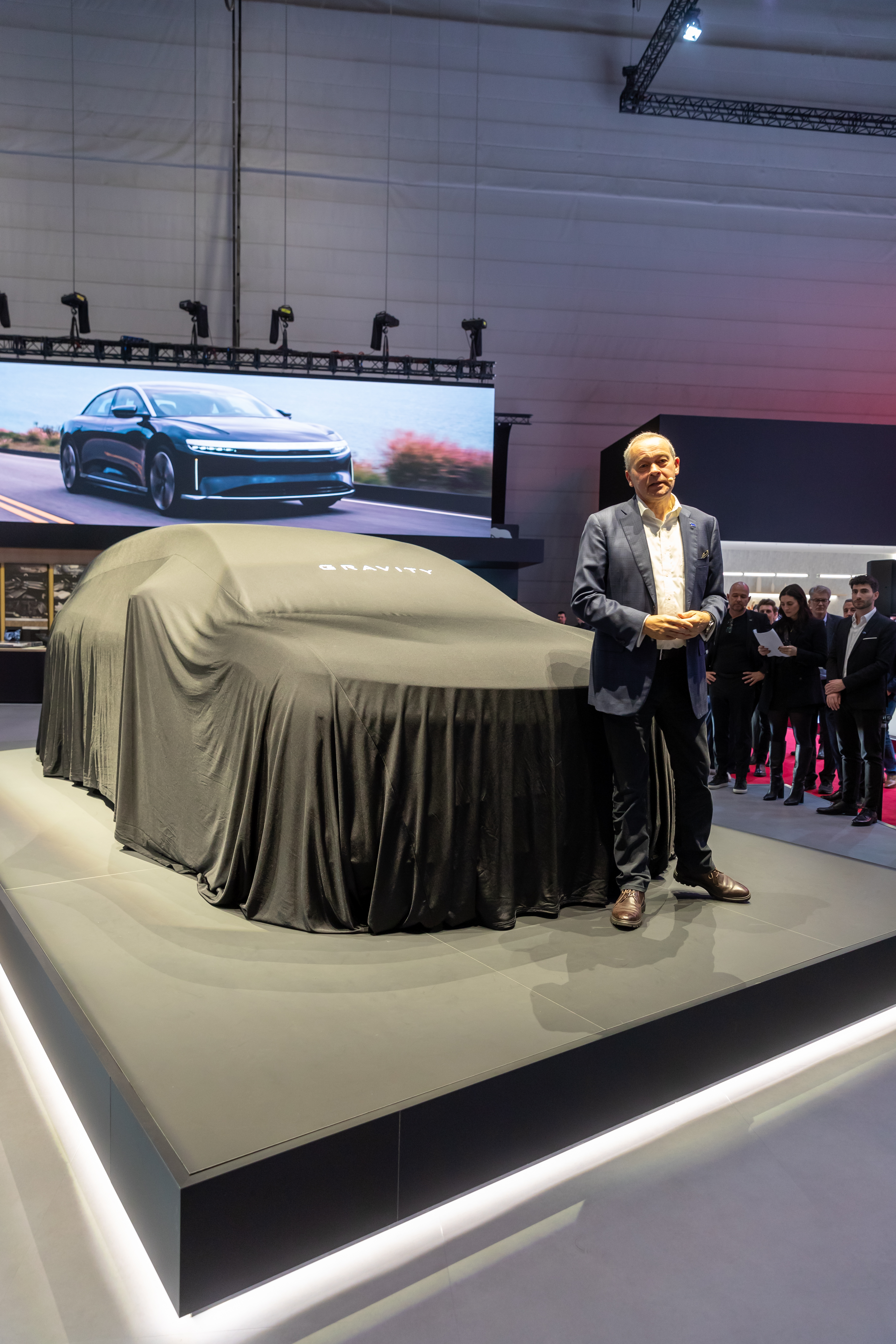
Lucid Gravity
The Lucid Gravity is an all-electric SUV made by Lucid. It’s built to carry more people, including a third row of seats, so it’s aimed at families or anyone who needs extra space. The podcast is mentioning it because it’s part of Lucid’s move into larger EVs.
gravity seats
“Gravity seats” is a seat comfort feature name. The idea is to make the seats feel more supportive and relaxing, and the hosts call it out as a standout cabin tech on the L9.
LiDAR coverage
LiDAR is a sensing system that uses lasers to “see” the world around the car in 3D. “360-degree coverage” means it’s designed to monitor all around the vehicle.
CLTC electric range
CLTC electric range is a testing standard used in China to estimate how far an EV can go on one charge. It’s the number the hosts use to describe the vehicle’s claimed range.
5C ultra-fast charging
“5C” is a charging-rate shorthand: 1C would mean charging at a rate that could theoretically fill the battery in one hour, so 5C implies a very aggressive charge rate. The hosts use it to describe the Le Auto L9’s ultra-fast charging capability.
fully independent active suspension system
This is an advanced suspension setup where each wheel can be controlled independently, and the car actively adjusts it. The goal is better ride comfort and better handling without relying as much on a conventional anti-roll bar.
800 volts
“800 volts” means the car uses a high-voltage battery/electrical system. Higher voltage can help the car charge faster because it can move more charging power efficiently.
anti-roll bar
An anti-roll bar is a part that helps keep the car from leaning too much when you turn. The hosts say the L9’s suspension design can reduce or eliminate the need for that part.
electronic mechanical brake system
This is a braking system where the car uses electronics to control the brakes at the wheels. The hosts highlight that it doesn’t use the usual hydraulic brake fluid pipes.
Luxead V9
The Luxead V9 is a big family-style van with room for seven people. It’s not just a battery EV—it also has a small gas engine (a 1.5-liter range extender) that helps keep it going when the battery runs low.
MPV
MPV means a family van—usually bigger and built to carry more people. Here it’s a seven-seat, three-row vehicle.
Huawei
Huawei is described here as a technology partner behind Luxead and as a supplier of key vehicle systems. The segment credits Huawei with the Harmony Intelligent Mobility Alliance (HEMA) and with providing the Huawei Turing Platform chassis and autonomous-driving sensor/compute stack.
General Motors
General Motors is mentioned as one of the big automakers competing in this market. The episode is setting up the competitive landscape before talking about the new Luxead V9.
range extender
A range extender is a backup power source. When the battery gets low, a small engine helps generate electricity so the car can keep driving.
wheelbase
Wheelbase is the length of the car’s “base,” measured from the front wheels to the rear wheels. A longer wheelbase often means more room inside and a steadier feel on the road.
kilowatt hours
Kilowatt-hours (kWh) tell you how big the battery is. A bigger kWh number usually means the car can drive farther on electricity alone.
CATL
CATL is a company that makes EV batteries. The host says the Luxead V9 uses CATL battery packs with different sizes.
rear wheel steering
Rear wheel steering means the back wheels can also turn. That can make the vehicle easier to steer in tight spaces and more stable at speed.
SAIC Audi
SAIC Audi is Audi’s China partnership with SAIC. The host says the plan is to reorganize it so it focuses on the Audi brand going forward, rather than the older gas-engine lineup.
FAW Audi
FAW Audi is Audi’s China partnership with FAW. The host says Audi is reorganizing it so one side handles the traditional Audi brand and covers both gas cars and electric cars.
Kirin battery
Kirin battery is a battery design/brand from CATL. The host is saying CATL got recognition for producing its newer Kirin battery at large scale.
Sodium Iron battery
A sodium iron battery is an alternative battery chemistry that uses sodium and iron. The host is saying CATL is working on a newer version and making progress toward using it in real products.
battery to body integration
Battery-to-body integration means the battery pack is built to work as part of the car’s structure. That can help save space and weight compared with a battery that’s just bolted in.
solid state battery
A solid-state battery is a next-step battery design that uses a solid material inside instead of a liquid. The host is saying several companies are being recognized for progress toward making this technology work in cars.
4680 cylindrical cells
4680 cylindrical cells are a specific size/type of battery cell. The host is saying EVE Energy’s program includes this cell format along with solid-state development.
Sodium Ion
Sodium-ion batteries are a different kind of battery that uses sodium instead of lithium. The host is pointing out that companies are investing in this direction.
manganese cathode
A manganese cathode is the battery’s positive electrode material. The host is saying companies are investing in different electrode materials to improve batteries.
silicon carbide
Silicon carbide is a special material used in electronics. In EVs, it can help the car’s power electronics work more efficiently and handle heat better.
carbon anodes
Carbon anodes are the battery’s negative electrode made from carbon-based materials. The host is listing them as part of the materials companies are investing in for better batteries.