CHINA: EU Tariff Workaround, NEV Sales Surge Again and Semi-Solid State Batteries Enter Mass Production
EV News Daily - Technology and Business of EVs
CHINA: EU Tariff Workaround, NEV Sales Surge Again and Semi-Solid State Batteries Enter Mass ProductionEV News Daily - Technology and Business of EVs · Jan 15, 2026
NEV means New Energy Vehicle. It's a type of car that uses electricity or other alternative energy sources instead of just gasoline. This helps reduce pollution and is better for the environment.
BEV means Battery Electric Vehicle. It's a car that runs only on electricity and doesn't use any gasoline, making it better for the environment since it doesn't produce exhaust fumes.
Car
C-Lion 05 DMI
The C-Lion 05 DMI is a new hybrid car from BYD that can use both gas and electricity. It has been updated to look better and has a bigger battery than older models.
A plug-in hybrid is a car that can run on both electricity and gasoline. You can charge it by plugging it into an outlet, which helps save fuel and reduce pollution.
The battery pack is the part of an electric or hybrid car that stores electricity. A bigger battery pack means the car can drive further on electricity alone.
Electric-only range is how far a car can go using just electricity without needing gasoline. It's important for understanding how practical an electric car is for daily use.
The Denza Z9 GT is a luxury electric car made by BYD, a Chinese car manufacturer. It has a stylish design and includes new technology to enhance its performance.
A pure electric car runs only on electricity and doesn't use any gas. It has batteries that you can recharge, and it doesn't produce any pollution from a tailpipe.
A LiDAR sensor is a technology that helps cars see their surroundings by using lasers to measure distances. It's important for features like self-driving and safety systems.
The Porsche Taycan Cross Turismo is an electric car that looks sporty and has a design similar to a wagon. It has a sloped roof and is built for performance.
Horsepower measures how powerful an engine is. In electric cars, it shows how fast the car can go and how quickly it can accelerate.
Car
Chery iCar V27
The Chery iCar V27 is a new SUV from a Chinese company called Chery. It's designed to run on electricity and has a bit of extra range for longer trips.
A range extender is a small engine in an electric car that helps charge the battery while you drive, so you can go further without running out of power.
Car
Xiaomi EV
Xiaomi EVs are electric cars made by Xiaomi, a company known for electronics. They are trying to combine technology with cars, making them smart and efficient.
The Tesla Model Y is a type of electric car that looks like a small SUV. It's important because it can drive long distances without needing gas and has a lot of cool technology features. Many people like it because it's roomy and good for families.
The 500km range means the car can drive about 500 kilometers before needing to be recharged. This is a key feature for electric vehicles because it shows how far they can go on one charge.
Stellantis is a big car company that owns many different car brands. They are working on making more electric cars and expanding their presence in different markets.
LIVE
Welcome back to EV News China. Coming up today, an EU tariff workaround,
NEV sales surge again, and semi-solid state batteries enter mass production, plus they tuned
because later in the show I'll tell you why Leap Motor is giving Stellantis another budget
buster for overseas buyers wanting a bargain bet. Welcome to EV News China, the podcast
dedicated to the world's largest EV market each day. I bring you the latest headlines,
insights and analysis from the heart of China's booming EV industry, and decode how fast
moving developments in the east are shaping the global EV landscape.
We'll start with this big news today. China and the European Union have agreed a price
undertaking scheme for Chinese battery electric vehicles shipped to Europe, opening a path to
ease the tariffs. Both sides will give broad guidance to exporters of passenger bevs on how
to structure these undertakings, which let firms address Brussels's subsidy concerns on a case
by case basis. China hailed the approach as more pragmatic, targeted and compliant with World Trade
Organization rules. The European Commission will publish a guidance document on submission of
price undertaking and assess each offer against the same legal criteria under a principle of
non-discrimination they say and in line with WTO rules. Beijing presents the move as proof
that China and the EU can settle trade disagreements when they talk through dialogue within frameworks
and says it will back the healthy development of a China-EU economic tie over EVs.
The deal caps a bruising couple of years or so in anti-subsidy probes. On October 4th,
2023, the Commission opened an investigation into imported bevs, arguing they benefited
from unfair subsidies that distorted the market. In October of 2025, it decided to impose additional
duties for five years on top of the existing 10% rate. The extra tariffs varied by maker. Tesla
faced 7.8%, NIO and X-Pung both faced 20.7%. While the China Chamber of Commerce in the European
Union hailed the new consensus as a soft landing in the disagreement that will boost market confidence,
it says the outcome will give Chinese EVs and supply chains more stable, predictable settings for
investing and operating in Europe and help deepen cooperation in things like market expansion and
innovation. The Chamber insists China's edge rests on technological progress and cost and
scale gains from fierce competition, not on subsidies even as Chinese makers now seek
tariff relief through price pledges or minimum pricing. We'll see how it all works out.
For now, China is on a rip in its sales numbers. China sold 12,809,000 EVs, that's new energy vehicles.
So cars with a plug socket on the side of them or hydrogen, they're really a footnote.
So that is 12.8 million EVs, things you can charge up with electricity. That's the total
2025 number. That is up 17.6% on a year earlier. In December, they were 60% of monthly sales.
Let that sink in. In December, 60% EV share in the world's biggest car market. The scale dwarfs
other regions. Data from China passenger car association show Neve sales in 2025, more than
2.5 times the combined annual volumes of the United States at 1.8 million units and Europe at 3.3
million. As America slows its shift to EV as it waters down pollution rules and emissions rules
and as Europe trims subsidies, China looks to pull ahead even further. The market kept growing even
as support faded. The government in China ended its purchase tax exemption for NEVs. Yet December
sales rose 2.6% year on year to 1.3 million. We'll get onto that in a moment. A rush to buy
before the cut-off obviously helped. People might have brought some sales, some purchases forward.
But by the end of the year, it was clear in China that demand was less about subsidy
and more about product. And everyone in the industry, in the indents of the industry heads
of companies are all saying this as well. You can't just make cheapest chips products
and hope that people will overlook any flaws. Now China has been through that phase
and has to deliver on very high quality products. And they know that. And I think they are.
Exports show the same pushes happening outward. Overseas shipments of China passenger cars climbed
19.7%, 20% last year, to 5.739 million EVs. Sorry, passenger cars, NEVs were 46.4
percent of the total. About half then of that 5.74 million wear EVs. Leaving China's shores,
China's EV industry has moved from catching up to setting the pace with weaker policy support in
the West and China sending out 2.7 million EVs every year and growing. The gap will widen.
Now what about that monthly data? That's 60%. Incredible, right? China's car buyers pushed
NEVs to a sales record of 1.337 million in December. Data from CPCA show retail NEV sales
again to the monthly high, edging past November's 1.321 million. But year on year growth slowed
slightly. The headline number also fell short of some of the market optimism. The estimate
puts December retail NEV sales at 1.337, like I say. But the estimate before the end of the year
was 1.387. So the final tally suggests that perhaps at the end of the month, obviously demand is off
the scale strong, but perhaps lagged internal hopes. Battery electric vehicles tell the same story.
Bev retail sales were 782,000 of the 1.3 million in December, up 2.5%. But again,
just down slightly on November, Bev sales made up 59% of total NEV sales. So the majority of
NEVs in China are pure Bevs. That points to faster relative growth, though, to plug-in hybrids
that are maturing and EREVs as well. Now, China's first factory for mass production of liquid
solid state batteries began operation and started at the end of last year. So this is really
interesting. Solid state batteries are under the microscope in China in terms of the definition
of them. And there's, I think, inclination to separate out what is a semi solid state battery
with some liquid electrolyte and a true full solid state. And to stop people using phrases,
muddying the water when they're not really meant to, and maybe even misleading people,
in Jiangxu, moving the country's solid state push into the mainstream. Now, the company is
HILIC, or HILIC, known domestically as Heiwan Lithium Innovation. Founded in 2023, it focuses on
R&D production and sales of solid state lithium ion batteries for energy storage, power applications,
and household appliances as well. The project carries a total investment of 5 million yuan,
that's 716 million US dollars. At the launch ceremony, HILIC unveiled a six in one battery,
which says it optimizes for energy density, safety, capacity, discharge rate, cycle life,
and cost across several uses. The intelligent lightweight power battery for scooters and bicycles,
with 1500 charge cycles, and surviving damage or nail penetration tests. Also,
a low altitude power batteries for EV tolls and similar aircraft as well, with a 15C discharge
rate. Wow. And also, an energy density of up to 360Wh per kilogram. Very interesting.
Now, BYD has filed for approval in China for heavily revised C-Lion 05 DMI plug-in hybrid.
I wonder if we'll see this vehicle overseas as well. It's a push to keep its compact SUV lineup
really sharp. The update aligns the hybrid styling with pure electric versions of the C-Lion 05,
adding a larger battery though. The C-Lion 05 EV was out last March in 2025, costing 16,000 US
dollars equivalent, 118,000 yuan. That is 520 kilometers on CLTC. BYD now wants the plug-in
hybrid, petrol assisted version, to look like part of the same family. The new hybrid has
the reworked front, with a full width LED light bar, reshaped bumper, now carries semi-hidden
door handles at the rear, new tail lights, new bumper trim, and a reprofiled roofline as well.
Under the skin, the powertrain stays put. The updated 05 DMI keeps the engine and electric motor.
The meaningful change comes in the battery, which is bigger, either a standard 18.3 kWh
or a 26.6 kWh pack, which a reminder, this car starts at 16,000 US dollars. It's a big battery
for a cheap small car. The pack now supports 155 kilometers of electric-only range, improving on
earlier C-Lion 05 plug-in hybrids, and edging it much closer to EV-like daily use, with never
having to put petrol in the thing. Alright, let's take a quick break on the podcast. We'll come
back to Denza and Cherry, and show me as well. Stick around, back in a mo.
Welcome back to the podcast. Now, BYD's premium Denza brand has edged its updated Z9 GT, closer to
showrooms with a revised lineup appearing in filings with the Ministry of Information and
Technology. The documents confirm powertrain tweaks for both pure electric and plug-in hybrids,
pointing to a refresh rather than a full model change. The body stays the same. The Z9 GT keeps
its current proportions and styling, including the distinctive rear design of the thing, which
is a very good thing indeed, a very good-looking car, and it moves its LiDAR sensor from the front
of the vehicle to the roof, no interior pictures that I can see anyway. The range under the skin
broadens. Denza adds a single motor, pure electric variant alongside the three-motor setup. The new
single-motor version delivers 370 kilowatts of power in both the Z9 and the Z9 GT, which like
I say, whether you call this a fastback or a wagon shape, different things. It's not a full-on
state car. It's definitely got more of a sloping roof line, but I think very aggressive looking
and sitting on really big alloys here, which the pictures are, even though it's got what some people
call the taxi hump in the middle of the roof, which can be a little bit love it or hate it.
It is otherwise a very sporty-looking vehicle. I think if most people saw this, they'd think,
is that a Porsche Taycan? Cross-Turismo? It's not a million miles away. The flagship version
is the three-motor pure electric, gains more power. Front motor, 230 kilowatts,
and each rear motor, 310 kilowatts. So it's about 1140 horsepower. I mean, should mere
mortals like us even have 1100 horsepower under our right foot? That's up from a thousand horsepower
in the current one. The plug-in hybrid version has a two-litre petrol engine, three electric motors,
and there is a 63 kilowatt-hour battery pack, which they say on WLTC would be pure electric
range of over 300 kilometers. Now, Cherries iCar or iCar V27, a five seats extended range
off-road SUV, has rolled off the production lines in China. Pre-orders have been open since December
2025 for this one. The brand's largest model will launch in the first quarter of this year,
rear-wheel drive and all-wheel drive. The car matters less for its square looks than what
it signals about China's plan to push range and performance in heavy, large SUVs. Or
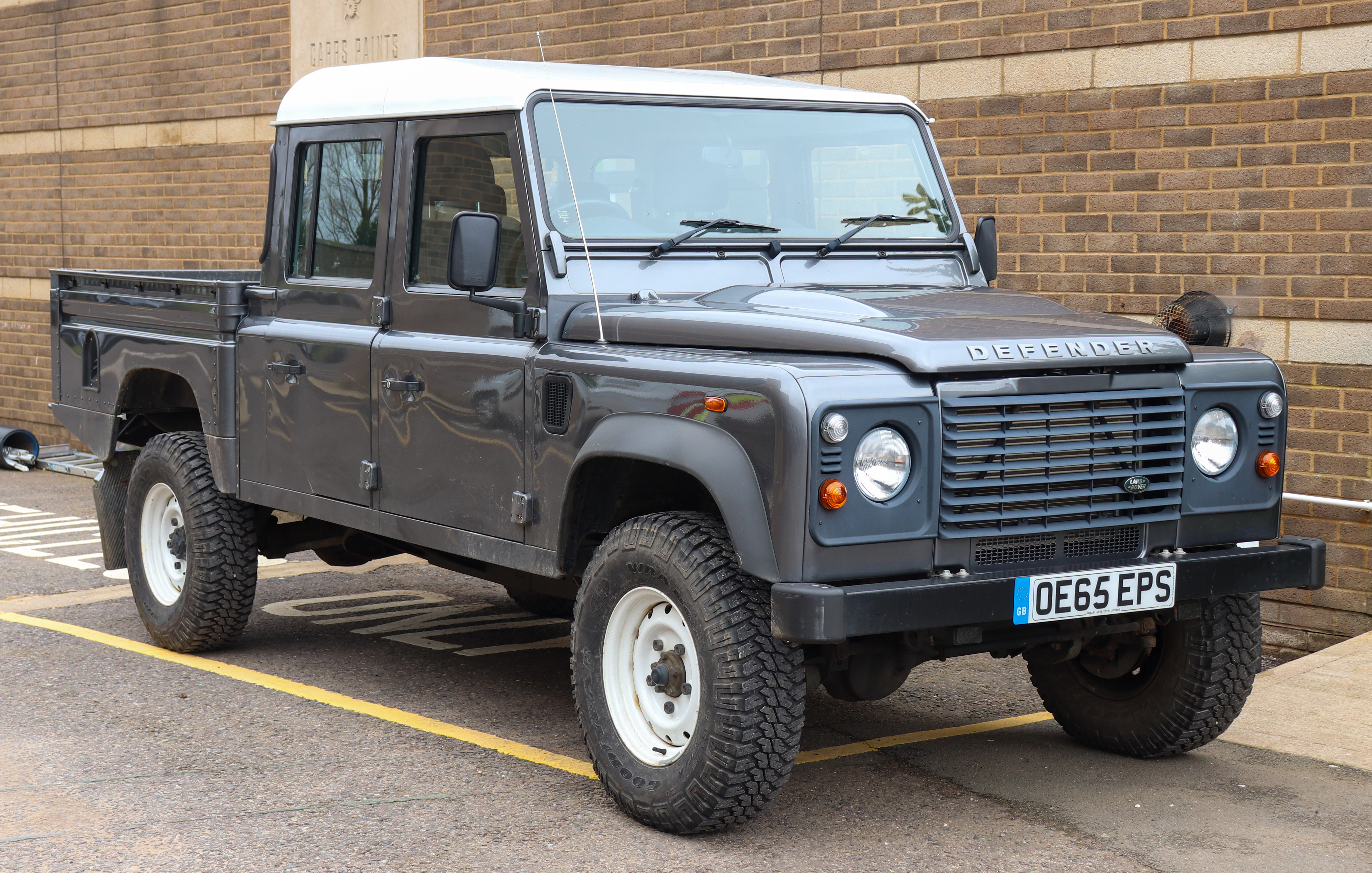
some people would call this an off-roader. I mean, if you've seen a Land Rover Defender,
again, you could draw some lines between this and a big, modern Land Rover Defender. Again,
I think for a big, boxy off-roader, a very good-looking vehicle, but high drag, no doubt.
All-wheel drive, variant, pure electric range of 200 kilometers, combined range of 1200. The
V27 follows the classic off-road template. Boxy body, circular round headlights at the front,
very conventional door handles, you can grab them. Vertically stacked tail lights, a side
hinged tailgate. Probably your mind's eye is painting the picture right now. Power comes from
a range extender, so never driving the wheels. It's a 1.5 liter engine. Either one or two motors,
20.6 kilowatt-hour battery pack on this one. The all-wheel drive, 335 kilowatts of power,
still quick. It's like five and a half seconds to 60 miles an hour. And loads of drive resistance
as well. You can see the little LiDAR sensor at the top of the vehicle as well. Big 15.4-inch,
2.5K central control screen inside, too, and a very utilitarian look on the inside. Now,
Xiaomi is next in the news. Xiaomi EV delivered 50,000, 212 vehicles in December. It's best
ever month, according to the CPCA. The tally beat its previous record of 48,500 in October.
That's up almost 9% from November and up 94% in a year. The Xiaomi surge shows how quickly
the newcomer has pushed into the world's most competitive car market. The YU7 is the,
I hate saying it effectively, the Model Y. Obviously, that's how many people's
shorthand will put it, but I'll say that. The YU7 did most of the work, accounting for 40,000
of the units in December's 50,000 total. The rest, of course, are the original SU7,
which is ticking down, by the way. Annual numbers look brisk at Xiaomi. The SU7 to almost 260,000
of them. That's driving all the volume now, 150,000 for the SU7. Xiaomi is moving already to refresh
its lineup, taking pre-orders for the new facelifted SU7 earlier this week. Maybe last week they did
that. The December record, the YU7's rising share, and strong full year results show that they have
moved definitely from curiosity to main contender. And finally, LeapMotor has picked the Brussels
Motor Show this week to show the A10. The A10 is a compact electric SUV. I've told you about it
yesterday on the podcast. When it arrives overseas, though, it will wear the B03X badge.
The B03X is the firm's first global model on its A platform and follows a world's debut at the
Guangzhou show last November. The car matters less for its size than for its price and the names
behind it. In China, the top spec A10 comes in below $14,000 US dollars equivalent.
Delivery start in the first half of this year. 500km range small SUV shaped car is within the
budget of so many in China now. And when it comes to Europe, of course LeapMotor is backed by
Stellantis that don't quite have showrooms on every corner, but they have plenty of them.
And they look very western and trusted. And these LeapMotors show up right next to the famous
Stellantis brand in the same showroom. All of that rubbing off on them in terms of being the real
deal on the A platform. So it's a 4.2 meter long vehicle, 1.8 meters wide and 1.6 meters high,
little 2.6 meter wheelbase compact SUV. It's like the new Kia EV2 if you've seen all the fuss
around that. 500km of range. Inside LeapMotor leans on some quite high performance Qualcomm
chips as well so it should feel really snappy. That would be my prediction. At least the A10 or B03X
gives Stellantis a cut price Chinese EV that will sell abroad and offers LeapMotor a platform
for more global expansion on a sub 100,000 yuan vehicle. And that is your podcast for today.
Thank you for listening. I'll catch you on the next one.
About this episode
A significant EU tariff workaround for Chinese electric vehicles is discussed, easing trade tensions and promoting cooperation between China and the EU. NEV sales in China surged, with 12.8 million units sold in 2025, showcasing the country's dominance in the EV market. The episode also highlights the mass production of semi-solid state batteries, BYD's updated models, and Xiaomi's record EV deliveries. LeapMotor's affordable A10 SUV is set to enter the European market, backed by Stellantis, emphasizing the competitive landscape of China's EV industry.