CHINA: Flash Charging vs Swapping, Zeekr 009 Refresh and Conflict Slows Down Chinese EVs | 09 Mar 2026
EV News Daily - Technology and Business of EVs
CHINA: Flash Charging vs Swapping, Zeekr 009 Refresh and Conflict Slows Down Chinese EVs | 09 Mar 2026EV News Daily - Technology and Business of EVs · Mar 10, 2026
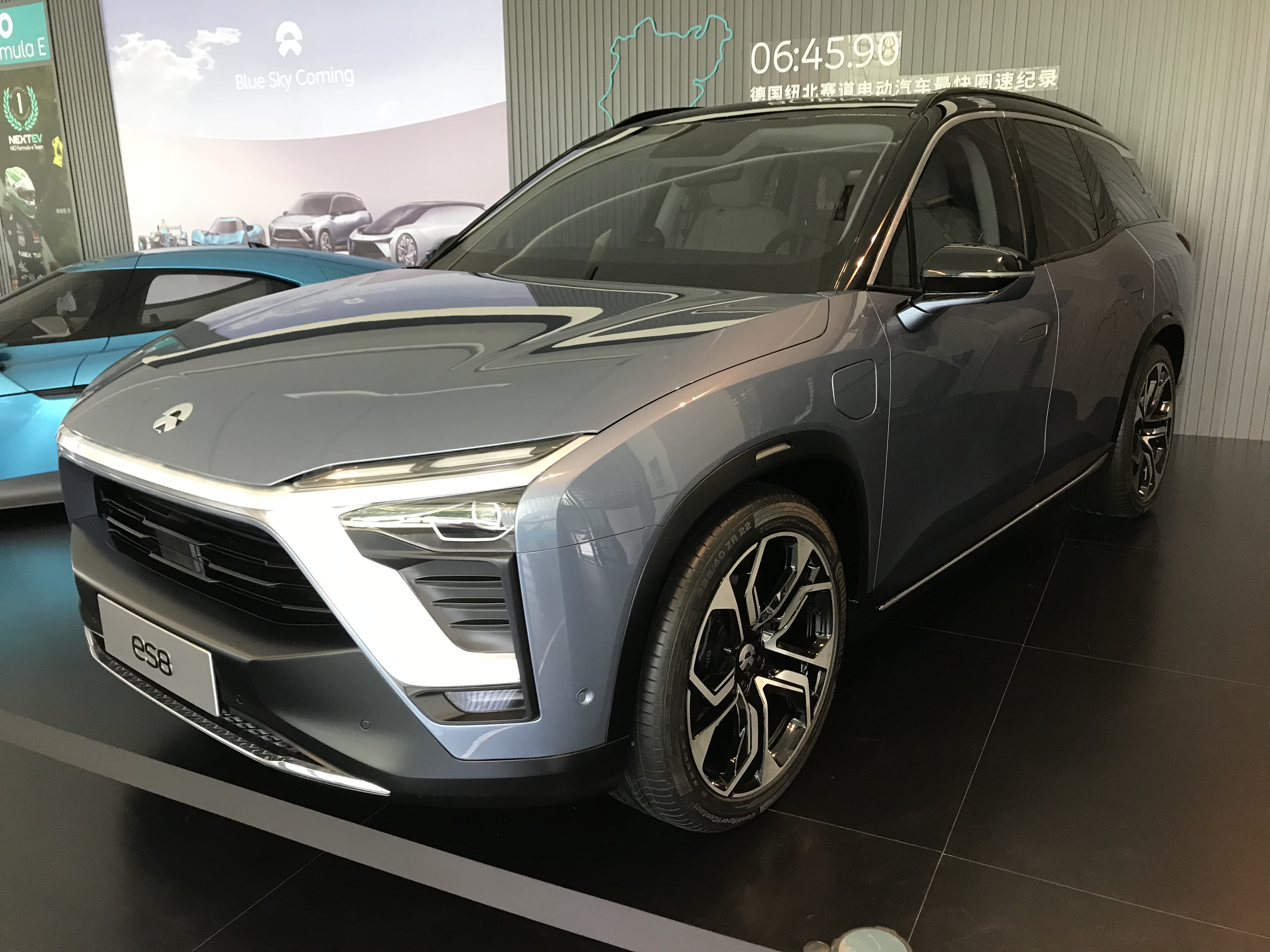
The Zeekr 009 is a big, fancy electric car that can carry many people and charges quickly. It’s made by a company that wants to make very modern and comfortable electric cars.
The BMW X5 is a fancy, comfortable SUV that many people like because it drives well and has lots of space inside. It’s often talked about because it’s a popular choice when people want a nice car that’s good for families or trips.
An all-electric SUV is a type of car that runs only on electricity, not gas. It's a bigger car that can carry people and stuff, and it doesn't pollute the air like gas cars do.
The Strait of Hormuz is a small but very important water passage where many ships carry oil and goods. If it closes, it can cause big problems for shipping.
Solid state batteries are a new kind of battery that can store more power and charge faster than regular batteries. They are safer and will help electric cars go farther.
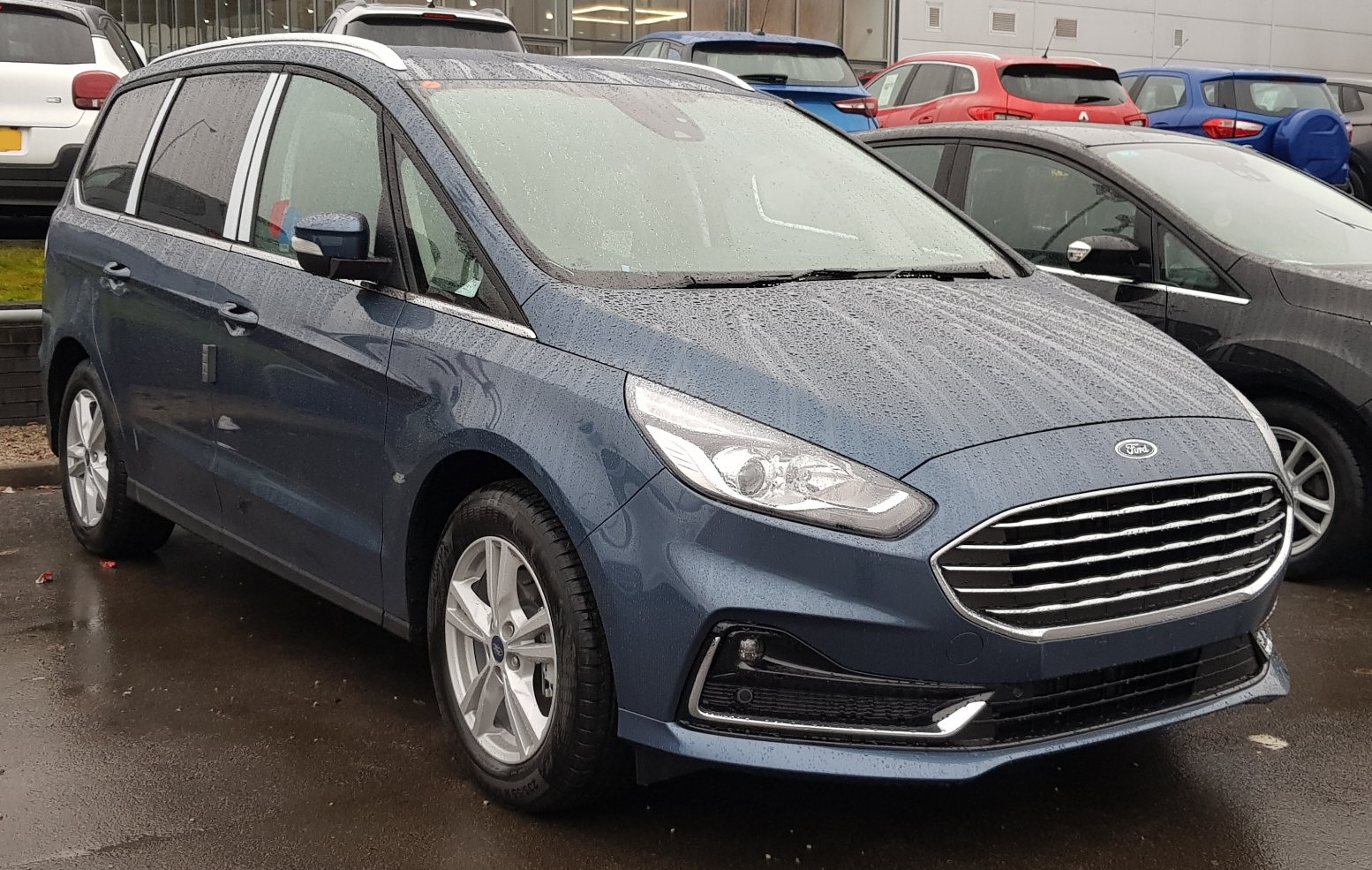
The Ford Galaxy is a big car that can fit lots of people and their stuff, making it great for families. It’s comfortable and easy to use on long drives, which is why people often talk about it.
The Geely Xingyao 7 is a medium-sized car that uses both gas and electricity to run. It can drive some distance on electric power alone and is made for families.
The Geely Galaxy A7 is a medium-sized car that’s a bit bigger inside than usual, so people have more room to sit comfortably. It tries to be affordable while giving you a lot of space.
The BYD Seal is an electric car made in China that runs on batteries instead of gas. There was a news story about one catching fire, which makes people worried about how safe the batteries are.
LIVE
Welcome back to EV News China today. Flash charging versus swapping, Zika 009 refresh,
and conflict slows down Chinese EVs. Plus stay tuned later in the show. I'll tell you how a
BYD battery did when fire engulfed it, not because of any EV parts, because of a cheap battery bank
that exploded inside a car. Welcome to EV News China, the podcast all about the world's biggest EV
market. And every day I bring you headlines, analysis and insights from the heart of China's
booming EV industry and decode it for the global EV audience. Now BYD launched its second generation
blade battery on the 5th of March and set out its flash charging China strategy. The pitch
pairs blade battery with megawatt flash charge 2 and backs it with a build out of high-powered
plugs. BYD wants 20,000 megawatt level charging stations by the end of this year. They currently
have just over 4,200 of the existing flash charge stations, the AIM, placed 90% of urban China,
within 5km of a 1,500 kilowatt plug, 1.5 megawatts. Wow. They have framed that
against battery swapping. So what's better, charge your EV quickly, or go and change a battery
quickly. Well, they've said that it's not comparable to something like CATL. They are
scaling their battery swap network to just 2,500 stations, not 20,000. The hardware claim rests
on speed and cold weather performance, BYD says megawatt 2.0. It pairs a blade battery
and a 10-70 charge in 5 minutes. A new thermal management system delivers 20-97% in 12 minutes,
even at minus 30 degrees Celsius. BYD also leans on safety, running simultaneous flash charging
and nail penetration tests with zero thermal runaway, and we'll get to that story at the very
end now. We'll come back to it rather. The bigger story sits in infrastructure maths. BYD
wants a station within a station model to cut the need for grid upgrades. 18,000 of their planned
units will co-locate with existing sites like fuel filling stations managed by partners.
Each unit uses an internal LFP pack of up to 300 kilowatt hours,
drawing a steady 100 kilowatts from the grid until it's full. But it can discharge,
thanks to the high C-rate battery and even a supercapacity, at 1,500 kilowatts. BYD claims this
cut installation costs by 60% versus a traditional high voltage charger, and of course BYD have all
the battery technology to do it all in-house, unlike others. Based on a 100 kilowatt grid draw
and a 60 kilowatt hour charge, one unit would serve 40 vehicles per day, and they want to build 20,000
units. BYD cast this as a rival to battery swapping. Rather than a crusade against it,
General Manager of Branding and PR at BYD called battery swapping and flash charging
different paths to the same destination. The swapping field looks crowded. NEO has almost
3,800 swap stations, CATL runs over 1,000, and Alton has 521. NEO's numbers hint at why BYD
thinks that flash charging wins on capex and investment, and even 3-put of vehicles.
NEO has sunk more than $18 billion into building out a swap network. Analysts peg
break even at 60 swaps per day per station. NEO's network does 35 swaps per day right now.
NEO Gen 4 can have 23 batteries, and that's about 1.8 megawatt hours of battery storage
if each station's full, and there's peaks of 50 swaps per day during the recent spring festival.
BYD has also opened pre-sales of one of their new vehicles that's charging very fast, the Song
Ultra EV. It's a mid-sized electric crossover, and they announced it on March 5th last week.
Prices start at $22,500. That's $155,000 RMB, with four trims, topping out at $26,800. The model
first surfaced in January this year, and BYD now pitches it at familiar targets. Things like the
Gile X5, Leap Motor C11, GAC Ion V. The Song Ultra rides on their new 800V 3.0 EVO platform.
It's 4.85 meters long, 1.9 meters wide, and 1.67 meters tall. A single rear motor, 270 kilowatts,
and a top speed of 130 miles an hour, or 210 kph. Two battery sizes, by the way, two LFP packs,
either a 75.6 or an 82.7 kilowatt hour pack. The smaller one, on the China Cycle 385 miles,
the larger one, 441 miles. Both use BYD's second-gen blade battery, which BYD says lifts energy
density by 5%, and of course, that magic five-minute charge to 70% state of charge. I mean, I love a
10 to 80, but I know why they're giving the 10 to 70%, because it fits under five minutes,
and so that is just a real mental barrier. Less than a five-minute stop, and off you go.
The chassis uses continuous damping system. You can also add their God's IB system with
roof-mounted lidar for $1,500. Inside, a 15.6-inch floating rotating screen, a 10.25-inch instrument
cluster, two spoke steering wheel, charging pads for your phones as well, and even big bed mode.
Oh, I love big bed mode. Letting the front seats recline fully to meet the rear cushions,
also a decent-sized front trunk as well, and at such a low cost, although not particularly low
in China, but I think you'd agree, like, that's not a massive price, starting at $22,500 US to
get access to this new alien technology, which is how we view it outside of China. 1.5 megawatt
charging. It is mind-blowing, isn't it? So, a couple of BYD stories to get yourself underway.
Zika are next in the news, refreshing their 009 due to launch in the second quarter of
2026, so we should get that by summertime, we think. The firm says it shared the news early
to offer transparency. Something that's, I think, Neo perhaps suffered a lot with in local press
when they released the ES8 in third-generation form last September overnight, and people had
literally been buying the previous version up until the day before. That got pushed back from
people that just bought Gen 2 ES8, and then the third one is bigger, better, and it was cheaper,
so you'd be annoyed if you'd missed it. Whereas Zika says this is all about transparency. So,
the 009 is the world's first pure electric luxury MPV, in their words. It also says the 009 has been
China's best-selling MPV above $400,000 RMB for the two consecutive years. The headline
changes under the floor. It's the new 900-volt architecture system, and the update brings
Nvidia's drive for you, Chip, with more intelligent driving capabilities. In the meantime,
Zika offers financing for the current 009 with ultra-low interest, 0% for five years,
and also saying, hey, we're going to bring a new one, so make your purchase decisions
accordingly. Which I think is a very, I don't know, very honest way to go about your business
and let people know, look, there's a new one. This one's going to be great. The next one's going
to be great. If you can't wait, then go now. It avoids all of the pushback. Some of that negative
publicity that Neo suffered with the ESA. But then again, Neo's point back in return was, well,
would you rather we survive than made money, or would you rather have just bought a car and
the car company goes bust? Because we need to make some money, which they do, and are starting to,
and that's a good thing. Staying with Zika, they've completed first deliveries of the 7x.
That is an all-electric SUV, and they did it in Germany, adding another market to their European
rollout. The brand has started operations in Italy, Spain, and Portugal as well. France
is next on the list. Zika's now in 10 European countries after entering here in June 2023,
and the 7x sits really at the heart of that push. That is a very popular size vehicle in SUV form
as well. They have the model on sale in Netherlands, Sweden, and Norway as of 2024. There's three
variants over here. Europe forms any part of the plan. Zika's internationalization strategy,
which is easy for me to say, targets more than 50 countries globally. Total global sales are now
over 690,000 vehicles. When I say total global sales, that is obviously including China as well,
overseas sales, so heading towards 700,000 in total for Zika. Last year, they delivered
almost a quarter of a million vehicles. Now, Chinese auto trader Li Qin has nearly 500
exported vehicles stranded in the Gulf of Oman right now, after the Strait of Helmuz effectively
closed thanks to conflict in the Middle East. The cargo is worth $8.7 million, that's $60 million
RMB, and it can't enter the Persian Gulf. And so this particular auto importer, exporter,
is just sitting on a shipload of Chinese EVs that can't go anywhere. Has lost all contact with the
Iranian buyer following conflict. The brands on board remain unknown, though. Nine days into the
conflict, the Iran continues, retaliatory missile and drone strikes against other countries. Commercial
shipping through the Strait has been paralyzed since the 2nd of March, and that waterway has now
been closed. A joint maritime information centre report said that only two commercial crossings
recently happened in a 24-hour window. Before it, it was 838 ships a day. Oil price is also jumping,
up 28% last week, to $92.69. The largest weekly gain in six years, well, April 2020,
at the outbreak of lockdown globally, was the last time it surged in a single week. U.S. crewed,
surged 36% last week, its biggest weekly gain on record. For now, for Chinese exporters, the timing
matters. China shipped 1.39 million vehicles to Gulf countries last year. The Middle East
is China's second largest overseas auto market, Saudi Arabia, UAE, absorbing almost a million
of those vehicles last year, up 30% year on year. Chinese freight agents working
in the Middle Eastern routes described a week of paralysis with no response from the
counterpart since the conflict began. Okay, moving on, NIO rolled off its 2 millionth electric
drive units on the 5th of March at their second electric drive manufacturing plant in Hefe in
Nui province. The unit will power the all-new ES8. The milestone is about 23 months after NIO
reached 1 million drive units in March 2024. NIO runs two electric plants at NIO Park in Hefe.
The first plant reached half a million in July 2022 and crossed a million units in 2024. NIO
links the second plant's output to automation and quality using highly automated production lines
with 94% efficiency rate, they say, and a 99.6% product pass rate. NIO is also going to build
a dedicated R&D base in Shanghai's Jieding district. The site will focus on next-gen battery
technologies, solid states. There's a new Shanghai subsidiary that will manage that.
NIO says the facility will strengthen the local EV supply chain, one in closer ties with nearby
firms in things like the battery materials industries, electric drive and battery swapping
infrastructure. NIO is penciled in these full-scale deployment of next-gen battery technologies for
after 2027. We are entering a 12 to 24 month period where solid state will be commercialized at scale
in China. We'll take a break. We'll talk about Geely and that BYD story back in a moment.
All right, welcome back to the podcast. A couple of stories to finish off with
to start our brand new week of EV News China pods. Well, Geely's Galaxy Subbrand will launch the new
Xingyao 7, the Xingyao 7's a mid-sized plug-in hybrid sedan, and it's going to launch in the
Xingyao 7 is almost five meters long as 195 inches plus and a 2.85 meter wheelbase. It stretches
beyond the Galaxy A7, a push-up in size but without a push-up in price, a large family sedan
at an incredible $100,000 RMB price point, like I say $13,000, $13,000, maybe $14,000.
Styling follows Geely design language, which they call the ripple aesthetics.
They do. It's a vertical slat grill and slim headlights. So it's a 1.5-litre
plug-in hybrid powertrain, very, very common, and a high-capacity battery pack, 37 miles or
78 miles, depending on pack size of all electric range. Geely also fits in an all-wheel drive system
in that model, very rare at that particular price point. Sales will run through Geely Galaxy's
StarNet channel, a dedicated retail network built around what they say is high-quality
and competitive prices. That is, again, a reminder about how competitive Chinese prices can be.
Now we'll finish off with an incredible story, and if you are ever able to click on a link in
the show notes, I'll put a link to this story with pictures in the show notes because a silver
BYD seal caught fire on Hong Kong's roads on the 3rd of March. The fire started around 2 o'clock in
the afternoon and was suppressed by 219, an 18-minute response time for local authorities.
The technical inspection at a BYD service centre is what's been captured here in picture form.
They wanted to point out there was no mechanical fault and there was no electrical fault.
Investigators traced the fire to a portable power bank that was sitting on the passenger seat that
went into a thermal runaway, so I would assume, and that's a dangerous thing to do,
that it was on charge at the time. It's rare for even a very cheap portable power bank to
suddenly have a thermal runaway event if it wasn't either charging or discharging,
but the lady who had it in the car with her, and there's no, you know, I said it was with these
cheap power banks as in it wasn't an expensive car battery that went up in flames. It might have
been a very good brand, I don't know, but either way BYD said that the high voltage system didn't
start the fire, and there's proof of that because the upper cabin, well pretty much the whole car,
like the car is a charred mess. The whole thing, heat has melted the interior, so the plastics,
the glass, the interior, it's all gone. It's, you get the metal frame of the car left, but that's
it. The blade battery pack and the integrated chassis around the battery looks like new. This is
insane. The car is destroyed, the whole thing is just a black piece of metal,
and yet when they peeled off the plastic around the battery pack, it looks fine. The blade battery
was all intact and the cells didn't react to the intense heat. There was no thermal runaway event,
and that detail matters because it's an LFP, Lithium Iron Phosphate Chemistry, Blade Battery,
and LFP needs temperatures over 500 degrees Celsius if you are going to get anywhere near
triggering an exothermic reaction, whereas traditional NMC, and you can start to head
towards 200 degrees Celsius and have thermal runaway events. So BYD said that the honeycomb
aluminium structure is the thermal barrier that stops the cabin fire breaching the cell compartment.
The seal rides on BYD's E-Platform 3, cell-to-body technology, and fuses the battery pack itself
into the chassis as a structural element for more torsional rigidity, cost savings as well,
like a sandwich design built around high-strength aluminium panels that surround it. And yeah,
if you get a chance to look at the pictures of this one, it's incredible. The cars are destroyed,
and the battery pack is just sitting there quite happily. No thermal runaway event. A nice little
story that counters the general narrative in the kind of lazy media that they see an EV on fire,
and well, assume the worst. There we go. That's your podcast for today. Thanks for listening. See you on the next one.
About this episode
The discussion centers on China's EV market innovations and challenges, highlighting BYD's flash charging strategy with its second-gen blade battery and ambitious 20,000 megawatt-level charging stations. BYD contrasts flash charging with battery swapping, emphasizing cost efficiency and cold weather performance. The episode also covers Zeekr's 009 MPV refresh with upgraded tech and transparency in launch timing, alongside their expanding European presence. Additionally, geopolitical conflict disrupts Chinese EV exports through the Strait of Hormuz, impacting shipments worth millions. NIO marks a milestone with 2 million electric drive units produced and plans for next-gen battery R&D. Geely introduces a competitively priced plug-in hybrid sedan under its Galaxy subbrand.