Welcome to another episode of the Autobire's Guide podcast.
Today, we're going to be talking about tires, we're going to be talking about advancing safety
legislation around the world, some of these going to be controversial, and of course,
new cars that we have driven and new cars that we are excited to be driving coming
up soon.
So Travis, I know we have some slightly differing opinions on some new car features and functions,
but I find it interesting, I think we both find this interesting, that we're seeing legislation
of safety features coming from China now, a market that has historically been a follower,
not a leader on safety regulations.
Normally, it's been North America or Europe that's driven a lot of the worldwide safety
regulations and restrictions and norms, but we have some interesting ones coming out
of China now.
Well, the thing is, China is producing a lot of vehicles, so where they are in
that market, and honestly, not just the command they have for the attention, but just the power
they have in this arena has changed drastically, and there's some interesting stuff coming
through.
Honestly, I was this week with Nissan, and one of the big questions from a lot of journalists
is, why do you not have one pedal driving?
And they said, well, there are some regulations that we're just considering.
And it's one of those small things where it turns out there are concerns, there
are software limitations and financial limitations, so you don't have to build two
different versions of software, and it's not just that.
I mean, I think it was back in 2015 where we had to have backup cameras coming to all
new vehicles, but we're talking about some different stuff here.
Yeah, so the first topic that struck me interesting here was that China is now
considering, and this is somewhat relevant to some recent cases that we've seen
news stories in in North America, China is considering banning electronic
door releases.
This is not just the pop out handles that we see in Teslas.
They're talking everything, the push buttons on mock ease, the various buttons
on the insides of Jeeps, et cetera, this growing trend of electronic
rather than mechanical door latches.
And the reason they're saying is safety.
Too many people being trapped in cars when electrical systems fail.
They also, and this one, I do not quite understand the logic behind this,
but they're saying that some of these mechanisms are more prone to failure
after a side impact accident.
And so it prevents rescuers from being able to get in the vehicle
or the occupants from being able to get out.
But if you recall, we recently had people in some EVs.
This is primarily an EV thing, although it's expanding across to a
bunch of different luxury cars, you know, trying to make things
smoother and feel cooler, right?
Lots of Lincoln's are doing this.
And we've had a bunch of people recently drowned in in vehicles
because their electronic door release either didn't work or they couldn't
figure it out.
And this is where some of the nuance is interesting here,
because all these car companies have a way to get out of the vehicle mechanically.
But I was recently talking to someone about this and there was a review on,
I believe it was the Jeep Wagoneer S, the electric Jeep.
And they were saying, oh, there's no mechanical door release.
And I said, ah, there is.
It's just in a stupid spot.
And if you have to know where it's at and an emergency, you go for the door handle.
You don't exactly.
Where was that secondary door release that you've never used ever in your life?
And maybe someone pointed out, maybe they didn't.
Maybe you read your manual.
Maybe you didn't.
So you left, you left groping around.
Right. Here's an interesting poll question.
Who reads their manual?
Now, I think if we put out that poll, we're going to get probably a higher
hit rate than I think is going to cover the average consumer.
I think folks listening to our podcasts are pretty in tune with what's going on
on their vehicle and lots of others.
However, I know so in my Tesla, I have a button release, but within arms
reach and often confused for the release is going to be the manual version.
And that's great, except for they tell you, please don't use the manual
version. It's not intended for, you know, the same frequency
of use as a regular door handle, but that one is probably easier.
Although I'm not even sure where it's at for the back seats.
So those folks in a little bit of trouble.
And I admittedly haven't read my manual to see where that release is.
Probably because I'm in the front seat on that one.
And if anybody, because we do have, I'm sure some Tesla fans out there,
if anybody could tell us why Tesla does not want you to use
the mechanical release on a regular basis, which I agree.
I find actually more convenient than the electronic release in the Model 3.
I just don't know why.
Like, what is it about it that you're not supposed to be doing?
And again, so, you know, having worked for Tesla, I don't have an official answer.
I didn't work for the service department.
I think it is just meant for, hey, this is it's maybe a little bit more
industrial than it is consumer.
You know, hey, this is going to get that door open, but there's a mechanism
that's shifting and it's not designed.
Does it not lower the window?
You know, I haven't checked.
I can maybe I'll go check after this and we'll throw a little.
Because I know in some vehicles with electronic door releases,
the Sashless or Silless windows, if you use the mechanical one,
it doesn't cause the car to lower the window.
So you may wear that that seal out.
Right. Right.
That's a that's probably a good guess.
But yeah, I'll take it up after we're done recording here.
I will say once upon a time, General Motors in the very early days
of electronic door releases, some of the first cars that had them,
they had this huge red like pull tab or a big red webbing thing.
So it was more obvious, I would say in an emergency, if you're looking around,
hey, there's this red thing, pull on the red thing.
But if you're not using it every day,
are you going to be hardwired for that?
That's kind of the reason when, when, you know,
but they're talking about pilot safety, gun safety, gun training,
any kind of critical situation training repetitive operation is important.
Like if you want to be a good shot, you need to go to the driving range
or not the driving range, the you need to go to the gun range very frequently.
If you want to be a good golfer, you got to go to the driving range
all the time, right?
It's not like it's going to come back to you in that same precision
after that much difference.
There's a difference between having your CPR card and having just gone
to the CPR class, where you go, yes, I have just practiced that action.
And it's going to be, you know, immediate pop up memory versus six,
eight months down the line.
And you go, I know that.
Hold on. Hold on one second.
I think it, you know, we have the car that says we know it,
but do we remember it?
Have we practiced it?
And yeah, that's where you run into an issue.
Actually, I don't remember what card is.
So so whoever it is gets saved here where I was shocked about
where they put the emergency flasher button because we never go
for the emergency flasher button.
But sometimes, you know, you and I do, we got to pull over and we do
something real quick and then we jump back on where a lot of folks
wouldn't do that.
But I was going, where is this button?
I cannot find it.
And we're used to know, you know, hey, it's normally up here
where it's right in the center dash and it's just off.
It was like tucked off to the side in the corner.
I went, oh, no one's going to be able to find that.
And in emergency, you need to be able to go to it right away.
At least it wasn't one of those weird twisty pull things on top
of the steering column, like, like they used to have, you know,
like I have in my truck that I 100% did not know how to use the
first time I needed it.
Yeah, absolutely.
But this, this, this thought process of the regular muscle
memory basically for particular functions goes into the next
part of this, which is interesting.
And I'm wondering how this is going to affect research for
sure, because there's a limited amount of research, but
also legislation in other markets, because China has
already decided to ban one pedal driving sort of every new EV
being submitted for approval starting January 1st, 2026.
And every EV sold in China starting January 1st, 2027 will
make you re enable one pedal driving every time you turn on
the car.
And there are going to be some additional rules around this
about how much deceleration the vehicle can actually give you
without the one pedal driving on and when brake lights turn on,
et cetera.
But I was interested that, that China seems to be the one
focusing on this particular kind of safety.
There's a little bit of research on it, but there's not a lot,
which is interesting.
So, yeah, I think a lot of it's anecdotal and, and I'm
not, and we've talked about this before with one pedal
driving, is it safer and other complications with it?
And actually a lot of that goes back to our more
accidents caused by one pedal driving because people aren't
switching over to the brake pedal fast enough, quick enough, you
know, and, and I think people who are going right now from an
ice vehicle or a hybrid or whatever, but for internal
combustion of some sort to EVs, they are going to know how to
make the switch.
But what we're talking about is sort of the next generation.
If you only ever driven up driving EV, are you going to
use that brake pedal quick enough?
It's still, it's actually still both because this is
interesting.
There is some research on this.
The School of Automotive Studies in Shanghai put drivers
on simulators and these drivers were, you know, by and
large, generally speaking, ice drivers as well.
So some of them were EV drivers.
Some of them are ice drivers, but in this group, they
discovered that, that even relatively short term use in
these vehicles with one pedal driving, there wasn't that
muscle memory to find the brake pedal in an accident.
So this is kind of an interesting one.
I said, here's the, here's the result here.
The regenerative braking system did not affect driver
perception or reaction of the lead vehicle braking event.
So basically it didn't cause them to, you know, not know
what's going on with the lead vehicle and drivers extended
throttle release to avoid rapid speed drops when the
lead vehicle breaks slowly.
So no issues breaking slowly.
One pedal mode exhibited a longer throttle to brake
transition time and increased uncertainty in timing of
brake pedal applications.
However, the one pedal mode was safer than the two
pedal mode in low urgency situations.
So driver consistency was there in low urgency
situations, but in high urgency situations, it became
unsafe and uncertain situations due to delayed
braking.
So that's basically their, their thought process
there.
And then they call out in this study, which is
published, by the way, so it's a published research
paper, but even in this one, mind you, they say
much more research is needed that they didn't
have the opportunity to do this in the wild, but
they did comment that this data does seem to mirror
what we saw in the United States.
Again, modern research needs to be applied here.
But in 2020, the IHS data says back when Tesla
counted for 90% of EVs on the road in the US, EVs were
involved in 1.21 crashes per million miles driven
versus 1.1 for ICE vehicles.
25% more likely to be involved in a fatal accident
than an ICE vehicle.
Now, since 90% of accidents they're saying in the
study are driver behavior, they're saying this has
nothing to do with it being an EV.
This has to do with driver behavior and driver
behavior interaction and pedal misapplication or
timing delays, et cetera.
So that's the interesting part there.
The question, I guess, will be if China is
really interested in this topic, we should know,
you know, by 2030, because if every EV doesn't
have this option going forward, we'll start to
see some differences.
I'm also personally intrigued to see going forward
now that Tesla's market share has dropped and we
have EVs that don't default to one pedal driving
like this.
Is it any different?
It's a good question.
So, like I said, I was at Nissan and they said, you
know, we have three or four different region levels,
four region levels, and then we have our E-Step button.
And E-Step is their highest, but it's a standalone
button versus something within the software.
You know, this is not as easily accessible.
I said, go over here.
This is the highest level.
It's still not one pedal driving.
It will not bring you to a stop.
And effectively that doesn't bother me because it
does still have significant regen.
It just means you're going to have to switch
over to the brake pedal.
And a lot of people had feelings on that one.
And maybe a little more aggressive than I would have been.
But Nissan said, hey, listen, there's some regulations
that we're keeping an eye on.
And, you know, in theory, this is something they
can switch over.
But the way I look at it, and I do think I do think
someone comes out of finances is if you have markets
where this vehicle is going to be sold, instead of
putting two different software profiles in that enables
one pedal driving or doesn't, you say, hey, we're
going to do one.
And to start, we're going to do the one that's going
to cover everywhere as this as this vehicle rolls out.
I love one pedal driving.
But in my mind, when I think one pedal driving, my
first thought is actually significant regen and regen,
where I do not have to reach for the brake pedal in
every day.
But it's more of a transitional things.
But it's but coming to a stop is the definition
of one pedal driving.
And I don't think of it in the same way.
I just need I just need to know I have
significant regen.
So I don't have to go right.
I'll break that or break.
But yeah.
It's like my impression of your like of one pedal
driving has more to do with convenience.
And inconsistency and and smoothness.
So, you know, you and I have to be there.
You and I have debated this one forever, but I like
to be I like to be able to dial in and out the
power, right?
Just a little bit here, a little bit there.
And and will the debate will go on forever.
There are there is some research on this.
One pedal drivers do seem to have a higher
incidence of motion sickness for passengers in the
vehicle has been blind studies done on that one.
So that that one week, we can call the smoothness
thing a non-issue.
I would say it's mostly convenience, but but I
would say that to your point in the press
conference with Nissan, there are a significant
number of automotive journalists that do not
understand how regenerative braking works
and what blended braking is.
So there is this pervasive belief among
some Tesla fans and a decent number of
journalists that if you do not have one
pedal driving, that you're leaving electrons on
the table.
Oh, and like, you know, by the definition, it's
it's a fraction of a hair because we're talking
under 20 and 15 miles an hour that you go
throttle brake.
And there's there is not a lot to be gained
in that last moment.
And so and you're still
and you're still.
Yeah. And when you put your pedal, you're
still blended braking.
So that that is a rebellion or a Tesla.
Correct.
That is the flaw, I think, in a lot of these
people's logic is even in the electric
side by side that we are reviewing right now,
it has blended braking.
It's like almost are you going to have that
into next week?
Yes, almost excellent.
Almost every EV sold model
sold has blended braking, except
for Tesla and Rivian and a select number
of other car companies out there.
And that's the important thing for viewers
to understand is that blended braking means
when you put your foot on the brake
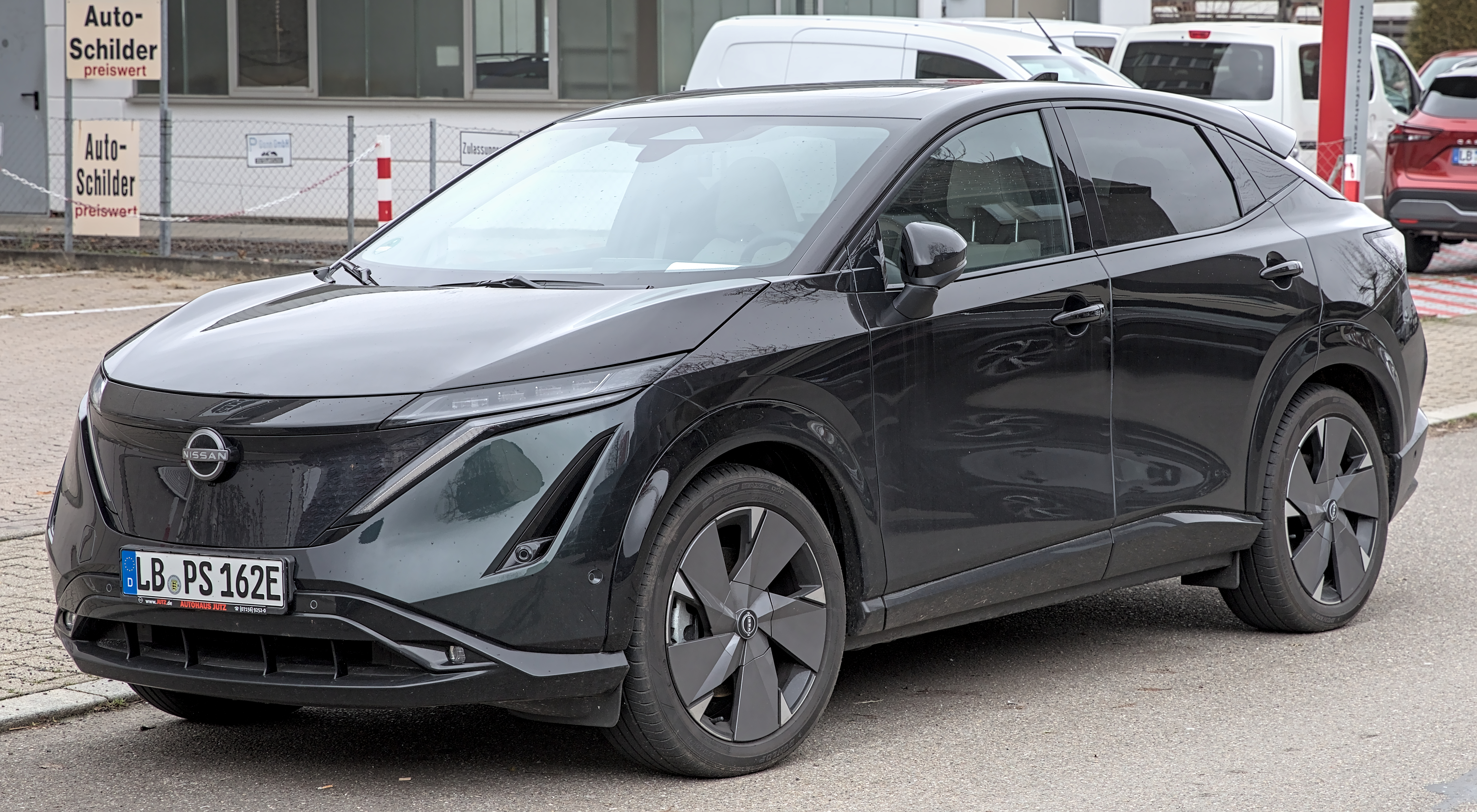
pedal of a Nissan Aria or a Blazer
EV or a Polestar or a BMW or a Mercedes
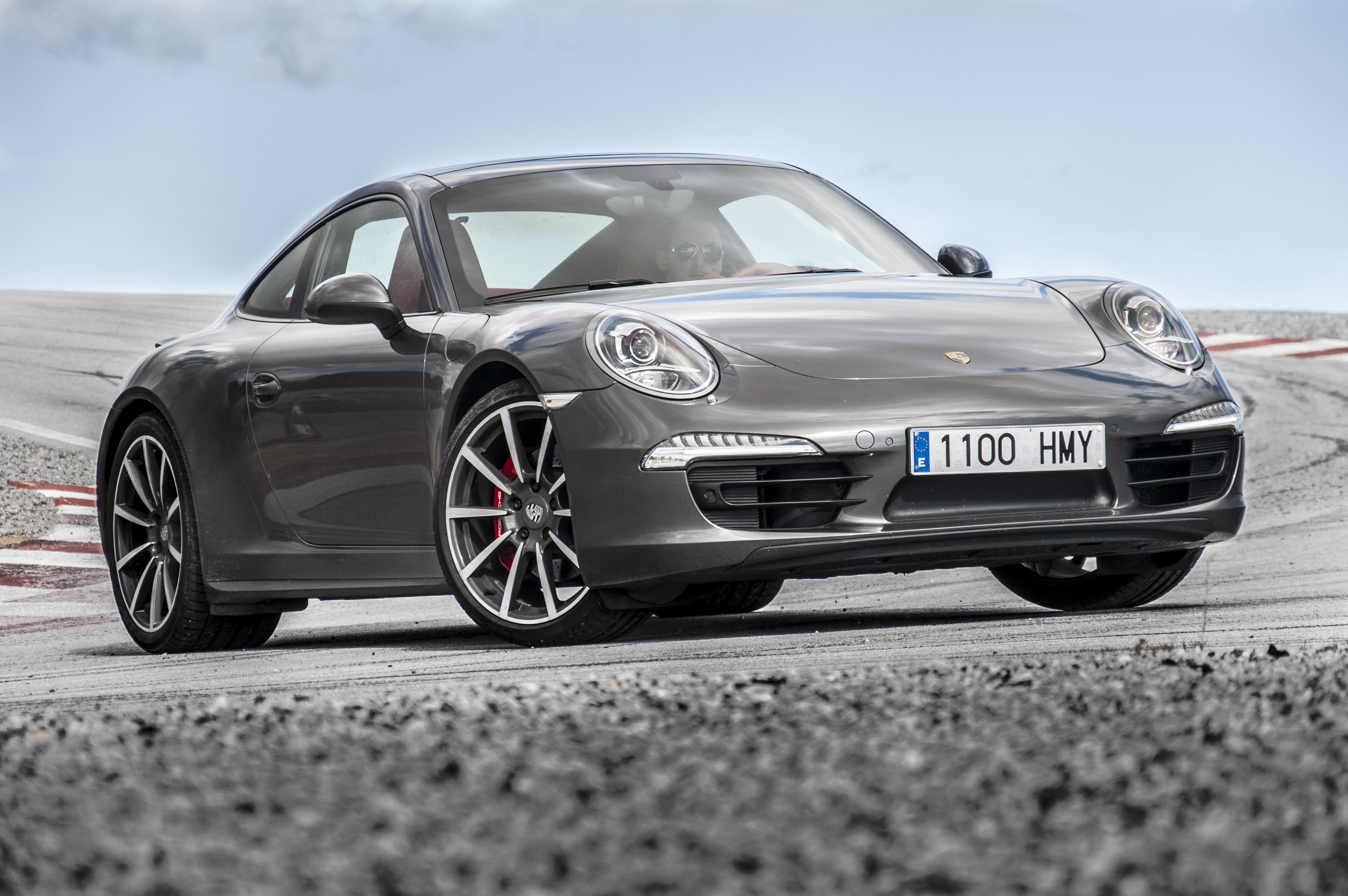
or a Porsche, it does not mean
that the brake caliper is actually
pressing the brake pad against the disk.
It means that it's commanding
regeneration until you have
hit the maximum the car can do.
Then you engage the friction
brakes. And that's the tricky bit
is there are actually a significant
number of EVs that have greater
regeneration potential than any Tesla
ever sold in the world.
Taycan, for instance, has more than
double the regenerative potential
of a modern Tesla because of this
blended braking system, because you
can actually do regen very aggressively.
But in a one pedal system, you don't
want it to be neck snapping regen.
You don't want emergency braking
level regen in a one pedal system.
And that's part of why the safety
question happens, because you're not
going to get that emergency response
by lifting off your foot.
And that's one of the things I like
about Chevrolet or any other GM
vehicles is they have a pedal
or they have a paddle.
They have a progressive paddle
and an on off paddle.
I actually prefer the on off paddle.
And that means if you want heavy
significant regen, you're coming down
the big hill, pull the paddle
first and then start to lift off.
And by pulling that paddle, you've
significantly boosted how much
regen is available.
So so you can really max out the
regen, but it's not too much
too quickly all the time.
I love regen braking for
every reason under the sun.
I 100 percent make it a game.
You know, for my test loop, I have
to do a consistency thing.
And that when I drive less
like I do every day and more like
I think more people do.
But I love to maximize how much
regen I get before that break
is actually applied.
I will say some vehicles
are really good about it.
Some vehicles are not.
I had a Tacoma trail hunter
and that has a hybrid engine.
But at no point does it really
want to tell you I'm super
hybrid. There is no charge meter.
And that's honestly one of the first
hybrids I've seen in a long time
that has no sort of charge meter.
The Prius that I have right now
definitely has a charge meter
and it's got a B mode and it's
got multiple levels of regen on the
B mode. I'm having the time of my
life nerding out on this Prius.
But yeah, I understand
I understand between drivers as
well. That's another one is if
you share the car in a household
that regen is going to be very
different. And my Tesla basically
has a light regen and the
heavy regen.
And there are some like that Nissan
that really has five different
levels. You know, hopefully those
are things that pair with keys.
So driver one is getting driver
one's profile and driver two is
getting driver twos profile.
But but I'm curious about about
the study. So keep them coming.
I want to see what what the
people say.
Yeah, I'm intrigued to see if
we see a difference in, for
instance, these accident statistics
that IHS categorizes
and catalogs all this data.
I am going to be really intrigued
because we would know better
what the impact of this is.
If you, for instance, took a look
at a vehicle that defaults
to very heavy one pedal driving
regeneration like every Tesla
and you compare that against an EV
in the same category that
does not or prefers no
regeneration. So for instance,
like like the German car companies
who spend days
and nights obsessing over
fractions of a percent in
efficiency.
They say that in their studies
in real world studies, etcetera,
that actually zero throttle
lift off regeneration is the most
efficient. So strong blended
braking, the ability to capture
more energy in the battery than
Tesla can. But by default,
zero on throttle lift off.
They claim that's the most
efficient, the full coast thing.
It's a fraction, but they're
super obsessed with that.
But that doesn't I want that
with the paddle.
So instead of giving me the
heavy paddle, give me the neutral
paddle and give me that full
coast option. But no one's going
to need that for me. So better
yet, give me the paddles like
Hyundai key and a number of
companies do where you can
adjust the region.
So you can say up or down with
the paddles and however many
steps you get.
But they've got an auto one
and I hate the auto one.
Oh, yeah, don't like that one.
That one adjusts based on
different speeds. And the
problem for me is that I
never know what kind of
region I'm going to get once
I start lifting off.
And that's honestly one of the
only issues that I get with
something like a Tesla or
a Rivian where you're
expecting certain levels of
region. If your battery is
full, you do not get that same
level of regenerative capacity.
That's where I will totally
agree. That's where you have to
be paying attention in a way
that most drivers probably
don't want to that when you
start lifting off, it's going
to slow down differently than
it did earlier that
Hyundai Kia Genesis. The
auto mode isn't based on
speed. It's based on the
distance between you and the
vehicle in front of you.
Which for me generally
depends on where I'm
driving. Right. Yeah.
Versus the. Yeah. So it's
it's this attempt to do
sort of kind of adaptive cruise
control like regenerative
braking. It's an odd one.
I don't like it either.
I think they could skip that
one. But the other other
adjustabilities I'm totally
fine with those single paddle
thing. I never use it in the
blazer to be honest.
You know, our blazer we've
had for 11, 12,000 miles now.
And it just is not as
useful as something that
would let you turn the more
aggressive levels on or off
over time. I just I'm I
don't know. I'm like it's
it's interesting. But before
we jump to before jump to the
next one, one small thing
that I think is so silly and
honestly more difficult for
the driver than it should be
when I have this Prius and I
love put it in B mode because
I love engaging as much
throttle lift off regen as I
can. But it will not let you
put it in cruise control when
you're in B mode. I have to
then switch it back over to
drive, which in the Toyota
is over and down to a
drive. If you're in drive,
you pull it down for B mode
but pulling down again will not
disengage B mode. You got to go
down and over and then you have
to go ahead and turn on the
cruise control. And that feels
like something that's going to
cause more issues than not
because if you're too slow
and as you go over, you end
up kicking it into neutral.
Yeah, I dislike the B mode
generally in the Toyota
products because it doesn't
just say I want more
regenerative braking because
they're calling it engine
braking. It is more likely
to turn on the engine to try
and keep a consistent speed
than just regenerate, which
I think is weird. And some of
the other hybrids out there do
a B mode better, I guess I
would say. Yeah, I don't know
why they lock out cruise
control there. But speaking
of new rules, the IHS and
speaking of the IHS as well,
for those that don't know,
it's the Insurance Institute
for Highway Safety. It's a
non-profit concern who's
really concerned about safety
because it costs them money.
Exactly. Non-profit funded
by the insurance companies.
That's the important part
because they're like they're
obsessed with lowering
accident rates and everything
there. So that's their thing.
They want a lower payout.
So we all benefit in a way.
I love the I want to keep
everyone safe.
Alice, I want to keep everyone
safe. They want to keep
everybody safe. They want to
keep those those actuarial
values or their insurance
really good. But we all
benefit because our interests
align in that way. I would
like to live. They would
like me to not have an
accident so that we don't
have to pay anything out, right?
That Venn diagram. There's the overlap.
Yeah, there's there's a decent
amount of overlap. Obviously,
there's a whole lot of not
overlap, but any rate.
This is what I'm intrigued by.
They're saying they want
impaired driving and speed
detection systems to be well,
not they want. They are going
to make it.
They will be required in order
to achieve the top safety
pick plus rating from
the IHS, which has become
ever more coveted by car
companies. They use it in a lot
of advertising.
A lot of people are now
talking about safety ratings,
etcetera.
They're describing this as passive
alcohol detection, so
no breathalyzer or anything, but
systems that will detect
your impairment based on the
way you drive, as
well as speed detection systems
that will let alert you that
you're going over the speed
limit in areas where they have
detected speed limits.
And what I want to know
is. We already have driver
monitoring, driver attention
detect detention, drowsiness
detection, etcetera, and
these systems will show you a
little coffee mug on your
instrument cluster like, oh,
hey, it's time to take a break.
You're driving distracted.
So, A, how is it going to know
the difference between distracted
driving and drunk driving?
B, what's the icon going
to be when it's detected
that you're drunk driving?
Is it going to be a cocktail
glass?
How many how many olives will
it have?
And can you customize it?
So say you are not a mixed
drink drinker.
I would be a wine glass.
Will it be a tall one with
an umbrella?
Do you get to do exactly
an old fashioned with the rotating
cube? Or is it just a red and
blue saying, hey, you
probably shouldn't be driving.
All drunk driving is bad.
Preface this with that just
being totally not serious here
at this moment. But is it
customizable?
I prefer red wine.
Can I get a red wine glass on
there?
More rationally, though, I'm
going to go ahead and guess
that by the time you're
weaving around enough for this
impaired detection system to
tell you that you're impaired,
you're already too effed up to
drive.
Yeah, you know, here's the thing.
There's there's a big, big brother
question.
And there's the point where
this isn't about big brother like
the police. This is the
manufacturers being
under the under the thumb
of the insurance companies because
they have they have a power,
right? They say, we can give you
this rating.
But only if you have this system.
First question is how can you
turn it off?
I guess I'm driving right now.
It had a driver distraction
warning. And let me tell you,
that thing pops off all the time,
even when I did not feel it
anyway, that I was distracted
driving. And I just said, OK, I
got to figure out where to turn
this off. And by the way, not
an easy thing to go find.
So to this one is too
aggressive, I think.
Yeah, or you could dial it
back. But in this case, it's
on or off. So can you turn
it off?
In theory, this whole thing is
to save lives and like on paper
that sounds great.
But is the person who's going
to have that message pop up
and say you're too drunk to drive
just go, nah, I'm good.
I got this.
I only, you know, I'll be home
in a minute. That's your drunk
impression happened.
Well, you you see me drunk
how many times zero because
I don't. That's what I'm
wondering. I'm curious.
Well, we're just going real
light on things. Anyway.
OK. If you get the message
that says, hey, you're drunk
and you go, nah, I'm good.
Thanks.
What happens then? Does it
shut? Oh, no, no, no.
So so the way that this seems
to be is it seems to just be
a variant of the drowsy driver
detection system that we have
now. So it's not going to tell
anybody it's not going to like
flash your hazards, etc.
It's just going to say, hey,
you're you're driving impaired
some in some way or another.
And then it is up to you as
the driver to then make good
decisions, which you have
theoretically already not done
because you've already drunk
and then gotten behind the
wheel. So this this seems
to be an effort to like
all safety regulations ever
you can you can speed.
You can not wear your seatbelt.
All of these things.
This just seems to be
a reminder that maybe we can
get the low hanging fruit.
Maybe we could get that person
that's that's that's a little
too tipsy to drive to go.
Oh, gee, I didn't think I was.
I didn't think I was that bad.
I didn't realize I was whatever.
But yeah, I don't suspect
it's going to catch any
serious alcoholics.
Yeah, I mean, and here's the
thing. So if it's a small
it's a small thing.
And at this point, it's more
of like a couple lines of code
because most of these vehicles
already have driver monitoring
systems. And so it's these systems
are now just looking for
different things.
It's saying, hey, this, you
know, the car knows that it's on
this road and it sees the
lane lines. And it goes, hey,
you're doing a lot of ping
ponging and we recognize that
it's past 6 30 p.m.
And, you know, like there's
a lot of things that it can
just look for and say, I think
you might be intoxicated.
And if it gets somebody to
stop, awesome, right?
I mean, that's that's that's
a win. It's just how
intrusive is it and is it going
to be? And then what's the
headline going to be, right?
Because because a lot of people
are really concerned about
Big Brother and this
wouldn't this wouldn't be
helping anything.
But you're going to see it in
every three row vehicle,
you know, just about immediately
because that's that's one of
the biggest concerns of moving
families is the safety
safest vehicle.
And those lines of code might
be the make or break between
someone's shopping list and
someone's not.
Yeah, this is an interesting
economics question in a way.
What is the what is the value
of a life?
And and that's where all
safety legislation and systems
really are are in
them, the equation of
you is is the airbag worth
that is the seat belt worth
that is driver attention
monitoring worth that is
autonomous braking worth it,
et cetera.
The systems can and do go
wrong. They cost money to
maintain in vehicles.
But what is the value of that
life is is that
that intrinsic public safety
question in a way that that
these rules are trying to
assess. And I don't know if I
have an answer to that, but it
is it is just an interesting
thing to ponder.
Oh, as your PR department, I
would recommend you never
answer that question.
But the first thing that comes
to mind is like an airbag.
And let's just say
theoretically, every time the
airbag goes off, it breaks
a nose.
But it'll save a life.
You know, most people go, I
don't want to break my nose.
It was a small fender
bender. But then when you
got in that accident where it
saved your life, you go,
break all the noses, it's all
fine. You know, it's just
sort of interesting trade off
there. I will say there
it's there goes beyond a big
brother element.
So I have a Tesla.
I do not pay for full self
driving. I have the standard
autopilot.
And I have had situations
where it doesn't detect my
hands on the wheel, because
there's always a weird fine
line. You don't want to be
too heavy on the wheel.
You don't want to be too
light on the wheel.
I lean towards too light on
the wheel.
And I have had it disengage
that system and say, you
are not allowed to use this
until you park, turn off the
vehicle and start again,
because it believes I am an
inattentive driver.
But that one feels weird
because I paid for a feature
and that feature has now
turned itself off.
And after a certain number of
a certain period of time,
if I do too many, it'll
turn itself off for a
significant period of time.
And I haven't looked all the
way into it. I just know
there you're putting time
out. But how can my
product put me in time out
when I have paid for it
to do this thing?
So that's that's another
thing where if your car
in theory says, hey,
you've been you've been
inebriated 17 times this
month, you're not allowed
to turn your car on until
you something.
There's a world where that saves
somebody's life, but nobody's
going to be happy about it
while it's happening to them.
Although all the autopilot
people that are not putting
their hands on the wheel or
not steering the car, because
this whole light handed
thing, it means you're not
steering the car.
You know that they deserve
to be in time out because
you need to be steering
your car. It's not a
self steering car.
It's the it's the answer
to that.
We'll agree to disagree.
But again, it's just one of
those questions.
The technology is here.
The software is here.
When does the company say
this is too much or too little?
And this is this is kind
of where, you know, is is
older better because you don't
have to deal with the nannies.
Yeah, you know what?
You know what is not a
self steering car either.
The new Polestar five.
Have you seen it?
I have seen it.
I have also seen a price
tag on it and it is alarming.
She's expensive.
Yeah, they're talking up
for the performance model.
One hundred forty one thousand
six hundred euros, the equivalent
of one hundred sixty five
thousand dollars.
And the current Polestar
is that's for sure.
Yes. Well, Polestar did say
ages ago that their mission
was not to compete with Tesla,
not to compete with Mercedes
necessarily. Their mission
was to be the electric Porsche,
which is telling since
I mean, well, I say
something since Porsche
is also going electric.
So, you know,
this is targeting kind
of Tycon, to be honest,
more than lucid air.
But there are some lucid
interesting corollaries
here in Norway, because it's
going to be one of the fastest
charging EVs out there.
They're claiming three hundred
fifty kilowatts peak charge
rate and their one hundred
twelve kilowatt hour battery,
which is pretty darn big,
is going to fill in about twenty minutes.
Yeah, that's humming.
And is there any
conversation about efficiency
because that's also
an interesting one where
I mean, there's a point
where it's charging
so quickly, how many miles per hour
doesn't matter, but the more efficient
you get, the more miles
you get per per minute of charging.
Yeah, lucid like on the charging side,
Tycon like on the efficiency side
because it has significantly
wider tires in just in the launch
edition than a lucid does.
And that we'll we'll get to
tires a little bit later
in the video when we talk about this,
but significantly wider tires
than we find in the lucid.
It's going to launch with
two fifty fives up front,
two ninety fives in the rear
on twenty two inch rims,
thirty profile tires
back really, really like rubber bandy
and really the thinnest
tire I've seen in a long time.
Yeah, and there could be
some serious performance tires, too.
It's about fifty four hundred
pounds of curb weight
and it's a little bit heavier
than Tycon, but it's
it's bigger inside than Tycon
by a pretty decent margin.
So I'm intrigued to see
how it really compares.
It seems like it's trying
to be more of an electric
Panamera than an electric Tycon,
but eight hundred eighty four horsepower,
zero to sixty likely in under three seconds.
They're quoting three point one,
but Polestar has been playing BMW's game
where they over under
promise and over deliver.
It's two hundred inches long,
so a little bit longer than Tycon,
one hundred twenty inch wheelbase,
notably longer than Tycon
or Lucid air on the wheelbase front.
Yeah, it should be real stable.
You know, this is one of those things
where I agree
that it's probably going to pass up
Tycon in a number of different ways,
but also Tycon is sort of a
I mean, really a gen one
high performance EV.
And so this seems like
what a gen two Tycon would look like
when you start doing some of these side by side.
So that feels like a new benchmark
and it's and it's not taking
anything away from Polestar
because it's a good looking vehicle,
fantastically quick,
lots of lots of features
that I think people are going to shop
against the Tycon and E-tron,
you know, GT, those sorts of things.
But but I want to see
I want to see the Germans punch back.
That's actually more excited about.
I am I am casually
curious about Polestar's future.
I just don't know
if there's a future future in it
unless the parent company
starts treating them more like Porsche,
which I think would take too much time
unless they're willing to spend the money on it.
So for those that don't know,
it is it is often reported
based on assumptions, because we don't know
that intrinsically,
Porsche does not make money on their own
from the car building side.
It appears that Porsche
makes more revenue.
I'm sorry, not more revenue, but more profit
from their licensing deals,
their engineering deals with with outside companies,
et cetera, and inside Porsche versus making Porsche.
Right. From inside the Volkswagen Envelope,
Porsche, you know, engineers
are they they'll use Porsche Technologies
and other Volkswagen Group products,
things like that to to make everything work.
Of course, Porsche shares platforms
with other things in the Volkswagen Envelope
to help reduce costs.
So Tycons, Bits and Bobs weren't exclusive to Tycon.
They are obviously in the Audi product line.
Same thing for, you know,
everything other than the 911, basically,
is in some way or another used in in other vehicles
inside the Volkswagen Envelope,
which is totally logical and rational.
But and and Polestar is somewhat similar in that way.
But Polestar doesn't have this ability
to license the Polestar anything outside
diehard Polestar fans.
They're not nobody's out there buying Porsche pens
and mugs and shirts and things like that
with without any hope of buying a Porsche.
Right. And that's where, you know,
it's it's remained the it's been the the poster child.
I mean, literally, you have that Porsche poster
and you go, oh, I can do this. I want this.
Polestar just isn't there at the moment.
And I think what they'd have to do, you know, on paper,
the products they have right now
that compete against direct Porsche models
actually, I think compete very well,
especially since they are sort of this
in this Gen 2 EV era where some of the Porsches
are still Gen 1 and working their way to Gen 2.
But they just don't have
they just don't have that name recognition.
They just don't have the I don't know.
It's not interesting enough to go, oh, I have a Polestar.
And actually, I think Polestar so far
has been a little bit too tame to do that.
They've been a little bit too mainstream
where Porsches not just their ownership
with some of the vehicles they have out there,
the ones that are at shows.
They've got the heritage models, those sort of things.
They they feel more boutique
and that's where Polestar just isn't at the moment.
So on paper, I think they're doing
what they set out to do, but there's a whole lot more to it.
Yeah. And for those that don't know,
the Porsche Design Studio has a whole ton of weird things
that they've designed. Oh, my God.
I mean, wind turbines, Opels, they've designed Audi's for Audi.
They've designed motorcycles.
They apparently designed some of the interiors
for Scania trucks.
The interior in a Citroen,
they designed like hard drive cases.
They even designed a forklift for Lind.
I mean, crane, crane trucks and things like that.
Like Porsches, Porsche will design any side by side.
Yes. And it was like a razor side by side.
That was Porsche design and jet skis have designed jet skis, etc.
So Porsche will design anything if you've got enough money
and you want a certain aesthetic.
The Porsche Design Studio apparently will do that.
The racing brand, you know, they've got all of that.
That puts a lot of Porsche badges on a lot of merchandise.
And importantly, in the historic times,
Porsche did also do engineering services for other car companies
like car companies could go to Porsche with questions
about a head design, etc.
And Porsche would work with them on, you know, developing new designs
for heads, etc.
The rumors that Volvo was, you know, a customer in the before times
in the 70s, for instance, in 80s for assistance,
engineering assistance from Porsche.
But that's not Polestar's game in a way.
And they started, I mean, they started with a Polestar one.
We won't talk about that because it doesn't make sense in the lineup.
But I still need to drive one.
But yes, go on.
Yeah, Polestar two was based on a Volvo S 40 concept.
So relatively affordable, small car, etc.
That's their volume play.
Now they have Polestar three, which is bigger and more expensive
and very Volvo based still Polestar four about the same price.
But now we're jumping into Polestar five, which is double
the price tag of any of these other things.
And I'm just wondering, obviously, it's going to be a hard sell at the beginning.
They're going to be some diehard fans.
Some people are just in the style, etc.
That are definitely going to go out and jump into a hundred sixty five
thousand dollar car, but without without spending money on Polestar itself,
the parent company, Geely, what are they going to get out of this
if they're not willing to redesign this one hundred sixty five
thousand dollar car on the same schedule that Porsche would redesign
a car or someone else would redesign a competitive car.
How's that going to work? I don't know.
I think it's almost a weird world that where they maybe should have built
a better, faster, more expensive version to just kick everything in the teeth
and say, here we go.
Here we are.
Become that poster of some kind, as far as like the brand status.
But, you know, and that would sell half the volume of the Polestar five,
perhaps, but but what's the volume on something like a Polestar five?
So it raises a lot of questions.
And it's not it's not just Porsche, you know, like I said,
we have something like the Audi e-tron GT that is still out there.
And that I need to look up sales numbers.
I'll do that some other time, but between Ticons and GTs,
not including Cross Turismo's, because they should be a hundred percent
of the version, although Audi just said their RS six e-tron is not happening.
I saw a report there that's not surprising, but is disappointing.
But we also have Lucid, who says, you know, if Lucid wants to turn up the dial
and Tesla is not really in that ballpark.
But if they said our plaid is going super plaid and we've we've got the Lucid
Super Air, that market actually does get a little bit tight pretty quickly.
So exactly comes out on this one.
Yeah, because you're you're really going to be limiting range a lot.
We don't know range figures.
It's about 400 miles WLTP range, theoretically, in Europe.
So in the U.S., by the time it gets here,
Polestar five maybe could do 300 miles high to really low threes.
Yeah. And depending on options, if they have the kind of performance packages
that are available in Ticon, you could definitely get way under three,
even with a battery that's that big.
The battery is decently bigger than a Ticon battery.
But we're still talking about the same sort of of, you know, realities
when it comes to rolling resistance, etc., which brings us along to the tire
talk. Yeah.
So recently again, sorry, Nissan's getting a lot of plugs today,
but I was really in full disclosure.
I was really excited to go drive this new leaf and so excited to tell everyone about it.
Have they turned over a new leaf?
Oh, God, I just can't can't pull myself into that because everyone else is going to do it.
Or is the leaf dying on the vine?
Okay. Well, we'll workshop this offline.
The leaf is all new.
I mean, truly all new and there is spring.
It's spring again in the forest.
Yeah. Sorry, folks. This is going to be a tough one.
Alex has had his coffee. He got a little bit of sleep.
So, you know, I just think there's a 300, Alex, listen to me.
There's a 300 mile Nissan leaf now, and that's awesome.
And the way normally we do these events is they have you drive to a point
and then you drive your second point, they'll feed you lunch and then you drive home.
At point number one, there was a first gen leaf.
And the reason it was at point number one is because it could not get to point number two,
which was actually quite a ways out there.
We were doing mostly highway, did lots of climbing, and that gen one didn't have the range.
Gen two probably could have made it there, but you would have run into issues on the way back.
The whole point is we have a 300 mile leaf as long as you get the right model.
The S plus is rated for 303 miles.
That's obviously not highway, but we just got to work with the numbers we have.
The SV plus has a 288 mile range.
And the only difference between those two models is obviously a little bit heavier on the SV plus
when you start adding features, your vehicle gets heavier, that obviously reduces your efficiency.
But they have the same 18 inch wheel size.
They have the same tire, but the difference comes down to the wheel design.
And that just right there is a wheel with an arrow cover versus a standard ish alloy looking
wheel. And you drop 20 miles of, you know, something very close to that adds up.
And then if you go up to the top end trim, which goes from a 215 tire to 235,
which is not a small jump, all things considered.
And it moves to a 19 inch wheel, which is less efficient.
Now we're all the way down to 259 miles.
We've dropped another almost 30 miles at that point.
And that just has to do with wheels and tires.
Yep. A little tiny segue here. We'll get back.
It is interesting. Car companies are generally not required to report fuel efficiency variances
on different trims and different trim packages, unless they're expected to be
more than a particular percentage of the sales blend.
That's how the rules work there.
But it is interesting, some car companies don't bother to do this.
Like Tesla is notorious for this.
They give you one range figure for everything,
even though there may be options that will dramatically change the range,
because they don't need to.
And then BMW loves to give you range figures for everything,
even though when they really do not need to.
So if you ever want to see what impact different wheel and tire sizes and designs
can have on your EV, just toadle on over to the BMW website,
launch a configurator for one of their EVs,
and they'll give you all the different optional wheels
and how that will impact your range in that same car.
Kind of a handy thing to know.
We're going to do the same thing, and they've got a different,
they've got a larger variance in what kind of tires you're using as well.
I will mention that they do use a different tire compound for this top-end trim Nissan,
which is going to be more, I want to say performance oriented,
but it's a nicer tire versus more of an eco tire.
You know, we're speaking all things relative.
But the question was, because I put it out there on our Facebook page,
you know, arranged from 353 to 259.
They said, is that just on wheels and tires?
Short answer is yes.
And there's a video by someone up in my area, folks over at Engineering Explained,
Jason, who just bought a new Lucid, and he is all about efficiency,
so he and I are in the same wavelength there.
But he basically talks about in combustion vehicles, even in hybrid vehicles.
If you're trying to make the vehicle more efficient,
you can spend all of your time and energy on the internal combustion engine itself,
because that's where you lose all the efficiencies.
But when we get to EVs, most of the efficiency loss is coming in the shape of the vehicle
and things like the tire compound and your rolling resistance.
That's just so different from all these other vehicles.
So that's why, you know, you've never worried about an 18 inch wheel
or a 19 inch wheel on your, I don't know, fill in the blank,
your Chevy Blazer internal combustion.
But if you look at the EV, you go, oh, why does that start to matter?
And it's just, it's fascinating to me.
I mean, it's nerdy beyond reason, but it really does start to add up.
Yeah, percentages are important, and people misunderstand this
because they're looking at a number rather than the percentage difference here.
So for instance, if you're driving a 20 mile per gallon car
and X causes a 5% loss in efficiency, you're probably not going to notice or even care
because we're talking numbers that are so small.
But if you have a 5% change in a car that's getting 50 miles per gallon,
you're going to notice it more readily because the number change
is going to be bigger to your eyes, even though the percentage change
is actually about the same.
So when we're talking about efficiency on EVs, this is especially important.
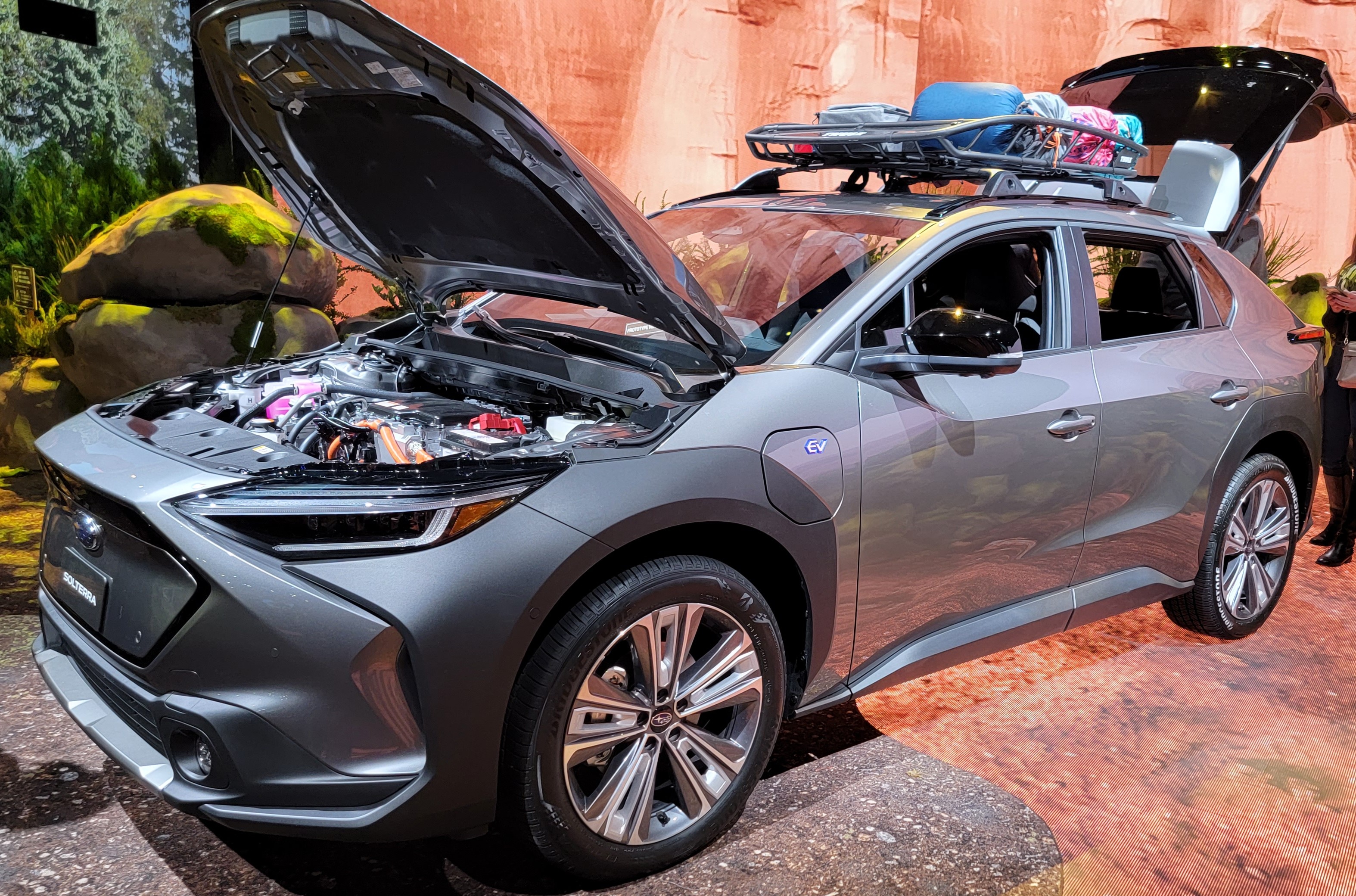
One interesting twist, the BZ and the Soltera actually saw a pretty
significant efficiency improvement just in replacing their inverters with better
inverters.
That had a bigger impact than I thought on those vehicles.
But tires and tire compounds are very important.
Rolling resistance is going to be a big, big deal out on the open highway
as well as you said, aeroshape.
And that's part of why we see big batteries being needed on trucks.
You're not going to get a truck to move down the road in any sort of
efficient way and have it still be a truck.
That there's the aerodynamic reality of that.
And remember that coefficients of drag are coefficients.
It's not an absolute number.
It's not like the wind resistance is X.
That's how you get to the wind resistance for a vehicle of the same
general profile.
So bigger vehicle, taller vehicle, etc.
They can have a really slinky coefficient of drag.
It still takes more energy to push them through the air than a smaller vehicle,
a lower to the ground vehicle, etc.
And that's how Lucid, for instance, gets those really great efficiency numbers.
It's low to the ground.
It's really slick and slinky.
It has a low roof line, etc.
And they're really trying to dial in all of that.
Also skinny tires because rolling resistance is definitely a function of tire width.
And this is where, you know, we get in trouble sometimes
thinking about tire size and tire dimension.
When you take a look at tires out there for the uninitiated,
the first number, tires are fun anyway because worldwide,
they're this awkward combination of metric and imperial measurements, right?
And we shouldn't even call it an imperial measurement anymore
because it's America that does it now.
And even the British have mostly abandoned the imperial measurement system,
although I love the fact that they retain it in certain weird ways.
Anyway, that's all whole different.
My house power, that sort of thing.
Well, weighing people in stone, for instance, that's always fun.
Because you weigh people in stone, you get your milk in gallons,
you get your beer in pints, but you buy your sodas in metric
and your gasoline in liters, but you're rated in miles per gallon.
But it's not the same gallon that we have.
Anyway, all that fun.
So tires, the first measurement is millimeters
width for the tread, section width of the tire,
not necessarily tread width because that's a whole different conversation.
Section width of the tire, then we get the aspect ratio,
then we get the wheel size in inches.
So metric for your section width, the ratio of width to wheel size,
then you get the wheel size.
So the 60 series means you basically how much cushion you get
beyond between that wheel and the road, then tread width can vary.
So generally speaking, a 255 width tire should have more tread
than a 245 millimeter wide tire, but not necessarily as much as 10 millimeters.
It's a general thing.
It also gives you an indication of what will fit in a wheel well.
So if your car can handle a maximum width of 255 within the design constraints
of suspension components and everything else,
then you could get a tire that can maximize that tread width there a little bit more.
But importantly, the actual contact patch of your vehicle on the ground
is not necessarily a function of the width of the tire
because the weight of the vehicle and the tire inflation pressure has impact here as well.
So the contact patch is going to be a lot of these variables together.
And if you take a vehicle that was designed for a 225 millimeter wide tire
and you put a 255 millimeter wide tire on it,
you've generally speaking widened the contact patch
and made it shorter front to back.
They're pros and cons to this.
Generally speaking, you're going to get better lateral grip if it's wider.
And you're going to get better stopping distances if it is longer
because the way that friction and traction works in these axes is critical and important.
So there is an optimal width and an optimal length contact patch
for every vehicle for every different situation.
And it's a game of playing these situations
and what's appropriate for the vehicle and the customer that you're selling the car to.
And the trade-offs as well.
So maybe this is the best contact patch.
But when we put this tire size on it,
there's certain frequencies that make their way into the vehicle.
It's too loud.
It's not efficient enough.
It's the cost of replacing tires depending on what the vehicle is.
There's the manufacturing.
Let's stick with a pretty consistent size tire
so that we're not building something from scratch
and have to pay extra money on that.
So yeah, there's the beam counter aspect of it as well.
Likelihood of hydroplaning is a big factor
that I think a lot of people don't always think of.
So if you take a given vehicle, say a Toyota Grand Highlander,
and you chose to put even wider tires on it than you had from the factory,
your risk of hydroplaning goes up,
but your handling general lateral grip goes up as well.
So you'll get a better handling,
quote unquote, better handling Grand Highlander.
But in the winter, in a rainy area,
you may be at greater risk of hydroplaning,
all things being equal, which very frequently they're not.
Right.
Yeah, so we say tires are fun,
but that's from a very, very nerdy perspective.
And then there's the question, like I said,
in this case, we're talking about two different tire makes.
So it's not just different sizes,
but they're actually a totally different tread patterning
and variation in compound.
So that is going to make a bigger difference as well.
But yeah, the question was, is there really that big of a gap?
And the answer is yes, we see so much more in EVs.
And actually, to your point about measuring efficiencies,
this is a conversation I had around a dinner table,
it was that now we're starting to see cars or regular vehicles,
non-hybrid, non-whatever, talk about their range as well.
And very few people in the world have ever asked,
how far can I go on and tank a gas?
But now that range has become part of marketing speak,
with an EV, they go, oh, here's how far you can go on this.
Number one, they're trying to say you can go farther.
And generally speaking, that's true,
because it's easier to put a bigger gas tank in
than it is to put our large battery pack.
But it's also, it's not as big of a differential these days
as it would have been 10 years ago.
So that's sort of an interesting one for me.
And then to your point about the efficiency,
I had that Tacoma Trail Hunter,
which is the, to my mind,
I'm pretty sure the least efficient version of Tacoma.
Well, the hybrid versions, right, the hybrid variants.
Because in this case, I had the one with a six foot bed,
wild, by the way, that you have to get a $63,000 Tacoma
to get a hybrid and a six foot bed.
But that's the only one that has it.
It also has hundreds of pounds of steel components
added on from the factory, underneath,
front rear bumpers, utility racks, et cetera, et cetera.
And then it doesn't have the air dam
that you get on the lower end trims,
which does help with aerodynamics, not maybe enormous.
And also it has 33 inch more off-road oriented tires,
which are not as good for efficiency.
But somehow that has the same rating
as the TRD off-road,
which is obviously like a similar vein, but not the same.
And it's a close rating to the limited,
but the limited does have a different powertrain layout,
full-time all-wheel drive versus part-time.
But let me tell you,
I did not get the rated range on that one.
And I'm guessing if you did those tests,
if they had to do EPA testing on that one,
if they were somehow farther apart,
you would find probably some different numbers.
Yeah, tires have a big, big, big impact
with all-terrain tires.
There's a component of this that is tread design related.
So you're going to create more wind resistance.
The tires tend to be heavier for all-terrain tires, et cetera.
So that's going to have an effect.
We also have differing compounds in the tires.
That's going to have an effect on those all-terrain tires as well.
And then there's the size of the tire,
the mechanical advantage you get in the diameter of the tire
can have an impact here also.
We have a Kia Sportage in at the moment,
the X-Pro and the X-Pro all-wheel drive loses two miles per gallon.
Pretty significant.
And we're talking about 24 miles per gallon versus the non-X-Pro
with the same all-wheel drive system,
same curb weight, same practically everything,
same ground clearance.
Because I was going to ask the ground clearance.
Yeah, because X-Pro is literally a styling,
looks good off-road package with an all-terrain tire
that you could swap in yourself like this.
There's no extra actual capability in this thing.
And that really tells you the kinds of difference
you can get with different tire compounds.
Summer tires tend to be very sticky.
So they're going to have better, better friction on the road.
And that's obviously going to lead to greater rolling resistance.
And EV tires are this blend of different needs.
They need to be able to stop a heavier vehicle still quickly.
They need to be able to handle well,
but they need to lower rolling resistance.
And so the solution to this has historically been
different compounds in the tire.
Dawn, when we're talking about the actual rubber in the tire,
tread patterns, et cetera, different sidewalls,
but also the addition of silica, which is kind of interesting.
So it's a specific kind of silica sand
that's actually put in the rubber in the tire
to give you basically glass shards,
for lack of a better word when you think about it,
like glass shards gripping the road.
And that's pretty cool.
Yeah, because silica has a lower impact
on rolling resistance while still giving you
increased grip in breaking acceleration
and handling performance.
It's actually pretty darn cool.
The reason we don't see that in all the tires out there,
and it's taken a while to get this kind of silica in the tires,
is that basically you're sandblasting the inside
of all the machines that are making tires
when you put this kind of gritty material inside the rubber.
Instead of just oozing out easily like syrup,
you're basically forcing an abrasive thing
through that orifice.
Pwn is the don't want to be abrased.
Right, and so everything's just going to wear out faster, basically.
Yeah, and don't forget the inclusion of foam,
more significant inclusion of foam,
to stop some road noise because you're not getting engine noise.
You know, it's one of those things where there's technologies,
driving technologies, driving technologies
that we'll see carried all the way through.
And yeah, it's a real nerdy subject
for folks who hung in there.
Thanks so much because tires aren't for everyone,
but I find them wildly fascinating.
And there's just not a world,
at least we're not set up right now,
and you know, someone wants to give us a call
and figure out a way to do it.
My vehicle right now, I'd love to tell you everything
about my driving experience in my Tesla Model 3,
but I can't tell you what happens if I swap out tires.
I can tell you what I expect to happen,
but I can't do the same loop five different times
with my vehicle just swapping out different tires,
saying, hey, here's how this is better.
That's why it's not a bad idea
to just stick with the OEM tire that you have
because that one, you will know what you're getting.
Anything else is unfortunate, roll the dice.
And anyone else who says, hey, especially forums,
online forums are going to be the best place for information
and the worst place because they say, oh man,
this made this so much quieter for me,
but they have an entirely different road construction
than what you have.
Or their driving style is entirely different,
and there's just no way to measure out these variables.
So yeah, my recommendation is tire rack on that one.
And let's move on now to some family vehicles.
We have the Toyota Highlander,
one of the OG crossovers, still here for 2026.
Grand Highlander hasn't replaced it yet,
but it is now significantly more expensive
if you just want to get your foot in the Highlander's door.
The base model is now going to start at $45,270
because the former base model is dead.
Right, so the Highlander is not now more expensive
than the Grand Highlander side by side,
but you got to pay more to get the Highlander to begin with.
I think this makes sense,
and obviously the Grand Highlander has taken a lot of sales
away from Highlander and they say,
hey, people who are looking for the value version of this
honestly are probably looking for the Grand Highlander anyway.
It also pushes people that direction even further.
They say, hey, if this is the money you're going to spend,
why not go a little bit further?
But I think this is a slow decline
to the end of the Highlander.
Honestly, it's a little bit disappointing,
not in a horrific loss
because the Grand Highlander is a great replacement.
But right now Toyota has,
and I mentioned this a couple weeks ago
because I had the Toyota Crown,
I said that Crown falls between a RAV4 and a Highlander,
and it's neither of those vehicles at all.
There's just such a range for what you're looking for.
And if you're trying to get three rows
that you use very occasionally
and you don't need any bigger vehicle,
but you're looking for that Toyota,
that Highlander has been there for you.
Yeah, I suspect that in the next generation Highlander
is going to change in some form or another
because it does appear that we're going to get another one.
I'm just wondering if it's going to turn it
to more of a passport-y kind of thing.
At $45,270, it is a couple hundred bucks more
really than the Grand Highlander.
Now across the board, the Highlander only went up $200.
So it's this deletion of the base trim.
But it does mean that you could get yourself
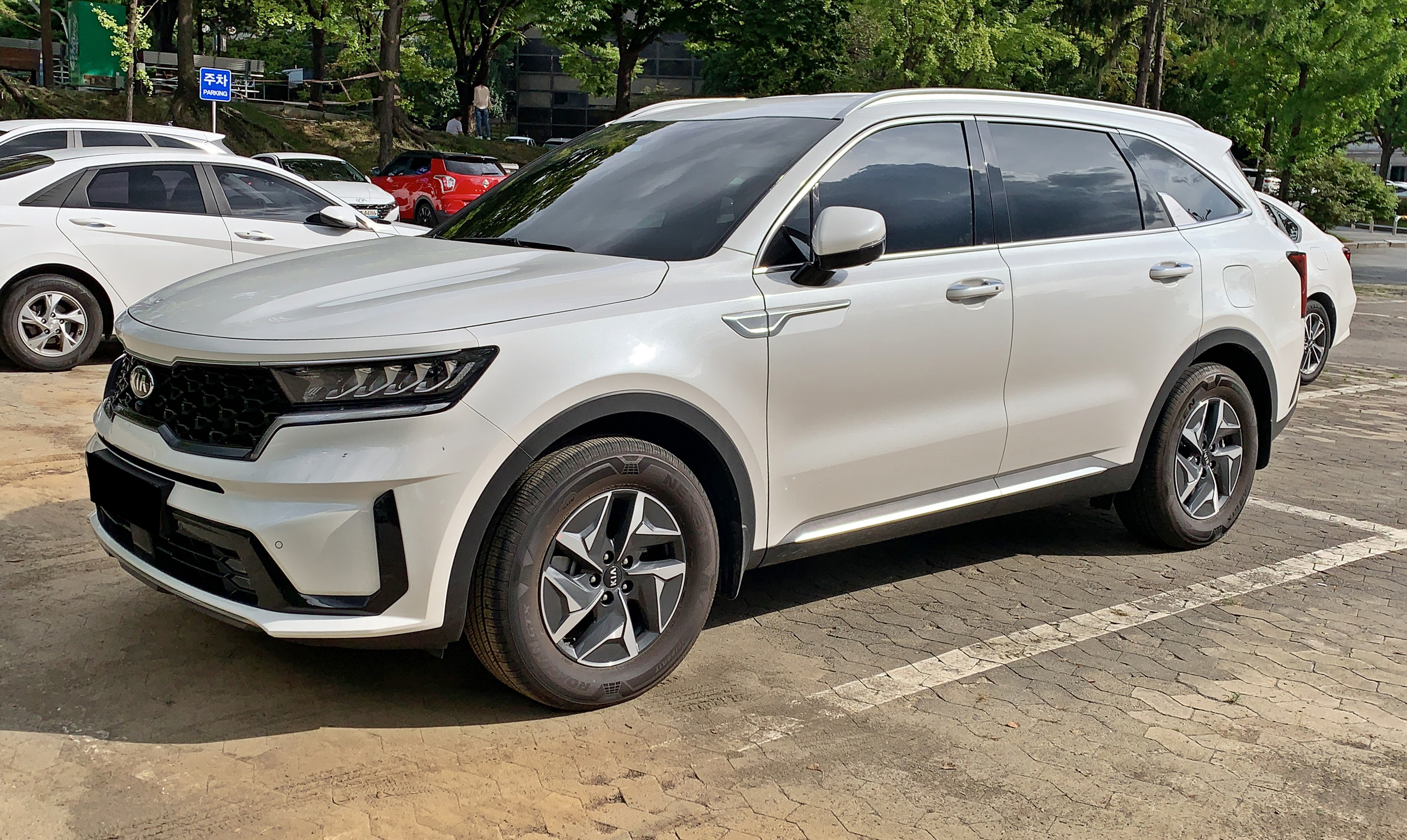
in a Kia Sorento,
which is the same size inside as a Highlander
for over $12,000 less.
And you could actually get yourself
in a Hybrid Sorento for $5,000 less than a Highlander.
Then the Hybrid Highlander.
Yeah, then just a base Highlander.
Yeah, you get yourself Hybrid Sorento
for five grand less than the least expensive
gasoline Highlander.
And you could also get yourself
a plug-in Hybrid Sorento
for about the same as a Hybrid Highlander.
If you're interested in that.
I think between you and me,
I'm probably leaning towards that Sorento
in just about any of those guys.
Again, nothing against the Highlander.
But I really like that Sorento.
But what you're not going to get
is that what you're not going to get
is that Toyota resale value.
But you know what else has pretty good resale value?
Those Kia's and Hyundai's these days.
Yeah, yeah, calculated resale value
the way ALG would know.
But in real-world situations,
you're probably getting really darn close on that Kia.
But speaking of family vehicles,
this leads me to my next question
that I am pondering after having driven
the Chrysler Pacifica last week,
which is still my favorite Minivan.
The Pacifica plug-in Hybrid,
I think is the best Minivan available
in the U.S. right now.
If you can afford one,
which is definitely a problem
because it's losing its tax credit
in the before times,
you would expect to roll into a Chrysler
and pay at least $15,000 less
than the actual MSRP on a plug-in Hybrid Pacifica.
But now prices are going up.
But also, and importantly,
I make this point in the video
coming up just to not to spoil it too much.
I think the problem for Minivans is
that they're all old.
Sienna's the newest of the bunch,
not saying a whole lot there
because it's not a great Minivan
to be painfully honest.
It's lost probably kind of close to it.
Yeah, it's like Sienna lost a decent amount
of practicality here
in the lack of removable second receipts,
long hallmark of Minivans.
None of the Minivans do as well
as you might hope in crash tests.
Odyssey actually got a pretty bad rating
in the new IHS moderate offset.
So your pilot's safer, quote-unquote,
by the numbers.
And all of them,
none of them drive as well
as this recent crop of family-focused
SUV crossover things.
Palisade, Acadia, Grand Highlander,
the new pilot, et cetera.
So, you know,
while I was once team Minivan
always the answer,
my question is, what do you think?
Are we seeing the end of the Minivan era
or is it time for Minivan companies
to just try and actually do something better?
I mean, time to fight back, right?
I mean, I think, like you mentioned,
the list of vehicles
that are driving better
to your mind.
You know, I haven't done too much
of the side-by-side
and I've really loved the way
Minivans drive,
not as far as their dynamic capabilities,
but just cruising, right?
They are hard to beat,
but the SUV has softened.
So we're not looking at an expedition
when we're talking about these.
We're talking about the crossover style
and that has gotten quieter
and more comfortable
and much more car-like.
Yep, and cavernous, right?
And that's exactly what you got out of Minivan.
The hard part here
is that the companies building these Minivans
have also been building these SUVs
that are getting crossover-ified
and where do you put that R&D money?
So why would you spend a bunch of money
to go build an Odyssey
that is losing market share to a pilot?
But I would argue,
if you put the money in the Odyssey,
you can win back a lot of that market.
If you say, hey, we are,
we are not ground up, right?
But we're saying,
we are putting the significant resources
into this model,
but it's more of a risk,
I think, than most manufacturers
want to take at this point.
And the one that does set itself apart,
so now we've got hybrid models,
we've got Minivans with all-wheel drive,
there's only one with that plug-in hybrid,
that's the Pacifica.
That's kind of the one
that feels like it sets it apart for me
is that that is the most complete
as far as I can do just about everything,
but that one can't do all-wheel drive
when you get the plug-in hybrid.
Right.
And there are a bunch of people that go,
no, no, no, I need all-wheel drive
who I will die on this hill 100% do not,
but they won't buy a vehicle without it.
So...
And the only one that gets real all-wheel drive
is the non-hybrid Pacifica
because the one in the Sienna
uses the RAV4's hybrid system essentially,
and that electric motor
is just not powerful enough
to really do a whole lot in the Sienna
if you need,
if you quote-unquote need all-wheel drive.
Need, need, yeah.
Need, need, yeah.
I mean, it does improve traction.
You know, it's a, it's a,
it's better than not having anything in the back,
but it is not going to be as capable,
quote-unquote, in the snow or wherever
as a Pacifica all-wheel drive.
But here's the thing.
You're not going to get the Forester all-wheel drive
into the Sienna.
Here's the thing.
It's like 25, 30 years ago,
it was a no-brainer for the minivan
because they had, you know,
the semi-independent or independent rear suspensions,
they had low centers of gravity,
and they were being compared against suburban.
Tahoe, expedition, et cetera,
the full-size SUVs, easy wins, right?
They didn't have independent suspension in the back.
They had stiff leaf springs.
They road-like shit.
Like no one wants, God, I mean, escalades.
You don't want to be in the third row
of an old escalade.
They're terrible in the back.
It's just a truck.
But now,
Right in the bed of a truck.
Right.
And they were less expensive.
That was a big sales job too.
Like the minivan was significantly less expensive.
Well, minivans are still less expensive
than Tahoe or et cetera, right?
But they are not less expensive
than Grand Highlander or Palisade or et cetera.
That is the tricky part.
And well, you do give up cargo practicality
and you don't have seats that fold
into the floor quite the same way
or come out if you get a Nikadia
or a Grand Highlander.
You get more power.
You get all-wheel drive.
You get more comfortable seats
in some of these vehicles,
more features, a more modern vehicle.
There's an argument for,
okay, but you lose some practicality
like in that cargo volume.
And you go, I load my vehicle
with a bunch of stuff
and I have a bunch of people.
And you go, okay,
then go get a Ford Transit
that has some removable seats.
Or it's the business use case
where they could go fleet,
something like a Kia Carnival.
And they go, oh, but again,
like they have more focused vans
that are not minivans.
They're business vans.
And I think the market share is decreasing.
I'm going to miss it a little bit.
I think we're on the way out.
And that's where I'm going to stand on this.
But for me, that's a loss.
I've loved what a minivan is.
I love what it represented.
I love the efficiency of it.
You know, you just,
you weren't carrying around more vehicle
than you need,
but my God, you got so much space
and comfort.
And they got all the feature sets
before these, you know,
the escalades of the world came around.
As long as we keep the crossovers
that are in that vein,
then we won't have completely lost them.
But the coolness of the minivan,
boy, was that short lived.
That was, that was definitely a thing.
But it was also a different era.
And I think that's maybe,
it's like, I hate,
just probably give you the death knell
to the big crossover,
but in a way, they're the minivan of now, right?
So, but because,
because they're the right size thing
for the family of now,
when we go back and think about this,
you know, 35 years or so ago,
when the first Chrysler minivans rolled off,
families were larger.
You know, the average family size was,
you know, solidly three plus
in many areas of the country.
And now we do not see that anymore.
The average, average family
with young children now
is somewhere, I think it's like 1.5
of children on average,
something like that.
So we're talking lots of single kid households,
some two kid households,
and very, very few three or more households.
They definitely exist.
I've got in-laws that have,
you know, four and five kids, but,
but that is somebody,
not we know a bunch of them.
They are, they are the exception by far,
not the rule.
And previously,
when you were looking at the family vehicle,
that was more of the rule.
We also have a aging set of people to buy new cars.
So previously,
the minivans were purchased by younger people.
Now, when we look at who buys a new car,
they've advanced at least by a decade.
And the average new car buyers in their fifties,
they're not out there
with young kids that need to be transported.
And so I kind of wonder if, if that's just,
this is more logical.
It's like, yes, you cannot put as much luggage
in a Grand Highlander or in a Katie or a Palisade
as a Sienna or an Odyssey.
But do you need to?
Because how often are you really jamming
that many people into it?
And if you fold down the third row,
as most people will spend
almost all of their time in these things.
Anyway, then even though you still don't have
as much as a minivan, you get closer.
And it probably doesn't make as much of a difference
in that case because you still got such a huge cargo area.
Yeah. And I think there's also a world,
I mean, obviously depending on where you live,
but it wouldn't work where I'm at
because we don't really have it.
But if I have the in-laws in town and they say,
oh, man, we got to, you know,
we're trying to get everyone out to the play
to the show, whatever.
Okay, then order an Uber XL.
That way you don't have to worry about any of it.
You know, oh, we'll take the kid in the car seat
and we'll meet you guys there.
And that way you don't even have to rent a car for the week
to do something bigger.
But you can't always rent a car because remember that.
You can always rent a minivan for the weekend.
The in-laws are in town instead of having to buy a minivan
when you don't need one.
That's definitely true.
And to be honest, for a lot of families out there,
the single kid households, even two kid households,
you know, a seven seat crossover SUV
is still going to fit the in-laws
unless both sets come in
or you have a bigger family.
Still reasons to get those.
But I just have this sneaking suspicion
that we're going to see over time
a gradual, you know, ebbing of the number
and variation of minivans available in the U.S.
because they have become more expensive
than a lot of the SUV counterparts now.
Previously, that was not the case.
They were the less expensive option.
Now it's kind of moved into this other world.
But, you know, they all seem like they're somehow
caught in a time warp.
Carnival is probably the freshest feeling to me
inside and outside,
probably because of its popularity
still in its domestic market of South Korea.
But Odyssey seems old inside.
Pacifica seems old inside.
I mean, it's still got a...
Or is it 95s?
Yeah, Blu-ray...
That's totally different.
True.
But it's still got a Blu-ray
rear seat entertainment system.
I mean, who's...
Right.
I don't know who's doing that.
Who plays Blu-rays?
I don't know.
I don't know.
Not me.
And it did make me think here.
Part of me borrowing the Pacifica for a week
to give it a whirl and give it a review
was kind of like,
uh-oh, am I going to get out of this Pacifica
thinking to myself,
huh, I have a kid.
I need a minivan.
The answer is no.
Yeah.
And honestly, if you leave a week with a minivan
and you have been one of the biggest pro minivan people
and you go, yeah, I don't know.
I think that's pretty telling.
Exactly.
And with that out of the way,
let us know what you think about the death of the minivan.
And do you still want one?
Do you have one?
Is there still a reason to minivan in 2025 or 2026?
You can send us a voicemail to
heyatautobuyersguide.com.
It's a voicemail on your phone.
Or you can call us at 669-842-1947.
You can also drop us an email
and be sure and give us those five-star reviews
because we haven't had one in about a week or so.
And that fills us all with madness.
I know.
But thank you for listening and thank you for watching.
About this episode
Exploring the evolving landscape of automotive safety, tire sizes, and the future of minivans, this episode dives into China's emerging role in global safety legislation, including potential bans on electronic door releases. The hosts debate the implications of one-pedal driving regulations and their impact on EV safety. They also discuss the significance of tire sizes on vehicle efficiency and performance, particularly in EVs. Finally, the conversation shifts to the declining popularity of minivans, comparing them to modern crossovers and questioning their future in the market.
Once upon a time, China followed the world when it came to safety regulations and standards, but this is 2025, and China is forging its own path, especially when it comes to new tech like one-pedal driving and electronic door releases. Is this the right move or not? Travis and Alex also discuss minivans vs big SUVs and how tire sizes work. Travis drives a new Leaf, Alex continues his campaign against black plastic.