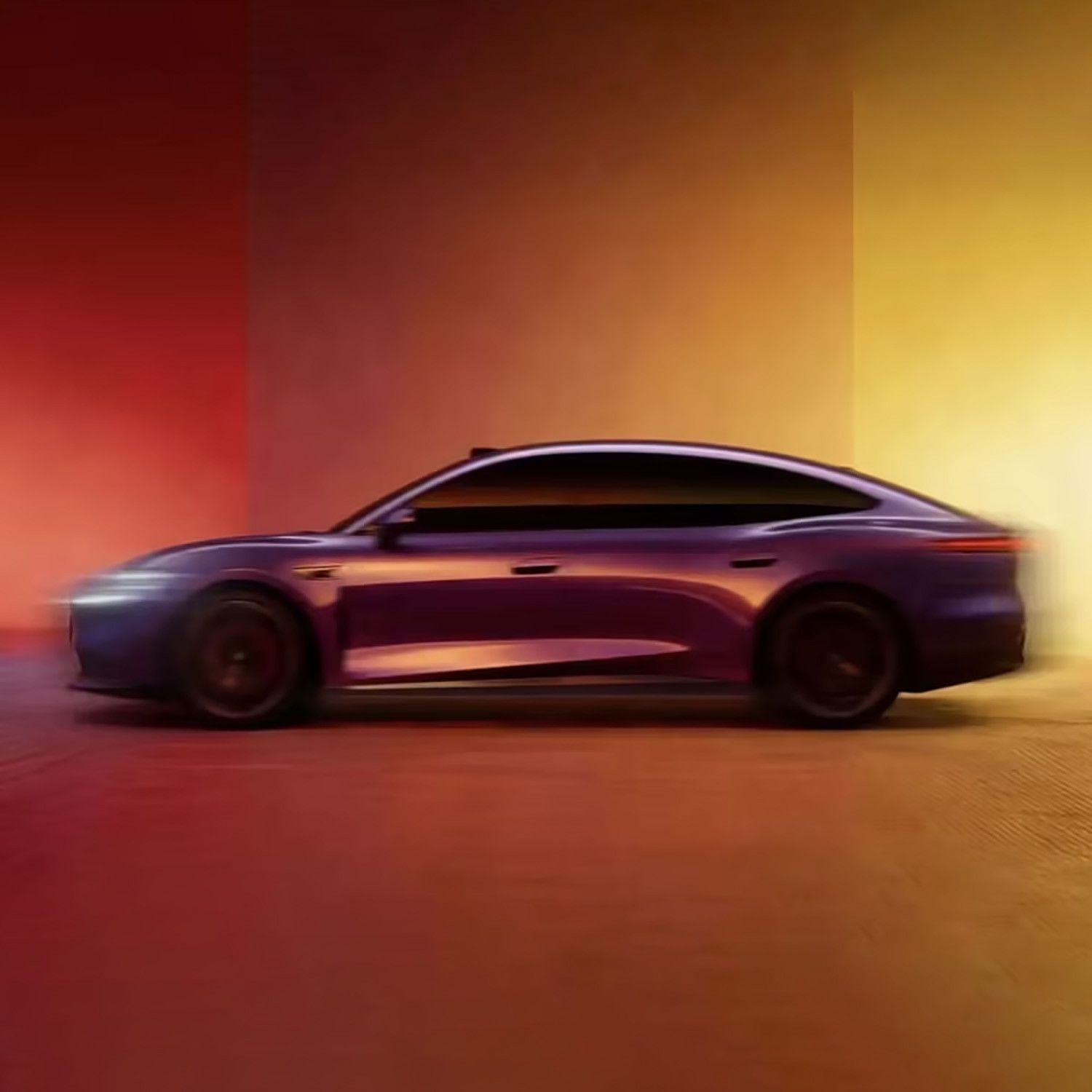
Electric vehicles, or EVs, are cars that run on electricity instead of gasoline. They are better for the environment and are becoming more common.
Car
V9X SUV
The V9X is a sport utility vehicle (SUV) made by a Chinese company called Great Wall Motors. SUVs are popular cars that are bigger and often have more space than regular cars.
The Porsche Taycan is a fast, electric car that looks stylish and performs really well. It's part of Porsche's lineup and is designed for people who want a high-end electric vehicle.
Plug-in hybrids are cars that use both gas and electricity. You can charge them at home and they can drive a certain distance using just electricity before needing gas.
EREVs are electric cars that can also use a small gas engine to keep driving when the battery runs out. This helps them go further than regular electric cars.
WLTP range is a way to measure how far a car can go on a full charge or tank of gas. It’s done using a standard test to make sure the numbers are accurate.
Vehicle-wide AI means using smart computer systems in cars to help with things like navigation and safety. It makes driving easier and more enjoyable by responding to the driver’s needs.
Car
V9X
The V9X is a big SUV made by Genesis, a luxury car brand. It's designed to be spacious and comfortable, making it great for families or those who need extra room.
The Hyundai Genesis is a fancy car that feels really nice to drive. It's made by Hyundai and is meant to compete with other luxury cars, offering lots of comfort and cool features.
Commercial vehicles are types of vehicles used to carry things or people for businesses. This includes trucks and vans that help companies deliver products.
A rear-wheel steering system helps the back wheels of a car turn, making it easier to steer and park. It can make the car feel more stable when driving.
The NIO L60 is an electric SUV that can seat five people. It costs about $31,000 and is designed to compete with other electric cars, like the Tesla Model Y.
The Tesla Model Y is an electric car that looks like a small SUV. It's popular because it can drive long distances on a single charge and has cool features like self-driving capabilities.
Car
L90
The NIO L90 is a larger SUV that can fit more passengers, making it suitable for families. It costs around $38,000.
Welcome back to the podcast. Now, China's car makers pocketed $660 billion
US dollars equivalent last year. Fascinating data point comes out. I love how much data comes out
of China. And so now we know how much the automotive industry actually makes as a whole,
as an industry, which is fascinating. We know they sold 34.78 million vehicles last year.
But December told an interesting story. Monthly profit in December created 57% to
three billion US dollars equivalent as an industry, as costs climbed and rivals slashed prices.
The margins were 4.1%, showing that the Chinese car industry is not only brutal,
we know that, but there's no cushion. This matters beyond China's borders. The country
sets global price benchmarks for EVs, while controlling battery and component supply chains.
When the world's largest car maker and the world's largest car market as a whole are both
bleeding profit, investment in new platforms, software and production capacity can stall,
but they are massively overcapacity in China in terms of what they can make. Electrification
demands money and capital when the margins are super tight. The squeeze has three sources,
surging battery and material costs, ferocious domestic price wars, and expanded consumer
subsidies. The structural problem runs deeper, though legacy combustion models are bankrolling
the transition still, yet electric vehicles demand vast investment up from before delivering
returns that are uncertain and small. Global arrivals confront an uncomfortable calculation,
Chinese manufacturers operating at a 4% margin and churning out 35 million vehicles annually.
Competitors must either match Chinese pricing and these days specifications and accept
razor thin profits, or as some of the overseas foreign car makers, established car makers are
having to do, seed market share at home and abroad. December's $3 billion result shows how
swiftly the growth buckles when margins narrow. The $660 billion equivalent annual haul confirms
the industry is at least solvent. However, the trajectory is unmistakable. I think the shift
to electric vehicles demands both discipline in spending money, which China's getting its head
around, and relentless scale to maintain profitability through the transformation.
I think China's car makers have neither margin for error, nor room to retreat.
One of those examples we can see in the western car makers Audi. Audi dealership staff in China
are now suing employers for unpaid wages. Multiple Audi showrooms closed down abruptly
overnight. Local reports cite falling sales and compressed margins. China long served as Audi's
key profit engine, but the Bev transition, aggressive discounting and local brands have
diminished the German premiums. Dealers caught between factory volume targets and rising costs
now struggle to profit per unit, triggering closures when the economics just don't work
out anymore. Staff legal action for unpaid wages demonstrates how the strain in China
hits everybody, including frontline workers. Dealers carry inventory and that's a risk,
and there's no influence over strategy, model timing, software updates, absorbing
the first impact when a market goes south. The sudden closures of the Audi dealerships
offer clear evidence of broader shakeouts in China's market, legacy brands delaying
deep local partnerships, realistic pricing, coherent EV portfolios. There's more than just
declining showroom traffic, they're facing a real network disintegration, one locked dealership
at a time. BYD's full manufacturing plans for India were rejected, so the company now pivots
to semi-knockdown kit assembly, a compromise that trades ambition for market access,
while senior management prepares to visit to settle the strategy. The shift matters
for tariff schedules, SKD, semi-knockdown kit assembly, slashes the import duty in India
from 70% to 30% and that transforms the economics, current rules, hammer cars like the ATO3,
with a 70% duty, uh, pre-tax pricing, while capping complete vehicle imports at two and a half
thousand units per model every single year. BYD sold roughly five and a half thousand vehicles
in India last year, up 88% year on year, clearing its stock in December across the ATO3, C-Line 7,
SEAL and the E-Max 7. The C-Line 7 did about 2,200 units last year, undercutting Tesla's
Model Y, both vehicles though very expensive because of import duties in India, these are
not cars for the masses. BYD now races to secure local safety and approval from the regulators
for additional models. The SKD route delivers lower import costs and more affordable vehicles
for Indian buyers. It also signals a bit of a retreat on the original plans. BYD wanted a full
factory but got assembly lines instead. India's premium EV segment is growing, it's no great
shakes at the moment, but it will be because India is growing in terms of its influence
on world economics. It's over the next few years going to be an increasing part of the story that
we tell. Not for now, but just as China has done over the last few decades, India is about to
economically, I mean they've got the scale already and I don't pretend to be an economist but I do
watch this in terms of the lens of the electric vehicle market. India will increasingly be a
that we'll be having. China's EV makers are lifting prices but also lifting discounts. How
does that work? Well China's car makers in December raised overall selling prices but also
expanded discounts. Average passenger car transaction prices are now in for December. The average
that up so it's up 5% month on month and up year on year as well. Discounts though are also up. New
energy vehicles led the price increases so over the last few years huge compression on margins and
reduction of prices. Now prices are increasing as companies have to be more robust. That survival
of the fittest thing that we talk about all the time. Sudan's showed the strongest rebound up 8%
average selling price followed by SUVs and MPVs as well. The market wide discounting though was
also increasing. A EV discounts averaged 11,300 RMB. That's 1600 US dollars equivalent. That's
up about 220 dollars more than the previous month. This data signals a repositioning beyond just
clearing out the end of year calendar year stock anyway as low priced models are starting to lose
a bit of share and the structure of the kind of products that China's EV makers are selling
starts to go a little bit more upmarket. Now finally let's talk Nissan. Dongfeng Nissan joint
venture. Their new electric SUV began production yesterday. It's called the NX8 and it marks a
rare foreign brand expanding. The mid to large SUV arrives sometime in the first half of this year
with customers in all electric form and EREV form as well. Now there's already the N6 and N7.
So the third N series is the NX8. It's 4.8 meters long, 2.9 meter wheelbase, not the biggest of
vehicles midsize. Five seat configuration. Design is the closed front fascia we're used to seeing.
Kind of floating roof style, hidden door handles full with light bar at the rear. The 800 volt
platform uses a 5C ultra fast charging battery from CATL. It's all the good stuff. Rear mounted
lidar, 8 megapixel front cameras, surround view cameras. They're feeding autonomous driving from
Momenta with navigate on autopilot and automated parking. Nissan sold about 650,000 vehicles in
last year. Lots of demand for the N6 and N7. Dongfeng Nissan targets five new energy vehicles by
the end of this year. So they're going to have a really busy 2026 SUV's, saloons, plug-in hybrids,
EREVs and all electrics as well. For now, the first one's going to be the NX8. A good looking
Nissan. Still got the Nissan family face to it, but with great specs under the skin.
Another car that foreign buyers, Nissan brand fans would absolutely love to get their hands on.
For now, it's Forbidden Fruit and that's your podcast for today. Thanks for listening. See you on the next one.
880 million dollars in canceled subscriptions. Stop wasting money on things you don't use.
Go to rocketmoney.com slash cancel to get started. That's rocketmoney.com slash cancel.
Rocketmoney.com slash cancel.
About this episode
MG is gearing up to launch an electric coupe that aims to compete with the Porsche Taycan, while Great Wall Motors introduces the V9X, a six-seat SUV featuring advanced AI technology. BYD is backing a significant battery plant in Vietnam to support commercial EVs, and Nissan's new NX8 electric SUV is set to hit the market soon. The episode dives into the competitive landscape of China's EV market, highlighting the challenges and innovations as manufacturers adapt to rising costs and shifting consumer demands.