CHINA: Xpeng GX On Sale, Stellantis Explores Dongfeng Tie-up and BYD Updates Yuan Plus For China | 16 Apr 2026
EV News Daily - Technology and Business of EVs
CHINA: Xpeng GX On Sale, Stellantis Explores Dongfeng Tie-up and BYD Updates Yuan Plus For China | 16 Apr 2026EV News Daily - Technology and Business of EVs · Apr 16, 2026
Capital One is a company that helps with money and loans. Here, they’re using AI to make it easier to shop for a car and handle steps like financing and trade-in estimates.
Chat Concierge is an AI chat assistant that helps you through buying a car. It can help you find cars, book a test drive, and even start the financing and trade-in steps.
Pre-approved financing means a lender checks your information and tells you what kind of car loan you could get. It can make buying faster once you choose the car.
BYD is a major Chinese company that makes electric cars and batteries. They’re updating one of their models for China, likely to improve it or adjust it for local buyers.
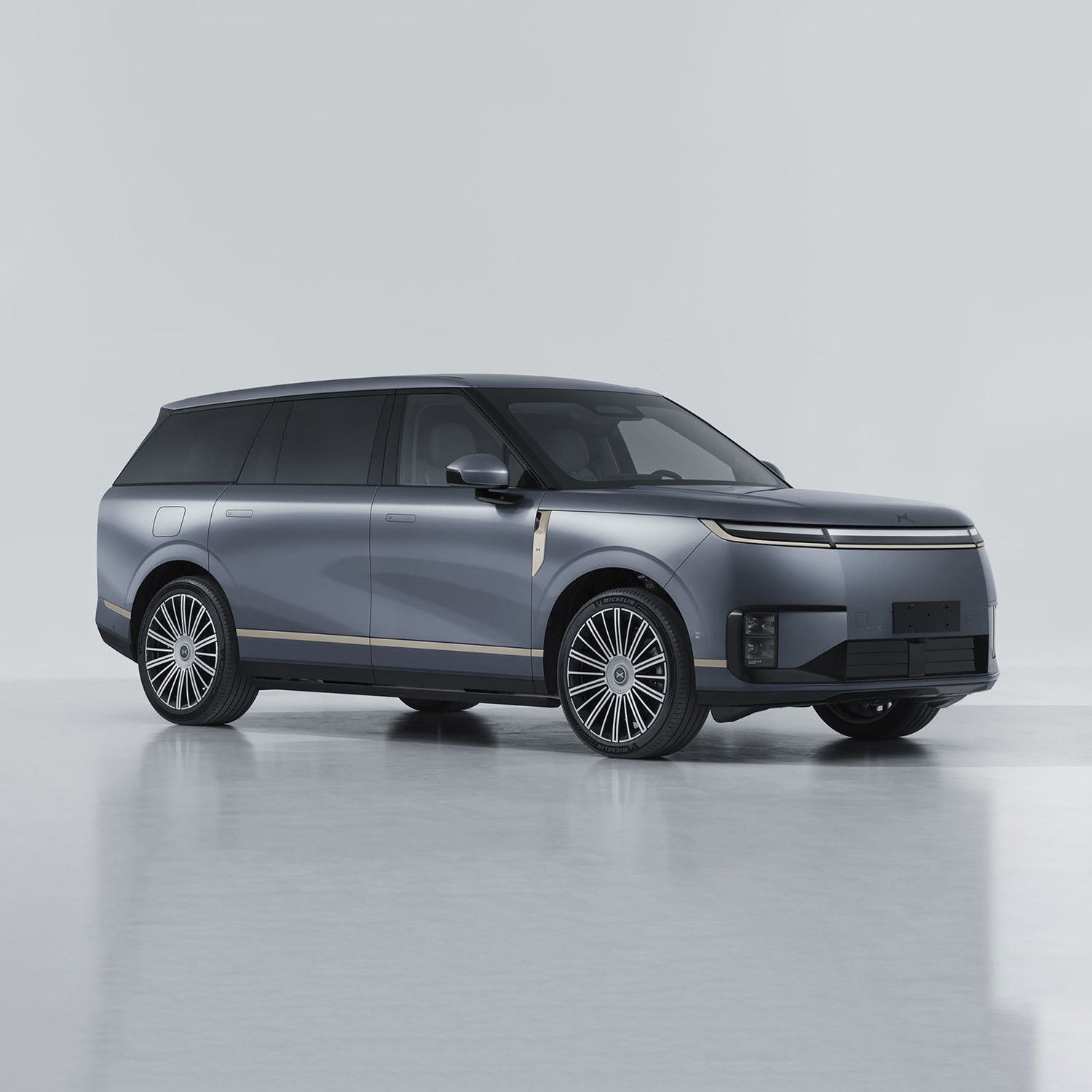
They’re talking about the Xpeng GX, a big SUV that comes in two versions. One runs purely on batteries, and the other can also use an engine to extend the driving range.
Curtain airbags are airbags that drop down along the sides of the cabin. They help protect your head in certain crashes, and in this case they’re designed to stay inflated for a short time after deployment.
Steer-by-wire means the steering wheel’s input is translated electronically to the wheels. The advantage is that the car can make steering feel smoother and quieter.
This is the main infotainment screen. “3K” is about how detailed the display is, and “floating” describes how it’s mounted so it looks like it’s hanging in the dash.
A zero-gravity seat is designed to feel like you’re in a more relaxed, weightless position. It’s meant to be comfortable, and in this case it’s also described as having extra safety cushioning.
Stellantis is a big car company that makes lots of different brands. Here, they’re trying to work with another company to keep their factories busy and reduce costs.
Factory closures are a common cost-cutting response when demand drops or production economics worsen. The segment suggests a partnership could help avoid politically sensitive closures by keeping plants running at higher volumes.
Import tariffs are extra taxes on products shipped into a country. If cars cost more because of tariffs, companies may change where they build them or how they price them.
Wheelbase is the distance between the front and rear axles. A longer wheelbase can improve rear-seat room and often helps stability and ride comfort, though it may also affect turning radius.
Car
BYD Yuan Plus
BYD Yuan Plus is an electric car model from BYD. Here, the key point is that the version sold in China is built specifically for China and isn’t just a simple “same car, different country” situation.
Rear-wheel drive means the power goes to the back wheels only. It can affect efficiency and range, and here the host says the RWD version is the one that achieves the cited mileage.
Car
Haval H10
Haval’s H10 is the new big SUV they’re planning. The speaker describes it as a bold, large vehicle meant to stand out rather than be subtle.
Car
Haval H9
They’re saying the new H10 will be the bigger/higher-up model compared to the H9. Think of it as the next step in the lineup.
A side-opening tailgate is a rear door that opens from the side rather than swinging outward like a typical hatch. This can improve access in tight spaces and may help with loading bulky items.
The spare tire is stored on the outside of the car instead of under the floor. It’s usually easier to reach, but it can take up space and change how the back looks.
Thermal runaway is when a battery gets overheated and the heat keeps making it worse. A warning system tries to detect that early so the car can shut things down and reduce the risk.
LIVE
Capital One's tech team isn't just talking about multi-agentic AI.
They are already deployed one.
It's called Chat Concierge and it's simplifying car shopping.
Using self-reflection and layered reasoning with live API checks, it doesn't just help
buyers find a car they love.
It helps schedule a test drive, get pre-approved for financing, and estimate trading value.
Advanced, intuitive, and deployed.
That's how they stack.
That's technology at Capital One.
Capital One's tech team isn't just talking about multi-agentic AI.
They are already deployed one.
It's called Chat Concierge and it's simplifying car shopping.
Using self-reflection and layered reasoning with live API checks, it doesn't just help
buyers find a car they love.
It helps schedule a test drive, get pre-approved for financing, and estimate trading value.
Advanced, intuitive, and deployed.
That's how they stack.
That's technology at Capital One.
Welcome back to EV News China.
Today, XPung GX goes on sale, Stellantis explores Dongfeng tie-up, and BYD updates the one plus
for China.
Plus, stay tuned.
Later in the show, I'll tell you why plug-in hybrid batteries are about to get bigger again.
Welcome to EV News China, the podcast dedicated to the world's largest EV market every day.
I bring you the latest headlines, insights, and analysis from the heart of China's booming
EV industry, and decode how fast moving developments in East shape the global landscape.
Let's kick off with what even Chinese commentators and forum dwellers have dubbed XPung's version
of a Range Rover.
It does look strikingly similar on the outside.
Under the skin though, you get some incredible specs for a third of the ticket price, and
they've just opened pre-orders and given us all the details with a launch.
When live yesterday, on 15th April, it's their flagship large SUV in both Pure Electric
and EREV Range Extended form.
Both cost £43,500 or $58,000 equivalent, that's $400,000 RMB.
It puts the GX in the full-size SUV class.
The GX comes in Pure Electric form, and what they call Super Range Extended.
So 750km of range for the BEV, EREV version, 430km Pure Electric, and 1585km combined
with the engine.
Well, XPung leans hard on safety.
As is pretty much common, I would say over the last 12 months, maybe longer in China,
a big focus on safety.
Not just safety around batteries, but generally, because of some guidelines and some regulations
coming from Beijing, a lot of the car makers lean on safety first, and that's the case
with this.
GX uses a front and rear integrated die-cast structure, rated at 16,000t, they say.
XPung says it engineered the structure to absorb impacts from frontal, side, rear, roof,
and even under-body impact.
The SUV has 11 airbags, with a 125-litre passenger airbag, they say, a 41-litre triple-chamber
far-side airbag for the front row, full-length side curtains for all three roads, and rows
for side airbags, and two seat-cushion airbags for the zero-gravity seats.
XPung says the curtain airbags hold the pressure for six seconds after deployment to cut any
risk of secondary collisions.
Active safety is a big part of it as well.
They say their motion control platform, a native by-wire chassis, means the chassis
combines hydraulic brake by-wire, front and rear steer by-wire, dual-chamber hydraulic
braking, and an intelligent all-wheel-drive system.
XPung says their XVMC manages stability in ice, snow, even tire blowouts at high-speed
events.
XPung says the gains come from the steer by-wire system.
It says the system, provided by Bosch, improves the precision at all speeds, reducing vibration
on rough surfaces, cutting steering noise by 8% over a mechanical system.
A low-speed precision parking mode allows steering adjustments with 10 degrees during
automated parking, delivering a smoother and quieter manoeuvring event, they say.
Inside, let's talk about the XPung and the bits that you and I will see.
A wrap-around cockpit, a two-spoke steer-by-wire steering wheel, developed by Bosch, as I
say, a 3K floating touchscreen that's 17.3 inches in the centre, and what they say is
a star-ribbon ambient lighting system around it.
The second row gets a big flip-down screen and a fold-out table, and even magnetic expansion
docks as well for customisation.
The front seats pack most of the comfort.
16-point massage, 16-way electric adjustment, three-level ventilation, heating and even
leg heating.
XPung says that the Queen's seat, which is a curious term used, I think, in China,
to imply that, you know, maybe women get driven around, OK, Queen's seat is a zero-gravity
front seat with safety belts and seat cushioning airbags to prevent any injury if the seat
is reclined at the time of an impact.
In the third row, the third row seats recline fully.
That's how big this thing is.
The third row seats recline fully, like a first-class airplane seat.
It's, well, it's very high-end, as you can tell by now.
Both variants have 3,000 tops of intelligent driving compute power, supporting multi-sensor
perception and real-time decision-making.
So, yeah, I know from the outside this thing does look very much like a Range Rover.
Under the sky.
And look, that's no bad thing.
It's a good-looking vehicle.
There's only so much you can do with a massive box, shapes and very thin headlights and,
well, room for three rows inside.
Technically, it is deeply impressive, isn't it?
So much luxury.
And on sale, I'll remind you how this story began.
From 43,000 pounds, that's $58,000, equivalent.
All right, we'll finish off talking about the VLA system, their second-generation VLA
system.
So, they say it enables what they call campus roaming.
Autonomous navigation in heavy rain, fog and low-light conditions, integrated voice
control, interactive lighting, and the system fully supports autonomous parking in a highway
service area with no driver input.
Well, let's see how it sells for X-Pung.
A departure for them, a very high-end vehicle for them, moving into a new design language
at the top of its range as well.
And they have absolutely packed this thing with technology and luxury, high-end feels
and, well, just screens everywhere.
Oh, it has the little screen as well.
Look, I think of it as the Tesla rear screen, you know, the small rear screen that you can
control all the functions of the car for the rear passengers, as well as the big fold
down screen as well.
Yep, let's see how it goes.
Love to drive one of these things.
Looks really nice.
All right, let's move on.
Stellantis is in talks with Dongfeng to revive their partnership with discussions focused
on joint vehicle production in Europe and China.
Dongfeng is a China state-owned automaker, has already sent representatives to Stellantis
in Germany and Italy.
The plan under discussion would give Dongfeng access to the underused Stellantis factories
in Europe.
It could go further later, with Dongfeng acquiring or investing in one or more Stellantis plant.
In return, Dongfeng could build vehicles in China under the Stellantis brand name plates,
which they've got many.
The talks form part of a wider Stellantis effort to shore up the business under pressure
from the likes of Volkswagen and BYD.
A manufacturing partner in Stellantis' European plants would help cut their costs, lift the
rates of utilization in those plants, and help avoid politically sensitive factory closures.
For Dongfeng and for other Chinese car makers, local European production offers a way around
import tariffs by the European Union, which has made direct exports from China more costly.
OK, moving on, BYD has listed the updates to the Yuan Plus on China's New Energy Vehicle
Purchase Tax Exemption Directory.
I'm going to need to explain this because this is going to take a little bit of explaining.
So the Yuan Plus is sold overseas as the Ato3.
Now you may have seen some coverage from Western media YouTube channels about the Ato3 Evo.
That's the car that we're about to get in Western markets, some already have it, and
it's really impressive.
But technically, it's now outdated.
And let me explain.
So this is the new Yuan Plus, the new Ato3, but it won't be sold as an Ato3 because that's
the name used overseas.
The big change is under the skin.
The Yuan Plus for China, the new one, switches from the old front-wheel drive layout to rear-wheel
drive.
Current filings show rear-wheel drive only in a rear-wheel mounted motor in two power
forms.
BYD will fit two battery options, either 57.5 or 68.5 kilowatt hours for the China market.
On the China cycle, that would deliver either 540 or 630 kilometers.
This is BYD's second-generation Blade Battery 2.0, the one that charges really quickly,
the new flash charging, 10 to 70% in five minutes, a full charge in nine minutes.
The new Yuan Plus is physically bigger.
It's larger than its predecessor in all dimensions, has a longer wheelbase.
The Chinese Yuan Plus grows in length and more versus the old car.
Now the Yuan Plus has sold well worldwide, including in Europe and Australia, but the
picture in China has weakened monthly sales, have not exceeded 10,000 units since last
October 2025.
Sales then fell to around 2,000 units in the first two months of this year.
Now, buyers in the UK, Australia and Europe should not assume the car turns up here unchanged.
The China market, new Yuan Plus, is related to, but not the same car as the At-03 Evo.
The new Yuan Plus is engineered for China.
The At-03 Evo, sold overseas, is the export-focused vehicle.
Packaging and dimensions are not identical.
The two cars share some hardware, both are on BYD's 800V E-platform 3, using new blade batteries.
The exported At-03 Evo has a much bigger battery.
It's 74.8 kilowatt hours.
On a WLTP range, it's 316 miles.
That's really good for that segment, and its rear-wheel drive form offers that mileage.
It comes in both rear-wheel drive and all-wheel drive exported.
However, the new China market Yuan Plus this week revealed is entirely different.
It's a next-generation vehicle.
Larger rear-wheel drive, second-gen blade battery, faster charging, full pack in nine minutes.
These are effectively two separate products diverging from the same point.
The At-03 Evo appears to be the export-only model.
The new Yuan Plus is for the domestic China market, and they won't compete.
By the time, for instance, here in the UK, drivers get their new At-03 Evo in 2026.
It will effectively be a generation behind China, even though it will be a significant upgrade
to the existing car we already have.
Hey, welcome to China Speed.
I try and make sense of it for you here on the podcast.
I don't know if I always do a great job of it, but I'm doing my best.
All right, we'll come back.
We'll talk about Photon and Great Wall and Smart.
More stick around back in a moment.
At Capital One
Hey, welcome back to the podcast.
All right, here's a simpler BYD story.
BYD has now hit 100,000 vehicle sales in Australia.
Well, deliveries, actually.
It hit the mark three and a half years after entering the Aussie market
in November 2022 with the original At-03, the electric SUV.
The 100,000th delivery down under was a Shark Six Premium.
That's the ute.
That milestone caps a big rise from a one model launch to a range of six Bev
and five plug-in hybrid models in Australia.
BYD now covers segments from micro cars to large SUVs and pickups.
BYD delivered its 60,000th Aussie vehicle last summer,
added another 40,000 in just nine months.
More than 60,000 of its 100,000 deliveries came in the last year.
Battery electric cars make up most of the volume.
64,000 of BYD's 100k in Australia are Bevs,
and the run has carried on by the middle of April this year.
So about now BYD has sold over 17,000 vehicles so far this year
in Australia, double the same amount last year.
Moving on, the Beijing-based commercial vehicle maker Photon
will enter the UK as an export market this year.
International Motors will be the official distributor.
International Motors will manage import, distribution, and after-sales support.
For Photon's full range, the group operates across the UK, Ireland, and Northern Europe,
already representing the likes of X-Pong.
Great War Motor, Subaru, Mitsubishi, and Izuzu,
adding Photon widens its commercial range though.
For Photon, the deal opens the UK commercial vehicle market.
It also fits the firm's global growth strategy.
Photon was founded around 30 years ago,
and sold more than 12 million vehicles worldwide so far.
They make trucks, vans, pickups, and buses, both gas guzzlers and electrics.
Haval, Great Wall H10 is the new name.
Haval has confirmed the name of its upcoming flagship SUV,
a big kind of land-rovery looking vehicle.
It's going to be called the Great Wall H10,
and sitting above the H9 in the range.
The H10 is built for size, it's built for presence, frankly.
You're not going to miss this in your rear view mirror.
It's not built for subtlety.
It's a big box, a big square land-rovery style box,
with flat surfaces, a tall sit-up stance, and short overhangs.
Upfront, a closed-off grille and matrix-style headlights,
a lidar on the roof pointing to advanced ADAS systems.
The rest of the package is all about being a tough SUV,
a conventional grab door handles, side steps, roof rails,
a vertically stacked tail lights, a side opening tailgate,
and an externally mounted spare tyre.
It'll actually come in two lengths as well,
either 5.13 meters or 5.299 meters.
That's up to 210 inches.
The two lengths match five-seat or six-seat variants.
Approach and departure angles also differ.
Underneath, the H10 will use their great wall motor platform
on their plug-in hybrid system.
That brings dual motor, all-wheel drive and electric torque vectoring.
Battery capacity is 42.8 kilowatt hours.
Lithium-ion phosphate, pure electric range,
up to 112 miles or 180 kilometers on the China cycle.
Now, SMART will unveil a couple of cars.
They will unveil the SMART hashtag 2 concept
and hold the global debut of the hashtag 6.
That's a big sedan on April 22nd.
That is the eve of the Beijing Auto Show.
We'll start with the actual car that's going on sale, the hashtag 6.
The big saloon sedan.
SMART calls it their first luxury hatchback sedan,
proving how far SMART has come from its origins,
as being small two-seat city cars
that you could literally drive into a car parking space,
head-on rather than reverse parking into it or a parallel parking.
This is a very large, I would say, Tesla Model 3 equivalent,
if you want to say that, but a big vehicle.
The hashtag 6 was built specifically for the Chinese market,
biggest car they've made, a three-meter wheelbase.
Also, marking a break-in format,
the hashtag 6 is a plug-in hybrid with 285 kilometers
of all electric range on the China cycle.
SMART will open presales for the hashtag 6
on the first day of the Beijing Auto Show.
The hashtag 2 is a concept and it points the other way.
It brings SMART back into the all-electric two-seater format
and refers back to the brand's origins.
SMART plans to launch the hashtag 2 in China, Europe,
and other international markets late in 2026.
And finally, how big is too big for a plug-in hybrid or an E-rev battery?
Well, now, S-Volt started mass production of its new battery pack for hybrids,
80 kilowatt hours.
They're calling it the Fortress 2.0 battery.
The pack matters for a simple reason, size.
It's a bigon.
S-Volt says the Fortress 2.0 battery is one of the largest
Fev or E-rev batteries in mass production.
At 80 kilowatt hours, it lifts capacity by a third
over their previous biggest battery they made for hybrids at 60 kilowatt hours.
S-Volt says the system-level integration has now raised the volumetric efficiency
and energy density by 6%.
They would say in a D-segment hybrid, that would be 400 kilometers of pure electric range.
Of course, you can't definitively say that until you put it inside a vehicle,
and you measure that vehicle's particular efficiency on size and motors and things like that.
So all we can say is we know how big it is, 80 kilowatt hours.
But they say it would cover a typical daily commute of 50 kilometers with a single weekly charge.
And you'd never need to fire up the engine.
On a weekly charge.
On a plug-in hybrid.
Like I say, how big is too big?
Well, charging forms the other half of the pitch.
It's a 6C fast charging battery.
So that would add 400 kilometers of range.
Again, it's hard to say efficiency range without putting in a vehicle.
Anyway, they say around 400 kilometers of range in a 10 minute charge event.
So you can have a plug-in hybrid, or E-Rove in your driveway in China,
with an 80 kilowatt hour pack and an engine, of course, and a fuel tank,
if you want to be a gas guzzler, and charge once a week for 10 minutes.
Like I say, how big is too big?
I'll leave you to answer that one.
It's got a liquid cooled system cutting temperature rises during high rate charging
with dynamic BMS regulation.
And they say a cloud integrated intelligent monitoring system,
so they can keep an eye on it as well.
S-Vaults loaded the pack with safety hardware.
It withstands vibration at three times the national standard
and provides double the impact protection requirements,
surviving 200 hours of immersion with no leakage.
Nanoscale ceramic insulation materials hold a 1000 degrees Celsius rating for 30 minutes.
The pack includes second level thermal runway warning systems
and millisecond level power cut-offs.
Safety, as I say.
A big deal in China right now.
That will please those that make the rules.
I'll leave you to answer the question of how big does a hybrid battery need to be.
And that's your podcast for today.
Thanks for listening.
See you on the next one.
It's called Chat Concierge.
And it's simplifying car shopping.
Using self-reflection and layered reasoning with live API checks,
it doesn't just help buyers find a car they love.
It helps schedule a test drive, get pre-approved for financing,
and estimate trading value.
Advanced, intuitive, and deployed.
That's how they stack.
That's technology at Capital One.
About this episode
XPeng’s GX large SUV hits pre-orders with Range Rover-like styling but standout specs: up to 750 km BEV range (or 1585 km EREV combined), heavy safety focus (die-cast structure, 11 airbags, 6-second curtain pressure hold), and a by-wire chassis with Bosch steering tech. Stellantis is reportedly in talks with Dongfeng to revive a partnership via joint production in Europe/China to boost plant utilization and avoid tariff pain. BYD details a China-only Yuan Plus shift to rear-wheel drive and faster Blade 2.0 charging, while Photon, Great Wall H10, and Smart’s new models expand the China-to-global pipeline. The episode ends on the rise of bigger plug-in hybrid batteries, including an 80 kWh mass-produced pack.