CHINA: Yangwang U9 Xtreme Track Record, BYD Kei Car and China Average NEV Price Drops | 22 Oct 2025
EV News Daily - Technology and Business of EVs
CHINA: Yangwang U9 Xtreme Track Record, BYD Kei Car and China Average NEV Price Drops | 22 Oct 2025EV News Daily - Technology and Business of EVs · Oct 22, 2025
Annotations will appear as you listen
0:00
16:15
Car
BYD K-Car
The BYD K-Car is a small car made by a Chinese company called BYD. It's designed to be easy to drive in cities and is part of a trend towards making cars that are better for the environment.
NEV means New Energy Vehicle, which refers to cars that use electricity or other clean energy sources instead of gasoline. They're part of efforts to make transportation more environmentally friendly.
Car
BYD Unite Extreme
The BYD Unite Extreme is a fast electric car made by the Chinese company BYD. It's designed to compete with other high-performance cars and has set records for speed on a famous racetrack.
The Nordschleife is a famous racetrack in Germany where many cars are tested. A lap record means a car completed the track faster than any other car before it, showing it's very fast and powerful.
A supercar is a very fast and expensive sports car that is designed for high performance. They are often seen as the best cars in terms of speed and technology.
K-Cars are tiny cars in Japan that are made to be small and easy to drive around cities. They have special rules about how big they can be and how powerful their engines can be, which helps keep them cheap to own.
A 20kWh battery pack is a type of battery used in electric cars. It tells you how much energy the battery can hold, which affects how far the car can go before needing to be charged.
Rear-wheel drive means that the power from the engine goes to the back wheels of the car. This can make the car handle better and feel more fun to drive.
CLT range is how far an electric car can go before it needs to be recharged. The higher the number, the farther you can drive without stopping to charge.
SAIC is a big car company in China that makes many different types of vehicles, including electric ones. They work with other car brands to produce cars.
A pure electric platform is a type of design used for electric cars. It focuses on making the car work better with electric motors and batteries, rather than using parts from traditional gas-powered cars.
Car
O-Moda 4
The O-Moda 4 is a small SUV made by Chery that runs on electricity, aimed at competing with other electric cars.
The Kia EV3 is a new electric car that runs on batteries instead of gasoline. It's made to be affordable and efficient, helping people who want to drive a car that’s good for the environment.
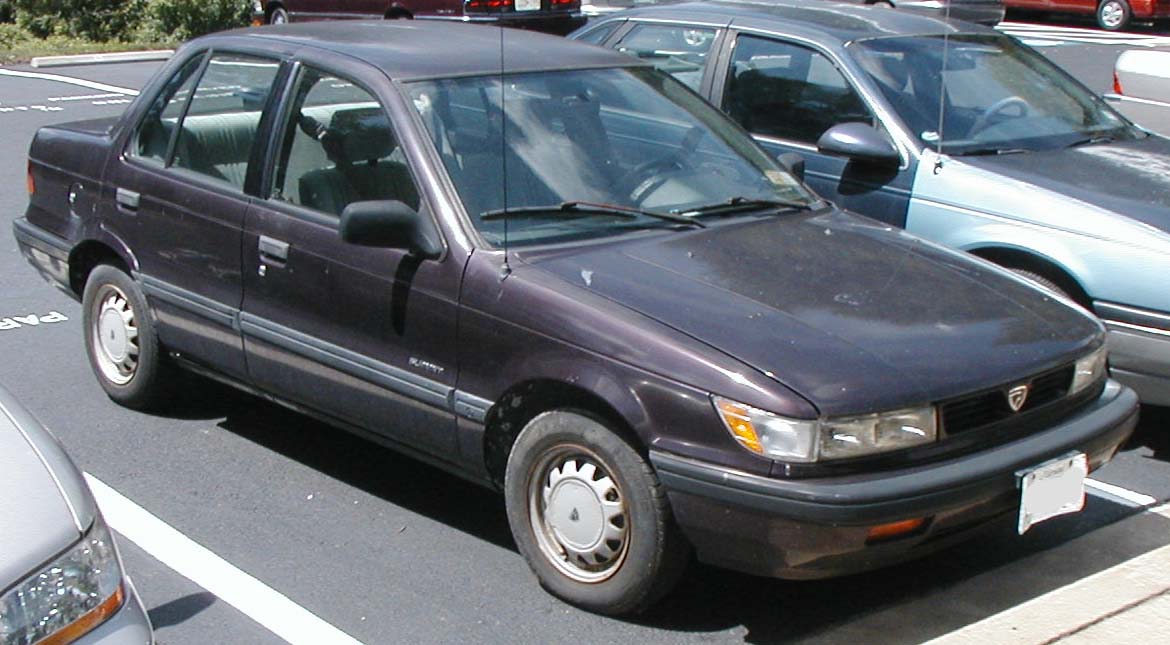
The Eagle Summit is an older, small car that was made in the 1990s. It was popular because it was cheap to buy and easy to drive, making it a good choice for people looking for a simple car.
The automotive supply chain is like a series of steps that companies follow to make and sell cars. If something goes wrong at any step, it can delay how quickly cars are made and sold.
A chip shortage means there aren't enough tiny computer parts needed to make cars work properly. This can slow down how many cars companies can make and sell.
LIVE
With a state of today's economy, it's more important than ever to invest in products
that last for years to come.
As a season shift and get cooler, make sure your closet is stocked with durable layers
that stand the test of time from American Giant.
American Giants clothes work harder and are wearable season after season.
Their greatest hoodie ever made is made from the highest quality materials that are cut
and sewn right here in the United States, so you're investing right back in your local
community.
Choosing American Giant means taking a stand for American manufacturing and hardworking
Americans, something other megacorporations don't care about.
From fleece to knit, all in a range of colors for versatile daily wear, American Giant delivers
everyday pieces designed for everyday life.
Feel the difference of quality made to last clothes from American Giant.
Get 20% off your first order with code STAPLE20 at american-giant.com.
That's 20% off your first order at american-giant.com with code STAPLE20.
Welcome back to the podcast today, the Yangwang Unite Extreme Track Record, BYD's K-Car,
and China's average NEV price drops.
Plus, stay tuned because later in the show I'll tell you about a war blowing up between
China and the Netherlands about chips.
Welcome to EV News China, the podcast dedicated to the world's largest electric vehicle market
each day.
I bring you the latest headlines, insights and analysis from the hearts of China's booming
EV industry and decode how fast moving developments in the east are shaping the global EV landscape.
Let's start with news of BYD's Yangwang brand and the Unite Extreme recorded a nirbegring
Nordschleife lap record of 6 minutes and 59.157 seconds, the first production electric vehicle
lap under 7 minutes, just, and the fastest production EV time at the entire circuit.
The certification on the production car leaderboard confirms the model's dual first status for
lap time and top speed, the latter measured at 496.22kmh making it the fastest global production
supercar and exceeding the previous production EV Nordschleife benchmark by 5 seconds.
Yangwang executive He Xiaoqing said that the official listing follows a private track
session.
Now this happened on October 10th when there was some really bad weather and that constrained
the high speed window.
The team managed just one hot lap, one flying lap, the drivers hadn't used the Unite Extreme
for almost a month since September 18th, it was their first track session in 22 days,
they jumped in it and set a brand new record, this thing is a weapon.
Staying with BYD, at the other end of the scale from the world's fastest car is one
of the world's smallest cars, Japan has a category of car called K-Car and BYD posted
a preview on its Japanese website of its first K-Car confirming it will appear at the Japan
Mobility Show 2025 October 30th, the site included a side view image with proportions
and styling.
K-Cars in Japan are small cars, it's a category for narrow roads, under 3.4m long, less than
1.48m wide and limited to 64hp, they get incentives like lower purchase taxes and are often chosen
as second cars by urban families.
The European Union are looking at doing something similar to incentivise a small EV category
here.
Now, local media reported that BYD's K-Car, which they were stylising as K-Cars, whereas
it's K-E-I-Car.
Either way, they may use a 20kWh battery pack and look, that's the size of my first Renault
Zoe almost like 10 years ago, so that's absolutely fine, 180km on the WLTC cycle at least and
so we'll find out more about that soon.
China's NEV average price dropped to just over $20,000, $158,000 RMB is now the average
price of a new energy vehicle in China in September.
Dipping below $160,000 for the first time, this continues a downward trend of the average
price of a new energy vehicle, NEV in China, so it's got a plug socket on, of $171,000
last year, $184,000 the year before in 2023.
More people are buying, more, smaller, micro-cars in China, sub-compact cars as well, bringing
the average price down.
China's NEV production and sales hit records, China's EV production hit a high in September,
1.62 million units produced, 1.60 million units sold.
September production rose 23.7% year on year and sales rose 24.6% year on year.
For the first nine months of the year, they made 11.24 million EVs in China, up 35% year
on year and they've sold 11.23% about the same, it's 11 million they've sold so far.
The exports are a huge story in China, so many of the big names in China know they have
to keep growing at a break next speed and the best way to do that is overseas, EV exports
in September 100% up compared to the same month last year.
And from January to September, first nine months of the year, exports from China have
been 1.76 million EVs.
China's EV charging network also growing, EV charging network in China reached 18.06 million
units able to dispense electricity in the end of September, that's up 54% from the same
time last year.
Public charging was 4.48 million units up 40%, private charges also counted in this
up 60%, so people are installing more charges at home than they are putting public charges
in, that's up 60% to 14 million units.
In the first nine months of the year, we also saw big infrastructure growth in China and
China's EV battery output, we got a bunch of September data coming in today, you can
tell, and China's power battery production reached 1,122 gigawatt hours in the first
nine months of the year, 44% up on the same time last year.
Honestly, we thought we were seeing China start to slow down in 2025, we thought we were seeing
China mature and those massive growth figures come back at least into double digits.
These are huge growth numbers, again, September production of power batteries was 151 gigawatt
hours, that's 50% up on September last year, through nine months, 44% of total battery
output was installed into vehicles and ternary 39% LFP, 46% in September, which is the highest
monthly installation proportion to date.
China is also going to push investment into advanced manufacturing of things like electric
vehicles and connected vehicles in its next Communist Party plan.
Leaders of the party will shape their 15th five-year plan, they're still a fan of their
five-year plans in China, amid technology and trade frictions, the Party Central Committee
will begin outlining the 15th plan during the four-day fourth plenum and is likely to
stress boosting domestic consumption of electric vehicles under the current 14th five-year
plan, which ends this year.
Industrial policies and subsidies have been driving advances in electric vehicles, challenging
the established industries in Europe and the US, Beijing signals it will repeat the state-led
approach for plan 15 due to be published next March, with government investment in cutting-edge
technologies, as President Xi Jinping seeks industrial and technological self-reliance
away from any kind of US-led economies.
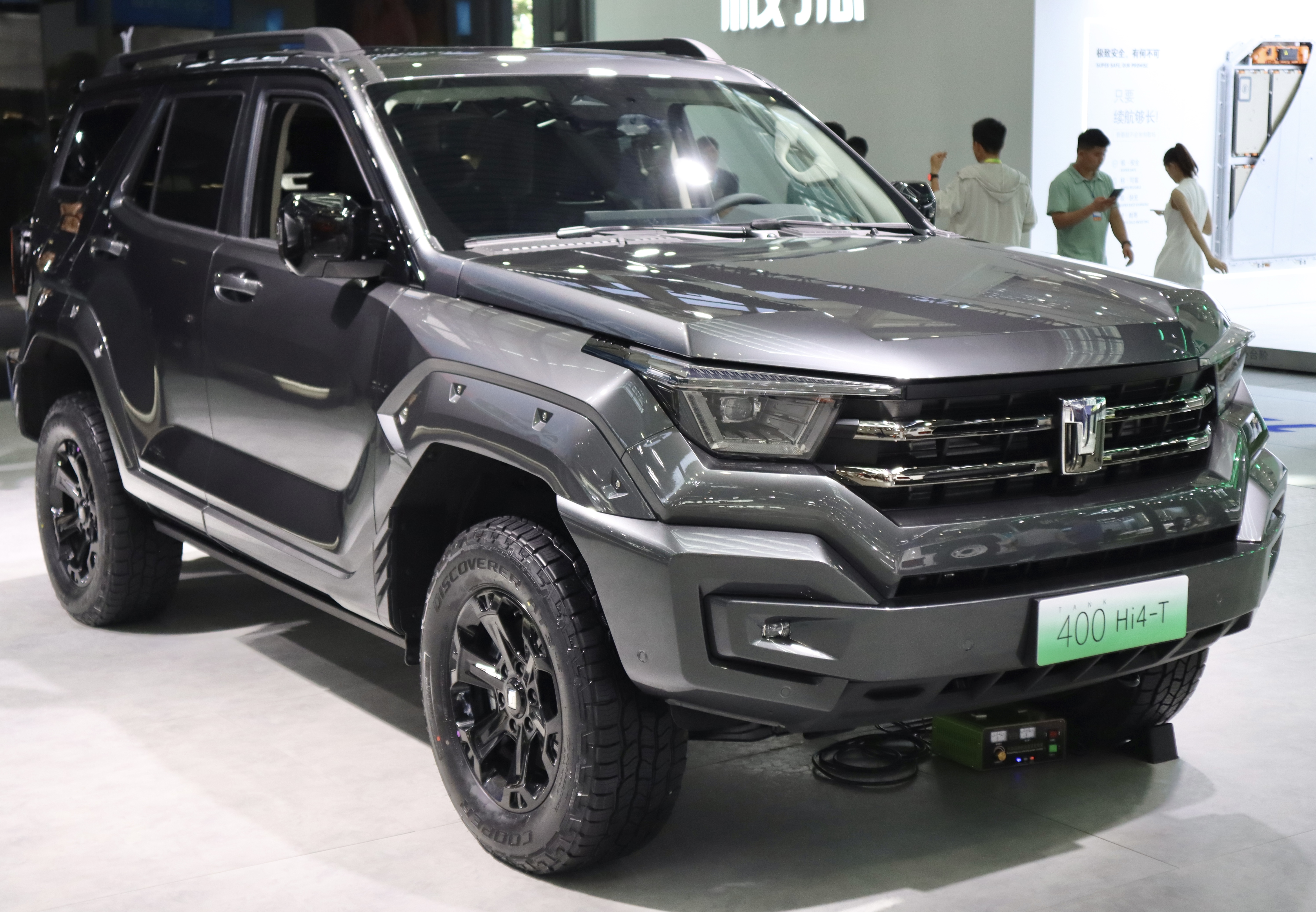
Great Wall Motor, GWM, has opened pre-sales for a refreshed tank 400.
The tank is a hybrid SUV offered as the existing Hi-4T, the new Hi-4Z, being priced from 310,000
RMB.
This is quite premium vehicles, introduced a couple of years ago.
September 2023, the tank 400 launched as a hardcore off-road vehicle.
That was the Hi-4T.
The Hi-4Z targets urban buyers, so not as much off-road capability while introducing
Great Wall Motor's new powertrain, which increases, they say, more off-road ability
than a typical urban SUV without using a mechanical four-wheel drive.
The Hi-4T uses a single electric motor and a peak output of 130 kilowatts.
The Hi-4Z, the new one, is almost 3,000 kilograms curb weight, but it uses dual electric motors,
635 kilowatts.
Both variants, though, use battery packs, the range extenders, via the 37 or 59 kilowatt
hours for up to 200 kilometers of electric only range.
Now, the MG4 is a very popular vehicle outside of China, very popular here in the UK for
instance.
The MG4 has had incredible reviews from the motoring press for what is an incredible chassis,
a great rear-wheel drive, driver's car, makes you smile, the MG4 holds its own against particularly
the hot versions.
They do an X-Power version, just ridiculously good for the money, until China decided to
completely redesign the MG4.
The new MG4 in China, which will eventually get Australia and right-hand drive markets
like the UK and Europe as well, is entirely different.
But it's also going to be a lot cheaper, but there's many more compromises.
They've gone front-wheel drive, they've not tuned it for handling.
All the decisions seem to be based around cutting the cost rather than what it had a
great reputation for already.
So we'll see how that goes down when it arrives here, but a while to go yet until that happens.
For now, it's only in China.
MG started deliveries of the MG4 Smart Edition in China, but it now comes with a CATL battery.
They say this enabled them to get the deliveries out on time.
MG's general manager Chen Chui said the switch from the originally planned batteries to CATL
was made to meet delivery targets in October.
All Smart Edition MG4s will now come with CATL packs, targeting a sub-100,000 yuan
price segment.
That's $14,000 US dollars for a car with a CLT range of 530 kilometers.
Very advanced driving assistance, by the way, and the interior of the new MG, I think looks
fantastic.
Not that the old one looked bad, by the way, but I think the inside looks very nice, quite
sleek and simple.
Clearly, they've cut some costs somewhere, but it's not an evolution of the existing
car.
When the MG4 arrives overseas, it's going to be a very different car, I think, for a lot
of people.
It was introduced in August in China.
It had rapid sales growth there because they're aiming for lower price points.
Most people don't drive their cars on windy B roads and spirited driving.
Most people just want safe, reliable, comfortable transport to go from A to B, so you kind of
understand the decision that's been made there.
Had 12,000 deliveries in September in China, it was launched at the Chengdu Auto Show a
couple of months ago, built on SAIC's E3 pure electric platform.
The vehicle actually starts, not the one we were just talking about, we talked about
the first edition a minute ago with the CATL pack.
You can get that down to 9,000 US dollars.
Let's talk a motor, and the E-Moda 4, a compact SUV with electric powertrains to compete with
cars outside of China like the Kia EV3, Renault 4, and Volvo EX30, debuting at what is the
Cherry User Summit, which would otherwise seem as a pretty dry event, maybe, but unveiling
the car there.
And they had a mix of sci-fi characters on hand, cocktail mixologists, body art.
It was a curious event, and they didn't even unveil the full specs, but observers will
expect a B-segment SUV to use the T1X platform that's shared with the O-Moda 5.
Now the O-Moda 5, not the O-Moda 4, which we're talking about, the 5 is a front axle
motor, 61 kilowatt hour pack, 267 miles of range.
The O-Moda 4, I think, is a cracking looking vehicle.
Very Toyota at the front, almost like they've designed it with only a ruler at hand.
They called it a cyber mecca design philosophy.
So geometric surfaces, robotics-inspired details, a blocky exterior.
Oh, think a bit, Lotus Electra, or, if in your mind's eye, Lamborghini Urus.
So big Snapdragon 2.5K center display, slim digital instrument cluster.
They even put an engine stop-start button under a red cage, like a pilot-style cage,
or like you get on a supercar, so lift up the little flap and then press the start.
OK, O-Moda says the 4 will go on sale overseas.
For example, in the United Kingdom in 2026.
Pricing not known, but it'll be around £25,000.
That's about £8,000 less than the O-Moda 5.
And it's sort of, it's JQ cousin, if you like.
That would put it in line with that.
We'll take a break, we'll come back and a couple more stories on AV News China.
Stick around.
Welcome back to the podcast.
Right, a couple of stories to finish us off.
On October the 20th, two days ago, Dongfeng Motor said on its official WeChat account,
it is advancing solid-state battery R&D and industrial deployment, reporting a series
of breakthroughs and a fully self-controlled supply chain.
Dongfeng said it has mastered its core technologies, the electrolytes, the separators, and in-situ
solidification and develop solid-state battery cells up to 350 watt hours per kilogram.
They say that unlocks a thousand kilometers of range, 600 miles.
The company adds that these cells meet top safety standards and have passed the national
benchmark.
Puncture testing, 50% compression deformation testing and a 150 degrees Celsius thermal
chamber testing.
Next year, we have some really strict rules coming in in China over battery safety and
a lot of these announcements that are being made about batteries this year.
Whether it's a new car being launched or a new technology being talked about, many
of the companies are wisely getting ahead of the game and saying, oh, we already meet
all of the future regulations around battery safety and getting ahead of those things.
And finally, this is a fascinating story about a war breaking out between the Chinese and
overseas owners, if you want to call it that, over chips.
Now, the company is called Nexperia.
Nexperia is based in both China and the Netherlands.
Nexperia's China unit has told staff in Europe to completely ignore any direction that comes
from the Netherlands headquarters, and instead, you must follow all domestic management instructions,
saying it will, and I quote, operate and make decisions independently as a Chinese enterprise,
end quote.
This move follows the Dutch government taking management control of the chip maker earlier
this month.
The seizure came after US warnings that Nexperia would remain on the export control lists if
its Chinese CEO were to stay in charge.
Beijing blocked most of the chip maker's final products from leaving China.
Nexperia, the Netherlands-based producer of basic integrated circuits used in automotive
electronic systems, lighting, airbags, door locks, window mechanisms, the rest, was sold
to a Chinese consortium back in 2017 and later acquired by Wingtec.
On the ground, the situation is described by sources, not named sources, but one person
says the situation is currently chaotic.
We are in great internal disorder right now, and the situation is very unclear, said one
employee, not wanting to be named, Chinese Commerce Ministry restrictions on outbound
shipments are now affecting the automotive supply chain outside of China, and some European
automakers are said to be revisiting and dusting off the old Covid era playbook.
What did we do when supply chains were messed up, as they are now preparing for a potential
chip shortage for electric vehicles, at least in the short term?
About this episode
The episode dives into significant developments in China's electric vehicle market, highlighting the Yangwang U9's record-breaking lap at the Nürburgring, making it the fastest production EV. BYD's introduction of a K-Car for Japan is discussed, along with a notable drop in average NEV prices in China. The episode also covers record EV production and sales figures, advancements in battery technology, and the ongoing chip supply chain tensions between China and the Netherlands. Insights into the future of EV infrastructure and manufacturing policies in China are also shared.