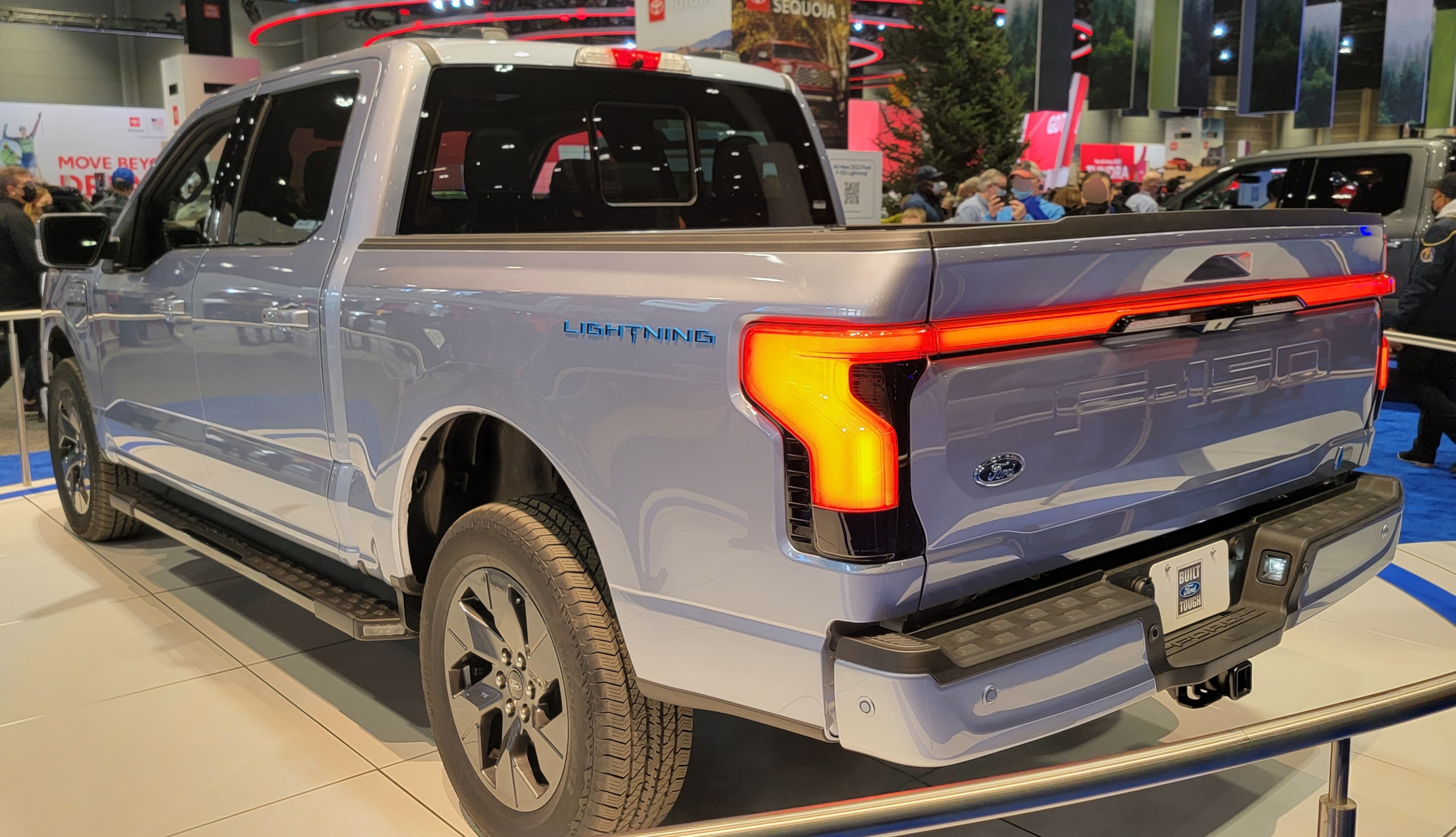
The Ford Ranger is a small truck that can carry things and drive on rough roads. People like it because it's tough and can be used for both work and fun.
Car
Land Defenders
The Land Rover Defender is a strong vehicle built for driving on tough paths and in nature. It's known for being reliable and has a classic look that many people love.
Street Performance is a company that made parts for cars, especially in the early 2000s. They focused on parts that help run things like the battery and steering in a car.
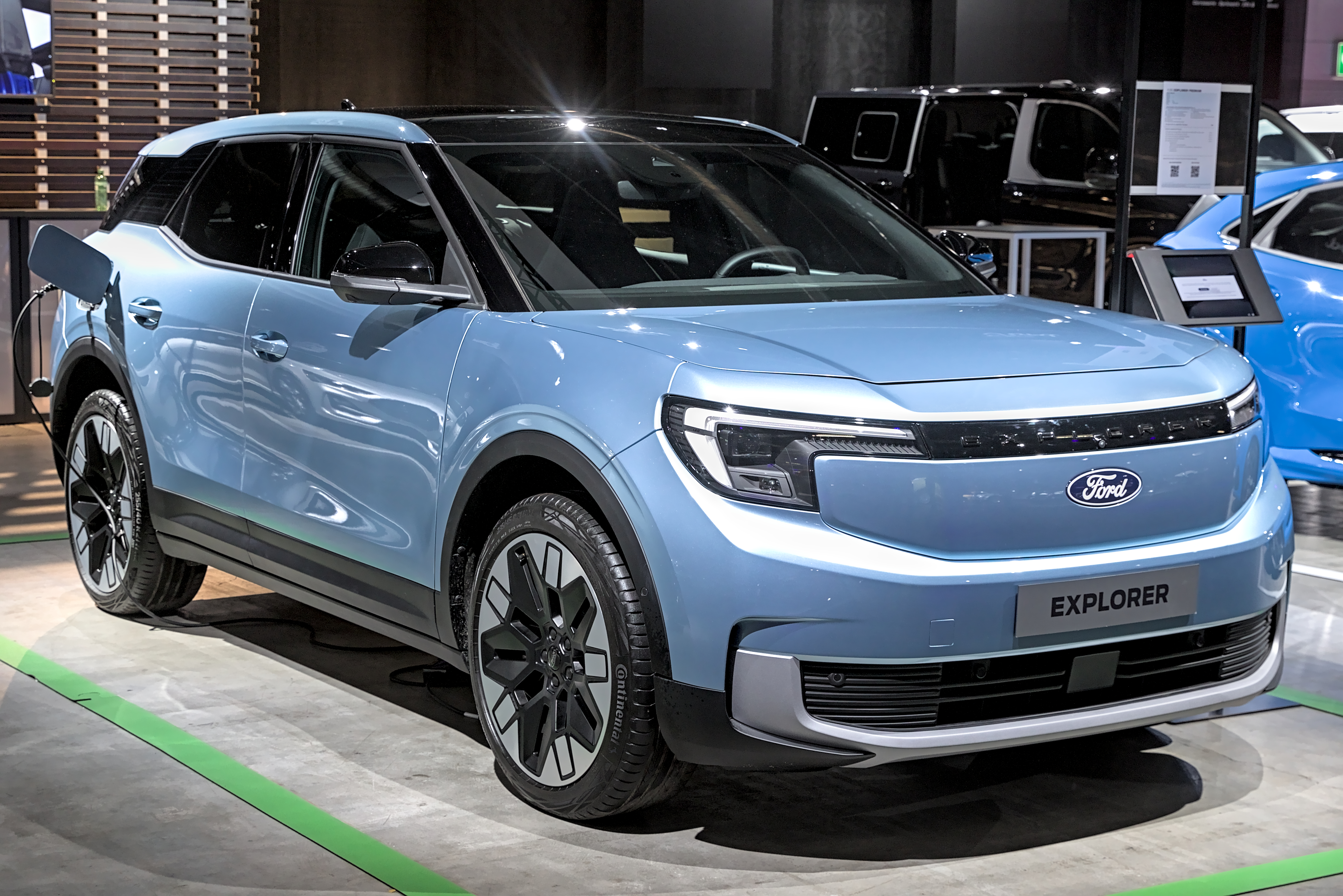
BlueCruise is a feature in some Ford cars that lets you drive without using your hands on the steering wheel. It helps keep the car in its lane on certain highways, making driving easier.
The Mustang Mach E is an electric SUV from Ford that has the sporty feel of a Mustang but runs on electricity instead of gas. It's designed for people who want a fun and eco-friendly vehicle.
The Chevy LS is a popular V8 engine made by Chevrolet. It's known for being powerful and is often used in many different types of cars, making it a favorite among car enthusiasts.
Mach 1 is a special version of the Ford Mustang that is designed for better performance. It has features that make it faster and more powerful than regular Mustangs.
An automatic transmission is a system in a car that changes gears for you, so you don't have to do it yourself. This makes driving easier, especially in traffic.
Car
302
The Ford 302 is a type of engine that was used in many Ford cars and trucks. It's known for being powerful and is often modified for better performance.
The Chevrolet Camaro is a well-known sports car that started being made in the late 1960s. The 1969 model is famous for its powerful engine and stylish look, making it a favorite among car lovers.
A roll cage is a strong frame inside a car that helps keep passengers safe if the car rolls over or crashes. It's made of metal bars and is often found in race cars or modified cars for added safety.
An inline six-cylinder engine has six engine parts called cylinders lined up in a row. This design helps the car run smoothly and is often used in various cars for better performance.
Car
De Tomaso Pantera
The De Tomaso Pantera is a sports car that was made in the 1970s. It has a powerful engine and a unique look, mixing Italian style with American performance.
The Pontiac Trans Am is a high-performance version of a car called the Firebird, popular in the 1970s. It is known for being fast and stylish, and it has appeared in many movies and shows.
A ZF Transaxle is a special type of car transmission that helps the car handle better by combining parts that usually work separately. It makes the car feel more balanced and responsive when driving.
The Chevelle is a classic car made by Chevrolet, known for being powerful and stylish. It was popular in the 60s and 70s and is still loved by many car fans today.
Torsion bars are metal bars that twist to help support the weight of a car and make the ride smoother. They are different from the usual coil springs you might see in most cars.
Coilovers are special parts of a car's suspension that help control how the car rides and handles. They can be adjusted to change how high or low the car sits, which is great for performance driving.
'Jag rear' is a way to describe the type of rear suspension that Jaguar cars use. It's designed to help the car handle better and provide a smoother ride.
Rack and pinion steering is a system that helps you steer your car. When you turn the steering wheel, it moves a rod that turns the wheels, making it easier to drive.
Upper and lower control arms are parts of the car's suspension that help the wheels move up and down while keeping them aligned. They play a key role in how the car handles on the road.
The Subaru SVX is a rare sports car from the 1990s that has a cool design and can drive well in different weather. It's not very common, so some people find it interesting.
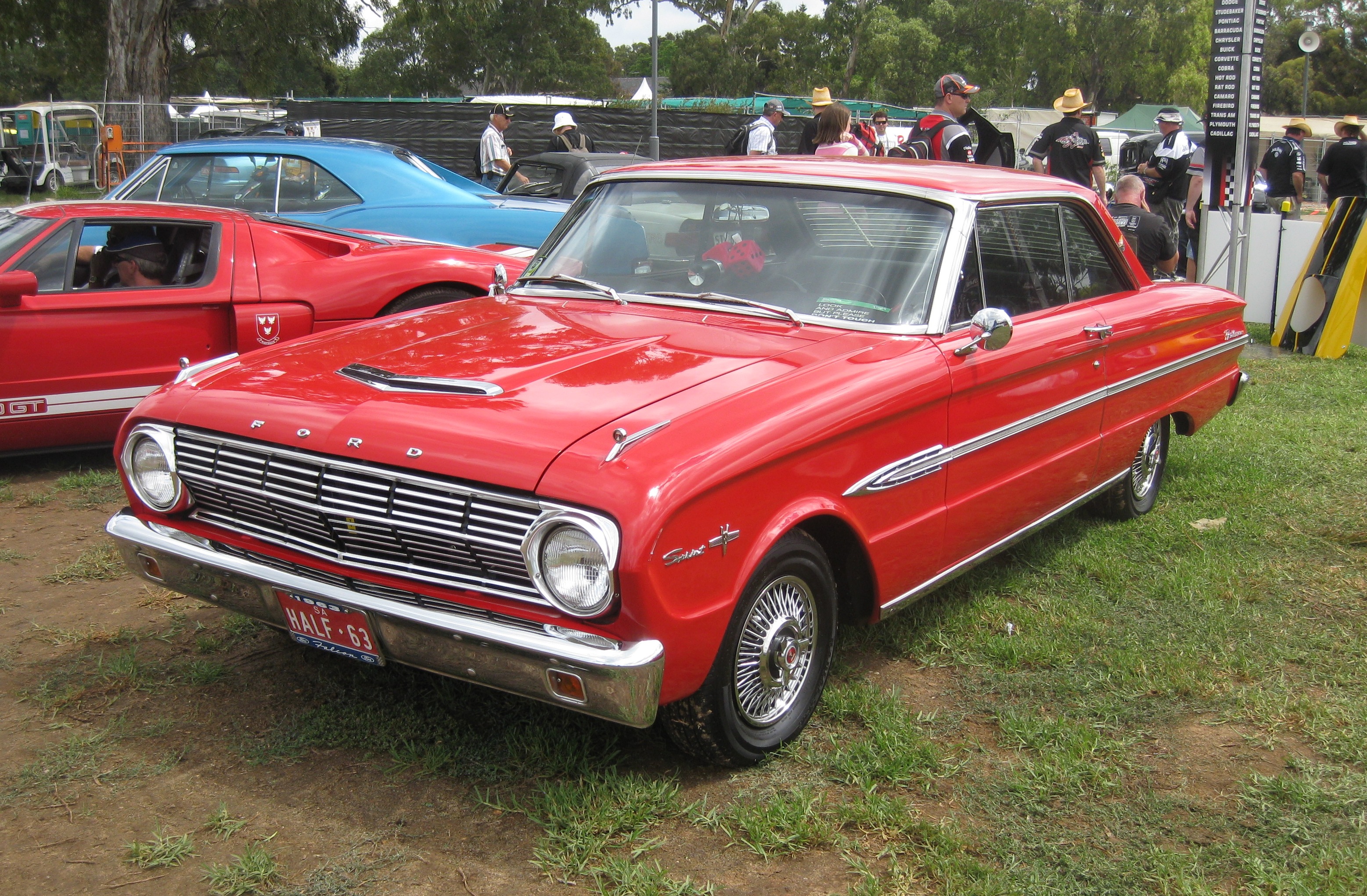
The Ford Falcon is an older car that many people like because of its cool design and good performance. It's a classic that car fans enjoy talking about.
The Dodge Power Wagon is a tough truck that can handle rough roads and heavy loads. It's known for being strong and reliable for work or adventure.
LIVE
The holidays mean more travel, more shopping, more time online, and more personal info in
more places that could expose you more to identity theft.
But Lifelock monitors millions of data points per second.
If your identity is stolen, our U.S.-based restoration specialists will fix it, guarantee
it, or your money back.
Don't face drained accounts, fraudulent loans, or financial losses alone.
Get more holiday fun and less holiday worry with Lifelock.
Save up to 40% your first year.
Visit lifelock.com slash podcast.
Terms apply.
Dad was the only living firearms designer to have a rifle that was officially adopted
by the U.S. military until 2022 when a rifle that I designed was also adopted by the U.S.
military.
And so the rifle that I designed was the 98B and then it evolved into the MRAD and then
U.S. SOCOM adopted it and it became the Mark 22, full, fully machined, aluminum billets
or extrusions, no welds, like we try to try to avoid welds if we can now, you know, you
guys know that's like, I love the art of it, but it's like, it's hard to control.
It's hard to control.
And something that's as high a tolerance as what you're doing.
It's very difficult.
A few fasteners as possible, firearms, such these precision things and then look at what
the tolerances and variances are in sheet metal and welding, like, yeah, no way.
I've always loved the American muscle cars and the old stuff, but you know, I love Italian
cars too.
And what's the what's the one out of that realm in the levels that you're talking about
that didn't live up to the hype that you're most disappointed with?
I won't say.
Okay.
I won't say because I want to be able to buy another one.
Okay.
Welcome back.
Another episode of Oil and Whiskey brought to you by WeatherTech.
WeatherTech's cargo liner provides complete cargo area, protection and coverage to defend
against daily wear and tear laser measured for a perfect fit to the vehicle's exact
make and model.
Raised outer lip keeps messes contained, avoiding damage from scuffs, spills, dirt and all your
other daily mishaps.
Great for hauling tools, sports gear, groceries and more.
A tough textured finish helps keep cargo from shifting during the drive.
Easy installation and removal for quick cleanup for those that are transporting their dog
or other animals in the back area makes cleaning up pet hair, slobber, muddy and wet Paul Marx
very easy, much more so than factory carpet offered in four colors, black tan gray cocoa
to match floor liner and floor liner HP 100% made in the USA so you can be assured of its
quality.
Go to weathertech.com to check out the cargo liner today.
This week in studio in person, it just kind of worked out.
Sometimes those things just work out and this one, this one just worked out.
Former president of Barrett Firearms, current chief executive senior advisor, look at all
those words.
Wow.
I don't know if it's all in your business card, but it should be.
Barrett.
It's technically Barrett Firearms, right?
Barrett Firearms, manufacturer in the Inc.
Barrett Firearms.
And if you don't know, just go ahead and turn off right now, because I don't know if we
want you as a listener, if you don't know Barrett Firearms.
You don't want to be friend, you don't want to be friend, you're listeners if they're
not in the loop.
They can, no, we can be friends.
Just don't listen to this episode.
Are they going to learn that?
Yeah.
We got to learn.
And also in Avid Carthus.
Avid.
Twice here.
Absolutely.
We had the great opportunity to kind of get to know each other a couple weeks ago at
Triple Crown down there in Nashville for that show.
We talked a little bit before then about a project.
We got to hang in Nashville and do the car show thing.
And you treated us to an extremely nice evening at one of your other ventures.
Oh, yeah.
The Red Phone booth located in Nashville, Tennessee, on 8th Avenue.
What's the Instagram?
We're just rpbnashville.
Cool spot there, dude.
That is very, I mean, we are like diehard, like Speak Easy guys.
Chicago is a great city.
And I'm always looking for like the next cool little, you know, startup, whatever the hot
Speak Easy is.
That's a rad place that you get there.
Awesome time.
They're very well done.
Thank you.
I love that it's still one of the few places where you can eat, drink and smoke at the
same time.
Yep.
Smoke cigars there.
It's like Josh's living room.
We did that.
And we did all those.
It was cool.
I loved the whole, the membership thing.
I loved the vibe on the inside, but the way everything, your staff was absolutely amazing.
The bartender, I don't remember his name.
He was cool as shit.
We were hanging out.
It was funny because I go out and you can't smoke a cigarette in there, smoke cigars.
So I pop out, have a cigarette or three and out there and every time I'm coming back
in, you know, there's a couple of guys are, oh man, I just, I just was in, I can't get
back in.
You mind let me in or talk to one of the guys.
So I tell the, you know, the main guy there and he's like, this shit, those guys weren't
in here.
Like they do, there's a line of people out there trying, I was like, oh, all right, it's
my first time.
I didn't realize that that was a thing.
And then you walk right in like a pretty girl.
Yeah.
Just like a pretty girl.
Yeah.
It's fun.
Then you got an amazing jacket.
Yeah.
That's right.
Yeah.
We are posting that picture.
Oh yeah.
We got to post that picture because Vinny, you know, I got to say I was a little nervous
that the dude we brought is a, is a killer hot rod builder.
He's got a great shop.
Vinny's hot rods.
Vinny isn't like necessarily like a cocktail guy or like a going out to dinner guy is what
maybe what I would say.
He just ain't that fancy.
Yeah.
Right.
Love him to death.
But we put that sport coat on him.
Yeah.
And dude, he woke him up.
He owned it.
I think it changed his life.
He was the best looking dude in the whole entire place by far.
That's funny.
I love that.
He was.
He had a great time.
Yeah.
A hundred dollar jacket later.
And then he forgot at the next day of the show.
Oh my gosh.
Yeah.
Like an idiot.
Great time.
That one's giving you some trouble there, isn't it?
Glad for you to, you know, to do the podcast, but, you know, more importantly, you get to
come up and see the shop, see what we do in person and talk over the future build.
Yeah.
Yeah.
Everybody cannot see how excited I've been for the last two hours being here.
I mean, I walk around this and this is my environment.
I love to see the, you know, the cutting, the solid modeling, just everything is happening.
Here's what I grew up in and it's, I want to be like you guys.
So fun.
We want to be like you.
There's got to be some similarities.
Right.
I notice, I mean, you guys are like TIG weld and stuff on your guns.
Oh yeah.
There's fabrication.
It's, I mean, you're designing stuff.
You're working in solid works, probably, you know, similar mindset, similar creative
personalities floating around there.
It's got to be some kind of parallels there.
There definitely is.
Do we need to tell everybody what I do or what I did?
We can, we'll get there.
Okay.
It's organic.
This is a conversation we're going to get.
We're doing cars for everyone.
No, we don't have to do anything, but we're having, we're getting, we're getting to know
you as everybody else is getting to know you.
Well, let's start, let's start with the cheers because we got a cool bottle.
What do we drink?
This is a reserve, reservation, reservation, reservation, Kentucky, bourbon, whiskey, pot,
still, weeded.
It came from that Justin's house of bourbon down in Louisville, cool place, Louisville,
Louisville, seven year, something fancy.
It's a, we reserved seven year, four months.
We reserved these fancy bottles when people actually grace us with this.
117 proof is what I'm guessing.
114.6.
Wow.
Close.
Did you fill in the sinuses?
I did.
Micro single batch pot distilled, tasting notes, mixes with Diet Coke.
Best over ice and a tab or RC Cola.
Taste like a taste.
Open it and see.
Caramelized wheat, toffee, deep tested oak and honey butter.
That's a mouthful.
It's got some, it needs to air out.
Just touch, just touch.
Couldn't taste any of that, but.
Just needs a touch.
Uh, no, you didn't talk, Jeremy talking about the similarities in the industry that we
are, you know, going to get into and how you even got to where you're at.
The Barrett firearms, right?
So the gun manufacturing industry.
I was thinking about this last night in preparation.
It, there is, you can draw so many similarities, at least from the outside looking in as gun
enthusiast, right?
As to a enthusiast like we are, we've had, we've had, you know, other, uh, other gun
companies on here before and we've delved off into that.
I know that you're going to listen to some of this and be like, you guys, it's not anything
like that.
But from the outside looking in the picture that we paint, there is some so many similarities
because it is, it is an enthusiast driven market.
However, you have government contracts.
You have two kind of, uh, customers to, to please on the racing side on, in the automotive,
you've got the government contract style.
Like those things actually have to go out and perform.
They're not just pretty parts.
And then with that, you know, the performance kind of gives the customer the, uh, the, it
should be, if it's good enough for them, it's good enough for me kind of mentality.
Works exactly that way in the firearms world, exactly that way.
So you win the race on, what is it, win the race on Sunday and sell the car on Monday.
Same thing.
Yeah.
If it's, if it's good enough to defend all of our freedoms or any of these other people's
countries, then it ought to be good enough for me to go out and punch paper.
That's right.
So people ultimately want the stuff that kills bad guys.
Is that right?
Like if it's.
And reliably.
That's the reliably part is like the, that's most important.
Yeah.
And it, I started going down in the, in like brands in the gun industry and how many of
them can do a pretty good living and by social media and marketing and live on that, like
just enthusiast brand.
Like, yeah, this is, you know, I hate the word Gucci gun, but that's, you know, that
kind of thing of like, it's just, it's all flash frills, cool shit.
Um, and then there's the hardcore established companies that are more well-diverseed, right?
They do some good looks, but it's more of, it's more mature, professional of like, no,
we do shit that the federal government wants to buy.
And then by de facto, it makes it even that much cooler because I mean, hell, you've seen
what FDE and all the, the tactical, like if it's, if it's on a DevGru, if it's on that
then I've got to own it.
Like that's the thing that needs to hang on my wall and not use near to the capabilities
that it was designed for.
That has definitely been the case for us.
And I think a lot of people, um, there's a lot of people that didn't know our story
and thought that we kind of started, it kind of pushes both ways.
I'll say, you know, it's, um, civilian consumers do buy what the professional end users adopt,
what they trust and what they use.
There's also some things that happen in the race world, like, you know, three gun competitors
or precision rifle series that pushes up to the professional end users.
You know, so a lot of competitors really changed the way we thought about having most recently
like a red dot on a pistol, you know, so they prove these things in competition until the
war fighters go, yeah, we probably need to do that.
It works.
The numbers don't lie.
So it pushes a little bit both ways, but at the end of the day, the trust of, of your
professional users really, really drives the sales on the commercial side for us, for sure.
We'll talk about Barrett as a whole and how it got started and then as you come into it.
Yeah.
I get to tell my, you know, this is really the starts of my dad.
So I'm second generation in this.
So I get to tell dad's story of life, but I think, I think we're pretty similar on it.
It's, um, my dad is just a brilliant guy and he was a creative guy is I can't say was he's
very much far from dad.
He's very, very alive and super healthy.
He's just a creative guy and he was a photographer professionally.
So he had this creative eye.
He always had a great sense of style, but he was always in the guns and, you know, kind
of just progressed through like a lot of people do playing with a pistol, playing with now
on a rifle, now I want to shoot machine guns.
And this was in the 80s.
So you kind of more easily could go to Sears and get one just about, just about, you know,
so it was that was those Miami vice days.
It was really cool.
It was those things were somewhat accessible.
It was still an expensive game to play, but dad wanted to, you know, he kind of like went
through all that as we all do.
We got a bigger engine and a bigger engine, a bigger engine.
He wanted to shoot a 50 caliber.
And the only thing that was available, you know, that you would commonly do that with
is the M2 machine gun, just a huge, you know, expensive to shoot, can't carry it.
Just a big thing.
Dad had an idea that he could fire that cartridge from a shoulder fired man portable
rifle. And people actually laughed at that because it, if you've ever seen an M2, the
Madoos machine gun being fired as a dual handle, like thumb trigger, right?
Seventy five, 80 pounds.
It's a cruise serve weapon.
They call it.
It takes multiple people to operate it.
It's always mounted on a vehicle or on a tripod.
I think Rambo could, he could run that.
No, he could not.
Rambo.
Was that the one he holds?
Like the, well, he held an M60 in a lot of the original movies.
And in some of the later ones, he actually used a Barrett rifle.
Yeah, it's no course.
We'll get to it, but, you know, just throw it out there.
Well, people saw that thing.
And when you told, when you stand near one of those going off, the ground is shaking
like dust is shaking up off the ground, everything, your teeth are jarring out.
And you see that thing.
The barrel is moving and it's eating this belt of ammo up, you know, to a
and you're just having to hit burst, right?
Yeah, you're still doing a barrel change.
You're firing this thing like this.
And when you, when people know that and see that thing and you say, yeah,
we're going to fire that from your shoulder, they're like, what?
No, because it looks so massive.
But dad just had a brilliant idea for a recoil operated system that
mitigates a lot of the recoil because the barrel is recoiling.
And he really just packaged it right where I'm making this really short.
I mean, there was a lot of trial and error in here, but he, he got that thing
done to where one person could carry this rifle and deploy it and shoot it
and hit things at distance with it.
Was it for because he thought it would be cool?
Or did he have an end user in mind?
So that that's what I was talking about earlier.
A lot of people don't understand the genesis of this.
It was because he thought it was cool.
But that makes it cooler.
Yes, there was a manufacturer at the time.
No, no, a photographer.
But my grandfather, his dad, was a cabinet maker.
So, you know, like everybody, of course,
everybody made cabinets.
That's the national progression, right?
But, you know, you knew how to take measurements and make a door fit and hang a hand.
So we kind of had some basic mechanical knowledge.
My dad and all his brothers worked in the cabinet shop when they were young,
but he was a photographer and just wanted to figure out how to get this done.
And there was no military requirement.
There was again about some of the ridicule we probably received was like,
you can't shoot that thing that way.
That's going to that's not going to be possible to what is it for?
Nobody wants it.
But, you know, a lot of not everything is developed for a requirement.
And I know you guys innovate some things that somebody never thought of.
And that's why you're the leader in what you're doing.
And that's why Barrett led the way in what they did.
We brought a capability back then, like this is 1982 that, you know,
when people see it, they scratch their heads and, you know, everybody's first,
you know, impression of something new is like, well, that's silly.
What are you going to do with that?
And then you kind of go through that phase where you start getting curiosity
and then you eventually have acceptance and you go, wait a minute,
we can use that for this and this and this.
And the rifle actually started being deployed first as a explosive
ordinance disposal tool.
So it got into military use by it wasn't even the US first.
I believe it was Sweden first.
And then the US Air Force picked it up and was shooting either EOD teams
or explosive ordinance disposal teams.
We're using the rifle to damage unexploded ordinance from a distance.
So instead of going up and having to disarm something, you stand back,
you shoot it, they call it smutting and you shoot it.
And then it doesn't have this high order explosion that hurts people.
And the way I kind of understand it is the Army Rangers saw this thing and said,
what is that?
You know, like, how'd you guys get that?
Guns don't get into the US military easily.
They there's a very sophisticated procurement process, but tools can get
in a little easier and this wasn't a gun.
It wasn't a firearm.
It was a tool.
It wasn't a sniper rifle or rifle.
It just came in as a EOD tool and then Rangers saw it and said, you know,
and then it started getting out and Marines got it and then it started
being used and pressed and used the way it is now.
So that this is a, actually, this is the prime example of, of a civilian
or a non-professional user innovating that, that ends up benefiting somebody
who's doing very serious work.
Do you, I mean, I'm sure you guys have, especially amongst your family,
but it's just hitting me in a certain way of listening to the story.
Cause first you're like, holy shit, that's cool.
Right.
And I love the passion and just building it because you're like, I just
think this would be cool.
But because he had the passion and drive and just wanted to figure it out.
Right.
There's a lot of the problem solving part of like, well, I've got this thing.
I think I can do it.
Let me do it.
And it would be cool.
The gravity of that, of how many bad guys haven't been able to do bad shit
and how many human lives are still alive right now because of him
just wanting to do something cool.
Yeah.
That's, it's a pretty cool my product.
That's fucking nuts.
Cause you're not talking about like a few.
I mean, that, that 50 BMG has.
I hear stories that have brought tears to my eyes like a few weeks ago
when I was telling them at those guys at Red Film booth, it's just the
stories I've heard.
Now let me draw a direct line on that through the second amendment to you
and the country, the country we live in and the freedoms we have here, how
this happens and, and what people probably don't value enough.
This couldn't happen anywhere else.
So you have a civilian that had the freedom to innovate and we can own
these things and he was able to push the technology forward and it, and
it benefited our defenders of freedom, our protectors, our warfighters.
You, that doesn't happen in other countries and other countries, you
know, anything that's developed is developed through a company or by
the government itself, but in this country, we have the freedom to do this.
We have the freedom, we can start a business.
We have this freedom mouth.
We don't bury it all under a bureaucracy and, and some of the other, the
other things that other countries have suffered, but we've, uh, we have the
ability to do that here and it's very few places in the world.
This could have happened.
So all the mantras and the storylines that you hear of like weapons of war,
we're actually weapons being used in wars created by a civilian.
But, but think about that's like part of it.
Yeah.
And it's, um, so it was, it was kind of huge and you know, dad was the big,
the big arc of our whole story here is dad was the only living firearms designer
to have a rifle that was officially adopted by the U S military.
When we say officially adopted, it's been given a type classification.
It's been given a number.
And in the case of this one, the model that he, two a one that he
developed became, became the U S rifle M one oh seven.
So it was adopted by the U S army and it became the M one oh seven.
And he was, you know, he was the only living firearms designer to do that.
Until 2022 when a rifle that I designed was also adopted by the U S military.
And so the rifle that I designed was the 98 B and then it evolved into the
MRAD and then U S SOCOM adopted it and it became the mark 22.
So dad and I are the only two living firearms designers to have done, to
have had this happen with only two, with only father son ever to have done that.
And that's kind of, um, that's what an engineering degree will get you.
Right.
Yeah.
We, we barely got another thing about the opportunities we have here and it's
just, so, you know, when I stand back and look on this and I had the most
humbling, um, the most humbling experience, not too long ago.
I finally, you know, it takes these things a while to get into the system.
Right.
There's when a new, a new weapon system gets adopted.
It's going to take a minute before you see it out there.
Well, now some photos are cropping up that come out and, you know, I've seen
photos of Marines with dad's rifle, with my rifle, with a Marine behind it,
laying right beside him.
You know, it's just, that's fucking nuts.
I remember when I first saw this photo, they're on a ship and, um, you know, I,
I just broke down.
I was like, man, there, finally it happened.
You know, it's something, uh, it wasn't really the goal.
Like it wasn't the goal all along.
It's like we were just trying to do something cool and then you start getting
the gravity of what's happening here and, and the, the purpose, your purpose
and the purpose of, of what you're doing.
And it finally happened.
And I see that photo and it's just like, oh, you know, that's wicked.
And so the development of the two are obviously wildly different.
Your dad developed something like in the shed, basically on a, with a notebook.
It was literally a shed in a little house that, you know, he ran it from my
grandfather in downtown Murfreesboro.
It was just a little wood, a wood walled garage with gravel on the floor.
And that was where the first one, and I don't know if people in Murfreesboro,
Tennessee know that that's there, but it's kind of a landmark, right?
It's kind of a, it's like, it's like the old, the Ford or the Harley little shed
or whatever it's going to place.
Ronald Reagan.
Yeah.
I kind of feel like it needs a marker on it.
Like it's like, this is a, this thing has gone all over the world and it's in
the books and you should just show up and put a marker on it.
I was going to have a large, long statue of dad.
People are going to love it.
But what you, what you engineered was completely different.
You're now in a, you have an established brand.
So what was that process like?
Were you like, was that like a something you just thought was bitching that
had to be made or was there like a protocol or a need for that weapon?
I thought it was something that had to be done.
I saw that we were pushing the limits of the way we were doing things.
And at some point, you know, every technology has a leap where you're like,
Hey, we can't, we've taken this as far as it's going to go.
What's, how do we do this now?
And, you know, you were asking me about the equipment I saw down here.
And that has a lot to do with it.
It's timing, you know, dad was doing this in 1982 when I was just a baby.
And his rifle, the architecture of it is sheet metal fabrication.
So dye stamped or a K like very a K like, you know, and, and welding weldments.
Um, you know, we did not have this was not happening in three modeling
or even CAD.
It was on bar napkins to vellum paper on a drafting board.
And, you know, and so he achieved all that.
And it's amazing when we look back in the 1900s and the 20s and the 30s,
what people were achieving before we had these things, we will, we will.
Accomplish a lot.
We will overcome a lot of obstacles.
And it's amazing what the, what the human mind has been blessed to be able to do.
Like we can, we can really get there.
So yeah, dad's rifles are like that.
And welding, you know, welding these sheet metal fabrications together.
I see a lot of similarities around the shop with the, the hand fabrication
on the chassis and I love that stuff.
Now, when I came around, um, you know, I took a drafting class in high school
and we got to draw on AutoCAD.
Like in 2D and, you know, what we did all day, we sat in there and drew
wheels for cars and, you know, wait, that's actually what we did.
It's goofing off, but I didn't realize what I was doing was building a skill
that would, um, would really enable me to do this.
So when I came to the company full time, and I'd always been working for the
company, I mean, I was a child in there, assembling stuff and, and doing
whatever, sweeping the floor, operating a band saw, sandblast or whatever.
But by the time I came really into this design seat, I, uh, I think I first
bought pro engineer was the modeling software I had and then used that for
maybe a year or two.
And this solid works was getting so popular.
This solid works 3D modeling software was getting so popular and it was
so easy to use kind of windows based and we bought that.
And this was big purchases back then.
Oh yeah.
Like, you know, you want to survive.
It's still a big purchase today.
Yeah.
Even by the workstation.
Like you want to spend $4,500 on a computer and a screen and then the
software itself is all this on top of it.
It's huge.
Was your dad supportive of this or was he kind of, uh, yeah, I think he was
supportive and curious of it.
And, um, and you know, so I got in there and we immediately start designing
in a new way.
Sometimes your tool dictates the art, you know, what, what tool you have to work
with and we started designing a new way.
And then, and I also was looking at a lot of the legacy designs.
Like, let's take, you know, I took a lot of things from paper that were just
in, you know, sets of blueprints and you start building that model off the blueprint.
And you're like, Oh, that angle is not really 27.8 degrees.
It's actually 31.3, but nobody knew that because it's just how we drew a line
and it looks like it played out, you know, so you find a lot of things like that.
There's a lot of refinement that happens when you can actually see the geometry.
And then the rifles that I designed after that were of a different architecture.
I didn't use sheet metal because we are now like fully at Barrett.
We were fully in the CNC age, you know, so a lot of my stuff is based on, you know,
full, fully machined aluminum billets or extrusions, no welds.
Like we try to try to avoid welds if we can now, you know, you guys know, it's like,
I love the art of it, but it's like, it's hard to control.
It's hard to control and something that's as high a tolerance as what you're doing.
It's very difficult to control.
So if we can get a part right out of a machine that goes together and fastens
together or a few fasteners as possible, that's what that's what we're going to do now.
So the architecture kind of changed and still shocking to me.
Like building something to that level.
That's sheet metal that's folded, welded, like in my mind, I think most of our minds
like firearms are such these precision things.
And then look at what the tolerances and variances are in sheet metal and welding.
Like, yeah, no way.
Yeah, well, some some can be and some aren't.
Now you go back to the AK thing of the.
Not to, you know, prop up the AK because it's not, you know, from here in the good old USA, but it's
it's prominent and it's the reason it's lived on.
And it's the number one is because of how sloppy as it is.
It's actually a brilliant design.
It is a brilliant design and it's it's it's tight where it needs to be tight and not not.
And it's the same way with with a bare rifle.
It's a big rugged design.
And, you know, he wanted it to be serviceable and rugged.
And there's some extremely tight tolerances in that rifle where it's important.
You know, and we've had 40 something years of learning what those are.
Some of those things don't even translate to a print or a model.
It's there's some tribal knowledge stuff in there about it on.
But we know more about it than anybody in the world, obviously, at this point.
How is that look jumping back?
You know, when your dad's kicking this off, the stories you've heard,
you know, you're coming in the 80s when it's when it's ramping.
Is interest in orders ramping at the same time he's ready for production?
He's like, oh, I got this figured out.
I'm just waiting on the orders. No, no.
And, you know, dad, dad has got his own flair the way he tells this, but it's,
you know, it was a very much there was some fake it to you make it in there.
There's a lot of people do when you're starting a company.
You don't really know all what you're doing, but you know,
the shocking one to me that dad tells about is how he got a video of this thing
shooting and cycling a couple of times.
And that was enough to sell some rifles. We have a video and you start taking
deposits and he thought, I can't remember what the exact numbers was,
but he thought he was going to be able to build the thing for and sell it for
like $2,500. And I think he said those rifles cost him like $4,000 to build.
But he already had the orders. He said, in the next batch,
he got it figured out, you know, and then he told people they were $4,000,
but they only cost $5,000 to build it.
So it was just like every day we're in business, we're getting more and that.
It's just like a hot ride shop. You lose a little bit less every year.
That's right. Donate less.
So, I mean, to business, to aspiring business owners out there or people
that are just getting into it, you know, hang in there,
but get professional financial business management as soon as you possibly can.
Because like every entrepreneur is not a business person and that's okay.
You know, we all, we all do what we do. And, um, you know, just,
so yeah, that's how it starts. And that's how it started for us.
And it's how it starts for a lot of people. Um, you know,
and then over the years we collected some really smart business minds that became
kind of mentors for me and helped us professionalize the company.
And then you start, like you sometimes have to be taught to make a profit,
you know, and, and because a lot of us are doing what we're doing because it's
cool. And that's, but that's,
that it's always been said, you know,
and it's been talked about in this industry a lot.
It's not necessarily a negative thing as long as you config,
as long as you understand your shortcomings as soon as possible,
because I don't know of anybody that can be a
super creative problem solver and risk taker and also be a good business
person because they go against each other because there's like that idea of
building this rifle,
doing that investment,
taking those initial pre-orders and losing that money isn't a smart business
decision, but it was a passion.
And you're going to have to do this to create this.
And you believe in it so much that you're just going to figure it out.
Once it gets to a certain point, then like you said,
you got to get the business from a strictly business standpoint,
90% of the things that we all like and strive to have wouldn't exist.
It's just a lot of financial business,
financial managers would probably look at a lot of ideas on paper and say,
would it? No, do not even start this. Right.
So it does take, it does take both.
It takes us all and it takes a little humility to be able to trust each other
on it. And, um, and we really, we really achieved that. It's, uh,
that this is the shortest way you could possibly tell the story,
but that's, that's what happened. You know,
there was some other big milestones along the way. Um, you know,
Desert Storm was a big turning point for us when the, when dad's rifle first,
you know, it was really becoming nowhere. They said, wait a minute,
this thing is really out here now. And, um, you know,
and then the official adoption was wild, you know,
after it became M 107,
then every other country in the world that looks to the US or what is the US
using goes, Oh, okay. That's US selected it. So that's what we want.
What did that process look like? And then what did that look like for the company?
It was, it is so not easy. It took so many years.
Some other customers actually really pushed us really hard on the development
before the US. And, um,
Norway is one that I could talk about that, you know, the Norway government
adopted a version of the Model 82 50 cal rifle that looks a lot like what
became the US M 107. So they kind of pushed us on things. It's, you know,
we want this rail, the Picatinny rail on the top of the 1913 optics rail to go
all the way down the top.
And we want to have flip up sites and we want to be on this angle and we want to
do this and this.
And a lot of that became the recipe for what our latest,
greatest version was that, you know,
finally when it came time for the US to look at us, like, Hey, yeah,
that's this is pretty figured out.
So a lot of our customers just drove us, you know,
to the next level and on we go.
How does that look, um,
to what you can speak of, of supplying other countries. I mean, obviously,
there's the list of the, you know,
the NATO companies and the stuff that you can supply to,
but you're supplying those. And then you've also got the US government.
How much attention are they paying or interaction of like, Hey,
like you're supplying those guys with that. We've talked about,
you've told the stories and everybody's watched the, you know,
documentaries on Don Arno and the speed boat stuff, right?
Where it was feeding both sides for so many times.
It's a little bit of a different, but it didn't work out for him though.
He's dealing with, with a different level. Right. Yeah. But similar.
And I'm just wondering, like you talked about it, you know,
there's other countries like, Oh yeah, we'll take a shit ton of those. It,
what does that look like from the federal government standpoint?
Or are they even paying attention?
No, they're definitely paying attention, paying attention because a lot of our,
our tip of the spear guys are working every day with other tip of the spear
guys from Namit, Germany, Sweden, Norway,
Poland, what are these guys are working in theaters of operation together.
Got you in a lot of these cases. And, and so they end up like, Hey,
you know, is this magazine working good in the M4? Okay. Like we're all,
let's all use the same magazine. These things happen. And so it's,
it's a big deal. And it's why, man, so much,
so much of Barrett's success has not only been the innovation of the product,
but it's our reputation. And it's, it's what we do after the product is sold.
So y'all don't mess up this car. You're going to bill for me because I'll be
back.
You were pretty well known for that too. You know, just like you guys,
I mean, we stand behind it. You know exactly what I mean.
And it's like Barrett became known and is known as a company and a group of
people that are going to do what they say they're going to do.
And if it doesn't work out that way, we're going to fix it. So it's,
that, that was just super important, you know, in addition to the innovation,
that the innovation of the products is only, I think you guys know this too,
it's only a part of it. It's this team here. It's the people at Barrett that sell,
support, train all of our users, whether it be civilian or military,
it's like they're really a huge part of the reason why Barrett rifle is selected
for anything. Cause that's all part of the experience.
That's everything like with, I mean, that's how I've built my entire network of
people in this industry that way. Like I would much rather have somebody that if
they made a mistake,
they're picking up their cell phone when you call or text and stand behind it
and working through it, then to maybe never make a mistake,
but also have no relationship or the dude that just will not own it.
You know, like I'll shut that shit down immediately.
It will be one and done. I will never work with that individual again.
And I won't say anything. It'll just be that how they handle that situation.
And you read it and you're like, okay, got it.
We were never doing business together again. You know,
because you got to stand behind your shit. At the end of the day,
there's going to be another product that was going to do something similar to
what yours will, you know, like it may not be the best,
but it will, it could get the job done. It comes down to that.
It comes down to how you support the product, how you support the customer,
how you take care of them. Cause if not, they'll go somewhere else. Right.
And, you know, there's, there's other rifles.
There is no rifle in the world. I'm convinced day in and day out,
that is as accurate, precise, combat reliable as the stuff that Barrett bills
now, but there are other rifles that do shoot good groups and can get a job done.
And you know, it, a lot of times it comes down to the people. Absolutely, man.
So I think there's no better example in our industry than street and
performance, Mark from street performance. Yeah.
This is like a company from like the early 2000s.
They made like accessory drive stuff and it was all cast and plated.
The worst product in the history of the hot rod industry,
but they, he had everything and it was all shiny. And it was,
it was 100% certain it was not going to work and it was nothing was going to align.
But Mark was going to answer the wireless.
He was on his cordless phone and instantly solves your problem.
He's sending bags of random parts to you.
Go to page 42 in that catalog straight to the bill.
You know, you're going to have to,
you're going to have to put that fucker up in the bridge port.
You have to put that in the bridge port and you have to take a little off of
that. You're like, well, I appreciate that. Like a kit. Yeah.
At least I appreciate your honesty, you know, rather than, huh. Yeah.
It's just accountability.
It's accountability and own it and do the best you can and do better next,
next year and tomorrow. And so that's what, that's what Barrett did. And,
you know, and all along we had some technically superior products.
And we had some out of box thinking out of a lot of the things you asked me,
somebody asked me, we were talking earlier, like how did it,
what drove the innovation on some of the other things that they're like, I did,
you know, at the time of, I designed a lot of things, but at the,
a lot of our products, but the big one,
the MRAD, which was originally the architecture is the 98 B was the original
rifle. And I just saw that sniper rifles,
traditional sniper rifles up to that point were basically derivatives of the old
Mauser design from Germany and, you know, some other, you know,
just traditional turnbolt rifles that have a receiver with a barrel screwed in
and they're kind of glued into a stock or, you know, bedded into a stock.
And those are all derivatives of really sporting rifles.
They were hunting rifles that we put a big barrel on.
We put a thicker stock with some better ergonomics and we bet it and we tune it.
And, you know, and they work, they shoot,
they can shoot very little groups reliably. They were not modular.
They weren't serviceable in the field. Um,
and there were some reliability issues.
There were some ergonomic issues with it. And I just said, you know, we have to,
I was already looking at what was happening at the air 15 all through my lifetime.
It's like, why is this rifle, the air 15 M16 platform so successful?
Well, it's ergonomic. It's incredibly modular,
which means it's adaptable. It's mission adaptable. It can,
you can make an air 15 into a nine millimeter submachine gun, a short barrel
rifle, a 16 inch kind of carbine, a 20 inch battle rifle,
or a 24 inch barreled sniper rifle slash varment rifle.
And it's all the same receiver and the same basic parts.
So it was modular and that gave, that gave it so much life.
That just didn't exist in the precision sniper rifle world.
So I'm 92 gas powered. The what?
Is your, the, your design is in. No, mine's a bolt action.
My big rifle that I'm talking about, they became the, the mark 22 is a bolt action.
So it's a, you know, manually operated bolt action rifle.
The 82 a one is recoil operated. So it's not,
it's a semi-automatic. It's recoil operated. Um,
but with the 98B and MRAD, I just said, you know, this is,
these rifles are not modular.
If we want to change caliber or change barrel length or go to a different
trigger system or service the trigger system, like you can't even get to it
without like a gunsmith bench and some tools and, you know,
gotta take some screws out and separate the action from there.
And a spring falls out of the magazine and now I've got this little tiny,
you know, trigger pieces that, you know, they're held in by two little tiny
pins. It just wasn't like great hunting rifle, you know,
they get shot a few times a year, but throwing this thing, you know,
dropping it in a bag out of hell of a helicopter operating in sand,
operating in freezing conditions, rain, you know, dropped beat drug.
And I still needed to hit a guy at 800 meters. It's just,
it was asking a lot and we kind of pushed that as far as we could.
We tuned a deer rifle as far as we could. I feel, and, and, you know,
I'm not taking anything away from them and they're great. They're fun to shoot.
People like the look of them, a traditional bolt action rifle,
but I wanted a fully modular, you know, combat adaptable, you know,
field serviceable rifle.
And that's what the 98B, which became the Mark 22 is.
And so it's based on this aluminum chassis architecture,
where a separate upper and lower half a lot like an air 15 has a barrel that
changes out the front in 30 seconds, you know, bolt heads that can be changed out,
you know, in 30 seconds, the trigger module pops out and you can like wash it
off in an ammo can full of degrees or if you want, or change it to another one,
you know, we can flop the safety from the left to the right.
It has pistol grips like an air 15 does. It's common with an air 15. So from,
you know, just shooting the thing in the field, it just feels more ergonomic.
And then the rifle can kind of become whatever you need to be and it can be
serviced. So I felt like it was really a blank slate.
And I remember telling dad, I said, dad, I remember holding the first prototype
prototype days are the best. Like when you got that first part off or you snap
something, you're like, oh, you finally, you've been looking out on a screen.
Now I'm holding it in my hand and touching it.
And I remember holding that first 98B and telling dad, I said, dad,
when this thing comes out, no, like the way the way sniper precision
rifles will look is going to change. Like this is what they're all going to look
at in the future. And that's what happened. This is exactly what happened.
So if you look at all precision rifles now, they all use,
it doesn't have a regular forearm. It has something that goes 360 degrees around
the barrel. So we have mounting platforms on all. They use modular grips,
modular stocks, fully adjustable, adaptable for calibers. Like,
so everybody follows suit because it just made too much sense.
You know, and I'm not that brilliant. It's just, it's a natural,
it's a natural goal. It's just a natural point of coming to that.
Ford BlueCruise hands free highway driving takes the work out of being behind
the wheel, allowing you to relax and reconnect while also staying in
control. Enjoy the drive in BlueCruise enabled vehicles like the F-150,
Explorer and Mustang Mach E. Available feature on equipped vehicles,
terms applied does not replace safe driving.
See Ford.com slash BlueCruise for more details.
Coca-Cola for the big, for the small, the short and the tall,
peacemakers, risk takers, for the optimists,
pessimists for long distance love,
for introverts and extroverts, the thinkers and the doers
for old friends and new.
Coca-Cola for everyone.
Pick up some Coca-Cola at a store near you.
I think car guy related.
You might not want to hear this based on what you dropped off here,
but you're describing the Chevy LS versus your small Ford.
That's right. That's right. Let's get comparison.
The Ford fits in everything. You can make it into 10 million things.
That's why they're so popular.
I know. I've always liked Fords and it's hard to be a Ford guy.
Well, how about an LS and make it?
Oh, that's the other cool.
I'm leaving.
Shit, I didn't even mention that.
It didn't go out.
Speaking of being a Ford guy, I mean, great segue.
How let's talk about the car thing and, you know,
what got you into cars? Were your dad into cars?
That that is it's you know, I don't talk about it with a lot of people
because I'm not normally doing a podcast with a bunch of car guys,
but it's like it was everything for me, actually.
It was I, you know, I took these cad classes in high school,
these drafting classes, but already in the garage, I think when I was 13,
dad bought us a 1964 Corvette coupe
and it had been either rolled over or the top was crushed in or something.
So, you know, we start stripping paint,
saying, you know, sanding body filler, removing rust from things.
I'm working metal and bending metal, welding, grinding,
fitting, you know, and doing body work
and then I learned to paint cars and build engines.
So I was doing all this stuff from like 13.
You know, that was just like a hobby.
Your dad's just anchored within the garage.
Yep. But by this time we had moved into a house
that had a decent size garage and like guns were being built in one part of it.
And then we're like over in the back with an engine stand with a 350 on it.
So, but I just learned so much from that and it absolutely applied
like everything that I learned there in the shop, grinding on a car.
You know, I use those skills on the way.
And you kind of, you know, you do become a metal whisperer.
Like, you know, like there's one thing to have an engineering degree
and know what tensile strength is and modulus of elasticity and all this fancy stuff.
But it's like, yeah, man, I've built it.
I've been a piece of 10, 18 before. I know what that feels like.
And you're about to stress that I was about to break, you know,
and you can't get that that high without quenching.
And, you know, so you just kind of like you learn those things on the way
and and, you know, kind of got my feel for, you know, doing body work, which I used,
you know, sometimes we would make a stock for something on a hand out of hand
on a mock-up and it's like, we're using the same things I learned in the garage.
So it was incredibly, incredibly valuable.
And I'm surprised, starting with the 64 Corvette, that that wasn't enough
to deter you to not want to fuck with cars anymore.
I don't think one that was rolled, that's one that's rolled.
That's going to be a challenge that we difficult car to build.
We've sanded so much fiberglass and breathe so much stuff.
There's no I'm surprised I'm still here.
Let's have another whiskey.
So did you, did you all finish that car?
Yeah, dad still drives it.
It's awesome. Yeah, that's cool.
So you guys have hung on to a lot of stuff because the car we've got here,
that's another childhood car.
That car we got, I think I was 14, almost 15.
And dad, we were looking for me a Mustang.
I wanted a Mustang and we had a.
We bought a 69 Mustang that was going to be my car.
And then like, we didn't know much about it yet.
And this is like, you know, before all this stuff was easily
accessible on the internet.
And then dad found out it was a mock one.
I think it was a Q code car, which had a 390.
It was the last of the 390s.
And so, well, we can't give this to the 16 year old.
Like, right?
So I said, OK, so we started looking for another car.
And I just found one on the side of the highway.
It was this black convertible Mustang.
And it had it was sitting at some roadside little, you know,
podunk car dealer.
And it had an inline six cylinder.
The original inline six cylinder automatic transition
transmission in the interior.
Was kind of like them, like oil rider style or something.
Have like diamond, tufted.
Oh, hell, yeah.
Like, you know, you want to tuck it.
Yes, everywhere.
But but it gets better than that.
So we bought the car, I think, for three or four thousand bucks.
Get it home.
And I'm like kind of cleaning it up.
And I'm realizing it was black on black on black, you know,
top black interior, black paint.
I'm cleaning the interior.
And I'm like, this is like died.
Like this black interior is not black.
It's orange. Oh, orange, like UT orange.
So somebody had a UT orange, diamond pleated interior.
I have no idea what direction that person was going.
But, you know, yeah.
So that that car, you know, I that's the car
that we will in here a few weeks ago.
And, you know, I eventually pulled the six cylinder out
and put a 302 in it that we built because a junkyard motor
with a C4 transmission, we got out of a truck or something.
I don't know. Got that all that.
That I used to go to the machine shop at night.
I remember building the engine for the for some of the Chevy's.
We would go out to this shop where this guy built engines
and we were kind of warning all this stuff and like,
hey, what do we torque this to?
How do we do, you know, what side does this go on?
So really got a lot of skill out of that.
And I ended up painting this car.
Dad tells the story.
I can imagine, I know I did this.
I was just like, I came home from school one day
and he wasn't back from the office.
And I was like, hey, we're gonna,
I'm gonna strip the paint off this car.
And like, he came home and I was like,
I throw my buddy with like DA Sanders,
like we got half the paint off this car.
He's like, what are you doing?
I can imagine if my son did that.
I come home like, you did what?
Like, we're gonna paint.
Isn't it amazing how like up for the challenge
you are back then?
Or maybe it's just being stupid.
You didn't really think about like,
the, like what that involved.
No. You just dive into it.
You just wanted the result that you saw in your head.
And that's the beauty of youth.
I mean, I think people, I think people should do that.
They should take those risks
and really drive for that stuff when you're young.
Because the older you get,
like the more conservative you get about things like that,
you're like, ah, you know,
you're trying to take this path of lose resistance.
I didn't care, man.
I took the, took the paint off that thing.
And he was like, well, I guess we're painting this car.
And I painted that car,
the same paint job that's on it now
when I was 15 years old and it doesn't look too bad.
You know, it's still holding up pretty good.
It's funny how that works.
Like when you're younger,
I remember my first house,
I'm in there and I'm looking at it.
It was like something that had to be rehab.
And I'm like, I fucked that wall.
Yeah.
Like that, that wall didn't need to be there.
The kitchen would be way bigger without the,
you just knocked the wall down.
And that's when like, you just get after it.
Nowadays I'm sitting there and I'm like,
there's a fucking piece of trim or something broken.
I'm like, no way am I touching.
That's a whole press can be all day, Saturday.
I got like, you know, I know I'm going to like scrutinize it.
I got a miter and I got to paint it.
I'm not even fucking with this.
Or you're straight to Google, like, you know,
Googling like handyman,
trend problem, you're like, I ain't touching that.
Or just tell my way.
Can you find somebody to come replace that?
It was funny, the like put a chair in front of it.
The vision that you've got in your head
or the dream that you've sold yourself, right?
It's got to, I know this thing's going to be so slick
and I'm going to be so much cooler.
I'm going to ride up to school with this thing,
with the new paint job.
And at that point, the dream that you've sold
overcomes all obstacles.
Like it doesn't, that doesn't matter.
You will not be deterred.
Stay up all night.
You don't have to sleep.
You don't have to eat.
There's nothing gets in your way.
But then we've all done that with cars.
As you get older, then there's stuff that happens.
If you haven't sold yourself that same dream
and it just becomes, it just becomes a challenge.
But we talked about all the time with like
being stupid kids and doing things like mischievous,
you know, light vandalism stuff like that.
Some of it's fairly heavy.
Some kind of heavy.
To like, you know, lawn jobs and doing stuff
to like other people's houses.
If that would have happened to your home now as an adult,
you know, like the snow truck last,
this hit my mailbox, took my mailbox down last winter,
right?
And at that point it's like, yeah,
I'm fully capable of going out there, dig in the hole,
set new concrete, dropping the box and all that stuff.
It was like, let's fucking call them, call them.
They knocked it over.
I'm not fucking with that.
That's how I feel.
I feel like I can learn.
I could do anything.
I can learn it.
I don't want to.
You know, like I'm trying to live my life, leave me alone.
Dude, the comment you made about like the thing,
you have this whole scenario in mind of what it's gonna be
like when you get this paint job, this car done.
Like I remember, you know, we have this in kind of like
I built a Camaro when I was 15, 69 Camaro.
And I had this whole thing.
I saw it in my head, dude.
When I got that car done, I was getting it done
by the time I was 16.
Cause when I drive that fucker into high school,
it's literally gonna be like the opening scene
and days and confused.
They're all gonna be rolling out.
And like, I'm gonna be rolling in.
There's gonna be fucking music playing.
It'll be Aerosmith or Led Zeppelin or something.
People are gonna be like cheering and like, none of that,
dude.
It was loud, smells like gas.
Chicks could give a fuck about it.
Like, I don't know what it was like with your Mustang,
but nobody was into it.
But that's the dream you have to tell yourself
to continue through.
Like that's the drive.
That's the whole point of doing it.
And my thing has always been like it,
when I'm going to sleep, that's what puts me to sleep.
I'm thinking about whatever the project is, right?
Whatever the thing.
That's what keeps me up.
Oh, that's the thing that I'll just continue thinking
until I doze off, whatever that is.
But I just think about and obsess over the little details.
Whatever the project, if it's home stuff,
if it's whatever, you're just thinking,
but you're telling yourself of like,
I'm gonna do this, this and this,
but you're, when you're creative people,
you can kind of see the vision in your head.
So you see what it's gonna look like.
So you're adding the things to the vision
and then you're thinking about, well,
if I do it this way, my experience of that will be this.
Because if it's home thing or car thing,
you're like, oh, then I can live out whatever this dream is.
It's gonna be a perfect fall day
and there's leaves falling.
I'm gonna take this infinitely long, twisty road
and there's never gonna be any traffic
and there's never gonna be any cops
and I can go as fast as I want.
Still trying to find that car.
I mean, that road in that situation.
I'm experienced that again with you guys with this car.
Like, I first called you guys about this car
maybe three or four years ago.
You know, I think the time is perfect.
It's right to do it now.
But like, since we've had this car,
since we've been talking about this,
it's all I can think about.
I've gone through and made notes on how we're gonna do
this engine, this transmission.
I've got all this file with all these links in it.
Like, I love it.
Like, it's good to have something to do
and have like a-
That's cool.
You gotta do, man.
You gotta have something like,
if you're creative, you have to have something.
Whether you're doing it or not,
you've gotta have something in the works.
Like something that's keeping your wheels turning.
Your project's going pretty good doing that, isn't it?
It's fucking going great, dude.
All of them, everything that I've got going on
is going really good.
Anything that's out of my control
is gonna fucking dumps your fire.
Sort of subject for Jeremy and his project.
This is the cobbler that has no shoes scenario.
It's like, do you think any of my personal guns
are clean right now?
Like, no, I'm a gunman.
None of my guns are clean.
Like, I said that needs to be zeroed and fixed.
That's why you just gotta hook up with the right people
for the right stuff.
I mean, because the car, we've got you handled.
And it's gonna be a neat project.
And I thought it was cool that Josh came to me originally
and he starts talking to me about it.
And he was telling me he's got this guy,
he wants to do the 71,
and immediately, like full disclosure,
I'm like, 71 Mustang.
Like, dude, I don't, eh.
Yeah, they're not cool.
Yeah, I don't know.
And then he's like, he's telling me who you are and stuff.
He's like, dude, it's pretty fucking cool.
Then we met you and you were telling me the story.
You know, I know what a car from when you grew up
and I'm like, I could get behind that.
And it's, you know.
The relationship was built and that made the build happen.
Not just for fuck, okay, whatever.
Tell us what you want on the car
and we'll build that.
There's people out there that can just take jobs.
Yeah.
This is important, I think,
to talk about that relationships matter.
It is.
We're fortunate to be in a position
between the chassis shop and the car builds
that we can be a little selective
about what we take on in the car.
In the car builds, I mean, honestly,
we're booked out like, I mean, years and years.
It's things like that and building the relationship
and like building something that's meaningful.
That's pretty damn cool to me.
That as we're, you know, we're showing you,
we got the interior out and you're showing me
the speakers that you put in when you were like 15.
I'm like, that's kind of bad ass.
Like that, because I know I've been through all that.
Like I did it when I was 16.
I don't want to take the door panels off the car
that I did because I'm like, I know what's underneath there.
You probably don't want to take the backseat out either.
If you know what was done in the same, when you were 16.
I kept the backseat of that thing.
I was so like, roll cage in it.
Yeah, roll cage in it.
And I was so anal about the car that like,
dude, there were no one fucking around back.
It was like, that meant shoes were gonna get
on the seats and shit.
And I'm like, and other things probably.
You may have already found some of this in the car,
in the car, but if not, you will.
You'll find a little bit of confetti in that car
in places because I was telling you earlier,
I drove that in the Martina McBride music video
for the song Independence Day.
So she, she shot that, that music video
for Independence Day and Murphrey Spurl
driving around the square.
And we got a call.
I can't remember how my dad hooked up with this,
but they needed somebody with an old convertible
to like, reenact this hometown parade.
So I drove that car.
I think it was only 15.
And I'm just driving this thing around for hours
as I do take after taking this confetti going everywhere.
And I pulled confetti out of that car forever.
I mean, what was that?
Like 96?
Yeah, that must have been 95, 96 and like that.
So again, these like, it's like this,
the world like works in mysterious ways, right?
We're connected on this thing.
Cause 95, I'd have been in the garage with my dad,
building my car.
Listenin' to Martina.
Listenin' to Martina McBride.
Like it was nothin' but 90s country.
And back then it's like, I hated it.
And now it's all I listen to, cause it takes me back.
It's nothin' but 90s country.
I got to, I sat in that car for so long.
I think it was like three hours.
And I had, I mean, honestly, I had to pee so bad.
I was like, I don't know what to do.
Like it was Sunday, nothing is open.
I was like, I don't know where to go to the bathroom there.
And they're like, okay, you can go
in Miss McBride's trailer.
And I go in there and she's sittin' there,
like in a robe or something.
And I'm like, I'm so sorry, can I use your restroom?
And I went in there and it was like a solid stream
for like three minutes.
Is that one where you're like, you're gettin'
like self-conscious, you listen to this.
It's like, I'm turnin' the water on to this.
It's like, Martina McBride's out there.
That's an impressive stream.
If it's a Martina and there you're like.
I walked out, I was like, are y'all impressed?
That's just the way I pee all the time.
And she's like, damn, this is like a horse.
I know, I know, that's just what happens.
Full, come in full circle if you would have had
the device that you found out about today
on your trip here, it would have been good.
I knew I shouldn't have brought that.
No, that's fine, I gotta watch that video
and pick that out, that's cool.
Elian needs to find that and put a little snippet in.
Yeah, if you freeze at the right moment,
you can see the car and it had a,
I think it has an American flag taped over the entirety
of the grill in the front,
so it was probably overheating while we were doing that.
Was that during the chorus when she's like,
belt now, let freedom run?
Oh yeah.
There comes the Mustang.
Good song.
Yeah.
It's a Martina.
So that car is very important to me for all those reasons
and it's, dad has kept it safe in his garage.
He's got a pretty nice collection of some cool stuff
and he's kind of kept it safe,
but it's been sitting there and they,
as we talked about, they don't get driven very much
because a lot of these old cars suck to drive.
That's the truth.
They're kind of scary to drive
and they're not very fun to drive,
so what's happening to it now, I'm so excited
because I've got all those feelings for that car
and I love that we're keeping the pain on it.
The idea of it driving like the way I know it's going to,
it's gonna be, that's just incredible.
Well, the car didn't get any worse driving
than it did when you were 15,
but your frame of reference changed dramatically.
You've driven nicer and nicer cars.
Cars have gotten nicer and nicer and more modern and newer.
Believe it or rental car is gonna drive,
and you just, your frame of reference just gets to
where you don't remember as much about the experience
and then you do, you have those times like,
you know what, I'm gonna get the old Mustang out.
You drop it and you're like,
this is not what I remembered.
They've driven that Corvette for America's
premier sports car.
An original C1 or C2 could be one of the worst.
It's possibly the worst.
It's a driving experience.
I'll tell you, out of all those cars,
the two things that I've driven,
like I took the Mustang for a ride.
I always like to drive these cars when they come in.
And I was saying to myself,
we don't get a lot of convertibles.
So part of me is like, oh, this is kind of cool convertible.
Like it was a nice day.
But then I'm like, why would somebody have this car?
You know, I don't understand why you,
but like somebody to go out that like desired a muscle car
and just went bought like, let's say it's a 65 Mustang
or something convertible, like it essentially sucks.
It was the secretary's car.
This inline six cylinder automatic.
Right.
But I was, I had a lot of fun in that car.
I almost died in that car a lot.
But you know, like a summer night in Tennessee
with the top down driving up the lake,
you got your pull out CD player in there.
And they never pull it out of CD place.
So you can take it into the restaurant and see it.
How cool was that?
Well, we were maybe a little later,
we had the, we just attached the face plate
and we clip it into a little alpine.
Case.
Tuck it in your Abercrombie cargo.
That's what the cargo is for.
Let me get my book of CDs, hang on.
Yeah.
Case logic on something.
So fine.
Too, but you were talking about the muscle car.
It's funny, the two things I've driven
that are actually sort of shocked me.
Cause almost all of them I've driven,
you name it, I've driven it stock and they all suck.
That Pantera and actually the 70 Trans Am that we've got
were two cars that were like, the Pantera shocked me.
Cause that car actually
Enjoyable.
Unbelievably well.
I will say.
I just feel cool sitting down in it.
Part of it's like the way you sit,
but it, you know, the ZF Trans Axel actually worked okay.
And it like, it was kind of respond, kind of handled good.
And the Trans Am was like, not a mess, I'll say.
It was just, it was really okay.
But better than, better than like a 70 Chevelle.
It's a tractor that goes a little faster than it should.
Exactly.
Yeah.
With the C1 Corvette,
it's like you're driving a horse and wagon.
Yeah.
Oh yeah.
Now dad has the best driving older car that I've been in
was his one of dads and it's a 68 Jag XKE.
Okay.
But it's independent rear suspension.
You know, you get up in there and look at it.
It's like, this is kind of built like,
you could tell it inspired some stuff that came after it.
You know, the car handled well.
The inline six and that was really kind of fun.
And the car kind of rips.
I mean, now you're looking over the windshield.
Like no, no American will fit in that car,
but it's fun to drive.
So that's one that's, I've got that.
That's not my wish list.
Yeah.
Is a, is a early XKE.
And I'd fit in it.
I fit in there.
Yeah, you would fit in there.
I could sit right in there.
Dad's sitting in the windshield.
Cause you're little in fit.
Yeah.
Dude.
But that's, that's a neat car.
So.
I always wanted one.
But I've had a similar experience
with most old cars except for that one.
The, you think that, that those era European cars,
because of the lightweight,
because of being smaller,
a little bit less horsepower,
they, they, they're going to handle differently.
Is it, or is it just suspension design?
It's an honest question.
Is it because of?
Look at the suspension on it.
Yeah. It's an upper lower control arm car.
They're torsion bars on them, I believe upfront.
The back's like coilovers, but it's an independent rear.
It's a fucking Jag rear.
And it's what every street rod had for like, you know,
40 years.
I think they're rack and pinion steering in them too.
I think so. It feels good.
I haven't, I haven't been under that one.
I mean, I mean, Chevelle is upper and lower control arm as
well, you know, with that, that geometry, when you go into
a turn.
Yeah.
You gotta do the Gulfstream mod, dude.
Yeah.
You gotta read, get that pro touring book,
re-drill that up.
Yeah, it still doesn't do well.
Have you tried just putting like a splitter or rear diffuser
on a stock car to see how much that changes?
I know I haven't done that.
Be curious.
That's a good pen.
So as, as you're coming up in, in, in business world, right?
In the, the companies continue to take off,
you're rising through the company.
You've got this car passion.
What's the first aspirational like dream car or the thing
that you're like, man, if I could just get to this point,
I'd like to own one of these.
What's that first car that you start dreaming about?
This episode is brought to you by eBay.
Buying parts for your car?
You'll know that.
Will it work?
Feeling.
But on eBay, buying parts is different.
eBay's free returns means if it doesn't fit,
or if it isn't what you expected,
you just print a label, drop it off,
and get your refund fast.
No haggling, no stress, and at least 30 days
to return any eligible item.
Millions of parts, free returns.
eBay.
Things people love.
Eligible items only.
Exclusion supply.
I've always had something fun,
but you know, there's levels to this, right?
Oh, of course.
It's like, I think, I mean, I know what the big one is,
but it came along a lot later.
And I'm trying to think about it
with the first fun performance thing might've been,
I bought a BMW in 2007.
I thought it was a hot shot.
I got 335.
This is when they did that inline six,
like turbo, 300 horsepower.
I was like, man, this thing is actually fast.
And I thought that was cool.
And I had a Subaru WRX STI.
I thought that was fun.
I think I put a tuner on it, you know?
That was a cool car, but it's,
my first real, the real, real thing was,
I saw my first Huracan, like a Lamborghini Huracan.
I think it was 2016, it was a 2015 model.
And like, I was able to do that at that time,
and I got that thing.
And I was like, I can't believe I just did this.
Like, and you know, you get that first car like that.
And, you know, I was like, it's so delicate.
I don't want to drive in the rain.
I don't want to do this, then do that.
But that car, that car is actually awesome.
The Huracan is awesome.
It's kind of like the starter exotic car now.
I guess there's a lot of them out there
and people like kind of clap them out
like an old Civic or something, you know?
What colors did you get?
Oh, Mantis Verde.
It's like lime green.
That's what's good.
So what is your, what does your dad say?
When you're like, hey, check this out.
Oh, I'm sure he thought I was crazy,
but he was also proud because, you know,
we always had, we had the posters on the wall.
Yep.
He used to get the kit car magazine.
We were gonna like build a Kuntas kit car or something.
You know, it was like, who doesn't like really think
Oh, Lamborghini is cool.
Like in some level, I mean,
so I think he thought I was ridiculous
for getting something like that,
but then he was also proud.
Like taking photos of it.
That's cool.
And, you know, then I kind of got into that world,
but I've always, I've always loved the American muscle cars
and the old stuff.
But, you know, I love Italian cars too.
And once you get into that game and learn how to play it,
you know, you can actually play it.
Like once you've made the investment,
if you do things right,
you can kind of have some cool cars
without pouring money into it every year.
Sure.
If it, you know, if you're buying the right ones
and selling them at the right time,
if you need to or whatever, swapping them.
So, you know, I don't know.
What's the, what's the one out of that realm
in the levels that you're talking about
that didn't live up to the hype
that you're most disappointed with?
I won't say.
Okay.
I won't say because I want to be able to buy another one.
Okay.
It's a certain company that usually has a very,
you know, amazing history.
And, you know, like.
Sob?
They were designed by Jeff.
Yeah.
They were designed by Jeff.
It's the Sob Vagan.
Vagan?
It's, but I mean, there's,
I guess everybody has some misses and, you know,
but car companies listen,
they listen to customers too.
You know, I'll say, you know, completely unrelated,
but Ferrari listens to their customers on, you know,
when they do things that people don't like.
And I went to the unveiling in Italy for the new Amalfi,
which is their new kind of entry level,
front engine, touring car, sports car.
And, you know, Ferrari took the start button
off the steering wheel a couple of years ago
on the Roma and the SF90 and the 296.
They took away the red start button.
I don't think you should do that.
Was that customer input, you think?
No, I think the entire automotive industry
is going that way, more haptics, more screen buttons.
It's cheaper.
And you can get more buttons in an area
without having physical buttons.
Well, I think we have reached a point
where people don't like it.
Yeah.
Like, we'll take some of them,
it's like, man, give me a volume.
Like, don't take away a volume knob.
There should always be a volume knob.
Dude, that's the one thing we control about.
You gotta roll that thing down.
My gosh.
So we Bluetooth all these stereos and stuff
because there's no great way to put them in muscle cars.
And the one thing we do, we found an amp
that we put a single volume knob
and we'll put some cool knob on it, put it in the dash.
It's the only thing you need is just the volume knob.
But cars now with all of these features,
and if you have all of these features
and they're not accessible and they're buried in menus
and you almost wreck your car trying to adjust
your rear view mirror or change your seat,
it's like, man, I need to adjust my seat
or I need to change my mirror.
Like, can I just please have a knob for that?
So, but you know, Ferrari listened on that.
I went to the unveiling of that car,
which is like everything they do
is to the highest level I've ever seen.
Every event, you know, from the glasses
you're drinking out of to the desserts,
being passed around, it's just the music.
But they unveiled this new car and the design director
and the CEO comes up there and they talk.
Enzo, the grandson was there.
I mean, like, it's really cool.
And they're talking about all the new design features
and it's super impressive.
Like, we've done this with the engine,
the aerodynamics have changed this much
and they're showing all this.
And then they get to the part, they say,
and we brought back the red start button
on the steering wheel and the room burst into,
I mean, it's just like deafening roar.
Like everybody, because all these people
when they were Ferrari owners and they took away
the start button, they would be like taking the arches
off of McDonald's, like you can't do that.
You have to have the red start button.
And so they brought, they listened to their customers
and they brought it back.
And I mean, I think when the car rolled out,
it was beautiful, but it didn't, no one applauded
like they did when they heard about the button.
It's wild.
And they put some other buttons back on the steering wheel.
That is cool shit.
Like when I look at the steering wheel of like a 488
or I think even the F8 has emits,
it's like a Formula One car.
You feel like a race car driver.
It's got the knob for like race.
Don't even touch it.
You don't even know if it does anything,
but it looks cool.
Oh, it does something.
It sure looks cool.
It does something.
But the F8 I think was the last one to have the start button
because the 296 that kind of effectively replaced it
and the SF90 went to this little screen thing.
You know, and it kind of works,
but it's just like you took away, you know,
a touch point was gone that people connected with.
And it was part of that kidlike feeling of pushing it.
I think you're gonna see,
like I feel like you're gonna see this come full circle.
And I wouldn't be surprised if Ferrari even did it
in the future of going back to like an actual
six or seven speed manual with a clutch.
I mean, Porsche is great for being like the ultimate
enthusiast car.
They're pretty good about reading their customer
and to bring back, you know, they're coming back
with what the seven speeds in them, right?
Yeah.
But if threaten taking it away a few times,
it's been like five last.
Yeah.
But how rad would that be?
Yeah, Porsche I think is they taking a play
out of like Bourbon's marketing playbook.
They just, it's, oh, this is not, okay, special edition.
Which is brilliant on the things that they do.
But,
Ferrari has said that they're gonna do it.
I wish after it would be sick.
They've recently said they're gonna do it,
but it's gonna be on very special cars.
Kind of like to the level of like Daytona SB3,
like it's not gonna be on a, you know,
mandels don't are not that awesome over 500 horsepower
if you're getting performance.
Like you just can't shift as fast as,
and I've tracked the, I actually tracked the Huracan,
which was not great.
And I've driven a lot of Porsches on track,
Ferrari's on track.
You can't, you just can't shift that fast.
And like, you can't keep up.
These cars are fast, you know.
We certainly can't keep up with what those PDKs and DCTs
are doing by any means, but.
Yeah, I mean, I get it feels a lot cooler,
but if you're putting down,
if you're trying to compete against other people's numbers,
and other people's numbers are just smoke
and manual numbers, like what's the point?
But I don't know how with the investment
that people have put in over the last five or six years,
I'd be interested to see if you go,
if you see a mass return to any kind of manuals
or what they're doing with automatics and PDKs.
When you get back to one on one and drive it,
that was so fine.
Like, and that's the joy.
I mean, give me a three or 400, 500 horsepower car
with a manual, it's really fine.
And a lot of people just won't ever know that, you know,
they'll never, they'll never experience it.
That's probably the appeal, like the 930s stuff,
because you got a 200 and something horsepower car
with a four or five speed and it's a true driver's car,
but yeah, yeah.
So I recently, I did my first Ferrari Polota Corsa,
this like their training program.
And then we did it at ND, my son and I went
and I got to drive a 296 that weekend,
that's what we were using.
And you know, I did 175 miles an hour in that car
on street tires in the rain,
on wet mode, the Manantino set to wet mode.
And like, it's unreal.
It defies logic.
It's just like, you think this car, we cannot do this.
We cannot go this fast person this turn.
Like, yes, we can.
Keep going, keep going, keep going.
Brake, it's like, wow.
Like that car, it's a hybrid.
You know, it's like an 800 something horsepower V6,
well, total output V6 with the electric motors.
It's unreal.
It's just, but you know,
a lot of people don't get to use the car like that.
Ferrari does a really good job at bringing their customers
into that world.
And like the ones that really embrace it,
like you get to really experience the whole racing heritage
and like what the cars will actually do.
That's how you really get the value out of those cars,
not just by parking them in the garage
and taking them to show off.
I mean, when you really get into it and they'll take you,
like they're gonna let you experience this whole thing.
If you'll play.
And the difference between that,
like the Lambo community is like that.
You just basically rev that car, right?
Like you park it and just rev the fucking pit.
And I like them, they're cool too.
Which sounds amazing, but.
Yeah, they got the sound.
But now Porsche on the other hand,
I mean, I've done a lot of the Porsche schools as well
at Barbara Motorsports Park.
What an incredible car those are.
For most people, that's like the best car in the world.
It really kind of is.
They're so good.
A modern 911 is unbelievable.
Even the kind of base, like a Carrera S,
people can't drive to the limit of that car.
It's incredible what it'll do.
It's the 2011 of course, I think.
Yeah.
Ooh, 911, 2011.
Yeah.
You're seeing a partnership there somewhere,
you're gonna wind up with a lap.
You've got anybody that's even a mild gun enthusiast
that shot a lot of guns,
you put them behind a good 2011,
and they're instantly close to pro.
It is kind of that way.
That's a platform that has been just not,
not dramatically reinvented,
it's just honed for a hundred years.
And that's kind of where the 911's coming.
Yeah.
And it makes even the novice,
just the tool that you've put in their hands,
that tool makes the novice three notches up.
And the modern 911 does the exact same thing.
Even a novice, you're like,
I'm actually a pretty good driver.
Yeah.
Well, anybody can be in that.
It's cool to keep the same basic platform
and then every year just keep refining it,
keep refining it,
where everyone else kind of goes drastically different.
Yeah, it should.
And make a much better product.
It shouldn't really work that well.
Like the engine hanging behind a real axle,
but it's like they have just engineered it
to a riser's edge, so I love that.
So I tell a lot of people that wanna track a car,
I say, that's actually the car.
Try to get a GT3 or something like that.
That's the car for the real enthusiast.
It's great.
You ever driven a Kuntash?
No.
I bet that's scary.
Yeah, I've heard.
I heard it's not great,
but I would think like your age
and being into that kind of surprise,
you don't have one.
What is my age, Jeremy?
What do you mean by that?
Well, like our age, I feel like.
I grew up together.
Like, where that era of-
We had the posters up the wall.
Yeah, where the growing up.
Where the poster, where the white,
you know, 25th anniversary Kuntash poster.
I would love to have one of those.
I mean, that car, there's something about
a lot of those cars too, they're aging very well.
Like even some of the 80s, you know,
Italian cars, it's like, I don't know why
this still looks good.
A lot of other things, you like a refrigerator
or a cooktop or anything else in the 80s.
Yeah, that doesn't look good,
but this is like, that is still really sexy, you know?
Well, there's like a weird time period
where it's like, yeah, that's the old 10-year-old model.
Nobody wants that.
So that's the cool 20-year-old.
That's the cool 20-year-old, that thing's bad ass, I want that.
Ooh, wait, that's last year's model?
We just talked about that with the-
We just did a facelift on that thing, that looks so old.
We were just talking about that with the 360.
The 360 seems to be the one that has finally dated itself.
Yeah.
But so did, like, at one point, the 355 did that,
and the Testerosa did that,
and now those are beautiful cars.
Testerosa is like, that last-generated, the 512M,
I think it was called,
those things are getting hot again.
Yeah, big time, the 512M, I mean, that's a weird car.
The 355 is just so small.
Yeah.
It's feroish.
It's too feroish.
It needs a little bit much.
Looking at it when you can't tell
if it's a kit car or not.
Yep, I like to have 430 better in that.
That's the one, the 360, like you said.
I think that it's aging a little more like gentlemen's,
like enthusiast.
Like 355, the sharper lines, more than the rounded.
I know, but it's just so small.
What did Magnum Piat drive?
It's a 308.
308, oh.
308, yeah.
Or 328.
He had to wear these.
Swords, swords to get in there with that.
Yeah, yeah.
You gotta wear swords there, swords to get in there.
I'm sure there were some wardrobe malfunctions
getting in there on PR.
All right, dude, let's take another take.
Tom, yeah, Tom.
It's out, Tom.
Jesus Christ.
Just give him a tug down before you slide in there.
I don't think you want to say tug down either.
Oh, shit.
All those cars I think are coming around
and gonna be hot though, like you're seeing so much,
I feel like so much interest, but you see a lot,
a lot of action on bring a trailer with those cars.
Still waiting for the Subaru SVX to come around.
They pop up on there.
I don't know that it's gonna come around,
there's a spaceship.
What's a spaceship?
It's like a submersible, too.
It's like a submarine that can create a half glass
window inside a window.
Yeah, it'd be cool.
Let's only do half the glass to rolls down
the split right there in the middle.
Remember the Subaru SVX?
Yeah.
I used to think that car was so cool.
It was.
It was very spaceshipy.
All right, it's that time.
Standard questions, okay.
Standard questions brought to you by
the standard in wheels, HRE.
Where are we going first?
We're gonna mix it up and just throw one
that's gonna totally deviate from standard questions
and never be a standard question again.
But for my, for my, for my own personal.
We can pause and just make a regular question.
For my own personal interest.
What is the experience of shooting one of those 50 cals?
I've always wanted to shoot something like high caliber
and I really haven't shot, you know, anything.
I mean, really fucking north of a shit five, five, six.
Like.
You could do a wheel, shoulder fire.
That'd be no problem.
You could just.
Next time you come down to Tennessee,
I definitely wanna have you out to the farm and we'll do that.
But I've put a lot of first time shooters
behind that rifle.
A lot of people that have first time shooting a 50 cal
and a lot of actually people who have never shot before.
Start with a 50.
It's just happened a lot, you know,
because maybe in the gun gun, you know,
we're all hanging out and like,
I want you to be like, we have this
and it's intimidating to most people.
Like, because you look at it and you're like,
oh my gosh, like it looks like really big.
It looks like this is gonna be crazy.
And so there's a lot of, a lot of kind of like,
you know, pre trigger anxiety with people and like,
how is this, you know, is this how you do this?
They're all worried about it.
And then they take that first shot
and here's the sensation, it is wild.
If you're firing it without a suppressor, it is so wild.
You really need to wear a hearing,
you know, you need to wear a muff.
And I mean, I tell people often to put a foamy in also.
So you gotta double because the concussion
is absolutely impressive.
It shakes the ground.
But what is surprised is everybody the most
is the recoil is not bad.
So if you've shot a 12 gauge shotgun,
like a pump 12 gauge shotgun,
it's way less painful than that way.
Oh, sure.
The gun moves a lot.
There's a lot of movement because there's like,
you know, torque to the rifle
and the, it's getting all that mass going and it moves
and it kind of gives you a choo-choo.
But it's like, that didn't hurt.
Like, and people usually, you know,
we call it the 50 cal face.
They like turn around and be like, oh, like they're smiling
because they're like, wow, did I just do that?
And the 50 cal face.
Yeah.
Yeah, so it's just, that's what it's like.
It just, you touch that loud button and the earth shakes.
And then, but you're kind of rewarded
with this big gentle push that didn't hurt
and people are like, that was fine.
It's a push instead of a punch.
Absolutely.
Like, yeah, I made a 12 gauge.
It's like after a while, you're like, that's enough.
That's enough of that.
We were talking about a five and a half, six pound gun
that delivers all this recoil instantaneously.
This is a 35 pound rifle, maybe more with optics on it.
And it has a recoil system
and the barrel has a very effective muzzle brake.
The muzzle brake is the device on the end of the barrel
that it redirects the exploding gas coming out of the barrel
and uses it to counteract the action of recoil.
And it just kind of, it all works.
It's like active barrel on a car.
That's the magic of that rifle.
Where can we shoot one of those?
Like you've got to have, we don't have anywhere around here.
Not here.
Outdoor range in Wisconsin.
You could shoot it, you could shoot it, but.
Yeah.
You can shoot in your backyard if you want to.
Well, yeah, you could recommend it once.
Three AM.
We'll just need to go to Nashville.
It seems like something that would really be cool
in the collection.
Do you offer something in .338?
Yeah, so the MRAD, my rifle, the .98B,
I originally designed it around .338 Lapua Magnum.
Yeah.
And, but it's an adaptable system.
It's now in calibers ranging from six, five creed more
to .338 Lapua, .338 Norma Magnum.
The SOCOM rifle system, the Mark 22,
it actually deploys in a kit that has three barrels in the box.
There's a barrel in the rifle and then two extra barrels.
And it comes in 7.62, .308, .300 Norma Magnum,
and .338 Norma Magnum.
So the system has all three of those.
I think I need one of those systems.
It's awesome.
That's the three calibers.
You don't have any, you don't have any of that.
You always say you need one of those
that you can reach out and touch someone.
Yeah, I know.
Well, .308's always been the next build,
but I think .338 is the, .338's the caliber.
Yeah, if you don't have a big gun, you need one of those.
I'll tell you a really good option is,
and some of our guys at Barrett really like this too,
is the .300 PRC, the Hornady cartridge.
Yeah.
Because it's a Magnum performance cartridge
that shoots heavy, sleek, .30 grain projectiles,
but the ammunition is really affordable and attainable.
It's a Nect .308 case?
No, it's very much a Magnum.
It's almost like, it's kind of like the size
of a .300 Winchester Magnum, but there's no belt.
It has a little more case capacity.
It was designed by Hornady to be
a precision rifle cartridge in the first place.
And .338 Lapua Magnum and Norma Magnum is great.
Just maybe get on MidwayUSA and take a look at the ammo project.
Yeah, no, it's expensive.
It's expensive.
And the Hornady is really good.
Yeah.
So, now if you're reloading,
it may not make as much of a difference to you, but.
I mean, when the world comes to an end,
I mean, you see what you gotta do, you know?
What is it per round on a .50 kill?
That has varied through the years,
depending on what was coming in from PMC in Korea,
or if there was surplus ammunition.
I should know today, I honestly don't know.
But like rough, I mean rough.
The cheapest I've ever seen anything
was like $1.50, $2 for round, but that's.
Generally like five or six bucks.
That's way back.
Yeah, I think it's probably like that now.
I mean, fuck, we got like COVID pricing just on 23.
Oh, you were seeing that, that was dumb.
Yeah, it was up there.
You were like dollar around, weren't you?
There was, if you wanted to pay it,
yeah, there was times that you could, yeah.
I mean, there was 25, there was $25 boxes of 20.
I mean, that was stupid.
All this time, you know, while I've been, you know,
one of the owners of Barrett and been at Barrett,
all during that time, I also owned retail stores.
You know, so I have four firearms retail stores
that are all in Tennessee called the Outpost Armory.
And so I got to see all of this.
These things, I lived through Obama
and through some of the other political swings
and then COVID and it is wild.
And I think now, now like, you know, today
is always the best day to buy more magazines
and more ammunition.
You know, I think we're in a breather right now.
I think prices are as fair as they're gonna be.
But I tell everybody I might, your basic ammunition,
it just kind of doesn't go bad
if you store it halfway decent.
So I just hedge inflation now and just buy what you want.
Like I don't buy all ammunition very often.
I buy thousands of rounds and I shoot that for years.
My role is always, I've taught my son,
son's kind of growing up around cars,
but more so enthusiastic about gun stuff.
And my role has always been to him.
Oh, if you're ever traveling or you're ever out and about
and you got some time to go just look up the local gun shop,
just hop in, take a look around.
The rule is you never leave without purchasing something.
And the easiest thing to purchase is either a magazine
or one box of ammunition.
It's 15 bucks, 10 bucks, 20 bucks, whatever it is.
You've always got the side cash, just buy something.
And if you do that over a couple of years,
you'll realize that you've masked a fairly decent stockpile
without having to go out and buy 5,000 rounds tomorrow.
That's right.
And it's just a box or two here.
And keep your two, three, four brands
in the different ammo or different calibers that you shoot
and just kind of be consistent.
Be like, oh, they've got some of the, you know,
blazer, brass, nine millimeter, 115 grain or whatever.
I just have a power cost average.
I can actually say it's like stock market.
You're just, you're feeding your 401k.
Yeah, you just keep going.
How many magazines is too many magazines?
There's no number on that.
Haven't got there yet.
Yeah.
Although I have probably, I say that I've probably achieved it,
but you know, I always wanted,
I think I always wanted a hundred magazines
for every platform I had, you know,
and I don't know what I had.
And now what's happening is like that evolves, you know,
Magpul kind of revolutionized that.
Is this microphone depth sensitive, is it?
Am I good?
A little bit, you're good.
But it's, you know, always try to have the latest
generation of it and whatever the greatest greatest is.
But, and then rotate through them a little bit.
Yeah.
What's the, I'm gonna screw this up,
because I'm not as in depth as Josh is.
What's the distance that the MRI is accurate to?
So it, of course, effective range is always dependent
on target.
So, you know, if we're trying to hit a vehicle,
it's a lot further than if we're trying to hit this
bourbon bottle right here.
But it is routinely being used at way past 1,000.
And it's caliber dependent also.
You know, so that rifle is 308.
And 308, you know, people do decent work with it
from 800 to 1,000.
But with this 300 Norma Mag,
they're shooting way beyond 1,500 meters.
And this is pretty, pretty long distance.
But Barrett has even pushed,
we kind of blew the doors off of all of that
with another cartridge that actually I designed years ago
called the 416 Barrett.
And it's based on a 50 caliber rifle,
a 50 caliber BMG cartridge case that's shortened
and necked down to 416.
So it fires a 416 caliber,
about 400 grand projectile at over 3,000 feet per second.
So it shoots like a laser beam,
a thing that looks like a javelin.
You know, and we have won the king of two mile competitions
with that rifle platform, the Model 99.
There are people like making contact with targets
at 4,000 yards.
Well, when does that round start to tumble?
It goes transonic at different ranges
depending on the bullet being used.
So the reason it's so hard to answer
a lot of those questions is there's so many things
that's dependent.
Some variables.
Target size, you know,
environmentals like what elevation
or where it was the temperature.
And then the actual projectile,
you know, the ballistic coefficient varies,
but it goes transonic before that,
but it can hit, it can still hit targets at four.
Transonic means it falls below the speed of sound,
below Mach 1, roughly 1,100 feet,
or 1,000 to 1,100 feet per second.
Speed of sound also changes depending on your,
on your environmentals,
but they will stay supersonic,
that cartridge stays supersonic for longer
than I think anything else out there.
I don't know if there's anything else shooting at that level.
It kind of trumps everything,
but it's a big platform.
Barrett now has the EMRAD and the ELR configurations,
the EMRAD, ELR, EMRAD, or what do they call it?
And it's like a big EMRAD that shoots that thing
and it is awesome.
It is so cool.
What's the longest confirmed kill on a 50 beat,
on one of your 50 cows?
And you hit me with hard ones.
Okay.
I don't, I really don't know.
I know, I've met a few people that have held records.
I know a guy right now that's waiting on verification
for something he did overseas that,
but all this stuff has to be verified.
You know, so a friend of mine who's a Canadian
has held a record with a 50 caliber for a long time.
Dallas, I was Andrew, he was a national now.
You know, I've met another US Army Sergeant.
I think it was Nick Ramstad.
I think his name was, he was in a documentary
with us years ago, the US Army guy
that made some really long range kills.
But you know, these things are always,
it's not like a race day where there was somebody
with a flag that said, all right, that happened.
Of course.
It all has to be verified.
Shot timer and you're like, all right, everybody ready?
Go.
That's like asking, that's like 100 horsepower.
Have you built?
Right.
That thing.
Yeah, it's debatable.
All right, now we get into standard questions.
No, it's a great question.
I appreciate what you brought to the table there, Jeremy.
Okay, cool.
Thank you for that, Josh.
Standard questions brought to you by HRE.
We're gonna first go with,
we've already kind of handled the first car,
but those are projects.
I wanna go with the first.
The daily?
The first car that your daily transportation, right?
Was the Mustang daily transportation?
All right, well then that was it.
Yeah, that Mustang was my first car.
I drove it to high school.
How much did you have to pay?
Did you have to put into the kitty for that at all?
I mean, I was like, I was 14, I was 15.
I was just, I was just doing everything on it.
You know, I guess if I needed paint, dad bought it.
Now I don't remember, I didn't have a full-time job
at that time.
I worked at Barrett when I could.
I think, I was happy to find those kind of things,
but he wasn't.
Keeping you busy.
He wasn't the type to just go by.
I could have a nice new car, or he wanted me to build it.
And he was very right that when you build your car,
when you paint your own car,
you really take care of it in a different way.
Oh yeah.
What year did you graduate high school?
96.
Okay, I was graduating 97 then.
So you're rolling up to school,
driving that yourself in 94 then, right?
95?
95, so my idea.
With that pull-out CD player, what CDs,
what CD, oh, Claryon, you two had money back then too, damn.
Woo!
What CD was most on rotation?
Man, that was probably, that was our big-time grunge era.
So it was like, collective soul, nirvana,
stone-table pilots, like all that, yeah.
You're shaking your head over there.
You listening to that same tune?
It's coming around, dude.
I just went to consider it will be now.
Dude, I just went to, actually, we're in the shirt,
that bourbon and beyond deal, looking Goo Goo dolls.
Really, it's all the Goo Goo dolls recently.
Which, it's awesome and sad at the same time, right?
Like, it's really good, they actually did pretty good,
but you're like, this poor dude is too old to be
looking like that.
I saw ACDC this year.
I've heard.
Yeah.
But you say that and then-
No, actually-
Did it and?
I mean, they brought it, but it's like-
Oh, man.
I got videos of them dancing across the string.
I said, this should be an advertisement for hip replacement.
These guys, I mean, they're actually kind of killing it,
but it's like, you're just not used to seeing
those icons like that.
It's gotta be for the love of it.
It has to be for the love of it.
And your body ages, but like your spirit,
like, you know, for some people just,
they're still doing it, you know?
Yeah, but dude, I saw the stones like,
maybe four or five years ago at Soldier Field,
fucking absolutely rip.
I mean, Mick Jaggers, as good as he was in the 60s.
That's amazing.
It's wild.
And the way he moves and gets down and the vocals.
I like Bob Dylan.
I'm a Bob Dylan fan.
No disrespect.
I've never met one.
But look at Bob Dylan today.
Like, I'm not into like his values or shit.
I like early Bob Dylan, right?
But like, look at him fucking,
it's dude, who wants to fucking listen to that shit?
Honestly.
I understand.
I can appreciate the fact that somebody
is gonna do it for 50, 60 years because they're passionate
and they just love it and they don't know anything else.
We've talked about this, go to concerts.
We're talking about other, you know, older acts.
I can't understand or get, I can't even fathom
trying to show that type of excitement
when it's your one millionth time playing the same song.
I don't like repeating myself once to my wife
if she doesn't understand what I'm saying.
I mean, I can't imagine going and doing another town
tomorrow night, another town tomorrow night,
and running through that song.
And those people, and we talked about
what Whitey Morgan was on here.
You know, those people that paid their money,
that might be the first time they've ever seen you live.
So you have to do it.
I get it.
I understand all those stuff.
But on just a personal level, you being the one
that has to bring it, like it's the first time
that you've ever done that song, that's fucking hard.
Yeah, I can imagine.
Like, I can't even get myself in the mindset to do it.
Like, it's the first time.
It's an interview with Robert Earl Keen
and he said something like that.
It's like, you want to talk about country music?
It's pick a song that you really like
and then play it to death for the next 30 years.
Or you can't stand hearing yourself say it anymore.
Wow.
But dude, there was another fucking grunge man that I saw.
I mean, you have to be just going through the motions.
Like, you're not even like hearing the words
that you're saying.
It's just doing it.
It's like your point.
Like, you've got to be on and fucking.
They paid their money.
We had a conversation with Dave Lobster Bob.
It's like owning a restaurant.
Like, he's got a really nice fancy seafood restaurant
on the Cape Cod, like right on the water.
Like, you've got to be on it every day
because everybody's coming there.
Like, that's their big going out.
That's their.
They don't care if you had a bad day.
They don't care if, you know,
it's their release, their excitement.
You can't be, oh, I'm going to work today.
I've got a fucking chin blossoms.
The chin blossoms were there too.
We saw another 90s grunge.
Crash Test Dummies, were they there?
I don't know if there's still a tour.
All right, let's see.
Next up, talk about the car thing.
We'll bounce around here.
Best piece of advice you ever received?
Oh my gosh.
Why are you putting him on the spot like this?
If you've never received any good advice
that was worth remembering, that's an answer as well.
Or if you've got any to give, you can self-shoot that.
No, in fact, I have so many.
Like, I just, I learned a lot in business stuff
from a man named Sam Schellenberger
that was, he became the president of Barrett after me.
And I actually hired this guy and I was like,
he was the right guy to help us at the next stage.
And I learned so many things from him
that we call Samisms.
He's gonna love that I mentioned this.
He was thinking about putting him on a book.
And I've just, I learned so many things from him
that are little sayings.
I kind of remember things like that,
little clever one-liners that come up in conversation.
And there's just been a lot.
And you're making this, why can't I answer that?
Ask me another car or music question.
Let's go into the favorite car movie.
There's so many that people always say, people say bullet.
What is it, Gavin?
Your answer.
I had a doll friend for that.
I don't think there's any with a 71 Mustang.
No.
How do I know?
You know what, Tarantino movies, maybe that last one.
And it's not really a car movie,
but just like the cars that were in,
no, the one, well, yeah, that one.
Death Proof is good.
And even the cars that were in
once upon a time in Hollywood,
like those fancy kids.
I don't think there really was.
It was pretty badass.
I loved that movie.
Man, that was a great movie.
It was.
Not a lot of, it was, it got mixed reviews.
I enjoyed the shit out of it.
Doing a sequel to that.
Is there any interest to that?
Yeah.
That'll be good.
But there were negative reviews about that.
You didn't?
I thought that was great.
I rented it, watching on a plane,
like the plane landed.
I went through and then I couldn't get back to it
and forgot about it.
It's, it's a, yeah.
It's another Tarantino masterpiece.
I don't know if it's the end of that movie's wild.
Yeah.
I don't know if it's a car movie, but maybe Mad Max.
Oh, that's come up.
That's been an answer.
The Ford Falcon,
like the Super Chargers sticking through the hood, like.
That was on a switch too, wasn't it?
Yeah.
Those ones switched.
Yeah, it was an electric clutch.
Yeah.
Electric clutch.
On the, on the, on the blower pulley.
Yeah.
I mean, it's fake, but it looked cool.
They made it, they made it look like it was real.
Like a push to pass?
Yeah.
Great. Mad Max is great.
Yeah.
That's a, that's a.
I mean, just all the, all the cars in that,
just the purpose built, just ripping.
Yeah.
I don't know.
That was cool.
Um, most memorable law enforcement interaction story.
The boy can, he can cover his ears if he needs to.
Yeah, that's gonna be a good one.
I mean, I never, I've got pulled over in a few of these cars,
you know, so we had the, um, we had the 69 Mach 1
that, you know, after we did get it built, you know,
dad wouldn't let me drive that as my first car,
but I did drive it some and I definitely got pulled over
in that and I had three guys in the car with me.
And like, I didn't know one of the guys and the,
the cop wanted to search the car and it freaked me out
and I didn't let him search the car.
And you see this in videos now that usually doesn't end well.
I was like, I was kind of nervous.
Like, I, I mean, honestly, I wasn't doing anything wrong.
I guess I might've been speeding.
I can't even remember.
And, uh, I don't know.
That's not real juicy.
I've got, I mean, I got pulled over a few other times
like drag racing.
We had a 73, you know, T top Corvette that we built a 3D3
stroker in and, um, it just kind of drew too much attention.
What is my best law enforcement cars?
I mean, like, I have to think being in the firearm industry,
there's got to be, got to be something wild where they're like,
what the fuck do you have in the car?
You have a crazy one.
I've had that.
Yeah, it's cool.
I made that now that you mentioned that you made all
seven of them.
Yes, I did all seven of them, you know, delivering them for sale.
Actually, I'm trying.
I'm going to pick this one.
Like my friends and my friend had a, uh, uh, his uncle had a house
that was like abandoned and they were going to tear it down.
And he's like, Hey, do you want to, it was out in the country.
He's like, do you want to go like take some machine guns
and shoot this thing up?
And you know, like, be there in a minute, let's do this.
Like, are we, I can't believe I'm telling this.
And, you know, we're out here.
Like, I think I had Thompson submachine, like a 45 and something else.
And like, we have just blown this house to bits and this cop car pulls up
behind us and he's like, I don't think he knew what to do.
He's like, uh, what do you do?
He's like, tell me this is your guy's house.
No, he asks, he's like, he's like, is this your house?
And my friend was being a smart ass.
He's like, no, I don't know whose house it was.
We were trying to get.
Got him.
We got his uncle on the phone and he's like, yes, it's fine.
It's fine, but it was like, you know, just crazy.
I can't imagine the cop being.
I wouldn't want to pull up on that.
No, I'm not leaving.
I'm a console team or, you know, you guys good.
All right.
That's cool.
Say, stay safe.
I mean, I never really got, I never really got a lot of trouble.
And it's, I mean, I think we all could have some people did.
You know, I just like, I never got a lot of trouble growing up and thank God,
because I mean, I think there's, you know, a little inflection points in your life.
And I've told my kids that I'm like, hey, listen, sometimes the thing you do
in three seconds changes the rest of your life.
Yeah, that's great advice.
So well spoken.
I didn't.
That was my voice in.
That was great advice.
Three seconds to change your life.
A hundred percent.
And it is true, you know, like one little mess up, you know, so some things
can't be undone.
That's right.
Well, a lot of times we ask a lot of our guests their favorite Seema story.
However, we're going to have only been once you're going to come this year
and maybe you can create your favorite Seema story.
But I'm going to ask you your favorite shot show story.
Oh, man.
So shot show for people that aren't, that don't know is shooting,
shooting, hunting, outdoor trade show.
And it's a Seema for the gun industry.
And I've been going my whole life and.
Man, you know, all right.
So we're going to go this year.
We're going to the shot show.
We're going after every year.
Every year we're about to discuss it.
I've just I've said on the calendar.
I've said in rooms with people that you just can't believe, you know,
all of these people are kind of, you know, special operations guys
and just like just incredibly cool people.
And I remember one year we were at things used to be wild, man.
Like used to be able to do things in Vegas.
Like I have carried machine guns to my room in Vegas, like right
through the lobby and right to my room that we had just flown in with, you know.
And then I remember the first year that I got stopped doing something like that.
You know, back in the old days of the company, if something just got done
a few days before you threw in a case and flew with it to bring it there
to show to a customer or something, you know, like if it was a professional
and user there.
But I remember sitting in a room with this, this man, Dick Swan,
who owned this company called Arms and like he would have these parties
at Suites, you know, I was in there.
I was just so infatuated with all this, all these cool people
I was in the room with, and I just remember being in a hotel room with.
He had this system set up that had a tripod with a rifle on it.
And it was all like automated, like with a camera on it.
Like zoom rock, some terminator stuff.
And we're sitting up in this high rise hotel with this thing looking out the window.
And they're showing people on the screen, you know, like, look at this thing
and consume it over here and over there.
I'm like, oh, my gosh, that's what I was supposed to tell this part.
Yeah, 100 percent.
I mean, it's just there's so many years like that.
I guess I need to start writing these things down because it was so many years
that people have met at shot show.
The those parties in the evening, the money that people were
in, as you know, going to SEMA, like you just have some unforgettable things.
And that that was one of them, one of them for me.
I'm sure that I'll think of a better one after we leave here.
But what's the most like unique, colorful person outside of the professionals?
Like, let's talk about like the hobbyist customer.
Just the there's I just I'm visualizing these like extravagant.
Like the Tiger King of the of the of the of the bringing
the gun of Randall, Lord of War, Lord of War.
There's got to be some dude like that out there.
Well, I mean, I think the coolest person I've met that's also interested in this
stuff, and I think I think it's OK to say this, because I think people kind of know
it is post-mortem, like, I mean, he's just, you know, I've known him now for,
like, I think nine years and I got to spend my entire birthday with him
a few years ago.
And so we've hung out quite a bit, you know, for such a super famous guy now.
But like, he's the guy's in the guns and like knows his guns and in the cars.
And he's just a cool, nice guy.
I think he's got to be the most colorful, but at the same time, humble and like
nice and like I knew years ago before he got into country.
I was like, this guy, I said it like probably seven years ago.
I was like, this guy's going to make a country album.
Yeah, he just had that vibe.
Well, we were hanging out in California.
Like we went to the Bud's training facility where that, you know,
where the Navy SEALs go through and like, that was my birthday.
And we hung out until the sun came up and went to some dive bars and we were
putting money in a jukebox.
I was like, this guy knows the words to every country song.
And, you know, I shot a game of pool with him.
He's like, what are we betting on this?
And I was like, man, I was like, I don't, I don't know.
Like, I'm like, I just, I was amazed to be there.
And he's like, well, I've got a full auto Mac 10.
He's like, why don't you put up an M 107?
And I was like, uh, I think for this, no, not really a full auto Mac 10.
It's like very, like, you know, it would be in, it would be comparable, probably.
And, um, so we started to give a pull and I guess I lost on a technicality.
Like I actually dropped the eight ball, but then or he won on a technical
I scratched on the eight ball.
I think that's what I dropped the eight in.
But then well, I actually had to look up the international rules of billiards.
Yeah.
I thought once they bought one in the game was stopped and it's over.
But no, the cue ball has to stop and stay on the, on the table.
That didn't happen.
So I lost a M 107 to post one.
He seems like advertising expense.
Yeah.
I was like, see videos and stuff that dude just seems like the most genuinely.
I just want to hang, just want to hang with him to hang with.
Yeah, he really is.
And he's the real deal.
And, um, I got to hang out with him in Salt Lake city for the kickoff
of this tour that they just finished.
And again, we stayed up like four in the morning and he can just sit there
and talk all night and sing these songs.
And it's just a genuinely nice human being stops.
It takes photos with everybody.
And that's what it seems.
I've seen some podcast stuff with him and he just seems.
I mean, I'm surprised he doesn't have a car you guys built.
I mean, he's into cars.
I mean, he's, you don't hear about.
He isn't like popped up in our industry really much.
I mean, usually you'd hear like somebody that has done something for said
celebrity, but you don't hear him pop up much.
He's got some cool stuff.
Mawsel car stuff for like exotics or what's he into?
Is it?
I mean, I know, I think he bought one of the Hennessey, six.
What are our Raptors?
I think we need to do a legends F one trillion.
Yeah, he would love that.
He would absolutely love that.
He's got a cool 350 right now.
And it's like a duck camo and lifted a little bit.
And it's just he's like really embracing that.
I mean, they've got a ranch with cattle and horses on it.
And I think Cody, I think Velocity did a truck or two for him.
Yeah, I wouldn't doubt it.
Um, that's got to be the most colorful guy I've and I've hung out with him
in shot show.
Actually, I think about it at the cost of both of y'all.
Both need to come to Sema.
Yeah, we got, we got it taken care of.
I usually take the passes like you just get to get there.
And yeah, Poe Poe will be super stoked about that.
No, we'll wave that $100.
We got, we got you post.
Yeah, he's so like, I mean, he was already a big deal.
I guess when I met him, but he's so huge now.
Like I hate to even text him about anything.
You know, I've got his number and I hear from him every once in a while.
And I'm just like, yeah, I mean, there's just no telling.
Like I got like that.
I mean, next up.
We've gone law enforcement.
We've gone there.
I had one.
I was going to go avoiding it, dude.
I think you're avoiding it because I think you know where it's going.
Is this going to be a really hard one for me?
You sure that's do you want to go there?
Go there right now.
I don't think it's going to work out for you the way you think it's going to.
Where else? Where were you going next?
No, we'll go there. That's fine.
OK, go. Everybody's favorite.
It's quite heavy.
This is it, dude. This is new.
But I don't know if it's new for this season, but it's a fan favorite.
It's my favorite.
It's new for this season.
Bert Reynolds or Sylvester Stallone and why?
Bert Reynolds.
I told you that I didn't think it was going to go.
I was saving it for the end.
It's from the south, dude.
He's from fucking Tennessee.
Do the whole smoking in the band at thing.
He was just so cool.
The mustache and the hat and the trans I am and everything else he's ever done.
I know. I know.
I mean, that's a tough one.
I just saw from the hip, though.
I just answered. So did so did Rambo literally shot in a movie.
Being from the head of the industry, he had to hold the prop gun.
It was a real gun.
It was a real gun. It was just shooting blanks.
We have the prop gun from I can't remember what the one of the later Rambo.
I think maybe the last one that Stallone did.
Yeah.
Dad has that prop gun at his house and Stallone signed it.
That's cool.
So I mean, yes, of course, Rambo's cool.
Man, you put me on the spot with that.
It's all right. It's all right.
Like, as soon as you said Bert Reynolds, like I just saw.
Bert Reynolds always wins.
You know, I'll tell you, I've got I shouldn't announce this,
but I've actually got a win for you.
You absolutely shouldn't announce it.
It's the power wagon.
You know, my son's Roadster shops biggest fan.
Yes, by far.
And for whatever reason, he never got to ride in the power wagon.
There was some scenario we got shipped or something.
So he's been on my ass for like five years and now it's back.
So I took him for a ride and he's sitting in.
You know, he's just like enamored with everything in it.
And I'm looking at him like, dude, what do you think?
It's like it just looks like everything in the interior just looks like
it's like like the smokey in the bandit truck.
It's like the smokey in the bandit so bad ass.
And when we did it, that was the inspiration was like 70s Peter built.
Like, yeah, wanted to look like it was some dude's pride and joy
tractor that he modded out.
So it was like, you know, yeah.
But yeah, he thought that was cool.
Yeah. And he's still on wasn't in smoking.
He was smoking the bandit fan.
No, he wasn't.
I didn't think he was. I don't think so.
Yeah.
He was still trying to fuck a movie like on the 90th or 100th or 150th time.
He grossed more.
So yeah, that's fine.
Being from the gun industry, is that are you able to watch those action movies
without no, like shot count?
I'm like, that's a 64 round magazine.
You should have reloaded twice.
Was not invented at the time period.
This movie is taking place on the Westerns, why that came around in 1873.
And, you know, so now that's I don't know why they don't get that right.
It's probably because nobody else besides people I make care
are those like only the nerds on this of care.
But it's like, I'm like, hire me for a movie, you know,
advisor as long as it's not with Alec Baldwin.
And, you know, I guess I could so help.
I had the same thing with car movies, too.
I was watching the cars that built America that special
on the history channel. I haven't seen that.
It's kind of now is a couple of years old, but they go through a bunch of stuff.
They're like, in 1957, well, that's a 59.
That's a 58. No.
It seems like it will be so easy to get it right, right?
Especially cars like this.
How are like two dudes, you know, that would they can get this right?
But they don't know.
Now they're just rolling together, get it, get it knocked out.
But I mean, on the creative side, it's like that's their their
seeing their vision like you talked about on the Martina McBride video.
And they were like, it's got to be a convertible old car.
Yeah. All right. You know what?
Put American flag on the front of it.
What about like cool and what?
Huh? Just put the American flag on it.
Keep driving around like they don't 98 percent of America doesn't know.
No, they just it's flash and it's going on and things are happening.
Independence Day, bro.
A framerate.
A framerate, Josh.
Work gets around in a small, small town.
And let's keep this going.
Should we take it from the top?
We can roll the segment of dedicated to Martina McBride.
We've got to add that into our country one liners.
What's that?
We're back in that red rag top.
Oh, yeah, word gets around in a small, small town.
I bet that that's a whole different
like conversation country music stars in Nashville
and you being there your whole life.
There's got to be some interesting characters.
Yeah.
I've met a lot of those people through John Rich from Big and Rich.
He and dad became friends and we all made friends and and John is so so involved
in a lot of meaningful things.
Yeah. You know, he's seen.
Is he he's legit?
He's very legit and John John cares about our our military guys
and and just in good things like he's a family guy
and he cares about important things and has done a lot to help causes.
And so I've met a lot of cool people through him and and he's a cool
connected guy in Nashville.
But yeah, you run into a lot of these people in Nashville because it's like,
you know, it's kind of like a little LA and you see these people out and around
and, you know, it's just one of the parts about living there.
You ever get to what is it?
Kicks Brooks as the winery.
Oh, yeah, Arrington Vineyards.
Yeah. Yeah, that's a cool place.
Like you go thought of blanking on the hillside and it's very cool.
Open a bottle on. Yeah.
My buddy lives right over there.
So when I go hang with him, we always go there to the hillside.
You took us and made us sit there and drink one.
Oh, that was the creek.
It was the creek. That was cool.
It was in Leapers Fork.
We're when we went to that the, you know, the country boy, my friend,
Johnny Weber owns that.
OK, so we met that we go there and just we're just dudes.
We're just random dudes.
And we walk in because I'm telling them about how good this fucking place is.
And I just I just dig it, right?
So we go in and the fucking owner, like nicest guy in the world out of
for no apparent reason, introduces, they starts talking to us.
He takes us down and shows us shows us his speakeasy.
That was with you. Yeah. No, it wasn't with us.
That was with me.
My wife and my kids. Yeah, I had left.
And I'm just sitting there with my wife.
I was telling them about it.
Dude, just like it was probably my wife.
I had nothing to do with me. Probably.
But yeah, it just starts budding up and like talking.
Gives the kids popsicles, takes us down to show us.
This is like early in the morning.
Takes us down to show this speakeasy deal.
Tornado room.
Telling us all about how Stapleton comes down there and hangs.
And I'm like, this is bad ass.
Oh, the people you see there in Leapers Fork as well, too.
You know, I'm not going to drop a bunch of names, but it's just like,
I love that little area right there.
It is. It's almost.
It's hard to believe it's still somewhat like sheltered, I guess.
Like it hasn't.
Oh, we will ruin it immediately.
Yeah, after this podcast,
because I mean, there will be three or four more people going down.
Jesus Christ, man, there's cars on the road now.
There's people from other states, like, I don't know, California.
But like everything there, it's just.
But that's it.
Maybe it's like it's because I'm out of state, probably.
But like, I see that it's almost like.
Like this dream of like it's like it's not even real when you go there.
Yeah, nobody even works.
You just hang out and go.
Here, man, I go to the country, boy.
You know, show up in my fucking overhauls every morning on my UTV
and just drink coffee here and like, hang with this dude.
This dude seems pretty fun. Cool. Yeah.
So you know that guy, huh? Yeah. Oh, yeah.
Yeah, I've known Johnny forever and he's actually involved.
He has a he has a red phone booth in Miami.
Also, he's a friend in Miami.
So no, Johnny, very well.
It's very cool. Yeah. Nice guy.
Yeah, he is.
Till fucking next time, man.
This has been an amazing, amazing time.
We got to tell all kinds of damn stories.
We got to listen to all kinds of damn stories
and never know how one of these is going to go.
We felt like we like we've always said,
we're going to continue to do this podcast and have conversations
as long as we're having fun.
And there is no rhyme or reason to who we want to have on
and why we're going to have them on.
We had a felt like a great time in Nashville.
It had a connection.
There's like, there's more.
We want to talk about more.
So that's why we did it.
You never know what what somebody is going to be able to to bring the table.
Do you absolutely fucking brought it?
Amazing fucking time.
Seriously, I'm honored to be here.
And I'm like, I'm so impressed by what you guys do.
I didn't talk about you guys enough,
but it's what you guys have done in this industry, the innovation
and the quality and the care and just I'm just going away.
I'm amazed.
I think you'll saw it on my face walking through the place.
It's it's very impressive.
And I'm proud to be here.
Well, we appreciate it, man.
We're we're honored to be trusted with your project.
So thank you.
Looking forward to a great relationship and building a bitching car.
So we'll we'll keep rocking.
Kicass will see you again next week.
About this episode
Chris Barrett, former president of Barrett Firearms, shares his journey in the firearms industry and his passion for cars in this engaging episode. He discusses the evolution of Barrett rifles, including the 98B and MRAD, and their adoption by the U.S. military. The conversation also touches on his love for classic cars, including a 1964 Corvette and a 1969 Mustang, and memorable experiences at events like Shot Show. With anecdotes about celebrity encounters and the parallels between firearms and automotive innovation, this episode is a blend of history, personal stories, and industry insights.
This week on Oil & Whiskey, we sit down with Chris Barrett, President of Barrett Firearms . The company behind some of the most recognized precision rifles in the world.Chris shares the story of how Barrett became an American icon, what it takes to engineer world-class firearms, and how the same mindset that drives innovation in the gun industry mirrors the craftsmanship found in hot rodding and performance culture.Grab official Oil & Whiskey gear at oilandwhiskey.com. Good time, bad advice, great shirts.