The Chrysler New Yorker is a big, comfortable car that was made to be fancy and spacious. It was popular for many years because it had a lot of features that made driving enjoyable.
Turbochargers and superchargers help engines produce more power by pushing extra air into them. This means the engine can burn more fuel and run more efficiently, making the car faster.
The Camaro is a car made by Chevrolet that is known for being fast and sporty. It's a favorite among car enthusiasts and has been around for many years.
The Porsche 917 is a famous race car that won many races in the 1970s. It was known for being very fast and having a unique design, making it a favorite among car enthusiasts.
Art racing cars are special race cars that have unique and artistic designs. They are not just about speed; they also show creativity and style, making them stand out in races.
Ford Motor Company is a well-known car company in America that makes many types of vehicles, including cars and trucks. They are famous for their performance cars like the Mustang.
A restomod is when someone takes an old car and fixes it up with new parts to make it drive better and be more comfortable. It's a way to keep the classic look but add modern features.
Suspension is the system in a car that helps it ride smoothly over bumps and turns. It includes parts like springs and shocks that keep the car stable and comfortable.
The engine room is the part of a car where the engine is found. It's usually filled with many different pieces that help the car run, making it look complicated.
Double overhead cam refers to an engine design where there are two camshafts in the head of the engine, which helps the engine run better and more efficiently.
A five-speed transmission is a system in a car that helps it change gears, allowing the car to go faster or slower. Having five speeds means it can adjust well to different driving conditions.
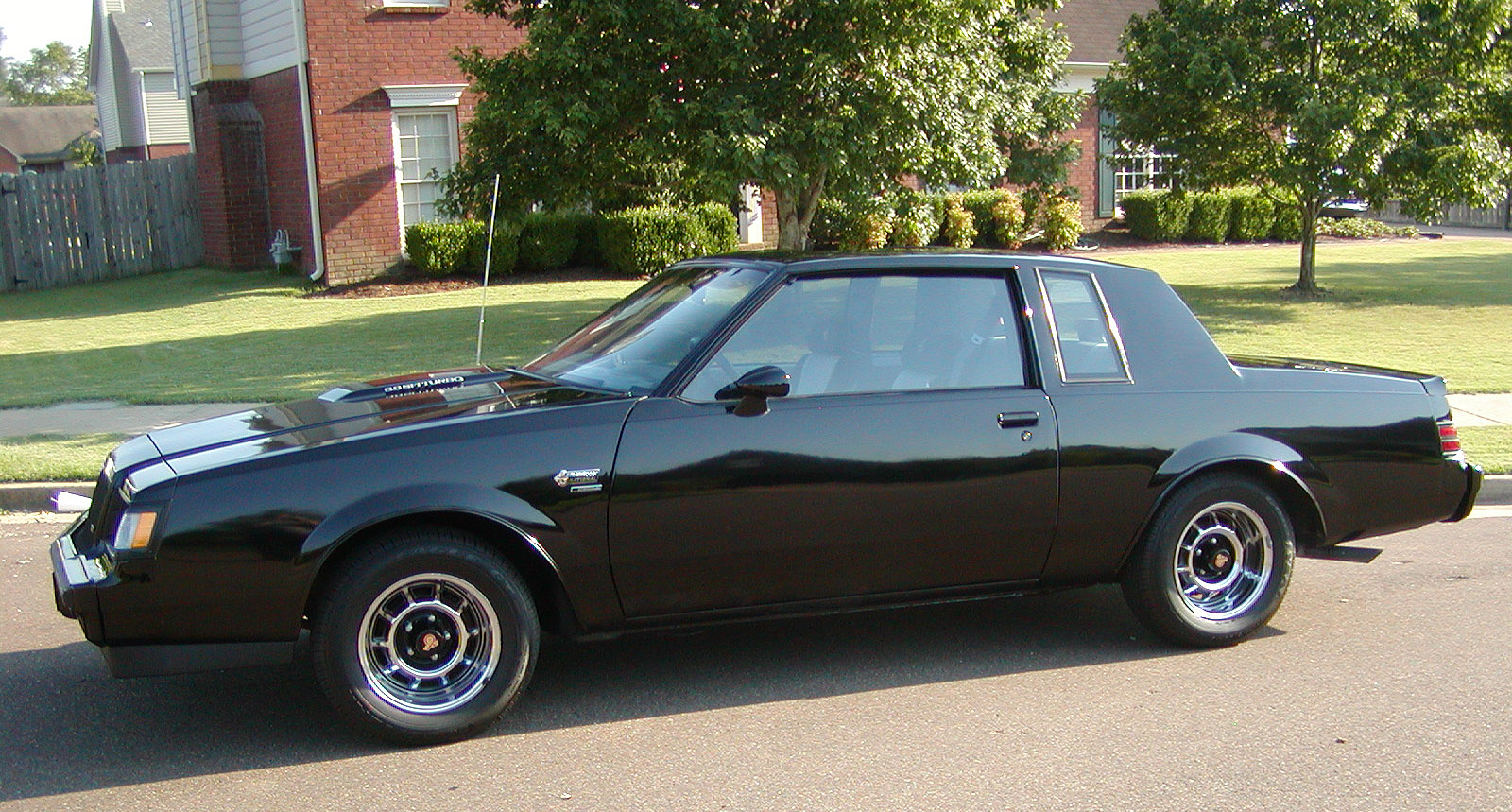
The 1986 Buick Regal T-Type Turbo is a special version of the Buick Regal that has a turbocharged engine, which makes it faster and more powerful. It's a classic car that many people find appealing.
The Buick Grand National is a fast car from the 1980s that looks sleek and is known for its powerful engine. It became famous because it could compete with much sportier cars, even though it looks like a regular sedan.
Car
Buick 200 T-Type
The Buick 200 T-Type is a special version of the Buick Regal that has a turbocharged engine, making it faster and more powerful. It's considered rare because not many were made.
'Numbers matching' means that the main parts of the car, like the engine and transmission, are the same ones that came with it from the factory. This is important for collectors because it shows the car is original.
A '10-bolt rear end' is a strong part of the car that helps it drive. The '342 posi' part means it has special gears that help the wheels grip the road better, especially when turning.
The 1987 Buick Regal Turbo T is a faster version of the Buick Regal that has a turbo engine. It's designed to be sporty while still being comfortable to drive.
A column shift is a way to change gears in a car using a lever that is located on the steering column instead of on the floor. It helps save space inside the car.
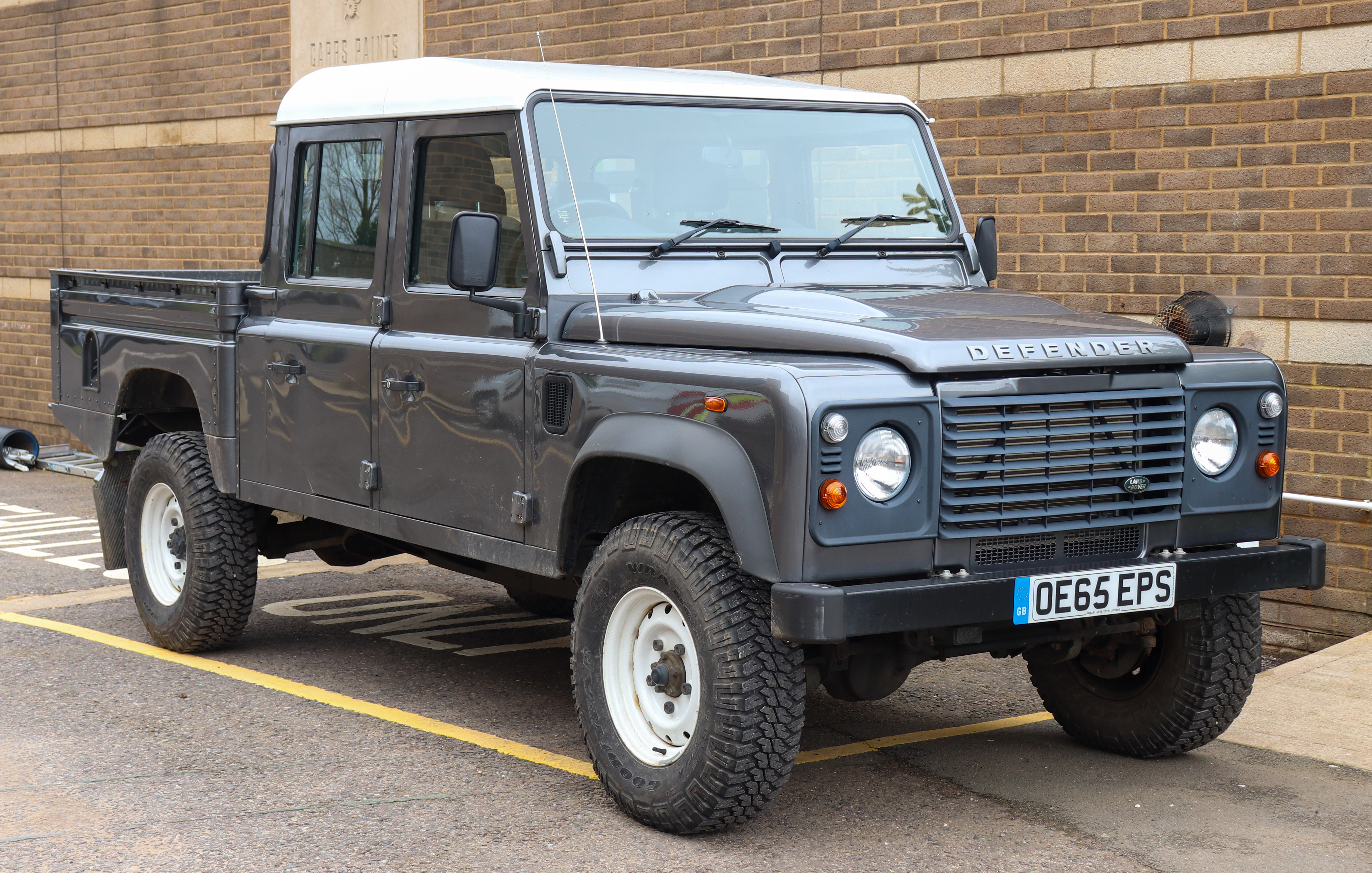
The Land Rover Defender is a tough, boxy SUV that can handle rough roads and off-road adventures really well. The 1998 version is especially liked for its sturdy build and cool looks, making it popular with people who enjoy outdoor activities.
This is a type of engine that is 2.5 liters in size and has four cylinders. It uses a turbocharger to give it more power while being efficient on fuel, which is great for vehicles that go off-road.
The Volkswagen Super Beetle Convertible is a classic car from the early 1970s. It has a convertible roof and is known for its unique design and fun driving experience.
The 1956 Chevrolet Bel Air Convertible is a classic car from the 1950s that many people love for its stylish look. It's a convertible, meaning the roof can be opened, and it's known for being a cool car to drive.
A 454 crate V8 is a big engine made by Chevrolet that has a lot of power. 'Crate' means it comes in a box, ready to be put into a car, making it easier for people to upgrade their vehicles.
Wilwood makes special brakes that help cars stop better. A four-wheeled power disk means the car has these brakes on all four wheels, which helps it stop quickly and safely.
Tri-five is a nickname for certain classic Chevy cars made in the mid-1950s. These cars are loved for their unique look and are popular among collectors.
LIVE
This is the Classic Automall Show.
Broadcast from the studios inside the Classic Automall in Morgantown, Pennsylvania.
Just one hour west of Philadelphia at Pennsylvania Turnpike Exit 298.
Featuring nearly 1,000 classic vintage and barred-fine vehicles for sale under one climate control roof.
Now, here's your host, Classic Automall President and the man with all the toys, Stuart Howden.
And welcome show number 223.
Coming to you from the Classic Automall Studio in Morgantown, Pennsylvania.
Gosh, we've had a busy, busy couple of weeks and we can talk about that here in a little bit.
Before we get to our guests joining us in the studio today.
How many cars in inventory right now, JR? Go first.
Uh, 958.
Okay.
I want to stick with the 950 from last week.
Uh, 973.
Winner, winner.
Hey, thank you.
So, joining us in the studio live with us today, this is awesome.
Yeah.
Harry Hurst and Michael Furman.
Gentlemen, glad to have you here.
Happy to be here.
Harry, I hadn't seen you in almost 24 hours or 12 hours.
Yeah.
Your listeners should know that yesterday, Stuart was the presenter at the world famous Madison
Avenue Sports Car Driving and Chatter Society Christmas dinner, which is a very, very exclusive
opportunity.
And we were all, you know, loved to hear all of Stuart's stories and how he grew up and
got into the car business.
It was fabulous.
It was a lot of fun.
Yeah.
It was a lot of fun.
And something, you know, I've been reading about that since the 70s from Brock Yates,
who we wrote up with Brock Yates Jr. who had some great stories.
But the 70s, we read about his dad talking about this great organization.
And of course, you know, Walter Cronkite would go there and all these guys that you, you
know, didn't even know were car guys.
That was the cool thing about you figured out who was the car guy when they went there.
And same with yesterday when we were there.
I mean, these guys, I didn't recognize but a few of them, but some of them are real serious
collectors.
Yeah.
And pretty cool.
It was pretty cool.
And it was, it's at Sardis.
Right.
And you may think, you know, well, it's just kind of a tourist place, but actually the
food was fabulous.
And it has all of those wonderful caricatures on the, on the walls, even up in the, in the
banquet room where we were.
Do they still do those, I guess?
I guess so.
Yeah.
They haven't done us.
They haven't done us.
They haven't done us.
Well, they're getting to it.
It's on the list and you know, they were, they were busy.
So it's interesting that somebody, I guess there's not one person that's done it all these
years.
I can't imagine.
Or maybe it wasn't a Hirschfield.
Yeah.
He was the artist for the New Yorker, I guess.
Right.
And whoever's doing it, I guess does it in the style of.
Right.
But yeah, it's, it's amazing to look at the walls there and see all of these people.
I miss the, I miss getting, my dad used to subscribe to the New Yorker and I love the
cartoons were great.
Yeah.
And I've pulled some great automotive related ones out of there over the years and put in
our newsletter.
Yeah.
Probably I'm violating some copyright of some sort.
Oh well.
Oh well.
So, Harry and Michael, for those of you who don't know, Harry is a photographer and,
and don't forget this, they social media wizard.
When it comes to.
By total accident.
But then that's the best kind.
Oh yeah.
Absolutely.
The glory days of racing.
If you're not, if you're not watching, then following that on Facebook, you need to.
It's a fantastic site.
It's gets a crazy amount of response over a hundred, almost two, you're closing in on
200.
200,000.
And we have the thing I find really enjoyable about it is, first of all, yeah, it started
totally by accident.
It started with COVID.
Right.
Nothing to do.
And I just started, you know, scanning and posting photos I had taken that I had never scanned
or done anything with and writing little stories about it.
And, and then we started getting guys like Brian Redman and Judy Stropas and team members,
especially the mechanics and the guys engineers.
Tony Matthews is on it.
He is a wonderful technical artist that does a lot of the cutaways you see in the magazines.
And so it's a, and he goes back to the Ford GT program.
So now it's, it's just really fun to get the insiders view on a lot of these subjects.
Sure.
And it's always, it's sometimes it's better to have the guy who wasn't quite at the top
of the totem pole.
Yeah.
You know, the perspective from the top is a little different from the bottom and the
middle.
Right.
The comments from the mechanics are the best of all because they don't care what they
say.
And if a driver, you know, that you used to think was a real hero, you know, it's actually
a jerk.
They'll say it right there.
And they'll prove it.
Oh yeah.
Isn't that great.
And then also joining us is Michael Furman, photographer, writer, publisher.
How many books have you published and written and photographed and done?
And it's, it's a lot.
I don't, I don't, when I'm trying to put myself to sleep at night, I try to count
the books and I, because I don't count cheap.
Right.
But, you know, I get to around 30 and then I realize I think I missed one and then I'm
next to you know I'm asleep.
So I don't know how many I've done.
Good therapy, right?
Yeah, it is.
It allows me to get to sleep.
Well, and, and we're specifically here to talk about the Spirit of Competition book
that's in its second generation or second version or volume.
Second edition.
Second edition.
I knew there was a word there that I could use.
Which is basically all about the Simeon Museum and the collection of cars that are there.
Yes.
Both Harry and I were involved in the first edition.
Both Harry and I, our relationship with Dr. Simeon goes back long before the museum
and Harry was very involved with the creation of the museum with Dr. Fred.
And I've been shooting Dr. Fred's cars long before the museum was there.
Sure.
So we were the obvious choice to help on the original book and we've been sold out
of that book I'm going to say for maybe three years.
Really?
Wow.
And it was not an inexpensive book.
It's quite an undertaking and it's sold out after about 12 years.
And before Fred passed away, we all agreed we were going to redo the book.
Unfortunately, Fred didn't get to be here to see this copy.
But as we worked on this every day, we'd say is hope Fred would have liked this.
What a great benchmark though, right?
A benchmark from Fred was one step away from unattainable.
Right.
But somehow Fred always got you to attain it.
I don't know how he pulled that off.
But both Harry and I adored Fred as most people did.
And so we've spent the last year and a half or so redoing the book.
In my case, the minute the first book was done in 2008,
we started shooting every car the museum acquired since then.
So over the last 17 years, we've shot.
That must have been tough.
Numbers are difficult.
Very difficult.
We photographed every car the museum acquired.
Now not every car made it into the book because some cars just weren't worthy of being in the
book.
But generally speaking, it must have been about a dozen cars or so made it into the
book.
But where this got to be quite the challenge is Fred wrote the original book.
Right.
And Harry's charge was to try to bring the new editorial up to speed to match what Fred
originally did.
Fred wrote every single word and we would shoot it to museum during the day.
And as my guys were falling asleep and leaving, I would go up into Fred's office and he and
I would review the text.
And we'd be there for hours going over the text.
And every so often I would move a comma or something.
Me, the wonderful English student that I was.
And it didn't matter what I did.
Fred would say, why did you move that comma?
I said, what comma, Fred?
He goes, I know there was a comma on that sentence.
Meanwhile, the books got like 400,000 words in it or something.
So we went over every nut and bolt in that book and a lot of effort went into it.
So doing the new version was a bit more of a challenge.
We had to do it to Fred's level, which means all the new text on all of the additional
cars was something that Harry had to do.
And Fred had a very specific way of how he approached the cars.
And so Harry had the tough part.
I had the easy part.
We've just been taking pictures over the years and the cars are wonderful.
And I brought in the same designer to update the book.
And we decided that we would change the format.
The original book was horizontal or a landscape format.
And Fred insisted on that.
Really?
And I don't like a horizontal book.
And unfortunately, Fred's not with us, so I got to change the format.
Sorry, Fred.
He'll forgive you, I'm sorry.
Yeah, we went to a square, which gave us a lot more real estate.
So we wound up going with our pages are like 25% more real estate.
And there's 64 more pages in the book.
And we added some things that were not in the original book.
Then we had to go through and read the original text.
Which is hard to do.
Which is not easy to do.
You'd be surprised how every typo jumps off the page and bites you.
And we were convinced there wasn't one punctuation mark out of place.
We were wrong.
There was no lack of typos and issues and inconsistencies.
And again, every time we went through the book, we would say,
we got to make this good enough for Fred.
And Harry did that.
Harry was the one that cracked the whip on that.
And when we were done, we had invited Fred's daughter, Christina,
to write an introductory chapter.
And she was very nervous about doing it.
I mean, we all idolized Fred.
Imagine her.
I mean, he was like the most wonderful father to her.
And she was just concerned that she wouldn't,
this book wouldn't do justice to her father and everything.
She read the book.
She loved the book and wrote the most charming introduction.
And that was the very last page we added to the book.
And we went right to press.
And what, from my point of view as a publisher,
we went to the best printer that I've ever worked with.
And we've worked with printers all around the world.
And oddly enough, he's right around the corner.
Out from.
Which is that?
In just outside Philadelphia.
And he is more obsessive than we are.
Nice.
And it's very unusual to go to a world-class printer
and then getting to go back and redo it.
And when we went to redo it,
we had all of the original files and we got to improve upon them.
So we went through every single file trying to fine-tune them
to make sure the color balance was correct.
And we were really pretty good the first time around.
And somehow this book is better.
So I've said this to a lot of people and then I'll stop talking.
I said this to a lot of people.
If this is the last book I do, I'm going out on top.
Yeah, I don't blame you.
I like that.
I'm really, really thrilled with the book.
I'm thrilled with how we redesigned the book.
Harry did a masterful job in blending in all this new material.
And the printer did an extraordinary job.
And, you know, if lightning strikes me down at the end of the day,
I'm going out in style.
You did it right, absolutely.
Yeah, on the printing, that press was one of those,
was that one of those Heidelberg XL 106 Speed Masters, I think it was called?
How do you know that?
Well, you know, I think the paper was Neostar 100-pound text.
It seems to come right rolling off the top of my head there somehow, some way.
Well, my printer is the most obsessive person.
And I think of, Harry and I think of ourselves as being borderline obsessive.
And then you meet him.
And then you meet him and you go, I'm not even in the same league.
Sure.
And somehow he makes it better and better.
And the technology today is so incredible.
You know, if we sent the book to China to be printed,
they print on like a 225 line screen, which is nice.
That's nice.
This was on a 400 line screen.
So this is so far past what your eye can discern.
And yet when we go on press, my printer doesn't want me there
because he says, Michael, you're not as critical as we are.
And you'll just be so happy to see your picture on the page.
You won't notice that it's like one hundredth of one percent off color.
Oh, man.
So I let him just do everything.
And he's a wonderful partner on this.
And somehow the book is printed better than the first one.
The book one was, first one was extraordinary.
And this one's even better.
I'm going to get to Harry on a couple of things, too.
Is it frustrating, though, as a photographer to have a book
where there's a fold in the middle of the picture?
Does that mess with you?
How do you deal with that?
It is always an issue on every book going back to the Dead Sea Scrolls.
I don't know that they had too much, too many full color images on the scrolls.
I couldn't answer to that.
Maybe Harry could.
I know Harry was around.
But it's something you kind of get used to.
And the one criticism we get every so often from somebody will say,
you know, there's a crease running down the middle of your page.
And what we try to do is mitigate that as best we can.
We also can go to certain bindery techniques
where the book tends to lay a little flatter.
Right.
And the only issue with that is the flatter the book lays,
the less stable the bindery is.
So then you find out, you know, a year later your book is falling apart
and your wife is using your pages to line the cat cage or something.
Nice.
But yeah, it is a bit of an issue.
Well, but I mean, your composition, the way that you take a picture,
Dr. Fred said a couple of things about you that just blew me away.
First of all, when he said, watching him, you work,
made brain surgery seem uncomplicated.
But what I like the most to be said, you know,
let it be said without question that his images are true photographs.
And that's important for people to know.
They're not all doctored up and you color correct things
to get them to be exactly the way they represent the car
and the way that it looks in person.
Right.
That's ultimately what you're doing is what you see with the eye.
You're trying to be accurate.
Sure.
And I mean, the attention to that detail, it's not that you're doing anything
other than just seeing it from a different perspective.
Right.
I mean, your eyeball sees it in a way that we wouldn't necessarily think
to see it or take a picture of one of my eyeballs.
The other one doesn't work so well anymore.
Most people, especially with cars, they get too close.
Right.
And they get a lot of distortion in the photographs.
And like everybody, you're so happy to see your photograph that,
you know, it doesn't occur to you that you could have done it differently
or better or the image is just so badly distorting the car
that you have to stand next to it and describe to people
what the car really looks like.
Well, then that kind of defeats the purpose of the photograph.
Yeah, it defeats the whole purpose.
Let me interject here because, you know, you're talking about Michael's photography.
For those of you who have never seen Michael in action,
you have no idea.
First of all, Michael operates in a studio that has to be big enough
for him to have his camera 75 feet away from the subject.
So we're talking about an immense space where the car is.
The car is not on the ground.
The car is up on a platform.
And above the platform is a light bank that Michael invented.
He was the first...
Well, I paid for it.
But the concept, I don't think anybody had ever...
It's a light bank that is longer than the platform, longer than the car.
Sure.
So it's this immense light source above the car.
And the platform the car is on is on rollers.
So the car can be rotated around in an infinite variety of angles
to capture the light exactly the way Michael wants it.
And then the other thing Michael has done that people are now starting to realize,
he shoots the car at eye level, at ground level.
So you can actually, if you look at his images, you can see underneath the car.
And that way you really get the true perspective of the car's lines.
It was something I had no appreciation for until I met Michael
and started looking at his photos.
And now, well, you see any number of different people adopting that.
But...
You know, a book of this magnitude, I mean, even when you had probably 75% of the photos
already done from the first edition, right?
So it wasn't as if you had to reinvent the wheel there.
But, I mean, to go in, I would think a blank piece of paper would be easier to write from
than to go in and try to modify a currently written thing that somebody else wrote.
I mean, you had a hand in writing it in the initial phase, right?
No, no, no.
Fred wrote every word.
I mean, he would kind of run stuff by us occasionally.
But I don't think it was more to get our confirmation.
Yes, we're going to have another.
No, actually, it was easier.
Was it?
Yeah.
Because Fred's style was so unique, but it wasn't artificial.
Now, there were certain aspects of it that were artificial.
For one thing, the first time I read Fred's book, I actually had to have a dictionary
with me because his knowledge of the English language was so extensive that he would use
words and you'd look at it and you'd say, there has to be a typo.
Right.
I don't know.
But you would look it up and know, indeed, it is a word and it means an 18th century French
way of making a wooden wheel or something like that.
So what you're saying is he would kick ass on Jeopardy.
Oh, yeah.
I mean, so that became obvious I would never be able to match that.
Sure.
So I gave up.
I wasn't going to try to do that.
But the rest of it was such an intimate and informal, I'll say.
I mean, it's like he's talking to you.
And so it was a matter of just kind of getting into that rhythm of writing.
And whenever he talks about his cars, it's not his cars, it's our cars.
Our car has this and that because he really, truly wanted to feel like he was sharing his
collection with everybody.
We all owned his collection.
Right, right.
And so you start getting into that kind of a mindset of it and it was really not hard.
And then, of course, I say this, it's kind of a little tripe.
But, you know, I really felt like he was right there.
Right, like over your shoulder and hiding you.
I mean, you know, there are times that, you know, I'd go, oh, no, no, no, don't do it like
that.
And I knew he was saying that.
Sure.
And Fred was very, very consistent in how he wrote.
So it wasn't like you had to go chasing after what he was trying to accomplish.
You knew it.
You knew the template.
And Harry had been working with him for so many years.
You read the book now, you really can only tell what Harry wrote because we put Harry's
initials next to each chapter that Harry wrote.
Other than that, you wouldn't know.
Fred didn't write them.
Are you surprised as a popularity of motor sports and motoring books that for years kind
of languished on the shelves and got dusty and now they seem to, there seems to be a
real, not research, maybe surgeons, I don't know what the right word is of these automotive
related books that are selling in huge numbers.
I mean, huge numbers.
I mean, it's not gone with the wind.
But I mean, it's amazing how many books are coming out and doing very, very well.
Carl Ludwigson's book, Turbochargers and Superchargers.
Volume.
27 pounds, three volumes.
And people were like, yeah, I read it and I'm like, you read some of it?
No, we read the whole thing.
Didn't they not lose you on page three?
I mean, Superchargers and Turbochargers is pretty finite, you know.
But are you surprised at the success of automotive related books and publications these days?
Well, people are really dissecting the material to the point of infinitesimal attention to
detail and there's so much material out there.
I think the great issue is so much material is wrong.
Right.
And a lot of times you'll see a book and everybody who refers to this book as being the definitive
source and then you go to the book and you realize, now half that stuff's incorrect.
Sure.
And it was very, very important, extremely important to Fred that everything was accurate.
And it was very important to us that anything we added to the book maintained that accuracy.
And a lot of times we will contradict what people think because what people think is
not correct.
Sure.
So.
Just because it's on the internet doesn't mean it's true.
It seems like the more something is repeated, the greater the chance that it's wrong.
Sure.
Yeah.
And you have to source everything from every which way from Sunday just to find out that
something is accurate and it gets harder and harder to do as the internet gets so much
more pervasive and people rely on something that somebody else wrote.
So they say, well, this person wrote it so it must be true.
Sure.
Well, that person was wrong.
Yeah.
They've been wrong for years.
I mean, we get guys who send emails to us on a car we have for sale.
And they'll say, they never made a Camaro in chartreuse and yet you find out that, yes,
they did.
They made two in chartreuse and then the guy goes, oh, I didn't know that.
But he was adamant until he didn't know that, you know.
But I like Fred's philosophy that is that we're all, any of us that own any of these
old cars are stewards of these.
Correct.
They could be stewards of these cars.
You're a steward and a steward.
Exactly.
You're a double hitter.
I should say that on my business card.
I like that.
So that we are, we're just keeping them for the next generation or whomever.
Although I can't imagine that the Cimeo Museum is ever going to go anywhere.
It'll be passed down for, I would imagine 10 generations from now.
It'll still exist in some form.
That's the plan.
And I hope that Harry and I are still doing the updated book.
Yeah.
Volume, you know.
Volume 12.
Look, I'd like to add two people to the writing team on this though because Chris Webb at
the Cimeone was instrumental in the editing of the existing material and my material as
well.
And, you know, you talk about the writing.
Well, the editing was actually a little bit more of a situation where we adopted Fred's
medical philosophy of, first of all, do no harm.
Right.
So when we went in, there were certain things that, and Fred had talked to us about it, that
he wanted, you know, to have corrected.
Right.
But we were very careful with what we changed.
And then we also let Jonathan Stein look everything over for accuracy.
So we tried to make sure that historically everything was accurate.
Yeah.
I mean, you are trying to be the reference guide to this collection and certainly it
would make sense to not get it wrong.
And, you know, because, I mean, the amount, the diversity of the vehicles in there, it's
not just, you know, yes, they're all racing cars, but it's a diverse crowd in there.
And it's not something that one person is going to know everything about every single car
in there.
No, and actually one of the real issues that we had was some of the cars that we added,
like we've got a Porsche that ran in the 2007 series at Le Mans, at Sebring, which is really
kind of out of where Fred had positioned the museum.
So, you know, we thought about how are we going to do that?
And the one thing we realized that we really needed to kind of bring the scope of the book
up into the 21st century.
So I added a chapter in there on professional road racing comes to America, which tastes
to pass the SCCA of the 1950s and into the 60s where we had drivers that were being paid
and teams, you know, that had a lot of money behind them.
And that way we were able to include the Porsche in there.
Yeah, I think it's important to show the current stuff.
There's nothing wrong with that.
I get the fact that it was not what it was maybe necessarily the first iteration or the
first thought of what it would be.
But don't you think Dr. Fred would say, hey, that's probably the right direction for us
to go?
He might not love it, but well, I think, you know, we've got to.
I don't know that.
But we, Harry and I were able to convince ourselves that he would have.
Well, in the case of the Porsche, for example, one thing is it had a paint job by Tony Lee
on it.
OK, very distinctive paint job, right?
And all of a sudden we realized, well, you know, our hippie Porsche 917 was really the
very first art racing car.
Right.
A whole classification that now is very common in racing started in 1970 with a hippie Porsche.
And so, you know, the car fits perfectly with that.
That makes a total sense.
We have a Lotus 30, which never, you know, you would think would never have raced at
Le Mans.
Well, I actually, one did.
Right.
I didn't know that.
But it turns out because I talked to Carl Levinson, who you mentioned, it turns out that that
was actually his proposal to the Ford Motor Company to build the Ford GT.
Right.
They were going to do a hard top version of the Lotus 30 as the first Ford GT.
And so, again, it fits right into our collection.
Sure.
I mean, you know, it's interesting.
One of the paragraphs or one of the chapters in there was talking about, will automobiles
ever achieve the historical legitimacy of other important objects?
I think they were there.
Aren't we there?
I mean.
When you're getting a hundred million dollars, you know, it's certainly in a financial way.
Yeah.
I mean, you know, obviously, but if you go to a horse auction versus a car auction,
the horses, you know, the cheapest horse there is 10 million now, you know, so it's
changed the equation.
We always jokingly say that we've done very well here at Classic Automall and the amount
of cars that we've sold in the dollar volume we've done.
Rob Myers from RM Auctions did in three days, one time in Monterey.
And we've been here eight years.
Yeah.
So, you know, there's that.
But some of the pictures in the book are amazing to get to those.
One of my favorite pictures of you shooting a car is the Tank Bugatti.
When you're standing in the car shooting down on something, I actually use that.
I'm sorry, I'll give you some kind of credit someday for it in one of my business plans
to show the level of detail we were going to take pictures of cars if anybody would
loan us any money to do Classic Automall.
It was that photograph because that says everything with the lighting equipment and the
I don't even know what you were shooting down on, maybe something on the back of the
car or something.
I don't know.
But it was probably the gas cap.
Yeah.
When that shot originally appeared in the first book, I had my whole team around me.
And without question, I can't do what I do without my crew.
And it seems that every time we have a picture of me working, there was one guy on my crew
that always seemed like in the middle of the photograph and the lighting on him was always
perfect as if he was the most important person.
And when we went to redo this book, I went to look for that photograph and I found a
picture with just me standing there and I said, I wouldn't normally get rid of the crew.
But I've seen Ken enough times that we can get rid of him and we'll just make this about
me.
But we always try to document the sets while we're working.
That's a great thing.
You should do that.
I think it's important.
And another one is not your photograph.
It's a black and white historical picture of the 1909 American traveler underslung with
the four guys sitting in it.
They're all very stoic.
They're all just, they're very serious looking like they're going out to go a thousand miles
an hour.
You know, it's just, I don't know what the, nobody was smiling or posing.
It was very...
And when we do the books and we've done plenty of books that have a lot of historical imagery
in it, that's the stuff that I really like.
And we did a book on the history of Concord, which is like 90% historical images.
Every time I open that book to look for something, I get lost looking at these old photographs.
Seeing those and yeah, I'm going to have to know what's going on.
I know when Fred wrote this book, each car is documented with historical material and
he wanted every car to have a driving impression.
Now, most people, when they do that, they'll take the car out for a drive and they'll tell
you how nice the car is or whatever.
In Fred's case, he went and found original driving impressions that were in period.
So where these get to be beyond interesting is you'll be reading a text from a motor car
from the UK in 1911 and the author is talking about the car is effortless.
And we're cruising along here at nine miles an hour and they're waxing very philosophically
about I can't imagine a finer ride than this.
And of course, if you were to drive that car today, you realize that the rental car from
budget would run circles around this thing.
And this guy thinks this is the greatest thing since Swiss cheese.
And Fred was very, very particular about that.
You said you need to talk about the car in period because that was the only frame of reference.
Right. No frame now for some.
You said if we were to drive the car today, we'd realize how awful they are compared to
what we're used to.
Well, that's why there's resto mods.
That's why people buy Camaro Z28 and they go, oh, this drives like crap.
I want some modern stuff in here.
I tell you, a couple of the other photographs.
One was maybe one of my favorite photographs in the whole book is the 1967 Ford GT Mark IV
with the rear clip off in the back end of it.
And all the intricacies of the stuff, the parts and the suspension.
And it's a picture that you could just stare at like the Mona Lisa almost.
It's just one of those things that captivate you and you can't stop looking at it.
Well, my favorite shot in the book is very similar.
It's the rear of the 75 alpha TT 33 TT.
And it's very similar except the bodywork is still on.
And all of the mechanical bits are hanging below.
And if you look at the car just at the top, it's got this beautiful silhouette.
And it's just really quite luscious.
And then you look below it and you see the engine room.
You see all the mumbo jumbo of pipes and wires and stuff underneath that motivate the car.
And that's what I find so fascinating is that the car can be so beautiful on the outside,
yet inside it is remarkably complicated.
And kind of be ugly, kind of, right?
So maybe you and I would be ugly, but to the engineers, it's a thing of beauty.
And that's one joy that we have.
We get to see the car so thoroughly.
We get to appreciate things that most people don't get to see.
Yeah. Well, and that's what you hope to do in the book as well, too.
I mean, obviously that.
And then, you know, some of the illustrations in there showing cars and they're trying to convey
speed. And there's all the lines that they draw that there's a couple of ones.
The page, I think that has that was an advertisement for the page.
And it's got the lines that it feels fast.
You're looking at it.
And you think if somebody drew that and had the wherewithal or the fortitude or whatever
to say, let's make this thing look fast by putting lines.
And it does the trick.
So fascinating, fascinating book.
And where can people get the book, Michael?
You can get it through the museum on the museum website, which is.
W-W-W-Simeone-S-I-M-E-O-N-E. Museum.org.
Yeah, it's a wonderful book.
And I've just glanced through it and I see you brought me a copy.
So I really appreciate it.
Brought you your own copy, Stuart.
Yeah, I'm telling you.
So when I die, Kathy's going to have a treasure trove of stuff.
So if you see all this stuff on eBay, you understand that I'm dead.
Anyway, thanks both for coming in today.
And thank you for that.
We got to visit as always.
And we should do it more often.
I think the last time I had you on was four years ago.
And it's been not quite that long for you.
Has it?
Pretty long.
It probably has.
So we will absolutely do it again.
When we return, we'll continue the classic
Autumn All Show with our guest, Keith Martin.
We'll see you in a couple of minutes.
By the way, if those of you don't realize, this is a car show
and we've been talking music in the studio with us.
Obi O'Brien, who has done a lot of work with John Bon Jovi.
Obi is a car guy too and has been for a long time.
There's a picture of you and Bon Jovi on the cover of.
We were together on modern costume.
Talking to our special guest of the day, Scott Pruitt.
Good morning.
How are you guys doing?
Mark Lieberman.
Tucker Wiz Guru.
Is that fair?
I'm going to ask you.
Corky Coker.
How are you this morning, Corky?
I'm great.
How are you, brother?
Brock Yates Jr.
How are you, sir?
From somewhere in North Carolina, Ray Evernham.
How are you, sir?
I'm doing great.
John Clark with the Ford Motor Company.
This is a great honor.
Her name is Lynn St. James.
And you're all the way across the country, I guess, right?
Yeah, I'm in Phoenix, Arizona right now.
Tony Angelo, YouTuber, influencer, drifter.
One point TV host.
Talking race cars, classic cars, movies, music, or just having fun.
It's The Classic Automall Show on YouTube and wherever you get your podcasts.
This is The Classic Automall Show.
If you have questions or comments, write podcast at classicautomall.com.
My goodness, we should have recorded all the off-air stuff.
It's three shows.
Then three shows and stuff.
What a great guest.
Great guys.
I love these guys.
Michael Furman's one of the first guys I met when I moved here.
He showed up here one day within about a week or two after Kathy and I first moved here.
And we've been friends ever since.
And of course, Harry, a great friend as well, too.
We met him very early on as well, too.
And, you know, I love that.
I guess Michael was too busy to take a position of photographer.
Of photographer, yeah.
The journeyman photographer gig was like, yeah, look, we'll get back to you.
I'm doing Ralph Lauren's collection.
I can't be bothered with your 55 Chevy.
I'll get back to you soon.
So where do we sell cars this past week, Steve?
Ah, how about Lexington Park, Maryland, Jackson, New Jersey?
That's actually two weeks.
So Charlotte, North Carolina, Perky, Omenville, Pennsylvania,
Phillipsburg, Pennsylvania, Annandale, Virginia, and Latrobe, Pennsylvania.
All right.
What was that?
Big applause.
From around the corner to around the world, we're a classic automall.
We are.
trademark.
Yeah.
So as we were talking about with them on the show,
did the Madison Avenue Sports Car Driving and Chatter Society lunch and yesterday was the
keynote speaker, and Harry just was telling me off the air.
He said, you know, that's a real get, Stuart.
He said, it is not everybody gets to speak there at the Christmas party.
And he goes, that's a real honor.
And he said, and you did a great job.
So nice.
It's a real name, too.
It's not like a joke name.
Somebody made up.
No, it's actually a real name.
It's semi-joke, though.
Yeah.
It's totally cheap.
We're going to change our name to the classic automall show event center and
Potato soup.
Potato soup.
Anaheim, Azusa and Cucamonga.
The CD, HP, DV, R71, 34D.
Well, very cool.
Yeah.
New arrivals this week.
How about the 1987 BMW M6?
That thing is bad to the black one.
Oh, yeah.
Black over gray, one of 7,000 or 1,767 U.S. cars in 1987.
It's that.
3.5 liter double overhead cam in line six.
It's got the very desirable five-speed transmission.
Loaded with options.
Sinister good looks.
What a good looking app.
It's pretty rare.
I'm surprised it's still here.
I'm surprised it's still here.
How about the 1986 Buick Regal T-Type Turbo?
Not the Grand National, the T-Type Turbo, which is a different car,
even though it's black over gray.
That's right.
200 T-Type, garage cap, one of 2,385 of those built.
Numbers matching 200 R4 transmission.
I don't think that it needs anything.
It's not quite as important as it was in a 69 Z28 or something, right?
10-volt 342 posi rear.
Good.
Beautiful car.
And then another 1987 Buick Regal Turbo T dark red metallic over burgundy,
which is an unusual car, color.
Yes.
But this one has 64,000 miles.
So it's had a little more use.
That one also has benched the 7030 bench seat with a column shift,
which is actually pretty uncommon.
Pretty rare.
Rare and desirable, though.
That's what we always talk about.
That's a good one.
But it's rarer than a Grand National.
It is.
It's a wolf in sleep's clothing.
It's a wolf in sleep's clothing.
And I can say that easily, right?
It looks like your grandmother's regal base.
Regal, right.
Yeah, with a bench seat.
I love in the column shift because that's tough to stretch.
Wouldn't take it.
1998 Land Rover Defender 110 gray over charcoal anthracite.
95,955 kilometers.
How many is that in miles?
What's that?
Do what?
95,955 kilometers.
I think it's about 70,000 miles.
All right.
Venerable 2.5 liter turbo diesel four-cylinder.
Those things are bulletproof.
I love them.
Yeah, they're really cool.
This thing will go anywhere.
Also new is the 1972 Volkswagen Super Beetle Convertible.
Kansas red over black.
8,800 title verified actual miles.
It's a low mileage Super Beetle.
Yeah, I love those.
That's the red is a great color.
It is.
Super Beetle convertible.
Absolutely.
And last but not least, the 1956 Chevrolet Beller Convertible.
Inca silver and India ivory,
which is a really unusual color combination,
which I like a lot.
Yeah.
Over ivory and charcoal,
but it's got a 450 horsepower,
454 crate V8.
There you go.
So this thing's got all the power that you need.
All right.
Willwood four-wheeled power disk,
because you need to stop all that way.
That's right.
Stunning drop-top tri-five.
I can't speak today and tons of new parts on this car.
So those are some of the new arrivals we have this week.
So we will post some pictures also
of the of the Madison Avenue Sports Park
having a Chowder Society.
Chowder Society.
Yeah.
And they actually had Chowder.
I bet.
Yeah.
I hope so.
Yeah.
I feel like where's the Chowder?
Manhattan or New England.
It was the.
Good question.
It was the running con.
Not the red.
No, it was the it was creamy,
but it was a little more.
It was thinner.
The combination.
Yeah.
Hybrid, you know, New York.
Hillbilly's called that.
Anyway, thanks for joining us on The Classic Automall Show.
We'll catch you next week with another new guest to be determined.
We'll see you then.
Pat Travers Band, for tour dates, contact and stuff.
Visit PatTravers.com produced by CarSmart's Media Copyright All Rights Reserved.
800-360-1917, 800-360-1917, that's 800-360-1917.
Sponsored by Reagan Gold.
We are offering a 100% risk free gold guide.
Gold continues to make new highs.
And unlike stocks, gold has never been worth zero.
You owe it to your nest egg in future to own some physical gold
or set up a gold backed IRA.
Call right now for your free report.
800-360-1917, 800-360-1917, that's 800-360-1917.
Sponsored by Reagan Gold.
About this episode
Stuart Howden hosts a lively discussion with guests Michael Furman and Harry Hurst about their experiences in the automotive world, particularly focusing on their collaboration on the second edition of the 'Spirit of Competition' book. The conversation dives into the challenges of maintaining accuracy in automotive literature, the evolution of car photography, and the significance of the Simeone Museum's collection. They share anecdotes from the Madison Avenue Sports Car Driving and Chatter Society Christmas dinner, highlighting the camaraderie among car enthusiasts and the importance of preserving automotive history.
Show #223 airdate 12-10-25 Stewart welcomes Harry Hurst, photographer and Michael Furman, photographer, writer and publisher of the book "The Spirit of Competition - Second Edition" (available at https://simeonemuseum.org/product-category/books). Discussion visits the creation and exhibits of The Simeone Museum in Philadelphia. Included is the origin of the first edition by Dr. Frederick Simeone, photographing every vehicle the museum acquired and the introduction to the second edition written by the late Doctor's daughter, Christina. Highlighted are the level of quality steps that make this a true "coffee table book" and a must in the collection of any auto enthusiast. Also covered is Stewart's role as Presenter at The Madison Avenue Sports Car Driving and Chowder Society, Holiday Luncheon at the famous Sardi's Restaurant in New York City. https://sardis.com/ https://www.facebook.com/harry.hurst.384209 https://thechowder.club/ https://www.facebook.com/search/top?q=michael%20furman%20photog
GET OUR FREE APP: https://ClassicAutoMall.appimize.app When it opens click on the ORANGE button to install on your phone or computer for DIRECT ACCESS to our VIDEO and AUDIO shows and our website.
CONTENT NOTE: Contests, Prizes, Offers, Vehicles & other items may no longer be available or offered after each show's original broadcast or posting date.
Recorded in our Showcase Studio just inside the entrance of the Classic Auto Mall in Morgantown, PA, Host Stewart Howden, Classic Auto Mall President and Classic Car Specialist Steve Saffier talk about this unique and amazing place often with amazing guests.
YES...Classic Auto Mall is a REAL former shopping mall that covers almost EIGHT football fields with an average of nearly ONE THOUSAND classic vehicles under one, climate controlled roof and they're all FOR SALE!
Be sure to LIKE and SUBSCRIBE to be informed of new episodes and SEE them on the Classic Auto Mall YouTube Channel. We also invite you to VISIT US IN PERSON at Classic Auto Mall, one hour west of Philadelphia at PA Turnpike Exit #298, VISIT us online at ClassicAutoMall.com or talk to real, live people about visiting, buying or selling your classic on consignment at 888-227-0914.