Classic Auto Mall - #249 Stewart Howden welcomes Jim Hall, Race Karting Instructor, Driver and Author plus Keith Martin of Sports Car Market Magazine
Classic Auto Mall SHOW
Classic Auto Mall - #249 Stewart Howden welcomes Jim Hall, Race Karting Instructor, Driver and Author plus Keith Martin of Sports Car Market MagazineClassic Auto Mall SHOW · Jun 26, 2026
Jim Hall is an important person in racing history. In this episode, they describe him as connected to building and engineering race cars, and to the Chaparral legacy.
Chaparral Cars was a racing car company started by Jim Hall’s dad. They were famous for trying new engineering ideas that helped shape how race cars were built.
Aerodynamics is how air moves around the car. In racing, it matters because it can help the car stick to the track (downforce) and also affects how much resistance it has (drag).
“Shake it down” is motorsport slang for running a newly built race car briefly to check that major systems work and that setup changes behave as expected. It’s typically done before the next race so problems show up in a controlled environment rather than during competition.
Mark Donahue was a well-known race-car driver and engineer whose name comes up in connection with Jim Hall’s circle. In motorsport discussions, Donahue is often cited as a highly capable driver who could extract performance and provide useful technical feedback.
Person
Bobby Ray Hall
Bobby Ray Hall is a person connected to the racing world discussed in this segment. Here, he’s mentioned as someone Jim Hall talked with about other racing figures.
“Formula 5,000” is a type of racing class with rules tied to engine size (about 5.0 liters). The speaker is saying he worked for a team in that racing category.
A go-kart is a small race car you drive on a track. It’s popular for learning because it’s easy to drive and you can really feel how fast you’re going and how the kart turns.
An “arrive and drive” race series is when you go to the event and you’re given a car to race. You don’t have to bring your own race car or handle all the setup—so it’s easier for beginners to try racing.
The “12 Hours of Sebring” is a long-distance endurance race. Cars have to keep running strong for 12 hours, so it’s not just about being fast for a few laps.
The Indy 500 is one of the biggest races in the United States. It’s a major test of speed and endurance over a full race distance, not just a short sprint.
DNF means the car didn’t finish the race. It usually happens because of a problem or an accident, and it’s important because it means you can’t score a finish.
“Ground effects” means the car is shaped so air flowing under it helps push it downward onto the track. That extra push increases tire grip, so the car can go faster through turns. It’s an aerodynamic trick, not a mechanical one.
Johnny Rethford is a race driver associated with early IndyCar ground-effects success. In this anecdote, he’s linked to the 1980 debut of a ground-effects IndyCar design that qualified on pole. That makes him part of the story of how IndyCar aerodynamics evolved.
John Bernard is the designer credited in this story. The host says his design helped create an early IndyCar that used ground effects, and that car qualified on pole in 1980. So he’s part of the “new aero idea” behind the race result.
A bearing is a small mechanical part that helps moving parts spin smoothly. If a bearing inside the transmission keeps failing, it can cause the car to break down repeatedly until the problem is fixed.
“Pebble” is short for a famous classic-car show at Pebble Beach. Winning there is a major honor because it means the car is judged to be exceptionally well restored and important.
RM Sotheby’s is a well-known auction company for expensive collector cars. If a car sells there, collectors may buy it, fix it up, and then show or race it.
Car
Chaparral GS2B
The Chaparral GS2B is a particular version of a Chaparral race car. In this discussion, it’s described as a clone of Frank Winchell’s car and it uses a simple single-speed approach.
“Single speed” means the car only has one gear ratio. That can simplify things and can be useful if the car is designed to run in a specific speed range.
A monocoque is a car structure where the outer shell does the heavy lifting. The speaker is comparing that to an aluminum chassis approach, which changes how strong and light the car can be.
Place
Black Lake
Black Lake is a place where they did testing. The point is that winter conditions affected where they could run the cars.
Car
Chaparral 2-H
The Chaparral 2-H was a very experimental race car from Chaparral. It looked unusual—almost like a streamlined train—and it was built to test new ideas for speed and grip.
Unibody means the car’s body and frame are built as one piece. That can make the car lighter and stiffer, which helps handling, but it can also affect how the car is built and repaired.
“Outlawed” means the race organizers decided the car (or something about it) didn’t follow the rules. So even if it was fast, it couldn’t race anymore.
The Porsche Taycan 4S is Porsche’s electric car. Because it’s electric, it responds to your pedal right away, which can make it feel very “snappy.” The speaker compares that feeling to a slot car because it’s so immediate and simple to drive.
“Point and go” means the car is easy to drive and it moves quickly when you press the gas. The idea is that there’s little waiting for power to show up. With electric cars, that instant response is a big part of the appeal.
This is a Porsche 911 GT3 from the 991.1 generation. It’s meant for track driving, and the speaker is saying they use theirs for lots of track days rather than commuting.
A track day is an organized event where drivers take their own cars onto a race circuit for timed laps and practice, usually with coaching and safety rules. The speaker’s “85 track days” is basically a measure of how often the car has been used in real high-speed driving conditions.
Car
Formula Mazda
Formula Mazda refers to a type of race car used in a one-make style series. The speaker is saying they’ve been racing/driving one for a long time and still loves it.
A “two-rotor” engine is a rotary engine with two spinning parts inside. It tends to feel smooth and rev quickly compared to the more common piston engines.
Car
Formula 3
Formula 3 is a stepping-stone level of open-wheel racing for up-and-coming drivers. The speaker is comparing the feel of their car to that kind of race car.
The Porsche Panamera is a four-door car made by Porsche. It’s built for performance, but it’s also meant to be practical for daily driving. The podcast mentions the Hybrid version because it’s what the speaker’s wife drives.
The Porsche Cayman is a two-door sports car made by Porsche. It’s designed to handle well and feel sporty when you drive. People talk about it a lot because it’s a popular Porsche model for enthusiasts.
Concept
selling a Ferrari or a Porsche at a price that sounded like a lot of money at the time
They’re talking about how selling a desirable car can end up being worth more than you’d think. It’s a reminder that car prices can change a lot over time.
Term
Penzo Indy car team
“Indy car” means the kind of open-wheel race cars that compete in major U.S. races. A “team” is the group that prepares the car and supports the driver, and “Penzo” is the sponsor name attached to that team.
Topic
car school
A “car school” here means a place where people can learn how to drive better, especially for racing. The guest’s dad is saying it’s a good way to learn the basics with instruction.
This is a special version of the Ford Bronco SUV. The “Sasquatch” edition is built for off-roading, so it’s meant to be more capable on dirt and rough trails than a regular Bronco.
This is a Mercedes-Benz luxury coupe with a big V12 engine. “Twin turbo” means it has two turbochargers to help it make a lot of power, so it feels very fast and strong.
The Pontiac Trans Am (often shortened to “Transam” in casual speech) is a classic American muscle car line. In 1976, it represents the era’s transition toward more comfort and emissions-era tuning compared with earlier, wilder Trans Am years.
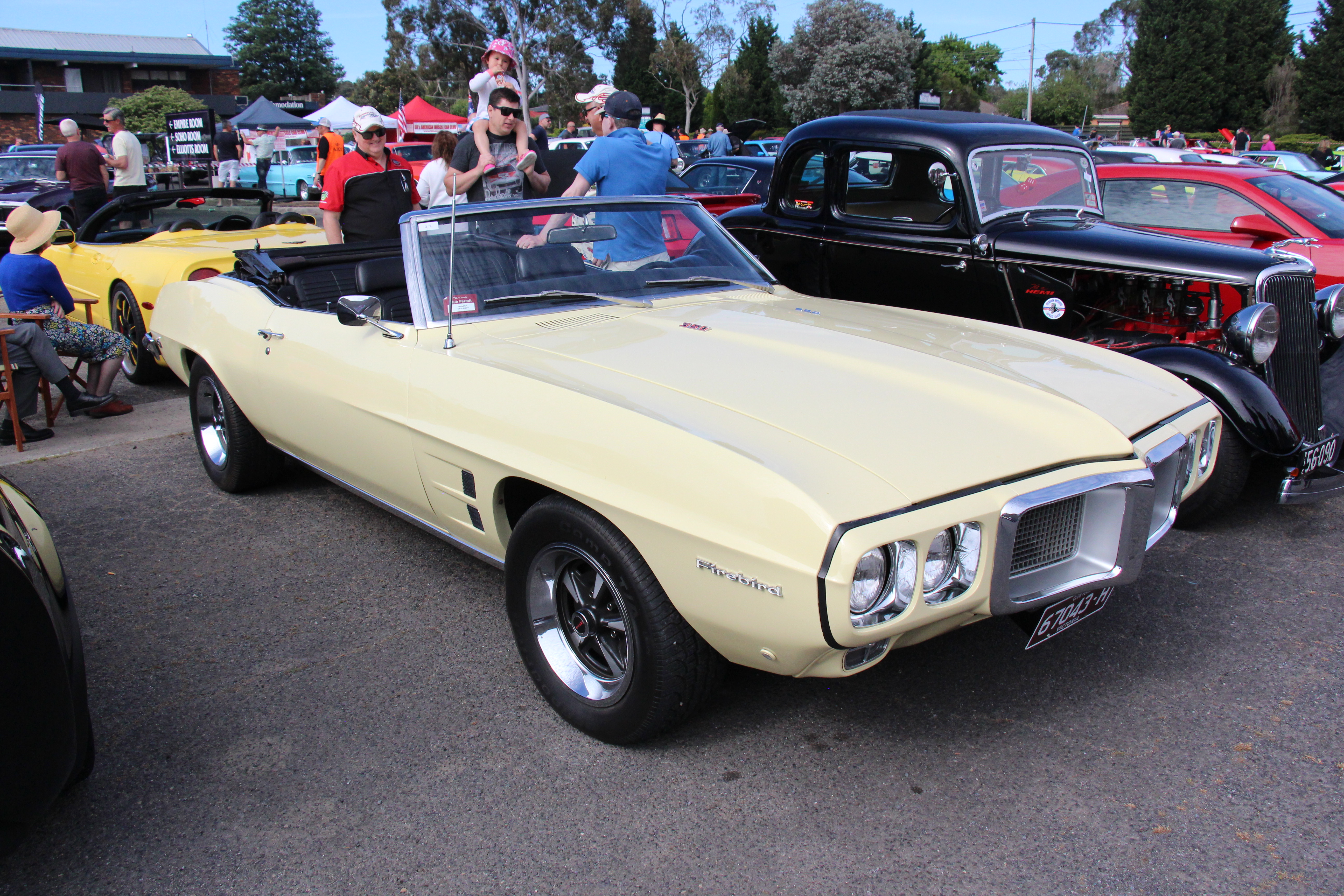
The Pontiac Firebird is a muscle car made by Pontiac. It’s known for having a powerful engine and a sporty look. The podcast brings it up because people like it for performance.
The Buick Skylark is a classic car model made by Buick. In the podcast, it’s mentioned as part of a list of older, well-known cars. The point is mainly that it’s a recognizable name from the past.
The Plymouth Road Runner is a classic muscle car from Plymouth. It’s known for being built for performance. The podcast mentions it as part of a group of classic cars.
“Hardtop” is a body style where the side windows look more continuous because there isn’t a visible center pillar. It’s a classic styling cue from many 1960s and 1970s cars.
This is a 1968 Dodge Coronet in the RT trim. The “hardtop” part means it’s the classic style with no visible window frame between the front and rear side windows, and the host also describes the car’s colors.
The “727” is a specific Mopar automatic transmission from the classic era. It’s a three-speed auto that many muscle cars used, and it’s popular because it’s tough and well-supported by parts.
The Dodge Challenger is a muscle car from Dodge. It’s known for powerful V8 engines and a classic, aggressive look. The podcast mentions a specific older Challenger because some versions are especially sought after.
“Four-barrel” means the engine uses a carb setup with four openings for fuel/air. With a 383 V8, that’s meant to help the car breathe better when you press the gas.
“E-body” is a Mopar nickname for a specific generation/body style. People like it because it’s tied to the classic Challenger look and the most desirable muscle-car versions.
A “frame-off” restoration is when they tear the car down completely and rebuild it from the frame up. The point here is that the most perfect, show-focused restorations can be too precious if your goal is to drive the car often.
Concept
concord ready restoration
They mean a restoration that’s “good enough” for car-show standards, but not so extreme that you can’t enjoy driving it. It’s the compromise between show perfection and real-world use.
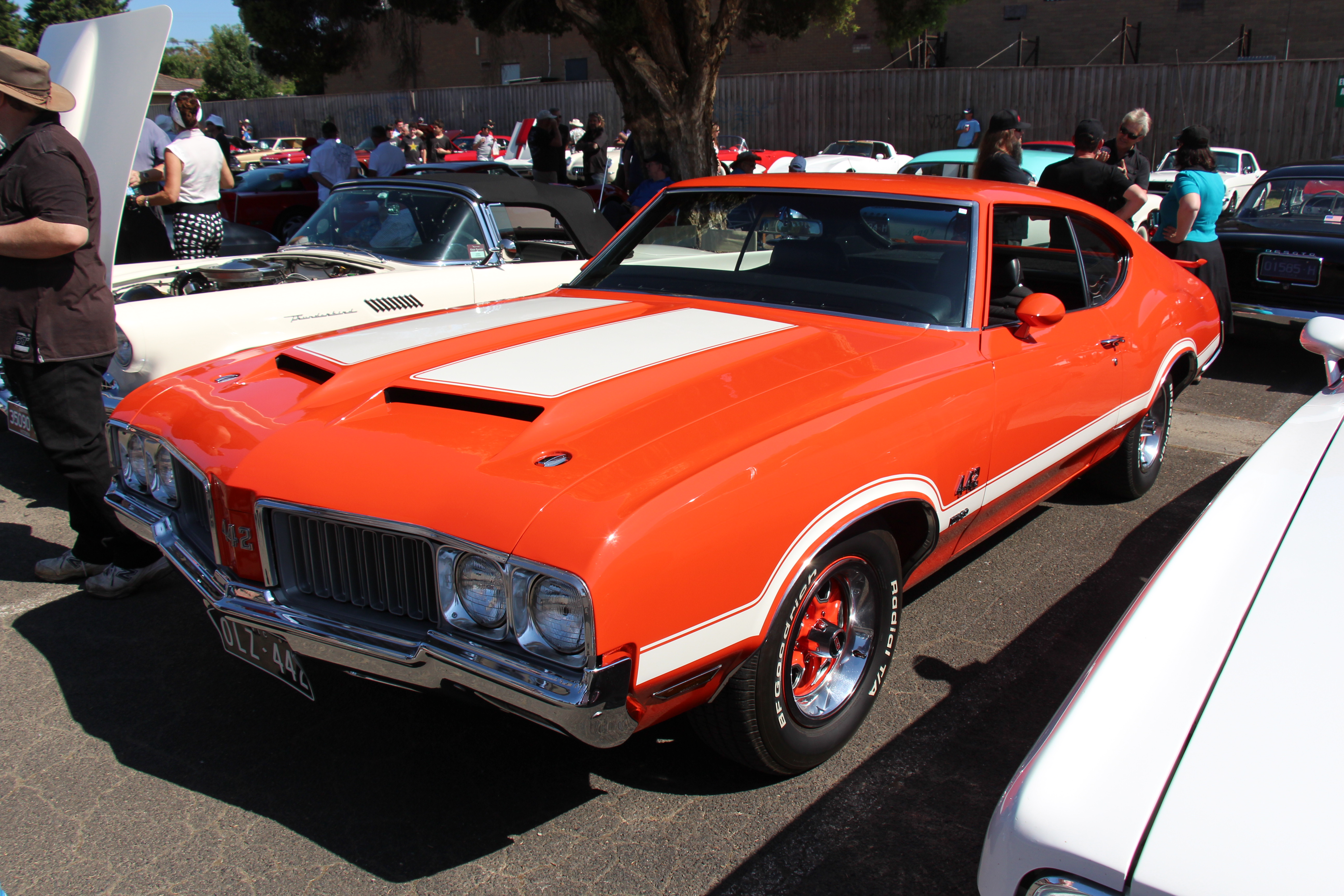
The Oldsmobile 442 is a classic performance car from Oldsmobile. A convertible version means you can drive with the top down. The podcast mentions a specific 1968 example because details like the year and color matter to collectors.
“Numbers matching” means the big parts in the car are the original ones it left the factory with. Collectors like it because it’s more authentic and usually worth more than a car with swapped parts.
The Muncie M21 is a specific type of 4-speed manual transmission made by GM. If it’s the “correct” one for the car, it means the car’s drivetrain setup matches what it would have had when new.
This is about the rear axle/differential housing. Saying it’s a “12 bolt” version is a specific, identifiable setup that collectors use to judge whether the car is built the way it should be.
This is a 1969 Corvette from Chevrolet, and it’s the convertible version. It’s the kind of classic car people buy to enjoy open-top driving, and the episode is treating this one as a special, well-kept example.
This refers to a specific version of Chevrolet’s 427 V8 engine. It’s like saying “not just any big engine,” but the particular factory performance setup collectors look for.
Term
Turbo hydrometric three speed automatic transmission
That phrase describes an older GM automatic transmission. It’s a three-speed automatic, and the episode is pointing out that this car has the specific kind that matches its performance-era setup.
This is a 1999 Pontiac Firebird Trans Am 30th anniversary, and it’s the convertible. It’s a special commemorative version of the Trans Am, and the episode is highlighting it as a particularly memorable car.
This means the car automatically shifts through four forward gears. That helps the engine work in a better range whether you’re cruising or accelerating.
This is a classic 1968 Ford Mustang you can drive with the top down. The host is talking about the specific V8 engine and automatic transmission that make it feel lively even by today’s standards.
Candy Apple Red is a special kind of red paint that looks deeper and more vibrant than a flat red. It often changes slightly in color depending on the light, which is why people think it looks 'exotic.'
Cubic inches is a measurement of how big the engine is. A 'V8' means it has eight cylinders, and in general a bigger displacement can help the engine make more power.
The Ford Cougar is a car model name from Ford. In the podcast, it’s mentioned as part of a playful comparison, not as a detailed description. It’s included because it’s a recognizable classic model name.
The Chevrolet Impala is a large, classic car made by Chevrolet. It was designed to be comfortable and easy to drive. In the podcast, it’s mentioned as part of a list of classic cars.
Lake Tahoe is a famous vacation area in the western U.S. In this episode, it’s where the Healey car convention is happening, which is why they’re talking about driving there.
A “slide window” is a side window that opens by sliding sideways rather than rolling up. The hosts are discussing which style they prefer for day-to-day use, including how it affects moisture/condensation inside the car.
“Hermetically sealed” means completely airtight. The host thought the car was like that, but then realized it actually traps moisture inside—so it can feel like a humidifier rather than a dry, sealed cabin.
A “wind up window” is the kind you raise and lower by hand (usually with a crank). In the discussion, the host says cars with this style are cheaper than cars with sliding side windows.
Here, “logistical thing” means the practical challenge of getting the correct parts for an older, less-common car. With classic cars, even if you know how to fix the problem, you may still be blocked by parts availability, shipping time, or the need for specialty suppliers.
On older cars, the ignition system uses small contact points to control when the spark happens. “Recapping the points” means cleaning or replacing that contact surface so the car starts and runs correctly again.
The Hyundai Elantra is a common, everyday compact car. Here it’s mentioned because the buyer is learning the basics right when they take delivery—like figuring out how to open the hood.
They’re comparing the frame problem to a bad vehicle history report. The idea is that once people know about it, it’s hard to “un-know,” and it hurts the car’s value.
A “frame shop” is a repair shop that fixes a car’s main structure if it was bent or damaged. Here, they’re saying the car had a structural problem, and they had it repaired.
Bring a Trailer is a website where people buy and sell classic cars, usually through auctions. It’s known for sharing a lot of details so buyers can make a better decision.
Randy Nonenberg is the person who started Bring a Trailer. Here, the hosts credit him with helping create a system where cars get inspected so buyers know what they’re getting.
It’s basically a middleman that helps arrange car inspections. The goal is to make sure the buyer gets the right information about the car before money changes hands.
Wire wheels are the classic spoked wheels you see on many older cars. If they’re bent, the wheel may wobble and cause shaking, and it can be expensive to fix.
“Shimmy” means the car shakes or wobbles, usually coming from the front wheels/steering. It can happen when wheels aren’t straight or balanced.
Term
packometer
A “packometer” here sounds like a dashboard gauge that isn’t working. The host is basically saying: if the gauges aren’t fixed, what else might be broken or ignored?
The host is describing a common negotiation logic in classic-car buying: if the seller won’t fix known problems, the buyer may seek a lower price to compensate for the cost and hassle of repairs. It’s essentially a “pay less because the car isn’t fully sorted” mindset.
Wipers are the parts that clear rain and dirt off your windshield. If a listing says a wiper doesn’t work, it means you’ll likely need a repair before you can drive safely in bad weather.
LIVE
This is the Classic Automall Show.
Broadcast from the studios inside the Classic Automall in Morgantown, Pennsylvania.
Just one hour west of Philadelphia at Pennsylvania Turnpike Exit 298.
Featuring nearly 1,000 classic vintage and barred fine vehicles for sale under one climate controlled roof.
Now, here's your host, Classic Automall President and the man with all the toys, Stuart Howden.
And here we are, show number, is it 249? Yeah, cool, yeah.
Here we are in the middle of, oh, the end of Juno.
Yeah, we're, uh, there's a 250th show on the 250th birthday of America.
Well, there you go.
Darn clothes.
We sure planned that well, didn't we? Wow, wow, how cool are we?
Before we get to our wonderful guest, JR, how many cars in the inventory are you at this moment?
You get to guess by yourself because Steve's not here. Where he is, we don't know.
No, but in his stead, my cold or, or, uh, allergy is here.
Yeah.
So I could do some really things and I'm going to guess 789.
Bingo, bingo, right on the number.
Wow.
That's never happened.
Wow.
So, and I'm disappointed that we only have 789 cars in inventory.
We have to pay the bills around here, guys, so get some cars in here.
Joining us via zoom this morning, uh, hour after.
Well, no, it's morning for you, I imagine, too, as Mr. Jim Hall, the second joining us from Texas, I imagine, or where are you today?
Uh, I live in Ventura, California.
How cool is that?
It's 8 a.m.
So up in the hills, it's foggy and 70 degrees.
I love that part of the world.
It still seems unmolested out there compared to other places that we've gone to over the years.
And, uh, a beautiful part of the world.
And you're close to, you know, Monterey and, you know, you got racing all around you down there, right?
Right.
Batten Willow, Willow, Thermal, Laguna, Sonoma, yeah, all reasonable drives.
Sure, sure.
And, uh, you just got back from a wonderful racing trip, uh, to, uh, Sicily in Spain and went to the F1 race at Barcelona.
That must have been a treat.
It was.
It was really special.
Uh, uh, as you know, I've known Zach Brown since he was 16.
And I was, uh, I leased property from Gene Haas with my car track for 14 years.
Wow.
And he and I have known each other for about 30 years.
So I was guest of both and really feel just honored and treated.
And they made me, me and my, my friends feel really special.
Sure.
It's a great picture.
It's really, really sweet.
Yeah.
A great picture of you kneeling next to the, uh, McLaren Formula One car in the pit lane.
That doesn't get to happen very often.
That's not something you can just run down and do, right?
Um, yeah.
We have these really special hard cards that they're very protective of.
And, you know, they escort you in and out and hand you on and then take it away from you.
And they use them all year long.
But, uh, because Zach, uh, wasn't there.
He was at Lamar, um, his assistant, um, just did lots of special stuff for us.
We got to come in during the race into the garage and watch some pit stops and, uh, had
access to talk to the crew and the trainers.
And, you know, it's a huge staff now.
So it's so different when I ran that was the president, general manager of the Penzo
Indy car team with John Andretti and 91.
Right.
We had a, I think a total staff of 19 for everything.
And they, I think they have about 1,500 of their staff.
Isn't that crazy?
And of course, we were talking about, you know, going over the pit wall like it is in
Formula One, almost unlimited.
There's three people per tire, plus the two guys in the front, plus the two guys in the
back, plus the guy, you know, their pit wall crew is almost as big as your entire crew
for the whole team.
Our entire staff.
Yeah.
20-something over the wall.
Right.
Yeah.
It's absolutely crazy and doing pit stops in 1.8 seconds.
I asked him about that and he said, you know, the 1.8 is cool.
He said, but what we really strive for is the 2.5 average.
That's where we want to be.
We want that consistency, uh, that has to be for, for, for winning races.
You win the races in the pits a lot of times.
It is that consistency is so important because the strategy I think is based on a 2.5 pit
stop that we have a 4-second one that might do that.
I've been, uh, but you know, obviously I, I love, uh, McLaren and, and Dad and Bruce McLaren
when Dad did the season in 63, they were neighbors and in England and I love, you know, I've loved
McLaren over the years.
One of the pictures I sent you is I got a lot of time with Joe Ramirez.
Yeah.
That was, you know, right under Ron Dennis.
Uh, and he said he was actually, uh, part of the team when Dad ran Formula 1 in 63.
Wow.
Wow.
He was a very young mechanic in those era.
So pretty cool.
Yeah.
Darn cool.
So we had a fabulous time.
Um, and, and, you know, the sightseeing.
Barcelona is amazing.
We went to, it's a Sagrada Familia.
We went to all, all of the famous, uh, Gaudi houses.
Right.
Uh, went to Montserrat and just had a, a really great time.
And probably gained a few pounds with all that good eating and over there, right?
My wife, uh, is training for the John Muir trail.
She's in July going to walk 200 miles in about two and a half weeks carrying.
She's, she's all of 111 pounds carrying 30 something pounds backpack.
All her belongings on her back.
And so she was training.
So we walked 15 to 20,000 steps every day.
Wow.
That's a lot because we were, when we were in Monterey the last time this last year,
we walked like 11,000 or 12,000 steps in the day and I was exhausted as the most I'd
ever walk.
I said, there's no way I could do anymore than to hear people like you guys who walk
15 to 20.
So God bless you.
So good to see, uh, uh, Lewis and Ferrari back on top.
Uh, it was funny, boy, they, all the drivers were really complimentary and
congratulatory to Lewis, uh, on being back on the top of the podium.
And you don't see that in all sports.
So it's nice to see the, the competition, you know, patting you on the back.
It was really special.
I've been a Lewis fan for about 15 years and, um, you know, as the race ended,
McLaren got very fortunate that both, you know, Charles and Kimmy dropped out.
And so they ended up third and fifth and, and right as the race was going checker,
uh, Zach's assistant, uh, she said, let's go.
And we just followed her running right out into the pit lane right beside Ferrari,
right in the first and second row of the podium and, and watch Lewis jump onto the
Ferrari guys right under the podium.
As you guys probably know, that's the first all British podium since 1968 with,
with George and Norris and all that.
And so we got to experience that, you know, champagne, everything.
And then walk back into the garage with the crew and, and the chairman of the board
says, Hey, Jim, would you like some champagne?
And he hands me a cup of champagne.
So we're celebrating with the crew.
And it just was really special.
I, I just so appreciate, uh, Zach, uh, just, just saying, um,
let me do something special for you and show you what formula.
One's like very different than Indy cars, very different than history.
And even though he wasn't there, he was there in spirit.
One of the pictures I sent to his assistant said, why don't you put on Zach's headset?
I saw that.
I took a picture and it says ZB on the side of it.
I saw that.
She sent it off to him just like Jim, Jim's watching over things for you
since you're gone.
I didn't get to go out on the pit wall during the race, but, uh,
it was just a very fun, very fun.
Yeah.
There's, there's a lot of pinch me moments that you had during that.
I imagine that it didn't get much better than that.
And of course, uh, you know, formula one, you know, top of the heap and no
different, you mentioned your dad for those of you don't know Jim Hall,
uh, his father, uh, founder of Chaparral cars and a driver and a builder
and an engineer and an all around just great guy, uh, just, just, you know,
so important in the history of motor sports, uh, what your dad has done
for, you know, all disciplines.
It's carried over all the way from, from the aerodynamics that he did to
everything.
It's just amazing his impact and influence.
Yes.
Um, it's just wonderful that I got to grow up around that with
what rattlesnake race way on the shop.
As soon as they were done building the car for the next race,
they could go shake it down.
And, um, I know you were talking with Bobby Ray Hall about Mark Donahue.
And of course, um, you know, happy that I knew him as a kid.
Sad the way we lost him, but, uh, just a great engineer driver like dad dad
and half sharp in that era when I was a kid would be out testing the cars
later on from twice the engine builder would be out testing.
And for me growing up, I worked for the formula 5,000 team and we, we won,
you know, uh, we won three seasons in a row with Brian Redman.
And Brian Redman for me is how I taught my school.
He was, you know, he was a finisher.
Right.
And he only ran as hard as he needed to.
And he was racing against good guys like Mario and James Hunt and Al.
And, you know, all the guys, but he went on one time during the time I was working
for him, he was first or second, 38 out of 41 races.
Wow.
That's an amazing.
Spectacular.
Yeah.
And you know, it's funny.
Carl Haas and their crew and our crew, it was, you know, we had five of us to do
everything, fabricator, machinist, mechanic, engine builder, go for me,
engineer dad and, you know, five of us to keep two cars ready.
That's just in this day and age.
Yeah.
It wouldn't even happen in that former fashion, but it's incredible.
Now you watch, you listen on the radio when you're hearing the forming of one
guys where a guy's got a huge lead.
Don't be setting fastest laps when you got a 42nd lead.
There's no reason for you to hit the, you know, but you, how do you teach a race
car driver to slow down?
Right.
Yeah.
It was very exciting for me.
Lewis went on a different strategy of, you know, the 33 pit stops
and he got fortunate that a virtual safety car came out.
And then he just checked out.
He checked out almost a second lap towards the end of the race.
And he was just like, what you say, one with the car.
Yeah.
And it was really special.
And I felt so good how everyone came up and congratulated him.
Yeah.
Because, you know, people that may have written him off.
Sure.
He said, you know, my fan base supported me through all this.
And, you know, he has Angela and, you know, a whole good team beside him,
but that he's been able to navigate a totally different culture than
Mercedes or McLaren in one, just over one year.
Right.
It's pretty spectacular.
Yeah.
It's amazing.
We, I don't think really proud for it.
Yeah.
I don't think we thought that he would have a chance to win again.
And, you know, there was a lot of DNFs in that race.
So it was an unusual race that we don't see as many DNFs that we used to see.
Because of, I guess, this, you know, the way that they build these cars is
they check everything 42 times.
And, you know, and then it's a different animal.
300 sensors.
Right.
Exactly.
We know that there's a problem.
We're working on it.
I love it when they start bickering back and forth on the radio about it.
So you did.
How many years were you in a karting instructor and had a karting school now?
You did that for over three decades.
Interesting, different families.
You know, my dad had grown up racing in the era of the 50s and 60s.
Extremely dangerous.
He had many death-defying accidents where he broke his leg and broke his arm, caught
on fire and all that stuff.
And I was going to UC Santa Barbara and I was seeing Al Unser and Michael and all
those guys driving karts.
And I said, of course, I want to be a race driver.
I grew up around it.
Well, you're on, if you want to be a race driver, you're on your own.
If you want to be anything else, I'll help you.
Wow.
So I took my summer earnings, which I think earned about 3,000 summer working 50.
You know, you know what a gopher is on a race team working 50, 60 hour weeks.
Yeah.
And I bought a kart and started racing a kart in college, kept it in my apartment and
in college and started racing.
And it actually came surprisingly easy, you know, having been around, you know, really
good people.
It was fun and all that stuff.
Right.
And after I graduated, I went to work for a design engineering company.
It was kind of bored.
And my biggest competitor locally in Southern California in karts had been a marketing
guy for Moran Stereo.
He was older, lived behind Ventura and he said, well, let's just start a shop and
start selling go karts.
You can build engines because I had been around engine building.
And we started it and we said, how can we get customers?
So we started giving test drives for $75 test drives.
And we realized no one in the world was teaching people how to drive go karts.
So we quickly turned it into a full time program, one day, two day, three day corporate team
building, you know, the Amgen's, the Disney's, all that stuff.
And it just exploded.
And we taught over the 38 years taught 60,000 people how to drive go karts.
Wow.
Wow.
You know, probably 30% corporate and Zach Brown was one of the customers and Patrick
Long and many, many other people had the honor.
You had Bobby Ray Hall, I think your last interview or one of your most recent ones.
And at Long Beach one year, Bobby said, I'd like to bring Graham up.
You know, Graham was, I think about eight or nine or 10 and and just do a private
forum and I'll stay out of it.
And I won't be able to leave that.
So he brought him up.
He was in the upper parking lot on the phone all day.
And I taught him a private and at the end of the day, and he said, what do you think?
And I said, I think you're in trouble.
I think this just costs you a lot to bring it to me.
So it was really special to have this little niche business that was honored so well in
the industry.
Yeah.
And I talked about the NASCAR game coming after Sonoma and, you know, Patrick Long started
it at our track when he was six and became a Porsche factory driver and just so, so many
people.
A lot of the celebrities, David Letterman, Paul Newman, love sending people there, bringing
people there, you know, on and on and on.
Well, I loved what Motor Trend Magazine said.
It was the top 49 things to do, cool car things to do before you die was
one of their things that they put that in.
You know, because people don't, people don't realize that there was no virtual racing back
then.
There was no other, there was the only way that you could even feel the experience of
a race car.
Generally, you couldn't even see it on TV.
You would have to go and actually drive a go-kart or go to even God forbid a Malibu
Grand Prix, which used to be popular all over the area back then.
And there wasn't other opportunities.
So to be able to drive a go-kart that was fast like that and low to the ground and the sensation
of speed, that must have been exciting.
I could see the word of mouth had to be a huge buzz for when a student left there told
all his buddies, you had to go.
Oh, yeah.
It was, it was that classic word of mouth.
Yeah.
We have all the social media now, but that's how our business works.
Right.
Just doing a good job, creating a great experience, teaching them whatever we could in a half
a day to three days.
And, and not everyone is going to be the world champion, but just that they had that experience.
Yeah.
One of the most sincerely wonderful things for me as some of the guys that spent some time,
maybe did our, we had an arrive and drive race series, you know, like Jim Russell or
Bob Under and whatever, is a guy took his family to Florida, to, to Disney and Epcot
and all that stuff.
And he said he was, had rented a van, was in his van with a family and crossed an intersection.
Someone ran a red light and he swerved left and swerved right and didn't get hit.
And he said, it's because of what I learned at your school.
Wow.
That's cool.
That makes it all worthwhile right there.
Right.
You know, it doesn't get much better than that.
So, you know, and carding, we talked about, you know, in Europe is, you know, pretty popular
still to this day.
A lot of the F1 drivers got their starting card and carding is an important lead way
into motorsports racing.
It's a way to tell if you're any good, could you tell if somebody was good right away and
did you know that somebody had it?
It was interesting.
Some people had it and they, if they kind of knew the edge from skiing, from surfing,
from, you know, had really good hand eye coordination from another sport, maybe I'd done some motor
cross or whatever.
Those people, if they focused and were interested, were instantly really good.
But one of the fun things for me is someone that decided this is what they wanted to do
and maybe weren't that 10-tents athlete.
Those guys through perseverance could become really, really good amateur racers.
And, you know, 95% of us are not IndyCar Formula One drivers.
So, that I said, if you stick with it, you practice, you focus, you, you know, do your
visual laps, you know, test, learn all the situations.
A lot of those guys could get really good.
And I say guys, probably only over time and it was hard to move the needle.
There was probably only about 5% women that came out.
And of course, a lot of them could be fabulous drivers.
But it is, it is a different culture, as we know.
Right.
And to move the needle was really challenging.
It still is to this day.
I mean, you know, it is, you know, it's unfortunate.
But, you know, there's more women in motorsports than there's ever been, whether it be driving
or in the pits back office or wherever, you know, there's lots of female participation,
which is great, which is the way it should be.
And because it's a different perspective and, you know, a different perspective is good.
It is.
One of the neat things for me at the McLaren pits is the pit stop trainer is a woman for
their team.
And when I was watching her warm up the crew for the pit stops or whatever, she looked
very intense.
And then I saw her at lunch and walked up to her and said, I hope there's some protein in
that salad.
And she started laughing and we had a lovely conversation.
You know, I told her I had a kart racing school and Zach was was part of that many years ago.
So she and I had a great conversation.
And she she is the person that helps them do those 2.5 second consistent stops.
And then Piestres and McLaughlin's coach for the the mental right emotional part.
She was there and I got to talk to her.
So there are some great spots.
I'd love to see one a woman like a Lynn St. James or or whatever at top levels.
But it's neat that they have, you know, engineering and all different stuff that they've incorporated
themselves in are super passionate about the sport.
And, you know, most people the great thing about being in this sport is that yes, it's
a job and yes, it's a lot of high pressure, especially if you're in the pit crew.
But it's also very rewarding to be involved, so involved in stuff like this and for you.
I mean, to be able to go to, you know, Barcelona and be a guest of the teams and, you know,
and kind of experience in a modern version of what your dad experienced back in, you know,
in the 60s.
Pretty amazing.
Now, is rattlesnake raceway in Midland still there?
I know there's a museum there.
Is the racetrack still there and usable or is it?
It is still there.
It is not usable right now.
Dad has had some some interest in and making it into a, you know, kind of a country club
track.
Sure.
And dad turns 91 this summer and and and, you know, his life is full.
And as as you age, especially if you've had some bad accidents.
Sure.
It's been a tough decision for him to do that.
He did say, if I decide I want to do that, would you move to Midland to run that for
me?
And I said, I love and turn so much.
You know, I have the hills, beach.
I have friends and family.
My wife's family is from here.
She was born and raised here.
And and it would Midlands, you know, is is a very different culture and a very different
atmosphere and all that.
And, you know, of course, that Permian Basin, we could be very proud of producing almost
20% of our domestic oil.
Yeah.
Gas and stuff.
So so I wasn't willing to do that.
Right.
At this point in my life, I'm 68.
And like I said, I love my life here.
Well, and so I don't know if that will happen, but the shops and the track are still there
this last weekend.
We had the Permian Basin Petroleum Museum, what we call party on the patio.
And I was just getting back from Europe.
So my nephew that works at Swift is an engineer at Swift and San Clemente.
He went in and drove.
We drive one of the seven cars each each June and he drove the two J and did some great
laps.
You could look, you know, on YouTube or online and see him driving that.
So he went in and dad and and Johnny Rutherford came down and they answered questions after
the dinner for about an hour and a half.
Two of them.
So how cool is that?
And of course, a great new book just recently, not recently.
George Levy had.
George Levy had the Texas Racer.
Yeah, just really cool.
Yeah, it's really well done.
He sent he was on the show and it sent me a copy of it and just a fascinating career.
The Chaparral cars were so innovative, so ahead of their time.
So amazing and, you know, successful too.
It wasn't just like, oh, this was like, you know, a little, you know, happenstance.
This was, you know, 43 wins is not another 72 podiums, right?
That's not the Sebring 12 hour and 65, the Nürburgring in 66, 12 at Laguna Seika
in 66, Brands Hatch in 67 and then the Indy 500 in 1980 with a whole bunch of others
thrown in there.
Pretty amazing, amazing resume.
Yes.
And dad in retrospect, if you ask him, he was very into developing the cars and making
them faster.
And during the era of him and Hatch, Hatch would have the developed car.
Dad would have the test car.
Hatch would many times win more races, even though dad's car was faster.
And, you know, he said in retrospect, if my goal was to win more races, I would have
held off on testing the development car at a race.
But I don't think he's any way dissatisfied that maybe he had more DNFs than he might
have had.
Sure.
He was into making them faster and he was very good at that and he had a support crew
that was really good at that.
You know, his relationship with Frank Winshaw was important and, you know, all of the different
eras.
So I did want to, you have that Penzo hats sitting right there.
I think we both have a story about that.
We do.
Absolutely.
In 1980, Johnny Rethford and the John Bernard design first ground effects IndyCar was on
the pole and I was standing next to him on the straightaway before the race.
And as you know, standing there, you look at three quarters of a mile of people to the
sky and it's just a proud moment to be there.
And I see a ladybug fly and land on his shoulder.
And I said, Johnny, look what's on your shoulder.
He's all, he's all darn, I'm going to go out and win this race.
I just got my good luck charm and went out and did it.
So it was just really sweet between us.
And a couple of years ago, he came to the party in June and I reminded him of that story and
he just lit up with the biggest smile.
Oh, I bet that was so special.
Yeah.
Moments like that are pretty amazing.
And for both of you to kind of, you probably were thinking the same thing he was thinking
when you pointed it out to him and like, look at that good luck symbol that's happening
here.
And of course, my friend, Alan Tate, who was family connected to you guys was at the Indy500
and he gave me this hat signed by your dad and signed by Johnny Rethford and still got
a little grease on it from somebody.
I don't know where the grease came from, but it's one of my most prized possessions.
My wife rolls her eyes, but it's one of those things that's pretty darn cool.
And in those days that we won the championship that year on that mid Ohio, Johnny was super
experienced, but not as experienced as dad as a road racing driver.
Right.
And dad had had a lot of driving that mid Ohio, Mickey Rupps, hometown, home place, go car
racer, car racer.
And so dad and Johnny spent, before Johnny drove the Indy car, spent a bunch of time
in the rental car out there driving, both driving each other around.
And he ended up doing really well if not winning that race.
And dad said, you know, he felt like he had something to offer this great professional
driver from his experience.
Right.
And you talked about the DNFs and stuff, but I would imagine a guy like your dad learned
as much from about the car and racing from DNFs as he did from winning.
Oh, yeah.
And sometimes you're chasing your tail, you know, the 2F before the World Championship
in Europe was super fast, but, you know, kept having failures and it took him a long time
to sort out.
I think it was one particular bearing in the transmission and stuff that kept failing to
sort it out.
So, you know, sometimes it takes a while and unfortunately that was 67.
And I think if I remember right in 68, they outlawed the big blocks, went back to smaller
engines and that, you know, threw in the cap and moved everything back to America.
And I think cap went and became very international at that point and decided to stop racing
then.
Right.
And so unfortunately, fortunately, they had to hire Phil Hill to replace cap.
So, what a great relationship.
Well, some, I mean, not only did, you know, Phil Hill, but Jackie Stewart drove for your
dad.
Roger Penske drove Chaparral cars for a time.
Vic Elford, John Sertes, I mean, pretty amazing.
I have a grand sport in my hand here.
I love those.
Really nice Bill Neil photo behind me of the grand sport.
Absolutely.
I think dad, I don't know if I could verify that, but I think Roger borrowed the grand
sport for a race that he wanted to do and quote, never returned it.
And when the first one sold for a million dollars, Roger and said, I think you owe me
a million dollars.
And then when the first one went for 5000000 he went up to him and said, I think
you owe me 5000000 dollars and stuff.
So, it was one of their jokes and those cars in that era were passed around.
Sure.
And his brother had done really well, Ellis Hall, in the oil business and helped dad get
started.
You know, the Fari Manza that won Pebble with both Carol and Phil, a dad won his first
race in a number of years ago.
He sold that at RM Sotheby's auction in Monterey.
Right.
And then the people that bought it, restored it and started running it worldwide.
You know, at Monaco, at Goodwood and so it was out there being seen and out there being
driven.
And I'm friends with that family from the Bay Area.
And just really cool how old race cars like the one behind you.
Yeah, the Cobra.
Are so, so, so special.
And I imagine it's...
Probably no dad.
Yeah.
Surprising to your dad the value of these things nowadays, they were just old race cars.
It's shocking to him.
And, you know, he, you know, Shelby and dad were kind of partners with DeKal and Dallas
after dad graduated from Caltech and talking about go-karts around the building that they
had.
They would evenings pull the cars out and race the go-karts around the building and
just have a blast.
Right.
And it was probably pretty dangerous, but they survived it.
Well, you know, it's amazing to see that, you know, Chaperrill cars.
I mean, how many are left?
Do we know a number of how many of the Chaperrill?
Are all of them still somewhere?
So other than the Chaperrill one that were built by Troutsman and Barnes, all the rest,
all the Chaperrill twos are all in the possession of the petroleum museum.
It's called the Chaperrill Gallery.
And there's seven of them there.
And there's even the GS2B, the Frank Winchell clone.
It's a single speed that cars there too.
That was a test bed car aluminum chassis instead of a monocoque that was made to parallel programs
with Chaperrill with Chevrolet.
Of course, in the winters, they couldn't use Black Lake.
So, you know, Frank would send some of his young hotshot engineers like Mike Pocobello
or some of those engineers down to do winter testing at Rattlesnake.
Right.
And so it was really, really cool.
And I guess the most radical one is the 2-H, is that the one that looked like a stream
liner?
Which one was the one?
It was.
So, yeah, it was a unibody car.
And Dad was, you know, still recovering from his end of the season 1968 Las Vegas accident.
You know, broke both legs and caught on fire at the last race of the season.
So he was not able to test that car.
And when you ask him now, he thinks he made it a little narrow.
He said, if I was, you know, more mobile, I would have cut it.
It wouldn't happen.
And it widened at three to six inches.
He hired John Sertes to drive it.
John wasn't comfortable in it, and Dad wasn't able to really help him develop it.
And it was hard for him.
He bought a McLaren for John Sertes to race the rest of that season.
Nice.
I love it.
And of course, the 2-J was kind of a testbed, but there was rumors that Teddy Mayer was
going to get an outlaw with the rest of the Can-Am crew.
So, you know, GM and Dad said, well, we should, even though it's not developed, we should
throw it out there.
Sure.
It was very fast and a testbed, but of course was outlawed.
Right.
I love the target for the 2-H was a slippery piece of soap on wheels.
That's a great thing.
I love that.
It was a very unique, different car.
And Dad's mind was always going, you know, even after he stopped racing and started
playing a lot of golf, he started designing his own putters and, you know, drill a
mountain, put, you know, lead in the ends of the putting part, you know, to try to balance
it better.
And his mind's always going, always going, even in the last 10 years, he still, he and
Sandy still run their gas and oil production company.
And Dad would be sometimes up in the middle of the night, you know, in his late 80s writing
notes for an arbitration or something, you know, just like that line is hard for him
to stop.
There needs to be a movie.
I think the movie would be great.
You know, Ford versus Ferrari was a great movie.
I think the Chaparral story would be an amazing movie as well.
Thank you.
Yeah.
So, you know, so wonderful to have you on.
My last question I'd like to ask everybody that's on the show is, what is your daily
driver?
Hmm.
My daily driver.
I drive and this comes back to slot cars.
I drive a Porsche Taycan 4S.
Nice.
Nice.
Electric Porsche.
Yeah.
And it reminds me of a slot car.
Yeah.
It's point and go.
It's smooth.
It handles well.
And we have solar, so I just plug it in and it runs off the sun.
My not daily driver is a 991.1 GT3.
All right.
And I just run it on a glorified street tire and I drive it to all the tracks within eight
hours of here.
Wow.
So that's about nine tracks.
It's done 85 track days.
Wow.
That's a pretty impressive resume for that car.
Yeah.
Willow is an hour 40, but Willow is two hours and then Laguna's four hours and Sonoma's seven
hours.
Laguna.
We have lots of tracks and so it's been a really fun car for me.
I've always had a Formula Mazda since the late 80s.
I keep one at Button Willow.
I'm 68 and still love driving the two-rotor Formula Mazda.
That's awesome.
It's fast and nimble.
Kind of like a Formula 3 car.
Sure.
So I listened to Bobby's cars that he's had and let go and was a little bit jealous.
But my wife drives the Panamera Hybrid.
We love Porsches.
My shirt, I think you can see has a Porsche on it.
I didn't notice what that was.
We love Porsches.
I've had the GT4s, the Caymans, all that.
My parents were divorced when I was young, so I spent winters in Marin County, summers
in Texas or on the road.
My stepdad was a captain for American Airlines, was San Francisco's sailing bay champion
twice.
Wow.
He was a super sailor and he had a 79 Levin S and he would take the American Airlines
bus to the airport and say, you can drive it, but if you ever even put a scratch on
it, you're done.
So I, as a young teen, would be out driving a dark green with a dark tan interior 9 Levin
S.
And it was just, it was 2,200 pounds, it sounded good, it was light, it was nimble, and it
made a huge impression on me.
So when I came into the place that I wasn't spending every cent on going racing and had
kept a little sum in the bank, I bought a Cayman and then a GT4 GT3.
So you'd like to have that 911 S today, huh?
I would love to have it.
And I think he sold it for about 10,000.
Of course, you know, those stories are, there's so many of those stories of selling a Ferrari
or a Porsche or any of those cars at a price that sounded like a lot of money at the time.
But of course, hindsight is 20-20, right?
Yeah, even though my dad was a big Chevy guy, you know, he was involved in the Chevy dealership
in Midland and he usually had one of their Corvettes or something.
I just fell in love with that 911.
So just the pure simplicity.
And then, you know, David Letterman had a number of those, Seinfeld, those guys.
So it was fun that they were both passionate about those cars too.
And passionate they are.
The Porsche is a culture and Patrick long, you know, has remained a good friends.
Does the loft events, you know, the air and water and air events and spectacular
the culture, that car culture.
Sure, it's amazing.
It's fun to watch and it's fun to be a part of and fun to talk about.
And we could talk about it all day long, I would imagine.
And it wouldn't hopefully wouldn't get old.
Maybe did everybody but us.
Dad, you know, trusted me to be a mechanic on the race team.
Trusted me to run the Penzo Indy car team one time.
He was being honored at Peterson and in front of 300 people.
He said, you know, my son is just up an hour away up in Ventura and does a great job
running the car school up there.
And if any of you ever want to learn the basics of racing, you should go up and see him.
So I really have felt honored by my father just trusting me, doing a good job,
trying my best.
And, you know, just yesterday, he asked me, hey, can you do this for me?
And I got it done.
He knows that I love short term projects and I just feel honored by him
and honored that I've had the privilege to, you know, grow up around some of the very best.
And I know my life has been very special.
Yeah, he's definitely up there on the list of most influential in the racing
world in the history of racing.
There's no question about it.
And that will never change.
And, you know, what an honor to be able to just the absorption rate of things
that you absorb from him talking or sitting around the dinner table had to be off the charts
and to learn all that and to know all that and to be able to, you know,
live vicariously through him sometimes as well.
You know, Franz Weiss was our engine builder test driver, you know,
ended up doing VDS engines and just fabulous, fabulous to grow up around him, too.
Absolutely.
He would let me, you know, take heads off and help him with engines.
Well, you know, he was a one man engine shop.
Sure.
Oh, well, amazing guy.
Amazing.
So I'm 68 and still track drive.
I feel really lucky.
I just do time trials now.
No actual competition.
I just made that decision.
You know, we all think that 60s are old, but it's really not.
It's all a minute.
It's it's all up here.
You just got to get past that part.
Thank you. Thank you.
I love your knowledge and your passion watching some of the interviews and stuff.
So I appreciate that so much.
You guys do.
What's your daily driver?
My daily driver right now is the 2026 Ford Bronco 60th anniversary
Sasquatch edition.
It's Wimbledon White with a red stripe down the rocker panel.
And it's fun to drive.
And they've only made it's the 60th anniversary of the Bronco, which makes you feel old.
My favorite daily driver that I just got rid of it was a
2016 Mercedes Benz S65 Coupe V12 twin turbo and that thing was a beast.
Oh my God, that was quite the car.
But no, it's the Sasquatch Bronco.
It's one was your first daily driver.
My first daily driver was a 1976 Audi 100 LS four door sedan that my dad bought
because he thought it looked like a Mercedes and it would be really cool.
And I hated it.
And so they're very shortly after that was a 1976 Pontiac Transam.
Yeah, so that was so to me at 14, 14 years old and three months,
my dad got me an RX2 used and and and I got a learner's permit
for the summer to drive from his house to the shop in Mac.
I had to cross a 75 mile an hour road.
Right. And and that's what I learned to drive in.
And then I had a 70 LS Camaro afterwards.
Wow, that was a great car.
You know, I forgot about those.
What they call they they had different licenses that you could get as a kid.
If you had a specific, if you had a job or you had a hardship,
if one of your family members was disabled, you could get a license at 14 ish.
I forgot.
Isn't it fright?
Isn't it frightening when I see a 16 girl driver now?
I'm like, oh, my God, they're young and I was driving around at 14.
And when I crossed that 75 mile an hour highway,
my dad said, I want you to look three times and keep looking.
And so that was to cross from his house to get to rattlesnake or chaperone cars.
Look three times and keep looking and cross it.
Good advice, sage advice from your dad.
Yeah, wouldn't that be awful, right? Yeah, it's it's interesting.
I had a car before I was 16.
My mother had gotten sick and I had a car.
I was 15 and I was driving out to her house in a Buick Le Sabre that was hers.
And, you know, didn't nobody thought anything about it.
I mean, if you got pulled over, they just tell you to go home.
You know, it wasn't a wasn't a big deal.
Not today, right?
Well, thank you for having me on.
Thank you for what you guys do.
And it's neat that you need more cars right now.
Absolutely. If you know anybody, send them our way.
So, Jim Hall, the second everybody.
Thanks so much, Jim.
Thank you, guys.
We'll be back with the classic autumn all show in just a couple of minutes.
We'll see you then.
The classic autumn mall is located not far from Audubon, Pennsylvania,
named after James Audubon, the famous ornthologist.
And there's probably no better place for birdwatching.
Look there, a flock of Thunderbirds.
Of course, who doesn't love the power for firebirds?
Studebaker Lark and Hawks.
Buick Skylark's place AMZ Eagle and the difficult to catch Roadrunner.
Oh, there's no better place for birdwatching than classic autumn mall.
This is the classic autumn all show.
If you have questions or comments, write podcast at classicautomall.com.
The classic autumn mall is located not far from Audubon, Pennsylvania,
named after James Audubon, the famous ornthologist.
And there's probably no better place for birdwatching.
Look there, a flock of Thunderbirds.
Of course, who doesn't love the power for firebirds?
Studebaker Lark and Hawks.
Buick Skylark's place AMZ Eagle and the difficult to catch Roadrunner.
Oh, there's no better place for birdwatching than classic autumn mall.
And we're back with the classic autumn all show.
Classic autumn mall studios, Morgantown, PA.
Good guess.
Good guess, man, some stories.
God, there was so many more to it.
You know, that's the problem with with a 30 minute ish show is that there's always more.
There's just so much more.
And but, you know, it's like looking at these shows that are three hours,
you watch for an hour and a half and you're worn out and you go, oh, my God,
there's still an hour and a half to go.
Not that it's not interesting or any of that.
No, I was especially with somebody like this whose career has covered so many
different things.
Yeah. And and, you know, the what he gleaned at the dinner table from his dad,
what we were talking about is just amazing.
So thanks so much to Jim Hall, the second for being on the show,
and thanks to his dad for everything he's done for motor sports and vehicles
in general aerodynamics, particularly some of the new arrivals this week are.
How about the 1968 Dodge Coronet RT hardtop?
Oh, I love the RT.
Medium blue metallic over white and black.
Long term ownership in this date.
Correct 440 cubic inch VA.
That's in the center hall here, right?
Yes, it is. I've seen it's beautiful.
Date correct for a 727 three speed automatic stunning presentation on this car.
And then another Mopar product, another new arrivals, the 1973 Dodge Challenger
hardtop, Hemi orange over black, 383 cubic inch, four barrel VA.
The desirable e body.
This is a fun driving car and it was redone in 2018 or so there.
And very nicely done, good driver quality.
You know, you've got to know what you want in this world.
And you want something you can drive.
You can't make it perfect.
You can't go out and spend, you know, the kind of money that a frame off,
perfect, concord quality, restoration and paint job and all of that.
If your goal is to drive it every day. Exactly.
Now, if you're going to show it and take it in a trailer
and baby at the whole time, then that's a different animal.
Then we're talking about doing a concord ready restoration.
But if you want something to drive, don't go spend $25,000 on a paint job.
Don't go buy the best of the best.
My one that's usable, that's cool, that you like, that'll be fun.
And if you get a scratch, OK, no big deal.
You can take it to a car's in coffee, but then you want to stop at a
wild wafer cup of coffee. Exactly.
So other new arrivals, the 1968 Oldsmobile 442 two door holiday coupe.
Scarlet red over garnet, numbers matching 400 cubic inch, 325 horsepower V8.
It's got the correct Muncie M21 four speed manual with a 12 bolt rear axle.
This is an interesting car.
It's a survivor and a solid 442.
You know, there's a lot of options of what you could do with this car.
You could restore it, you could just drive it and enjoy it.
And if you, you know, bumped into a shopping cart at the local
Wawa or Walmart or whatever, why then you're OK with it.
So other new arrival, the 1969 Chevrolet Corvette convertible.
Monaco orange over black, 99,289 miles.
Boy, you're just pain in that day.
It goes to 100.
I had that happen on my herstoles.
It was when I bought it, it was at 99,996.
And we're driving along and it's rolled over to all zeros.
And, you know, it was just like, it doesn't really mean anything,
but it's just it's a funny thing and a thing that, you know, it's a milestone
regardless. So kind of cool. Over 100.
Yeah. Numbers matching 427 L 36, 390 horsepower V8.
Turbo hydrometric three speed automatic transmission.
And it's three cars in one.
It's a hard top. It's a soft top or it's a convertible.
So how cool is that?
And next on the list is the longest name of any car that we've ever had.
The 1999 Pontiac Firebird Trans Am 30th anniversary convertible
Pace Car replica. Wow.
That's a mouthful.
The letters don't bother.
White over white and black.
19100 and 39 actual miles on one of five
hundred and 35 of these were built. They're really cool.
They have the cool blue wheels.
They're just very striking.
They're probably one of the prettier later model trans
ams that you'll ever find.
And it's got the five point seven liter 325 horse LS one V8,
which was a lot of engine back then.
It was it was pretty pretty fast and spry for the day.
And it's got a four speed automatic transmission as well.
And last but not least, the 1968 Ford Mustang convertible.
Candy ruby red over black.
Remember Candy Apple Red?
That was always the color that sounded so exotic.
Yeah. Candy Apple Red.
One of the hottest Candy Apples is the Mazda color.
Yeah, yeah, that's a great color.
So 54000 miles,
actual miles on this Ford Mustang convertible with the 289
cubic inch V8 four barrel.
That's a C C 43 speed automatic, which is cool.
You know, you can drive it and enjoy it and not have to worry about the clutch
and shifting gears and all that stuff if you're into that kind of thing.
Four wheel disc brakes and Corbo seats,
which were really cool back in the day.
They were kind of a less expensive version than the Recaro seats for the high
dollar one. They were like 400 dollars a piece or something.
Maybe it weren't that much, but they were expensive.
The Corbos were maybe 189 or something and they were cool.
But they were they had very tall side bolsters.
So when you got in, you're in, you didn't.
There was no shifting around.
You didn't slide out of the other passenger side of the bench seat car.
Yeah, you were just gripped in that thing.
So really a neat car and a great that make a perfect candidate for a daily driver.
And do we have a list of where the ones found new home?
Well, we might have that list as well, too.
Funny, you should have a little over time, but sure. That's all right.
How about Pittsburgh, Pennsylvania?
How about Santa Ana, California, Statesville, North Carolina, Moffitt, Colorado,
Sunflower, Mississippi, East Aurora, New York, Dural, Florida,
Misha, Waka, Indiana, San Diego, California, Irvine, California and Paoli,
Pennsylvania. Bye bye.
That's where we said bye bye to all of our cars.
East Aurora, New York, the home of the Hallmark movie, A Buffalo Bills Christmas.
Good to know. I'll write that down on my calendar.
When we return, we'll be joined by our friend, Mr. Keith Martin,
publisher of Sports Car Market Magazine. We'll see you in just a couple of minutes.
You are invited in a safari at Classic Automall on a search for animals.
Look closely and you might see a tiger, Jaguar and a cheetah or cougar
as they try to catch a herd of impalas.
And don't forget the wild mustangs and broncos plus gazelle, rabbits and rams.
Instead of the zoo, you'll want to do your animal watching at Classic Automall.
It smells better too.
Here's a special offer from Sports Car Market Magazine.
Get a six month subscription for just
$19.95 by going to sportscarmarket.com slash test drive at the number six.
That's sportscarmarket.com slash test drive six.
If you're a buyer, a seller or just general classic car enthusiast, publisher Keith Martin says
we've been around almost 40 years.
It's the Wall Street Journal of the collector car world.
Activate your six month trial of Sports Car
Market Magazine by going to sportscarmarket.com slash test drive six.
That's sportscarmarket.com slash test drive at the number six.
Offers for a limited time.
Be in the know with Sports Car Market.
Now, more of the Classic Automall show with your host Stuart Howden from our
Showcase Studio just inside the Classic Automall.
Morgantown, Pennsylvania, just off Turnpike Exit 298.
And we're back.
I'm a little slow today.
Don't mind me. Sorry.
I've had a busy day and I did it with a left hand.
I see you too.
Tell me completely off.
So joining us.
Welcome back to the show.
Joining us via Zoom.
Mr. Keith Martin, publisher, Sports Car Market Magazine.
Good morning, Keith.
Good morning, Stuart.
Happy to be here and thank you for having me.
I'm glad to have you.
It's always fun to talk cars with you.
And we've missed a couple of weeks, so we're glad to have you back.
We can take that pencil hat away.
That was an interesting hat that I had signed.
Too long of a story.
I'll tell you later.
Let's talk about what's going on in your world.
How about two swings and no hits on the Austin Healey?
What's going on?
Well, here's the back story.
OK.
You know, the big Healey.
We call them bug-eye sprites or three thousands.
Right.
The big Healey convention next year
at Lake Tahoe is going to be the 75th annual convention.
They expect over 500 Healey's.
Not nothing.
That's a two-day drive for me from Portland down to Tahoe.
I've done I went to the 50th anniversary and I have to tell you
that being in a line of six or eight big Healey's with those twin exhausts
at seven in the morning, top down, head out on back roads
is just something I'll never forget.
Yeah. A little chilly.
I'll add to the to the mystique of it, right?
That's why you have Amazon for down jackets.
Exactly. I love those.
My son has said that if we buy a big Healey,
he'll drive to the convention with me.
I love that. I think that's, you know, as we've talked about many times,
that's important.
That bonding, that time together and the cars actually do it for us.
Right.
Right. So I've been looking for a big Healey.
And now I don't want to get too obtuse here,
but they kind of come in two flavors, B.J.
Sevens and B.J. Eight. Right.
And the B.J. Sevens come in side window,
plastic side window or wind up window versions.
Right.
Which is your preference?
Pardon me. What's your preference?
I prefer slide.
I've had minus a slide window before.
And as long as you keep a few towels in the car, you're fine.
That lake does it.
It's hermetically sealed, I thought.
Now, well, it's a humidifier.
Yeah, lovely.
The wind up window cars are five to ten grand less than I mean,
the sliding window cars are five to ten grand less.
The preference is about the same.
Right. If you spend another 10 to 15,
you get the B.J. Eight with the wooden dash.
Right.
And that's always kind of seemed like a poser car
because you're you're trying to pretend that it's a Jaguar
instead of a Healy. Right.
That's so true. In my mind.
I know it's complete logic to me.
I get it. I understand what you're saying.
A hundred percent.
So I'm we're in the low 30s.
We're watching these three cars.
We find one in Texas and one in Monterey.
My son really wants me to buy a car that he can drive home.
Right. I like it.
He wants to go wherever it can be.
So you don't want to be East Coast.
You don't want to be Florida.
You know, I showed him a map of the world
that started in Frisco, Texas, and ended in Portland, Oregon.
I said, you know, these cars run hot to begin with.
Yeah.
So it's 2000 miles across Texas.
I'm telling you, even the most seasoned rally
and car and driver and all of that, that's a long way to go.
That's a that's not nothing to go 2000 miles in a Healy.
So we settle on the car in Monterey.
We have it inspected.
I talked to the mechanic who's worked on it for 20 years.
I said, is it feasible for my 19 year old son,
who's not a mechanic with no tools and no spakers
to drive this car from Monterey to Portland, Oregon?
And he said, are you?
Yeah. Yeah. I mean, the answer was quite obvious.
The more you said it, the more you realized
that the answer was just completely going to be
exactly what you thought it was going to be.
I couldn't predict the phone call.
Dad and by the side of the road at Eureka.
And it's not running.
Yeah. And you know what?
The problem is with a car like that is that it's one thing
to drive something that there's some readily available parts
at the local Napa or Auto Zone or Pet Boys or O'Reilly's.
The problem is, is that a lot of those parts
aren't going to be there for an Austin Healy
or anything from that from that era and type of car.
So it becomes a logistical thing.
Even if you were good at fixing stuff, doesn't, you know,
you may not have the ability to get the part that you need to fix.
Well, the other side of that coin is if you've been around
these cars a lot, usually it's something really simple,
like recapping the points or.
But if you haven't been around them, you don't know where to start.
Well, it's like the guy who opens up the hood.
I love that when a friend of mine will send their car
or break down, they open up the hood. I go, what are you looking for?
They go, I don't know.
Just I thought you're supposed to open the hood.
Sure. When I bought my Hyundai Elantra the first time,
I was taking delivery of the car and I said to the dealer,
well, how do you open the hood?
And he said, why would you want to do that?
How true is that?
I mean, what's the point of opening that?
What are you looking at?
You go, OK, here we go.
We're bidding on the car. We're zeroed in.
You've got it.
We're in the line.
34 is my limit. Right.
So we're third little third.
And suddenly this guy comes up called Car Buyer 01.
He's hitting me at $1,000 in 2018, 20, 21, 20.
Knock out, blow.
At 34, I stop.
He buys the car.
It turns out he's bought 60 cars in the past two weeks.
He's a French dealer who comes here
and buys cars off and bring a trailer.
Wow. How interesting.
Probably ships them all over to France and makes a tidy profit.
He's buying BJ7.
He's buying Excalibur's. Wow.
He's buying, you know, he knows his home market.
And so he's got it all dialed in in terms of what it can pay,
what the shipping will be, what the rehab will be and where he can come up.
But with that, first of all, it's good for the seller
because we got him another $4,000 or $5,000 by our.
Absolutely.
But what it means for me is I've got another layer of competitor out there.
Well, can you retail buy one of these?
I mean, surely to God, somebody's got one on their lot right now
that's wants X amount of dollars.
Or do they want more money than that on the retail side of it?
Or is it just hard to find one?
I'm sure they take him to France and make a profit.
Well, yeah.
But I'm talking about for you to buy one off a retail lot in the US.
And, you know, is there one out there that you could buy?
You don't have to go through to bring a trailer thing.
Or you just like that part of the aspect of it.
You know what?
Because I'm not really an expert on those cars.
I like the trolls and how they take it.
I mean, this one car is looking at in Texas in Frisco.
The guy said, you're not a bad car, except for the wrong frame.
Wow, that gives you some confidence about the car.
Right. What is it? Got a Mustang two frame?
It's got a BJ eight, half front frame and a BJ seven back frame.
Is it any difference? Probably not.
But you know what?
You'll never get that out of your head.
It'll always be right here if you were to buy that car.
And when you sell it, the guy'd say, I'd give you more money.
But, you know, the whole frame thing, it's like a bad car fax.
You know, you just can't get it out, live it.
Stuart, I was I had a BJ seven.
The one I drove to the 50th Convention,
I'm standing in line to get my free hot dog at the convention.
And the guy turns up for me, goes,
I can't believe you bought Susan's car.
I said, what? And he goes, with that kink in the frame and everything.
He said, you want me to show you? I said, no, no, please, never show me.
Never speak. Never speak of this again.
Oh, my God, I'll never forget that moment.
And so I got home, put it on a frame shop.
I mean, it was I sold it.
I sold it with a frame repaired thing.
But it sure took all the sizzle out of
because now the car has a story.
And once you knew it, you couldn't unknow it.
You'd have to fix it.
You're like me.
You couldn't ever sell that car with good conscious
to knowing that information and keeping it back,
because most people would never know it unless somebody in a line
getting a hot dog happens to tell you what are the odds of that?
In my position with the magazine, Stuart, I disclose everything.
Yeah, it's the way to do it. It's the only way to do it.
We've talked about that numerous times.
Disclose everything that you know about the car.
If it kills the sale, then so be it.
At least you didn't sell something to somebody that they didn't expect
what it was or what it wasn't.
Your reputation extends way beyond the sale.
Yeah, that's a hundred percent right.
And I think it's unfortunate that people either don't know any better
or do know better and they're just trying to pull the wool over somebody's eyes.
You know, and not knowing is not a good enough excuse.
You know, shame on you.
If you're going to buy these cars, you need to know as much as you possibly can
about them. You need to have them thoroughly gone through because
you're putting your life on the line when you're out there driving it.
Why wouldn't you want to do that?
Why wouldn't you want to make sure?
I want to give the founder of Bring a Trailer, Randy Nonenberg,
a real thumbs up here because with his local BAT partners,
yeah, what he's done is he's created an inspection intermediary.
Yeah.
As the assumption is when it goes to a BAT, like when my car
sell through 9-Eleven R, who's my local BAT partner, right?
I've spent six to 7000 dollars on each car on rehab and recon,
right? Because he's not going to sell you a car that needs something.
Yeah. And he won't sell your car if it has needs like that.
He knows it. He's going to have you fix it or he's going to tell you to come get your car.
Well, you know, I'm looking at a BJ8 right now that's in the Bay Area
and the car is a beautiful car, but it says, by the way, has four bent wire wheels.
Well, at least don't mind that shimmy.
Yeah, at least it's not to spare.
So yeah, you got that.
And I like to sell it very much.
But I question why he just didn't spend the two or three grand,
put the new wires on it, and then you're done.
Yeah, you're done.
And now I'm looking at this car and I'm thinking, OK, so it's 32.
Is that another 2,500 for the wires?
Yeah. And the thermometer doesn't work.
Well, fix the damn packometer.
You know, it's funny that people will say, oh, I didn't want to fix that.
And then you think, well, if they didn't fix that, what else didn't they fix?
What else is not fixed?
And that's the problem with it.
And people want to discount the price of the car.
Like, if you say that the right wipers not work and the guy goes, well,
I need two grand off for a wiper, you know, and I get that you need something off
because it doesn't work.
But I don't think two grand is right in the ballpark.
But it also means that you should have just had it fixed.
Well, that's true, too.
Unfortunately for us, we have a lot of people who sell through us
who don't have the wherewithal to fix it because it's an estate.
They don't have all the money's tied up and they don't have this.
They don't have that.
And so they have to sell it like it is.
Now, the good news is, is that we put it out there and we say, hey,
the right wiper doesn't work.
Hey, the rear end's got to knock.
Hey, whatever it happens to be.
Hey, all four, you know.
So there's different scenarios that change the dynamics of it.
Right. But the more the more I, you know, the big difference
between bring a trailer and all the other sites is the trolls.
Yeah, it looks to me like Hagerty has taken the trolls off of their sites.
Yeah, I guess that's no longer.
So I haven't really paid much attention to it lately,
but apparently that's the case.
And which is OK, because they weren't getting any comments anyway.
Right. Nobody was commenting.
And then there were people just buying and so not buying or whatever
the case may be.
And then, of course, you get eBay, who, you know, everybody that buys
a car doesn't buy it because they're dog, their cat, their kid,
their whatever hit the bite now.
Or, you know, do you remember way back when eBay first started,
eBay Motors, that they used to have comments back and forth?
You could beat the buyer and rate the seller. Yeah.
And now you can only the seller, the buyer can rate the seller,
but the seller can only give neutral feedback, can't give negative feedback.
And so which is odd.
I don't quite understand that.
You know, I think it's a shame with with eBay Motors.
They they could have an opportunity.
They still have a huge clientele and a huge client base.
Most trustful part of eBay. Yeah.
I think that they could they could build a better
mousetrap than what they're doing.
And I've talked to them about this to to get back to being where
every sale doesn't feel like it's a guy is just going to say,
I didn't bid on that.
And that's about 90 percent of the time on there now.
They Simon Rothman was one of the founders of eBay Motors.
And he was meeting with Randy Notenberg about bring a trailer.
And his advice to Randy was take everything.
Don't discriminate. Right. Yeah.
Don't curate at all, because that's eBay's approaches.
You will take anything, everything.
But you're in a Dean Cruz buyer beware options.
Then that the truth.
So well, I think that we we wish you all the luck in the world
for finding the BJ eight or BJ seven of your dreams.
And if you guys out there come across something that's a decent car.
Yeah, I'll I'll spiff you with a free copy of the Monterey supplement.
Nice. Love the car on the cover, by the way.
That's not too I bought that last week.
Well, then what are you bitching about for the BJA?
Just go ahead and spend 50 or 60 or whatever.
It's going to take the cost of that car was the same as the gloves on my BJA, you know.
But we're talking to it. I'm looking for it.
I'm going to find one.
It's it's interesting having foreign buyers out there.
Yeah, because and think about it.
And I'll make this brief when I used to sell a lot of cars overseas.
I had car finders, guys who are out looking for me trying to find them.
All that with with bring a trailer, bring a trailer.
Does the car? Yeah, yeah.
You don't have to send a guy anywhere.
So it's there.
The car that I ended up selling out of Monterey was a solid car.
We had researched it.
All the guy had to do was look at my research, look at the trolls and decide
it was a good car and just buy it. Absolutely.
And that's the way you really want it to be, ultimately.
So Keith Martin, everybody, thanks so much, Keith.
We'll see you next week and we'll catch you next week on the Classic
Automall Show. We'll see you then.
And thanks for stopping by.
The Classic Automall Show with their host, Stuart Howden, executive producer,
Steve Seth here, produced and engineered by yours truly, J.R.
Russ, video editor, Randy Lambie, available on classicautomall.com,
YouTube or wherever you get your podcasts.
Music, courtesy of the Pat Travers band for tour dates, contact and stuff.
Visit PatTravers.com, produced by CarSmart Media Copyright All Rights Reserved.
Learn how thousands of smart homeowners are investing about a dollar to avoid
expensive home repair bills.
John, a former non-customer said, my air conditioner broke and I had to spend
$1,900 to fix it.
Jeff, a customer wrote, my air conditioner broke and I got a new one at no
out of pocket cost.
Mary, a former non-customer wrote, my heating system stopped running.
I had to spend $3,000 to get a new one.
Lisa, a customer wrote, my heater stopped working.
I got it fixed at no out of pocket cost.
For about one dollar a day, you can have all the major appliances and systems
in your home guaranteed fixed or replaced.
Call now. If the lines are busy, please call back.
Call the home warranty hotline now at 800-814-5615.
That's 800-814-5615.
About this episode
Broadcast from the studios inside the Classic Automall in Morgantown, Pennsylvania, the show blends classic-car inventory talk with a wide-ranging racing conversation. Jim Hall’s legacy and engineering influence lead into modern motorsport details—pit crews, sensors, and even strategy lessons like not chasing fastest laps with a huge lead. The discussion also covers karting instruction, Can-Am prototypes, and what it takes to keep cars running and collectible. Later, the hosts pivot to classic arrivals, authenticity specs, and how to buy smart online.
Show #249 airdate 06-24-26 Stewart welcomes Jim Hall, Race Karting Instructor, Driver and Author. Discussed are his years learning to drive in races and learning the business of racing from his father Jim Hall, famous race car engineer and Team Manager. Topics include his Go Kart Training School, life around some of the biggest names and personalities in racing and how he and Stewart are connected by a Pennzoil hat. Plus Keith Martin of Sports Car Market Magazine discusses his search for a "new" Austin Healey. http://PetersenMuseum.org, http://petroleummuseum.org/chaparral-gallery-exhibits, @Chevrolet eum @JerrySeinfeld, @Porsche, @Ferrari, @IndyCar,@ZacBrown, @BobbyRahal, @F1, @JohnAndretti, @BruceMcLaren, #BrianRedman #Ventura #California #GrahamRahal, #DavidLetterman, #JohnnyRutherford, #RogerPenske, #Chaparral
CONTENT NOTE: Contests, Prizes, Offers, Vehicles & other items may no longer be available or offered after each show's original broadcast or posting date.
Recorded in our Showcase Studio just inside the entrance of the Classic Auto Mall in Morgantown, PA, Host Stewart Howden, Classic Auto Mall President and Classic Car Specialist Steve Saffier talk about this unique and amazing place often with amazing guests.
YES...Classic Auto Mall is a REAL former shopping mall that covers almost EIGHT football fields with an average of nearly ONE THOUSAND classic vehicles under one, climate controlled roof and they're all FOR SALE!
Be sure to LIKE and SUBSCRIBE to be informed of new episodes and SEE them on the Classic Auto Mall YouTube Channel. We also invite you to VISIT US IN PERSON at Classic Auto Mall, one hour west of Philadelphia at PA Turnpike Exit #298, VISIT us online at ClassicAutoMall.com or talk to real, live people about visiting, buying or selling your classic on consignment at 610-901-3804.
GET OUR FREE APP: https://ClassicAutoMall.appimize.app When it opens click on the ORANGE button to install on your phone or computer for DIRECT ACCESS to our VIDEO and AUDIO shows and our website.