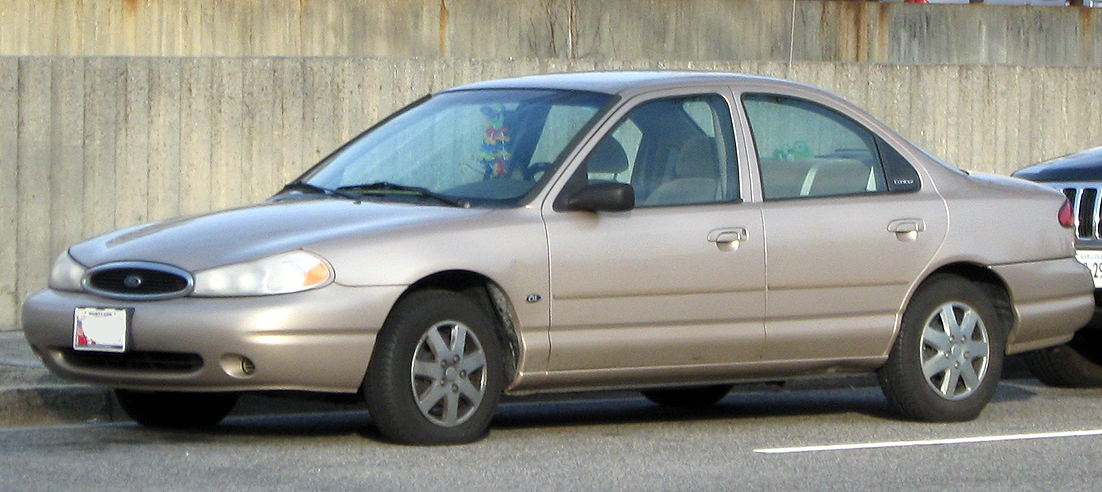
Old classic car on the corner, still calling my name, so it seems, but I care for you, so I'll just ignore you, and drive you in my dreams.
I'll drive you in my dreams, drive you in my dreams.
Welcome to another episode of the Classic Car Corner Podcast. I'm your host, Jason Painter, and our guest tonight is Colby Masterson, who, if you remember, joined us last year after his first year of automotive design school.
And he joins us tonight with his design instructor, Jason White, from Detroit, Michigan. Gentlemen, welcome aboard here tonight.
Yeah, thank you. Thanks for having us.
Oh, of course, yeah. This is always a very fun topic of discussion, and we certainly look forward to asking you guys some questions.
I know our listeners from the original podcast with Colby did great, so this is a great opportunity, and so we certainly appreciate you guys joining us in here tonight.
And Colby, let's start with you here, buddy. Remind us to what made you choose automotive design as your field of study.
Sure. Yeah, well, I've always really been into fine art. My mom's an art teacher, so I went to high school for fine art, and my first year of college was actually at a fine art college.
So got through the first year, I ended up meeting an industrial designer there who pointed me in the direction of design, because I felt that my art was more like scientific, a little bit more precise.
And so I kind of settled on design as a really good middle ground between art and kind of math and precision stuff.
Ended up meeting a car designer and was told about CCS, so it was a, you know.
A great fit.
Yeah, perfect. Literally perfect fit. I've always been a car guy.
Yeah, that's awesome.
Yeah, how fun. And so Jason, how long have you been teaching design and how has the field evolved since you started?
I've been teaching design off and on since about 2007.
Okay.
I've been teaching at CCS full time since 2018.
Okay, gotcha.
And over that period of time, the business definitely has changed quite a lot.
But you know the old saying, the more things change, the more they stay the same.
You'd be surprised how many things are actually kind of constants within the business.
I mean, obviously there's been a lot of change digitally and the tools that we use are different in a lot of ways.
And now we have AI as part of the equation.
And so it is a very different business than it was when I was in it.
Sure.
But at the same time, there are a lot of things that never change.
We still use full size clay models.
Designers are still expected to work well with engineers and finance people and marketeers and modelers.
I mean, those are constants that I don't think are ever going to go away.
The tools will change and the methods will change, but there's always going to be that need to work well with others
and to have a full size property that you can change and adjust quickly.
Clay allows us to do that really well.
And until something better comes along, it's probably going to be there for quite a long time to come.
Well, and that's a great point too because obviously you just mentioned clay.
Now are 3D printers able to do that?
I know they usually use the plastic and come up with a, are you all using, does clay have an ability to be involved with 3D printing by chance?
Yeah, we have a lot of students right now who are kind of blending the two.
They'll do part of their model in clay and then the other part of it like detail parts, for example,
things that you couldn't really model in clay because they're too intricate.
They'll do those as 3D printed parts.
So there's a lot of that going on and the results are pretty good.
I think that the medium is appropriate for what's being used like you can get, you know, the problem with doing overall like surfaces digitally
and then milling them out or as a hard model or creating a 3D printed part is that you now have very limited ability to adjust it once you see it in front of you.
Right.
And I've never run into a designer who does not look at a 3D part that comes out and goes,
Well, maybe we can change this.
That always happens.
Sure.
Yeah, trial and error, I guess, right?
Well, I tell you what.
So Colby, going back to you here, what's been your favorite project or assignment so far and why?
I would say probably my sophomore exterior.
In my opinion, I'm very much so an exterior guy.
Okay.
And so it was pretty open-ended, this one, where you kind of choose a future scenario to design for.
Okay.
And then once you've kind of set that parameter of the scenario, you then backtrack and make the car for it.
Okay.
So the whole semester is just going through ideation, development, and then into the final, you know, renders and a model.
So we actually had to do a clay model as well.
A half-fifth-scale clay model.
Okay.
So it was, I don't even know, probably two and a half, three, no, not three feet, but probably two feet long up against a mirror.
And so we did half of it and then it was mirrored over.
Mirrored over, okay.
Gotcha.
So it was a good introduction to clay.
Oh, there you go.
And it was just super fun.
Oh, I can imagine.
Yeah.
I think it was really fun to see him in that class was really what I thought was great, you know.
Gotcha.
And remind me how many students are in this class right now with you?
In A studio class, it's probably, let's say, 18 is like kind of heavy, pretty big.
Okay.
I think my interior class was 18 and that was pretty big.
Gotcha.
Yeah, so.
All right.
And Jason, so what qualities do you see in successful students that set them apart?
There are a lot of qualities that sets a successful student apart from others.
The one thing more than anything, I think, is the ability to be open-minded and to take
in information and assimilate it into their style.
If students come in with their own preconceived notions of what they want to do and what kind
of a designer they want to be.
And it almost never ends up that they're exactly what they expect they're going
to be.
They're going to be niche and it's not always where they think it's going to be.
But designers that are willing to roll with that and to accept, you know, a different
outcome than they expected, you know, I came into school back in 95 wanting to be an exterior
designer, but it turned out my best work was in interiors because I'm very detail
oriented.
Gotcha.
Okay.
And that's what I ended up making my career out of.
It kept the roof over my head and food in my stomach for about 17 years.
Right?
So, you know, you have to be willing to embrace what you're good at in the business because
there is a job for everybody at this point.
Sure.
You just have to embrace where you're after.
If you're like, I remember one student that came to CCS who was all about motorcycles
and that was all the student did, sun up, sun down was just motorcycles nonstop.
And we were telling him, you know, look, you know, it's great that you like
that, but you don't want to just make that the only thing you do because you're
severely limiting your possibilities are going to need a job.
Now, luckily for him, he got a job designing motorcycles.
Gotcha.
But it could have just as easily gone the other way.
Sure.
If they, if, you know, the job market hadn't had that waiting for him.
So you're never going to lose being versatile and you're never going to lose
if you embrace something that you seem to have in a natural adeptness to.
Gotcha.
So that's true.
Other things, students that manage their time well do better than students that
do not every single time there are no exceptions.
Gotcha.
Yeah, I can speak to that personally.
Yeah, exactly.
That makes or breaks a semester just, you know, in terms of personal
enjoyment as well as, you know, final outcome.
Yeah.
Time management is almost everything.
Yeah.
And feeding back on what you said, Jason, this is interesting to me,
obviously.
So, so you were like, oh, hey, I really like the exteriors, but somehow
you decided, okay, well, maybe interiors are more of my niche.
You know, I know Chevrolet, I think at one point, I remember seeing a
video of Chevrolet, I guess employees of some sort were going out to
people who had gone into like, let's say a home depot and they were
waiting by the Chevy model cars and the folks would come back out and
then the Chevy people say, hey, what would you do different about
this vehicle?
We're just asking the normal general lay person, you know, what
would you do different about one guy said, well, I think the
sunroof could have been a little bit longer or something.
And so they're taking all this input.
I was just wondering, were you inside a car at one point, Jason,
that said, hey, you know what, I wonder what would happen if,
you know, right now they've inverted the rear view mirror
that used to be the taller part or the wider part was down towards
the bottom.
Now they're flipping them around and now it's just simple things
like that.
I don't know if there was something that you're like, hey, I
kind of like this idea and maybe we ought to ergonomically set
it forward.
I don't know.
I think that's the stuff that you probably think about as you
become more of a professional.
You tend to start to look at other cars with a critical
eye and think maybe if they had spent five more minutes here
this might have been a little bit better.
Or there's something that I didn't quite think of.
I think once you're aware of the process, it makes you smarter
about what you see on the market and what people are selling
because you can almost sit in a car or look at a car and
think to yourself, OK, I can see the conversations going on
about this part right here or this feature.
This is probably how this went down.
I don't think you have any privileged information, but you
know probably how it went down.
No, exactly.
Well, that's very interesting.
Oh, very cool.
All right, Colby.
So how do you approach translating your ideas into
something tangible?
Well, at least in the process of the semester that we go
through, like I said earlier, we'll start an initial
ideation and that is really just like throwing sketches
at a wall.
And by that I mean that literally.
We'll say you need 20 pages this week and then
you say 20 pages and you want to come with 40.
You know, you really want to overshoot.
Just get as many ideas out as you can.
And then over the course of the semester, your teacher
helps you kind of narrow down and then we take a theme
and then we just develop.
So after development, we jump into clay.
There you go.
So really it just all stems from that initial ideation.
Gotcha.
And you use this term and I forgot it, but I don't
mean to put you on the spot, but on your last
podcast it was taking characteristics of bugs or
animals.
Biomimicry.
There you go.
Yeah, yeah, yeah.
And so would you say that you're influenced a lot by
that particular or is it more like, well, let's just
make a box and see how cool we can kind of.
So biomimicry is definitely a big player in a lot of
people's designs.
I think that it's something that I looked into a
lot in my first year and first half of the
second year.
But biomimicry is not the only thing we can take
inspiration from.
Really the only thing that people say not to do or
not to take inspiration from is other cars.
Because if you look at another car and then you
make your own design, you're really not breaking
that far out of a norm that's already been set.
But if you look at something that should not
be a car like whatever it is, a microphone stand
or whatever it is, and then you make that
into a car, that is just inherently going to
be more original.
Gotcha.
And just more out there.
So that's always the goal.
Well, speaking of originality, I've been
morphing 1976 Pacers to kind of land vans on
AI just to see what kind of interesting output
there for sure.
Jason, you kind of touched on this, you know,
the tools and or the skills.
What do you consider most essential for these
young designers today?
I know we talked a little bit about the clay
and the AI and the 3D.
I mean, as far as like tools that, you know,
you're sitting at a desk.
I mean, you got a pencil, you got what else?
Well, the most essential skill that any student
needs to have and that go and they'll need it
when they're a professional.
They need to be able to sketch analog
at the drop of a hat.
They have to be able to do this.
It doesn't matter, you know, how high tech
the tools get.
There are going to be instances where they're
going to be expected to just sit down and draw
without the benefit of a computer.
Got you.
And it's something that companies continually tell us,
you know, we need this skill to be present.
We can't hire somebody who just does blender models
or only does digital stuff and nothing else.
We don't want students where we don't want
designers like that.
We want students that can sketch well.
Got you.
If you go to our January show or our May show,
where we, you know, it's basically where students
are picked up by companies or get interviews lined up,
some of the very best students we have will have
a notebook next to their clay model and you open it
and it's just one incredible analog sketch after
another one or a whole series, just one after the other
after the other after the other.
And this is just cotton candy for the people
who are coming to hire students.
This is what they want to see because you can see the process.
You can see the creativity on the page.
Sure.
That tells them more about a student and what their
design processes and anything that they would do with
digital tools.
Is that something?
Well, I think correct me if I'm wrong.
You might know this, but I believe it was sketched
on an airplane napkin, the AMC Gremlin.
Does that bring a bell to you?
I think there's a story about that, whether it's true or not.
Exactly.
Yeah.
But a lot of really pivotal ideas have happened
at just the sketchbook level.
I think my personal theory is that part of the reason
you come up with some of your best stuff at that level
is because the pressure is off.
You're not working with something that's expensive.
You're not working with a computer.
And you basically can let yourself go.
And if you don't end up with something you like,
you just crumple it up and throw it behind you
and do something else.
It's a lot easier to be loose and free with materials
that are low-tech, I think.
Yeah.
No, that's true.
I would agree.
No, I totally agree with that.
I'm going to keep it simple, stupid guy for sure.
Yeah.
All right, Colby.
So what's been your biggest lesson or challenge so far
in auto design school?
Lesson.
Let's see.
Probably, I probably have to just go back to time management.
Well, time management's one big one.
In terms of something more specific to car design,
I would say breaking out of, as Jason said earlier,
the preconceived norms.
Because when I got to school, it was,
I was really into cars.
I've been around them all my life.
So in my mind, I knew what a car looked like.
And so I felt like for the first year,
I still catch myself doing it.
I'll draw a car that looks like a car
that could be on the road today.
And that's illustration.
That's not design.
We should always be pushing for future forms
and new ideas and stuff like that.
So really breaking away from what I thought
should be a car and trying to find what will be a car.
That is so cool.
Or whatever it is.
Not even just cars.
We have mobility classes, too.
So things that specifically aren't cars
are also taught at CCS.
I did a mobility project for Cincinnati's
abandoned underground subway.
And so I just kind of had to design a bus
and the system that it would run on.
And like the stations, I designed the stations as well.
And everything.
But it all kind of comes back to that same idea.
It's like, if you're thinking about it and you design it
and it looks like what it should be, quote unquote, should be,
you're probably not drawing the right thing.
Gotcha.
So I think breaking away from that was my biggest lesson.
Very cool, buddy.
All right, Jason.
So what current trends in car design excite you
and or worry you?
Well, the one that worries me more than anything
is this kind of trend to low-poly design.
Yeah.
That's typified by the Cybertruck.
I'm not going to say there isn't a place for it.
But it's certainly not the most sophisticated way
to design a car.
We have students that come in at the freshman level
and they're convinced that that kind of design
is like the pinnacle of design,
simply because it's the one that's got,
that takes up the most oxygen.
And we have to deprogram them and tell them,
no, there's other ways to design a car.
And I mean, I understand the notion of creating a vehicle
or a product that is the ultimate outlaw statement
that basically says to the world,
I don't care about your rules, I'm going to do it this way.
There's a place for that kind of attitude
and that kind of product,
but you can't approach everything that way.
OK.
You can only approach certain things that way.
So if that, you know, there's far more sophisticated ways
to approach designing a car.
I'm not delegitimizing that trend.
I'm just saying that that's just one pass.
Got you.
And I think, and if you only work along that path,
the last thing I want is for us to have a bunch of students
who think that car design is all about throwing together
polygonal slabs that have a small amount of crown
in them and calling it a day.
That's not what design is about.
Certainly not in this day and age.
Right.
So that bothers me a little bit.
OK.
And something I'm worried about.
The design trends that you think,
I have to mentally remove the fads
from what I think is actually moving this
in a positive new direction.
I think there's a new emphasis on simplicity
that's happening now,
especially driven probably by,
maybe not directly by,
but it kind of dovetails well with the autonomy
that's being explored.
And like for example,
when I went to the CES show a couple of years ago,
these vehicles are now productionized.
Honda has a separate brand called,
I believe it's called Zero, I'm not sure.
OK.
Series Zero or something.
In any case,
they did this really beautiful, clean sedan
and a very, very tastefully done van.
OK.
And they were just really pure, beautiful shapes.
And I just thought to myself,
I'd love to see more of this.
And doing simple, clean design is not easy to do.
Gotcha.
Because you're working with very, very minimal devices.
Right.
A lot of cars have an excess of aesthetic devices.
So you don't know where to look first.
When you're doing a very simple vehicle
that you don't have that safety net to catch you.
Sure.
So I'd like to see more simplicity, frankly.
Because I think that I'm just a little bit tired
of the design by checklist.
Gotcha.
That would seem to have so many cars right now.
Well, I mean, I think you bring up a good point.
I was telling Colby I'm more of a classic car guy.
And you can certainly tell the Pontiac GTOs
from the Ford Mustangs of that era
and that kind of stuff in today's cars.
I mean, unless you're a car person or an enthusiast,
you really can't really tell a whole lot of difference
between especially some of the full-size sedans
that are out there.
But going back to the simplicity and design,
I mean, it's not just, in my opinion, of course,
just putting something together on a piece of paper
and saying, hey, I mean, in design,
you got to worry about what kind of fuel economy,
what kind of, you know, characteristics
for the controllable collapsing of these cars
and the in-vit they're involved in an accident.
I mean, there's a lot of other things besides just,
you know, just designing what you're wanting to see
because you've got to take all that other stuff, obviously,
into consideration.
Absolutely.
An automobile is the most complicated product on the planet.
And being able to produce one or design one effectively
is largely dependent on a designer's ability
to interface with other people in the process.
I'm talking about engineers, marketeers,
finance people, safety people, human factors engineers.
The better that you can interface with these people,
the higher chance you'll have
of getting what you want on the road.
Gotcha.
Because, you know, and we try to do that
with the curriculum at CCS.
We have a human factors class.
We have materials and manufacturing class.
We have a packaging class.
And the goal is not for our students to be experts
in all of these different fields.
Obviously, they can't be
because they're not going to school specifically for that.
But at least they have a nominal level of understanding
of these things so that when they get into the business
and they encounter people who this is their specialty,
they can speak to them on their level
and work with them to find a solution
rather than running up against roadblocks constantly.
Sure.
Well, yeah.
I mean, that is an excellent point for sure.
Yeah.
So I mean, everything you're saying,
I definitely at some point want Colby to say,
hey, Jason, when are you going to come up
to our college and witness and see these things?
I would love that.
So I'm going to hold you to it.
Anytime.
Yeah, yeah, yeah.
And maybe my other podcast buddies too, for sure.
Yeah.
But, all right, Colby,
so are there particular eras of car design
like 60s muscle cars, 1980s wedge style cars
that influence your work just out of curiosity?
Yeah.
I mean, definitely.
I think that we try and take inspiration.
I mean, I try to have as much knowledge
on as many cars as I can.
But I think probably the one that's my favorite
is maybe 90s with the long drawn out forms
and like the really like, I don't know.
I feel like nowadays we usually try to design
from a speed form or at the very basis,
some kind of quick shape with no wheels
is what a lot of people start with.
And I feel like the 90s was a really good starting point
for that kind of speed for me design.
You know, like a lot of those cars,
if you take the wheels off them,
they look like a flying bullet or something like that.
Yeah.
And I think that that really speaks to like how
at the core of the design process
that kind of speaks to.
I got you.
Yeah.
Yeah.
All right.
And Jason, so EVs in autonomous cars,
you know, they're kind of reshaping the automotive world,
if you will.
How is that impacting design education
in your thinking?
Well, definitely it changes the psyche
of the person who's purchasing the vehicle
or interacting with the vehicle.
Because if you think about it,
the way that people identify with the product
of the automobile,
it's usually something they own.
And it's usually an avatar that expresses,
if not who they actually are,
what they want people to think they are.
Okay.
So now we're moving rapidly to a situation
where in the future,
in the not too distant future,
a lot of people are going to be,
instead of owning a car,
having a subscription-based service
because they realize that putting five figures into an item
that sits outside all the time
and doesn't move most of the day
is probably not a good idea.
Interesting.
All right.
Yeah.
And the other part of that is
it'll likely be an autonomous vehicle
so it'll be doing the driving.
And that is a fundamental change
because anybody who's deriving
most of their pleasure in a car from driving it
is now going to be doing other things,
not physically piloting it.
So the question becomes,
how does that change the aesthetic
language of the vehicle?
Because I would argue that you can't just
keep doing what you've been doing all along.
Now there are people out there,
self-styled pundits who would tell you
that we're going to be chauffeured around
in cars that look like toasters.
And I honestly think that's not only wrong,
it's depressing to think that way.
I don't really know what the answer is.
I continually look to our students
to provide an inkling
or an idea of where we're going,
where that's concerned.
Because honestly I have no clue where it's
going to go.
Gotcha.
The future is like,
I think this is,
I'm quoting Terminator 2
at one point and there's like,
the future now becomes like a dark,
unlit road ahead of you.
Gotcha.
And you're making things up as you go along.
That's how it feels right now.
Right.
Well, you know,
it's funny you say that.
I mean,
part of the very joys of auto ownership,
in my opinion,
I've got a small little collection of cars
and each and every single one of them
are unique in their drive ability
and their sounds and their,
you know, just overall maneuverability
or whatever.
And so they're all fun in their own unique ways.
And so to me,
driving is really part of the whole fun
experience with these things.
And you start getting into these autonomous cars
and, you know, while I understand,
you know, it's a 24 seven,
365 world out there with,
you know, everything's,
there's always people working and, you know,
there could be some,
and there could be some benefits to this
for people who aren't able to drive.
But, you know,
it would be very hard for me
to get in a vehicle
and not pay attention
to where it's going,
who's behind me,
who's next to me and who's in front of me
with just assuming
that it's going to take you from point A
to point B without a glitch,
without a gray cloud that,
that, you know,
the signal doesn't get met to the car
and all of a sudden you're,
you're not in very good
in a good position.
But yeah, that's,
it's pretty interesting stuff
for sure.
And so, yeah, well,
I guess we'll have to see.
I was at an airport the other,
a couple of weeks ago and they have these
robots that come up and take all your
it's all, I mean,
it would follow the same exact path,
trajectory and all that other good stuff.
But, you know,
I still think EVs,
you know, I think we still,
and this is what I think,
what I know is another thing, but
I don't think we've got the infrastructure
for a full EV world
and, you know,
these cars that come up to you
and they have this angelic
sound to it.
It's just, I mean, like I said,
a lot of people who have EVs
wanted the sound of a resonator
in their car and so I think they were
putting resonators in these things
to authenticate acceleration and
Yeah, they do that.
And so, you know, you've got
some of that
characteristics that people
are wanting to carry forward with these things.
Yeah, it's
pretty interesting
opinion for sure.
All right, Koby, we may
have touched on this. What digital tools
are essential in your design toolkit
right now? I mean,
so, I know we did the sketch thing,
but digital wise, I mean,
what would you got some type
of scanner
or something that lets you know
the exact distances and in your,
you know. Yeah, so we use a lot of digital.
I mean, the majority of our
process, especially in ideation, is definitely physical
with just paper and pen, you know.
But once we're
out of that or even during it,
we'll scan those pages in and bring
them to Photoshop, you know, and do
either enhance the sketches in
Photoshop or just render over them.
So, what that allows us to do is
to just like really quickly explain
the actual surfaces
of what, you know, your designs are doing.
So, whereas
before digital, you might have had, and we did
this in freshman year, they taught us all analog
process, but like, you'd have to
pull up cans on paper, colored paper
and do render with like
chalk and markers and stuff like that, just to describe
the form. Sure. Whereas nowadays
it's a lot faster where
you can, you know, just open Photoshop and
do that same form 50 times
in one Photoshop file and find the one you want.
Gotcha. So we'll do that. We also
use Blender a lot, which is, I think Jason
mentioned Blender, just a really
really easy to use
cohesive 3D modeling program.
So once we have the sketches, we can
put them in Blender and actually start putting
real
volume to the sketches. And then
we can spin it around and see how it looks
in 360 degrees. Gotcha.
Yeah. And that's even gone so far as
to VR.
I think CCS offered a VR
modeling class. So it's kind of similar
to Blender, but you can actually
instead of you spinning the model around, you
can actually walk around your vehicle
or sit inside of it and really
really get to know it at a more personal level
before it goes into further processes
or before you choose it as a theme.
So you can really dive into more
ideas that way. Gotcha.
Yeah.
So some of the other questions
that I've got here have already been answered.
So have
you had any students, Jason, that
have come up with a
brand new
technology
or a theory or algorithm
or physics
that is
not
recognized? And if so,
I mean, has that gone on
to some of the
major car
designers?
Well, I've had students before
in like, for example, human factors
class who will come up with an interface
that is very
unusual or very creative
and
there will be times where I'm like, you've got to
get this thing patented, like now.
Okay.
Because it's like
I've said this to Colby before many times.
The hardest thing for interior designers is that
the number of buttons and functions that
you have in an interior never goes down.
It always goes up. There's always more.
And finding the home of all these
things and consolidating them and making it
easy to use is very difficult.
And every now and then, there'll be a student
that will arrive at some
interesting
way of doing
an interface. Like there was one student
that one time came up with almost like
I hesitate to describe it
this way because it sounds rudimentary, but it was like a
Rolodex kind of screen. It was like a cylindrical
screen and you could just page through
things and it was very intuitive
because of the cylindrical shape. And I was
like, this is really interesting. You should
patent it and maybe somebody
will use it one day in the
design. And there are other
tactile features that students
have come up with that frankly I would not have
thought of that helped to
streamline the process
of interacting with the vehicle.
So I've seen a great deal of those
over the years where I'm like this is pretty original.
That's really cool.
Yeah.
And aesthetically also
people have arrived at things that are really
different. One senior
student who was in the
department of design of the vehicle
based around the whole notion of black
holes and had this
kind of event horizon shape
in the wheel that went through
absolutely through the form and to the other
wheel on the other side.
You could debate
the feasibility of something like
that, but the aesthetic that he
arrived at was definitely original.
And nobody had ever seen it before.
Right.
Do you all test
I mean if you come up with something Colby
and you're like okay it's on paper
now I've got it in play form
or 3D form
and then you want to bring it to like
okay I want to bring this to
life. I mean
does that happen and do
you all test it or do you all get
some engineers that come out
and verify that yes this is in
fact
a viable
process that could work or
help change or evolve the
card design process.
I don't know I can't really speak to the facts as
if any student work has gone to
like a production setting as you kind of mentioned.
I think we kind of
settle on once the design has been
finally realized
and rendered out, modeled
that kind of stuff. That's kind of usually where we
leave it.
At least at the student level.
I'm not sure actually that's a good question
for you Jason have you ever seen anything go further than that?
I don't know I think it's more likely
that you'd see students working on something at an
internship level at a company and that actually
goes somewhere.
But as far as like an actual design
at the student level
that thing goes on to do that
that's pretty rare. I haven't seen that too often.
Wasn't there there was a student
and I'm just remembering this now last semester
who did his motorcycle
design and he actually
modeled out his design and put it over
his motorcycle and I don't know if it's done
or not but he had it and he brought
his motorcycle into the studio and stripped it
and it was actually like
building the foam and then sculpting it
in the studio and the promise was that
it's going to be actually on that motorcycle
working at some point but I'm not sure
how far along that one is.
Well the danger there
is that you get way
in too deep in something
I mean
no one's expecting an actually physical
one-to-one property
I think
there is a story
from CCS lore that
a lot of people repeat and that's Ralph Shields
when he was a student at CCS
he did a full-size interior
as his senior thesis
using foam I believe
and some other things. I'm not sure if Clay was part of it
but in any case he was able to make it one-to-one
as an interior
and nobody had ever done this before
and
you know I really
it blows my mind that he was able to achieve
that in the amount of time that he must have
had to do it
I don't think that's something that any student
could do I mean Ralph is
one of the brightest lights in our business
you know there's things that he can do that are just
you know amazing so
I don't know that's
I would if a student wanted to do that
I would be like all right first of all
make sure you have the time to do it
and you know but
but I think as far as
like bridging that gap between
the real world
and student level
I think you see more of that at the internship level frankly
than you do
within the studio environment at the school
Wow
Okay Jason so
you kind of tapped on this a little bit
what advice
I mean I know you talked about the ability
to sketch
what advice in your
seasoning as an instructor
would you always give
your students
whether it's you know I've got a button on my desk
it says never never never give up
you know so I look at that
it's like okay I can do this
I can you know inch by inch it's a cinch
you know it's one of those things
what advice I mean I'm sure you probably
get some students that are like I don't know about this
or no this is too hard
I mean what advice would you give
to somebody that's
presently
in design school and maybe
you know either wishy washy
or you know
thinking ahead of themselves
just what would you say to these folks
well speaking about
wishy washy
kind of modalities
I can tell you where that comes from
generally it usually is
the result of listening to too many people's opinions
okay
I mean the first and foremost person you should
be listening to as your instructor
that's the first person you should be listening to
I'm not saying that you shouldn't take the temperature
of what you're doing you know with regard
to people in class
but I've seen what happens when students listen
to every single opinion that's thrown at them
it paralyzes them
they can't make a decision
so at some point you have to
believe in what you're doing
and turn off all that
noise and just execute
and believe in what you're doing
there's always going to be somebody
Monday morning quarterbacking
what you're doing it's always one guy
in a studio that's like that
both professionally and at the
student level there's always one
who's like I would have done it this way
and it's like well this isn't your model
and I chose to do this way
at some point
you have to be your own designer
I mean and you have
to be willing to commit to something
but that would definitely be one thing
I'd say
I've already mentioned time management
so I'm not going to belabor that
but definitely you have to
know when to
or whose opinion to listen to
it's funny because I run into a lot of students
who will listen to what their
classmates say
before they ever listen to what I say
and I always scratch my head
and say currently if I'm wrong
but you're paying a lot of money to hear
I mean that's a great point
sure
so not that their points are
not that their points of view are invalid
but it's like
you have to consider
this is also what leads to a situation
where everybody starts sketching the same
and everybody's ideas start looking the same
they all start comparing themselves
to each other and next thing you know
creativity is the first casualty
suddenly everybody's work starts to look the same
and you can't have that
yeah so okay so
and leading on to that what's been
the most rewarding part of your teaching
design career so far
well this is going to sound like an obvious answer
but really it's just watching
a student progress
from four years you know when they arrive
to where they are at the end I
yeah Jason I've seen
I've seriously seen students come to CCS
with zero
skills and I mean
zero like having no
idea how to even begin
drawing a car
much less you know understand
the creative process that goes into
designing a car
I've seen students come in with that
like they're literally getting on the ground floor
and by the end of four years
they're just incredible
with their design abilities
and understanding
of form and just creativity
and you have
companies clamoring to get their
QR code and their business card
and it is so
rewarding to see that at the end of the line
well yeah because
you're part of their development obviously
well I
I like to think that we just
shepherd them in the right direction
the
creativity and the ideas and everything come
from them if they don't
generate them they don't exist
so it's
a lot of it is just
encouraging people to go a certain
direction and trying to shepherd them through the
four years and I've seen incredible
success stories and that
that's what keeps me getting up in the morning
well sure so okay so yet again
you're hitting the next question here
so where do you think car designs
headed in ten years
or the next ten years
that's a big question
it's really more
of a question for Colby because
he's the one who's going to be
deciding what that future looks like
I got you
I'm going to be
in a log cabin somewhere
got you in ten years
Colby
what do you think buddy
as Jason kind of mentioned earlier
I think the move towards
autonomous vehicles was going to be
ever present in the next ten years
I really think that's going to be a big shift
because most people
I know you and I
like driving cars we like the idea of cars
as they are now and it's a great time
but I think for most people
it's a device, it's a tool
and the simpler a tool can get or the more
easier tool can become to work with
or the more efficient it can be
or the more cost effective it can be
that's what they'll buy
and so I think the sooner companies
come out with these ways
to simplify people's lives
i.e. autonomy because
you could be working or you could be
doing something else on your commute
or you could be saving time that way
I think that autonomy
is one of the big players
in the next ten years
very cool
so
I've got a couple more questions here
and it's already been almost 45 minutes
it goes by fast
I'm telling you when you talk about some
but for both of you guys
what design features
of course I'm an older car guy
but what design features from older cars
would you like to see make a comeback
in any future designs
Jason you want to take it away
I think it's the first one
I touched on it earlier
but just approaching design
as more of a holistic and a simplistic exercise
and I don't
when I say simple
I don't mean that it's not sophisticated
like for example
like if you take like a Porsche 911
for example
if you look at a Porsche 911
the overall form language that's there
is very clean and very simple
and not really
it's easy to look at that and say
there's really not much to this
but there is believe me
that's probably the hardest thing to design
because there's no crisp lines
to fall back on
you are designing round of forms
the entire way
that's really difficult to do
but
what I really want to see going forward
is a little bit more simplicity
because
the problem with a lot of vehicles
you see on the road right now
I think I mentioned before
the whole design by checklist thing
it's like everybody has to have the same light catcher
and the same little fake vent on the side
and the same size
logo and the same size
I've lost count how many people have hexagonal
front grills
and everything just becomes homogenized
and the thing is too
a lot of design
stuff that makes
waves right now it's just a fad
and it's next thing you know it's supplanted
by something else it has a very
short shelf life it's almost like
we're designing cars the way we did back in the 50s
where there was planned obsolescence
and things change
year to year all the time
they have to because the stuff you're trading in
this is really like kind of sculptural stuff
that really doesn't have a point
but is more
the point is that you catch the eye
than anything else that stuff has a very
short shelf life on the other hand
you know if you can design something that's still
going to be beautiful 10, 15, 20
30 years from now
I mean that's the holy grail right there
that is something
that
is you know that I always wanted
to be a part of as a designer
and you know
those are the kind of vehicles that will be in museums
down the line
so I'd like to see more of that
personally and you know
the takeaway from that too
I mean you know the first thing that comes to my mind
is a 57 Chevrolet
I mean you got the Dag Mars on the front
chrome polished bumpers
you've got
just the tail fins
that Harley Earl designed back in the day
and it's just I mean you see these
things and it's like oh man
how cool would it be
and you know I'm in the car business
on top of the podcast
and you know I get people in all the time
like man I just wish they'd bring back the boxy old
Lincoln's with the slap side
suicide door look and
modernize it with today's conveniences
but also have that old school
aesthetics
so I was just curious what you guys thought about that
so it's the problem with doing that
is that you're taking it out
of its you know natural
habitat so to speak
and because you know for example
tail fins didn't just happen by accident
they were part of America's
fascination with the jet age
if you were to take that feature
and put it on a car now it wouldn't make any sense
because the current narrative doesn't match
that at all
so you know
that's why
when you trade in retro
themes
you know
retro I've always said is like plaid
now sometimes and other times it's had a style
but you
you can't build a brand off a retro
first of all that's impossible
because you can't move anywhere
you're always just tethered to the past
but
yeah anytime you bring
some things out of the past
you gotta be very careful that it's not something
so foreign to what is going
on in the market now that people just look at it and go
well that doesn't make sense
not everybody's a car
design cyclopedia next to their
next to their
desk so it's
yeah it's a good point
that's a very good point
everyday people have to relate to the car they're buying
if it's something related to
50 years ago they're not getting
it's a good point
that is a great point
okay so finally
we'll have one more
quasi
got you a question for you Jason here
okay
you'll be able to answer it
my co-host Eric
came up with this we
asked Mario Andretti when he was on our podcast
we've had Wayne Carini on here
we've had Heather Storm
this has been a very rewarding
experience to have all these
folks on here
but I'm going to get to that question here in a second
but before we do
Colby and or Jason are there any shout out
you'd like to mention before we wrap the podcast up
yeah I mean definitely CCS
for sure
definitely CCS
that's kind of my big main one
it's been a great experience
absolutely amazing
well it sounds like your takeaways
your enthusiasm
and what you've got planned ahead
is just absolutely phenomenal
and I wish you guys all the luck in the world
I would like to point out
that Colby's work ethic
and his enthusiasm
as a student is just as much
part of the reason why he's successful
as going to CCS
he brings a lot to the table
and that's awesome
thank you
that's awesome
we're looking forward to seeing
where the future goes for Colby
and we love being a part of it
and so yeah
so here we go Jason
here's your final
question
what did you take your driver's test in
I gotta be honest I don't remember
I honestly don't remember
it was probably like a Ford
Mondeo or no wait
it would have been the American version
a Contour or something
it was a very mundane sedan
I honestly don't remember what it was
I'm sorry
mine was a 1980 Toyota
Corolla for crying out loud
and I'm trying to find that car
but they've all been manipulated
with the big engines
because it has rear wheel drive propulsion
they're all
drift cars now
those are great cars, those are super cool
I just can't find one in purest form unfortunately
but yeah it's always fun
what was yours again
it was a Hyundai
Tucson
I think that's what I remember you saying
you know just whatever
gotcha
Colby and Jason it has been great having you
this evening and we certainly
as mentioned wish you guys much continued success
and we obviously gonna want you
back on next year
for the end of year
3 so
and Jason we would love to have you back on as well
so you're always invited of course
remember you can find us on our
Facebook page at the Classic Car Corner
thanks for listening
and happy motoring from your friends
here at the Classic Car Corner
we'll see you next time
on the Classic Car Corner
still calling my name
so it seems
but I can't fool you
so I'll just ignore you
and drive you
in my dreams
I'll drive you
in my dreams
drive you
in my dreams
you
About this episode
Colby Masterson returns for part two of his discussion on automotive design, joined by his instructor Jason White. They explore the evolution of design education, the impact of technology like AI and 3D printing, and the importance of sketching in the design process. Colby shares insights on his favorite projects and the challenges of breaking away from traditional car designs. Jason emphasizes the need for versatility and collaboration in the industry. The episode wraps up with thoughts on future trends in car design, including the shift towards simplicity and autonomy.
We are excited to welcome back automotive design student Colby Masterson, as he describes year two of automotive design school. Also joining us direct from Detroit is Colby's CCS automotive design instructor Jason White to share his experience and perspective of automotive design and methodology. The conversation on processes and practice for the hands on experience to creating and designing a car are discussed and what goes into growing an automotive designer.