Scout Motors makes new electric trucks and SUVs that look like old classic trucks but use modern electric power. They want to bring back a popular old truck style with new technology.
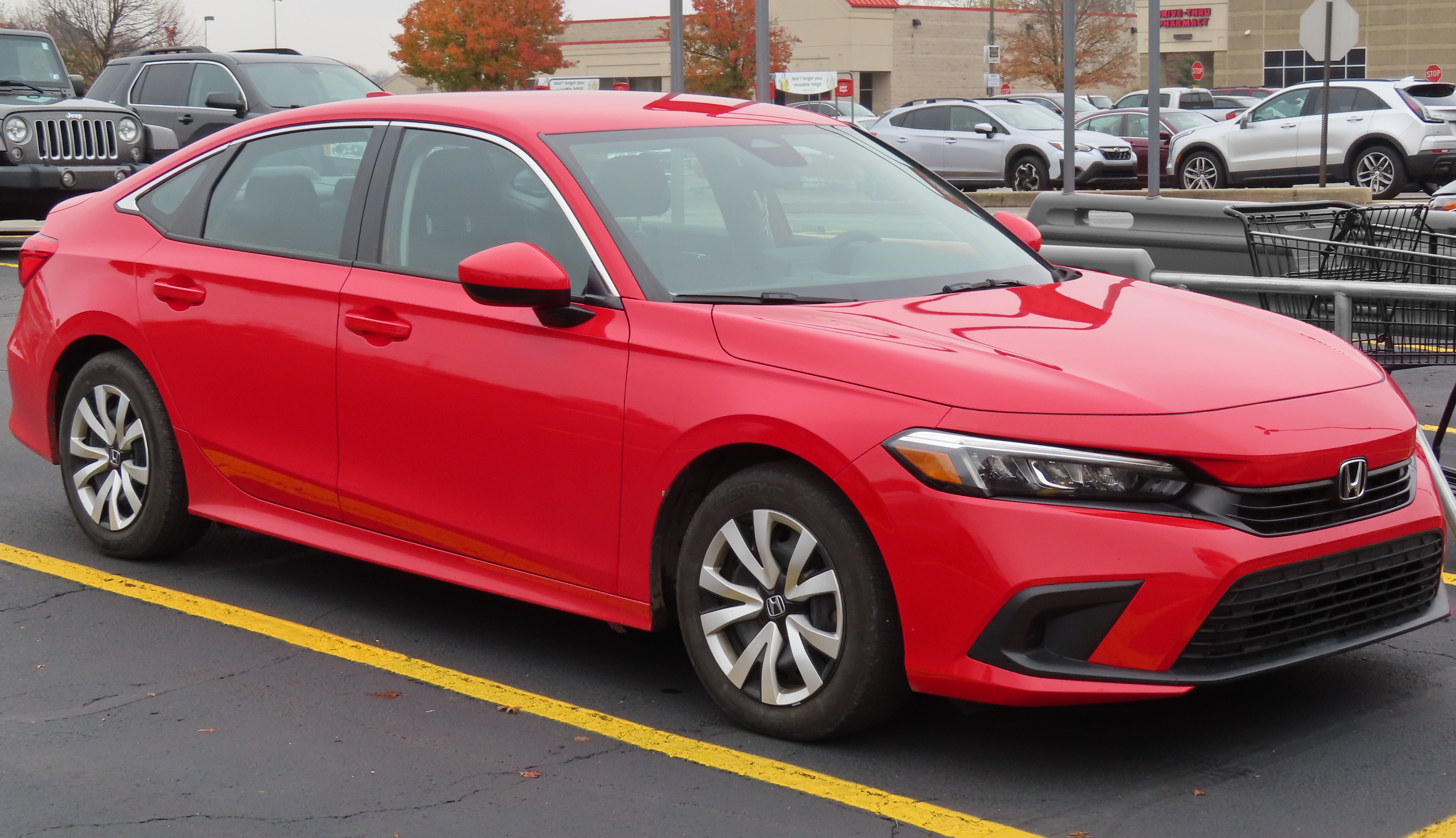
The Honda Civic is a small car made by Honda that many people buy because it is reliable and uses little gas. It's a common choice for everyday driving and is usually affordable.
The Honda Accord is a type of car that many people buy because it is dependable and doesn't cost too much to run. It's a good choice if you want a car that lasts a long time and is easy to take care of.
The Toyota Corolla is a small, reliable car that many people buy because it doesn't cost too much and is easy to drive. It's one of the most popular cars in the world.
Warranty repairs are fixes that the car company pays for if something goes wrong with a new car during a certain time. Dealers usually do these repairs.
All wheel drive means the car sends power to all four wheels, which helps it grip the road better and drive more safely.
LIVE
Good evening, Bill.
Good evening, Stanley. Hello, listeners. Welcome back. It's the BS Car Guys podcast.
If my audio cuts out, I apologize. We're having some technical difficulties 100% on my end tonight.
It's that great North Carolina internet, interwebs, you know.
This is what happens when you live on a ranch and you have multiple buildings in a ranch,
and you have to have internet in all the buildings because, you know, even the cows have internet people.
There are no cows. There are no cows on my ranch. And even if there were, they would not have their own internet.
I mean, we had a whole conversation where I was going through technical difficulties or issues about how dairy cows are like the
beauty queens in the cow world. Supermodels. Supermodels. I apologize. Supermodels.
Yes, because that's the kind of things that we talk about right here. We talk about everything,
like we talk about everything on cars. We often don't know what we're going to talk about when we start talking.
And then it ends up being two hours later. That's exactly right. You have like 50 minutes of conversation
and you haven't even started the podcast yet. Yeah. Yeah. So tonight, well, we got some direction.
I wasn't supposed to be out of town, but I'm not. Yeah. I'm in the United States of America.
So we're going to get it. We're going to wait an episode out. What we're going to talk about,
particularly, we will figure it out together. That's exactly right. We will stumble our way
into and through a conversation about something automotive.
I figure we can kick off with, last episode, I started to talk about some news going on with
Scout and Scout Motors. We've talked about Scout several times.
We're both fans. We're both fans. I would be probably more of a fan if there was a gas version
of it, but whatever.
There's still time, Bill. You can convert to accepting at least all forms of vehicles on the road.
I accept that they are a form of vehicle on the road. I still struggle to accept that it's
a form of vehicle on the road that anybody needs.
Well, some people will say, the Amish will say, we don't need none of this. I'm just saying,
we can go back to horse and buggy if you want to go according to the Amish.
I mean, they might be right. Or at least on to something.
So they got two things going on. One, they pushed back their release date.
Now, Scout was very creative in how they managed this information.
It was leaked by a German newspaper or first covered by a German newspaper
that they were going to be pushing back their production schedule, their build schedule,
when the vehicles were going to release. Scout immediately came back with, no, no, no, no.
We're still on track for building vehicles in 2027 and deliveries to follow shortly thereafter.
Now, fast forward a couple of weeks, and they have now kind of confirmed that,
yes, the goal is to start with the SUV and for that to go into production being built
by the end of 2027.
So, initial projections were deliveries in 2027, but they've kind of
taken a step back from that and kind of said, no, no, no, we were all along. We were like,
you know, we're going to build in 2027 and deliver in 2028, but I really don't think
that was the case initially. I did read that there's, I forgot that they have about 150,000
reservation spots being held at $100 apiece, and 80% of those are for the Harvester
Trim Package, which is the range extender gas option. And then the large, the lion's share of
all of the reservations for the SUV, which is why they're starting with the Traveler
and the Scout will come shortly thereafter, which is the pickup.
Yeah, I think we talked about that a little bit, and you are a little more invested into Scout.
than I am, but I have a question for you. Do you think this delay is about a manufacturing issue
or it's about the lawsuit issues with the dealership network in America?
So, I think it's a little bit of both. I think construction is probably going a little slower
than they would like down in Blythewood. I think that workforce scaling is probably
going a little slower than they would like. And the other thing that's probably driving some of
this delay is they're probably watching the market. You know, automotive in general is flat or down
over compared to last year again, which was also a year of flat or decline sales.
They're probably really looking hard at what happens to our numbers if when these things come
out all of a sudden for whatever reason. What if we can't hit our numbers, our price point?
Yeah, I think actually I have an agreeance with that. To be honest, I think all automakers right
now are kind of looking at the market and reassessing some things. Whether it's things that
we've talked about and complained about before where the automakers all around the world jump
big into EVs. It made this gigantic investment into EVs and not considering that a Tesla was
enough EVs for the market. Or maybe we don't need to switch. Every company doesn't need to
switch their business model to EVs. I understand from a profit margin standpoint, there was a
great potential there. But if everybody's doing it, then the profit ain't going to be there the
way you predict. But also I think a lot, at least from the things I'm hearing, the things I'm
following, there is an affordability issue with cars in general. They got to figure out a way
to deal with it. It's not going to be as easy. Make more cheap cars because the cycle to get
a car to market I think is still like five years or something like that.
It's still pretty linky and that's for an established car brand, a Ford, a Chevy, whoever.
Startups, it's even bigger, right? I mean, it's a bigger hill to climb.
And if you spent the last seven, eight years planning to go EVs, investing a billion dollars,
that number is probably too low. No, not probably. I'm sure it's way too low. You invested a billion
dollars into going all EV and then all of a sudden the market changed and you, for lack of better
terms, you get caught with your pants down, which is all things that we spoke about before where
we applauded, well, we applauded Toyota for their, the way they approached it. It's like, yeah,
you know what? I think, I don't remember the exact stat, but I think it was somewhere where you could
for, Toyota was making Ford hybrids with the amount of battery in one EV. And they did,
and at the time they didn't wholly invest in all hybrids, which just seemed like they kind of rolled
through now. And they didn't, they kind of, they had their feet in multiple lanes and, you know,
kind of figured out, hey, we're going to go where people are buying cars. And it seemed to work
out for them, but you know, companies like GM, because GM going to be GM, I was going to make
everything EVs and everything is going to be in the same chassis because that's the way all the
profit is. And then everything is going to cost $60,000 on top of it and never considered the
fact that people ain't got $60,000 for a car. Right. Right. And right now, I just read today that
the average price of a new car has creeped up to almost $50,000. The average price is like $49,000
right now for a new car. Yeah. And that number goes, it hovers around $50,000, it has hovered
around $50,000 for like the last two years or something like that. But still in all, I mean,
outside of Bill on the ranch, you know, and to be honest, I pick at him all the time, but
I make a decent living and he makes a decent living. And, but we, the majority of people
that we know don't make decent living as we do. And we're not rushing out here spending $50,000,
$60,000 on a car every year. No, you're exactly right. You're exactly right.
You know, my daughter bought a car and we was trying to stay as close to $10,000 as possible.
And a matter of fact, all of my kids in the last year have gotten at least a new to them car
and none of them has spent $50,000. Right. And back in our day, the colors old,
they would have options in a new car market where they didn't have to spend $30, $40,000 to get a
Dagger Honda Civic and would have been fine or something else close to new and not spend $30,
$40,000, but they at least learned a little bit from me and tried not to spend all their money
in one place and then come to my house and try to eat or eat ramen. But, you know,
I mean, and then you add that to some other thing that's going on right now. I mean,
we're not in the rental market and we're not actually in the buying and selling of house
markets right now. And man, I got friends in the real estate, real estate game,
man, those are hurting right now. Yeah, it's a tough, it's a tough time right now.
Yeah. And then I mean,
we live in a world right now where I mean, it is seen, I don't think it should be seen,
seen as reasonable that Honda, Honda Accords cost $35,000.
Yeah, the RAV4 tops that at almost $60,000. We go RAV4.
Okay, so maybe what we've done here is maybe we're backing up into a good topic of conversation
and maybe it's this episode, maybe it's a future episode, but you know, what happened to affordable
first cars? Like what happened to a cheap first car?
They don't, well, what happened to them is they died, they don't exist and they were killed off.
Oh, to be honest, and I don't think it all happened by accident. I think it happened on purpose.
I think it's pretty common knowledge that to say that subcompact cars
that's not where those are the vehicles that didn't have the largest profit margin. The
larger profit margins are in large SUVs and trucks. And at least for companies like General Motors
and Ford and Stellantis, you know what, I'm not going to say them because they just all
type of messed up when we. Yeah, I mean, they just had a change in CEO, right?
Yeah, they did. They did. They brought back the guy who was in charge of, I think he was in charge of
SRT and now he's the CEO. And that's where you get the V8 and coming back and they're trying to
resurrect this thing, but to be honest, I think they kind of screwed themselves. They did, they
did screw themselves, but the point I was trying to make. They jute when they should have jobbed or?
Yeah, jobbed when they're supposed to jute, jute when they jive, they duck when they're supposed
to dodge. I don't know. They did. Anyway, they all type of screwed up. But the point I was trying
to make was, yeah, there's more profit margin than the F-150 and the Sierra and all these things.
But I don't know if they realize it, but I mean, you're a truck guy. You ain't trying to buy a
truck every three years. No, I'm definitely not trying to buy a truck every three years.
You know, and I mean, there are people out there who would do it, but as a couple of cycles,
you ain't got the money to do that no more. Yeah, yeah, that's right. It catches up to you.
So, you know, they stop making focuses, the folk eyes and escorts and cruises and cobalts and
neons and all these things. It's like, oh, yeah, we're going to put our eggs into, we're going to
put all our eggs into the large truck game because that's the most profit lies. And I'm not here to
tell anybody that you shouldn't make as much money morally as you can into a day's world.
But what I'm telling you is that, and I'm not a big investment guy, but if you invest all your money
into one thing, expect to be broke next. Yes, you're exactly right. You know, you work in
corporate America. Y'all don't just make and sell one product. I am not in corporate America,
and we have 163 items that I manage on a daily basis. And well, and that's just different types.
You put all your money into high profit things. Just don't even look back at the
college kid or the young Marine or soldier or sailor that's coming out, that's coming into the
market. The kid that's looking for his parents want to go buy him a Corolla, but a Corolla costs
$30,000. It's ridiculous. And then, like I said, the stuff being done on accident,
the cars that are dying the most are these EVs that were over invested in and flooded the market,
and there just isn't enough room for all of them. And the Nissan Sentras of the world are the
Versa. The Versa was the least expensive new car in America last year, and they killed it.
Yeah. Nissan is having trouble selling everything. Which is crazy.
They're having problems selling everything, and they, oh, you know what? The thing that is most
approachable for most people in America, we're going to kill. The crazy thing about it is,
they still sell it in other markets. They just don't sell it here.
Right. Right. You would think, but a thing that I believe some of these companies learn,
and it's not just the car people, is some people will stretch and reach to go get this,
make this aspirational purchase, which is still, I think cars are still the number two,
the second largest purchase most Americans make. I mean, it makes sense.
And they, to be honest, they're invested. I think they may be probably invested in the fact that
a lot of these people are going to default on these cars. Maybe so. I mean, that's the thing is,
if you're a lender, you don't care. I mean, really, if they pay it or if they don't,
you make more money off the interest, but if they don't, you just get the asset back,
and you sell it, and there you go. Do it again. Do it again. I was watching.
There is a couple of business things that I watch. Business is your thing, Bill.
I like my stability over here. Sure. But I do pay attention a little bit.
I was watching a thing the other day, and it highlighted a business,
a dealership in New York, and a lender, which the name of is escaping me right now,
that is their whole business philosophy. To sell you a crappy car for more money than it's worth,
is repossess it. Sell it again while still getting money out of you. That is the goal.
That is what they are trying to do. They had a young lady on there who, I think her husband passed,
so she's over here trying to go raise her kids, and she went about a car,
and she's paying for a car. I think it was a Durango. No, the other person was a Durango.
Paying for this car that's sitting in the driveway, the state told her she couldn't drive no more,
because the car was unsafe. She had the car for six months. That's crazy.
The dealership won't take the car back. The finance company is like,
are we going to repossess the car, and we're still going to charge you for it.
I don't know what you want me to do. What are you supposed to do?
Yeah, but anyway, we were talking about car stuff and Scow.
So, you know, talking about Scow, one of the things I think that's obviously,
like I said, I think pricing is going to be a potential issue if they can't keep the price
alone. And see, I think what they're worried about right now is they advertised a starting price of
$60,000, right? But that starting price isn't for that harvester gas engine range extender.
In fact, when they probably said starting at $60,000, they really hadn't thought about
realistically what it was going to cost to build 80% of their vehicles with a range extender.
Correct. Because they didn't realize most people are going to want that.
They thought a few people might want that. No, no, no. Everybody wants that because
really what everybody wants is for it to just have a gas engine because they don't want to go
worry about finding a charger and they don't want to sit hooked up to a charger for 30 minutes
or even 15 minutes. They want to pull into a gas station and they want to fill a 25 gallon tank
in three minutes and 17 seconds and get back in the car and keep going. That's what they want.
Now, do they do it every single time they go to the gas station? No. Sometimes they go inside
and they get a snack and use the restroom and walk around and stretch their legs and look at junk on
a rack. And yeah, they do that sometimes, but they don't want to feel like they don't have a choice to
do it. I agree with you. First of all, everybody who's going into a gas station on day are going in
there for one thing. They're going to get tornadoes, which I've still not had one yet. I don't know what
that is. There's some kind of little food item. I don't know what that is. So anyway, so that's
one part of this thing. I think the other thing that's potentially going to affect pricing is
they still got to sort out how they're selling these things. Because the lawsuit, if you don't
know, is Volkswagen dealer group of America, which is essentially the Mafioso family of dealers
in the country. One of the Mafioso families are dealers. There's one of them. Let's call them,
let's, instead of Mafia, let's use, I don't know, union, right? So the union of dealers,
the cabal of dealers, they have decided that they don't like the idea of Scouts, who's primarily
owned by Volkswagen, selling direct to customers through a web store browser based dealership,
where instead of a dealership, you have a gallery and a consultant who helps you buy online.
That flies in the face of the dealer model. And dealers weren't happy about it with Tesla.
They weren't happy about it with Lucid. They weren't happy about it with Rivian.
And all of these companies have all had to go through the same song and dance lawsuit
from these dealers who, quite frankly, enjoy having a monopoly. Yes. And
you know, I get it. I do. I get the idea behind it because they're shouldering and carrying the
burden of the warranty from the manufacturer, from the service of the manufacturer. They're
having to do all the service labor, the parts ordering, all the things that a dealership does
where they really make money. They don't make a ton of money off the actual vehicle sale.
They make good money, but they don't make all their money. I mean, a lot of their money is tied
up in parts and labor and service and warranty repairs that they bill the manufacturer for.
And they're all tied into the dealer model. So if you're selling direct, then you have to figure
out who's going to who's going to support all that, who's getting paid for it.
They're just going to do the work and who's going to get paid for it. And so if you say, well,
existing Volkswagen dealers will do it because Volkswagen is the primary, you know,
stakeholder in the company. Well, now you're saying, okay, you've got to carry the burden of the
warranty work on a vehicle that's brand new to market, right? That's not got any history of success
or failure. And you got to inventory parts and, you know, all the things possibly give out loaner
cars while cars are being worked on, add infrastructure for charging them while they're there for
service. But you don't get to sell new ones on your lot and make profit off the new ones.
And you don't get any exclusive rights to demos or have any control in ordering them
and ordering an inventory. So I get the complaint. I really do. But
it seems to be that success in automotive sales right now
does seem to be more in the internet-based transaction order what you want
market. Because let's face it, dealers suck at ordering inventory.
How many times have you been to a car lot hoping to see a certain trim level with a certain interior
and they've ordered nine of the stupidest things you can imagine. And they're like, yeah, well,
we're pushing these really hard right now. We got all these. We got to move.
Yeah. Yeah. And you are uniquely qualified to kind of talk about that because you have ordered
new cars, or at least one. I think we talked about it. We talked about this in the past where
the American business model of purchasing an automobile doesn't line up anywhere else in
the world like that because the countries that I've been to that I know a little bit about
that automotive market and if anybody's internationally, you can write in and let us know.
You go there, you drive, you test drive a car that is similar and then you order the one that you
want. And then you come back when it's delivered. And they tell you, A, this car will be here in 30
days and it's actually there. Right. But we live in a culture that is so rapid fire, instant
gratification. Yeah. We can't wait 30 days. So the dealerships were built upon the model of,
yeah, I know you showed up on a red convertible, but here's a yellow minivan and you're leaving
with it today. And people are stupid enough to continue to leave with a yellow minivan
when they wanted a red convertible. I believe that person is stupid as well. 100%. And it
isn't as dramatic as Bill made it sound just now, but he ain't far off either. The American car
business model was fill the car lot up and sell you what's on the lot. It's like, you know...
Because where else are you going to go? Where else are you going to go?
Yeah. And I pick at Bill a lot and he picks at me a lot about evolving in different areas.
Right. Everything evolves over time. This business model evolves over time.
Why haven't you adopted Volkswagen for dealerships in Rick Hendricks, whoever you are,
to what people want instead of trying to hold on to what did exist and squeeze as much money out
of it as you want? As I'm sure you have heard in several seminars, Bill, along your ways,
because I hear it in my line of work and we don't even work with profit, innovate or die.
Yeah. That's exactly right. If you don't do something different, somebody else will and then
you will be left behind. Well, and I think that the whole innovate or die thing, we always think
about it on the supplier end, on the seller. Nobody ever thinks about it on the consumer
end, right? And I think that's the challenge. That's another thing too. Good point. Yeah,
like as the buyer, right? How many people right now in America are willing to go put their money
down and take the time first to figure out exactly what they want and exactly what they can afford
and then put their money down and go home and wait and wait for it to show up?
I think it's probably less than two percent of the country, right? And until people wake up and
realize, hey, you know what? I have all the power as the buyer. If Jim Bob's dealership here in town
don't have what I want, I don't have to leave with what they got. Correct. In fact,
I can go on the Internet and find another dealership, even if it's six states away that's got it
and make them transfer it to my dealership or tell them I'm willing to buy it, but they're
going to have to discount the cost of my plane ticket to come get it and fly out there and get
the thing and drive it back. And now your dealership's got to do the warranty work on the car
and they didn't get any of the profit from selling the new one. And guess who that's,
guess who's fault that is? That's the dealership in your town for being a moron and not stocking
the right stuff. That's that you have all the power. You're the buyer. You make it happen the
way you want it and it will eventually change the market. But as long as you just show up and go,
gosh, I got to have a car today. If I don't have a car today, I will die.
Yeah. We live in the age of Uber. Get a freaking ride for three weeks till the car shows up.
Good point. And I was going to give people some grace. People don't get grace. People are stupid.
I'm talking about me. I'm people. I'm people. People are stupid. We do stupid stuff. We do
stupid stuff all the time. So like my daughter who bought her first car in the last 12 months,
that was to be honest, she thought it was going to be a one day thing. And she realized that it's
not a one day thing because we were not doing this one day thing. And it was a six, seven month
endeavor because I wanted to make sure that she got a car that she was comfortable paying for
and that she found the car that fit her lifestyle. There you go. There you go. Preach it.
So it wasn't to just go to the dealership and pick whatever they got on the line. Oh, you know,
it's like you go to the grocery store and you're filling through apples or whatever. It's not like
that. But if you're going to the dealership and buying whatever they got that day,
you're either too desperate to be buying a car or you're an idiot. Or yeah. Yeah. Yeah.
You need to take a week and prioritize your life because there is no scenario where you have
to have a car that day. There's no scenario. Not in the world we live in today. I don't know how
much Uber costs because I don't use it. But it can't be much more than a cab, can it? It's not.
It's not. It's something that uses Uber often. It is not that much more than a cab. In fact,
in a lot of cases, it's actually cheaper than a cab. And I'll say this.
Okay. So here's a scenario, right? You have a car accident. Your car is wrecked. You don't have a car.
You don't have transportation. Your insurance may provide you with a rental.
They may reimburse you for a couple of Uber fares. You do not have to have a car today.
Correct. Because my daughter, the car that she was driving, she got in a car accident with
that car in November. She bought her car that she has. That was my car that she killed.
Also, for the record, kids killed cars. Roughly nine months, no, 10 months later.
She was fine. She was fine. She didn't like her situation the whole time, which actually motivated
her to do better. And she eventually worked out. Now she's going through the pains of,
hey, I bought a used car with decent amount of miles on it. Hey, this car is going to
require things. I'm going to need a new battery because the battery that's been in this car
has been in this car for five years. Yes, you're going to need a new battery.
You're going to need new tires. Think about it like this. There's a reason why people say things
like, don't go to the grocery store hungry. Don't buy an umbrella when it's raining.
If you go when you're desperate, you're asking to be taken advantage of.
Correct. And even though we were not desperate in the moment, the dealership that she purchased
that car from, they tried. The crazy thing, it wasn't even the salesman. It was this very young
sales manager. Finance manager. He was trying his best and I was like, dude, there are other
Chevy. That's because most people don't realize, but the only real sales person
at that dealership is that finance manager. Yeah. And I mean, this dude was trying everything.
Well, actually, I think he was new to the position because he may have gotten in a little bit of
trouble on my request. That person is the one person at a dealership that is most incentivized
to sell you more than you need. Yeah. I had to talk to the store manager. I had a pretty good
conversation with him. He's pretty cool guy. Yeah. The best thing you can do is insist that you
don't talk to that person at all until everything is finalized and all you got to do is sign a piece
of paper. Yeah. But how do we get? Anyway, Scott, we were talking about Scott. Yeah. So we really
derailed there. But anyway, so you know, Scott's got a lawsuit they're still dealing with. I think
it'll get resolved. I think ultimately they will sell direct and I think ultimately it will look
very much like Rivian or Tesla and it will be a similar sales process for customers to experience.
I don't know what they'll wind up doing to help alleviate some of the pains of the Volkswagen
dealers that will have to help support this product. That will be the challenging part
of this because that is the difference between Scout and Rivian or Tesla is that Scout at the
end of the day is not a standalone brand. Yeah. It is a standalone brand only on paper.
And slight correction is 87% of the 160 reservations are for the EREF. I did some rough
rounding. Yeah. But I do agree with you. I think this is the part I think I do disagree with you
about this. I know exactly what they're going to do to get about this. They're going to pay them
dealers. Yeah, you're probably right. Which means the price of the vehicles go up, right? So that's
the other downside of this is I think that is also playing into these delays because now Scout's
got to figure out how are we going to get this vehicle built at a price point people will still
buy because I can tell you right now a starting price at 60 is reasonable. But if I put that
gas engine on there and I spec out the options I want and it's 140. Yeah, that's ridiculous.
They're going to see 160,000 reservations drop to 60. Yeah. And then they're going to have a whole
new problem. Oh, yeah. Yeah, because they have, then at that point, invested a whole lot of money
and to develop in this product, building this product, paying our dealerships and not again selling
because nobody percent, which is the exact same thing that happened with this overinvestment
in EVs to start off with. We have talked on it. We talked on this podcast a few times about
allowing the EV to be the luxury brand. Let's stay in the luxury brand for a while,
right? Let us stay in the luxury category even though I don't believe Tesla is a luxury car maker.
But it's just not forever. Oh, that's nice, man. Do you remember back in the day when people
there were the videos of people getting in the Tesla Model S for the first time
and experiencing that? Yeah. And that was kind of special because you just, it wasn't one everywhere
that there wasn't an EV that could do a very similar thing everywhere. That they used to be
special. People reached for special. Could you imagine though, like envision this for a minute,
could you imagine going back to the early 90s and telling somebody at a, I don't know,
a Cadillac dealership that's shopping for a, I don't know, an STS or an El Dorado and saying,
and you know, I know you think this is luxury with all of this air conditioned and very plush
leather and it's like you're sitting on a couch in the back seat and you know,
I know you think that this is luxury, but really give it a few years and you know,
it's going to be luxury. No sound at all because it's a golf cart and you can drive it with one
pedal and there are no buttons anywhere. Everything is controlled through an iPad
and essentially it is the most bland, basic refrigerator door, shelf, seating experience
in a car you could possibly imagine. That's true luxury. Oh, and the seats are, you know,
they're going to look nice, but they're basically going to be office furniture. That's luxury.
So people would be like, you're an idiot. That's not luxury. That's cheap.
So, so how different is that from the same person going to the Cadillac dealership back in the day
and seeing an escalate for the first time, which was just a tie hole with a different grill on it.
It's like, hey, no, this is the luxury one. See, we got, we got beige leather in ours. Yes,
that makes it luxury because we changed this one thing. That was my little joke at
Dago brand, a badge engineering luxury Dago vehicles, i.e. Cadillac, turning the Dago
Tahoe into an electric car and Lincoln turning the Dago escalated into the Dago navigator and so
on and so forth, which was just thinly veiled versions of a different car. And now they're
doing it again by GM and trying to do it again, but they are doing a better job of now, I guess,
because the cars do look different, but they all run on the exact same thing and they do
all the same thing. Quick question. Okay. So I watched the video
from a non, well, he's a car guy, but he is not like a big car YouTuber guy. He actually
works on our tech channel and this was kind of like the side thing that he was doing.
And he made this point, I see in the video later, makes this point, his name is Miles,
about EVs and and why cars don't feel fast no more, right? And how his, I think he has a
2000s, I can't remember, he has an M5 and how his car feels fast, but isn't fast compared
to these other cars because now the kids got in their head that if they don't have 700 horsepower,
then it's slow. Right. Right. And so yeah, I think it's about a 15 minute video. I think
it's pretty good video. I liked the kid anyway. And remember when fast, remember when the Saturn
was fast? Yeah. And you, you, you knew it wasn't as fast as the Mustang, but it was fast.
But now these, I mean, we got people out here really believing that our car can't be fast unless
it goes zero to 62 seconds. Well, so I think it's this, this is, this is my take on fast.
Okay. I think it is a, it is a stimulated to reaction, a stimulated reaction to sustained
inputs. Okay. That is where the sensation of fast comes from for most car guys, most car people.
So another way of looking at that is if, if I'm in a car that has 300 horsepower,
right? A number that when we were young was a big number. Yes, it was. If I'm in a car that has
300 horsepower and let's say that car is all wheel drive or rear wheel drive, something that's going
to be more, you know, sporty feeling. If I plant my foot and you know, maybe I'm shifting gears,
maybe it's shifting for me, but if I plant my foot in the accelerator and the car begins accelerating
from a dead stop with 300 horsepower, I can put my foot to the floor and keep it there for 10 to
12 seconds before I'm doing, you know, north of a 100 miles an hour, go to jail numbers, right?
So for 10 to 12 seconds, I get to experience the, the input, the sensation of prolonged acceleration.
Is it a big curve? No, but is it a curve up? Yes. So what I experienced for a longer period of time
is the sensation of quote unquote speed. Now, if I get in a Tesla with 1000 horsepower that
delivers instantaneously at zero RPM and I map my foot to the floor and in three seconds I'm going
go to jail speed and I have to lift. Well, now the sensation I experienced is very brief.
Yeah. My brain never had time to dwell in it, appreciate it, react to it and treasure it,
like soak it up. I wholeheartedly agree with you. Again, I don't, unlike Bill, I don't really have,
my issue with EVs is that everything can't be an EV.
For the simple fact that everybody can afford it and everybody doesn't want it,
to go back to the scout thing is, no, I meant to bring this up when we're talking about that.
See, I'm going right back. See, this is how it works. I meant to say this when we're talking
about that more is whoever's in charge of scout needs to understand the customer who they're
trying to buy, sell, to be able to. That's right. That is not the stereotype. The people who are
buying Rivians, most of them, most of them people aren't real truck dudes. No, they're
real tours or they own a hobby farm or they are a lawyer who occasionally likes to park
next to a biking trail. Correct. And the people who, because Rivian has been on the market
for a minute now, maybe them dudes who wanted that vehicle, those people who wanted that
type of vehicle, they already bought it, meaning they ain't necessarily in the market to come buy
your thing right now. Maybe the market is saturated. Right. Yeah. It's like, if you got a Rivian,
which updates every day, go three months and it can be a completely different car, maybe I don't
need to go buy them scout, maybe offer something different, plan to offer something different.
I mean, car companies lie to us all the time. They show us the fanciest version of the car.
At the same time, they show us the price of the cheapest version of the car.
That's not a new trick. That's not a new trick. But, hey, coming to the market, it's like, hey,
we want to compete with Rivian. However, we need to offer something different from Rivian,
because they're already doing that. Plan to come to the market with the red first.
Maybe you might have less problems. Also, maybe you should have thought about this whole thing
after watching Rivian and Tesla and every other DAGO EV startup go through the whole
dealerships and states are going to push back on this direct-to-customer thing.
You should have known that. I don't know why you didn't know that.
Anyway, we're back to this fast thing. I am 100% in the grids with you. You, Scott,
you haven't convinced me to try to kill myself that way yet.
The scariest part of the roller coaster is the climb.
Yeah, for sure.
You're going up. The anticipation is the jerk back, the slightly designed jerk back
when you hit the next little thing. That's the stuff that gets your heart pumping.
I'm not saying that is it some market for an EV DAGO sports car,
but I'm telling you that the people who actually want about us, me and you,
who have posters of cars on our wall and stuff, we still want the experience.
The Tesla experience, that super-fast 0-62 second thing, that's going to get all fast,
because that's the only trick it has. I mean, Bill, you don't like the prelude,
and the prelude is getting this bad thing on a lot of bad negative press and everything.
Because it's a disaster.
Actually, it's not, but we'll talk about that in a minute.
Okay, it's not a disaster because it's a Honda Civic, and the Honda Civic is a good car,
but it's a Honda Civic hybrid, and it's the only option you get, and that's a disaster.
We're not arguing about that part. We can argue about that part in a minute.
That car isn't fast, and it isn't for everybody, and it kind of blurs the line between a few
different things, but it still isn't a one-trick pony. It's an expensive pony,
but it's not a one-trick pony. Yes, it's not one-trick. It's like, if you want a four-door
Prius, you get a Prius. If you want a two-door Prius, you get a prelude.
Yeah, also, to my comeback, and I just don't happen to be on this page because I was looking
at Scout things, and this popped up, and I was like, no, let me click it.
The Honda prelude, 2026 sales up until when they finished automotive one did this.
It in the BRZ and the GR86 sold the exact same amount of units so far in 2026,
but the Miata also, they're at 515, and the Miata is 725 for 2026.
Which just goes to show that at the end of the day, enthusiasts still recognize the Miata as the
better value because it's the better value. It is 100%. To be honest, I think, I don't know if we
should talk about this more because we're going to talk about this because we're going to ran on it
any day in a long way. Even though there is some car shopping, I don't know if Honda really was
intended on pulling Miata sales. No, no, no, no. They were after Prius sales all along. That's all
they care about. We know how you feel about it, what it is. They're going after Prius sales.
Just Google a picture. Just Google a picture. Just Google 2026 Honda prelude and 2026 Toyota
Prius side by side. Just look at them side by side. Do you tell me what you think?
I'm looking at a Prius prelude right now. It also sucks that both of them start with P,
and I started over. I do not deny that there is a resemblance between the two cars,
but we did the same thing with the M3 and Mustang. They have identical silhouettes.
Yeah, but they're much closer. They're both close competitors with each other,
but the M3 and the Mustang are both two-door coupes. It makes sense that they're competitors.
And the only thing that's under that, the Prius, in my opinion, the Prius and the
and the prelude have similar light structures in the front. Besides that, no.
Yeah, besides that, the Prius has a far better value. It's less money. It's two extra doors.
It's all wheel drive, and it's probably faster. It's probably a more enjoyable driving experience,
which is amazing to say. The Prius, I think part of that is one.
How many people go, man, I have been looking forward to tracking my Civic Hybrid?
First of all, you were that guy at one time because you would track anything that you would drive.
A Civic Hybrid, though? Come on. If you had a 2000, what was the first Civic Hybrid? 2002?
Something like that. If you had a Civic Hybrid back then, you would have tracked that too.
Just like you tracked the diesel, the diesel engine. That's true. That's true. I mean, look,
every car is a race car once. Be honest. Be honest. If it didn't cost as much as it did,
because that is the biggest traficy in the whole Dago part of it, I could drive that car to work
every day. It would bother me. But I'm not the driver that built this.
Let me talk about my other car news thing before we run out of time.
Okay. Because I can stay wound up and mad about Preludes.
Basically, I plan to stay wound up and mad about Preludes until they stop making them,
because it is the biggest mistake Honda has made in 30 years. But anyway, and that's counting the
Ridgeline. I just throw that out there. Are you, as the young kids would say,
are you trying to raise break me right now, bro? Yeah. Yeah. Yeah. Okay. Okay, cool. All right.
All right. So we didn't talk about this back in September when it broke. And I feel like it's
worth covering that things like this have a major impact on the automotive industry.
And sometimes they kind of go unnoticed. But
What do you want to say? Back in September,
first brands group filed for Chapter 11 bankruptcy. And if you don't know,
if you don't know, first brands group is huge. They own Tricho wiper blades,
Fram oil filters and air filters.
They are a direct supplier to Ford and GM in the US. They are also the owner of Raybestas breaks.
And so a lot of OEM direct parts were being manufactured by this company, but also a lot
of aftermarket parts. And the owner and the owner's brother are being
legally pursued for fraud, whether or not they're guilty. They deserve their day in court like
anybody. But the government does a test that they defrauded investors out of billions of dollars.
And so they're having to close all these businesses. A lot of people are losing their
jobs over this. And then more importantly, for people that aren't directly losing their
jobs are impacted by it. It's affecting the automotive industry because now a major tier one
supplier to companies like Ford and GM is now going out of business, which means it kind of
falls on Ford and GM to pick up the slack and kind of bail those entities out so that they can still
have part supplied on a regular basis. And so I think that's already being done. I think that'll
keep some of these production facilities open. But when you look at places like Trico who makes
wiper blades, that's an aftermarket part for the most part that are being bought by consumers.
Those people just don't, I mean, there's not a lot of hope for somebody to step in and acquire
whatever it is, 10 billion dollars in bad debt and say, hey, we're going to take on all this. And
so you guys can keep your jobs. There's not a lot of people lining up for that. So that's really
disappointing. I don't know that it's directly tied to the fact that automotive sales are slow.
I'm sure that played a factor in bringing some of this to light. But I mean, these guys had already
had a bailout for a huge amount of money. And they spent that real fast, like almost too fast
that that money all just went away. And so that's disappointing, you know, I mean, it's a
big impact to the automotive industry. That's not a direct cars on lots, you know, visual,
but it is still a big deal. I agree with you. I was reading up on a little bit,
because when you broke it, I had to refresh myself a little bit. And as of a couple weeks ago,
automakers, i.e. GM and Ford, mostly, prepaid 48 million dollars for future parts
deliveries to try to help them out so far. After barring 1.1 billion dollars after followback,
we're up, Steve. And I think really it kind of goes back to what we were talking about earlier.
And again, I am not the Uber capitalist that some people are. I am also not somebody who wants to
die and go live on a car. But I do have ethics and morals. And my when it comes to situations
like this is if you have to cheat or lie to make a dollar, then that's a dollar you shouldn't have
to make. If you're right, if you had to have if you had to steal to make that same dollar,
then you need to go to jail. And I'm looking at the numbers on some of the numbers on this stuff.
And the only way I can in my little non-super capitalist Uber capitalist brain is where all
this money went is to bank accounts and cars and houses and things, the party because they had it
at the time. And now they really actually had to do the business side of things. And oh, we got no
money no more. We're going to file for bankruptcy. Brian is going to screw everybody over in the
long run. This and the side about this that does affect people even probably the most of the
everyday person most is when you go to get your wife's place now and now where you used to have
you go in the auto zone, you had 17 makers, now you got three of them. And those three
companies know that hey, you got to buy our product now because first brand group is gone.
They can always the price on them because profit. And so all of them are doing the same thing.
It sucks that there are going to be people that's hurting this process because I absolutely
believe without any daggone knowledge inside knowledge of this, that these people essentially
stole money. They got loans, they bought and just they stole money. And now they're going to,
now they got been invited for fraud and they probably won't go to jail for it all. And then
I try to do it again because that's what people like to do. And we're going to, we're going to be
unfortunate. It's very unfortunate, but I'll say this. I mean, again, we don't know. I mean,
I like innocent until proven guilty. Maybe it was just some really poor business decisions were made,
but it certainly does read like there was some intent to defraud investors. And if that's the
case, then these guys should definitely lose it and have to spend some time in jail. People
invested a lot of money and a lot of time and a lot of effort into making a business be a certain
thing. And to misrepresent that to your point is if you have to lie to make it, then you don't
deserve that money. Right. And you know what? I said you was writing like three times a night,
and I don't like that. It's pretty crazy, isn't it? Yeah, right. You are correct. They are innocent
until proven guilty, but sometimes things smell a certain way. We know what certain things smell like.
That's right. On top of that, man, it's also people who are working in some of these factories
that could be people who need an air filter or an oil filter that are going to either,
they're going to get screwed in the process of these dudes. And like, I'll say this,
Uber rich people in San Francisco don't file bankruptcy because they're broke. They file
bankruptcy because they don't want to lose more money. That's right. That's exactly right.
Right. That is 100% the truth. And I don't just mean the part where you said I'm not
Uber rich because I'm not. Well, you can believe what you believe. And we who are listening to
this podcast, we could, you know, we can believe our truth. Because every day, you know, it's
2026. Everybody got their own trip. Everybody got their own trip. Bill, we got to get your
busy schedule. Actually, you know, your busy schedule. We went over the whole thing while we
have audio problems. We got to figure out what we're going to do this, maybe we can do this live
one. Oh, last, one thing that we didn't talk about as much, because we do need to do,
we have a little bit more work to do, podcast and work. Look at this. We find a work everywhere.
I know, right? We got an email. So if you made it this far, and so this is truth that we do
participate emails, we got an email from a listener about a very different product,
not very different, but a different product. See, don't put, don't, don't go try to recreate the
thing that everybody has done. Maybe you'll find some success in it. And Bill, we're going to figure
out how we're going to talk to this dude. I think Bill is looking at going to talk to the person
if he has the opportunity. But yes, very, very unique. A different perspective on what's going
on in the automotive industry right now. And I think is, I think it's promising.
So we're going to figure out some more details and we're going to get back to y'all.
And what was his name? I'm going to say his name. So he knows that we actually did.
Yeah, I was just looking because I couldn't remember. Patrick, yeah. Okay. So we got an
email from Patrick and we'll have more information from Patrick. Like, first of all,
how to correctly pronounce his last name because I'm afraid I'm going to throw that
right out the window. Let's not do that. I'm going to say Kinsler. I'm going to say it's
Patrick Kinsler until he tells me the correct way to say it and then I'll tell you guys the
correct way to say it. But, you know, here's what I think is so interesting. Patrick reached out to us
because of our conversation, I think primarily around K trucks. And, you know,
having recently driven a Cobra replica car, you know, replica cars and kit cars in general were
already on my mind. And so getting this email from him was pretty cool. So Patrick is starting up a
company here in the US to offer customers a kit car pickup truck. One of two people,
it sounds like, that are starting businesses this year doing this here in the US. And, you know,
all the things that we've complained about tonight, if you manage to suffer through them,
one thing is apparently clear. We are being asked to buy vehicles from dealerships that
really aren't, they're misaligned with what we want and they're most certainly misaligned with
what we feel is a respectable and reasonable price to pay. And Patrick's goal was to offer customers
a truck that solves, you know, 70 to 80% of the use cases for a pickup truck,
which is just simply to haul some things around town and get some things done, you know,
in a truck that is affordable, that you have really complete design control over by, you know,
selecting what axles you want and what drivetrain you want. And if you're a car person like we are,
you even get the opportunity to participate actively in assembling and building your own car
using the, you know, legal process that exists in the US for building your own kit car.
There have been several companies out there make kit cars. Notably, nobody really comes to mind
that offers a truck other than I think one. I think there's a sport truck like a model A
pickup truck or something replica that you can buy from. Is it superformance or
I think I think there is a one or what's the other one? What's the other one that builds a Cobra
replica factory five? I think it might actually be factory five that offers like a sport pickup truck.
But again, that's a sports car pickup like a hot ride. That's not a usable daily driver pickup
truck type truck. You know what I mean? Like like 35 hot ride truck. Okay. So think about like a,
you know, an Nissan hardbody or or a late 80s or early 90s Ford Ranger Chevy STN,
you know, that kind of square body small like 90 to 92 inch wheelbase kind of pickup truck.
And you know, when you think about that, I mean, man, wouldn't it be great if for
15 to 20 grand you could have a usable pickup truck that if you want a diesel engine,
you put a diesel engine in it. If you want a gas engine, you put a gas engine. If you want
a V8 monster, then good luck. And you figure out how to put a V8 in it. And if you want,
you know, an electric engine, then go find you a wrecked Tesla or Nissan Volt or whatever they are
and put put put that in there. A leaf Nissan leaf. But anyway, so hopefully we'll have some
conversation with Patrick in the not too distant future. I do think I'm going to try and coordinate
a meeting with him. I'm going to be up in his general area in the next couple months. And so
I do think there's an opportunity to maybe do an interview. But if that doesn't work, then,
you know, we can have him on the podcast as a guest and and and discuss what it is he's looking
to do in the market. But I think it's pretty cool and really appreciative he reached out to us to,
you know, get our take on it. Yeah. Yeah. I when I saw this idea, I was a little I was like,
the first thing that came to mind is the conversation we had about
buying the Oldsmobile name and kind of developing that buying an off the shelf,
like EV chassis, even though, you know, you're not really the EV thing. And then building off of
that multiple vehicles off of that, which is not exactly the same thing. But it is similar concept.
If you have a chassis, you bring your chassis will say you the pieces to to do the rest. You
know, we'll do the engineering work for you. We'll we will do the main some of the some of the
manufacturing work. But in a similar way to how Slater is doing, it could be almost the cousin
of Slate, but with way more flexibility. And I hope I hope that this I hope after we talk to
Patrick, we'll get more details on it. And I wish all the success for up in the world, because
half of these kids running right here, running right here right now, who are looking who want
a civic and can't afford, they might back in our day, they would be driving the Little Ranger or
something, or S 10 pickup. Yeah. Like you said, one of the decent ones that was the monster,
the B 22, or the high body or one of those little trucks, man. And or you get to our age
and build want to do work in it. But I wanted to be, you know, turn it into a nice,
low sporty truck that just looks good. Because you know, I like trucks like that, that do that
thing. Non truckie trucks. But I think with it being a kick car, like Bill said,
you start in a place and you can make what you want out of it. And I think that's one thing
that that we are missing nowadays is instead of trying to repeat or redo with somebody else
did successfully. I taking a different perspective on it and offering something actually different
is I think we are missing it. So we're missing that in some of the market. And
anyway, we're going to talk to him and we're going to report back to you. Hopefully,
maybe on the podcast, maybe we just, maybe it's just an idea we will, we will find out, we will
investigate. There we go. I guess with that said, Bill, I think it's been, we have fought with these
computers tonight for like two hours. All of it will not be. No, no, thank God. Thank God,
you guys don't have to listen to that whole first, almost hour of struggle, struggle bus.
Yeah. Yeah, we were struggling there. But we will do this again. And as always, Bill, I love you,
I love you too, brother. Night, y'all. Later.
About this episode
The hosts dive into the recent delays and challenges faced by Scout Motors, discussing production setbacks, lawsuit issues, and market conditions impacting the automotive industry. They explore the broader trend of rising vehicle prices, the disappearance of affordable first cars, and automakers' heavy investments in EVs and trucks. The conversation touches on the impact of these shifts on consumers, especially younger buyers, and critiques automakers' strategies focusing on high-margin vehicles while neglecting entry-level options. The episode blends industry news with candid commentary on market realities and consumer affordability.