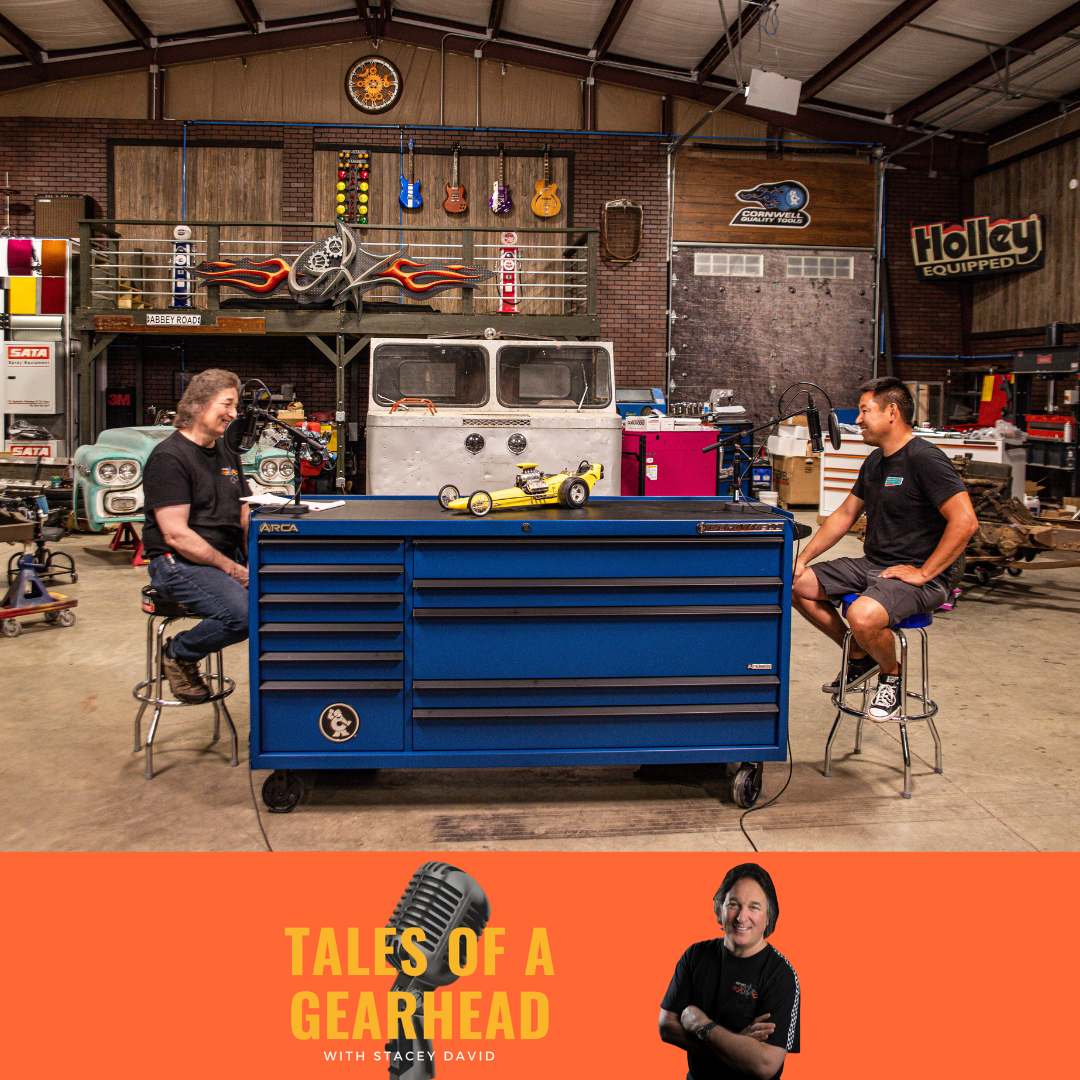
Smithson Speed & Engineering is a business that specializes in making custom cars, often called hot rods, which are modified for better performance and style.
A hot rod is a car that has been changed or upgraded to go faster and look cooler, usually by adding a more powerful engine and making other modifications.
An LS swap is when you take out the old engine of a car and put in a new engine from a GM model, which is known for being powerful and dependable. It's a common upgrade for people who want to improve their car's performance.
A replacement chassis is like getting a new skeleton for a car. It's used when people want to change or upgrade their car's structure to make it better or fit new parts.
The Chevrolet Nova is a small car that was made from the 1960s to the late 1970s. It's popular among car lovers because it can be easily modified or restored.
The Ford Mustang II is a smaller version of the famous Mustang made in the 1970s. It was created during a time when cars needed to be more fuel-efficient.
The 'patina look' is when a car looks old and worn, but people like it that way. It shows the car's history and makes it unique, rather than trying to make it look brand new.
The Chevrolet Bel Air is a famous car from the early 1960s, recognized for its classic look and design. The 1962 version has a unique style that many car enthusiasts appreciate.
Disc brakes are a part of a car's braking system that help stop the car. They work by squeezing a flat disc to create friction, which slows the car down.
A patina car is an older vehicle that shows its age with some wear and tear, which many people find appealing. Instead of making it look brand new, some owners like to keep it as is because it tells a story.
Car
Chevrolet LS3
The Chevrolet LS3 is a powerful V8 engine that many car enthusiasts use for building or upgrading cars. It's known for being reliable and has a lot of horsepower.
LSWAP is when you replace a car's original engine with a different one, specifically a powerful engine from General Motors called the LS. Many car fans do this to make their cars faster and more reliable.
Coilovers are parts of a car's suspension that help control how the car rides and handles. They can be adjusted to change how high or low the car sits.
Long tube headers are parts that help the engine breathe better by letting exhaust gases flow out more easily. This can make the car faster and change how it sounds.
A six-speed is a type of car transmission that lets you change gears six times. This helps the car go faster and use less fuel compared to cars with fewer gears.
The Chevrolet C10 is an old pickup truck that many people love for its classic look and strong performance. It's popular for restoration projects and is often seen at car shows.
The Tesla Model Y is an electric SUV that doesn't use gas and is known for being very high-tech and eco-friendly. It's roomy inside and great for families who want to save on fuel.
The Ford Model A is a classic car made by Ford between 1927 and 1931. It was popular because it was affordable and easy to drive, making it a favorite among many people.
Car
Chevrolet 1956
The 1956 Chevrolet is a classic car that many people admire for its design and history. It's part of a group of cars made by Chevrolet in the mid-1950s that are very popular among collectors.
The Chevrolet Chevelle is a classic car that was made in the 60s and 70s, known for its strong engines and sporty look. Many people admire it for its performance and style.
The Toyota Land Cruiser is a big, tough SUV that can handle rough roads and off-road adventures. It's also comfortable and has nice features, which is why many people love it for both trips and daily driving.
The Ford Bronco is a tough SUV that can go off-road and handle rough terrain. It's popular for outdoor activities and has a cool, classic look that many people enjoy.
The Jensen Interceptor is a stylish sports car from Britain that was made in the late 60s and 70s. It has a powerful engine and a unique look, which makes it stand out among classic cars.
The Shelby Cobra is a fast sports car that was made famous in the 1960s. It's loved by car enthusiasts for its speed and racing history, making it a very special car.
LIVE
This podcast is supported by MIDIHealth.
Are you in midlife, feeling dismissed, unheard, or just plain tired of the old health care system?
You're not alone.
For too long, women's serious midlife health issues have been trivialized, ignored, and met with a,
just deal with it, attitude.
Many of us have been made to feel ashamed or forgotten.
In fact, even today, 75% of women seeking care for menopause and perimenopause issues are left entirely untreated.
But here's the powerful truth.
It's time for a change.
It's time for MIDI.
MIDI is not just a health care provider.
It's a woman's telehealth clinic, founded and supported by world-class leaders in women's health.
What sets MIDI apart?
We are the only women's telehealth brand covered by major insurance companies, making high-quality expert care accessible and affordable.
Our clinicians provide one-on-one, face-to-face consultations where they truly listen to your unique needs.
We offer a full range of holistic, data-driven solutions from hormonal therapies and weight loss protocols to lifestyle coaching and preventative health guidance.
This isn't one-size-fits-all care.
This is care uniquely tailored for you.
At MIDI, you will join our patients who feel seen, heard and prioritized.
You will find that our mission is clear to help all women thrive in midlife, giving them access to the health care they deserve,
because we believe midlife isn't the middle at all.
It is the beginning of your second act.
Ready to feel your best and write your second-act script?
Visit JoinMiddy.com today to book your personalized insurance-covered virtual visit.
That's JoinMiddy.com.
MIDI, the care women deserve.
Did you know you can opt out of winter?
With Verbo, save up to $1,500 for booking a month-long stay.
With thousands of sunny homes, why subject yourself to the cold?
Just filter your search by monthly stays and save up to $1,500.
Book now at Verbo.com.
Hey, Stacey David here with the Tales of a Gearhead podcast.
Now, what is this?
Well, it's a podcast that covers everything automotive, everything mechanical,
everything that's just cool about the automotive lifestyle.
And since that's just about everything, you're going to love it.
Today's podcast is brought to you by Cornwell Tools.
Let's get rolling.
All right, welcome to the podcast.
I have a guest here that you're going to love.
His name is Ben Smithson, and he owns Smithson Speed & Engineering
in Air Murfreesboro, Tennessee.
And they are a premier hot rod shop.
And, you know, Ben's been building stuff for several years,
very high-quality things.
And the good thing about this conversation that we're going to have
is he's a young guy, and he's building high-quality hot rods
and muscle cars and rest rods.
And he's somebody that if you've ever thought about doing something like this,
opening your own shop, you're going to love this conversation
because there's a lot more to it than just going out and turning wrenches.
So, Ben, welcome to the podcast, man.
Yes, I appreciate you having me.
As we kind of talked earlier, I was just like,
I remember growing up watching you on trucks,
and it's wild being here on this podcast with you.
I really appreciate it.
And yeah, it's also been a wild ride getting the shop up and going,
you know, started it in 2019, and that was a wild ride with COVID and all those...
Yeah, you started it right in COVID.
What was wrong with you, man?
Yeah, I didn't have that forecast to see that all that was going to happen
when we went full-time, but it was...
Was it rough at first?
You know, it was more mentally rough,
because everything was happening.
But luckily, we have great clients,
and honestly, it picked up for us.
But I don't know if people had been sitting around...
They were, and they had money.
Yeah, and I've got these cars.
It's been sitting in my garage for years.
It's time to do something with this.
But I mean, it blew up for us.
I had to hire folks to come here open.
It was wild.
But no, luckily, COVID did all right for us.
Most of our vendors as well.
The biggest thing that kind of hindered us would be lead time on supply chain stuff.
Yeah, the supply chain stuff was difficult.
But that's recovered.
We kind of had to pivot and figure that out,
so I actually added on to my shop.
I added a wing on to my shop, and we put up pallet racking.
That's always good to do that.
And it worked out because I was transparent with customers like,
hey, before your car gets here,
we're going to get these big parts that we know we need.
We're going to get on the shelf because the supply,
it takes me two or three months,
which some things did to get this like,
there's no point in me having your car here to sit stagnant
and let's not be able to be productive or do anything with it.
Okay, perfect.
Let's talk about that.
That is such a big thing.
Everybody out there has probably experienced what we call body shop purgatory.
Or shop purgatory, where you take your vehicle,
you drop it off, and you don't see it for a thousand years.
And no work is being done and that kind of deal.
How do you get around that?
And how do you, because obviously you have a great clientele,
you put cars out, how do you regulate that
where something doesn't get caught?
How do you keep projects moving forward for your customers?
Yeah, so that's always difficult.
Again, I try to be transparent up front.
Very good.
Just to tell people this is where we're at
and also part of that transparency is me saying,
look, this is roughly where I think we're at,
but the nature of our business is it's custom work.
It's not assembly line.
And then, too, there's so much scope creep
in the space with the customer,
where we start digging into a vehicle, right?
And then we find, well, what do you think about this?
This might need to be addressed.
Finding stuff that was hacked up before by somebody, yeah.
Or rust that you don't ever see until you blast something.
And then the second side of that is the scope creep
from the customer, right?
Hey, while it's there, can you do this?
Or I'll talk to my neighbor and he said,
hey, what about this?
I mean, we've had that happen all kinds of times.
Oh, my gosh.
And sometimes it's in a good direction.
Sometimes we've got to reel them back in a little bit
and figure out that.
But yeah, I just tell them this is where I think
we'll roughly be at.
But this can be pushed out very easily by some scope
because I've got a blazer right now in the shop
that came in for vintage air swap.
Pretty cut and dry, easy.
Yeah, pretty simple deal, right?
And now it's vintage air swap.
And it's a harness and gauges, LS swap,
transmission, transfer case, suspension.
Might as well put a tilt column from I did it in there.
Yeah, right.
All that.
But I can't really do anything about that.
And that's months of scope creep that just pushed
my entire timeline out, right?
Now, when you see that starting to happen,
do you pull the client aside and say, listen,
we can do all this.
But you realize this is going to add X amount of dollars.
Right.
So yeah, we'll usually kind of come up with an estimate.
Good.
Again, everything we do is time of materials
as we will build.
Absolutely.
It has to be.
And I tell them that.
But for especially big jobs, because I understand
you kind of want to get a ballpark idea
where you're going to be at.
Sure.
So we'll try to put an estimate together
and get especially all the parts and materials
pretty close to a tee.
And then I'll try to swag the labor as best I can.
Yeah.
But anytime we run into something,
I'll communicate with the customer, too,
like I send them some pictures.
Hey, this is what we found.
What do you think?
And then if they kind of mean, say, yeah,
we need to change this or add this and let's do this LS
or let's blah, blah, blah.
Again, I think the communication
and the being transparent up front really helps.
Communication is number one.
We do small jobs and full builds both.
I tell you what, let's talk about that,
the small projects and the big projects.
A lot of people, when they see a custom shop,
I know when I had my shop, people would come in
and go, oh, you just do ground up restorations.
Or that's all you came with.
And it's like, no, I can actually just do a front end
swap.
Or install that kind of thing.
How do you regulate that?
Because if you're in the middle of something,
you probably have limited shop space.
So a guy comes in and he's like,
I just want a front suspension upgrade.
How do you fit them in?
So I actually have a spreadsheet.
I mean, I've got an engineering background.
Yeah, I saw that.
Project management.
So pretty good with Excel.
But I keep a spreadsheet for my entire schedule.
And it's got the customer information,
the car information, overall, 5,000 foot view,
work scope, and all that.
And so I get a retainer deposit down.
And that secures you from your schedule.
So it's got all that information.
And I tell them, a lot of times, we might be able
to squeeze you in if we can.
Sure.
We can wait on something, but I can't guarantee that.
But if we get an opening and we can,
I'll call them and say, hey, here in a week or two,
it looks like we're going to have a little bit
of downtime.
Can you bring your car over?
And we can throw this vintage area in.
Yeah.
But that comes back to where we try to have those parts
and stuff ordered.
Oh, yes.
At least for the next three or four vehicles.
That's why you need the deposit.
So the pod's there.
We've got the parts.
So that way we can say, yeah, just pull the trigger,
bring it over.
We can throw this in.
We have the parts and get it out.
And you still keep a control over it as the owner.
In other words, you walk around, you watch all the projects,
make sure your guys are doing what they're supposed to.
That's very important.
So you get too big.
And the person who is kind of the quality control starts
to get spread then.
And then things start going out the door.
That's not up to snuff.
Right.
Absolutely.
I'm very present.
I'm there.
So I'm usually there 30 minutes before we open.
And usually 30 minutes or so after.
It's changed.
I was saying recently, I've got an 18-month-old.
Congratulations.
I appreciate it.
Thank you.
He's already been to car shows, loves it.
He goes to like with us.
But I definitely had to prioritize effectively my time
because I have a lot more time than I'm spending with family now,
which is great versus a shop.
So that changed the dynamic a little bit.
But you kind of just got to move and groove.
And I've got a guy now that's kind of like a lead guy.
So he can help manage some of the quality
and some of the shop stuff where I'm still doing parts ordering
and talking to customers and running get cars
and come doing stuff like this.
So how big a crew do you have?
So right now we're actually kind of a little bit lean.
I've got three guys starting though here.
So I've got a guy starting Monday.
And I've got two starting the following Monday after that.
Now are they, what's their specialty?
Are they just overall guys?
The guy starting this coming Monday,
he's more on the body work and metal fab side.
So that'll be two guys kind of doing that.
And I told the guy that's there currently.
And do you have your own paint booth and everything?
We don't have our own paint booth.
So we have a bay in the shop that is closed off
and it's where we do all of our body work and our paint work.
But we, as far as paint work,
we don't do a whole lot.
We'll paint chassis, engine blocks,
so you send it off to somebody else to get the paint work.
Yeah, so we have a shop in Alabama,
Dynamic Speed and Custom.
They're in Gaston.
And all of our paint jobs, we'll do the body work
and get them in like the last round of primer.
And we don't open them up.
We don't sand them, you know, just keep them sealed up
in case they got to sit around our shop
or sit around their shop for a little bit.
And then they, we take it to them.
They do the final sand.
They spray it, cut and buff it,
put it back together, how it came,
and then it comes back to us.
But it's been a great relationship.
Those guys are really good.
They worked, Big Oak Garage is a big shop.
Oh yeah, yeah.
And so they worked for Will
and they kind of branched off
and doing their own thing now.
But like all those guys down there,
man, it's wild in Alabama,
how many like super-duper high-end,
very talented guys there are down there.
But yeah, that's who we use.
Dynamic Speed and Custom.
And they've done a really good job for us.
All right, let's talk about
another aspect of building a vehicle.
We were talking about a little earlier.
Something that's really changed
in the custom car-building world
over the last 10 years
is the replacement chassis.
Yep.
I've done it long enough
that I used to go out and get the Volare
or the Nova...
Mustang 2s and all the...
Clips and then they went to the subframes
from Fatmans and stuff to the clips
and now you have complete replacement chassis
from Roadster Shop and TCI.
Even for unibody cars, you know,
like Camaro's and Mustang's,
you can get a brand new chassis.
Jeff Schwartz is doing some awesome stuff with that.
And that's completely changed
how and the cost
and the time that it takes to build a vehicle.
So how do you approach that
with some of your customers?
When they come
and they sit down to meet like,
hey, I need you to kind of really think about
what you want to do with this car,
how you want to use it,
you want to go to car shows,
you just want to get on the cruise at Drive,
you want to take it down Route 66.
Yeah.
Because the replacement chassis is 20 to 30 grand,
depending on who you go with.
Right.
That's a big chunk right off the top.
Absolutely.
So they're like, whoa!
That, but you know too,
if you're building a high-end car,
just the valuation of the car
when it's finished, you know,
it's going to be
perception-wise and valuation-wise.
It's going to be a nicer car.
It's going to be worth more
if you can say, hey,
this is a car road chassis.
Absolutely.
A road shop or a, you know, you name it.
All right.
Let's talk about the,
jumping right off of that.
Let's talk about the patina look and the,
because that's really popular now.
And guys just building old stuff
and just running it down the road.
So like this old truck chassis here,
somebody will throw that on
and drive that down the road.
For sure.
Yeah.
So do you work on those kind of vehicles as well?
Yeah.
And actually one of the favorite cars
I've ever owned personally
was a 62 Chevrolet Bel Air station wagon.
Okay.
And it was patina.
It was our Arizona car.
It had original paint.
Patina, it was great
because we could pile in,
drive it anywhere we wanted.
You know, it had,
it was lower disc brakes,
vintage air, overdrive.
Yeah.
I could jump up on the fender.
We could, we had to worry about,
we just got it and it took off.
No, I do like a patina car.
We've worked on multiple patina vehicles
and I tell people too,
like customers,
depending on how they want to use it,
right?
Mate, if it's got decent paint,
like it might make more sense for you
to just kind of leave this paint.
Paint has gotten so expensive
we were talking about that.
You know, and honestly,
this might be something that
forces paint to come down a little bit
if less and less people are doing it.
I mean, it used to be
a decent paint job
was three to five grand.
Now you can't even start
to get into them.
You can't even buy the material
for that anymore.
Nah.
If you start from scratch
with epoxy primer all the way up.
One of the biggest things
I saw as far as a jump
when COVID and things hit
was the auto body supplies.
Yeah.
Like the primers,
the fillers,
the paints,
and the reducers.
I mean, it was wild how
that skyrocketed so quickly.
Yeah.
And it really hasn't come down.
No, it hasn't.
But it doesn't.
I mean, I remember
you could buy a crate
because we were doing
LS3s from Chevrolet Performance.
Yeah.
I remember we could buy
one of them like a fully dressed,
you know,
intact oil pan motor.
Yeah.
You know, like eight grand
and now they're over 10.
And it hadn't even been
that long, you know.
Yeah.
But that's just inflation
the way things are gone.
And I try to encourage people,
the guys that are doing
the patinas stuff,
they still need the aftermarket.
Mm-hmm.
You know,
you still need parts from
ride tech.
You still need things
from Vintage Air.
You still, you know,
you need an I did it column
or whatever.
You may not do the whole
thing.
And so I encourage people
to try to do that
because, you know,
back in the day
you could go to junkyards
and stuff.
You can't do that anymore.
The whole aftermarket
has totally shifted.
And I think that's
really good.
You know,
I got a question
for you out there.
If you're working
at a shop,
what kind of tools
are you using?
Now,
you're probably going to go,
you know,
whatever I got,
cheap, man.
Are you kidding?
Well,
and that's the problem
because listen,
we all grew up
working with cheap tools.
And my first set of tools,
my dad got them at Kmart,
got them for Christmas.
And I use those things
until they just,
there was nothing left.
But that's all we had
at the time.
But as soon as I could,
I started investing
in good tools.
And the reason it's not
because you want to show them
off to people,
even though that's okay,
it's because they allow you
to do quality work.
And there is nothing
more frustrating.
I have talked to gearheads
all across the nation,
around the world, actually.
And one of the biggest
frustrations they have
is either not having
the right tool
or breaking the tool
they were using
or having something
strip or break
or something.
And almost every time,
it's because
they don't have
the right tool
or they're not using
a quality tool.
So if you are into this,
like I hope you are,
you need to get some good tools.
And that's where
Cornwell Tools comes in.
They're America's oldest
tool manufacturer.
They're still American-made.
I think that if you are
going to build some stuff,
if you invest
in a good set of tools
right off the top,
you don't have to get
everything.
But just get yourself
a nice set of hand tools
and work from there,
you will never regret it.
And you can pass them
down to your
grandkids
or whatever
if you want to.
But most car guys
want to hold on to their tools
as long as they can.
Anyway, if you get a chance,
check out Cornwell Tools.
You will not be disappointed.
Do you guys do any
newer stuff?
And from newer,
I say from like 90s on.
Other than pickups.
I was talking about
import cars.
So most of the import
stuff we've done
has been like LSWAP
or something like that.
But really...
Because that's the proper
thing to do too.
Yeah.
Really will do
because I like some
of the modern muscle stuff
myself.
So we'll do some of that.
Our bread and butter
and our core is still,
I would say we're
30s to 80s,
but really honestly
where people are
spending money right now
for us at least
is probably 50s to 70s
is the most common.
But yeah,
we'll work on ourselves.
We've worked on OBS trucks.
Not long ago,
we had the 2003 Mustang.
We did rottet coilovers.
Nice.
We did long tubes
and next pipe
and different stuff like that.
That's a quick easy project.
Yeah.
But too like,
as you can talk about
the aftermarket kind of
in a sense leads the way
almost as a trend in that.
Yeah.
Absolutely.
Have you noticed
a trend of like
the 30s cars
have,
they've kind of fallen
out of favor.
They're affordable.
I know.
I hate it because
I grew up street riding.
Absolutely.
So like me and that,
like we always went to
I've got to model A myself
that I've had.
We finished it when I was 17.
So you still have that?
You still have that.
You still have the 32 Chevy?
I did sell that.
That's a cool car.
That was a fun little car
and that really helped me
kind of get the shot.
I tell you what,
green is a hard color
to pull off.
You had a nice color on that.
Man, it was fun.
I had a six-speed
in it,
456 gear,
had a pretty hot little
327
and that car was
not supposed to be
anywhere near as nice
as it turned out.
So I started that
when I was 19.
I built the frame for it.
You know,
I've got a junkyard,
T56,
a lot of those parts
were kind of junkyard
slash user
that I put on that car
and it was just going to be
I want something I can
beat on
and just go have fun with,
go to the drag trip,
do burnout,
stuff like that
and then
I was going to paint it all
like a matte color
and then it just
kind of snowballed
and became slick.
And then somebody came in
and said,
hey, here's a ridiculous
amount of money for it.
It left.
The model A I'll keep
forever.
You did that
with your dad, right?
Yeah, yeah.
Most of that car actually.
Is he still around?
He is.
Good.
Yeah.
So they live right beside us
which is really nice.
So he's always telling your son,
come on.
Yeah.
He comes down the shop
and then supervises
and hangs out some
but the C-10
I wish I had back
we were talking about
Copperhead earlier.
Oh yeah.
When I was 17
I had that 67 C-10
we bought it
when I was 13
and restored it through
like high school
and I drove it through
high school
and called like
daily driver like rain,
sleet,
and that guy's from Kentucky
and I still see it
and I always say you ready
to sell that thing yet?
He tells me I'll be the
first one to know
if he does sell it
but I still see it
and it looks pretty much
the same as it did.
So I would like to
have that back
and back to your chassis
thing.
I would probably put it
on a chassis
and a Mugger
and just keep
all the outside
the way it is
and even the interior
like it's all
the way it was
when I had it
but just make it
really fun driving
vehicle
but I can't get
would really miss that much.
And now that I've seen it, man, and I've got a little older,
that'd be a cool truck to have.
Okay, so I always like to ask this kind of question.
If you could have any car, you know, price is not an issue.
What would it be?
Man, like that's hard to know.
It's a real hard thing.
So let's break it down a little bit.
A hot rod.
So let's say from 1930 to 1940,
what hot rod would you have?
Well, you know, I've got my Model A so, but.
Okay, so the Model A.
Yeah, but really if I were going to build a car,
a hot rod, I would probably build a Model A on Deuce rails
and something like that.
And actually I would like to build something cool like that
to take out to Pomona one day.
Like so, great national road show.
I would like to build a cool little road show,
but the pre-war, especially the early 30s cars,
I really liked, I always have.
A chop 32 sedan, buddy, is the one for me.
Yeah, okay.
Yeah, I just, and with the,
you remember like the old orange crate,
you know, with the chopped fenders and stuff.
Oh, yeah.
Or the little coffin, you know,
just severely chopped crazy stuff.
Okay, so how about 50s cars?
50s.
Now we're certainly get into, it could be a truck.
Yeah, right.
Now probably a 56 car.
Yeah.
So a 2TN post car.
56 Chevy.
Wow.
I like that.
A lot of people don't jump to the 56.
I know, that's an.
I like the 56.
The 55, 6 and 7s.
I mean, everybody likes to try a 5.
I probably like the 56 best than the 55
and then the 57 in that order.
But I like those post cars.
I like a post car in just about anything.
Yeah.
But a 56, yeah, like a 2TN.
I don't like as much as the flashing is
on the moldings and trim on the bay layers.
I like the 2TNs.
Or some of the 150s.
Probably you were talking about Haller brands
or something like that.
Oh yeah.
Pickle fat Haller brands on.
A raw dish looking, you know,
kind of timeless look on that.
Yeah, yeah, I've always liked those.
It's hard for me to choose.
I mean, the 55 is so great.
Yeah.
Probably my least favorite is 57.
You know, and that's the quintessential
50s car to a lot of people.
But 56 is right there.
I just always, I love the 2TN of a 56.
You know, it has just a great trim.
Okay, so how about 70s?
70s.
Into like your muscle car era.
And now it gets tough.
Yeah, that's, I've always liked a 70 Chevelle.
Yeah.
And I'm a big full frame car anyway.
I like a Camaro Mustang or whatnot,
but I do like the full frame A body platform.
So a 70 Chevelle probably.
And as much as we do LS stuff around,
and I love an LS,
I'd want a big block car for sure.
Yeah, there's just something about it.
Yeah, yeah.
A big block, maybe with a five speed
or since you don't overdrive behind it,
just make it drivable.
But a big block Chevelle.
Yeah, the one I always liked of that body style
of the Chevelle body style was the Buick GSX.
Okay, yeah, yeah.
A big yellow one with a big wing on it so fast.
So much torque.
It's funny too, like those,
the old muscle cars in the mid 60s to early 70s,
it was such a competition back then.
And there were some pretty powerful cars,
but the tires sucked.
Oh my gosh.
It's just wild if you look at pure numbers
on some of those cars
versus some of the newer modern muscle cars
and just like the power, the weight,
the quarter mile time,
just like man, those cars just,
I don't know, they just weren't that fast.
They really weren't compared to that.
Now if you put modern rubber on them,
it'd be a whole other thing.
Those things would have scared you.
But there's nothing about just getting behind the wheel,
those four speed car, whatnot,
and just driving it like the big block.
The big block sounds so killer
and just the torque curve.
And it's just, it's wild how that works.
But I'd like to have one of those.
Are you into four wheel drive stuff at all?
Jeeps.
So we built a Jeep scrambler.
I saw a Land Cruiser on you.
Yeah, and we built a Land Cruiser.
I've never been like a big four wheel drive guy.
It's not that I hate it.
I've only ever owned one four wheel drive truck
in my entire life,
which is weird being from Tennessee and all these.
I was just gonna say,
you just haven't been introduced to the dark side properly.
Well, you know, I was telling people,
I used four wheel drive and that truck,
way more to launch on people street racing
than I ever did to like off road or whatnot.
So we did a square body blazer a while back.
It was blue two tone LS3, blah, blah.
But it was four wheel drive, had a small lift.
But that was really fun.
That was a cool truck.
I enjoyed it.
Well, that market's a different market.
And you know, like I said,
there's a whole different world to that.
And the four wheel drive world
is kind of arguing with itself right now anyway.
Because you've got the hardcore four wheel drive guys
that take their stuff out and beat it.
And then you've got like the mall cruisers.
You know, and there's nothing wrong with that.
That's just a nicer thing.
Then you have kind of the ones in the middle.
It's kind of the dune buggy thing
where they like to zip it around,
but it's got the big wide tires.
It's more something you'd run down a beach.
And whether it's a Jeep or a new Bronco or whatever,
and they all are legitimate things,
it's kind of like the street rod world.
You know, some people build more of a competition car
like a gasser sort of deal.
To actually take down a drag strip.
Other people just want to cruise it.
Other people just want to show it.
Yeah.
But that's the beauty of it really.
It's the beauty of it.
In the street rod world, of the truck world,
of the Jeep world,
is that like you kind of put your own personality
into it, right?
Absolutely.
And that's what makes it cool,
because if they were all red 69 Camaros
with torque thruster,
if they were all, you know,
you're looking at the same thing.
So that's what's neat is being able
to see people's personality,
work with them to get their dream car, right?
Yeah.
And to have people,
I would tell them it shows all the time.
It's like, listen, you may not like it,
but just go over and appreciate it.
And find out where that guy's coming from.
And every time they're like, gosh,
you know, I really like that car now.
Yeah.
So, yeah.
And that's the thing for us too,
like all these cars with the baby,
and we got to remind ourselves of that,
even if it's not quite the style we would want to do,
or this and that.
Yeah.
You know, this is this guy's like,
this is his prized possession,
or this lady's prized possession.
And this is how they want to,
and when they pick it up,
they got a big smile on their face
and they're loving it and enjoying it.
You know, that's what matters.
That right there, I hope you guys caught that,
because I'm going to repeat that.
It's the customer's vehicle.
And so many shops get in there
and they have a frustrated designer
or a wannabe, you know, foos or whatever.
And they're like,
I have to give you my interpretation
of what your car should be.
And every time I've seen people do that,
the customer leaves unhappy
because they didn't get the car they envisioned
or that they wanted.
It's not the right color or it's not, you know, whatever.
So that's so great that you do that.
And I can see why your clients like you,
because I mean, it's ultimately their car or their truck.
And you know, you can still kind of steer them
in the right direction.
Oh, you got to steer them off the cliff.
But yeah.
We want to like, and that's why, you know,
both the way the car looks aesthetics, right?
That's why I tell them like,
you need to tell me how you're going to use this,
what you want to do with it.
Yeah.
Sometimes they get to talking to their neighbors
and friends and hit a little too much.
And absolutely, you know, I'm like,
what do you want to do with this thing?
Well, I just want to, something,
I can cruise around in on Saturday Sunday
and you're going to like,
autocross it, race it.
No, no, no, no, nothing like that.
But they want like a 572 or something
or like, you know, some big twin turbo.
And it's like,
We can do that.
We want 1,000 horsepower, yeah.
But I don't think you know what the drivability
of a big cam car is like, number one.
And two, it's not really, to me,
it's not spending your money most effectively
because that's going to be a pretty big purchase, right?
Where we could kind of scale this back a little bit,
get something that probably drives a little better.
Don't have to worry about cooling problems,
that kind of thing.
Steel hits a good lick, sounds good,
does everything you're going to want and more
and do it for a better price.
And then we could put that other money
and kind of allocate it a little better.
Absolutely.
Let's talk about where you're going forward
with your shop.
Okay, so you're building things,
you're building cars that can drive,
you're building high-end cars,
how about show cars?
Because you know, you've sent some stuff out there,
you won awards, how important is that now?
How much has that changed?
Yes, I mean, obviously that just adds
to the credibility of the shop, right?
Yeah.
Which is good.
And it's changed because you don't have magazines anymore.
So it's kind of, if you win the shows
or what it sells for at auction.
That's a big thing.
Oh, you know, a Smithson car
brought X amount of dollars and they all run to you.
Yeah, kind of the pedigree, right, of the vehicle.
Yeah.
And part of that is, you know,
when we finish the higher end build.
So we try to take it out
and get it to the right shows
and get it in front of the right people
to just see what it'll do.
We got a lot of good guys' shows in there, sorry.
And there's so many shows out now.
You can go to multiple shows in the weekend,
multiple big shows.
Yeah, that is, I had a guy approach me one time
and he was like, I want you to build me a car
that'll win the Riddler.
And I said,
I said, I can get you to the Riddler,
but winning the Riddler, that's a whole nother thing.
There's politics involved,
there's things they look for.
I said, you can't guarantee somebody
is gonna win one of these big shows.
And I see, and a lot of those sort of clients
can be really difficult because I have a lot of money
and they're like, I want the big trophy.
And you can do the very best
and it just doesn't win.
And that's how that, it's the way those go.
And that's why I try to steer people away from that.
It's like, that's really not enjoying the cars.
Let's build you something that you can take out
and drive and enjoy.
And you take it to a show and do a great job.
You know, the guy I sold the V8 Interceptor to, the Cougar,
he goes, yeah, I took it down to the show
and I won best of show with it.
I was like, well, that's not really
what you're supposed to do with it.
I hope you drove it there.
I said, quit putting that car in there, that's not fair.
But again, it comes back to what the customer wants
and how they want to use it.
Yeah, as far as the high end Riddler stuff,
we've not had any one with that kind of car
that they want to do.
I was gonna say that we would turn them down,
but I would have to really have some in-depth conversations
and kind of feel the customer out and stuff like that.
But I do, because I've always grown up driving cars
and I do enjoy getting them out and cruising around
and taking the show.
I mean, I've got a station wagon.
It's a 70s Chevrolet Kingswood and man,
we've driven that thing everywhere and just enjoyed it.
I love a good wagon.
We've done cruising the coast in it.
We've done good guys Columbus in it.
We've done power tour twice,
but I do enjoy driving and getting to meet people.
That's what it's all about.
But then once the show thing's over,
they still have to enjoy it, either that or sell it.
And unfortunately, a lot of them try to sell it
and then they realize they can't get their money back out
of it, which was never what that was about.
But some people also, they like the build process.
So they like working and again,
I guess it's putting their own personnel,
their own swing on things.
So the build, because especially those high end cars,
I mean, these build processes,
it ain't like it's a six month thing.
You and the builder are like this.
Oh yeah, and they're calling you at 10 o'clock
at night going, hey.
But they enjoy that.
And then they get it done, take it out
and get some hardware, get some pedigree
and then sell it on to the next one kind of thing.
Yeah.
So what's the future for you guys?
So again.
Just keep it on what you're doing.
Keep building hot rods and stuff.
We actually just, my marketing and sales guy
just put us a Shopify store together.
And we literally just launched that recently.
So we're gonna try to start slinging some parts.
You know, we've gotten to where we do
so much business with the wheel wood
and the painless American auto wire, ride tech.
You know, you name it.
So we're like, well, we're a dealer for all these guys.
Maybe we should kind of try to start slinging some parts.
So that's what we're doing is trying to work with them,
figure out what their high volume stuff is,
kind of figure out what we use and sell a lot of.
We are a little different from like the big box stores
where we install all this.
Like from a technical side, you know,
if you have issues, you know,
we can help steer you in the right direction
or work you that into like part selection.
Cause there's a lot of, there's so many
of the small parts that you just don't know
you need until you're in there and you're like,
Oh yeah.
I forgot this, I need to order this.
I feel like we can help a lot on that.
We're like, you order all these parts once
and they get to your door and now you're ready to take off.
You don't have to worry about, well, we forgot this
or we got to go order that or we got, you know, so.
Absolutely.
You know, I'm so glad to hear you say that.
I was just talking to a guy just a few days ago
and he comes up to me, I was at the big Cobra show
and he goes, where are the speed shops in Tennessee?
He said, where do I go to get that sort of thing?
And I was like, I honestly can't tell you
there's a lot of shops around,
but they're builder shops and that kind of thing.
He was talking about, remember those super shops
and those places where you go to-
Yeah, the one back home, it was Mike's speed shop
for a long time.
Yeah, where you go in and buy parts and stuff.
So that is obviously the next thing.
I mean, we're even doing that kind of stuff
with parts and things because that's
what a lot of my time is spent on
where people will write in and say, okay,
I want to do this, what is this involved?
Well, that's a long conversation a lot of times.
So you don't just bolt it on, you need this,
this, this, this, this.
And it's hard to capture the notes and bolts of that
in 30 minutes or an hour, right?
It's just so much detail and so many little things
behind the scenes that you don't see
and it's not super glamorous, but it's gotta happen.
It's gotta happen.
And a lot of times something you will say
will foster three of more questions.
So they're like, oh, wait a minute, I need a regulator?
So what fuel line should I be running?
And it just can just go down the rabbit hole.
Well, there's some complexity to it.
I mean, you build a car from scratch,
I mean, there's so many moving parts that,
and again, it's one of those things
that you kind of, if you don't know, you don't know, right?
Yeah.
Where that's where I feel like people can kind of get
bogged down and even I've seen projects stall
and get pushed aside and then finally sold
just because you get to these roadblocks
and you don't really know which direction to go,
what am I missing, what do I need to do next?
And that's where I feel like we can do that
because I mean, we do small stuff
but we do turnkey full build
so we know what that looks like
pretty much across the board
and the vendors we work with are so good
and the quality of the parts,
the customer service so it kind of just makes sense to me
to try to reach out and start doing that.
So yeah, but it's nice.
We just finished that up.
It's just literally smithsandspeedparts.com
and we'll see how that goes.
Perfect, perfect.
And we'll probably do something with you guys on the show.
I'd like to do some, I've got this hot rod coming.
I'd love to have your hands on it.
It'd be great.
Yeah, for sure.
Because we're doing it as a tribute
to the hot rod industry.
Yeah, awesome.
So it'd be great to have your name on there.
Yeah, yeah, absolutely.
Yeah, you let me know.
Sounds good.
Listen, thanks for dropping by.
You're welcome anytime.
It's been great.
I appreciate you having me.
Thank you.
All right, that's our show for today,
which means you need to get out there
and start working on something.
Spend some time turning wrenches.
You might be surprised how much you like it.
Make sure you check out our website, stacydavid.com,
because we've got all kinds of new products
and some other great stuff that you're just gonna love.
Also make sure to check out our social media.
That's Instagram, TikTok, Facebook, YouTube,
all at official Stacey David.
Our social media is where you're gonna find
all of the bonus content, the giveaways,
the contests, the trivia.
We even have extra viewer projects
that focus on what you are working on.
Also, the new season of Gears will be on MAVTV
and YouTube will be the place
that you can view all of your favorite Gears episodes
as well as the full project builds
that follow the project from beginning to end.
Make sure to check out our new Gears coffee cars.
This is a unique blend of coffee and cool stickers to collect
that will appeal to anyone.
But the most important thing is get out there
and turn some wrenches yourself.
Get a project, start working on it,
and if you don't have tools, check out Cornwell.
They can help you out there.
All right, that's all the announcements.
We're all up to date.
We'll see you next time.
Well, the holidays have come and gone once again,
but if you've forgotten to get that special someone
in your life a gift,
well, Mint Mobile is extending their holiday offer
of half-off unlimited wireless.
So here's the idea.
You get it now.
You call it an early present for next year.
What do you have to lose?
Give it a try at mintmobile.com slash switch.
Limited time, 50% off regular price for new customers.
Up from payment required, $45 for three months,
$90 for six months, or $180 for 12 month plan.
Taxes and fees extra.
Speeds may slow after 50 gigabytes per month
when network is busy.
See terms.
Hi, I'm Andrew Yang.
You may remember me as being the guy
you wanted to get money into the hands
of millions of Americans.
Well, I'm still at it,
and I'm now the founder of Noble Mobile,
the first carrier that pays you to use your phone less.
With Noble, you get unlimited talk text
and 5G data on the team mobile network,
and you can earn up to $20 cash back a month
for getting off your phone.
Try it for just $10 a month
at noblemobile.com slash yang.
That's noblemobile.com
and use my code yang10 to get paid
to use your phone less.
About this episode
Ben Smithson, owner of Smithson Speed & Engineering, shares his journey of building a successful hot rod shop in Tennessee, starting during the pandemic. He discusses the challenges of managing custom builds, including supply chain issues and scope creep, while emphasizing the importance of transparency with clients. The conversation also covers trends in the automotive world, such as the rise of replacement chassis and the popularity of patina vehicles. Ben reflects on his personal projects and the significance of customer satisfaction in the custom car-building process.
Ben Smithson from SMITHSON SPEED & ENGINEERING is in the shop today. He and Stacey dive deep into the ins & outs, do's & don'ts, and everything in between about opening and running your own premier hot rod and custom car shop.