A solid state battery is a new kind of battery that uses solid materials inside instead of liquids. This can make the battery last longer, be safer, and charge faster.
The Tesla Model Y is a small electric SUV that many people like because it can go far on a single charge and has lots of space inside. In 2025, Tesla made some improvements to make it even better and more modern.
FSD means Full Self-Driving, a system Tesla cars use to help drive themselves. It can do things like keep the car in its lane and change lanes automatically, but the driver still needs to pay attention.
The Tesla Semi is a big electric truck that helps carry heavy loads without using gas. Tesla is making it in a big factory in Germany to sell more of them around the world.
The Tesla Model 3 is a popular electric car that runs on batteries instead of gas. It has cool features like self-driving technology and is made by the company Tesla.
Self-driving means the car can drive itself without a person controlling it. It uses cameras and computers to know where to go and how to avoid things.
The Tesla Cybercab is a possible version of the Cybertruck that might have more space inside for people. People talk about it to see if it would be more useful or popular than the regular Cybertruck.
The Supercharger network is a group of special charging stations made by Tesla that lets Tesla cars charge their batteries really fast, so drivers can travel long distances without waiting too long.
MegaWatt level charging means charging electric vehicles with a lot of power very quickly, much faster than usual chargers, so big trucks can get charged in less time.
Used Tesla price means how much a Tesla car costs when someone else has already owned it before you. It helps people know if buying a used Tesla is a good deal.
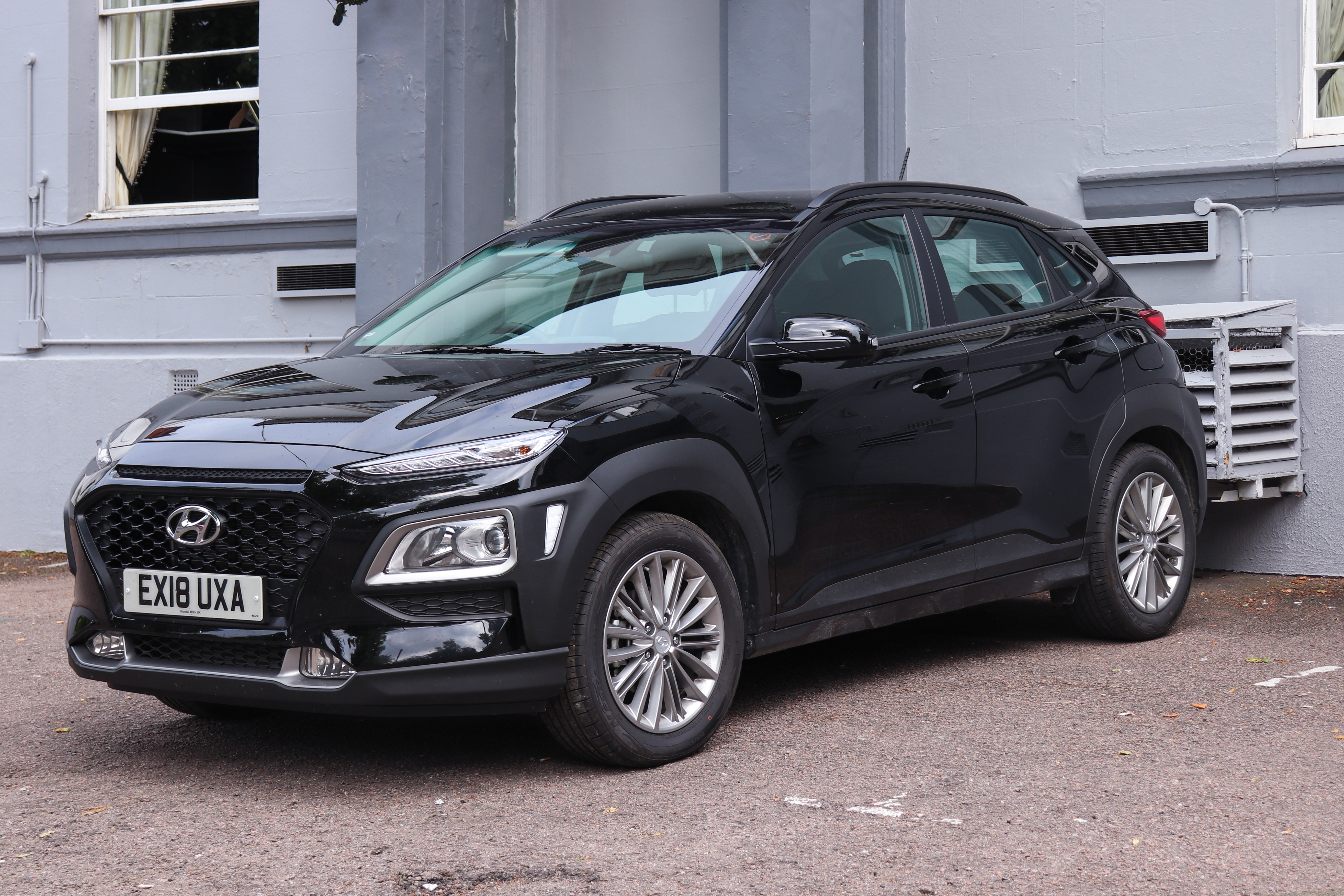
The Hyundai Kona is a small SUV that people like because it's useful and not too expensive. The electric version is becoming cheaper to buy used, which means more people can afford it.
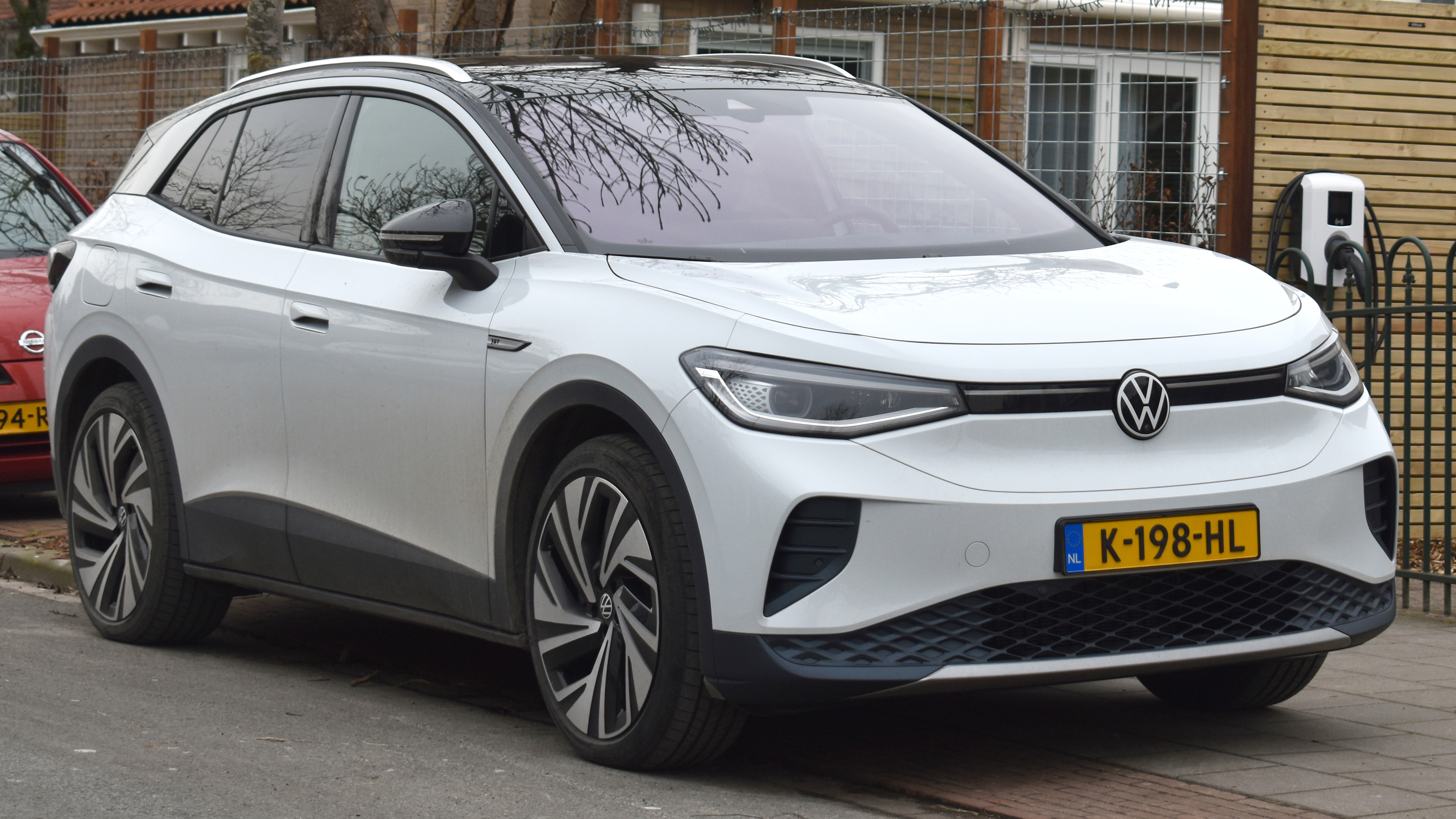
The Volkswagen ID.4 is an electric SUV that many people buy because it's easy to use and not too expensive. Used ones are getting cheaper, so more people can afford them.
The Tesla Model S is a fancy electric car that can drive very far without needing to recharge and is packed with cool features. It's one of Tesla's most popular and important cars.
The Dodge Charger is a fast and strong car from America that looks bold and sporty. In some places like China, they have special versions that are even more powerful.
The Hyundai Ioniq 5 is a small electric car that looks cool and can charge its battery quickly. It shares parts with other cars, which helps keep it affordable and reliable.
The Tesla Cybertruck is a new kind of electric truck that looks very different from normal trucks. If Tesla lowers the price a lot, more people might want to buy it.
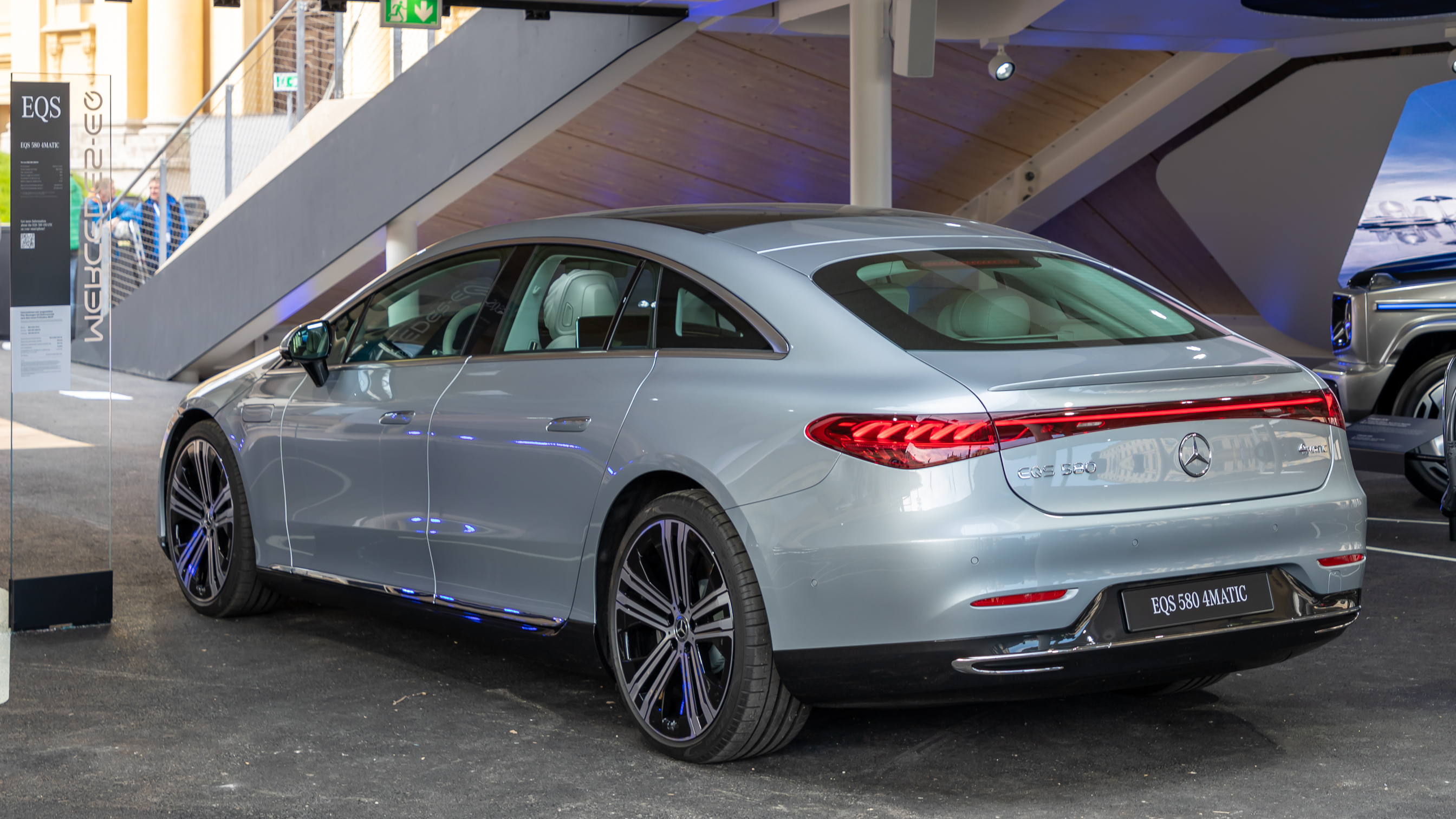
The Mercedes-Benz EQS is a very fancy electric car that can go a long way before needing to recharge. People ask about how far it can go because it's important for everyday use.
The GMC Sierra EV is a big electric truck that can do a lot and has modern features. It costs less than $100,000, which makes it easier for people to buy compared to more expensive trucks.
EVs are cars that run on electricity instead of gas. They use batteries to power the motor, which helps reduce pollution.
LIVE
All right, we are live for a new episode of the Electric Podcast.
I am Fred Lambert, your host, and as usual, I'm joined by Seth Wintraub.
How are you doing, Seth?
I'm good.
Sunny Florida.
All right.
Florida, beautiful Florida, escaping the last little bit of winter we have.
How's the temperature down there?
Probably 75, sunny.
Oh, nice.
That's a good one.
It's not too bad here, too.
I think we have, like, one more snow, and then it's coming down.
But you like the snow, anyway.
You're always snowboarding.
All right, what we have on the Electric Podcast this week, we're going to talk a little bit
about Tesla.
We usually do it on good Tesla news this week.
We have some decent, not so good Tesla news first, but then some decent Tesla
news.
We're going to talk about a little bit of an update on the Donut Lab, I've been calling
it the Miracle Battery, solid state, some actual third-party testing is starting to
trickle in slowly, and so far so good.
So we'll check that out.
Still remains somewhat skeptical, but we'll see.
We have Lucid that had their earnings this week.
We're going to talk a little bit about that, and then Waymo is having a giant expansion.
But first, let's talk about one of the biggest EV factory in the world is kind of in a tough
spot, and we're going to know a lot more within the next week, but that's Tesla
factory Berlin.
We've been reporting on Tesla's issues in Europe, which are quite significant.
We're talking about the total collapse of demand for Tesla in Europe.
They're peaking in 2023, a slight decrease in 2024, a crash in 2025, brand issue, like
this picture here of Elon doing a nice little salute that was projected on the factory.
In Europe, they're taking Elon's turn in this kind of doomsday billionaire club that
they're doing right now quite seriously, and it's affected them in quite a bit.
People thought that we saw the bottom in 2025, apparently not, because we got the numbers
from January, and it's still down, even compared to January in 2025, when Tesla was doing the
Model Y refresh, and we thought that was the main explanation for Tesla's problems at
the time.
Turns out it wasn't.
Even with full supply, Tesla is having issues, having any kind of momentum in Europe.
What happens to the factory in Europe then?
That's Gigafactory Berlin.
We discussed a bit about the capacity situation going on.
It's technically Tesla can produce up to 375,000 Model Ys per year in Berlin.
Last year, Tesla delivered 235,000 total vehicles in Europe, and some of those came from China,
so it's quite under capacity.
Now also, Tesla Europe is sending cars to other markets.
For example, in Canada, we're getting some Model Ys from Europe now because of the tariffs
on the US.
However, we used to get them from China, and now we are reducing the tariffs on China,
so Tesla might end up moving back to Chinese cars, so that won't help Berlin either.
So it's really just a bad situation all around.
And then what has been escalating lately is the conflict with the union.
So in Germany, every factory has a workers' console, and it's kind of a mini-parliament
within the factory where you can elect representatives, and the representatives represent certain
factions, including unions.
Tesla famously in Thai Union, one of the few manufacturers in the US, which still operates
large-scale manufacturing, auto manufacturing without any union.
In Germany, it's literally the only one, if I'm not mistaken, and they've been trying
to...
IG Metall is the big one for automakers, automotive workers, I should say, in Germany, and the
last workers' console vote in 2024, they got the biggest faction voted in, but still
a minority of around 30-something percent.
And they've been trying to gain a majority to get collective bargaining against Tesla
and bring Tesla's workers' conditions up to the German standard, which now include
like, I think, a 35-hour work week, too, so you would reduce the hour, better pay,
vacations, all of that stuff.
Tesla's been fighting against that quite a bit, and there's been some weird things
in the last few months happening, including a concert with...
They brought in a rapper that was like, doing in some anti-union stuff, and a few weeks
ago, it escalated to a workers' console meeting that Tesla claimed an IG middle
representative was filming, the IG middle denied that, Tesla called the police
on IG middle, tried to get the representative's laptop, the representative refused, they
waited for the police, the police got a laptop, and now IG middle is suing Tesla
over the situation.
We don't know exactly how that will come out, but this is all leading to a vote
that's going to happen next week now.
And this week, Tesla had another ace up its sleeve.
I don't know how much of an ace it is these days.
The head of the factory went to California, or I should say Texas,
probably was probably Texas, Austin.
And then they interview Elon Musk, and then they play that recording to the employees
there, and it was a lot about Tesla's plan for Europe, trying to reassure people
that the big one in Elon's mind, according to the interview, is FSD.
Like he's convinced that FSD is on the verge of being approved in Europe,
and he thinks that will save Tesla in your...
He didn't use these words.
I don't think he used the word like Tesla needs saving in Europe,
but he thinks it's going to boost demand.
But as you and I know, said, FSD is available in North America,
and the take rate is in the low teens.
So how is that going to save Tesla in Europe?
If, I mean, I guess there's some like autopilot features too
that are not available there that could be available.
So there could be, there could be like tears that they can release.
So it's not just going to be FSD.
But at the same time, that would force Tesla to change up its offering again.
And Elon has been more talking about, we're just going to release FSD.
So I don't know what's going to happen with that,
but I don't think that's going to be the savior in Europe.
He didn't talk about cybercap.
I'm going to have a little bit more to say about cybercap.
So he just hinted that maybe they could produce a cybercap
in the Gigafactory Berlin too.
Tesla Semi, which has been one of the most likely candidates to help the factory.
But then he said, well, not in so many words.
I think the words he said is outside influence rather than union.
But he said that all of this won't happen if the union gets in basically.
Again, the exact word was like if more outside influence takes over the factory,
influence Tesla, it will automatically influence it in the wrong direction,
he said, which I think most people get the idea.
And he did emphasize that we will not close the factory, he said.
But realistic, he will also not expand it.
Now, in my view set is that if they don't expand it,
then if they don't expand and produce something else there,
there's no point of keeping the factory going.
Because if you're operating at less than 50% capacity,
it's just not sustainable.
Are you with me with that?
You're muted right now.
They could distance themselves from a fascist leader.
That might help demand a little bit.
I think everyone agrees with that.
Like it's kind of the, it would be the easiest, fastest move, right?
Like you just, you know, go down, do SpaceX, XAI, whatever.
Robots, whatever.
Yeah, keep a roll or whatnot.
But he's not CEO anymore, distance yourself and everything.
I would see literally a 10, 15, 20% boost in demand right away, I think.
I think double that.
Yeah, possible.
I think conservatively like high teens to low 20s.
But yeah, possibly even higher than that here, right?
And when you think about it, it's kind of, well, I don't know if it's a breach of the
board's fiduciary duty not to do it.
Because at the same time, it wouldn't even justify the current stock price either.
I think the only thing that justified current stock price is the delusion of
believing in the goal, the potential of humanoid robots and rural taxis.
So those are attached to Elon rather than car cells.
I don't think that's even helping.
But my conclusion was sad to this article is that no matter what happens with the
vault next week, and obviously I think the vault is going to go Tesla's ways.
Because if it doesn't go Tesla's way, I think it's going to be used to close the
factory so workers lose then.
And then if it goes Tesla's ways, it's just you keep going for a little bit.
Maybe you get Tesla's amide there.
Maybe you get CyberCAD there.
Even though CyberCAD is our next story, and it's not a good one.
Speaking of the CyberCAD, the program manager, Mr. Victor Nicitta, the head of
the vehicle program for the CyberCAD at Tesla, announced that he's leaving this
week after seven plus years at Tesla.
And he was also the program manager for the Model 3 Island, which is my daily driver
right now, and I do enjoy the vehicle quite a bit.
So thank you, Victor, for that.
Thank you for your contribution.
It's a great vehicle program.
But when it comes to CyberCAD as a vehicle program manager, it must be kind
of a frustrating vehicle because you find yourself, you do everything in the
vehicle to already achieve the first production unit.
It's not in volume production just yet.
There's still work to do on that, but they achieved the first production unit.
So you took the vehicle from a prototype and I'll keep getting some alerts on this
even though I put my DUNUP disturb on.
Let me put it back off and back on.
Hopefully that's going to work.
You took it from a prototype to a production unit on very well on the road
to volume production starting in April and use them a month and a half away.
But the vehicle, if it doesn't have a steering wheel, it doesn't have pedals,
you need to solve self-driving for make it work.
So he was most likely told, like, do your thing, Victor, bring this car to
production, make it work, make it work fine.
And I think we'll take care of the rest.
We'll solve this in the meantime, upload it in your vehicle, and you're
going to have a successful vehicle program and then he keeps, keeps watching
what's happening with this rebel taxi program and everything.
He's like, I think I just build a car that's useless.
That's literally what happened.
You know, there's still a few months, but we, we know that the other
thing is that the hardware five was supposed to be inside the, inside
the cyber cab and that got delayed too.
So it's stuck on the hardware for technology, which I mean,
again, yeah, yeah, but I don't think it's a giant improvement over, over
four, it's, it's, it's marginal.
But said this week, I did a few hundred kilometers on, on FSD, incredible
product, FSD, like truly amazing.
The latest version, super good, like very good, nowhere near ready
for level four or five, but incredible.
Like you can see the car thinking very well.
Everything is just the tail end of what can happen with the vehicle,
especially at higher speed is just, it's so large and so dangerous that
there is no way that this is going to let any consumer version of this be
unsupervised.
There's just no way.
So until they figure that out, which I think is still, you know, a
year or two away at least.
And probably another hardware revision away, you, you find yourself
with a vehicle that's going to be limited to being used on the, the
kind of, the, of geofence, robotaxi service that you see in Austin
right now, which is extremely limited and, you know, not really
competitive with Waymo and others.
It's a very, very poor decision making all around to like this
happen, all within the context that Tesla has something pretty incredible
with FSI is just not what was promised.
The other thing too, in the comments that I saw in my, in my
articles on the cybercab this week, I made a couple of them and it's a
lot of people actually argue like this person here that the, even with
unsupervised autonomy, cybercab is like not a really great product
because it's just a two seater.
Limited space and it's not a bad point.
Like if you, why did they make it so, so small?
Like, like a vehicle that big can hold four people.
Like what's going on in the back?
I mean, the, the, the focus, my understanding, the focus on a
cybercab is the cost per mile.
So they want to reduce the cost of the vehicle itself as much as
possible.
They want to reduce the aerodynamics as much as possible in order
to have the most efficient vehicle to have the best cost per
mile possible.
And the idea is that most of the time, there's only one or two
people inside of a rideshare or ride hailing vehicle.
So it makes sense.
And yeah, I agree.
I agree on that.
So, so I do see this vehicle, if you do solve unsupervised
self-driving within a ride hailing system, it's going to
be super efficient per mile.
I agree, Tesla would have a great product there if they do
solve for it, which they haven't.
But they keep talking about selling it for consumers.
Like even if, like, if that was like a $30,000 car and, you
know, a Model 3 with FSD would be like 45,000, whatever.
The Model 3 is so much more, so much a better product at
45 than this at 30, like for consumer to buy it, both unsupervised.
I mean, so yeah, it's just it doesn't solve that much of a
problem as other, other solutions.
Moving on to good Tesla news this week, Tesla released the
Tesla Semi Megacharger map.
So there's 64 Megacharger location planned in the US.
They also coming soon, other than the two that are already on
in Nevada and in California, but there's, there's a bunch of them.
A bunch of them are planned, especially in California, Texas,
those, the bigger corridors there, some in the Northeast,
but very limited, a lot in Florida, I said, well, you
are right now, Tempa, Orlando, Gainesville, Jacksonville,
Jacksonville is there's plenty of them and including in Georgia
and the Coralinas.
So yeah, it's an extensive network that's planned and it's
something I'm pretty hyped about because let's admit it, the
Supercharger network is probably Tesla's best product right
now, most successful product ever.
It's the one that's currently encouraging EV adoption more
than anything, even from other automakers because since they
opened up to the next, if, and it's a big if, if they can
replicate that for Megachargers, MegaWatt level charging for
commercial vehicles like the Tesla Semi, they're gonna have
something very successful on their hands, I think.
I agree that probably I don't quite understand why they're
just doing like little areas.
Like why, I mean, like why not have a corridor from
Texas to California?
Well, I think there is like, I didn't show the full map here,
but I think they connect, most of them connect.
There's gaps, there's definitely gaps, but if you look
between New Mexico, like there's a, there's along the border
all the way through Arizona, I think, I think those connect.
If I want to be honest, I think the way it looks at,
it looks like they are building this specifically for
Tesla's own supply chain.
So yeah, you see that, you see that, you see that
route between Austin and Mexico and we've only on where Tesla
has a lot of suppliers in Mexico around there, so this
connects directly to Austin and then obviously Nevada,
Nevada, San Francisco, Bairria, big route for Tesla,
Los Angeles, San Francisco, obviously, you know, a lot of
actual vehicles being transmitted to that, but also
ports, big ports.
So yeah, I think that's the build it around that primarily
because they're going to want to, you know, as if they do
hit everything they claim to hit with the Tesla's own
supply, it does reduce the cost of transportation quite
a bit, so it does, so that costs, everyone that uses
them will have an advantage, them and the order
customers, so why not be the first customers to use
it and reduce your logistic costs?
It just makes sense on that front.
All right, moving on, use Tesla prices are coming up quite
a bit, so that's good news for Tesla owners because, and
Tesla is breaking the trend too, so I think there was
clearly an overcorrection last year because we saw
the prices just going down like crazy, like at one
point, the average Tesla, use Tesla price was not only
below the average EV price, which, you know, Tesla is
a little bit of a premium product, so that's weird
in itself, it was below the average used car price,
so any car, a huge Nissan, a used Nissan Centra was
like, could have been more expensive than the
average used Tesla, it makes no sense, just absolutely
nuts, so there was an overcorrection and now it's
going back up, despite most other EV, used EV prices
going down, you see the Kona going down 6%, not too
surprising, ID4, 6% down too, the Mackie is still
down 5%, by the way, this is over from September
to January, so September has been since Tesla
basically started now to level up, it found the bottom
and it's been going back up since, the other thing
that's affecting it a lot, because if you look at
Model Y, the buy-for, the more popular, just up
1.3%, so it's nothing crazy here, and Model 3,
2.6%, but the one that are making the big
difference is the Model S and X, at 8.5% and 10%
up, which we have to assume is due to the
announcement that they won't be anymore of them
starting in June, and production is most likely
going down quite a bit until then, so there's never
going to be as more Model S and X, so that
priority does contribute to that, and the price
are still going up quite a bit at over $50,000
now, Taycan is also up, there was also a big
overcorrection there with the Taycan, so you could
find some cheap ones out there, so it's up 4%,
so only the Teslas and the Taycan are breaking
the trend right now.
I got myself a very inexpensive Mercedes EQS,
$45,000 on a $110,000 car, it was like two years old.
There's deals out there for those that look,
especially for luxury stuff, there's good deals.
Very good, yeah.
All right, moving on from Tesla News,
we're going to talk about the Dunlap, but before we do,
I want to remind you guys that we are alive
and you can ask us questions, it can be about
any of the topics we're discussing today,
or any of the topics in the EV world that you
would like set our eye stake on,
you can put them in the comments section
on YouTube, Facebook, X, LinkedIn, whatever,
we are streaming live right now,
and we're going to get to it in just a few minutes.
But yeah, the Dunlap battery for the people
that haven't been following, it's been this big story
since CES, the announced at CES that they are
the first solid state battery in a production vehicle,
namely the Verge motorcycle, which is kind of
a sister company to the Dunlap lab,
Finnish motorcycle manufacturer, which delivered
a few hundred bikes out there, it's a real company
and everything, so that gave them credibility.
Then the fact that they say it's already in a vehicle
gave them credibility as well,
but and why did they need credibility is
because the specs were absolutely insane,
they were talking about, you know, 100,000 cycles,
11 seat charging, so five minute charging,
talking about the higher the top of the line energy,
the line energy density, so that the enabling,
you know, electric airplanes and everything,
it's just everything too good to be true.
But I interviewed the CEO and, you know,
even though he wouldn't,
didn't want to go into the details or anything,
he said that, you know, we already announced
that this isn't a production vehicle,
so if everything I'm saying is bullshit,
then you'll know fairly soon,
so I mean, he's kind of putting his reputation
on the line, and the fact that he wasn't
trying to raise capital at the time,
which was the only kind of upside that I thought,
like they're like, if this is not true,
then we'll know you're bullshit in a few months
and that's gonna be it,
so unless he's raising capital right now
to try to bank on that bullshit,
there's just no point in lying whatsoever, so.
But lie is not the only thing
that could happen here too,
is like they could think that they have something
and they actually don't,
but at the same time, the whole claim was based,
like this isn't production right now,
it's been testing for months, if not years,
so they shouldn't know what they have really.
So the big thing we've been waiting for
is independent testing of the cells,
and now the lab and the Finnish lab, VTT,
you know, a very serious laboratory in Finland,
was given an opportunity to test the cell,
but they are, they're doing the drops,
the trickle drops at the time,
so what they released this week
was only the charging of the cell that they released,
and the charging was somewhat quite impressive,
it does what the lab said it does,
which it's charged at 11 C.
So for people that don't know normally,
one C is the standard charge rate
and discharge rate for a battery cell in an electric vehicle,
11 C is quite nuts,
it enabled the battery to charge in just less than five minutes,
so that's crazy,
and it did it too with just EATSyncs,
so not active cooling other than EATSyncs,
now that's a single cell,
so there's a few caveats to do the whole thing,
so when you have a bunch of cells together
and the charge or discharge rapidly,
termally it's the heat that it creates,
it's a lot bigger and it needs to be managed,
if you have a single cell,
that's not compromised by any other cell,
so in this case literally on an EATSync,
they tested it with just on an EATSync
and then between two EATSyncs,
so you will never find,
we're talking about tick EATSyncs here,
do I have a picture in there?
No, I didn't put a picture, there was a video,
you see it in the video.
Hi there.
But here you see it.
Here, so it's a pretty big EATSync here,
you will never find this inside of a battery pack,
obviously you can have like a giant EATSyncs
and then a cell in a giant EATSync,
it just doesn't work like that,
but you can still discharge at 11C
and charge within 4.5 minutes.
There was one, they did this,
there was one test that it did fail,
so at 90 degrees Celsius,
there's a cutoff and it hit that right away,
so they were like, all right, let's restart the test.
They think that it was not properly set on the EATSync,
so they redid it and it actually works,
so we're gonna give them credit on that.
And with the second test,
it went up to 63 Celsius,
which is pretty hot, but not too bad.
And then when you charge them at 5C,
which is still super fast, by the way,
but a lot more reasonable,
it was between 27 and 61.5 Celsius,
so extremely reasonable.
And if they used two EATSyncs at 5C,
it went 47, which is really nothing for a battery.
So you could see here,
something interesting is that
if you use these batteries and you don't go crazy
on the charging, because, let's be honest,
you don't need, not every application
need five-minute charging, it's pretty nuts.
You could actually build this
in a very cheap battery pack
without any thermal management,
and it would do very well,
or maybe some cold management, but not EAT management.
So you limit it at, so again,
this is just one cell, so let's say you limit it
at 3C, you could still charge this thing pretty damn fast,
and you won't need to manage the EAT whatsoever,
it won't eat that much,
maybe some very limited EAT management.
So this is a claim that they did make originally,
that you could build this in a cheap battery pack,
and it's somewhat through from what we see right now,
but again, this is one of the claims,
we still need to verify
the 400-watt-hour kilopartogram energy density,
the 100,000 lifecycle,
which is obviously a lot harder to test,
but do it at 11C and that stuff,
you can get through some cycle pretty quickly.
I mean, that five-minute cycle,
you can, well, 10 minutes, if you just charge charge,
you can do six cycles an hour.
Yeah, you can't discharge quick enough, right?
Yeah, that's a thing.
You're discharging it.
It's, yeah, you need to put that power somewhere.
You need like a BUID or a Yang-Wang Unine
to send out the power.
Yep, and now we are in February,
and by the end of the quarter,
they're supposed to ship bikes.
So we're, within a month of their deadline,
so what we expect right now is,
I mean, if everything goes well,
is that they keep releasing these
with energy density next, and then lifecycle,
and within the next few weeks,
and after that they deliver the bikes,
and you got to give it to them.
So far, the releases are really impressive,
very consistent, and it's going well.
It can still be a lot to go wrong by then,
but so far, so good.
Speaking of crazy charging,
BYD this week, they unveiled a 1.5 megawatt,
1,500 kilowatt AV charging,
two kilometers per second.
They do the math, so that's 120 kilometer per minute,
so that's like 80 miles per minute of charging.
So you do two-minute charging,
and you are halfway full in a regular battery pack.
It's absolutely nuts.
We're so far behind in North America here,
that we barely have any megawatt charging station,
they already have a ton of them there,
and now they're already moving
to 1.5 megawatt charging, it's absolutely nuts.
So I don't know if they actually announced,
okay, so in March 5th,
there should be more details on this,
on how they're gonna release that to the lineup,
but they already demonstrated it
to some media in China.
So next week, by the end of next week,
we should know more about what the UID is gonna do
with this 1.5 megawatt stuff.
And the 1.5 megawatt, we think about like test SMI,
which charge at 1.2 megawatts,
it doesn't even charge at 1.5,
but these could really well end up in consumer vehicles,
because we see it already in China,
they have these crazy like dual charger ones,
like 500 on each side, it's nuts.
All right, a few more news,
and then we jump into the comments section with you guys,
if you have a question, that was your time,
in about five minutes, we're gonna get into it.
Lucid at the earnings this week,
and there was some good, there was some bad.
The big thing that people focused on
is the expect a significant increase
in production this year.
Lucid that guided between 25 and 27,000 EVs produced
in 2026, which is a 40 to 50% increase year over year.
It will be quite significant for the automaker,
but it would be consistent with what's been happening.
So last year, first half of the year went from like Q1, 2000,
well, let's production, okay, 3.8 in Q2,
then it kind of became stagnant with 3.6 in Q3,
but then gravity started picking up,
and now you add 7.8,000 in Q4.
So if they keep that going into 2026, sorry,
it will do quite well.
But then you also have 20, 20,
you have the mid-range, mid-term of pricing vehicles.
Why is this, keep, I keep getting these alerts,
it's annoying, even though I'm on do not disturb.
I do not disturb, it's just fading.
All right, but the mid-size one,
even though production is expected to start
in 2026 and late 2026, it won't contribute.
And meaningfully, the gravity is still gonna be
most of the volume this year,
and the air is still in production also.
But they needed badly because in Q4,
the gross margin was minus 81%.
So not great, but Rivian was there not too long ago
and they managed to reverse that quite a bit
once they achieve higher volume production.
And the gravity is what this is gonna approach.
So the Q4 was the first quarter
of significant gravity production.
So I think this is gonna improve quite a bit
in the first half of this year.
So we'll see it, we see Lucid coming closer
to a neutral gross margin.
And then the mid-size one, just like Rivian with the R2
is gonna be the one to actually have
a positive impact there.
So they still have a $4.6 billion in liquidity.
If you go at the current rate,
that's good enough for them until the first half of 2027.
So either they become positive by then,
which is not impossible,
even though extremely difficult, I think,
they would need to raise more capital by then.
And now the question with Lucid is like,
obviously their daddy has been the Saudis.
The Saudis, they've been the one paying the bills
for a while and there's been rumors over the last year
that they might not be interested in keep doing that,
even though Lucid has tempered those rumors a little bit.
So we'll see, I think Lucid can still go to market
and raise some money right now,
even though a lot of it is just going
to everything AI these days,
like $110 billion around from our open AI today.
It's so hard to raise money when you have someone
like just gobbling everything like that on the market.
Now it's not even the IPO yet.
Like this year, you're going to have the SpaceX IPO
at like 1.5 trillion,
you're going to have the Entropic,
all these things that's just going to gobble up
all the money for everyone that's trying
to raise capital to actually produce,
move some metal, produce some real things.
Not that AI is useless,
but I have my love-hate relationship with AI.
You're muted by the way, Seth, if you know what I'm doing.
I'm in the same boat.
Yeah.
All right, last quick one
before we jump into the comment section,
Waymo announced four more cities this week
that they're actually going in service right now.
So this is now 10 total cities in the US
where you have a commercial level
for verbal taxi service from Waymo.
So this is really happening.
We're seeing a really impact from that.
So there's new cities this week
is Dallas, Houston, San Antonio and Orlando.
So three of them are in Texas
because Texas regulations are pretty easy
when it comes to that stuff and then Orlando.
And I think this is going to have a big impact
because we had 10 cities right now
and every time they enter a new city
a lot of more people experience, you know,
full self-driving or real for self-driving
for the first time fully unsupervised
and it's kind of mind-blowing for other people.
It's not without issue.
Waymo is not perfect and they are having some problems at times
but for the most part, their approach is very safe
and gradual, especially focusing on lower speed.
Now they're in few markets.
They are on the highway also
but they've trained for that quite a bit first.
So it's happening folks.
So the full self-driving unsupervised
is going mainstream.
It's just not Tesla doing it.
It's actually Waymo.
Yeah, on Waymo, it would be nice
if they could reduce their hardware stack a little bit.
You know, like if they just had like one thing on top
I think the Zeekr is like their next hardware thing
and that's a bigger, it's like a minivan.
So it'll be interesting to see what that looks like.
Yeah, it's more integrated.
So that's the Waymo Driver 6, 6th generation
and it's going on the Zeekr
but also on the Ioniq 5 also.
So they're going to use that too.
And yeah, that's coming this year
and it's going to reduce the cost to go $50,000
including the car.
So.
And that's a big car too.
Yeah.
So that's, you know, the cost is not going to be that.
The cost is going to go down.
Like people look at the cost right now
of the actual ride, of like booking the ride
and yeah, it's a little bit higher than the Uber X or something
but it's not that much.
Like I think it's similar to like Uber Convert
than some cities.
And the cost is going to go down as they expand
and as they reduce the actual hardware cost
stack, like you said.
All right, comments.
David Canada, 1254 says
what would boost the Cybertruck sales more
another 10K price drop?
I was thinking about,
you remember when Elon,
I think it was right before they introduced the Cybertruck
was saying, hey, this one's going to be crazy.
But we have in case this one flops,
which frankly, that's where we're at right now.
We've got a backup plan,
a more traditional looking design.
Yeah.
That was 2018, 2019, Elon.
So I think that it was still
somewhat reasonable back then.
Now he's just not.
So I don't think that's happening.
But yeah, this whole price change
with the Cybertruck is such a weird one
because I'm really curious to see what's going to happen.
So we're at the 27 right now.
So I guess on Sunday or Sunday or Monday,
we should have an idea of like,
what's the new price on this?
But if you follow his logic,
which is hard to follow,
is that they released this truck at $60,000,
which is, you know, if you're like the Cybertruck,
it's a good price for the feature that they offer.
And then he says it's just gonna last 10 days.
After 10 days, something's gonna change.
And then the price is gonna change
based on the demand we see during the 10 days.
But that demand is completely screwed
by the urgency that you just created.
So if you see a ton of demand at $60,000
and you say, oh, I can sell it at $70,000.
No, probably not.
Would the hell is gonna,
as soon as you increase the price to $70,000,
would the hell is gonna buy it now?
Because they know that their neighbor just got it for 60,
the same exact truck.
It makes no sense.
I don't know why he's saying that.
After a while, if they still let it at $70,000,
I'm sure it's gonna go from like selling $5,000 a month
to selling maybe, I don't know, $7,000, $8,000 a month.
Maybe that's, you know, it helps.
But it's still so far below the production capacity
of 250,000 units per year.
And it's gonna create a big glut.
It's not gonna be that much demand for months
after they reduce the increased price.
Maybe they get enough back order for a few months.
I know that the timeline has increased now
from June to April, 2027,
which is a super long timeline,
but it doesn't mean anything
if they plan to like shut down production.
We don't know what's gonna happen.
So yeah, I'm completely baffled that he thinks
he's gonna get an idea of the demand
at another price from this price
after creating so much agency to buy it.
Makes no sense.
Yeah, David in Canada continues
or adding 150 to 200 miles of range.
I don't know that that really moves the needle
maybe for some folks who wanna do some towing.
Yeah.
But that would be like putting on the extended battery,
which was kind of a arrival.
Yeah.
More battery lies, donut.
Well, we'll see about that.
I think they're heading in the right direction.
Yeah, I mean, no lies that they get.
We work that we can prove.
Can you prove it dying back?
Because I cannot prove anything.
Yeah.
Yeah, we're talking about temperatures.
It's pretty warm all over now.
I won't buy another Tesla until there's a separate
Tesla automotive that has nothing to do with Musk.
I think that's probably quite a few people.
That would be interesting.
Maybe we should do a poll about that.
If Elon is separated from Tesla,
are you gonna buy a Tesla?
Yeah.
I think we're already at some point, I think.
All right.
It was a while ago, a lot have changed since.
How many kids can a parent put with them
in a cyber taxi if only one per adult families
with three plus kids can't use the service?
Yeah, this is just a lot of,
I mean, I would imagine that they're gonna have
like a model Y taxi for people that need five.
No, that's what's happening right now.
All right.
And Elon said that the RoboVan thing,
whatever the unveil with the cyber cab is still happening.
So that's gonna be what's for more people,
for big people, yeah.
That thing look made no sense to me either, but.
Dan overseas says,
I don't think I would put a child under 14 in a car alone.
A Zooks fits four people.
That's the, what is it, Amazon?
Yeah.
Is it Bezos or something?
Yeah, yeah.
How much, then they're running around in Vegas right now.
How much more does it cost to manufacture that
compared to a cyber cap?
I mean, the Zooks is like a city thing.
It's not aerodynamic at all.
Whereas the cyber cab is very aerodynamic.
So maybe for longer trips and stuff, it makes more sense.
Correct, yeah.
All right, Spikes43 question.
Have you heard of Tesla allowing FSD transfer
to a new S or X?
Would they essentially discount the Luxe package?
I don't know if they would be able to do that.
Yeah, that's right.
But I thought the Luxe package was not a thing
since they killed the subscription.
Everything you want is a subscription.
Yeah, there's no, I don't think it's a Luxe.
Oh, there's still a lot.
Oh, okay.
Well, wait a minute.
So Luxe package included it.
So you don't have to subscribe to FSD.
Oh, okay, so FSD is not completely FSD package.
It's not completely dead then.
I thought for sure it was dead since the February 14th
because of that.
I guess since they also killed the Melissa next,
they feel like it's not that big of a difference.
Yeah, I've not heard that.
I've not heard it, but I've heard that FSD transfer
is still going on right now, though.
You can still get a transfer on other cars.
I don't know about that in particular, though.
All right, let's see.
Thoughts on why the cheap cyber truck delivery dates
are so far in the future.
I'm seeing April 2027 now.
Is there really demand or is this tamping down demand?
Yeah, that's what I just said.
Yeah, we don't know if there was limited supply,
of course it pushes that.
I don't have kids.
Four teams seems like the age of my parents
will let me ride on the bus alone.
Anyone who disagrees with my current age limit
proposed the age you feel appropriate.
So we're talking about kids in a, I mean,
kids in a cab or with a driver or kids,
I mean, around New York City, kids are getting...
I guess it depends on the situation every time.
All right, let's see.
They wanted to see how many people were struggling
with the idea of buying a cyber truck
that would group that bot.
So we're still talking about the price drop.
Yeah, well, for sure the price
is the biggest thing with a cyber truck.
As much as you want to hate Enon and everything on that,
it's like there's things to like about it.
And the fact that it starts at $80,000,
it's a big deal, $20,000 difference,
a huge deal from most people.
So yeah, you're gonna open up the market quite a bit.
But it's fairly clear that they cannot sell it
for $60,000.
Like they made that clear.
They made that, it's a deal that they're doing.
Just a few months ago,
they were trying to sell a rear-wheel drive version
for $70,000 that had a bunch of these features taken away.
So there's more going on than just,
this hasn't figured out magically
how to sell the cyber truck cheaper right now.
They're making a deal right now.
So we have to understand why.
And Enon's idea of like finding the pricing
is obviously a lie.
He's dumb, but he's not dumb enough to not realize
that when you create urgency,
it's gonna affect the data in this case.
So there's something else going on for sure.
Whether that's where the cyber truck production stops,
whether they decide to do a refresh or something
and stop production a while.
I don't know what it is,
but it's definitely not just that.
The stop test, so we're talking about the battery,
the donut battery, the stop test was not a failure.
The 90C was a BTT testing limitation set by the lab
because that high of a temperature could be dangerous
with conventional lithium-ion battery chemistries.
No, I mean, I read the paper.
The paper clearly stated that they ran the test,
they stopped it when they saw the 90C
and they reset the battery on the cell on the e-sync
and they figured that it was not properly set on the e-sync.
So I mean, we wanna call it, it's not a big deal.
I mean, I think it's worth mentioning,
but it's, it happened.
I don't know, not calling it a failure, but.
All right, what would the charge time be at 1C?
That I don't know on the top of my head,
but it wouldn't be awful.
All right, donut lab is raising capital now.
I hope if you have information on that,
I think Brian sent it to fredatelectric.co.
I'd be curious,
because that would be a big red flag to me.
Well, I mean, to be fair,
the suit did tell me that we won't raise capital
until we have confirmed with third-party labs.
So I guess it means only the charging rate confirmed, but.
Right.
All right, donut lab claims that their battery
can operate with 99% charge retention at negative 30
and also at 100 degrees Celsius.
It said in the video that 90C was well
within the battery safe range.
Well, I mean, we're talking another 10 degrees.
Anyway, I mean, and it's just one cell,
like how do you manage all these cells?
Like you're, you cannot just stack them up
and like run them at 11C at 90C, 90 Celsius is just,
that's not reasonable.
All right, time back, Darren,
wait till we get to the news app chargers,
one-tenth of a second full charge,
but you have to get out of the vehicle
and stand in the provided shielded room
where you're watching film, but working.
Yeah, good fair day to each.
Yeah.
I should heed my advice about kids
because my opinions have been biased
by actually having kids of my own.
Yes.
I'm obsessed with kids, too.
It's like we're not,
we're not all just childless people
commenting on parent thing here.
All right, we got a lot of chit chat here going.
Let's see.
Javon's paradox says increase in efficiency
of resource use leads to the rise in total consumption.
Advances in charge speed or automated driving,
for example, inevitably lead to folks using EV
for longer distance travel and more climate change.
I'm not familiar with Javon's paradox.
I don't know about that.
All right, Gandalf asks,
how is the EQS range?
What model year you bought, sharp looking unit?
I bought the Green 2023 EQS SUV
with a third row and a lot of features.
The range, it's been quite cold in the East.
I get 180 miles going as fast as I can possibly go
up to Vermont, up a mountain
and arrive with 10 or 15% left.
I would say on a normal highway
driving reasonable speeds in the cold,
I'm probably getting around 250 miles
and then closer to 300 miles if the weather's good.
It doesn't have a heat pump
and it's not super efficient,
but it's got 108 kilowatt hour battery,
so it doesn't have to be that efficient.
It is quite aerodynamic, so it does pretty well.
Does that have active suspension?
Yeah.
Yeah, so it does lower quite a bit on the highway.
It's really nice, yeah.
All right, Dimebag Darrell,
I don't know if the quality of the comments is great there.
Yeah, it's kind of all over the place.
I know why he's saying that's special, okay?
All right, so I'm gonna just weed through some of these.
Yeah.
But seriously, how many people are out there thinking
I'd love to buy a Cybertruck if it was only 10K cheaper
and had 200 miles more range?
There's the lumber.
Yeah, I was gonna say.
It's $10,000, it's plenty of products like that.
Because you don't like the Cybertruck,
doesn't mean like it's not a good vehicle,
like a good friend of mine asked one
and he's like very much into cars and to trucks
and it fits what he wants to do with it.
He's not a fan of Elon or anything like that,
just of Tesla even these days.
But he's like this, he only drives electric vehicles
and he likes the Rivian quite a bit
but it's more of a luxury product,
especially here in Canada, pricing-wise
and also not as much space in the bed,
a little bit shorter bed.
So yeah, the Cybertruck makes more sense for him
and that's it.
All right, we got some more battery and urinary.
188G core and a 315G shell,
that 127G buffer is what makes the 11C charging possible.
The math adds up, he continues 137 or 237G core,
equals 78G thermal buffer, that isn't dead weight,
it's the 11C safety margin.
Thoughts on that, I don't know.
Yeah, I'm not sure I'm following,
I don't know if he's talking
about the breedability of the systems,
the cell is done as a,
because I'm not familiar with the actual figures he's using here
but I know that the cell is kind of breedable basically.
So it expands and there's room to expand within the cell
and that's one of the reasons the claim
that they figured out the solid state of it
where it just, it doesn't break
because there's breedability of the material.
So, yeah, we haven't seen that obviously
but it's one of the explanation for the capacity at 11C.
All right, we're gonna move on from the battery stuff
and it, cyber with 600 miles plus range
at $100,000 or less,
otherwise the GMC Sierra EV Max beats it.
Yeah, I mean, that's one of the thing
that definitely affected the cyber trucks market
is it was supposed to come with a lot more range
and it didn't and there are options out there
just like this, the Verado and the Sierra,
if you're fancy that offer more.
And yeah, I mean, if I had $100,000 to spend
on a truck right now,
it would be the Sierra EV for sure.
All right, Carl and San Diego,
I do think that we stopped using market demand
for the design and government mandated small battery EVs
that fast charging would help make them useful
for occasional travel,
but only if you make it inconvenient.
Carl, I fully agree with you,
but at the same time, we're both living
in a fantasy world that, you know,
the small cars are in demand right now.
I don't, I just.
I would agree with him though that the government,
if you're gonna subsidize EVs,
I would overly subsidize smaller, more efficient vehicles
that that would make sense.
Cause if you're really doing it to account
for the impact on the environment, yes, that makes sense.
Unfortunately, humans are set in their ways
and you can give them more,
you can never take anything away.
It is just not how human nature works.
All right, and then we have two more questions,
but they're both about quantum escape.
What's going on with quantum escape?
And if donor lab does what they say it does,
will that make quantum escape irrelevant?
Yeah, I mean, I'm gonna make a lot of things
that are relevant if it's true,
but I mean, I can't,
I cannot prove that it's not true anything,
but at some point they might run into a need,
like you don't know what you don't know.
And that applies to me,
that applies to you, that applies to donor lab.
And they say that the batteries in production,
they say that it's going into a production EV this quarter,
which is a month away at this point.
So if that is true, yes, it could be revolutionary.
However, we have not seen proof of that
other than them saying true
and the extraordinary claim requires extraordinary proof.
So we have not seen the extraordinary proof
just yet of that.
So it makes sense to be skeptical still.
And if they don't have everything
that they claim to have in production already,
even though they saw it work in the lab,
a lot of it can go wrong in the production process.
Plenty, plenty of battery company when Ben grew up
thinking that they had the magic battery
and then they put it in production,
put it in volume production and it didn't work.
It happens all the time.
Now, if Donut claims to already be there,
already being passed at Hump, congrats.
You just became some of the richest people in the world.
But yeah, you're gonna change the whole world.
You're gonna make electric planes happen.
You're gonna make energy so, so much cheaper
because of all their energy storage
is gonna go through your 100,000 cycles lifetime.
So yeah, but we have not seen the proof yet.
No, there's been no proof beyond the relevancy charging
which impressive, congrats.
But it's just, it's not it, it's just much more.
And finally, we have a revelation from AJ in 1964.
FL, Donut is not a scam.
You will see when core weights between 188 and 237G,
VTT on Monday.
Cheers from Finland.
He claims to be an insider.
Yeah, AJ, if it's true, if it's all true,
like again, this would be great by itself too,
but there's still a lot more to prove.
It's awesome.
Congrats.
Yeah, all right.
All right, that's it for us this week.
If you do, if you enjoyed the electric podcast,
please give us a like and subscribe.
It's easy to do, takes a seconds
and it helps the show a lot more than you think.
And yeah, I hope you guys have a safe weekend
and we're gonna see you same time, same place next week.
Bye-bye.
About this episode
Tesla's Gigafactory Berlin faces significant challenges with declining demand in Europe, union conflicts, and underutilized capacity. Despite Elon Musk's optimism about Full Self-Driving (FSD) boosting sales, skepticism remains given low adoption rates. The Cybercab project struggles with delays and doubts about its viability without fully autonomous driving. Meanwhile, Donut Lab's solid-state battery shows promising third-party test results, Lucid reports earnings, and Waymo announces major expansion plans. The episode delves into Tesla's strategic hurdles in Europe, labor disputes, and the future of electric and autonomous vehicle technology.
In the Electrek Podcast, we discuss the most popular news in the world of sustainable transport and energy. In this week’s episode, we discuss Tesla's Cybercab being dead on arrival, Donut Lab's miracle battery, Waymo expanding, and more.
As a reminder, we’ll have an accompanying post, like this one, on the site with an embedded link to the live stream. Head to the YouTube channel to get your questions and comments in.
After the show ends at around 5 p.m. ET, the video will be archived on YouTube and the audio on all your favorite podcast apps:
We now have a Patreon if you want to help us avoid more ads and invest more in our content. We have some awesome gifts for our Patreons and more coming.
Here are a few of the articles that we will discuss during the podcast: