A plug-in hybrid car can use both electricity and gasoline. You can charge it at home, and it can drive a certain distance on just electricity before needing gas.
Company
Automotive Energy Supply Corporation
The Automotive Energy Supply Corporation makes batteries for electric cars. They help car companies like BMW by providing the batteries needed to power their electric vehicles.
Car
BMW iX5
The BMW iX5 is a new electric SUV from BMW. It's part of their effort to make more electric cars, which are better for the environment.
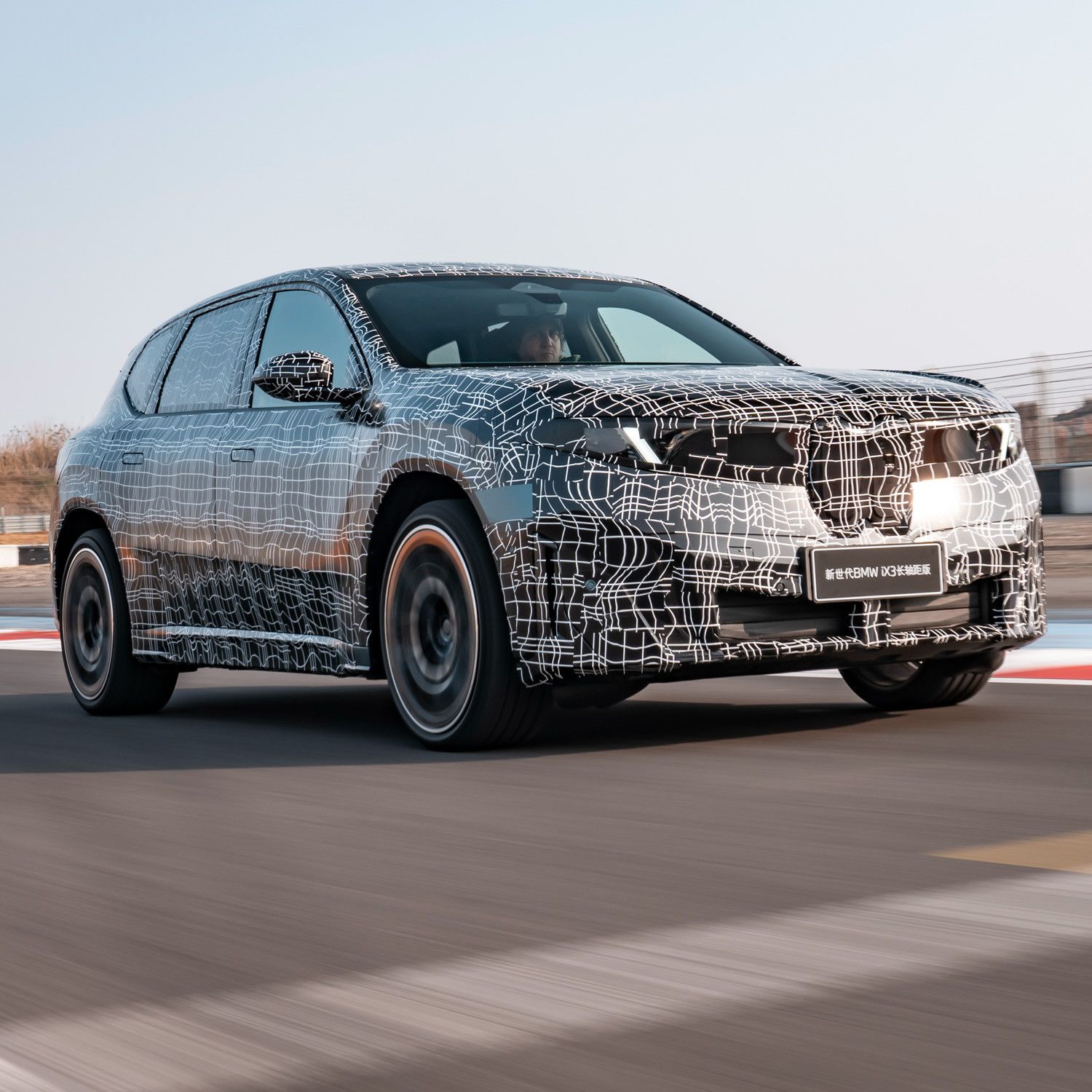
The BMW iX3 is an electric version of the BMW X3, which is a popular SUV. It's designed to be more environmentally friendly while still offering the space and comfort of an SUV.
The BMW 3 Series is a well-known line of cars from BMW that are sporty and fun to drive. They are now making an electric version to be more eco-friendly.
The BMW X5 is a high-end SUV that offers a lot of space and luxury features. The latest version will be fully electric, meaning it runs on electricity instead of gasoline.
Car
BMW iX6
The BMW iX6 is a future electric SUV that will be released after the iX7. It's part of BMW's plan to have more electric cars available.
Connected cars are cars that can connect to the internet and other devices. This helps them get updates and share information to improve safety and features.
Artificial intelligence, or AI, in cars helps them learn and make decisions. It can improve things like voice commands and even help with driving in some cases.
Car
Polestar
Polestar is a brand that makes electric cars, known for their performance and technology. They are part of the Volvo family.
Renault is a car company from France that makes many types of vehicles, including electric cars. They are working on new technologies to help with the transition to electric driving.
Full electrification means that cars will only use electric power instead of gasoline or diesel. This change is happening to help the environment and reduce pollution.
The Hyundai Ioniq 5 is a new electric car that looks really modern and has a lot of space inside. It's designed to be eco-friendly and has cool features that make driving easier. People are excited about it because it's part of a new wave of electric cars.
The Hyundai Ioniq 6 is a new electric car that looks very smooth and is built to go far on a single charge. It's part of Hyundai's line of electric cars and is designed to be both stylish and efficient. People are interested in it because it offers a different option for those wanting an electric vehicle.
The Hyundai IONIQ 6N is a new electric car that focuses on more than just going fast in a straight line. It has features that make driving more enjoyable.
Term
dual motor powertrain
A dual motor powertrain means the car has two electric motors instead of one. This helps it go faster and handle better, especially in tricky driving conditions.
Term
Pirelli P-Zeros
Pirelli P-Zero tires are special tires made for fast cars. They help the car grip the road better, especially when going around corners.
The Tesla Model Y is a small electric SUV that can carry more people and stuff than a regular car. It's popular because it's eco-friendly and has cool tech features, like being able to drive itself a little. People talk about it a lot, especially when its price changes.
The Kia EV6 is a stylish electric car that can go really fast and has a lot of modern features. It's part of Kia's effort to make more electric cars, which are better for the environment. People are talking about it because it's a fun and practical option for drivers.
The Kia EV3 is a new electric car that will be cheaper than many other electric cars, making it easier for people to buy. It's designed for city driving and has modern features that people want. People are excited about it because it could help more people switch to electric cars.
The Dacia Spring Electric Cargo is a small electric van made for businesses that need to deliver things in cities. It's designed to be cheap to buy and run, which helps companies save money and be more eco-friendly. People talk about it because it's a practical choice for city deliveries.
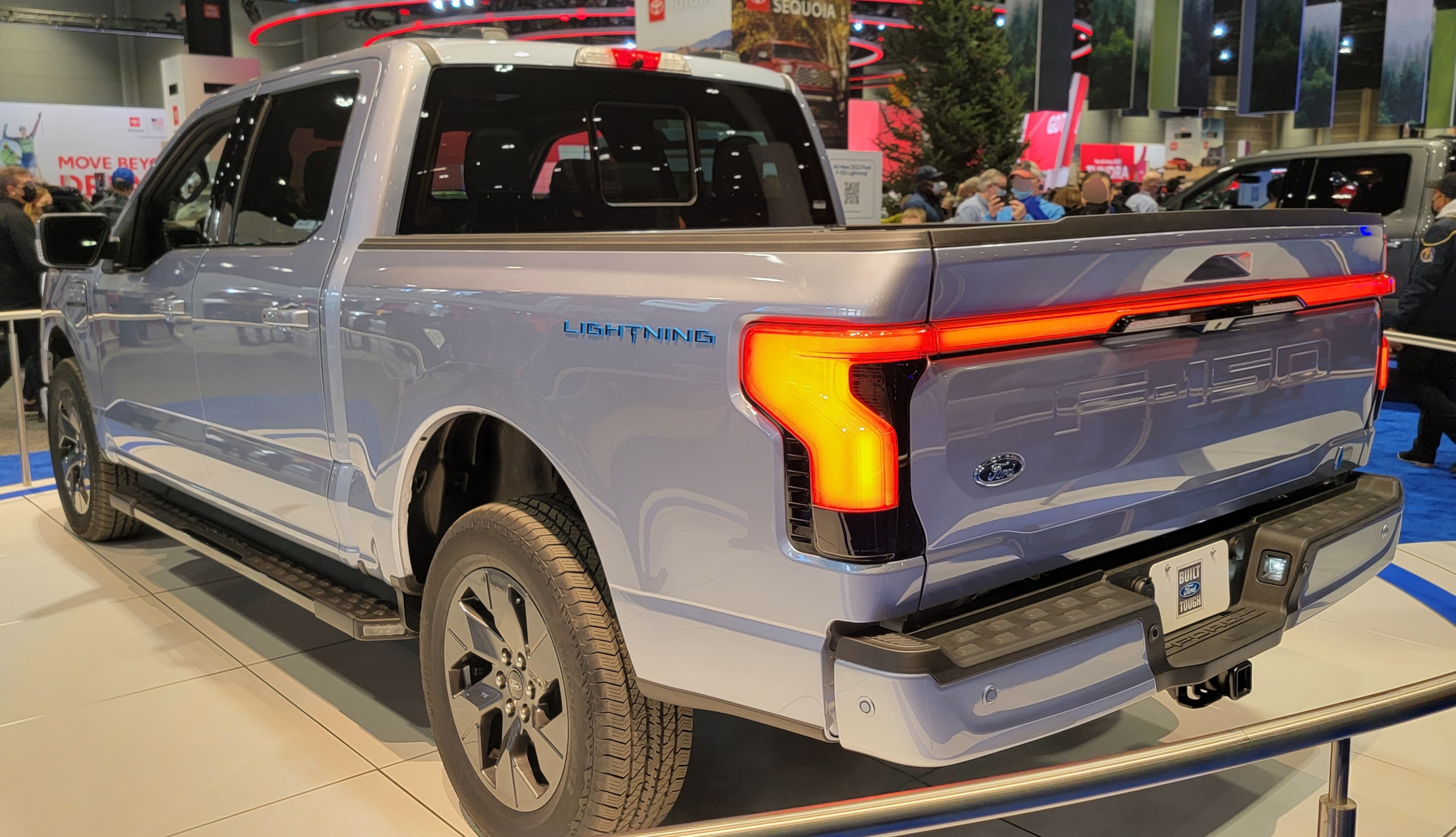
The Ford F-150 is a very popular pickup truck that many people use for work and everyday tasks. It's known for being tough and able to carry heavy loads. Recently, Ford has started making an electric version of this truck, which is exciting for those who want to go green.
The Rivian R1T is a new electric truck that can handle tough terrains and has some cool features like a kitchen inside. It's one of the first electric trucks available, which makes it special. People are curious about how well it works and if it can compete with regular trucks.
LIVE
Five years ago, I was paying $65 a month for my subscriptions.
Today, those same subscriptions cost $111, and I don't even use half of them anymore.
That's why now I use RocketMoney to manage my subscriptions for me.
The app gives you a list of all of your subscriptions and reminds you of upcoming payments,
so you're not hit with any surprise charges.
On top of that, it also sends you alerts when subscription prices go up,
so you always know the price you're paying.
If you decide you no longer want a subscription, you can cancel it right from the app.
No customer service needed.
And the best part is, RocketMoney even reaches out
and tries to get you refunded for some of the money you lost.
On average, people that cancel their subscriptions with RocketMoney
save $378 a year.
And overall, RocketMoney has saved its members $880 million in canceled subscriptions.
Stop wasting money on things you don't use.
Go to rocketmoney.com slash cancel to get started.
That's rocketmoney.com slash cancel.
Rocketmoney.com slash cancel.
Five years ago, I was paying $65 a month for my subscriptions.
Today, those same subscriptions cost $111, and I don't even use half of them anymore.
That's why now I use RocketMoney to manage my subscriptions for me.
The app gives you a list of all of your subscriptions and reminds you of upcoming payments,
so you're not hit with any surprise charges.
On top of that, it also sends you alerts when subscription prices go up,
so you always know the price you're paying.
If you decide you no longer want a subscription, you can cancel it right from the app.
No customer service needed.
And the best part is RocketMoney even reaches out and tries to get you refunded
for some of the money you lost.
On average, people that cancel their subscriptions with RocketMoney
save $378 a year.
And overall, RocketMoney has saved its members $880 million in canceled subscriptions.
Stop wasting money on things you don't use.
Go to rocketmoney.com slash cancel to get started.
That's rocketmoney.com slash cancel.
Rocketmoney.com slash cancel.
Welcome back to EV News Daily.
Today, BMW's US EV production, Volvo's massive upgrade,
and EV microcars plus they tuned because later in the show,
I'll tell you why one Arctic ferry is putting batteries to the test.
On EV News China today, we're talking about BYD,
unloading on Argentina, China's charging network,
and the Zika 8X plug-in hybrid.
Let's kick off.
BMW will start building electric cars in America later this year,
even as its main battery partner delays a key plant.
Automotive Energy Supply Corporation, AESC,
has paused work on a $1.6 billion battery cell factory in South Carolina
that was meant to feed BMW's electric ramp up there.
BMW is pressing on.
It plans to produce at least six models in the US by the end of the decade
to cover the gap left by the stalled AESC site.
The supplier will divert cells from its other factories
to BMW's South Carolina operations.
Spartanburg has already been tooled to build Neuerklasse models this year,
and BMW has built a dedicated battery assembly plant in nearby Woodruff to feed it.
The plan had been simple.
Woodruff would receive cells from AESC's new facility in Florence,
also South Carolina.
AESC's decision to pause construction there, though,
they cited uncertainty in the United States,
puts that schedule at risk and raised doubts over making BMWs in the US.
Nikolai Martin, BMW's chief procurement officer,
has now said that the supply problem has been eliminated.
The Woodruff assembly plant will start operations as planned this year.
Spartanburg will begin fully electric vehicle production by the end of this year,
and during the transition AESC will ship itself from existing global production networks,
not Florence.
The workhorse of the new lineup, of course, is going to be the IX5.
That follows the IX3 and the new three series electric as well.
That's the all electric version of the fifth gen X5, due by the end of this year.
BMW then expects to add IX7, sometime next year, and IX6 the year after.
There'll be an off-road one, rumored 2029, a fully electric IX4 in developments as well,
but BMW has yet to fix a production side.
Perhaps there would have been in Hungary, where the firm is building a new plant.
That's one option.
Now Volvo will deliver a new infotainment interface
to 2.5 million cars later this year, in what it calls
one of the largest over-the-air updates in automotive history.
Every single Volvo running Android since its 2020 debut, that was the XC40 recharge,
that debuted that, is going to get the new Volvo car user experience.
That's already on their brand new cars, the new EX30, EX90, EX60,
talk about that on tomorrow's podcast.
The update turns a six-year-old car, an old 2020 Volvo, into effectively a car,
with displays and functions that match the latest models.
It also underlines the core promise of connected cars,
a fleet that will be current for far longer, through remote software not new hardware.
Volvo had planned to overhaul last year, but delayed it for more development time.
Anders Bell, the firm's chief technology officer, now says the software sits in
final testing and validation, and will launch within months.
He argues that because Volvo operates in many more countries than Tesla,
the scale and spread of a single roll-out ranks amongst the most significant fleet-wide update
ever, even if the American firm is the one that normalized OTA updates.
Once installed, the software will give updated cars infotainment,
that is essentially identical to what you'd get if you walked in and brought a brand new
100 grand EX90. Aside from, well, the obvious limits, the chips are older, the screens are smaller,
but the common base also sets up a big step. Bell says that after the upgrade,
they will be able to roll out the current Gemini artificial intelligence
rather than Google Assistant. That becomes much more straightforward.
As a Polestar driver myself, and a big Gemini AI user, I can't wait to see what that's like
in the car. Gemini will let drivers hold natural conversations with their cars,
not having to use clunky exact phrases the amount of times I ask my Polestar something,
and he goes, sorry, I do not understand. And you're like, it wasn't that hard.
You can translate messages, you can tell it to send messages from your phone,
you can query the owner's manual, ask you how to do things, you can pull precise information
on destinations, you can ask, well, anything that you would ask an LLM. Using artificial
intelligence on your phone or your computer, Volvo says that when you have a real life dialogue
with an AI that is intelligent and knows the nuance of conversation because Gemini has been
trained on, well, everything ever. So when you ask how many kilowatt hours are left in my battery,
it knows what a kilowatt hour is. It knows that EV stands for electric vehicle,
which other voice assistants don't. It's a step change. And if you don't get the whole AI thing,
and I get it, it's a bit of a gold rush and a bit of a fad and a trend. I'm super, super
interested in how that translates to cars. Let's move on. Renault and Stellantis are backing
the plan in Europe for small electric cars, but they fear the fine print in December.
The European Commission floated plans to shift to full electrification for small vehicles,
still allowing for some internal combustion, though. Car makers liked the political signals.
They worry, though, that the rules may turn a simple release valve into a bit of a tangle.
At the core is the M1E. That would be a new category of car in Europe. Under 4.2 meters long
has to be built on European soil. Each sale would count as effectively 1.3 combustion cars.
That's 1.3 electric credits, if you get my drift. Those are these CO2 targets. And so the car makers
like the idea of that. In theory, it lets them sell more petrol cars for a little bit longer,
without ruinous fines. Brussels has promised to recognize the heavy development costs of
small EVs and to freeze the rules that add extra burden. National and city governments inside
and outside the EU, like here in Great Britain, could add perks like lower parking charges and
scrappage bonuses if you buy one of these M1E cars. The scheme ties the support
to local content. The aim is to back small car makers. While keeping the supply chain and jobs
in Europe. Emmanuel Capilano says the move is sound but rejects any strict sourcing rules.
He wants a stage supply buildup. The Renault 5 is built in France with batteries from AESC.
That would comply. The Fiat Grande Panda is in Serbia that may scrape through on EU content.
Chinese parts, batteries and motors, the big ones, of course,
complicate the bill of materials Renault's Dacia pushes for fleet level rules, rather than
per car. Because that would offset its China built spring against the EU models. Renault says
it already keeps supplies close to its plants. Really interesting. I got a bonus show all about
that. Just my opinion, I think it's a fantastic idea. There's a lot of stuff around how safe cars
have to be now and there's no point building a small city car that's never going to do 150mph
on a motorway, needing all of the protection if it's limited to say 62mph. You want it to be safe,
obviously, but there's costs and it's not clear cut. We'll wait and see.
Hyundai's IONIQ 6N wants a few thrill seekers to be interested. It's second electric performance
car, 0-62 in 3.2 seconds, top speed of 160, and it's clear it's a step up from the IONIQ 6.
That matters because Hyundai's N division is fast becoming one of the few mass market outfits to
really treat EV performance as more than just a straight line party trick. The IONIQ 6N follows
the 5N using hardware and software that adds texture, not just straight line thrust. A high
output dual motor powertrain fed by the usual 84kWh battery is good for 302 miles, officially WLTP,
electrically adjustable dampers, important, and an electronic limited slip diff back up the power.
The car will cope with more than just motorway work, but maybe it's not going to be taken on the
ever by its owners, but it could do. The firm's simulated sequential gearbox was seen on the
IONIQ 5N and that returns with shorter ratios and a new sound system. The feature won much praise
on the earlier car as it gave drivers cues about speed and acceleration, and it is that
is a party trick, but it does make you smile. Hyundai has dressed the car to match the numbers,
new rear spoiler front splitter side skirts, rear diffuser, I love all the little red lines on the
5N, looks so cool on those big wide Pirelli P-Zeros. Inside, an N-specific steering wheel
carries paddles for the simulated gearbox and extra controls for drive mode. Six-paint finishes
with pearlescent white standard, looks amazing, and their signature blue, their N blue,
that is so gorgeous, you get that pearlescent black as well. Oh, the metallic grey looks good.
All right, let's move on. We'll talk Kia, sister company. They've been cutting prices at home on
their EVs by up to $2,000, and South Korea's price war is a little bubbling up trend I've
been talking about for a few weeks now. The clearest sign yet, the South Korea's EV price war
has only just begun. The move follows something that Tesla started, reducing the Model Y and Model
3 by as much as $9.4 million. That's almost $6,500 USD. BYD wants some action in South Korea as well.
The Dolphin hatchback is launching about $13,000 USD equivalent. That brings the average selling
price down of the EV market, pulling Kia's core models into that price fight. EV6 dropped by $3,000,
EV5 down by $2.8 million, and sole buyers, if you live in Seoul, you could get an EV3
for $23,500 USD equivalent with some local subsidies. That's an amazing price for an EV3.
Standard variant EV5 would start at $23,000 USD as well, again, with local discounts and incentives.
Kia wants to shore up residual values so as not to absolutely kill the people that just bought
their brand new EVs. They want to issue performance certificates for used EVs and expand its in-house
quality grading system. Customers trading in an existing Kia EV for a new one get even more discounts
as well. Tesla, though, still sits at the top of the market. The Model Y Long Range Premium
sells for $41,000 USD equivalent. That's about $60,000,000, but they just took $10,000,000 off of it
at the year end. Now we'll take a break. We'll come back. We'll talk about Scotland,
EV interest online, and electric buses. Stick around back in a moment.
All right, let's take a look at the list of all of your subscriptions and remind you of upcoming
payments so you're not hit with any surprise charges. On top of that, it also sends you alerts
when subscription prices go up, so you always know the price you're paying. If you decide you no
longer want a subscription, you can cancel it right from the app. No customer service needed,
and the best part is, RocketMoney even reaches out and tries to get you refunded for some of the
money you lost. On average, people that cancel their subscriptions with RocketMoney save $378
a year, and overall, RocketMoney has saved its members $880 million in cancelled subscriptions.
Stop wasting money on things you don't use. Go to rocketmoney.com slash cancel to get started.
The holidays are expensive. You're paying for gifts, travel, decorations, food, and before you
know it, you've blown way past what you were planning to spend. Don't start the new year off
with bad money vibes. Download RocketMoney to stay on top of your finances. The app pulls your income,
expenses, and upcoming charges into one place, so you can get the clearest picture of your money.
It shows how much to set aside for bills and how much is safe to spend for the month,
so you can spend with confidence. No guesswork needed. Get alerts before bills hit, track budgets,
and see every subscription you're paying for. RocketMoney also finds extra ways to save you
money by canceling subscriptions you're not using and negotiating lower bills for you.
On average, RocketMoney users can save up to $740 a year when using all the app's premium features.
Start the year off right by taking control of your finances. Go to rocketmoney.com slash cancel
to get started. That's rocketmoney.com slash cancel. Rocketmoney.com slash cancel.
All right, welcome back to the podcast. Now, British car buyers spent much of last year
looking at electric cars they didn't actually buy. Imagine Studio's quarterly report based on 2.3
billion image views on UK car buying websites. Retailers, brokers, finance platforms, etc.
showed BEVs were 29% of all cars searched for. Let's call it a third, right? But BEVs were 23%
of our new car market last year. The gap between browsing and buying is interesting. A zero
emission vehicle mandate demands 33% of new sales are pure BEVs by the end of this year.
Again, last two years, none of the car makers are to pay any of the fines. They complained.
Boy, did they complain. None of them have had to pay any fines. In fact, in December,
we had such a killer month last month of pure BEV sales here in the UK that if we had every month,
like December, we'd be at 33%. It won't be. But still, four of the five most searched for EVs
were what they call the SUV style. Dacia Spring, Kiri V3, Shkoda L Rock and Shkoda Enniak.
This SUV style is really starting to bother me. What do you think an SUV is? I think an SUV
is a big, possibly three row family wagon, right? Slab sided. The dimensions have to be
physically large in my mind to be called an SUV. They call the Dacia Spring an SUV. Sport utility
vehicle. Dacia Spring, really? All right. Okay. Come on. Off high horse. Come on. But only around
a quarter of EV models are qualifying at the moment for the EV purchase grant here. So much of
the EV curiosity might have to be outside the scope of the discounts that are being offered here.
Now, let's talk about electric tram buses. 39 new EV buses coming from a Riva in the Netherlands.
A rare foothold in one of Europe's most mature EV bus markets. The deal covers 18 new buses
and 21 articulated vehicles for high capacity bus transport in the Oost Brabant region
and cities like Tilburg. Urban networks work to tight operational standards there. Dense timetables
and certainly no patience for unreliability. A Riva will deploy all new electric fleets
on high frequency city routes testing both the technology and the ability to sport intensive
duty cycles. They use the Irizard buses, 615 kilowatt hours. So no stopping during the day,
overnight depot charging. Rivian is next in the news. They've moved fast to fill the gap of the F-150
Lightning by Ford. Rivian senior manager for fleet sales. Seth Parks taking to LinkedIn
to urge fleet buyers if you've had a lightning order in or maybe it's even a cancelled order
to come and buy a Rivian R1T. Ford's retreat sits at the center of an EV shakeup in America
that's really spooked the likes of GM and Ford. In fact, a $19.5 billion impairment charge,
Jim Farley, Ford's boss said EV vehicles priced between $50,000 and $80,000 don't sell. The
lightning itself was between $60,000 and $90,000. That leaves corporate buyers with budgets to spend
and decarbonization targets to hit without one of the options. In fact, the most popular option
for an EV truck in America. So Rivian says, come here, we'll open the doors and welcome you.
They've also of course got the electric delivery van, the EDV. They sell that to
the meal kit firm Hello Fresh and pizza firm Slice and of course Amazon is their biggest customer
and investor at more than 35,000 branded Rivian EDVs on run routes for the e-commerce giant
out of a 100,000 unit order which should be fulfilled by the end of 2030. They're over a
third of the way in now. Let's talk about this. This is such a cool story. On January 1st, the
MF Varsgund, an all electric passenger and car ferry completed its first ever run in Northern
Norway where the temperatures were minus 13 degrees Fahrenheit, minus 25 degrees Celsius,
a corner of the Arctic where cold and reliability, not something like a carbon footprint, is what
usually shapes a design choice of a ferry. Yet the MF Varsgund runs purely on electricity.
Unlike the other car ferries all in the region, no engine running, turning a routine crossing into
a test of whether pure battery power could cope with some of the harshest conditions. The ship is
50 meters, which is enough for 28 cars and 100 passengers, modest by ferry standards, but enough
to prove a point. A fully electric vessel keeps a regular schedule, even in sub-zero weather,
with no backup engine, no hybrid drive. Last year, 96% of new car registrations in Norway
were pure electric. I think we're at the point of saying Norway's done. No offence Norway,
but we're done with you. As drivers and firms have moved ahead of everybody else to go electric,
road transport has shifted. Now coastal shipping is the next battleground, and it's edging the same
way. And that's your podcast for today, thanks to our premium partners National Car Charging on the
US mainland and Aloha Charge in Hawaii, and Test EV, Avalu's trusted partner for independent
EV battery health testing in Australia and New Zealand. There is a bonus show in your Patreon
feed talking to Nathan from Test EV, and that's out on Saturday this weekend on the public ad
supported free feed. That's a really good one. Actually, fascinating use cases for battery
health testing that I think will put a lot of worries for many people to bed. But there we go.
Have a good day and remember, there is no such thing as a self-charging hybrid.
The number one resolution for people last year was to save more money, but nearly half gave up by
February. Don't let that be you. Download RocketMoney to reach your financial goals this year.
Track your spending, cut waste, and automate savings in one simple app. RocketMoney shows you
all your expenses and categorizes them so you know exactly where your money's going and where
you're overspending. From there, the app cuts waste by cancelling your unused subscriptions
and lowering your bills. No customer service needed. With that money freed up, the app will
automatically set some cash aside for your goals, whether it's an emergency fund, paying off debt,
or saving for vacation. RocketMoney's got you covered. Users love the app with over 186,000
five-star ratings, and on average, users can save up to $740 a year when using all of the app's
premium features. Make saving money a priority this year. Go to RocketMoney.com to get started.
That's RocketMoney.com.
About this episode
BMW is set to begin electric vehicle production in the U.S. despite delays from its battery partner, AESC. Meanwhile, Volvo plans a significant over-the-air update for 2.5 million cars, enhancing their infotainment systems. The episode also discusses the European Commission's new regulations for small electric vehicles and Hyundai's performance-focused IONIQ 6N. Additionally, the podcast touches on the EV price war in South Korea and highlights a successful electric ferry operating in Arctic conditions, showcasing the growing adoption of electric transport.