DAILY: California Incentives, Germany Makes More EVs and Ford Overtakes Tesla In UK | 06 Feb 2026
EV News Daily - Technology and Business of EVs
DAILY: California Incentives, Germany Makes More EVs and Ford Overtakes Tesla In UK | 06 Feb 2026EV News Daily - Technology and Business of EVs · Feb 6, 2026
A BEV is a car that only uses electricity to run, meaning it doesn't use gasoline or diesel at all. It gets its power from batteries that you can charge at home or at charging stations.
A plug-in hybrid powertrain is a type of car that can use both electricity and gasoline. You can charge it up like an electric car, but it also has a gas engine for longer trips.
An electric drivetrain is the part of an electric car that makes it move. Instead of using gasoline like regular cars, it uses electricity stored in batteries.
Silicon is a material used in many electronic parts of electric cars. It helps control how electricity flows and is important for making the car work properly.
EV production means making electric cars. It's growing fast because more people want cars that don't use gas, and places like Germany are making a lot of them.
New energy vehicles are cars that use energy sources other than just gasoline. This includes electric cars that run on batteries and hybrids that use both gas and electricity.
Plug-in hybrids are cars that can use both electricity and gasoline. You can charge them up like an electric car, but they also have a gas engine for longer trips.
The BMW iX3 is an electric version of the BMW X3, which is a type of SUV. It runs on electricity instead of gasoline, making it more environmentally friendly.
Battery-electric cars run only on electricity and don't use gasoline. They need to be charged at special stations instead of getting fuel like regular cars.
Government incentives are money or discounts given by the government to help people buy electric cars. This makes it cheaper for them to get these kinds of vehicles.
Emissions credit trading is a way for car companies to manage their pollution levels. If one company produces less pollution than allowed, it can sell its extra allowance to another company that needs it, helping both to meet government rules.
The Ford Puma is a small SUV that many people like for its stylish look and useful features. It's a good option for those who want a car that's easy to drive and has enough space for everyday use.
The Tesla Model 3 is a popular electric car known for being affordable and having a long driving range. It's designed for everyday use and has many high-tech features.
The Hyundai Ioniq 5 is a new electric car that looks really cool and has a lot of space inside. It's part of a trend where car companies are making more electric vehicles to help the environment.
Brake blending is how electric cars combine their electric brakes with regular brakes. It helps the car stop smoothly and save energy at the same time.
Stability software helps cars stay balanced and safe while driving, especially when the road is slippery or during sharp turns. It works to prevent the car from sliding out of control.
Thermal management is about keeping car parts at the right temperature. It helps batteries and motors work well and last longer, especially in electric cars.
EGMP is a special design used by Hyundai and Kia for their electric cars. It helps them build different types of electric vehicles with various battery options.
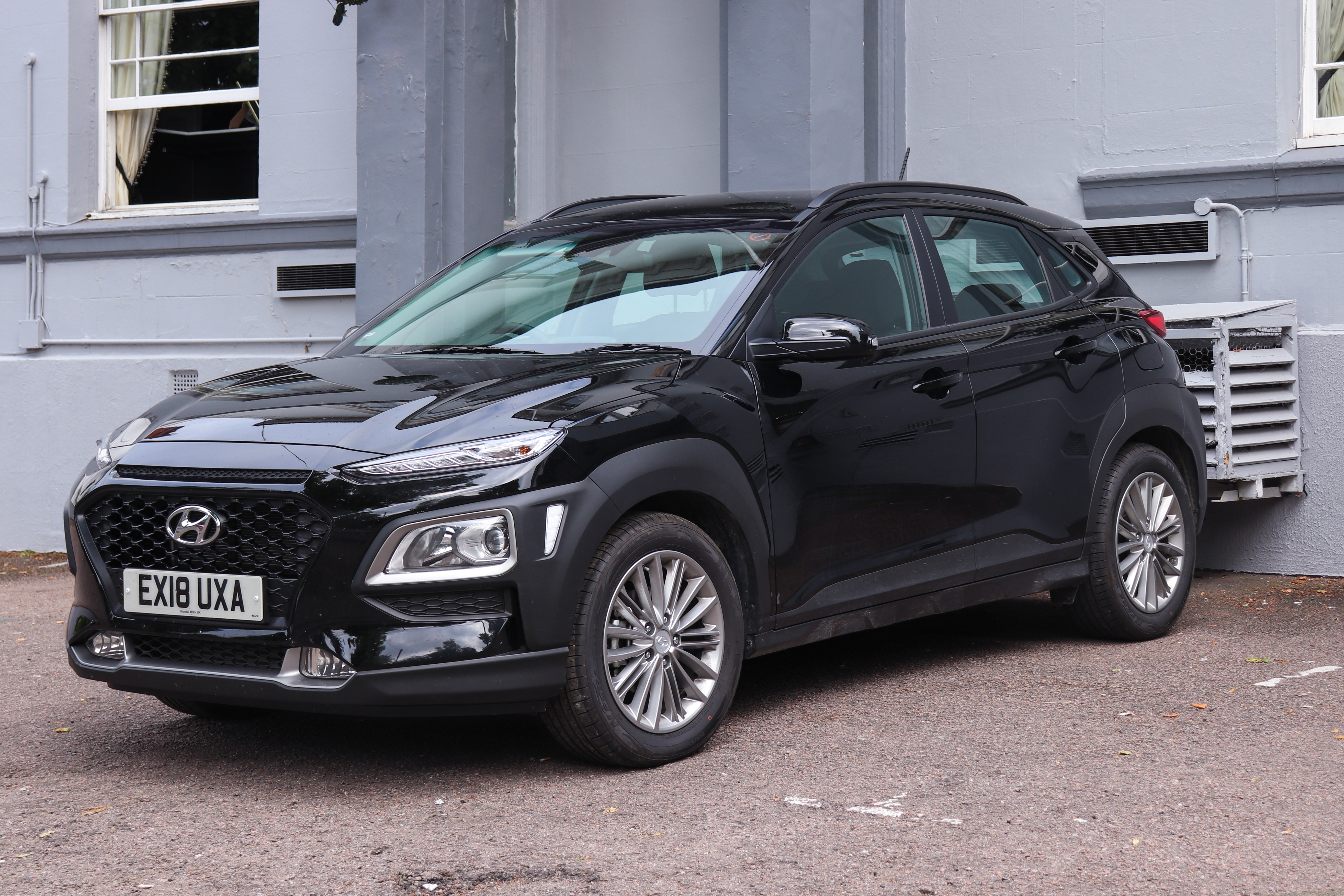
The Hyundai Kona is a small SUV that's fun to drive and has a lot of modern features. It's a good option for people who want a stylish car without spending too much money.
The Volkswagen ID.3 is a new electric car that's designed to be friendly to the environment. It competes with other electric cars and is part of a big move by car companies to make more eco-friendly options.
The Chevrolet C10 is an old pickup truck that many people love for its classic look and strong build. It's popular among those who like to fix up and restore vintage vehicles.
The Alpina B10 is a fancy car that's super fast and comfortable to drive. It's made by a special company that takes a regular BMW and makes it even better for those who want a sporty ride.
The Jeep Wrangler is a tough car that's great for driving on rough roads and trails. People love it for its ability to go almost anywhere, and it's now being made with hybrid options to be more eco-friendly.
The Jeep Grand Cherokee is a spacious SUV that can handle both city driving and off-road adventures. It's known for being comfortable and has new hybrid versions that help save on fuel.
The Chrysler Pacifica is a family minivan that has lots of room for kids and their stuff. It's known for being practical and has had some hybrid options that are now being phased out because not many people are buying them.
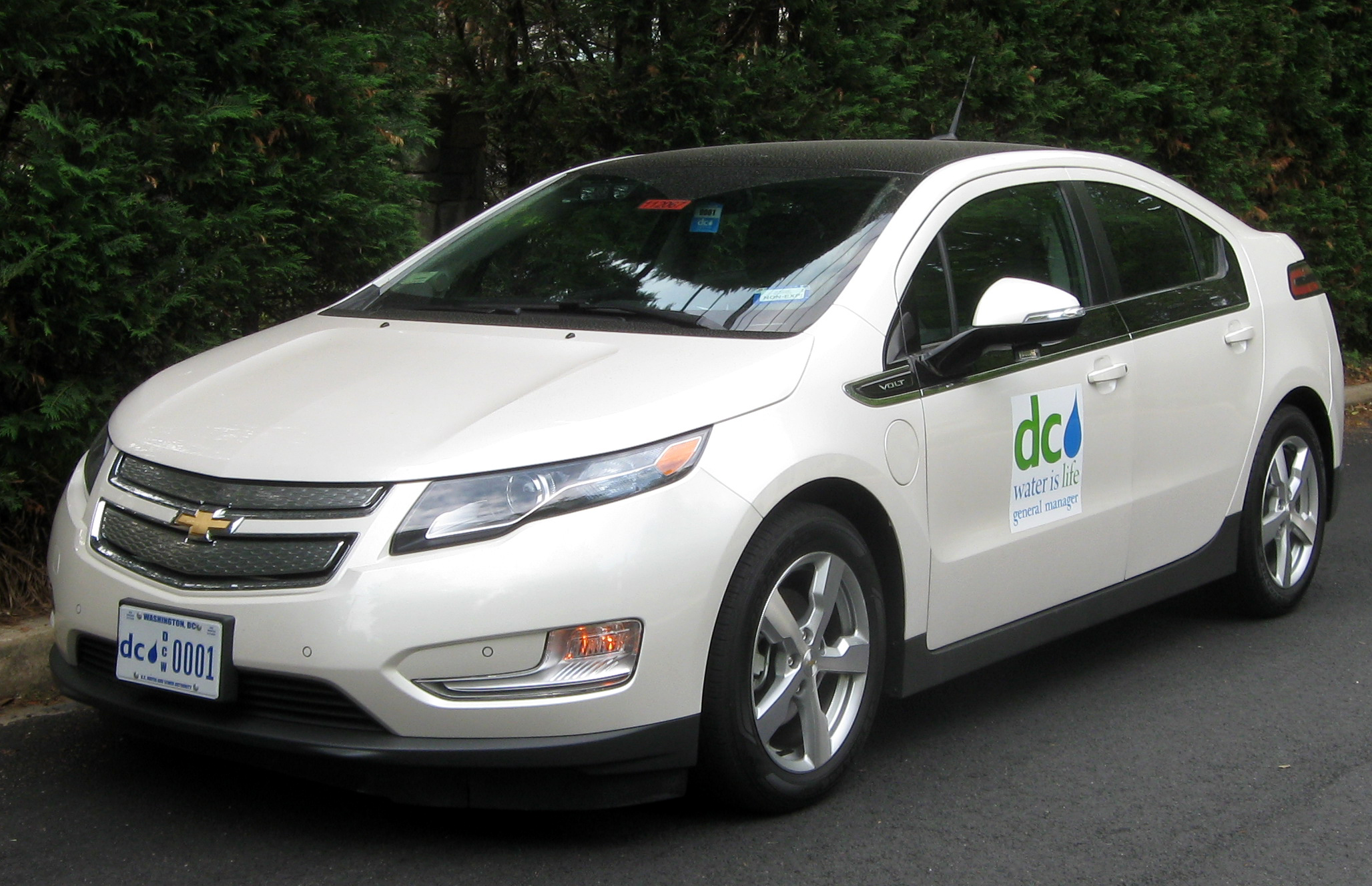
The Chevrolet Volt is a special car that can run on electricity and gasoline, giving you options for how to drive. It's no longer being made, but it was important for showing how cars can be more eco-friendly.
LIVE
Let's do the 60-second savings challenge.
Step one, download rocket money.
Step two, link your accounts and see every subscription you're paying for.
Tap one you don't use and cancel it.
That's money back every month.
Step three, create a financial goal.
$50 every paycheck or let the app automatically move small amounts of cash when you can afford it.
In a week, you'll forget you set it up.
In a month, you'll see real dollars piling up.
In a year, you'll be shocked at how much money you've saved.
Bonus challenge.
Upload an internet or phone bill and let rocket money try to lower it.
You only pay if they find you savings.
On average, rocket money members can save up to $740 a year when using all of the app's premium features.
Users love the app with over 186,000 five-star ratings.
Make saving money the resolution you actually keep.
Start the 60-second savings challenge at rocketmoney.com slash cancel.
That's rocketmoney.com slash cancel.
Rocketmoney.com slash cancel.
Comfort is often the first thing we're willing to give up,
like taking a long flight for a vacation or waking up early for a workout.
But don't let style be the reason you aren't comfy.
Mac Weldon's Ace Collection makes it effortless to look put together while feeling truly comfortable.
No compromise is needed.
For over a decade, Mac Weldon has designed pieces to keep you comfortable anywhere.
Inspired by their best-selling sweatpants,
the Ace Collection combines everyday comfort with long-lasting and confident looks.
Upgrade your collection for the new year with new bomber jackets,
half-sips, sweats, crewnecks, and much more.
Mac Weldon clothes are designed to fit your style and the demands of modern life.
They look like regular clothes, but feel like the latest in modern comfort.
Get comfortable anywhere with the Mac Weldon's Ace Collection.
Go to macweldon.com and get 20% off your first order of $125 or more with promo code MAC25.
That's M-A-C-K-W-E-L-D-O-N dot com.
Promo code MAC25.
The holidays are expensive.
You're paying for gifts, travel, decorations, food,
and before you know it, you've blown way past what you were planning to spend.
Don't start the new year off with bad money vibes.
Download rocket money to stay on top of your finances.
The app pulls your income, expenses, and upcoming charges into one place
so you can get the clearest picture of your money.
It shows how much to set aside for bills and how much is safe to spend for the month
so you can spend with confidence.
No guesswork needed.
Get alerts before bills hit, track budgets, and see every subscription you're paying for.
Rocket Money also finds extra ways to save you money
by canceling subscriptions you're not using and negotiating lower bills for you.
On average, Rocket Money users can save up to $740 a year
when using all of the app's premium features.
Start the year off right by taking control of your finances.
Go to rocketmoney.com slash cancel to get started.
Granger knows that you need a partner that helps you find the right product,
fast and hassle-free.
And you know that when the first problem of the day is a clanking blower motor,
there's no need to break a sweat.
With Grangers easy to use website and product details,
you're confident you'll soon have everything humming right along.
Call 1-800-GRANGER, click Granger.com or just stop by.
Granger, for the ones who get it done.
Welcome back to EV News Daily.
Today, California's got some new incentives,
Germany makes more EVs and Ford overtakes Tesla in the UK.
Plus, stay tuned because later in the show, I'll tell you why
the industry risks leaving women behind in the switch to EV.
Let's kick off, California has committed $200 million to zero emission vehicle rebates.
After Washington scrapped the federal tax credits on the 30th of September last year,
Governor Newsom's program includes an unusual twist.
Automakers must match the state incentives, dollar for dollar,
at point of sale, doubling the support to buyers.
The program covers new and used, light-duty EVs,
though only for first-time buyers.
Used cars qualify for purchase, but not leasing used cars.
A distinction that will shape how dealers structure the offer.
The California Air Resources Board, CARB, will manage the grant agreements
with the manufacturers and disperse the funds through the dealerships,
placing the administrative burden on Sacramento, not the buyers.
Price caps mirror those for the Inflation Reduction Act.
So $55,000 new passenger vehicles, $80,000 new vans, SUVs and new pickups.
$25,000, the price of a used EV is the cap.
All vehicles must be registered to a Californian resident.
The Air Resources Board plans a spring workshop to gather input
before finalizing the details, suggesting the program is a work in progress.
I know behind the scenes I've talked to two people about this.
It's very much a work in progress, but either the dealers
or the car makers themselves chipping in
and I didn't think it was going to be a dollar-for-dollar carmaker match.
I'm delighted to see that. Everyone's got skin in the game.
The federal one big, beautiful bill.
In an eliminated EV tax credits of $7,500 for new cars and four grand for used ones,
Newsom's advisors described the move as a reckless retreat from climate policy.
The Environmental Defense Fund has applauded California's response.
Though the applause may be premature, dealers support the initiative tentatively
but have questioned whether $200 million suffices for a market
that sells hundreds of thousands of EVs.
The mathematics are not encouraging.
If the average rebate is $5,000 and automakers match it,
well, then the fund would support 20,000 new vehicles.
California now has 2.5 million zero emission vehicles on the road.
There's a 300% increase in the last six years.
The momentum persists despite federal policy moving,
but momentum doesn't fund rebates.
I get the feeling that they've put as much money into this
as they can get away with for now.
And perhaps more funding would be forthcoming
if they can show that it works, that it cleans up the air,
that it's a popular thing.
So hopefully they've started small
because 20,000 cars in the grand scheme of California is a drop in the ocean.
Let's go to Germany.
Germany made 4.15 million cars last year,
of which 1.22 million were pure BEVs running solely on batteries
and 450,000 plug-in hybrid powertrains.
Electrified models, if you include plug sockets on the side,
were 40% of Germany's output,
a threshold that quietly ends a century-long rule of petrol engines.
Well, manufacturers are building a lot of these vehicles for export.
China and Europe demand zero exhaust emission models,
and the regulations in many markets around the world
punish anything that burns fuel.
Most new platforms now accommodate some form
of pure electric drivetrain.
Battery plants occupy sites where engine facilities wants to.
Investment flows from pistons to power electronics.
Materials like lithium, cobalt, silicon
are now the largest share of vehicle value
as cell production expands.
Germany actually ranks second worldwide for EV production.
That shouldn't be a surprise.
I guess if you think about that with your logical brain,
obviously China is going to be number one.
China made 16.5 million new energy vehicles last year.
That's their NEVs is what they call plugs on the side.
So that includes hydrogen, but they don't sell any of those.
So that's either pure BEVs, which is the majority
or plug-in hybrids and E-refs.
The United States is trailing Germany.
The VDA projects 6% growth this year.
So it should be 1.76 million plug-able vehicles
in Germany produced.
Manufacturing spreads beyond the German borders.
BMW, for instance, when they're making the new I-X3 in Hungary,
the new I-3, the new I-3, not the old one,
but the new one on Neue Classic.
That'll be made in Germany, but I-X3, Hungary.
Mercedes operates assembly lines in Europe
elsewhere outside of Germany.
And this approach where you distribute your production
strengthens the entire continent's position
in electrified transport.
Domestic demand, though, is lagging the actual production.
Charging infrastructure can be patchy
outside of major cities in Germany, but it's not terrible.
And the VDA president, Hildegard Müller,
calls the expanded charging networks important,
grid upgrades important, secure battery supply,
chains important as well.
Let's talk about Ford.
And let's go to the UK next, where there,
Ford have taken Britain's battery-electric crown in January,
doubling their year-on-year sales
and actually beating Tesla.
The American automaker has timed its push
to coincide with government incentives.
We have a mandate in the UK.
And so Ford have been one of the more outspoken ones,
saying they don't believe in mandates and hard limits.
But over the last two years, had it for two years now,
we're into year three, no car maker
has paid a fine to the government
for missing their amount.
So they've all complained about it
and some of them have missed their target
and they've had to do some emissions credit trading
with other car makers, the poll stars of the world,
that only make purebevs.
But no one's paid a government fine
for missing the percentage.
But boy, did they complain about it two years ago.
And boy, did they complain about it a year ago.
And boy, are they complaining about it now.
Go, we can never hit the 2026 targets.
My prediction, they'll get to the end of the year.
No one will pay fines.
Now look, it's inconvenient, margins are squeezed,
they're doing discounting to shift EVs
and it is inconvenient for them.
It also helps Ford that Tesla collapsed here.
Now the UK's been a really strong market.
So careful with the monthly numbers
because they do go up and down for Tesla.
But Tesla in the UK generally has had a tough time of it.
And so Ford's Puma Gen E,
that's the 20 sort of mid-20s one.
The Ford Puma is the most popular car they sell here.
But the Ford Puma electric version
does get the full government grant
of almost 4,000 pounds off of it.
Britain registered 30,000 purebevs last month in January,
matching the prior year.
Market share was 21%.
December, of course, was, well, we were 33% in December
as people were kind of just getting stock out the door
to hit the target.
The Model 3, Model Y are facing big pressure in the UK
because we have Chinese cars here as well.
We haven't got tariffs
and we didn't follow the European Union.
And so Tesla are doing some stuff with trade-in.
I'm on their mailing list.
So I'm getting stuff saying,
hey, get a Tesla trade-in your old car.
We'll pay you more than other ones like, you know,
we buy any car or the platforms
and that you can put your registration in
and they just give you an instant price
that's kind of guaranteed.
And Tesla emailing and saying,
hey, we'll beat that.
What is it?
We'll beat it.
And so they're doing some stuff
to get cars, new cars sold in the UK,
but certainly struggling.
Now, Ioniq 3 spy shots,
I can tell you more about these.
Hyundai's next big mass market EV.
Hyundai's Ioniq 3 has shed some more of its camouflage
in the Arctic Circle, the electric hatchback
caught testing weeks before its debut,
which should be March or April.
It's coming up.
Marks the Korean brand's first attempt
to build a compact EV
without the compromises of it also being a petrol car.
The Ioniq 3 borrows proportions of its largest sibling,
the five short overhangs.
A wheelbase of the Ioniq 5 3 meters
is shrunk by almost 12 inches.
So it's a 2.7 meter,
sort of 30 centimeter loss wheelbase on the Ioniq 3.
But again, they're doing that thing
where they put the wheels out as far as possible.
Same with the cabin space.
You never, like the Ioniq 5,
didn't have a cavernous boot or frunk,
but a big, big cabin space.
They stole the space from that.
So maybe the Ioniq 3 will look like it does the same.
Engineers are removed much of the wrapping
from the nose and the tail,
revealing the production-ready lights
and the panels beneath.
Arctic testing serves a purpose
beyond us having a look at it with the spy photos,
sub-zero temperatures, stress batteries,
power electronics, heat pump, all those kind of things.
Frozen surfaces give the engineers
loads of feedback on brake blending,
stability software,
long before production gets signed off.
Thermal management gets a lot of validation too.
Ioniq 3 uses the 400 volt version of EGMP architecture
rather than 800 volts.
That's absolutely fine
as long as the cost is reflective of that.
And generally with Kia and Hyundai, it is.
And so expected 300 miles or 480 kilometers
of range on the big battery version.
And this model represents Hyundai's purse
into profitable compact EV territory.
A dedicated EV platform engineered for efficiency,
delivering better economics,
no retrofitting combustion models this time,
unlike Kia Nero's and Hyundai Kona's,
enabling more competitive pricing.
And hopefully that translates into volume sales as well.
All right, we'll take a break.
And when we come back,
we're gonna talk Neo, Firefly in a moment.
And Stellantis and a problem with Peugeot
and some bottlenecks.
I'll tell you about those in a second.
Stick around.
This is the story of the one.
As the purchasing manager at a manufacturing plant,
she knows the only thing more important
than having the right safety gear
is having it there when you need it.
That's why she partners with Granger for auto reordering.
So her team members can count on her
to have cut resistant gloves on hand
and each shift can run safely and efficiently.
Call 1-800-GRANGER, click Granger.com
or just stop by Granger for the ones who get it done.
Working across teams is tough,
but Asana helps you handle it.
Asana AI can spot roadblocks
and assign work to keep everything on track.
That's how work gets handled.
Visit us at asana.com.
Working across teams is tough,
but Asana helps you handle it.
Asana AI can spot roadblocks
and assign work to keep everything on track.
That's how work gets handled.
Visit us at asana.com.
Working across teams is tough,
but Asana helps you handle it.
That's because Asana is where humans and AI
coordinate work together.
AI can spot roadblocks and assign work in a snap.
So everything and everyone stays on track.
That's how work gets handled.
That's Asana.
Visit us at asana.com.
That's A-S-A-N-A.com.
Welcome back to the podcast.
NEO's begun testing a UK registered
right-hand drive Firefly on British roads.
Ahead of its official launch,
the compact electric vehicle marks
the Chinese brand's entry to the mass market,
abandoning its current focus
on larger premium models from NEO.
The four-meter-long Firefly has
a relatively small battery, 41 kilowatt hours.
That's 205 miles or 330 kilometers
of range on WLTP at least.
That 41 kilowatt hour pack,
same as I had in my last Zoe that we owned many years ago.
But honestly, for a second car,
and heck, I took that thing on some really long journeys.
That Zoe was AC charging.
I took one for the team,
and I took that on some road trips.
I didn't have the DC charging Zoe,
so I was stopping for some serious lunch breaks
and stuff like that when I took it up the motorways
and some long distance road trips.
But 41 kilowatt hour pack,
now with faster DC charging,
also as a second car possibly.
It's all about use case.
It competes with things like Volkswagen's ID3,
MG4, Mini Cooper.
The rear-wheel drive hatchback from Firefly
is available with NEO's battery swapping technology,
but I don't think that really applies here in the UK.
Whether we end up with a bunch of battery swap stations,
it's not gonna happen.
NEO haven't got unlimited money.
And it's very expensive to build them.
Right-hand drive model production began in Singapore
in November.
That's where our cars will come from.
So NEO are in Europe with direct sales,
online channels, their so-called brand houses,
a lot of battery swapping on mainland Europe,
and Firefly bolsters their representation
in Britain's EV market,
along with the other big Chinese names like MG and BYD.
This testing phase will reveal some more
about how NEO wants to crack
one of the big European right-hand drive markets here,
where of course there are no tariffs
regardless of whether the cars are made in Singapore or not.
Leap Motor is becoming the first Chinese EV startup
with big sales in Europe.
So European sales at scale
by doing a deal with a Western partner.
All thanks to that deal with Stellantis.
So technically, if you buy a Leap Motor over here,
you're buying it from Leap Motor International.
That's a 51, 49 joint venture.
Stellantis is the bigger partner,
therefore not a Chinese company.
The company actually sold 67,500 vehicles in January last month.
Its joint venture with Stellantis internationally
only shifted 3,176 though,
but that's still up in what they've been selling.
Europe had about 2,600 of them,
about 300 in France, about 215 in Belgium,
Netherlands did okay,
driven by the little city car, the T03,
and their big SUV, the C10.
There is also a B10 as well.
Now, the C10 is built in Poland.
Still, they moved, I think in Serbia.
I think that because Poland voted for the Chinese tariffs
with the European Union, it got political,
they had to, you know, Beijing strongly suggested
that they weren't making cars in Poland anymore.
And because of the wonderful way that all this works,
then they stopped.
I think they moved some production to Serbia
and the C10 is the big SUV.
70 kilowatt hour pack, 300 miles of WLTP range,
140 kilowatt DC fast charging peak
as a range extender version of it as well.
That has a 30 kilowatt hour pack in
and the engine is just a generator
and it does vehicle to load that one as well I think.
So the little T03, that starts at,
well officially, something like 19,000 euros,
about 21,000 US dollars equivalent,
but get one that's either pre-reg
or sitting on a lot for a while
and you're gonna get one for 12 or 13 grand
for a brand new car.
It's a small city car, obviously,
but again, second car might be all you need.
Stellantis, while we're talking about them,
experiencing delivery delays of up to eight months
for their electric E3008 and E5008.
Because of battery supply,
automotive sales company, ACC,
have got some production challenges.
They're a front-joined venture backed by Stellantis
making the long range battery packs
for those long range versions.
The E5008 with the big battery pack
is one of the most compelling three row,
long range, 100 kilowatt hour cars
out there that we get at least over here.
Now, European automakers are trying to accelerate
their electric crossover launches.
Everyone's meeting different mandates
or emission standards.
So this is an ideal for them.
These growing pains reflect the essential work
happening in Europe with domestic battery manufacturing
and how it's not always smooth.
Stellantis, which of course is Jeep, Fiat, Chrysler, Peugeot
nor ACC have given any more guidance or comments on this.
This is a Reuters and Bloomberg report I'm reading here.
The delays follow Stellantis' January decision
to discontinue plug-in hybrid versions
of the Jeep Wrangler, the Grand Cherokee
and Chrysler Pacifica in the United States.
They claim weak demand.
Okay, let's talk about another new launch in Europe.
That'll be Cherry bringing their Lepus or Lepas brand.
This is the fourth brand they're gonna launch in the UK
as well following the actual Cherry brand,
Omoda and JQ.
They say Lepus stands for Leopard and Passion
which, all right, we'll go with it.
It's tenuous, but that's what the press release says.
So for some reason, if you ever wanted
to join Lepus and Passion together,
you could go by yourself a Lepus car.
I don't know, a name is a name is a name.
Ultimately, does a name really matter?
I don't think it's a great name.
It sounds, it does sound a little bit like Lepus,
but fine, you know, maybe other people's brains
don't work like mine.
So the timing reflects Cherry's rapid UK expansion.
They've been doing good business by the way
with JQ and Omoda.
Lepus, can't get my head around that.
I will do, Lepus, I don't know how to say it,
will introduce crossover models,
L4 and L6, multiple powertrain models.
Look, their platform is 800 volt.
They have 82 kilowatt hour battery packs.
So that is adding, you know,
a couple of hundred kilometers in 10 minutes time.
So really fast charging, the vehicles are nice.
And so, again, it's just whether British buyers
can get their head around new names,
new badges, new service centers,
dealerships and things like that.
And finally, this is a really important story
that it doesn't really get talked about,
but I can see it in my download figures
and there's definitely a bias towards
male listeners for the YouTube channels that I work on
because then I can see the stats in the background
and whatnot and there are more guys
tuning into electric vehicle content
whether it's podcasts or videos
and women buy half of all cars.
So they only buy 28% of new EVs though.
So half of all new cars in this country
are bought by women.
A third of them though,
only by electric vehicle purchases,
31% used EV purchases according to auto trader research.
The electric vehicles equality initiative
backed by auto trader warns that this disparity
has the potential to derail the move to going EV.
Prices are a barrier, 87% of women cite cost concerns
compared to 78% of men.
Well, that's often because at least with,
I'm being slightly cliche about this,
with men when we want a new toy,
we tend to go and get it.
Women are smarter, let's put it that way
because if it doesn't make sense financially,
they're not going to do it as much as,
I'm just again being very, very painting
with broad brushstrokes here,
just the people that I know in my own personality.
If you really want a new toy,
you're more likely to go ahead with it
even if the numbers aren't making perfect sense.
Again, more households have finances
where women control the discretionary spending
in households as well.
So if you look at the big purchasing decisions,
that's also a factor too.
Marketing amplifies the divide
by prioritizing things like performance specifications.
We talk about a new EV, how big's the battery?
How fast does it go?
And those kind of things can sometimes appeal
to male audiences more.
Women instead want a full breadth of information
according to this report.
They want to know all the information,
things like total cost of ownership,
any reliability issues, ease of use, real world range,
not just chasing official WLTP numbers.
They want the full gamut of information,
not just some of the performance things
or technical things.
The campaign calls on car makers, dealers
and charge point operators to redesign
some of their external comms, communications
around how they talk to various audiences
and to properly address women's priorities
and increase female representation
either in product development or how the cars are shown.
Bridging this gender gap presents a significant opportunity
to accelerate EV adoption
and strengthen Britain's transition
to zero emission transport.
From a sample size of one,
which is myself and my wife,
and so ignore this completely,
but it's a sample size of one.
If I'm watching something that I like on YouTube,
say a Doug Demuro review,
where he's quite a unique character,
let's say a kind of an exuberant over-the-top car reviewer,
she might walk into the room and go,
well, what's this you're watching?
Okay, but it's just car content
and she's sometimes a bit of a barrier up there.
If I'm watching something from electrifying.com
that has, I think probably a ratio
of maybe four to one of female presenters
to male presenters
and certainly the electrifying channel set up
and run by a well-known automotive journalist,
Ginny Buckley over here,
who's very experienced
and very well-known within the industry,
but then bringing in people
to present the videos as well in partnership.
Really great female presenters on that channel.
If I'm watching one of those, my wife comes in.
She's like, oh, this looks like a cool car.
Like, oh, and she'll really engage with that.
I've noticed it depends
on what I've got on the TV at the time.
And so, yeah, all these things are really important
to ensure that women are properly represented
in this move to EV
because there's no denying
that when you look at the raw data appealing to men,
in fact, male buyers are, at the moment,
outweighing female buyers.
That's your podcast for today.
Thanks to our premium partners,
National Car Charging on the US mainland
and the low-high charge in Hawaii.
And Test EV, Avalu's trusted partner
for independent EV battery health testing
in Australia and New Zealand.
Have a good and see you tomorrow.
And remember, there's no such thing
as a self-charging hybrid.
Want to feel more confident with your finances this year?
If you have 60 seconds,
I can show you how quick and easy it is
to start building healthy money habits
that could last you the entire year
just by using RocketMoney.
Step one, download RocketMoney.
Step two, link all your accounts
and see your entire spending picture.
Your subscriptions, your upcoming bills,
your due dates, everything.
Step three, tap a subscription
you don't use and cancel it.
Boom, that's money back every single month.
Step four, create a financial goal
for something you want to save for,
whether it be a vacation, a retirement account,
or a pet's birthday.
We don't judge.
Now let the app automatically move
small amounts of cash towards your goal.
In a month, you'll see real dollars piling up.
In a year, you'll be shocked at how much money you saved,
similar to the over 10 million members on the app
that have saved up to $740 a year
when using all of the app's premium features.
Use the savings challenge as one step closer
to feeling better about your finances today
at rocketmoney.com slash cancel.
That's rocketmoney.com slash cancel.
One more time, it's rocketmoney.com slash cancel.
About this episode
California has launched a $200 million incentive program for zero-emission vehicles, requiring automakers to match state rebates, which could significantly boost EV sales. Meanwhile, Germany's EV production is surging, with over 1.2 million battery electric vehicles made last year, positioning it as a leader in the market. Ford has overtaken Tesla in the UK, benefiting from government incentives and a shift in consumer preferences. The episode also highlights the potential risks of leaving women behind in the EV transition, emphasizing the need for inclusivity in the industry.