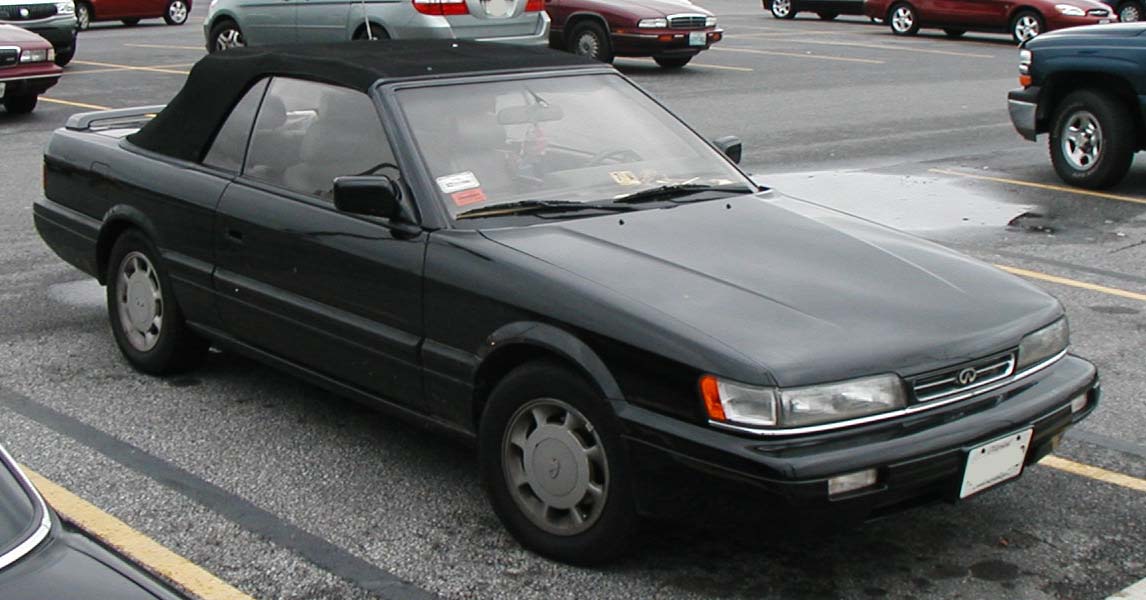
The Alfa Romeo Milano is a classic car from the 1980s that is known for its unique look and fun driving feel. It's a compact car that many enthusiasts appreciate.
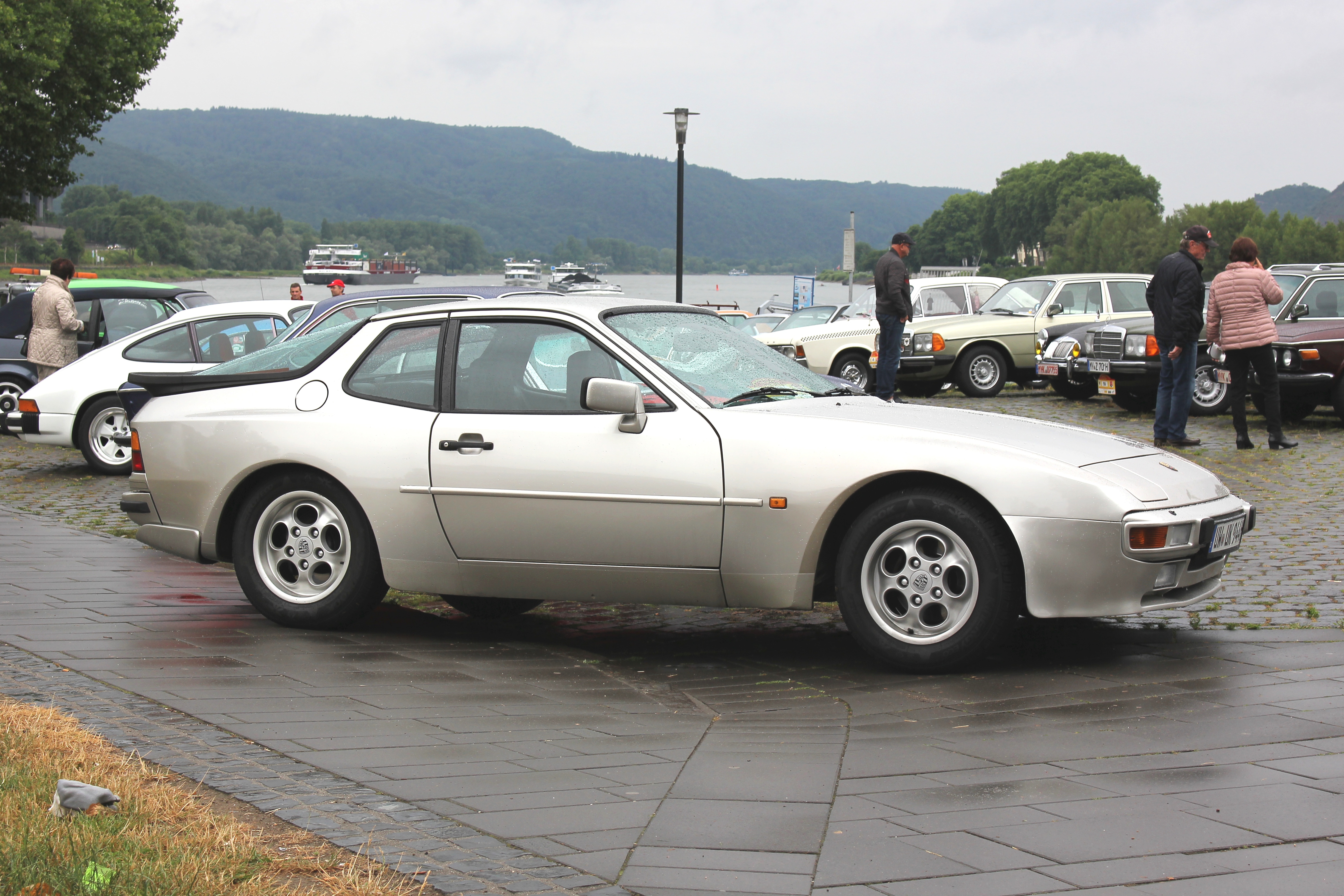
The Porsche 911 (996) is a version of the famous Porsche sports car made between 1999 and 2004. It's recognized for its unique look and great driving experience.
A grand tour is a type of car made for long trips, offering both comfort and speed. It's different from a sports car, which focuses more on performance and handling.
The clutch is a part of a car that helps you change gears when driving a manual transmission. It lets you disconnect the engine from the wheels temporarily.
Drive by wire means that instead of using a physical cable to connect the gas pedal to the engine, it uses electronic signals. This can make the car respond better when you press the gas pedal.
Coilovers are special parts of a car's suspension that help control how the car rides and handles. They can be adjusted to make the car sit higher or lower, which can improve performance.
A project car is a car that you buy to fix up or improve over time. It's usually not in great shape when you get it, but you work on it to make it better.
The 1995 Mustang is a classic American sports car known for its powerful engines and sporty look. It was popular in the 90s and is still loved by car fans today.
The 1995 Camaro is another classic American muscle car that was known for its speed and sporty design. It often competed with the Ford Mustang in the 90s and remains a favorite among car enthusiasts.
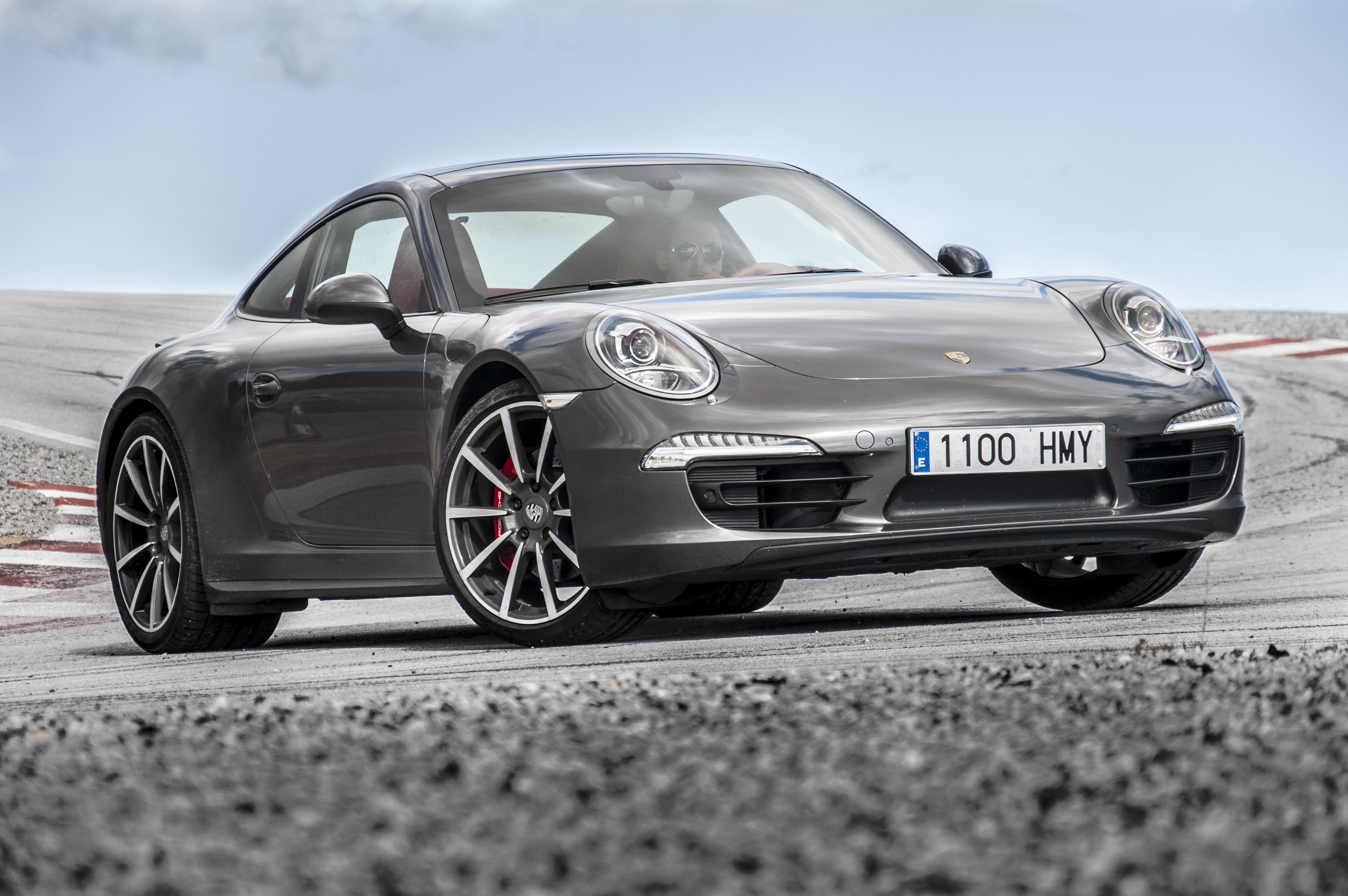
The Porsche 991 is a version of the Porsche 911 that was made from 2011 to 2019. It has a more modern design and better technology compared to older models.
Lane departure systems help keep you in your lane while driving. If you start to drift without signaling, the system will warn you to steer back into your lane.
Blind spot monitors help you see cars that are in areas you can't easily see while driving. If there's a car in your blind spot, the system will warn you so you can change lanes safely.
Toyota Safety Sense 3.0 is a set of safety features in Toyota cars that helps keep drivers safe. It includes things like alerts for when you might hit something and helps you stay in your lane.
Vintage cars are older cars that people love for their unique style and history. They often remind us of a different time and have features that modern cars don't have.
Hydraulic steering helps you steer the car more easily by using fluid pressure. It makes turning the wheel feel smoother and less heavy than in older cars without this system.
Parts availability means how easy it is to find replacement pieces for a car. For older cars, it can be hard to get the parts you need, which can make fixing them more challenging.
A vintage daily driver is an old car that you use every day. It might have some issues, but it should still work well enough to take you where you need to go.
Optima batteries are a brand of car batteries that are known for being very reliable. They are often used in cars that need a strong battery, especially older or performance cars.
Parasitic drain happens when parts of a car use battery power even when the car is off, which can lead to a dead battery if the car isn't driven for a while. It's a common problem in older cars.
Car
Geo
Geo was a car brand that made small, affordable cars. They were known for being cheap to buy and good on gas.
because I've been in MIA for too long, but I'm back.
The GM Guru is back in the building.
Good to see you brother, and Dylan here.
He's main stay Dylan.
Main stay Dylan, another name.
That's the nickname.
He's reliable man.
He's reliable man.
Oh, main stay Dylan, okay.
Yeah, he's like a Toyota man.
He just keeps on truckin' along.
I've been like a fuckin' Jaguar lately.
So today's episode, we're gonna talk about
what classic cars are best for daily driving, right?
I've been told many times like when I pull up in my 1987
or 89, whatever, Alpha Romeo, Spider,
do you daily drive that thing?
Like hell no, right?
But then I get in my 87, Alpha Romeo Milano,
which is technically two years older than my 89 Spider,
and it's the easiest car to daily drive, right?
So I wanna talk about what makes a good daily driver, right?
Obviously not modern cars, vintage classic cars
because modern cars, people daily drive all the time, all right?
Before we get into that though,
I do wanna talk to Mr. Pitner here,
who's finally back in the building here at Analog & Grit.
What did you think of the 996, 911 that you drove today?
My 996, 911.
It was a much, much better experience
than my last experience with a Porsche.
It's changing my mind again.
I'm getting kind of excited about Porsches again.
It was really good, it was a fun car.
Really?
What made you not excited about Porsche?
So I am throughout my life, the only person in my life
that's had access to Porsches was my uncle,
and he doesn't live in the same state.
So I've had very little experience,
but I've always found them to be
kind of one of the prettiest cars on the road.
I like how understated they are, how smooth they look.
They just look really good, any generation, any year.
I just think they look really good,
and they're kind of timeless too.
And so I've always wanna get behind the wheel of one
because I felt like they would drive as good
as they look in my head, and I drove a 991.1.
So pre-facelift 991, I've driven two now.
Both PDKs, both just regular 911s,
which I mean, still a cool car, but nothing crazy.
And both times I was relatively let down.
I didn't think that, I don't know if the examples I drove
just weren't well sorted, or what the deal was
with those two, but both of them rode incredibly stiff.
Like to a point where I found them uncomfortable.
Like it wasn't like stiff, like this is a good sports car
that I could see doing a drive.
It was like stiff, like I would only wanna drive this,
drive in a drive, like doing like a special drive.
So you drove a 991, and it discouraged you.
Yeah, cause it was just way less impressive
than I thought it would be.
It didn't ride that good.
And again, it was non-turbocharged.
I had no power in my opinion.
Even like wringing it out, it really didn't feel very strong.
So it was a .1991, cause then they became turbocharged
in the .2s.
Well, I think, oh, that's right.
Yeah, they went to the three liter.
That's right, I didn't even think about that.
But it was just overall unimpressive to me.
I had tons of road noise, which is probably normal
for that car, but it was just different
than I expected it to be.
And felt not grand tour enough, I guess.
I guess I always considered it a grand tour in my head.
But it rode more like a pure sports car.
So now what?
Now you drove the 996.
And it kind of turned my mind around a bit.
Like the suspension on that is extremely solid,
but just soft enough to not feel harsh.
It felt extremely well controlled.
The clutch and shifter, now this is my first time
driving a stick Porsche besides an old Boxster,
but felt really good.
They felt paired perfectly to each other
and paired perfectly to the motor.
Like everything worked in harmony,
which made it way more enjoyable to drive.
And just overall, it just felt really good.
It felt very natural.
The throttle felt incredible.
I haven't driven an older car in a while,
so feeling a throttle that actually does something
when you touch it and doesn't have the delay of more.
Are those drive by wire or are they cable?
The steering?
The throttle.
I know that they changed the way it was.
Because that one feels like it's cable driven.
It feels like it's a direct correlation
to my throttle input is what the car is doing.
It doesn't feel like it has that mild delay.
It's changed to it not being a cable.
And I don't think it was the dot two.
If it was the dot two, then it's not,
because mine's a dot one.
So if it's a dot one and all dot ones had the cable,
then yeah, but I'm not sure,
because mine has a few changes as a dot one,
like it has the electronic,
like you push a button and the hood on the trunk opens,
where the earlier ones, it was a latch.
So I'm not positive, I have to look it up.
Okay, well, even if it's drive by wire,
it was incredibly well tuned if it is,
which I would expect Porsche to do something like that.
Like, cause Porsche is kind of one of those companies.
It seems like when they make a change,
their fan base is very like, oh, what's going on?
Like what's happening?
Like, I know they got their families super tripped up
when they went from air cooled to water cooled.
Like Wranglers, like Wrangler buyers.
Yeah, it's kind of like that.
So I was kind of like, it's really good.
It's a very, it just feels very well sorted
and just all around good.
Like there wasn't a single negative
I felt while driving it.
I think a big part of that too, for you maybe,
it was it being your first time driving a manual 911,
because one thing I can attest to is like Volkswagen,
Audi, Porsche, gearboxes and clutches
always feel good in my experience.
And I have very little experience with all of those.
Like cause I've driven very few Volkswagen's,
very few Audis, especially manuals.
It just like Audi is almost on an existing manual
for a while now.
They got rid of those a while ago.
But yeah, it just felt great.
I really enjoyed driving it.
Yeah, I made you drive it.
Cause I really, I had a pretty strong.
I had to twist my arm.
Yeah.
I had a strong intuition that you were gonna feel that way
because, you know, my first time driving it,
you know, I immediately, I texted Josh.
Cause you know, he would, he would say like,
cause he knew I knocked Porsches and he has a G body,
you know, the analog and grit one.
And he was like, welcome to the club, man.
You know, I texted him right away.
I was like, dude, I get it now.
You know, like it's, it's just so like planted.
It's such a like well engineered machine.
I mean, it really is.
And you're working with a really nice one too.
You know, a nice low mileage stock example
that really kind of like captures the essence of that car.
No coil overs or any crazy sticky tires
or anything that kind of like dilutes that experience
that Porsche designed the car to feel like.
Yeah. And that's a really excellent point
because not every car is dialed in
just because you own a 996.
Like if you look at even Nix,
he said there's a bunch of stuff that car needs, right?
So if you just get in and drive it
and you're going to think, oh, the 996 is trash,
but no, it's because it's not sorted, right?
Like it has worn components.
And even then I think too, it's still, you know,
a lot of fun to throw around.
I think a little suspension work and stuff
you could chip away at and maybe more of like a project car,
but it's still got the bones.
Yeah. Like do you guys ever like kind of hate
when like you see these reviews on classic cars
and they have, you know, hundreds of thousands of miles on them
and they're reviewing a car that is clearly not as sorted
as it was when it was new.
Like I feel like it's unfair to that car
if you're going to review it without it being well sorted.
I don't think I ever watched reviews like that.
Maybe I just stopped watching people like that,
but I feel like that's part of reviewing a classic car
is knowing it's not going to be perfectly sorted
because there's only so much you can do
to keep that car as new as possible.
Especially the rarer the car gets,
the less likely you are to find like that perfect example.
No, I mean like as it pertains to like reviewing the car,
like you're less likely to find like that perfect,
perfect example that you dream of
if it's like a really rare exclusive car.
So I think all of that comes into play
and definitely shifts opinions.
Yeah. There's some YouTubers out there
that do these comparison videos
like drag races and they're in like,
you know, like a old like 95 Mustang
versus 95 Camaro or whatever, you know?
And it's like, like, how do you know
how that other Camaro isn't well sorted
and the Mustang isn't, you know?
Just and then you're saying the Camaro is better
than the Mustang.
Like that's what I mean by unfair.
It's hard to really review a car, you know, with that.
Or at least compare it.
Like you can, I feel like you can talk about
how it's held up maybe and just be like, yeah.
I mean, I don't know exactly its history,
but it doesn't feel like it's holding up that well.
But to compare the weird, the comparisons
on old cars always funny,
because like that's a very valid point where it's like,
okay, you don't know that car's history.
And that car is 30, 40 years old now.
Like there's only so much you can do to keep it perfect,
let alone like know what its history was.
Yeah.
Let's see about it from the first owner,
which is also like getting rarer these days.
Yeah.
One last thing on the 996.
So, you know, values,
we've always talked about how they're staying down.
Mainly my thought is beyond the headlights,
the interior from the doors forward,
it looks a lot like a Boxster,
especially the 991 when they didn't change the headlights yet.
We have a GT3 996 here.
That's, I believe, Jax, the yellow one in the garage.
And he has the new modern headlights
and you can see the difference.
And like we all said, like, yeah,
clearly you can see it's a lot more cleaner looking
when you have the non-runny egg headlight in the 996.2.
But besides that, I feel like no Porsche owner
wants a 991 that looks like a Boxster.
And I feel like that's like mainly why the values are kept down
because it's like, you know,
I want people to know I'm in a 911.
And then from the front end, you look at it and it's like,
oh, that's a Boxster.
A lot of those same people haven't driven one though.
Right.
And I mean, because it's like,
it's cheaper and more entry level,
I feel like maybe not as many people like aspire to own it,
but like everything about it, it's still a Porsche.
And I think it rides the line perfectly between like
vintage analog Porsche and like a modern 911.
Yeah.
You know how much I paid for it, right?
Yeah.
Based on you driving it today, obviously you were impressed.
Would you say that's probably one of the best bank for your buck,
dollar for dollar cars you can buy?
I know you had, I know you didn't get into it.
I know you didn't like really push it into a corner,
but you had enough seat time.
Yeah, I would.
I mean, definitely, I think it's a great value.
Like it feels different than most things you're going to drive,
period, especially for that amount of money.
It feels very special.
If like that's what you're looking for is an extremely balanced car,
that's very angled towards sport and fun.
That's a fantastic option.
Yeah.
I mean, to me, it's like the sophisticated sports car.
It's like the peak, you know, version of that segment.
Orthodontist car.
Yeah, orthodontist car.
There you go.
Like you want a sophisticated classy car,
but it's obviously going to handle in the corners.
It's going to last up to 200,000 miles, you know, that's it.
That's another thing too is like,
I know we're trying to wrap up on 996s,
but I'll just say this like that's a car that can go the distance,
you know, that you can put miles on mostly hassle free.
I would say most people, if you talk to 911 owners,
a lot of them will say that they put a lot of hassle free miles on their cars.
And I think that's something that Porsche has always,
you know, done pretty well is is provide a good value,
especially on the use market.
And I don't want to bring up like a negative point,
but what's ownership like on those as far as maintenance,
because that part can get relatively expensive on them,
correctly, you do have to like plan for maintenance ahead of time.
From what I understand, it might be like costly when repairs do come,
they might be costly, but you don't have like they're generally reliable.
Like you don't have that constant headache.
So like, yeah, you might have to pony up when it comes time to fix it,
but like you're not going to be,
it's not going to always be in the shop like a British car.
Right.
Well, perfect segue to our topic today.
Daily drivers that are classic cars.
So what makes a great daily driver, right?
Modern cars today, good, what?
Let's say gas mileage, tech, right?
So safety, like lane departure, blind spot monitor,
a lot of Toyota is pretty much safety sense 3.0.
All these features come standard, right?
So you're going to want that, especially in a modern car today,
because you don't want to be missing out on what the new technology
and innovations are in the auto industry.
But at the same time, you want a car that's good on gas,
you want a car that's not too expensive to own, right?
Those are all things on a modern car, on a classic car, right?
Car enthusiasts gravitate towards vintage cars because we like the character.
We want to smell like it has a certain, you know, sent to it when you step into it.
The steering is hydraulic, right?
It feels analog.
Those are the things we yearn for usually, right?
And obviously a nice timeless classic look.
But what are some other things, just general,
before we get into this list,
what are some other things that you would hope your vintage?
Because we all, both of you guys drive cars from the 90s, right?
Or 80s.
And at one point, you daily them.
I know you daily your GeoStorm, which is what year?
93.
93.
Then before that, my Benz, it's a 79.
Your Benz is a 79.
Your Buick was a 91, right?
So tell us some things about what's important to having a daily driver classic car.
For me, comfort and parts availability, I feel like are huge if you're going to daily a classic car.
Because things are just going to break by age.
Like there's only so much you can do about that.
A car, no matter how reliable it was for the past 20, 30 years,
when things get old, they just fail.
Especially when you get to the early 90s, late 80s,
because that's when things are becoming electrical too.
So making sure your car A was very mass produced, I feel like is a big thing.
Comfort's a big thing in my opinion, because you're daily driving it.
At least in my opinion, I like a daily driver that kind of isolates me from my outside environment
or the road a little bit.
So just something that has good isolation points is important as well.
So that's quiet on the interior, has compliant suspension.
What do you mean by isolation points?
Like quiet interior, well-sorted suspension.
No rattles.
Yeah, minimal rattles.
Just well, like maybe they go well, sound dead in car.
At least for me, I like to kind of be, after my work day,
I kind of like to just isolate a little bit.
But there's still something special about driving a classic car that still feels old school.
Yeah.
Yeah, and you pretty much described your Buick.
Yeah, I have a bias.
Just to kind of piggyback off what the GM guru said,
anytime you have a car that's that old that you're going to be daily driving,
stuff is going to happen.
I mean, not everybody can afford to just buy a vintage car and just dump 20k into it
right away to make it reliable.
So I would say finding a car that, unless you have an extreme budget,
if you have an old daily driver, it's never going to be perfect.
So you want a car, a vintage daily driver that it might always have little annoyances,
but it will always fire up and get you from point A to point B.
So I would say that's important and parts availability obviously comes into play
when we're talking about that.
Yeah, super important, right?
Because there's so many people out there that want a classic car,
and that might be their only car.
It's all they could afford, right?
It is a vintage car that is what they use to get from point A to point B
and go to work every day.
So firing up every day, so maybe a good battery, right?
Like an Optima battery or something that you're not going to-
One more?
Yeah, something that's not going to have to jump just because you didn't drive it
for three days in a row, because a lot of vintage cars have a parasitic drain.
Yeah, that is a thing that happens on order cars.
So that's something to think about.
Another thing, parts availability you don't think about until you have a problem
and now you need to sort, find a part.
Oh dude, I think about it on every car I buy.
But not everyone does.
Oh yeah, you have to though, especially if it's classic.
If you're daily anything, especially if it's older,
that's like, I think has to be almost the main concern is what's parts availability like.
I'm going to partially disagree with you there because I think if there's a will,
there's a way like where there's problems, there's solutions.
And with a lot of old cars, you might not want that mass-produced vintage car to be your daily
driver. You might want something a little more like unique and low production or
you know, few remaining examples to daily drive.
But with the technology we have now, if you're willing to spend the money on that car to fix
things, it might carry a little bit higher repair cost, but if you're willing to do it,
you can find solutions. Like they do exist. We can 3D print stuff these days.
People have made aftermarket upgraded components to replace parts that have known failure points.
That is one thing I think that's worth noting too about some of these cars is
even some of the rarer cars that you could choose as a vintage daily driver,
they've been around for long enough that their problems are known.
And if they have enough of a following, even like a small cult following,
I'll just say like my GEO for instance, there's a Facebook group with maybe 7,000 people in it
worldwide. Those guys love those cars enough that they have found the solutions for the problems.
And you have that support network. So there still is the possibility that something will
break. But as long as you're proactive and you try to address the obvious concerns,
then I think it can still be manageable as a daily driver.
Do you mind if I kind of not go against your point, but kind of test it a little bit?
Sure. What if it's your only car?
Yeah, I mean, that's the thing is like, I feel like part of that is because you have
multiple cars that if, you know, if your car has an issue that it's not going to be on the road
for a few days, you have something to get you to and fro.
Yeah, that's absolutely a good point. But I think most people who want to choose a vintage
daily driver, they're not the people who have like they're not driving to LA every day in it.
You know what I mean? They maybe live like 10, 15 minutes from their work and just it's
an easy car to put around town. So I think your concern about that is definitely valid.
If you plan on hopping in the car and driving from Chula Vista to San Clemente every day,
but if you live 10 minutes from your job, then, you know, maybe
be a little, you can be a little bit less concerned about that.
I would agree with that because that was where my main concern came from was I literally was
dealing mine, what 30, 50 miles a day minimum. If I didn't go get lunch and didn't go do anything
after work, it was 50 mile round trip. And so for me, that was like a big thing. And I had a
second car. I couldn't imagine if that was like my only car and Buick is still down by the way.
I think that was funny because earlier you were like, Oh, by the way, you know,
it's going to start every time I buy a General Motors product with a 3800 and have an electrical
issue. That won't start sick. Well, I think your part, your point is valid, right? Because
there are message boards and all these threads where you can like problem solve. And there's
people that know had the same concern as you chat GPT even, you know, it'll break down like where
you should start first, right? But like, even with parts availability, I feel like, yeah,
you can 3D prints, print things and all that. And there might be like, like I've heard stories
where like, Oh, it's a GM part, but you know what, Acura makes this part that or Honda makes this
part that actually fits perfectly too. And people know on the message threads and all that. But
if you find an aftermarket solenoid, you know, or now you need an EGR valve because you can't pass
smog, you get an aftermarket one and it doesn't work, right? You get one on rock auto for, you
know, 100 bucks. It might not work because it's not the OEM one, right? You hear all the time,
like make sure, like on my Mitsubishi, make sure you get an Aizen timing belt, make sure you get
the right like Denso is like the only, you know, brand you should get for Toyota and Lexus. So like
sometimes parts like, yeah, there is a part for it, but it's not the OEM one and it could cause
problems. Another thing too worth mentioning is it also depends on how good of like a roadside
mechanic you are. You know what I mean? Like because the fact of the matter is you're in this
case, I think we're talking about like choosing to drive a cool vintage car, not just a hand-me-down
that you're driving because it's all you can end up, it's all you have, you know, and you can't
sell it for much. I think a lot of these people who I think who we're speaking to are people who
would be considering choosing to drive a vintage daily driver car. So the fact of the matter is
people, your cars might break down at some point, like it just might happen. It doesn't mean you're
going to have a constant headache, but you know, find those common failure points that are quick
roadside changes and familiarize yourself with how to do them. Bring, you know, a small toolkit,
bring extra fluids, you know? Like those are just the kind of things you have to do if you're going
to make that choice to drive a vintage daily driver. You can't just get, you know, frustrated if,
you know, one time it leaves you on the side of the road because it just might happen. Like that's
the reality. Doesn't matter how good the car is. It's just, it's always a possibility.
Yeah, true. I mean, it just happened to me, like I told you last week in my Alpha with the gas gauge
not working and I ended up getting stuck. I didn't tell you this, but I read like the car was just
chugging, you know, and I'm like, what's going on? Like, why is it like fighting for air, you know?
But ran out of gas that had a, you know, a little bit less than a quarter tank,
but that gauge was just super like flimsy, you know what I mean? So, yeah, put two gallons of
gas in it and it was fine. So these are like things you live and learn with, right? So that's
going to come with the territory. There's going to be- And my Buick does that too. If I'm under a
quarter tank, I better not park on my hill at all or else it's not going to start in the morning.
Yeah, that too, right? So always fill up a half a tank. There's certain kinks you got to learn,
which is all part of the ownership experience, right? So you mentioned isolation and like having
a well-insulated car, you know, with sound deadening materials, right? You drive a Buick,
which was probably, you know, always part of their built, you know, plan is to make a quiet car,
right? It still surprised me when I drive it. It's been a while, but I'll drive it again soon.
But when I drive it, it still blows my mind like how quiet it is. Yeah. And the suspension still
like soft and buttery. It blows my mind that air suspension still works. It's been parked for like
nine months and it's still sitting where it's supposed to, which is crazy to me. Well, that car
was designed to be floaty, right? Be comfortable. Like you have like clouds for seat cushions on
that car, you know, in that car. But not everyone wants a car like that. People want like a car
that checks maybe multiple boxes. So like maybe a GT car where it's still comfortable, but it's
also sporty. But another thing, air conditioning, right? Like pre-1995, you might not have R, what
is it? 134? R134A or whatever? Yeah. Like you won't, like you'll need freon instead of, you know,
what do you call the coolant now? It's like, when you recharge it. R134, the old stuff is R12.
That's right. I had it backwards. Yeah. R134 is the current one, right? So unless they've converted
it, right? Then you're not going to be able to recharge your... Did I tell you I found out that
the B-hooks is converted? It is converted. I didn't even know until my buddy one day was like,
I was like, oh, wow, it's already converted. I'm like, oh, cool. Yeah. Well, check that out. Easy
recharge. I literally had it on the list to convert it at some point. I was like, oh, it's done. Cool.
I don't know what I'm talking about. So cold air conditioning, right? Alpha, like European cars,
my Alpha or Mayo's air conditioning sucks, right? Now, again, does it have, does it need freon or
does it need like a modern day? Like you have to check to make sure it is converted. If it's not,
then freon is like illegal now, right? Like it's like you can't even discard it.
Whatever you call it. Yeah. Another thing that I was thinking of is, because obviously, yeah, you
want air conditioning because it's hot in San Diego, hot wherever you are, right? Obviously,
you want to make sure you're in a comfortable space. But like exhaust, if you have an aftermarket
exhaust and it's droney, right? That could be a problem too on long road trips. Yeah, it depends
on, like, again, if you're going, you can do an exhaust, but just be smart about how you do it. Don't
just cut mufflers off and leave it alone. Correct. Another like loud cars. No, I don't really, I like
cars that have, I like cars that have like a rumble, but no like ear piercing rasp. Like my
Audi is the perfect example of that. Like you could hear it. You definitely knew like when I
arrived at home, but also I wasn't like waking up neighbors. That makes sense. So kind of like a good
middle ground and with that car, I had resonator and muffler and I think that got rid of like that
drone. Like I never had like that air splitting drone when you're climbing up a hill at 2800
RPMs. Yeah. So yeah, all that you want to take into consideration. And then another thing too, if
you're, if you're planning on doing this, if you're somebody who's listening right now and you want
to buy that vintage daily driver, I think you should set some money aside just to put into the car
right away. Like you don't have to necessarily empty drain your bank account, but like be realistic
about the car you buy and what it needs. And if there's some things that need to be addressed
for it to be roadworthy for daily use, then like, you know, do it. Yeah. Like the third maintenance
is what comes to mind when you say that most cars will come with deferred maintenance, right?
You're going to have to do things that like for example, wear and tear items, right? Wiper blades
even something as small as that. Potentially suspension put air in the tires, right? Make
sure the suspension is the first thing that comes to mind for me suspension. Yeah, definitely.
Pre-95 OBD-1. So if you're looking at a pre-95 car, it's probably going to be OBD-1, which
people today, if you're a car enthusiast, you probably already know, but if you don't,
that means you're not going to be able to determine really what your codes are unless you have some
kind of, you know, onboard diagnostic, like, like my Jeep and my other, what was it, the Z.
Yeah, you had to like trip the computer and it'll flash how many blinks. You could use a paper clip
and you could jump it and yeah, read your flashes. But a lot of older cars that we're
going to be talking about don't even have OBD-1. Right, exactly. And it's usually OBD-1 is like
early 90s, late 80s, right? Late 80s. Yeah. Companies kind of rolled it out at different
times, but yeah, say like late 80s, early 90s for the most part. Here's another really big one
that I feel like I haven't owned one, but I've heard horror stories, fuel injection. So if it's
carbureted compared to a car that has modern day fuel injection, right, which is probably
going to be like early 80s and on mid 80s. Some, there's some carbureted cars that I think
depends on the brand, but yeah, you know, still went into the early 80s. But carburetors like,
like making sure if like you have to clean them, right? Like the, what are the jets you have to
sometimes clean those. I know how you guys dealt with carbureted cars before. Not cars were carbureted
dirt bikes and stuff. So that's another thing. Like if it is a car, like just because it's cool
and vintage, but if it's carbureted, like you need to know what you're doing. It's not just
like you just, like you said earlier, you don't just get in and start it up after it sits for
weeks. But here's the catch when it comes to carburetors versus fuel injection. You can always
clean a carburetor. If we're talking about, yeah, you can clean a carburetor and you won't
necessarily have problems if they were running good and you drive the car on a daily basis.
Carburetors have more problems associated with sitting, sitting for extended periods of time.
But don't just let a car sell you because it has fuel injection, because if it's
early fuel injection, it could potentially be 10 times more complicated than a carburetor.
I'm pretty sure the early gen C4 vets are like that. They have like some weird crossfire
injection. That's like a nightmare. And that's early 80s. So that's like 83, 84, I believe,
is where they had the crossfire. So yeah, I would honestly, I would stick away from early
80s cars. I mean, for that reason, just like, you're right, various car to car. Yeah, it does
vary, but you're right. Like just because it's fuel injected doesn't mean it's better, right? It
depends on the technology. Unless we're talking about port fuel injection, because port fuel
injection is dead reliable. That's the best time in my opinion. Some people will be mad that I'm
saying this, who love carburetors, but those people tinker on carburetors, you know, so.
Well, the carburetor has a completely different sound, right? So the people that love carburetors
are usually because of the sound it makes, you know, you put two Webbers on like,
like my Twin Cam and my Alfa Romeo Spider, that that car sounds completely different
with Webbers on it. You know, if you get like an early, like a series.
Why would a carburetor make it sound different? I know it makes it like run a little different,
but like sound different. Yeah, maybe more induction noise if you have triple carburetors
or something like that. But yeah, carburetors are like another draw to carburetors for those
people who swear by them is like the mechanical nature of troubleshooting and diagnosing. And
people who are good at that, you know, might be more inclined to daily drive a carbureted car.
Yeah. With the same, you know, staying on the same track with like safety,
ABS, drum brakes, these are things that, you know, early before 95 weren't really standard.
So I know like if a car has rear drums, like my Vanagon has rear drums, and like it's not that
noticeable. But there are some times when I'm like, Oh, wow, like, like, I need to like,
really press the brake right now. You know, because you kind of misjudged your stopping
power. So what are you about to say? I feel like any old car, if the brakes aren't updated or
upgraded to be more modern, you just have to drive slower and more cars just in general,
because there's so many things that could fail to if it's older, like, especially earlier cars
with like my Buick, for example, has early ABS, but those ABS pumps fail. It can cause your,
depending on how it fails, it can cause your brakes to drop to the floor and just like have
nothing or it can cause the ABS to trip out. And all of a sudden, like I've actually had this
happen on the Buick where I go to hit the brakes, and it feels like my brake is skipping and the
car is not stopping. So I'd have to wait for the ABS to come on to feel comfortable in my car because
the ABS light comes on, it will bypass the ABS system. So early gen ABS are traction control
you have to be careful with as well. It's not really safer because you kind of have a failure
point built into them versus older cars that don't have that stuff that there's less control when,
you know, if you don't have ABS, if you have to stomp hard on it, but at least you know they're
going to perform the same every single time if you're not driving like a reckless or having an
emergency situation. Yeah, definitely. And another thing is just regular inspections, like if you
have an old car, just inspecting it regularly, putting it on a lift every so often, checking
your fluids every week or every two weeks, I've built the habit on all my cars. If I haven't driven
them in a while, I check the fluids, or if I'm driving them every day, I check the fluids, you
know, these are just things you have to do. Yeah, which not everyone wants to. Yeah, that's why
we're doing this episode because like you just need to be prepared. Yeah, everyone that's a car
enthusiast that, you know, wants a classic car, these are certain things that you just kind of
need to know about, right, from experience. Now there's some benefits, like we know, like before
95, like I always use that as the baseline of the sweet spot generation. But if you have an OBD1 car,
you don't have to worry about monitors and making sure your sensors are ready for smog, right? Like
the worst thing is having to put a car through a drive cycle because all the sensors and monitors
are not ready for it to pass smog, or even be on a smog test, right? That's annoying. I've been there
many times and it's a pain in the ass. I've had cars that could not pass after 4,000, 5,000 miles
put on it. Yeah, but don't you just keep getting temporary reges? Well, yeah, but you're not able
to register your car. And no, if you don't have your smog certificate, it's only so often, like
you're going to have to eventually put it not up. You'll just get, the most they'll give you is a
one month temp tag and a moving permit after that expires. So it's, it's something, yeah, it's
definitely a criminal for some more of California thing, right? For us, because we have to smog.
But that's a benefit. You don't have to OBD1, just send it. You know what I mean? Like,
you don't have to worry about it. Now, yeah, like, make sure you have a good cat and all that stuff,
all your emissions should be good. The problem with OB, like older cars is you have to, when you
do smog it, you have to find a place that has the rollers, right? They charge more. They charge more
and there's less of them. I actually was listening to, I don't know if you listen to Spikes Radio.
Jay Leno was on an episode. It's the Johnny Lieberman. They were actually at Car Week
with Seinfeld in one of those panels. So they do a podcast too. And Jay Leno's episode, he
was saying like, you have to go down to San Diego just to find the smog shop with rollers.
You know, yeah, because it has to be dyagged, right? You have to see like the numbers for your
HC, your NOx and all that. So I didn't know. I guess apparently LA has less of those smog
stations than we do. So just something that you have to think about. And then like the character,
right? So let's let's finish with that. Like, what's special about driving a vintage classic car?
Just nostalgia alone. Just the fact that everything felt more hand built and special,
less plastic, more specialty materials that you don't see in interiors of cars anymore,
exterior styling. I mean, that's always subjective, but I think styling is there's so much
like modern cars are super angular and like over styled. But old cars, because they had like less
ability to do stuff like that, they had very unique styling that was like to that car. And
every car was, for the most part, relatively different from the other. Like the moment you
looked at a Ford is like, Oh, that was a Ford. You looked at a General Motors products. That's
a GM product. Like you can tell what the car was like right away by looking at it, which is
something that's kind of going away. I feel like in modern culture or modern car world, especially
if you're not like a car aficionado, like my dad talks about that he likes cars, but he doesn't
really care for them that much. He's more like an off roader and stuff. And he'll tell me all
the time is like, dude, it's fucking crazy. All these cars look exactly the same. I don't know
what's why you know where it is like the most recent car that blew his mind is a Porsche Taycan.
And then I told him is electric and he got sad. It's cool. It's cool looking. I like that question
that you asked where you said like what's special about driving a vintage car every day. And my
answer like in one sentence is it's a reminder of why you love cars every day. It's a constant
reminder of why you love cars. And it just feels so cool to get behind the wheel of something
that just makes you feel like you're just enjoying driving and preserving a piece of
automotive history. And I think that's what makes it so special. Like there's literally
been times where I'm driving my 300 D and like I'm cruising by the beach or whatever or something
just like the mood is right. Like the car kind of like sets the mood. The the road rage kind of
slows down a little bit sometimes. And and you just feel something about it just feels like crisp.
Like it's it's even it's hard for me to put into words. No, you're doing an excellent job. No,
no, you're explaining exactly. I have my my my my fist on my cheek. Like I'm admiring.
Wow. Say more, Dylan. Just say more. I mean, at this point, I'm dedicated to driving vintage
daily drivers because it just something about it just feels like it's meant to be like. Yeah,
it's like when you get I get emotional talking about it. Like really like when you get out of
the car and you like look back at it when it's parked always always, you know, and like it's
special to you. You don't even care what other people think, right? You know what I mean? It's
special to you. But most of the time other people admire it too. Yeah, or you get like a thumbs
up from somebody and you know, they probably owned one there when they were younger. Yeah,
I got that a lot. My Ram 50 I used to own. It was like, old heads are like 50, 60, 70 ish. And
they look and be like, is that a Ram 50? Oh my God, I had one of those when I was 20. It's like
it like you'll that is a cool part of owning an older car. Absolutely. The stories, the people
you meet along the way. And I've made it on this note when it comes to vintage daily drivers,
I've made it a point my new goal for my 300D is to put as many miles on it as I possibly can.
So I don't hesitate to drive it up to LA. I don't hesitate to get in it and drive it
around town even for short trips. I just want to put as many miles on it as I can.
You're trying to fill that grill up with some badges. Yeah, yeah, exactly. There you go.
If you missed that one last episode, Mercedes Benz badges. Oh, I know what you're talking about.
Yeah, when you reach a certain amount of kilometers. Yeah, you get the badges from
Mercedes, right? Yeah, yeah. Yeah, yeah. They're free. You just got to apply.
And you send them a picture of your odometer or something. You got to go to the dealership with
your car. That's fine. But yeah, I mean, that's a good photo op. You pull up to the dealer and
take a picture of it in front of the dealer or something. Yeah, yeah. You mentioned preserving.
I really liked that you said that because like, you know, your geo storm is a survivor car,
right? A lot of them fell victim to cash for clunkers and, you know, no one really kept them
up to par because they weren't worth much, right? But you did. I mean, the guy you bought it from
did and now hopefully you will. And that kind of has, you know, incentive to it, like you want to
keep it preserved, right? Absolutely. You know, people, every time someone says something about
it, I'm sure it feels good. Like, oh, wow, like he gets it, you know, today I was in little Italy
with my Milano and I found the spot, like the best spot. You know that yellow house in little
Italy where this guy, the old man always sits outside of it. It's right by the little Italy sign
in little Italy. Okay. Perfect spot. I was like, wow, I found like a golden spot. So I ended up
getting like a cannoli or a cannolo since it's singular and an espresso right across the street
at the cafe. And I was just like staring at my car. And then there's this guy right outside it when
I went up to it to start it. And he's like, look, honey, look, it's a car from the 80s. It's a car
from the 80s, you know, and I'm getting in and he probably doesn't know what it is, but like at the
same time he still knows it's old and he thought it was cool, like from the tell his wife, you know,
so it just, it feels good. I was on the freeway a couple of days ago and I got honked by some guy
in a G35 and he's honking and I couldn't see who it was, you know, so I was like, oh, cool, probably
another car enthusiast, you know, he saw I was in a Milano and he just kind of sped off. And then
the next day my coworker comes up to me is like, Hey, man, you see, I was me honking at you.
I felt all good. And then he took it away. Oh, that's funny. So, but yeah, I think character,
you know, it's it's special driving a vintage car and it's worth every headache that comes with it.
Absolutely. I agree 100%. As long as it's not a Jaguar XJS. You had one? No, but I've done a
bunch of research. I used to own really bad and then you do like any research on that car and
everybody's just like, just saw a Chevy 350 in it and you'll be fine. There's a forum called Jags
that Run and it's an LS swap forum. Alright, so I got an idea. Okay, so we have a list. This is a
Rodentrack, actually, like article from back in 2023 of the best. Yeah, the best classic cars for
daily driving. So rather than looking at the list, right, how about you guys don't look at it right
now? Oh, and you guys already kind of looked at it a little bit, right? So you have an idea what's
on there. How about I read the little description below it without giving away the name? I've already
looked at the list. I feel this is and you well, yeah, you guys, you guys kind of have an idea,
but you don't know, but he's going to read a sentence and we're going to guess. Yeah, so it's
kind of like who am I, but it's not. All right. Yeah. All right. This is one of my favorites on
here and we'll talk about it when we're done. So I'm choosing ones is like 25 cars on this list.
Some of them are like non US spec cars like from Japan. So we'll probably avoid those.
But let's start with the first one. All right. So unibody design and relatively well appointed
interior means you don't have to compromise to drive one every day. It's an absolute tank
through bad weather to in case you need to get somewhere in a blizzard. 84 to 01. Oh, Jeep XJ.
Money. Yeah. Dylan got it. This car is probably one of the best packaged cars, right? It's small
to compact car, but a lot of space, a lot of cargo space, which is super important for
four daily driving and family friendly to four liter straight six. One of the most reliable
AMC engines ever built. Right. What did you say? It's family friendly to like if that's
something you have to take into consideration for a vintage daily driver because they made a
four door, right? The two doors, I think are cooler for enthusiasts, but you know what it is
not about? Yeah. You know how we always attribute the SUV blowing up? This is just like a random
thought that just popped in my head, but the SUV blowing up to the Explorer. Yeah. Why didn't it
blow up with the XJ? It kind of blew up with the Grand Wagoneer as like a family SUV. I would say
would be like one of the first because even before that with this with the scout because they were
making more comfy, you know, more cushy scouts and then Jeep kind of took over with the Grand
Wagoneer. What is thought about it when you said XJ or family friendly? I was like, wait,
that was a very like versatile vehicle. Why wasn't that more recognized as the vehicle that brought
SUVs to SUV-ness than the Explorer? You're right. It's a very good point. You could even argue the
same thing for the S10 Blazer because I believe that came before the Explorer too. I think I
can answer your question. I think the reason why is because it still kind of felt like a truck,
even though, yeah, even though it was a unibody, it still felt like a truck. Straight axles and
everything else. It was really something that like mom. Front and rear? I'm pretty sure it had rear
leaf springs. I'm not sure about front. No, front, I'm not positive on. The YJ Wrangler had had leaf
springs in the front. So actually, I know it had rear, but go ahead. What are you saying? It just
wasn't something that like, you know, women would look at and say, like, oh, I want to drive that
every day. Or they'd go to the dealer and drive one. They thought they kind of probably just felt
like they were driving a truck. Yeah. I think that's, you hit it on the nose. The Explorer
was geared towards women. Absolutely. You know, and who are mostly the ones that do the family
duties? Have you ever seen soccer moms alternative to the minivans? You know, have you ever seen an
Explorer off-roading? Someone like overlanding? Yes. People make them into pre-runners because
they have iBeam suspension. So that's one thing that maybe makes them feel a little more like
comfortable and easy to drive is like the iBeam suspension. Okay. All right, moving on. This one
I don't agree with, but let's talk about it. So like the AE86, 84 to 89, by the way, is a generation.
This car is now a classic. MR2. Yes. MR2. So the first gen, the little wedgie one,
it says it looks great. It looks pretty reliable. It's fun to drive. It does say it's dead reliable.
Just keep an eye out for water that leaks in the T-top models, but it's a mid-engine car.
I still think that it could be a daily drive if you don't, if you have like a fun commute and
you don't need, like I don't bring anything to work. It's just hard to work on yourself. Like
when you have, whenever you think of mid-engine, like it's going to have very difficult access.
So I imagine, I haven't worked on these before, but I imagine access is going to be tough.
I feel like it probably has a small enough motor and it's still a Toyota. Toyota has always designed
cars that were easy to take apart. Like they designed them with maintenance and,
oh my God, I'm forgetting another word. Maintenance in mind. I'm just going to
blend out like that. Serviceability maybe? Serviceability. Thank you. My brand was like,
no, maintenance serviceability. Exactly. Yeah. I think with the MR2, it's kind of like one of
those situations where it's like a push and pull, like, oh, it might be a little bit harder to work
on, but you also might not have to. But also mid-engine. Yeah. All right. You didn't see the
phone, did you? No. Okay. And the only reason I even say that is because I, again, that was one of
the, my cars I was looking into as a first car was that generation MR2. And so I was like,
and I never remembered ever reading like, Oh, by the way, it's a pain in the ass to work on,
which I feel like informs is like something people are pretty honest about. Okay. All right. Moving
on to 66 to 77 is the generation. This car's iconic looks aren't the only thing it has going for it.
It's also solidly built and easy to fix in a pinch. If you can find one without rust,
it can make for a wonderful daily driver. No. 66 to 77? 66 to 77. Oh, we're going early 2002.
Yes. Dylan got it. So Dylan two, Pitner one. Yeah. So the O2, there's a lot of O2s in this garage.
Josh has one, maybe two, if that Roy has one, Josh's daughter just bought one, right? I feel like
the O2 is exactly like this thing said, like it's a car that you can easily work on. They're nice
Yeah. There you go. The two words I would use to describe it.
Understated and dapper. Nice. Right. Would you agree? Always look at Dylan to absolutely
entertain me with the way he caricatures cars. So we're going to stick with another car that
you see pretty plentiful in the analog and grid garage 82 to 94. If you want something more modern,
I'm not going to say this because it's the same. Let me just delete that line. All right.
This series will get the job done for years. It's been the go to for enthusiasts looking for a fun
car that can do it all on the cheap. And then this sentence would give it away. So 82 to 94.
82 to 94. Well, let me say the first sentence. If you want something more modern than a 2002.
Oh, just a three series. There you go. E33 series. Good job. So two to two.
Yeah. And you see so many of these in the garage. Like I feel like for a young car enthusiast wants
one. It great bang for your buck. I mean, these are under $10,000. Tons of aftermarket support
if you're somebody who wants to modify and you can get one of the 10 for what decent miles,
right? Yeah, you can get an OK one for under 10 nicer ones climb a little higher. But yeah,
you could get one that's drivable, you know, running, driving, stopping, shifting for under 10.
All right. 90 to 97 dependability is just one of the many reasons people love this car. And while
it might not have much space for transporting a family, it can certainly get you to and from work
every day without issue. And because the earliest generation are more than 25 years old, it qualifies
as a true and a Miata. Yes. 90 to 97. 97. I thought those were 89. They started probably
unveiled in 89 for the 90 model year. If I had to guess. Yep. Spot on. The Miata like when you
think of like the Miata is always the answer. One of the reasons why it's always the answer is because
it's a great classic daily. It's a great sports car daily, right? It's a track car daily.
It's a great car. Like I was telling him earlier, it's a great car to learn how to drive stick in.
Easy and cheap to work on. Yeah. And cheap parts. Right. Like no one owned the Miata and said like,
damn, like I can't afford the ownership of this car. Yeah. Yeah. All right. This one is a little
bit tougher. 74 to 1990. The first blank was so great because it was cheap, simple and fun. Sure,
things might break, but parts are widely available and affordable. As long as you keep rust at bay,
it can make for a great daily. Now, this car still exists today. They still make it. So 1990
isn't like when it ended. It's just referring to that generation. And so what was it for sure?
74 to 1990. And let me give you guys another hint. They refer to as a mark, right? Whatever.
Oh, like a Lincoln, no. No, no, like the generation is a mark one, mark two. Super? No. 74 to 90.
And that's we're talking about one generation here to clarify. Okay.
74 to 90. I'm not sure if the mark one lasted that long, but it's the specific hot hatch.
Pretty much. Oh, golf. Golf. What? Mark one or mark two, I'm assuming. GTI. Yeah. All right.
All right. Three to three, three to three. I agree on this because of like hot hatches. I haven't
heard that in so long. Just naturally practical, right? Yeah. Because of the cargo space. When
they're real, it's always simple to work on. They're fun to drive. All right. So it's kind of
like the BMW earlier. Okay. So if the blank is not your style, this is a solid alternative
with distinct, well, if the GTI is not your style, this distinct looks and an equally
enjoyable driving experience. Just be sure to keep up with maintenance as they can be a bit more
finicky than your side 900. No, I just want to keep in mind the GTI, not your style. I feel like
this one's on the tip of my tongue. Is it a sedan? No, it's a coupe 88 to 95. Apologies, 88 to 95.
So this is a Radwood era car. You'd probably see one of these at Radwood for sure. Like you've seen
like you might see one on the street. Is it a Golf's not your style?
And he said a coupe. Yeah. Are we able to ask? But they're pretty rare. Are we able to ask
where from? Like European? Yeah. Yeah, European. GTI not your style. So think about it. It's going
to be very similar. Well, it can't be that. It's an alternative. We've already talked about that.
Oh, man. An alternative to the GTI. I'm trying to blink right now. Jason Camisa owns another
version of this car. Oh, we're talking about the Corrado? Yes. Oh, interesting. Okay. I was going to
say 944. Okay. That would have been a good guess. That's a good guess. All right. So 69 to 78. All
right. So a little bit of about a 10 year run here. Okay. Okay. This car will last forever if you
take care of them. They make good cruisers and wonderful vintage sports cars. If you can put
up with the carburetors on the early models and find one without rust, you can't go wrong. So it's
kind of the GT car is kind of what it's a Mercedes SL. Is it a sedan? No, they're cruisers.
Coops, okay. 69 to 78. So they make good cruisers. Good cruisers. So I'm going to think nothing too
crazy sporty. But I said sport, didn't I? Yeah, I also said vintage sports cars.
I'm almost thinking like muscle car. Okay. It kind of looks like a Japanese muscle car.
Okay. So it's Japanese 69 to 78. 69. There can only be a few that satisfy those requirements.
Dylan, you should win this one. Oh, it's a S30 Datsun 240Z. Yeah. Yeah. Okay. Yeah. That gave it
away right there. Is that 4-4? 4-3, I think. 4-3. All right. Well, you know, Dylan has the 260.
So, all right. 74 to 93. So big, big, big production run here. All right. This brand's
legendary brick. Volvo 240. Yeah. The brick is where you gave it away. Dang. I already knew
from the year range though. Oh, really? I was just holding my tongue to be honest. When he said the
brick, I was like, all right, let's move on. 91 and 98. Well, yeah, 91 and 98. If you'd rather have
a more modern Benz, we recommend the W140 built on the tail end of Mercedes bulletproof reliability
years. It's handsome looks and wide range of engine choices. Make it a good choice for those
wanting a luxurious land boat with vintage style. Didn't you already say it? I said Mercedes, right?
Yeah, but I didn't. You said W140. You know what that is. He might not. Okay. Well, then I know.
Then it's an S-Class. There you go. Yeah, my bad. Sorry. Were they called the S-Class that early?
That was the first generation of that, right? Not necessarily. Well, this is a difficult question
because everybody in the Mercedes community, and I think we talked about this on the last podcast,
the first one to receive the proper S-Class designation was in the late 70s. That was the
first one that was called like 300SD. Yeah, but it's the first one with S in front of the numbers,
right? Yes. The W140. Yes. Okay. That's correct. Yeah. This S-Class, just looking at the photo.
I thought those were notoriously not great to own. No. Like bulletproof powertrain,
but I've heard the electronics get really wonky on those. Yeah, but people-
It's in with the air suspension on those, right? I'm pretty sure that's first air.
Those don't have that. Not even the leader ones? If you got like a V12 maybe.
I could have swore the leader ones got air. If you got like an S320,
I don't think so. I've never seen one really sag.
This generation S-Class is like the first time you look at an S-Class and you're like,
that's the flagship. Yeah, absolutely. Because it still kind of looks like it's the original one.
Separates enough from its lower designated cars. It still looks like money.
It doesn't look like a 190E. Exactly. Yeah. I feel like Mercedes for the longest time
literally was just like 15% bigger and that's the nicer model because they had the exact same
style. Even up to today, I feel like S-Classes today are more anonymous than that car ever could be.
Yeah, I do feel like there is a time period where it was like back and forth where they
all look the same and then they got pretty far apart for a while and then they came right back
to now. They all look the same again. Yeah, good point. This one still looks contemporary.
It doesn't look like, oh my god, that looks like super old. No, that looks cool. I like those.
I like that S-Class and the interior on those is really cool. All right, no matter which generation
of blank you're into, you're going to get a reliable car. This brand overbuilt them from the factory
to ensure their dependability is the toughest in all environments. Toyota Corolla? I'm going to say
like Panther Chassis or Crown Vic? 886? 886? No. Well, maybe I'll give this one to you more
specifically. What kind of car is that? What's Corolla, isn't it? Was that it? No,
this is referring to a generation. The photo is referring to the,
what is it? I think it was 1990 to 97. Oh, was it the 240? No. Damn. No, this specific one is
referring to, well, it says 51 to 97, but the photo, the car that they're showcasing was early
90s to late 97. What was the year range? 51 to 97. 51 to 97? The nameplate, yes.
And it's still going on to the today. Well, actually, no, it's not. Is it? It's not a 2021?
Paula? No. No, it's Japanese, right? Yes. If it's not the Corolla, what's 51? It ended in 2021,
I believe, the nameplate. Oh. And then it was resurrected again last year.
That should give it away. That should, but it's blanking me. It's Japanese. You said I'm close
to the 886. Is it a Toyota? Yes. What was resurrected? The Crown, but what else is resurrected?
Oh, fuck. Is it a Honda? No, it's a Toyota. Yes. They just resurrected the Honda.
Going back to 51. Yeah. Toyota. Shoot. Wait, it went away and then came back. Yes. I think
that all the Toyota monos now. Come on. What do you mean it came back? The nameplate came back.
You can buy one now. Why am I blanking so hard? Yeah, me too. What do you mean it came back?
It's a normal production Toyota. Correct. You can buy it. Oh, is it a Land Cruiser?
Yes. I wasn't going to close with the 886. Toyota overbuilt them from the factory.
These are cars that are so solid. I was looking for a car.
Oh, close with the 886. The 886 and the Land Cruiser are so similar. I think you said
close to the Toyota, right? Yes. Okay. The 80 series is what they're picturing here.
Early 80 series, I believe had the straight six-cylinder, the four-liter, right? You don't
really want those. You want the four and a half. Those are a little bit more reliable,
a little bit more modern. I know a few people that own them and they all absolutely love them.
The interiors have the fake wood grain and all that, but for the most part, these cars
are just so solid. They're perfect for off-roading. They're perfect for going to get groceries.
They're going to suck on gas so that I don't see them as a great daily in that sense.
If you don't live here. More importantly, to support what they're saying, you still see
many kicking around with extremely high mileage. Correct. These were built to have at least 300,000
miles. Yes. I believe the 80s... With deferred maintenance like crazy.
Yeah. That's another thing. Tolerant to deferred maintenance. Very tolerant.
80 series, I believe have the front solid axle. It might be a little bit different
when it comes to ride quality. Yeah. I want one. I've always wanted one.
Damien, you threw me off so hard. I said I was close to the 86 because I'm like,
dude, what the f**k our car does to have that went away and came back.
All right. A few more left. 64 to 98 is this generation.
That's a good... Wait, just one generation? No, 64 to 1998.
That's one generation. No, no, no. Many, many generations.
After 98, it still exists, but it changed dramatically after 1998. This car didn't
change much in its first 34 years of production. So there's a massive amount of aftermarket.
What was the first year? 64. So there's a massive amount of aftermarket and factory support.
Votes on the Beetle? No. For keeping them on the road.
That's a good guess. No matter what year you're...
They came out earlier, but... Over the older than 64.
Yeah. But I was thinking maybe the Beetle was around in California.
It's the 98 that did it for you because you started to think new Beetle.
Yeah. I feel you.
But also I said it changed drastically. I'm like, dude, the Beetle was the same for so long.
That's a good guess. Damn. What do you guys got?
Oh yeah, I didn't even hear the rest. I was so busy listening to myself.
Let's see. Give us another hint or maybe reiterate.
So yeah, 64 to 98. After 98, they changed dramatically.
Something major happened after 98. So you guys, I don't even know if you heard me say...
Massive amount of aftermarket and factory support that keeps them on the road today,
no matter what year you drive. Oh.
Ford Mustang? No.
64. That's the first year. Yeah.
Yeah. 98. That's a good change dramatically though.
That's a good guess. No, that's... There you go.
I got nothing. All right. Well, we were talking about this car earlier today.
Oh, we were. Not this generation though.
Wait, can you... We were talking about the generation I came after 98.
We were talking about it earlier today on the podcast.
Jeep Cherokee? No, we already said it.
Yeah. Yeah. That was already one of them.
All right. One last hint. All right. This car has been around for a very long time,
clearly 64, right? And it's known for its silhouette.
Oh. It's an iconic silhouette.
So from the side, everyone knows what it looks like.
Oh, is it a Porsche 911? Yeah.
Yeah. Okay, there you go.
This 98 is when I went from air-cooled to water-cooled, right?
Yeah. Yeah. So I was thinking about this, like, you know,
when we went up to car week, everyone drove 911s, mainly modern ones, right?
But Josh drove his G-body, which I believe is like late 70s.
87, actually. Late 80s.
Yeah. One of the later ones.
Okay. So like, you know, these cars are not like...
Like you see them on the road, they're not like cars like, for example,
like my Alfa Romeo Spider, like, I don't know, I have to do a prayer.
I have to do the Hail Mary.
Do a little Catholic prayer.
Yeah, exactly. I have to like say a prayer before I start it up, you know?
Like I feel like these cars, like you mentioned earlier,
like you just put the key in and go, you know?
I'm sure they all have their, you know, like kinks and things.
And but like, yeah, I feel like you see so many older ones on the road.
So I feel like part of that too is like,
they're not necessarily prone to like catastrophic failure.
Like they just kind of get tired and start burning more oil and having less power.
Like they kind of give you little hints.
Yeah. They don't necessarily...
Well, I'll still start, but like, I need some maintenance.
Yeah. Yeah.
All right. Last one. All right.
So the first model of this car debuted in 1989,
meaning it falls well into classic territory, as evidenced by Matt Farrah's example.
They were so overbuilt, they could even last 1 million miles.
It's the obvious choice.
Oh, Lexus LS 430? No. Yeah, LS 430.
LS 400.
Yes. Yes.
90 to 94, LS 400.
So, I mean, yeah, definitely overbuilt that 400.
It's a, what was it?
The 1UZ. 1UZ.
Yeah. Such a reliable powertrain.
So yeah, I think that's another classic car.
Like it's going to kind of be like your Buick.
It's going to be floaty and drive with isolation.
Is that actually last?
Yeah.
Like genuinely last?
Yeah.
I got it when I said million mile,
because there's been several of those that have hit a million that like get celebrated.
And there's not a lot of cars that exist
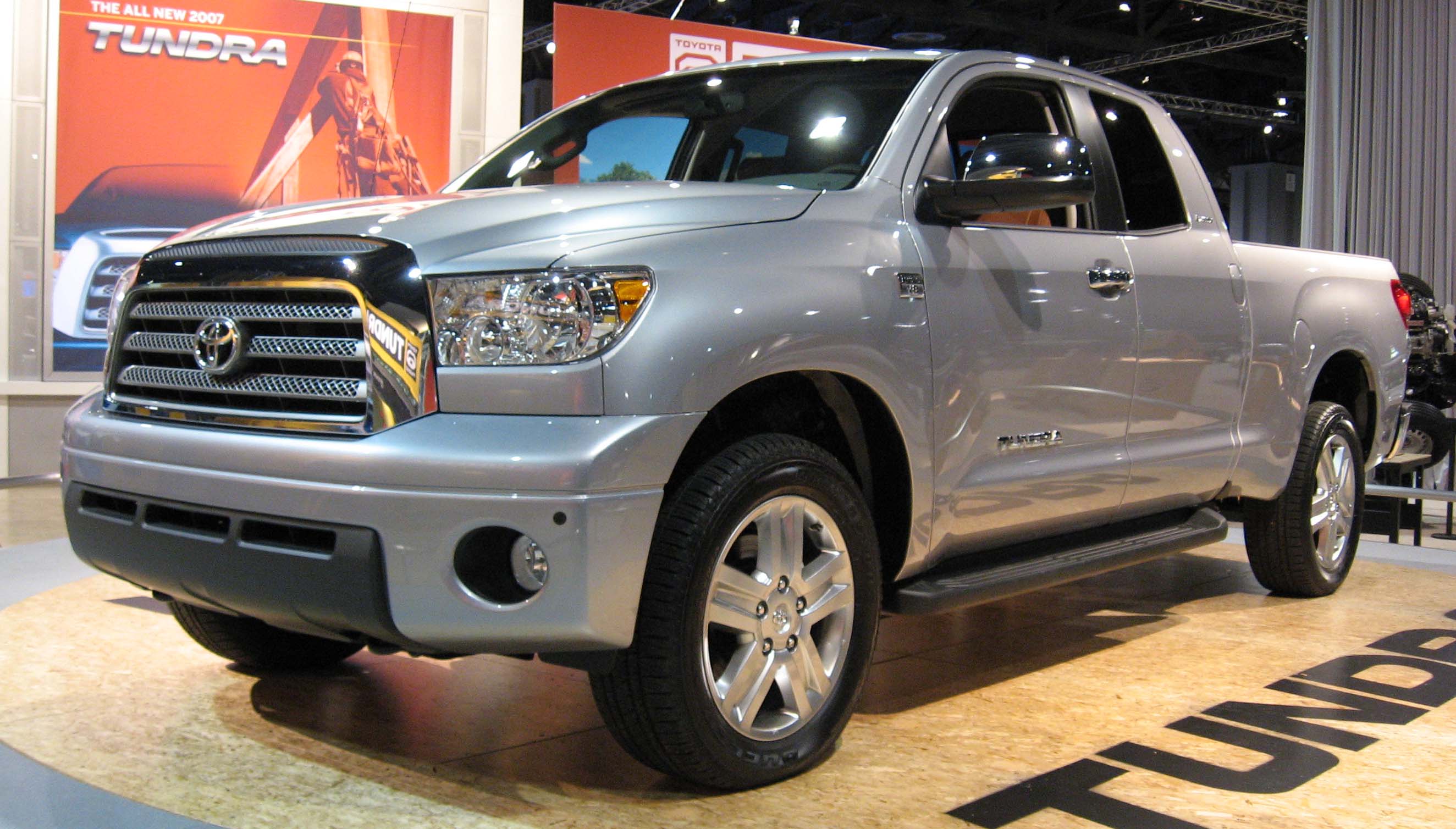
that like you can affiliate with a million mile car,
besides the Tundra, which is another Toyota product.
Yeah.
Yeah.
With the same engine.
No, I've heard the Tundra's, the newer ones still continue to last.
Yeah.
Like no, the Tundra was newer than the 1UZ.
Though the Tundra would have the i-Force motors.
Even the early 2000, like the earliest examples.
Then they have, I think they had a 4-6 and a 5-7.
Okay.
Another 5-7 was an i-Force.
Oh, you know what?
No, you're right.
The early generation had a 4.7.
You're talking about the Toyota Pickup?
No, I'm talking about the Tundra.
The Tundra's the other one that I've heard very regularly hit a million miles.
But like the early 90s, it was a T100.
Yeah, I wasn't talking about early 90s.
I was talking about vehicles that also have like a regular designation of,
oh, another million mile option.
I mean, there's a lot of diesel cars that reach that.
Even then, there's one I'd like to talk about once we're done going through the list
that I think is the perfect daily driver.
Oh, your Mercedes.
Okay.
Well, one last thing on the LS.
You mentioned it on the podcast last week that the LS400 is like the first real
challenger to the S-Class as a full-on, full-size luxury.
First Japanese challenger to be clear.
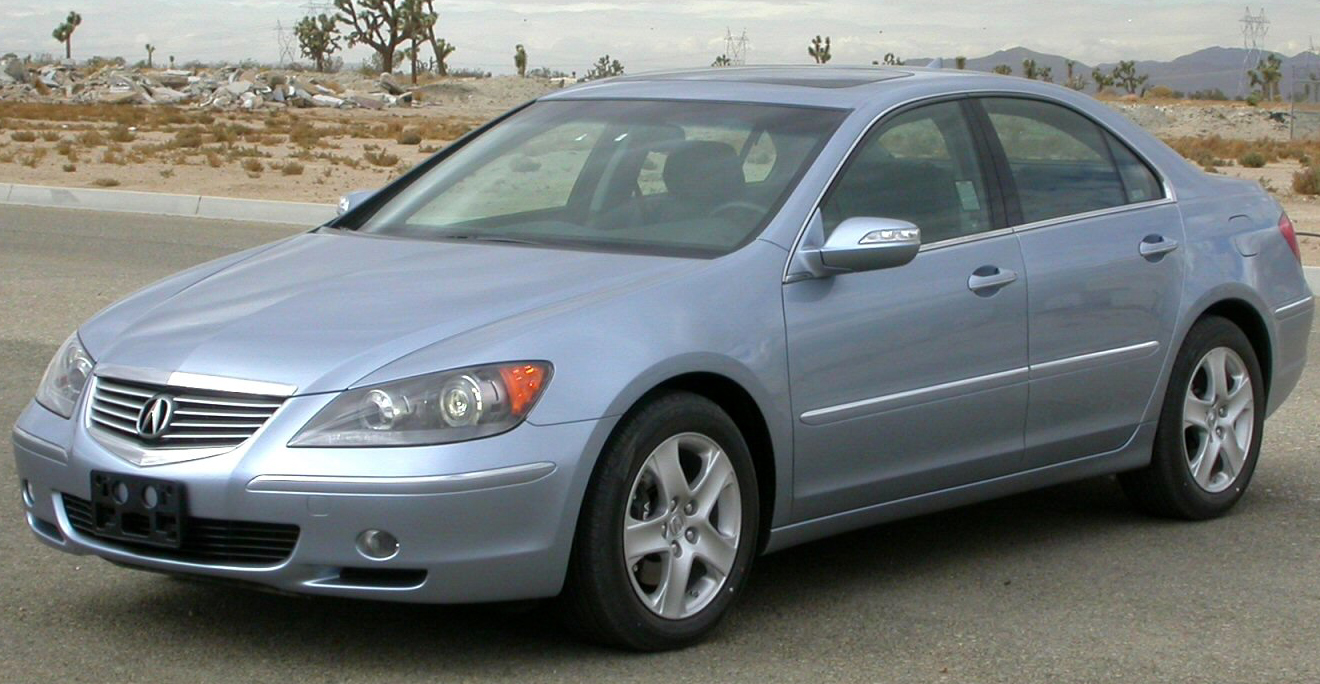
Because the RL Acura never really competed.
Acura's never really competed much anywhere in the luxury division.
They kind of carved out their...
They had their moment.
They had their moment in the 90s especially.
So I would disagree with you there.
They competed in other segments.
Definitely not the full-size luxury.
I feel like they're always like one step less than they're up there.
I would say though that they definitely competed.
I'll have to agree because I think they definitely competed in terms of like longevity.
With the Lexus.
Yeah, like the Acura Legends.
In fact, I just saw one.
I was looking at Express Auto auctions and I just saw one that had almost half a million miles on it.
That was a run-and-drive.
But I feel like the legend didn't compare to that.
Lexus as far as overall build quality and overall like what it brought to the table.
Because part of the reason that LS competed so heavily with the S-Class
was because it brought all the same options, all the same amenities.
But I don't feel like Acura has ever competed that heavily.
Well, you're thinking like...
They came out with good cars.
You're talking about like luxury, like tech.
Yeah, but that's what Acura is.
This is another luxury brand.
Yeah, but like you're just solely basing it on like luxury.
But I think it's fair to say that when...
I'm not saying it's a bad brand.
Because I said other segments.
It killed it in other segments like Integra Type R, right?
That's pretty popular for a while.
I'm talking like enthusiast cars.
Integra Type R, the TL Type S, like the CL Type S, right?
Yeah, the transmissions on the automatic sucked.
But if you had a manual, like even the TL Type S up until 2008,
that's one of the best-looking sports sedans ever built.
I mean, I would say a lot of enthusiasts agree.
So Acura had some winners.
I guess what I'm saying.
They had like not good cars.
It's really they're never like super competitive in their segment.
But I think that when they were new,
they were still a direct competitor to an LS.
Like they had a direct competitor.
And at the same time, when they were new,
people didn't know how good or reliable they would be.
And they would be cross-shop.
It's safe to say they could be cross-shopping both of those cars.
The NSX, bro?
Halo car.
I mean, it literally like recreated how people see supercars.
It's a reliable supercar, you know?
So, I mean, it's probably the most daily supercar you can own.
Yeah, for sure.
In the 90s, at least.
Well, I think even today.
No, maybe it's because I wasn't around that generation.
I mean, it's like thinking of a different because I just think about
I've never like seen Acura.
I've never seen like Acura produce more or like be more popular
than the other options.
Don't talk about Acura in front of me like that, bro.
I can tell you're very sensitive to this.
I've only owned the Type S for like four years.
But NSX is a fantastic car.
We just looked at the NSX.
Hamilton was actually working on it.
Hamilton, who was on this podcast a few weeks ago,
he's working on one of the members, NSX, he had it on the lift.
And we're looking at this thing.
Transaxle rear wheel drive,
you know, rear, mid-engine, not rear engine, mid-engine.
And we're like, where's the weight in the front of this car?
Like it's all like rear and heavy, you know,
but just such a cool car, man.
Like that is the epitome of like, you want a supercar that will start every day.
You can take your kids to school in it, you know,
and fit maybe two golf clubs in the back.
That's it.
So what car did you have?
Oh, don't even get me started.
He's going to cry again.
Mercedes, Mercedes diesel, specifically the W123.
All of my friends, I preach this religiously.
I try to get them to buy these cars
if they're looking for a vintage daily driver.
The big thing that separates it from all of the cars that we talked about
is fuel efficiency.
You can get, if you're doing highway miles,
you can get 35 MPG in one of those cars.
In practice, you might get a little bit less,
you know, commuting around town.
You might get 25, 27, still really good.
It's a car that you can hop in and drive to LA without hesitation.
It's a car that might have little annoying things about it,
but it will always start up and it will always get you to your destination.
It has fail safes.
It's safe.
It's comfortable.
It looks classic, but it feels modern.
Light steering, comfortable seats, quiet interior, no interior trim rattles,
good suspension, and parts.
They sold, I think, over 3 million of those cars worldwide.
And they have such, they're so beloved by their owners that
you can find plenty of parts.
Parts cars are a dime a dozen.
You can buy a whole extra car if you have a place to store it and have a whole parts car.
All of the parts are rebuildable for the most part.
And I said this in the Mercedes episode already, but you'll see Mercedes 123 diesels.
I'm referring to the W123 generation for our listeners, 1977 or 78 to 85.
You see them with a lot of original parts on them still.
Stuff that on modern cars you would expect to have to have replaced over time.
Alternators, starters, different accessories on the engine, fuel injectors, all that stuff is
rebuildable.
So it's easy to keep original parts and find budget friendly solutions to rebuild rather than
replace and have them be just as good as new.
And also they're not that heavy as far as entry costs as well.
No, yeah, not prohibitive entry cost.
I mean, we're talking you can get a nice one that's sorted ready to drive across the country
right now for seven grand.
Okay, and diesel.
Just don't expect to get anywhere fast.
Yeah, they're not fast.
When you say interior rattles, I feel like that's another really excellent point to what
was saying with road noise and isolation, you're going to get a lot of interior rattles on a
vintage car.
Like if you could find one without it, that's a big plus, right?
Because I know you hate interior rattles.
Like on my 300ZX, the whole dash rattled.
And that's fair because we're talking about daily drivers here, that stuff can bother you.
It's maybe those things that only you notice, but you notice them and you're the one driving.
So it's important to consider.
And even the most high mileage, beat up Mercedes diesel will still be quiet, smooth, comfortable,
predictable.
The way they handle, it's not a sports car, but it's very, the dynamics of it are very predictable.
So you still feel like you can kind of toss it around a little bit.
And I think that's a nice characteristic of a daily driver.
Okay.
The Mercedes advocate, Dylan.
Oh, dude.
No, I believe why everything is saying that was back from Mercedes genuinely cared about quality
and just generally put so much time and effort into just a and no, R and D, R and D.
A little work term popping up.
All right.
So do you want to wrap up with the Batcave experience?
Can you kind of talk about that?
That didn't, we didn't end up going.
So I didn't go.
I thought you said you were there.
No, no, no.
So any updates with the marketplace cars?
I know, but there's a 4C and a clown shoe M coupe.
Yeah.
And you like pricing, anything like that you could talk about?
Any updates on it?
Yeah.
So we're going to be asking 35 for the M coupe.
It's super low miles.
It's a storero blue.
It's the S 52 engine.
So not the best of the lineup.
Not the fastest.
Yeah.
Yeah.
But the road service.
Try it in true work.
But more daily-able than an S 54.
Okay.
Yeah.
I can't really speak much to that,
but that's kind of what I've been hearing
to people I've talked to about it.
Okay.
Yeah.
Really a good car.
And then you drove the 4C Alpha Romeo today.
Yeah.
Yeah.
How was that?
Oh, incredible.
Music to your ears.
Yeah.
The way the way I describe it is just like an angry little bastard.
Like it just wants to go.
A yellow rat bastard.
Yeah.
Yeah.
It only has one.
It has three speeds here, there and gone.
There it is.
It doesn't want to, it doesn't really want to like idle
or like go through traffic.
It's clunky.
It's uncomfortable.
The seats are carbon fiber.
It's stiff.
It's creaky.
Yeah.
But man, it's just, it's pure excitement.
Nice.
Kind of random question.
Did the clown shoe pricing, did their market go down?
Because 35 sounds low.
S52s are hovering around that price point.
Have they always?
I thought you sold your M roadster for a good amount.
Roadsters are significantly cheaper in coupes.
Yeah.
But I thought you sold yours for a good amount.
25.
Yeah.
With 40, like 5,000 miles.
I might be remembering numbers wrong.
I thought clown shoes were like minimum in the 40s.
No, a clown shoe.
And mine was S2 blue too.
Like clown shoe and the color.
Like if it's like a really well sought after color,
like a Phoenix yellow or Laguna Seca blue.
Those are usually 01 or later and they're going to have the S54.
This is S52.
So you're going to probably see like maybe Alpine white,
Boston green.
Esterel blue is a really popular color,
even though they made a lot of them.
Because it was like the press release color.
But yeah, I mean, that's about right.
I would say that's fair.
You mentioned the 4C.
Do you have a price on that?
Give or take?
Yeah.
Let's say 50.
All right.
Yeah.
And that's it.
We talked about the 4C on a podcast not too long ago.
I think it was one of the who am I's.
And we were just saying like that,
that's a car that could go up in value.
Yeah.
Yeah, they're pretty rare.
I've found like looking for them.
They're actually quite rare.
Yeah.
So I think that will contribute to values and just the,
it's a modern car that still feels very analog,
but like it has AC and a radio, you know,
so you kind of get the best of both worlds.
An aftermarket radio.
Well, those are funny from factory.
They came with like an Alpine head unit.
Yeah.
Yeah.
Just like a single den head unit.
It's kind of hilarious.
Like as long as people don't associate the Alfa Romeo 4C
with like a Maserati Gran Turismo, you know,
it's not like that.
Like it's not like an Italian sports car.
Yeah.
I know that's a GT car, right?
The Gran Turismo, obviously.
But like it, I mean it when it comes to reliability and like,
you know, durability, like is it a car that's going to
continue to depreciate?
And it's like a, like, oh, you bought an Alfa Romeo,
like you bought an Italian, you know,
cool car that's going to just be worth shit in 10 years.
You know what I mean?
Because that's what most Maserati's are, right?
The modern ones.
They're worth shit, but they're decently reliable though.
And the owner.
The 4C?
Are you talking about Maserati's?
No, the Gran Turismo's.
But, but like, okay, a Ghibli, right?
They're just reliable.
They're just Chrysler's.
But they depreciate like hell, you know what I mean?
So like the 4C, I'm saying, I think it's going to go up.
It's not going to be like a Maserati.
Oh, okay, gotcha.
I know you're talking about like, I was still stuck on the,
like reliability.
There's also a big difference in the driver of each of those cars.
Somebody who wants to buy a Maserati,
just to like show that they have a Maserati,
if they bought a 4C instead,
they would get tired of it pretty quickly, I think.
Yeah.
Okay.
Do you have a metaphor for a Ghibli owner?
I feel like you would.
Kind of like a, like Miami club promoter.
He has one, like on deck.
Up and coming DJ.
Yeah, yeah.
He has one on deck.
I'd say like a Miami club promoter or, or like somebody
who's making a lot of money under the table.
Let's just leave it at that.
Okay, okay.
It's funny because they didn't.
Not in a lot of money yet.
Yeah, yeah.
Didn't the.
Enough to afford the cost of entry.
The penguin, if you ever watch that TV show,
he drives a Ghibli.
He drives a Ghibli, a purple one.
Yeah, there you go.
And it's like when he's kind of still a loser,
it's like, we're driving this purple Mazurot.
Right.
Right.
He wasn't the main man yet.
Is anybody that wears too much cologne
will probably have a Ghibli.
Yes, exactly.
And a hairy chest.
Yep.
This thick accent.
Yeah.
I could go on and on and on.
All right.
Well, so those cars hopefully get sold soon.
They're available, right?
For sale.
Yeah, yeah.
We haven't posted the, the, the, the four C yet
because we're, we're waiting to get it back.
We're having some service on it.
So it'll be ready for the next owner.
Turnkey, good to go.
And then we'll have that listed.
I think that one will move pretty quickly
because like I said, they actually are somewhat rare.
If you try to find them on the used market
for ones that are, you know, nice.
And a yellow one too.
I usually see him red.
Yeah.
And then the cloud shoe, the, yeah, it's yellow.
Bright yellow.
Oh, that's cool.
And you don't see yellow red bastard.
I didn't, I didn't know what you were going on.
Okay, that makes sense now.
Oh, that's cool.
And then the, the, the clown shoe is a good investment.
I think it's a good investment for whoever buys that car.
They'll be able to enjoy it.
The miles are low.
The miles are kind of right in like the Goldilocks range.
Like 40 to 50.
They're, yeah, it's high enough
that it's not like an exclusive collector's car
that you just want to shove in your garage
and leave it covered, you know, for the next 10 years.
But it's not so high that you feel like
you can't get reliable enjoyment out of it.
So that's going to be a good car for whoever buys it.
Or going back to what we were kind of talking about earlier,
getting to experience that car or exactly how it's meant to be
because low enough miles to still be tight.
And it's stock.
The one we have is bone stock.
That's awesome.
I honestly have a theory.
The E36 M3, we talked about it on a podcast a couple of weeks ago.
The 36, that's like the 90s.
The one with the S52 engine, right?
So like 95 and on.
Those are starting to go up in value there.
Like an E36 M3 today is worth,
we went through classic.com and all the different versions
because you can buy like a coupe, a sedan, a manual or all that.
The E36 M3 manual coupe is worth just as much
as an E46 M3 convertible manual.
So it's still a manual, but if it's a convertible,
it's going to be the same as the E36 coupe.
So my point is is E36 is going up.
That's a good, that's a pretty close margin.
Yeah.
And they have the S52 in them.
And I feel like the more people that buy E36 is
and realize like, okay, 240 horsepower,
how much more can I get out of it?
It's a solid straight six engines.
It's bulletproof.
It's a really well built engine.
I own my M roadster, never had any issues with it.
And I feel like the more people that start to realize
the S52 is a great engine,
they're going to start buying the M coupes with the,
because it's like almost like 40% discount
from an S52 M coupe to a S54 M coupe.
Or even just like an M roadster.
No, that would be going against what you just said.
I suppose even an M roadster,
which is even cheaper variant of that.
Yeah.
But the M coup, he says it's an investment.
Like when you see an M coupe,
like I was listening to Doug Demiro, the podcast last week,
and they were saying how if they saw an M coupe on the road,
they were talking about the S5212,
they would like follow it just to get a picture.
Like they're that rare.
Yeah.
I think Steve mentioned like under 2800.
2800.
Yeah.
Okay.
Total.
Roughly.
Between 52 and 54.
I think total production run of all of them.
Oh, so like, okay.
So if it was an M, because they weren't all M,
some came with like a three liter.
Yeah.
Yeah.
Right.
Like the one we saw at Radwood.
It might be the M's that are 2800 left.
Either way.
I'm not sure, but either way,
I would say for the entire production run,
less than 10,000.
And yeah, we'll see.
I mean, it definitely is an investment for sure.
Yeah.
Yeah.
Let's close out on events.
So October 25th, Cartober Fest,
we've been talking about it pretty much every week,
leading up to it.
It conflicts with Radwood,
which I bought my tickets.
So we're going to Radwood
and we're displaying our cars at Radwood.
So news flash for you, buddy.
October 25th, if you can get it off,
we're going to be driving up there.
He's taking the Geostorm.
I'm taking the Milano.
You paid with the $45 one?
Yeah.
Because there was like $120 one
where like you can get like like the royalty display
and like, I guess you get put your car indoors.
I heard.
Oh, yeah.
That's probably indoor parking.
You could just be passenger, bro.
We can probably get it fixed in time.
Yeah.
Right.
A 91.
Just throwing that out there.
Park Ultra.
Yeah.
People would be like drooling over it, bro.
All the geriatrics.
They're work.
They're work.
A lot of similar cars.
Yeah.
What was that?
There were a lot of similar cars
at Radwood last year or two.
Oh, really?
Yeah, yeah.
So it would fit in.
It's clean enough.
I get it detailed.
Yeah.
Let's do it.
Let's make it happen.
Make it happen.
25th.
I'll check my schedule.
If I can get it, if I'm off,
I'll absolutely get the B.O. Cup
and running in and pay for it.
Hell yeah.
That's what I like to hear.
Oh, I'm not off.
And it's less than a month.
Yeah, it sounds like I'm not going to Radwood guys,
but thanks for the invite.
Well, a minute 24 and counting.
So a minute 24?
This is like the trio.
You mean an hour?
An hour 24, my bad.
That was a good episode.
I had fun.
This was like the original trio.
But also I'm getting hungry.
Let's wrap it up.
Yeah.
GM Guru, welcome back.
I'm happy to be back.
I know.
I know.
Welcome back, damn.
And Dylan, as always.
Yeah, right.
Everyone's crying on this episode.
It's fucking right, episode.
Until next time on the analog and grip podcast,
see you next week.
Adios.
About this episode
Exploring the world of daily driving classic cars, this episode dives into which vintage models are best suited for everyday use. Hosts Vic, the GM Guru, and Dylan share personal experiences with their classic rides, discussing reliability, comfort, and the unique character of older vehicles. They debate the merits of various models, including the Porsche 996, BMW 2002, and Alfa Romeo Milano, while also highlighting the importance of parts availability and maintenance. The conversation is filled with humor and camaraderie, making it a relatable listen for anyone considering a classic car as a daily driver.
The GM Guru returns along with mainstay Dylan to discuss what makes a good daily driver. We get into a list of classic cars that check all the daily driving boxes. Can Justin beat Dylan in guessing which vintage daily drivers made it on the list? Why the BMW M coupe clown shoe is undervalued.