DAILY: EV List Prices Fall, Ford Teases Europe Car and Uber Expands EV Rides | 26 Feb 2026
EV News Daily - Technology and Business of EVs
DAILY: EV List Prices Fall, Ford Teases Europe Car and Uber Expands EV Rides | 26 Feb 2026EV News Daily - Technology and Business of EVs · Feb 26, 2026
The Chevrolet Equinox is a small SUV that many people buy because it's easy to drive and has enough space for families. There's also an electric version, which means it runs on batteries instead of gas.
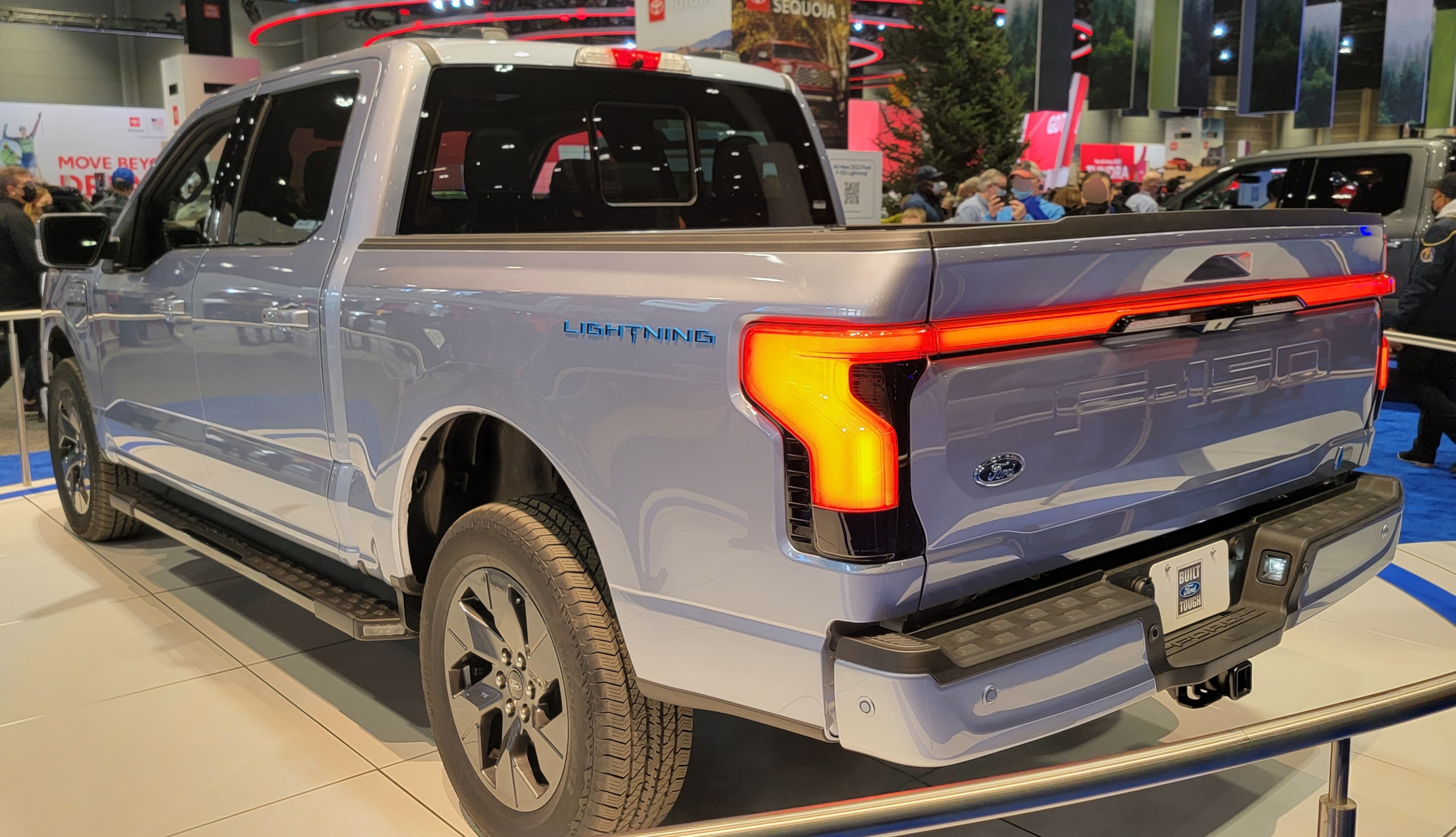
The Ford F-150 Lightning is a big truck that runs on electricity instead of gas. It can do all the work a regular truck does but is better for the environment.
The Ford Capri is an old sporty car that people liked because it looked cool and was fun to drive. It's a classic car that some people still remember fondly.
The Volkswagen ID. Buzz is a new electric van that looks like an old, popular van from the past. It runs on batteries and is meant to be good for families or carrying things.
The Ford Fiesta Active is a small car that looks a bit tougher and sits a little higher than usual. It's good for people who want a small car that can handle rougher roads.
The Clean Vehicles Directive is a rule in Europe that encourages buying buses and other vehicles that don’t pollute the air, helping keep cities cleaner.
The Toyota Supra is a fast and fun car that many people like because it looks cool and drives really well. It's famous for being a sports car that lots of people admire.
The Renault 5 is a small car that was popular a long time ago and now has a new version that runs on electricity. It looks like the old one but uses new technology.
The Alpine A290 is a small, fast car made for people who love driving. It's special because it is very light and built to be quick on the road or track.
The MG4 is a small electric car that is cheaper than many others and made to run only on batteries. It's a newer kind of car for people who want to try electric driving.
The Peugeot 5008 is a bigger car that can fit many people, like a family, and looks nice. There's also an electric version that uses batteries instead of gas.
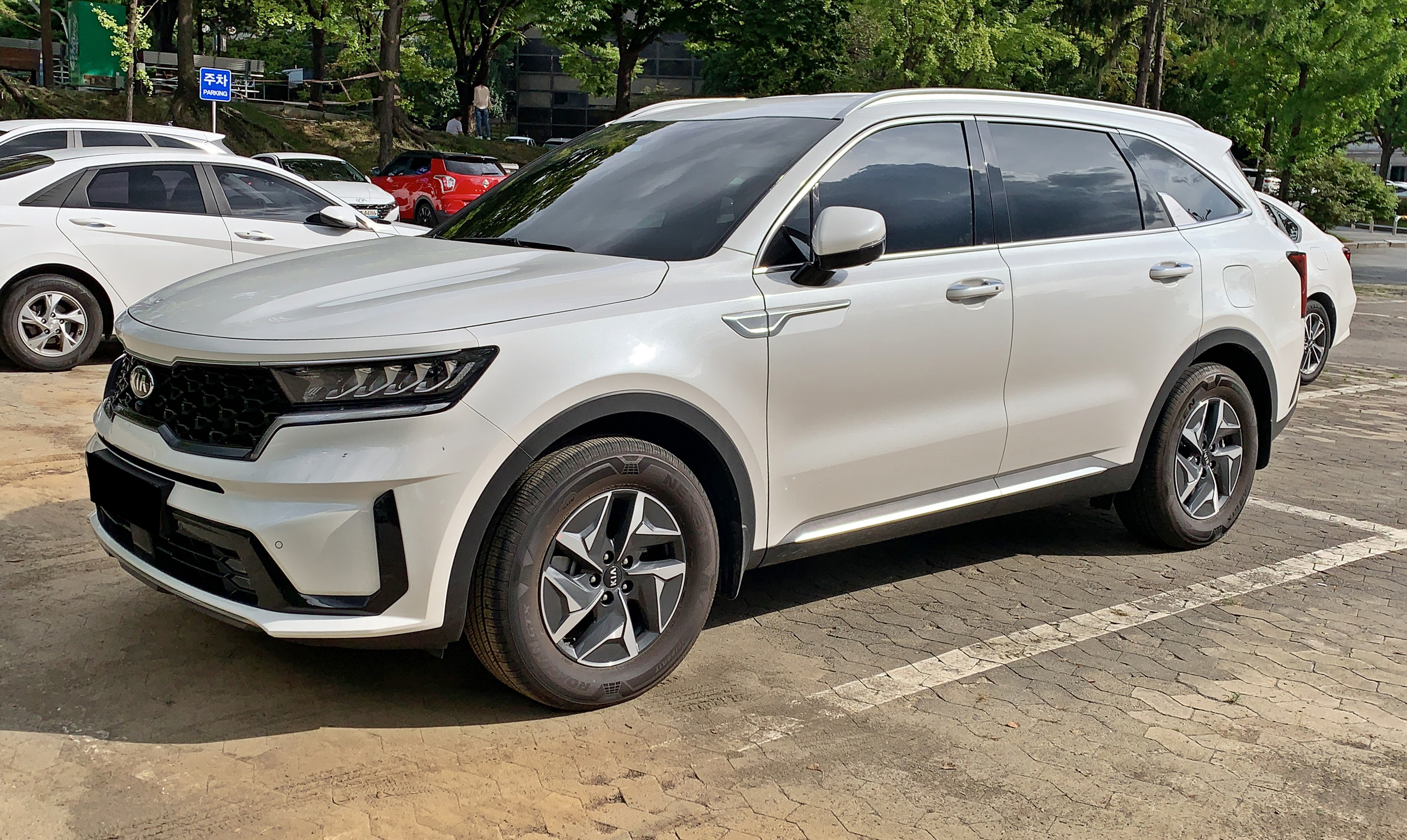
The Kia Sorento is a bigger SUV that can fit families comfortably and has lots of nice features. It's a popular choice for people who want a reliable and roomy car.
The Kia EV9 is a big new electric car that runs on batteries and is designed to carry lots of people or stuff. It's part of Kia's plan to make more electric cars for families.
These targets mean that car companies have to make sure the average pollution from all the cars they sell is below a certain level, so they make cleaner cars.
Uber has set the EV ride option at the standard Uber X prices.
Uber pledged to run an all electric fleet in London by the end of last year.
Just check my calendar on that.
Yep, they didn't hit that one.
They publicly backed the target as recently as April 2022.
Now they report that about 40 percent of miles done in the capital are on the EV.
Uber blames charging.
It cites a lack of charging infrastructure as the drag on their London business.
UK GM Andrew Brem saying that charging access remains the biggest barrier
for Uber drivers going electric.
They've announced support measures, including discounted home charging,
discounted public charging, a new service advising when and where to charge
and financial guarantees on the charge point utilization.
Their operator charge point operator pod point.
I think just pod these days and rebranded to pod is the Uber partner over here.
Uber can now sell EV rides in eight more cities,
but whether they can supply them depends as ever on plugs
rather than press release promises, which are often missed.
Right, BMWs next in the news and the European Commission are holding
advanced talks to get rid of the extra 21 percent duty on Chinese-made minis.
And that's important, according to Germany's Handelsblatt,
citing two people familiar with the matter.
The talks cover the Mini Cooper Electric and the Mini Aesman.
Now they're made in the Zhang Zhejiang plant in China.
Spotlight Automotive runs that.
It's a 50-50 joint venture between BMW and Great Wall.
The EU's charges of 10 percent have always been there.
That's a 10 percent auto import tariff.
What they did was add for different car makers, but for BMW,
20.7 percent countervailing duty on top for Chinese-made minis.
And that's 31 percent on every Mini,
hurts their margins, raises prices for the rest of us.
BMW's route is going to mirror what the EU have done with Volkswagen in China.
That deal under this new framework allowed the Coupre Taviscan.
Coupre is the Spanish sporty bit of VW, which stands on its own these days.
But Coupre's Taviscan, nice car.
Beautiful looking EV, by the way, is now exempted from duties in return.
So Volkswagen had to guarantee a minimum import price.
You can't sell them dirt cheap, an annual volume cap, which is not disclosed
and commitments to EV related investments inside Europe.
Handles Black calls the BMW deal far advanced
and shows both sides showing a clear interest in getting the deal done.
BMW challenges the European tariffs in a separate legal case
alongside other auto makers should be heard by the middle of this year, by the way.
That will probably be settled, though, the Mini stuff well before that.
The European Commission declined to comment.
It reiterated that the door remains open for anyone to do their own individual deals.
And even the Chinese, which before were insistent on collective bargaining.
The Chinese car companies couldn't talk individually and do their own deals.
The Chinese are now encouraging that.
So that opens the door to it as well.
BMW also declined to comment.
Great news for consumers, though, if it means that we get cheaper minis
or Europeans get to buy cheaper minis made in China.
For whatever reason happens in the background, that's a fantastic thing.
Now, let's talk about electric buses.
Six of every 10 new city buses last year was zero emission,
according to the Transport and Environment Organization,
the NGO that promotes amongst things zero emission transport.
That marks a jump from 12 percent in 2019
to 60 percent in 2025.
A big increase, I'll take it, still stings a bit that four out of 10 buses
are still spewing out diesel when we know how to make electric buses
and they work really well for bus routes.
Battery electric buses were 56 percent of the city bus market last year
and fuel cells were 4 percent.
That's up from 3 percent last in 2024.
Add them together.
That is the 60 percent zero emission share.
And that is really following policy.
Back in 2019, there was the adoption of the Clean Vehicles Directive.
It was the CVD and Phase One was a five year plan
which ran to the end of December 2025, all about zero emission
procurement targets for different countries in Europe.
And since then, this Phase One target,
we've seen a massive increase in EV buses.
Some markets now drive little else.
Five member states had 100 percent EV buses last year.
Bulgaria, Denmark, Estonia, Latvia and Slovenia.
Stand up, take a bow.
You only bought EV buses, brilliantly.
Six more countries had a 90 percent share.
All right, we can live with that.
We can live with nine out of ten.
Netherlands, Luxembourg, Finland, Belgium, Lithuania and Romania.
The Netherlands, 99.50 percent zero emission buses.
So congratulations.
But the big countries, the big markets,
well, those are the ones dragging their feet a little bit.
And also some of them with hydrogen is where we see a split.
It kind of clusters like Germany.
Germany was 62 percent of all EU fuel cell buses.
Hydrogen buses, 62 percent of all buses sold in Europe was the EU
was into Germany last year.
Germans have a bit of a fascination.
There's a big hydrogen lobby there.
But we also see bus operators, the ones that were convinced early doors,
also seeing the light and getting having to get rid of those hydrogen buses
and go purebeth because of everything from unreliability to refueling infrastructure.
And I'm not anti hydrogen.
Certainly I'm certainly anti hydrogen when it comes to passenger cars,
but not for other things.
So it's just a store of energy.
I don't really care what hydrogen is.
The idea of me refilling my own car at a petrol station is wonderful.
I don't have to do that anymore.
And then, of course, big industry and corporate refuelers would love us to move to that model.
So they get to dictate the prices.
We drive our car to them just like now with petrol and diesel.
We refuel on their terms.
No, thank you. I got solar panels.
I'm good with Bev.
But for buses, aviation, shipping, I mean, fixed point, point to point stuff.
Surely hydrogen must have.
It's just a store of energy after all.
It still needs batteries in it.
It must have a place, but Germany has been not a hoodwinked,
but a lot of schemes there have had to close down because it's just not viable.
And yet still they carry on buying new ones in Germany.
OK, let's move on.
No, let's take a break because I want to sip of this coffee
that's getting cold, and I'll come back and I'll talk MG,
a couple of cars from them and Australian EV data.
Stick around. I'm back in a mo.
I can't believe it.
Max has asked me to move in with him.
I mean, you practically live with each other already, but that's great.
Did you hear that, Joe?
Yes. Thanks for letting us know.
I see you've updated your universal credit claim.
Now you're going to be living together.
I can't believe it.
Max has asked me to move in with him.
I mean, you practically live with each other already, but that's great.
Did you hear that, Joe?
Yes. Thanks for letting us know.
I see you've updated your universal credit claim.
Now you're going to be living together.
I can't believe it.
If you're telling other people about a change in your circumstances,
tell us too to avoid a penalty.
Search Tell DWP.
Welcome back to the podcast.
MG is next in the news, right?
MG will enter the electric supermini class next year with your new MG2.
The target starts at around £20,000, that's $25,000.
MG plans to reveal the car later this year.
The UK showrooms will get it next year.
And the electric supermini segment is...
I love it. I'm absolutely here for it.
Citroën EC3, car of the year.
Renault 5 and the little Alpine A290,
which you can't really talk about it because it's very expensive.
But that's not, you know, it's a supermini, but a lot of money.
But that's been off.
Oh, they're good cars.
Fiat Grande Panda.
That's a nice car.
The little Fiat 500 doesn't get much attention.
Get it in La Prima trim.
Oh, get the soft top one of those.
Oh, beautiful.
And there's so many more.
Now, MG has no model in that class.
The MG2 will fill the gap.
And there's also VW ID Polo coming.
Oh, and there's Cooper Reval coming.
Oh, and Keery V2.
That's why MG is hurrying up.
They've been working on the MG2 for two years.
Rendered concepts point to the likely shape,
being a bit like the MG3.
That's a petrol car and about 4.1 metres long.
And maybe the sharp front end of the current MG4.
Now, in China, they've re-digged the MG4.
We get it now called the MG4 Urban.
Entirely different platform.
Entirely different car.
Still called an MG4, mind.
The cabin takes the cues of the MG4 Urban from China.
So the inside of the MG2, big touch screen.
Seven inch drivers display lots of physical controls
because that's going to help you get better safety crash
ratings now that Euro NCAP are saying,
look, one big screen, that's not safe anymore.
You've got to take your eyes off the road to even do anything.
No, buttons have, you know, let's be sensible, buttons have a purpose.
That was kind of a solved problem.
MG says those controls were a step change in quality.
A squarish steering wheel and physical buttons expected to.
Underneath, it'll use not the platform of the MG4
that we've had for a while.
The modular scalable platform, great chassis, highly rated.
It'll use what's underneath the MG4 Urban.
So maximizing cabin space at the expense of a bit of excitement driving it.
It goes to front wheel drive, torsion beam wrist suspension,
simpler, cheaper layout.
But that doesn't need to be a driver's car.
Let's face it.
They're not going to make an X-Power version of that
like they do the M4.
So if it gets more interior space and keeps the cost down,
that makes sense.
MG will also launch the MGS9, a plug-in hybrid in the UK,
later this year, as their new flagship.
That could be a good seller, actually,
pushing the brand into the full-size seven-seat era
because there's cars up there like the Peugeot E5008,
Kia Sorento, Scottie Kodiak,
and also more expensive ones as well,
like the Kia EV9, Hyundai Arnick 9.
Of course, the MGS9 will neither be full electric
nor that expensive, but for a plug-in hybrid powertrain,
this could be kind of interesting.
They said that in Australia is the MG QS,
but here we'll get the plug-in hybrid version.
And we know about it because it's got its five-star Euro
NCAT rating, not the first time that the safety ratings
have leaked an MG model.
I mean, it's not exactly the biggest leak of the century,
is it?
Probably doesn't line up with corporate timetables,
but they know what they're doing,
putting the cars in for safety testing.
And so we know it's coming,
like we did with the MGS6 and the MG Urban.
They all got leaked by the Euro NCAT testing.
So full-size, value-led SUV
that could run a decent amount of miles on electric alone,
I think would be a really big seller with families
that need three rows.
Australia's next in the news,
the National Vehicle Emissions Standard, the NVES,
just put out their first year's data in...
Actually, it's the first half-year data,
and that is 59 entities registering 620,000 vehicles.
Now, what we know now is that EVs in Australia
were 12% of new vehicles in the second half of last year.
All right, look, Australia was a laggard for a long time
and now has an amazing EV choice,
and the numbers are catching up.
12%, I'll take that in Australia.
40 entities sold EVs there.
The NVES, this new standard, doesn't ban gas guzzlers.
What it does is it sets fleet-wide emissions targets
by manufacturer.
If you meet it, job done, like BYD and Polestar,
if you miss it, like Mazda and Hyundai and Toyota,
you're going to face penalties
unless you start selling more low-emissions,
zero-emissions cars.
And finally, Electron has secured safety certification
across its full range of EV-charging adapters.
It's the UL 2252 certification for both AC and DC adapters.
So that is J3400, the official name of the Tesla connector.
CCS-1 and J1772 or 1772.
And so on the DC side,
Electron sells a couple of adapters.
Nax, which is generally the term that we use for J3400,
the Tesla plug.
So Nax to CCS-1 and also CCS-1 to Nax.
Both have now got their UL 2252.
As of late last year, that'll take 500 amps at 1,000 volts.
So that's 500 kilowatts.
That's pretty future-proofed
if you look at what hardware is going in the ground in America.
They have built-in temperature sensors.
When the heat rises during high power charging,
it can trigger a thermal D-rate.
Charging continues at a reduced current.
Electron's AC range also has this new UL certificate.
It's for the J1772 to Nax.
And the other way, Nax to 1772.
Both are 80 amp rated at 240 volts.
So that's 19.2 kilowatts,
which is all level one and two charging in North America.
So the industry sits mid-transition
and it's frustrating Nax is displacing CCS-1,
but no one's ripping CCS out of the ground really.
No one really rips Chatham-O out of the ground back in the day,
even though just leaf drivers at the end
were really relying on those Chatham-O plugs.
But as new hardware goes in the ground sometimes,
it's only J3400.
Sometimes it's that plus CCS-1.
The rollout is uneven,
but with years ahead of us
of needing to pull up to a charging station
or possibly even level one and level two charging
and not quite knowing if the plug on the wall
or the plug on the charger
is going to match the socket on your car.
I'm afraid that patchwork means that certified adapters
look increasingly like a must-have
for my US EV listeners.
And that's your podcast for today.
Thanks to our premium partners,
National Car Charging on the US mainland
and the Loha Charge in Hawaii
and Test EV, Avalu's trusted partner,
the independent EV battery health testing
in Australia and New Zealand.
Have a good one. See you tomorrow.
And remember, there's no such thing
as a self-charging hybrid.
If you're telling other people about a change
in your circumstances,
tell us too to avoid a penalty.
Search Tell DWP.
About this episode
EV list prices have dropped by 2.3% recently, with brands like Hyundai and Chevrolet leading significant price cuts to stay competitive after federal tax credits expired. Ford plans a selective return to Europe’s passenger car market with new EVs and hybrids, focusing on profitability rather than volume. Uber expands its electric ride options to eight more UK cities but faces charging infrastructure challenges. BMW is negotiating to remove hefty EU tariffs on Chinese-made Minis, potentially lowering prices. Electric buses now make up 60% of new city bus sales in Europe, driven by policy but with hydrogen buses still controversial, especially in Germany.