DAILY: Ford Turns To Renault, BYD Wants Small EVs in Europe and BMW Launch V2G | 13 Feb 2026
EV News Daily - Technology and Business of EVs
DAILY: Ford Turns To Renault, BYD Wants Small EVs in Europe and BMW Launch V2G | 13 Feb 2026EV News Daily - Technology and Business of EVs · Feb 13, 2026
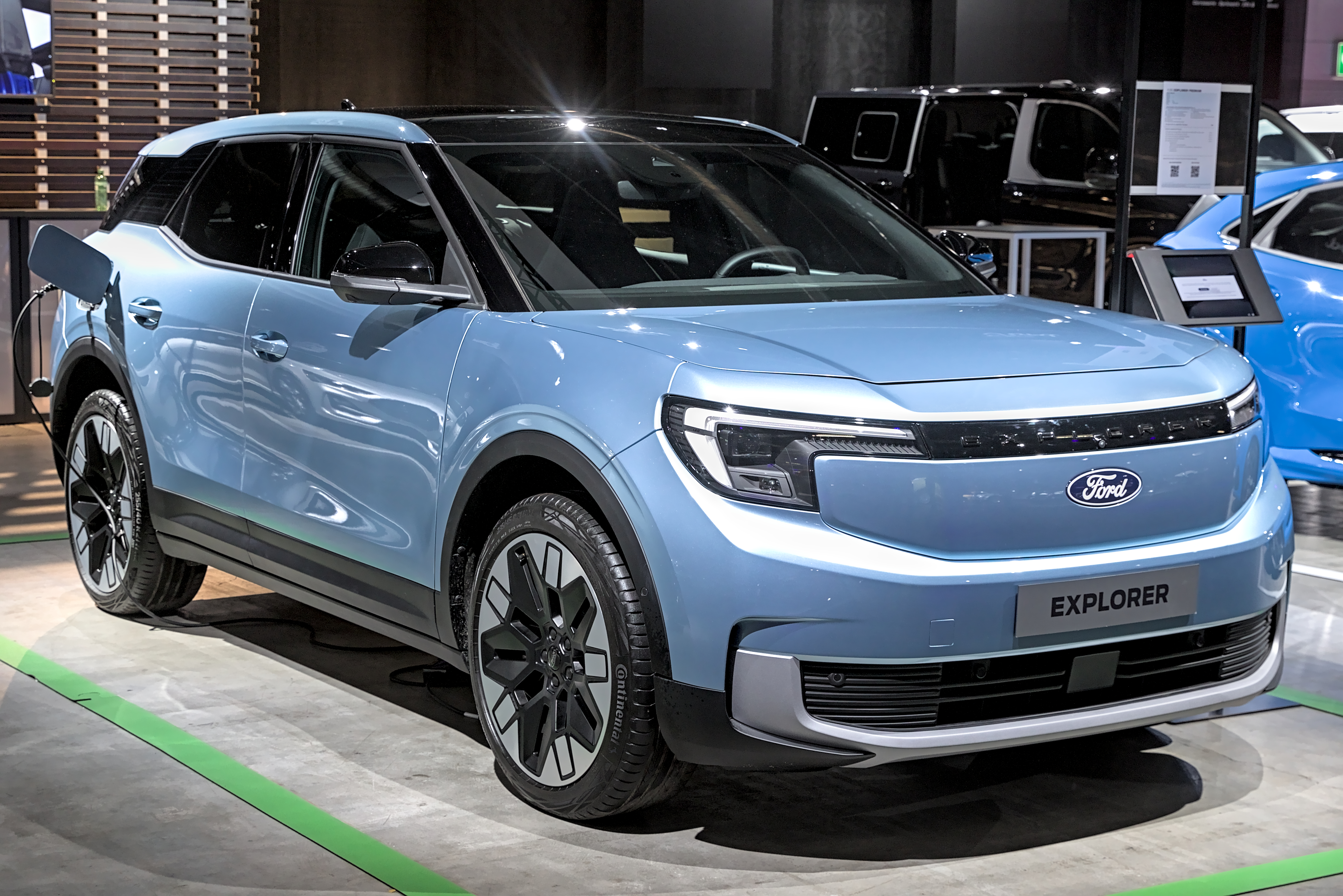
The Ford Explorer is a big car that many families use because it has lots of space inside. It's a popular type of car called an SUV, which is good for carrying people and stuff. People talk about it because newer cars are becoming electric, but the Explorer is still mostly a regular gas-powered car.
The Ford Capri is an old, sporty car that people liked a long time ago because it looked cool and was fun to drive. It's not made anymore, but people still talk about it because it reminds them of cars from the past. It's very different from the big, modern SUVs and electric cars we see today.
The MEB platform is a special design that Volkswagen uses to build many different electric cars and SUVs. It helps make building electric vehicles easier and cheaper.
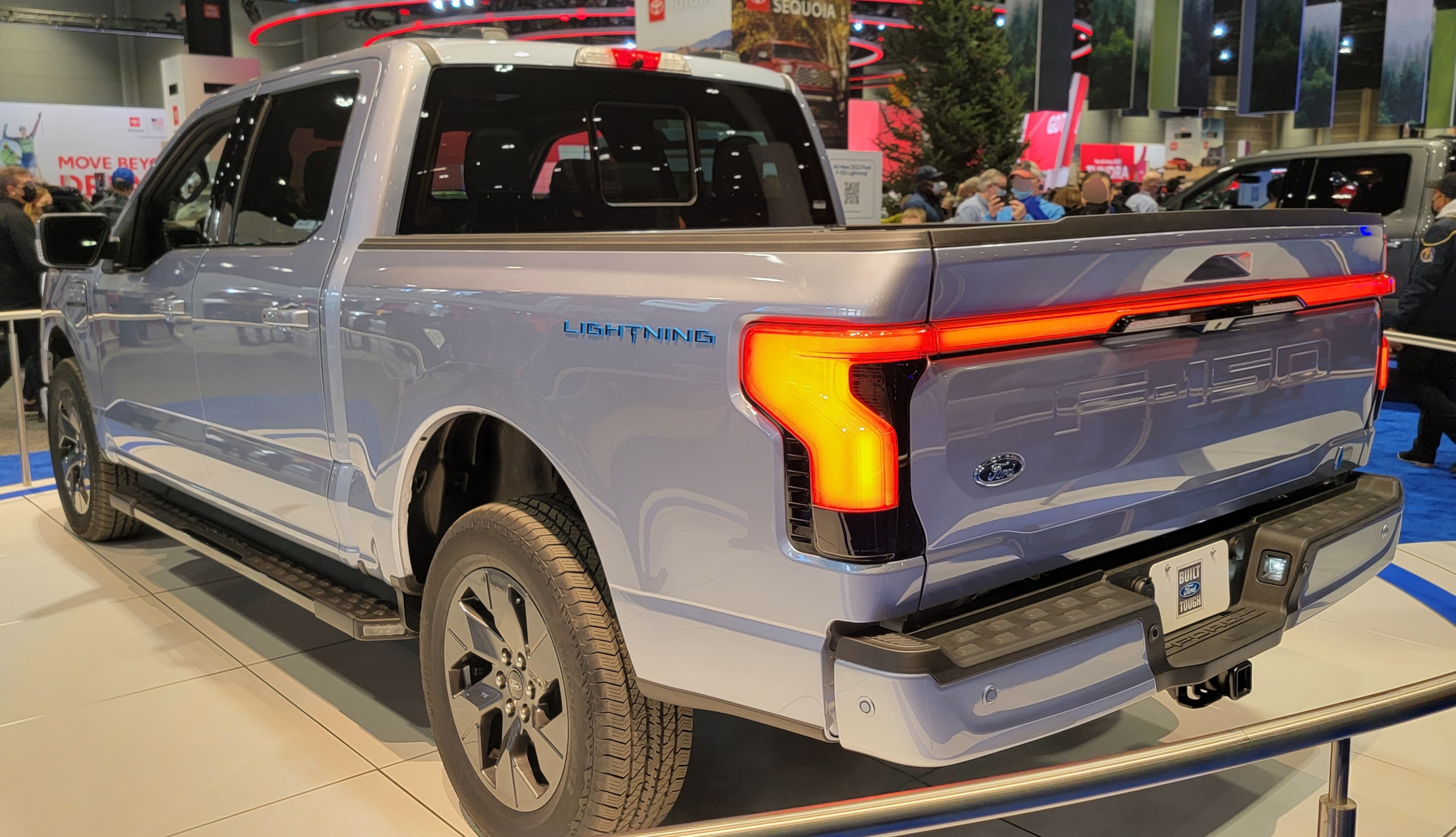
The Ford F-150 Lightning is a big truck that runs only on electricity instead of gas. It is very popular because many people use trucks for work and daily life. Ford stopping its production is important because it shows that making electric trucks can be difficult.
The Jeep Renegade is a small SUV that can drive off-road but is also good for city driving. Jeep made a version that used both gas and electricity, but they stopped making that one. People talk about this because it shows how car companies are changing their electric car plans.
The Atto 2 is a new electric car made by a company from China. It uses a special kind of engine that helps it save energy and drive well. The company is selling it in Europe before extra taxes make it more expensive.
The Seal U is an electric car that has become very popular in Europe, with many more people buying it than before. This shows that the company is doing well and wants to sell even more cars there. It’s an example of how electric cars are getting more popular.
The Kia PV5 is a small SUV, which means it’s a car that is a bit bigger than a regular car and good for families or carrying things. People like it because it looks nice and has useful features. It’s made for people who want a car that works well in the city and for everyday use.
The Rivian R1S is a new type of car that runs only on electricity and can go off-road like a truck. It has cool features like doors that open with buttons instead of handles. People are interested in it because it's different from regular gas cars and is good for adventures.
Every year, car owners pay money to the state to keep their car's registration valid. Electric cars sometimes have to pay more because they don't use gas.
and unlocks any rear doors if there is a collision.
A lot of cars should do this automatically.
In the event of any collision airbags being deployed,
any sensors being triggered, all the doors unlock.
So if you need to exit the vehicle in a hurry, you can do.
He can clarify that the cord and panel release
is a service tool.
It's not designed for in an accident.
You've got to try and get your kids to
wedge you off a bit of plastic and pull a cord.
That's actually for service technicians.
Rivian R2 deliveries are due sometime in Q2.
Like I said, throughout the March, we'll find out more.
Tennessee pulled the plug on a proposed excise tax on EV charging.
The representative Dave Wright withdrew a house bill.
Senator Page Wally followed suit the next day,
killing the Senate companion.
This was due to be a three cent per kilowatt hour excise tax.
Mr. Wright's bill aimed at public DC fast charging,
not home charging.
Mr. Wally's, he was frank about the floor,
attacks so narrowly drawn would fall mainly on out-of-state drivers
passing through Tennessee rather than on residents
making it less a road funding mechanism
than an unofficial Tennessee road toll.
The numbers were modest anyway.
I mean, state analysts predicted
that the tax would raise $776,000 a year.
That is somewhat of a rounding error
against Tennessee's $58 billion road maintenance backlog,
but it would obviously get a reputation for Tennessee
being a higher tax state for drivers.
EV drivers in Tennessee bristled even before the bill appeared
under the Transportation Modernization Act of 2023.
EV owners have paid $200 a year in annual registration fees,
rising to $274 next year.
Hybrid owners pay $100.
ICE drivers, of course, don't pay.
The electrification coalition arguing that a charging tax
heaps further costs on a group of people
carrying more than its fair share of financial burden
as we reduce emissions.
Okay, let's move on.
Now, a door that can't be opened from the inside is not a door.
It is a death trap.
That, in essence, is the argument behind
the new Safe Exit Act in the United States.
That's cleared the US House subcommittee
heading to the fall committee now.
Robin Kelly, a Democrat from Illinois,
introduced the bill to require any vehicle
with electrically powered door handles
to include clearly labeled accessible mechanical backup
latches, the work during a power loss,
the legislation takes aim at door designs
that Tesla made popular.
Bloomberg News linked at least 15 deaths
across a dozen incidents in which occupants
couldn't escape crashed and burning Teslas,
finding that the findings drove them out
to straight to Capitol Hill.
The NHTSA since launched separate probes,
and they are ongoing into Tesla's door handle system.
And the Chinese have already made their minds up on this
and those systems are banned.
I expect the US to follow.
Hypervolts, a UK startup, which is five years old now,
built its name on EV charges at home,
now wants credit for what sits behind the box on the wall.
They're showing off their software
that links up Homes, Vehicles and the National Grid.
The CEO and co-founder frames EV charging
as a data challenge.
EV charging is an intelligence challenge.
Hypervolts platform includes what they say
is some proprietary digital infrastructure.
A smart meter times a million is how they describe it.
Hypervolts as each installed unit
generates 100,000 data events in a day.
Then it uses live data to coordinate charging
and routing power when electricity is cheapest and greenest,
positioning that as the groundwork for V2G.
A lot of work been going on in that area.
Kenya is our final topic today.
Electricity used to charge electric vehicles in Kenya
tripled last year, turning EV charging
into a new topic of conversation for Kenya power.
They put EV charging across things like motorcycles,
passenger cars and buses at what is
a relatively modest by many countries,
8.4 million kilowatt hours a year.
But that was up from 3 million kilowatt hours in 2024.
Money has been following the electrons.
Kenya powers, e-mobility, revenues rose.
Okay, by one and a half million US dollars equivalent.
Like I say, the numbers are small.
But this policy changing the path,
energy and petroleum regulatory authority
gazetted a dedicated e-mobility e-tariff three years ago now,
setting charging rates at around 12 cents per kilowatt hour
during peak hours and half of that off peak.
By the end of last year, customers were enrolling,
including charging station operators, fleet owners
and corporate users.
Kenya power also wants a closer look
at how charging affects the grid.
It's rolling out charges at its own premises
to electrify their internal fleets
using the sites to collect data.
And Kenya closed last year
with more than 35,000 registered electric vehicles.
The majority, two wheelers.
That'll be electric motorcycles
used for urban transport and last mile delivery.
Isn't it interesting how all around the world
countries are going electric.
They're going EV, some are different pace
and some are different speeds
and some are doing their own thing
and their own journey.
But everyone's story is different
with one common thread running through them.
We do know that in time, everyone will be driving electric.
And that's your podcast for today.
Thanks to national car charging on the US mainland
and the loha charge in Hawaii and test TV.
Avalu's trusted partner for independence,
battery health testing in Australia and New Zealand
have a good and sit amour
and remember there's no such thing
as a self charging hybrid.
Five years ago, I was paying $65 a month
for my subscriptions.
Today, those same subscriptions cost $111
and I don't even use half of them anymore.
That's why now I use rocket money
to manage my subscriptions for me.
The app gives you a list of all of your subscriptions
and reminds you of upcoming payments
so you're not hit with any surprise charges.
On top of that, it also sends you alerts
when subscription prices go up.
So you always know the price you're paying.
If you decide you no longer want a subscription,
you can cancel it right from the app.
No customer service needed.
And the best part is,
rocket money even reaches out
and tries to get you refunded
for some of the money you lost.
On average, people that cancel their subscriptions
with rocket money save $378 a year.
And overall, rocket money has saved
its members $880 million in canceled subscriptions.
Stop wasting money on things you don't use.
Go to rocketmoney.com slash cancel to get started.
That's rocketmoney.com slash cancel.
Rocketmoney.com slash cancel.
If you're an HVAC technician and a call comes in,
Granger knows that you need a partner
that helps you find the right product,
fast and hassle-free.
And you know that when the first problem of the day
is a clanking blower motor,
there's no need to break a sweat.
With Grangers easy to use website and product details,
you're confident you'll soon have
everything humming right along.
Call 1-800-GRANGER, click Granger.com
or just stop by.
Granger, for the ones who get it done.
If you're the purchasing manager at a manufacturing plant,
you know having a trusted partner makes all the difference.
That's why hands down,
you count on Granger for auto-reordering.
With on-time restocks,
your team will have the cut-resistant gloves
they need at the start of their shift.
And you can end your day knowing they've got safety
well in hand.
Call 1-800-GRANGER, click Granger.com
or just stop by.
Granger, for the ones who get it done.
If you're an HVAC technician and a call comes in,
Granger knows that you need a partner
that helps you find the right product,
fast and hassle-free.
And you know that when the first problem of the day
is a clanking blower motor,
there's no need to break a sweat.
With Grangers easy to use website and product details,
you're confident you'll soon have
everything humming right along.
Call 1-800-GRANGER, click Granger.com
or just stop by.
Granger, for the ones who get it done.
If you're the purchasing manager at a manufacturing plant,
you know having a trusted partner
makes all the difference.
That's why hands down,
you count on Granger for auto-reordering.
With on-time restocks,
your team will have the cut-resistant gloves
they need at the start of their shift.
And you can end your day knowing they've got safety
well in hand.
Call 1-800-GRANGER, click Granger.com
or just stop by.
Granger, for the ones who get it done.
About this episode
Ford partners with Renault to develop two small electric cars for Europe by 2028, aiming to cut costs after significant EV program losses. BYD targets Europe's underdeveloped small plug-in hybrid SUV market with the Atto-2, leveraging lower tariffs to compete. BMW teams up with energy company EON to launch Germany's first vehicle-to-grid (V2G) program for private customers, enabling EV owners to sell energy back to the grid and earn bonuses. The episode also highlights Kia's award-winning PV5 electric van and its innovative camper van conversion kit, expanding EV versatility for consumers.