DAILY: Global EV Sales Almost 2 Million, EV Consideration Up and Tesla Loses Vehicle Chiefs | 12 Nov 2025
EV News Daily - Technology and Business of EVs
DAILY: Global EV Sales Almost 2 Million, EV Consideration Up and Tesla Loses Vehicle Chiefs | 12 Nov 2025 EV News Daily - Technology and Business of EVs · Nov 12, 2025
EVs are electric cars that run on batteries instead of gas. They are better for the environment and can save you money on fuel.
Car
Polestar
Polestar is a brand that makes electric cars. They focus on performance and eco-friendliness, which means their cars are designed to be fun to drive while being better for the environment.
The Cybertruck is a futuristic-looking electric pickup truck made by Tesla. It has a unique design and is built to be tough and durable while using electricity instead of gasoline.
The Model 3 is a type of electric car made by Tesla. It's designed to be more affordable than other Tesla cars while still offering good performance and a long driving range.
The Model Y is an electric SUV made by Tesla. It is similar to the Model 3 but offers more space for passengers and cargo, making it a good choice for families.
The Tesla Semi is a large electric truck made by Tesla. It's designed to transport goods and is part of Tesla's efforts to make transportation more environmentally friendly.
A kilowatt hour is a way to measure how much energy a battery can store. If a battery has a capacity of 100 kWh, it can power something that uses 1 kilowatt for 100 hours.
A megawatt is a way to measure how much power something can produce or use. One megawatt is like having a million light bulbs all turned on at the same time.
The electric F-150 is a version of Ford's popular truck that runs on electricity instead of gas. It’s designed to be more environmentally friendly and offers similar features to the regular truck.
The Ford F-150 is a popular truck that many people use for work and everyday driving. It comes in different types, including a fully electric version and traditional gas-powered models.
Combustion versions are cars or trucks that use gasoline or diesel to run, which is the way most vehicles have worked for many years before electric cars became popular.
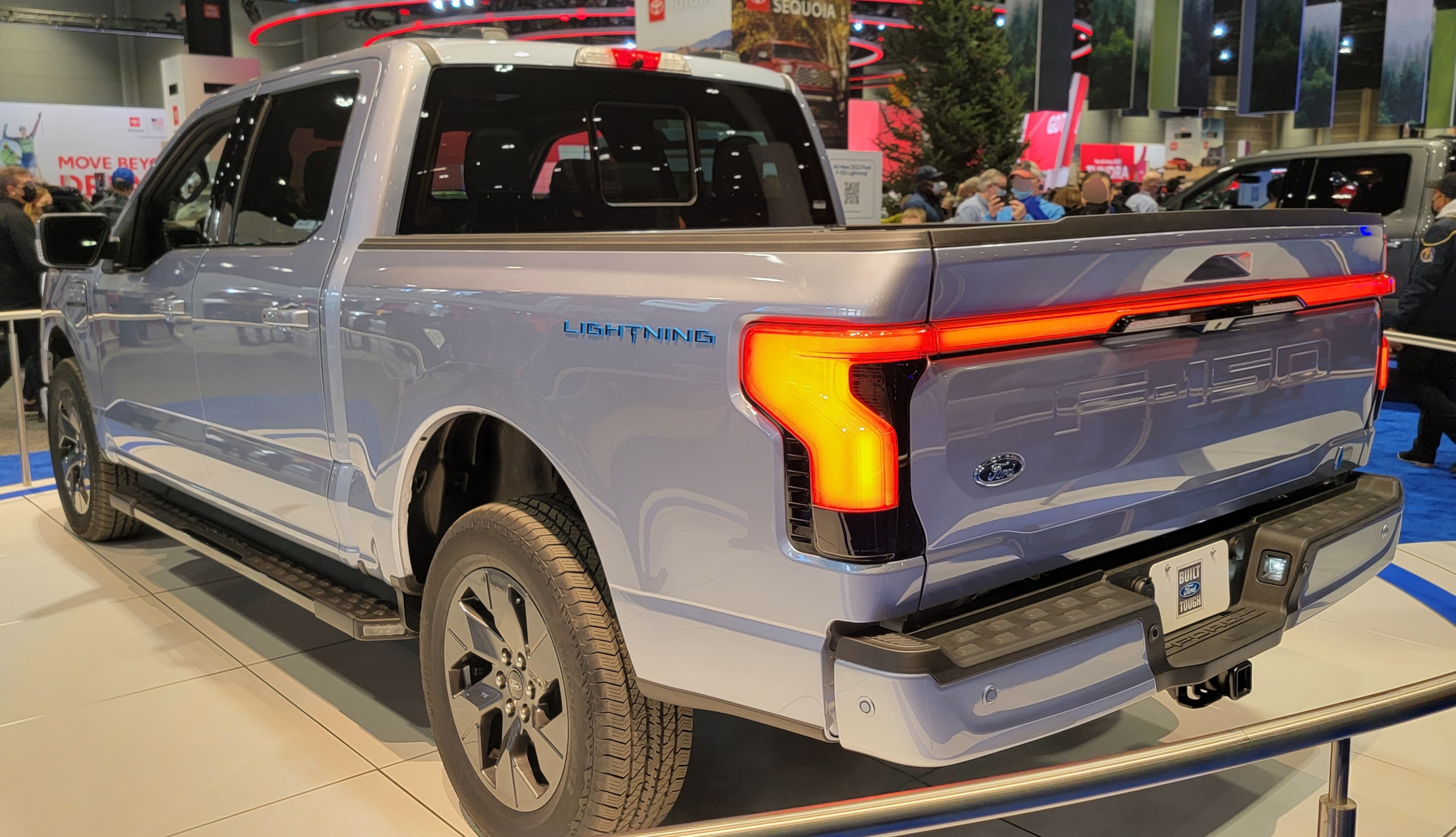
The Ford F-150 Lightning is an electric truck from Ford that offers the same utility as their regular F-150 but runs on electricity instead of gasoline.
The Tesla Model S is a fancy electric car that can go really fast and doesn't need gas. It's popular because it has a long battery life and lots of cool tech features, making it a favorite among people looking for an eco-friendly vehicle.
Car
Volkswagen ID.1
The Volkswagen ID.1 is a small electric car that Volkswagen is developing as part of its new line of electric vehicles.
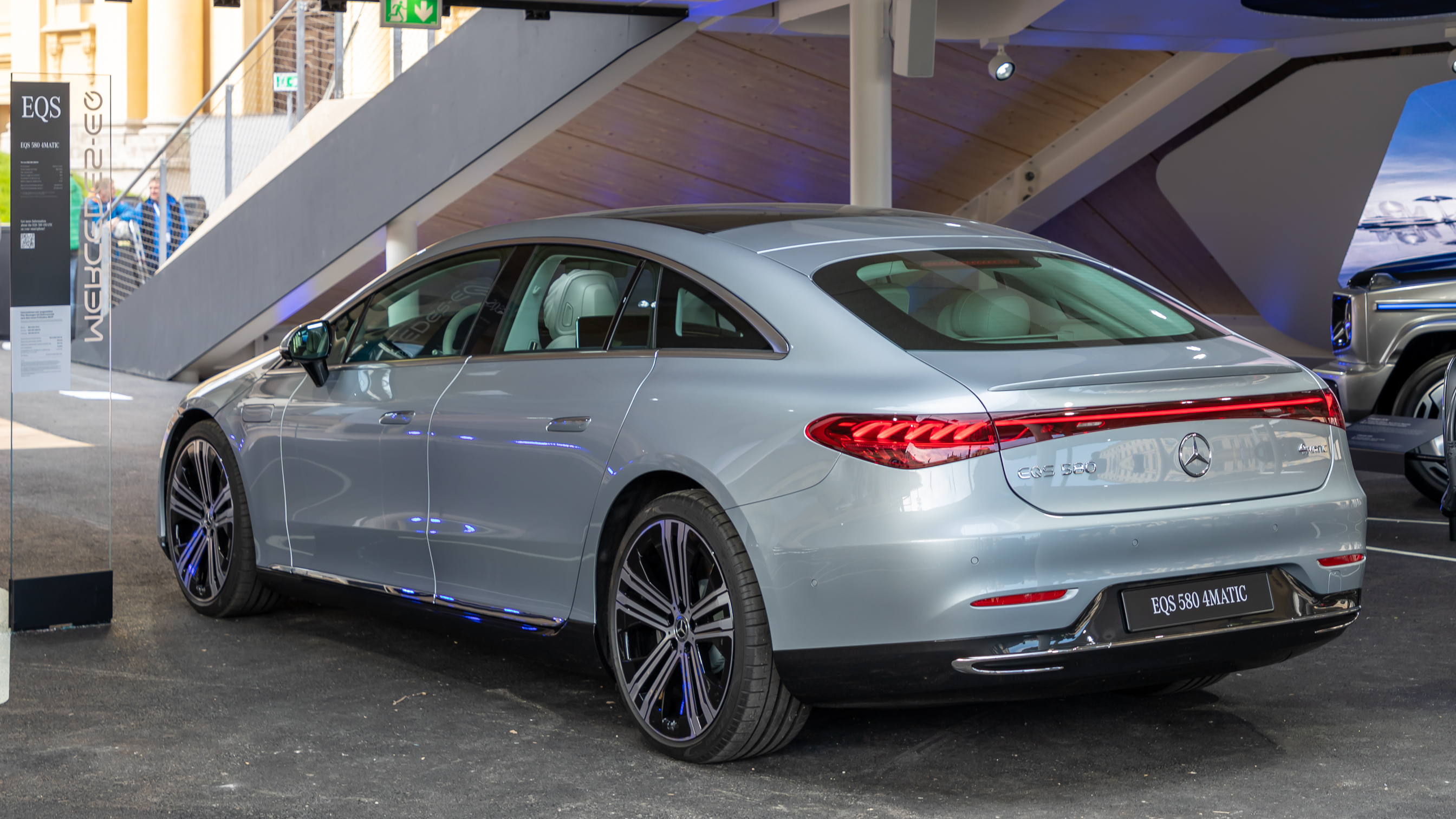
The Mercedes-Benz EQS is a high-end electric car that comes packed with luxury features and technology. It's known for being very comfortable and stylish, and sometimes the prices change a lot, which can be important if you're thinking about buying one.
The Mercedes-Benz EQB is a smaller electric SUV from Mercedes that is designed to be practical and comfortable for families. It has a lot of modern technology and a nice interior.
Subaru is a car company from Japan that makes vehicles known for being tough and good in bad weather. They are popular with people who like outdoor activities.
The Toyota Hilux is a popular pickup truck, and now there's an all-electric version. This shows that Toyota is expanding its electric vehicle offerings.
An electric vehicle is a car that runs on electricity instead of gasoline. This is important because it can help reduce pollution and is better for the environment.
LIVE
Welcome back to the podcast.
Today, global EV sales almost two million last month.
EV consideration is up and Tesla loses some vehicle chiefs.
Plus, stay tuned.
Late from the show, I'll tell you why I'm now convinced Toyota's new electric pickup
is intentionally bad.
On EV News China today, we talked about 50% market share in China now.
Solid-state batteries and VWs fight back.
Here we go.
Let's get into it.
Global EV sales were 1.9 million.
Global EV sales last month in October.
We're all friends here.
Let's call it two million.
That's year to date.
Now, 16.5 million.
That's 23% more than the same time last year.
Europe led growth in October with 36% up year on year.
Germany is doing really well up 53% compared to the same month last year.
France up 40% UK 24% China.
Obviously, though, is still the largest single market in October.
1.3 million EVs were sold in China.
That's up 6% year on year, up 22% year to date.
This must all be wrong because the media keeps telling us that the EV bubble has
burst and no one wants to drive an electric car anymore.
So I don't know who made this data up.
Benchmark expects some buyers to accelerate purchases in the final two months of the year.
China's full EV purchase tax exemption is ending at the end of the year.
And so people might bring forward some purchases in China.
But then again, a lot of the big Chinese carmakers are also saying, well,
we'll add some offers to sweeten the deal.
North America showed a slowdown as expected in October, following a surge
in demand before the end of the federal tax credit.
But again, there, so many of the carmakers have stepped in with some very,
very attractive deals.
Do people still want EVs?
Well, consumer interest is rising in the US, even with the tax credit gone.
This is new data coming in today from JD Power.
Among new vehicle shoppers, 60% say they are likely to consider buying or
leasing an EV in the next 12 months.
So that splits out at 24% very likely and 36% somewhat likely to buy or lease
in the next year.
And the very likely share score is up on the last time they did this survey.
Current EV owners will stay electric.
The US data here says 94% would buy another EV.
That same bit of data coming out of China this week, 99%.
That seems exceptionally high.
Owners' top reasons are expected to be expected lower running costs, tax
credits and incentives at state level, driving performance, purchase price
or lease offer and design as well.
JD Power notes the end of the federal tax credit would change the value
equation, but fines EVs have met or exceeded owners' expectations.
I was thinking about this recently, actually, because although I've had
some nice cars in the past, pre-kids when I had disposable income.
And so now we have a used, we bought a three-year-old Polestar, as I've
mentioned before, that's almost five years old next year.
It is still, I, you know, to me, I'm a man of simple tastes.
It's still, I think it's an exceptional vehicle.
I paid £24,000 for it two years ago.
It's probably worth what, 17, 18 now, I don't know.
But I still think that is a level of performance and a level of car, which
is simply not available in combustion to someone like me without spending
stupid money.
This thing is immensely connected to every part of my digital world.
My Google account is in there.
I can look at a destination on my phone and a couple of days later, get in the
car, look at recent destinations.
It's in there.
I don't even need to send it to the car.
It's just waiting for me.
It's, it's quiet.
It's ridiculously fast.
I've got the launch edition, which is the all-wheel drive and 300 kilowatts
and all the nonsense.
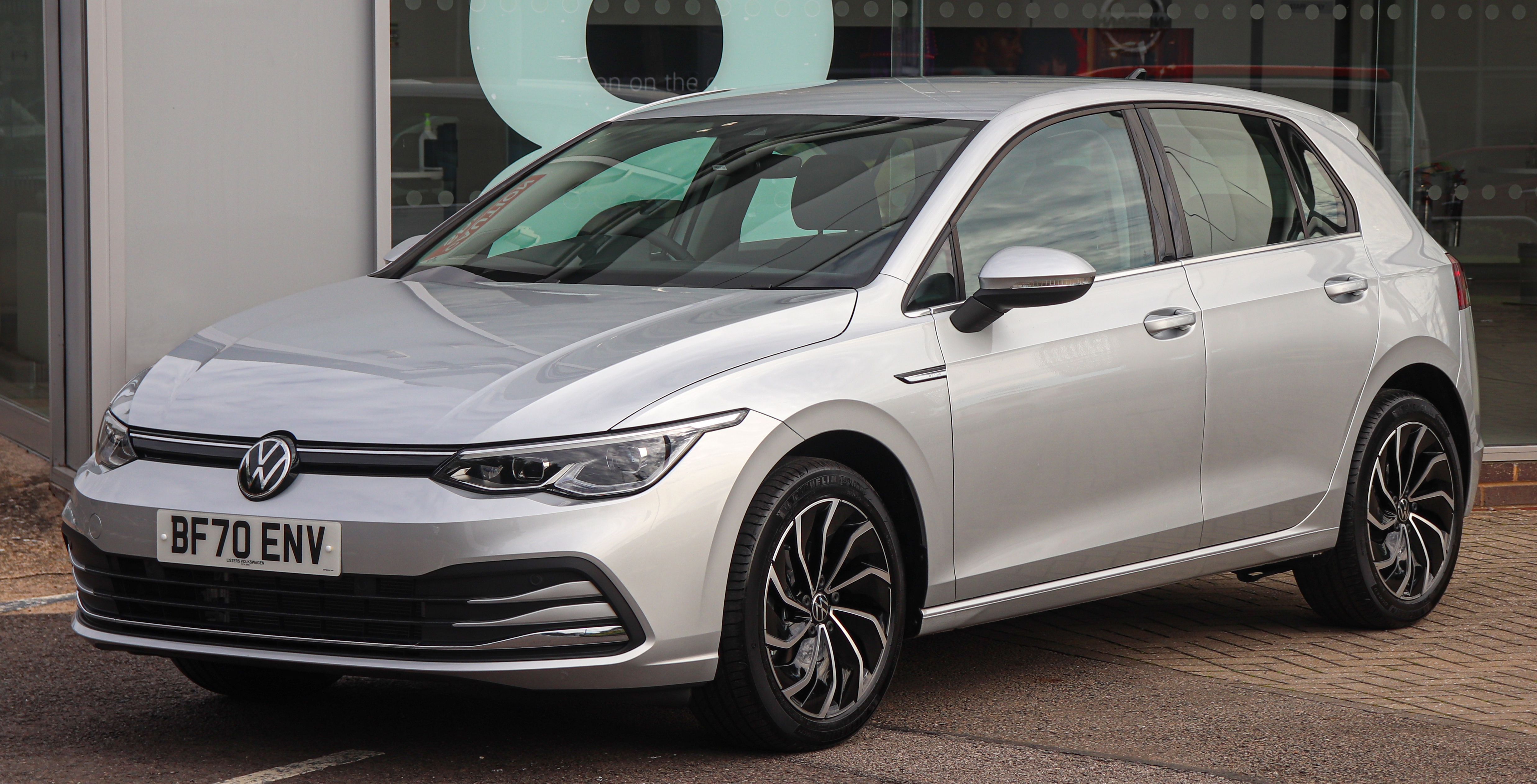
And the idea of going back to a petrol or a diesel car, and we still own a diesel
golf, by the way, for things like dump runs and beach runs and whatnot.
It's not worth anything anymore.
And it goes through the MOT every year and doesn't cost anything to insure
really. So we still have it.
We never drive it.
But but the idea of having an equivalent car to the Polestar in petrol or
you know, combustion, not only if I got no interest in driving those cars
anymore, but would cost me vastly more and at some point, a mechanic would go
that's going to cost you.
And then what's the worst thing that's going to happen with an AV?
You know, worst case scenario, a battery problem, which is incredibly rare, but
all machines will break.
So you have to at least be prepared that it's a very small, smeaty chance, but
it's a machine.
So yeah, it's fascinating the retention of once you go EV, you never look back.
And that's that's interesting.
Also interesting, this is a massive digression.
Apologies if you're busy, but also interesting is the the number of so
called never bevers in America is still under.
It's about a third, but it's maybe drifting a little bit below that.
But people who say they will never, ever drive an EV, have you ever driven an
EV and it's fine.
It's their progress to drive what they want.
But you think, well, have you tried it?
And I wonder if some of those never bevers will find themselves driving
an electric car in years to come.
I think many, many of them will actually.
All right, let's move on.
All right, two senior Tesla leaders have left.
Look, all companies lose people, but these announced it on the same day on
LinkedIn, LinkedIn within hours of each other.
And neither of them have, have, have kind of said they're going on to do
anything else and it's, it's interesting if nothing else.
There's been lots of high profile exits at the company, but it's a very large
company and people get different jobs.
But the program leader of the Cybertruck announced his departure on Sunday.
He joined Tesla as an intern and rose through the engineering department
and recently took responsibility of not only Cybertruck with Model 3 as well.
And the Model Y chief announcing his exit just hours later, again, after eight
years at Tesla, over the last year, they've lost lots of people, head of
vehicle programs, Daniel Ho, who guided Tesla and their high volume models,
the Model 3 over the years.
He went to Waymo, David Zhang as Tech and Tesla's second most senior
vehicle program manager after Daniel Ho left at the same time.
Then these gentlemen took on their responsibilities.
They're going now as well.
Strength in depth, no doubt.
Lots of people on the bench that Tesla can call on.
But there is definitely a high turnover in the vehicle.
But actually, the head of the robotics also left as well.
So I know Tesla's future is robots and AI.
And if that was really their future, I wonder if the head of robotics
would be leaving, but maybe he has other opportunities.
But yeah, it could be nothing.
But it's interesting to look at.
Isn't it at a time when, you know, Tesla doesn't have an awful lot on the
horizon, Tesla Semi is something that I am very excited about.
They just need to make the things as soon as possible.
After eight years after its reveal, I've mentioned already at last week's
shareholder meeting, Tesla showed visual and technical updates.
I didn't really talk about them very much.
So it's not a complete Cybertruck inspired design, but it has got the
Model Y style light bar, the Cybertruck style light bar.
A reshaped bumper with aero channels ahead of the front wheels and cameras
mounted ahead of the doors for supplementary on the side view mirrors.
Tesla said that they improved efficiency and increased payload range
500 miles at 1.7 kilowatt hours per mile.
I mentioned that recently, but that does imply what I didn't say.
An 850 kilowatt hour battery pack charging 1.2 megawatts.
So a 70 percent range recovery in 30 minutes.
And I, you know, many drivers, I would think would have to stop for 30 minutes.
Loading, either the loading bay or certainly over here.
We have quite stringent driver rules on how long you have to be stopped
for, for safety and concentration and stuff, more so than America.
Elon Musk says the volume production begins next year.
Yes. Well, let's wait and see.
They just need to crack on, don't they?
They've got the talent to do it.
And I'm sure plenty of customers as well.
Ford is next.
They've paused production of their all electric F-150 after recent postponements.
Ford is prioritizing future models on its lower cost universal platform.
And says the lightning remains part of its lineup for now.
But production will restart at an undefined time in the future.
Ford says it's focused on producing F-150 combustion versions
because they make more money out of those after a recent fire,
which affected aluminium supply.
It'll bring the Rouge Electric Vehicle Centre back online at the right time,
they say, but gave no date, but did deny that the Ford F-150 Lightning
was now out of production.
MFG is a charging network over here.
It seems like it's come about in the last five years or so, and now it's everywhere.
So MFG Motorfuels Group are a big group of filling stations.
They've made a four hundred million pound investment in EV charging.
And I think they've done it really well.
I've talked about MFG a lot over the years on this podcast.
They have branded it exceptionally well,
so they haven't buried them out the back of their petrol stations.
You know that they've I don't know what the official name is,
but the big column that you get outside of a petrol station that displays the prices.
I think with the MFG stuff, all the ones that I've seen,
they have got an equal one of those that's blue and green
and is equally large and imposing, called EV power charge here.
Not the pricing on it or anything like that.
Not that I've seen the pricing on, not dynamic pricing,
but very good signage, great hardware,
lots of charges in many locations as well.
Thirteen hundred devices are now part of their
of their network in five hundred and twenty two locations.
And they just came just behind Tesla
in the annual Customer Satisfaction Survey done by ZapMap,
which is an app we have over here to find locations for.
I used to use it a lot back in the day, I didn't use that map anymore.
It's very good.
I just don't tend to use it anymore.
And they do an annual survey of charging networks
and they ask people, what's the best one?
Tesla always wins, often by a large margin, MFG just behind now.
And I can understand why the charges are reliable, easy to use
and easy to pay as well.
Also doing well, Ioniti and Osprey tied for third.
Yes, I don't use Ioniti too much, but Osprey are very, very, very good as well.
Now, let's talk about why used EVs are selling very quickly.
Let's talk about VW and Rivian's partnership.
And let's talk about Mercedes giving some discounts so big
that you could buy another Mercedes with the money you get off.
I'll talk about those things and more on the podcast soon.
Stick around back in a moment.
All right, welcome back to the podcast.
OK, let's talk used EV data.
Edmunds in the US has found that three year old used
EVs are selling the fastest averaging 34 days on a dealer lot.
If you are a car dealer and want to sell cars because, you know,
car dealers are it's a volume game, isn't it?
So you want to just turn over stock as much as possible.
You should be selling EVs because they sit on your lot the least amount of time.
Edmunds projects a wave of three year old EVs and now coming off lease.
They're either being depleted from lease companies or they're coming off
personal finance agreements.
A lot of people post lockdowns and post pandemic
when EV on finance agreements and lease agreements, particularly in the US
with things like the lease loophole across the US dealer lots.
The average car sits for 37 days,
41 days for a gas car, 34 days for an EV on something like an average
$30,000, $35,000 mile used EV that's three years old and coming off
finance plug in hybrids, by the way, almost 50 days sitting on dealer lots.
In Q3, the Tesla Model S was the fastest turned around used electric car.
Let's talk about VW and Rivian's partnership.
A year after formalizing their joint venture, Volkswagen's almost six
billion dollar tie up with Rivian is advancing forward under the agreement.
VW are going to put Rivian's architecture, so-called Zonal architecture
and software stack into future EVs.
The scalable systems platform, SSP,
which could form the basis as much as 30 million vehicles
across the Volkswagen group.
Volkswagen says fully electric models from the VW brand, Audi and Scout Motors
will enter winter testing now over Q1 2026
with the software coming out of this new partnership engineering prototype.
So the little compact ID one already doing trials on the road
the Palo Alto and Vine facilities.
It's the joint venture called RV tech, by the way,
and the ID one could well be VW's first model to carry the jointly developed
software and a different way of kind of philosophically making an electric
vehicle. That's that Zonal architecture that I talk about.
Right here in the UK, let's talk about some used car market data
had its highest quarterly volume in the last four years since 2021.
Q3 sales up almost three percent.
The Society of Motor Manufacturers and Traders over here reporting sales
surpassed two million units, extending an 11 quarter growth streak
as increased new car supply bolstered secondhand stock as well.
BEVs rising 44 percent to more than 80,000 units
and hitting a record four percent share of the used market.
One in 25 buyers now go EV in the used market.
Nearly 100,000 vehicles under one year old changed hands during the quarter.
Many transferred via the employee car ownership scheme
that gives workers access to new cars in the industry.
One third of those nearly new vehicles were electrified as well.
Now, Mercedes-Benz are offering discounts on their vehicles in the US
and some of them so big you could buy a whole nother car.
The Maybach EQS 680, that's an SUV, is obviously the Maybach version
of the Mercedes-Benz EQS has now been discounted by $50,000.
The EQS 400 Formatic starts at about $90,000 in comparison,
whereas the Mercedes-Maybach EQS 680 has a base price of $180,000.
And so it's a very premium vehicle, even compared to the premium base model.
Mercedes has been stacking incentives to create the $50,000 reduction
on the Maybach version.
Other discounts like the non-Maybach EQS
are down by $10,000, EQB down by $9,000, EQE down by $7,000.
But yeah, $50,000 off that Maybach leaves you enough money left over to buy,
well, basically a whole nother Mercedes if you wanted to.
Not a nice one, but a pretty good one.
Subaru say they're going to redirect their funds of what little money
Subaru has got, make some incredible vehicles.
But in the grand scheme of things, pretty small in the car industry,
of course, relying on that Toyota partnership, shared ownership,
things like that, but they're going to move their electrification budget
away from BEVs and in to combustion hybrids.
So that becomes a lot less interested to interest to you and I,
I imagine at Subaru, their first EV, the Saltero,
which was rebadged or built on Toyota's technology was their sole.
But until earlier this year, they've added the Trailseeker and uncharted SUVs.
Subaru is not cancelling programs, by the way.
They're not backing away from EVs,
but they are reallocating funds for future EVs after those two new ones.
And finally, Toyota have unveiled an all electric Hilux.
Now, the Hilux, I mean, a lot to a lot of people over here and outside the US.
If it doesn't, maybe if I say Tacoma, it'll mean more to you.
But the Hilux over the years has built up a bit of a rock solid reputation
as being a work for workhorse.
So when a new Hilux comes out, it's interesting,
styling wise, maybe at the front, it's a bit divisive.
But you know, people get used to stuff, don't they?
It looks a little bit different.
But either way, it's going to be electric for the very first time,
which is fantastic.
What's not so great?
Toyota have decided to give it a fifty nine point two kilowatt hour battery,
which is significantly smaller than what a lot of e-revs are coming now within China.
And that is both with, you know, those e-revs that in China
that got 50, 60, 70 kilowatt hour packs and an engine and a fuel tank.
Toyota have decided that what they need to do is give a working vehicle
because this thing has a pretty decent payload and towing as well.
Payload, fifteen hundred pounds, towing capacity, thirty five hundred pounds
with a teeny, teeny tiny battery.
This, of course, won't be sold in America, but even then even over here in Asia and Europe.
And I understand that we want to keep the price down of that vehicle.
But the minute you tow with it, if it's anything with any kind of poor arrow,
what was a 60 kilowatt hour pack?
If I'm being generous, one hundred and forty nine miles WLTP, that's going to half.
And then you've got seventy five mile vehicle, which takes you back ten years
in the world of EVs when people were buying seventy five mile EVs ten years ago
and making do with them because they were passionate about it.
No one will buy this.
And then no one will buy it.
And Toyota will say, we told you nobody wants EVs.
We were right.
And here's a diesel one.
They'll also sell diesel ones as well.
And people will buy plenty of diesel high luxes
because they'll be able to do the job that they want to use that vehicle for.
So at this point, I wonder whether Toyota put minimal money into this.
They've got no battery supply to speak of for full bags.
And so they will cobble together some a teeny tiny battery.
There's plenty of room in a in a high luxe to put a big old battery.
Hundred kilowatt hour would be minimum.
And then nobody will buy it.
And like Mazda did with the MX 30, when nobody bought it.
Interesting little car, the Mazda.
Very fascinating design, endearing in many ways, terrible as an EV.
Had a hundred miles range, EPA.
Nobody bought it.
Mazda went, we told you nobody wants EVs.
Nobody bought it.
We were right.
And they'll all pat themselves on the back in this hotel boardroom
and say, aren't we smart cookies?
It can be the only explanation.
They're purposefully that making it bad.
So no one buys it.
No one in the right mind would make the high luxe with a 59 kilowatt hour battery.
So they're just having a laugh with us now, aren't they?
Good one, Toyota.
You almost got me.
That's your podcast for today.
Thanks to our premium partners, National Car Charging on the US mainland
and the Low Heart Charge in Hawaii and Octopus Electroverse.
Global Public Charging made simple with one app and one map.
Have a good and see tomorrow.
And remember, there's no such thing as a self charging hybrid.
About this episode
Global EV sales reached nearly 2 million in October, with significant growth in Europe and China, despite claims of an EV bubble burst. Consumer interest in EVs is rising, with 60% of new vehicle shoppers considering an electric option. Tesla faces leadership changes as two senior vehicle chiefs depart, raising questions about its future direction. The episode also critiques Toyota's new electric Hilux for its small battery, suggesting it may be intentionally underwhelming. Other topics include Ford's production pause on the F-150 Lightning and the rapid turnover of used EVs in the market.