Battery health testing checks how well a battery is working. For electric cars, it's important to know if the battery can still hold a good charge and how long it will last, especially when buying a used electric vehicle.
Battery-powered MPVs are vans that run on electricity instead of gas. They can carry people or things and are becoming more common as people want to use cleaner energy for driving.
An 84 kilowatt hour battery is a type of battery used in electric cars. It tells you how much energy the battery can hold, which helps determine how far the car can drive on a single charge.
DC fast charging is a way to charge electric cars quickly. It helps the car's battery get a lot of power in a short amount of time, so you can get back on the road faster.
Vehicle to load means your car can give power to other things, like charging a phone or running a small appliance. It's like having a portable battery with you.
The Hyundai Ioniq 5 is a new electric car that looks really modern and has a lot of space inside. It's getting a lot of buzz because it can charge quickly and drive a long distance without needing to be plugged in.
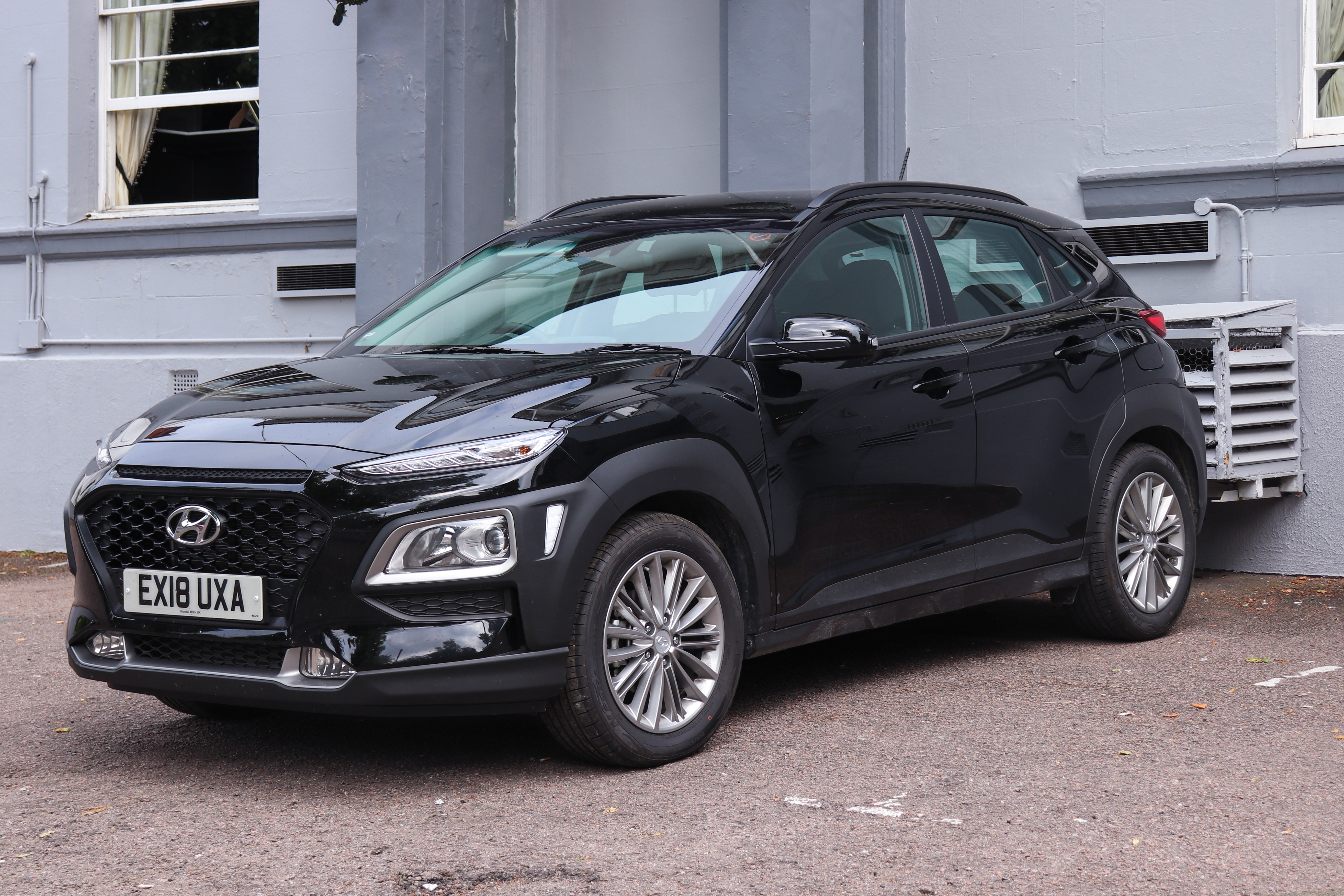
The Hyundai Kona is a small SUV that many people like because it's easy to drive and has a nice design. It also comes with lots of tech features that make it fun and comfortable to use.
The Tesla Model Y is an electric SUV that is known for being roomy and having lots of cool tech features. It's popular because it can go a long way on a single charge, which is great for people who want to drive an electric car.
Kilowatt hours per 100 kilometers tells you how much electricity a car uses to drive a certain distance. The lower the number, the better the car is at saving energy.
An electric drive system helps electric cars move by turning electricity into motion. It includes parts that work together to make the car go efficiently.
The Audi A6 is a high-end car that offers a comfortable ride and many advanced features. It's often used by people who want a stylish and reliable vehicle.
The Volkswagen ID. Buzz is a new electric van that looks like the old VW buses but has modern features. It's designed to be family-friendly and eco-friendly, making it a fun option for people who want an electric vehicle.
The Tesla Model 3 is a smaller electric car that many people love because it's fast and has a lot of safety features. It's also known for being one of the most popular electric cars out there, helping to change how people think about driving.
Market penetration is a way to measure how many people are using a certain product. Here, it shows how many people are buying electric cars compared to all cars.
Car
Honda N1E
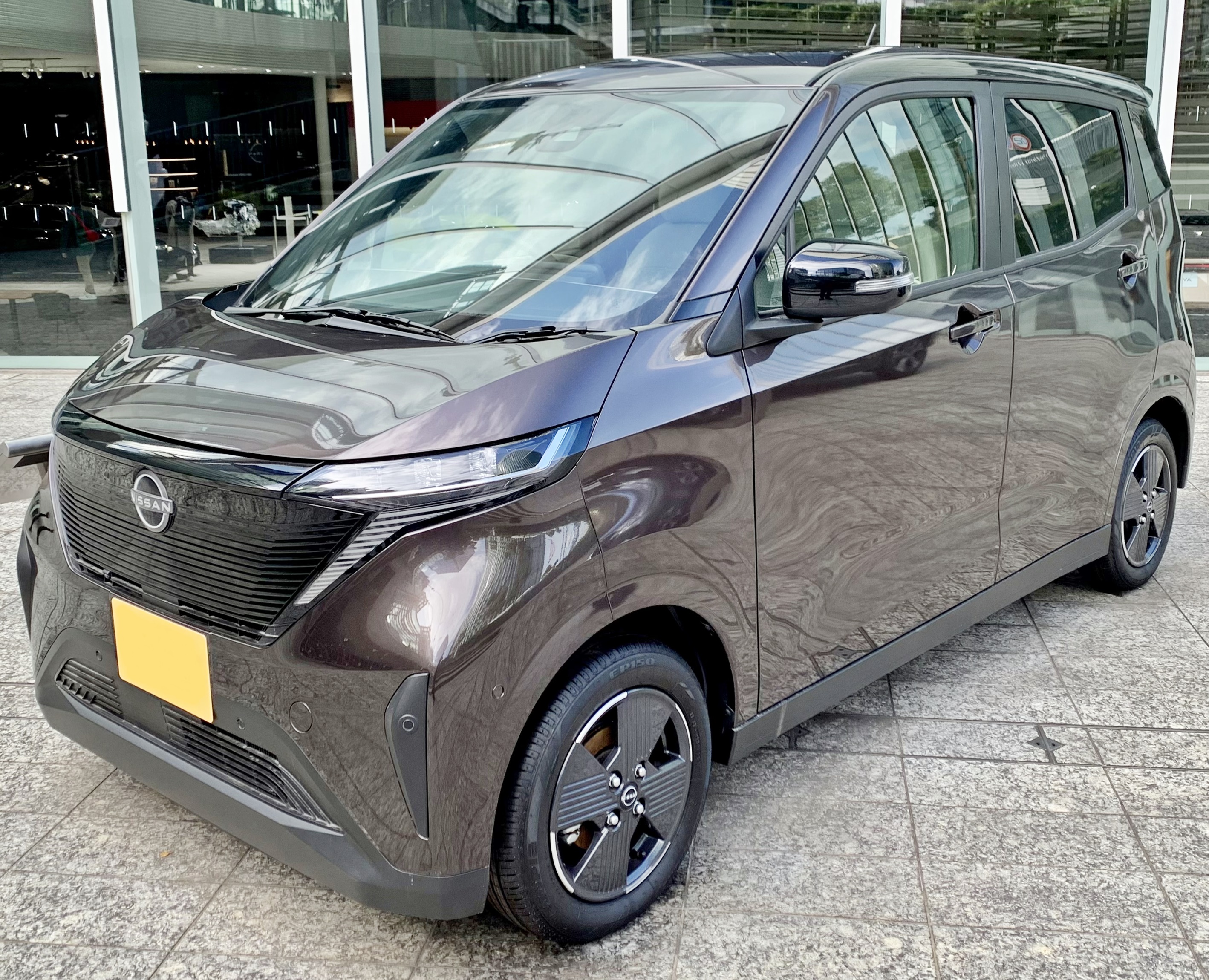
The Honda N1E is a small electric car made by Honda. It's designed for city driving and is part of Honda's push into electric vehicles.
A DC fast charger is a special kind of charger for electric cars that can charge the battery much faster than regular chargers. You can find these at charging stations, and they help you get back on the road quickly.
A kilowatt hour (kWh) is a way to measure how much energy a battery can store. For electric cars, it tells you how much power the battery has to help the car run.
Maximum range is how far an electric car can go on one full battery charge. It helps you know if you can reach your destination without running out of power.
LIVE
Five years ago, I was paying $65 a month for my subscriptions.
Today, those same subscriptions cost $111, and I don't even use half of them anymore.
That's why now I use Rocket Money to manage my subscriptions for me.
The app gives you a list of all your subscriptions
and reminds you of upcoming payments so you're not hit with any surprise charges.
On top of that, it also sends you alerts when subscription prices go up,
so you always know the price you're paying.
If you decide you no longer want a subscription, you can cancel it right from the app.
No customer service needed.
And the best part is, Rocket Money even reaches out
and tries to get you refunded for some of the money you lost.
On average, people that cancel their subscriptions with Rocket Money
save $378 a year.
And overall, Rocket Money has saved its members $880 million in canceled subscriptions.
Pro savings days are on at Lowes.
Get up to 35% off, select major appliances.
Plus, My Lowes Pro rewards members get an additional 5% off
when you buy five or more select GE, Whirlpool, and Electrolux Kitchen or Laundry major appliances.
Lowes, we help, you save.
Valid to 123.
Discount valid to My Lowes Pro rewards members only.
Exclusions and other restrictions apply.
Selection varies by location.
While supplies last.
See associated at Lowes.com for details.
Loyalty programs subject to terms and conditions.
Visit Lowes.com slash terms for details.
Subject to change.
You want to save for whether it be a vacation, a retirement account, or a pet's birthday.
We don't judge.
Now let the app automatically move small amounts of cash towards your goal.
In a month, you'll see real dollars piling up.
In a year, you'll be shocked at how much money you saved.
Similar to the over 10 million members on the app that have saved up to $740 a year
when using all of the app's premium features.
Use the savings challenge as one step closer to feeling better about your finances today.
At rocketmoney.com slash cancel.
That's rocketmoney.com slash cancel.
One more time.
It's rocketmoney.com slash cancel.
Welcome back to the podcast today.
Hyundai unveils Staria.
Tesla adds a bare-boned Model Y and Toyota top CVs in Japan.
Plus, stay tuned.
Later in the show, I'll tell you how Zika plans to shake up the European fast wagon sector
with one of their Chinese success stories.
No EV News China today.
It's the weekend.
Our spin-off podcast happens weekdays.
And no bonus shows this weekend.
But next weekend, we'll have our later sponsor on Nathan Gore-Brown from Test EV
talking about why used EV markets need battery health testing.
Now let's kick off with Hyundai.
They picked the Brussels Motor Show this week to launch its largest electric vehicle yet.
A battery-powered version of the Staria multi-purpose van.
The firm wants a slice of the niche that's fast turning mainstream.
Battery-powered MPVs, people carriers.
Sales of the Staria electric will start in South Korea and Europe in the first half of
this year.
Other regions will follow.
The model extends Hyundai's EV push beyond crossovers and into people carriers.
The Staria targets growing demand for electric family haulers,
where buyers care less about headline acceleration
and more about usable space and range.
It offers a roomy interior with an emphasis on comfort and versatility for things like
families and groups.
A layout that would suit a school run, an airport transfer or a ride-hailing fleet,
just as much as any other private owner.
So it's big.
5.25 meters long, 1.99 meters wide and 1.99 meters high.
The Staria electric is the brand's biggest EV.
It will come as a seven-seat luxury version.
There won't be, as far as I know, initially the six-seat layout,
which is very common in China, by the way, with six big armchairs.
But it will come with a nine-seat wagon format.
There's an 84 kilowatt hour battery.
This is going to be the 800 volts version of EGMP, by the way.
So DC fast charging to 80% in 20 minutes, if everything's nicely toasty.
Hyundai says WLTP range 400 kilometers.
So 249 miles.
For some, that won't be enough.
For me, this would shuttle our family and our growing amount of stuff
that comes with two kids around really, really well.
249 miles, I wouldn't want to go much further without a toilet break.
But people do want more range in these larger vehicles.
We see that in China with the explosion of E-Raves.
So in big MPVs, talking about 1,500 kilometers of range between the engine and the battery.
Here, though, vehicle to load is added.
It's got high-powered USB ports everywhere, digital keys,
what they call the smart sense drive resistance.
Hyundai's inside-out design theme is on offer here, they say,
with a futuristic cabin within the exterior built around it.
That sounds like a very nice way to say, don't look at the outside.
It's all about being on the inside.
Production will take place at Hyundai's Alson plant.
That's their largest manufacturing hub.
Hyundai, who also used the show to trail their next mass market EV,
talks about the Hyundai Ioniq 3.
That's the car that will compete alongside Kia's new smaller EV2.
So that'll fit between somewhere between a Hyundai Insta and a Hyundai Kona,
which is still around and still a pretty good car for the price.
The firm's not yet disclosed much more about the Ioniq 3,
but it'll be developed in Europe for Europe,
with a full reveal coming in the next coming months.
Now, Tesla is next up.
I've been talking about them adding some cheaper
bare-bones versions to the UK and to Canada as well in recent days.
Now, the new Model Y has shown up in the European lineup as well.
So it's Model Y standard, long-range rear-wheel drive.
So it's 657 kilometers, WLTP, so big-range single motor,
which is all a lot of people need, but in standard trim,
and starting at around 40,000 euros.
So big, big range, and also the most efficient Model Y they've made.
So 12.7 kilowatt hours per 100 kilometers.
But it is in no way plush because this is the standard trim,
which Tesla's increasingly doing.
It sits above the Model Y standard,
which you can get a bit of a discount to this.
That's 534 kilometers, WLTP.
And the new variant keeps the focus on range and value,
not the experience.
To hold the price down, they take out premium touches.
There's no panoramic glass roof.
Well, you still get the glass roof on some of the standard Tesla's.
But it's not tinted or coated.
It's so they argue it would cost more for them to re-engineer,
to put just a tin top on.
So they say, well, we still put a bit of glass in,
but you just can't look through it.
So they cover it over with a headliner,
which still kind of blows my mind that it's cheaper to put a glass roof in
and not let you have it kind of like dangling the carrot.
Oh, you could have this, but you can't afford it.
Okay, but it's not the same piece of glass, they say.
Anyway, manually adjustable steering wheel.
Honestly, that's not really the end of the world.
I still remember most cars.
I just, you know, you flick the little thing down underneath it
and you move the steering wheel around.
You know, yes, it is.
I must admit, nice to have everything electric.
Ventilated seats go here.
Heated rear seats go.
The passenger touchscreen at the back goes.
Events become manual.
None of it's a deal breaker, really, for me.
It's all about the range with this car.
So big range and loads of practicality.
Cargo space of 2,118 litres at its maximum.
So Tesla is tuning its global catalogue.
The Model Y standard first appeared in America.
Then it went to Europe and Canada recently.
Gets the new Model Y standard rear wheel drive from Giga Berlin.
However, Europe gets this Model Y standard long range rear wheel drive.
I think I'm keeping up with my notes here.
And so big, big range.
Like I say, 657 kilometres is a long way to go.
Hey, congratulations to Tesla team Shanghai.
They just built its 5 millionth electric drive system
on January the 8th, the 3-in-1 unit.
So motor, gearbox and inverter sits in every Tesla
and cuts weight in its latest version
and lifts efficiency.
They keep improving it.
The milestone shows how central Shanghai is to Tesla.
The factory is the firm's largest and most productive.
It began being built in January 2019
as China's first ever wholly foreign-owned car plant,
although Tesla built it with Chinese money on loan.
So it's still in China, built by China, technically owned by Tesla, I suppose.
In December 2025, it turned out about 800 and, sorry, 851,000 vehicles,
more than half Tesla's global deliveries for the year.
That month alone delivered 97,000 cars in the month of December alone.
So it's a huge, huge deal.
Shanghai's tally feeds into a broader run of records,
actually, that Tesla's had in July last year.
They made their 10 millionth drive system worldwide,
the first component in the company's history to reach eight figures.
Shanghai led the push, becoming the first Tesla factory to reach
massive volumes for a single part.
In parallel, Giga Nevada lifted its own drive unit output
and they made, I think, their six millionth a few weeks ago, if I remember.
Not sure we put it on the podcast, but vehicle output has climbed in step with it.
By the end of December last year, Giga Shanghai had made its four millionth vehicle.
The one that they said was a six-seat Model Y L,
the long wheelbase version of the Model Y that is in China,
that many people would prefer to have compared to the
so-called three-row Model Y that America gets, which
is fine if you want to use the back seats for people without legs.
Okay, let's talk about this incredible statistic,
but I had to read a couple of times to make sure I understood it correctly.
Volkswagen just overtook Tesla in EV sales,
and to kind of comprehend how much of a big deal that is,
as a caveat I haven't mentioned, you only have to go back a few years
when the old boss, Volkswagen, Herbert Deese and Elon Musk were having their bromance,
and Volkswagen, this is all pre-lockdown here, I guess,
were really looking up to Tesla and saying, you know,
one day, one day we think we'll be bigger than you,
and of course all Tesla fans laughed.
Well, hey, look at that, the date today, 11th of January, 2026,
they did it, Volkswagen is bigger than Tesla.
There's a big caveat here outside of China,
because Tesla does pretty well in China,
but if you don't include that, that kind of stuns me,
so I have to go over the numbers a couple of times,
make sure I'm making sense of it.
Between January and, these are the figures to the end of November last year,
not a lot will have changed.
Volkswagen had sold 1.133 million EVs, according to SNE Research, outside of China.
The shift shows how quickly the balance of power has changed,
as legacy car makers have scaled up.
They've all been having huge problems in China,
as the new domestic startups have really captured the attention there,
with their high-tech, AI-integrated digital vehicles.
But outside of China, VW's got its acts together.
It's undercut the idea that Tesla's early lead would always be unassailable to everybody else.
Volkswagen's surge came from a mix of mass market and premium,
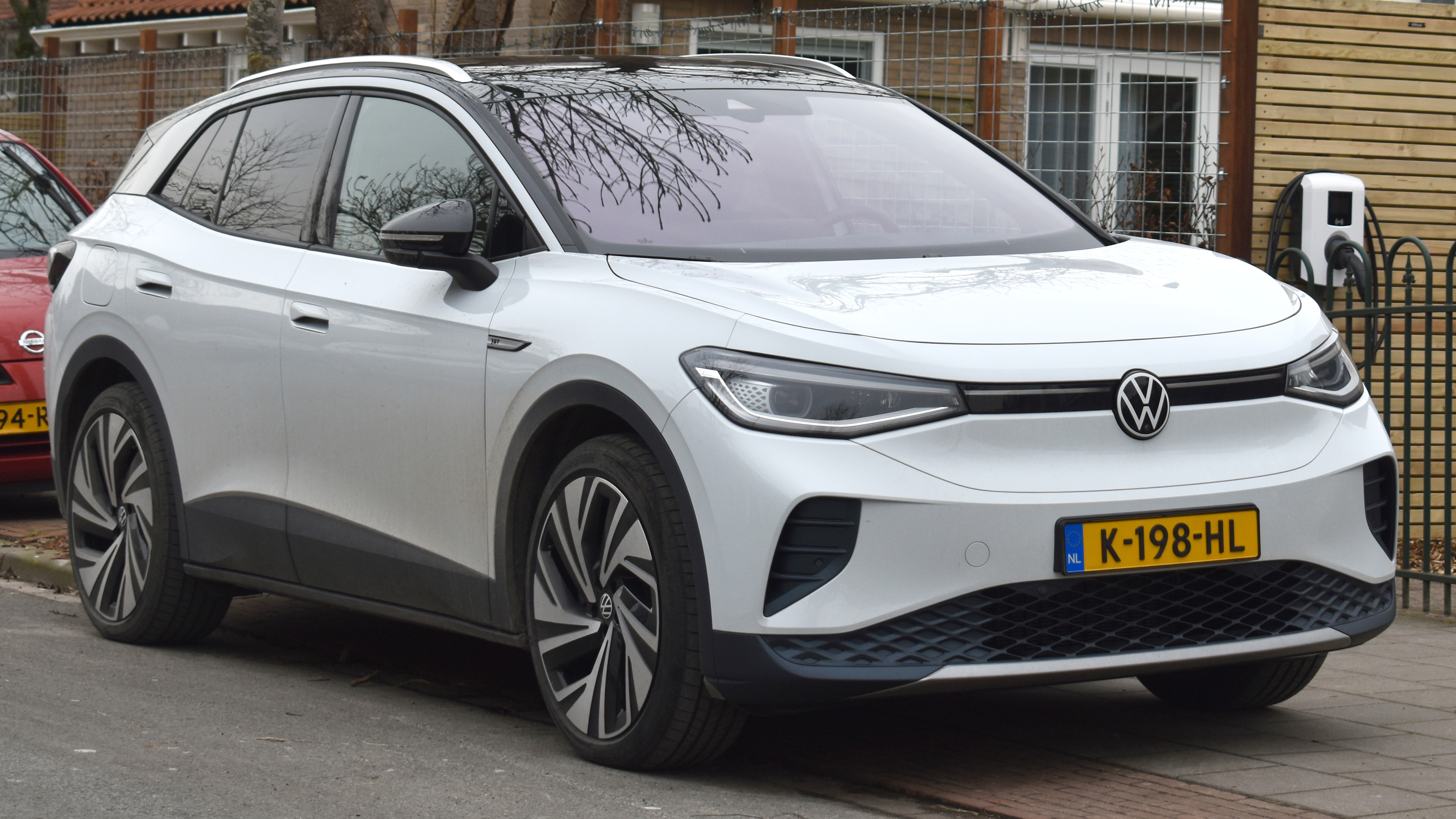
stronger sales of Volkswagen's ID4 and 7.
The Skoda ENIAC continues to sell really well at the volumen,
full-scale rollout of the Audi A6, Audi Q6,
Citroen and the Porsche McCann helped as well.
Tesla moved the other way.
Its sales outside have China slipped to just 927,000.
That's down over 8% year-on-year.
Second straight year of negative movement for Tesla outside of China,
and actually globally, because they're doing really badly in China too.
The core models, YN3, have both been falling.
SNX fared worse, but really they are,
you know, cars for maybe a more discerning buyer who wants a certain something.
Hyundai held third place with 566,000.
They're a long way behind the 900 and something thousand of Tesla.
So Tesla's not slipping to third place anytime soon outside of China,
but that's an amazing statistic, isn't it, the Volkswagen?
Okay, and so detractors, if you, you know, on the other hand this would say,
yeah, but how much money did Volkswagen have to spend on all of their brands,
are their Audi's and Porsches and Scottas,
to beat Tesla who have effectively one car?
You know, the Model Y and then the Model 3 backing it up.
So that's also a really good point.
Now, how efficient, how efficient are you spending your money and making your money?
Okay, let's talk a little bit about Toyota in a moment,
and Portugal dangling carrots back in a mo.
use RocketMoney to manage my subscriptions for me.
The app gives you a list of all your subscriptions and reminds you of upcoming payments,
so you're not hit with any surprise charges.
On top of that, it also sends you alerts when subscription prices go up,
so you always know the price you're paying.
If you decide you no longer want a subscription, you can cancel it right from the app.
No customer service needed.
And the best part is, RocketMoney even reaches out and tries to get you refunded
for some of the money you lost.
On average, people that cancel their subscriptions with RocketMoney
save $378 a year.
And overall, RocketMoney has saved its members $880 million in canceled subscriptions.
The holidays are expensive.
You're paying for gifts, travel, decorations, food,
and before you know it, you've blown way past what you were planning to spend.
Don't start the new year off with bad money vibes.
Download RocketMoney to stay on top of your finances.
The app pulls your income, expenses, and upcoming charges into one place
so you can get the clearest picture of your money.
It shows how much to set aside for bills and how much is safe to spend for the month
so you can spend with confidence.
No guesswork needed.
Get alerts before bills hit, track budgets, and see every subscription you're paying for.
RocketMoney also finds extra ways to save you money
by canceling subscriptions you're not using and negotiating lower bills for you.
On average, RocketMoney users can save up to $740 a year
when using all the app's premium features.
Start the year off right by taking control of your finances.
Go to rocketmoney.com slash cancel to get started.
That's rocketmoney.com slash cancel.
Welcome back to the podcast.
Let's talk about Toyota and the BZ4X,
Japan's top-selling electric vehicle in the last quarter of the year.
It's the first time Toyota has been EV number one at home in Japan
for a firm long scene as anti-EV spending untold amounts of money on anti-EV advertising.
All those adverts, they used to run back in the day of we choose not to plug in,
of just berating EV owners for making the wrong decision in their advertising and marketing,
whilst also having to try and sell EVs.
Yeah, I've never fully understood Toyota.
The result's kind of interesting.
Toyota's large home market will buy fully EVs if it's the right car.
They recently updated the BZ4X from being largely terrible to not so terrible
and Japanese buyers went for it.
The strong sales reflect a bundle of incentives as well.
Above all, a one-year free membership to vehicle charging.
The offer lowers the risk for first-time buyers in Japan.
Where EVs aren't really a thing, it's 1.82% market penetration.
Rivals kept up the pressure as well.
Honda have a little mini vehicle called the N1E that was just behind the Toyota BZ4X
and the Sakura electric mini vehicle as well.
Both models play to Japan's taste for small city cars,
yet the league table does put the larger BZ4X just about in the number one position.
Now, Portugal will pay drivers 4,000 euros to go EV next year,
but only if they scrap a dirty old car.
From December, I don't know why I emphasized dirty quite so much.
From December, 29th last year through to February this year,
buyers in Portugal can tap a new incentive scheme called the Environmental Fund.
The offer is narrow.
Private individuals can claim 4,000 euros per battery electric vehicle.
Social organisations, transport operators and even municipalities are in on the deal too.
For 5,000 euros, the purchase price must not be more than 38,500 euros
or 55,000 if you have more than five seats.
In every case, you must scrap a dirty, dirty old car that's more than 10 years old.
The state wants to cut emissions from transport,
a large source of Portugal's carbon output while nudging households and fleets towards EV.
It also caps commercial uptake as well.
Firms can receive support for no more than four vehicles per company.
Two-wheelers and light EVs get a push as well.
The scheme covers 50% of the price of a cargo bike up to 1,500 euros.
1,000 euros for non-electric and 750 for pedilex, which is our rules over here.
We don't have twist grip or thumb grip.
You have to at least move your feet a little bit for the e-bikes to kick in.
You can buy them from Aliexpress and Chinese makers as well,
but they're not allowed over here.
I think the police are probably a little bit busy.
Although saying that, I did mention on the podcast,
before Christmas, I was dropping my son off at his school and I saw the police had pulled over
somebody on one of these Chinese fat tire black things with mass two big batteries
that will do serious speed.
We're taking it off him, sticking it in the back of their police van.
That is confiscated, my friend.
That's interesting.
Let's move on and Zika are going to bring their own brand to Europe and the UK,
or the EU and the UK, I should say.
So obviously Zika and by Geely, a lot of the platforms,
the underpinnings you'll find in some Volvo's, in some Polestar's.
Zika has done a better job at updating their vehicles to the updated versions of those platforms.
So although some Zika's and Polestar's and some Zika's and Volvo's sit on the same platform,
the modern Zika's have iterated on them.
Those platforms, you know, they've gone to 800 or 900 volts and the software isn't a lot improved.
Well, the 7GT will be its official name over here.
Now, in China, it's the 007 and as I long speculated,
I think it's Amazon owns the right.
I think Amazon bought all the James Bond rights from whoever owned the Broccoli family,
or whoever owned all the James Bond rights.
I think Amazon bought them recently.
So I think Amazon would have an issue with you calling it the 007 James Bond car,
so they haven't called it that.
They've called it the Zika 7GT and it's a proper GTE wagon.
You know, sport back, fast back, call it what you it's not a full estate.
It's not like a big Volvo boxy thing, but there's definitely more room in the rear.
But Zika as a brand will bring it under their own badge
to Europe and the UK in the first half of this year.
Up against Tesla Model 3 performance,
Kear EV6 GT, Volkswagen ID7, the high performance version of that, Hyundai Ioniq 6N.
It's a familiar recipe, big range, rapid charging, strong performance and a wagon shape
delivered under an unfamiliar Chinese badge.
Pricing will soften the pain though.
The 7GT starts at 45,990 euros.
That's about 53,000 US dollars equivalent.
That's for the core trim and it'll go up to about 57,000 euros.
That's 67,000 US.
That's for the privileged trim but with all-wheel drive.
For UK buyers, it starts at 39,990 to come under the 40,000 threshold we have luxury car tax.
Underneath is Geely's platform, the PMA2 Plus platform.
So this is 800 volts.
This will charge 10 to 80 in, are you sitting down?
13 minutes.
Or if you can find a 450 kilowatt DC fast charger, that is.
Because that's what it peaks at.
It will raise the conversation stakes, let's say that.
The old top Trump's game of who's got the bigger one.
This one charges very quickly.
Two battery sizes, 75 kilowatt hours and 100 kilowatt hours,
with a maximum range of 413 miles or 665 kilometers.
This thing will move a family and their luggage across a continent
doing 400 miles plus range of 665 kilometers of range.
It will charge in less time than it takes to run in and grab a coffee.
But that range figure will need to be verified on the UK's A1 or the German Autobahn when it's
cold and wet.
The range topper is the all-wheel drive, 637 horsepower, 0-62, 3.3 seconds.
That is going to top at 130 miles an hour.
It's the same as a Model 3 performance, but for a lot less money, a fraction of the money.
Inside the kit chases European specs rather than the AI novelty that we see in China.
sorry, phone chargers, pet mode, camping mode, big rear legroom, massive boot space,
smaller a bit than a Kiri V6, but still the high riding hatchback shape will help.
In the UK, the 7GT effectively becomes Zeke's opening act, filling the space that the 001
might have owned.
If the real-world range and 13-minute charging actually happens in the real world,
then that car will win every argument in car parks and comment sections.
The question is whether Zeke can build service coverage and build trust, more importantly,
fast enough.
And that's your podcast for today.
Thanks for listening.
Thanks to our premium partners, National Car Charging on the US mainland,
and the Loha Charging in Hawaii, and Test EV.
Have a lose trusted partner for independent EV battery health testing in Australia and New Zealand.
Have a good and cinema.
And remember, there's no such thing as a self-charging hybrid.
Create a financial goal.
$50 every paycheck, or let the app automatically move small amounts of cash when you can afford it.
In a week, you'll forget you set it up.
In a month, you'll see real dollars piling up.
In a year, you'll be shocked at how much money you've saved.
Bonus challenge, upload an internet or phone bill and let RocketMoney try to lower it.
You only pay if they find you savings.
On average, RocketMoney members can save up to $740 a year when using all the app's premium features.
Users love the app with over 186,000 5-star ratings.
Make saving money the resolution you actually keep.
Start the 60-second savings challenge at rocketmoney.com slash cancel.
That's rocketmoney.com slash cancel.
Rocketmoney.com slash cancel.
About this episode
Hyundai has unveiled the Staria, its largest electric vehicle yet, targeting the growing demand for spacious family haulers with a range of 249 miles. Tesla introduces a bare-bones Model Y in Europe, focusing on efficiency and practicality, while Toyota's BZ4X becomes Japan's top-selling EV, reflecting a shift in consumer preferences. The episode also covers Volkswagen's recent overtaking of Tesla in EV sales outside China, and Zika's plans to launch its 7GT model in Europe, promising rapid charging and impressive range.